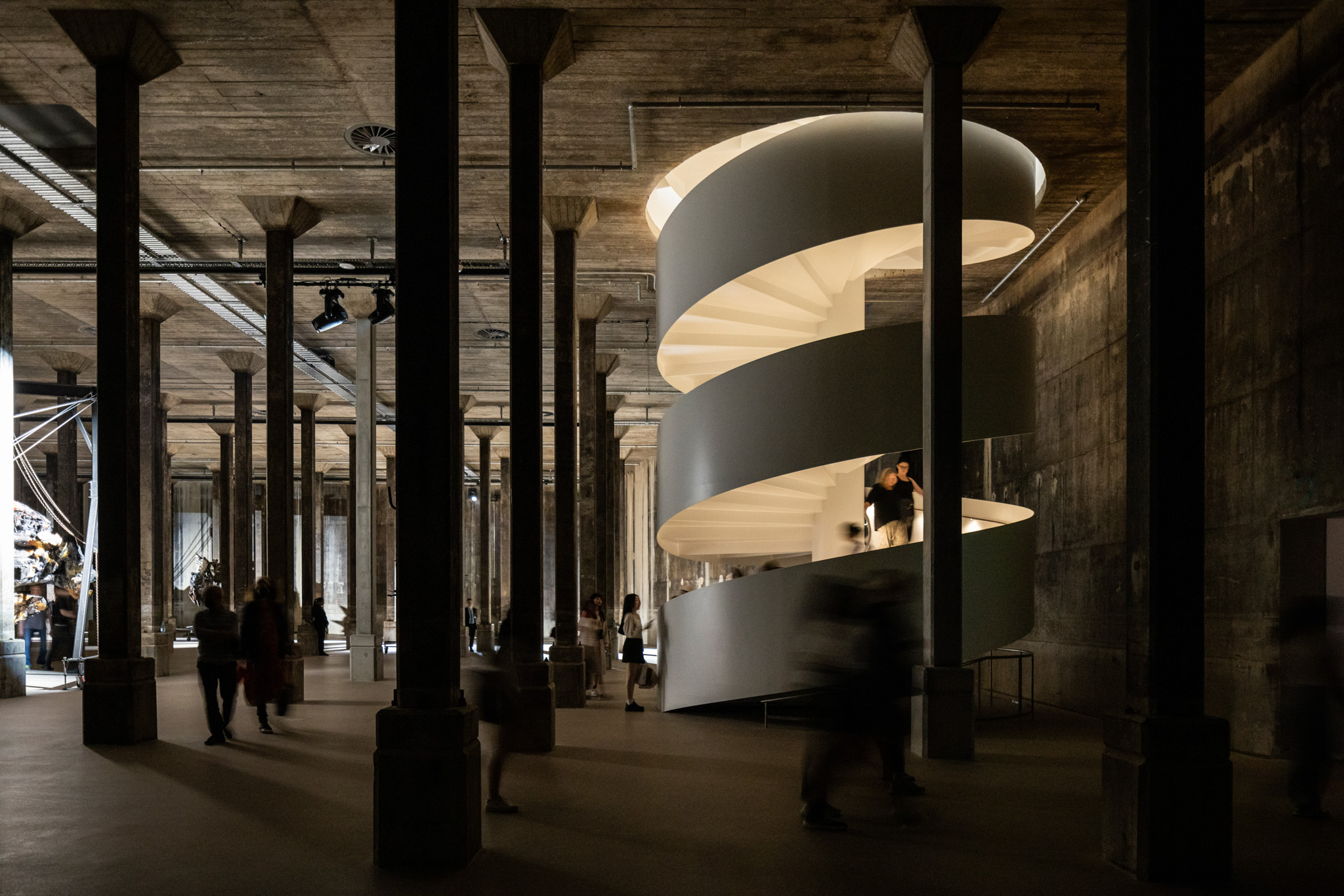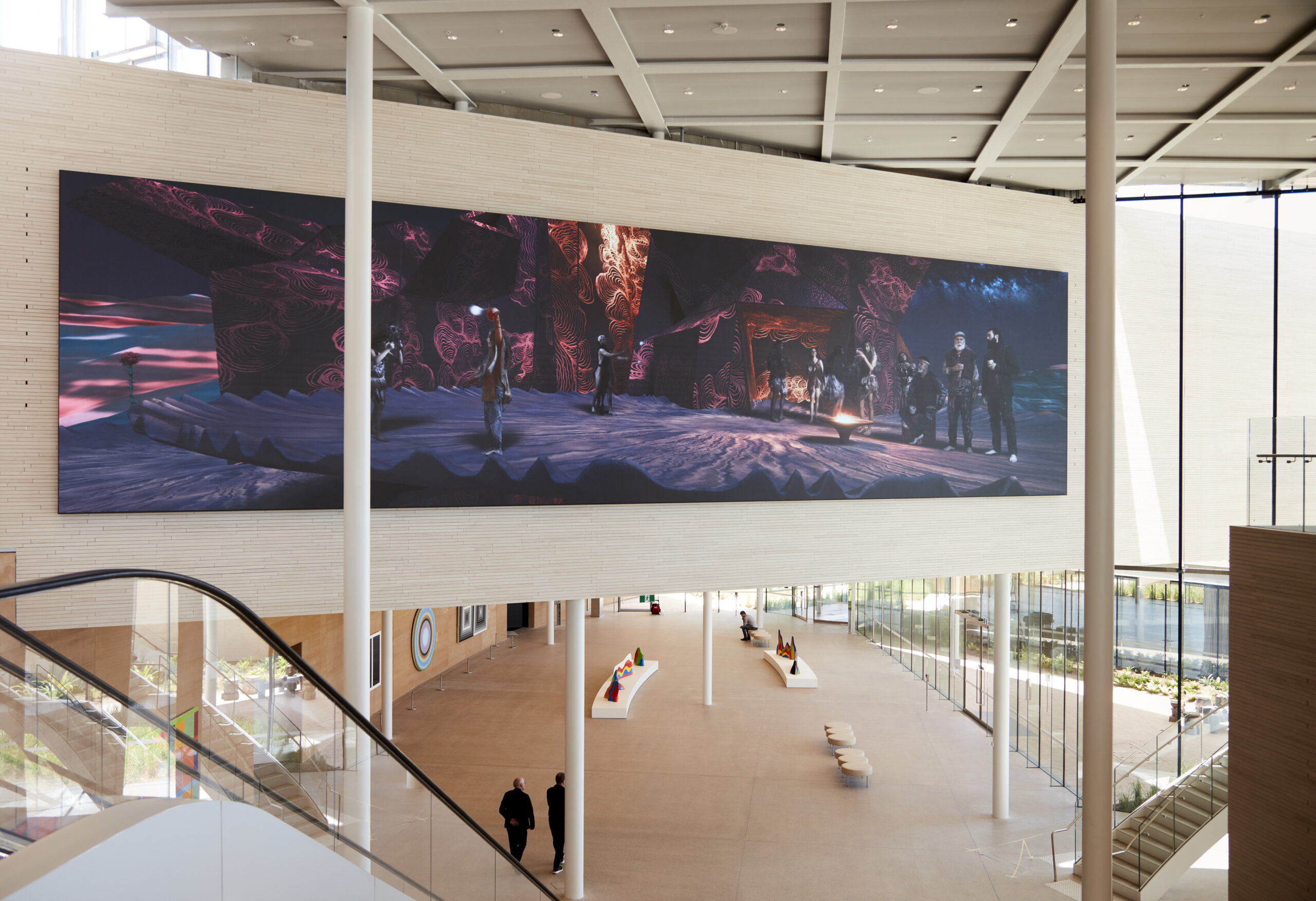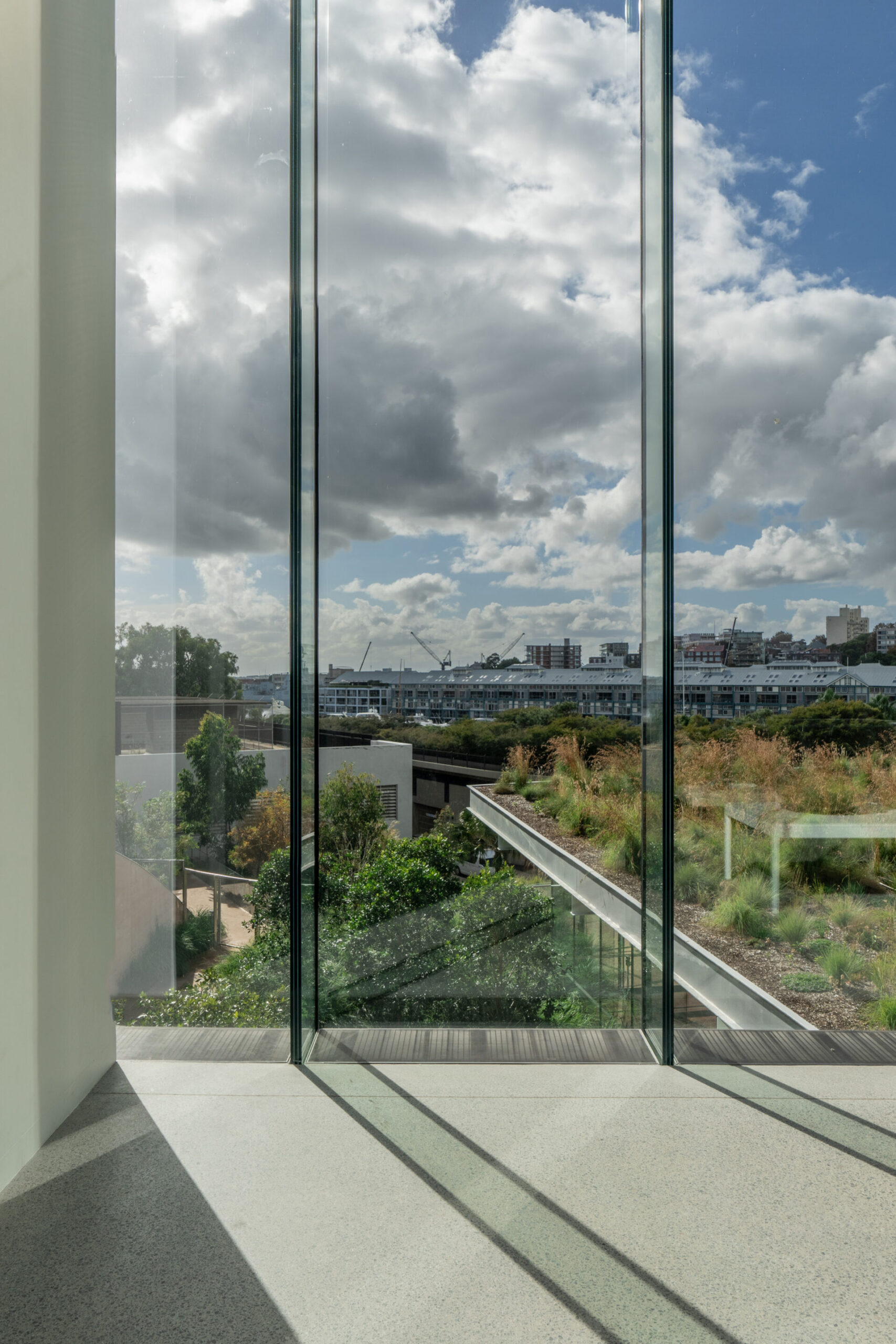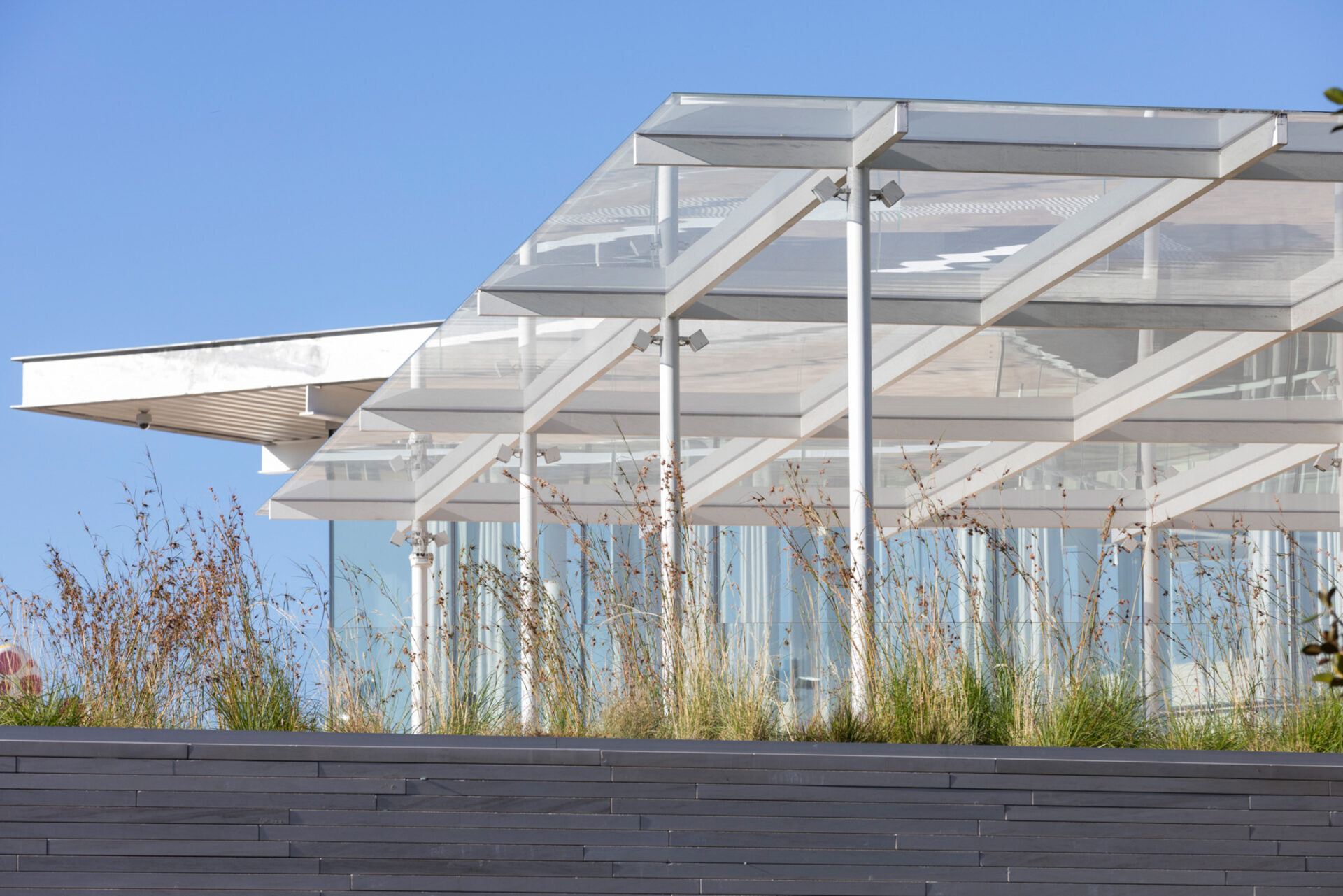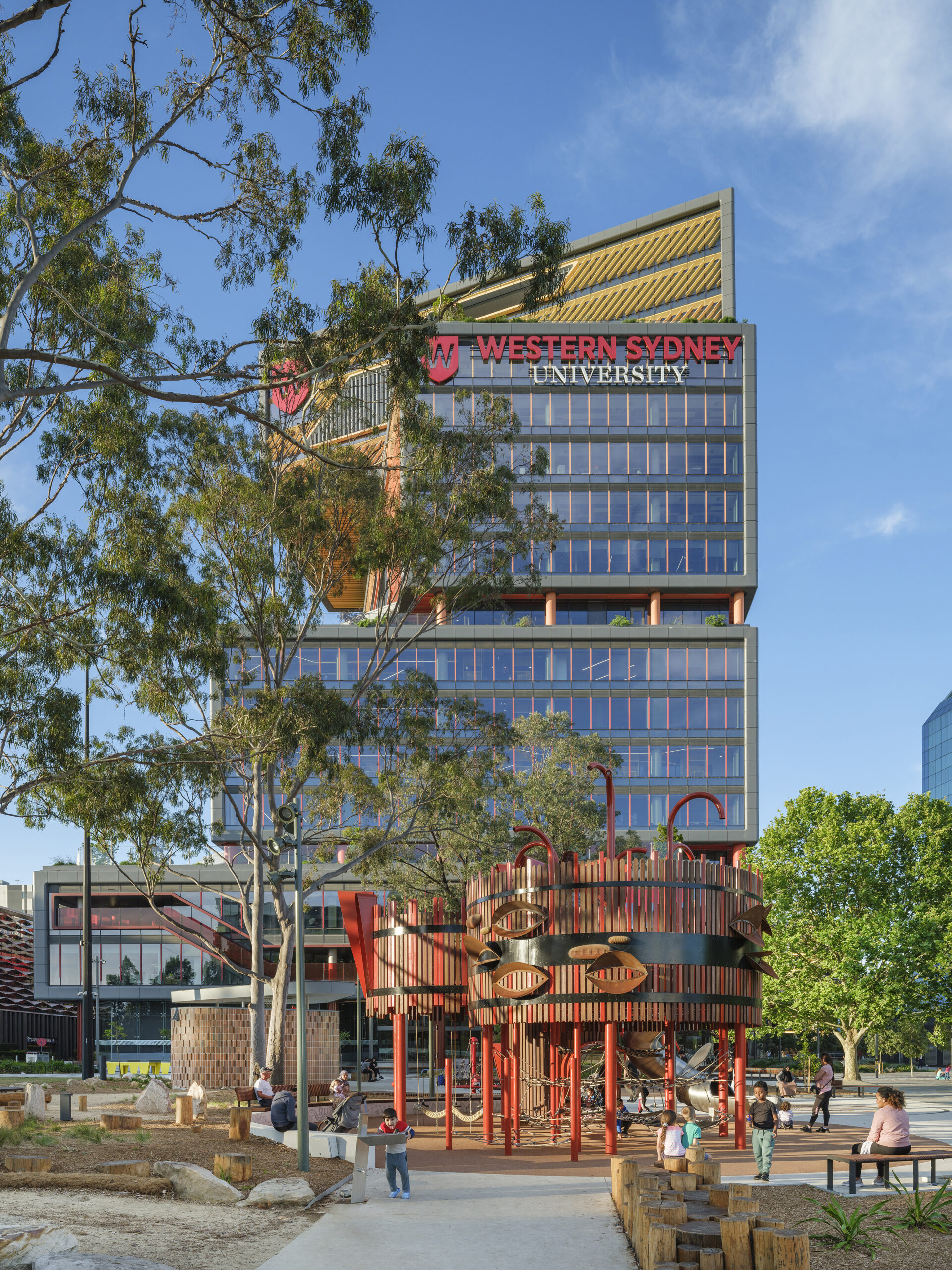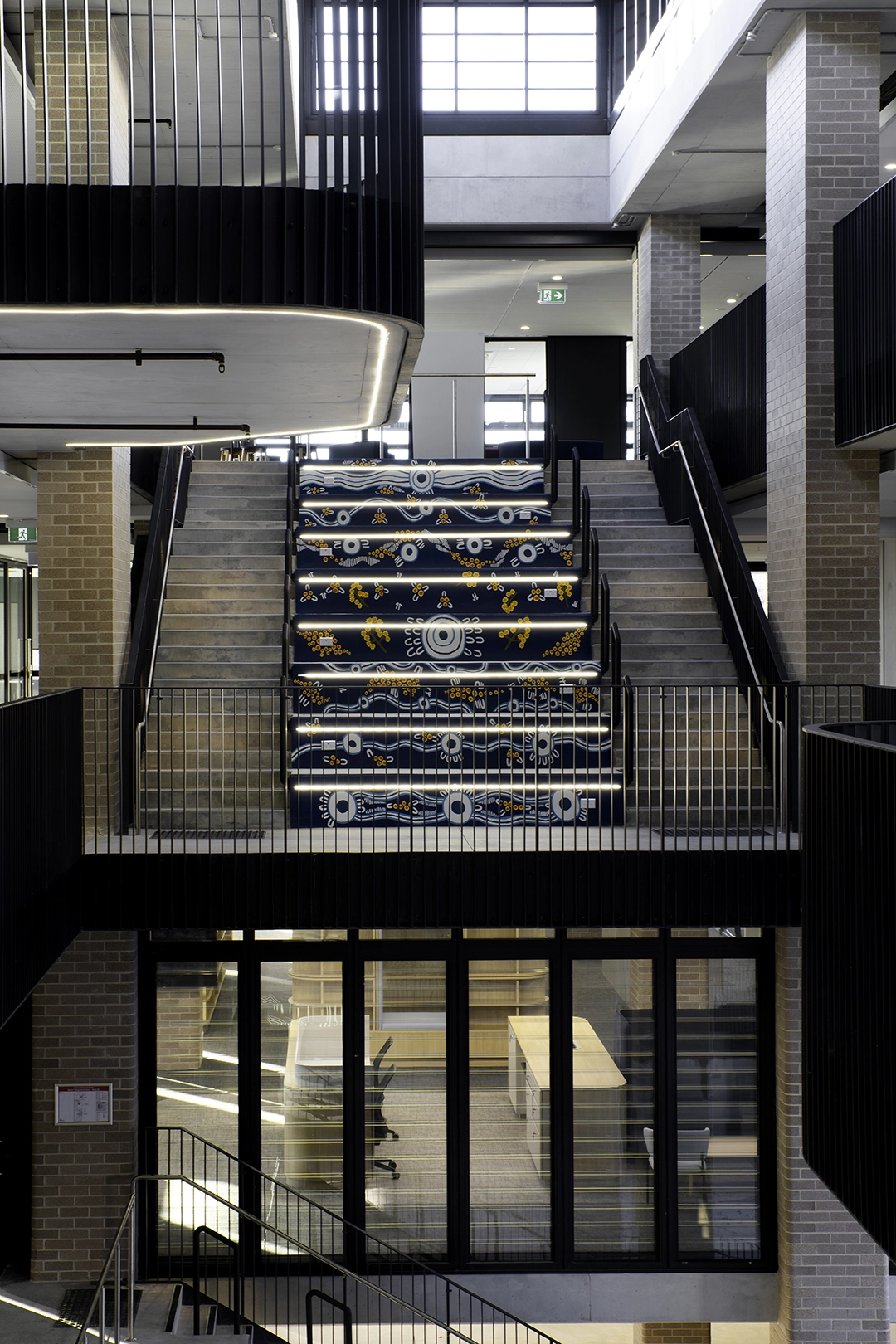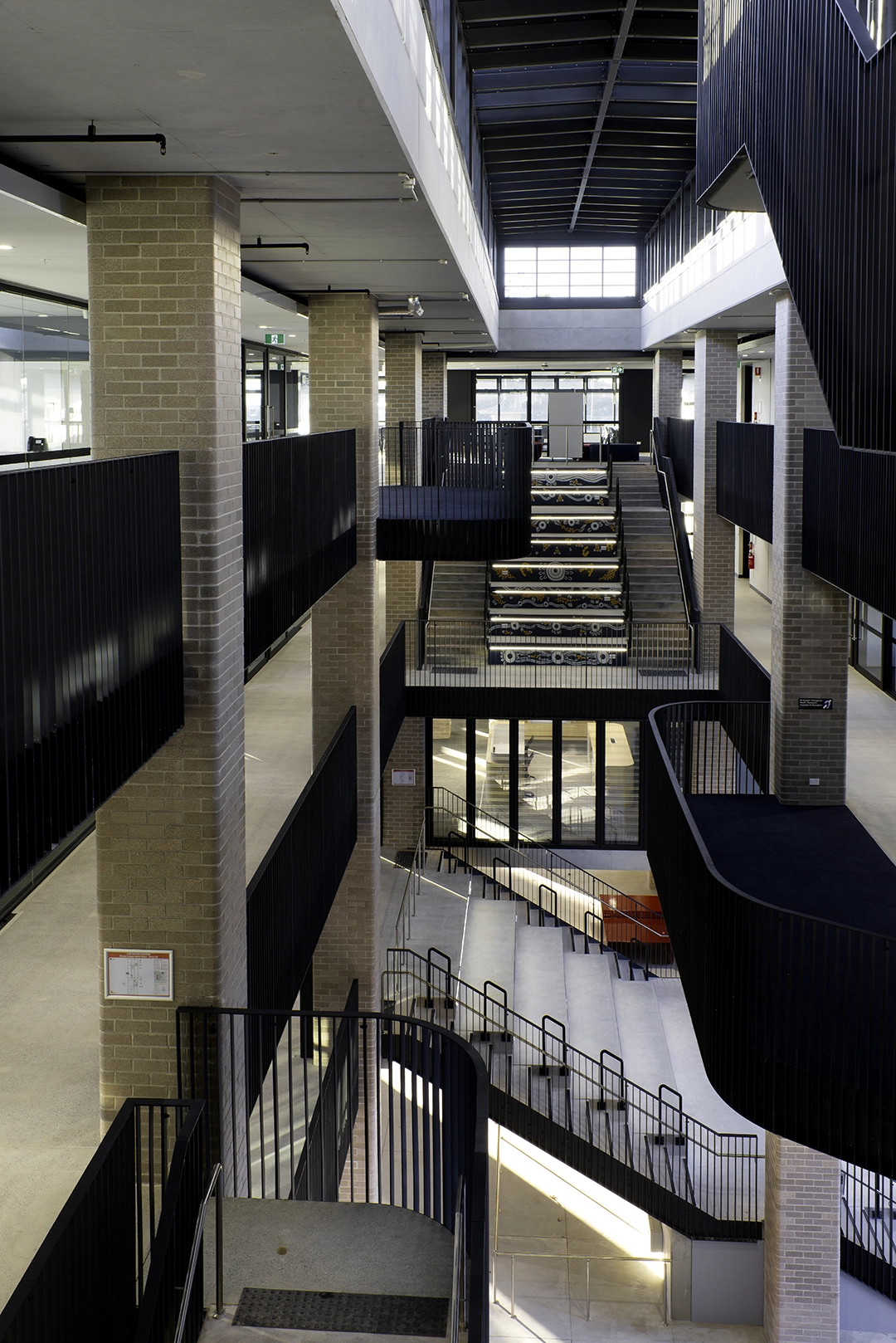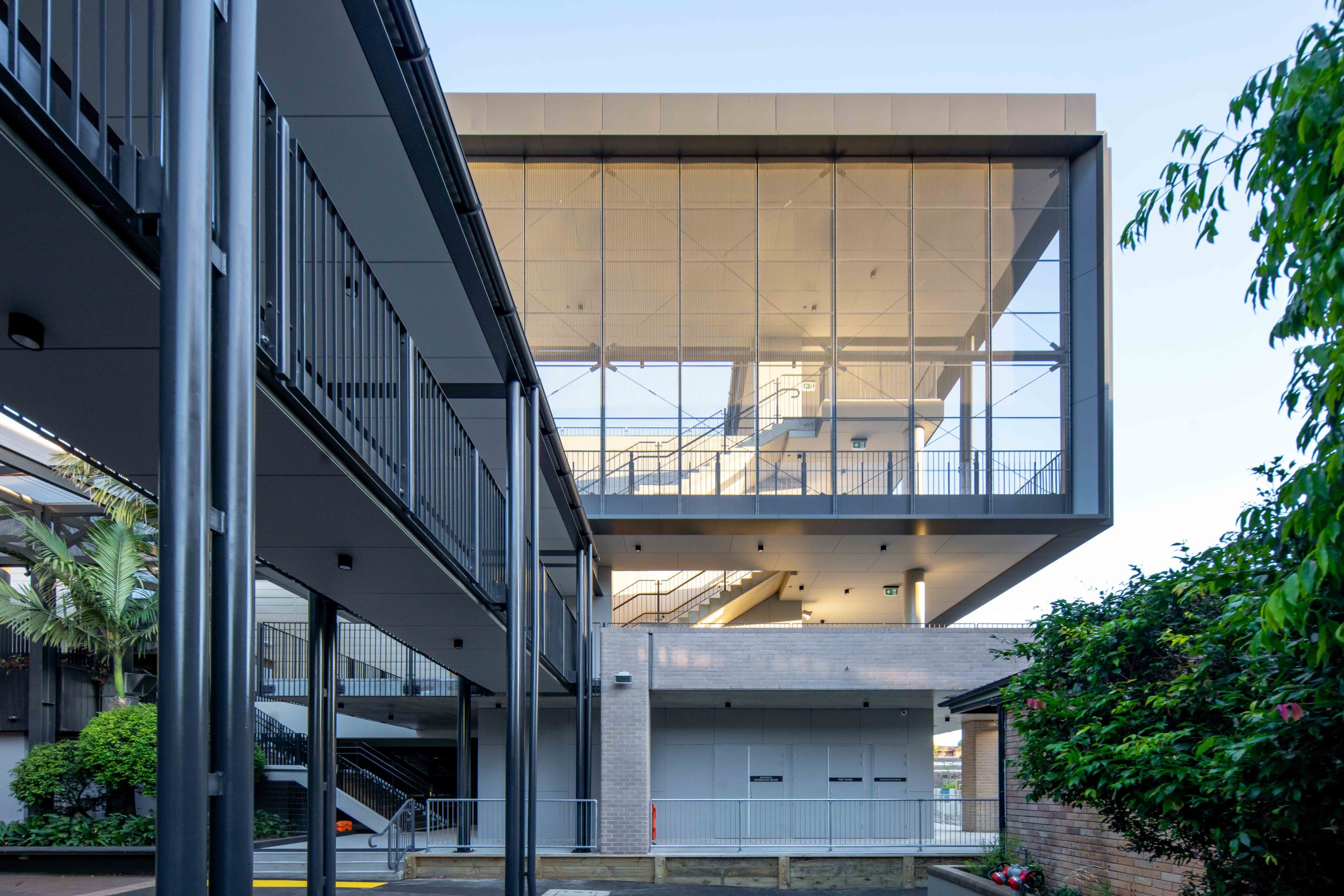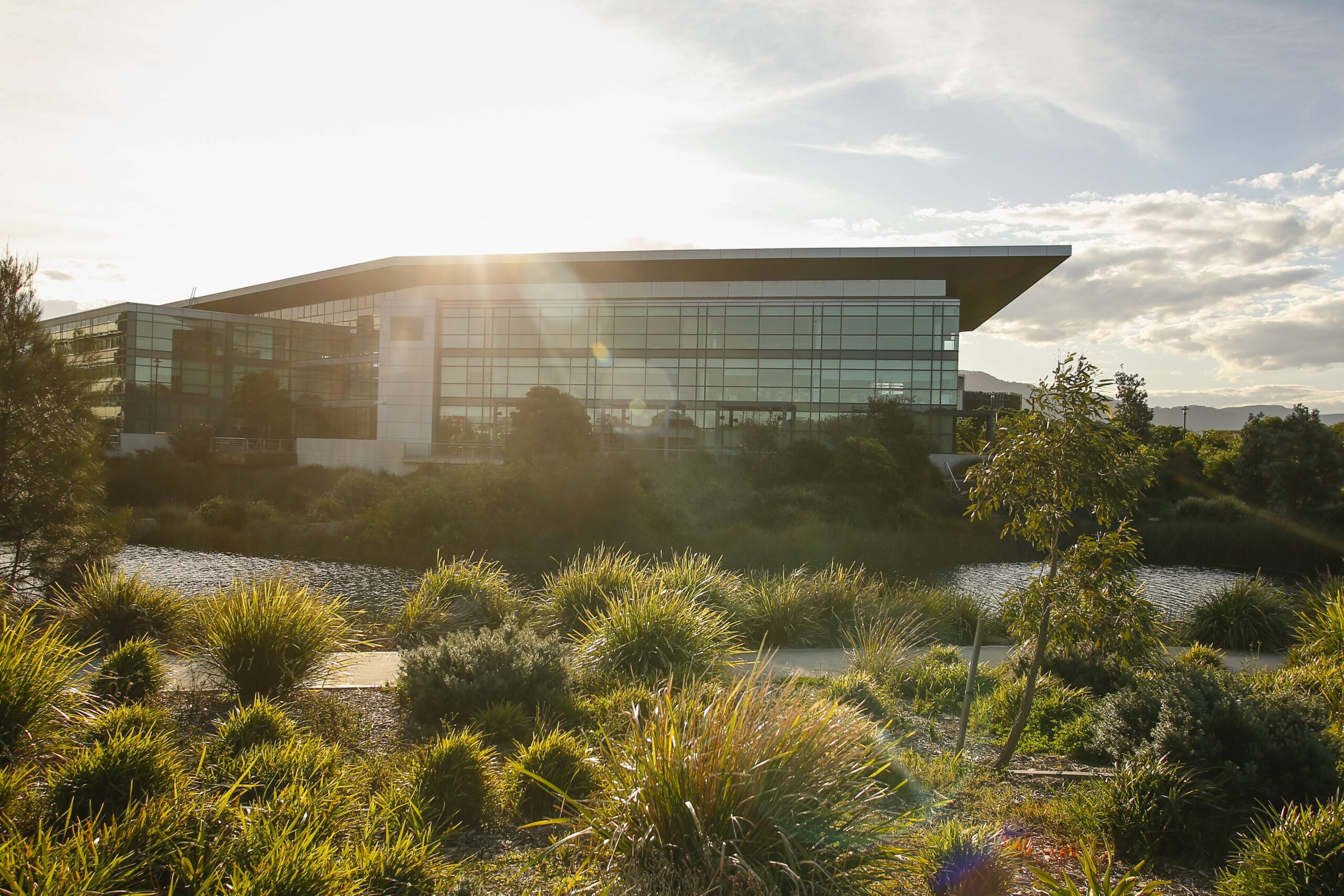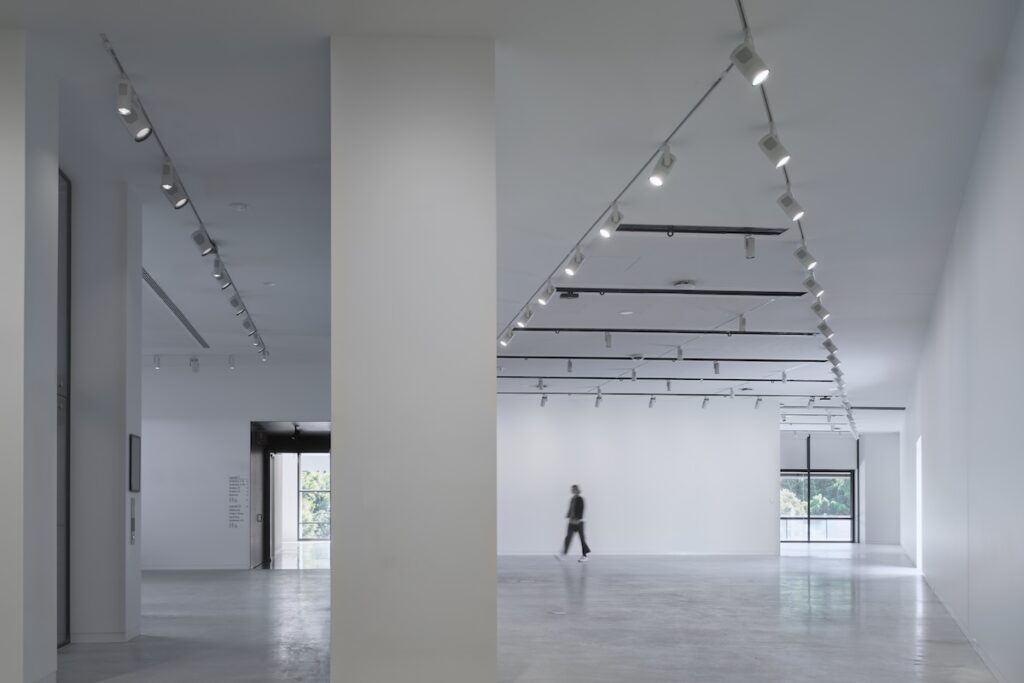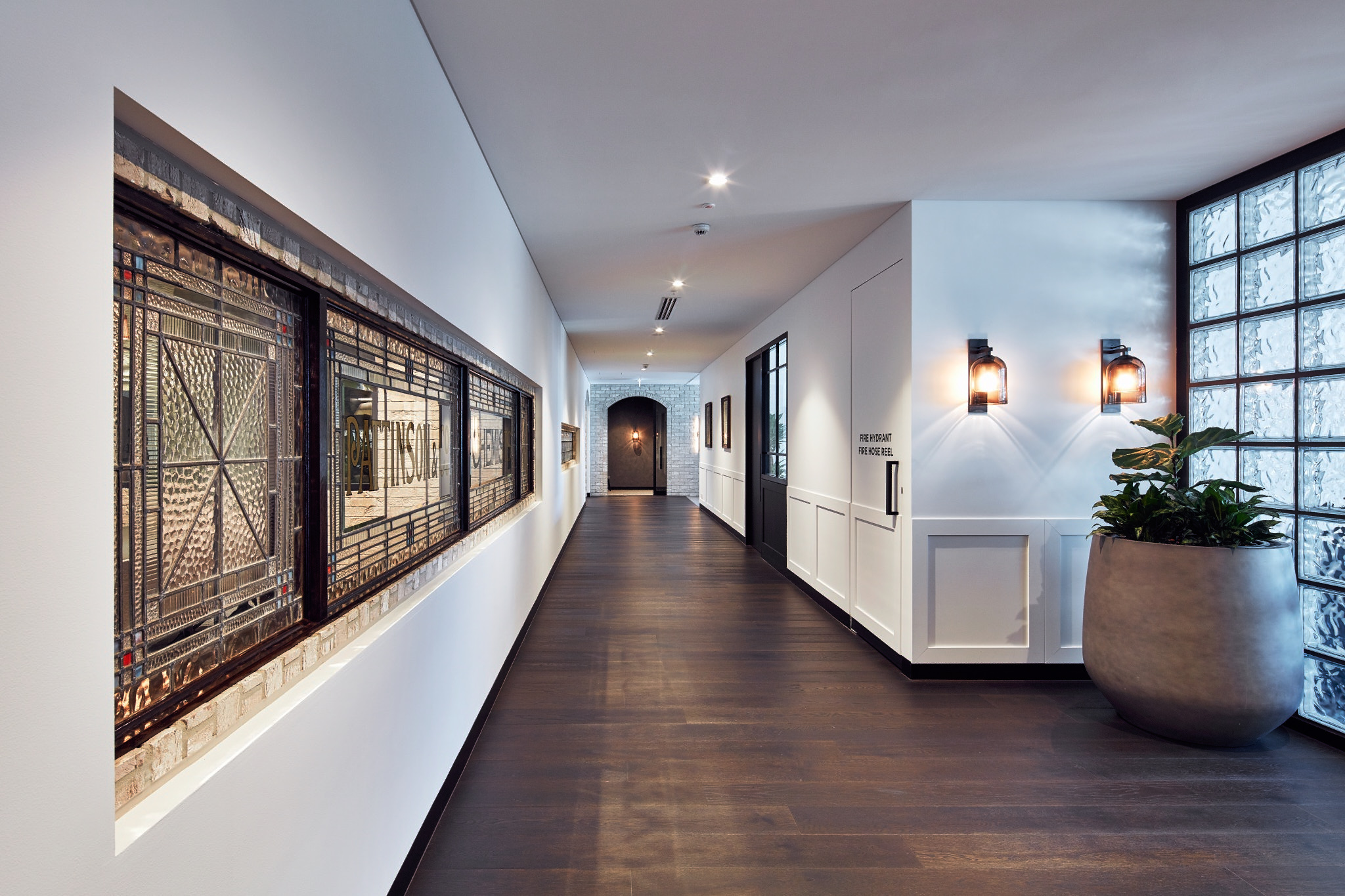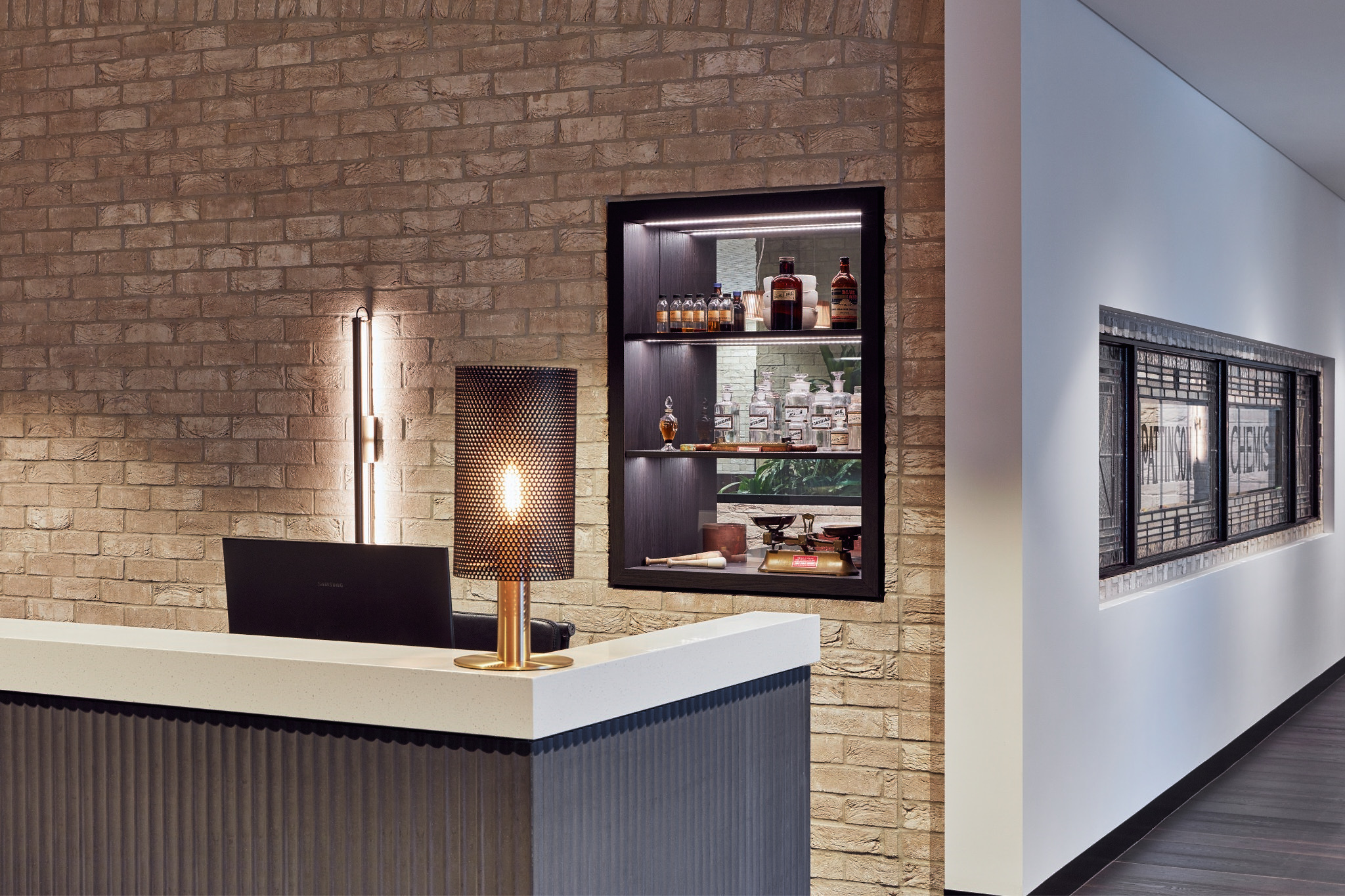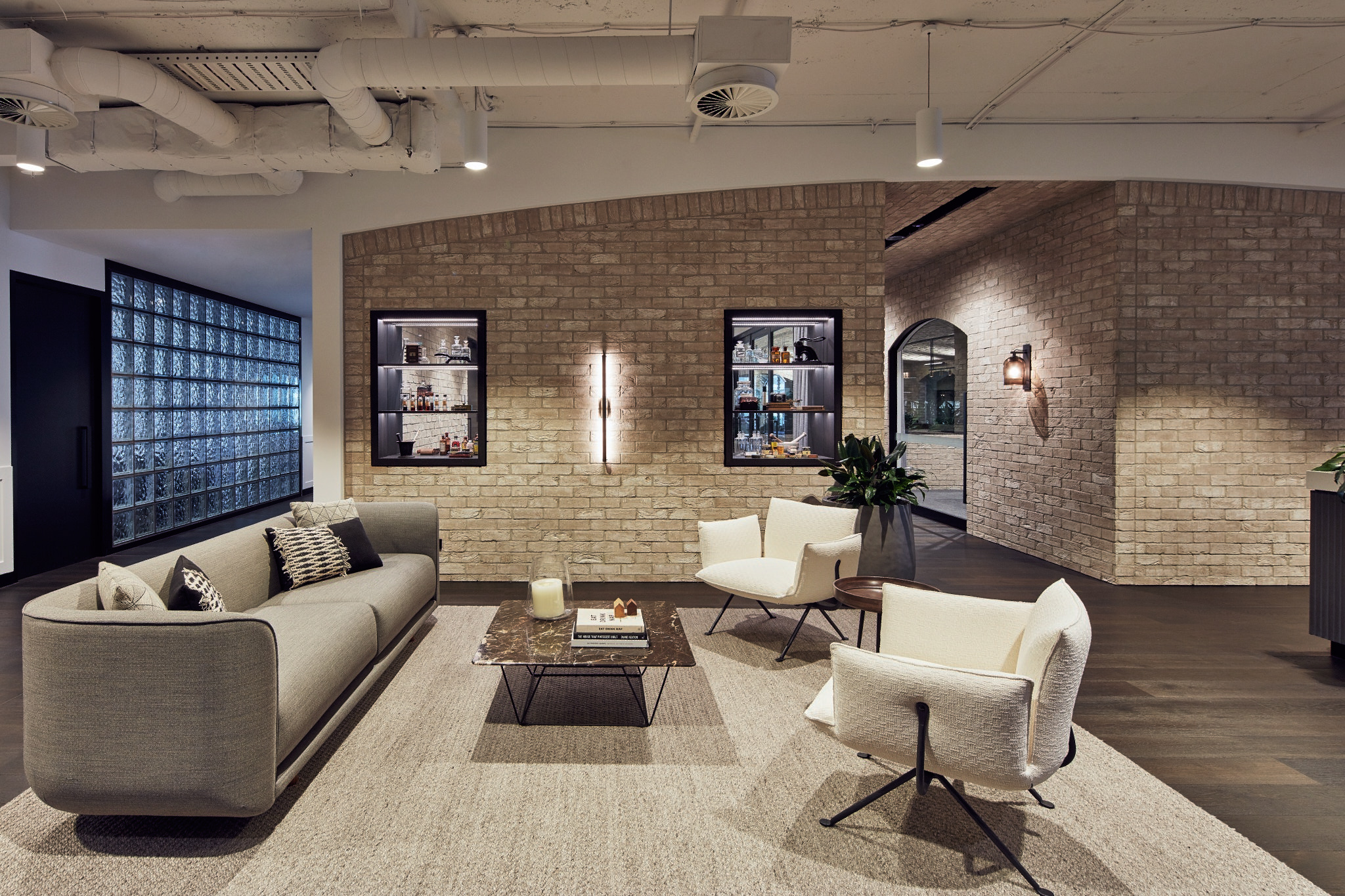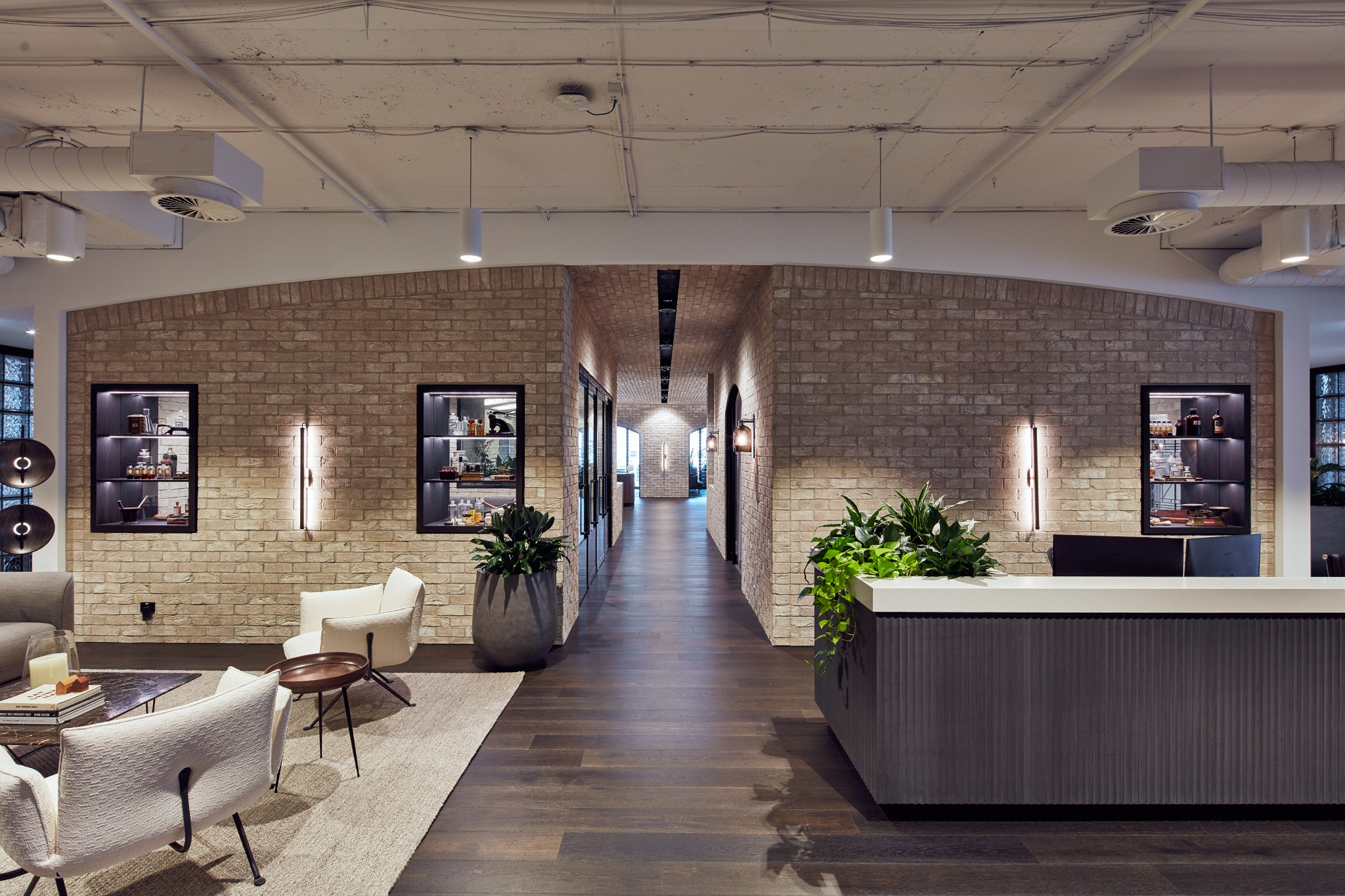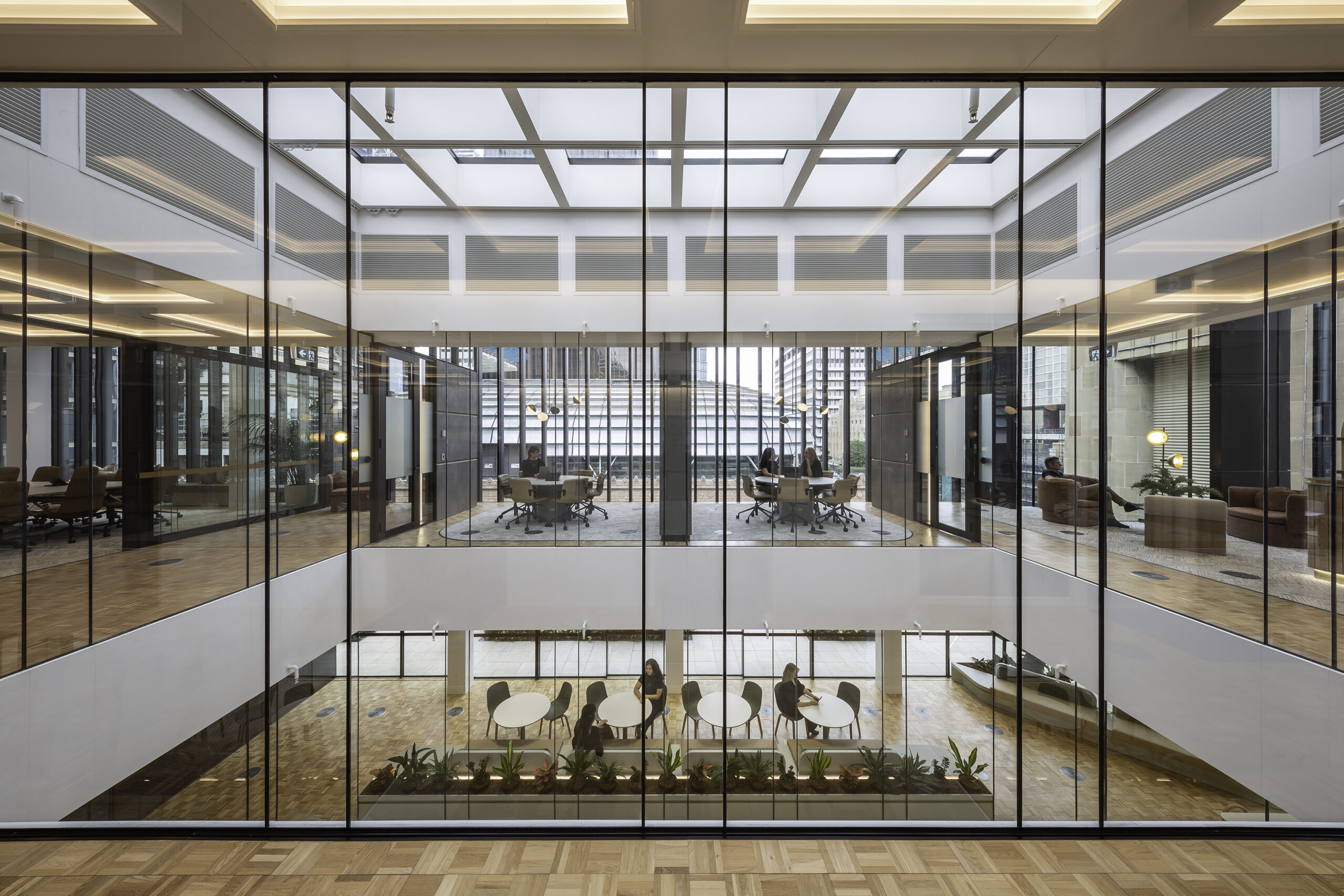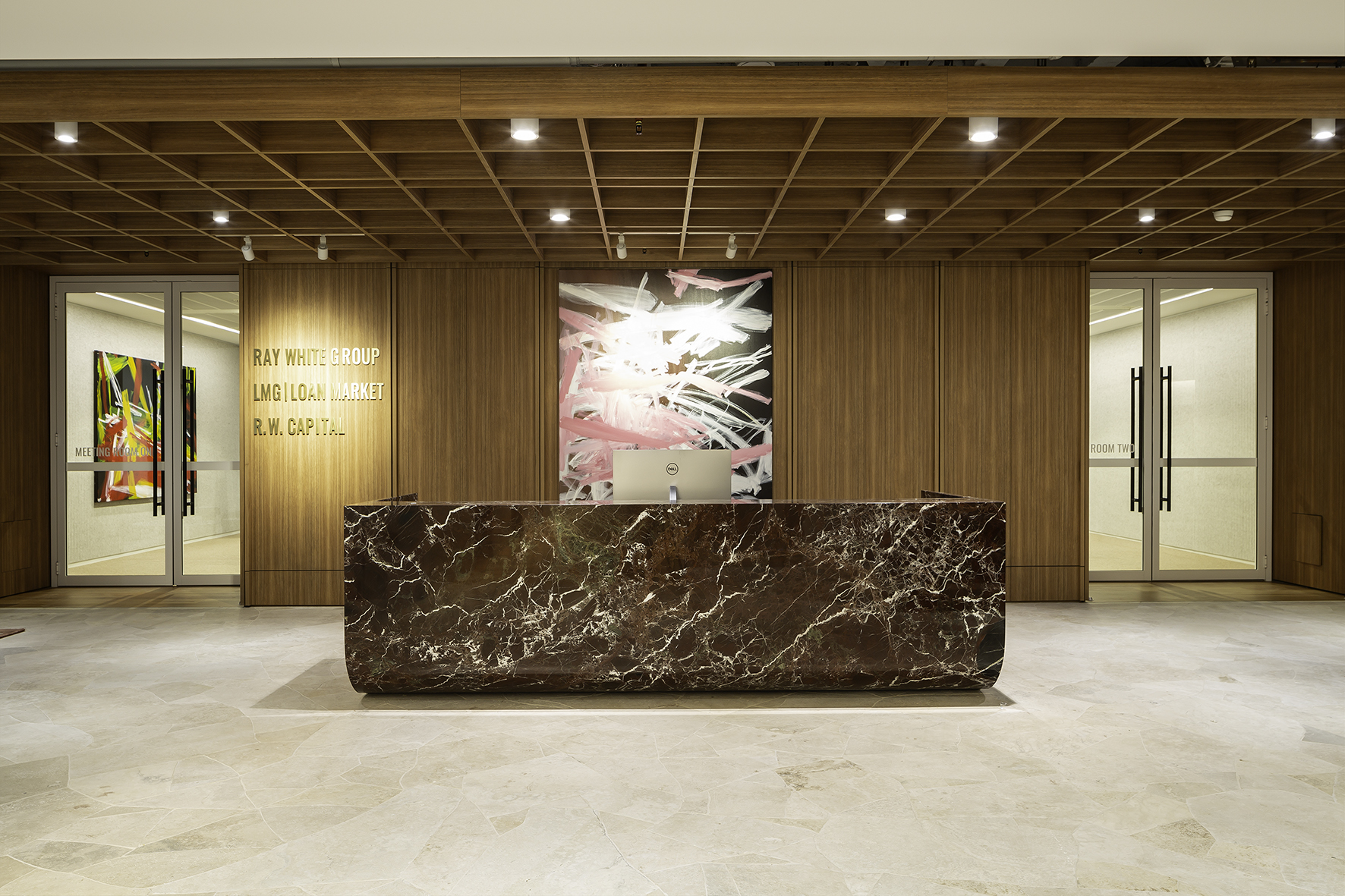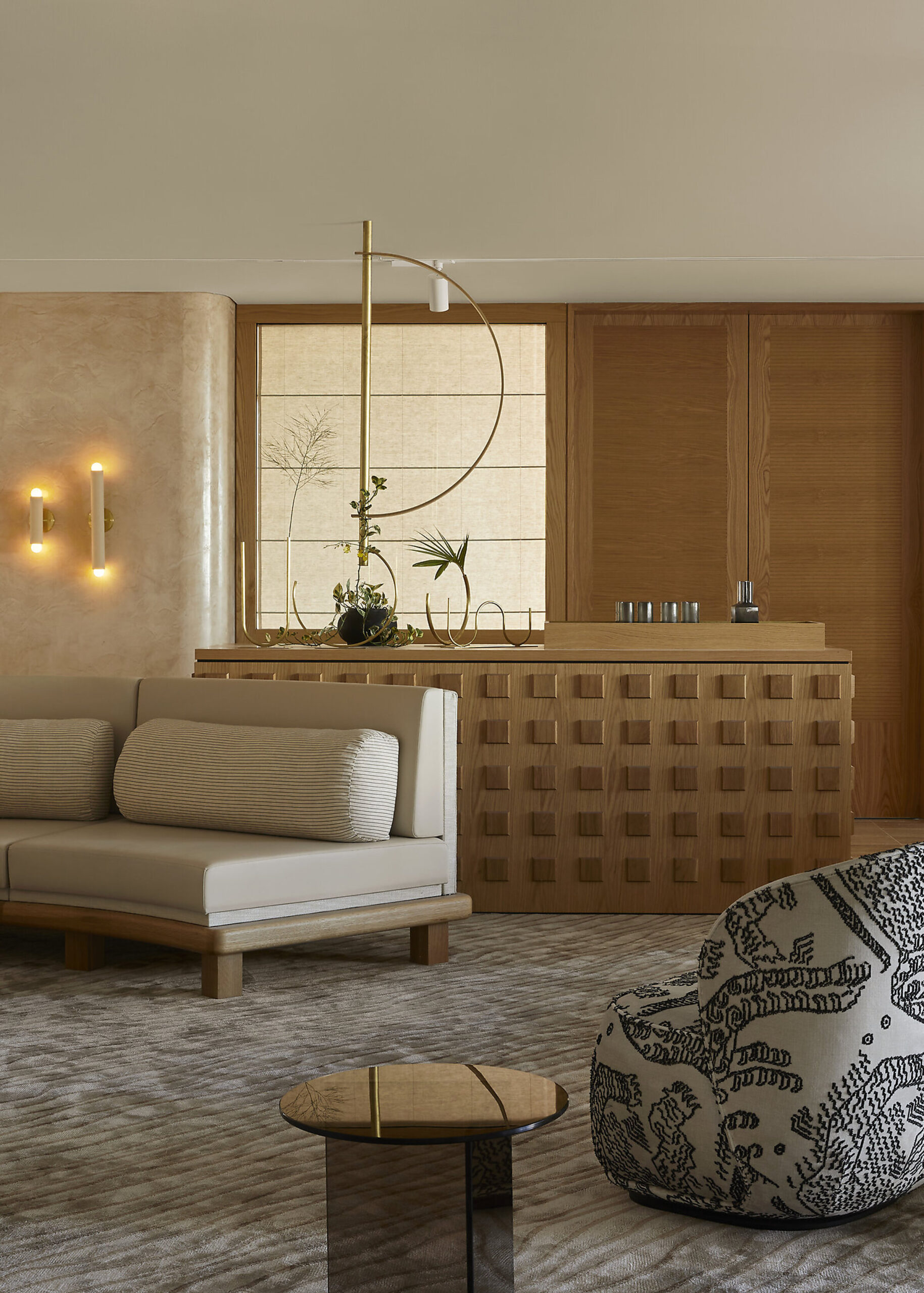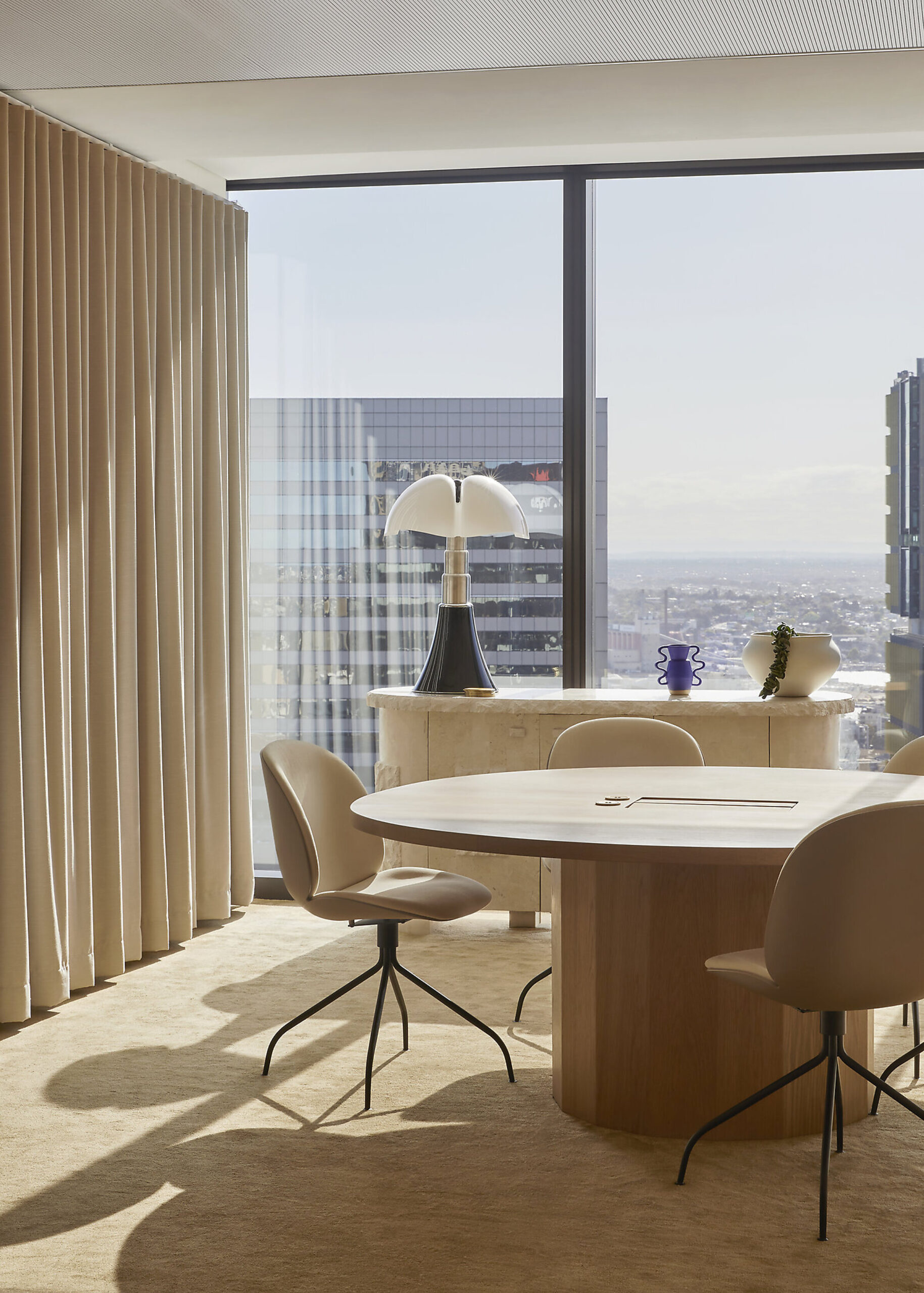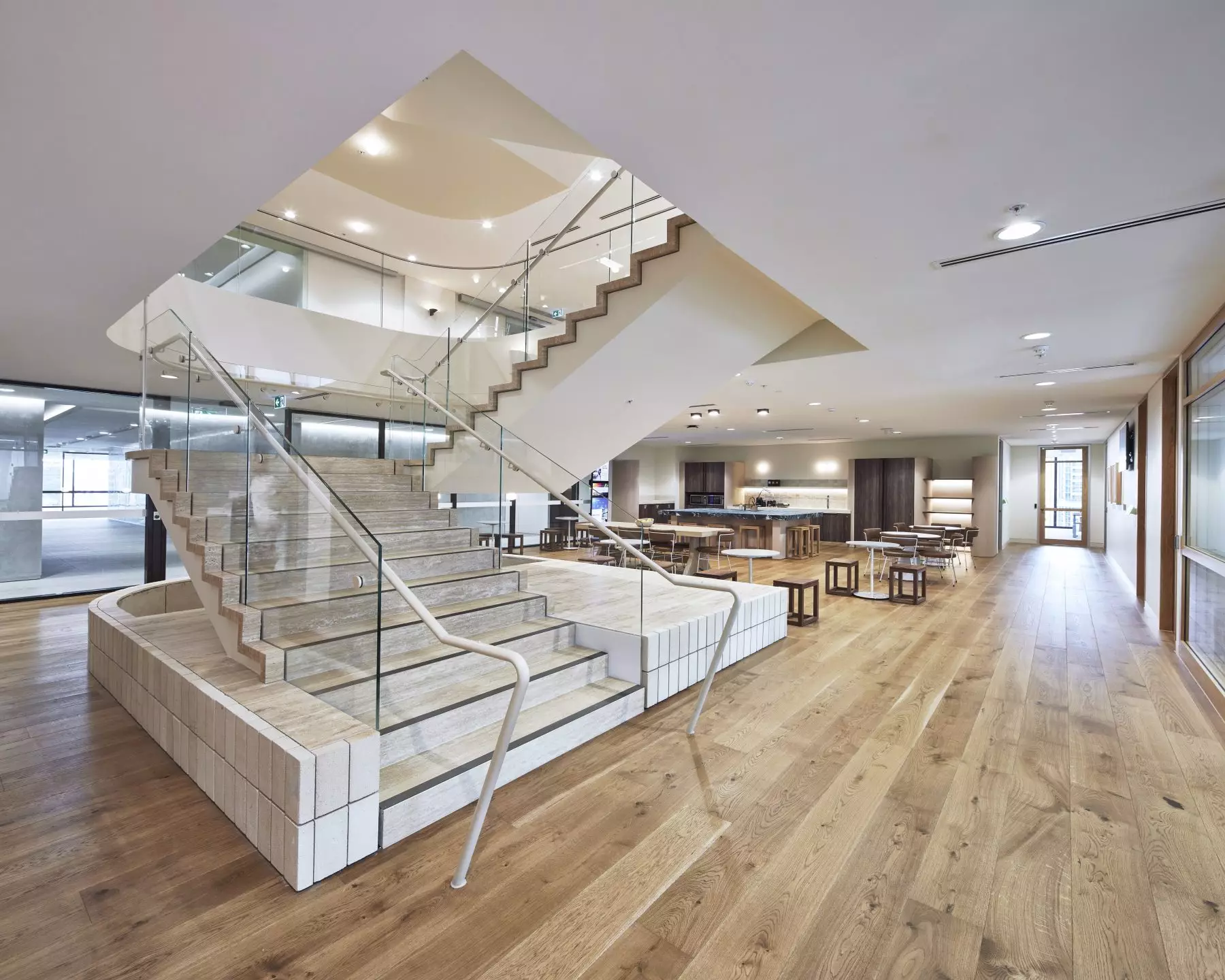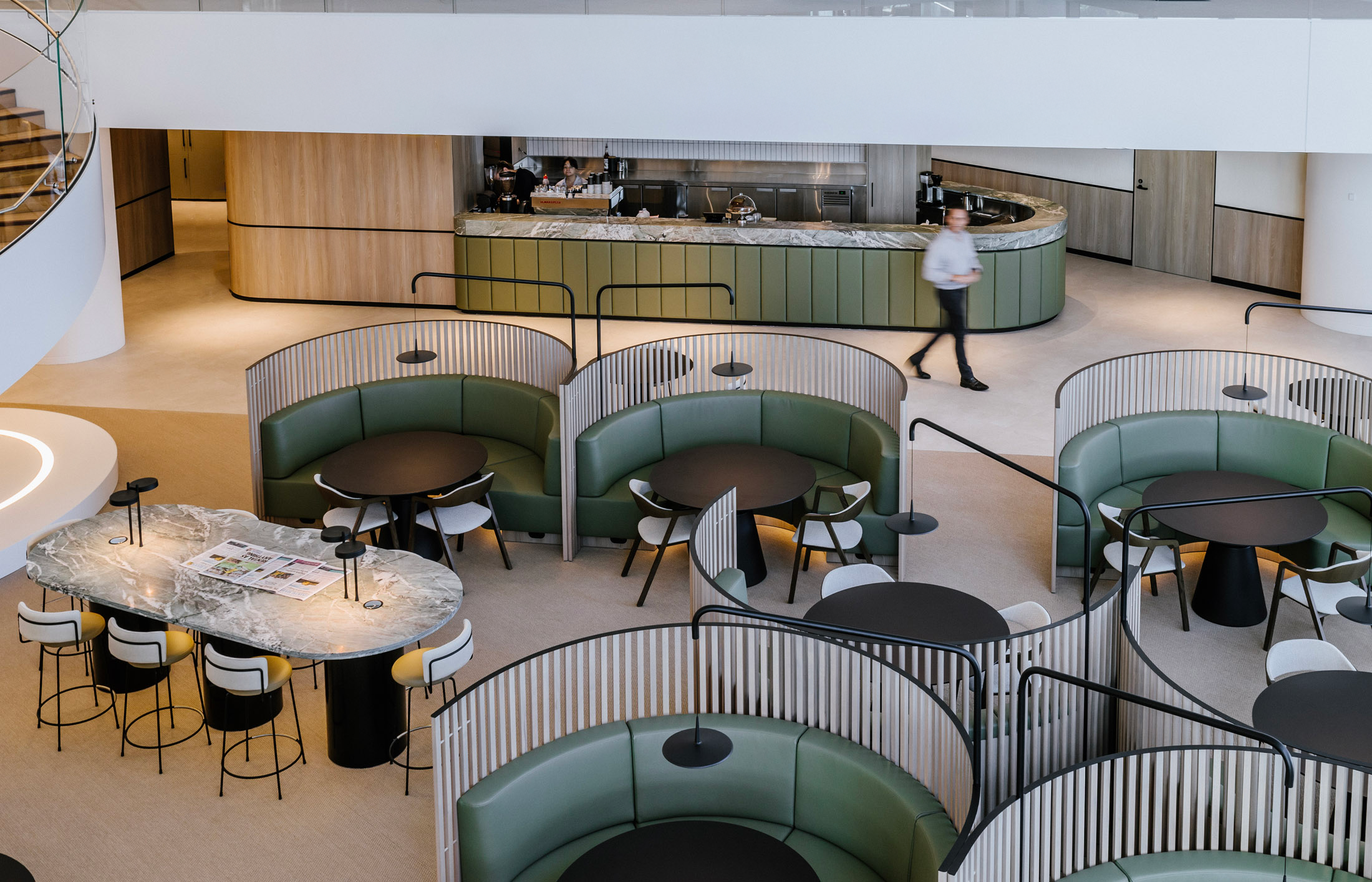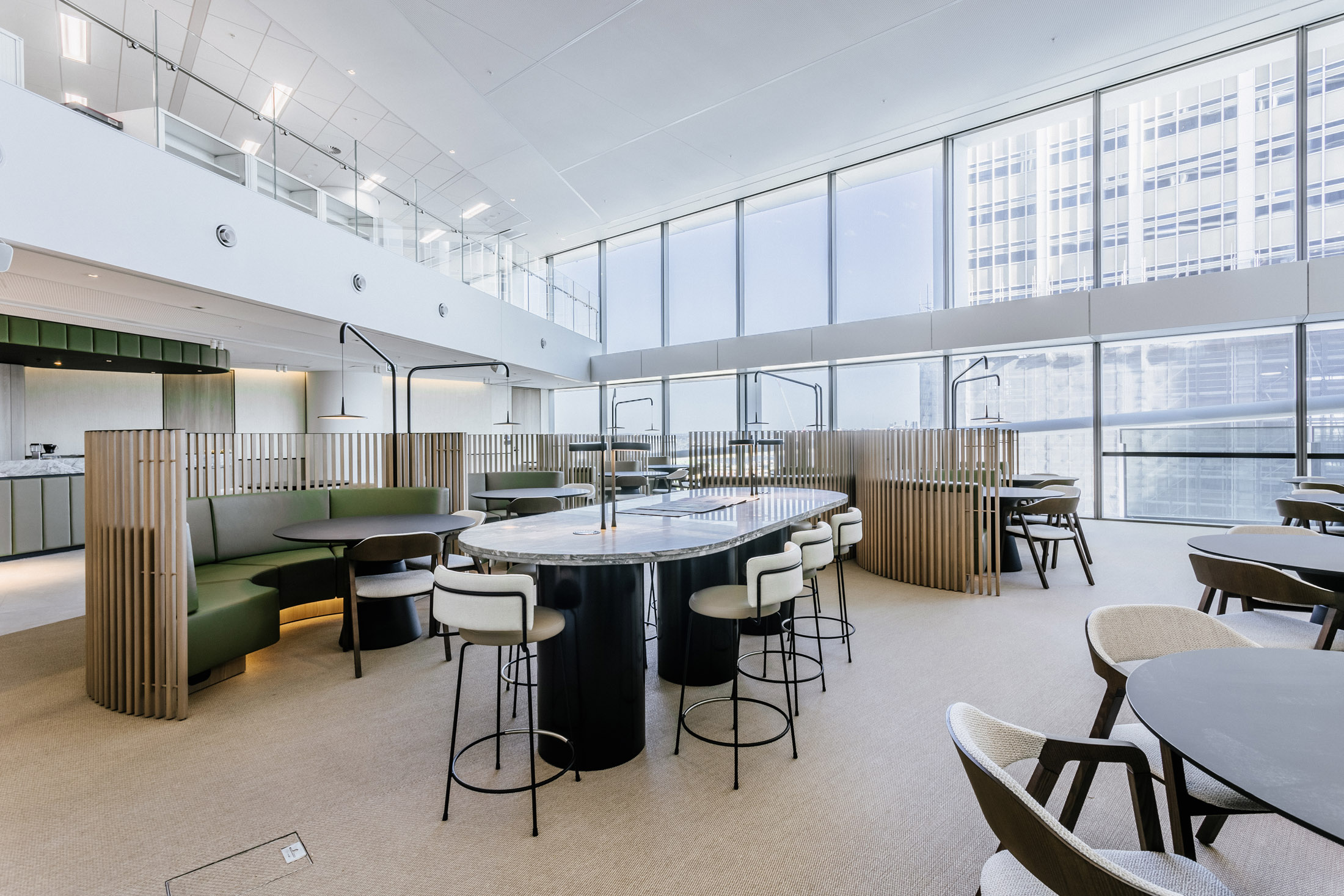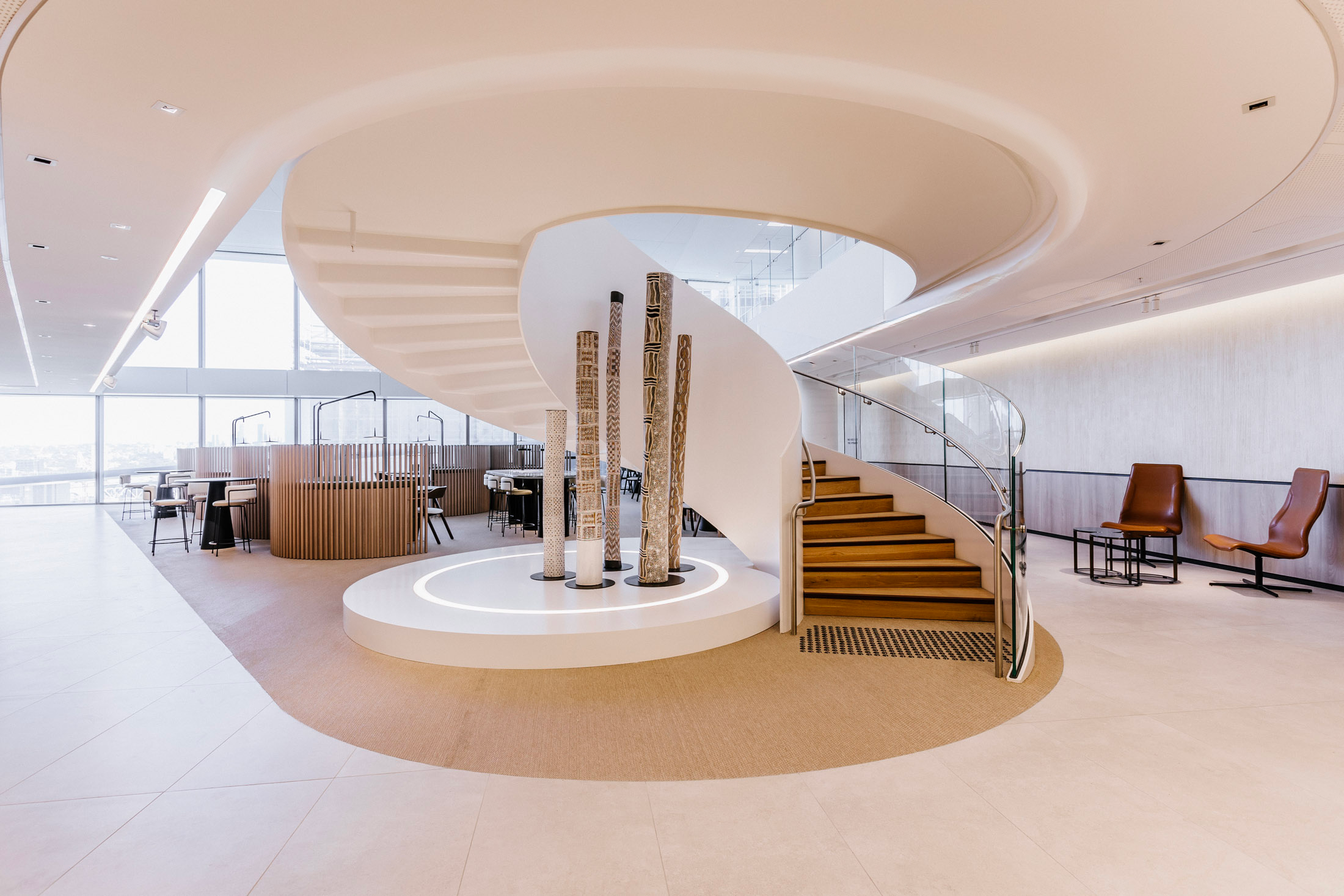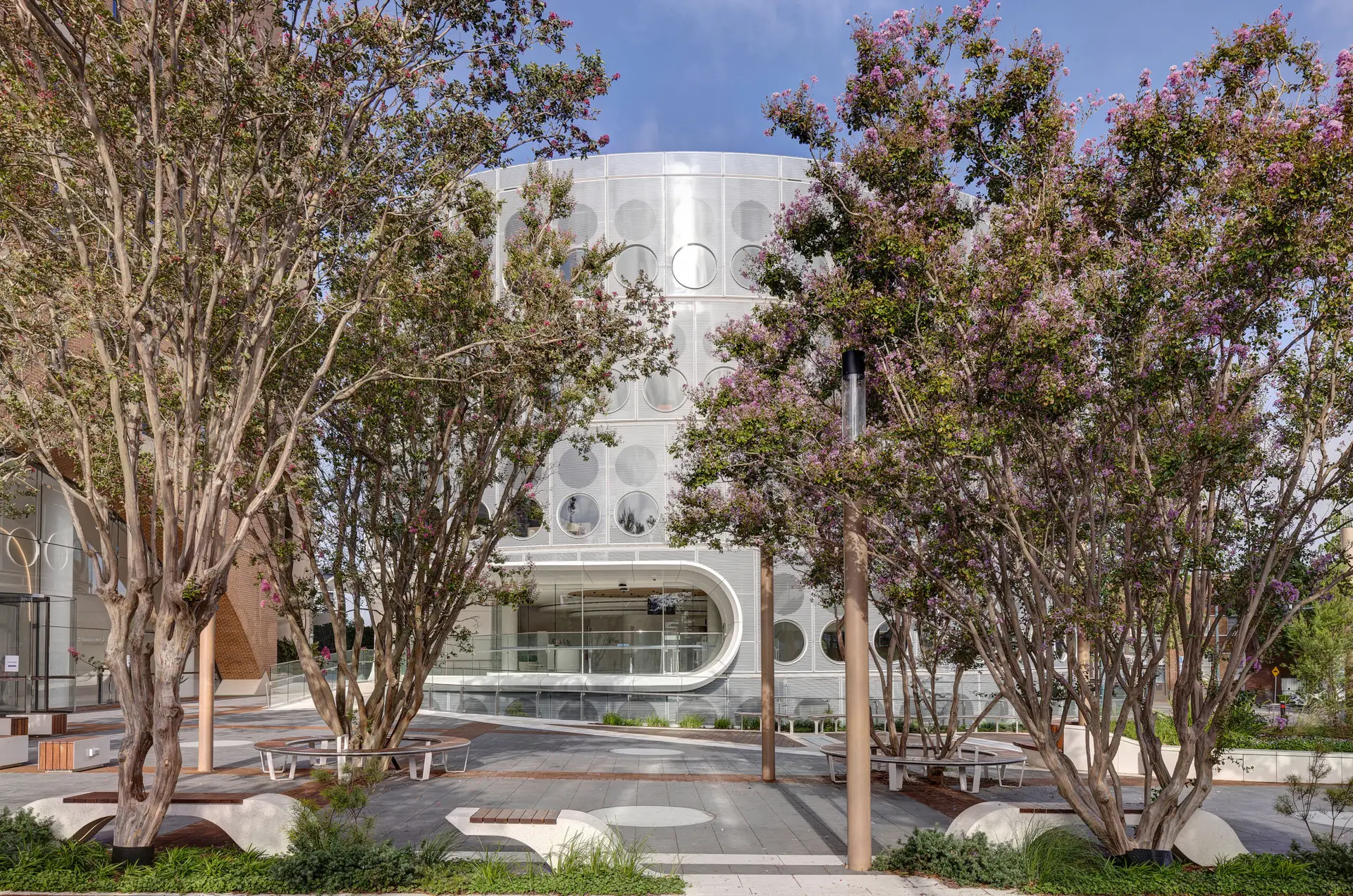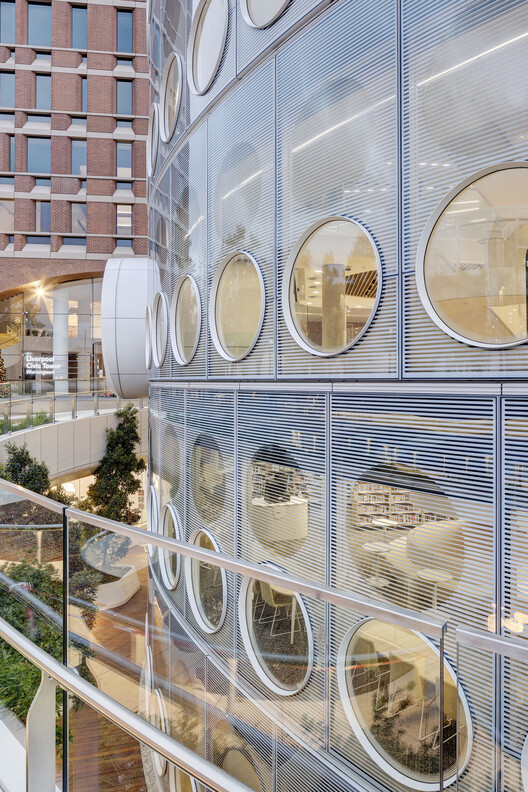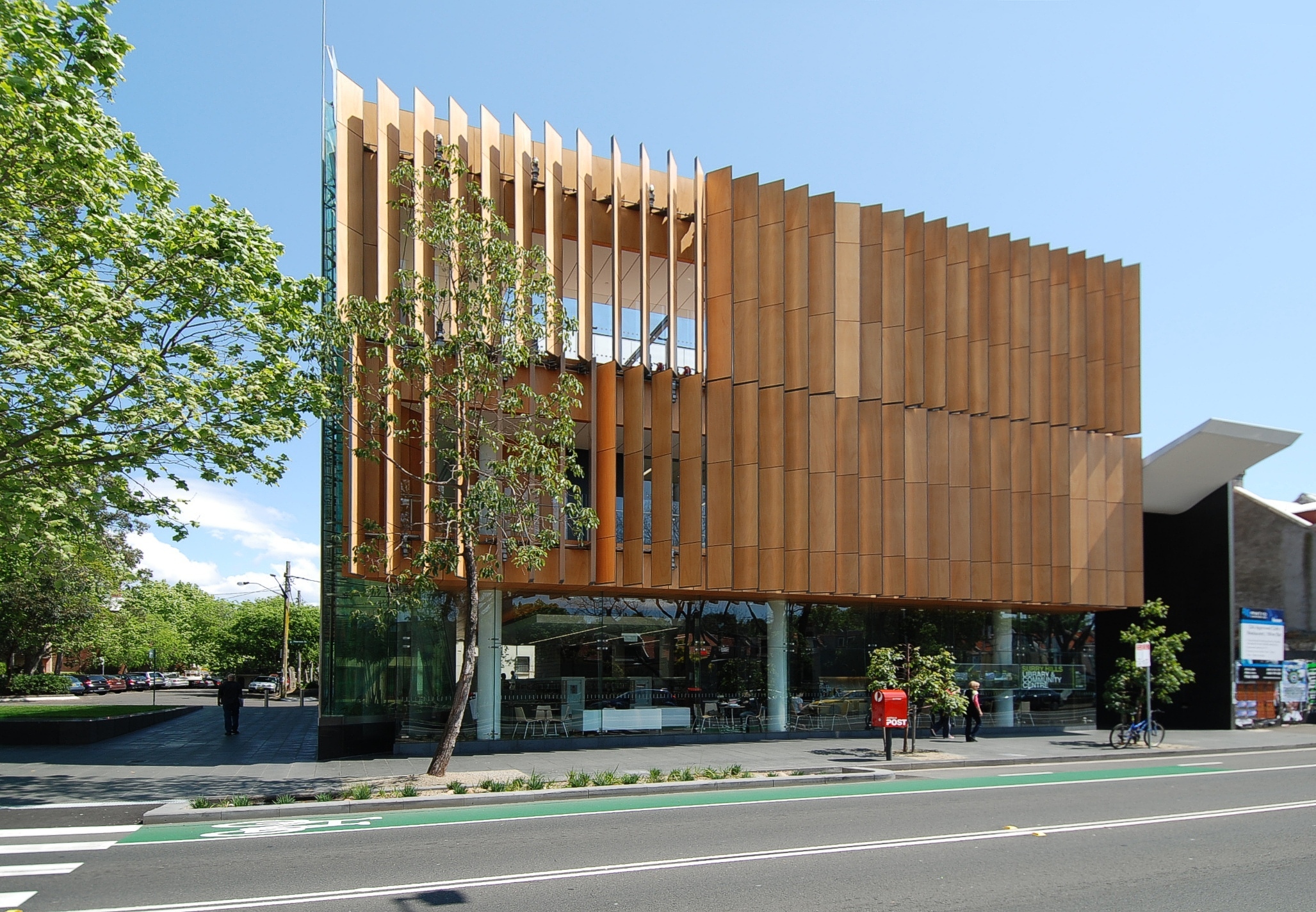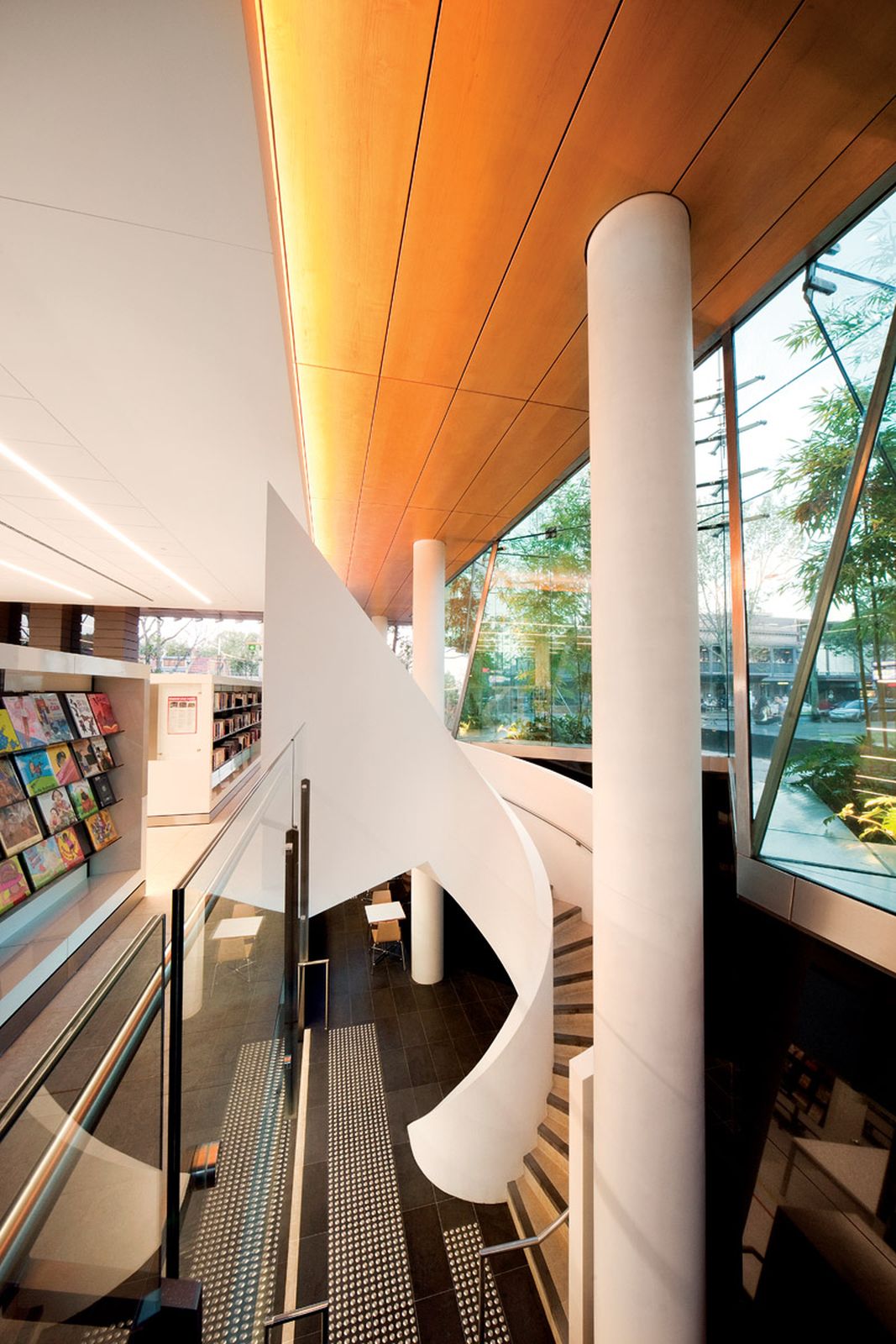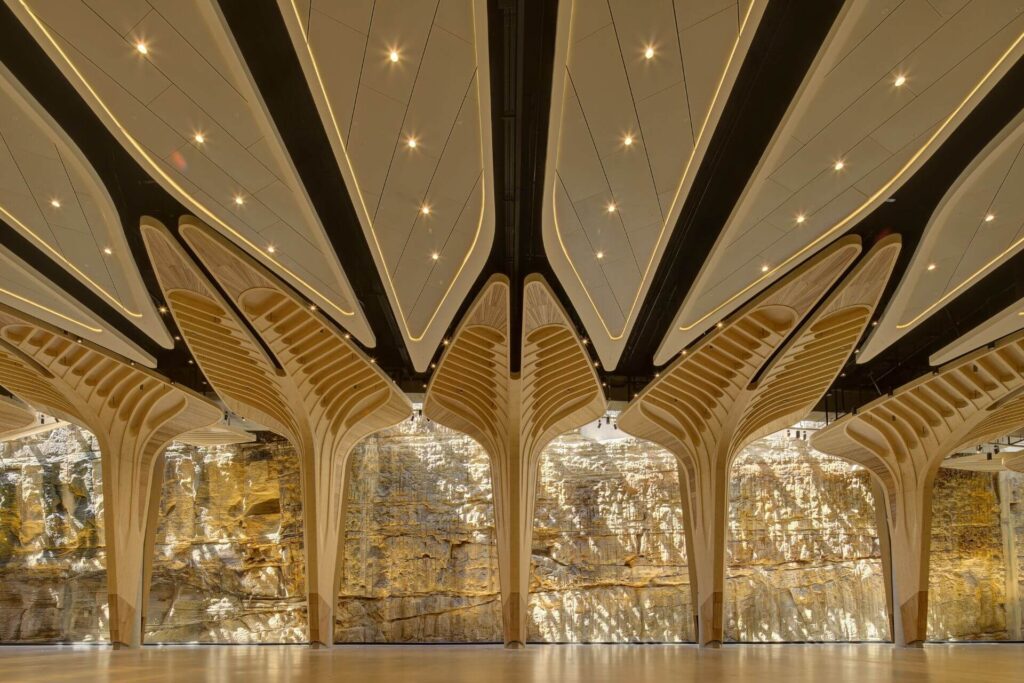
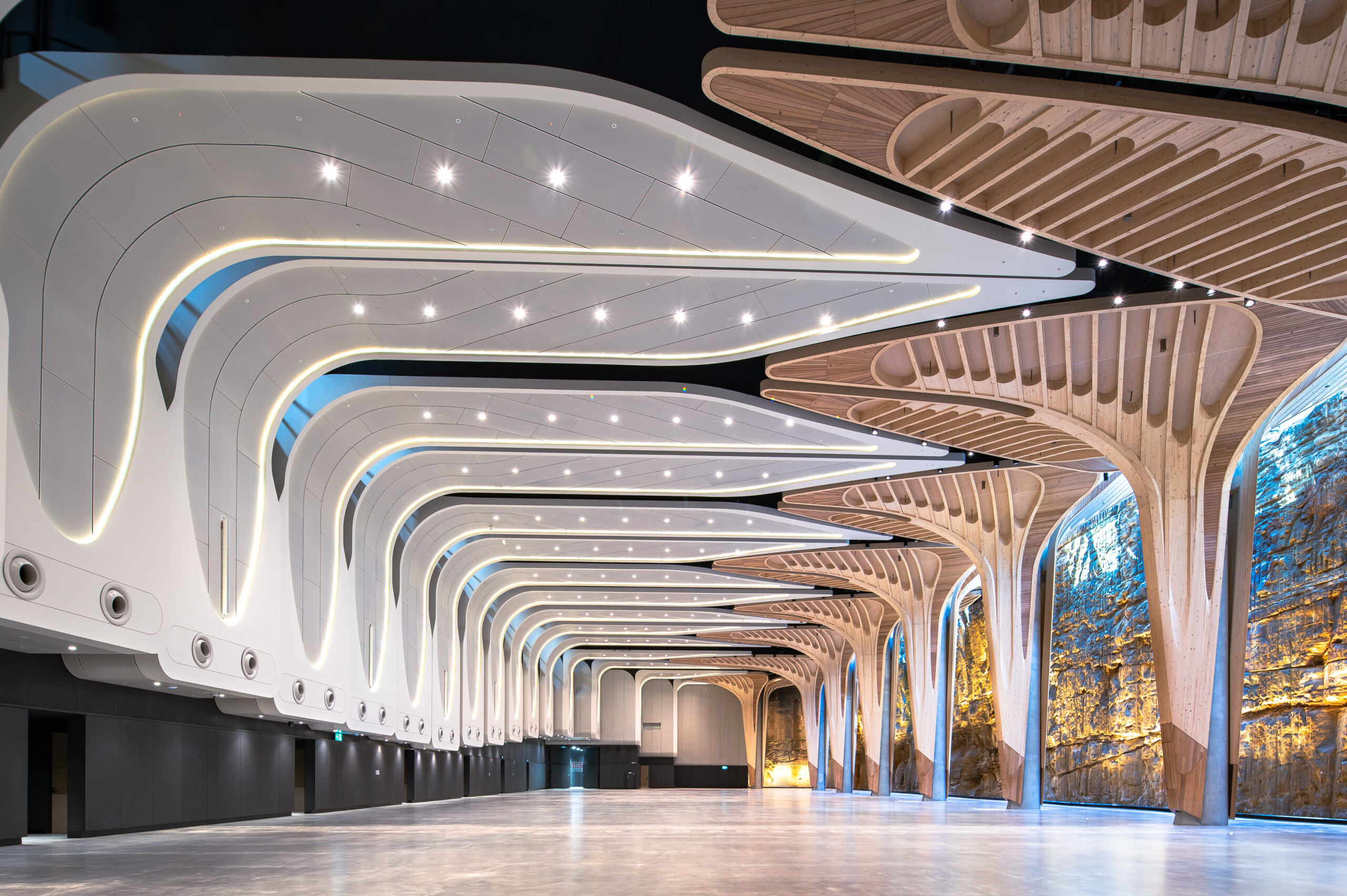
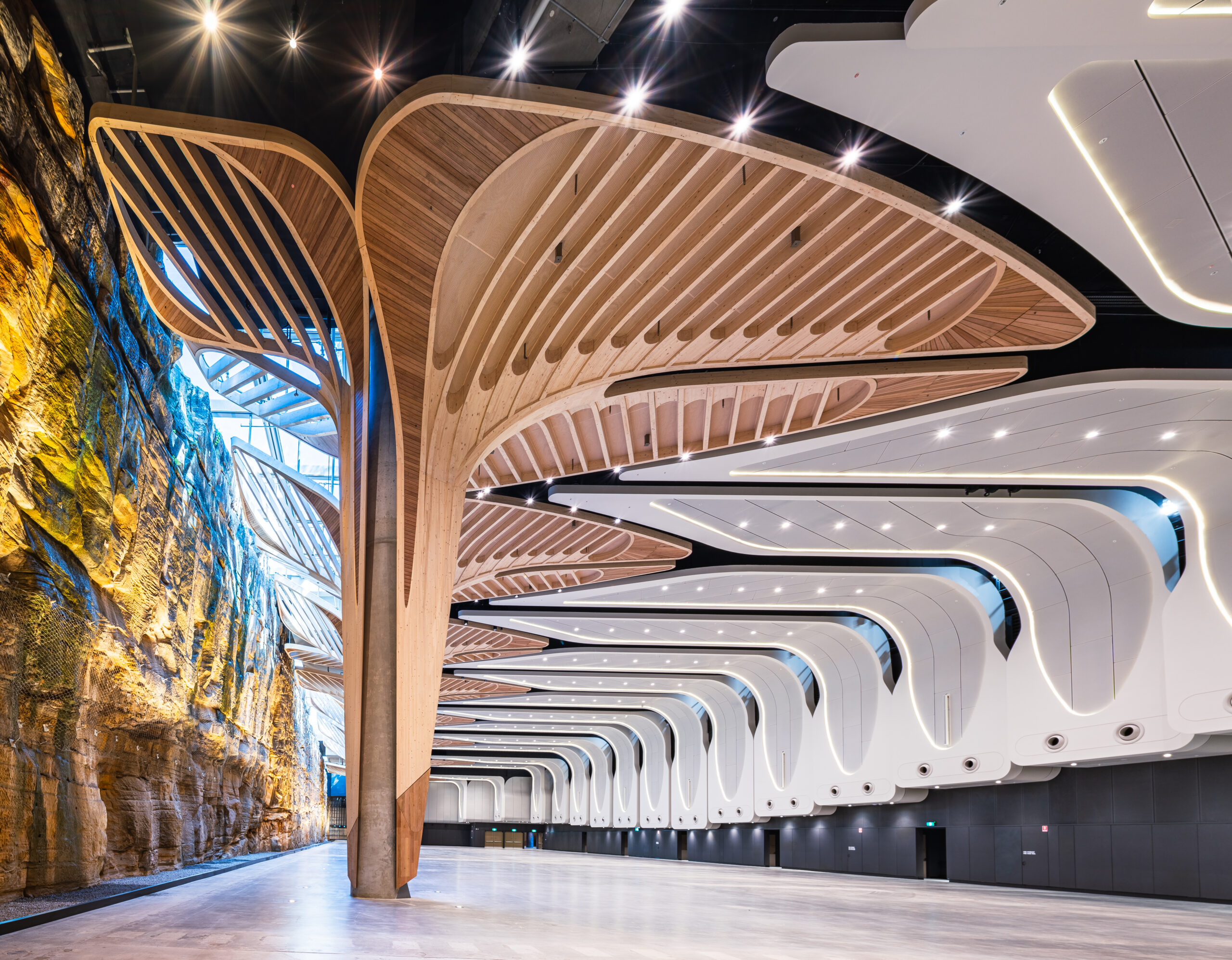
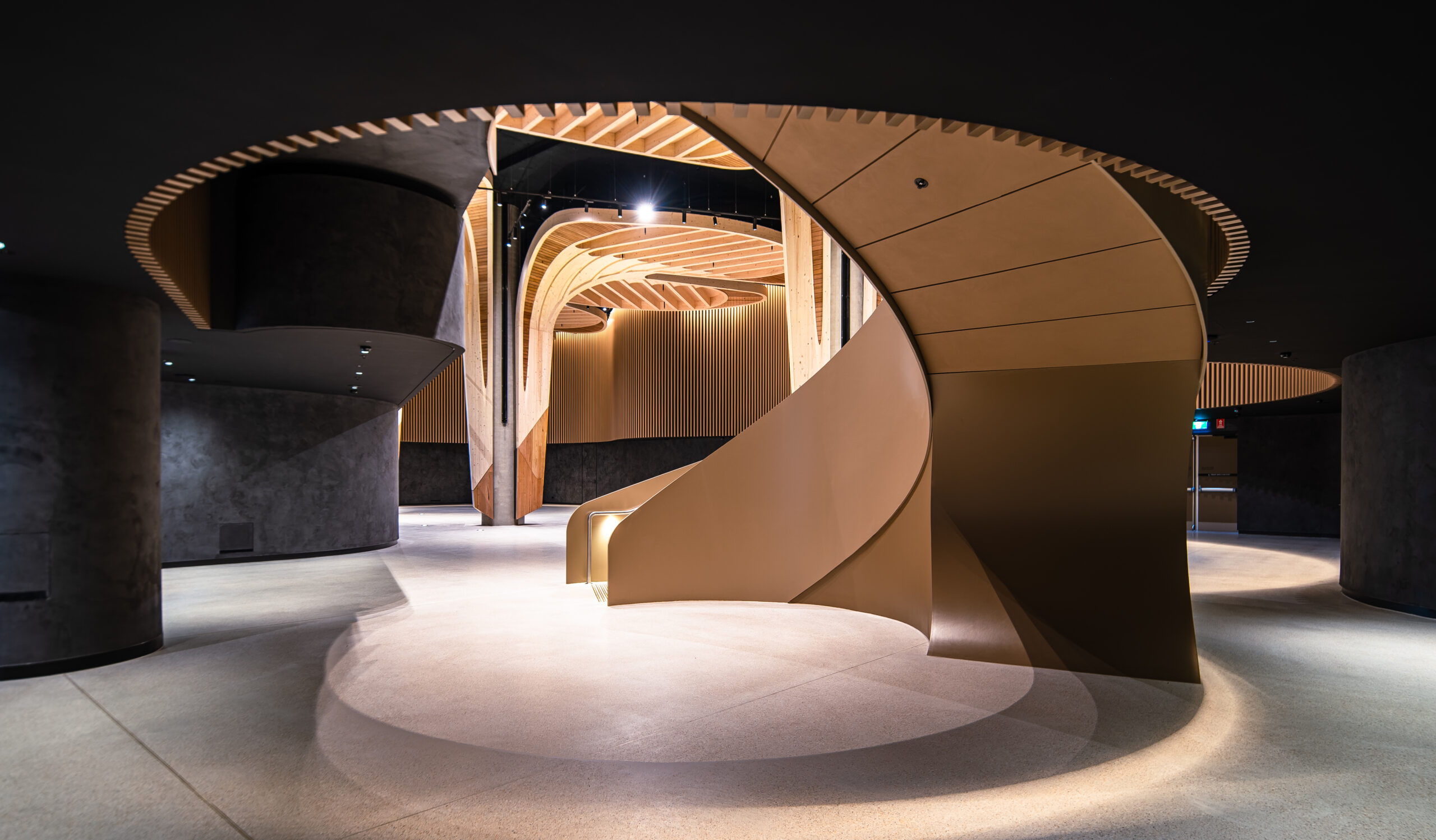
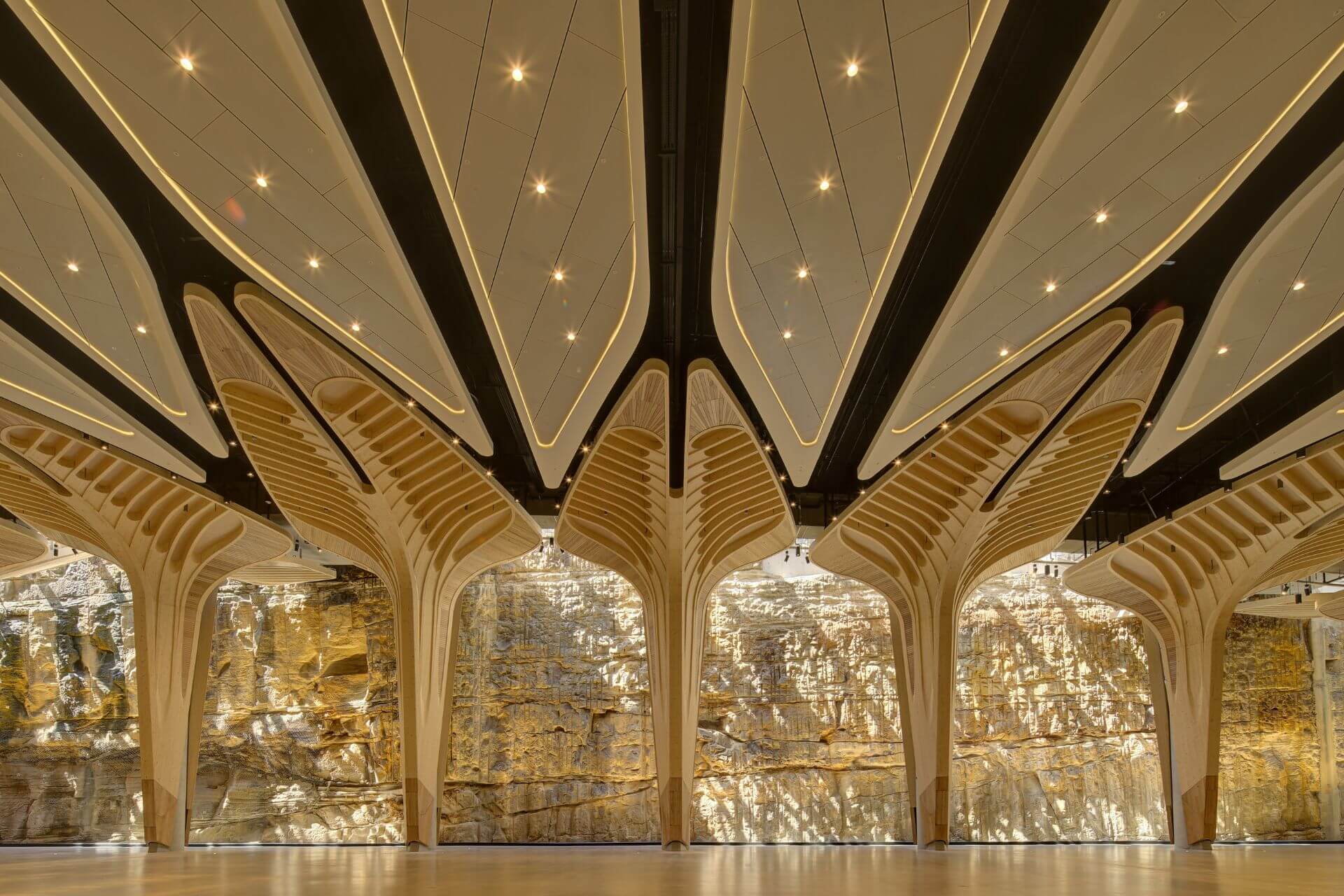
Carved into the sandstone headland, The Cutaway at Barangaroo is a feat of precision engineering and architectural restraint. Delivering a vast column-free underground space beneath a restored naturalistic park demanded complex excavation, tight tolerances, and seamless integration between structure and landscape.
The design balances raw, exposed geology with refined event infrastructure, resolving ventilation, access, and waterproofing challenges in a concealed environment. Coordination across disciplines was critical to achieve both the monumental scale and subtlety of the finished space.
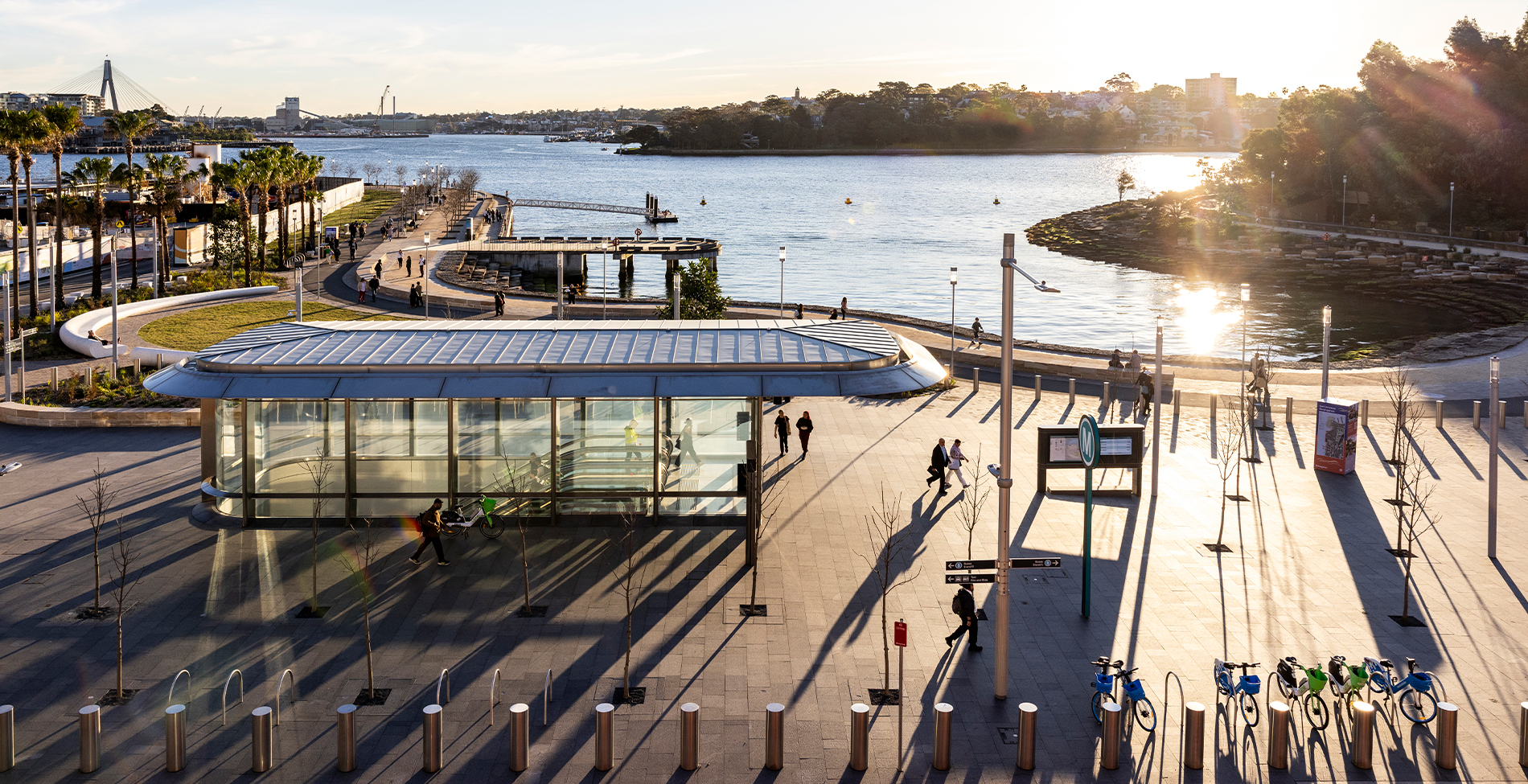
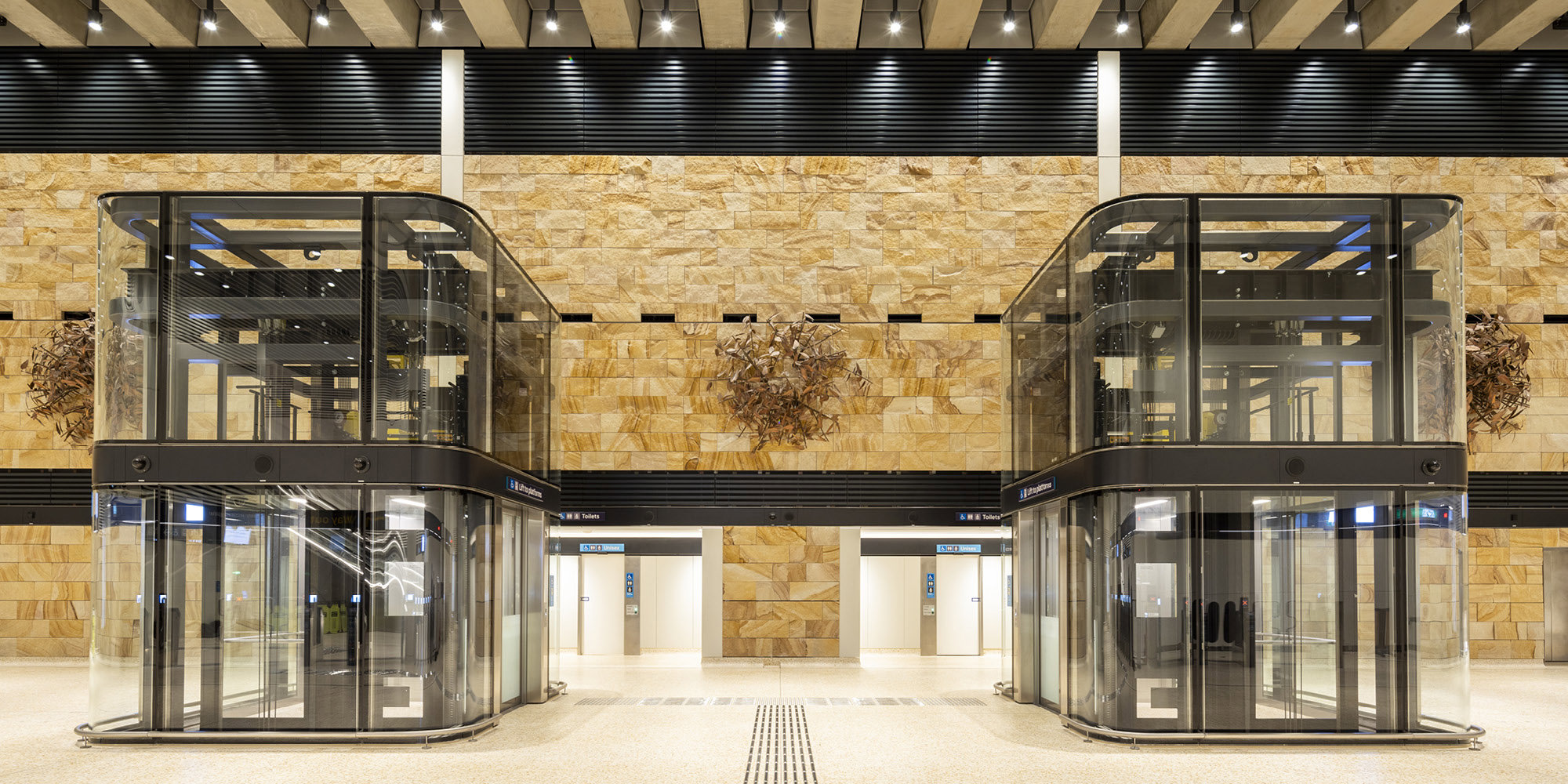
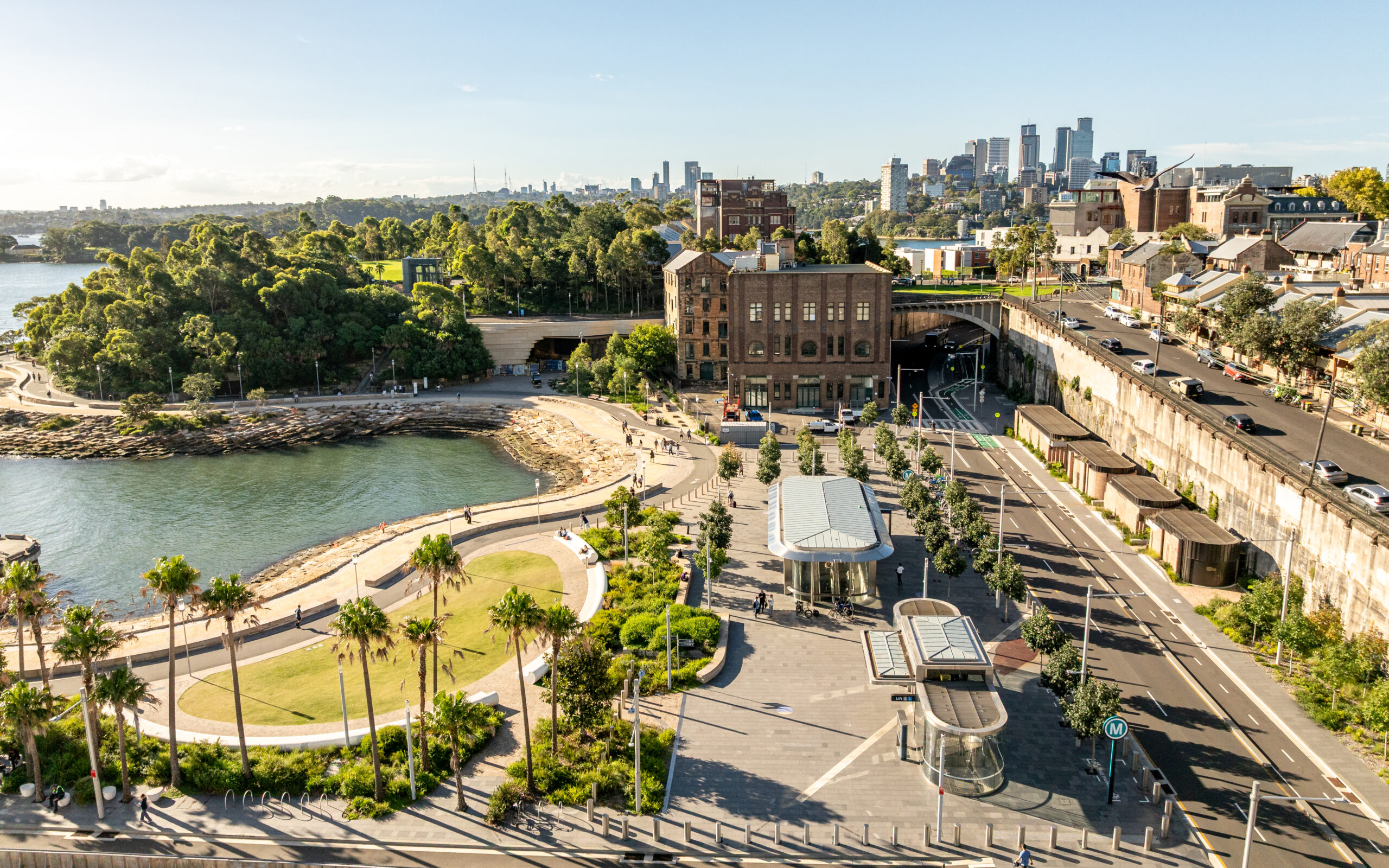
The Barangaroo Station for Sydney Metro is a landmark underground station rising 25m beneath Hickson Road.
With a hefty $217 million contract, the station spans six subterranean levels across approximately 350 m in length and features walls clad in over 7,700 locally quarried sandstone panels, delivering a dramatic civic gateway linking the city, Walsh Bay, ferry services and the Barangaroo precinct. Excavation began in October 2019, and the station officially opened on 19 August 2024 as part of the City and Southwest extension.
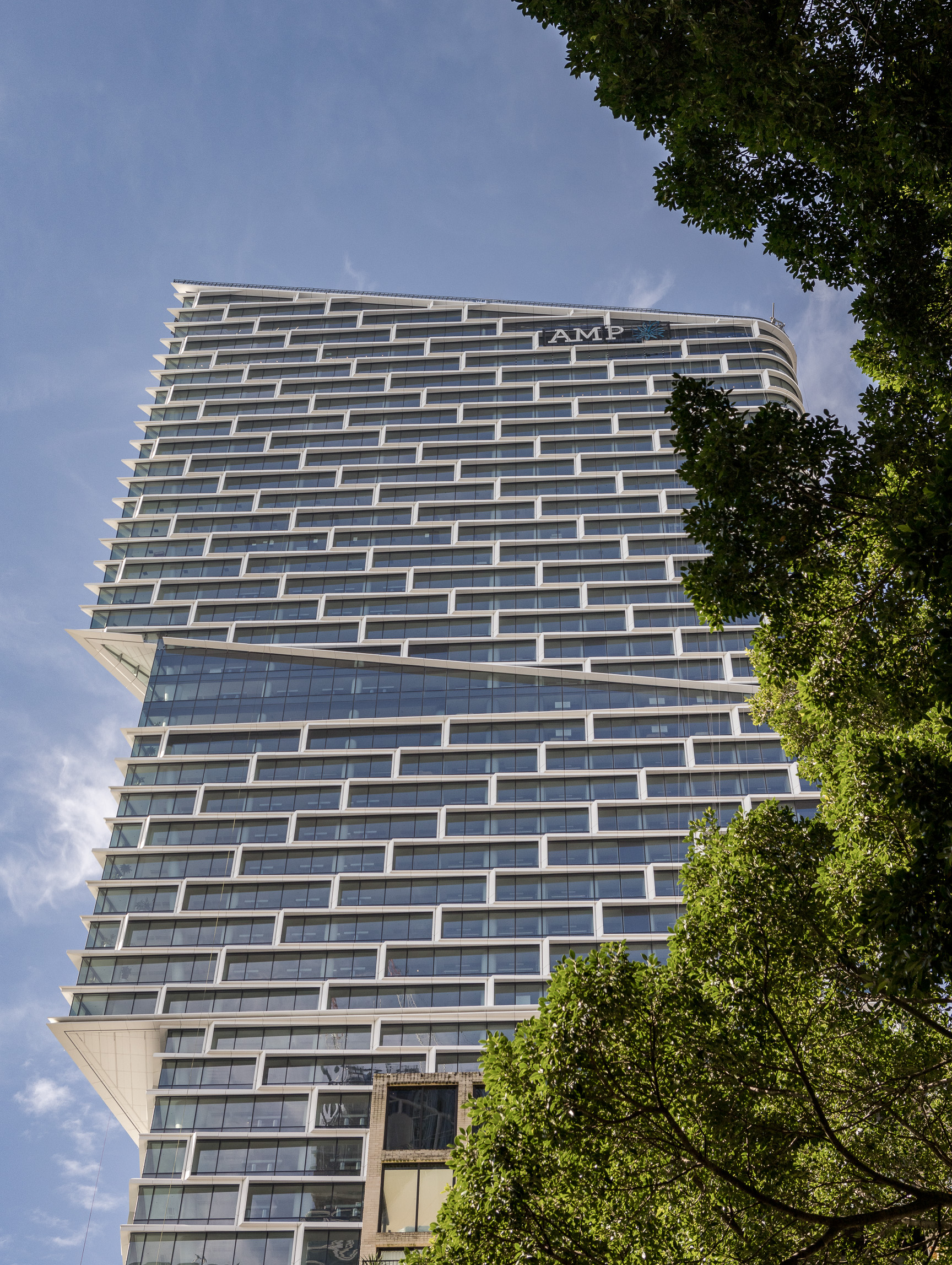
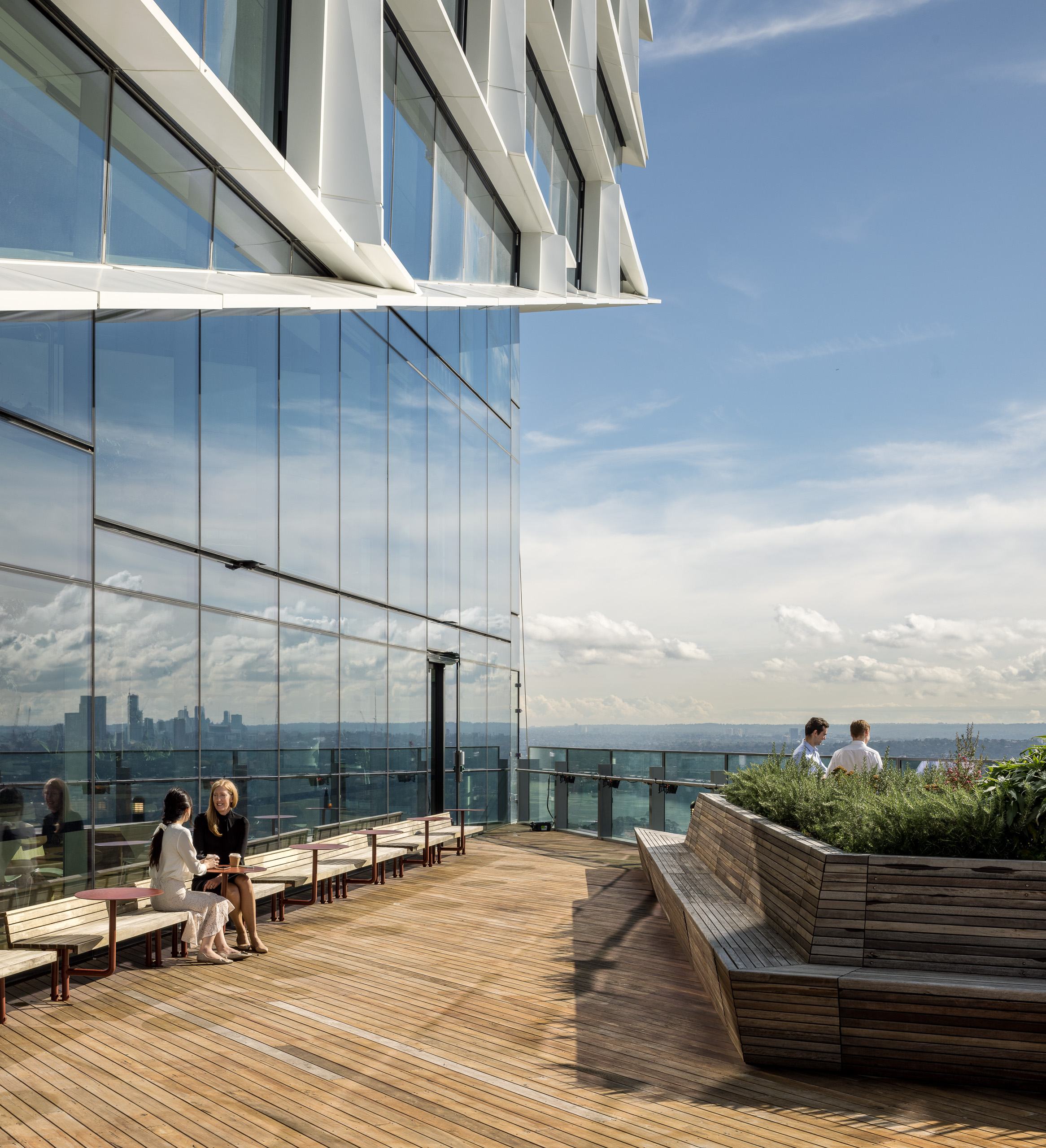
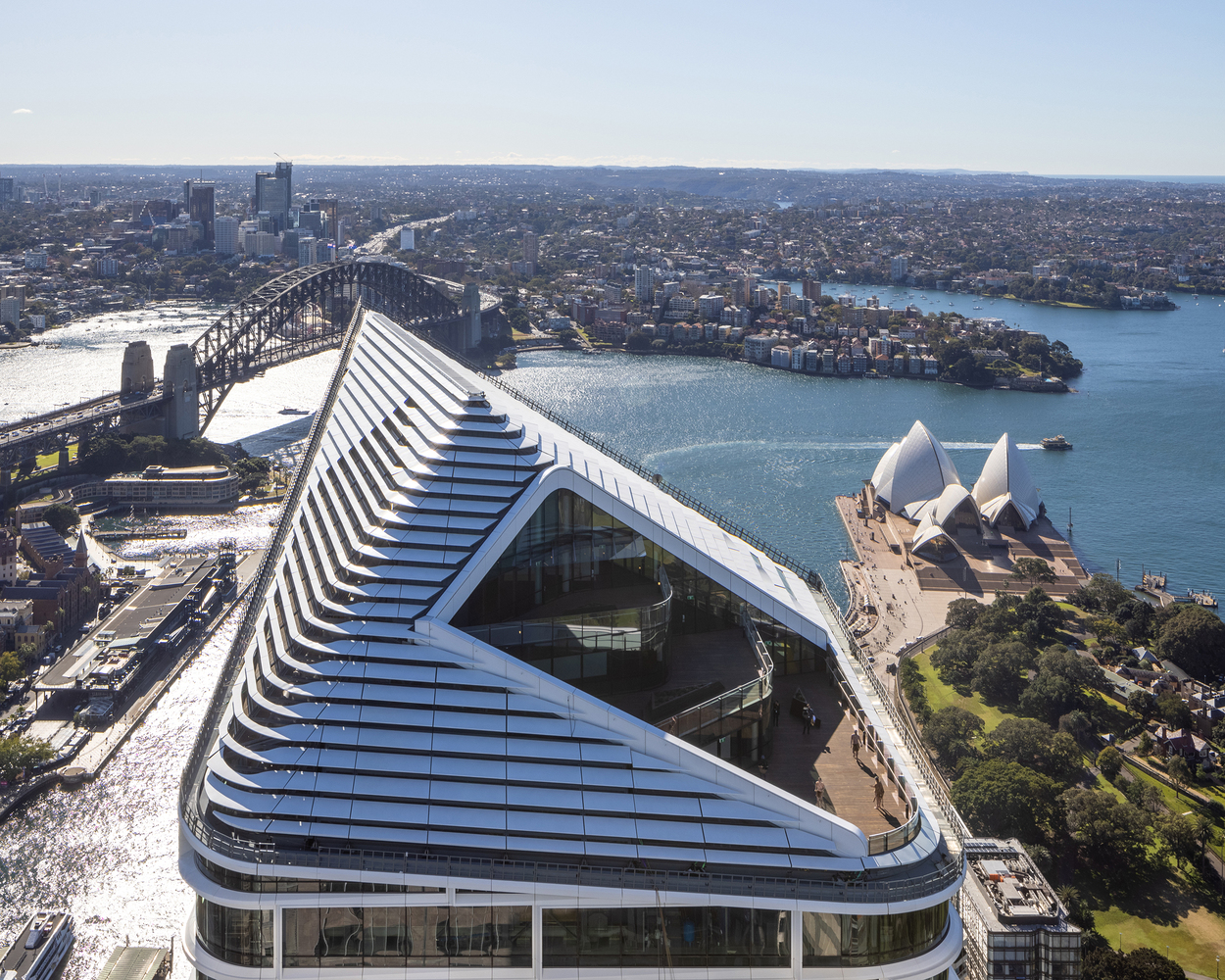
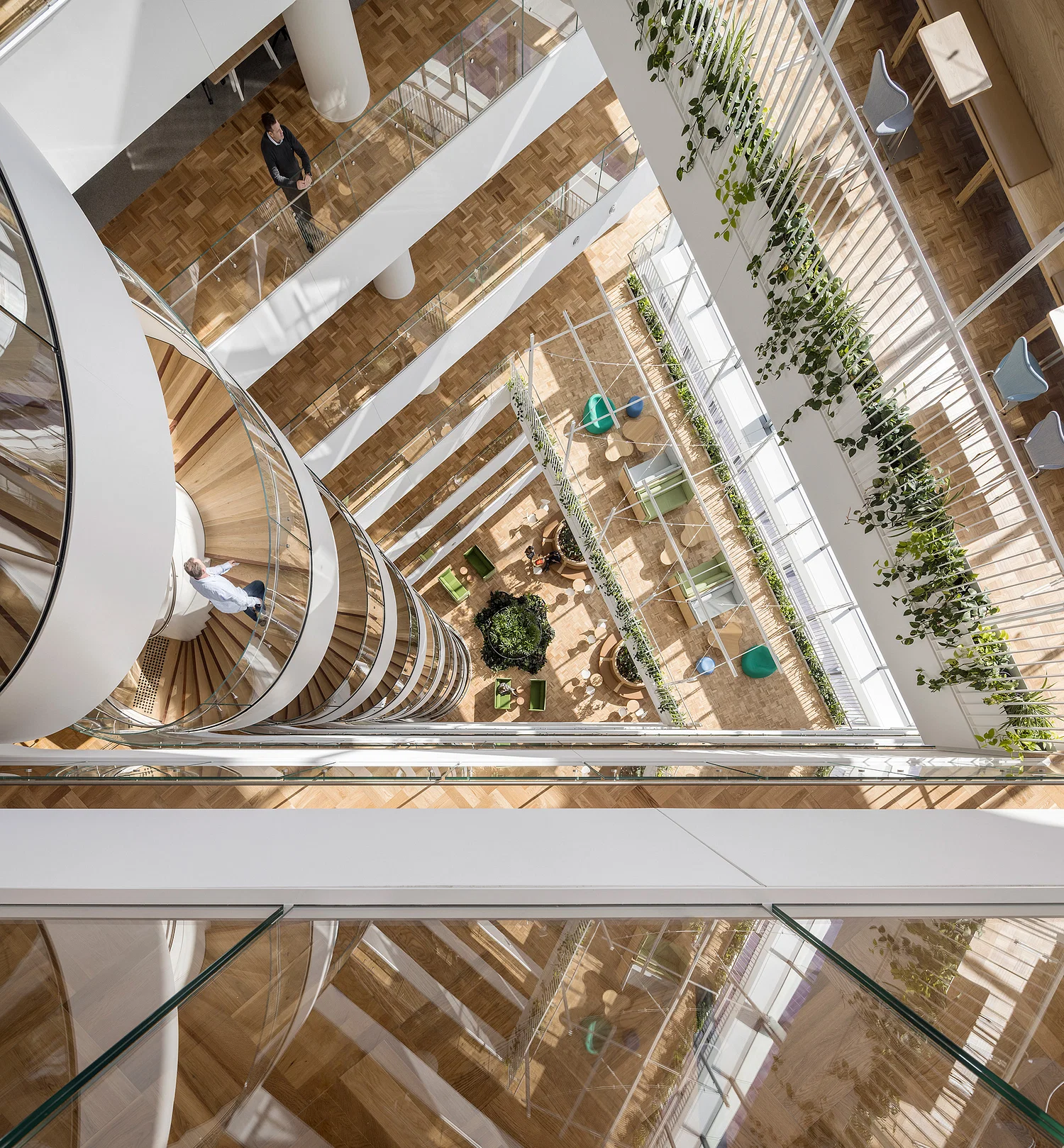
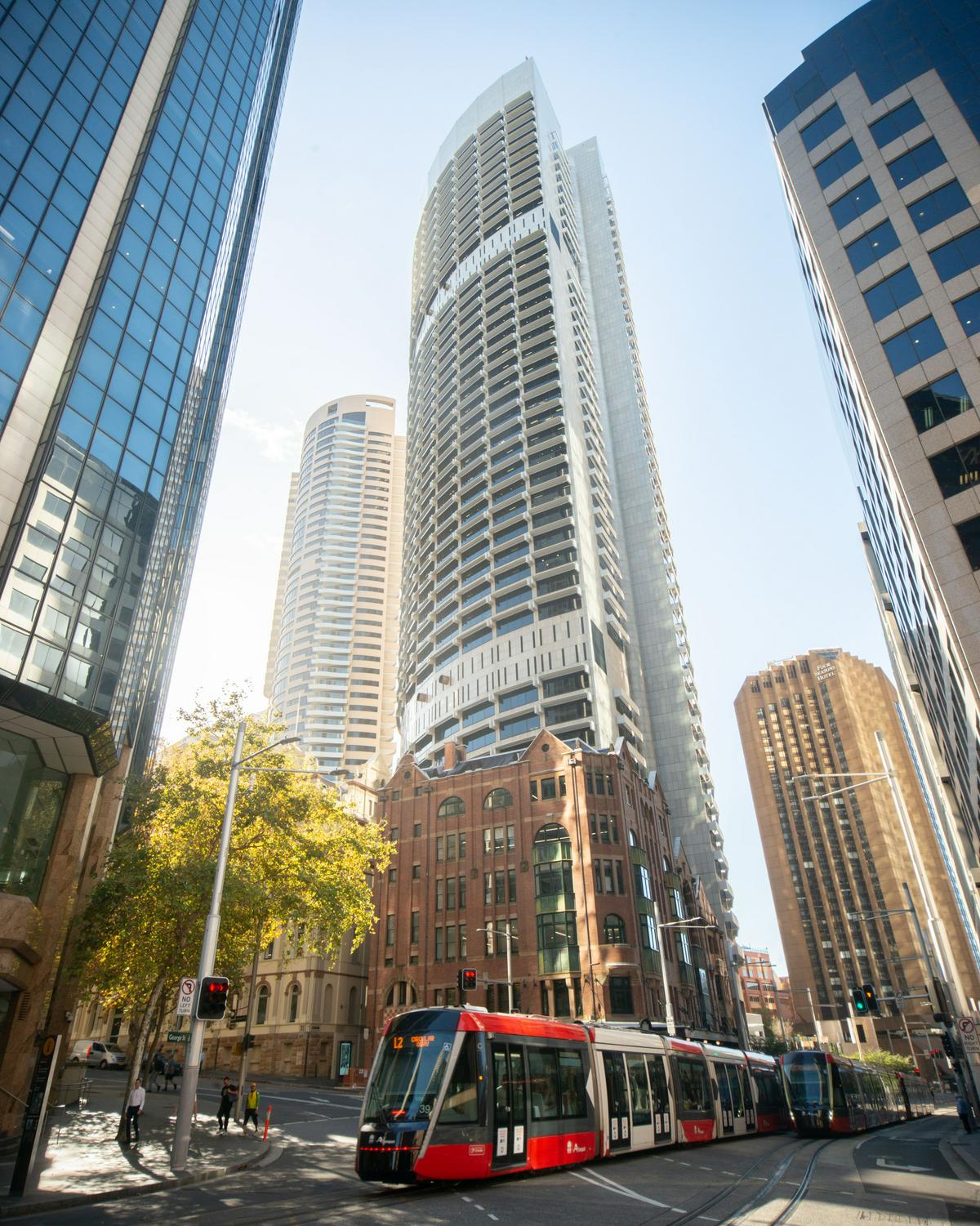
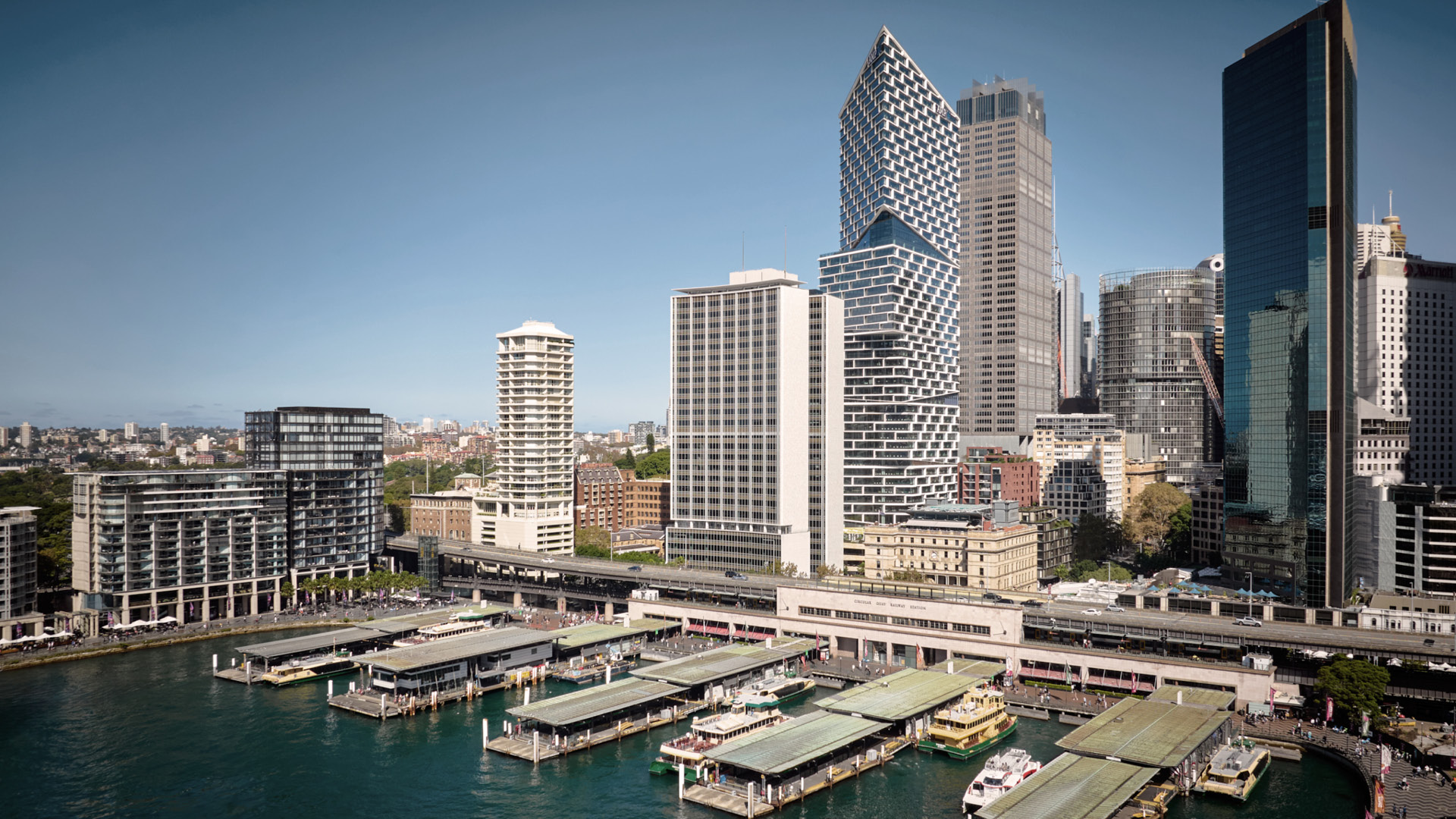
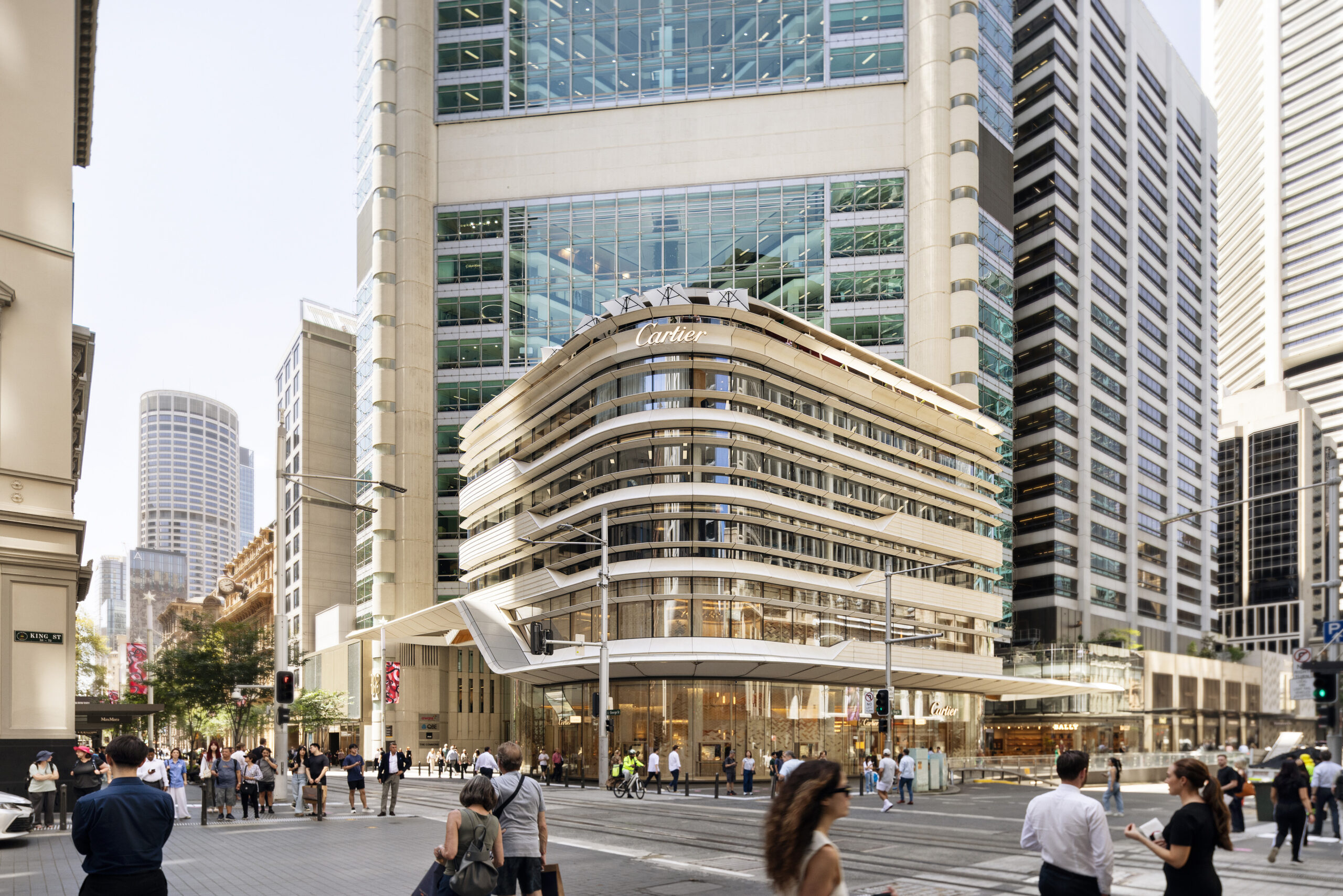
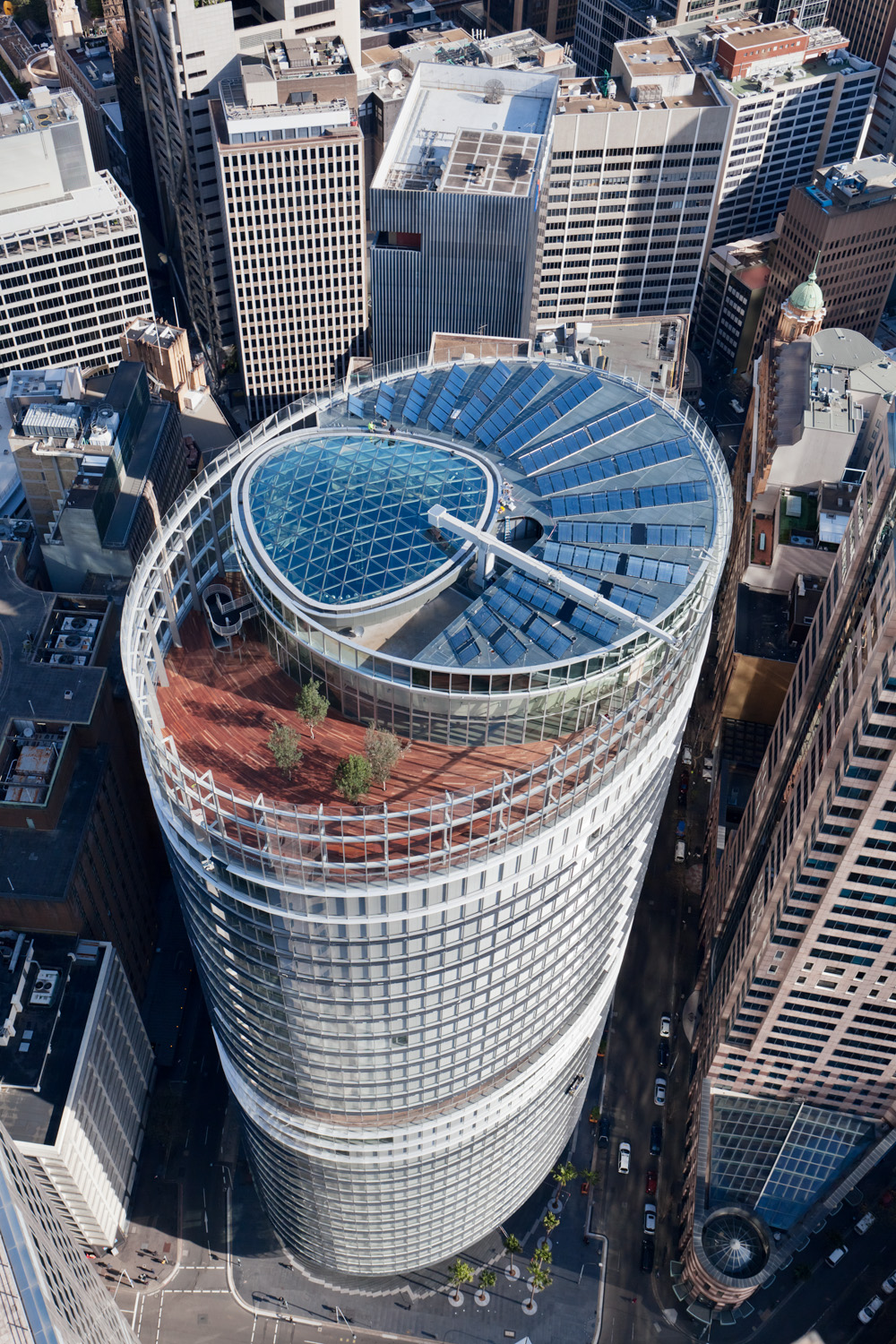
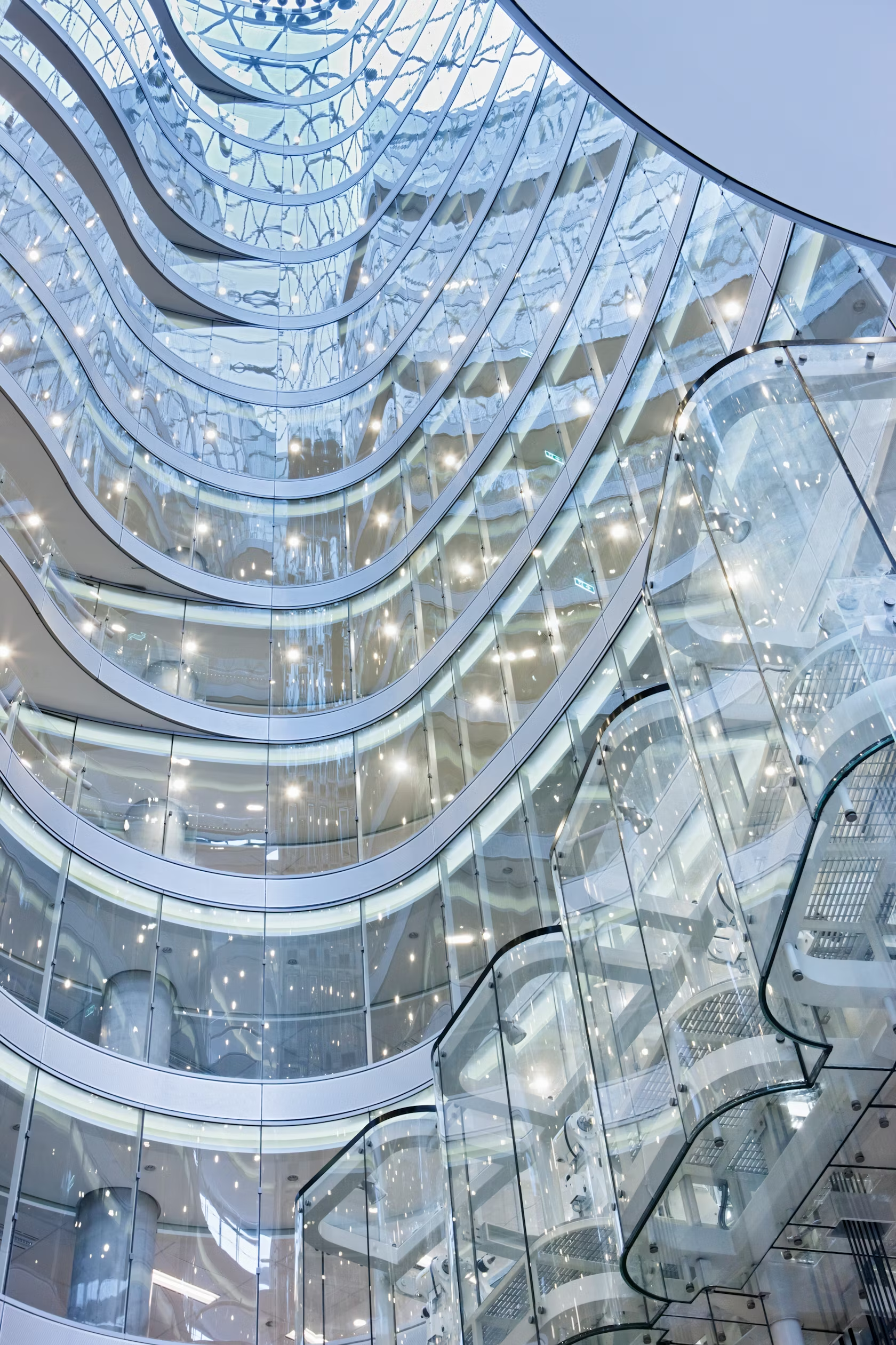
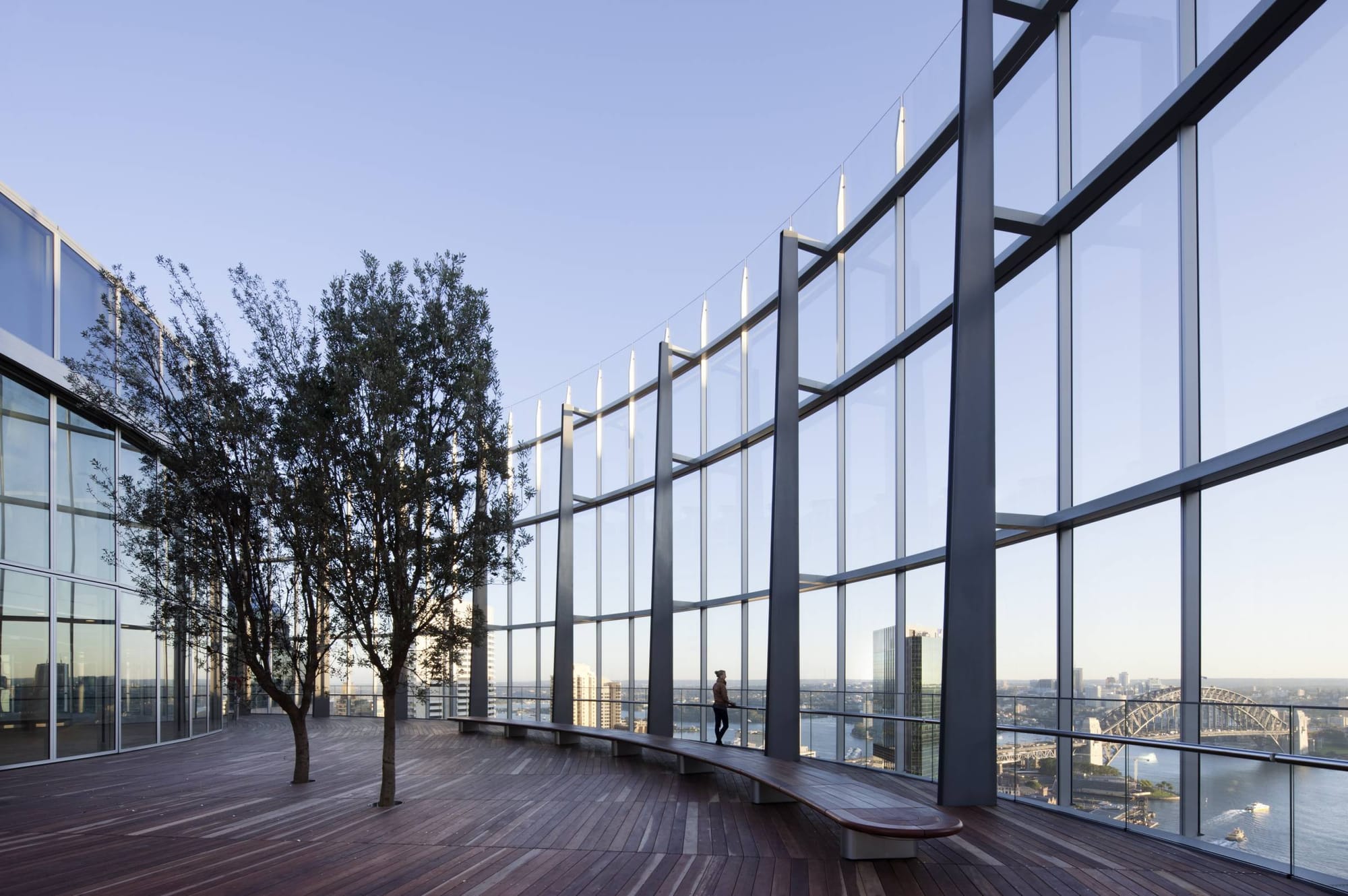
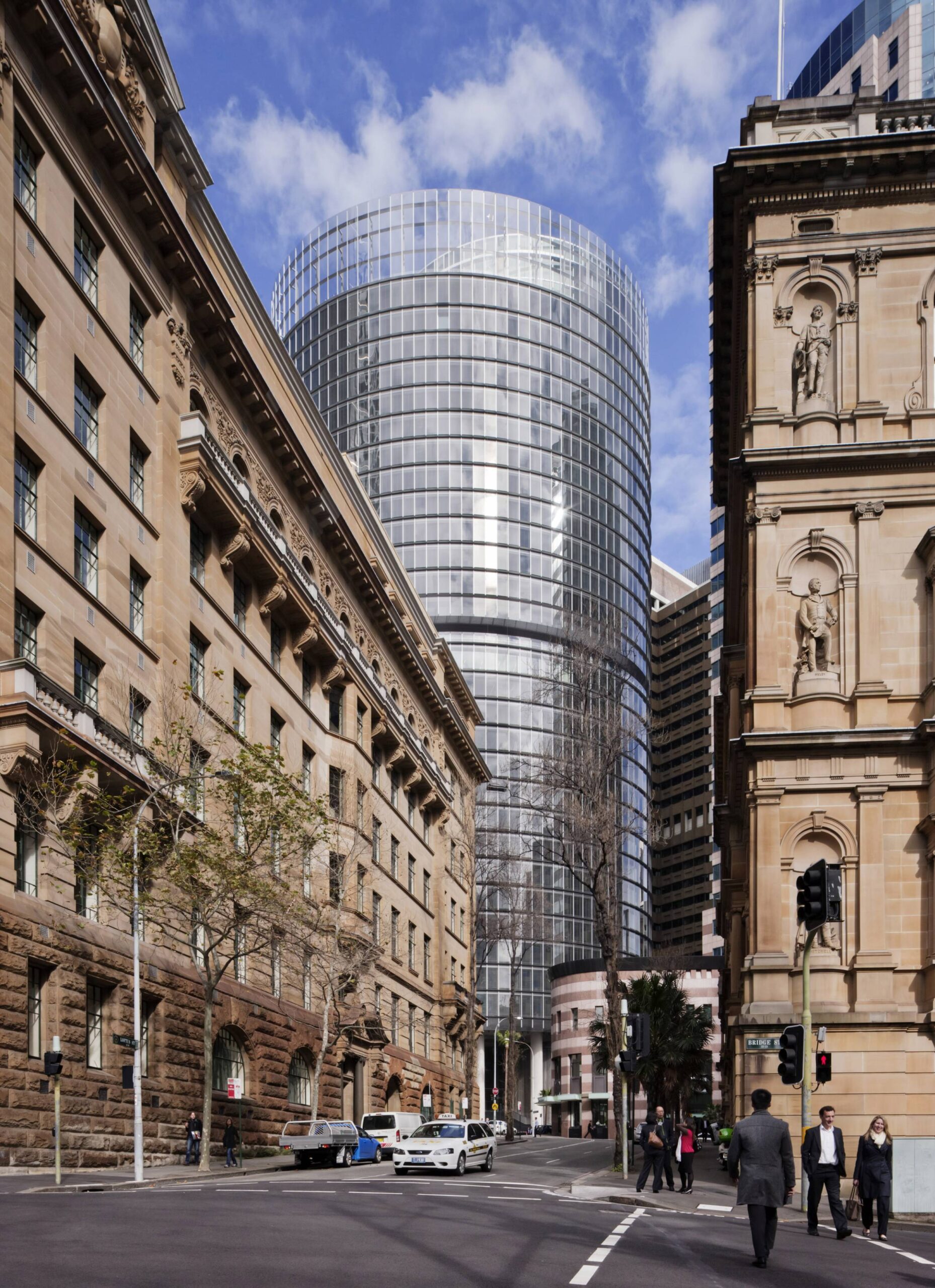
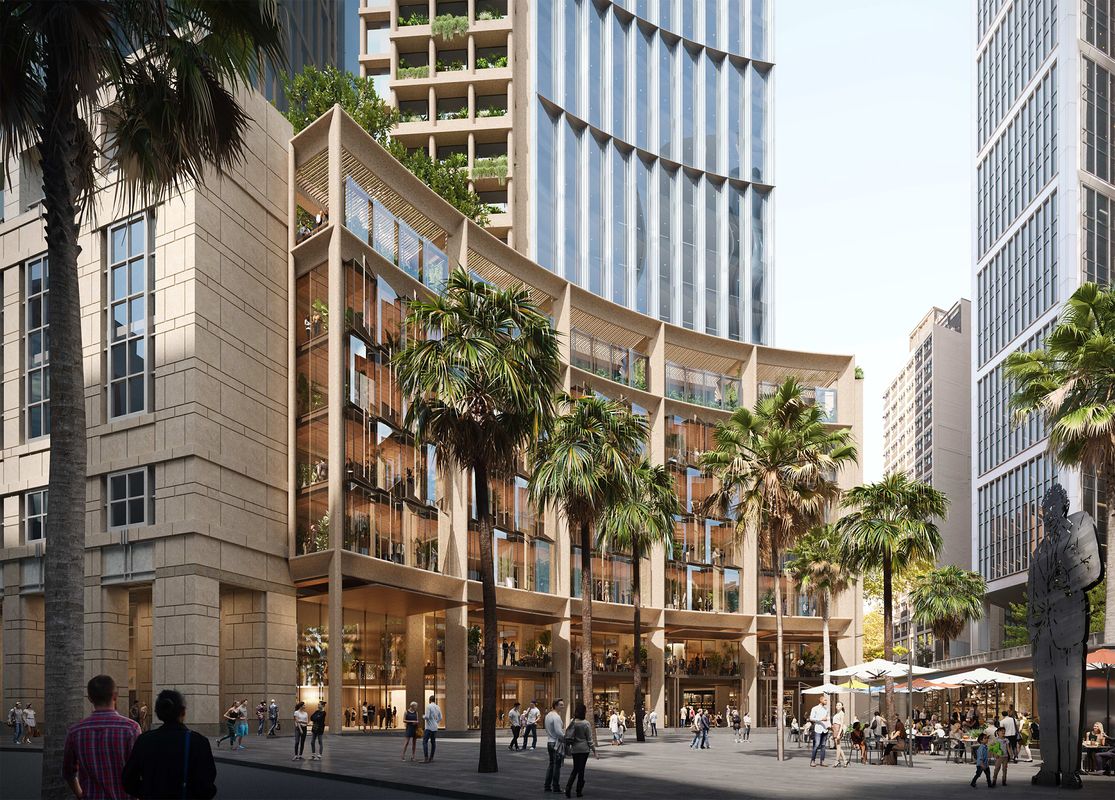
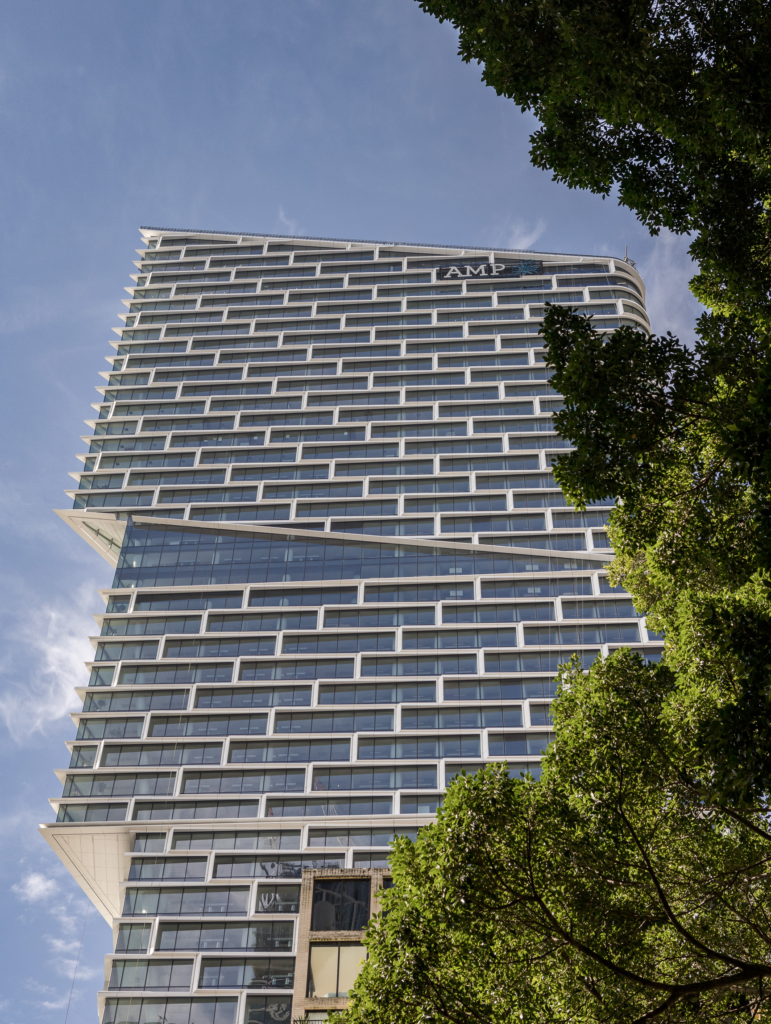
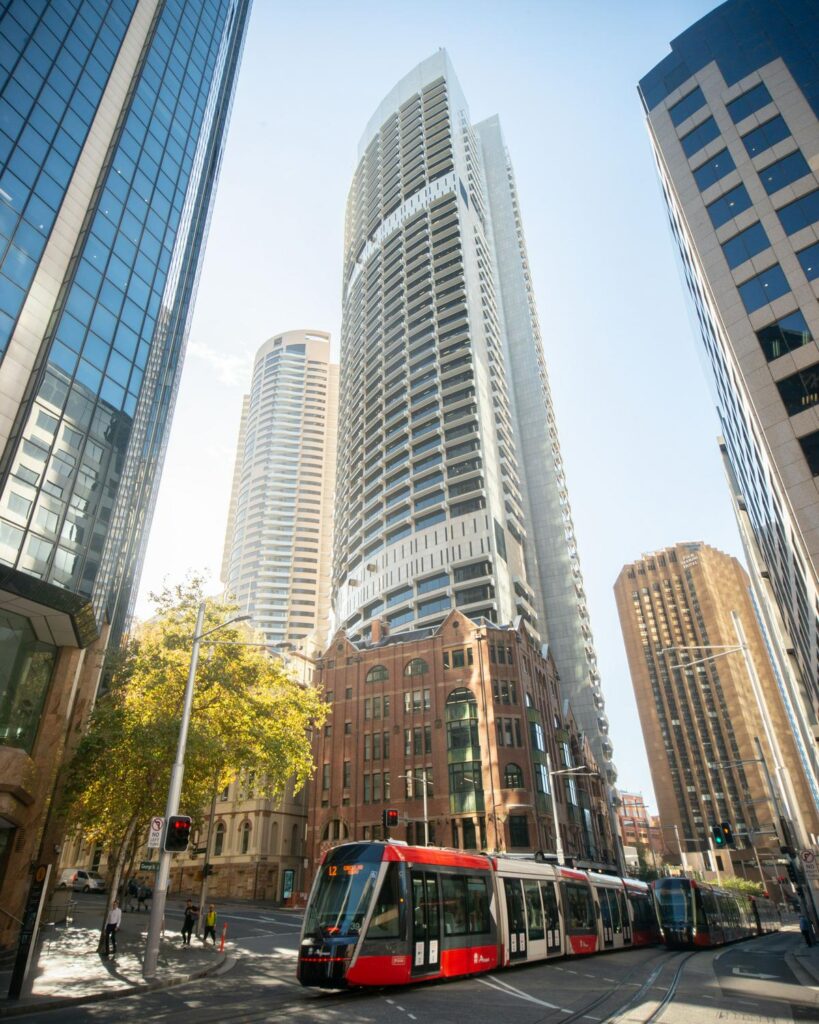
Quay Quarter Tower is a trailblazing “upcycled” skyscraper in Sydney’s Circular Quay that fused demolition and rebuild into a seamless reinvention, a 50-storey, 89,000 m² design-and-construct redevelopment.
Conceived as a “vertical village” of five twisting volumes enabled world-first retrofitted double-deck lifts and retention of 65 % of the existing structure, saving 8,000+ tonnes of embodied carbon, and securing 6 Star Green Star, 5.5 Star NABERS and WELL Gold ratings.
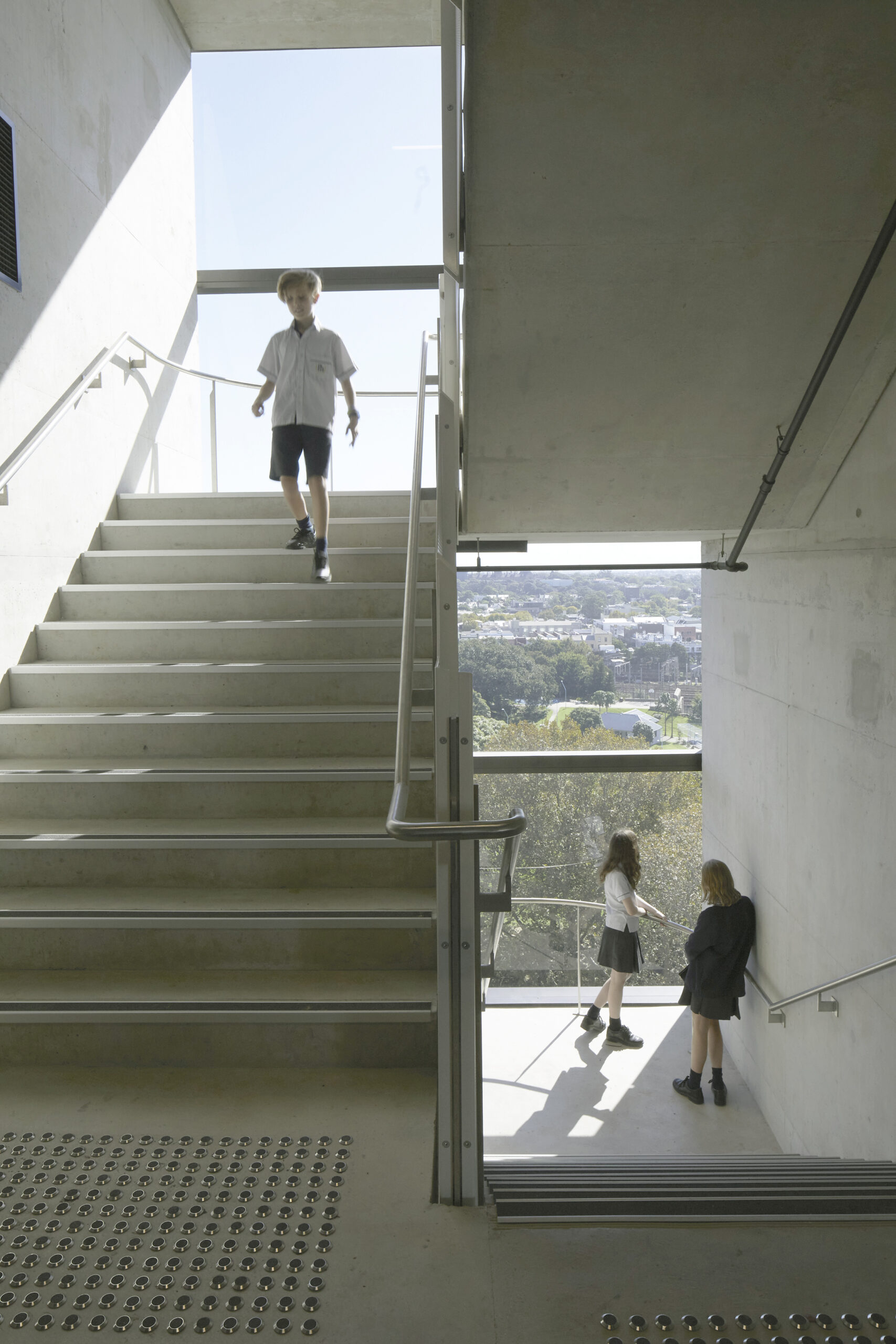
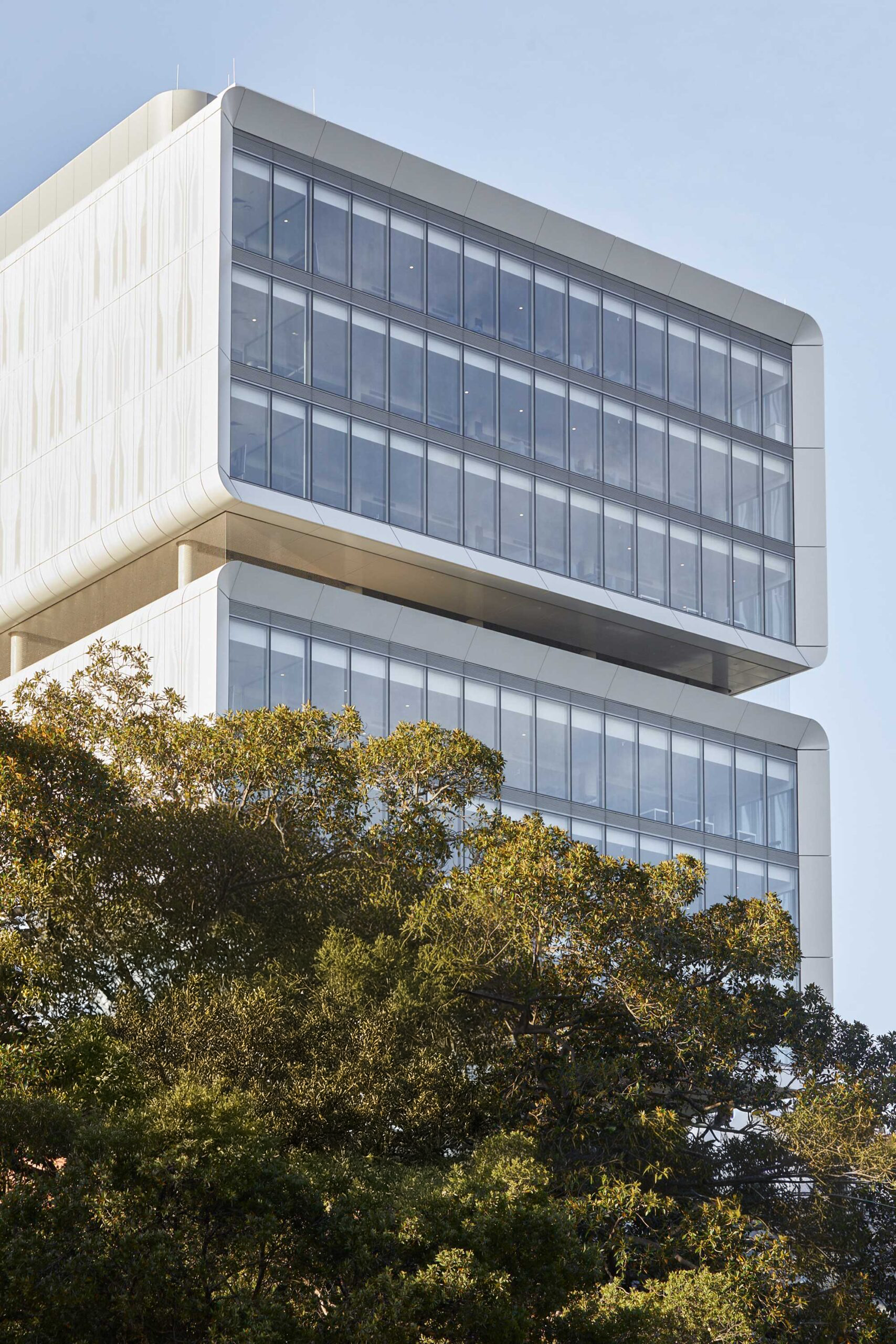
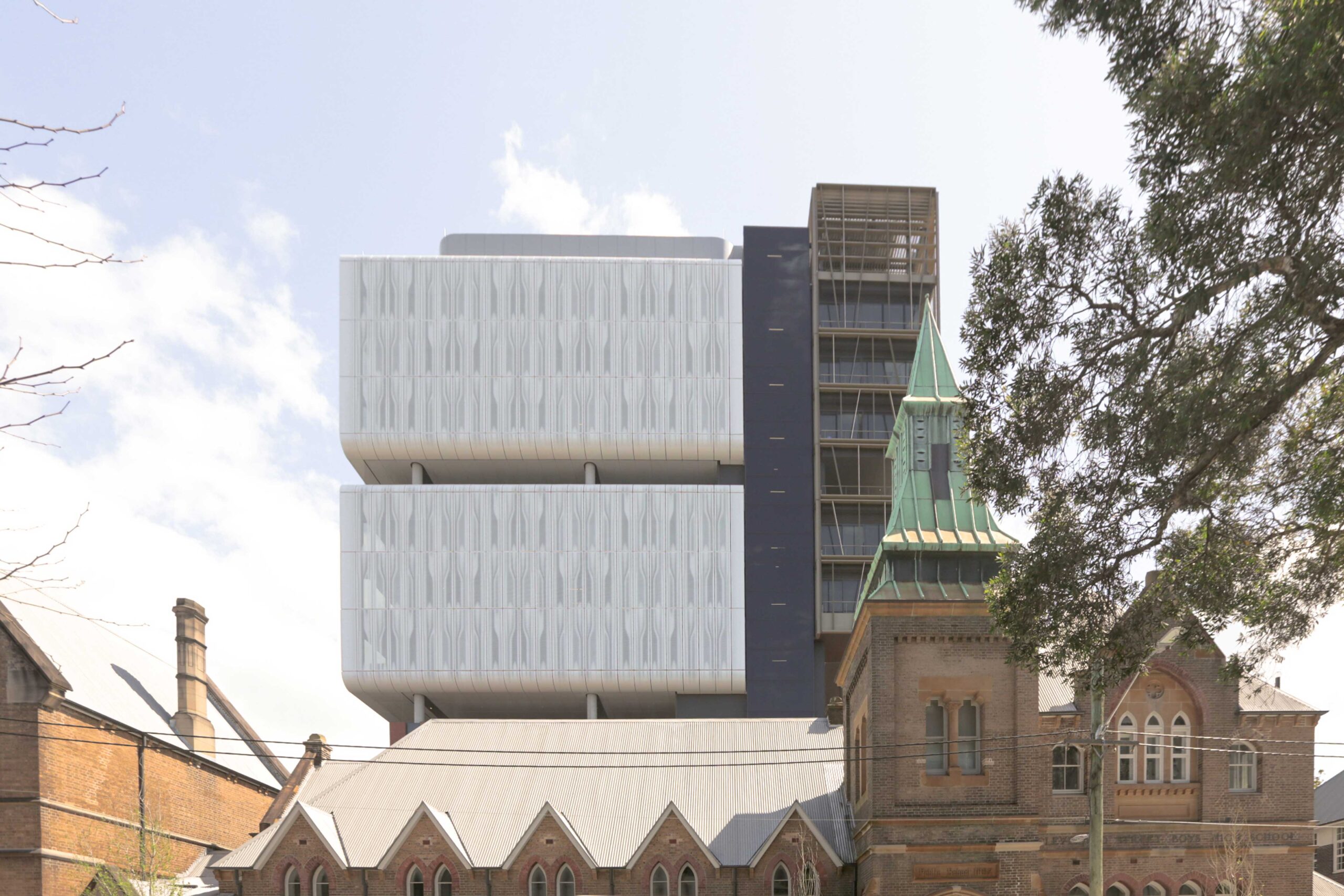
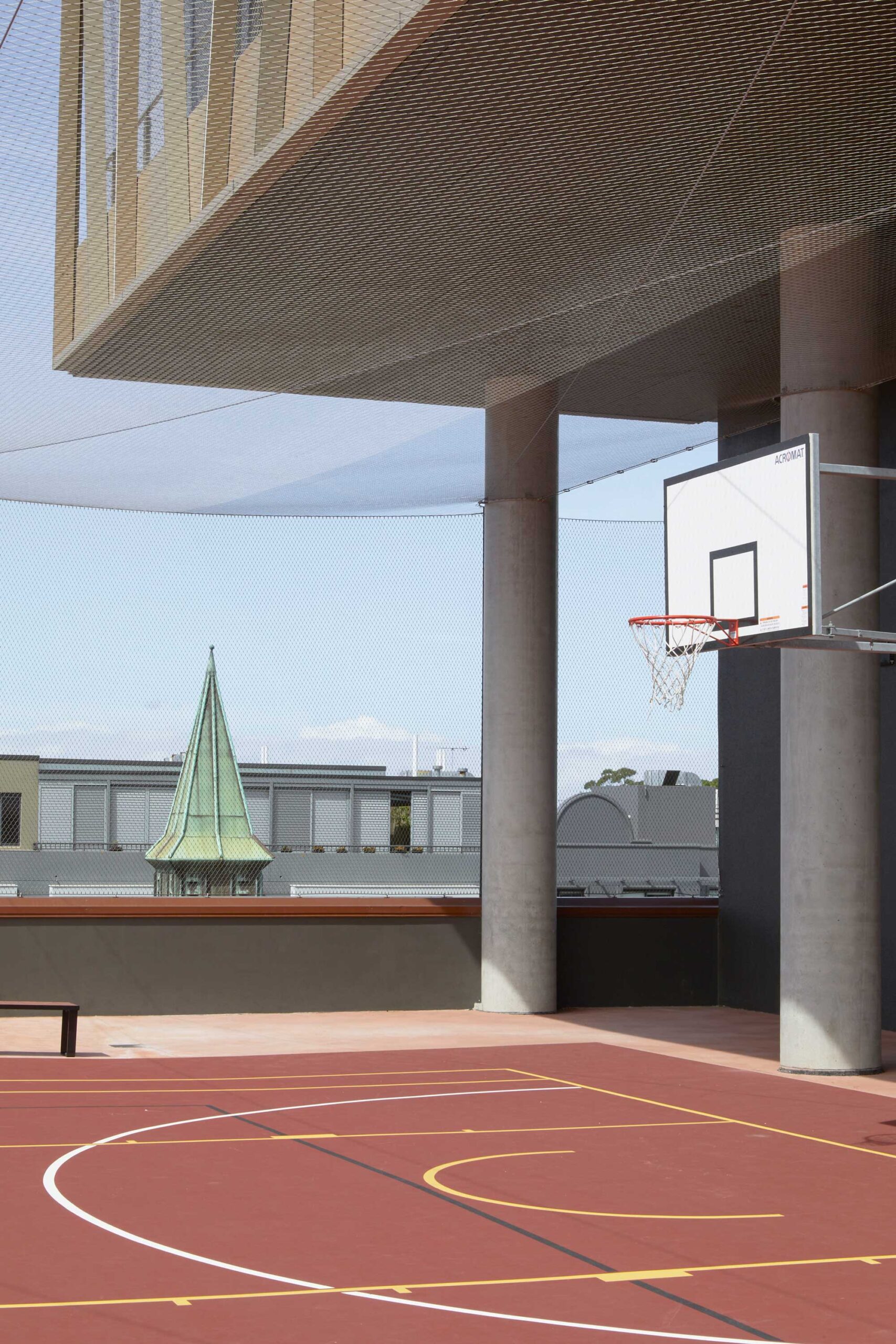
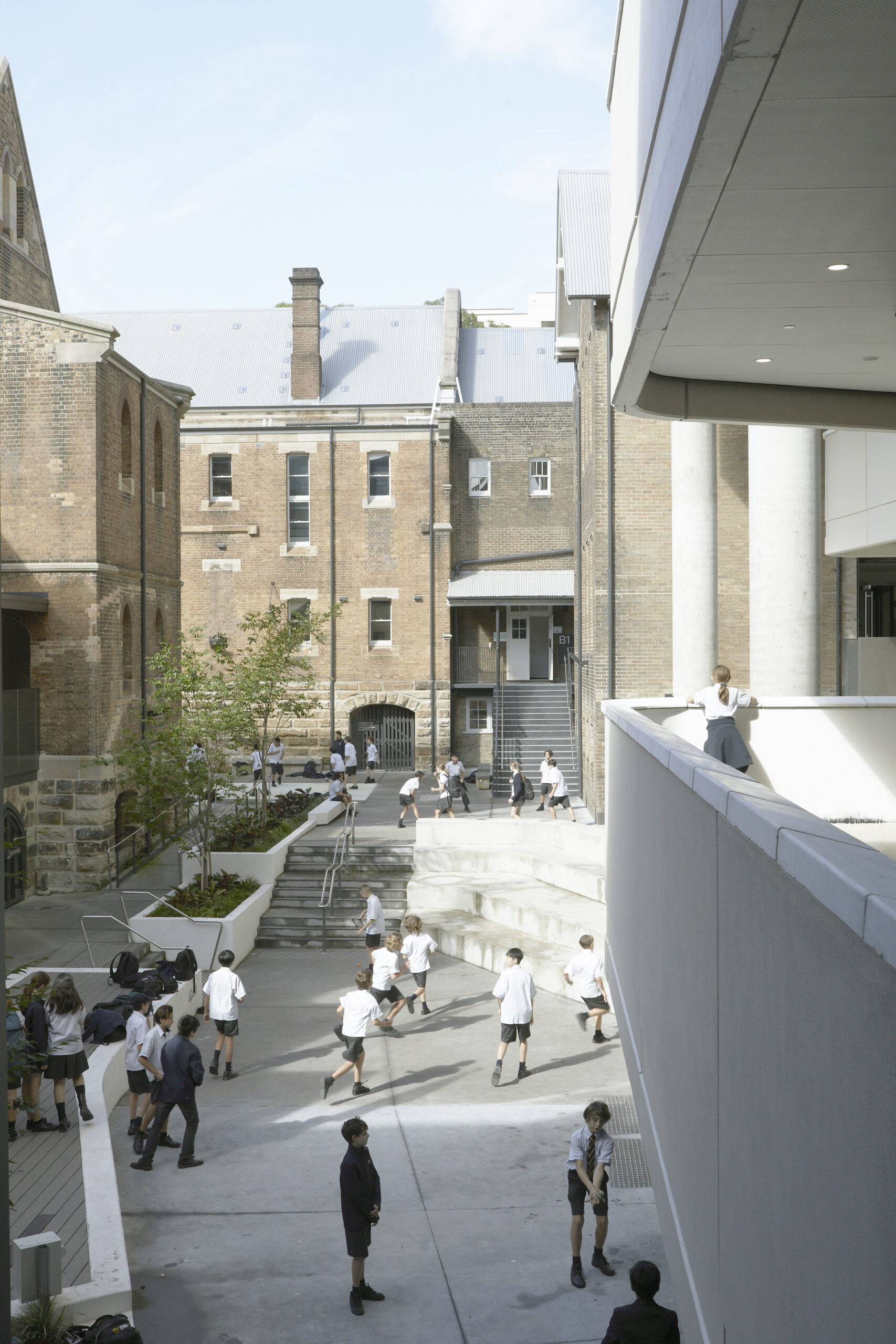
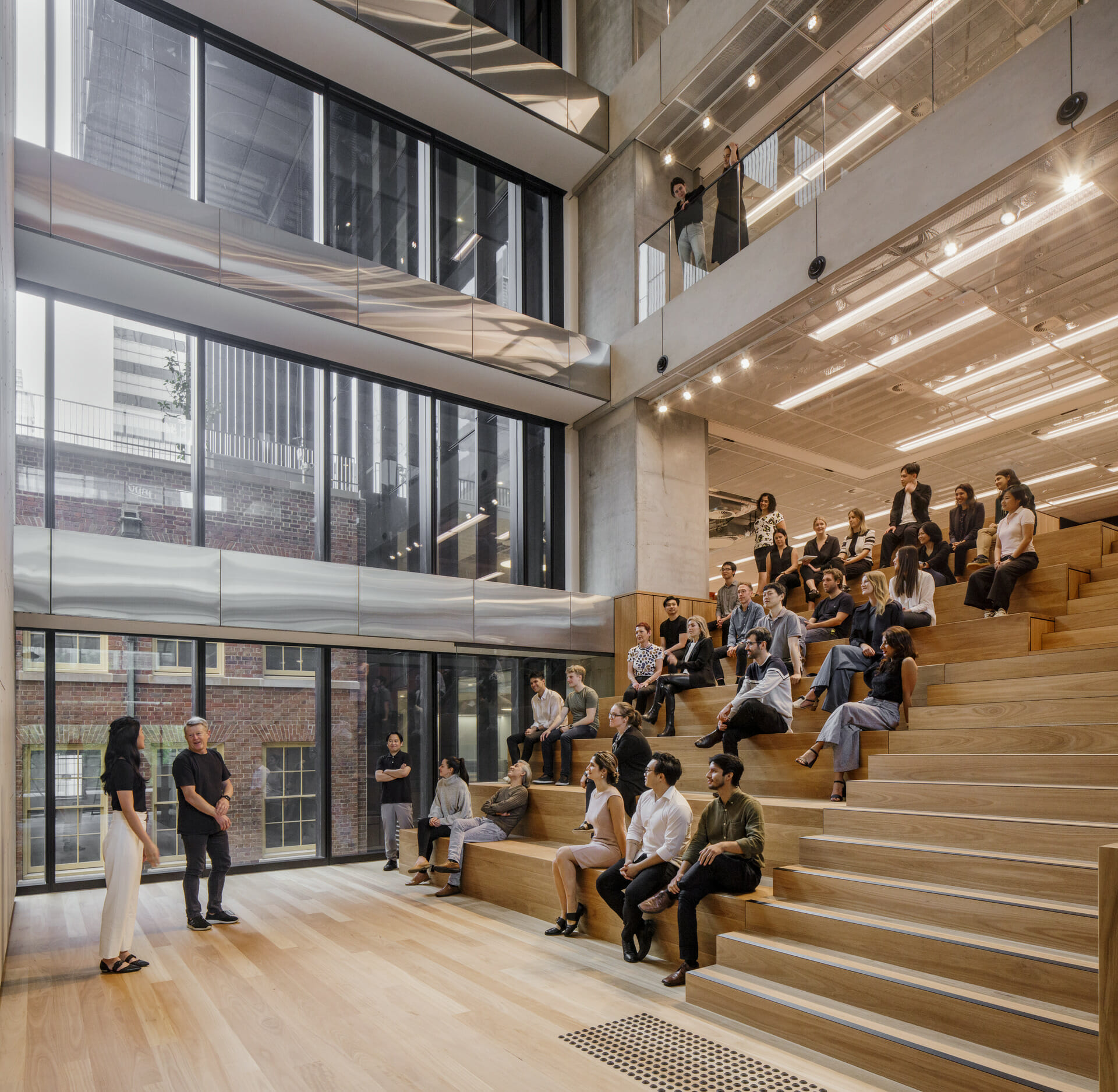
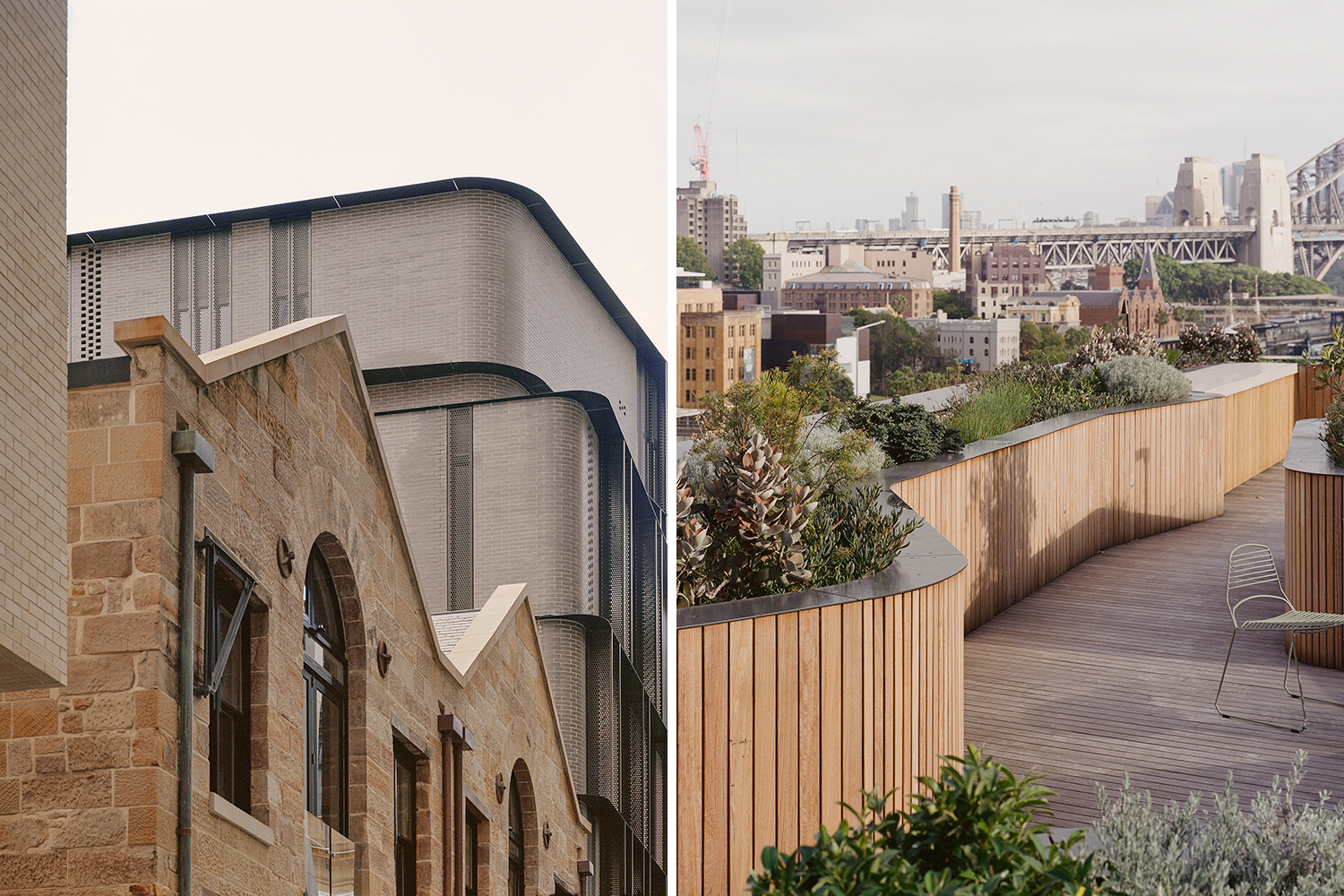
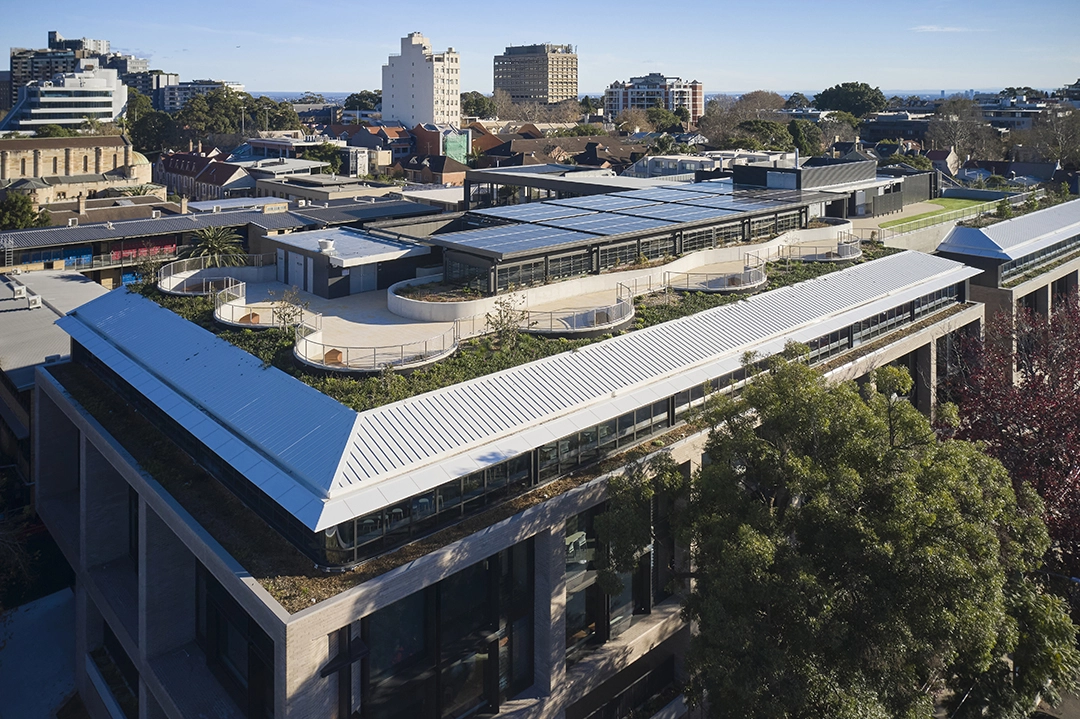
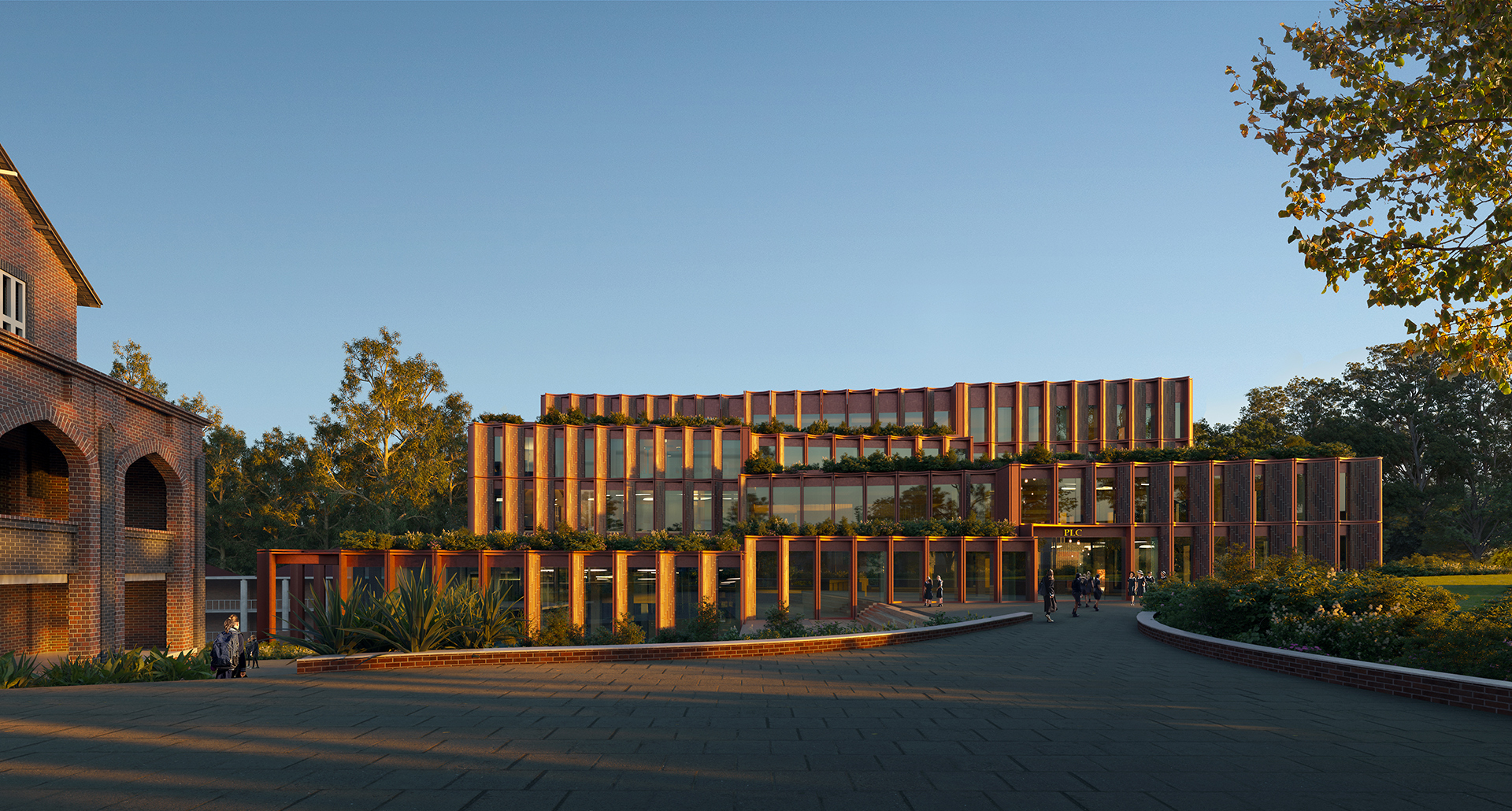
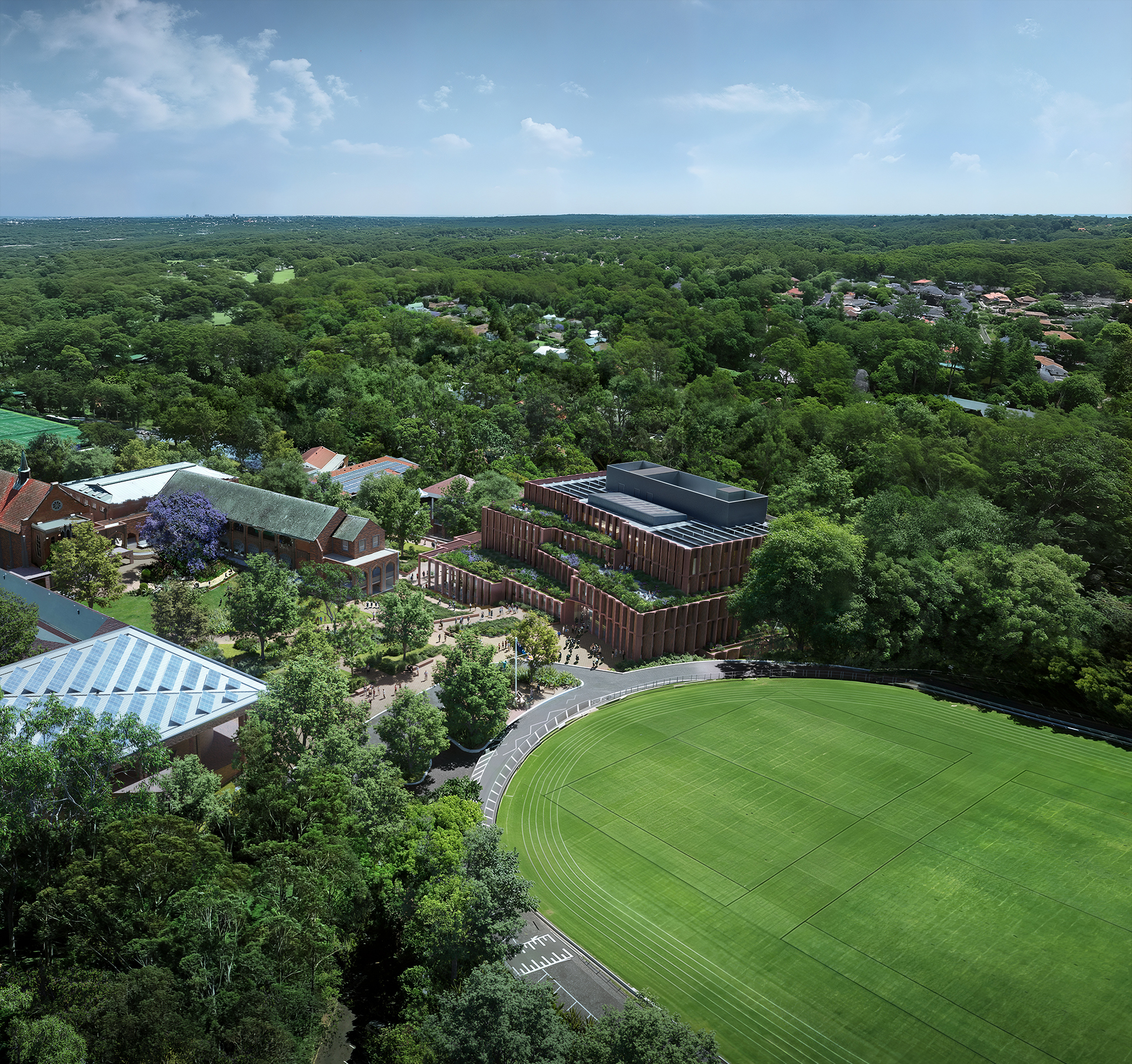
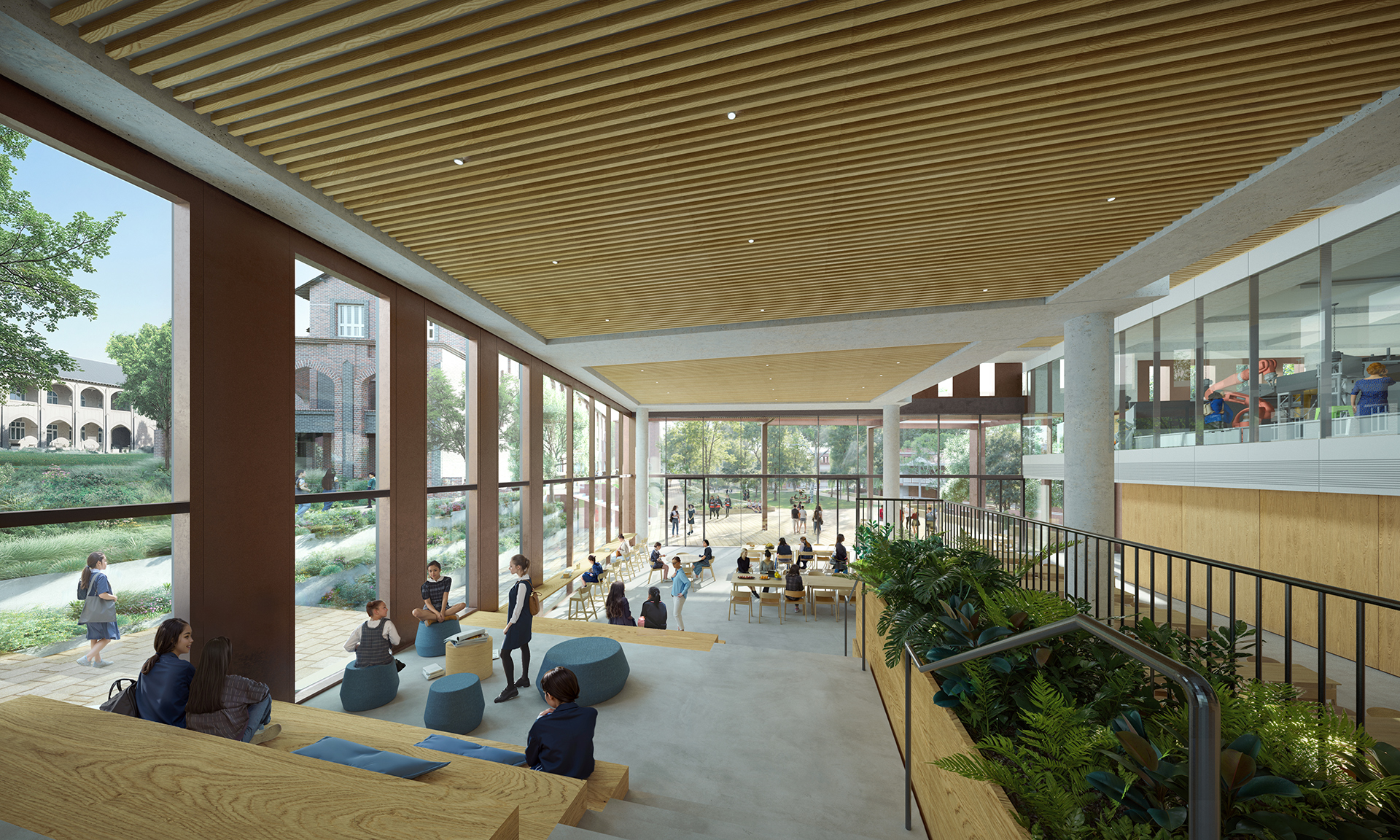
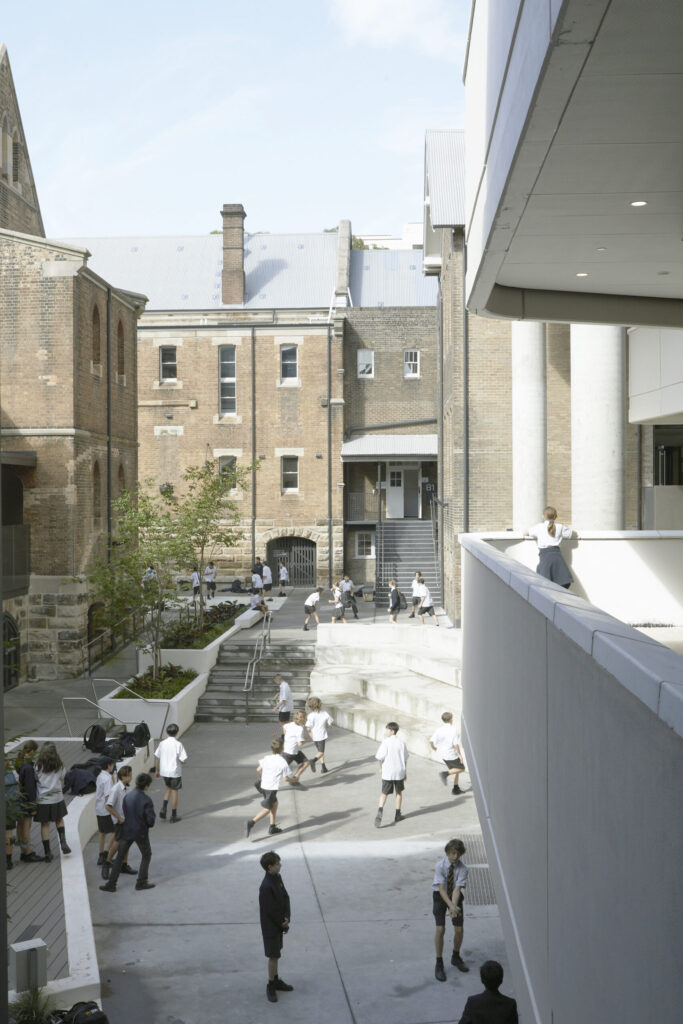
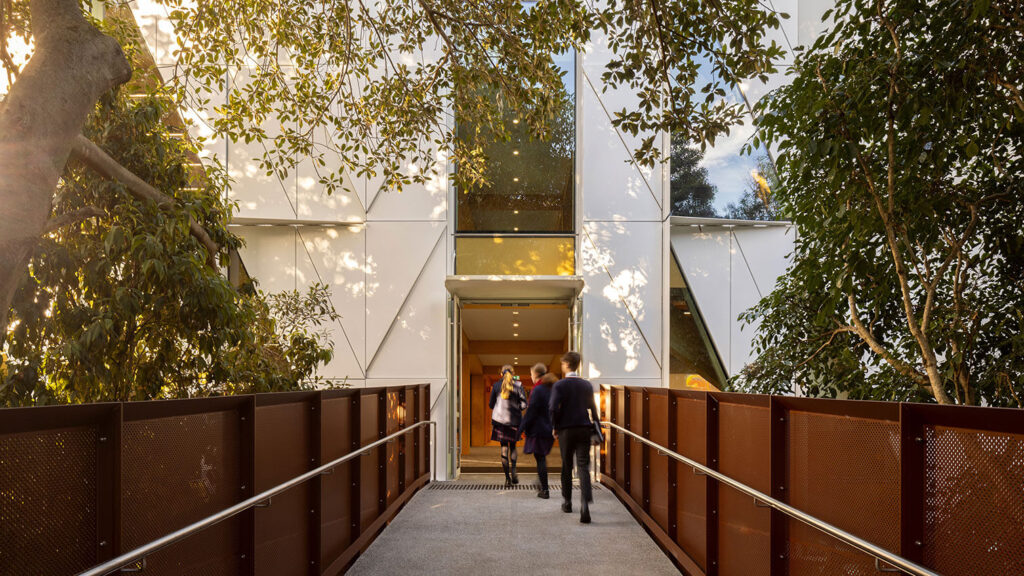
An innovative response to inner-city constraints, seamlessly merging refurbished 19th-century heritage buildings with a modern 14-storey education tower to deliver a future-focused high school for up to 1,200 students, all of this across a tight urban site. Featuring 47 teaching spaces, 5 dedicated STEM floors and cleverly integrating internal courtyards and outdoor terraces, connecting heritage and new structures that enhance natural light, ventilation and preserved the existing heritage fabric and park interface of the site.
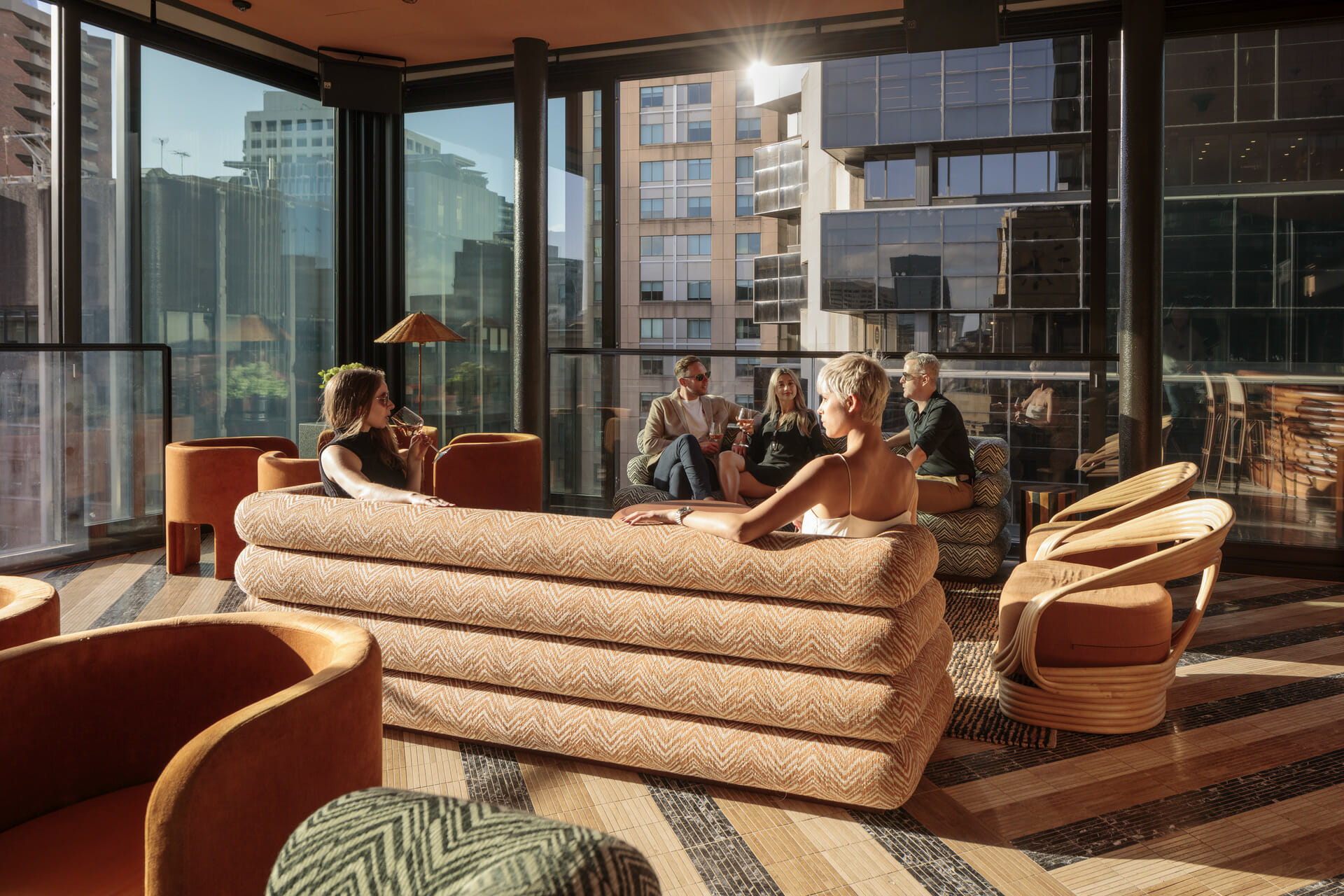
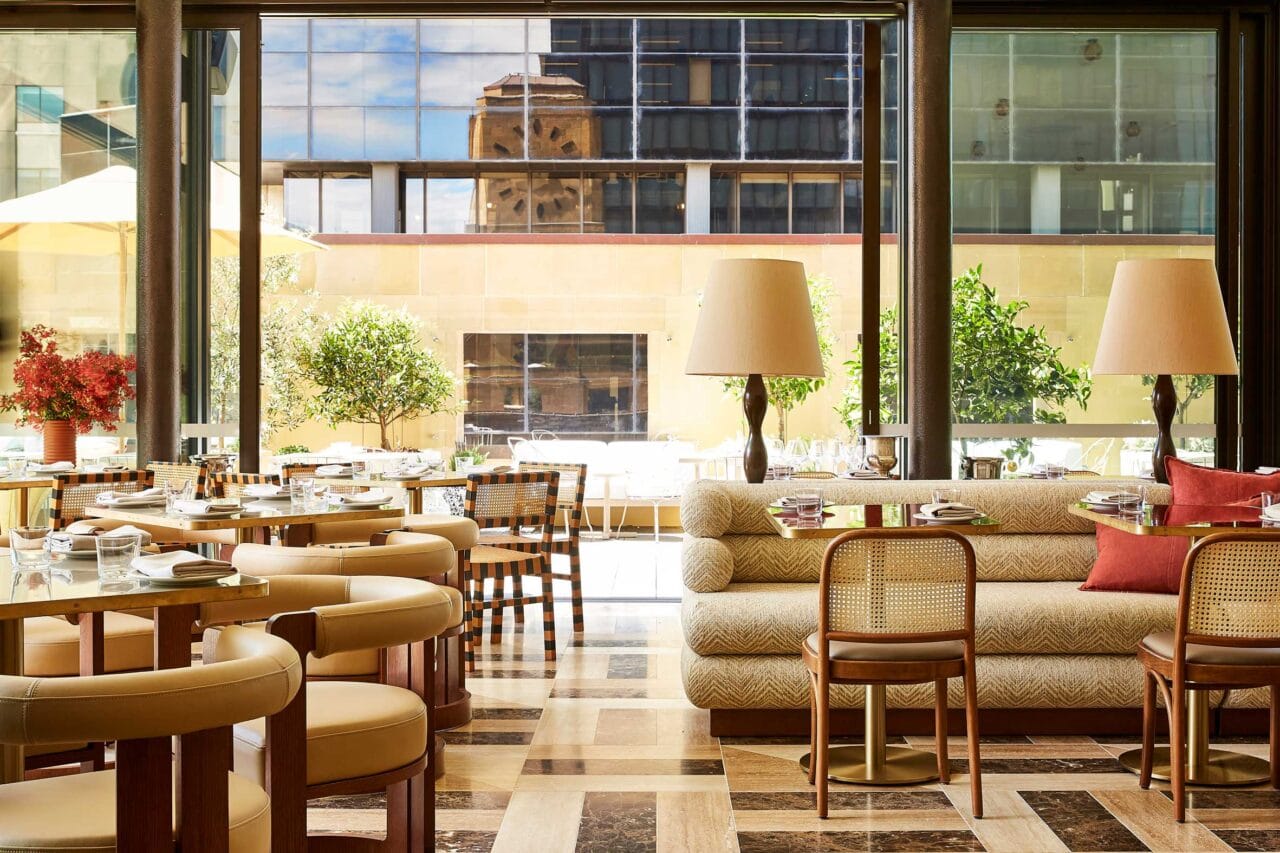
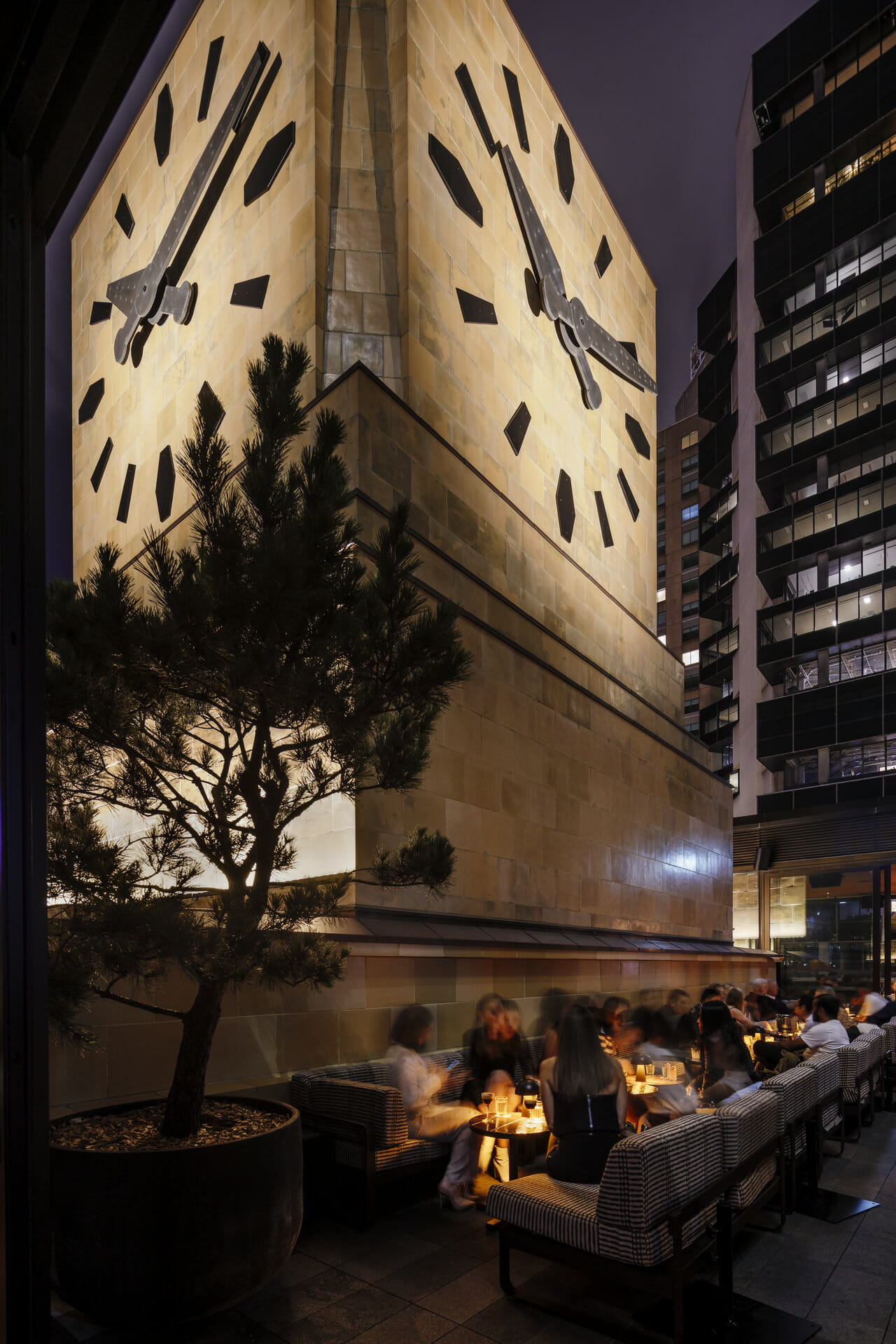
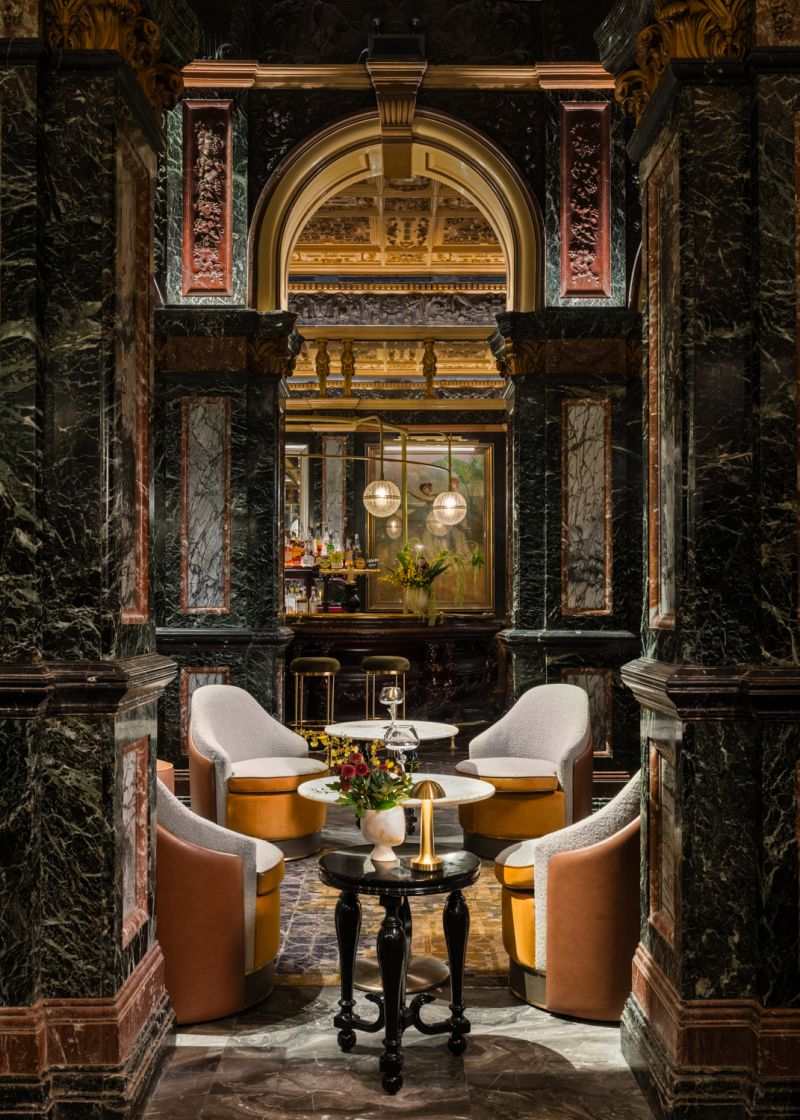
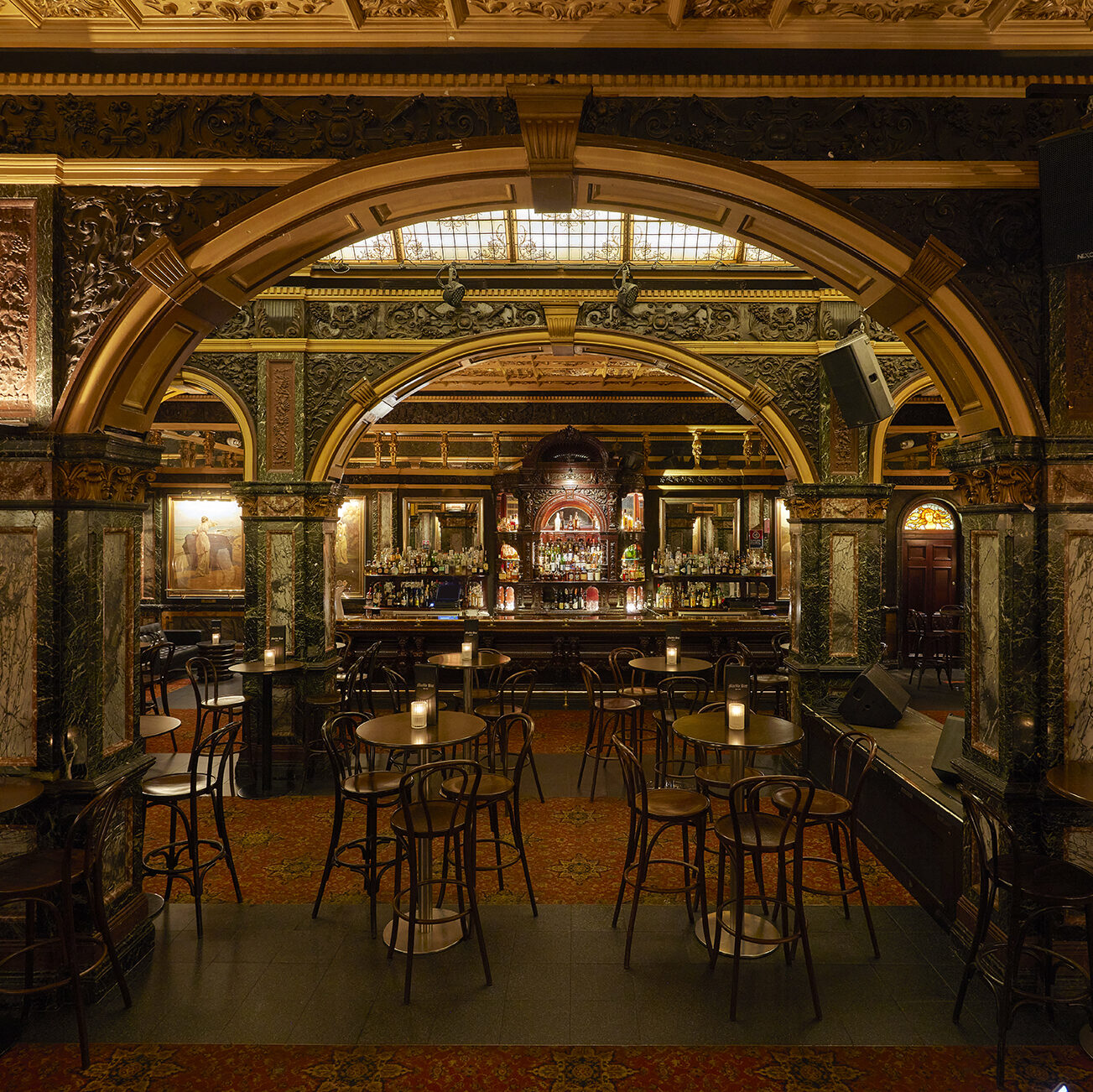
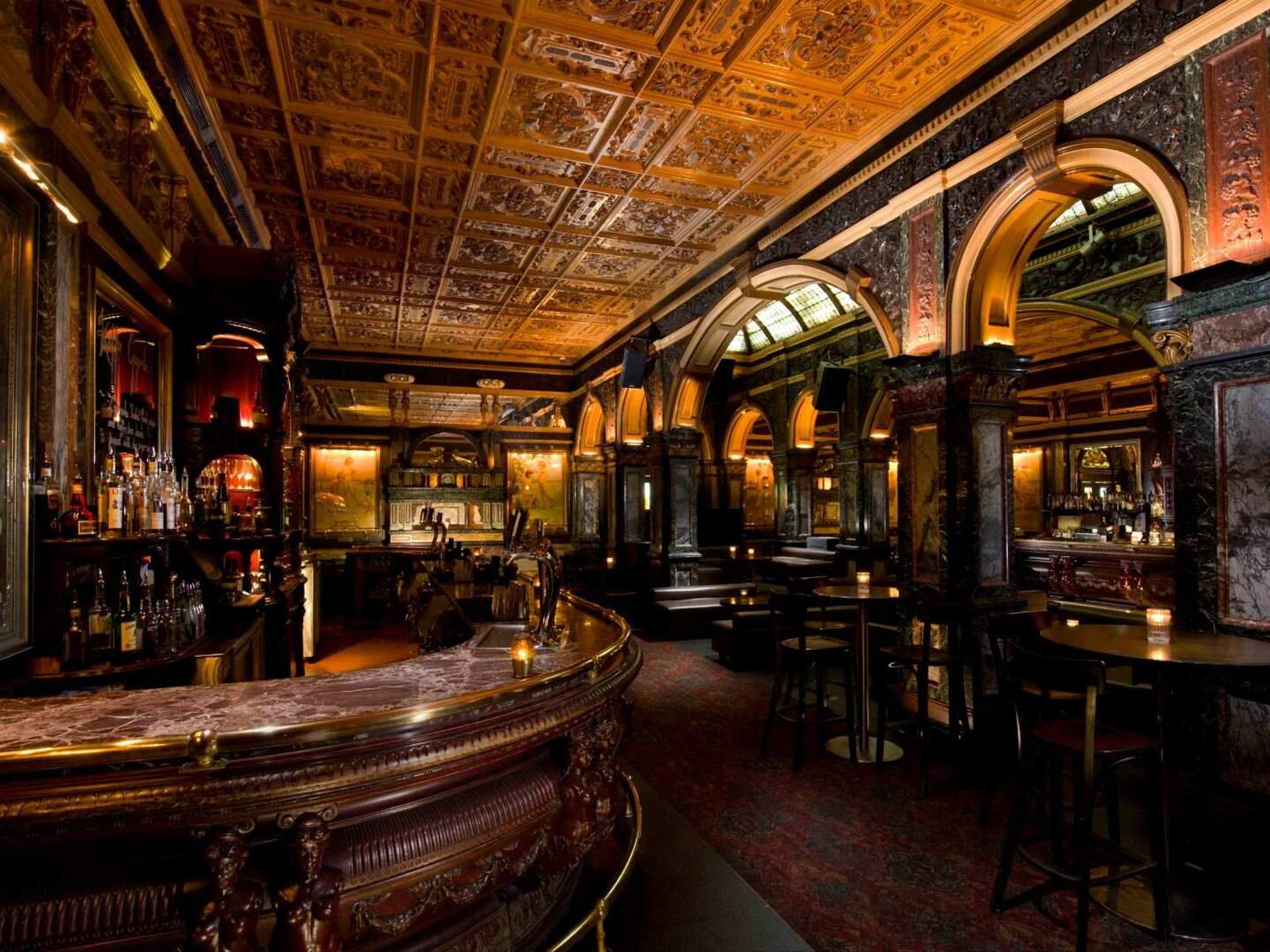
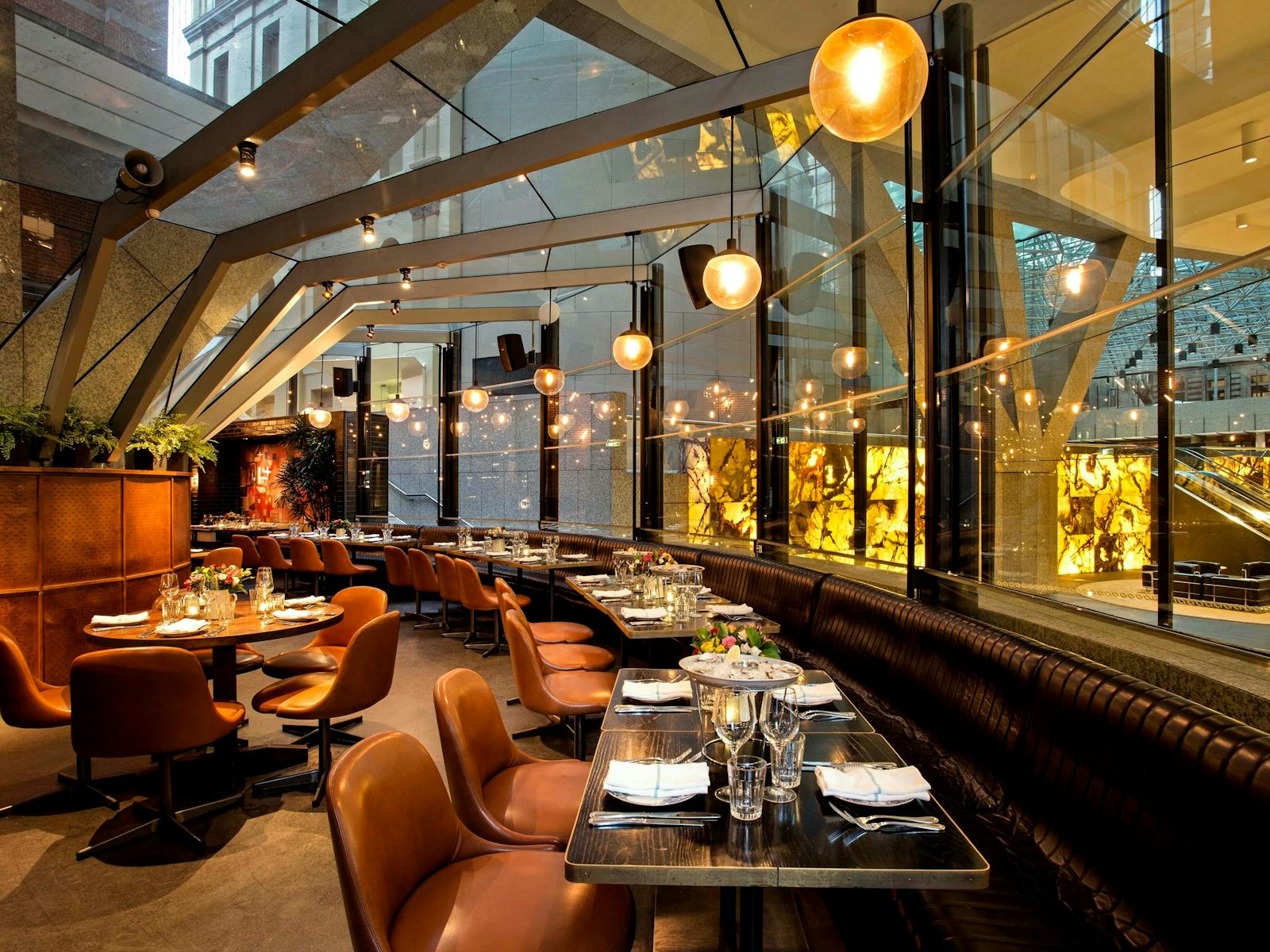
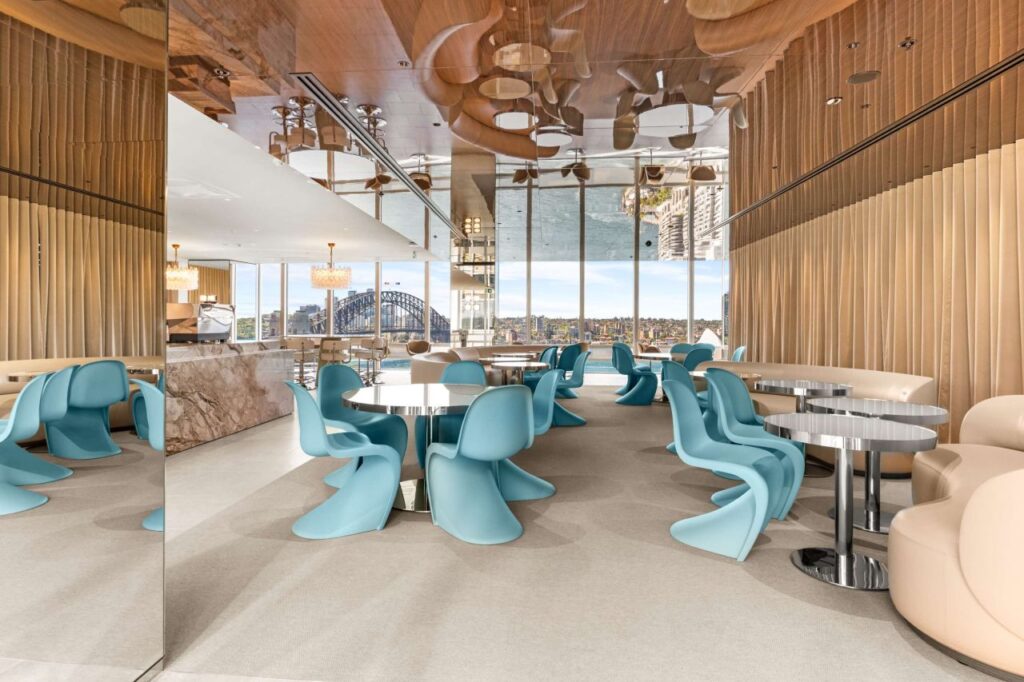
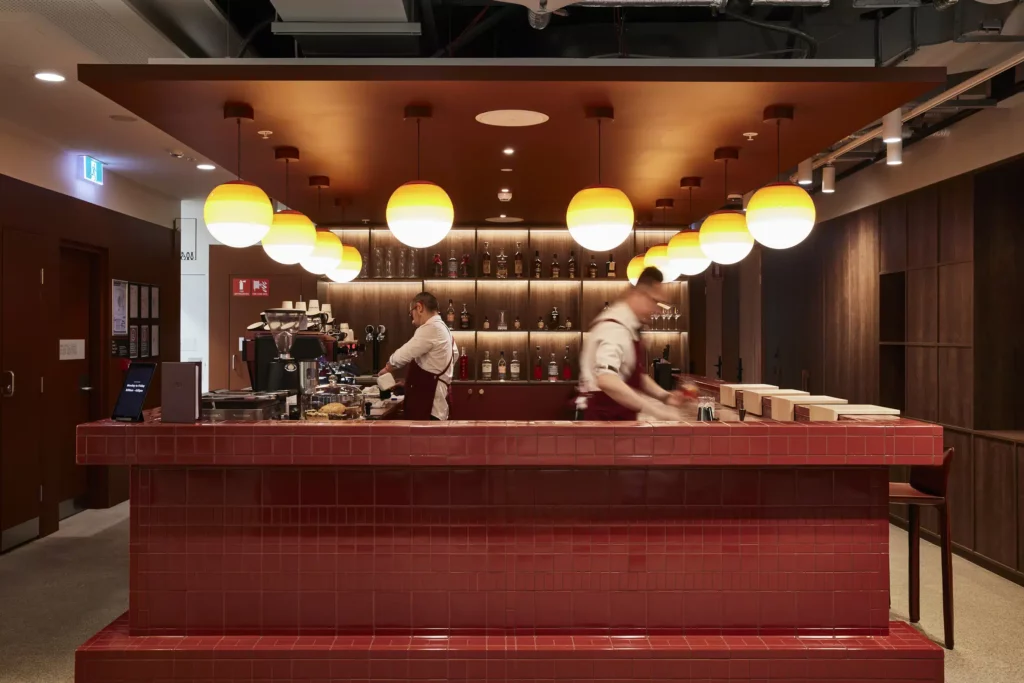
The Shell House Sky Gallery at Brookfield Place Sydney, Wynyard is a 1,250 m² multi-level hospitality landmark weaving heritage and contemporary design into four distinct venues including Menzies Bar, Dining Room & Terrace, Clocktower Bar and Sky Bar.
Set within the restored 1930s Shell House, the project celebrates one of Sydney’s tallest retained façades and the iconic 400-tonne clock, delivering elevated dining and bar experiences with bespoke joinery, rich materiality and panoramic CBD views
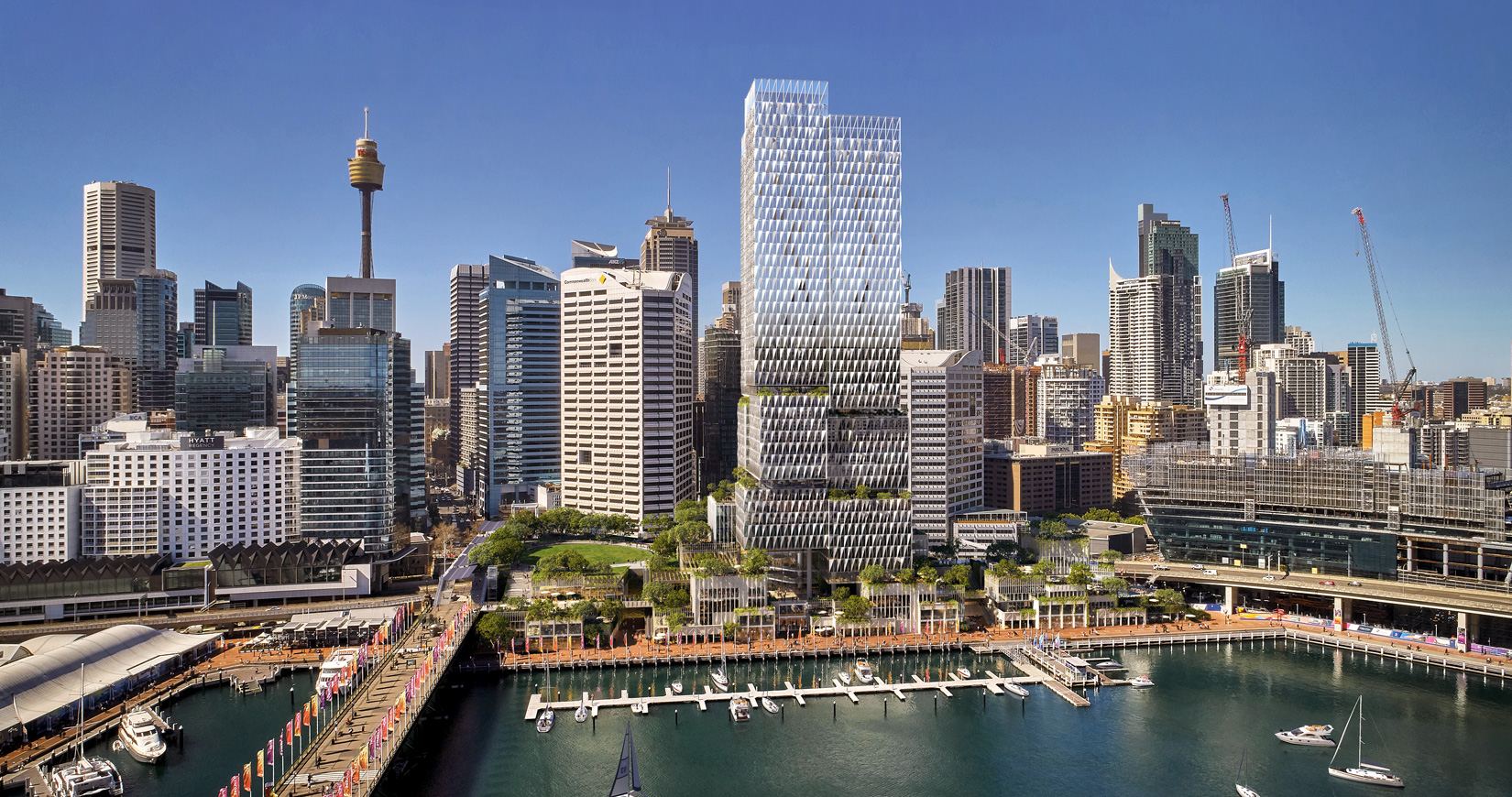
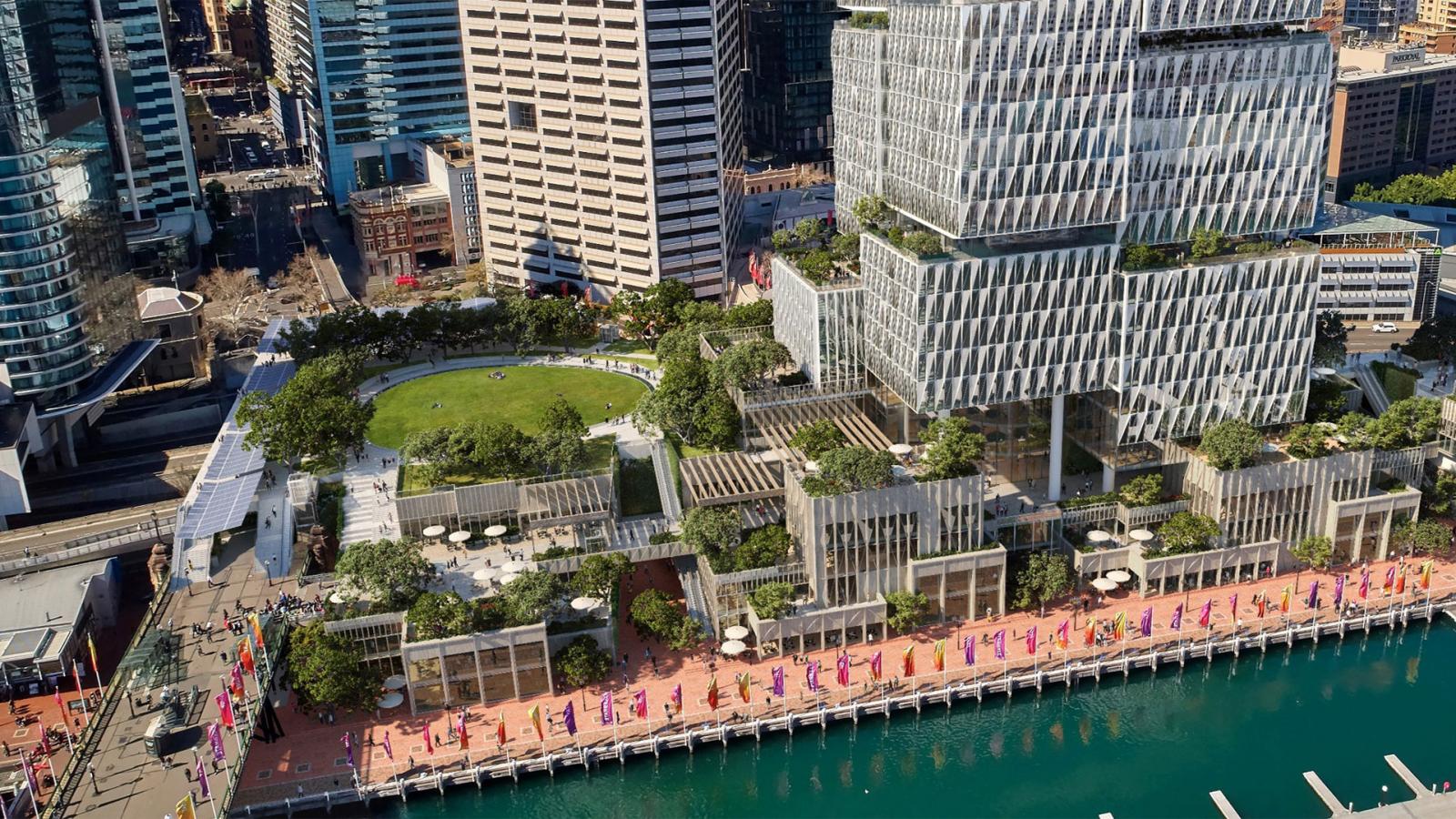
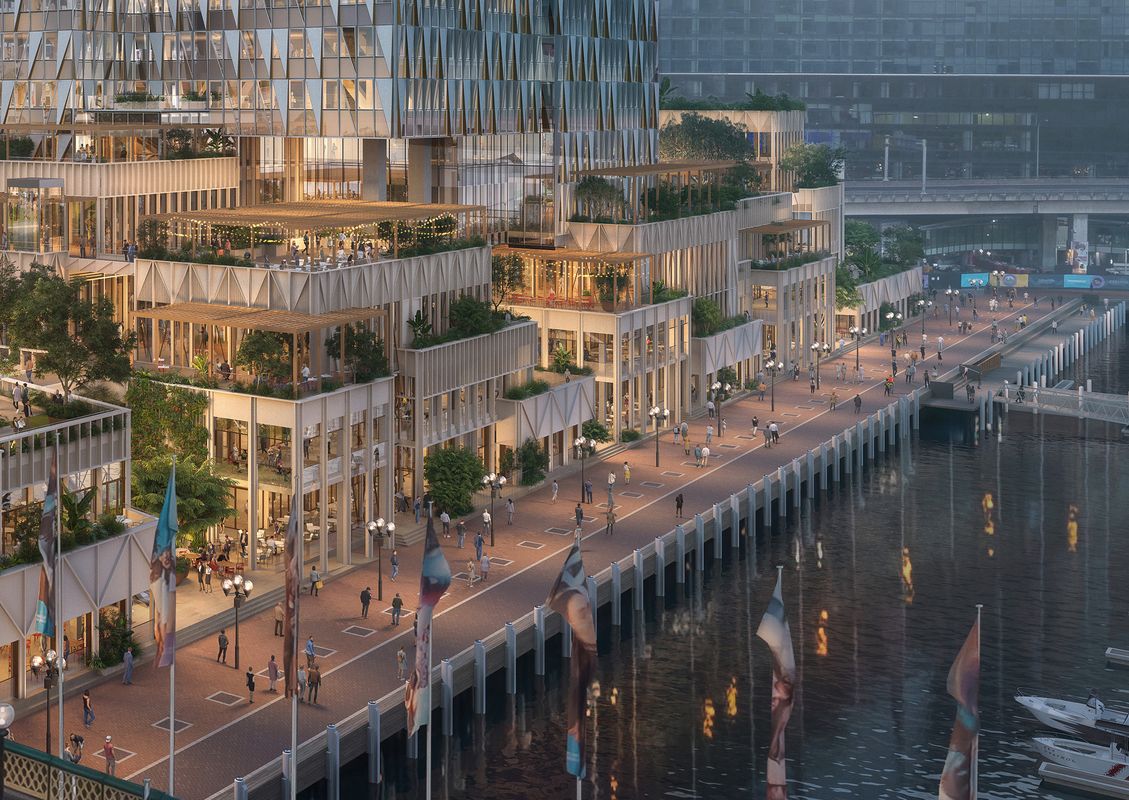
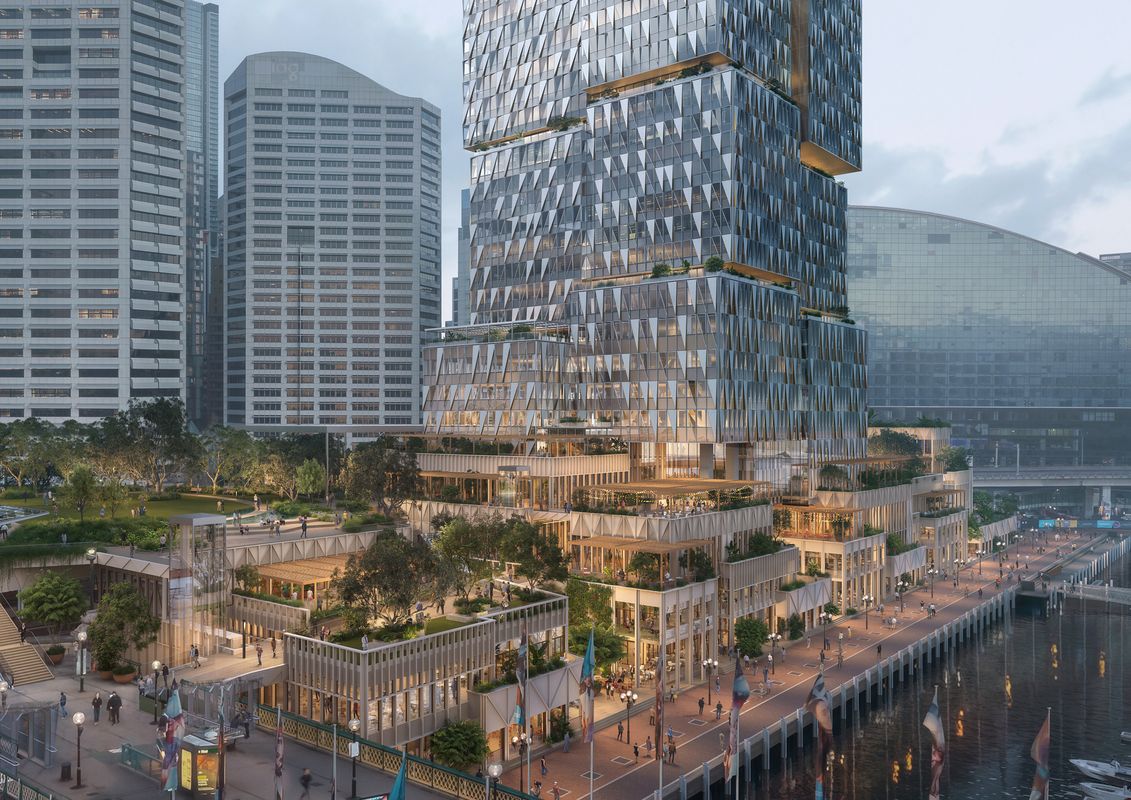
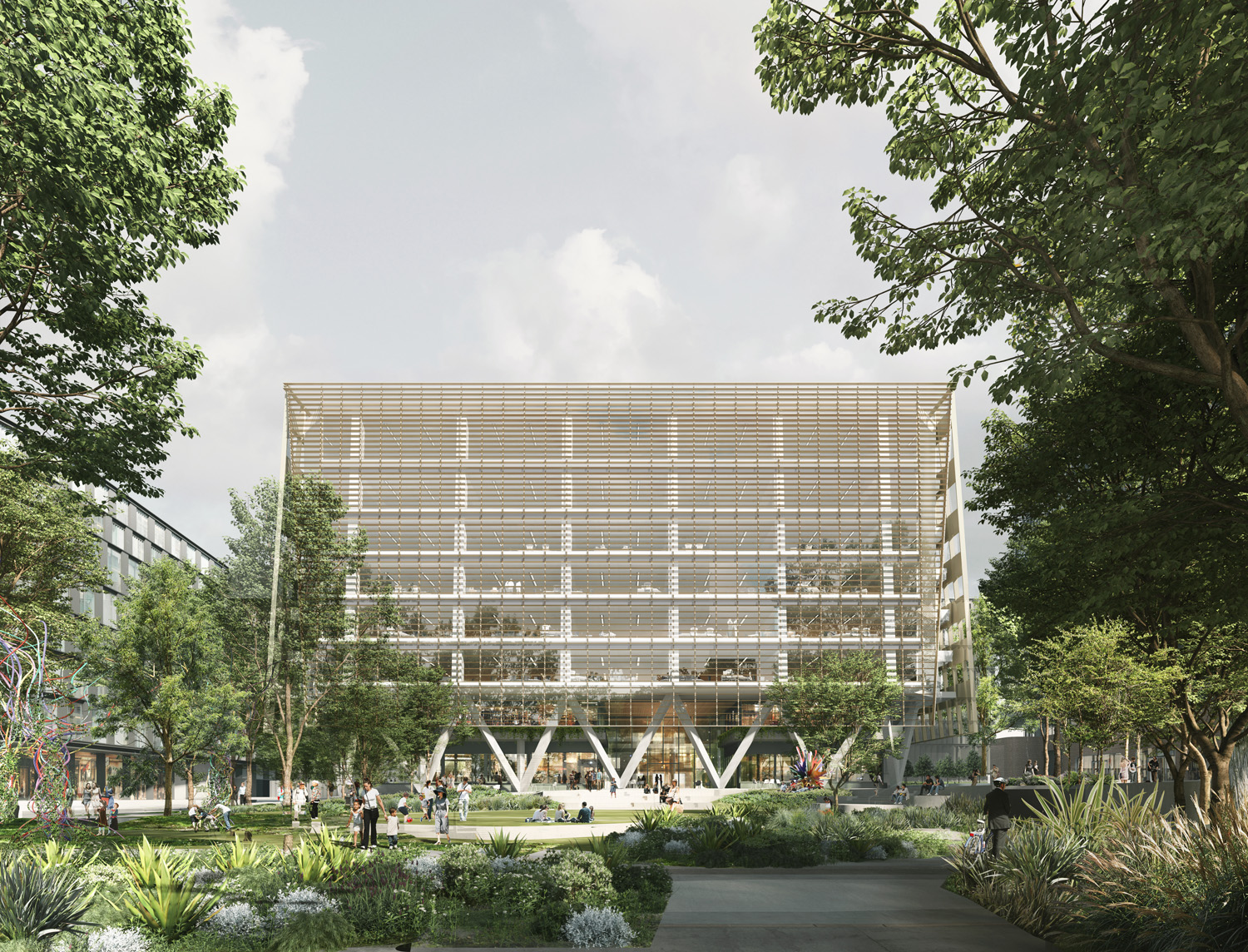
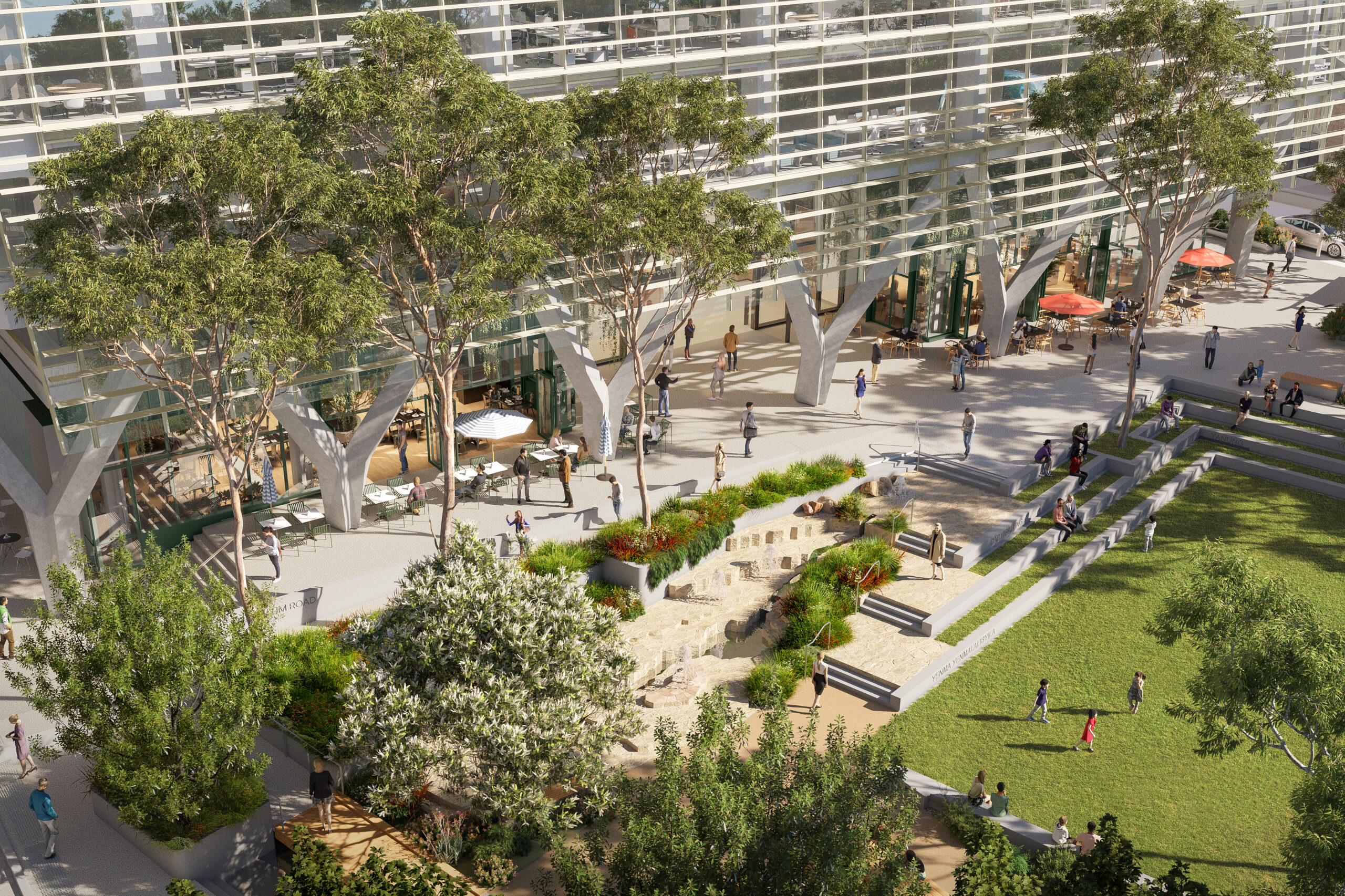
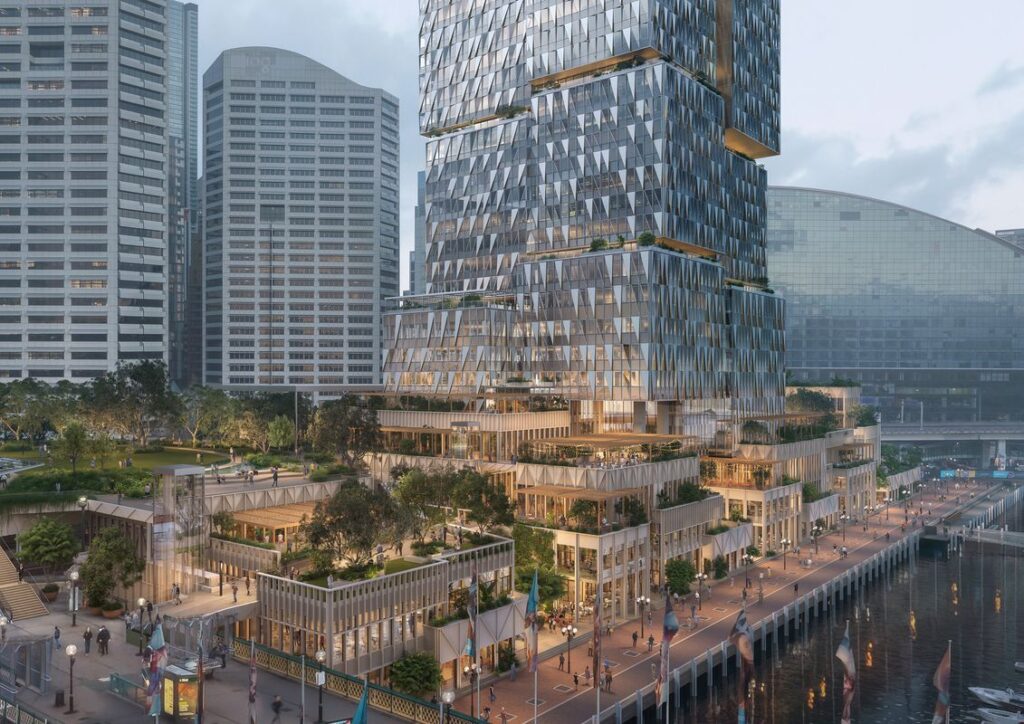
The Cockle Bay Park Redevelopment is a transformative project set to redefine Sydney's western waterfront. The redevelopment includes a commercial building envelope and a gross floor area of 89,000 m², comprising 75,000 m² of commercial office space and 14,000 m² of retail space.
Cockle Bay Park Public Domain, a land bridge extending over the Western Distributor, connecting Darling Park with Darling Harbour, providing direct pedestrian link from Market Street.
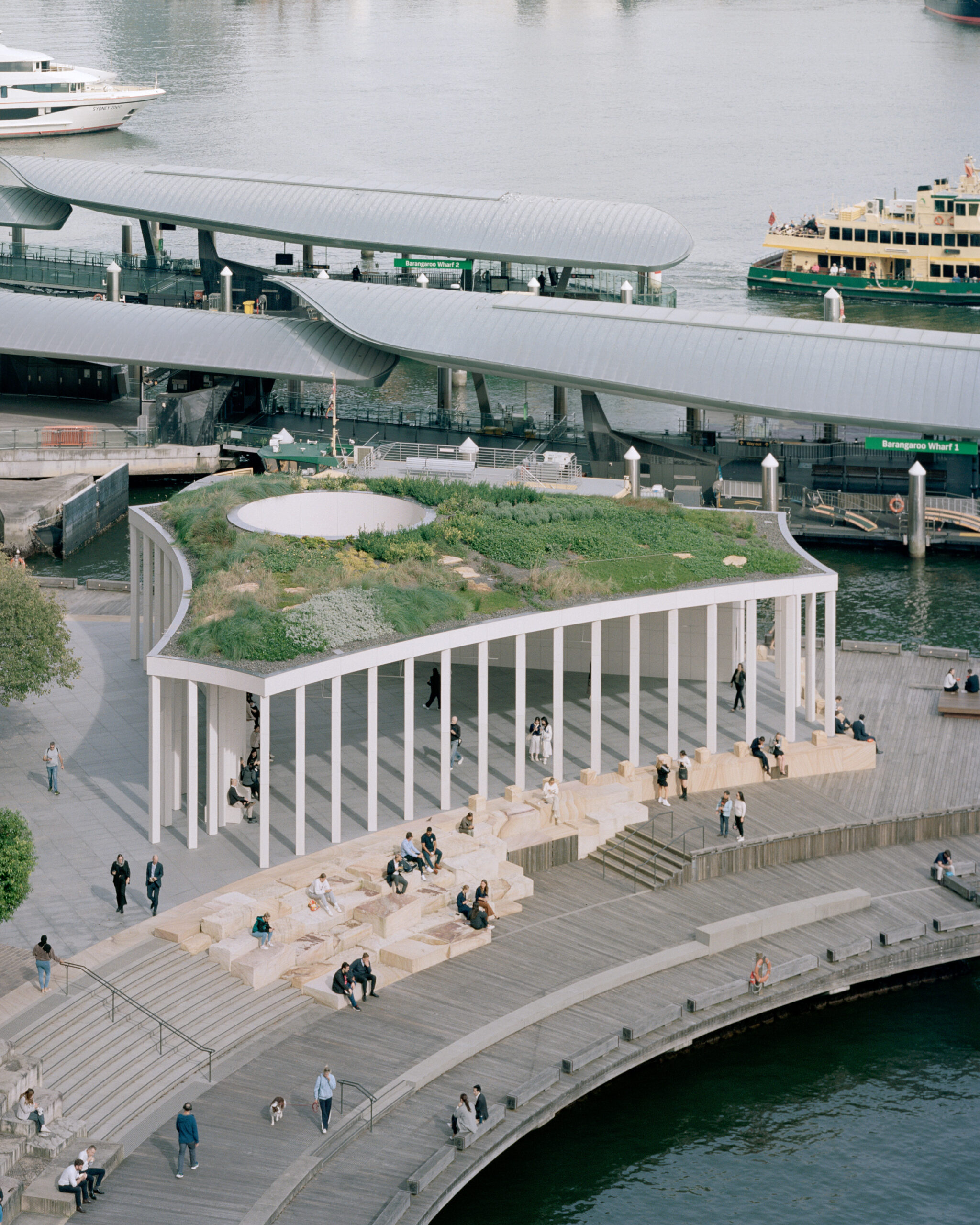
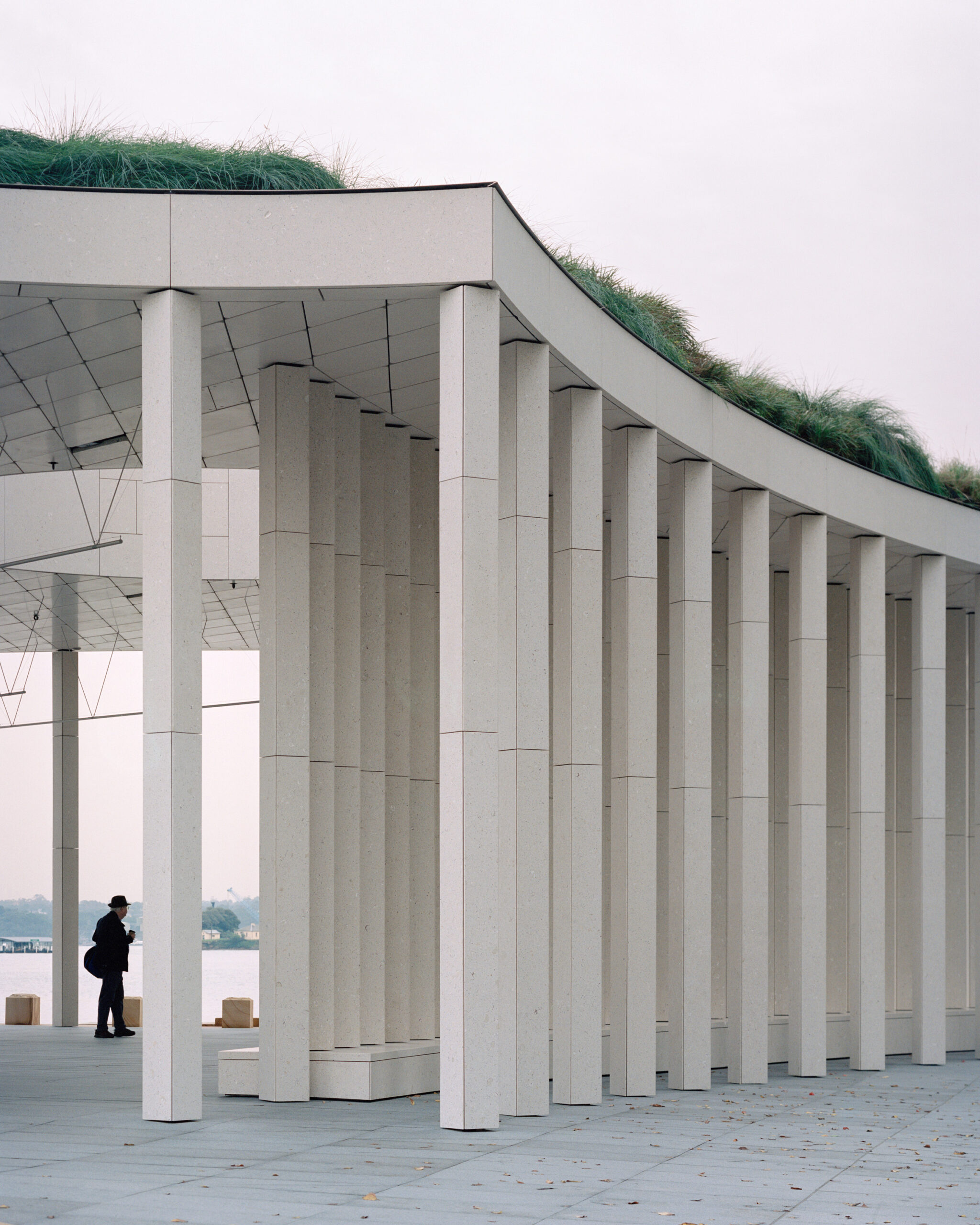
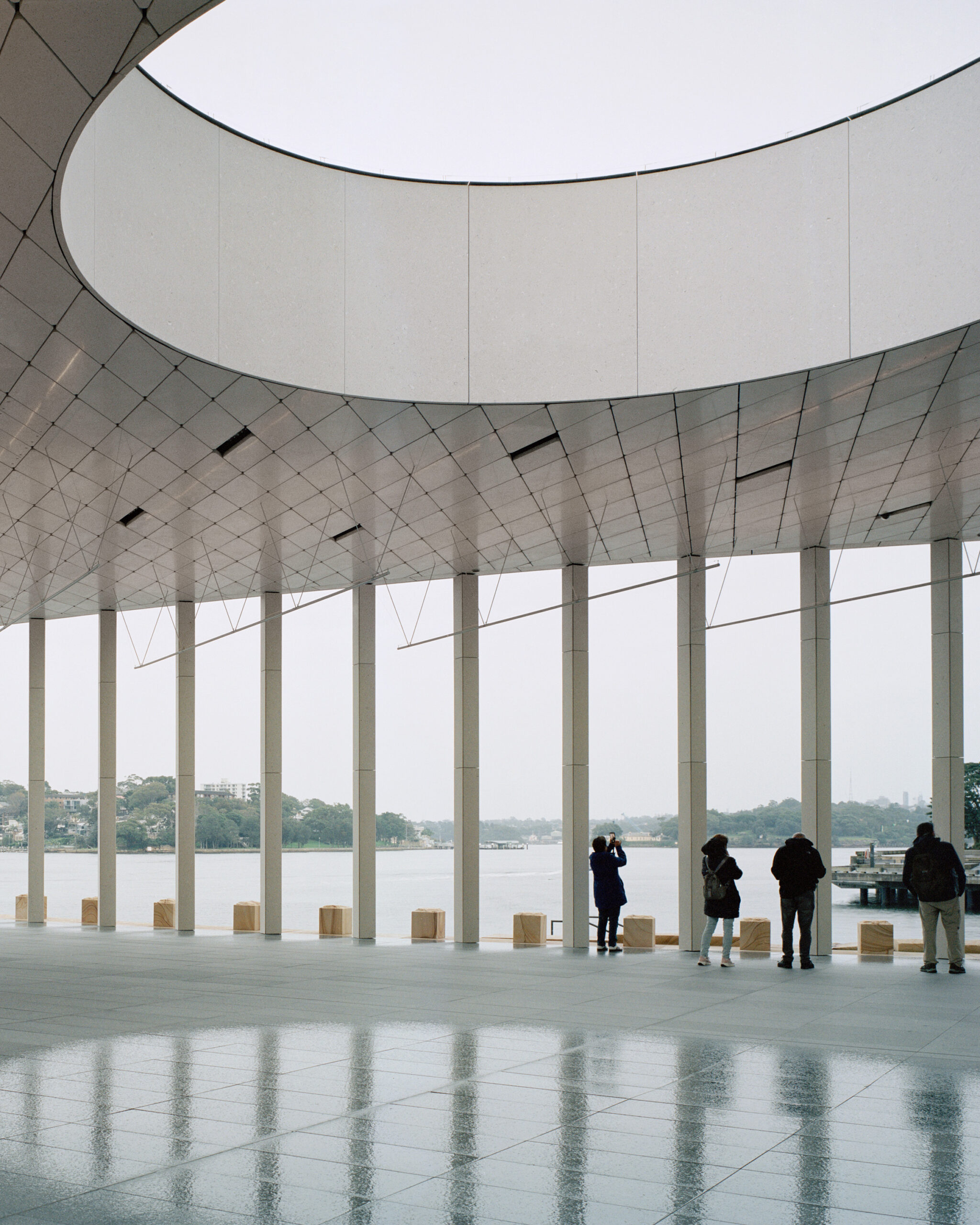
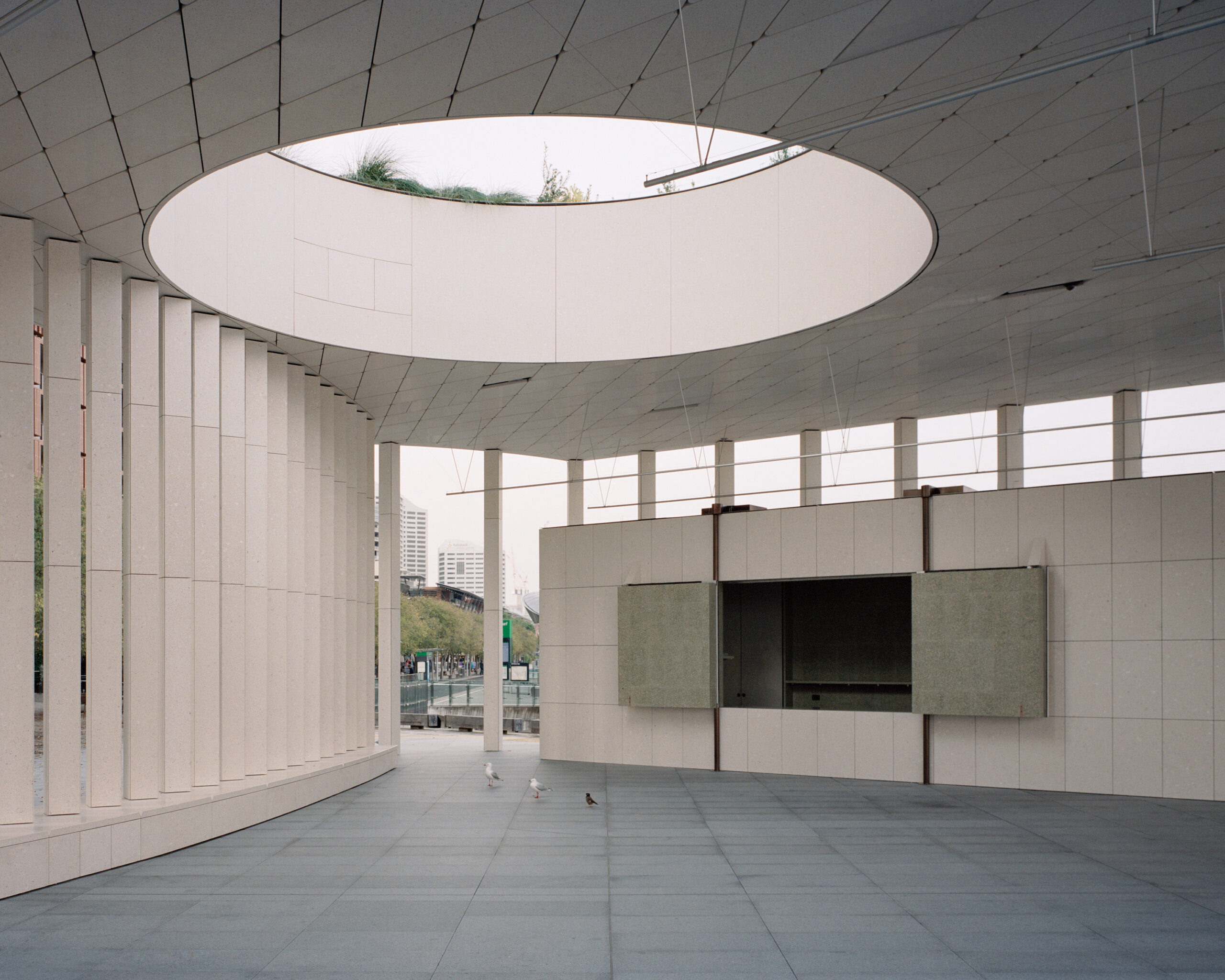
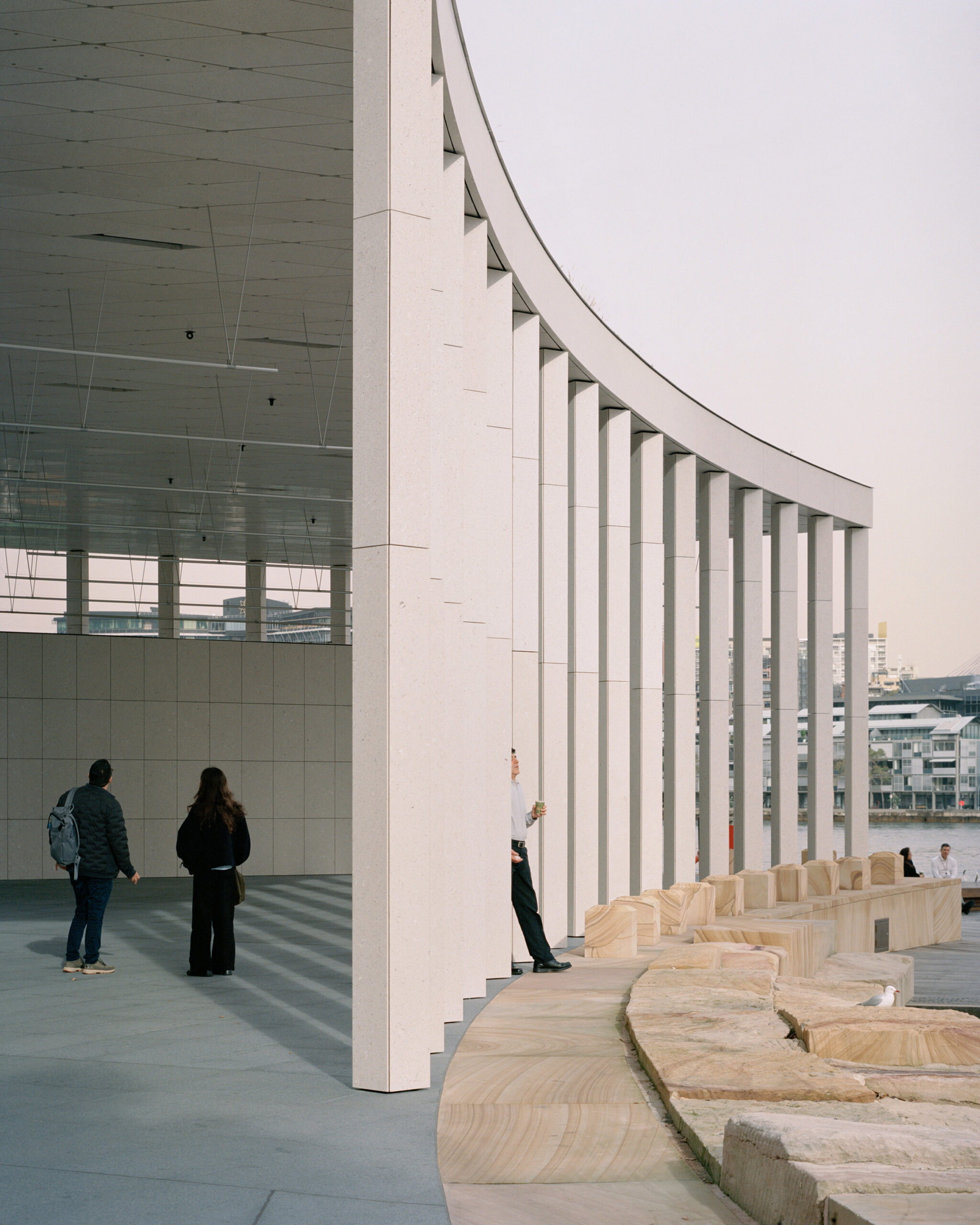
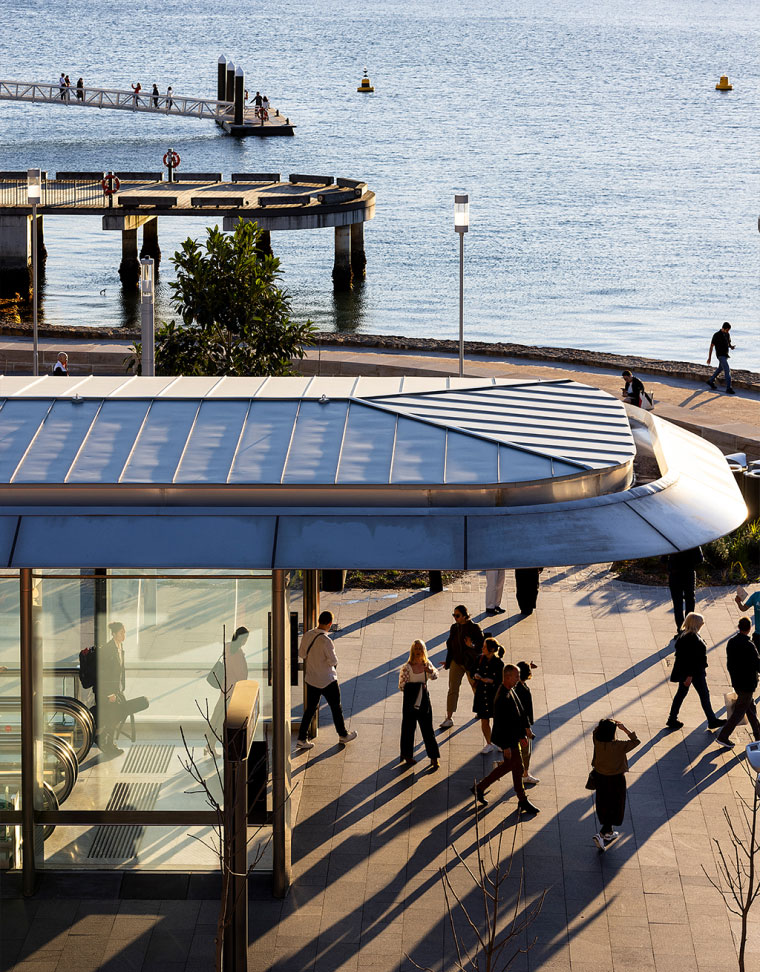
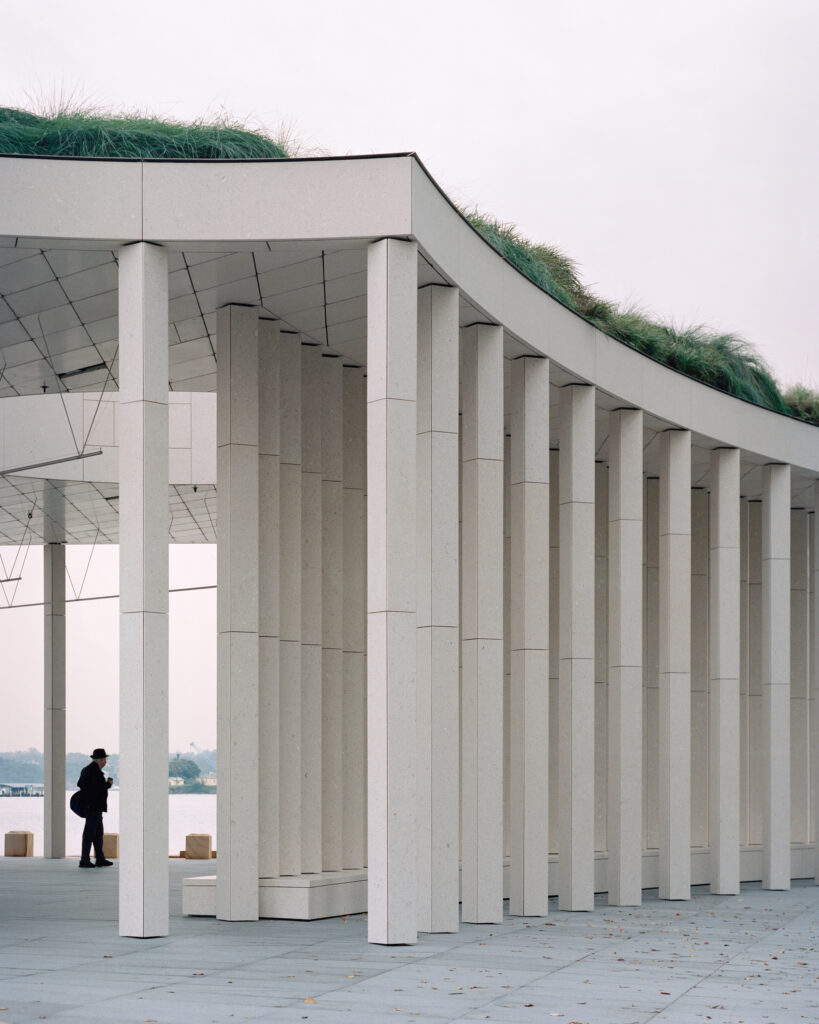
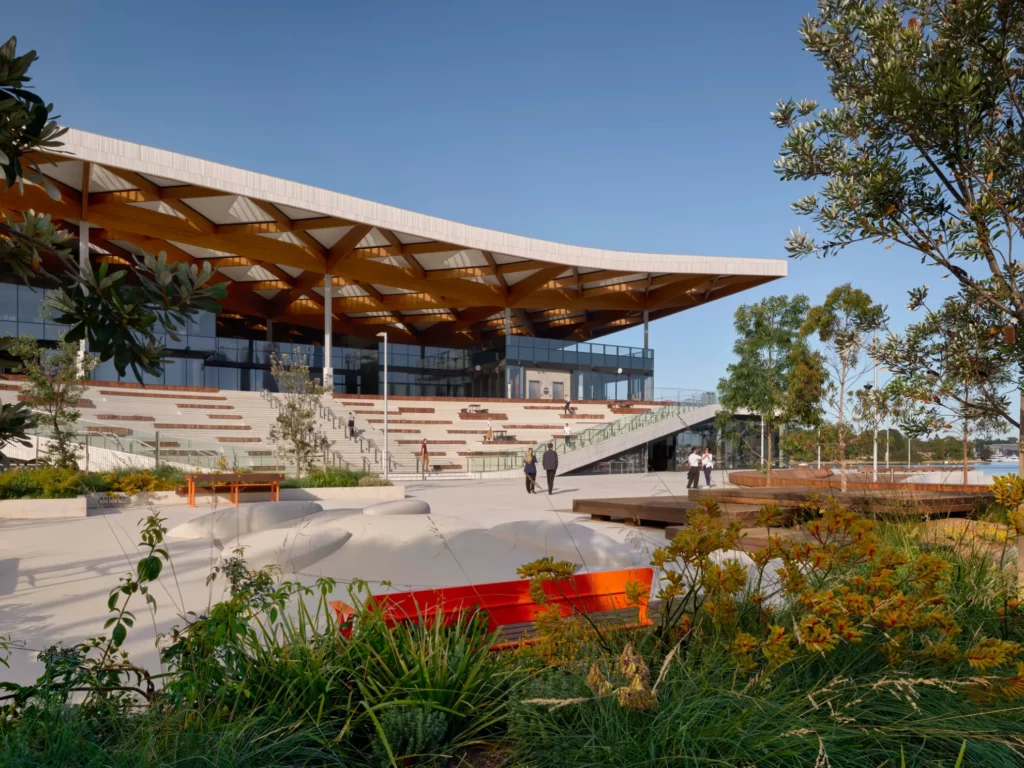
The Barangaroo Pier Pavilion is a striking new civic landmark on Sydney Harbour as part of a national design competition-winning scheme. The pavilion covers approximately 407 m², with a spectacular landscaped rooftop garden featuring over 2,500 native plants, helping to integrate biodiversity and public space.
The façade is clad in custom oyster shell terrazzo made from more than 450,000 recycled Sydney rock oyster shells, celebrating local marine heritage and sustainability. Its triangular plan, 85 slender supporting columns, and a dramatic 7-metre-high canopy with a central oculus create a unique interplay of light, air, and water, offering a gathering space that feels both intimate and monumental.
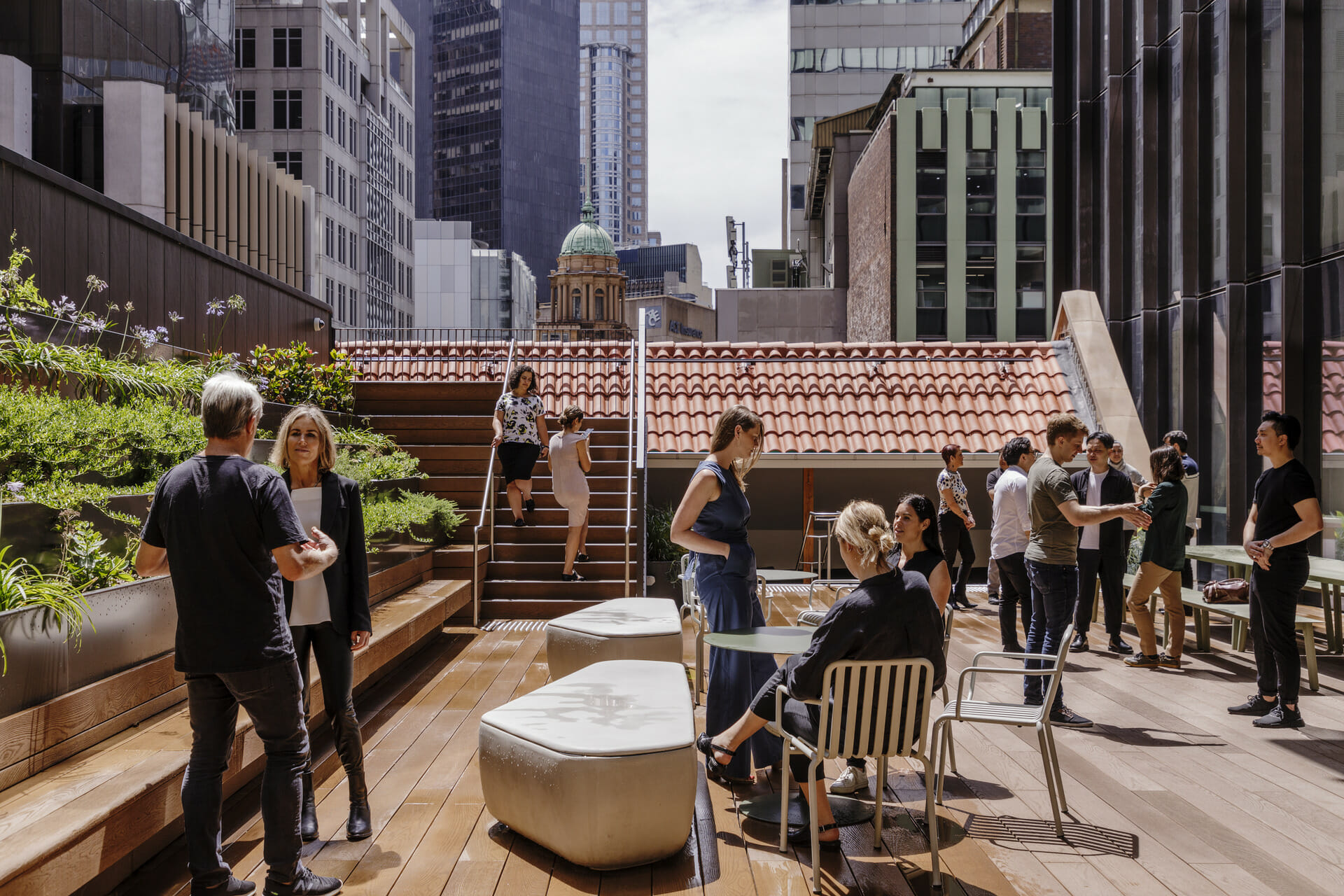
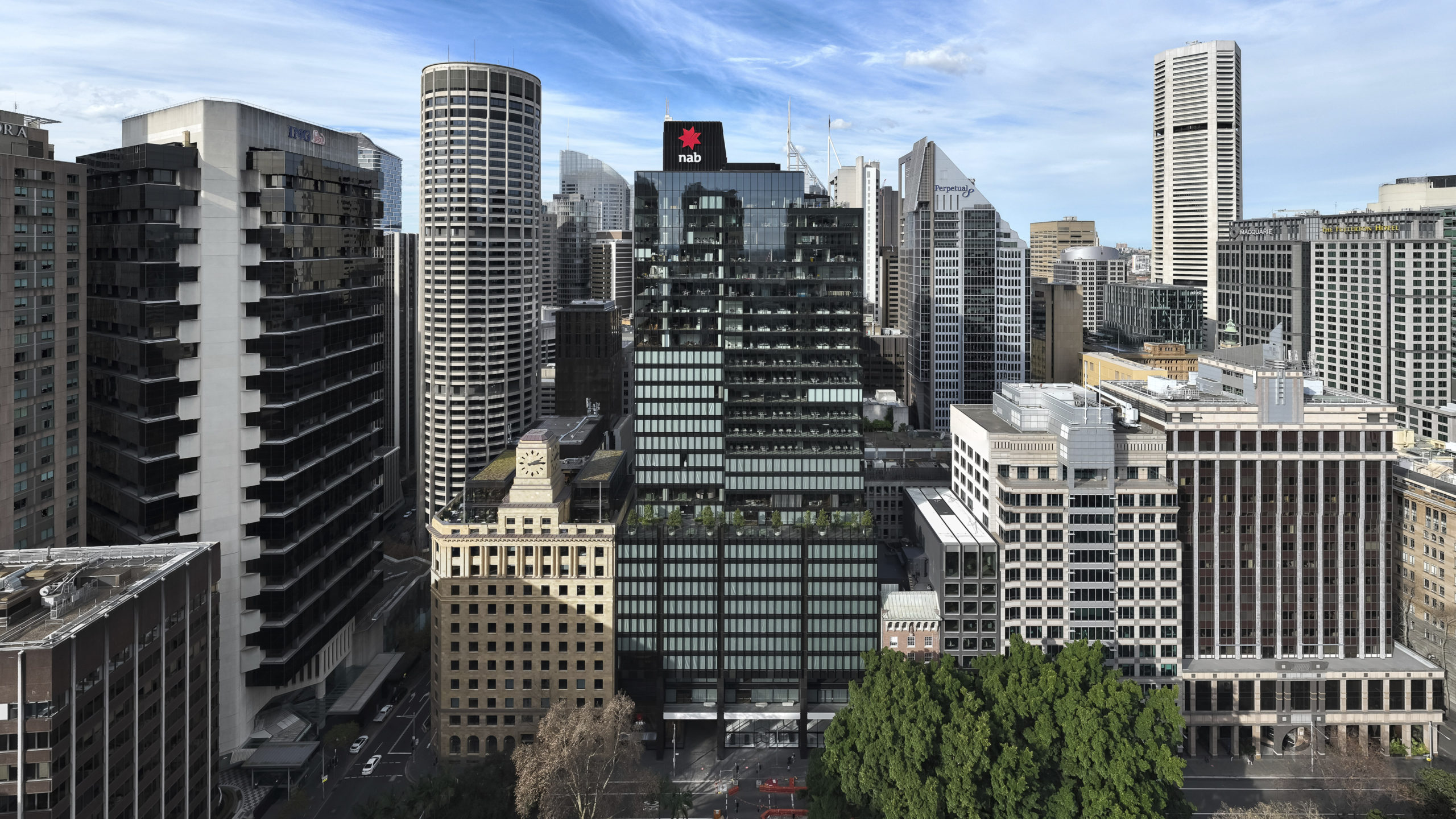
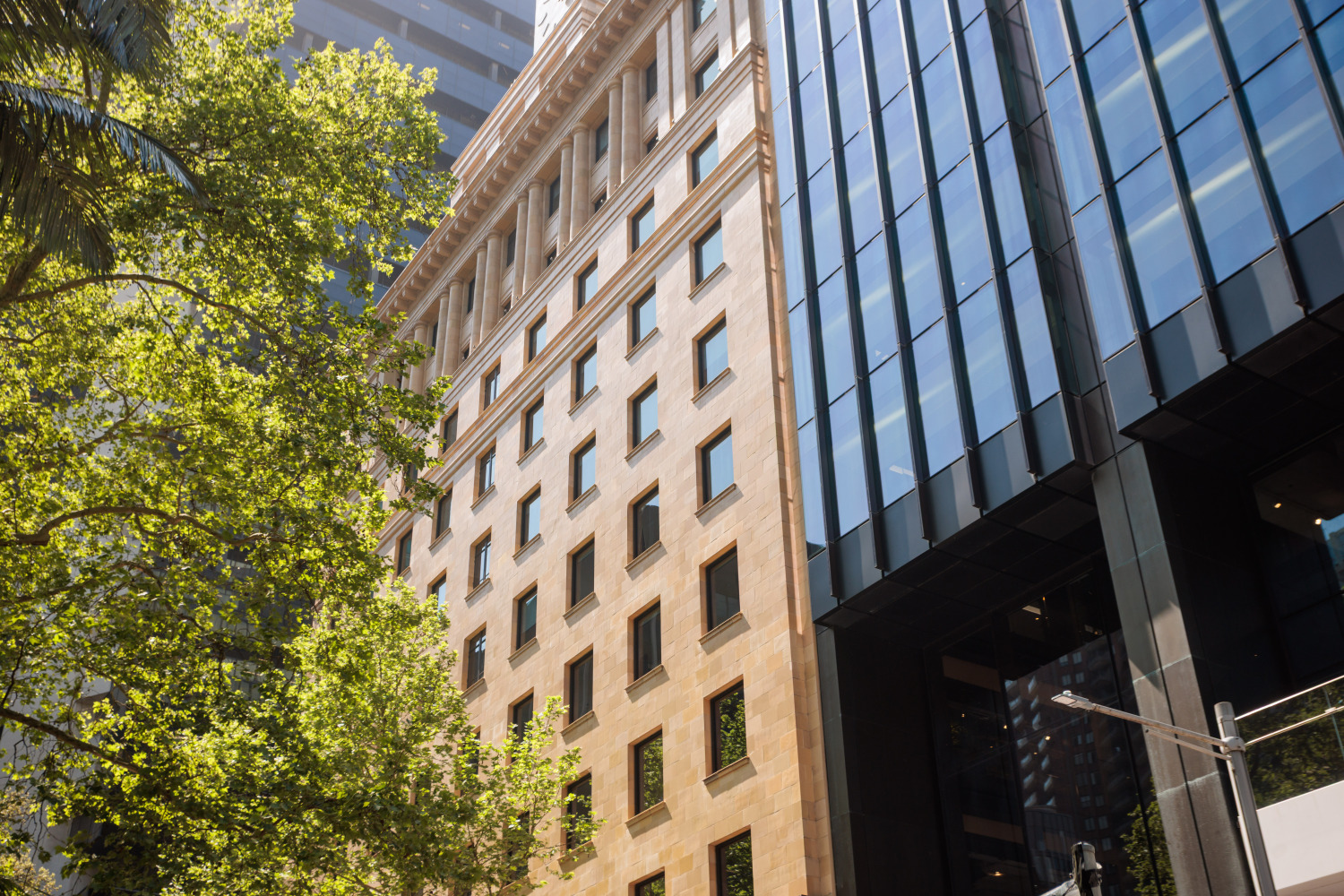
The NAB Wynyard Place Workplace is a bold reinvention of a dual-site campus combining the heritage-listed Shell House with a sleek new tower, delivering a 33,000 m² PCA A‑Grade workplace.
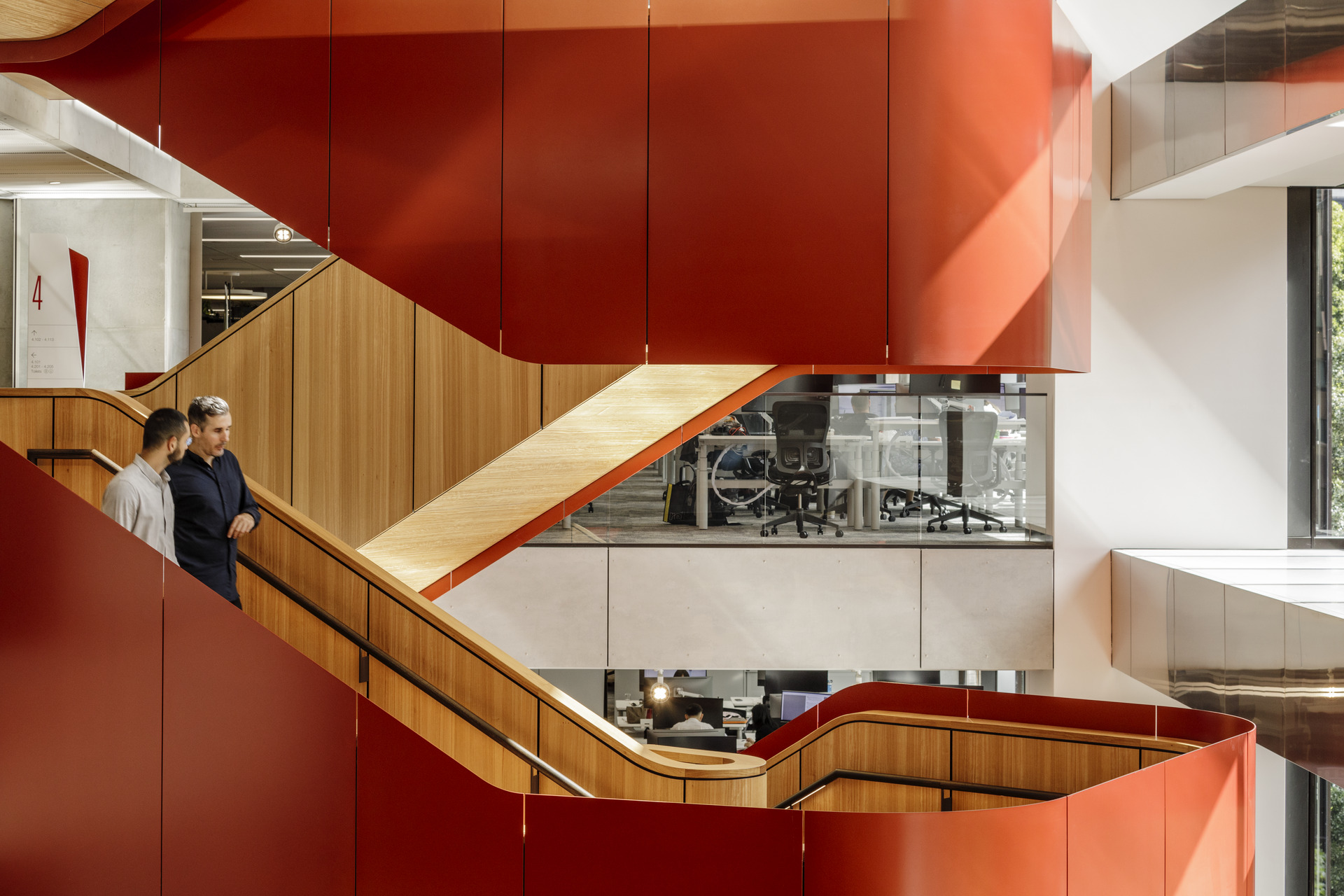
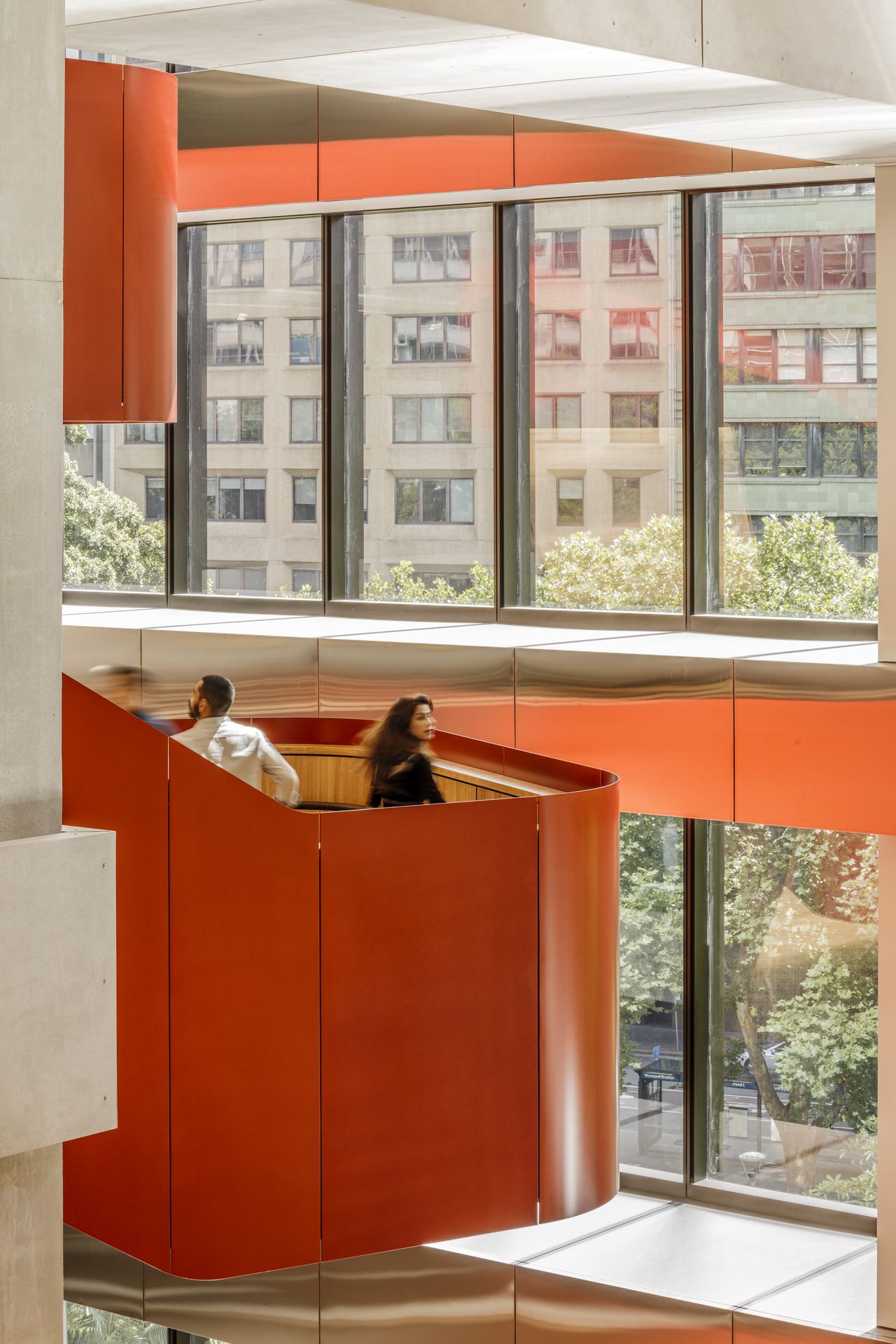
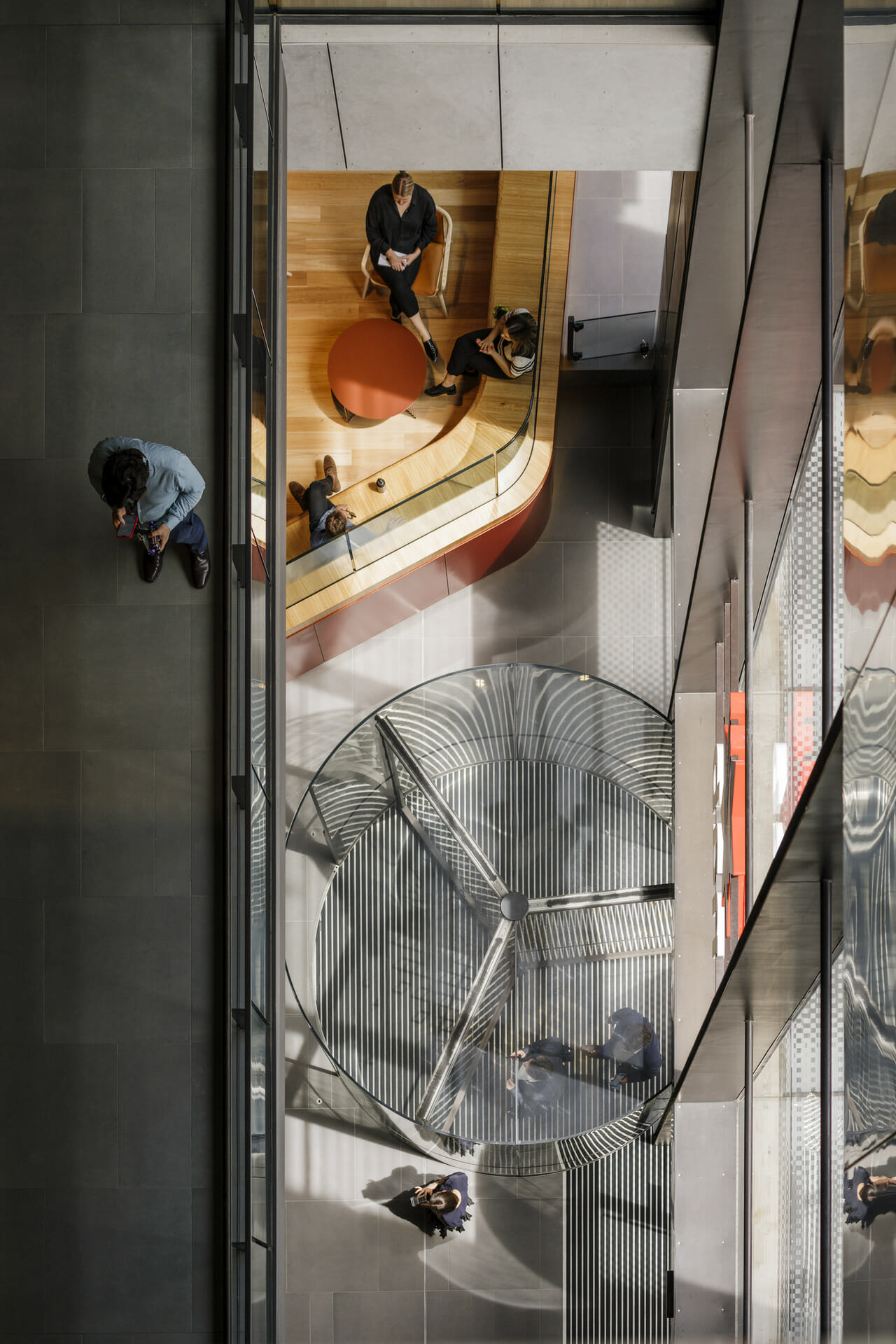
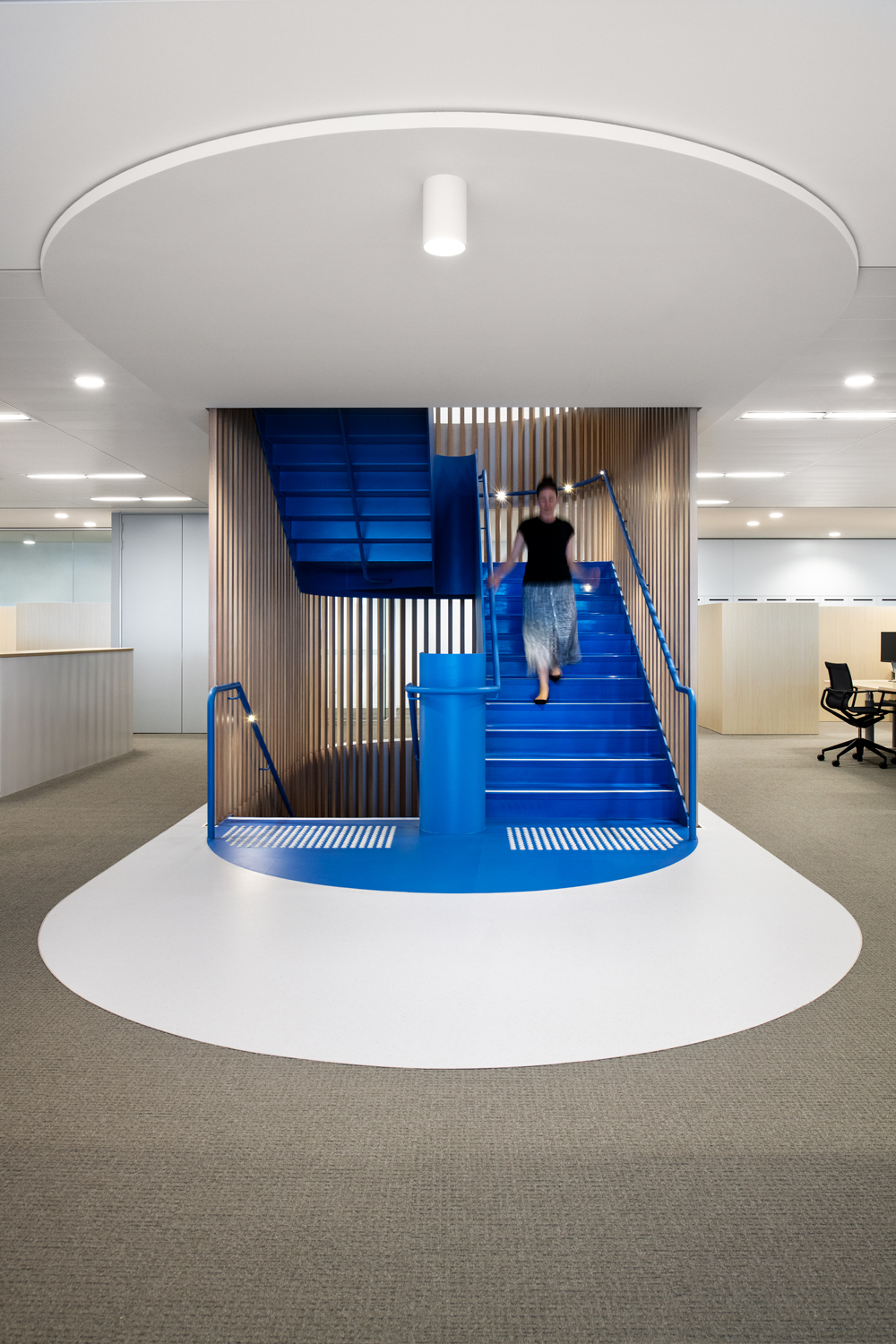
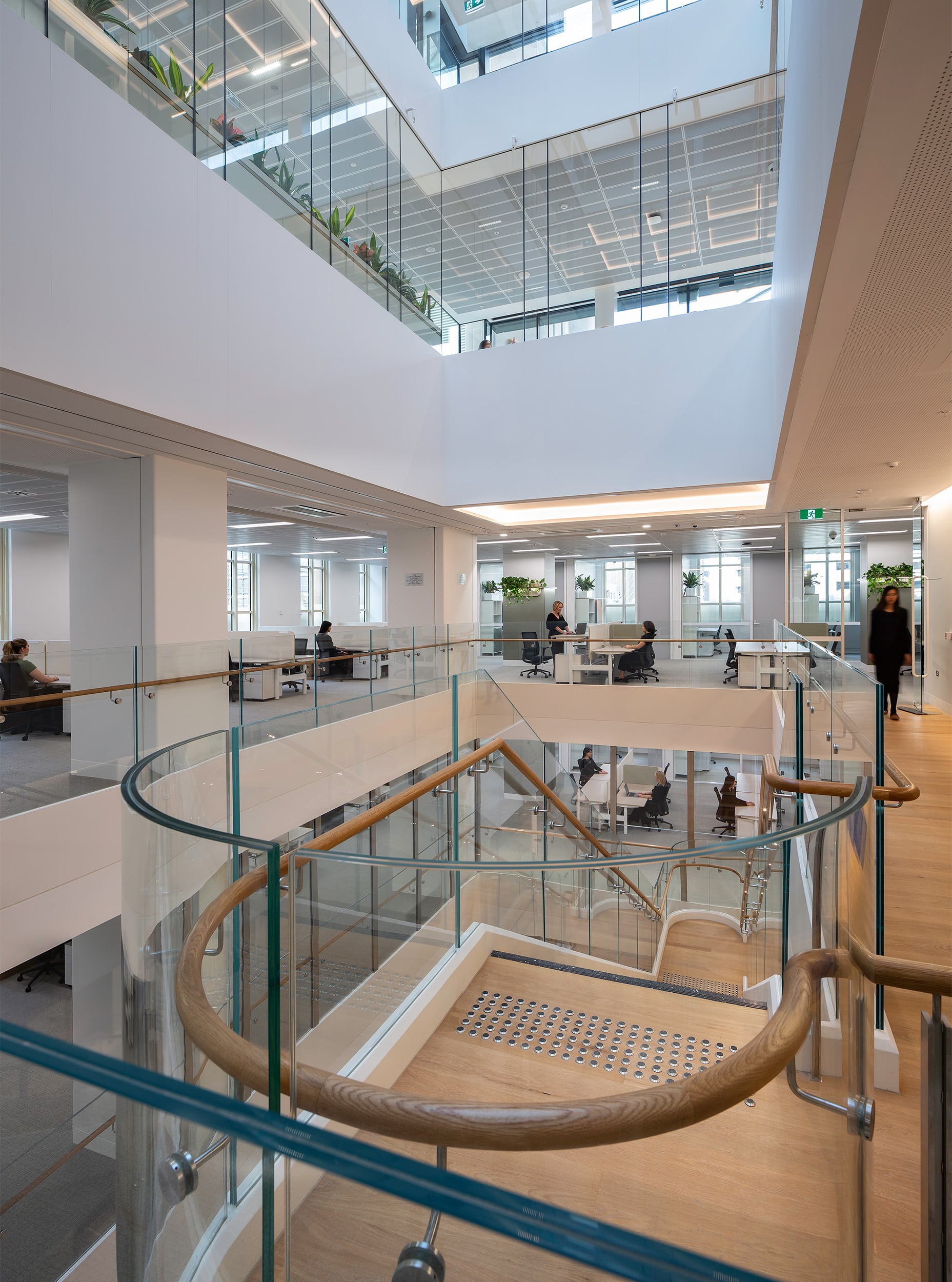
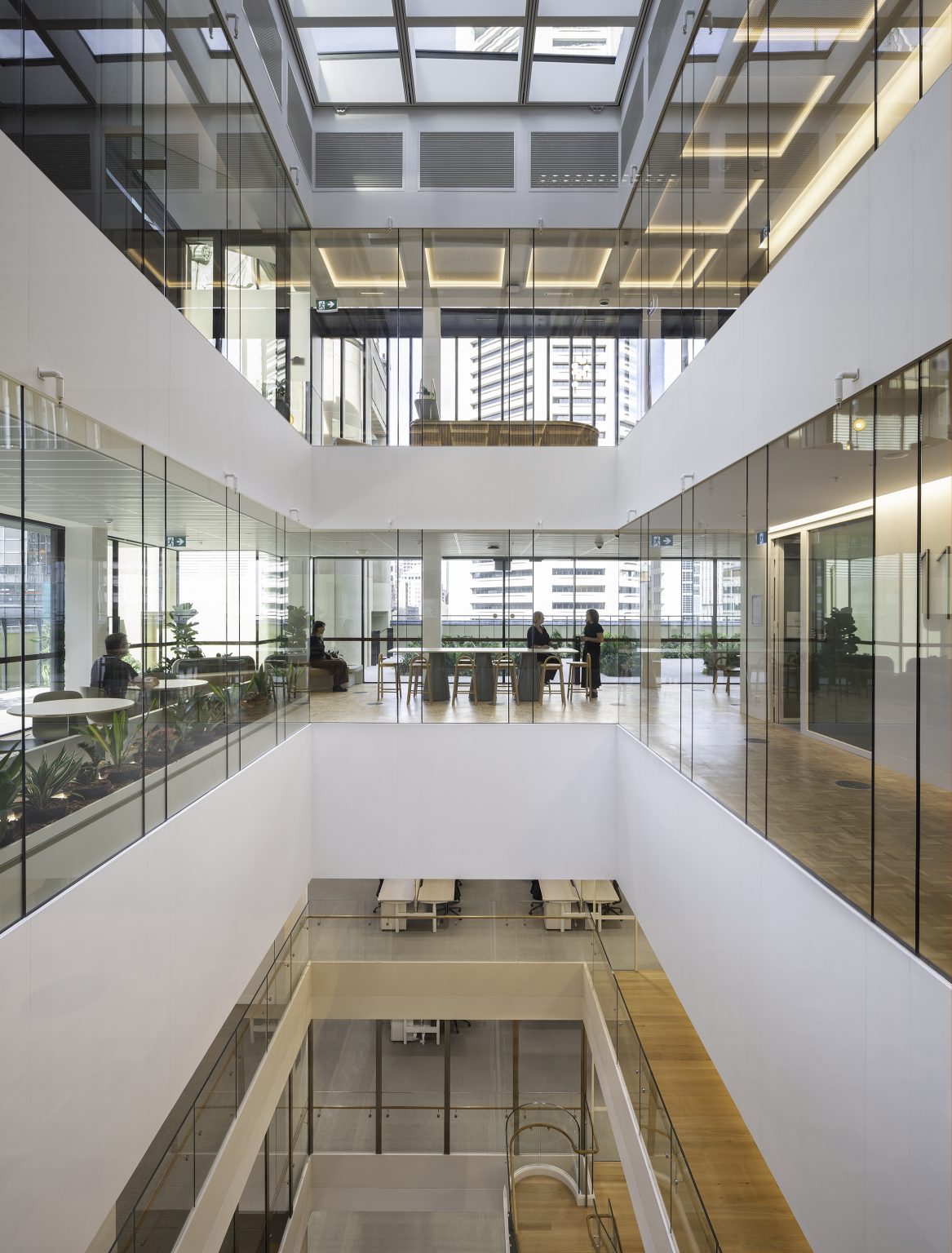
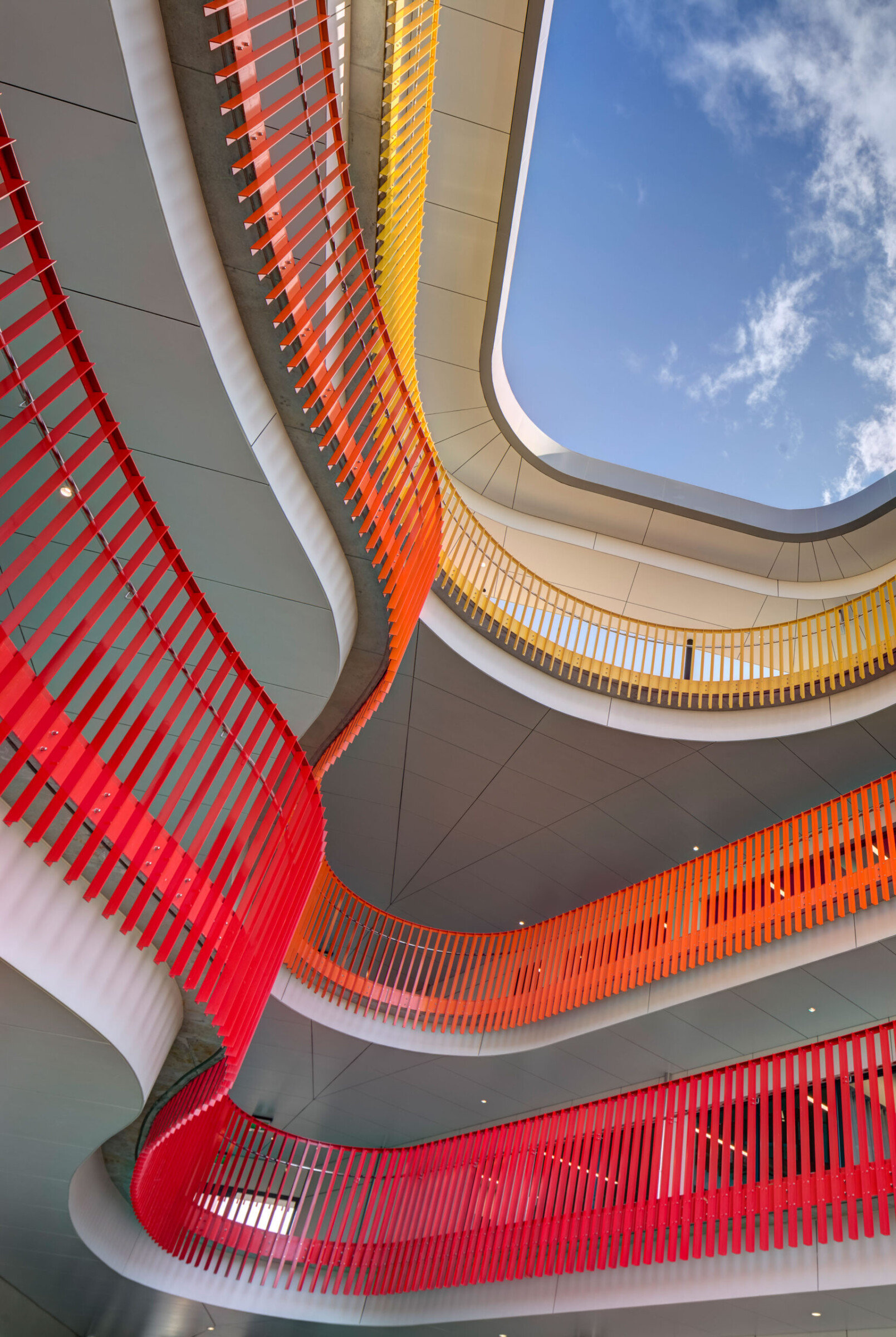
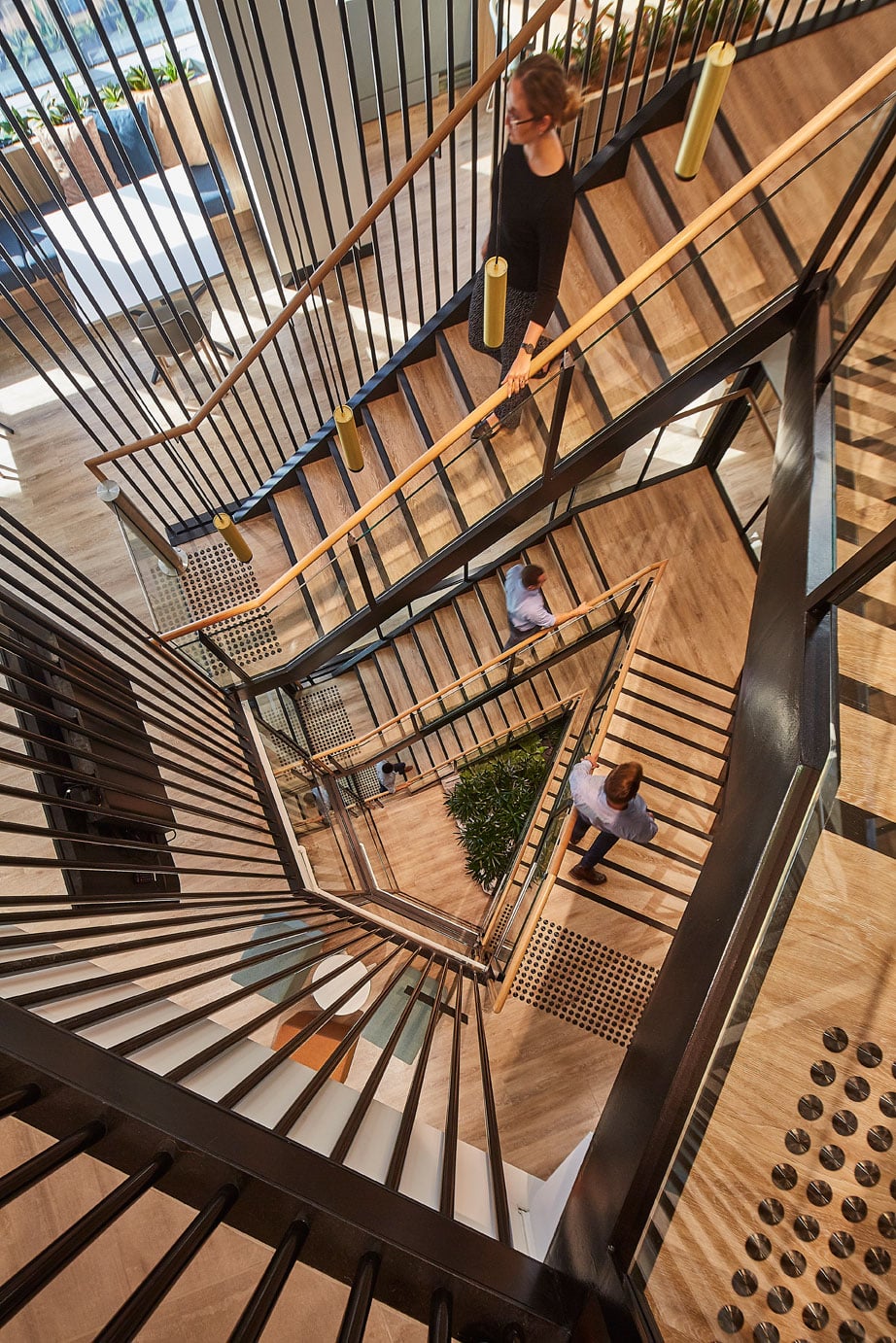
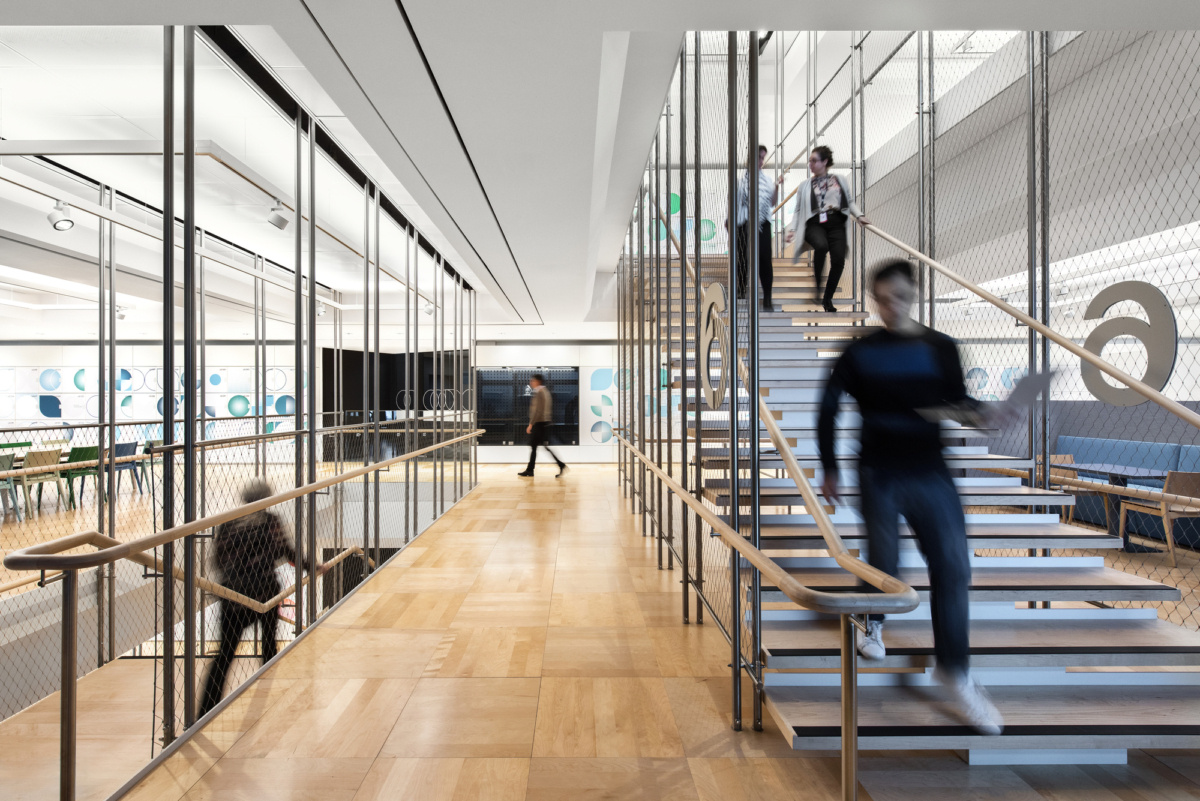
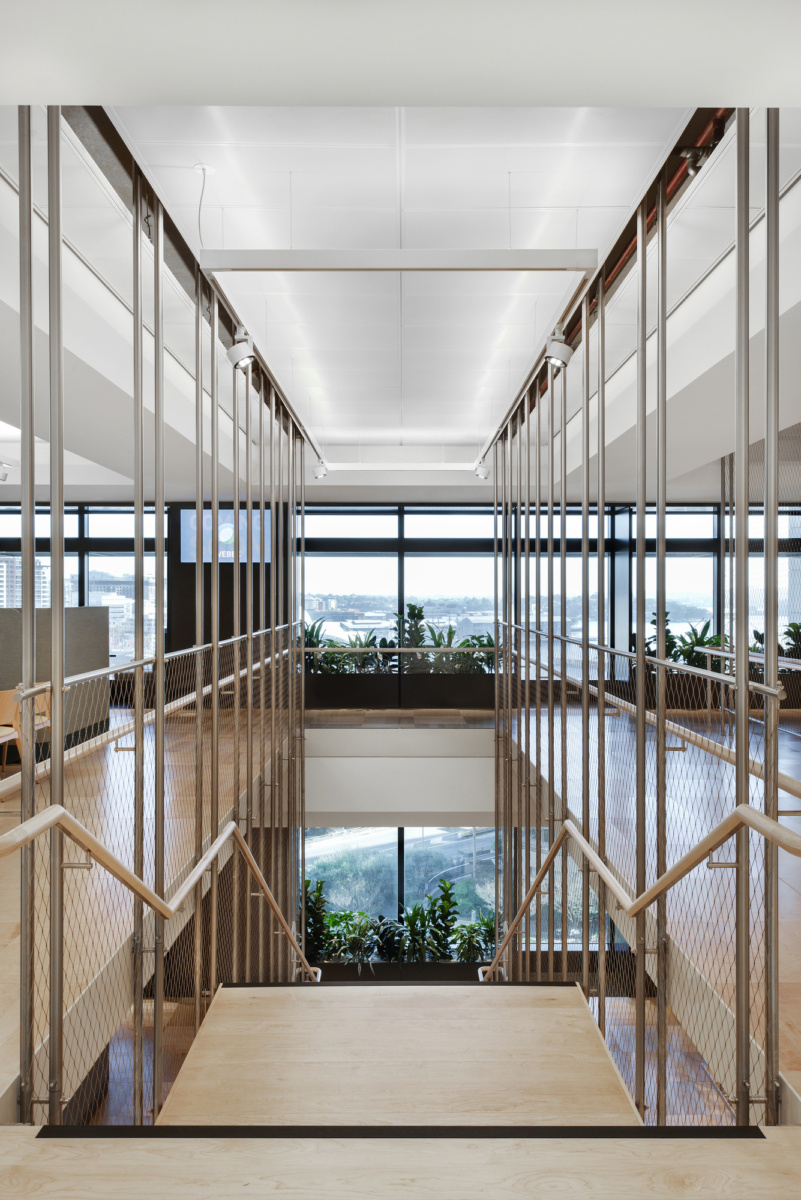
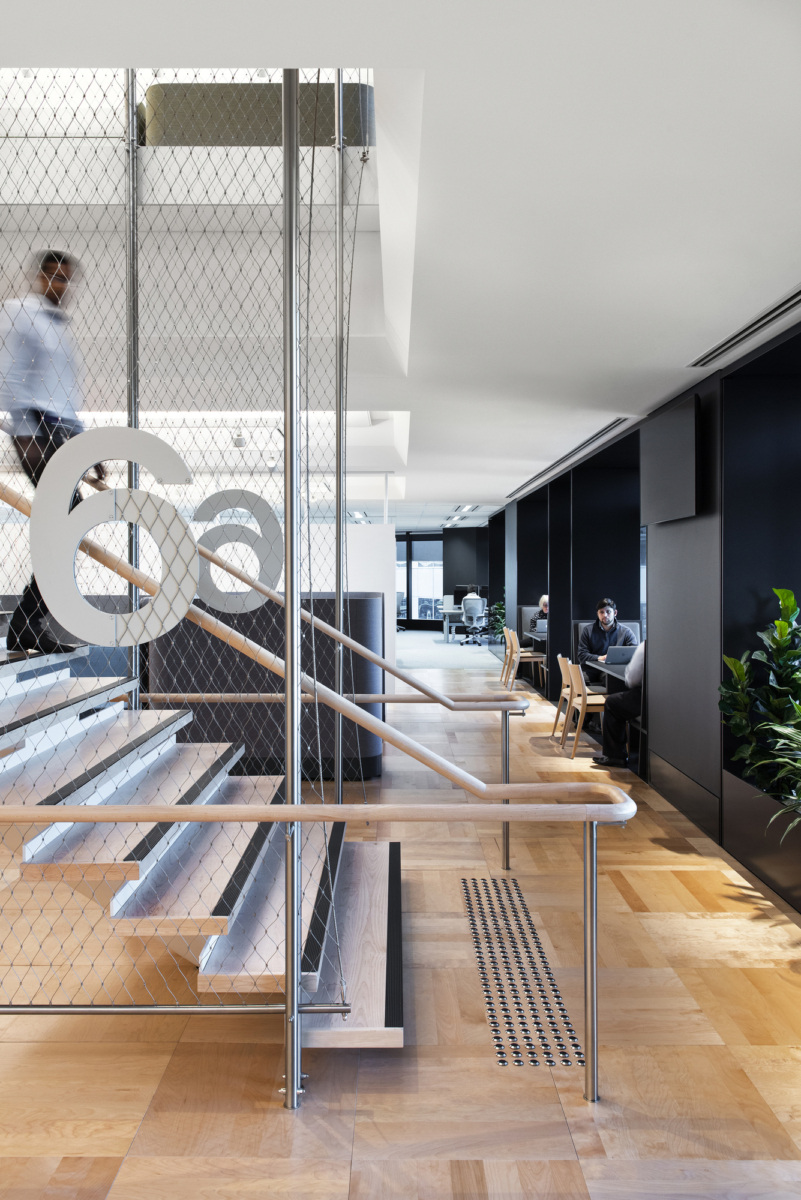
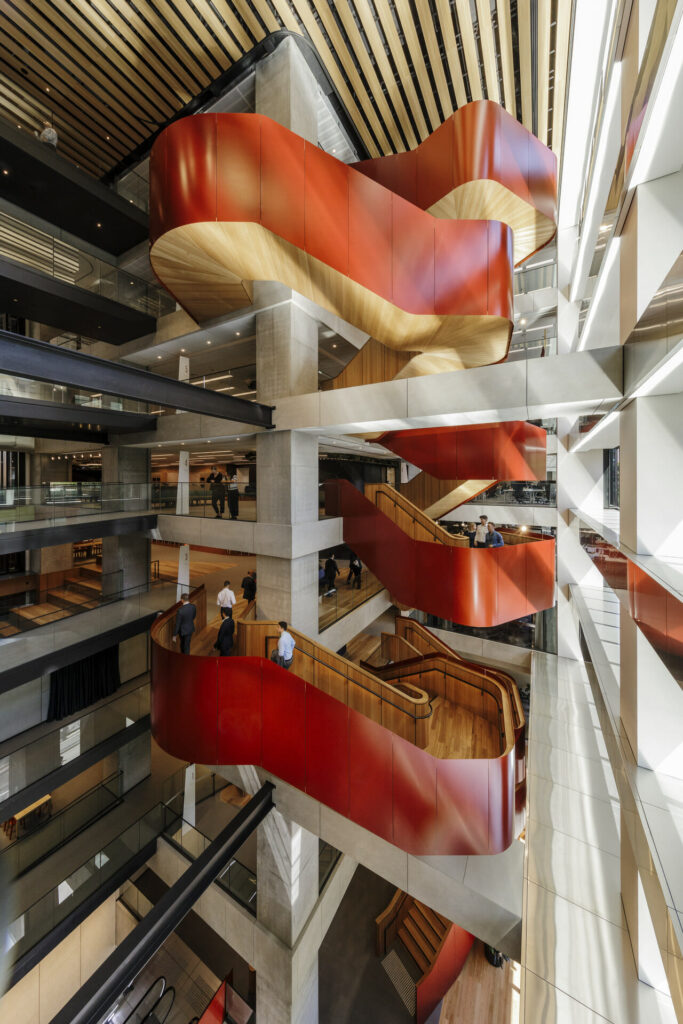
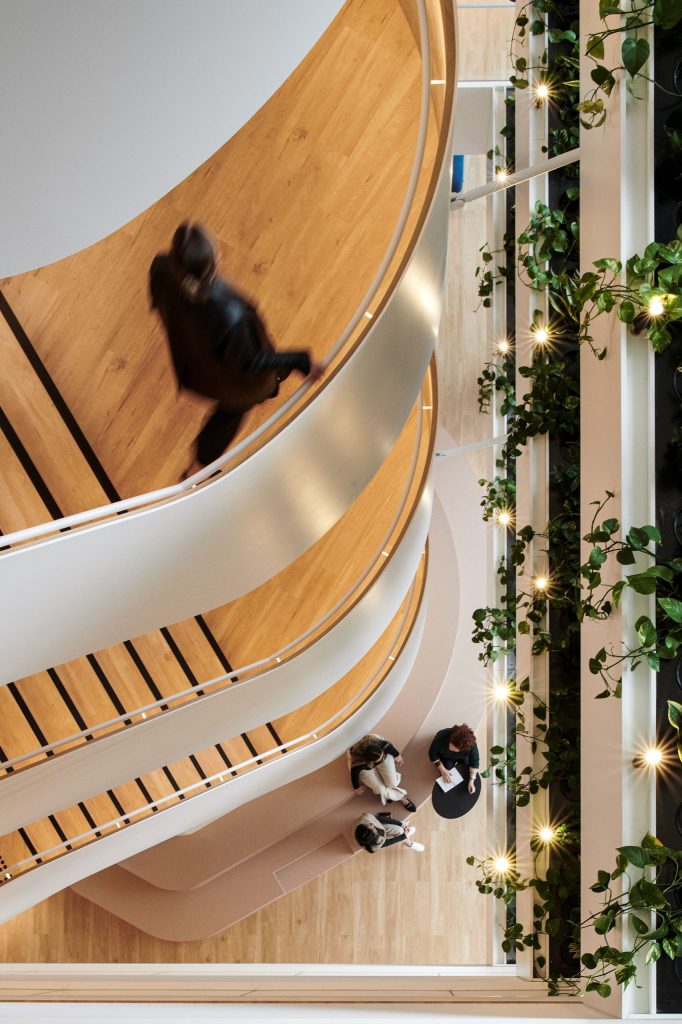
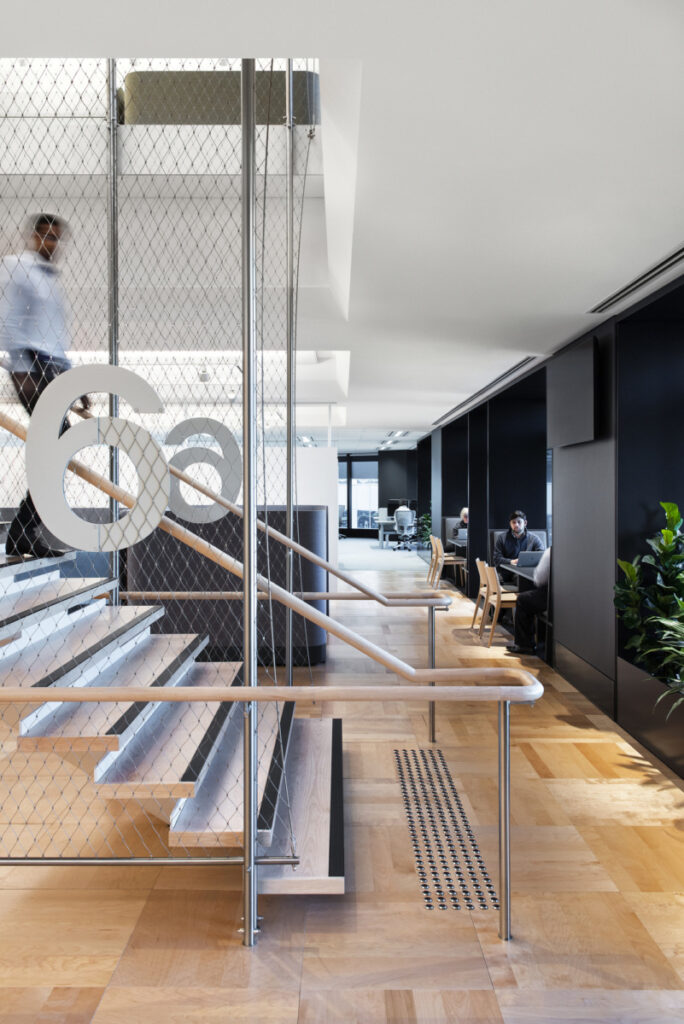
Anchored by a striking "red thread" stair linking all 12 levels, the design fosters collaboration and agility across trading floors and diverse teams, while delivering superior air quality, daylight and wellness spaces, including outdoor terraces and a café micro‑branch at Wynyard Park.
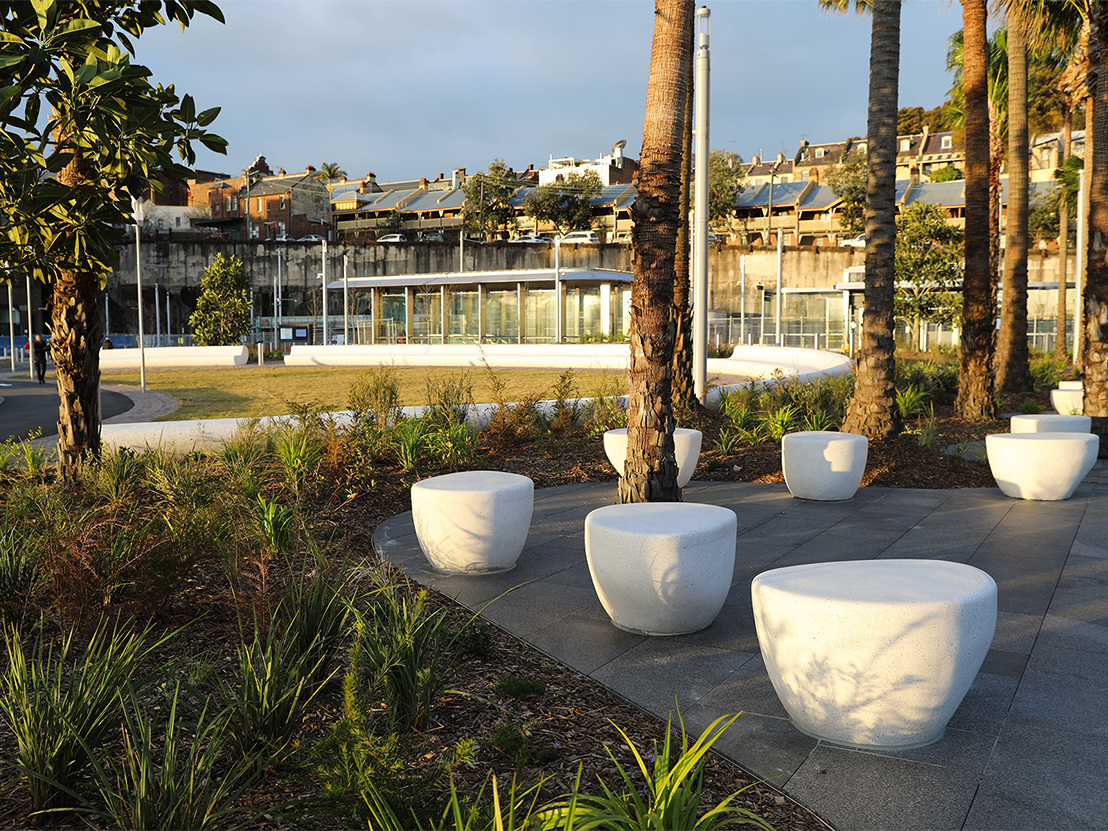
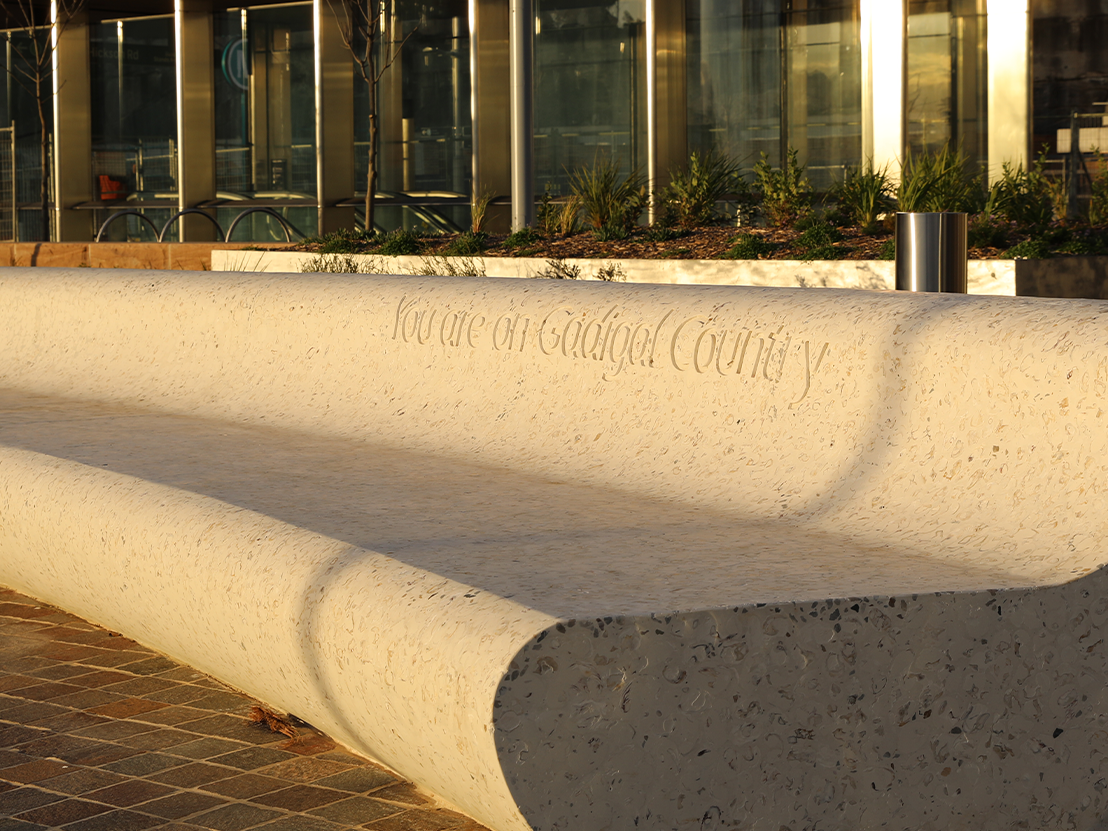
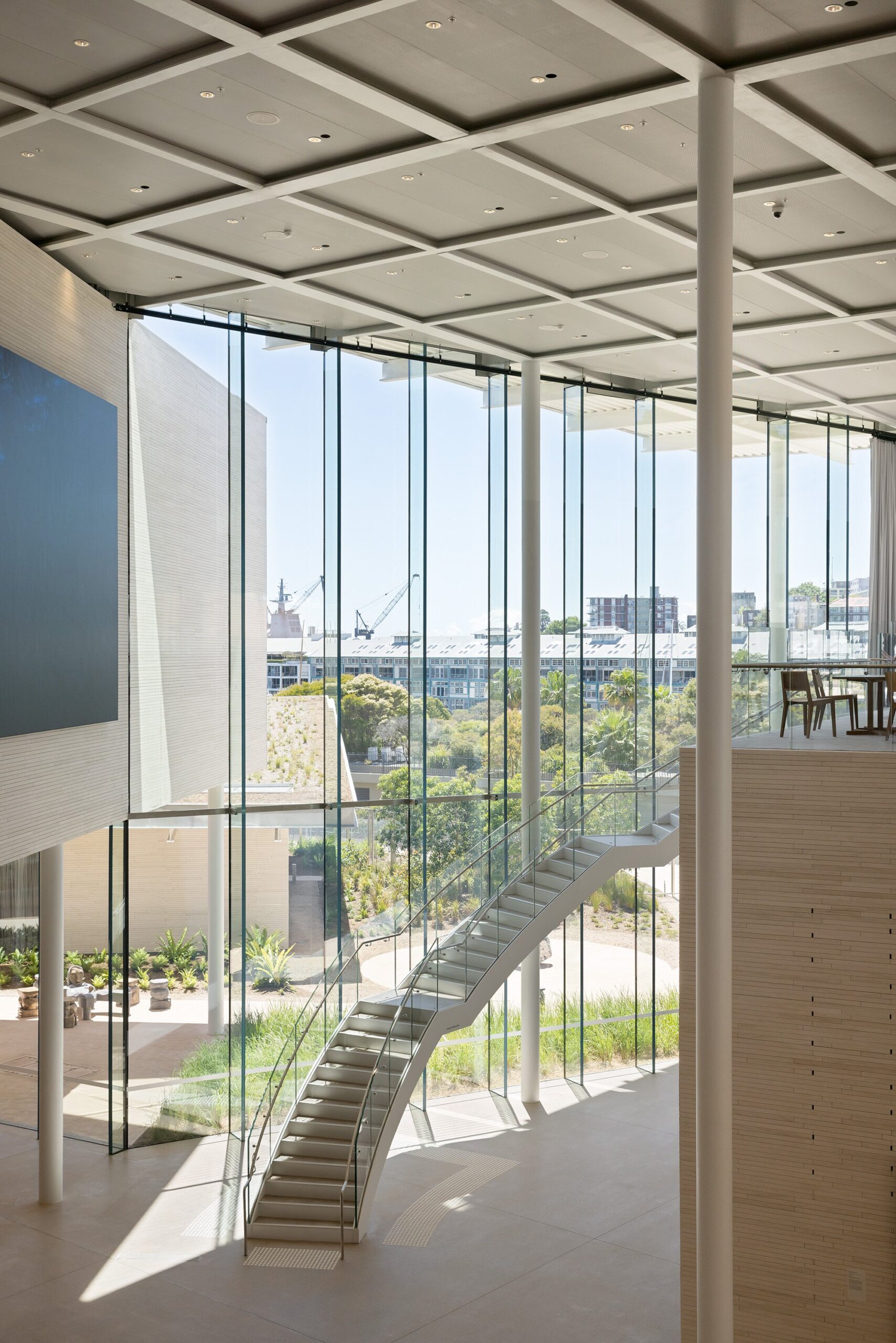
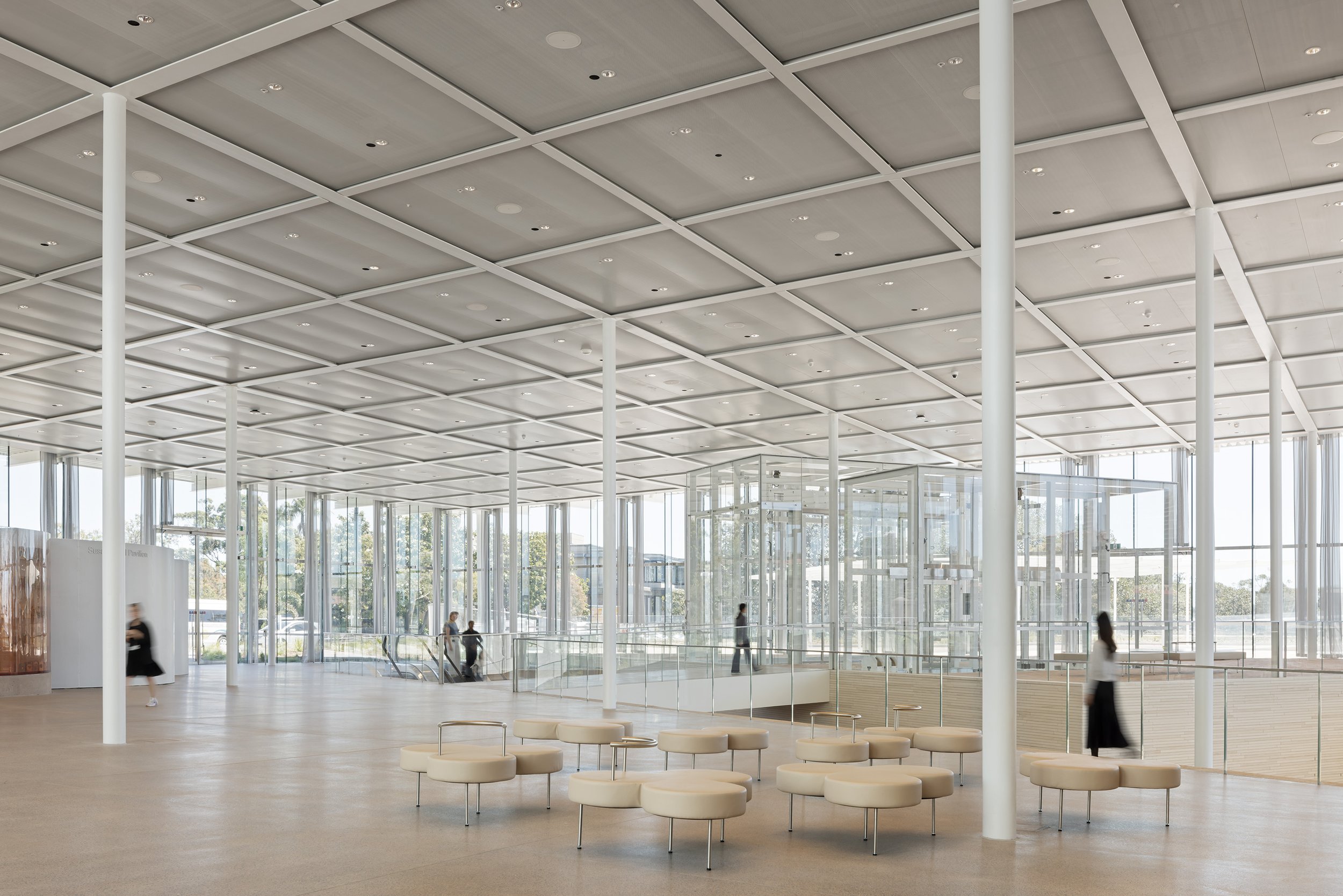
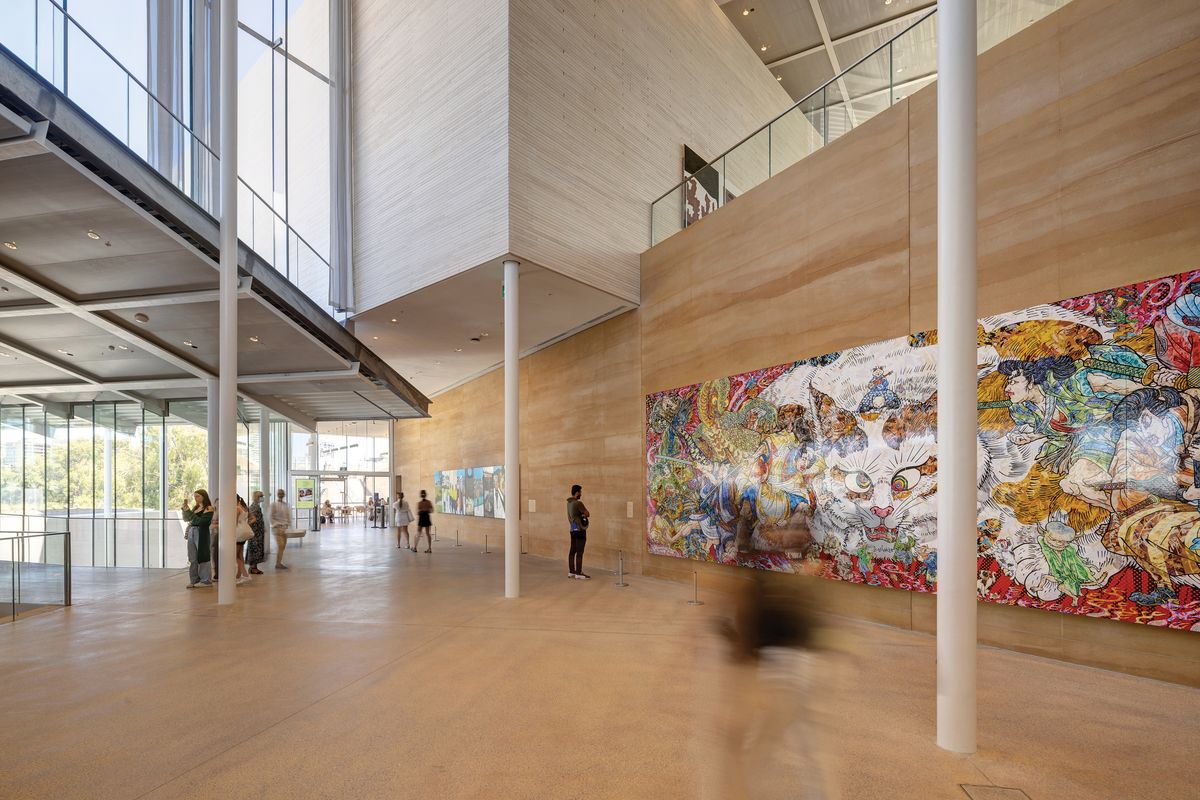
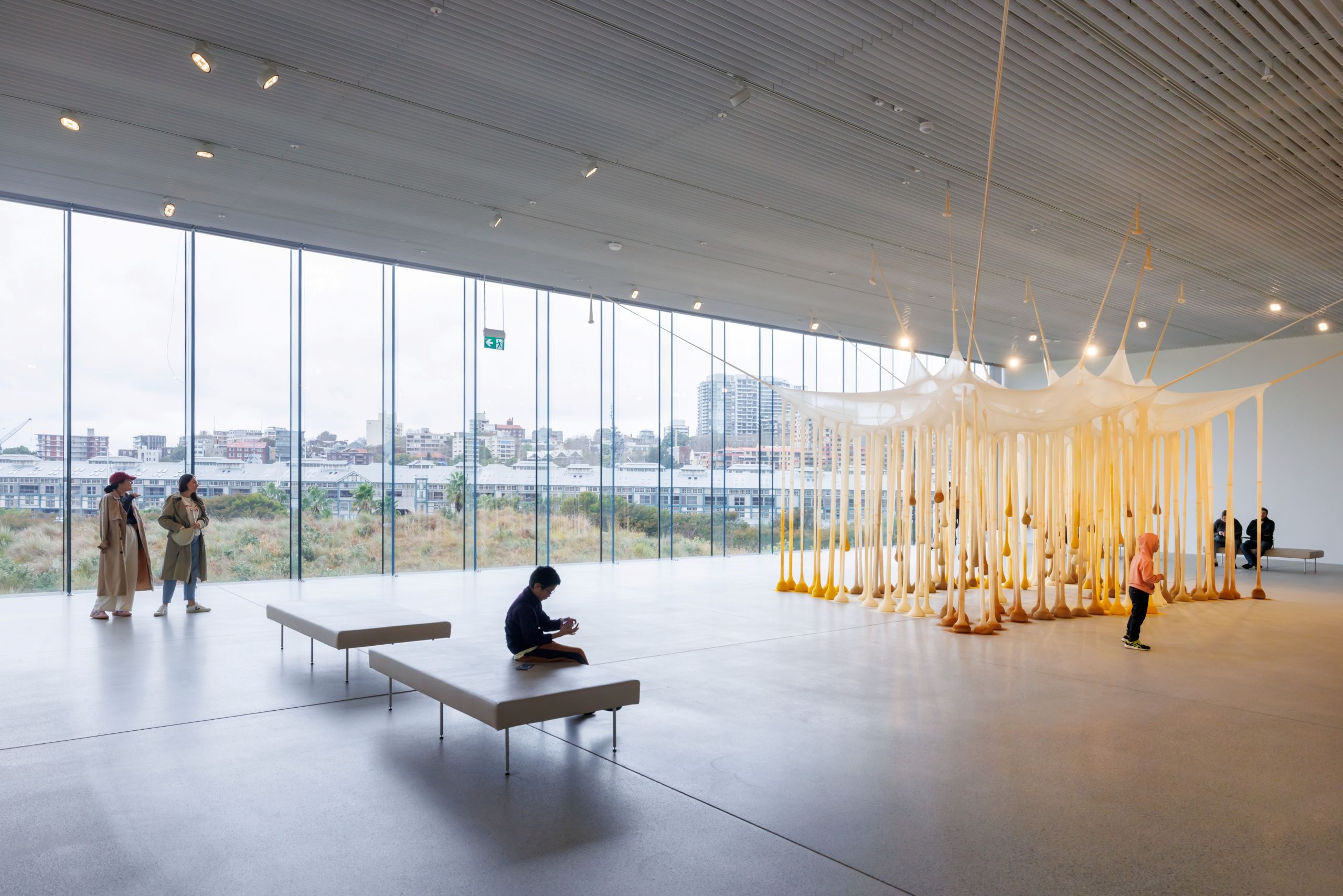
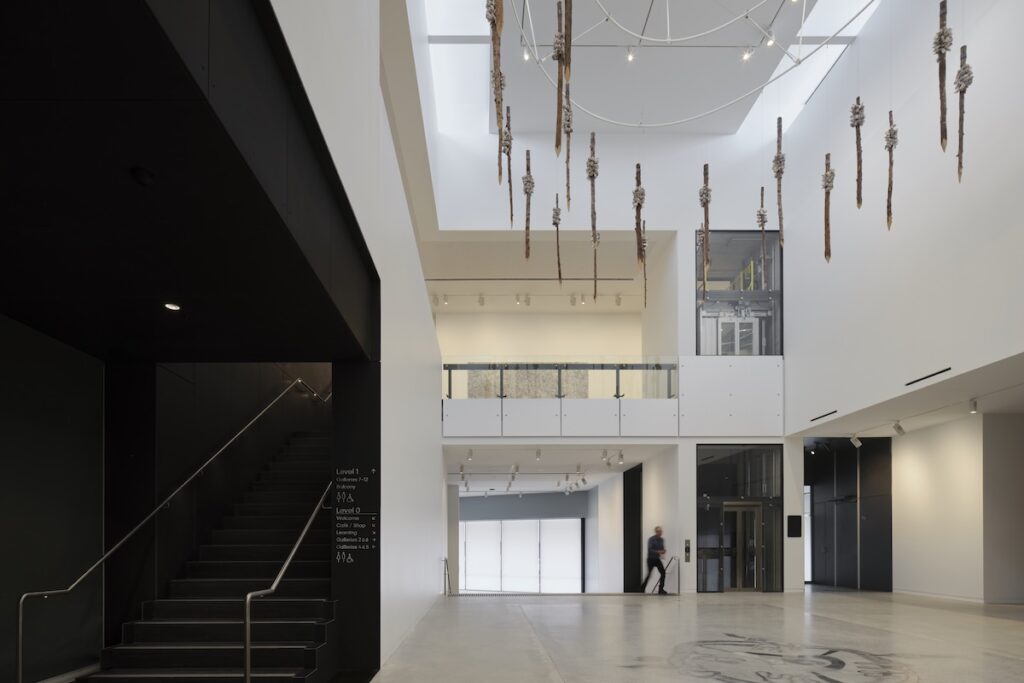
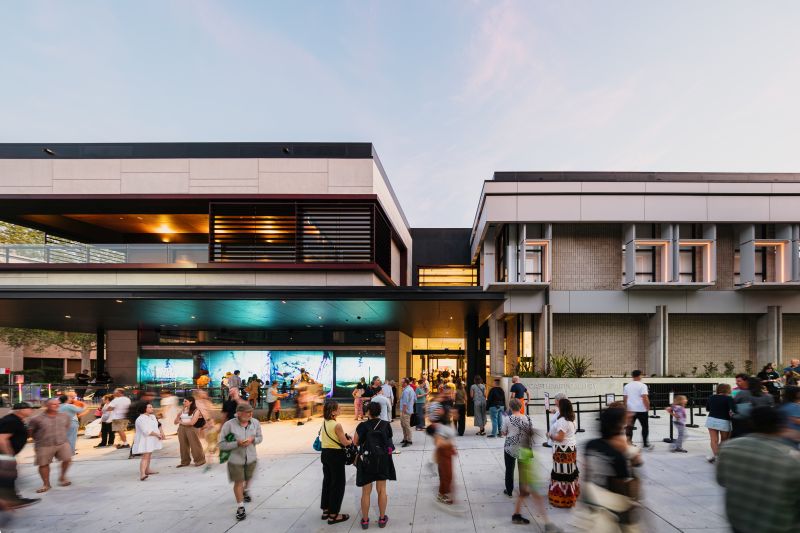
Completed in December 2022, this $344 million initiative nearly doubles the Gallery's exhibition space, introducing a new architectural landmark that harmoniously blends art, architecture, and landscape on Gadigal Country.
The Sydney Modern Project redefines the role of a public art institution in the 21st century, offering inclusive, sustainable, and culturally rich spaces that engage diverse audiences and honour the land's heritage.
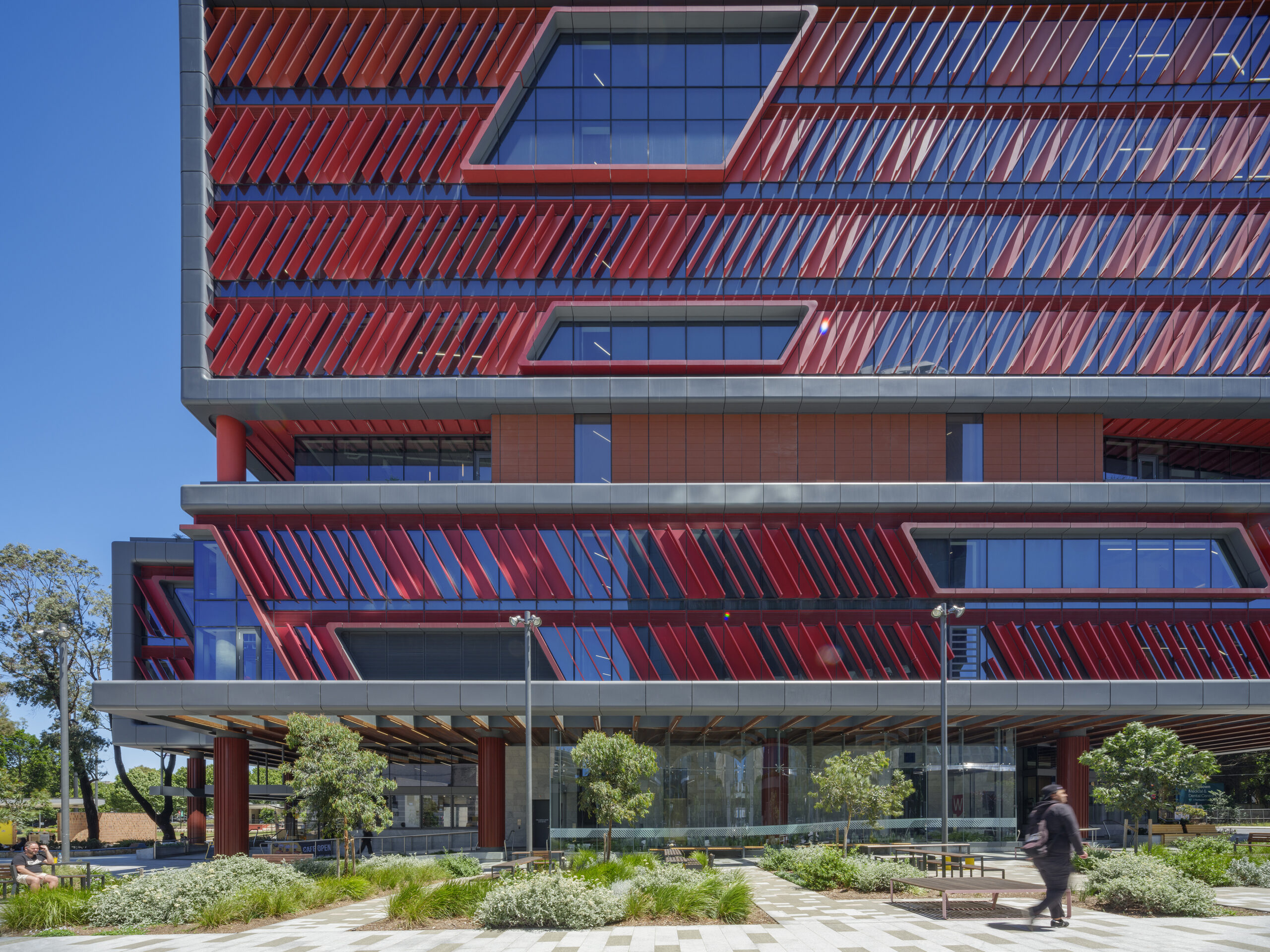
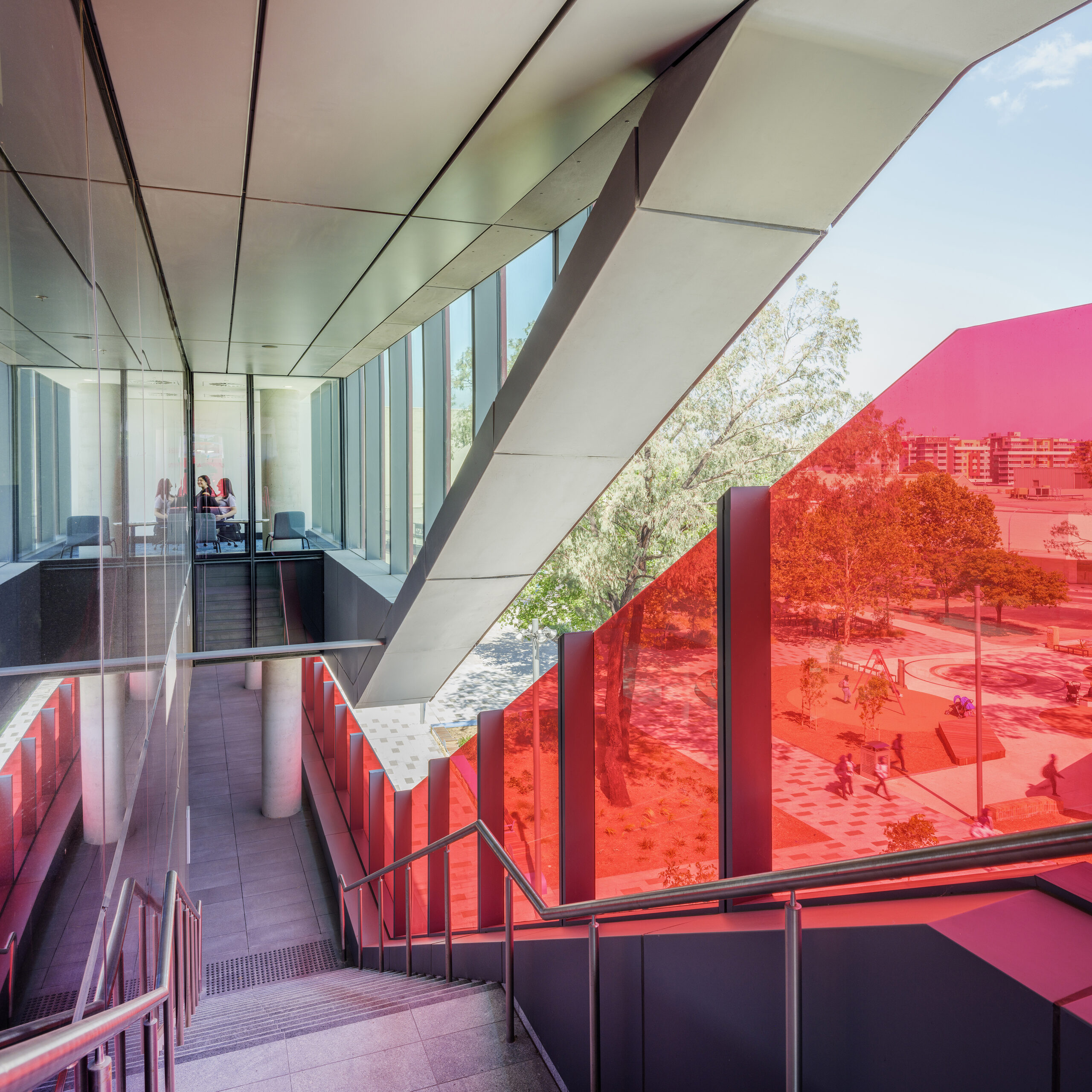
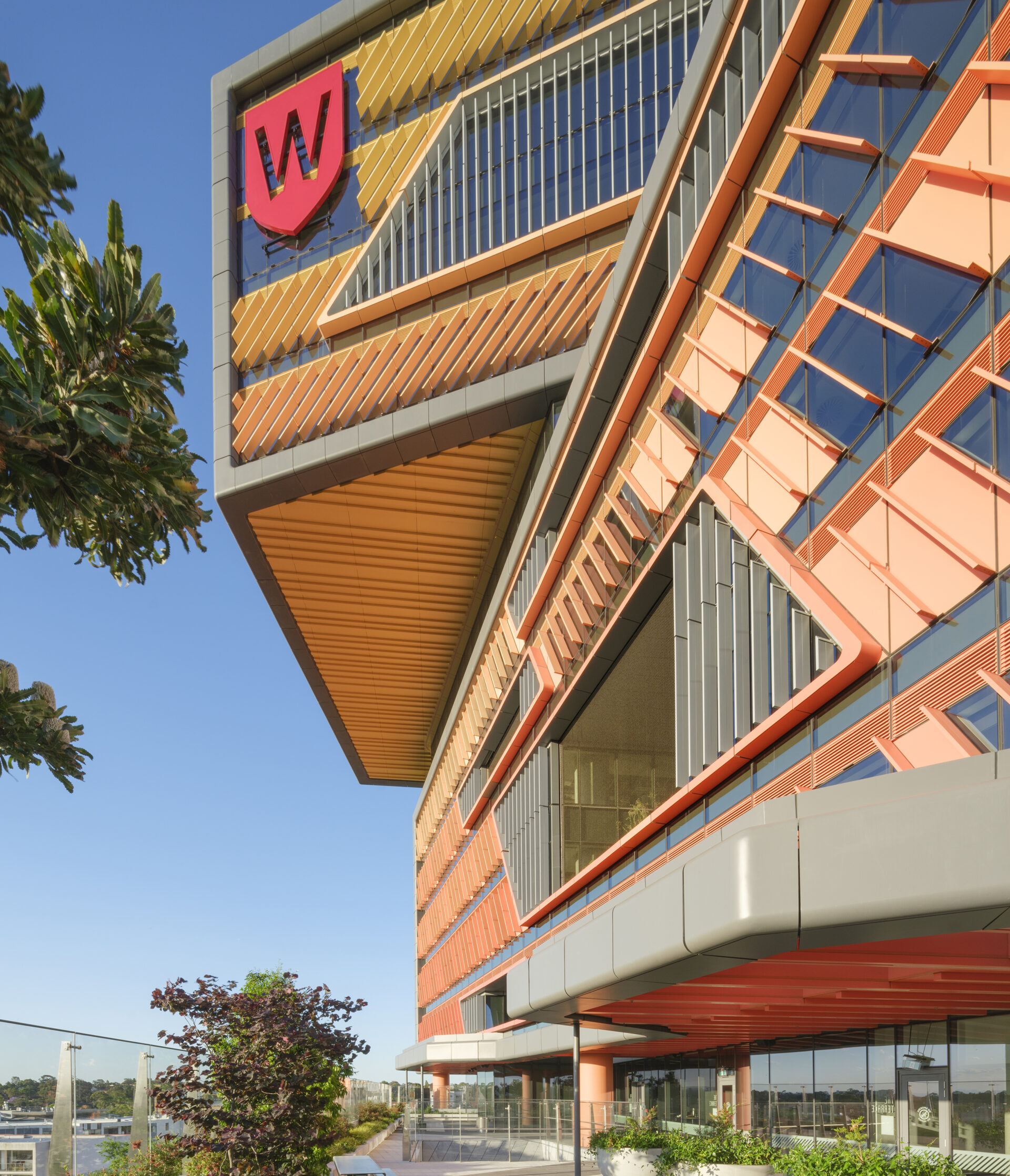
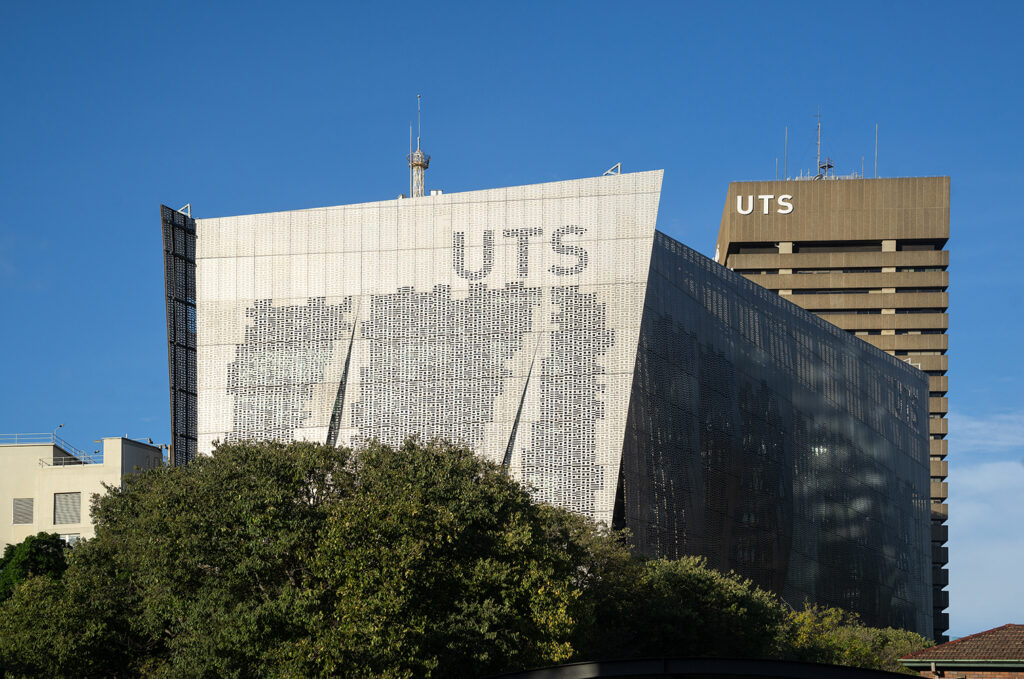
A vibrant vertical campus delivering more than 20,000 sqm of learning, teaching and community space to accommodate up to 18,000 students. Flexible teaching spaces, advanced digital learning environments, student collaboration zones and public-facing amenities strengthen connections between university, industry and community. Sustainable design strategies, retention of existing structure, and a strong civic presence position the campus as a powerful example of how universities can anchor regeneration while providing inclusive, future-focused learning environments.
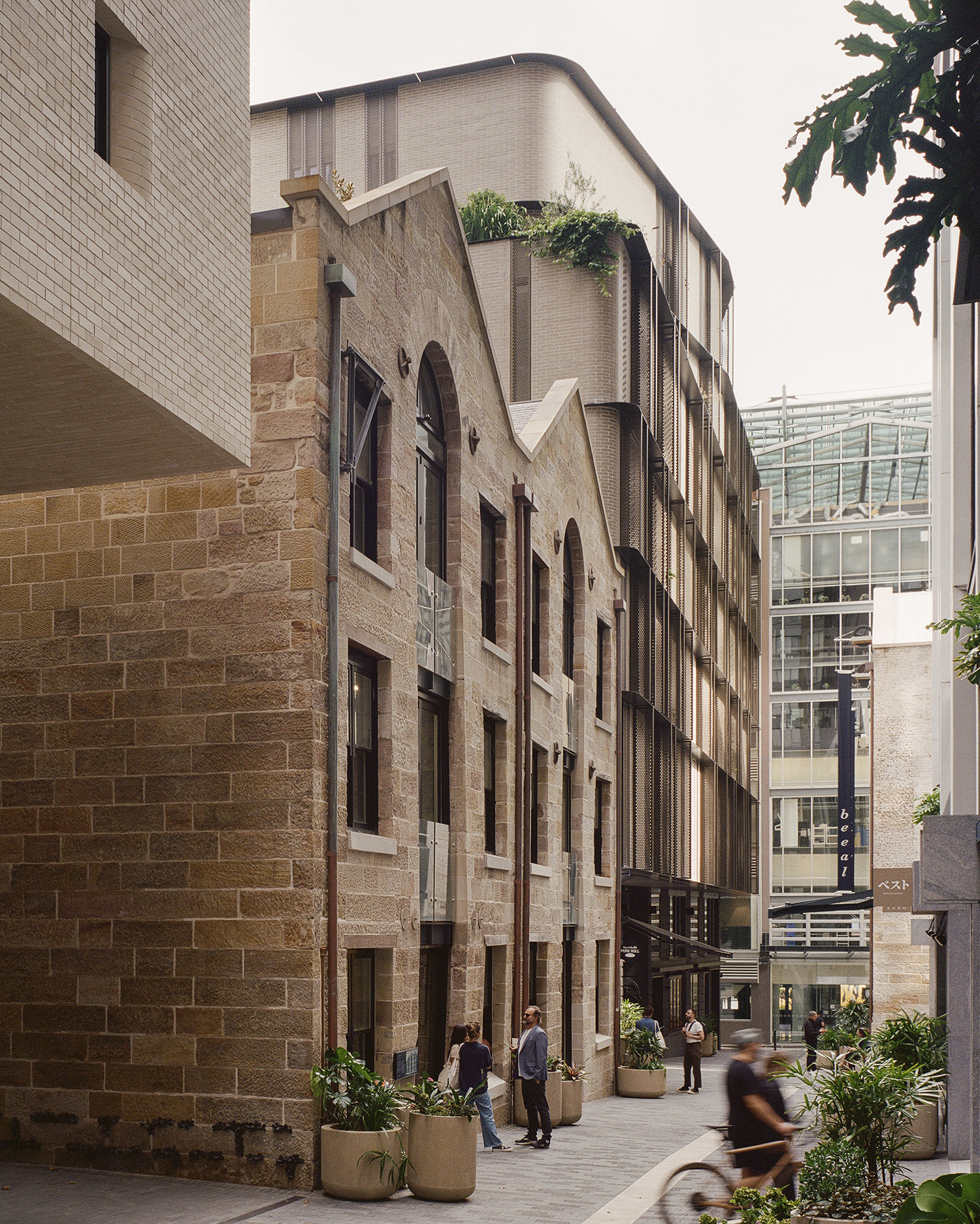
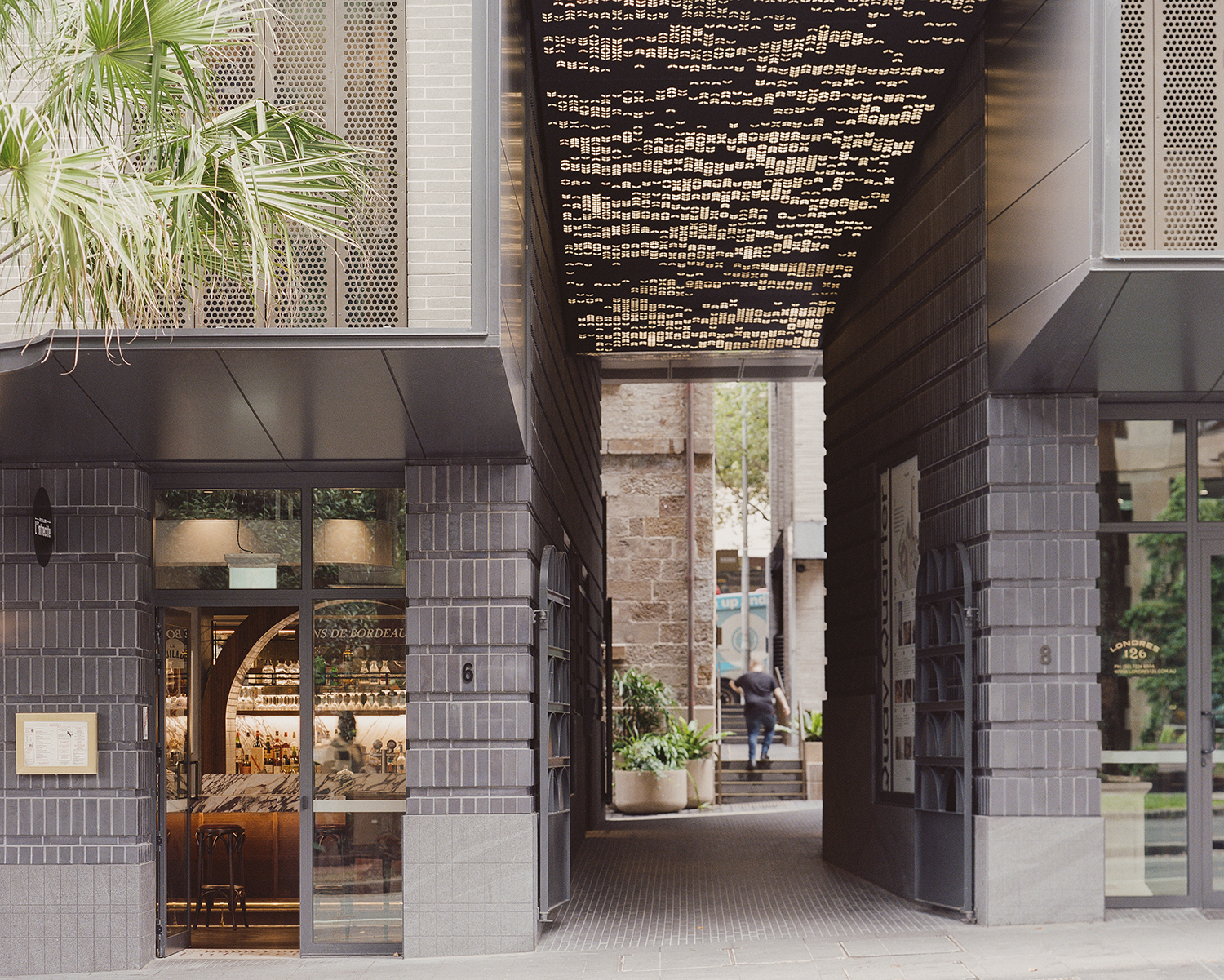
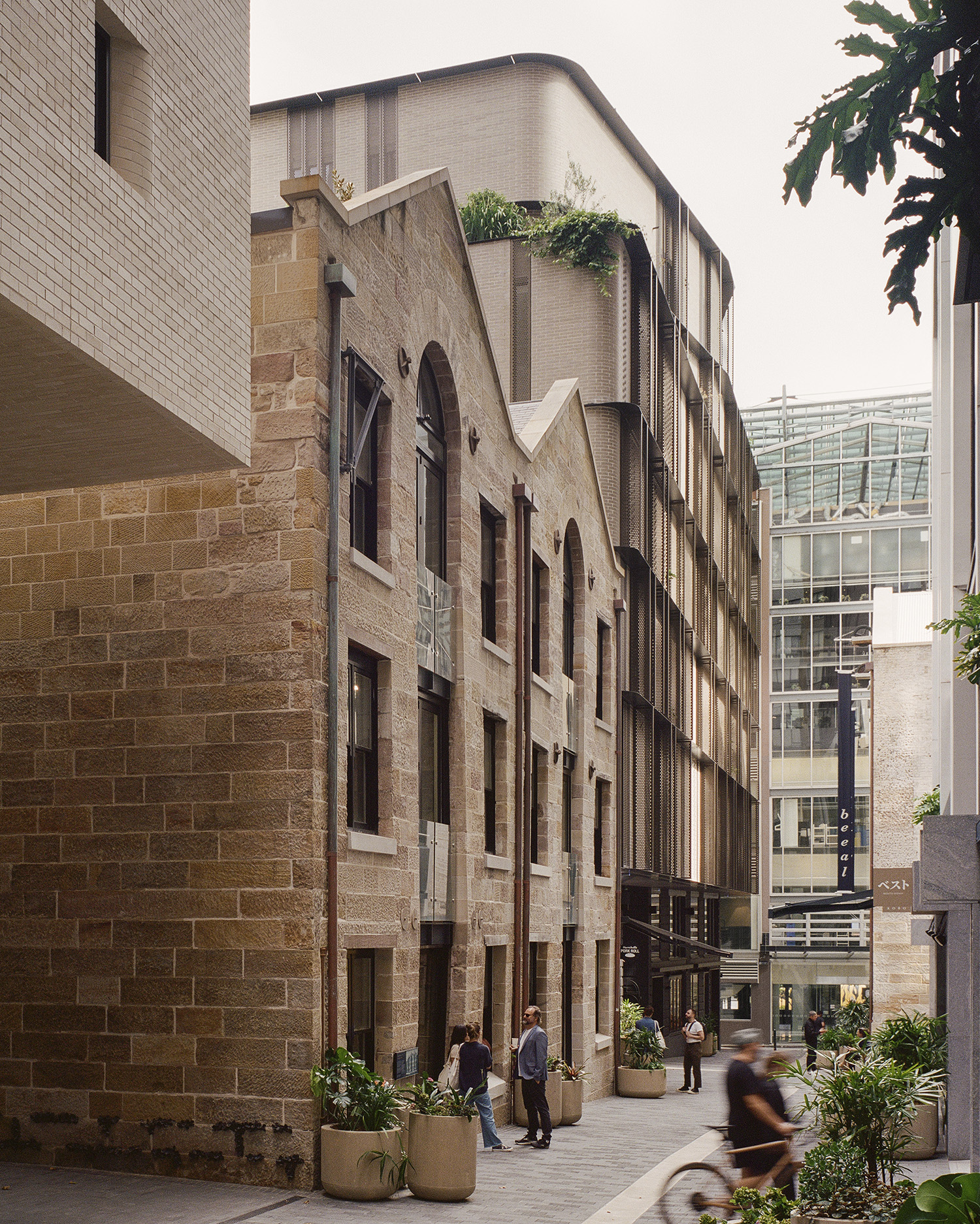
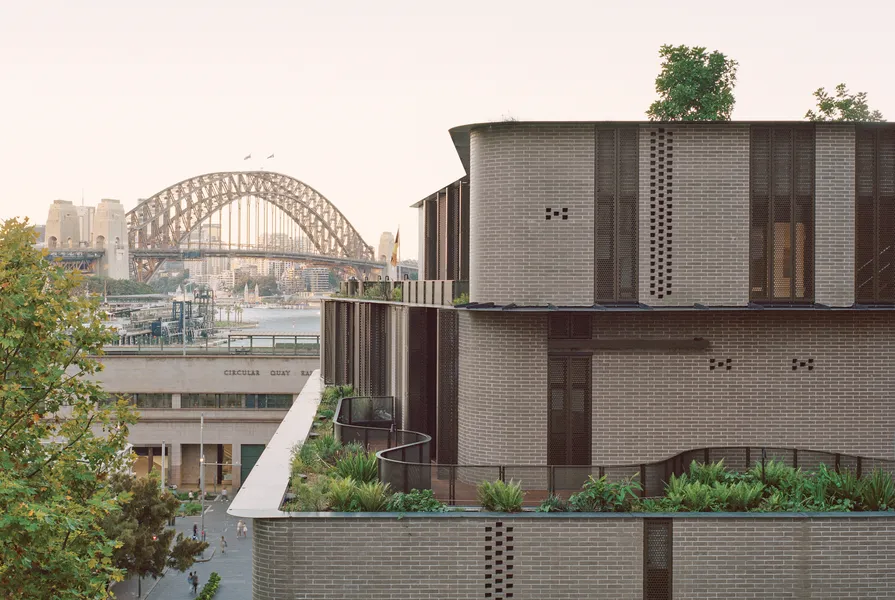
Quay Quarter Lanes is a multi-building mixed-use residential precinct woven into restored heritage structures and new laneways, activating the city block with ground-level retail and pedestrian connections.
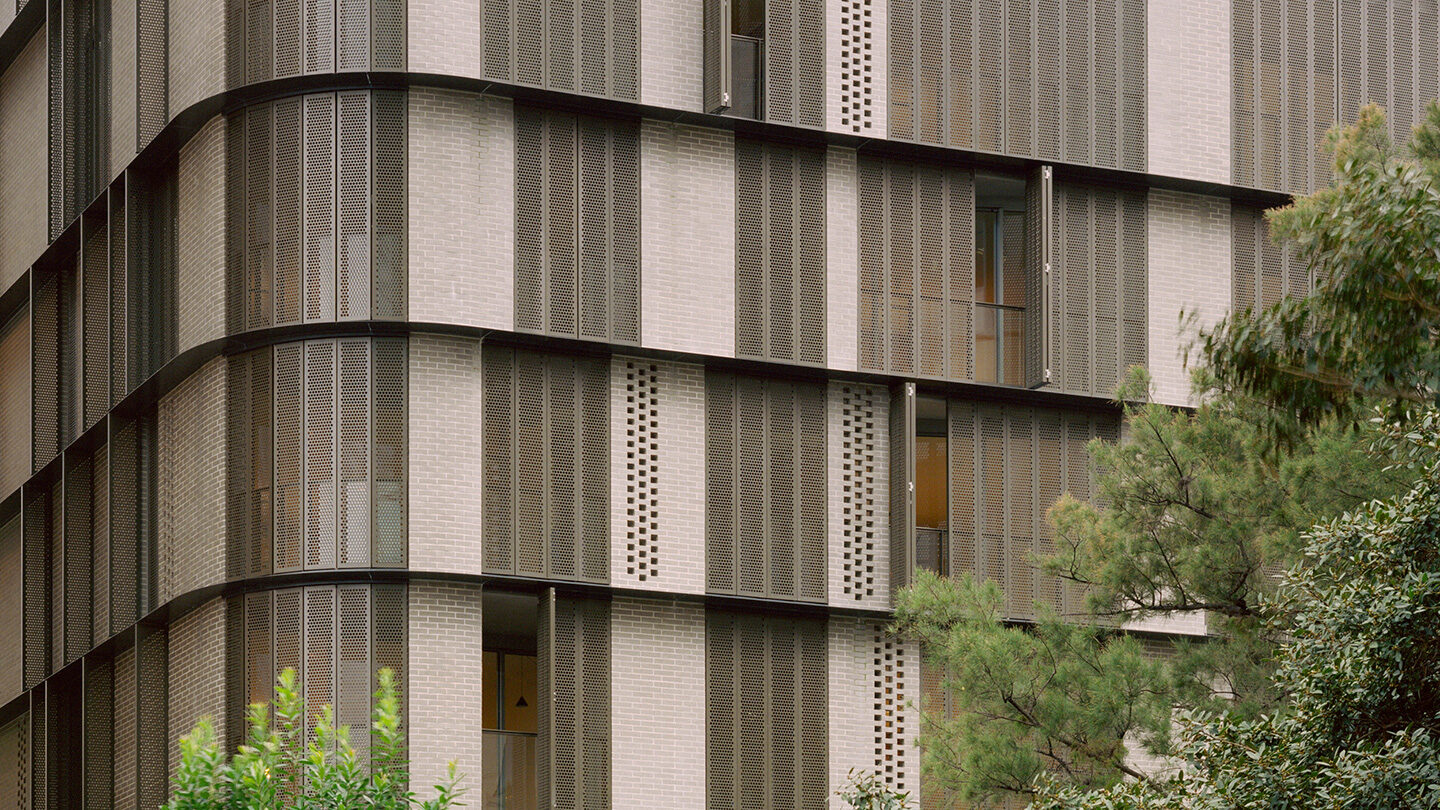
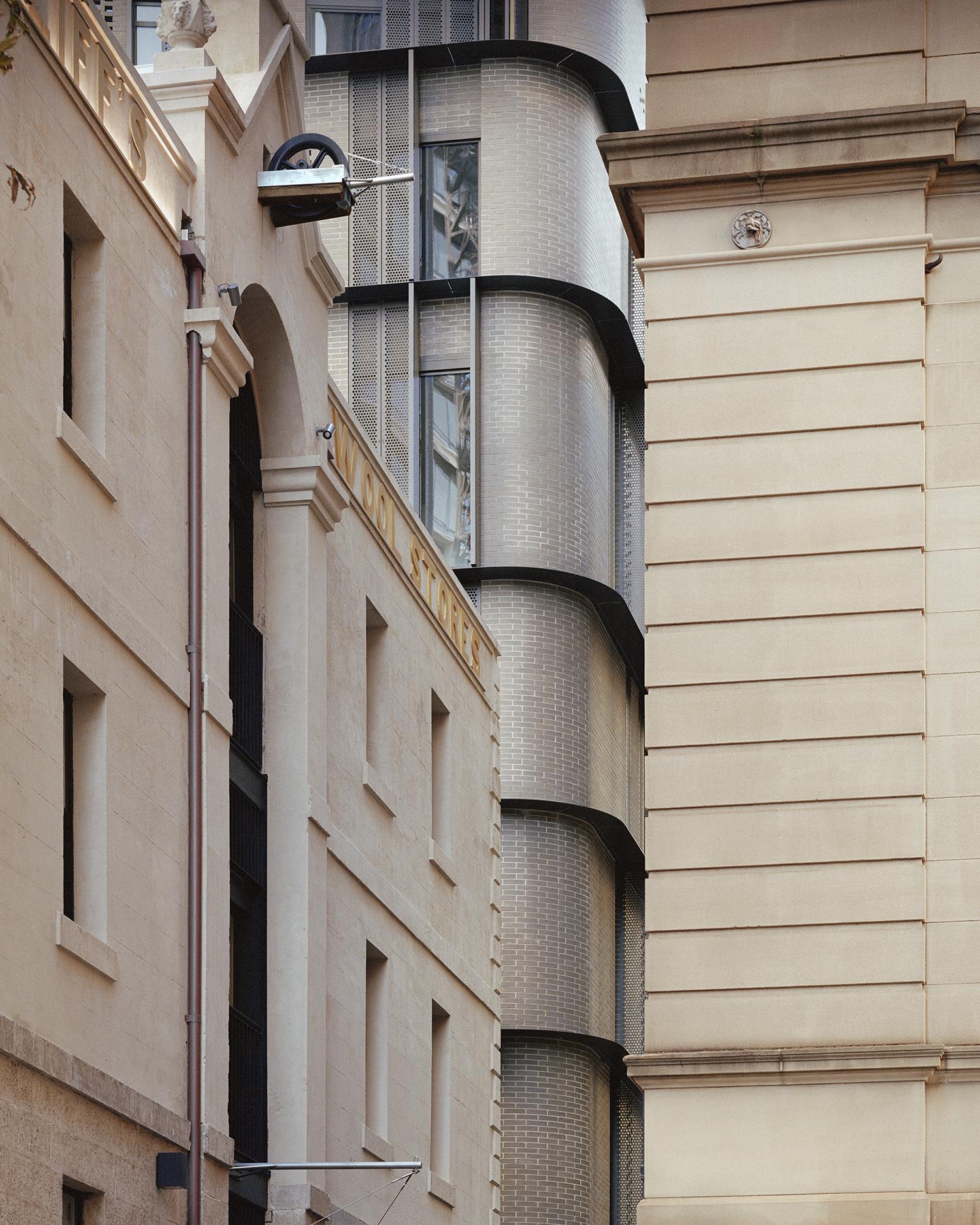
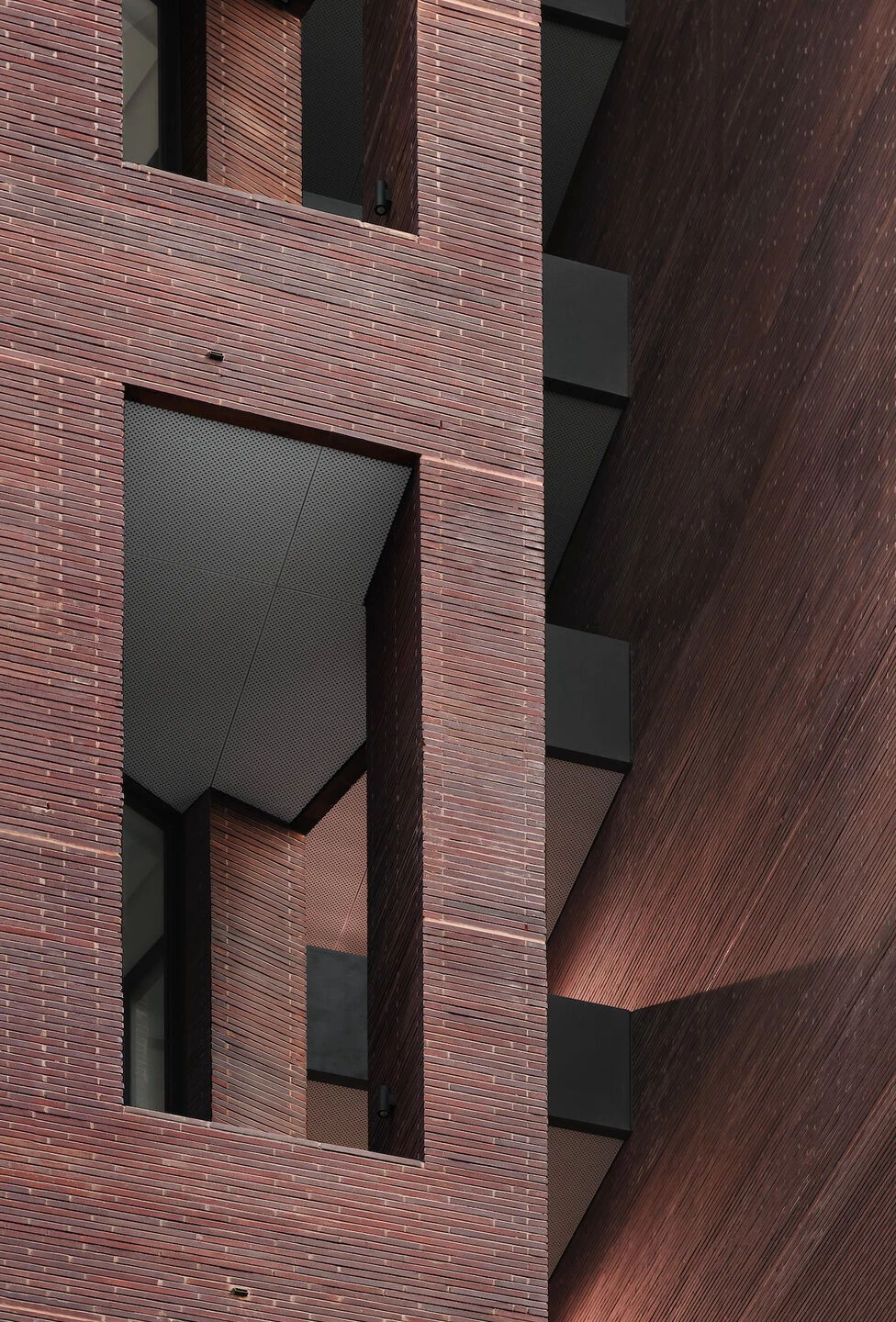
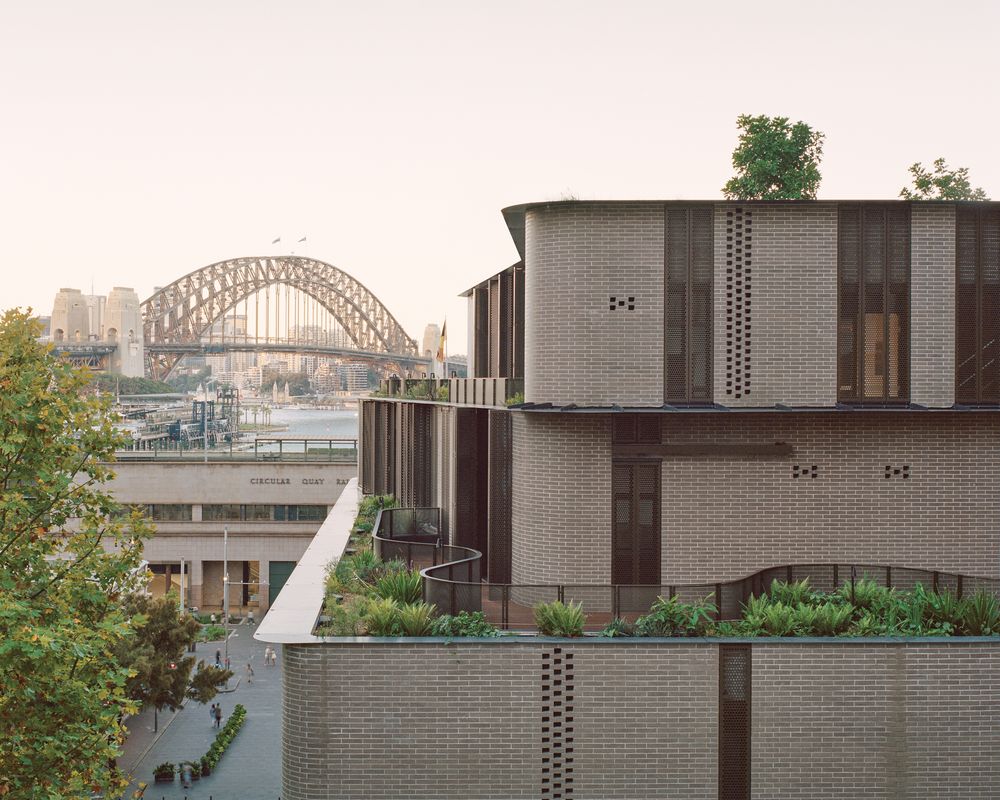
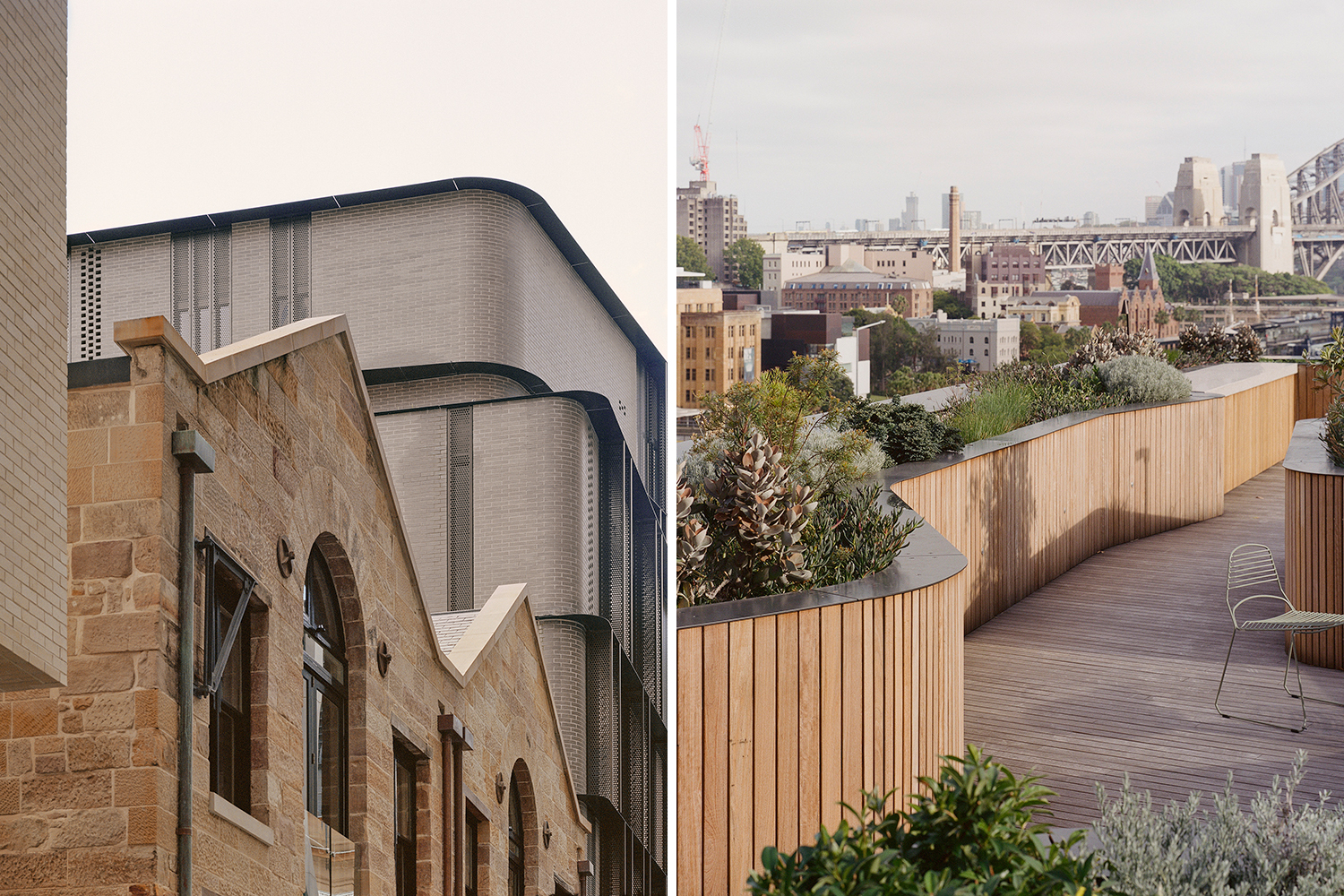
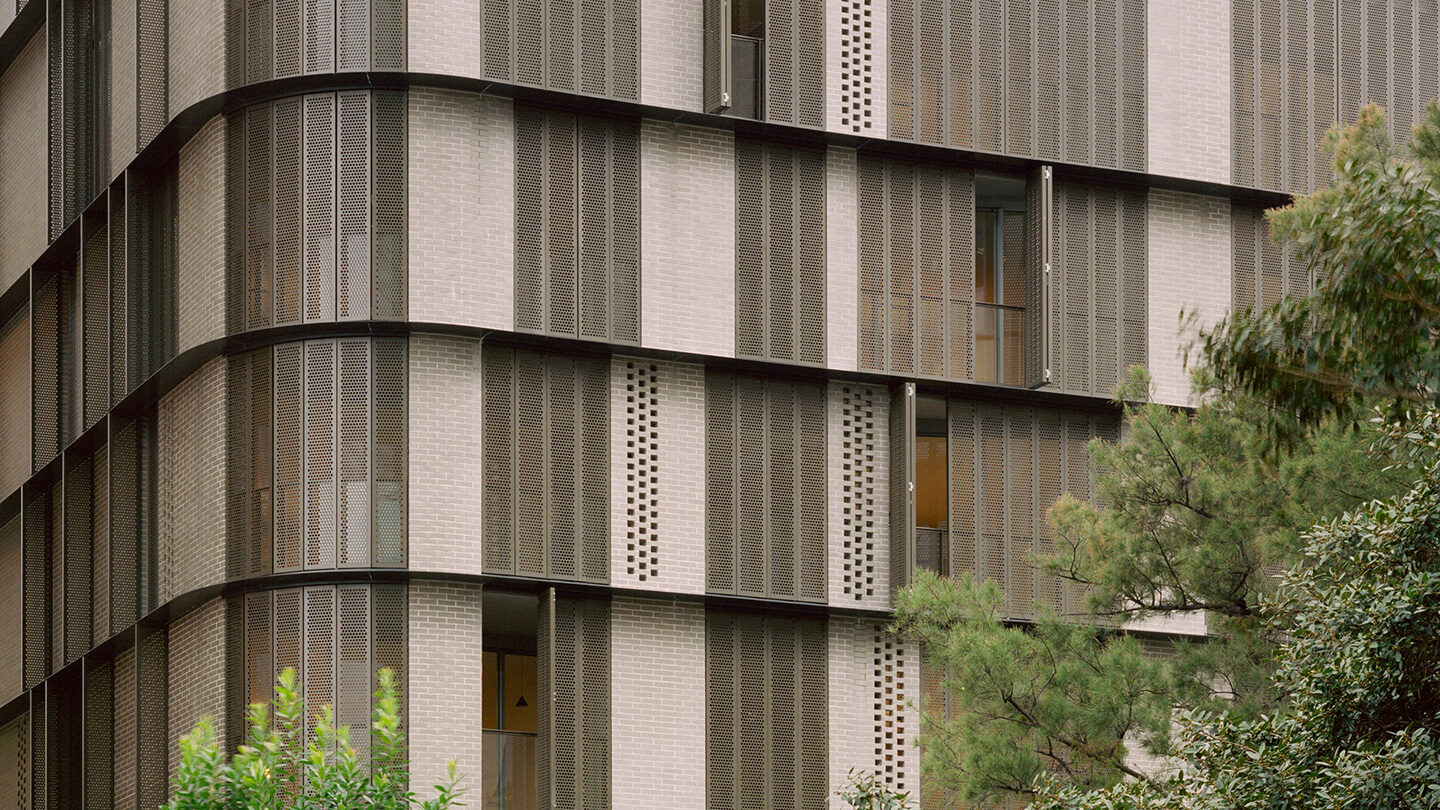
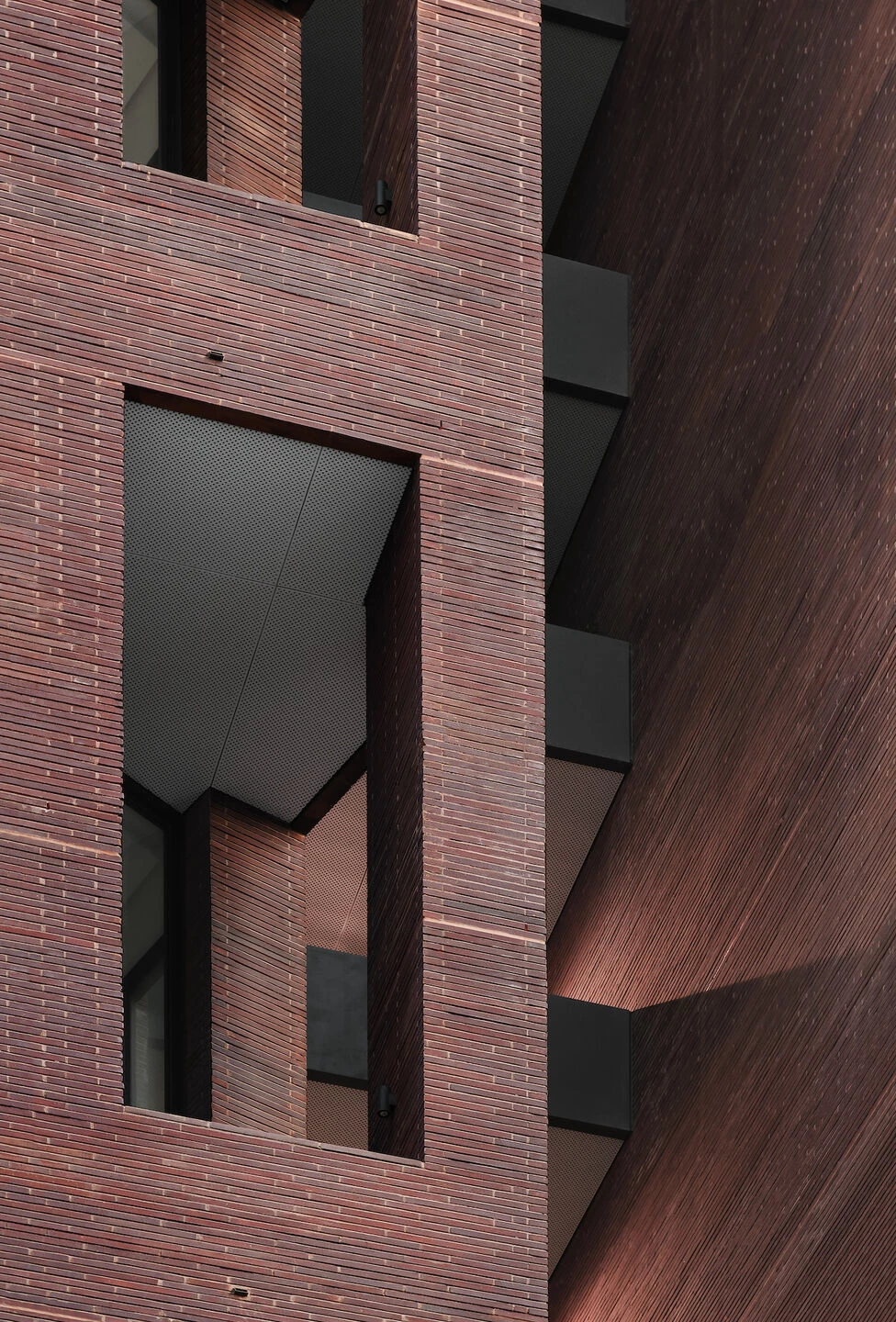
The Loftus Lane component at 8 Loftus Street features two retail levels topped by six residential floors of 31 apartments, and a rooftop garden, its fluid brick façade and arcaded links reinforcing a fine-grain urban experience.
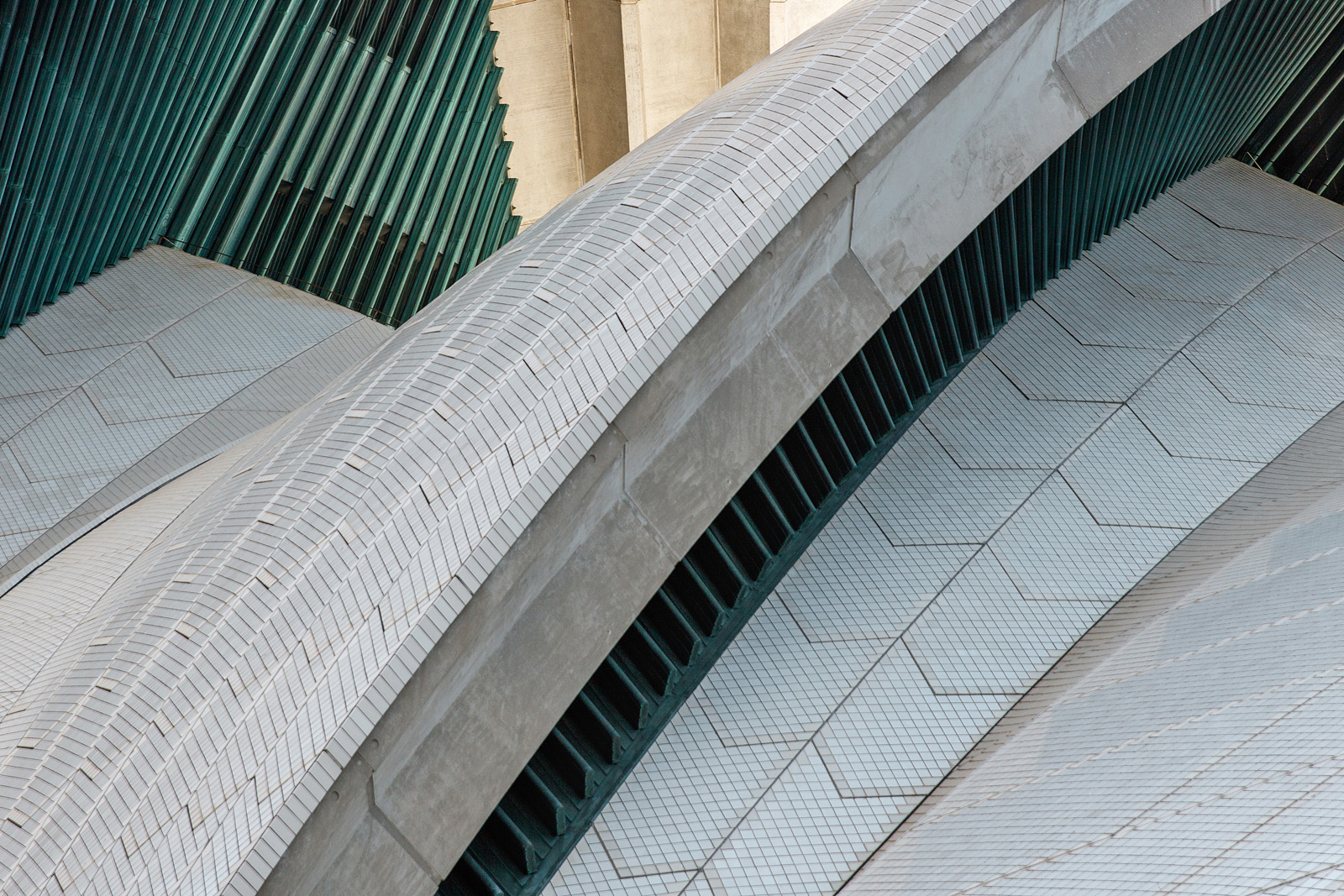
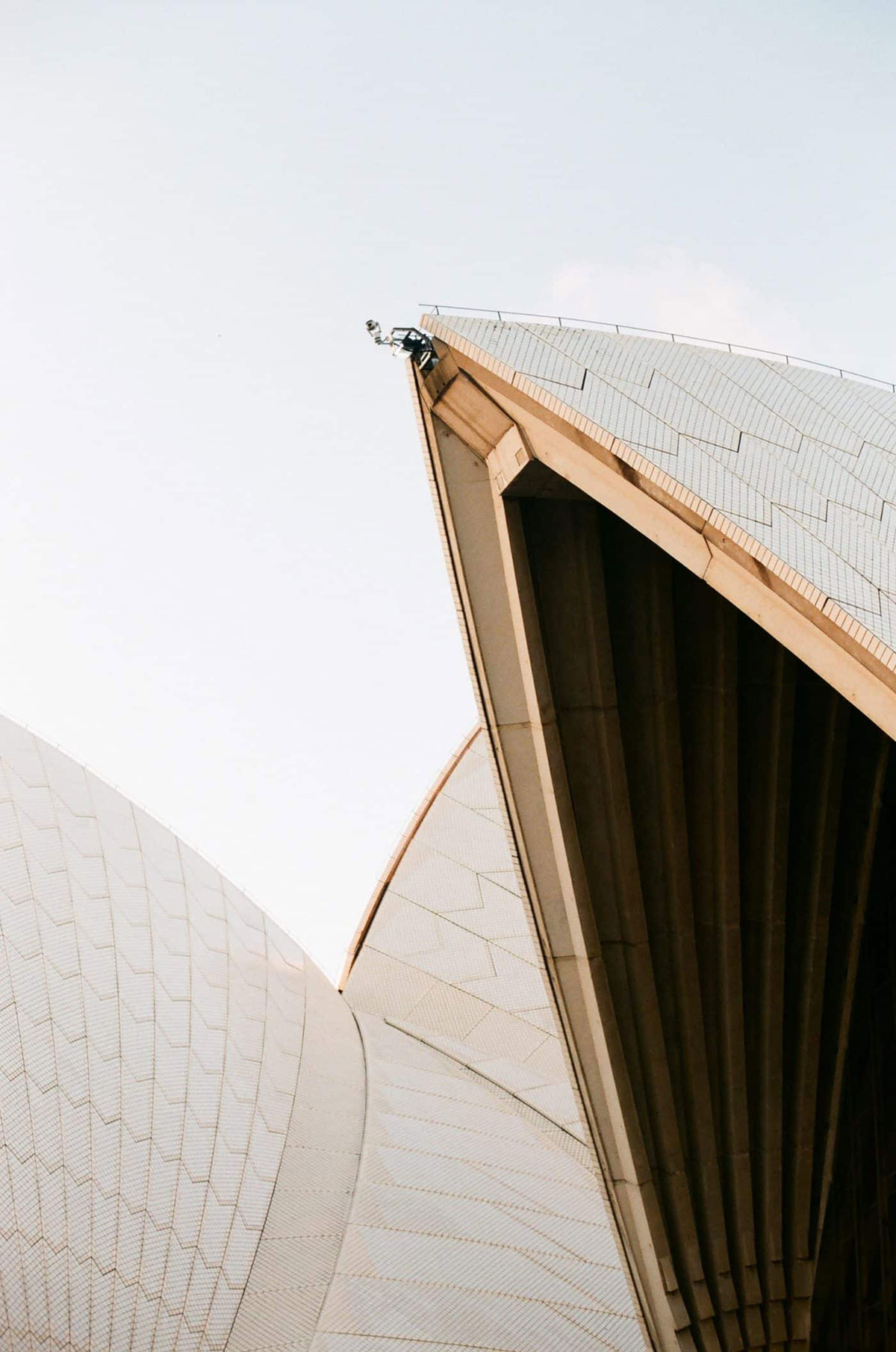
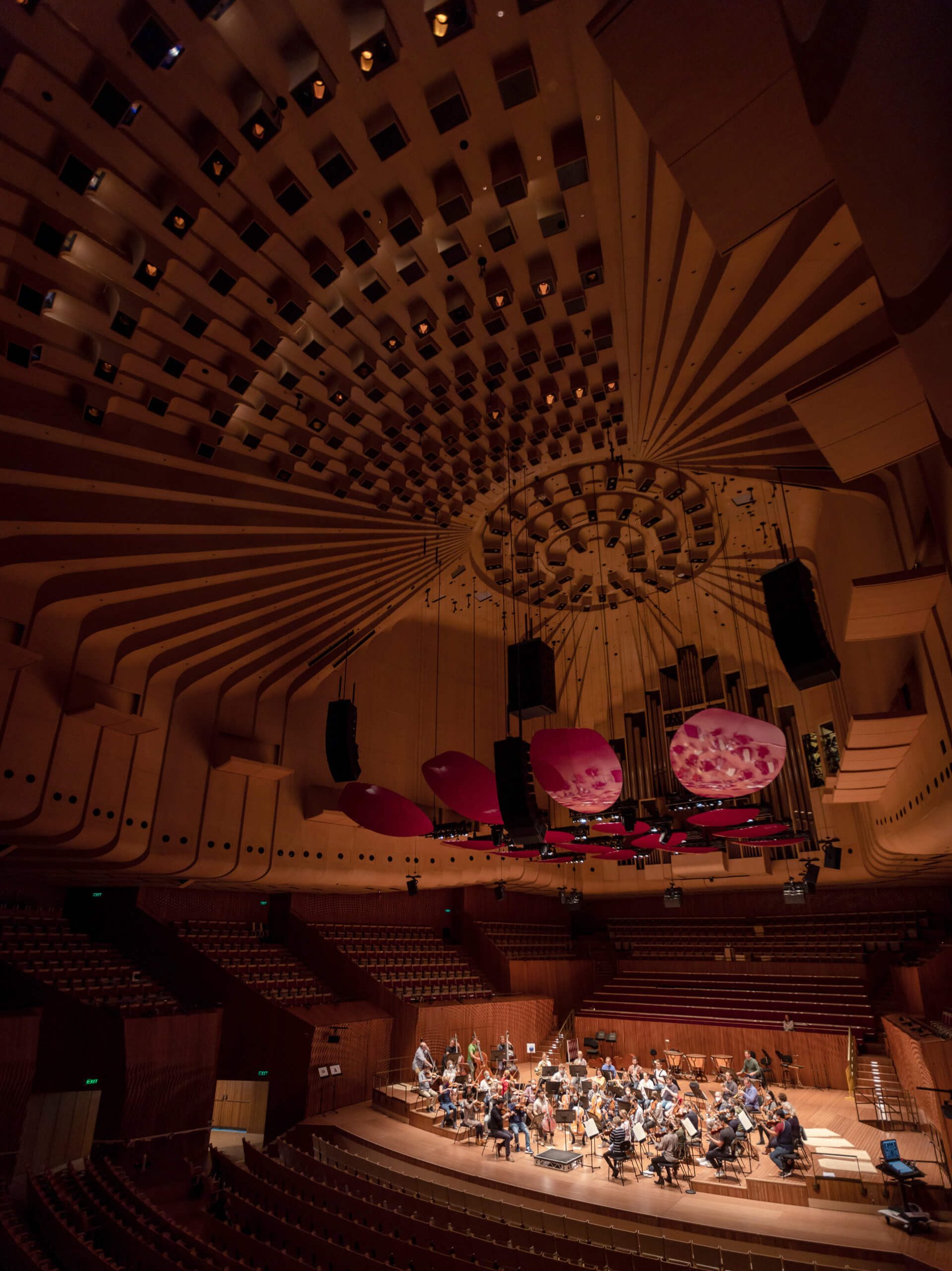
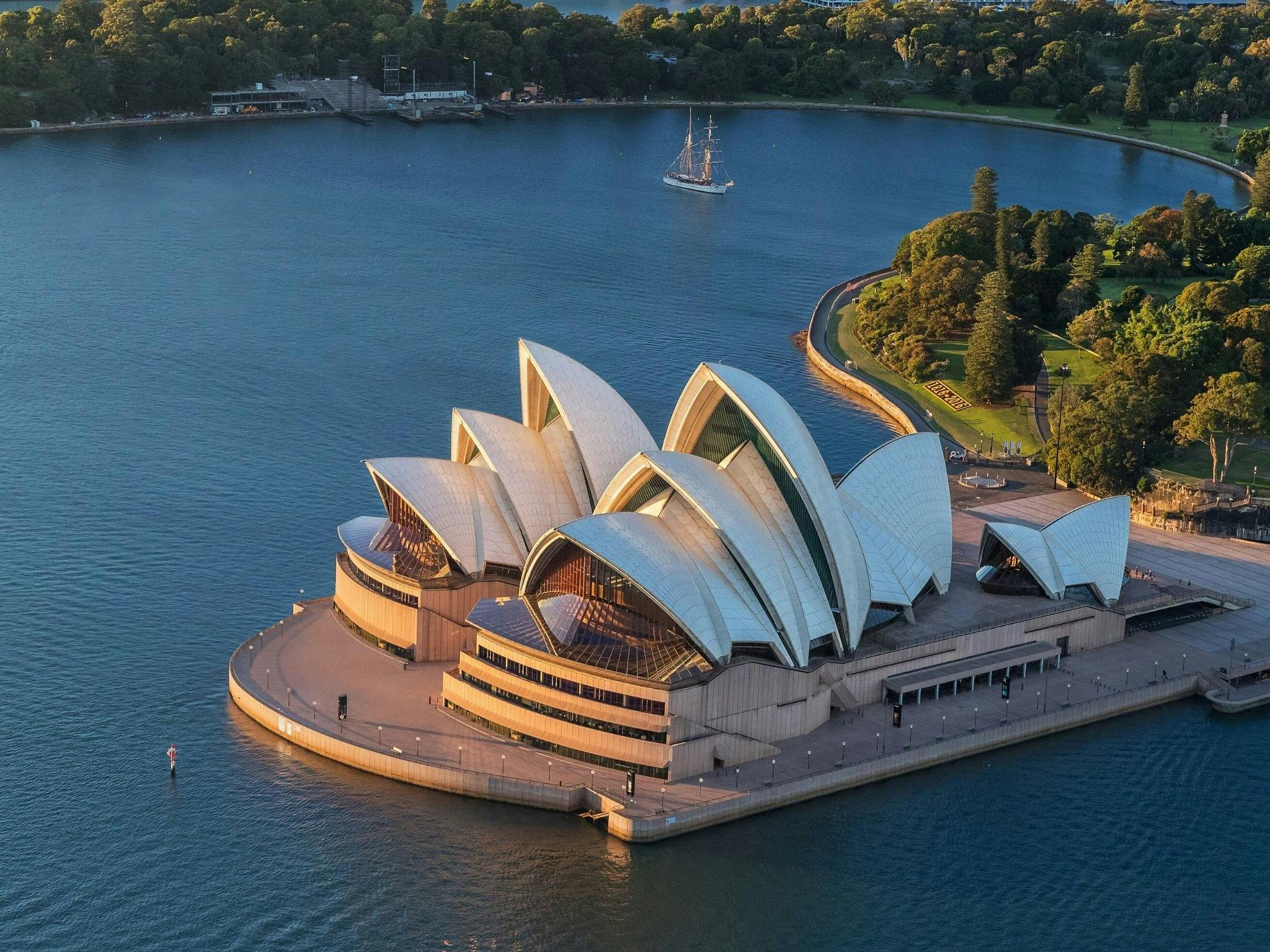
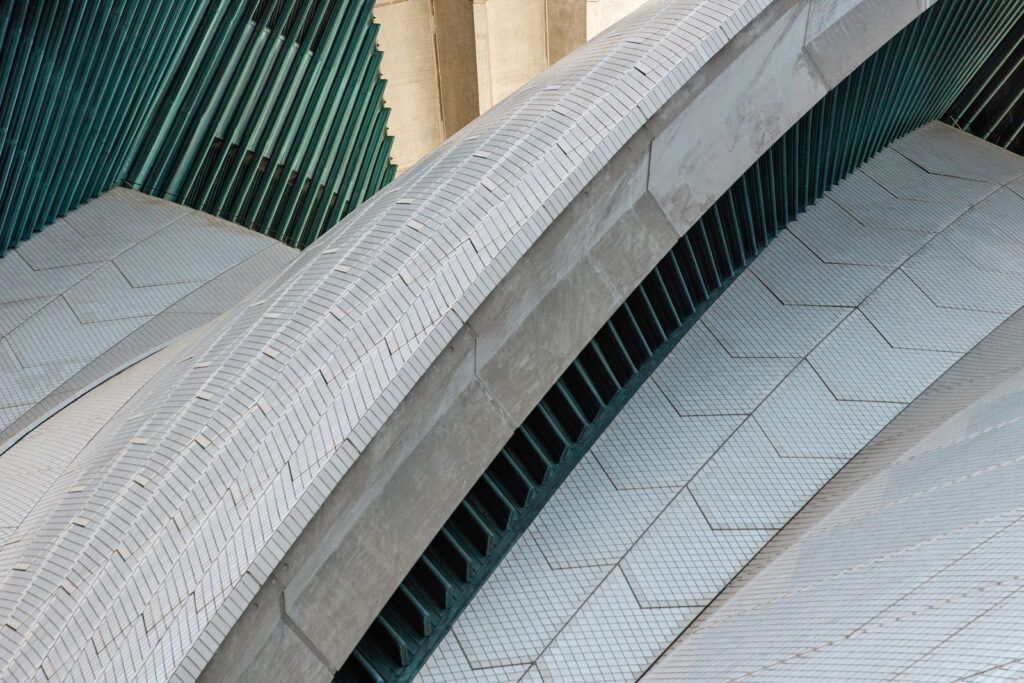
The Sydney Opera House Renewal Project is a transformative initiative aimed at preserving and enhancing Australia's most iconic performing arts centre.
Spanning a decade and culminating in time for the Opera House's 50th anniversary in 2023, the project focused on upgrading key venues, improving accessibility, and ensuring the building meets contemporary performance standards while respecting its World Heritage-listed status.
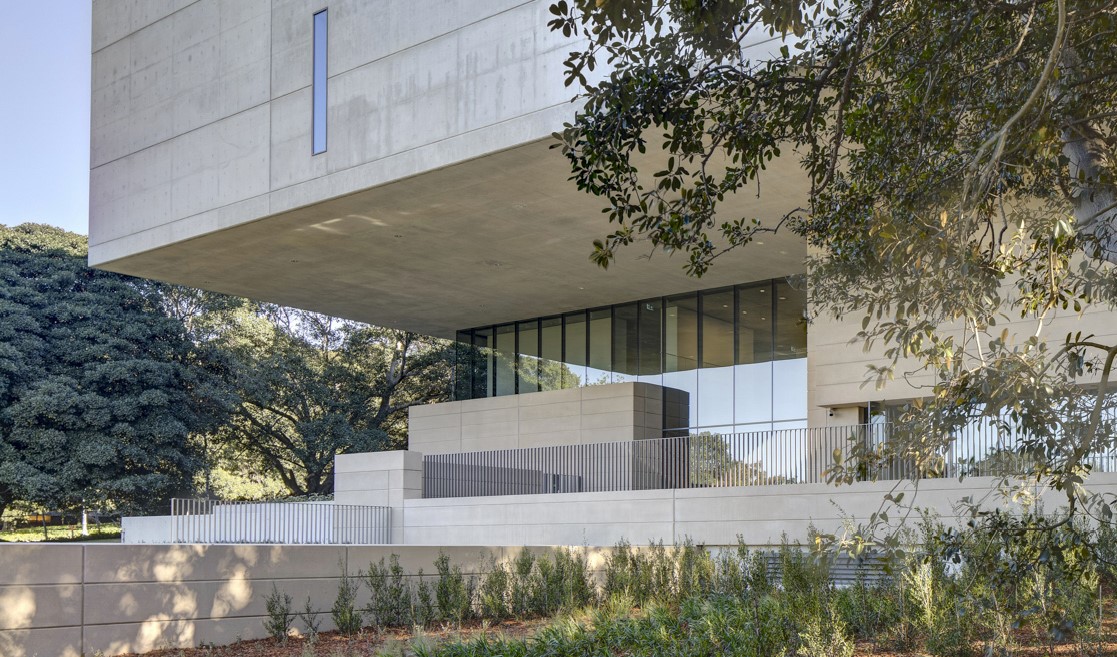
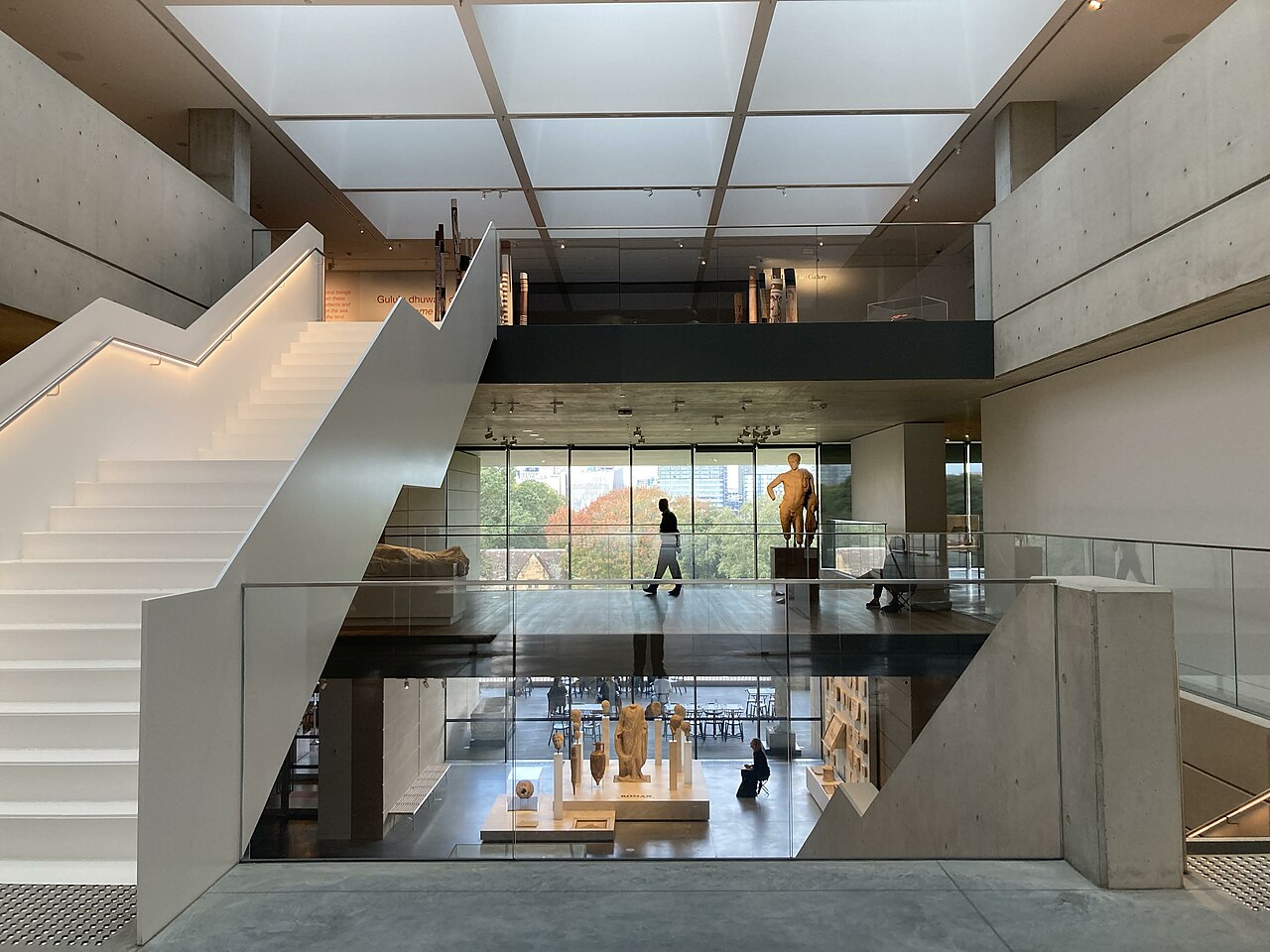
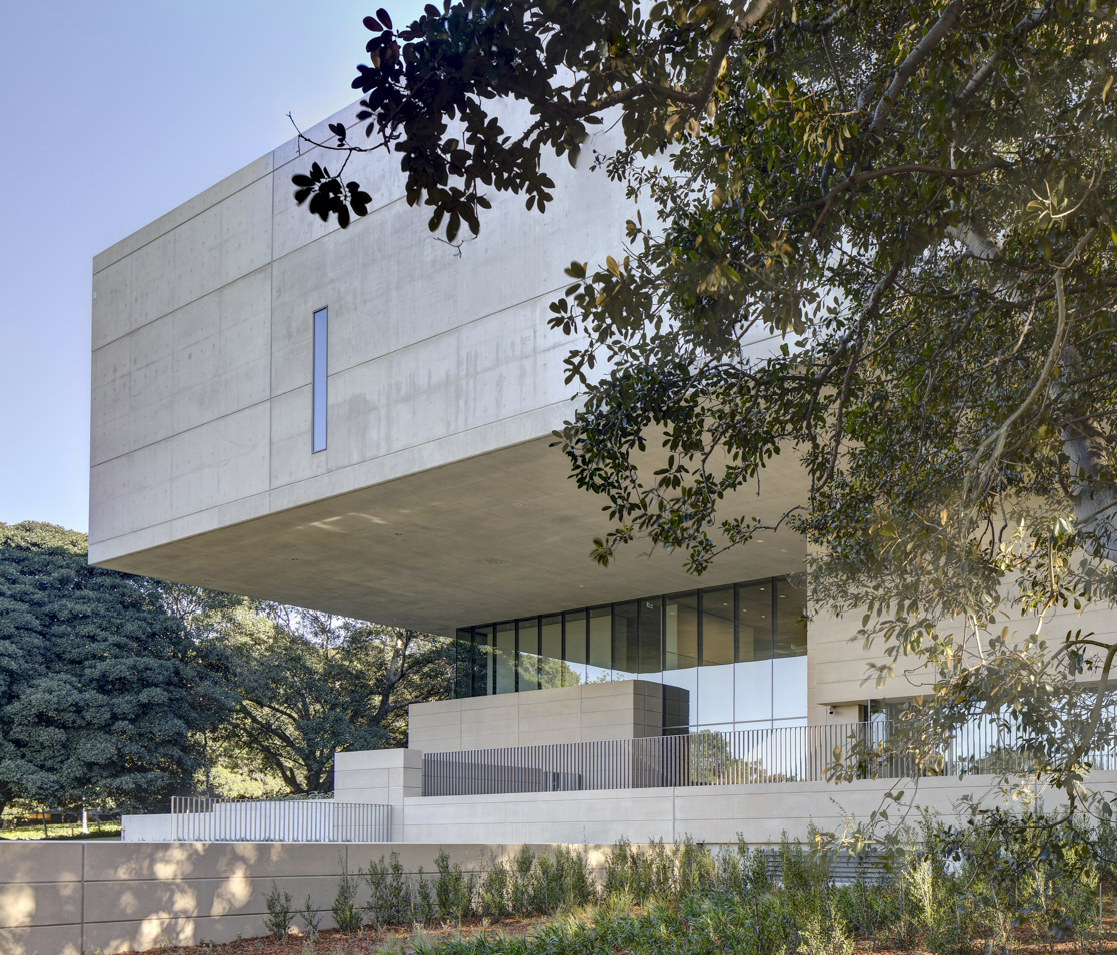
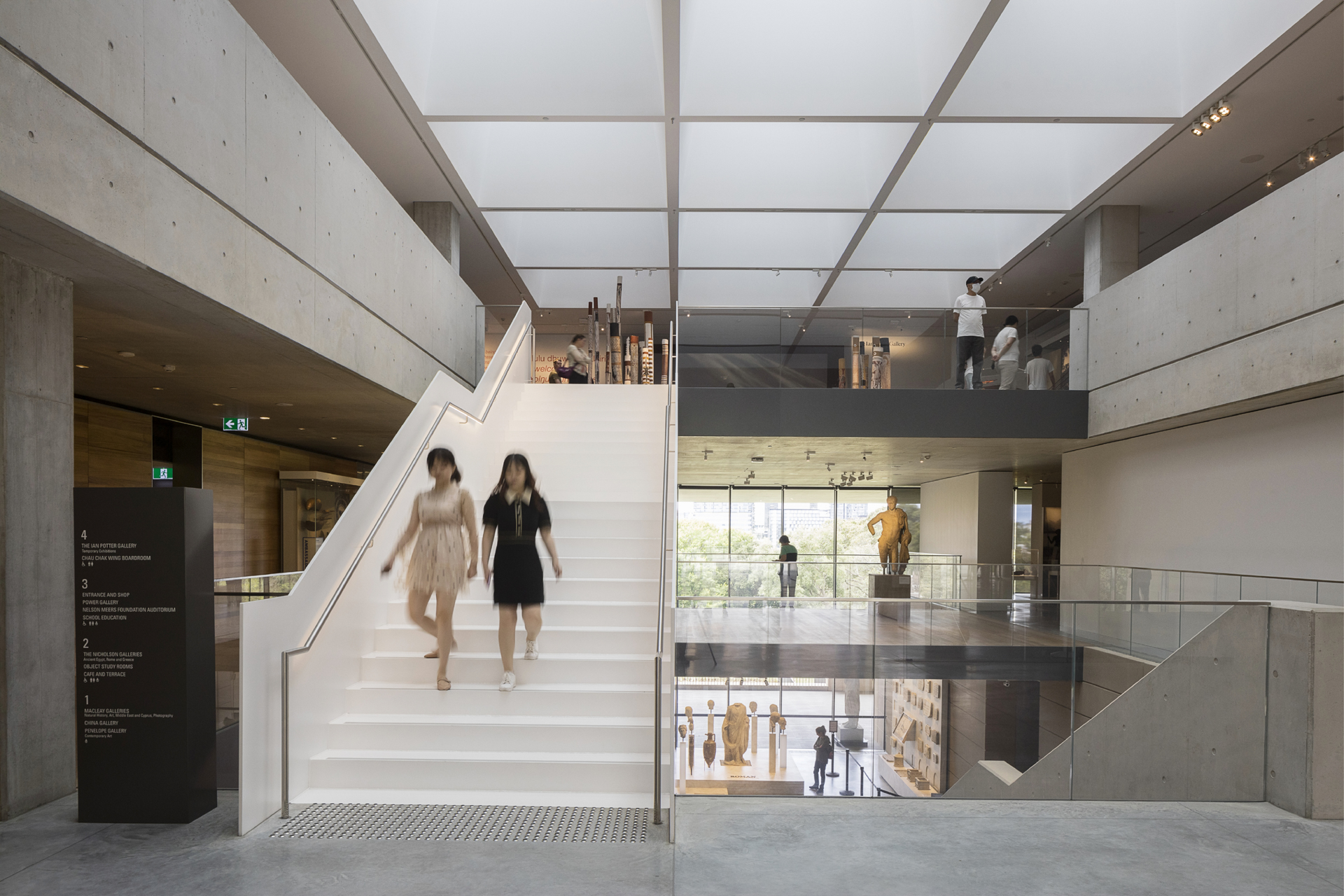
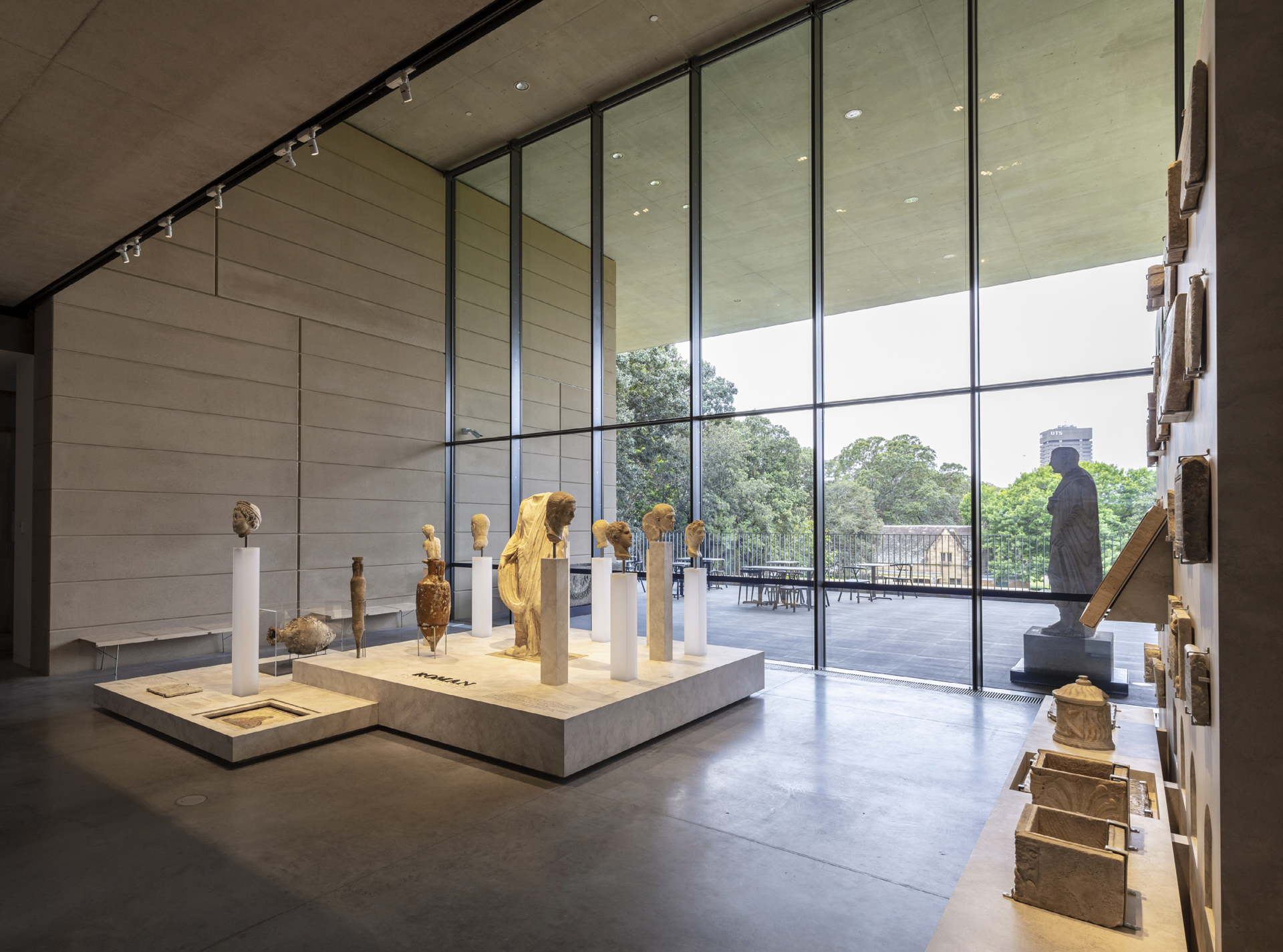
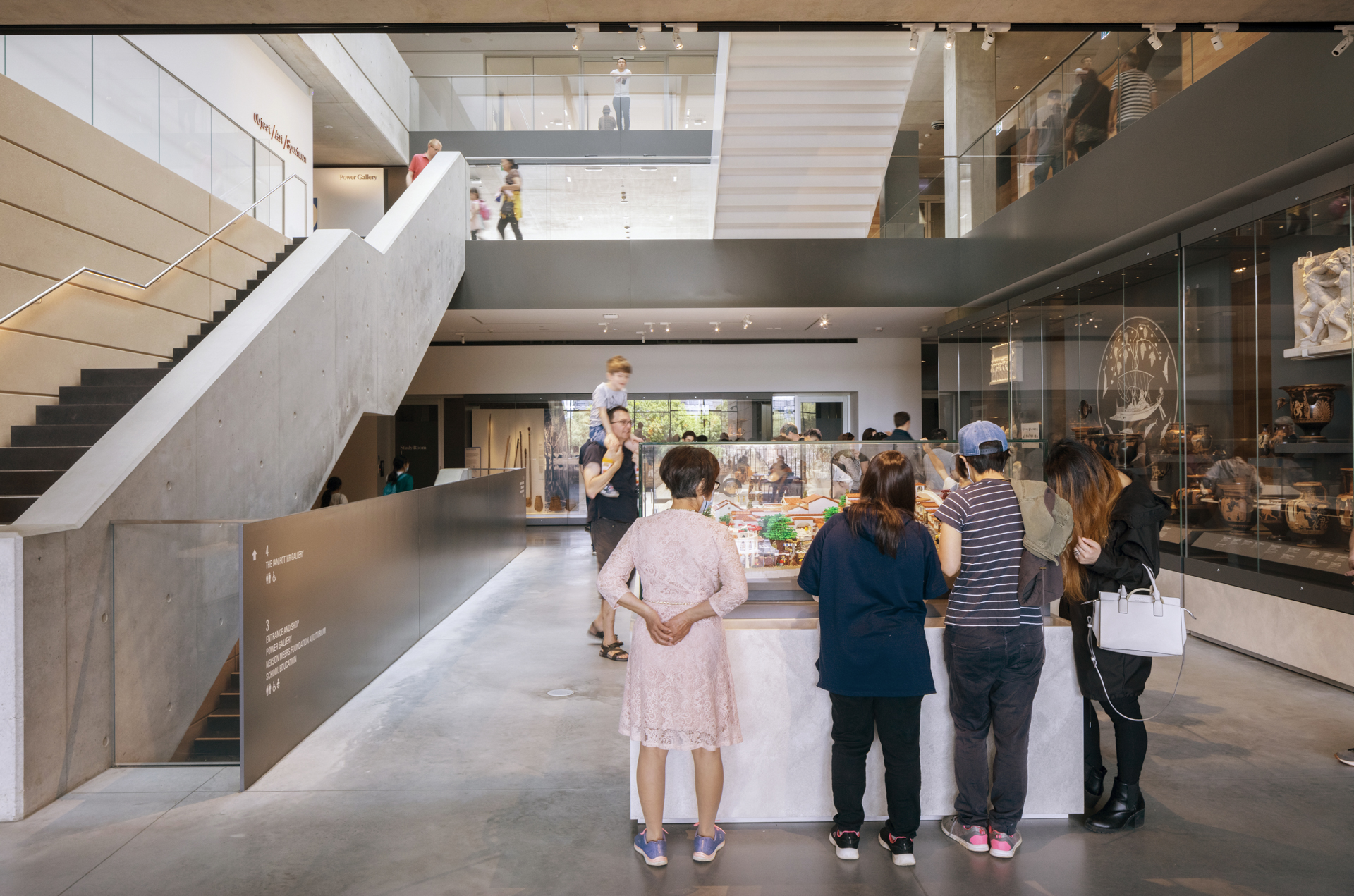
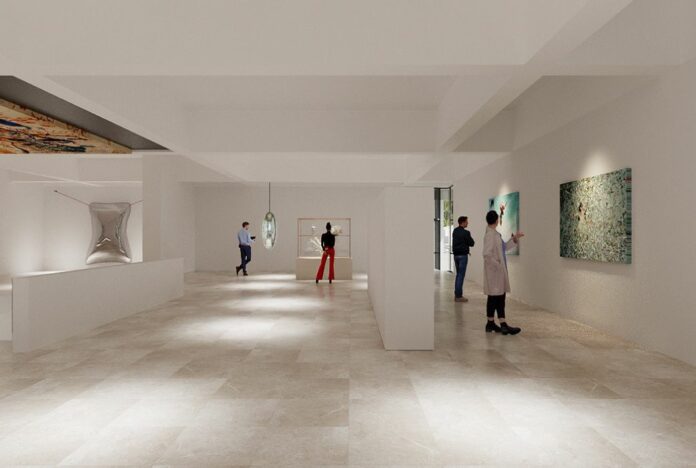
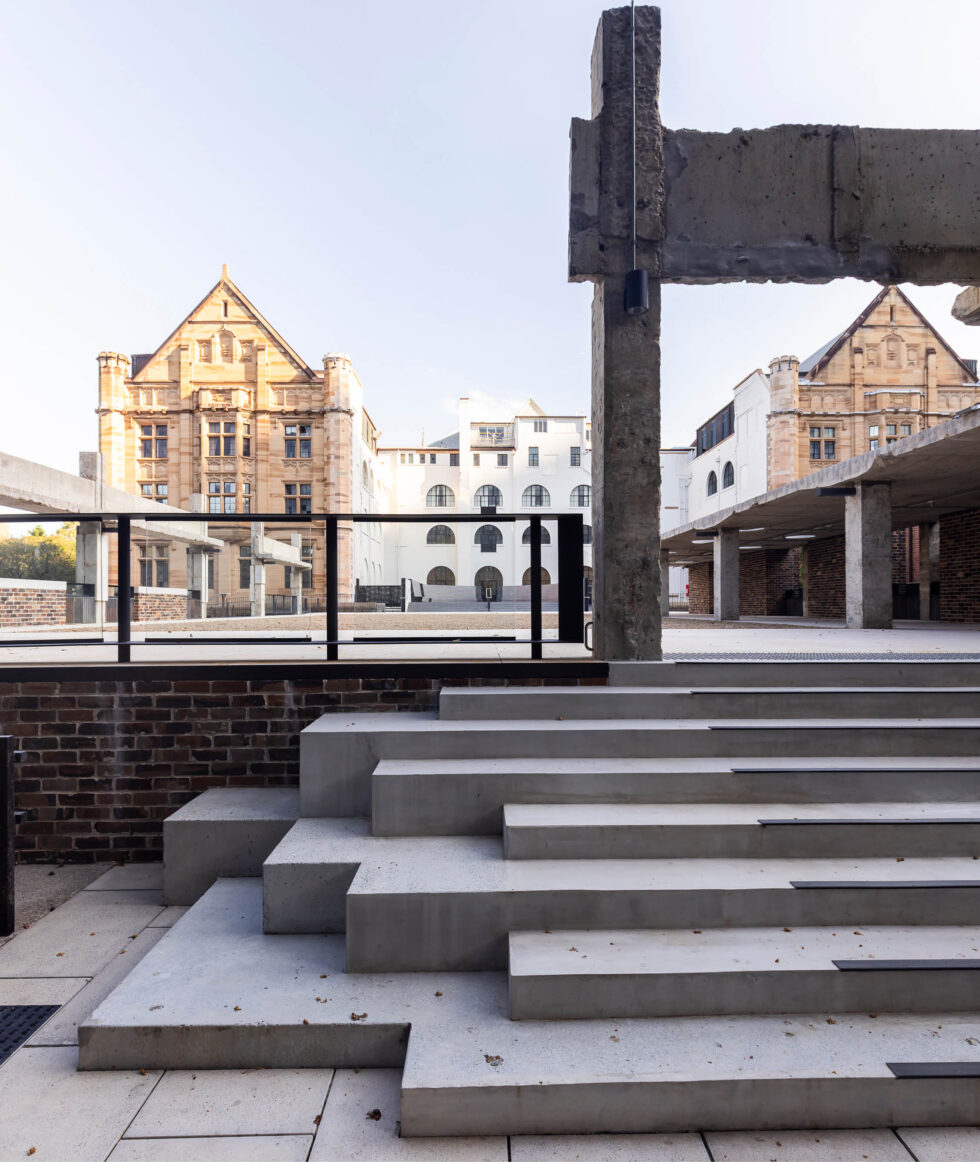
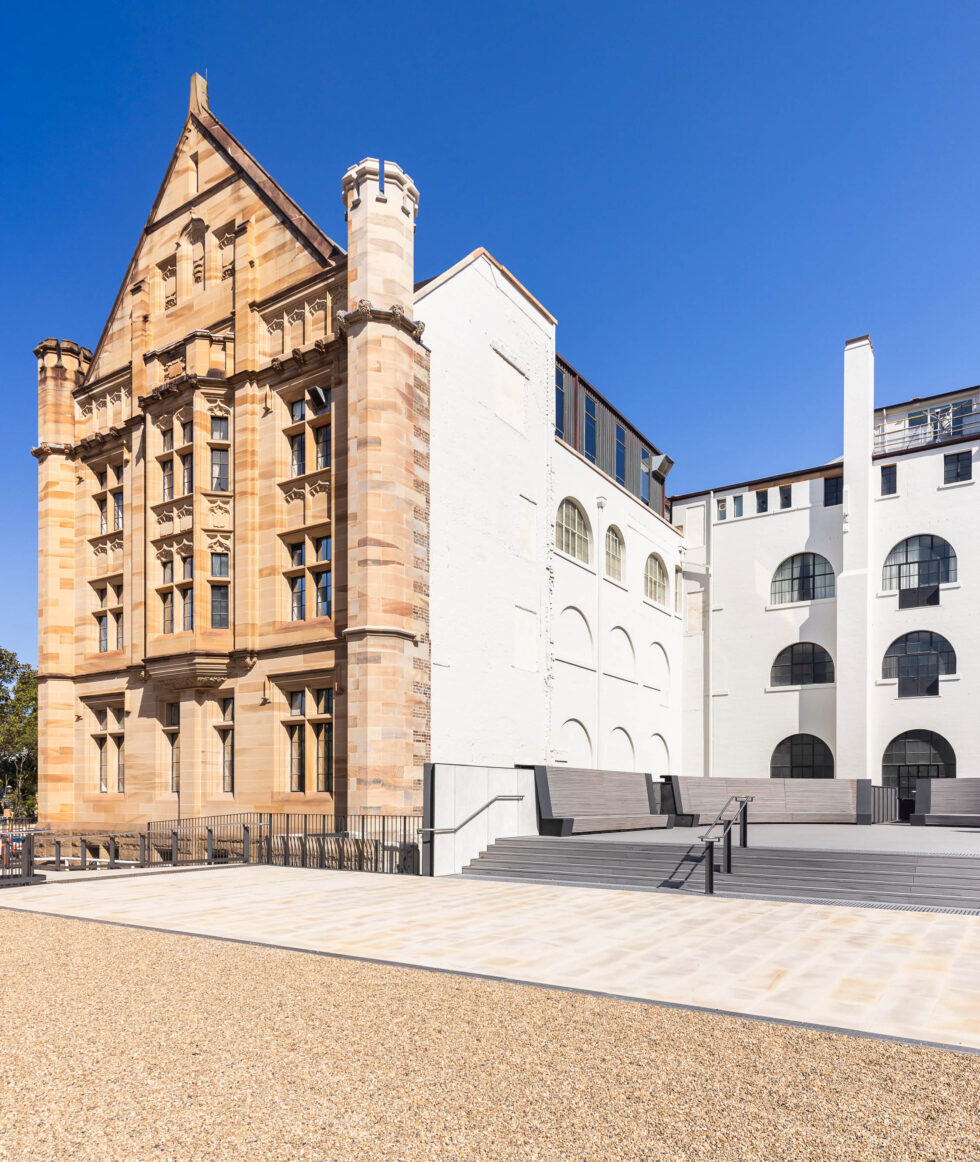
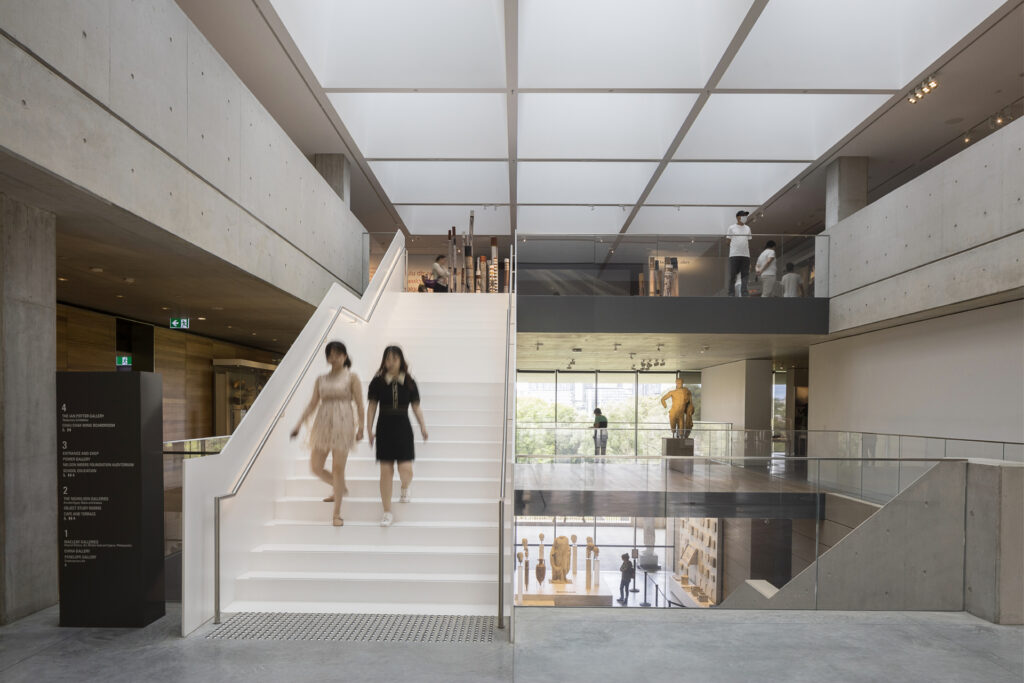
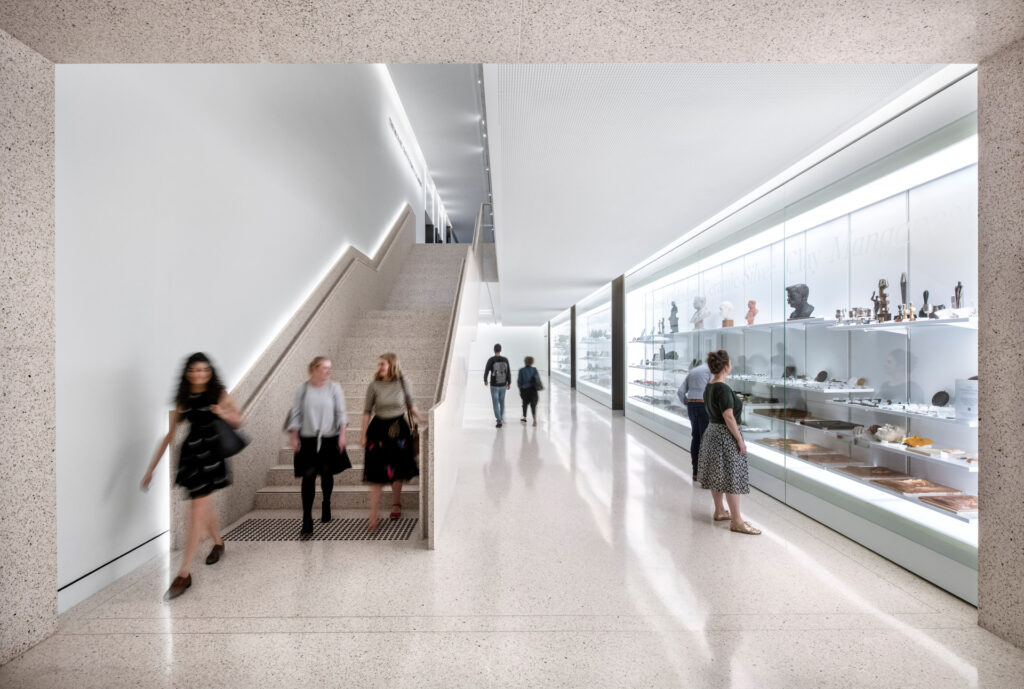
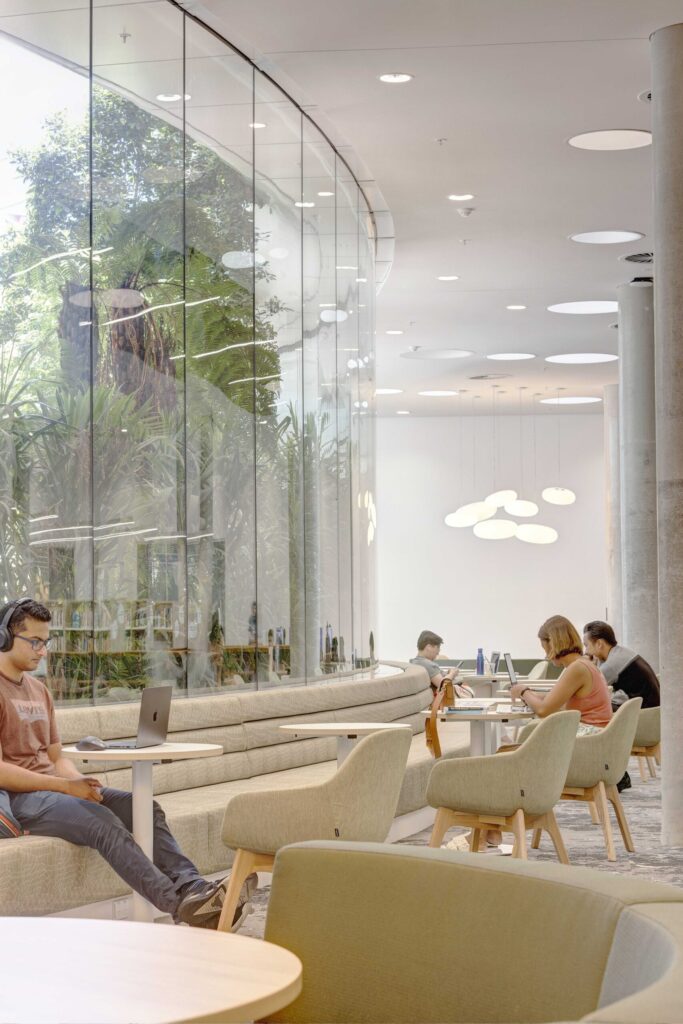
The Chau Chak Wing Museum unites three of the University of Sydney’s major collections of art, natural history, antiquities, into a single, contemporary “floating concrete box” that both nestles into a heritage setting and carves light-filled, terraced exhibition spaces below ground.
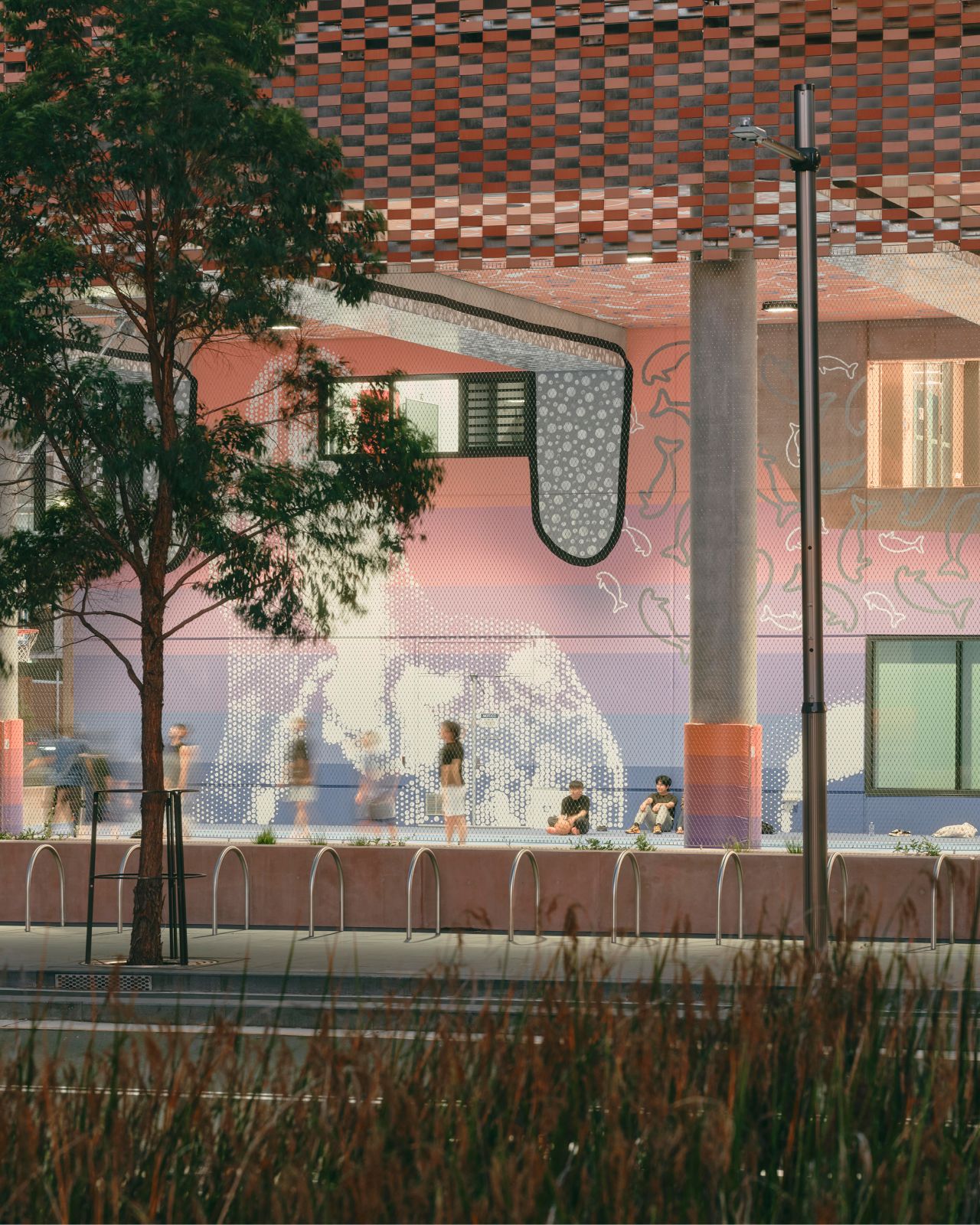
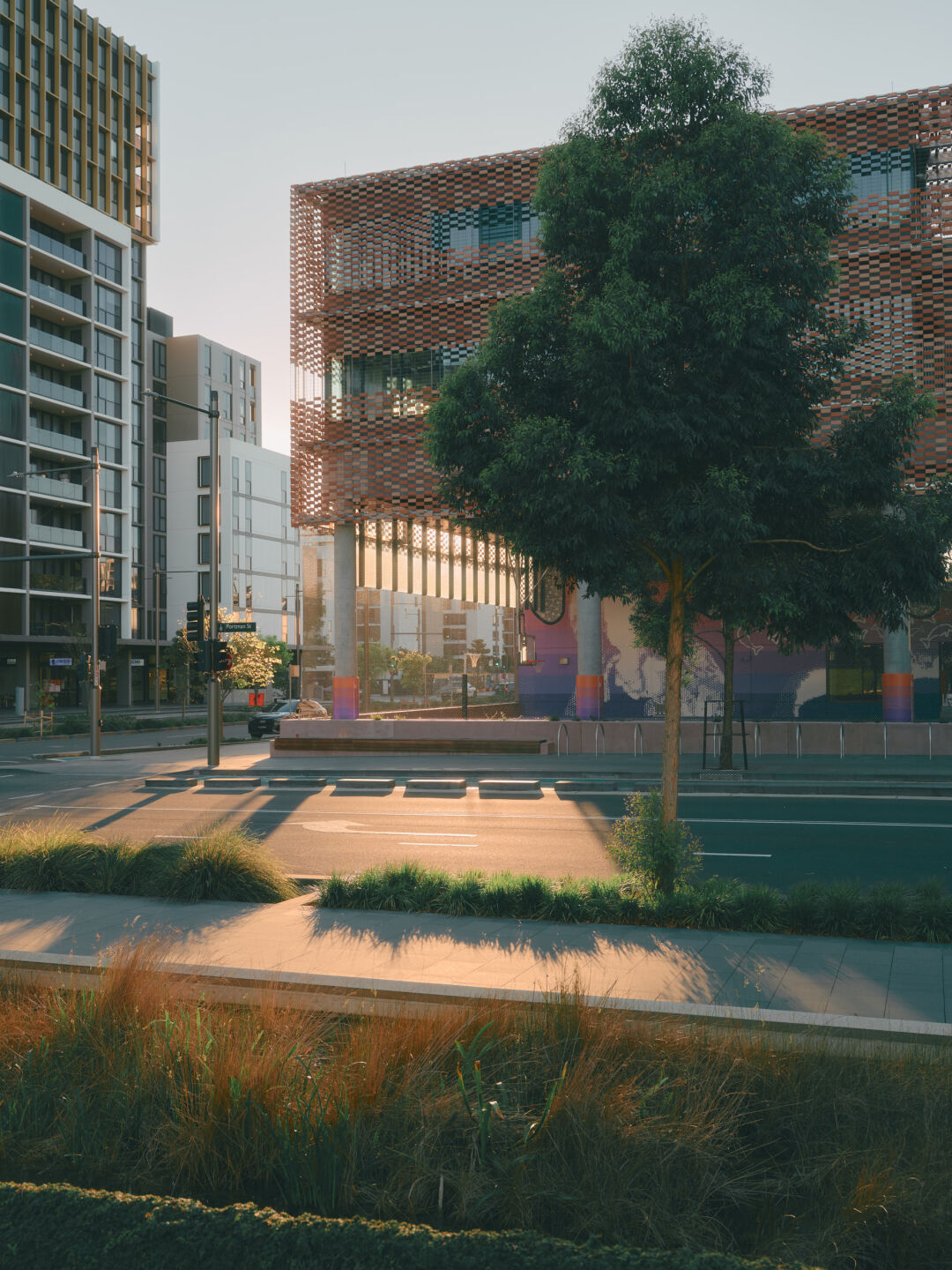
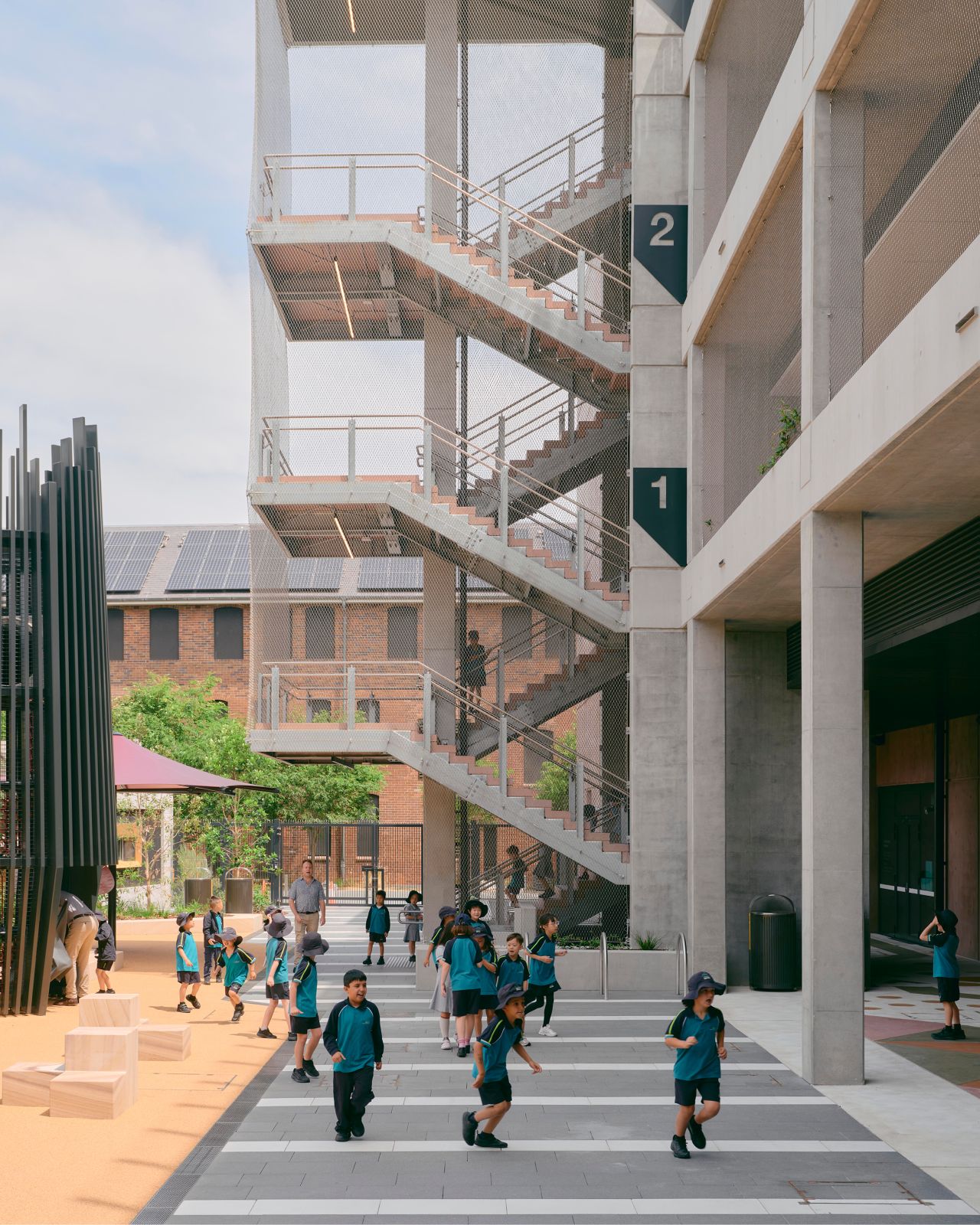
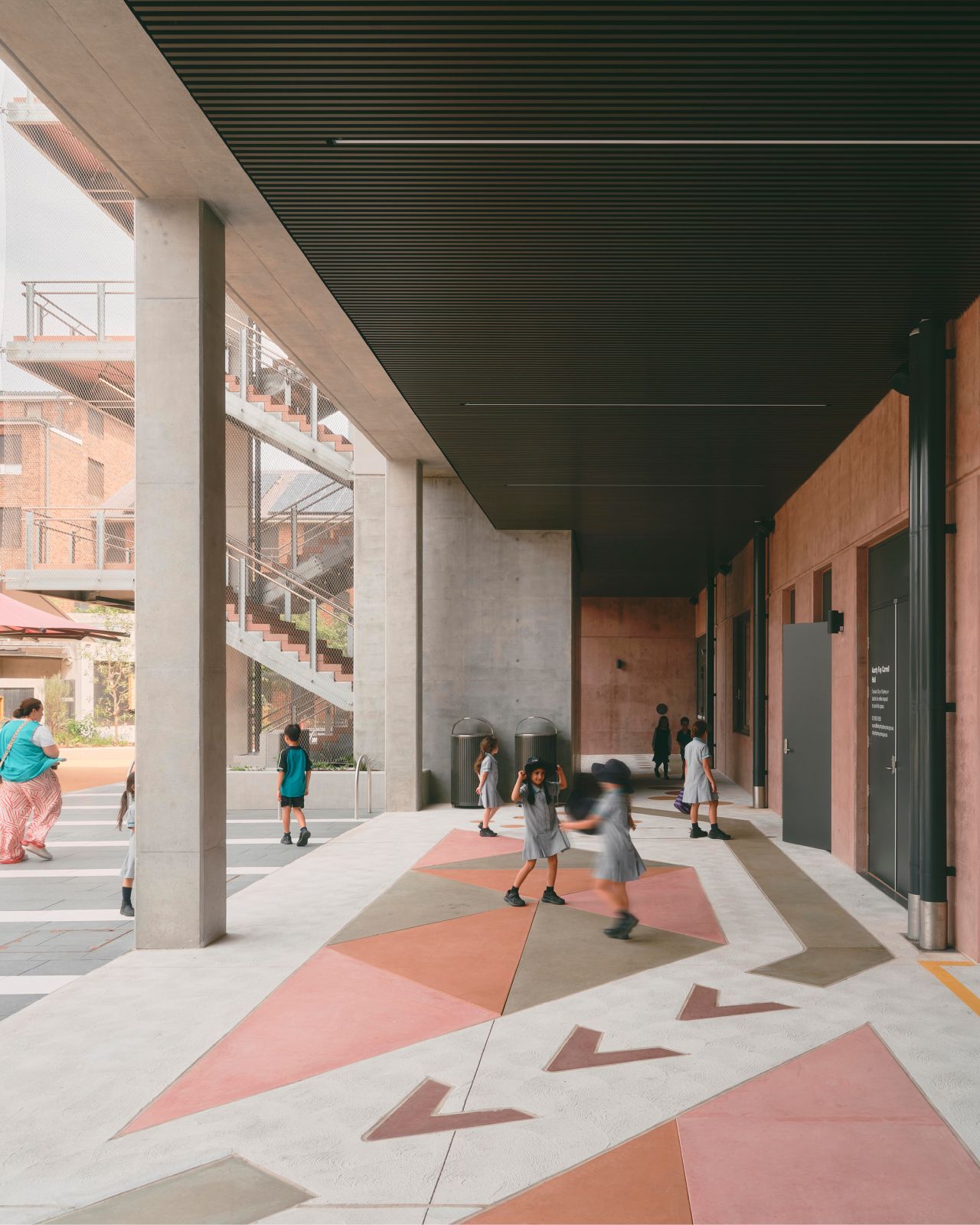
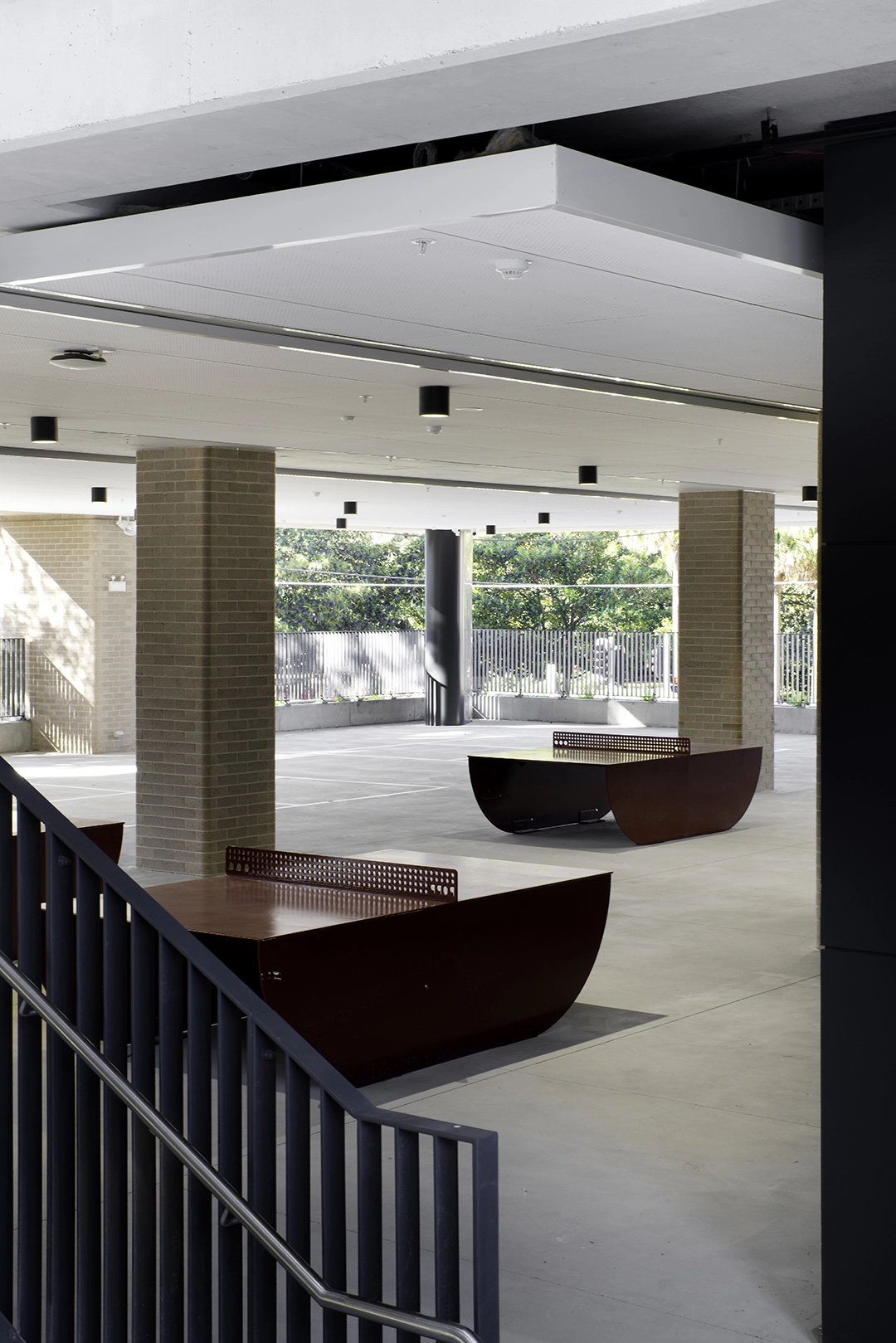
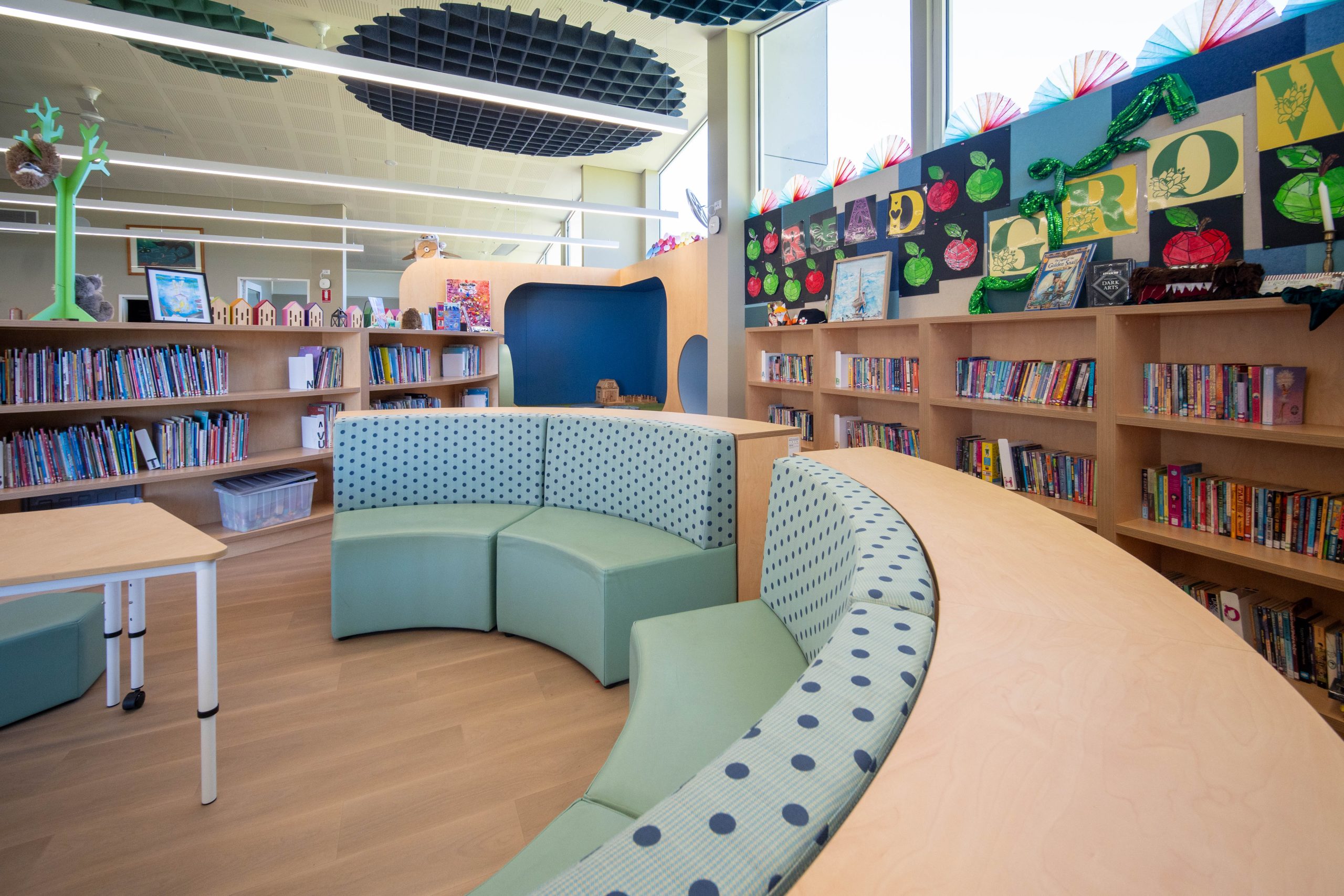
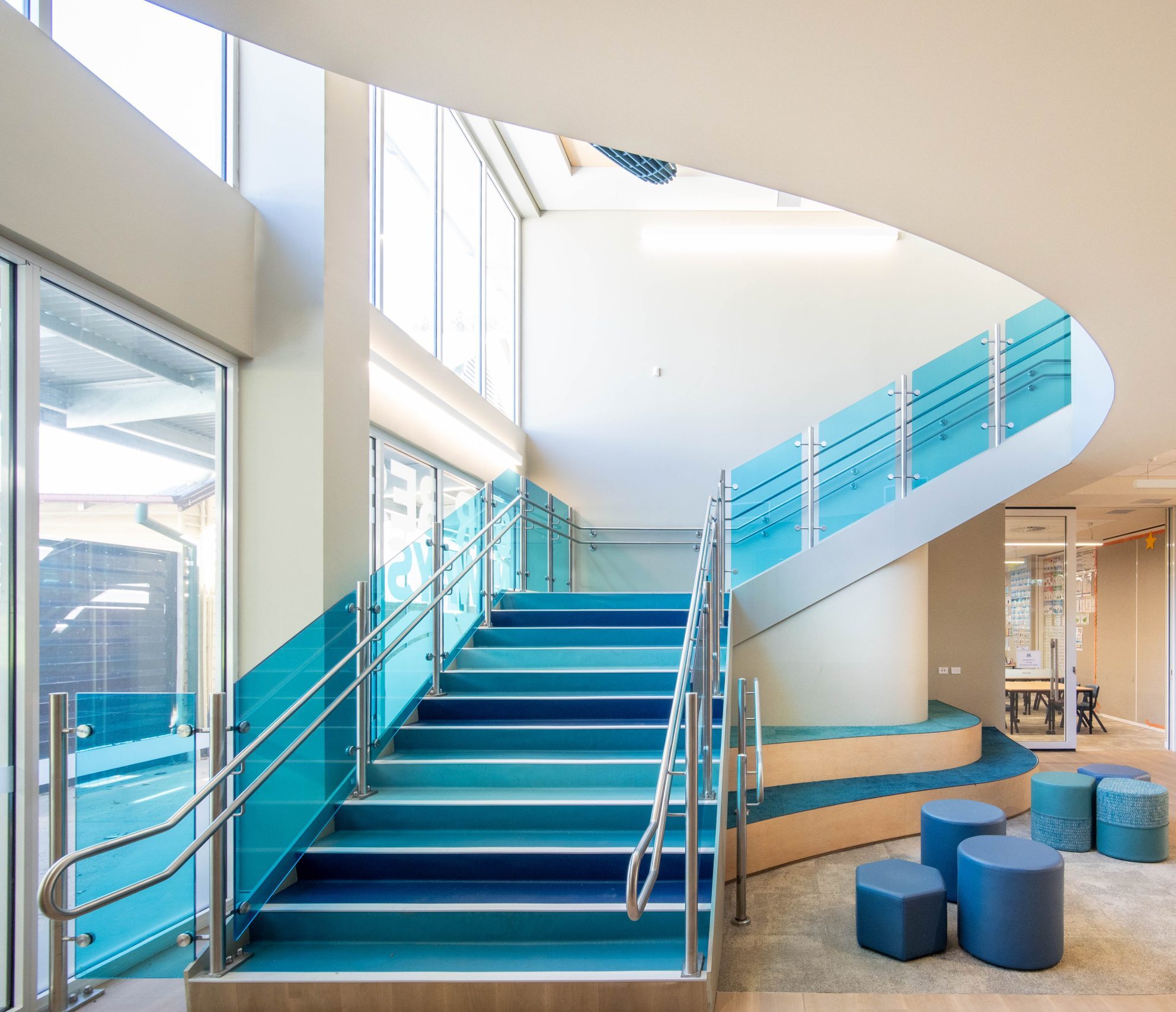
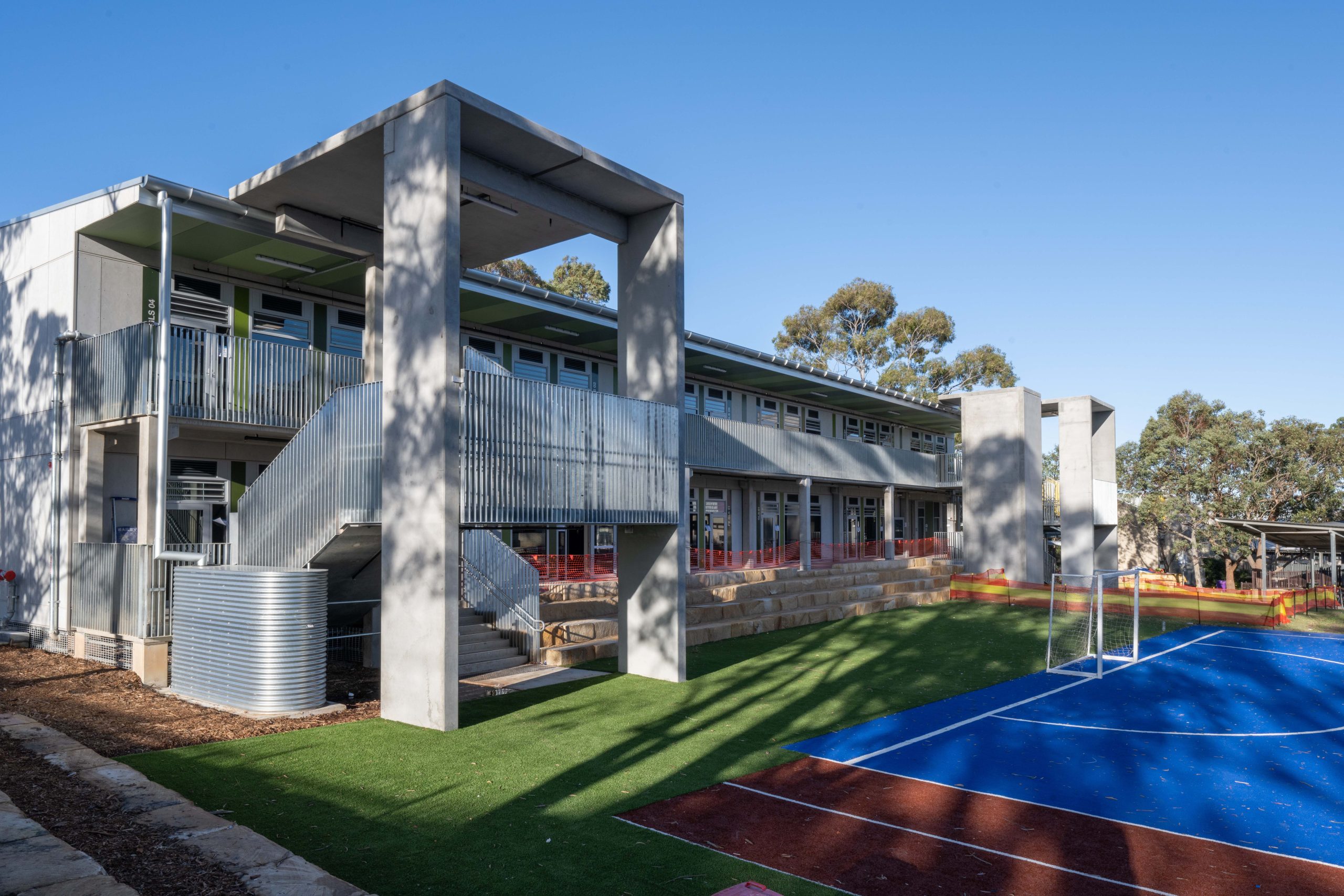
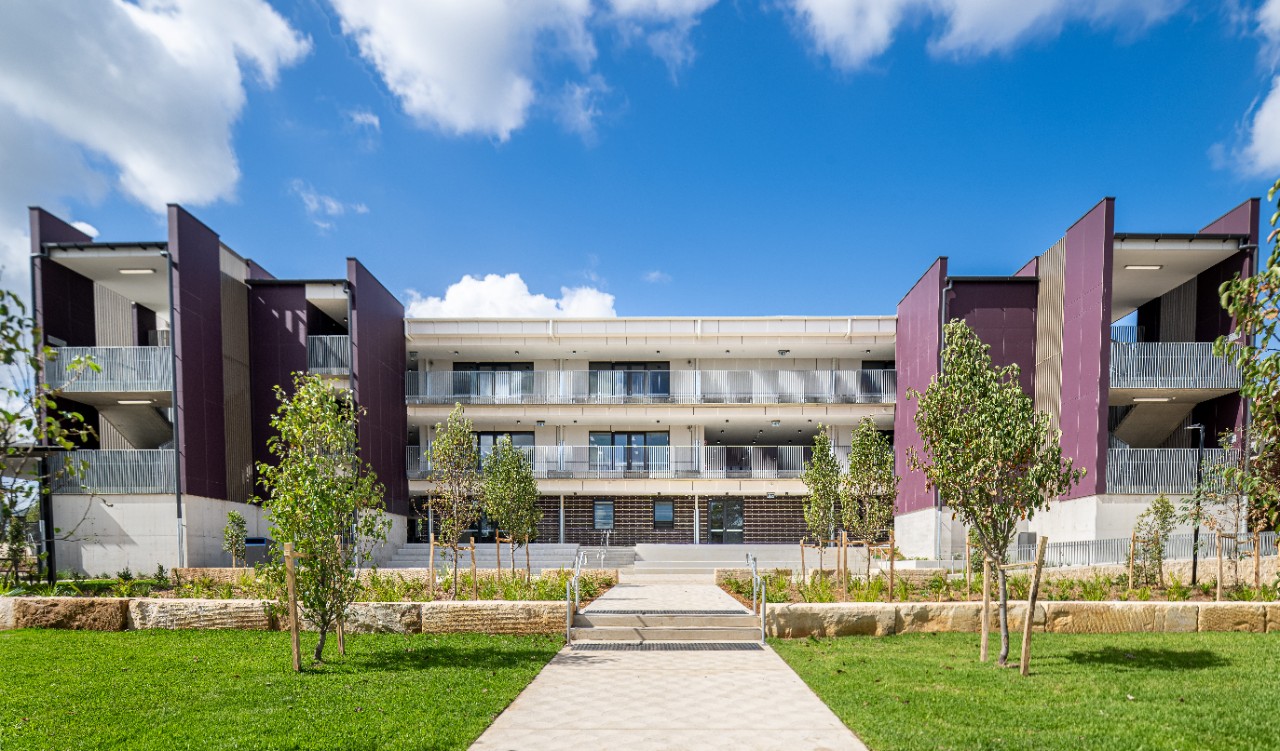
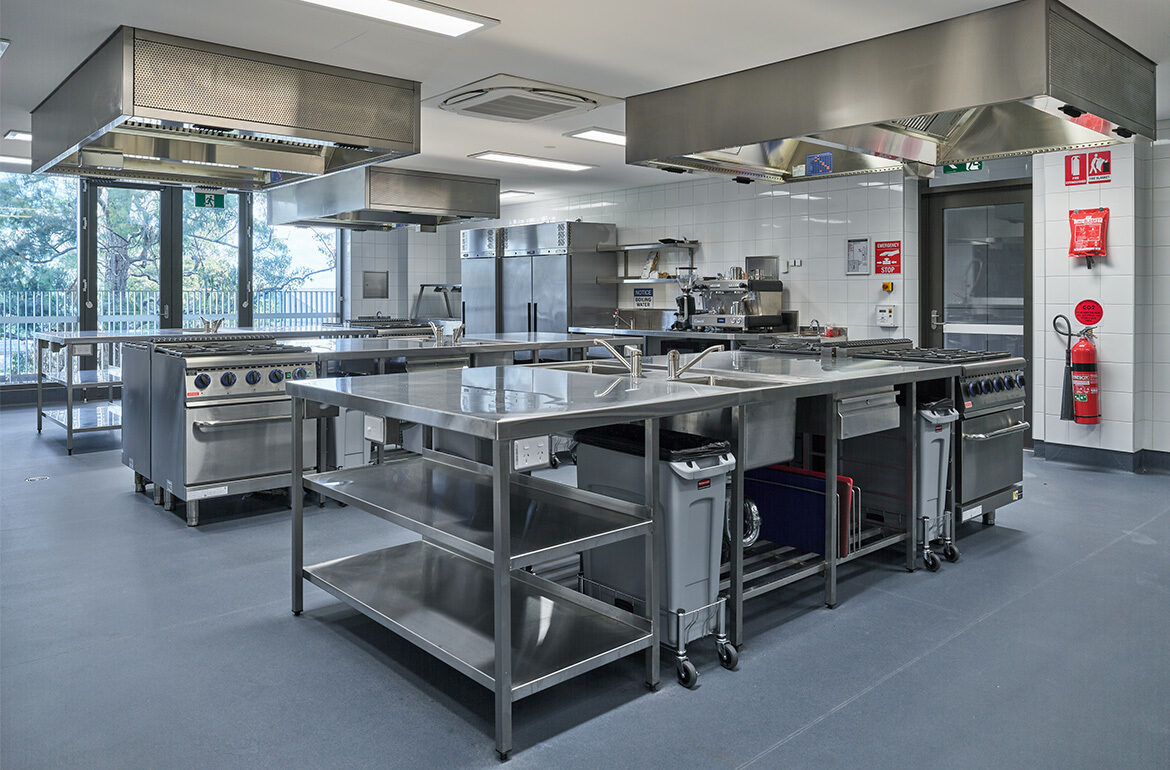
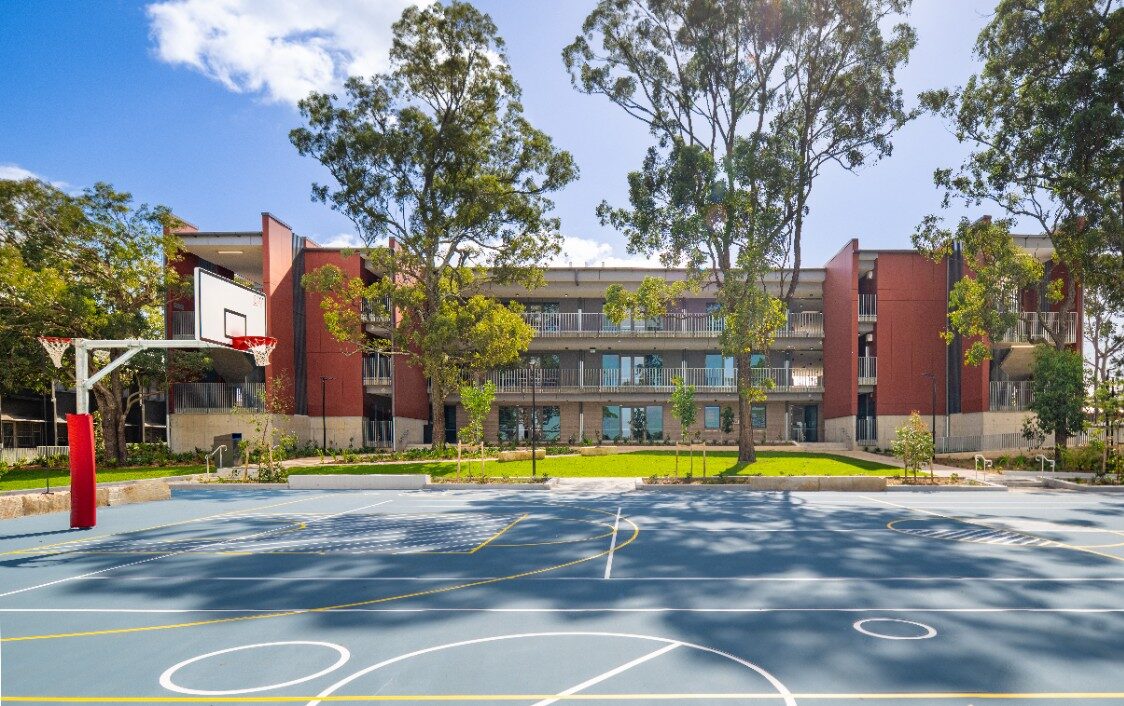
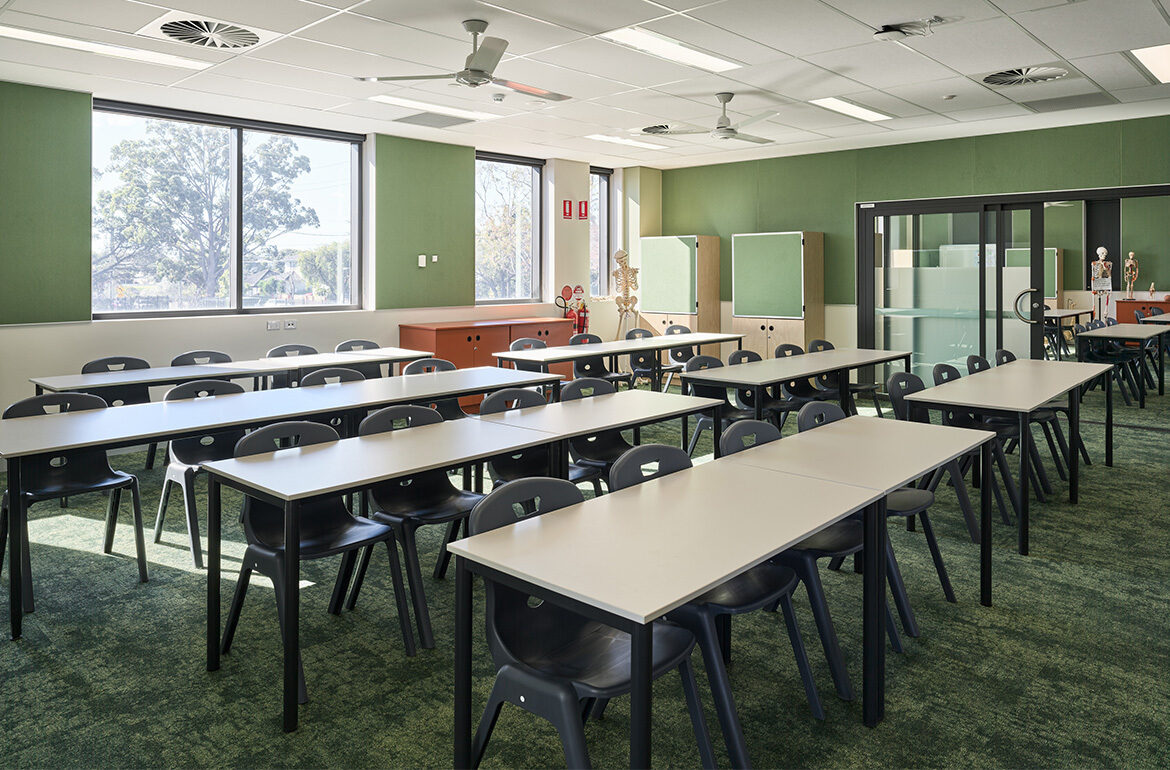
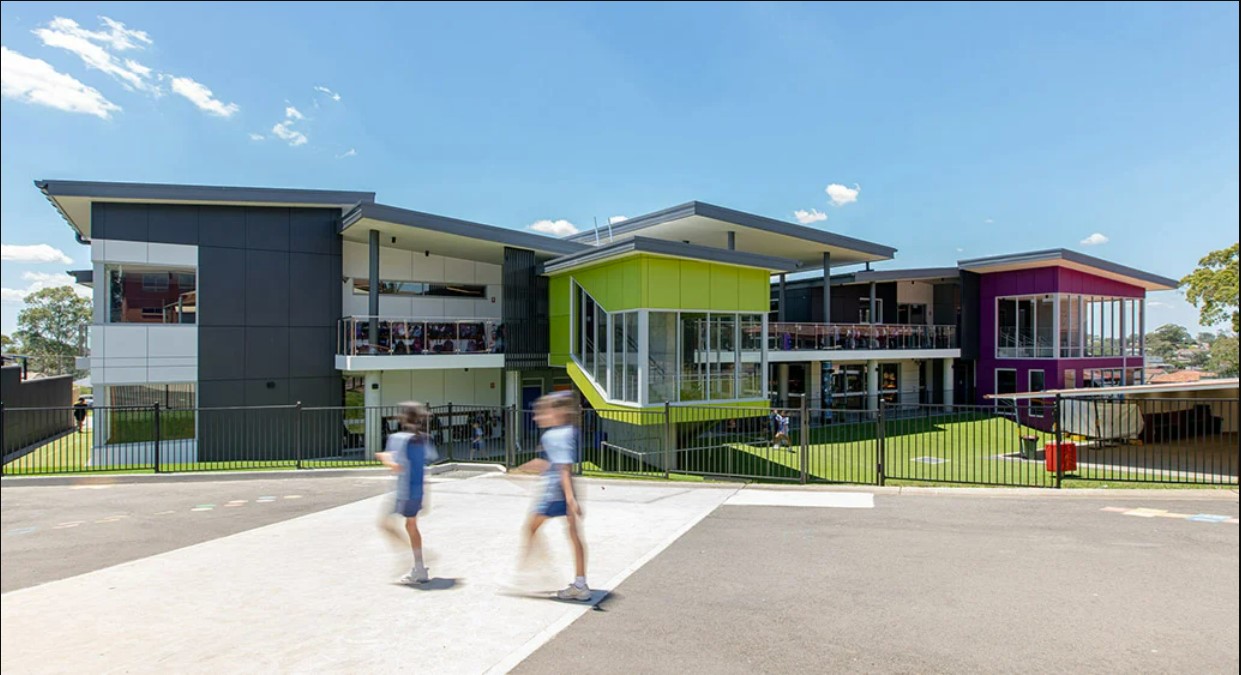
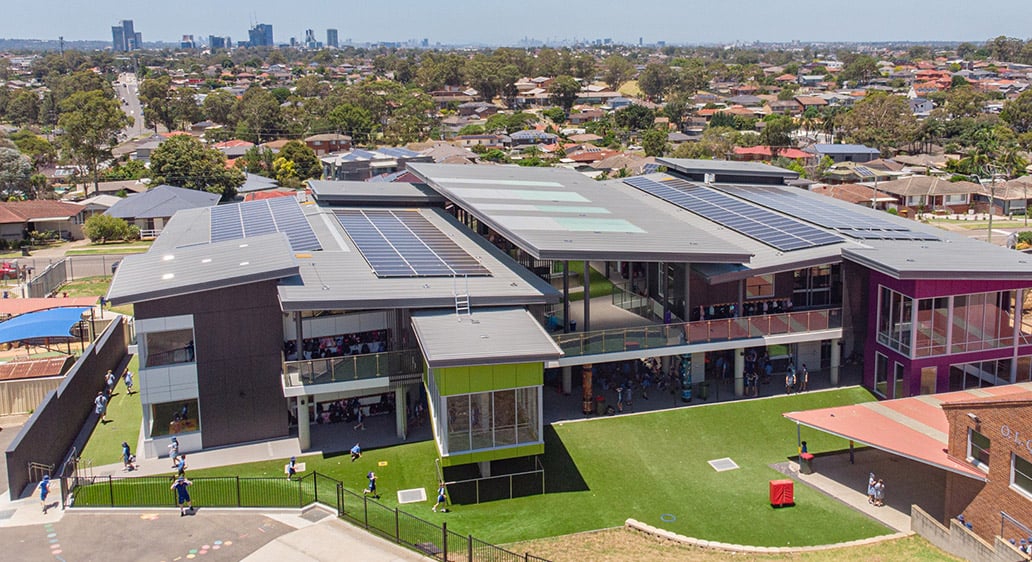
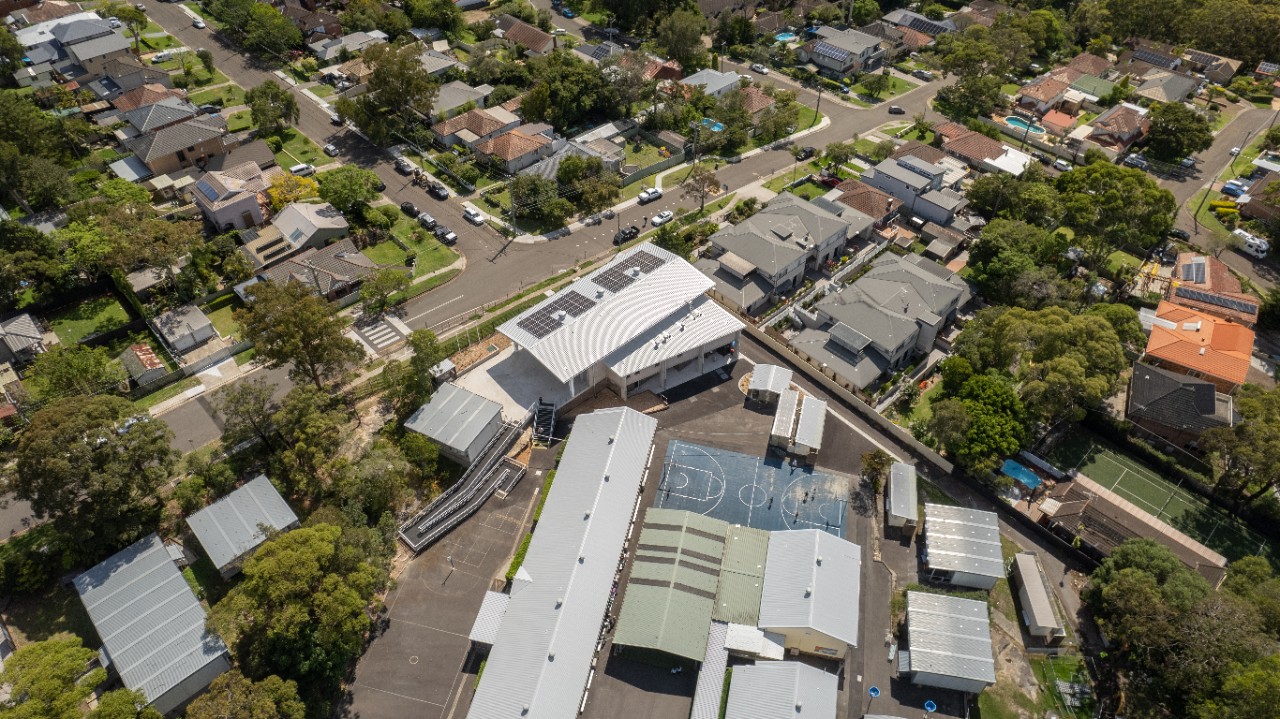
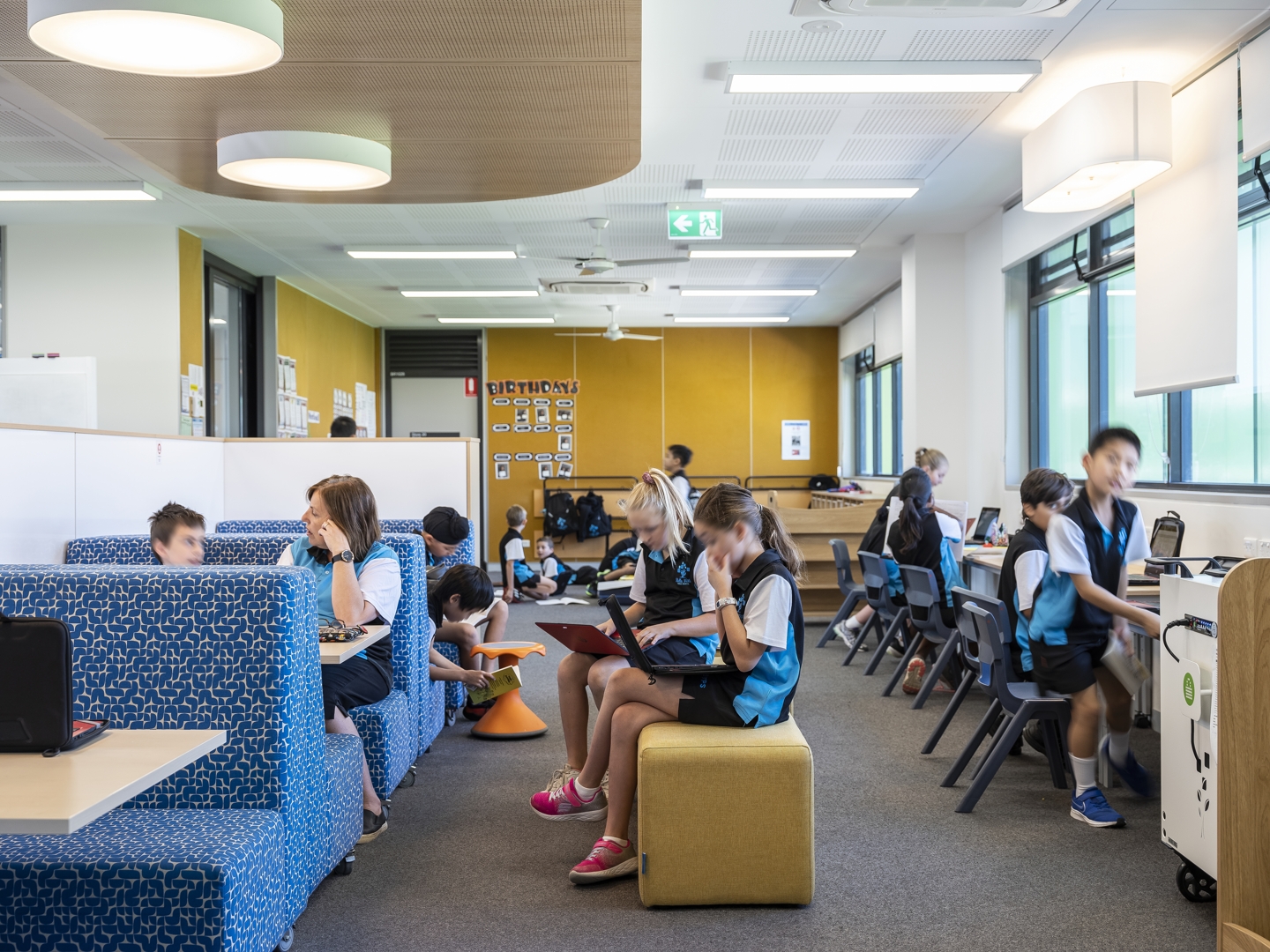
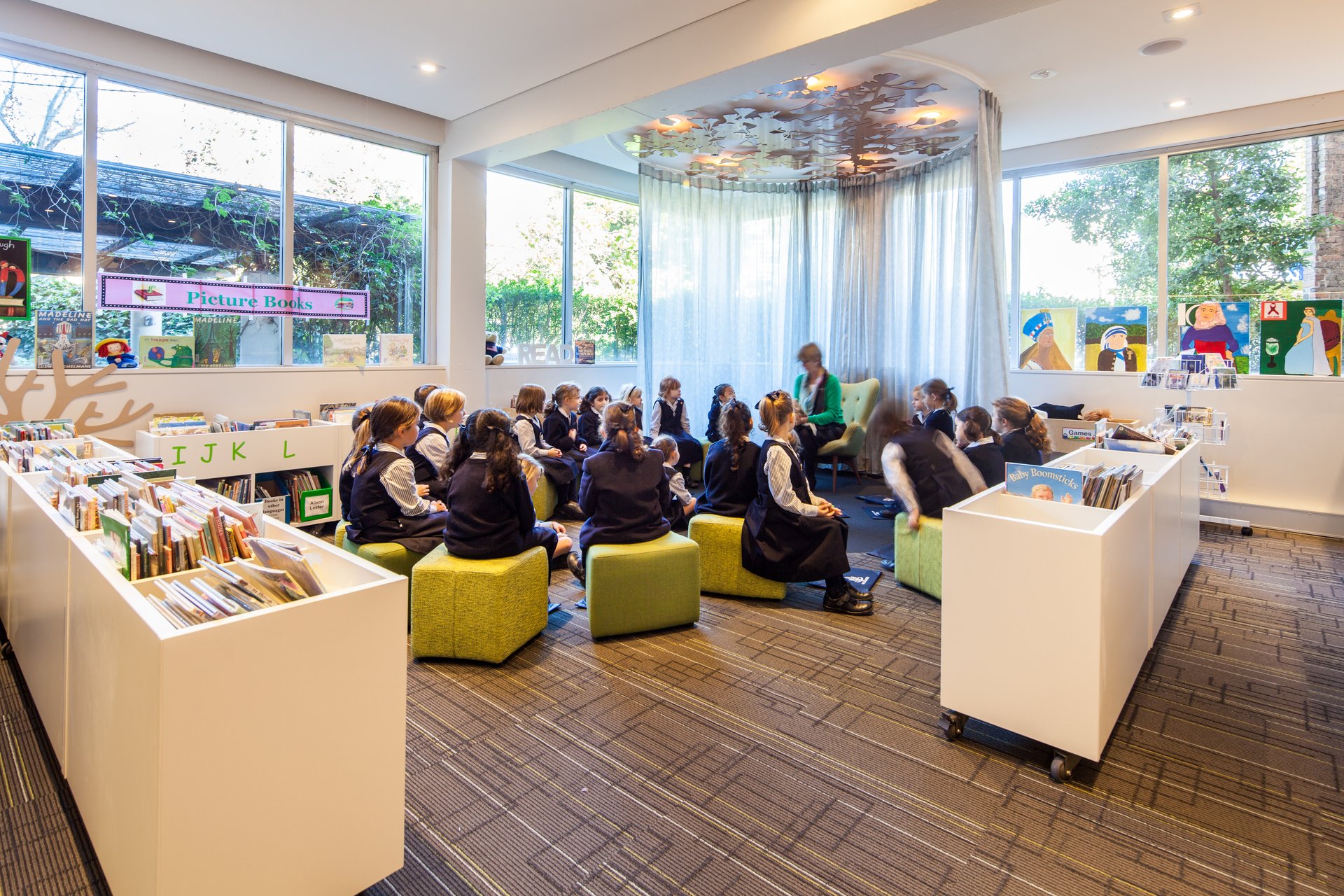
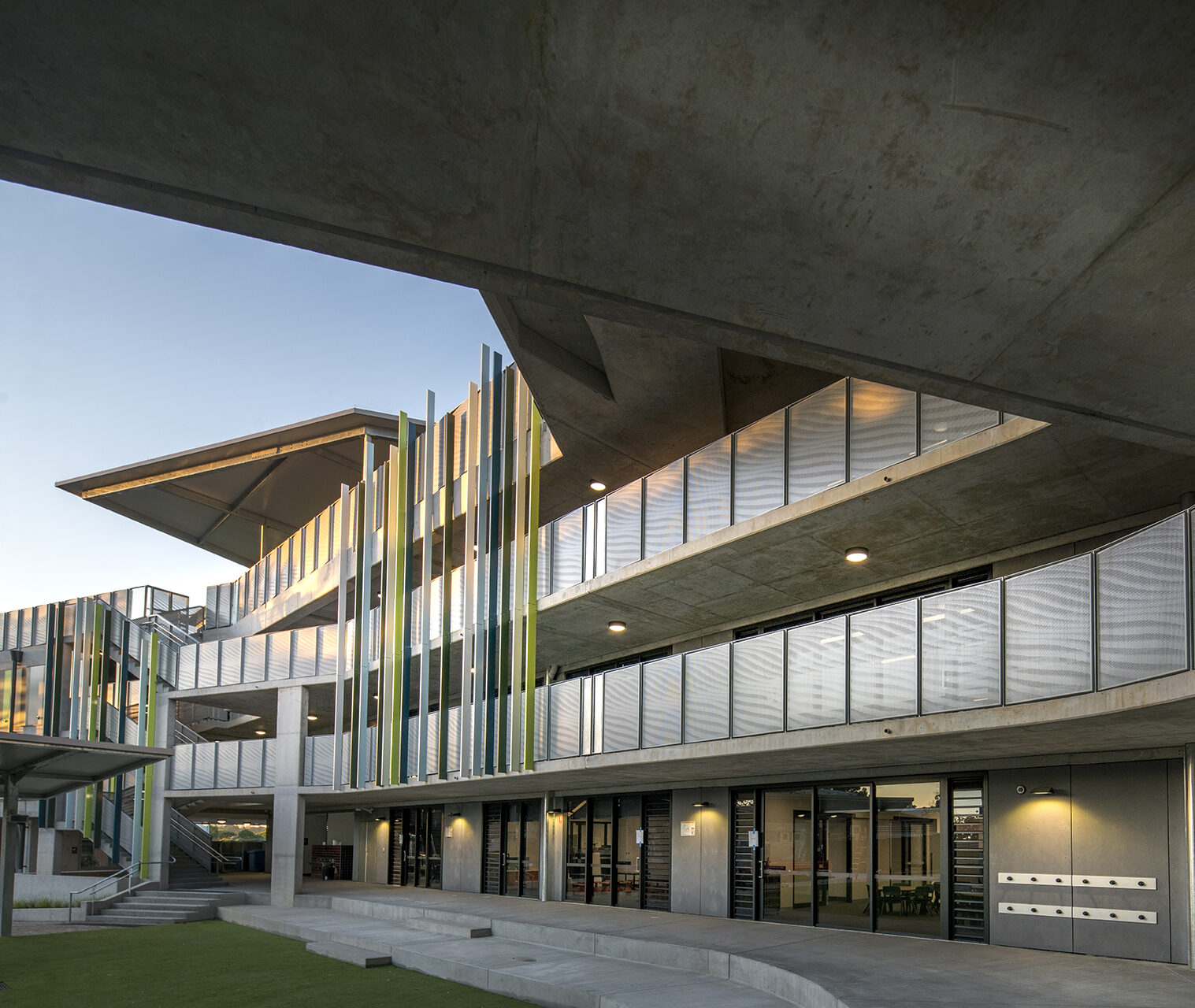
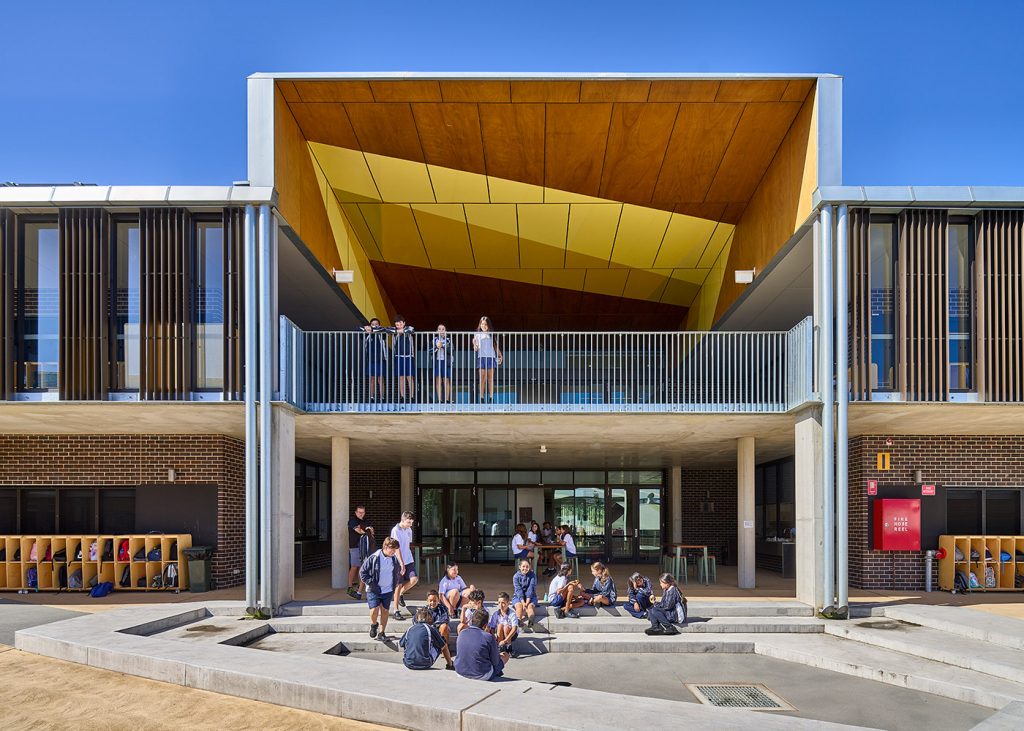
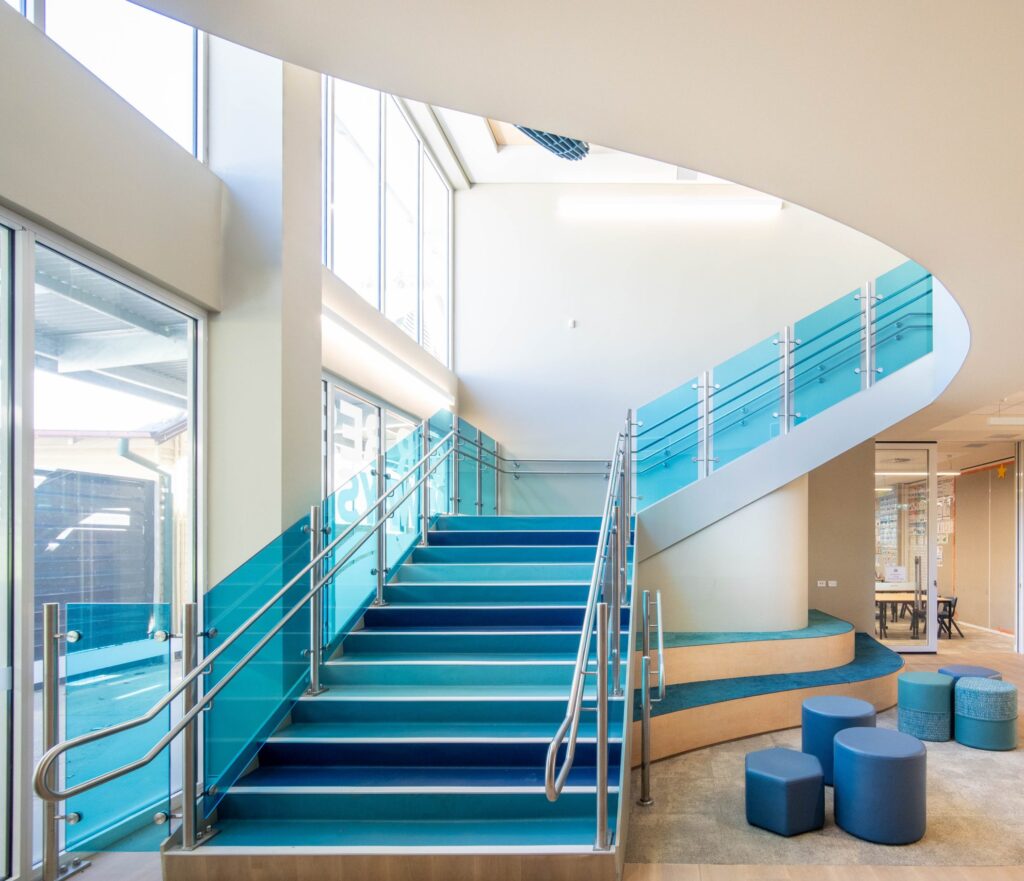
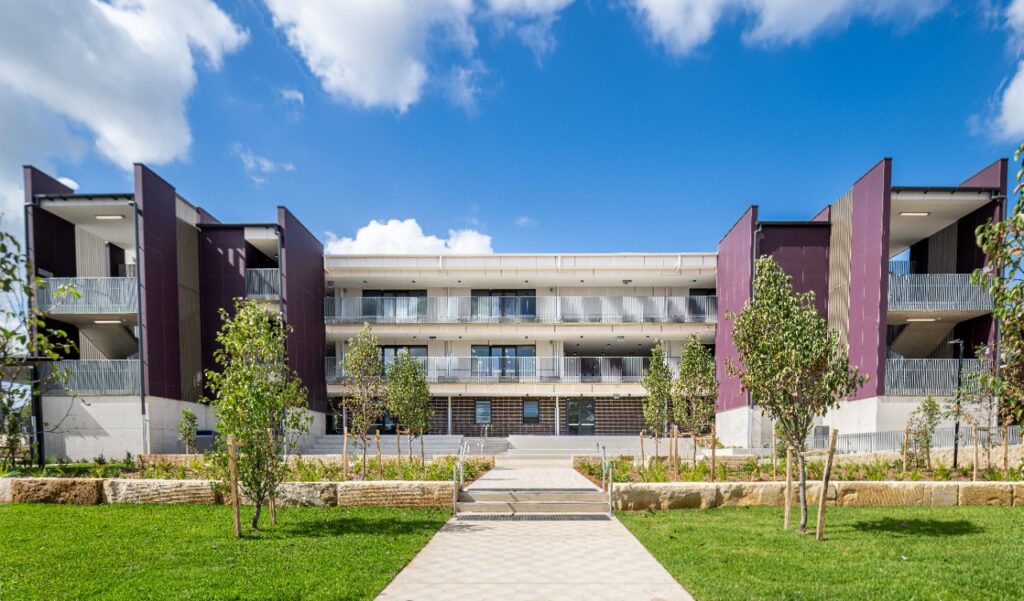
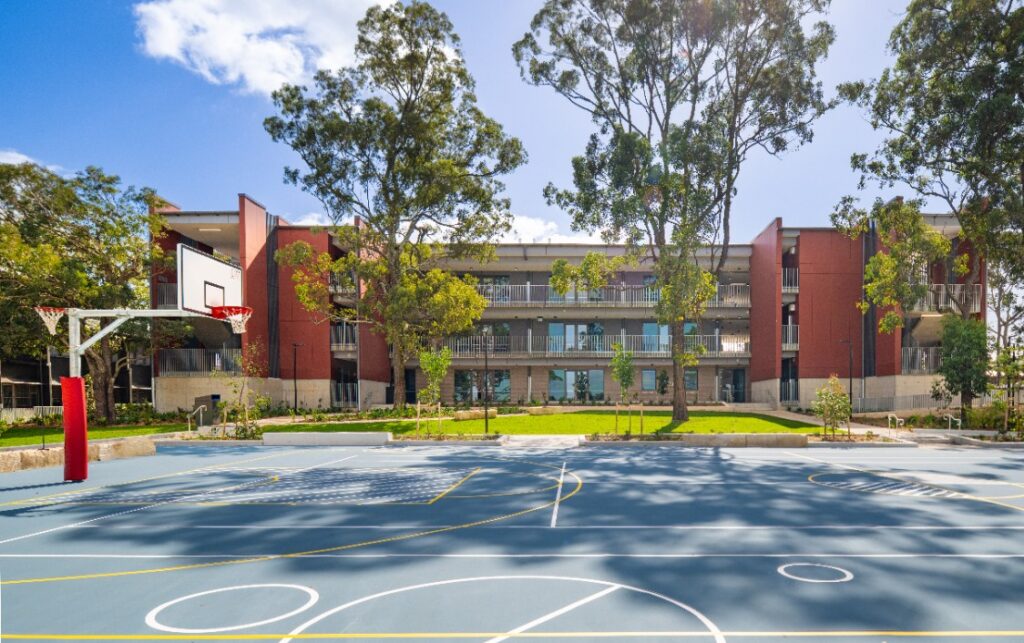
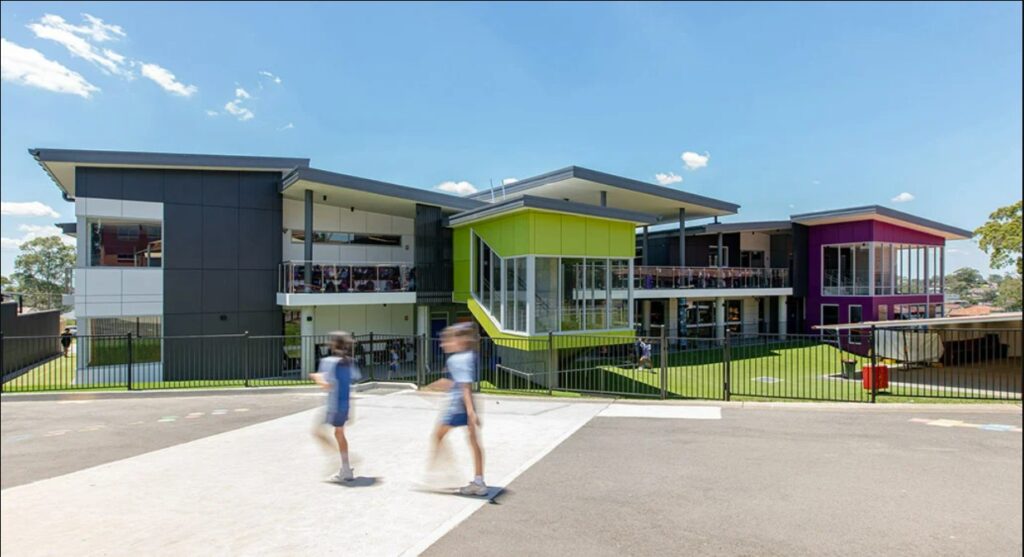
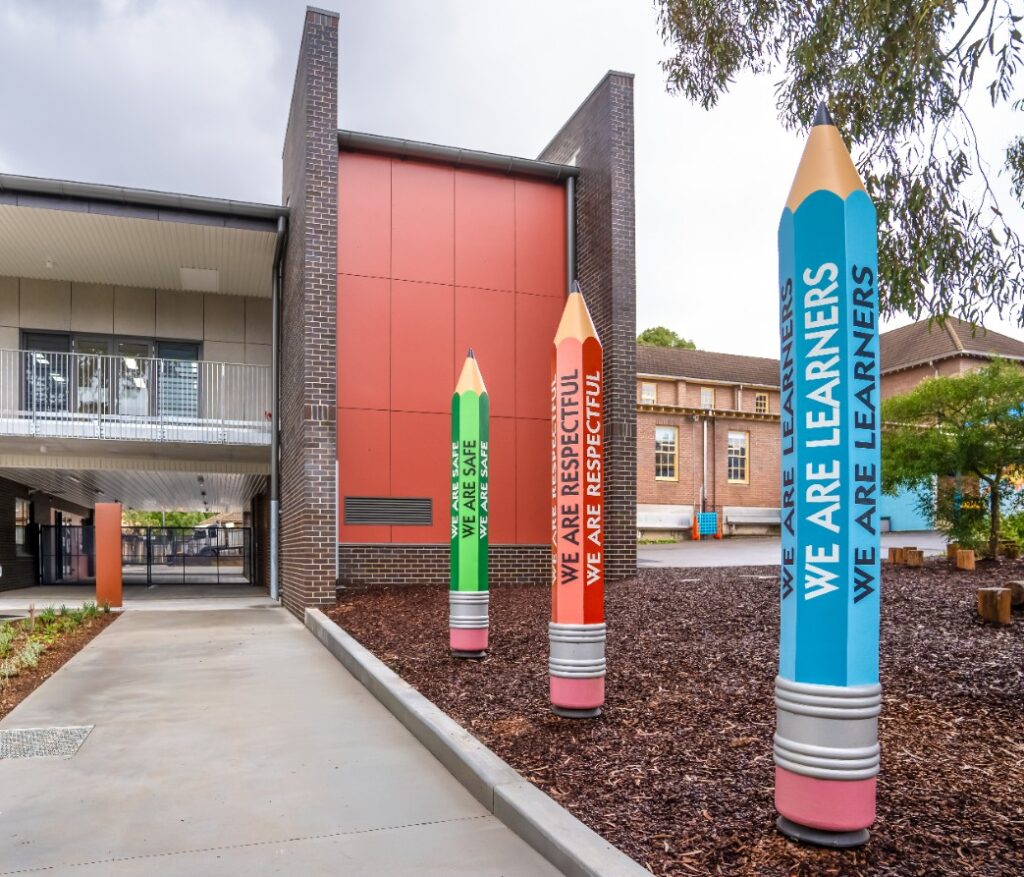
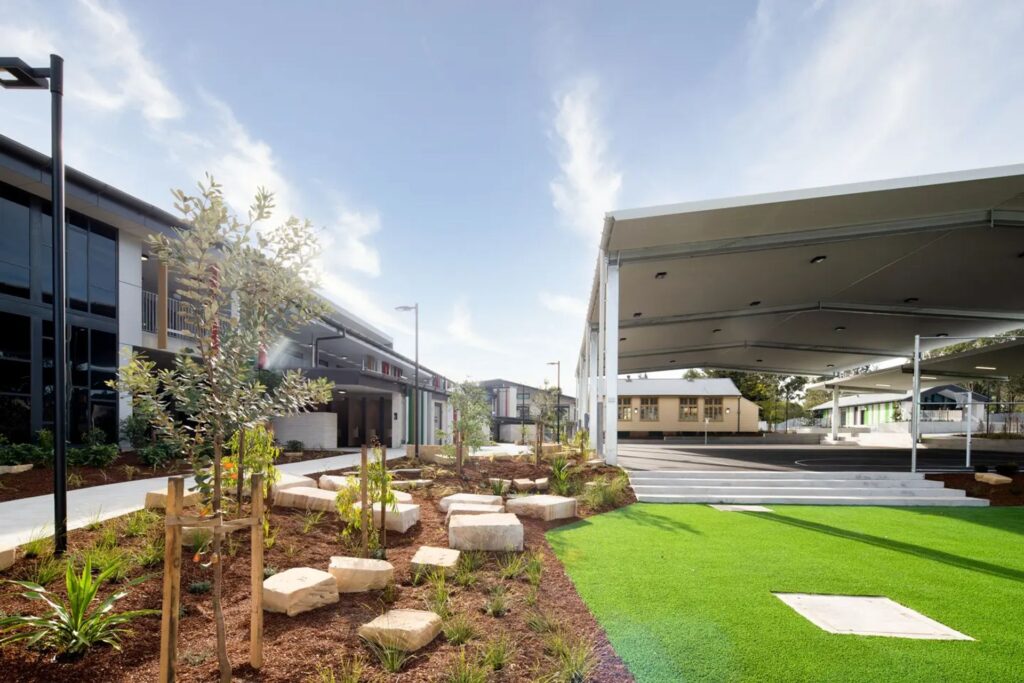
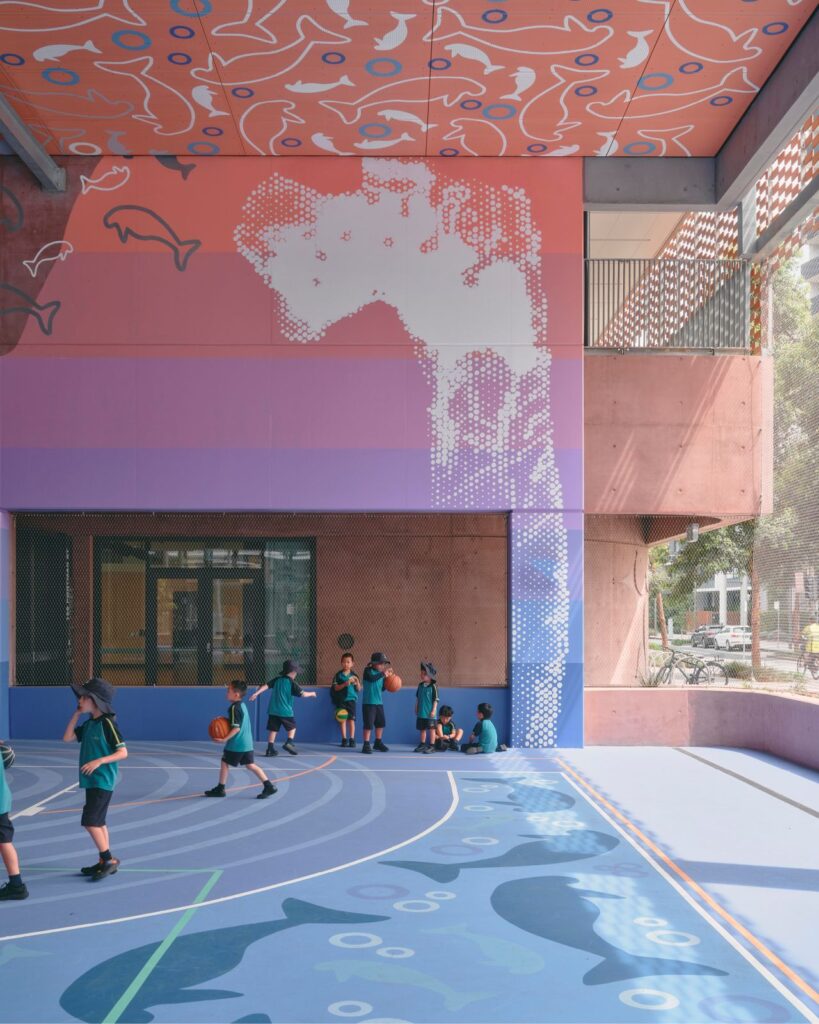
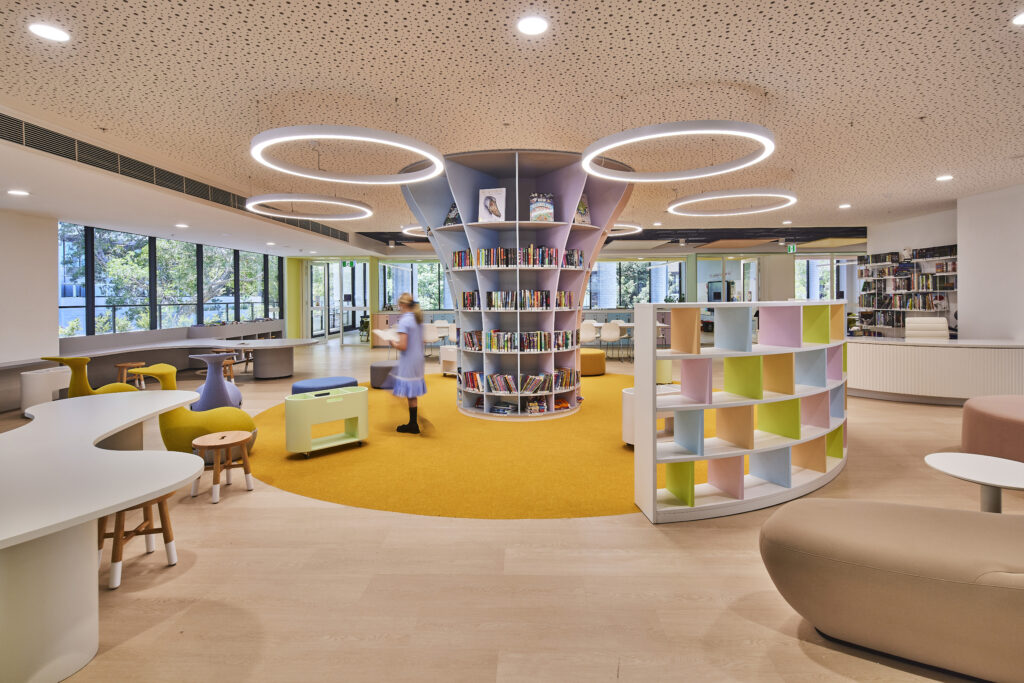
This four-storey educational and community hub accommodates up to 600 students with 24 modern classrooms, flexible learning hubs, a library, covered outdoor areas and rooftop playscapes.
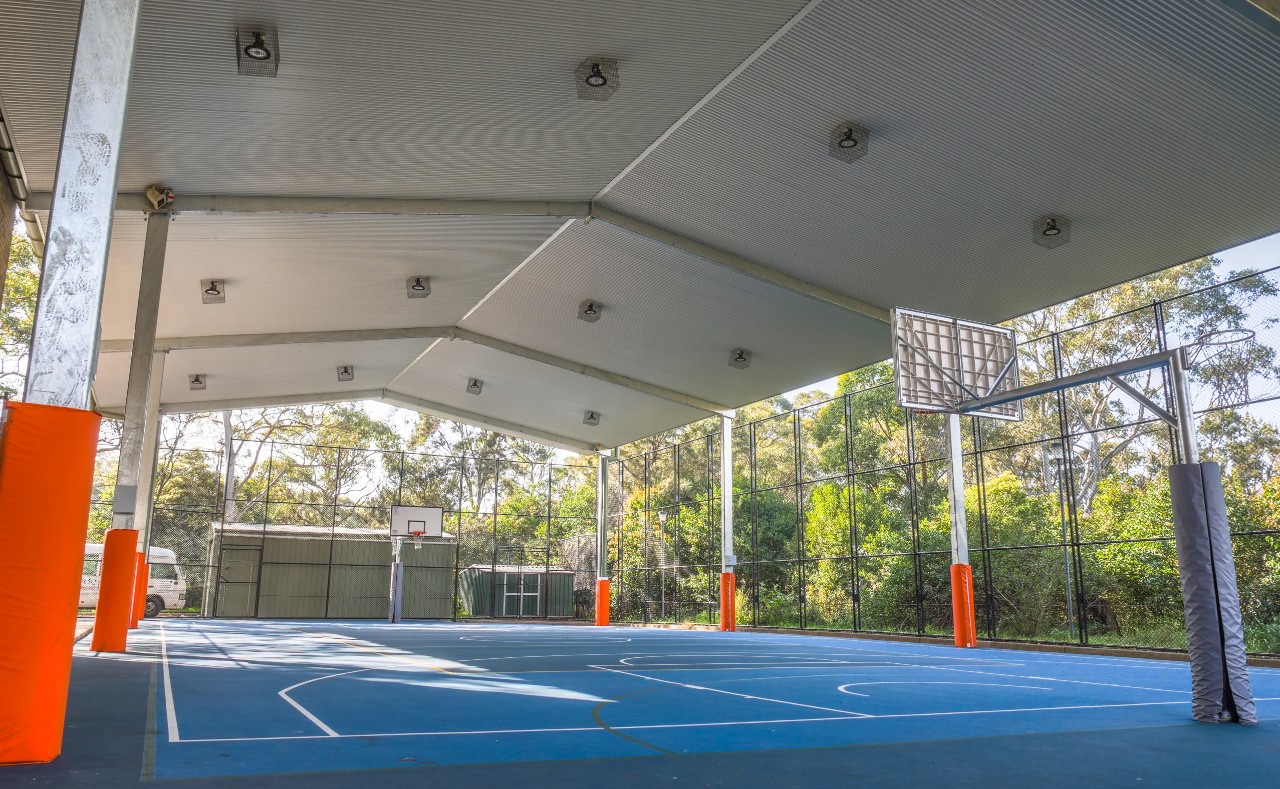
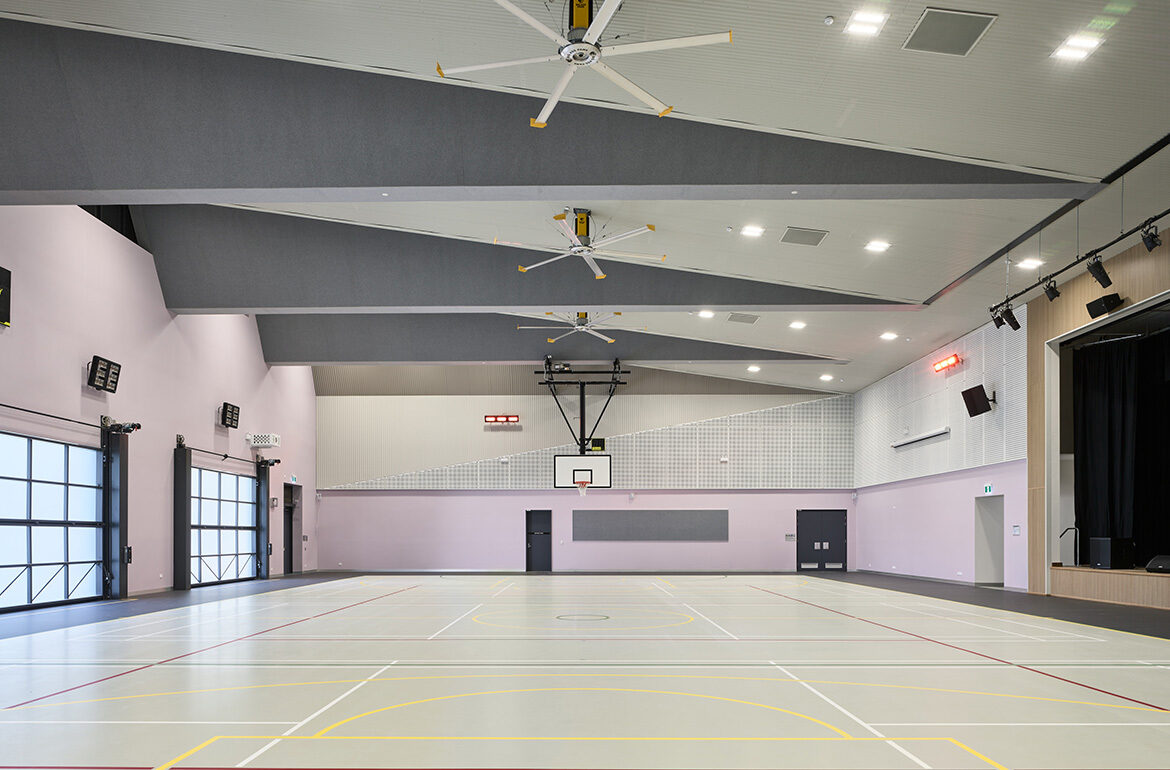
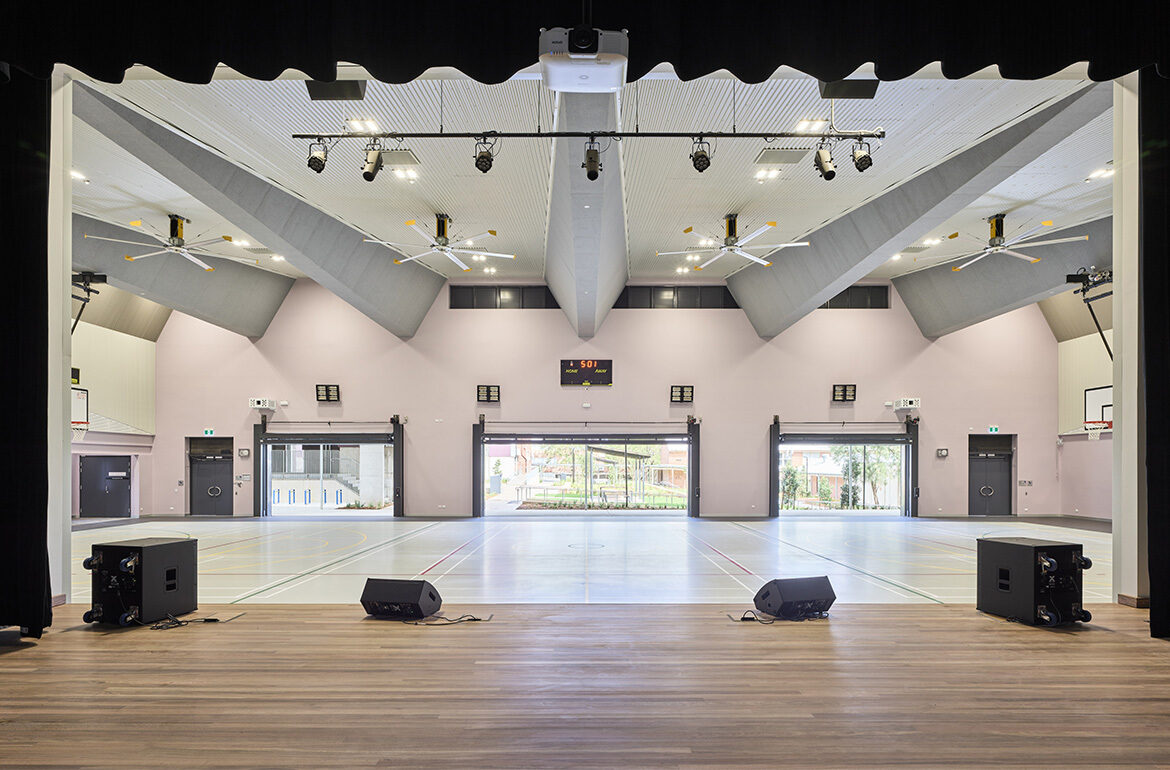
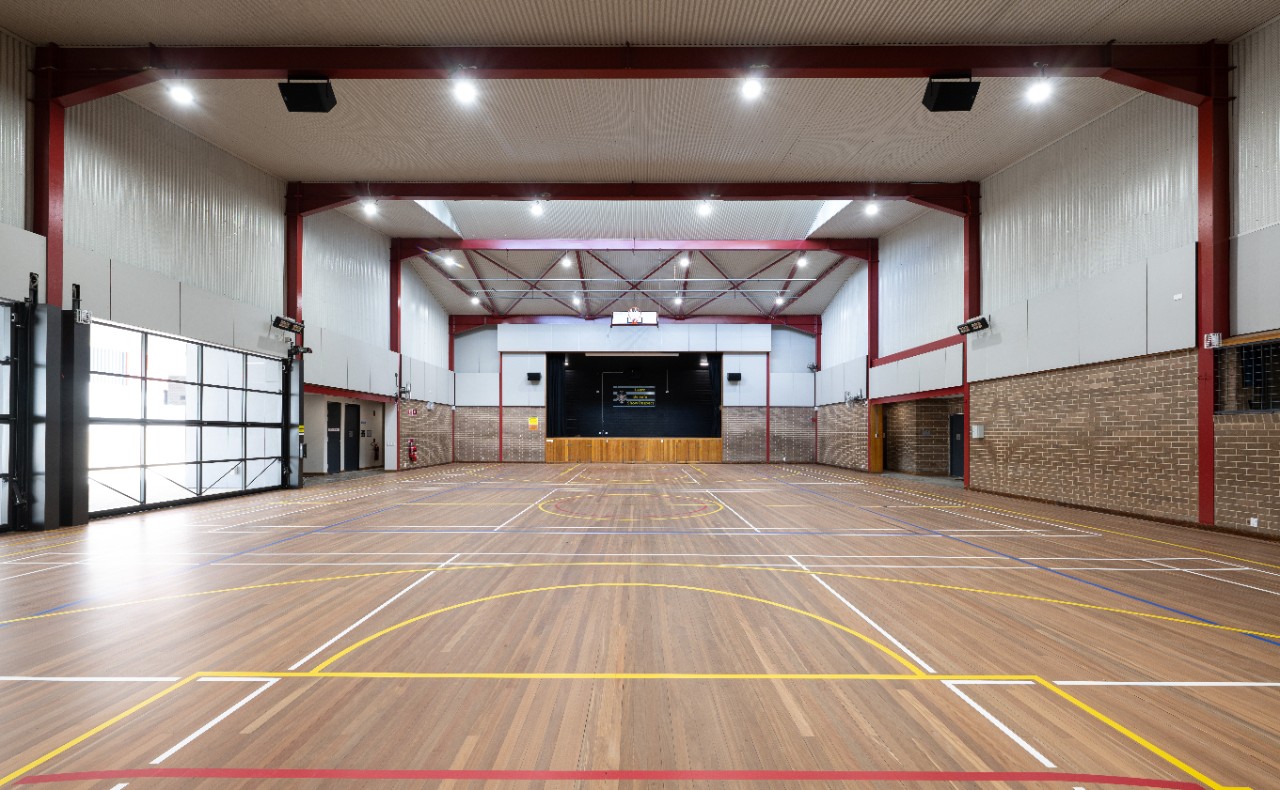
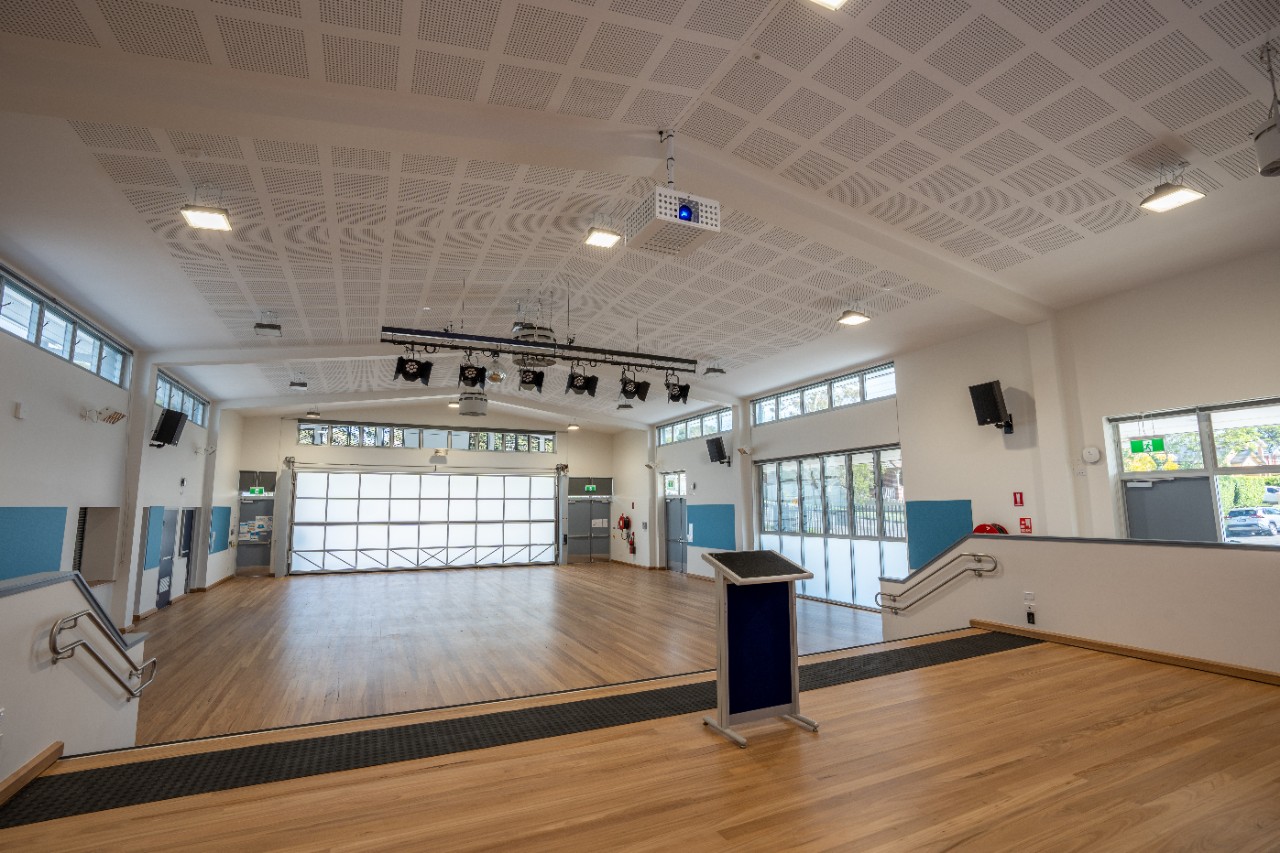
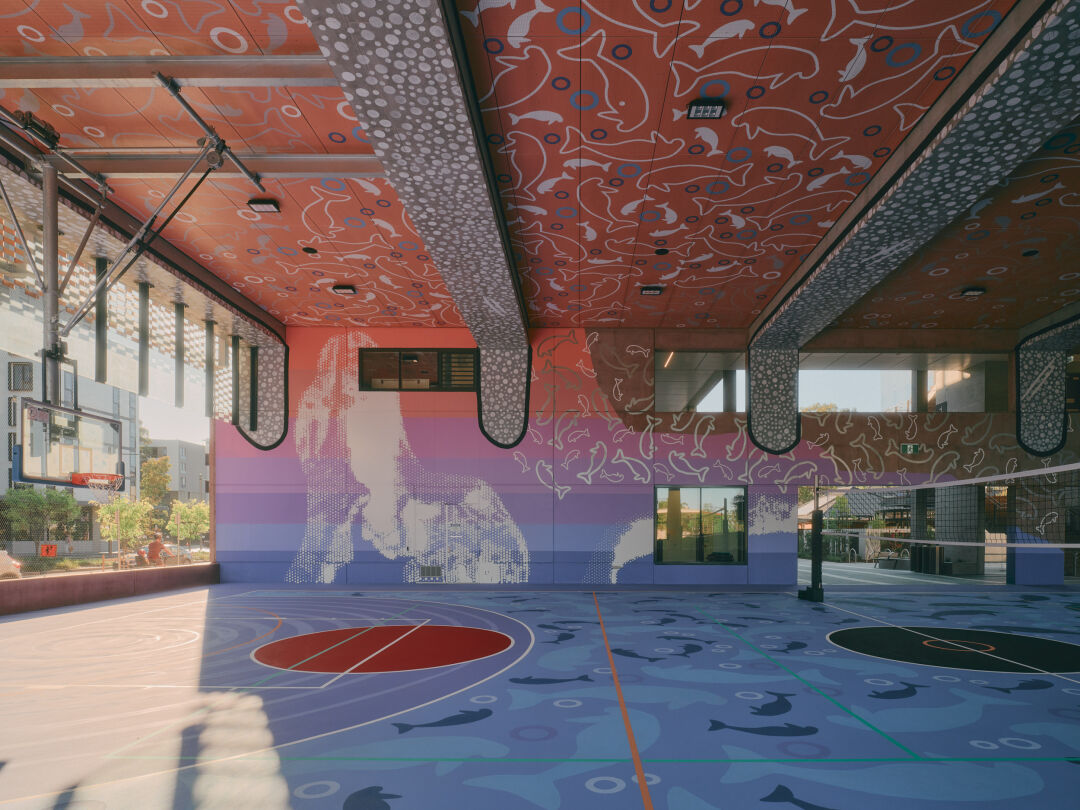
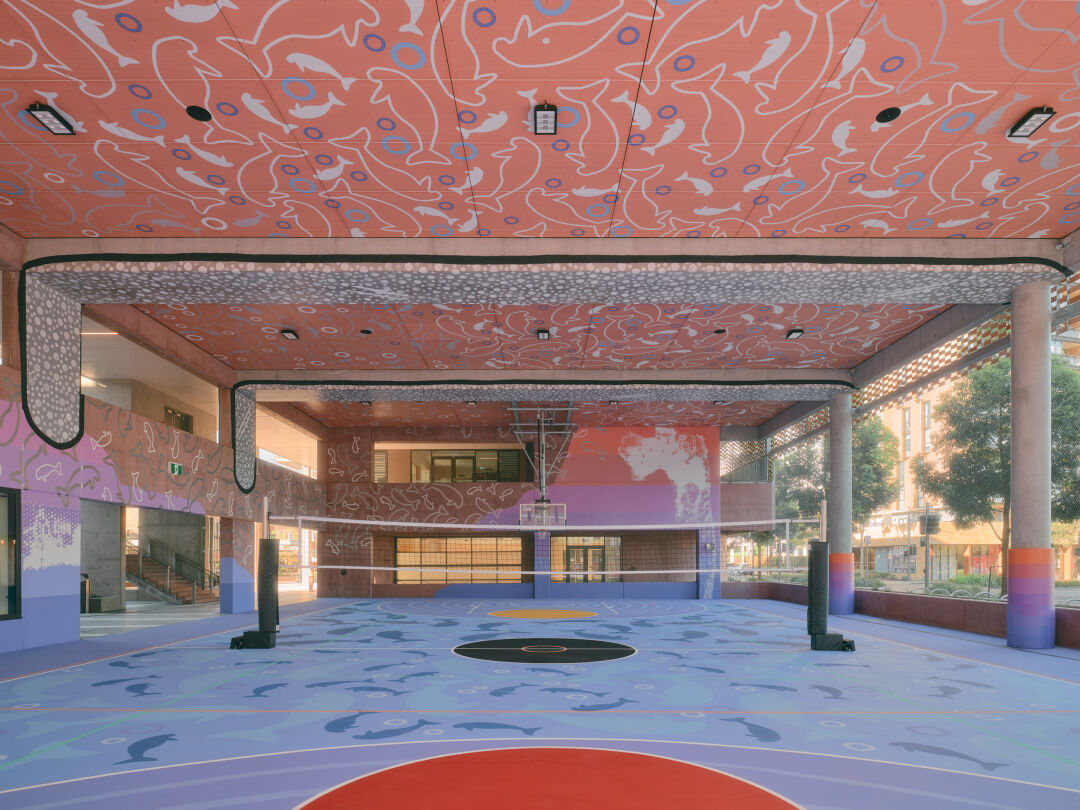
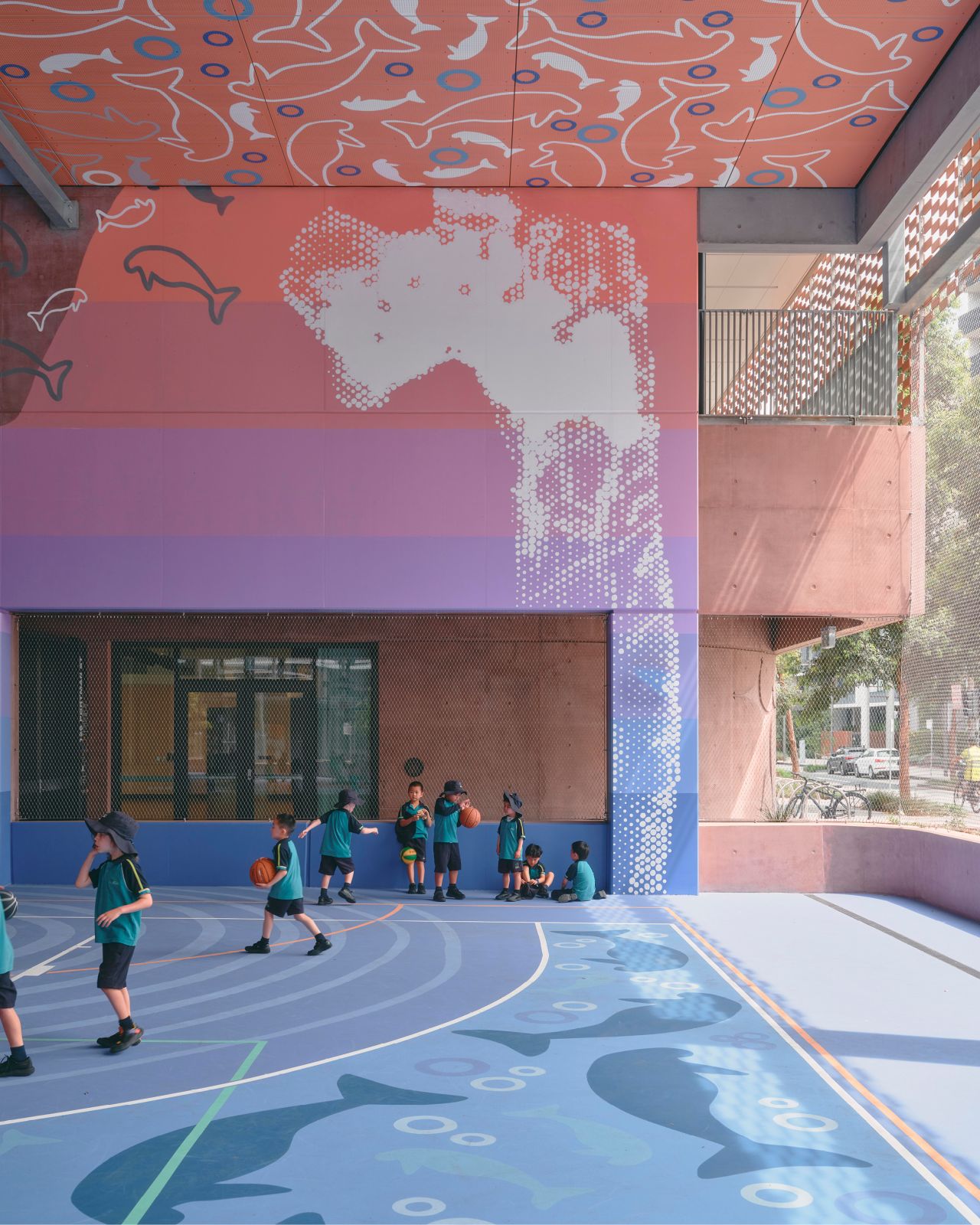
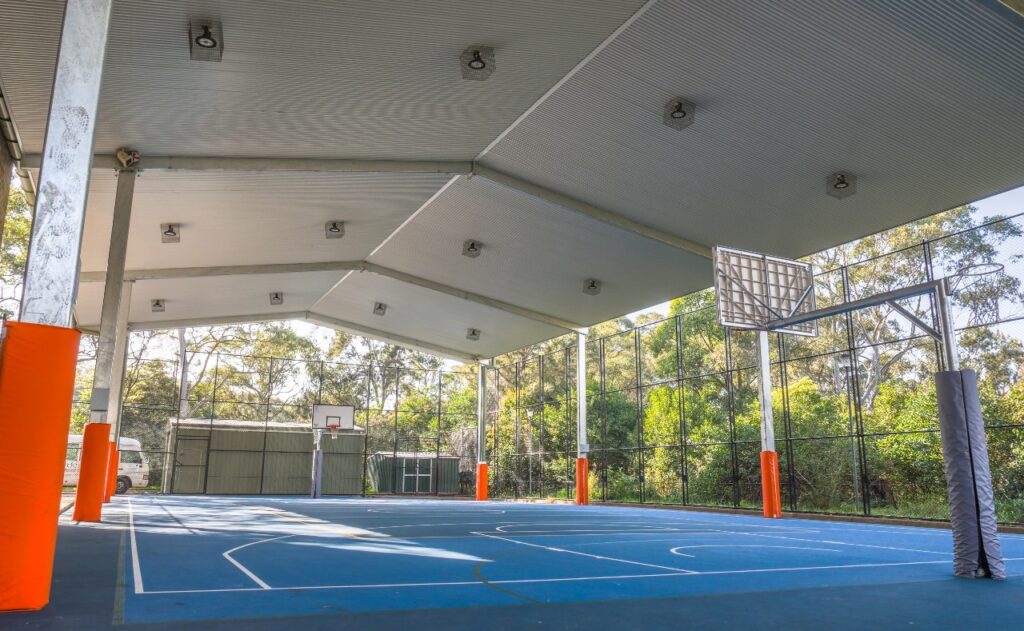
Day-to-night activation, with multipurpose sports courts seamlessly transition from school to community hub.
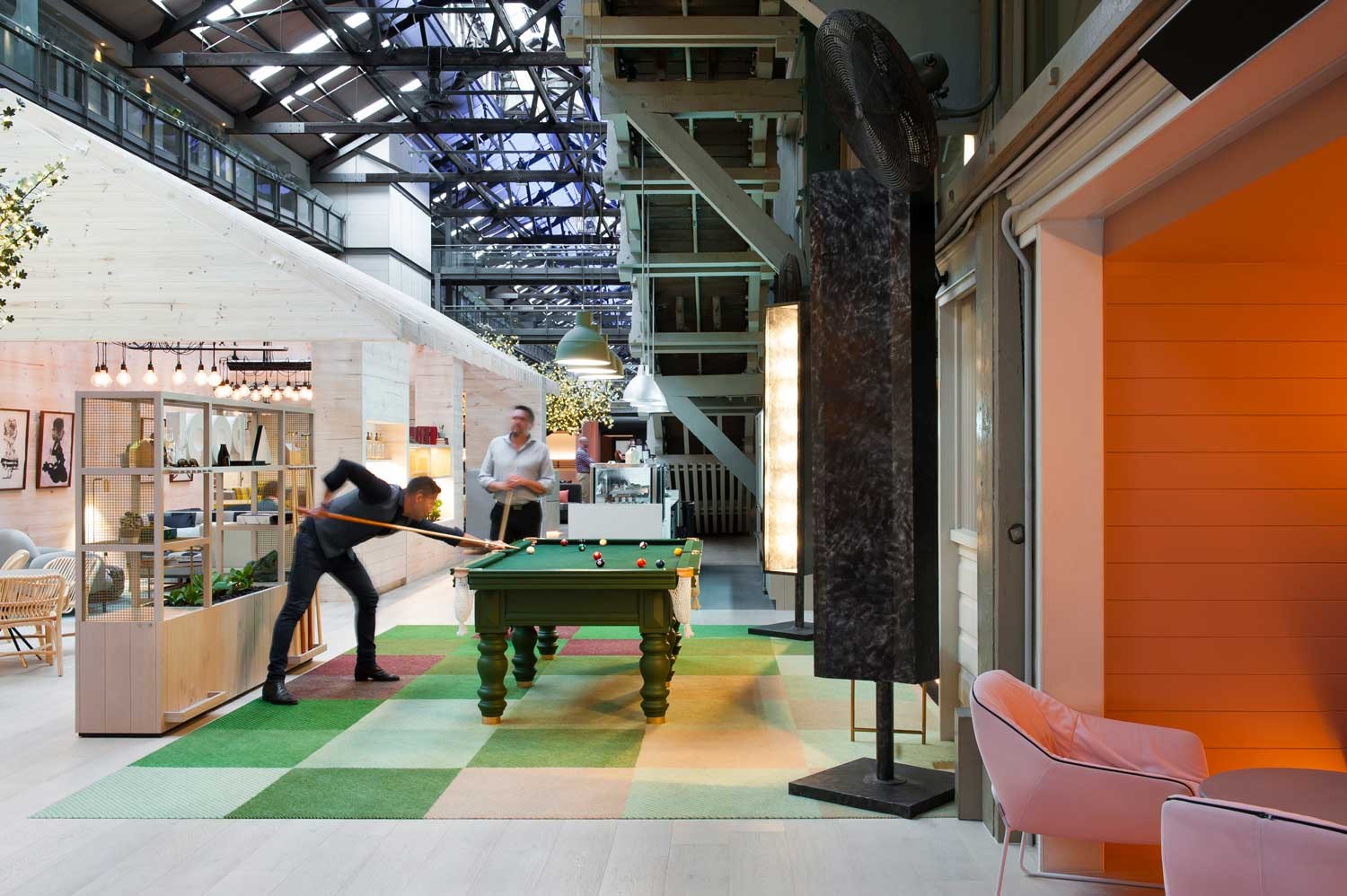
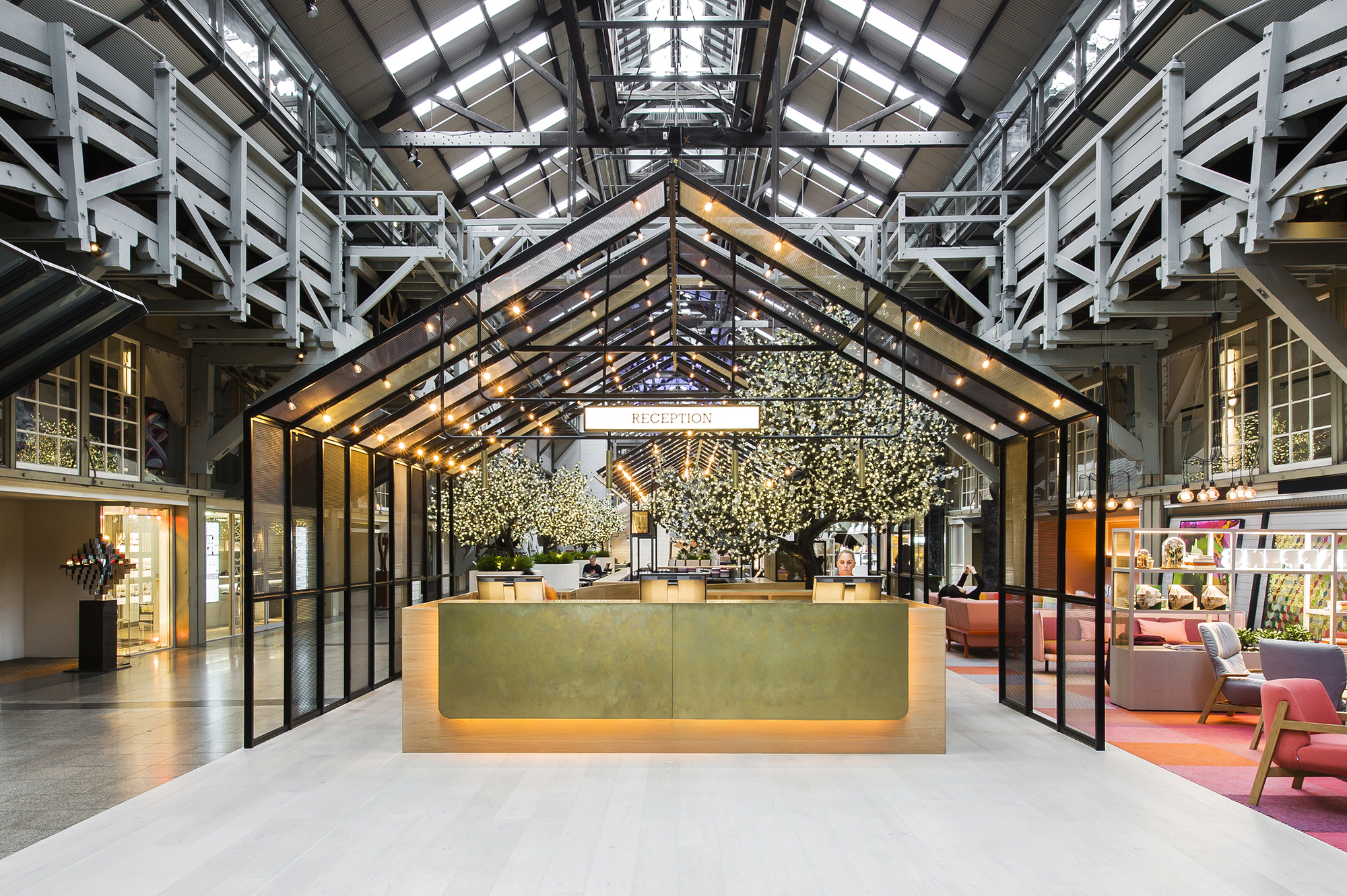
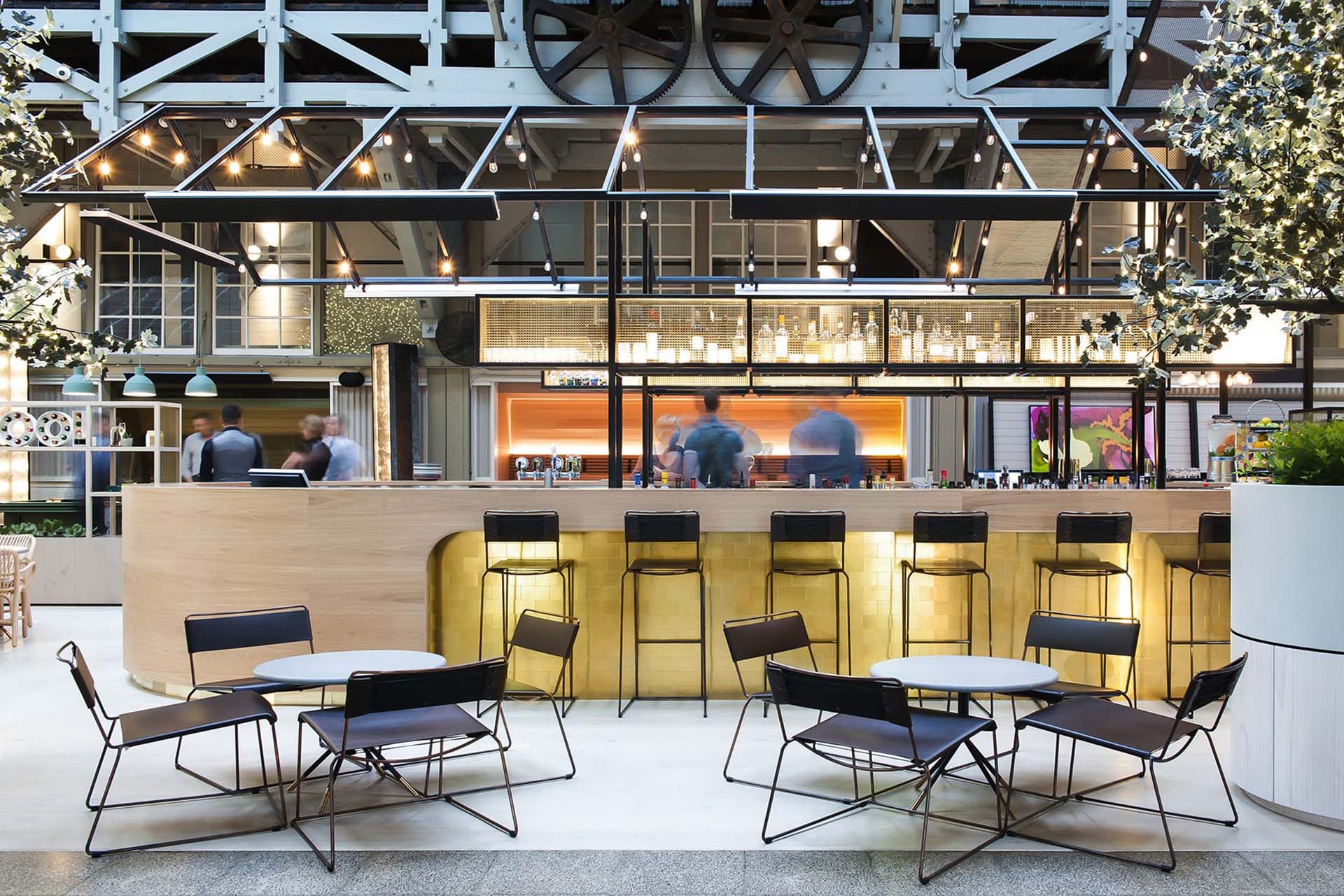
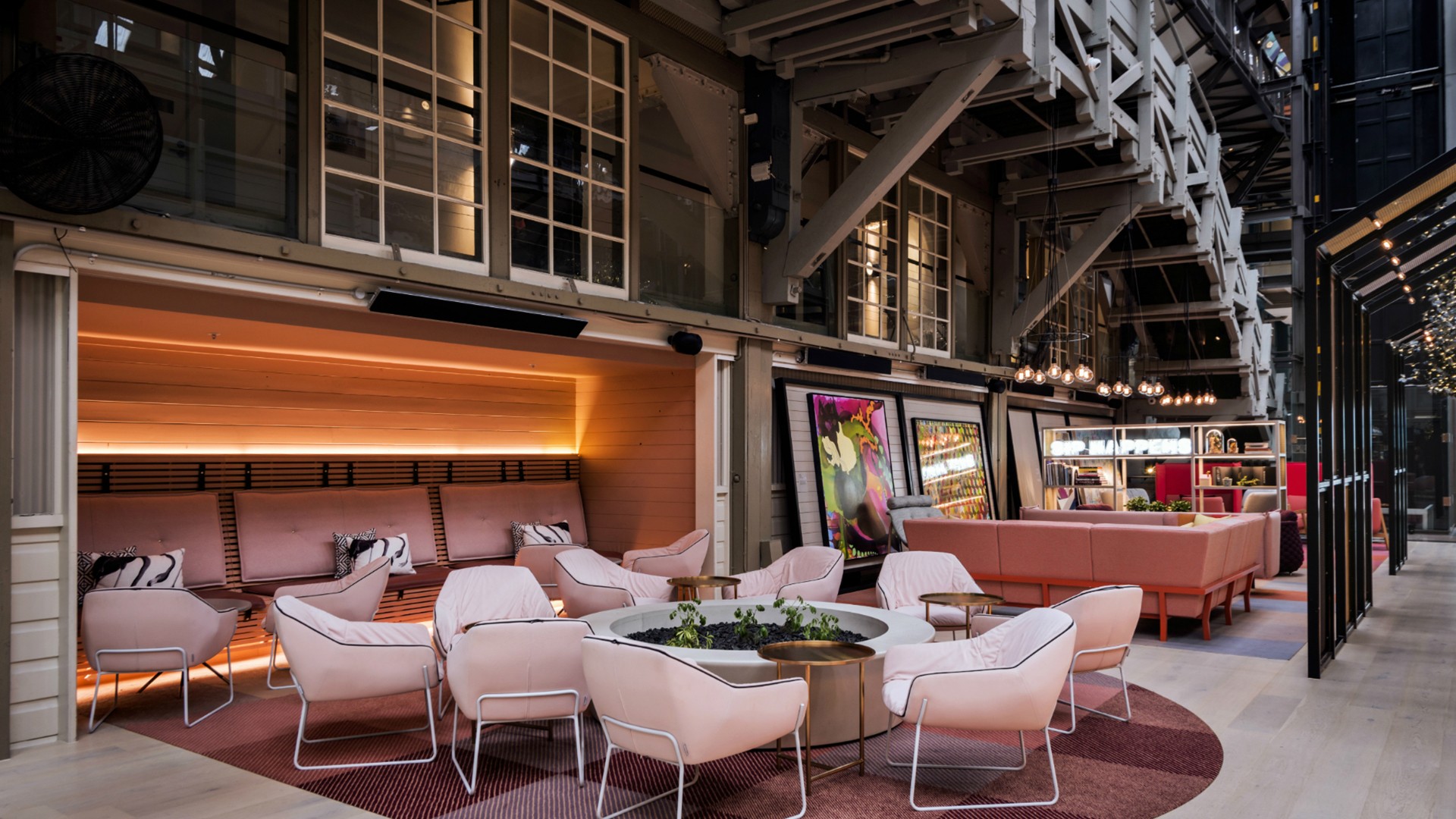
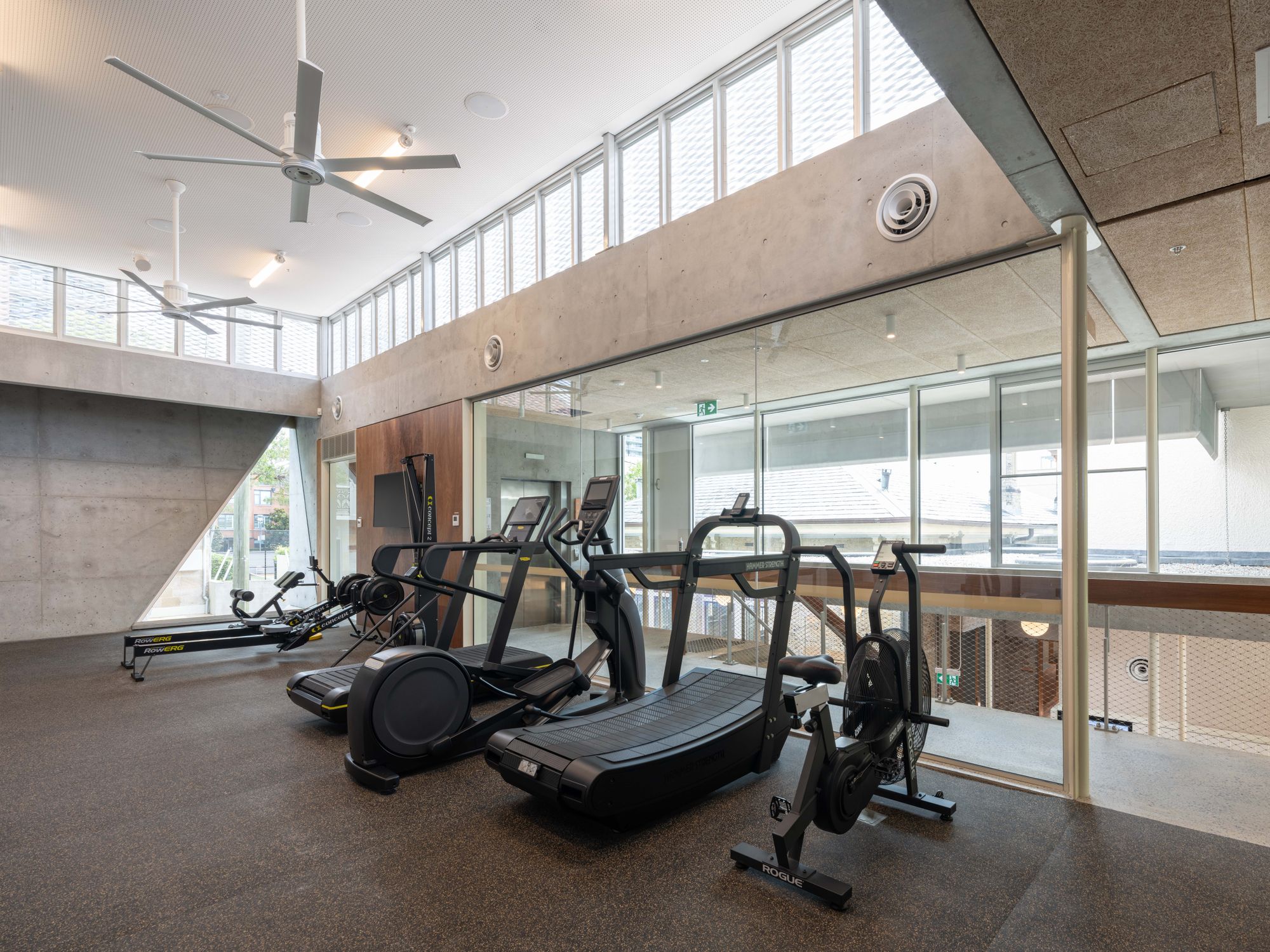
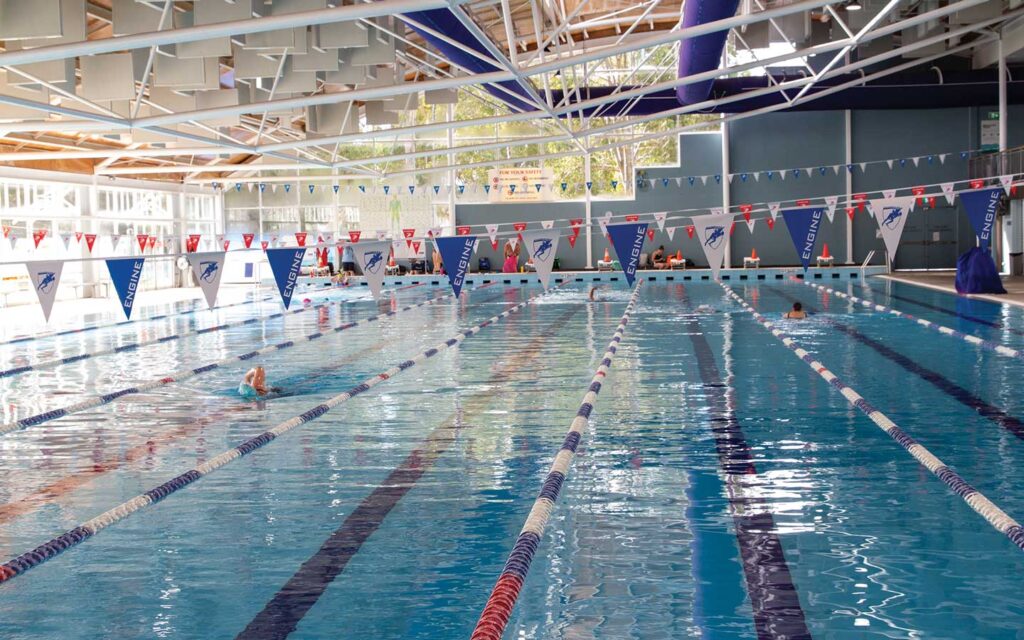
The Ovolo hotel lobby fit-out forms part of the bold revitalisation of the iconic Finger Wharf heritage hotel, reshaping 9,337 m² of public and guest spaces into intimate, playful zones that embody Ovolo’s energetic brand. The lobby was reframed into welcoming segments that celebrate the wharf’s timber structure and harbour context, with strategic lighting, vibrant finishes and boutique hospitality cues enhancing guest arrival and circulation. This unique heritage-meets-contemporary fit-out supports leisure amenities including a 24/7 gym and heated indoor pool, setting a distinct experiential tone in Sydney’s waterfront precinct.
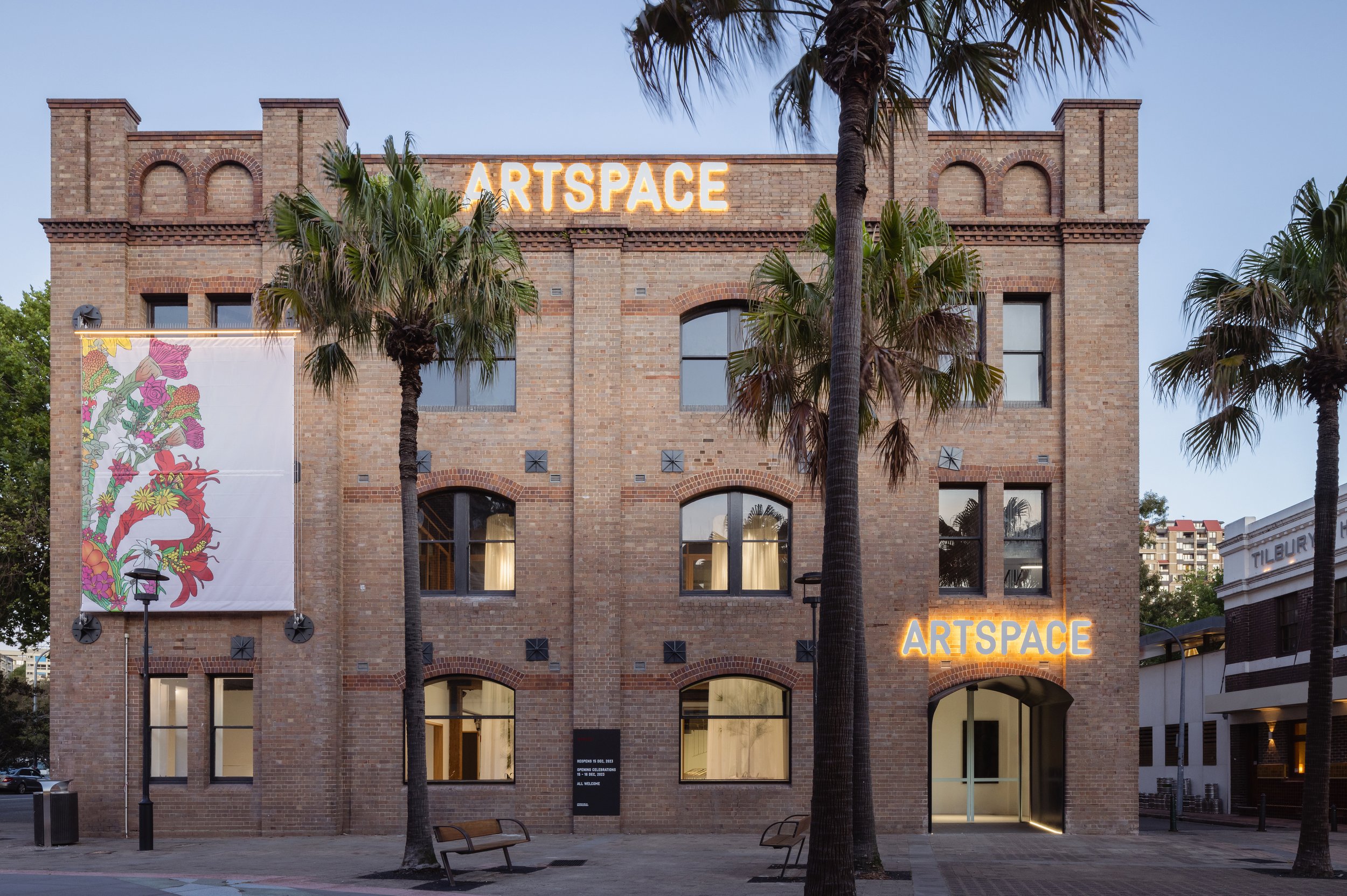
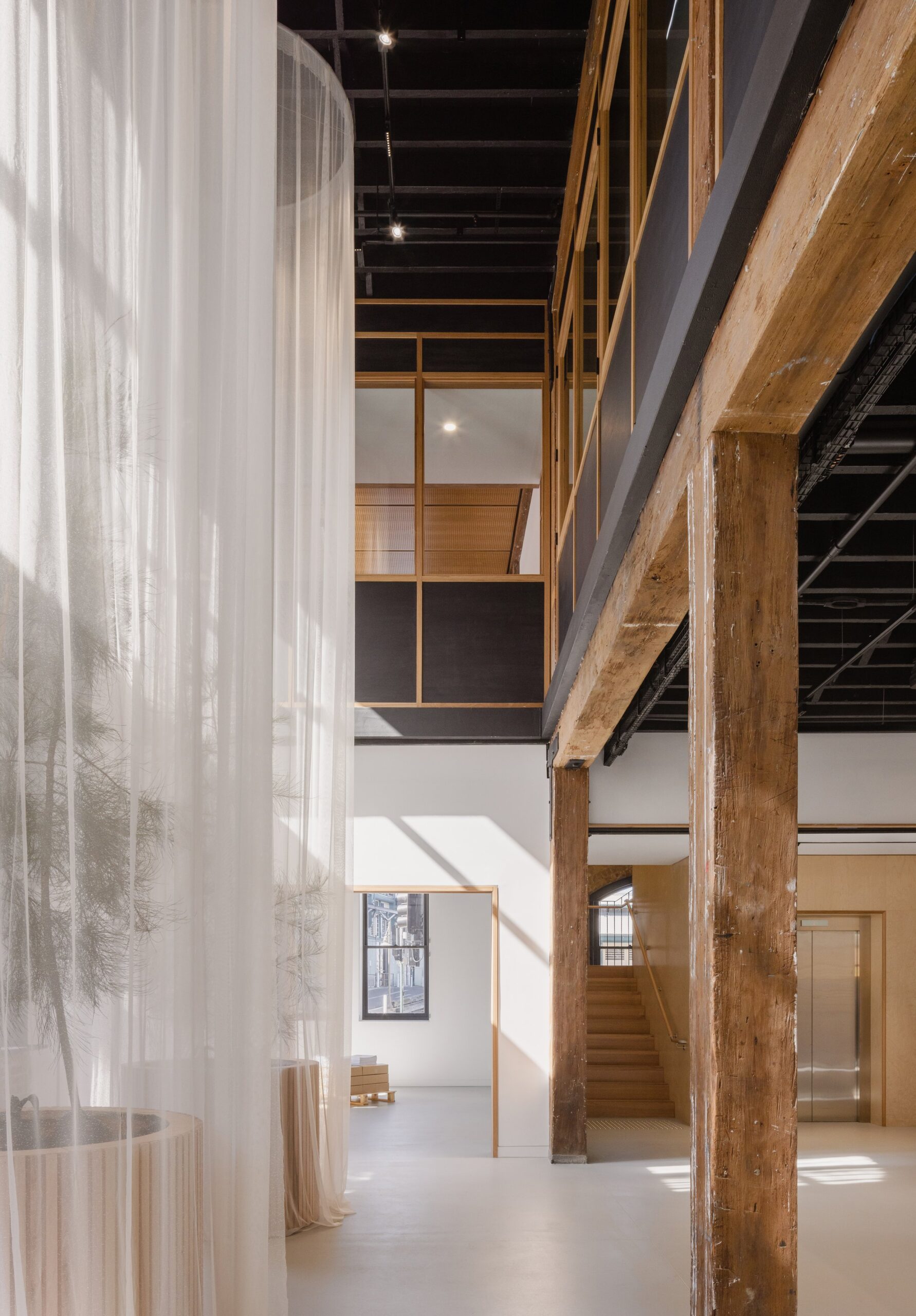
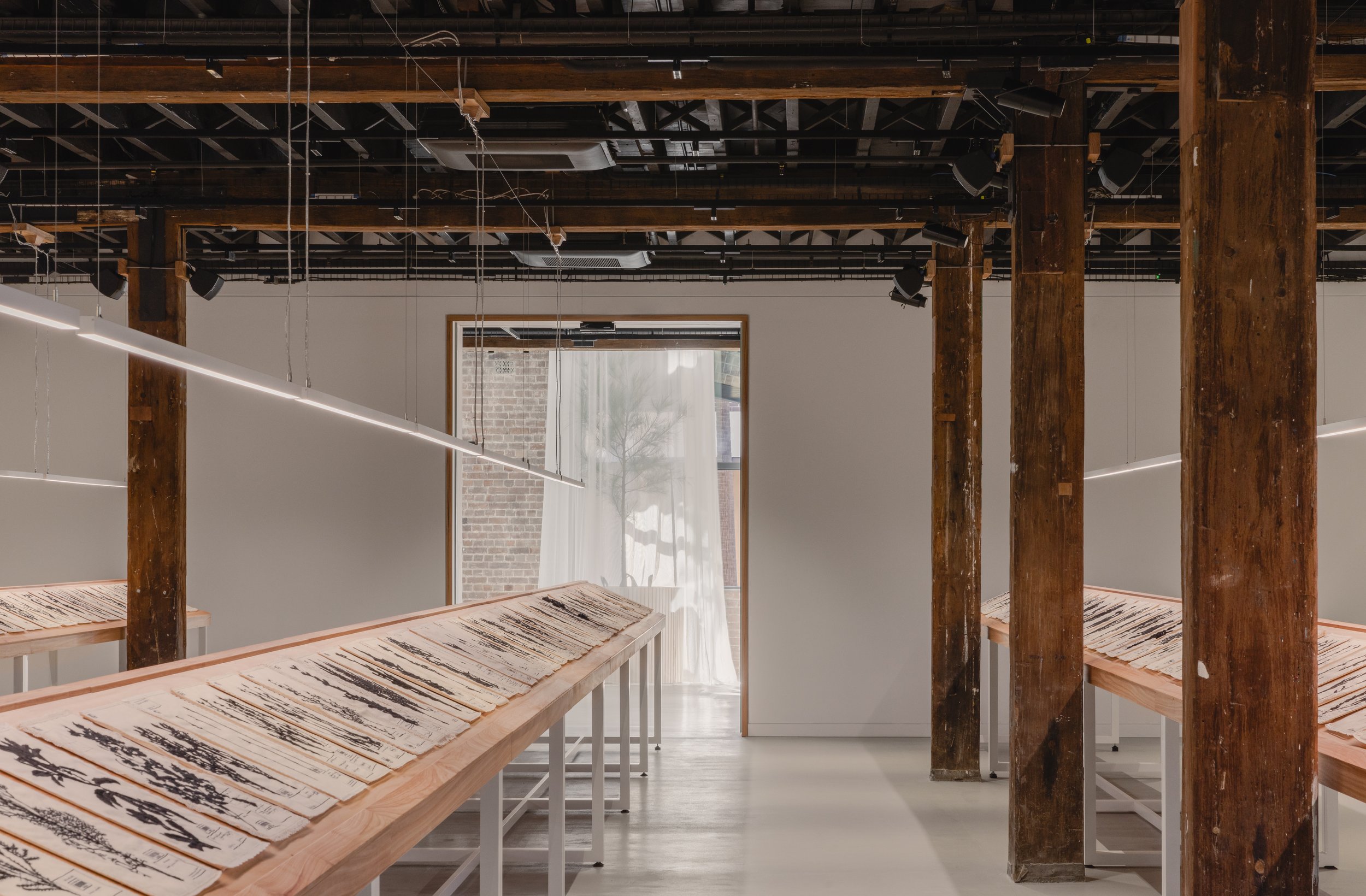
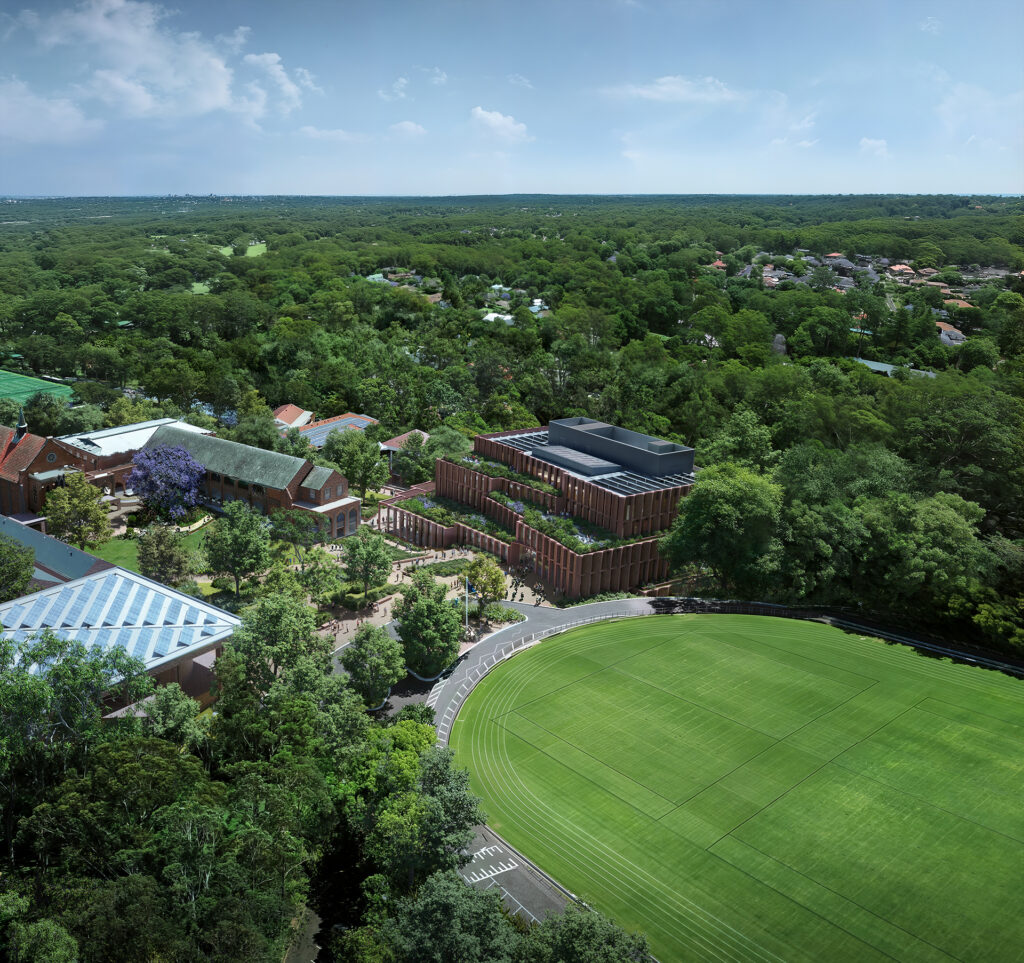
The Gunnery Transformation is a $19.2 million adaptive reuse project that has reimagined the heritage-listed former naval gunnery and newspaper bulk store into a world-class centre for contemporary art.
The 3,000m² revitalisation delivers expanded exhibition spaces, 10 rent-free artist studios, and a 250 m² multipurpose learning and digital space. A standout feature is the new entrance onto Forbes Street Plaza, reconnecting the building to the public realm and Sydney Harbour Foreshore. The project celebrates both the building’s layered history and its future as the enduring home of Artspace, ensuring its role as a creative and cultural landmark for decades to come.
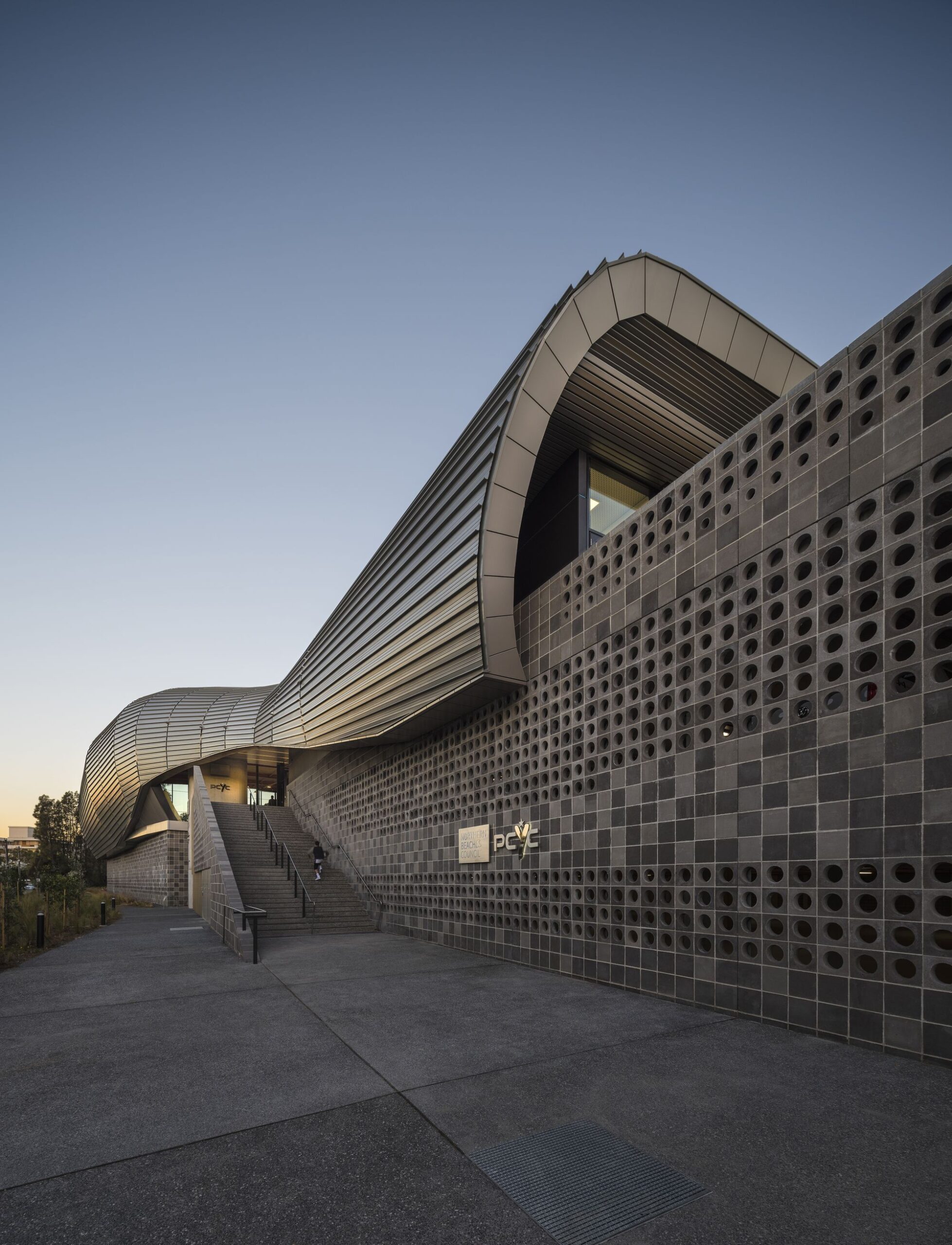
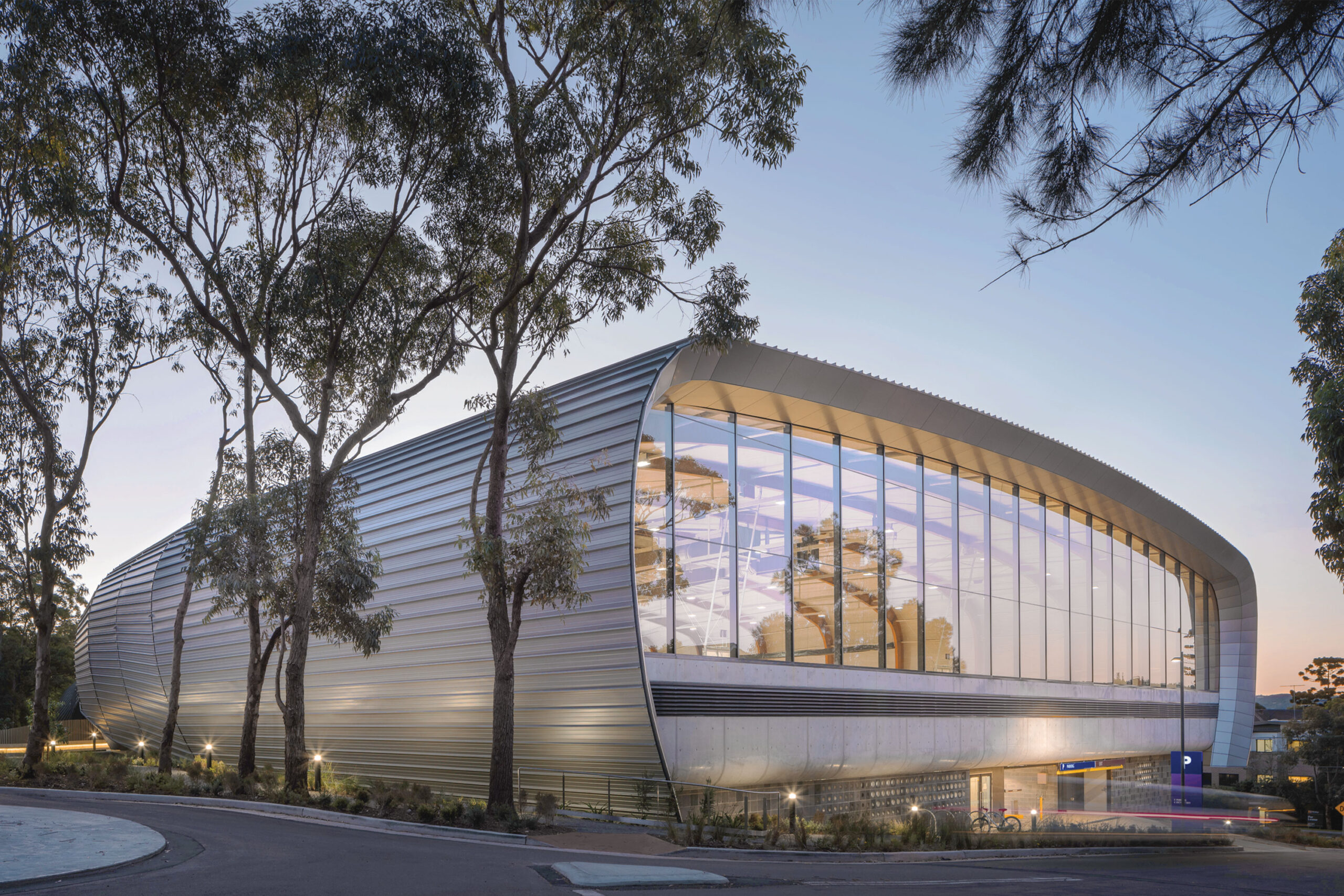
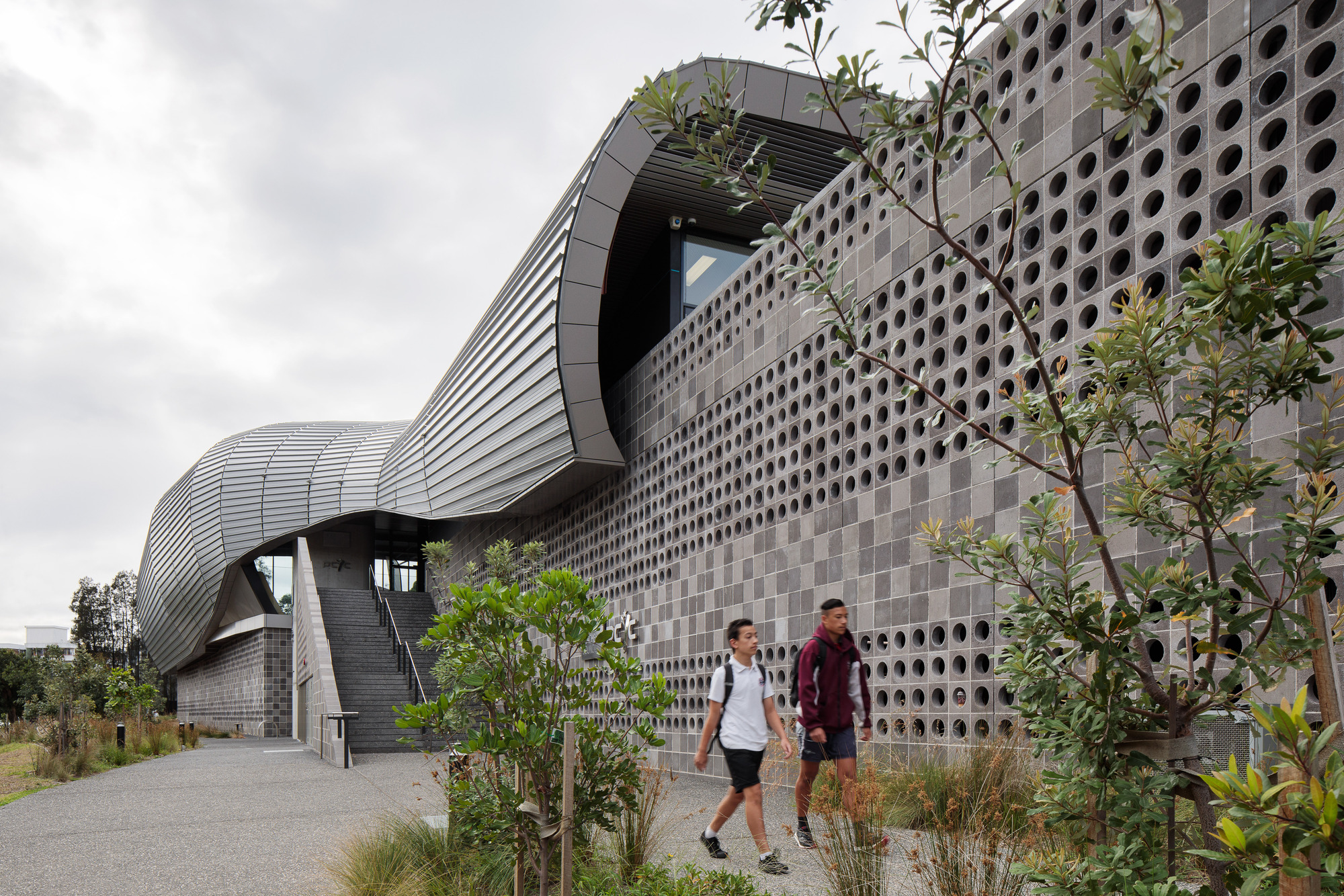
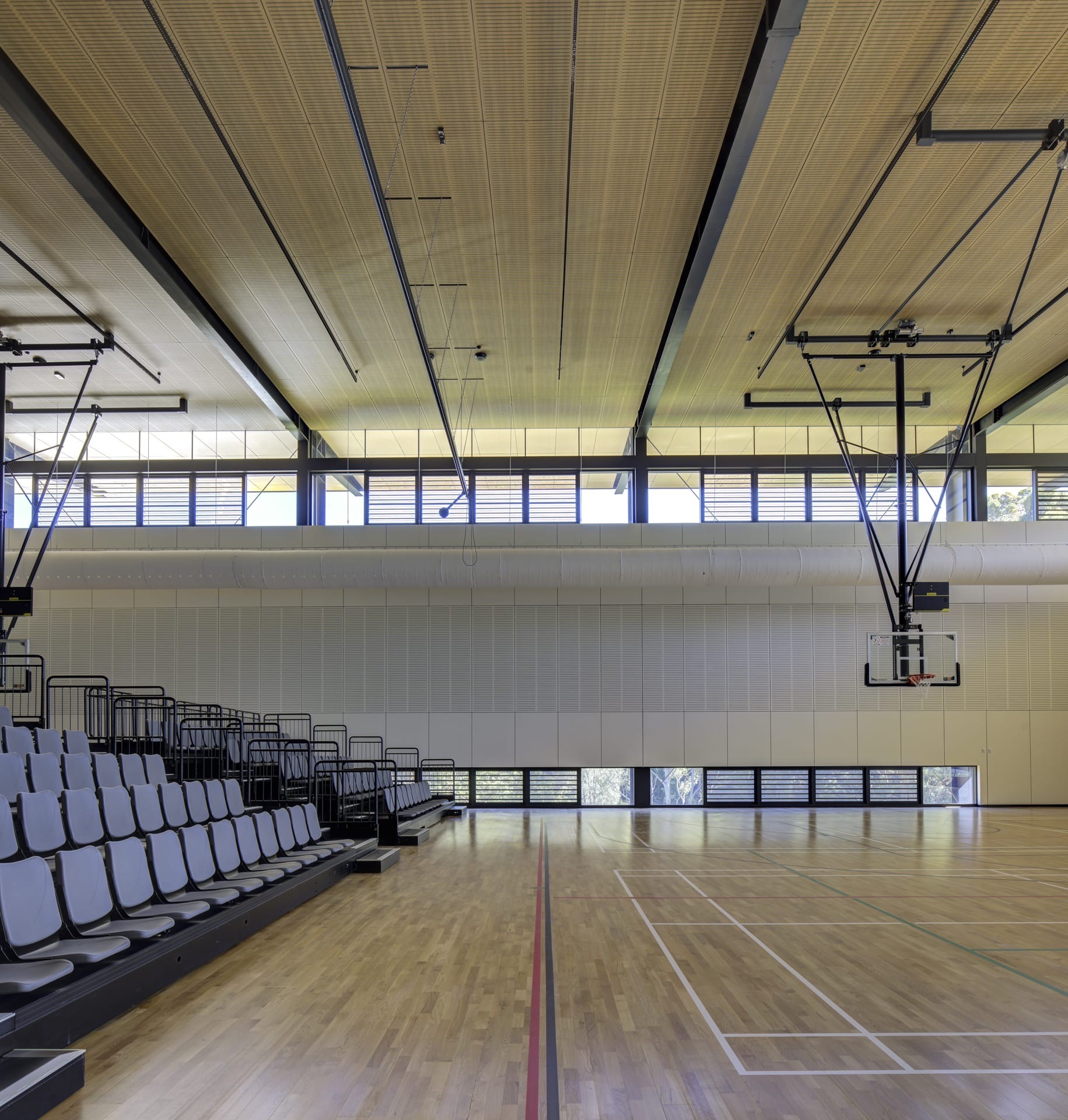
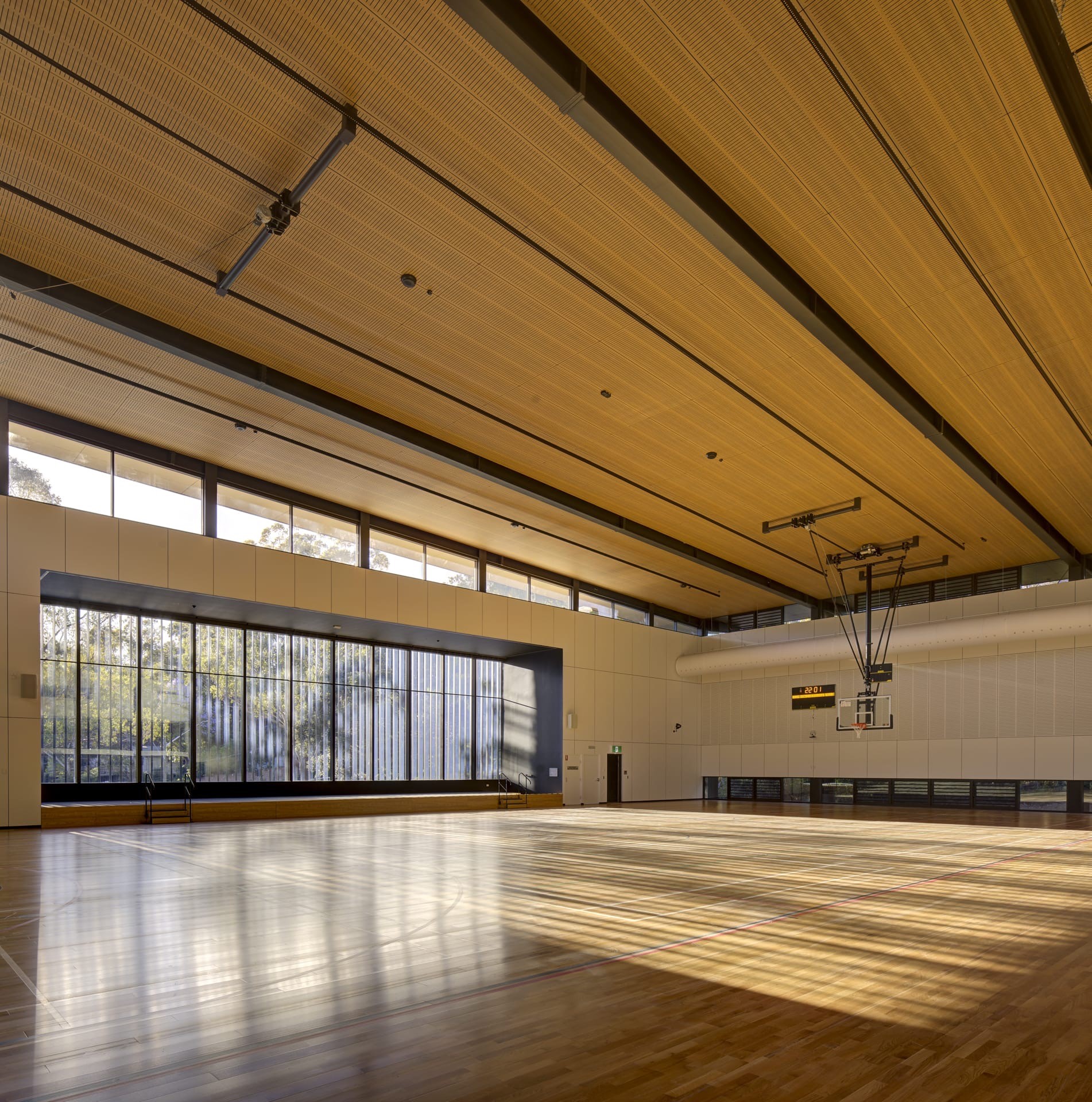
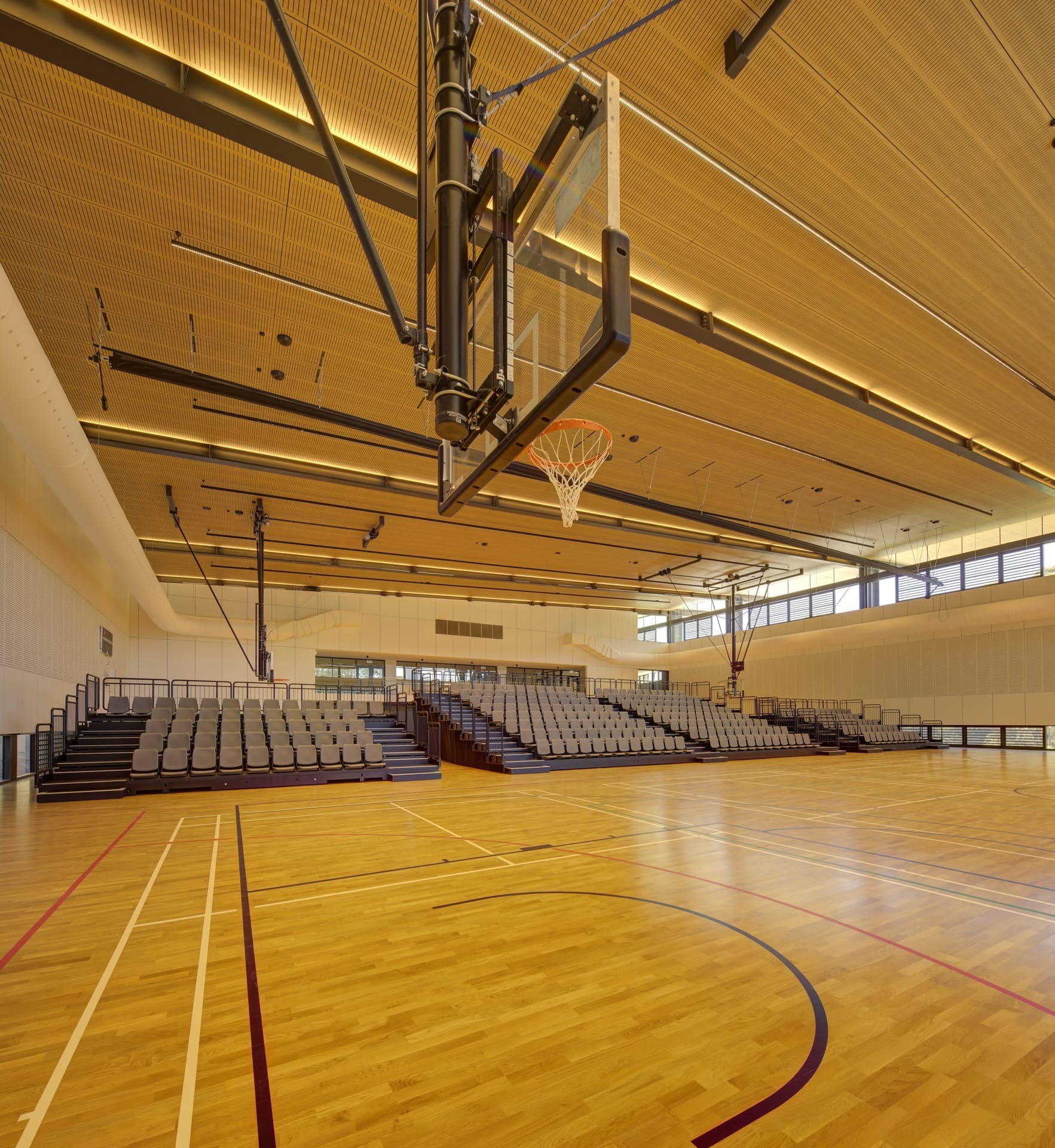
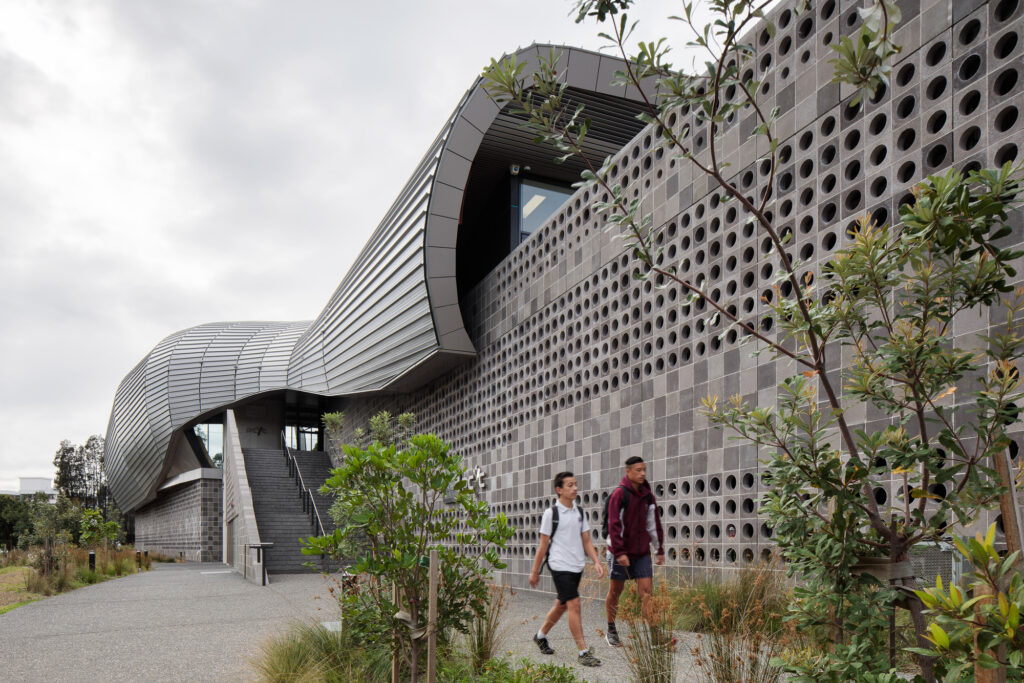
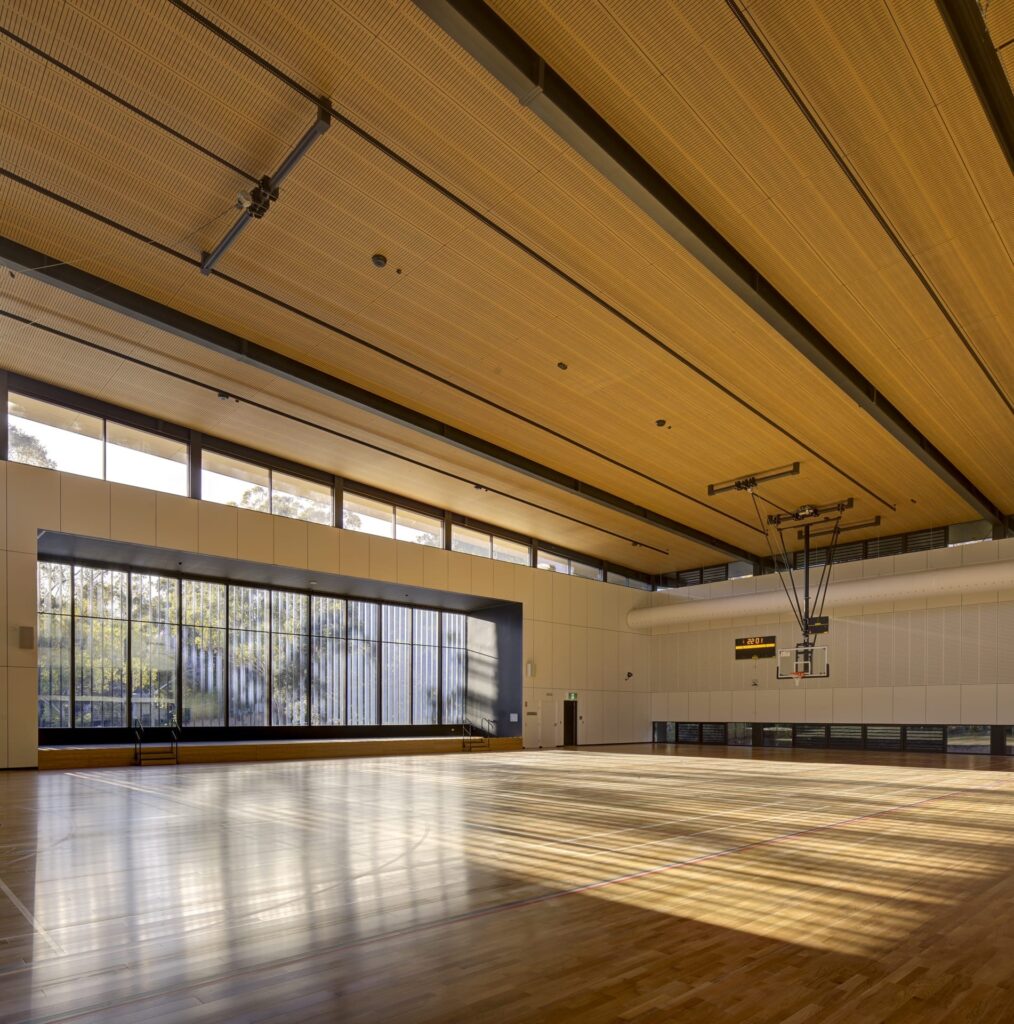
PCYC Northern Beaches is a striking community sports hub at the edge of Dee Why town centre, conceived by FJC Studio as a “cloud-like” pavilion set above a multi-level public car park.
The 13,655 m² facility wraps two international-size indoor courts and multipurpose rooms beneath a partially translucent, long-span curved roof, bringing generous daylight to the playing floor while its sweeping façade addresses the civic precinct.
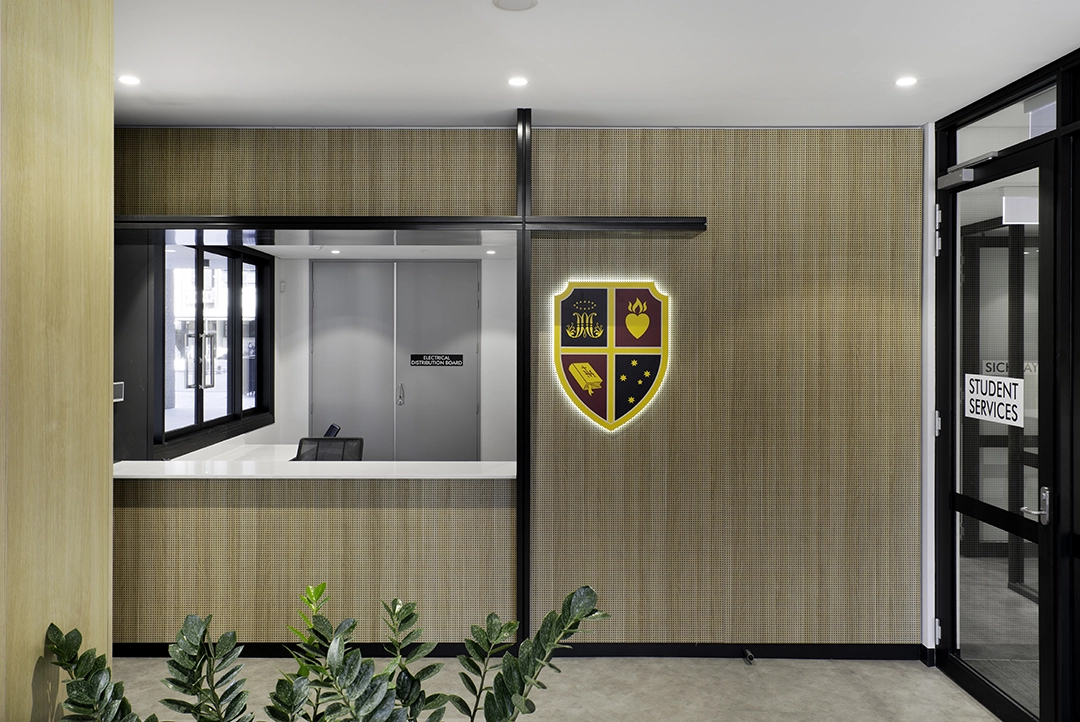
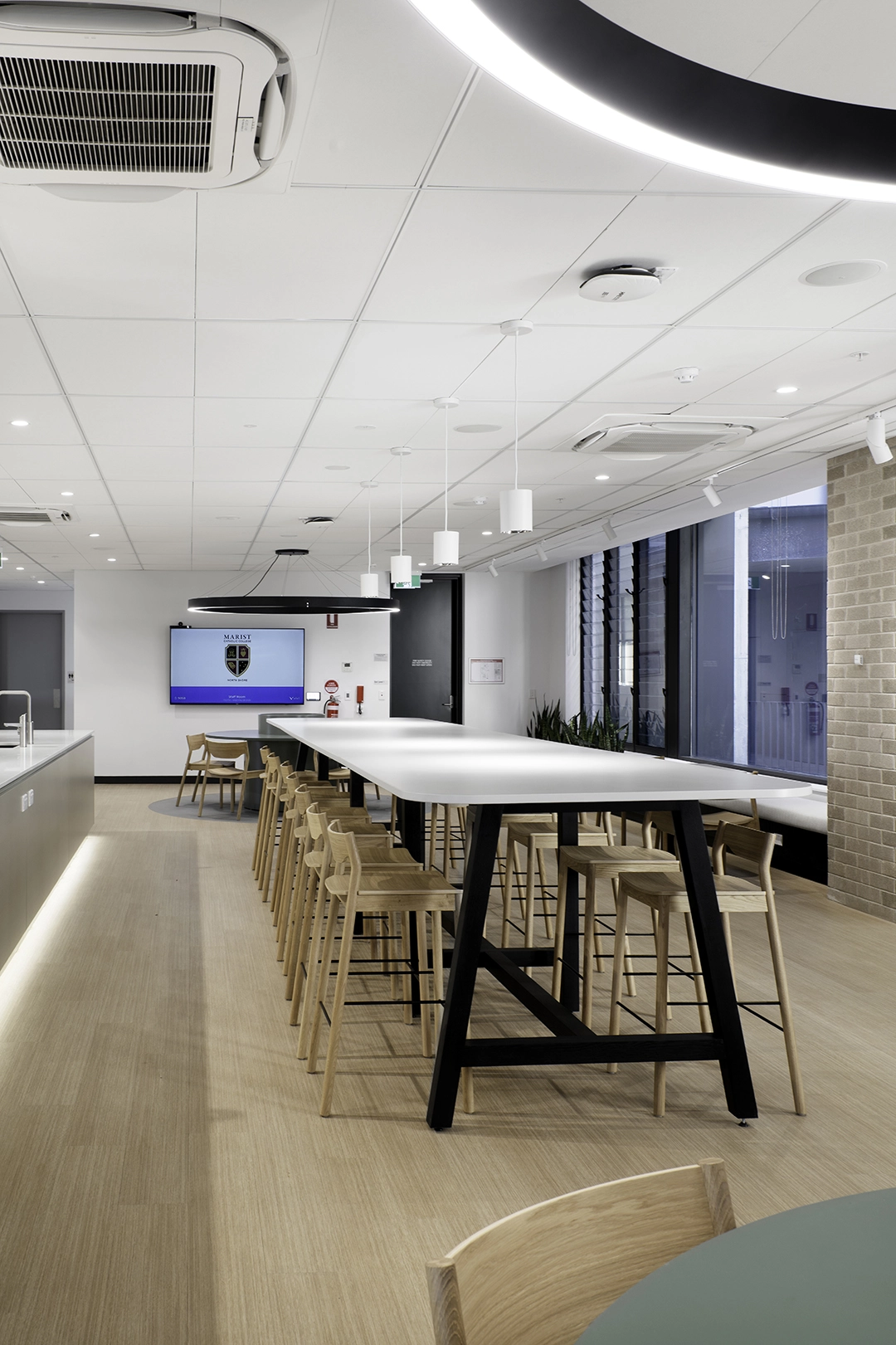
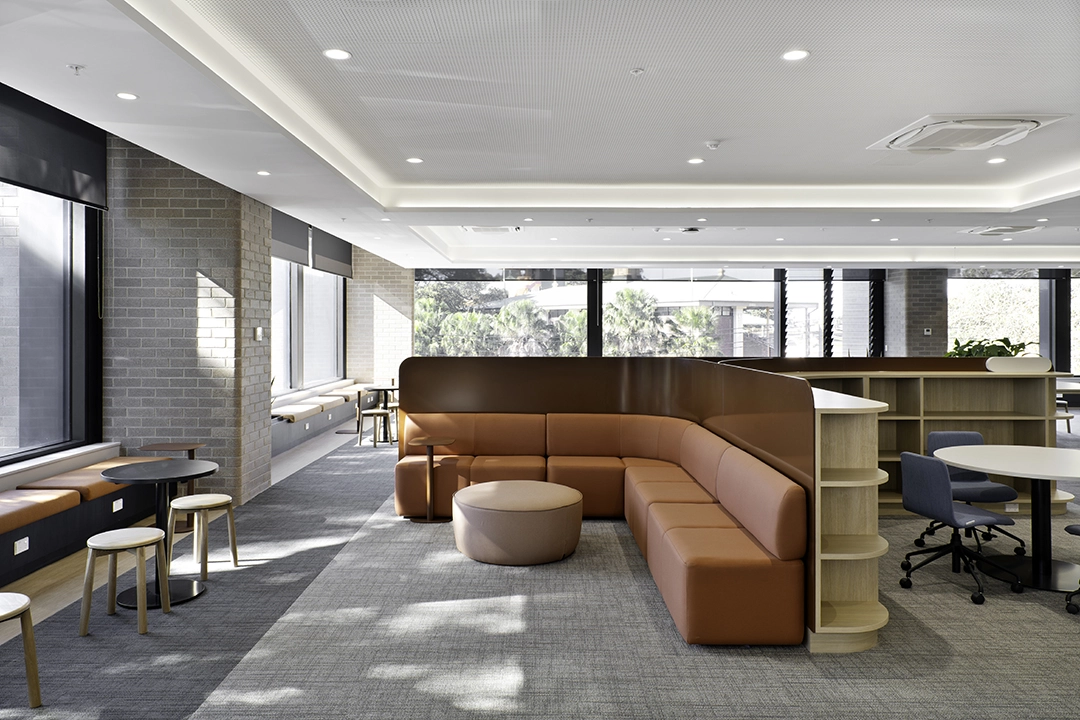
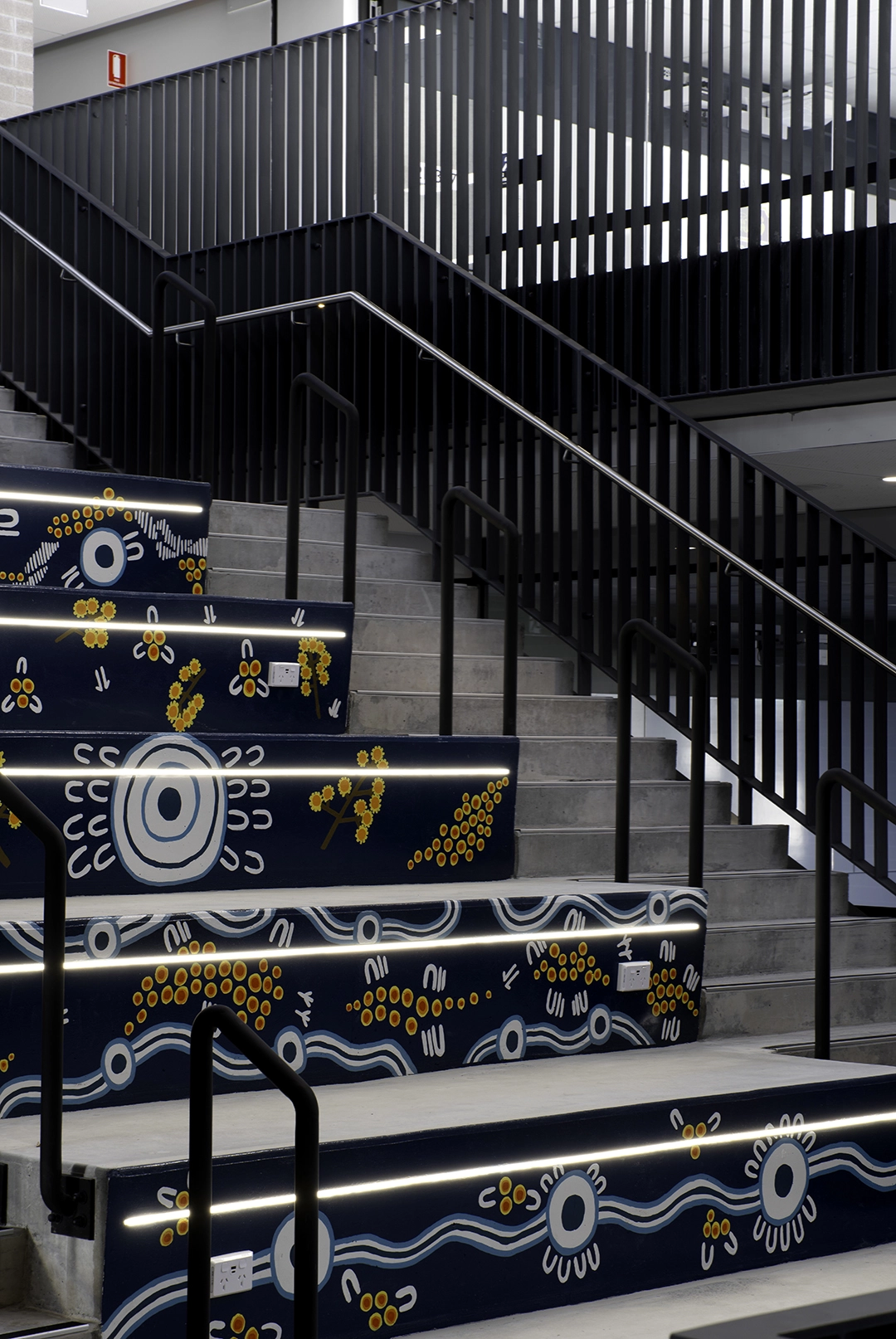
Stages 2B and 5 at Marist Catholic College deliver a cohesive expansion within a live school environment, balancing new learning spaces with existing campus operations. The design navigates tight site constraints, complex circulation, and integration with earlier stages, while supporting contemporary teaching models. Construction required careful staging, strict safety controls, and coordination of services and structure to minimise disruption. The result is a connected, flexible campus that enhances student experience and future capacity through thoughtful planning and robust delivery.
A world-class, award-winning research and commercial precinct, consisting of a number of Research, Educational and a Commercial buildings including IC Central Mixed use development and central spine to the iC Campus, Enterprise 1 High quality Commercial Office space, Australian Institute of Innovative Materials Laboratory research and office space, Sustainable Building’s Research Centre Research and innovation space, Mike Codd Graduate School and Digital Media facility and ITAMS Building Educational and learning spaces.
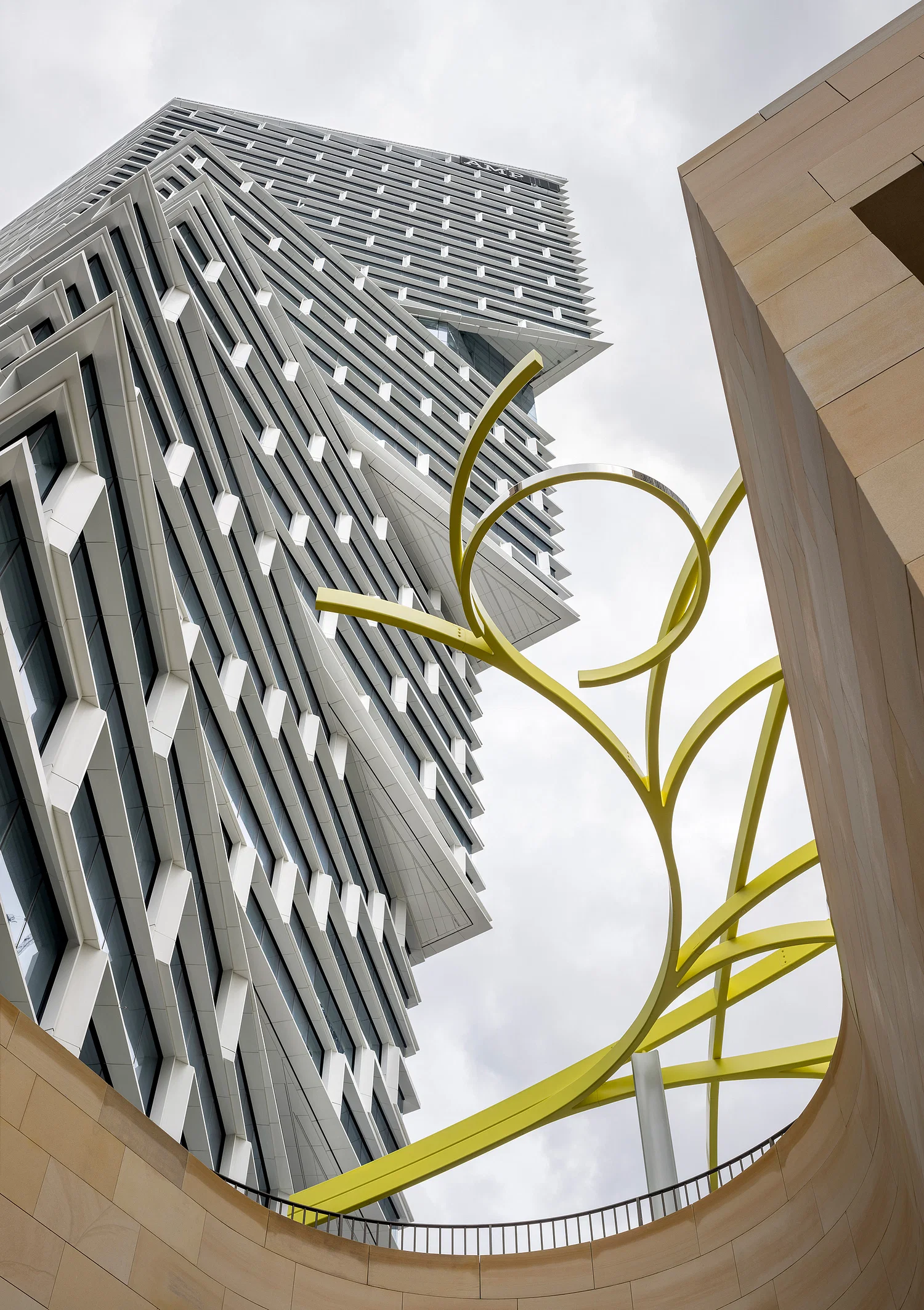
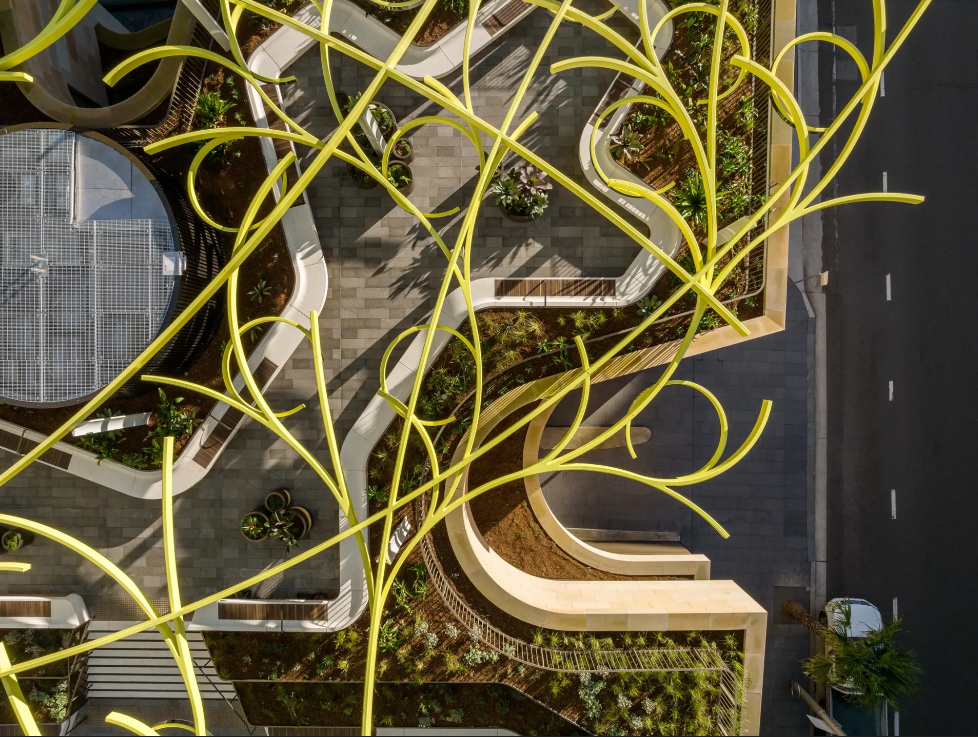
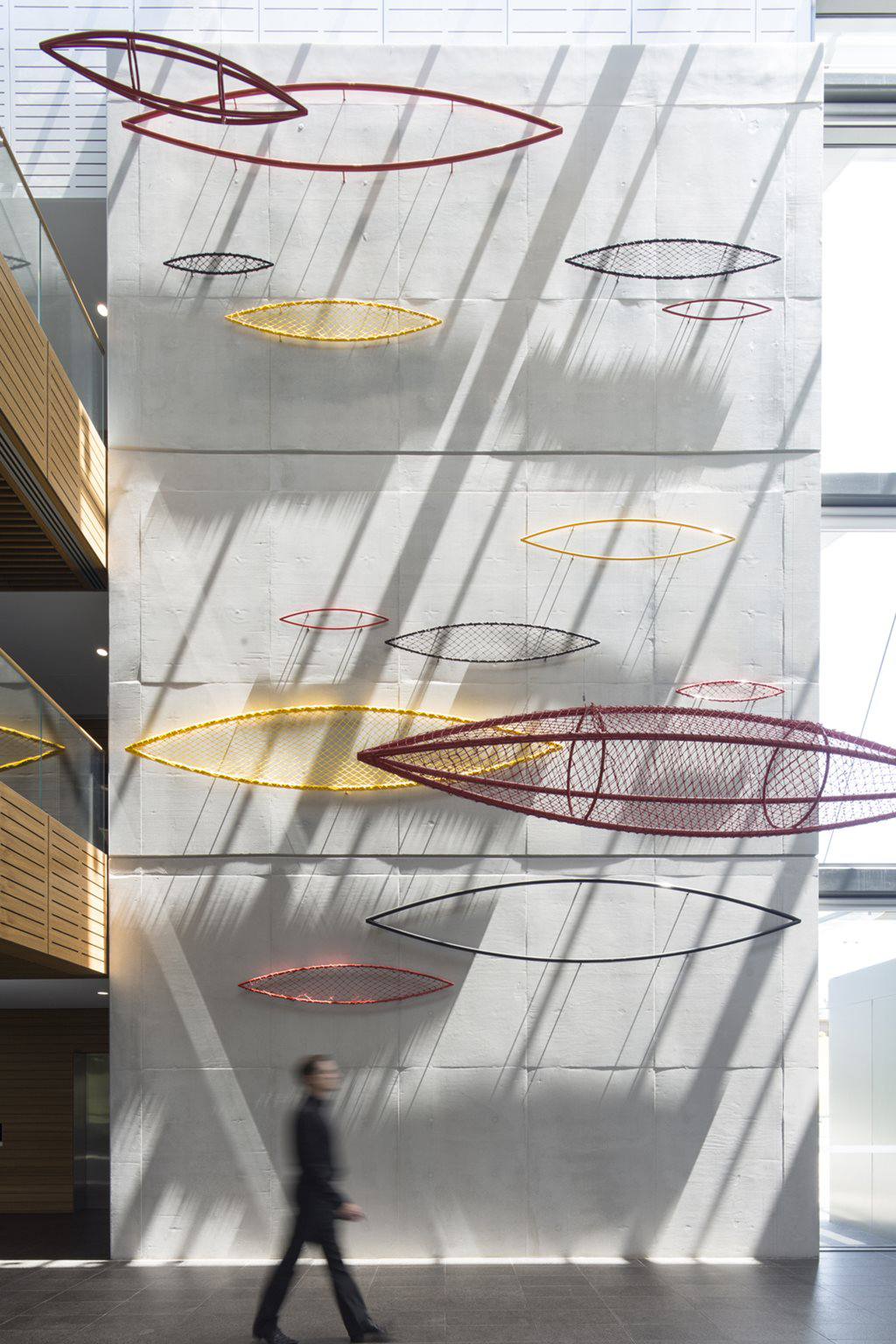
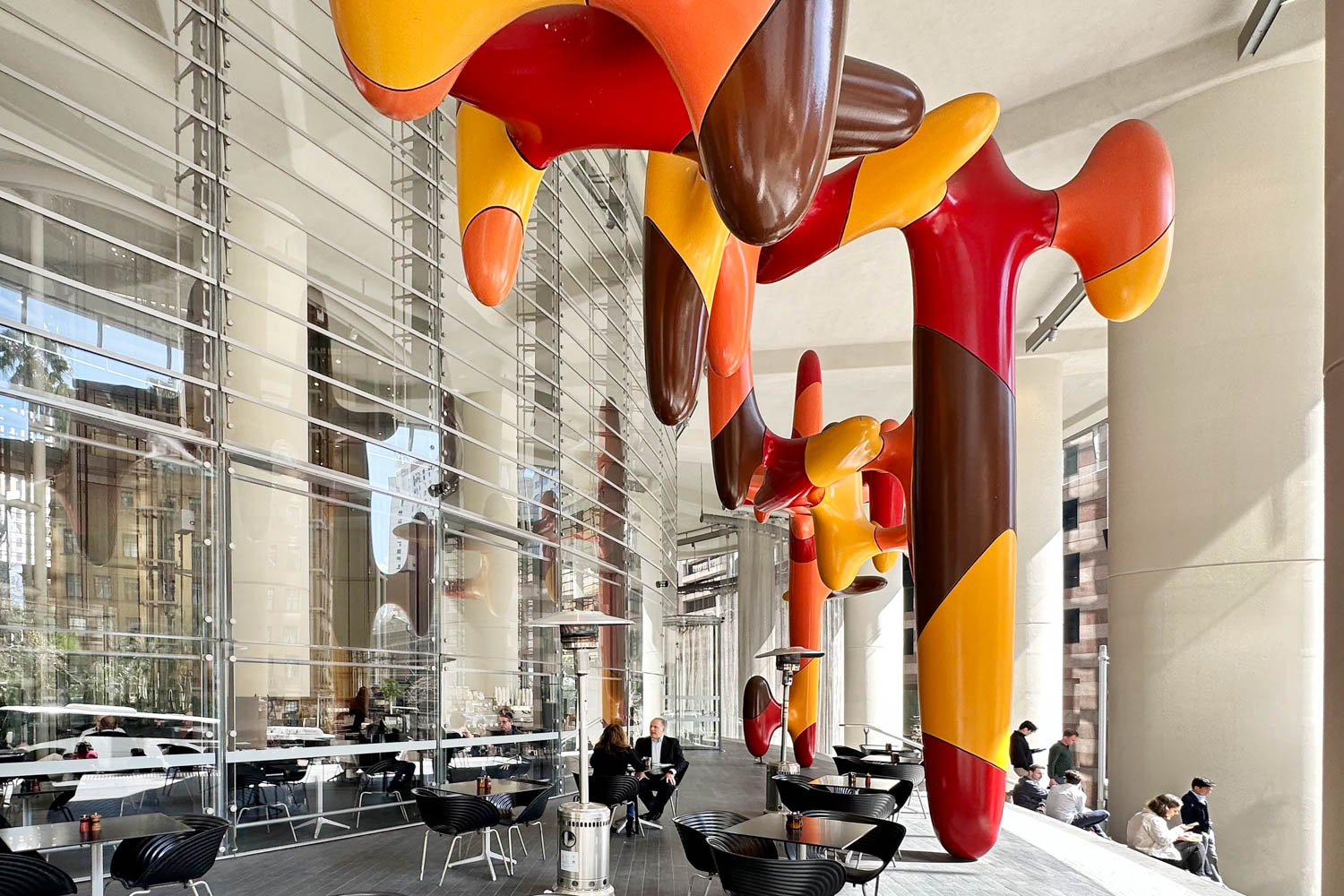
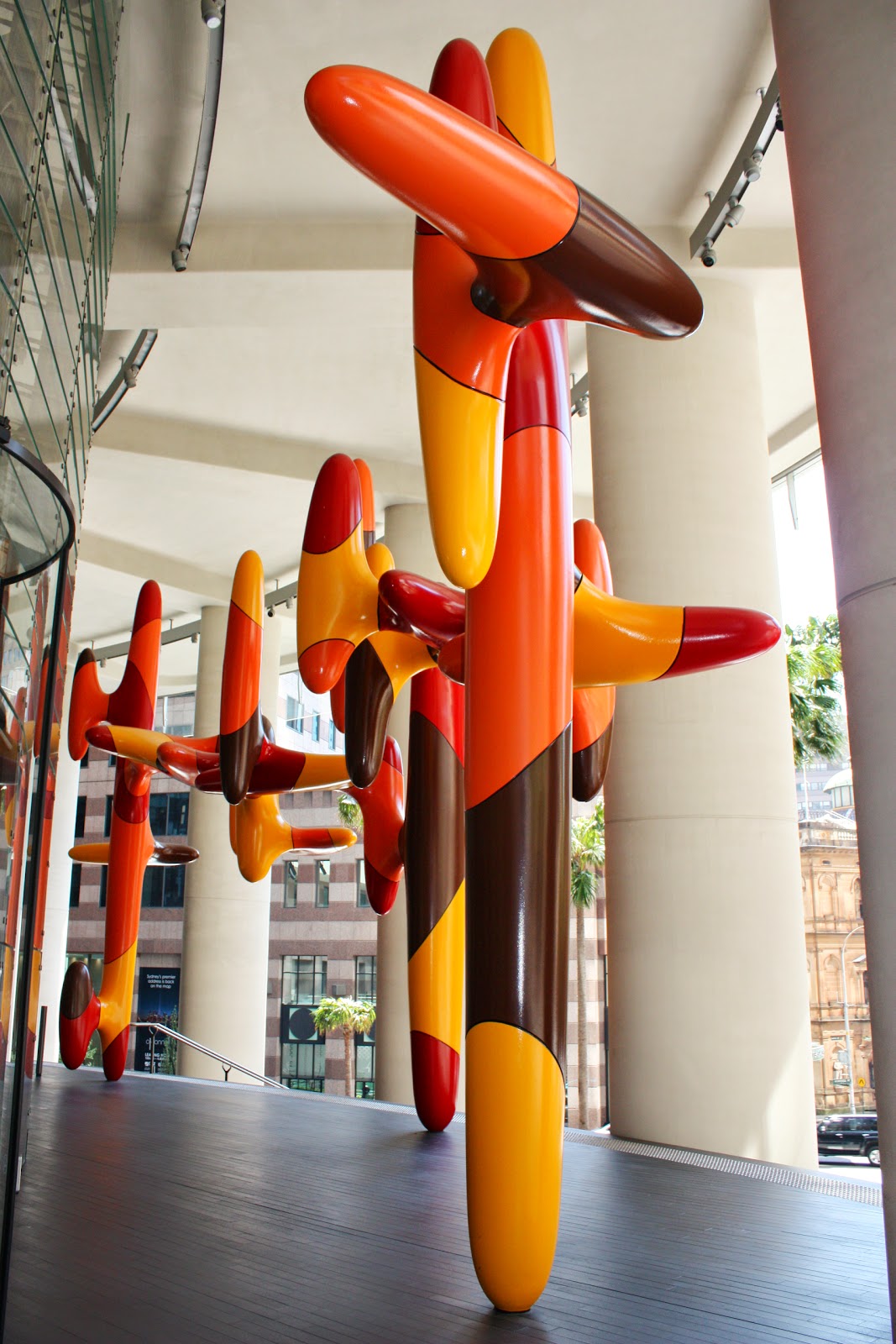
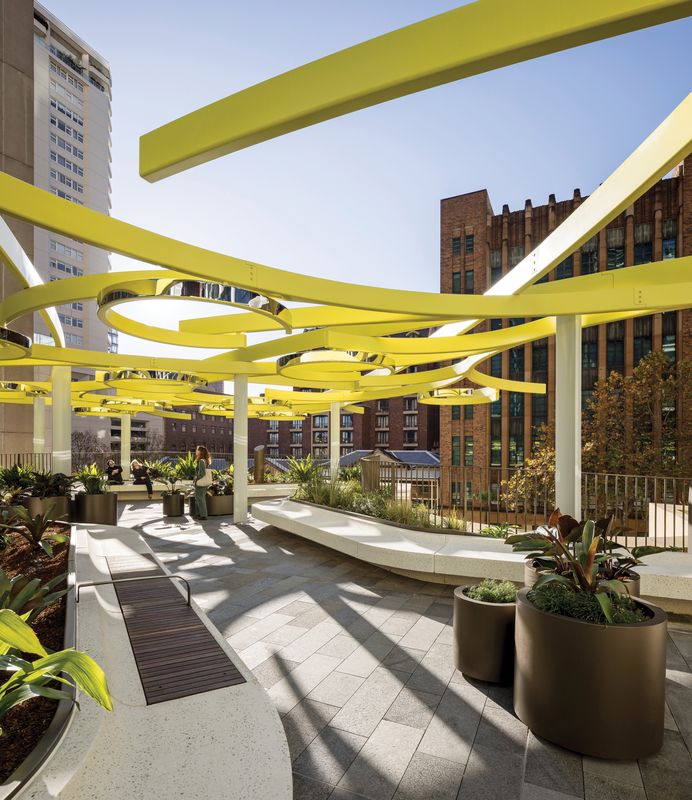
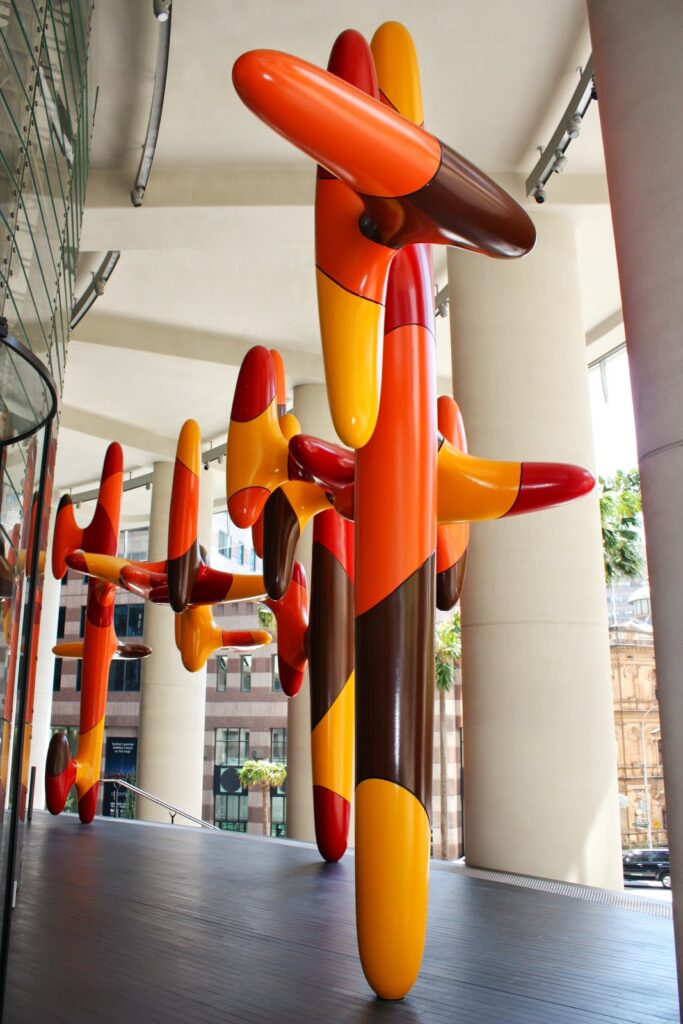
A striking public artwork prominently featured atop the podium terrace of Sydney's Quay Quarter Tower.
Completed in 2021, this permanent installation comprises a vibrant, interwoven canopy of yellow steel ringlets that gracefully hover above the rooftop garden, casting dynamic shadows and reflections that evolve with the sun's movement.
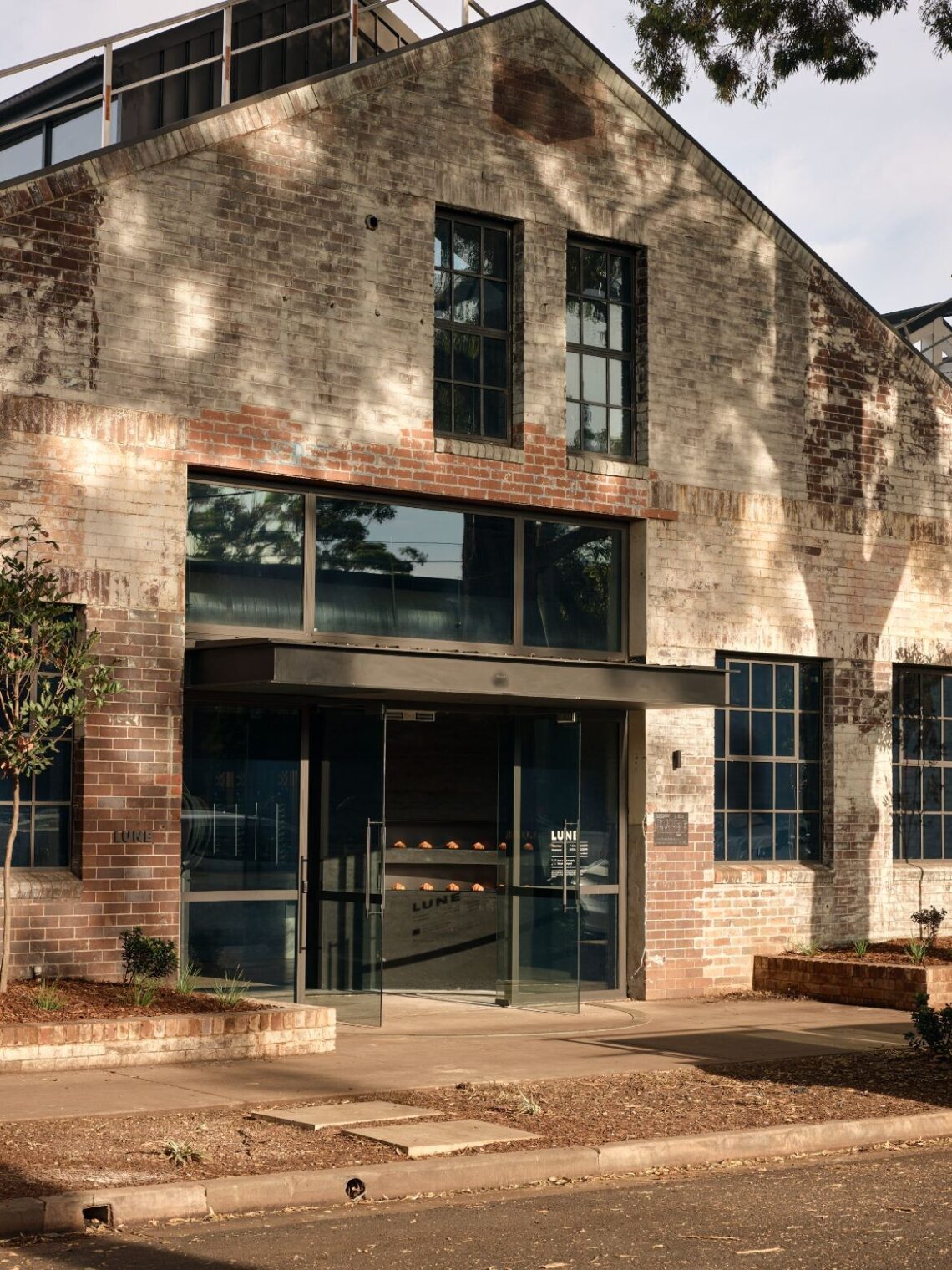
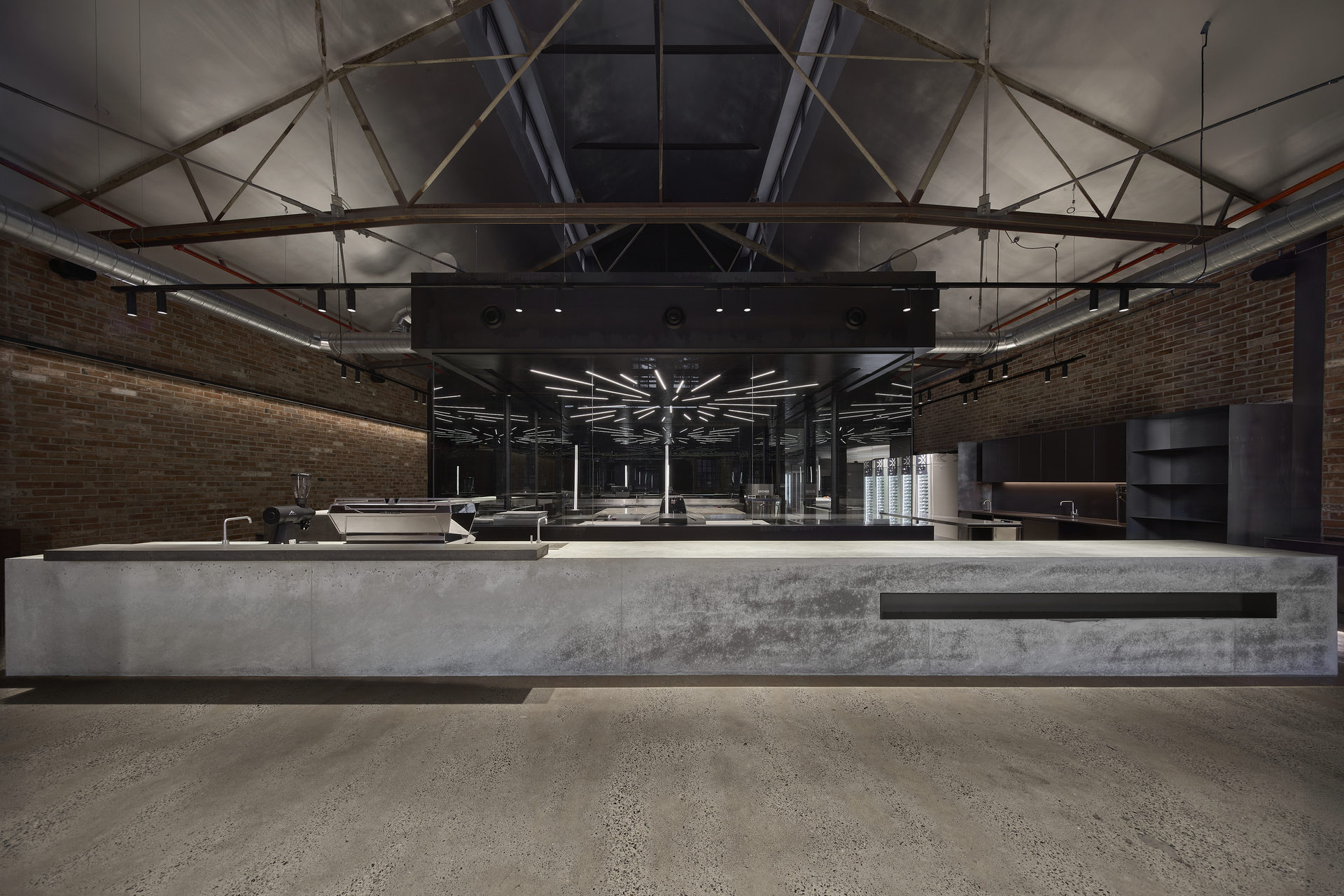
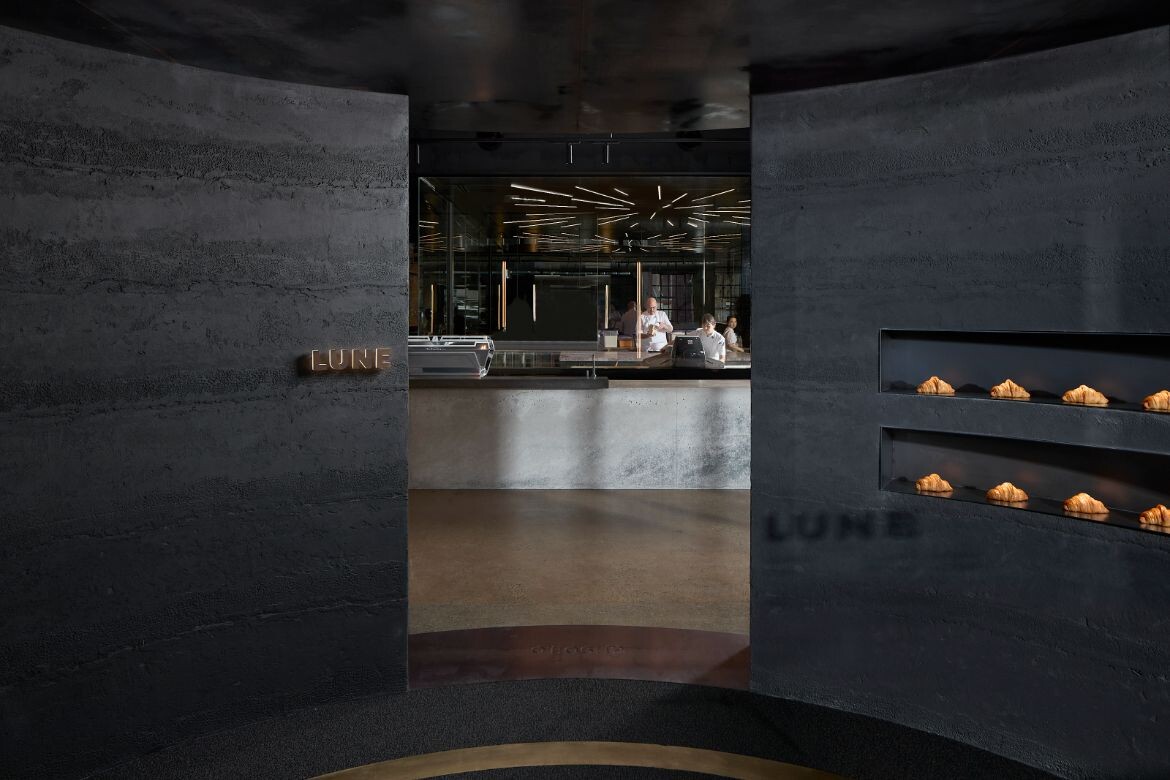
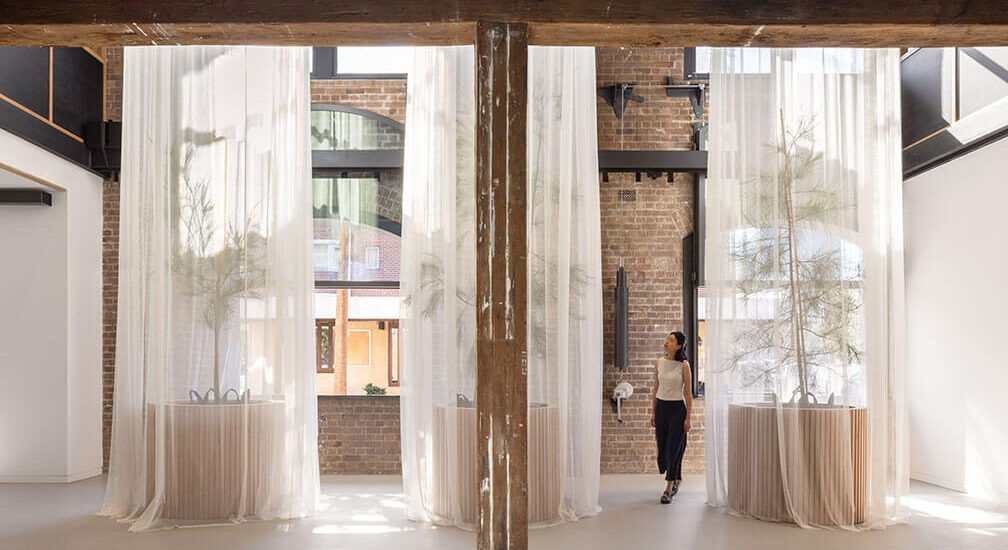
The project pairs the raw heritage of exposed brick, timber trusses and expansive roof‑light forms with sharp contemporary interventions that transforms every corner into a dramatic, spatial theatre within the bold adaptive‑reuse of a century‑old industrial sawtooth warehouse within Rosebery Engine Yards.
The fit‑out embraces sustainability and conservation through minimal demolition, reuse of existing structural fabric, and sensitive integration of modern services.
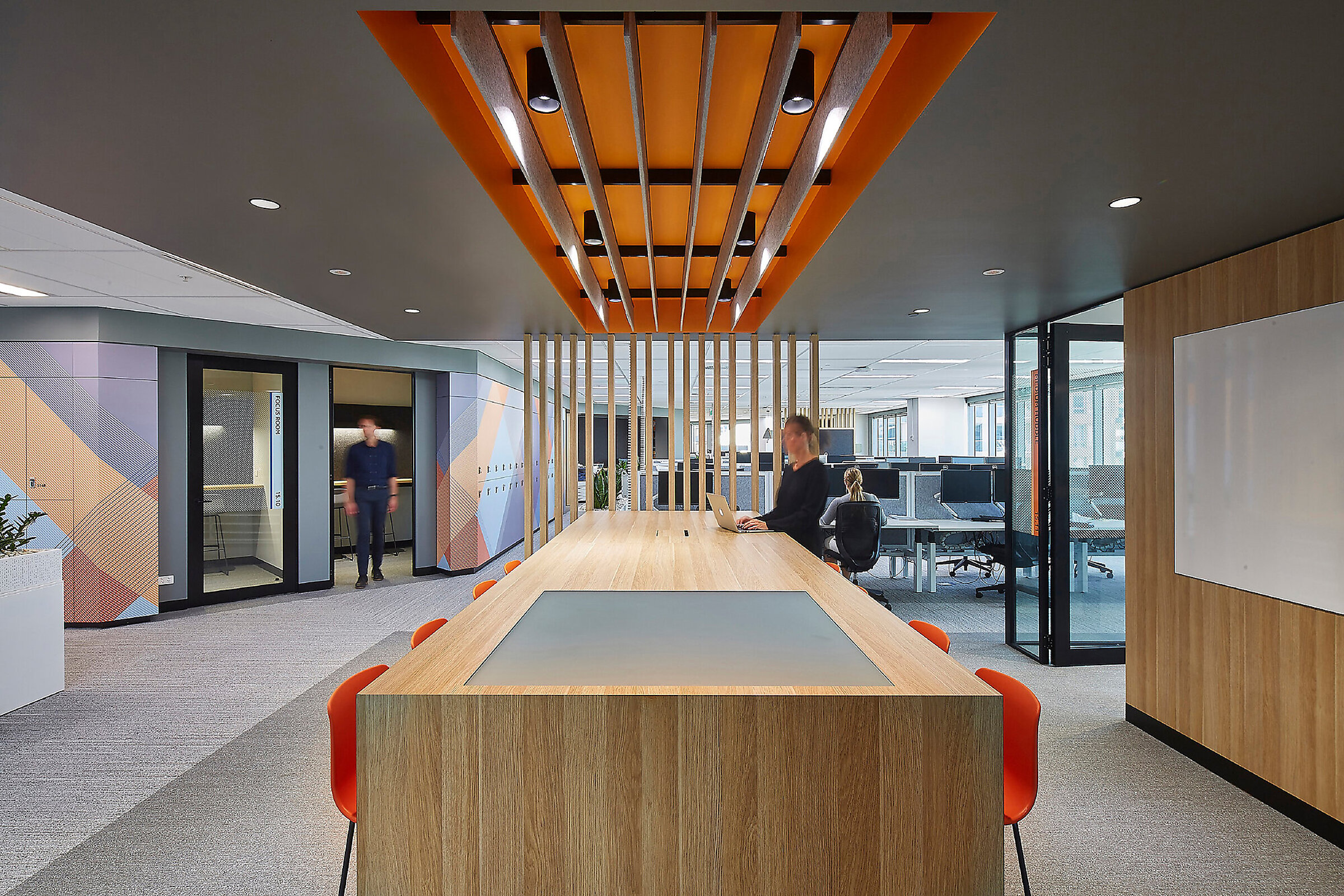
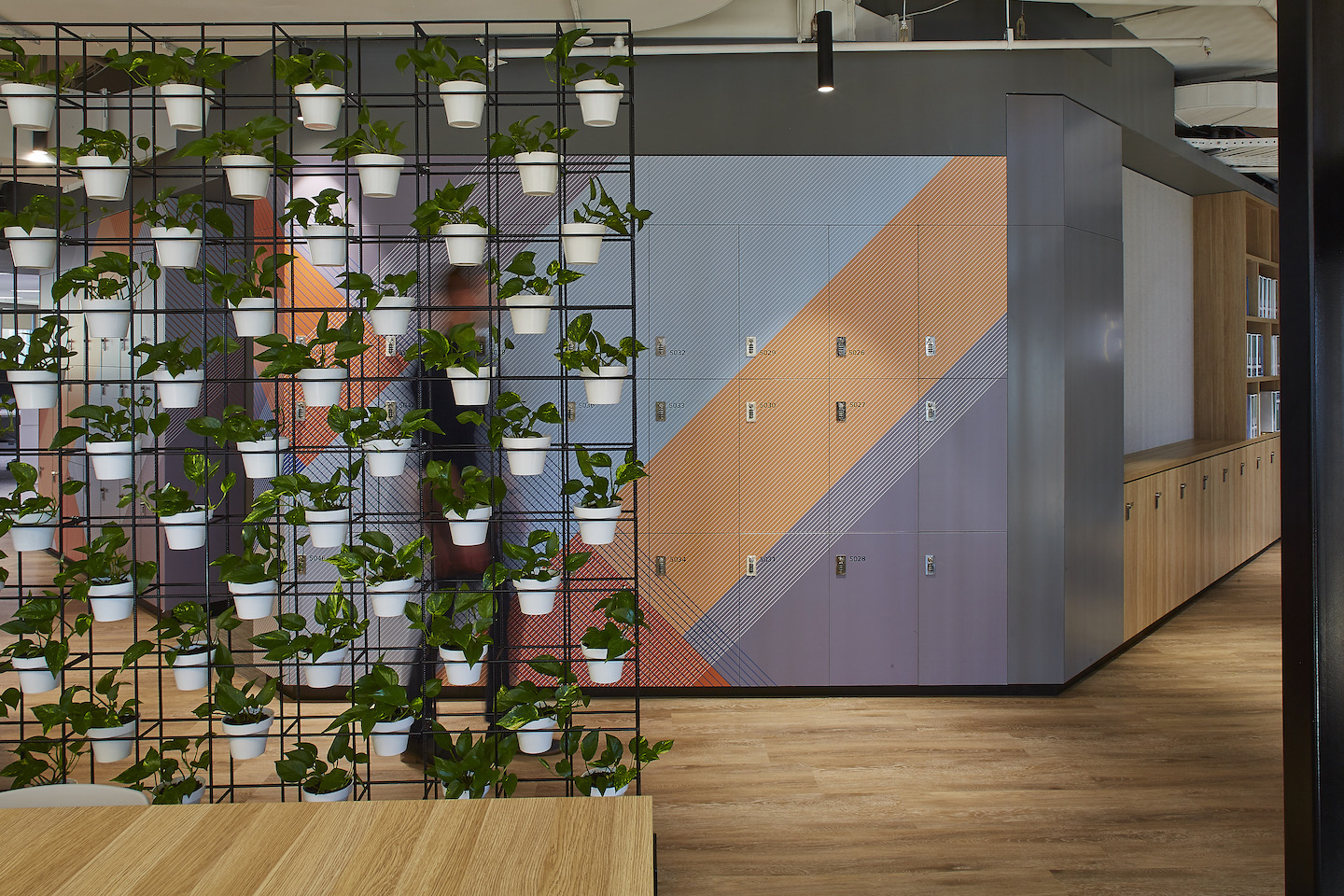
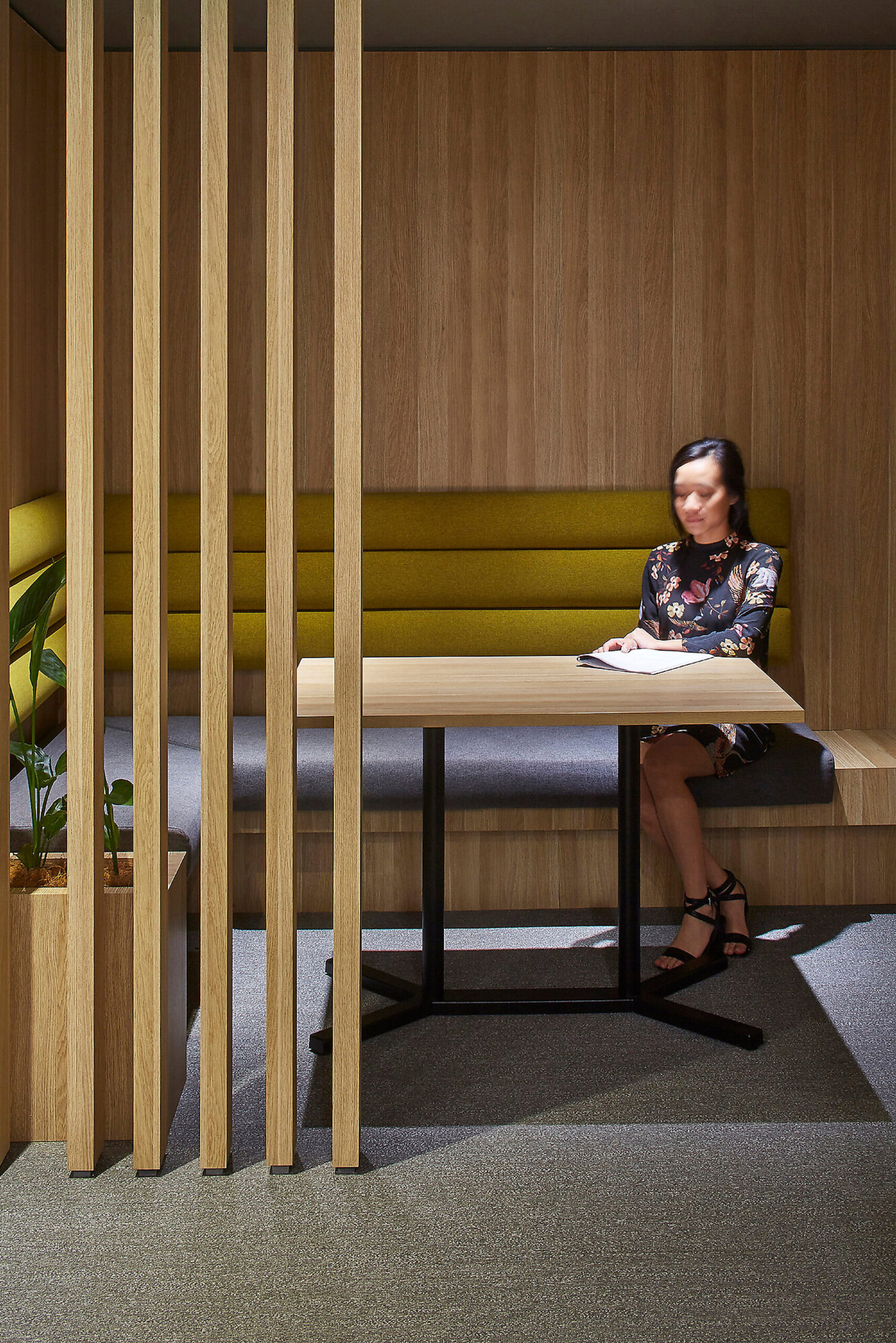
A highly crafted studio within a constrained CBD tower, blending design expression with technical precision.
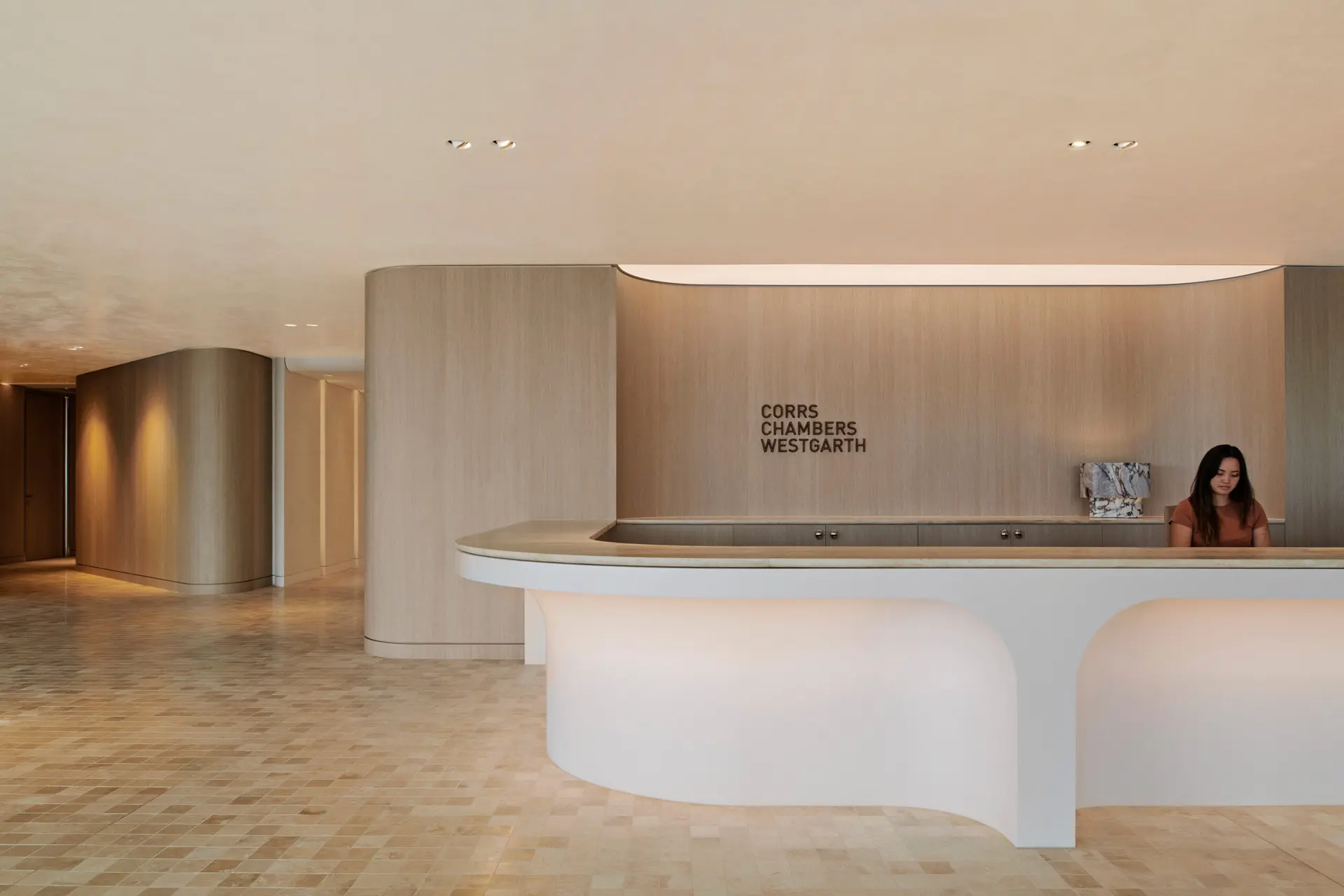
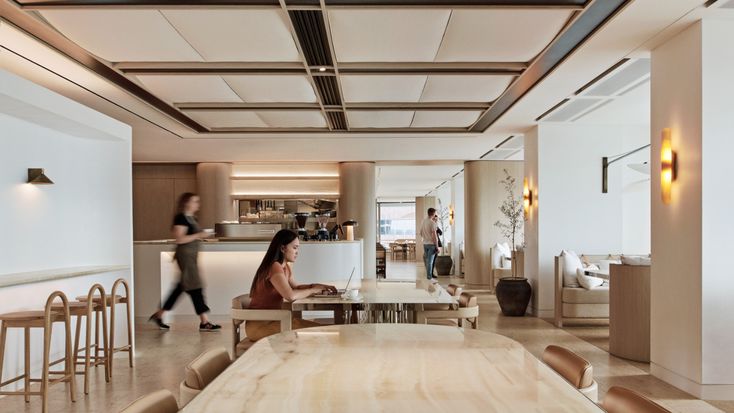
The fitout tackles complex services integration, low floor-to-floor heights, and live-building staging, requiring meticulous coordination across trades. Sculptural joinery, layered materials, and embedded technology are resolved against tight tolerances to support agile working and collaboration. Acoustic control, lighting, and spatial flow were carefully tuned to balance openness with performance, resulting in a refined, high-functioning environment that reflects the practice’s design ethos.
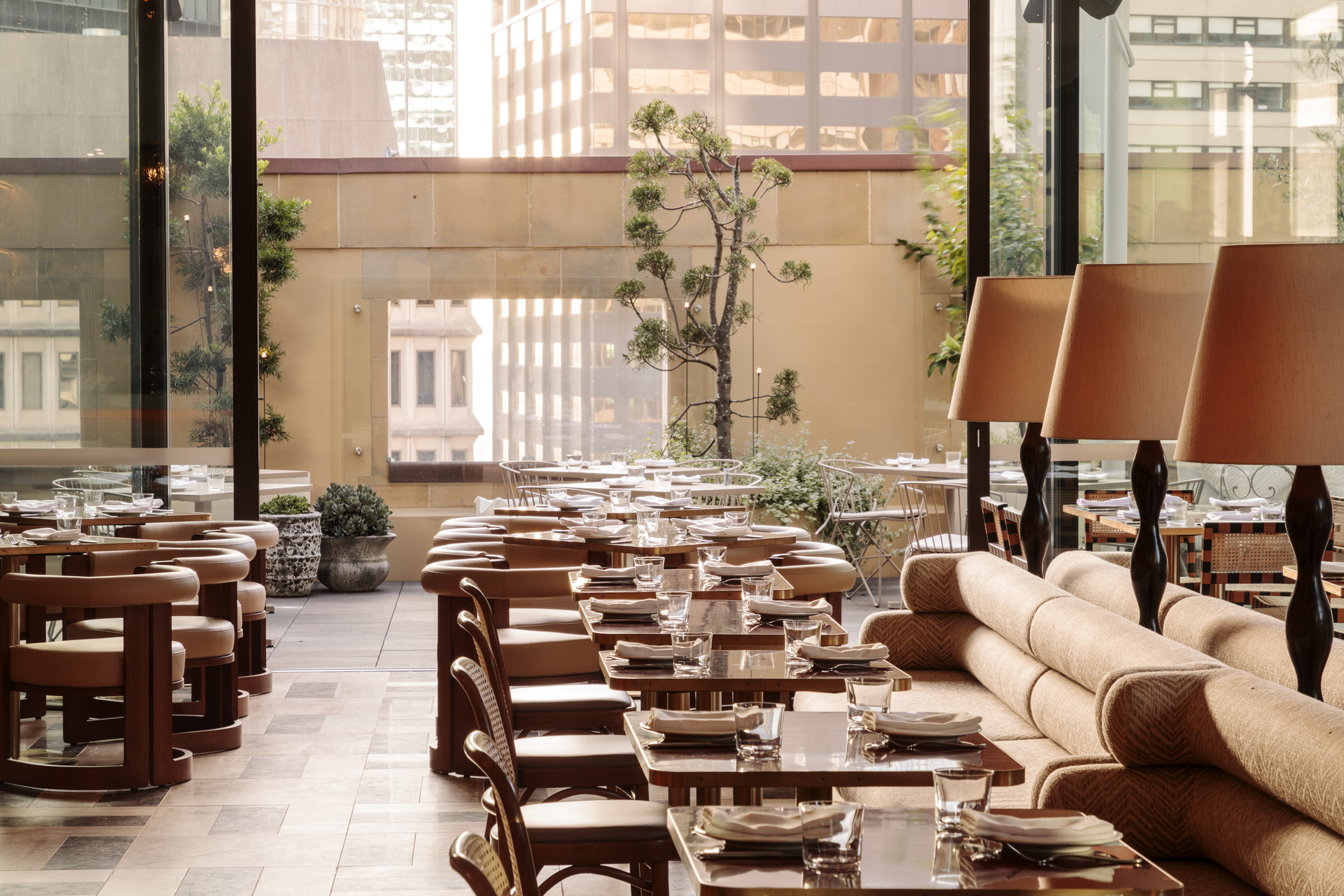
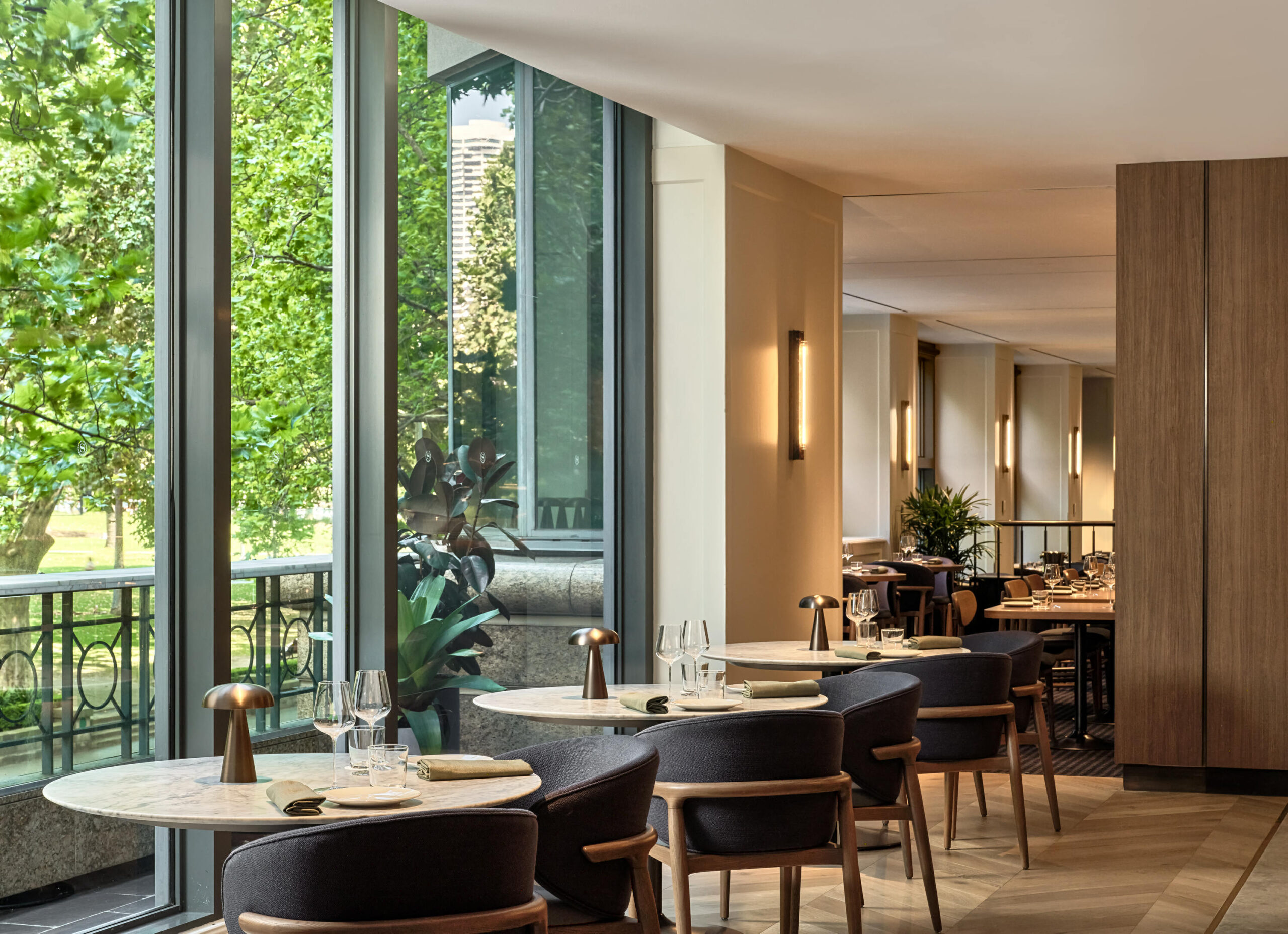
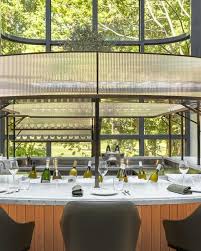
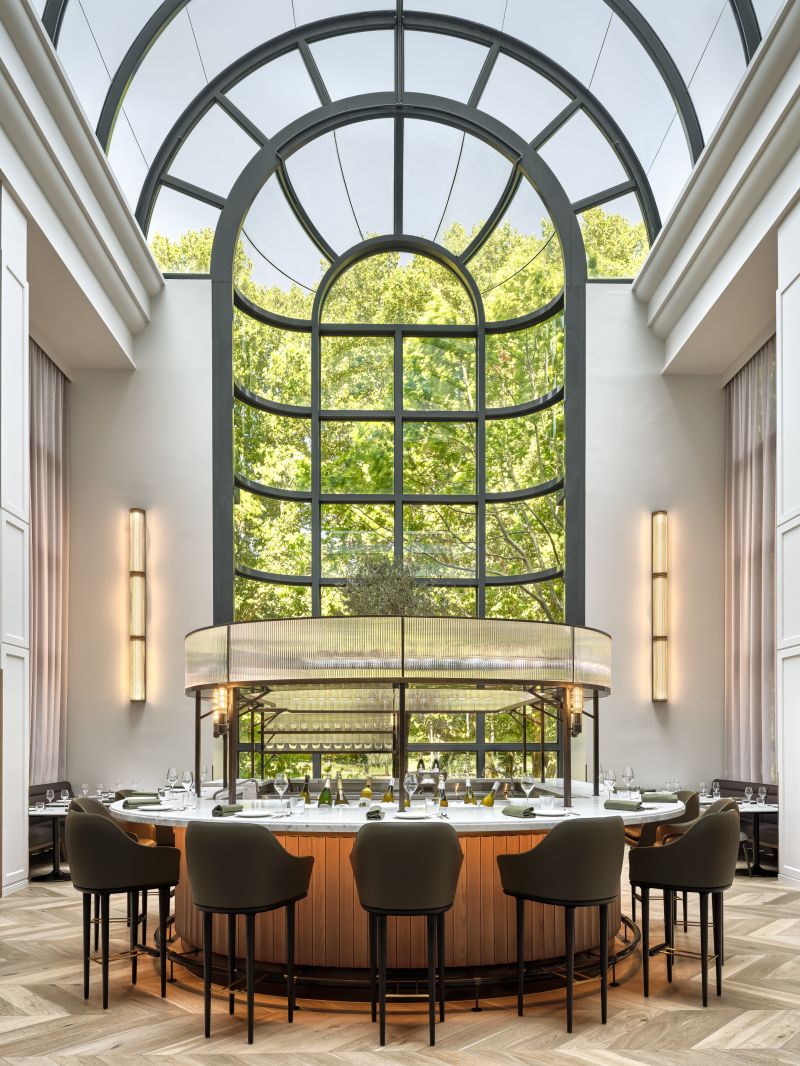
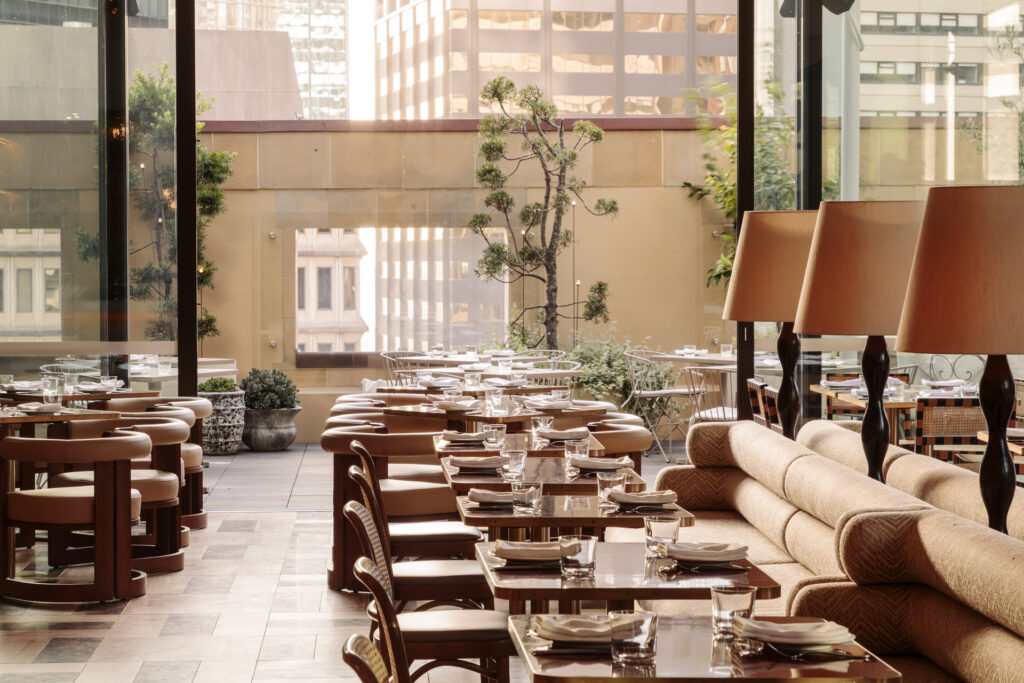
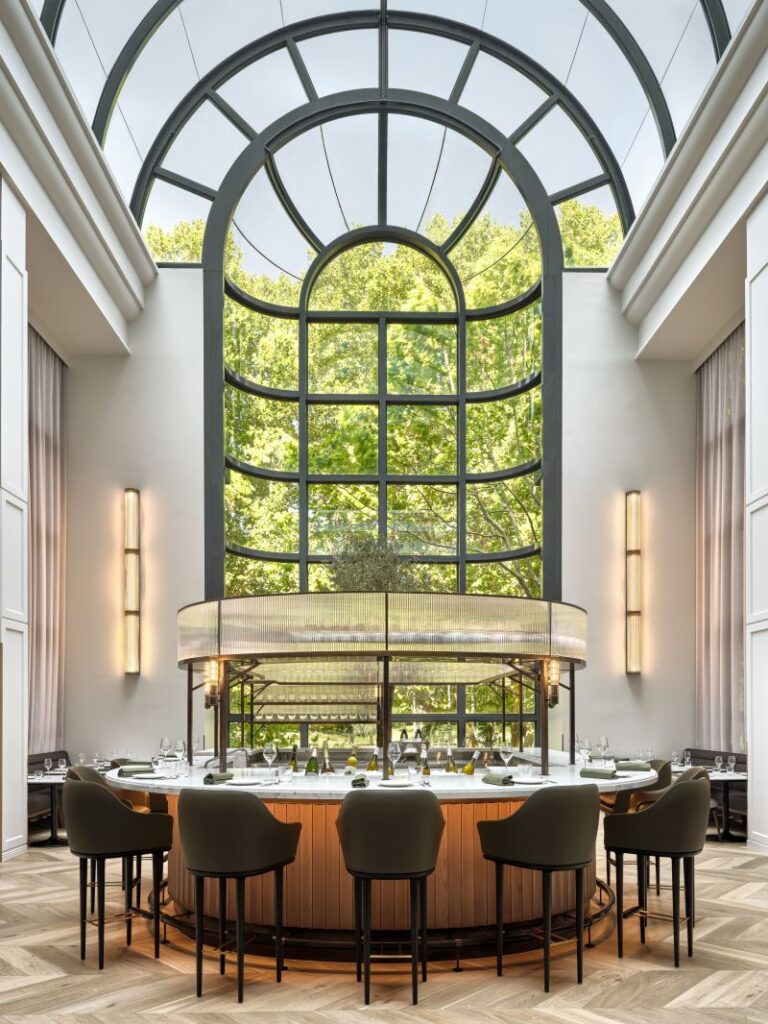
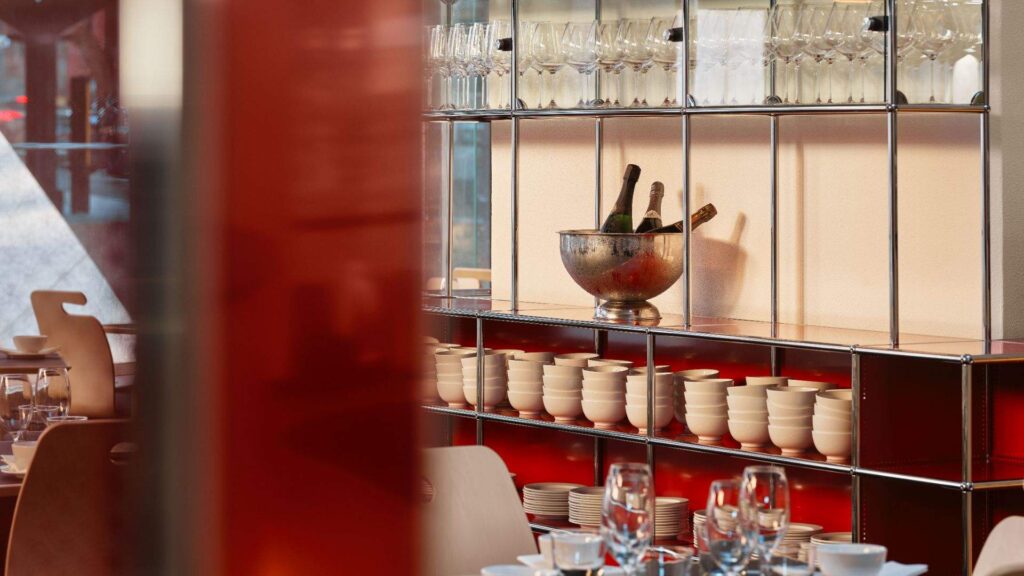
The Sydney Common restaurant refurbishment at Sheraton Grand Sydney Hyde Park reimagined the hotel’s former buffet space into a 300 m² wood-fire grill destination restaurant and bar with expansive park views and a dramatic open kitchen visible to diners. The elegant fit-out by Mitchell & Eades blends classic sophistication with contemporary hospitality detailing textured parquetry, bespoke joinery and luxe banquettes anchoring this restaurant as a destination beyond hotel guests. A 16-seat private room and striking bar add versatility to the experience, elevating hotel dining culture in Sydney’s CBD and setting a new benchmark for integrated hotel-restaurant design.
The Newcastle Art Gallery underwent a transformative $8 million expansion, more than doubling its exhibition space with an additional 1,600 m² of galleries, creating 13 distinct art spaces, new café, retail shop, learning studio and multi-purpose program areas. The design fuses contemporary additions with the iconic 1977 Brutalist structure, enhancing light, visibility and accessibility while supporting permanent displays of its 7,000-strong collection for the first time.
New street frontages and transparent ground-level facades activate Darby, Queen and Laman streets, reinforcing the gallery’s role as a cultural anchor for Newcastle and NSW’s largest regional public art institution outside Sydney.
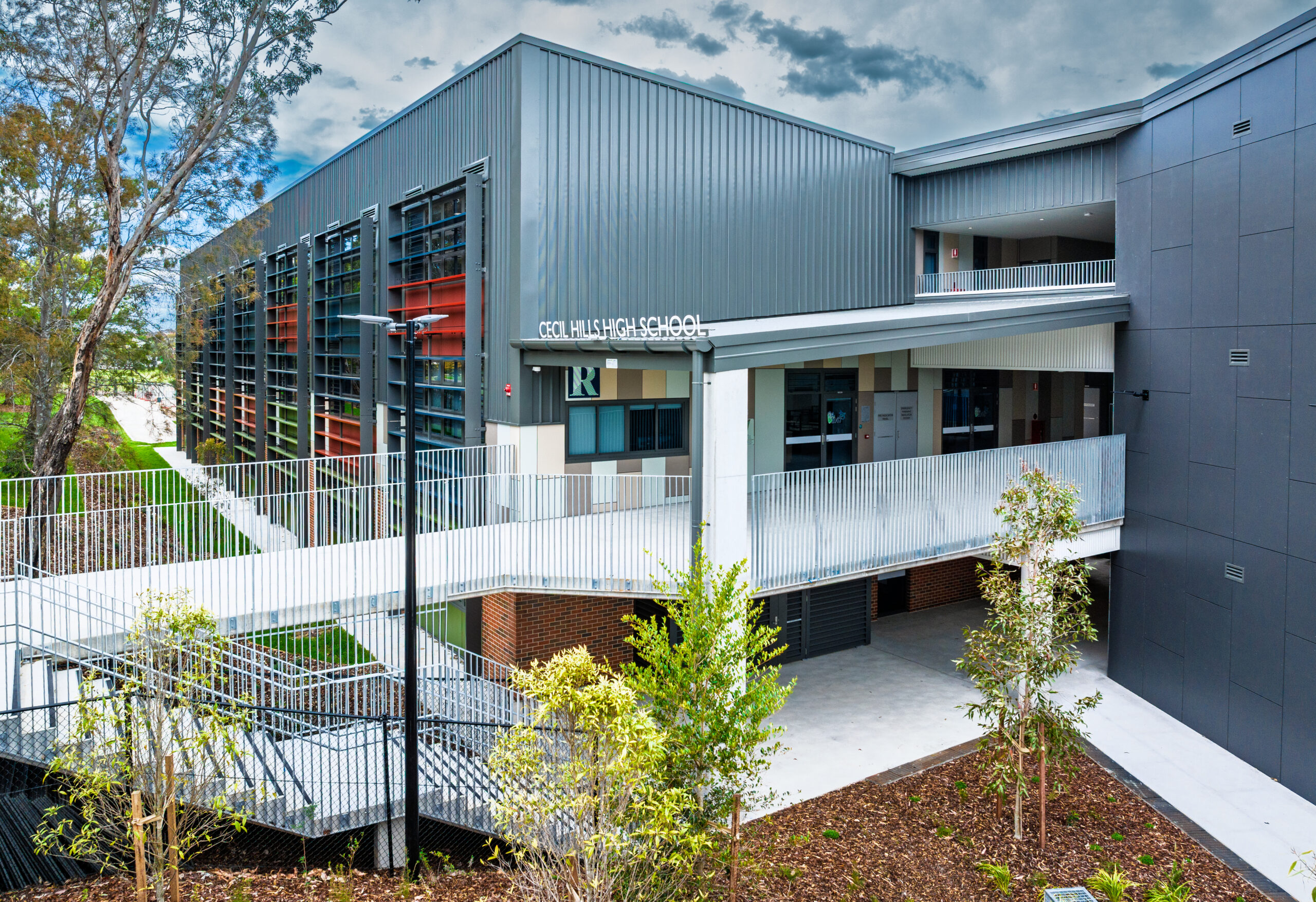
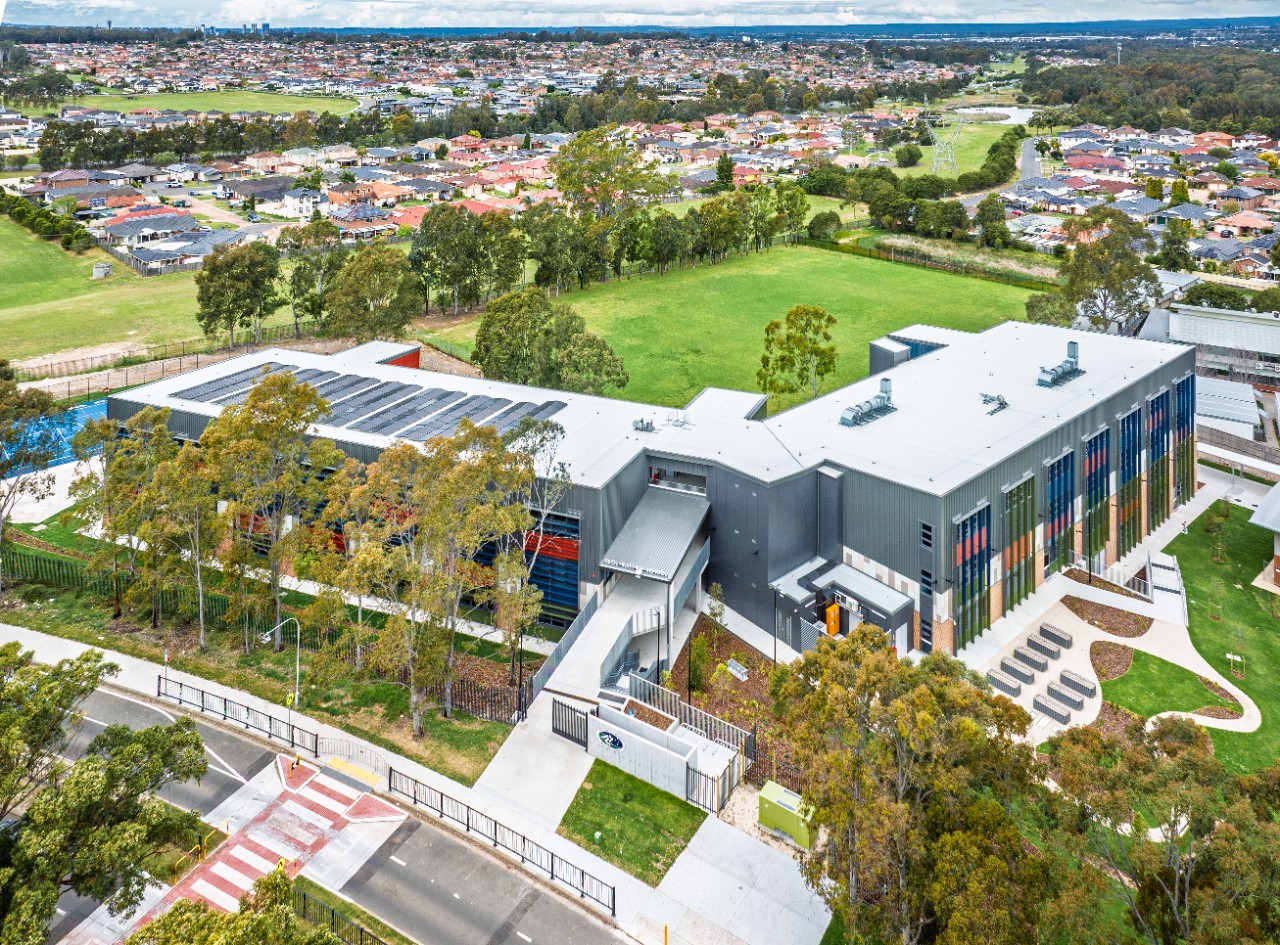
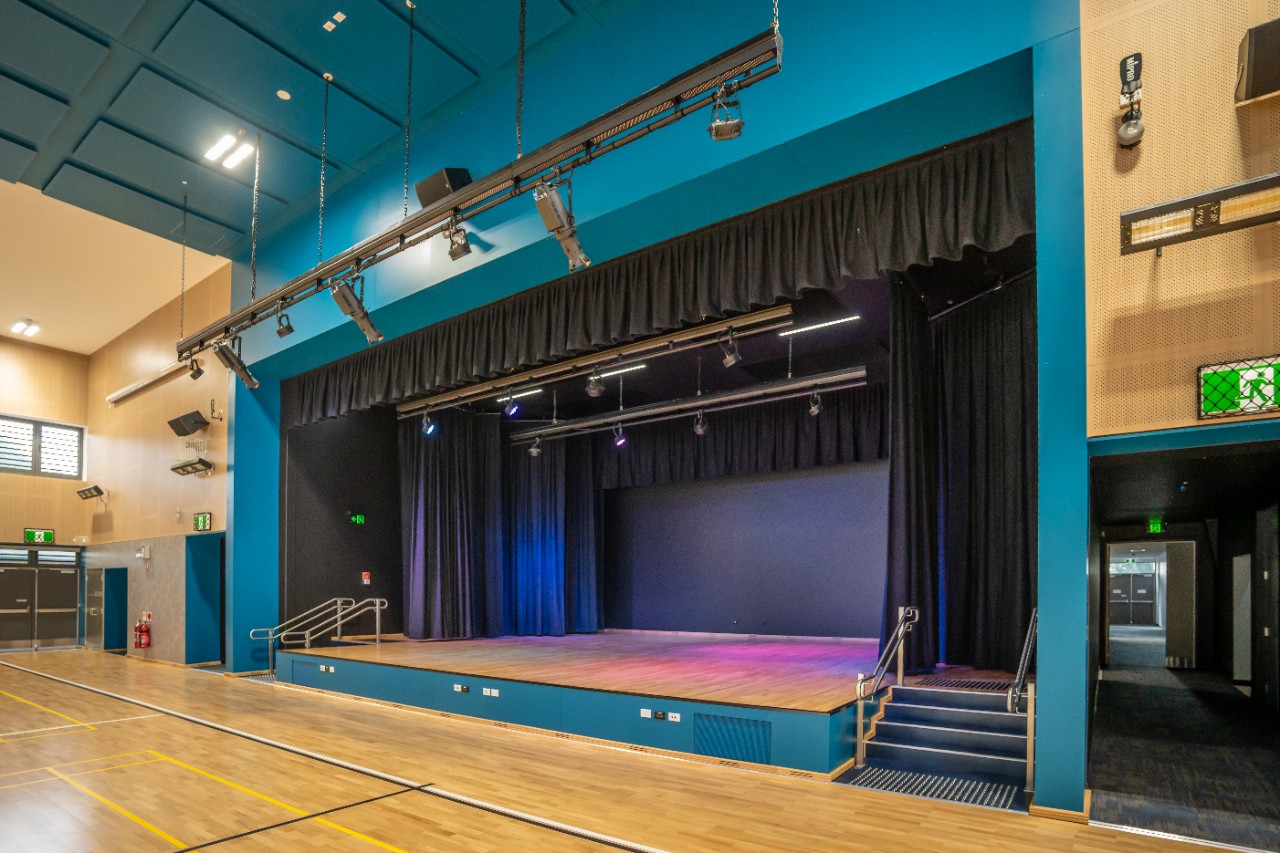
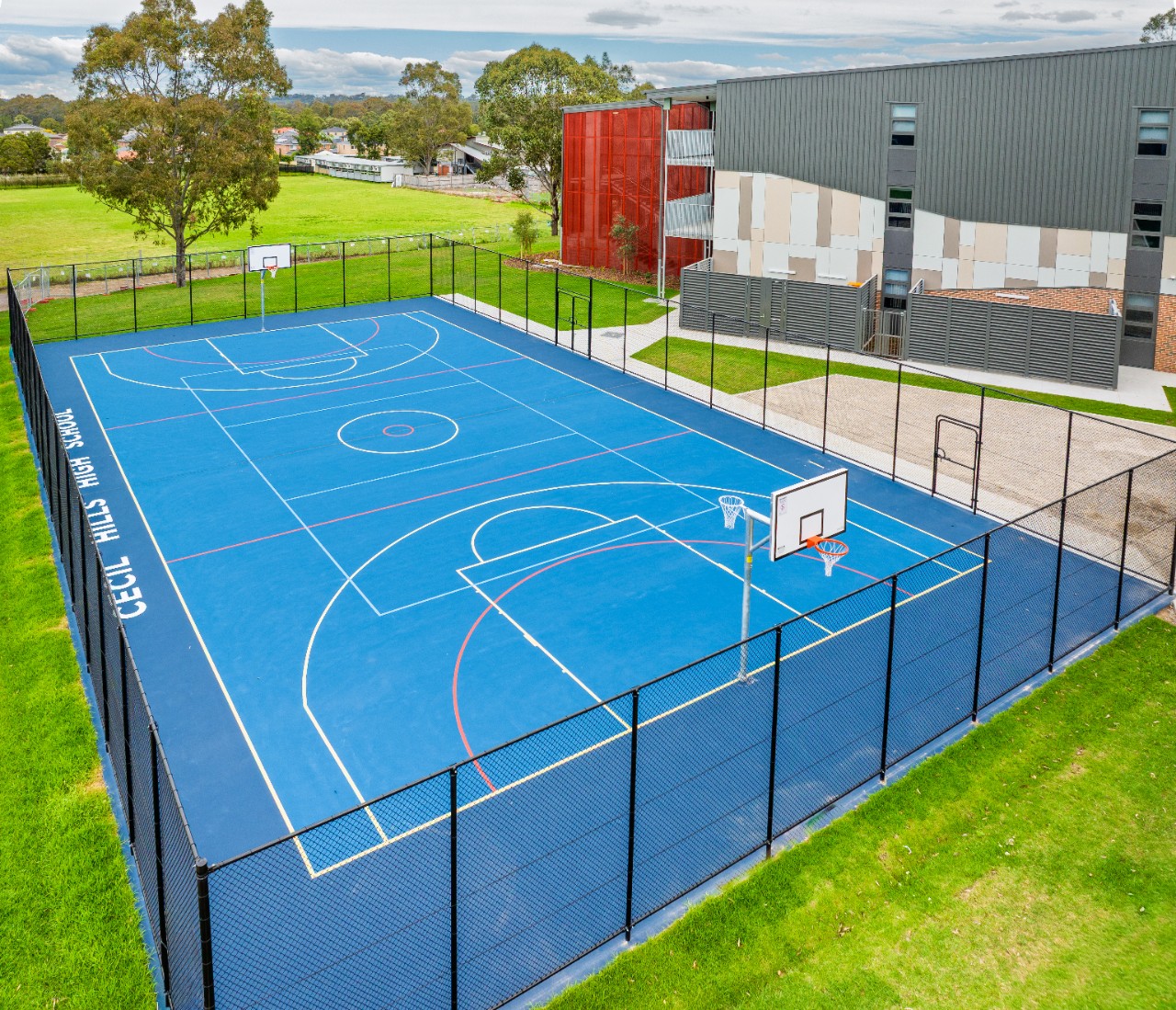
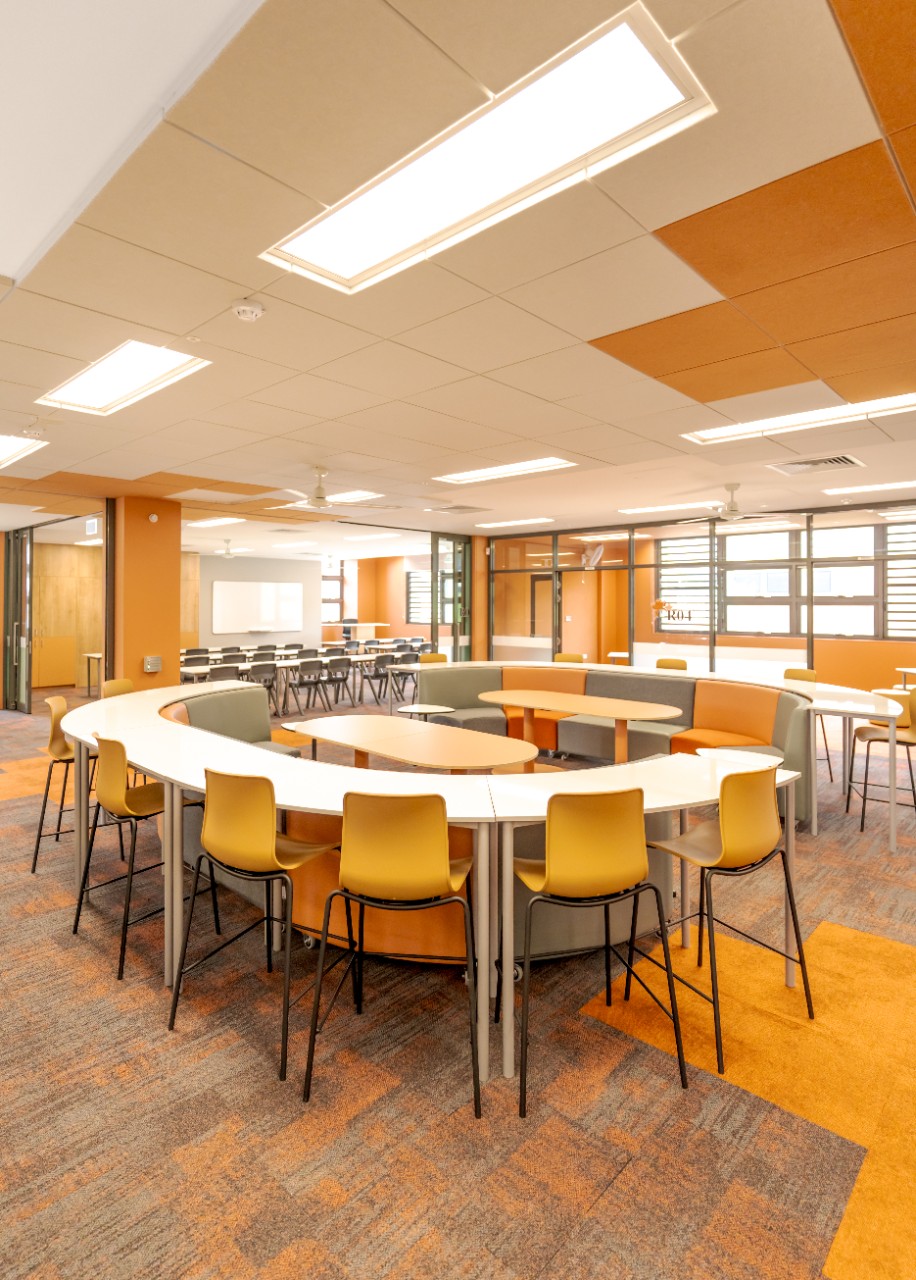
The Cecil Hills High School refurbishment modernises a busy campus through carefully staged upgrades within a live school environment. The design resolves ageing infrastructure, integrates new services, and introduces flexible, future-focused learning spaces while working within existing structural constraints. Construction demanded tight sequencing, rigorous safety controls, and coordination across occupied zones to minimise disruption.
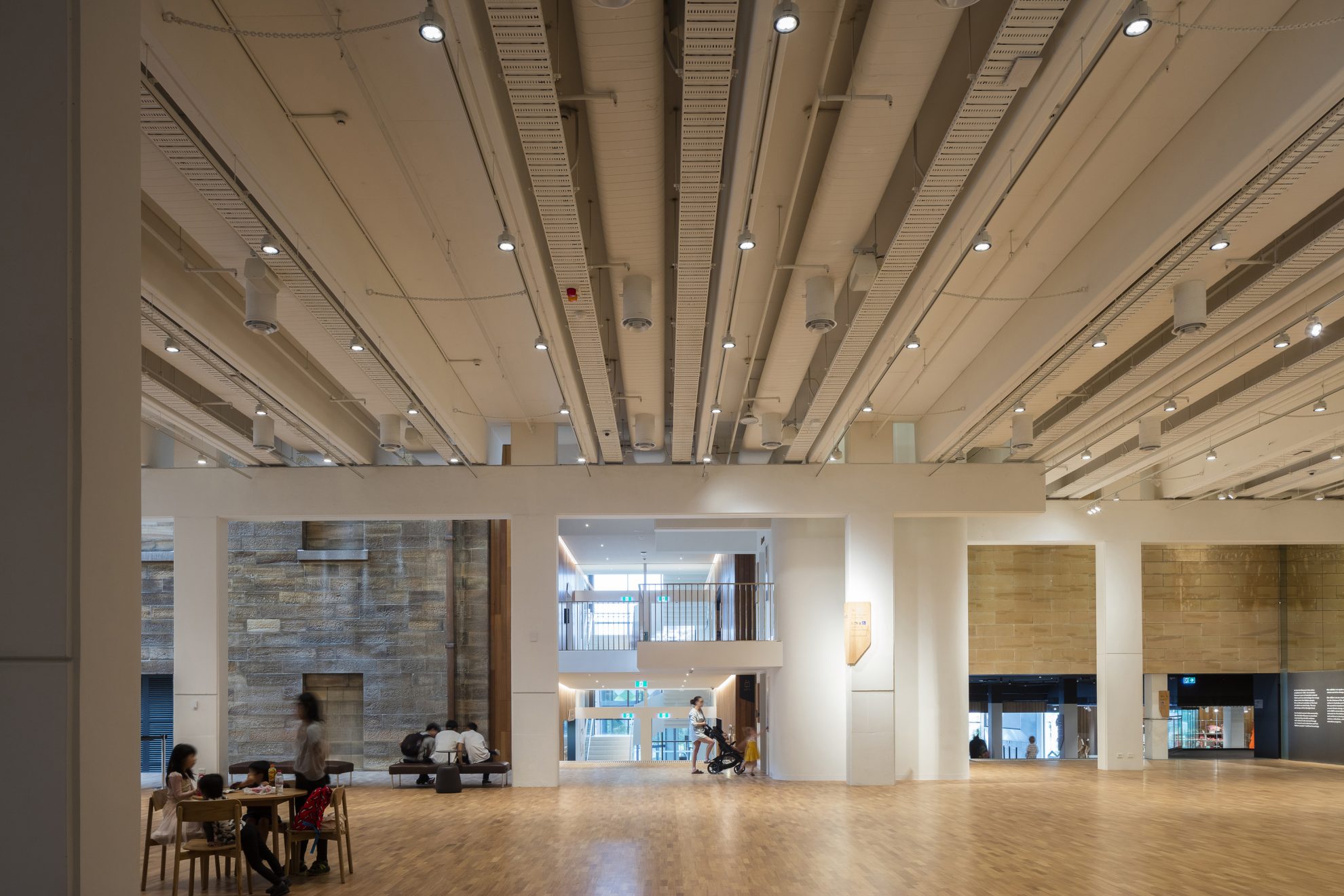
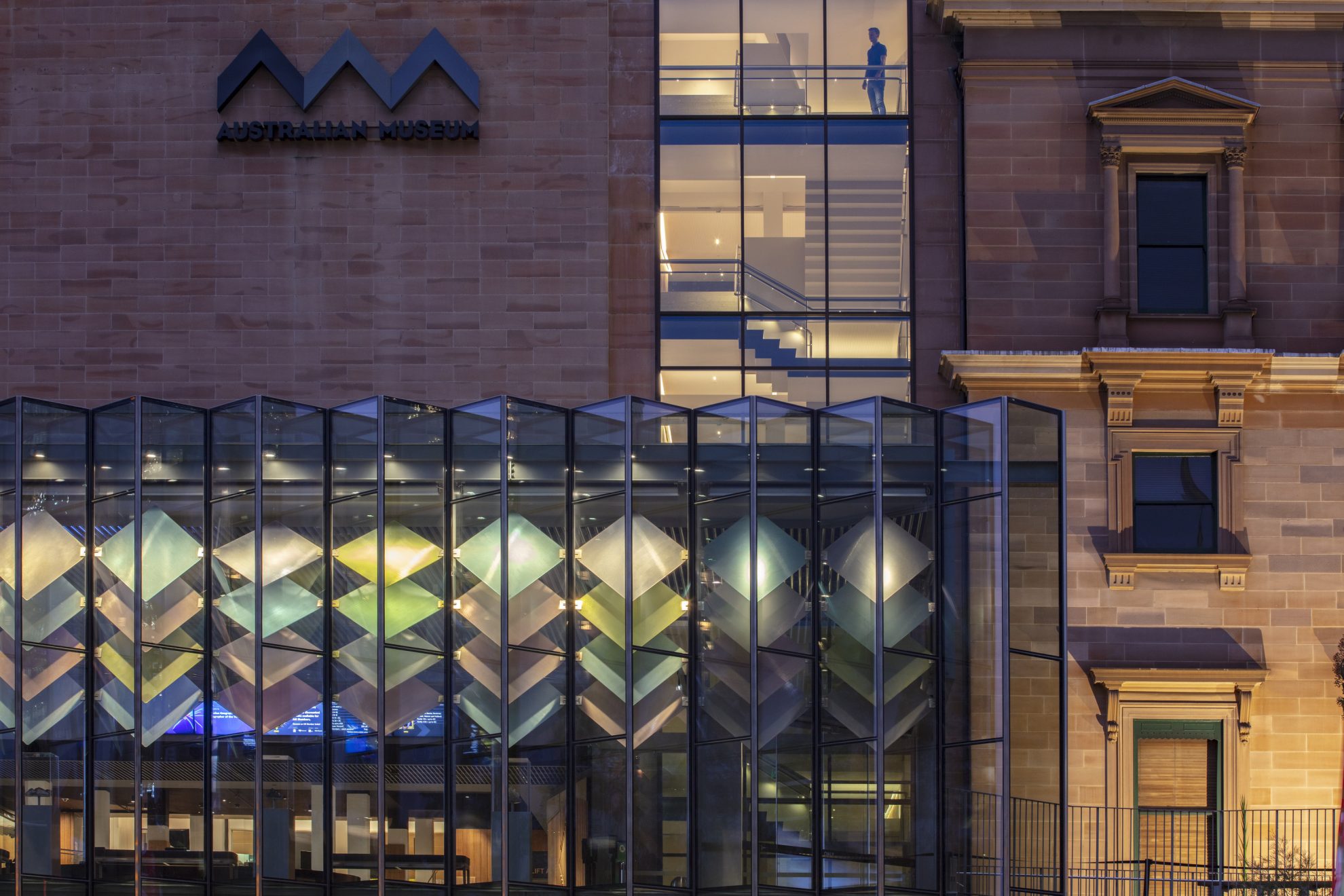
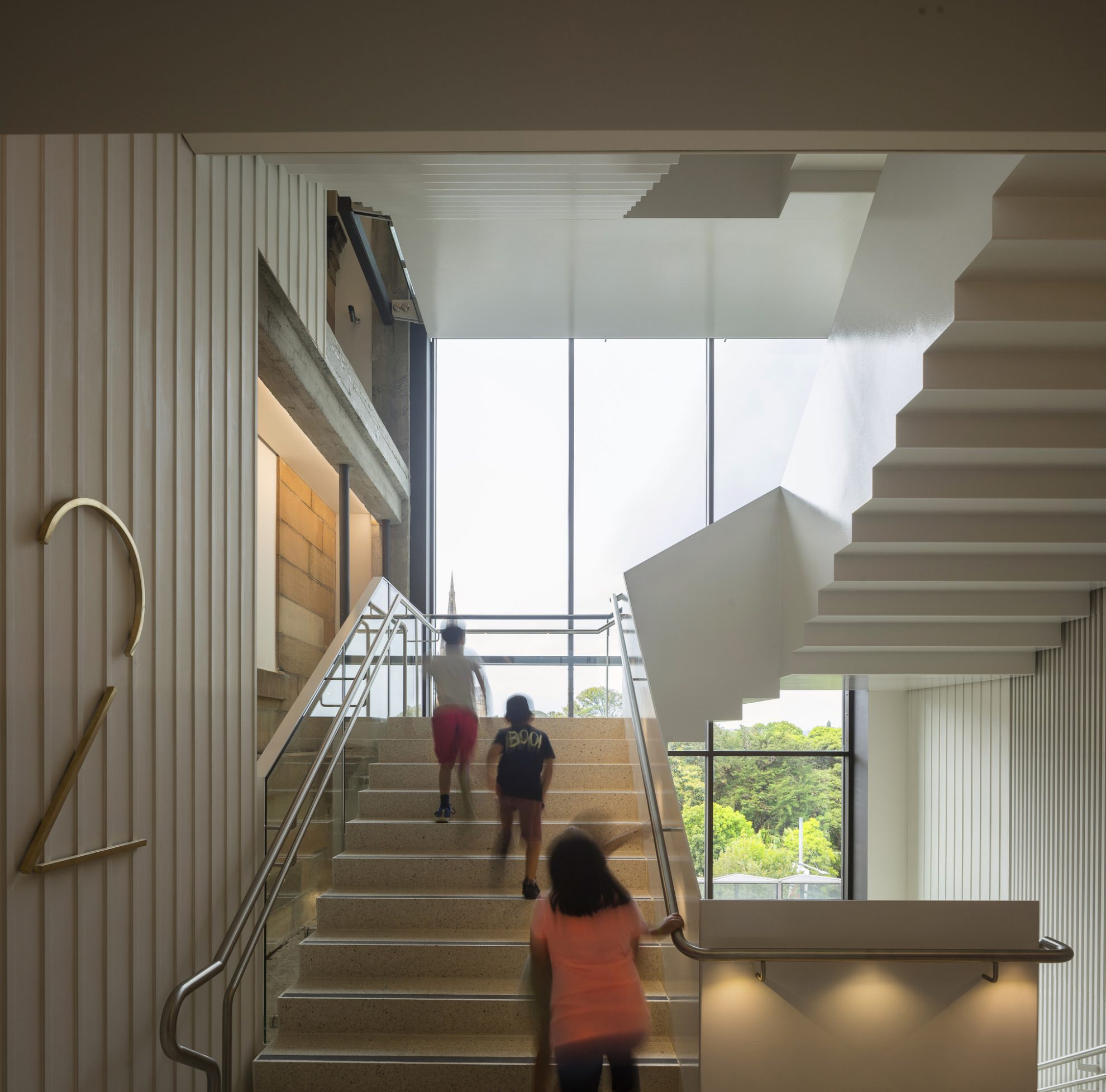
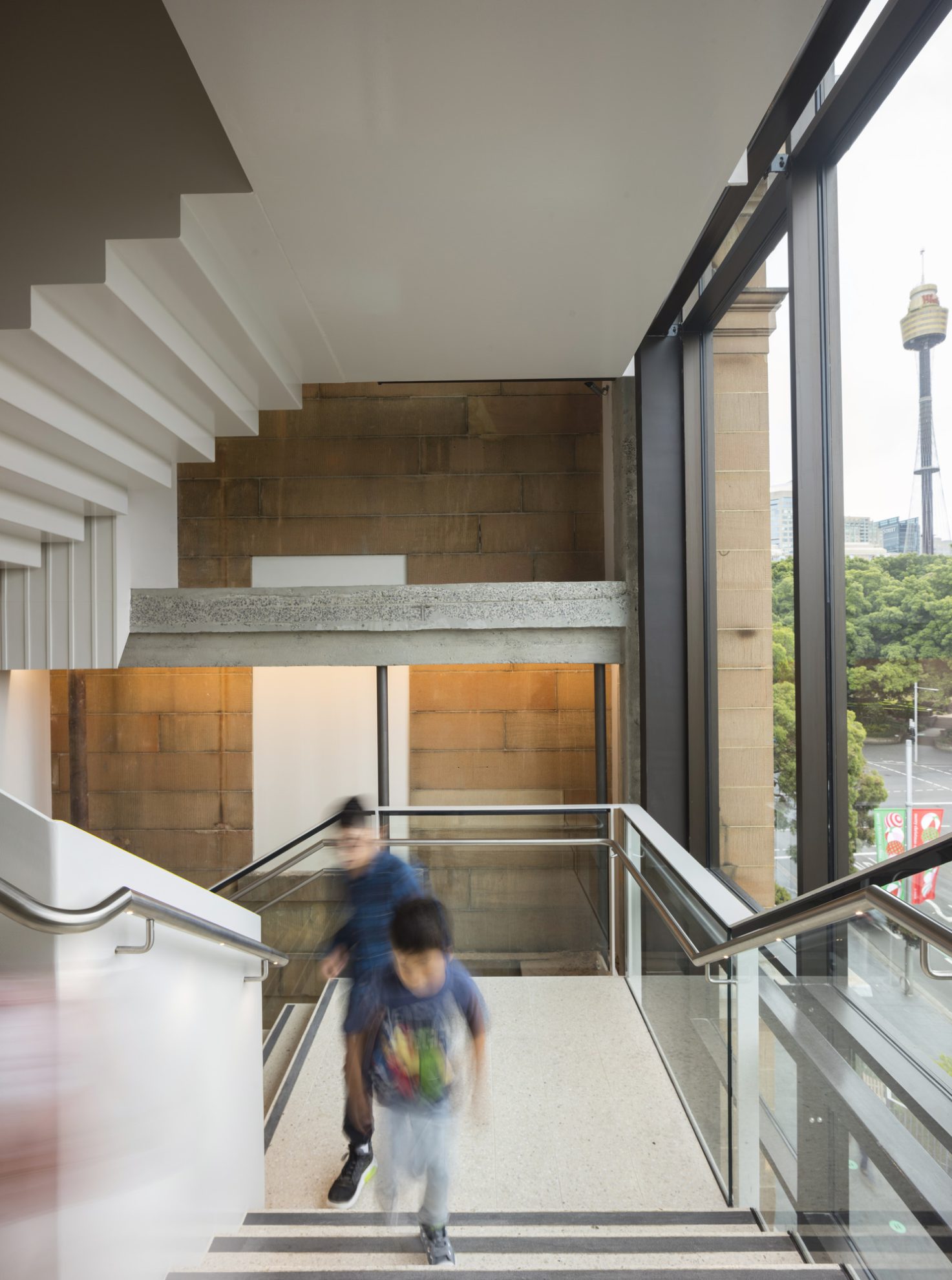
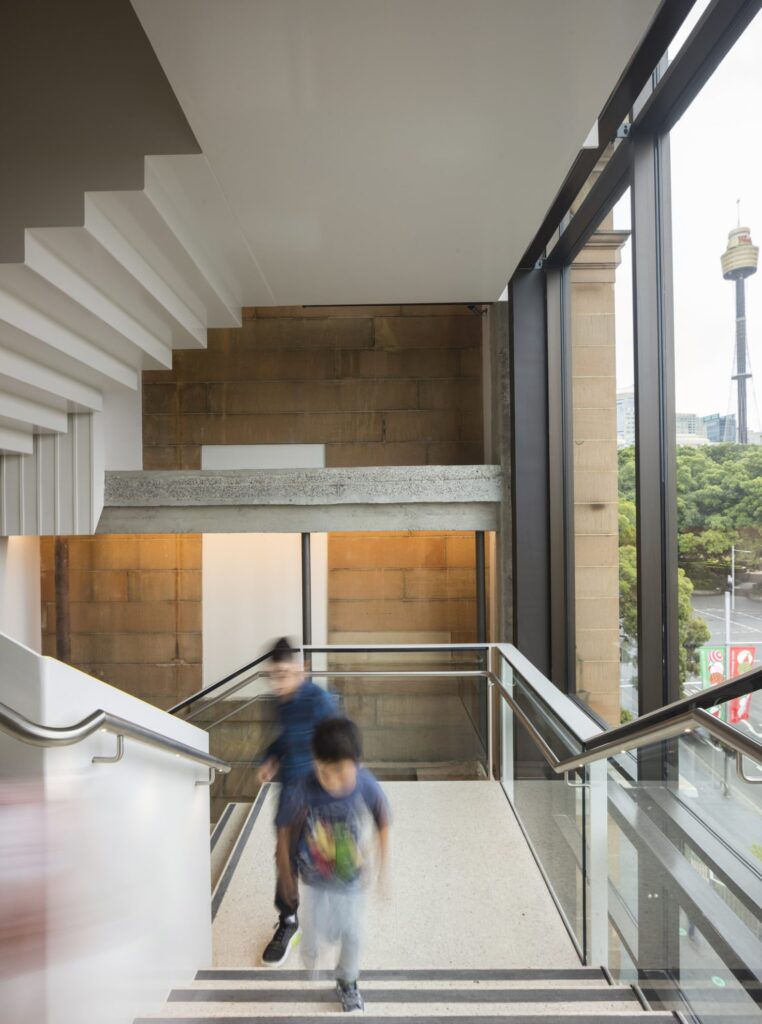
A surgical adaptive-reuse that carved 3,000m² of new public space from back-of-house areas and unveiled long-hidden sandstone walls. The rework creates a two-level Touring Exhibition Hall that can run one blockbuster or two simultaneous shows, new education suites, retail and hospitality, and a dramatic stair and escalator spine linking the Grand Hall to exhibition levels.
Project Discover was executed during a 15-month closure and reopened with free general admission in 2020 and has since collected major honours including the 2021 NSW Architecture Medallion and Interior / Heritage awards, cementing the project as a benchmark for heritage-led, public-realm upgrades.
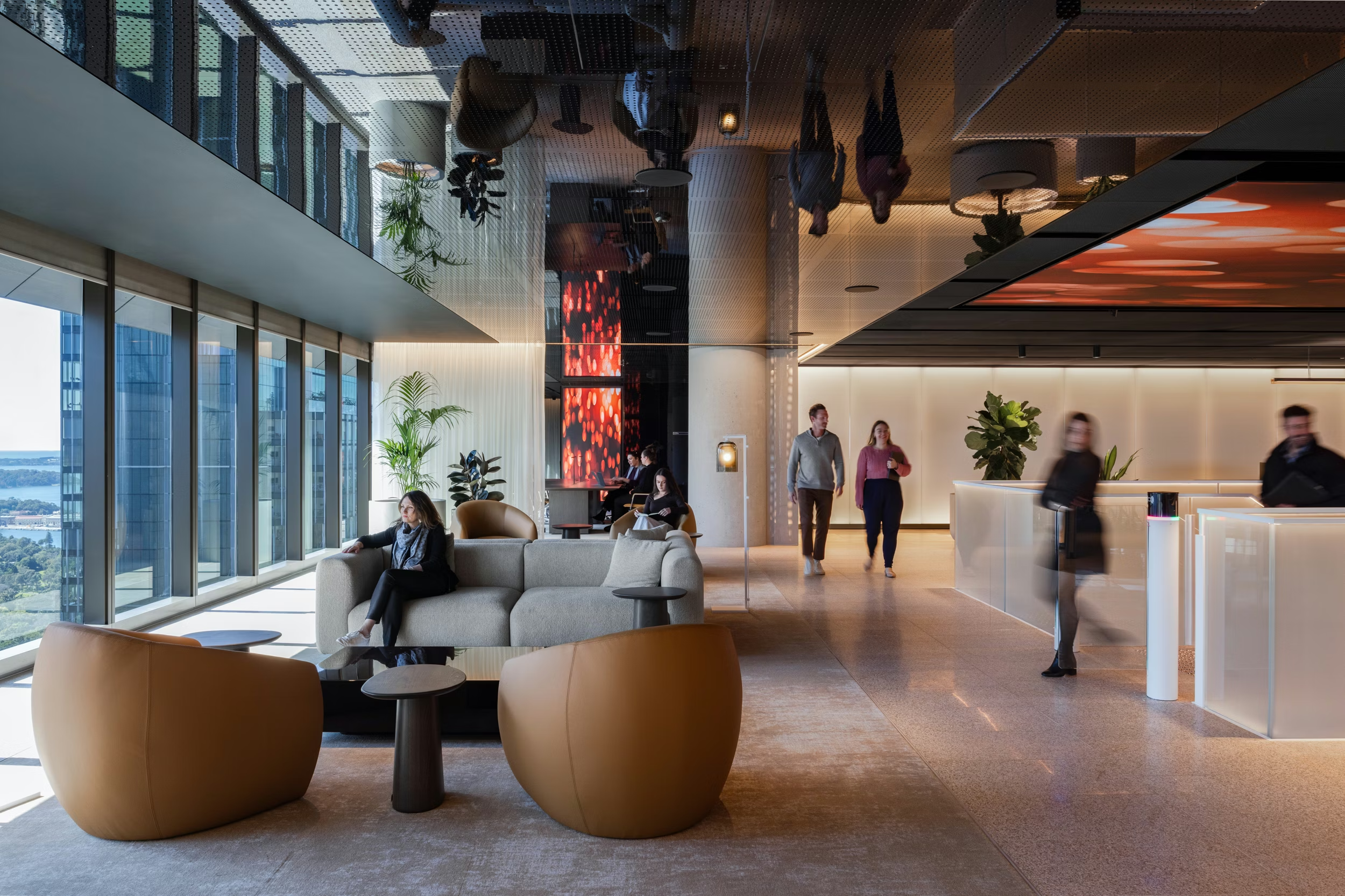
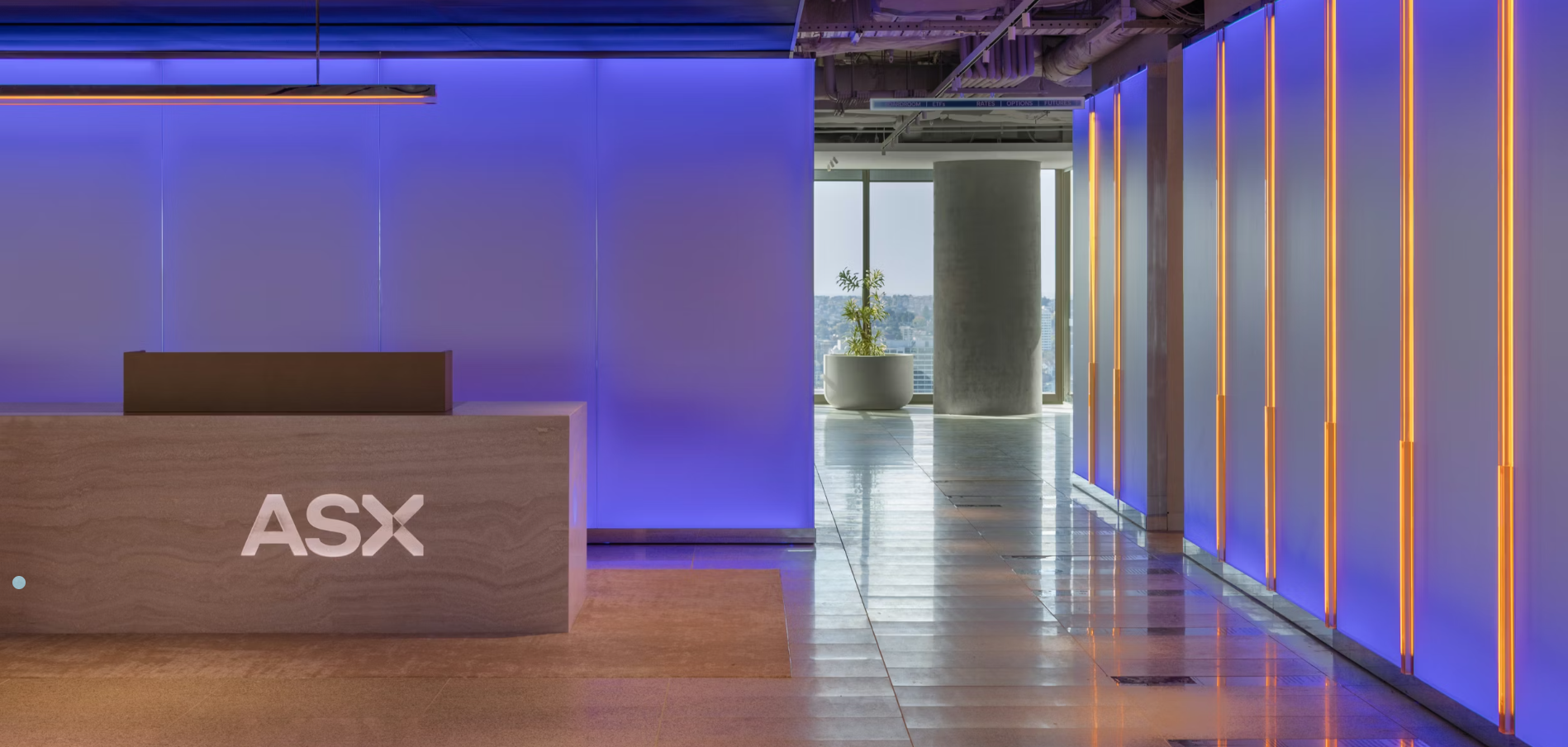
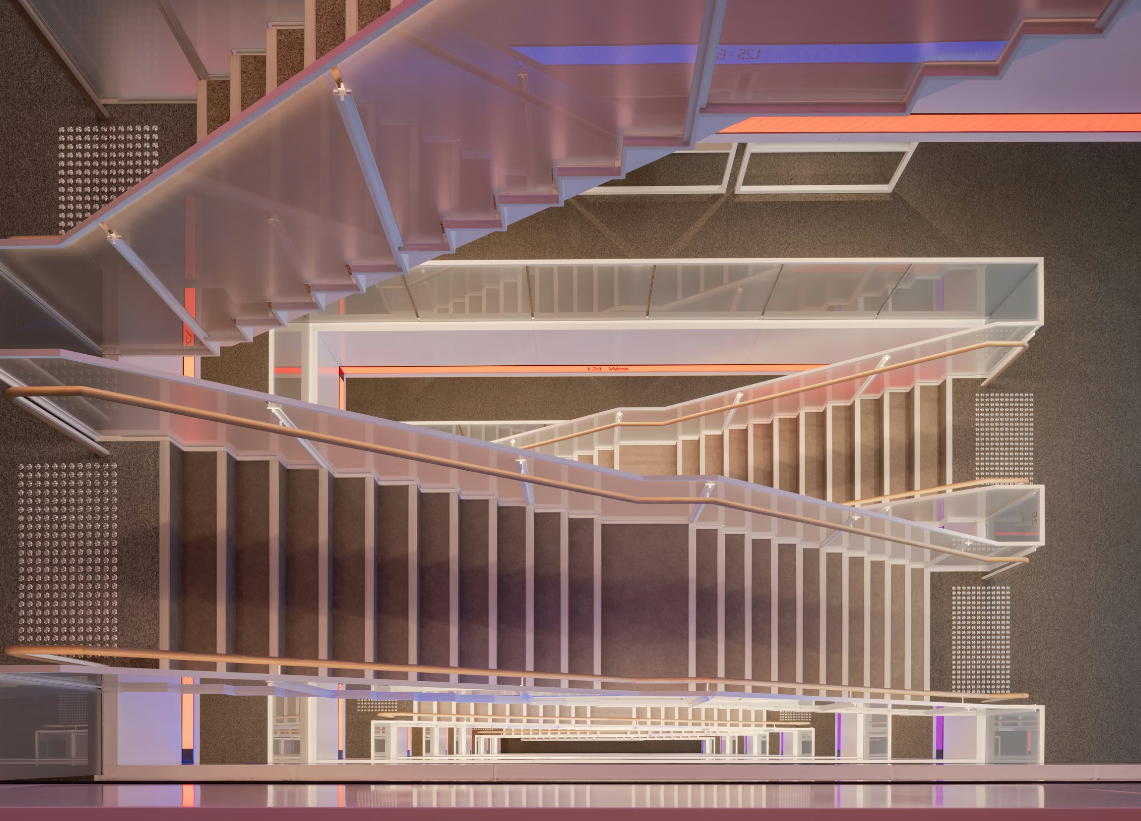
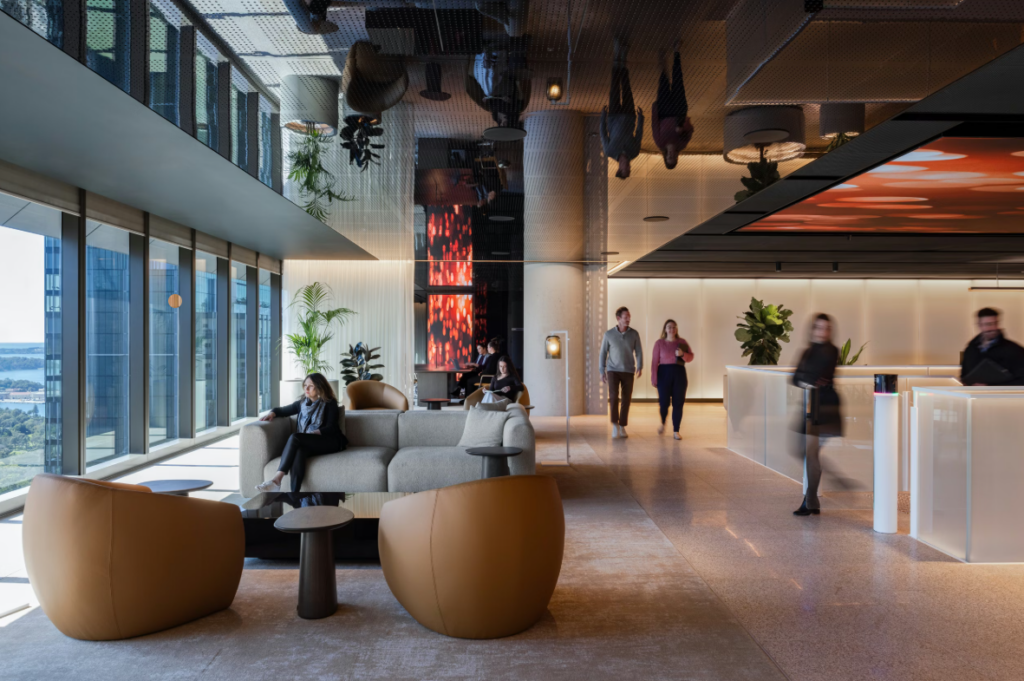
The new ASX Headquarters occupies 12,000 m² across 11 floors within a landmark 28-storey tower above the Sydney Metro station, delivering a future-focused workplace that merges agile planning, advanced AV integration and striking design gestures such as interlinked open staircases and continuous financial tickers broadcasting live markets.
The fit-out prioritises collaboration, flexibility and sustainability within a premium commercial context, reaffirming ASX’s role at the heart of the financial district and enhancing workplace experience with abundant natural light and refined finishes.
'The Forum' has undergone a broader building refurbishment that includes the addition of new end-of-trip facilities in addition to lobby, lift, bathroom, and on-floor refurbishments, positioning the building as an amenity-rich, commuter-friendly workplace.
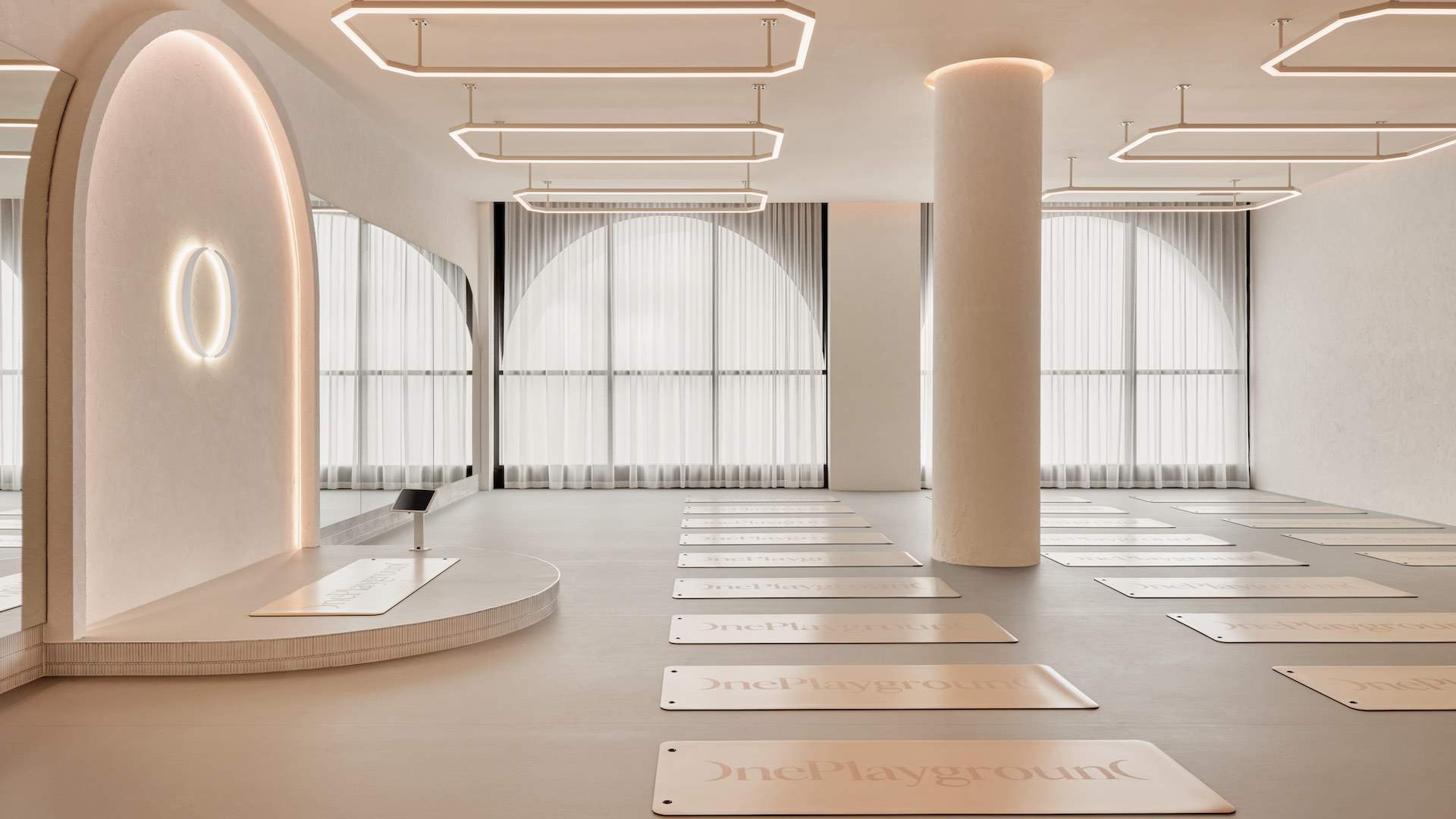
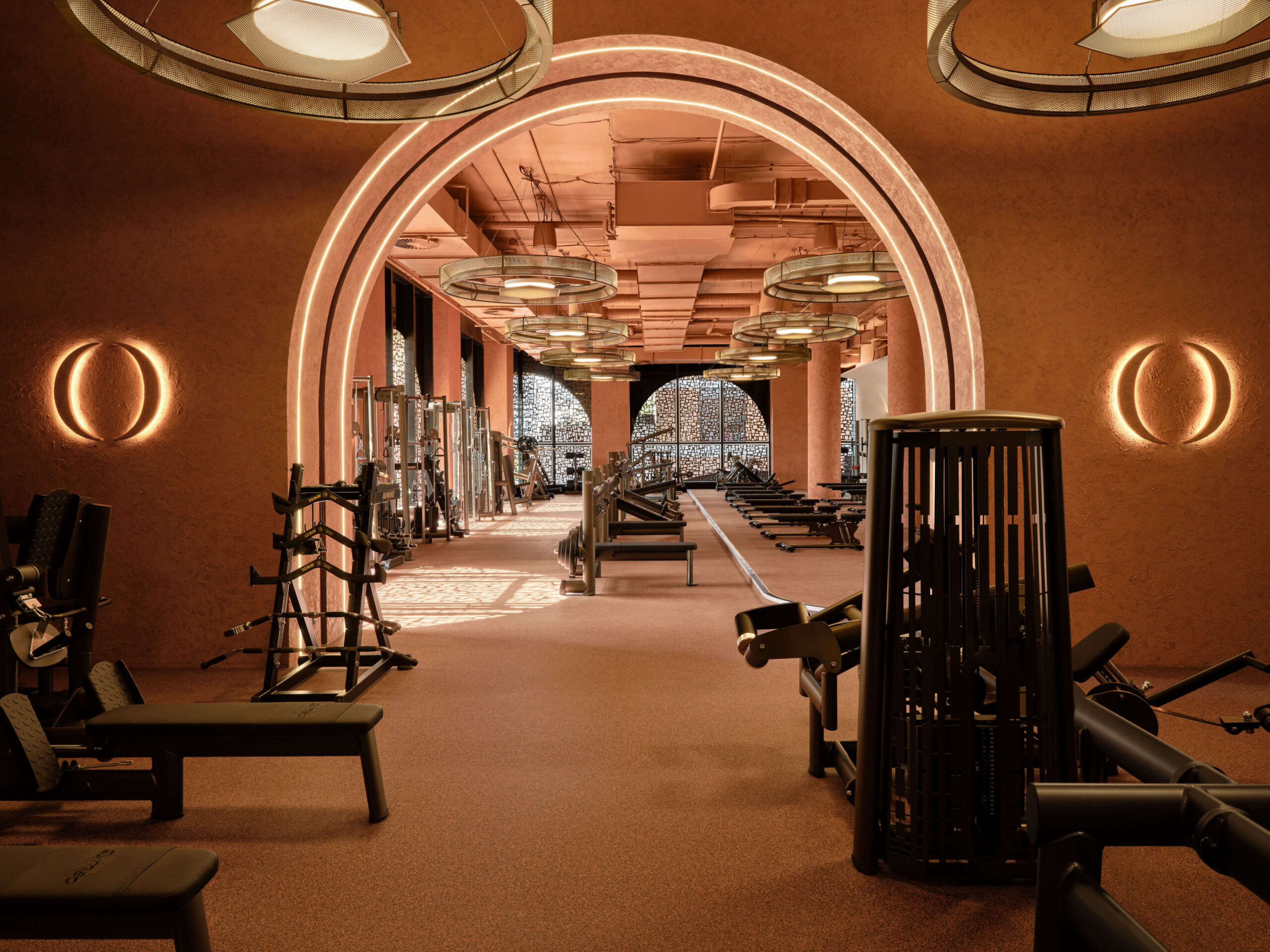
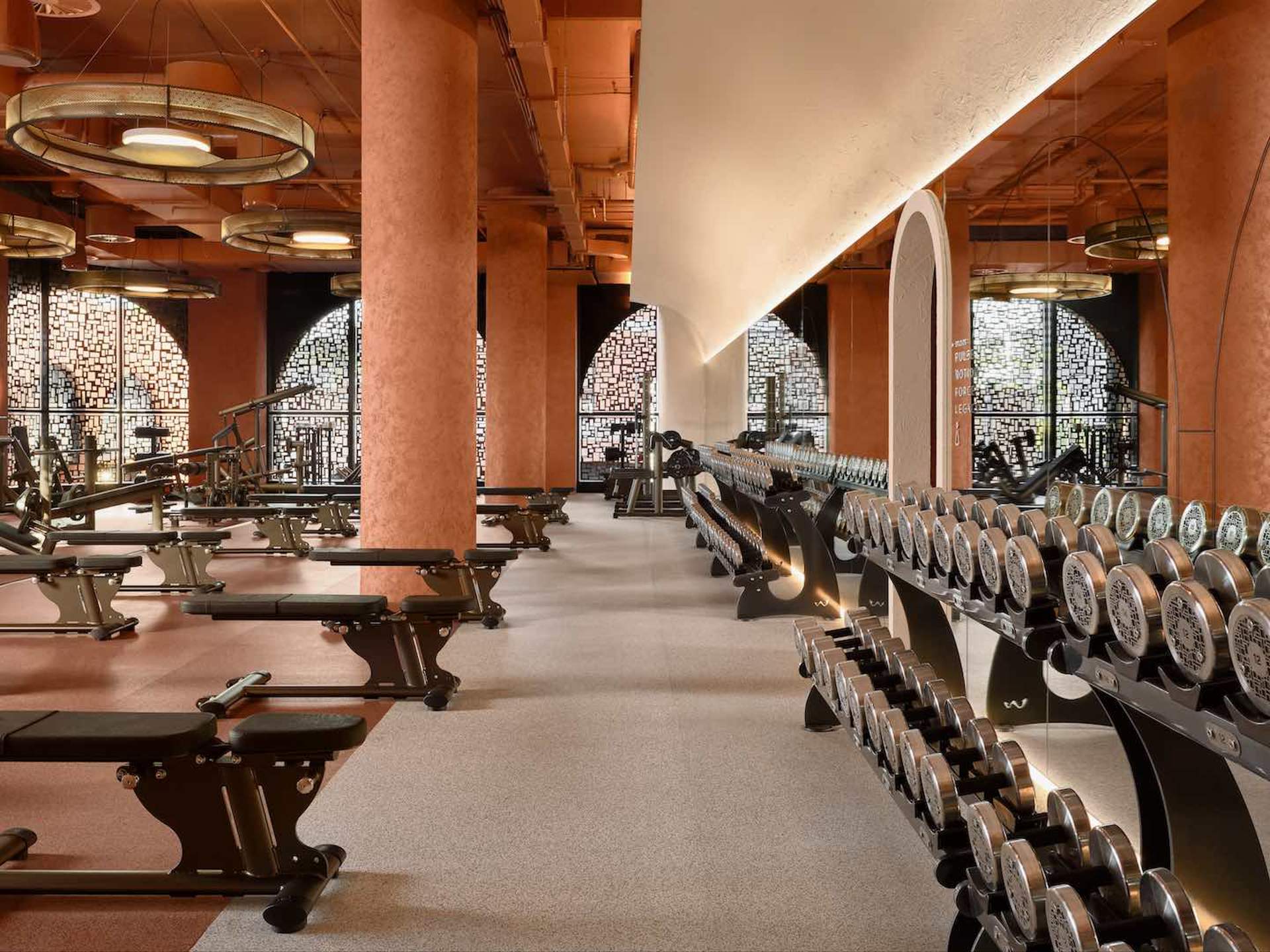
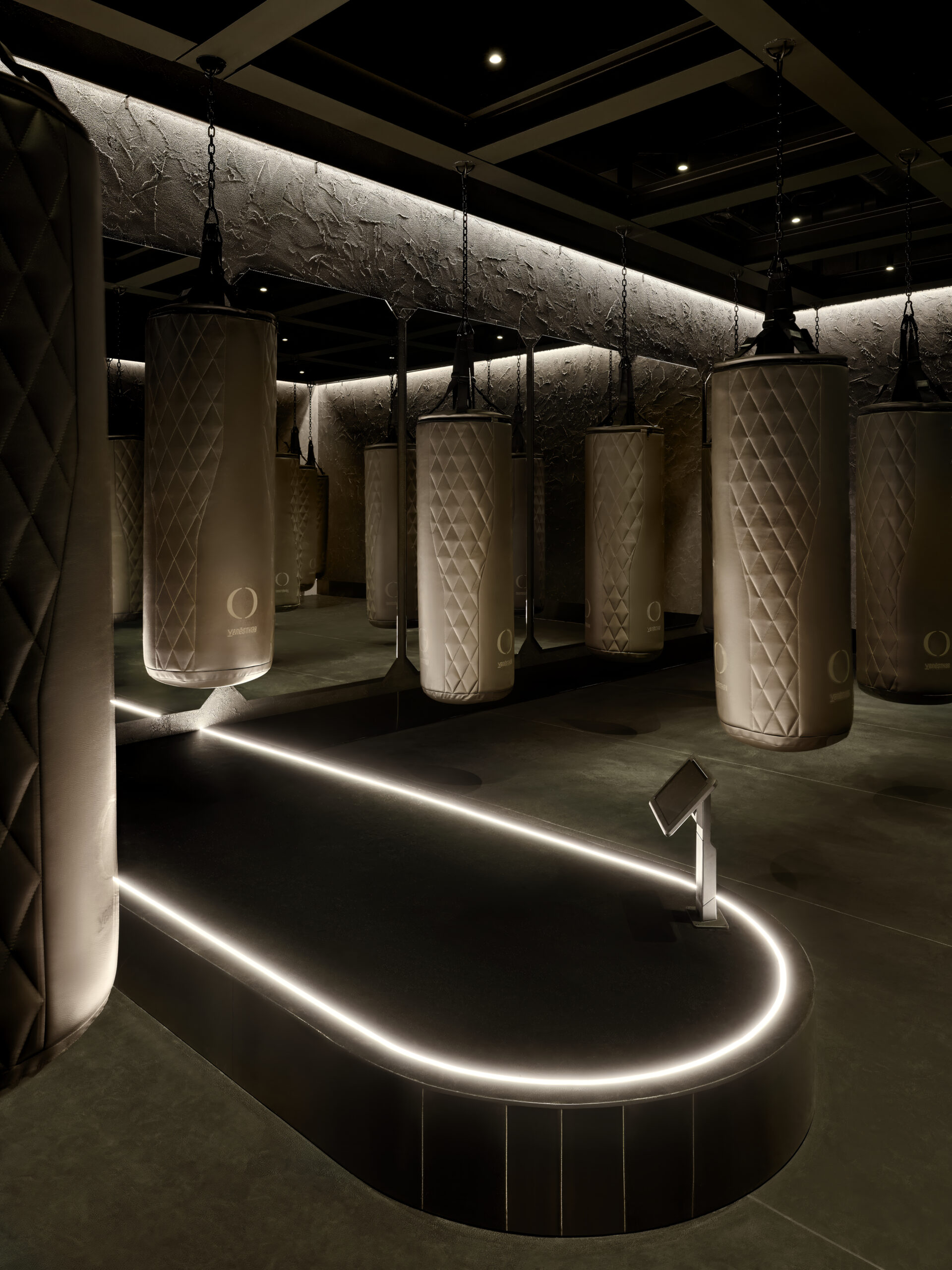
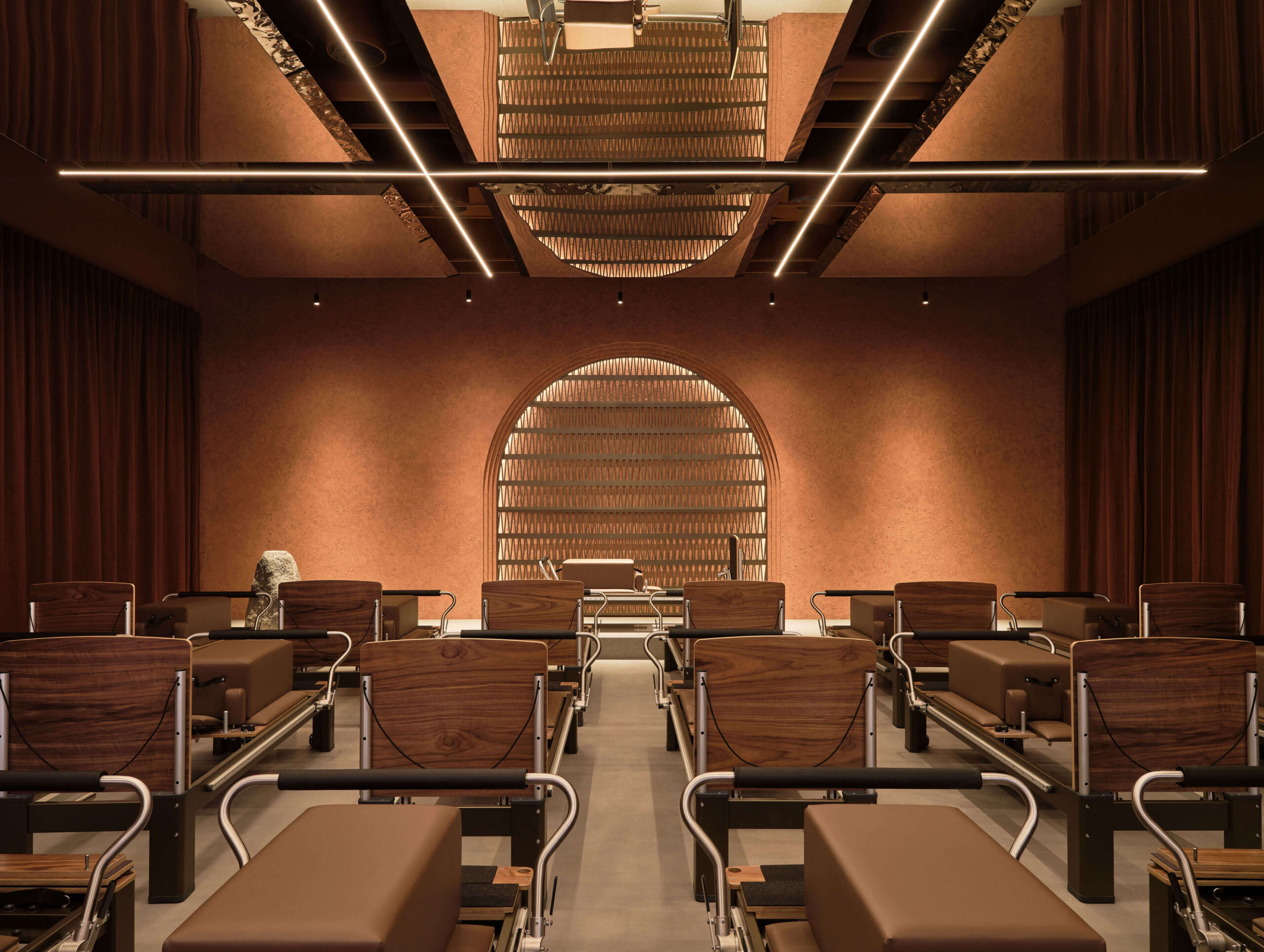
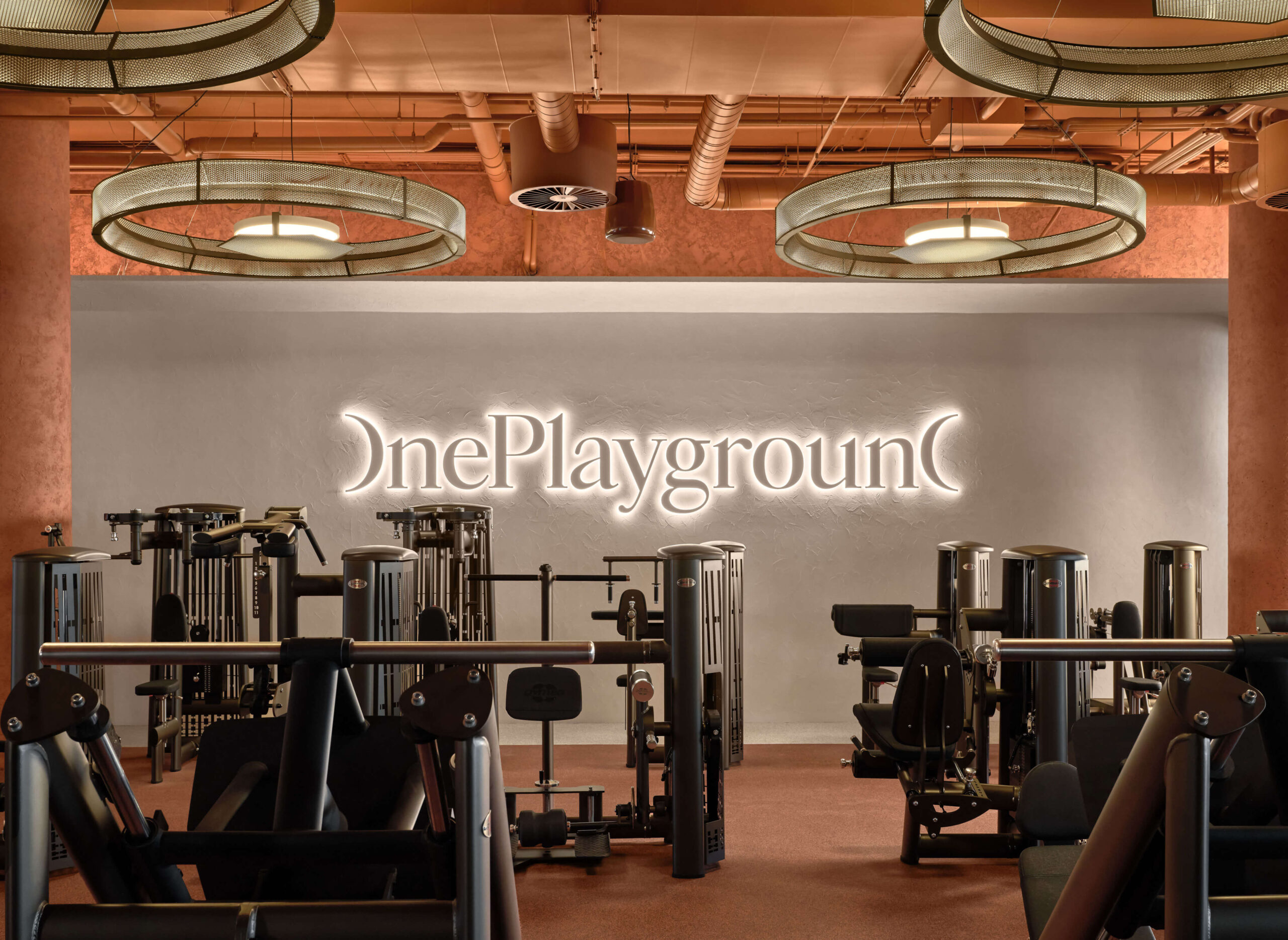
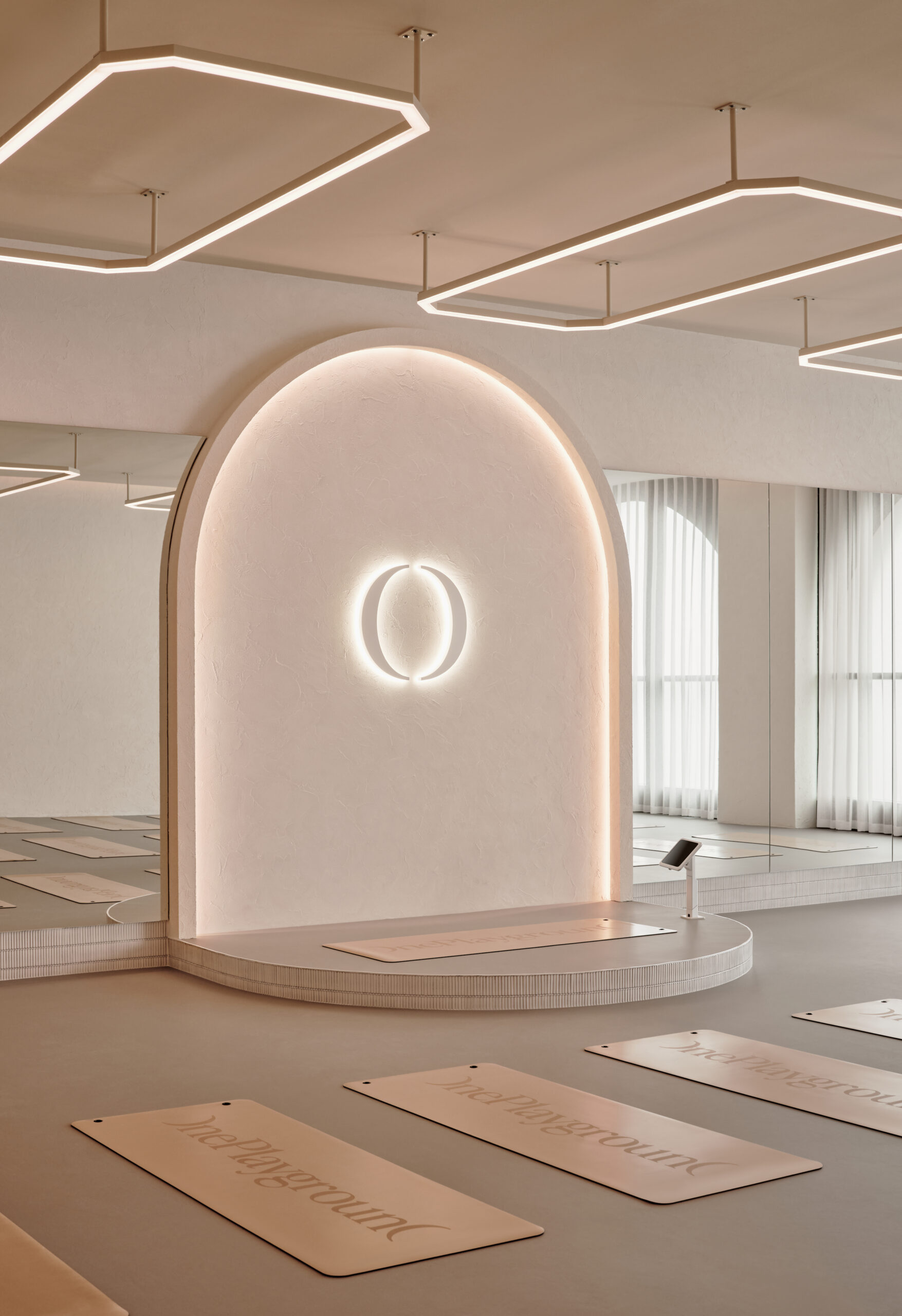
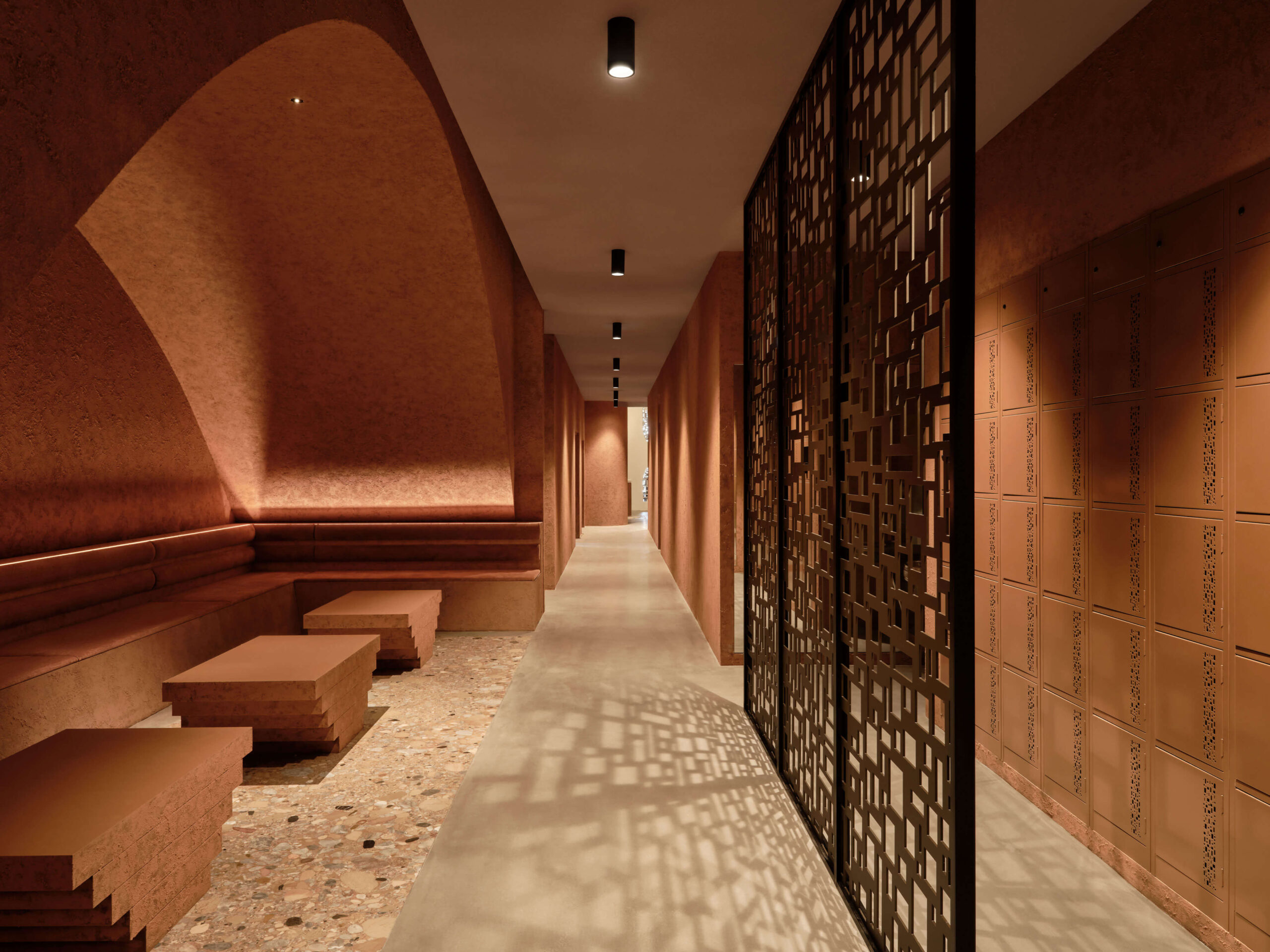
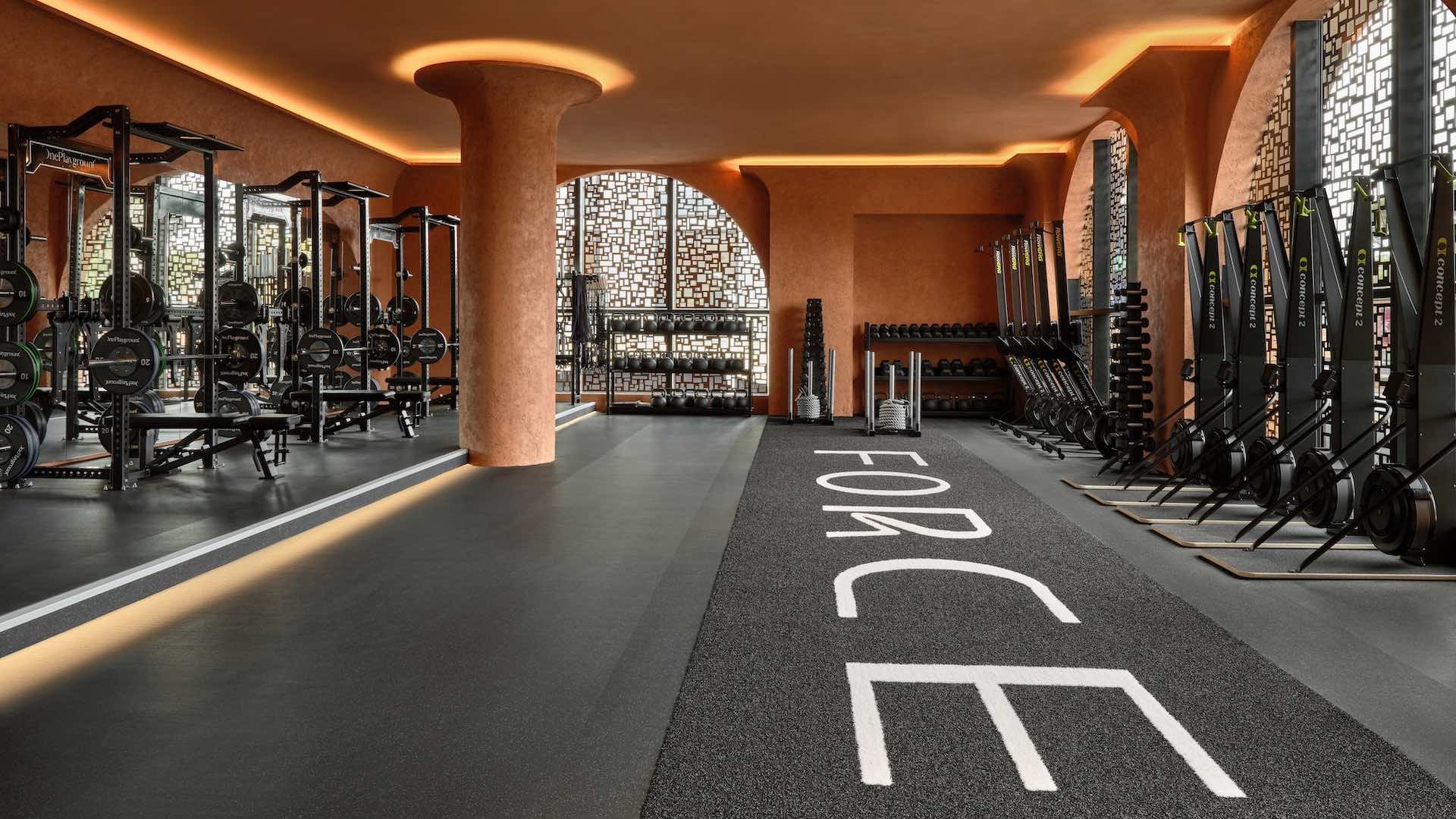
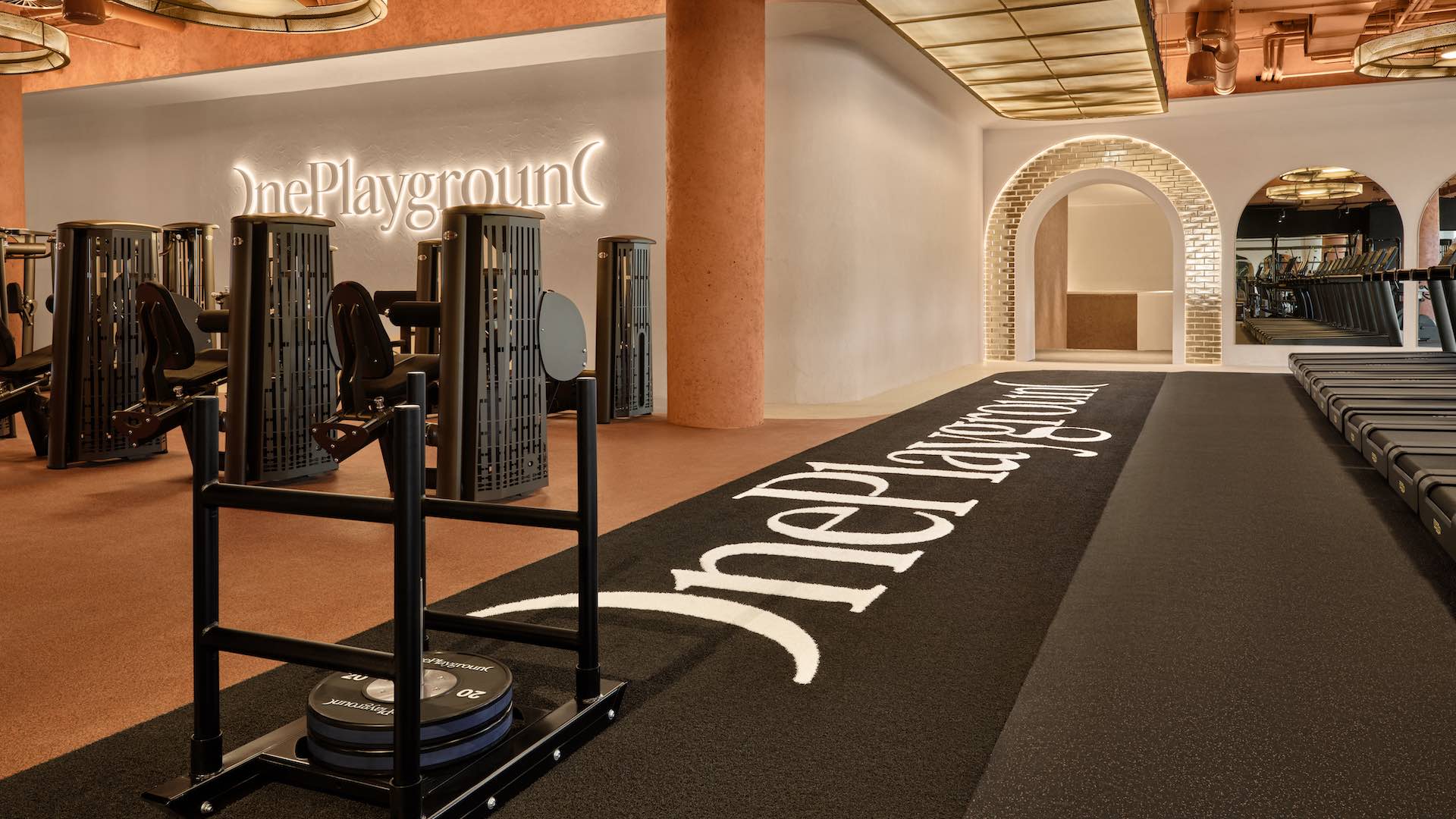
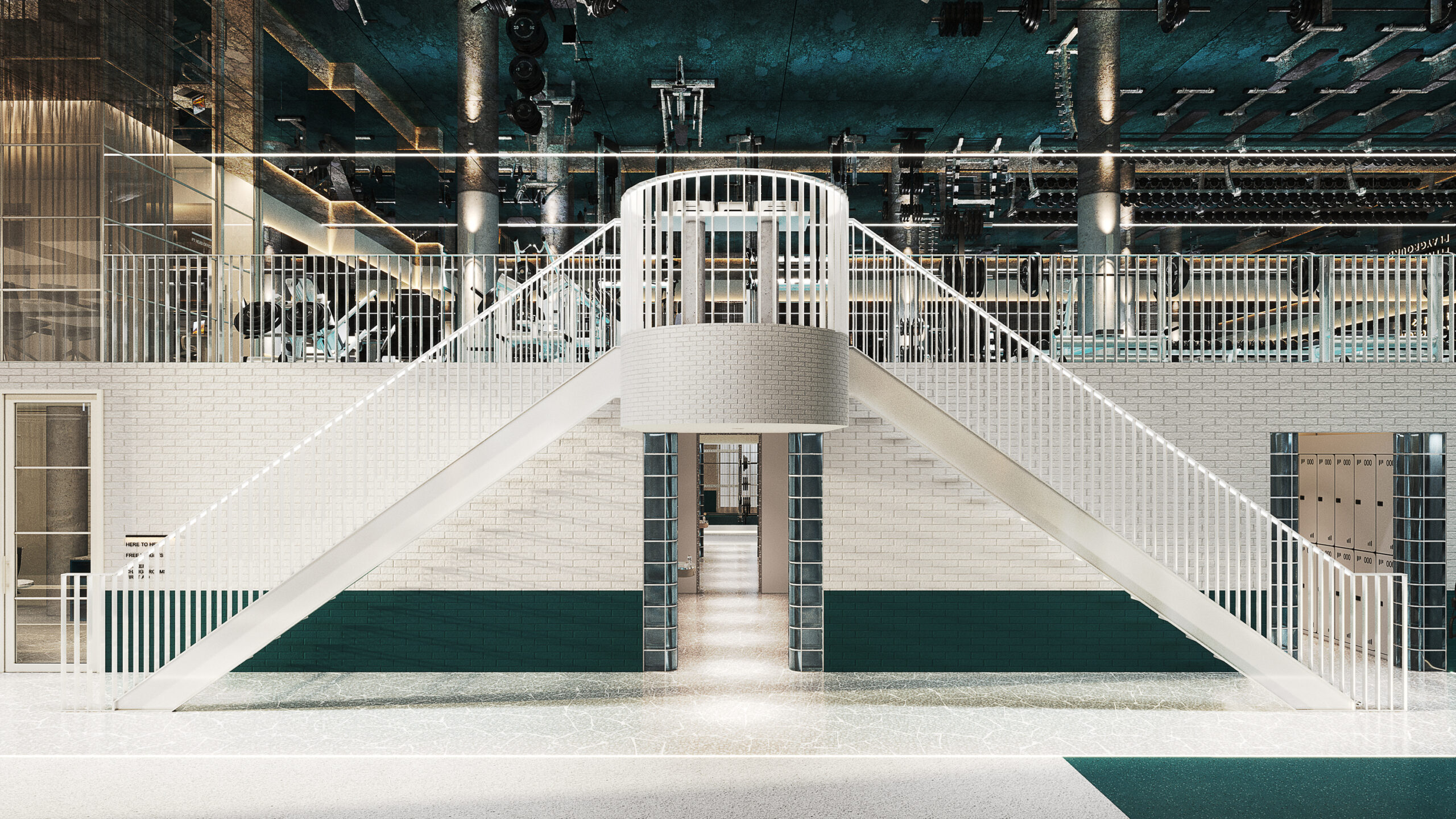
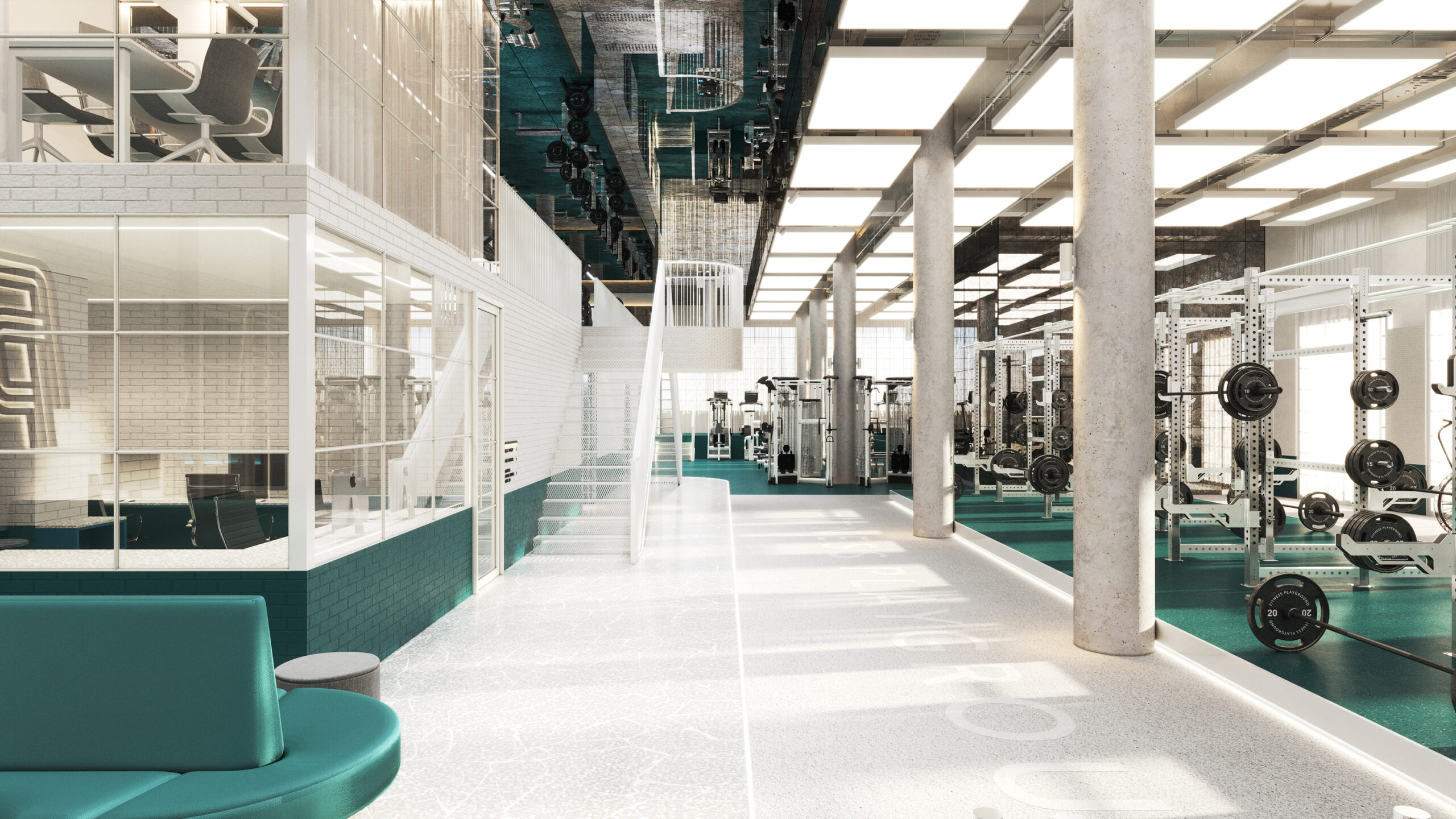
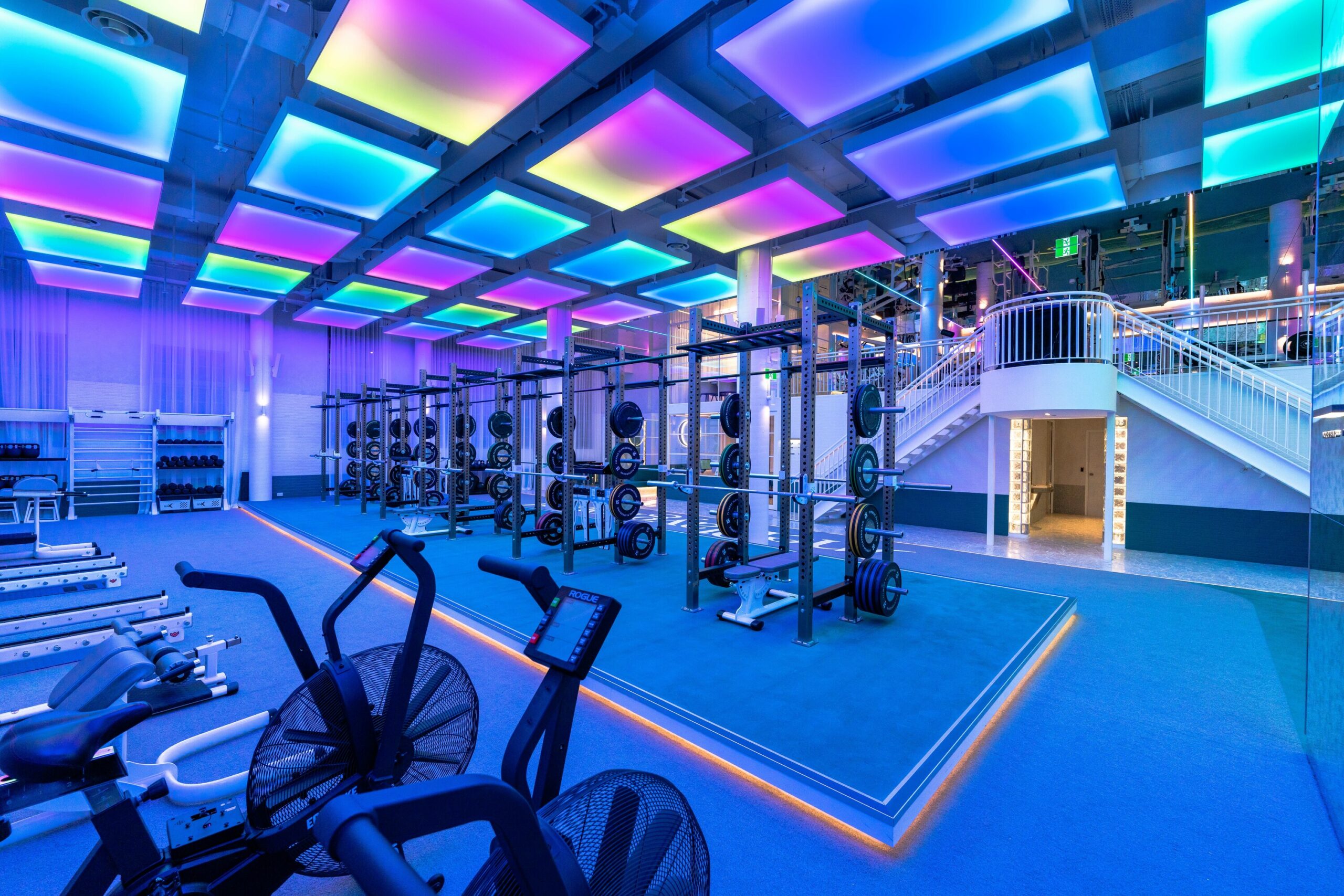
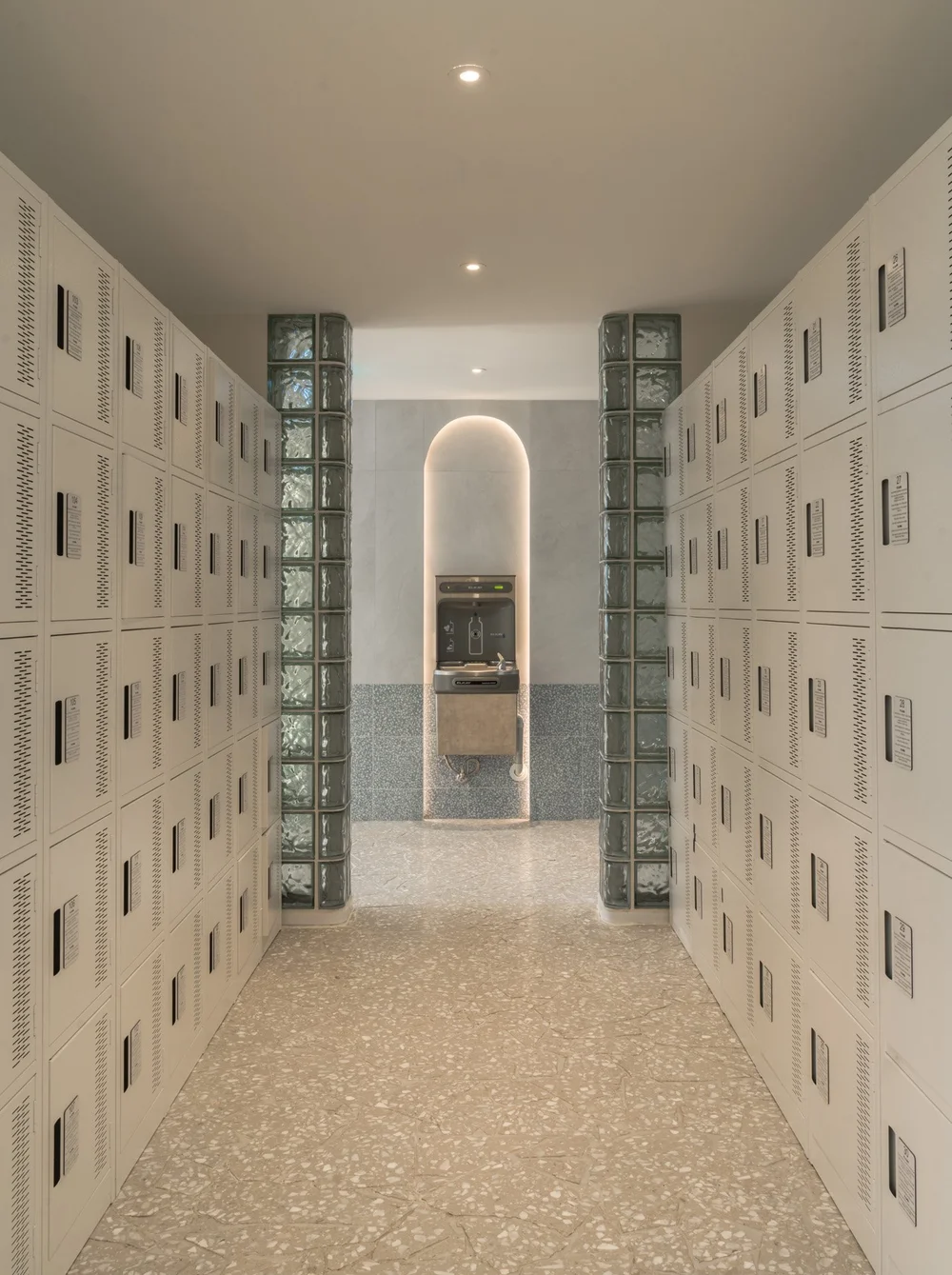
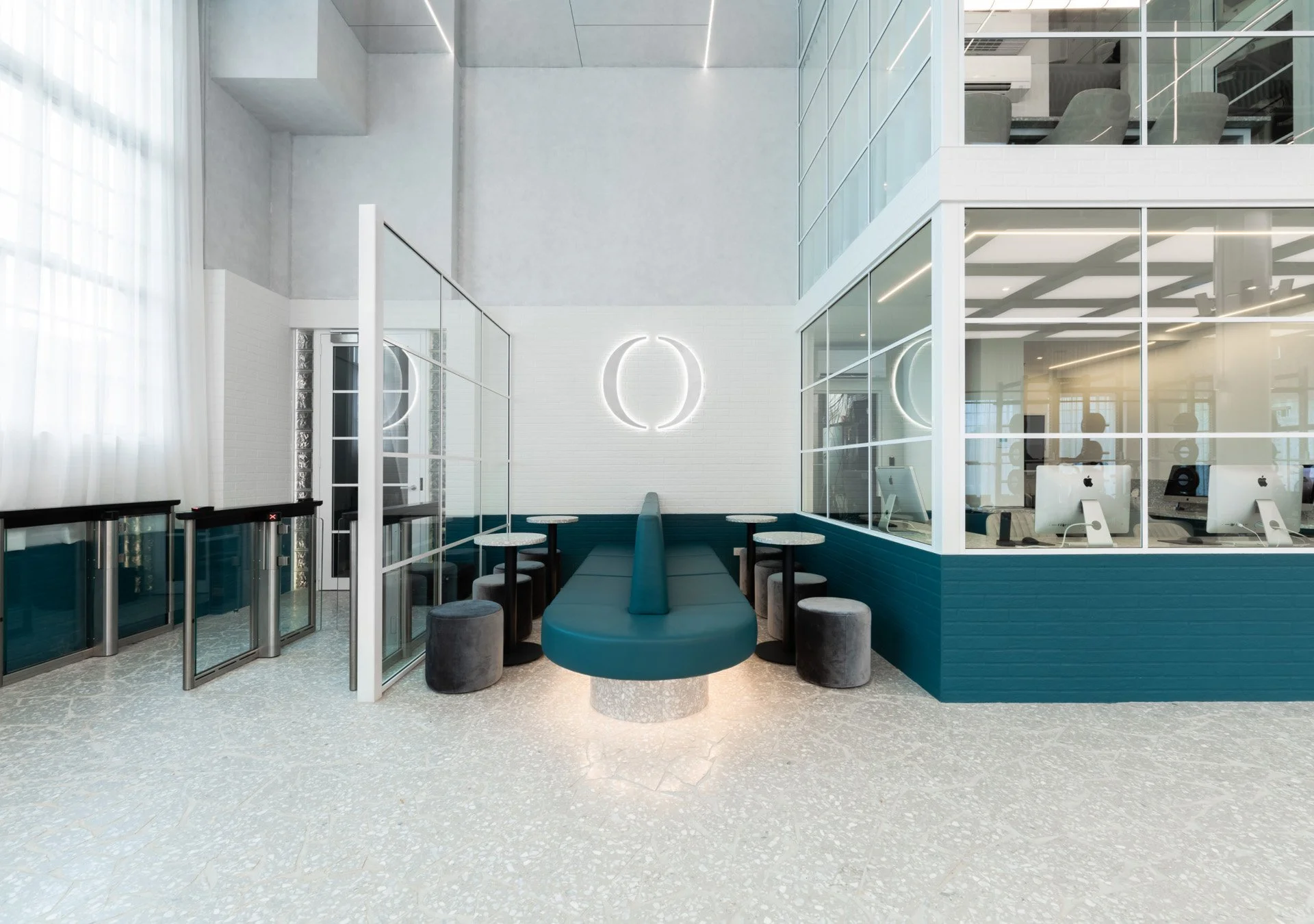
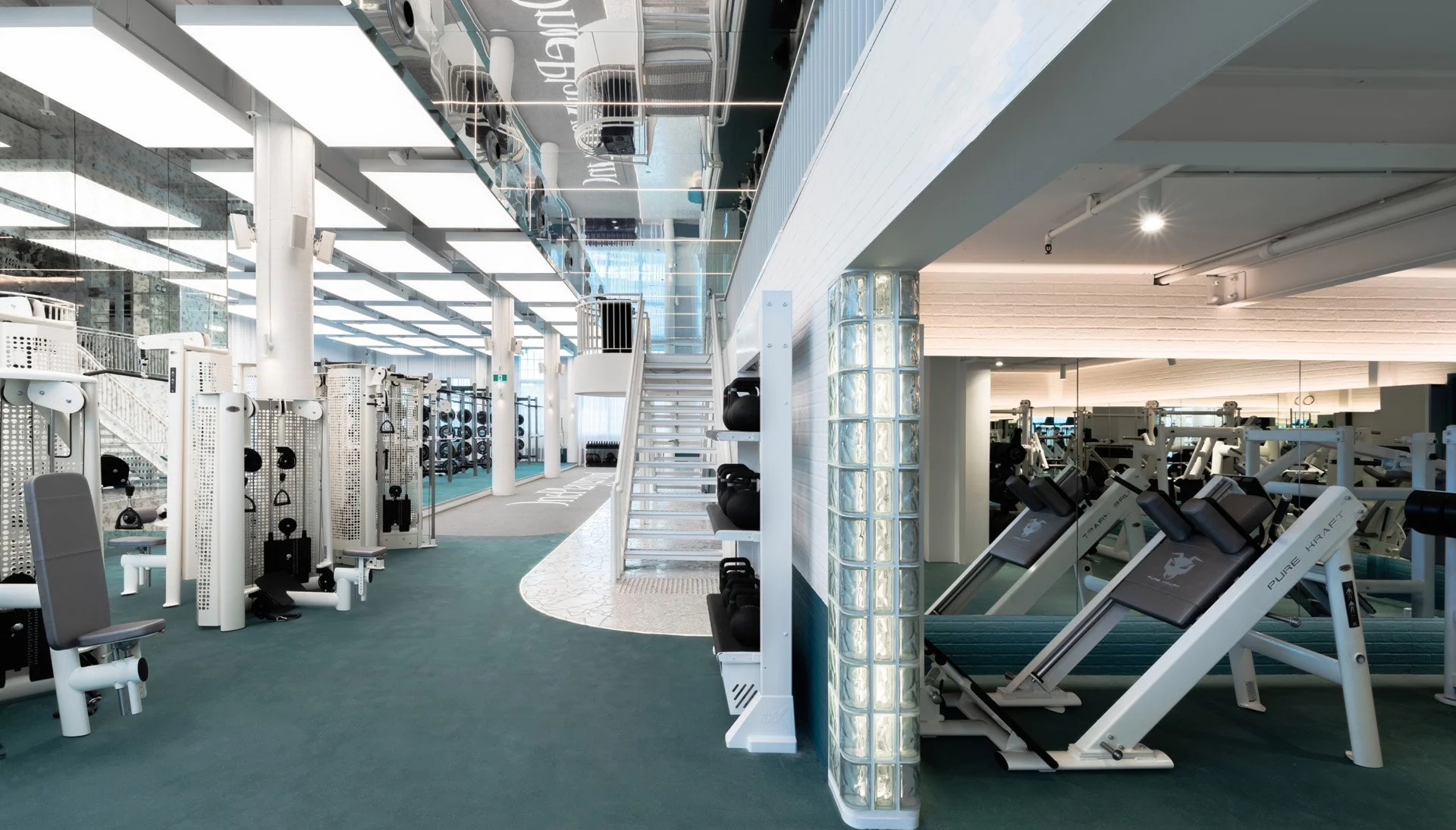
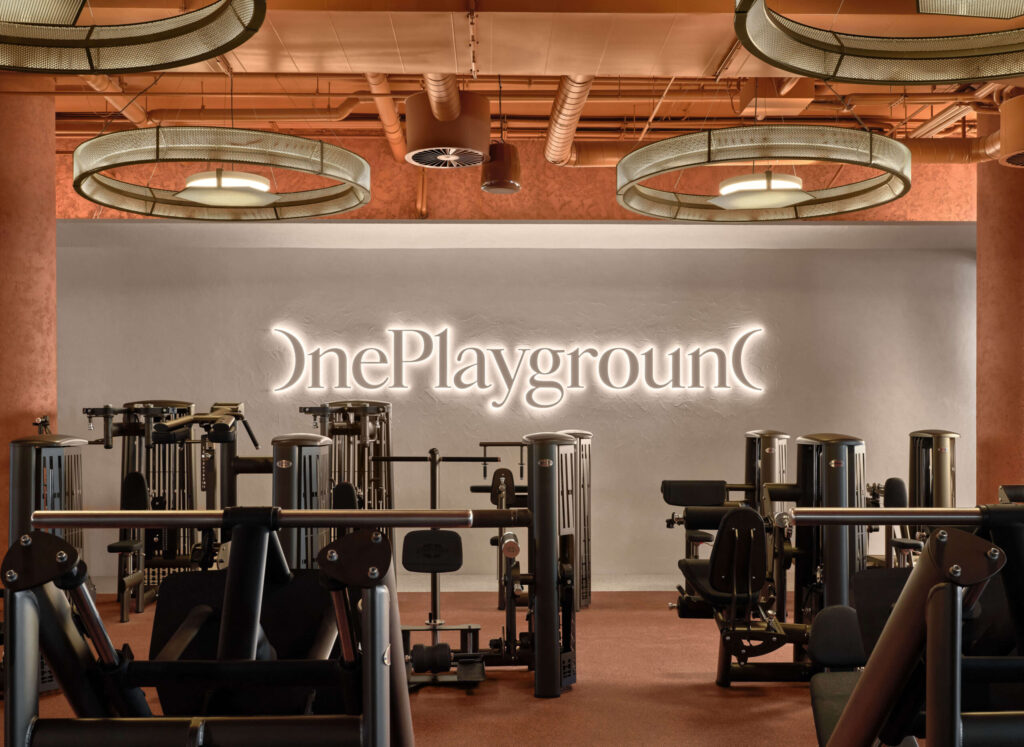
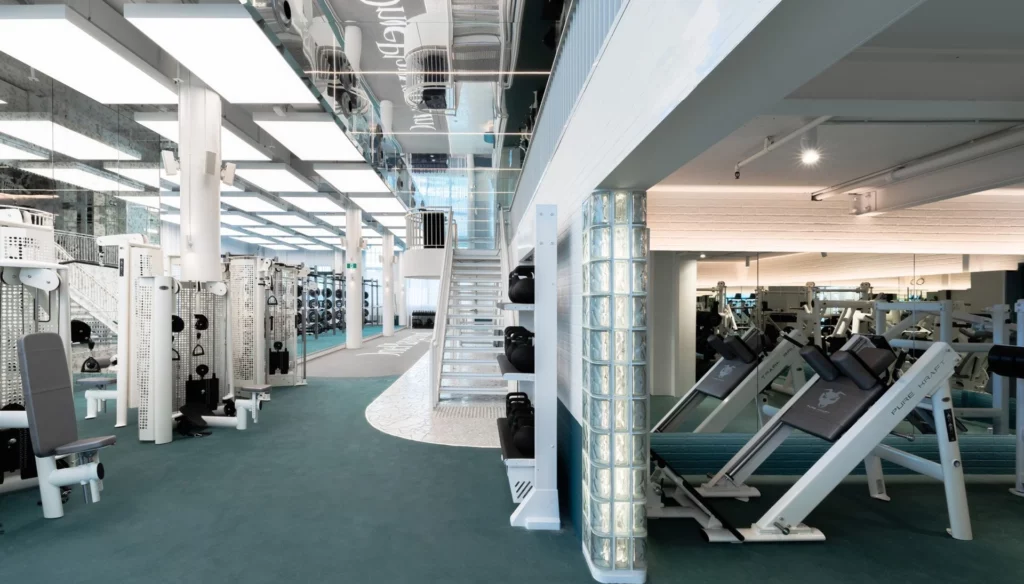
Merrylands’ 3,000 m² two-level gym, nicknamed ‘The Mirage,’ pushes the boundaries of scale and design for One Playground. Its expansive layout accommodates high-performance training areas, boutique studios, and wellness zones, all curated with a premium aesthetic.
Dramatic lighting, feature walls, and bespoke joinery create a visually striking environment, while acoustic planning ensures a comfortable training atmosphere. ‘The Mirage’ demonstrates how thoughtful architecture can transform a large urban space into a dynamic fitness playground, combining functionality, sustainability, and brand storytelling in a way that resonates with members.
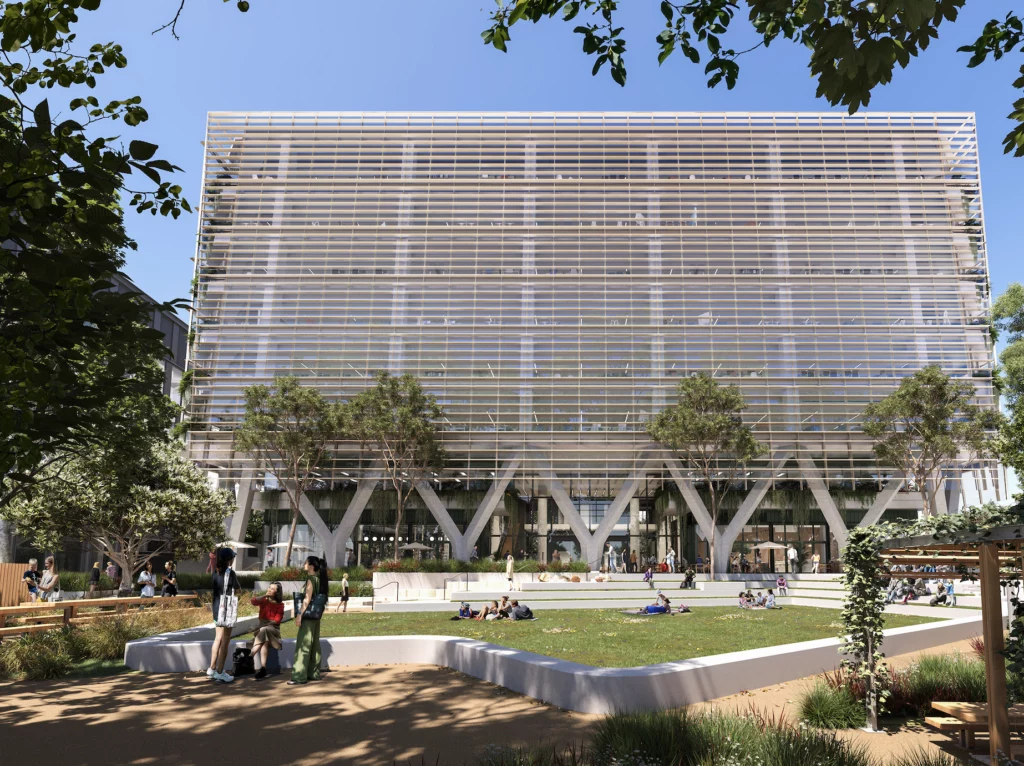
MPark Buildings C, D + The Park redefines workplace integration through a seamless blend of commercial design, public realm and construction innovation. The project balances premium workplace environments with activated green space, delivering a connected precinct that prioritises experience, movement and community. Its strength lies in the collaboration between architecture, interiors and construction, creating a destination that feels equally considered at street level and within the workplace itself.
Conceived as a dedicated centre for mathematical excellence, the hub brings together flexible teaching studios, collaborative problem-solving zones and breakout spaces that support both focused learning and peer-to-peer engagement.
Designed to support hundreds of students across multiple year groups, the Maths Hub provides highly adaptable spaces that can shift between traditional instruction, group work and independent study, reinforcing Barker College’s commitment to innovative, future-focused education through thoughtful design and construction excellence.
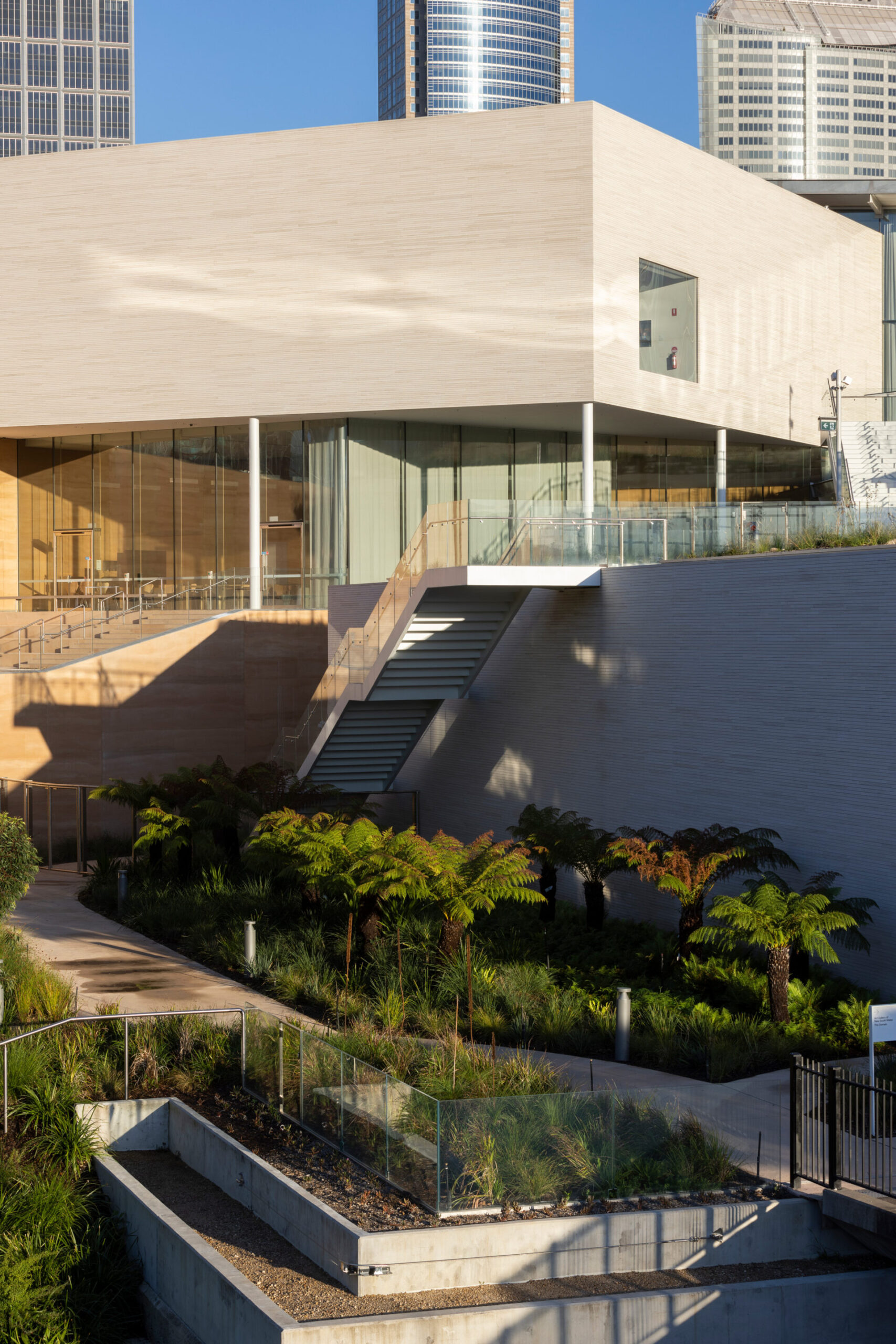
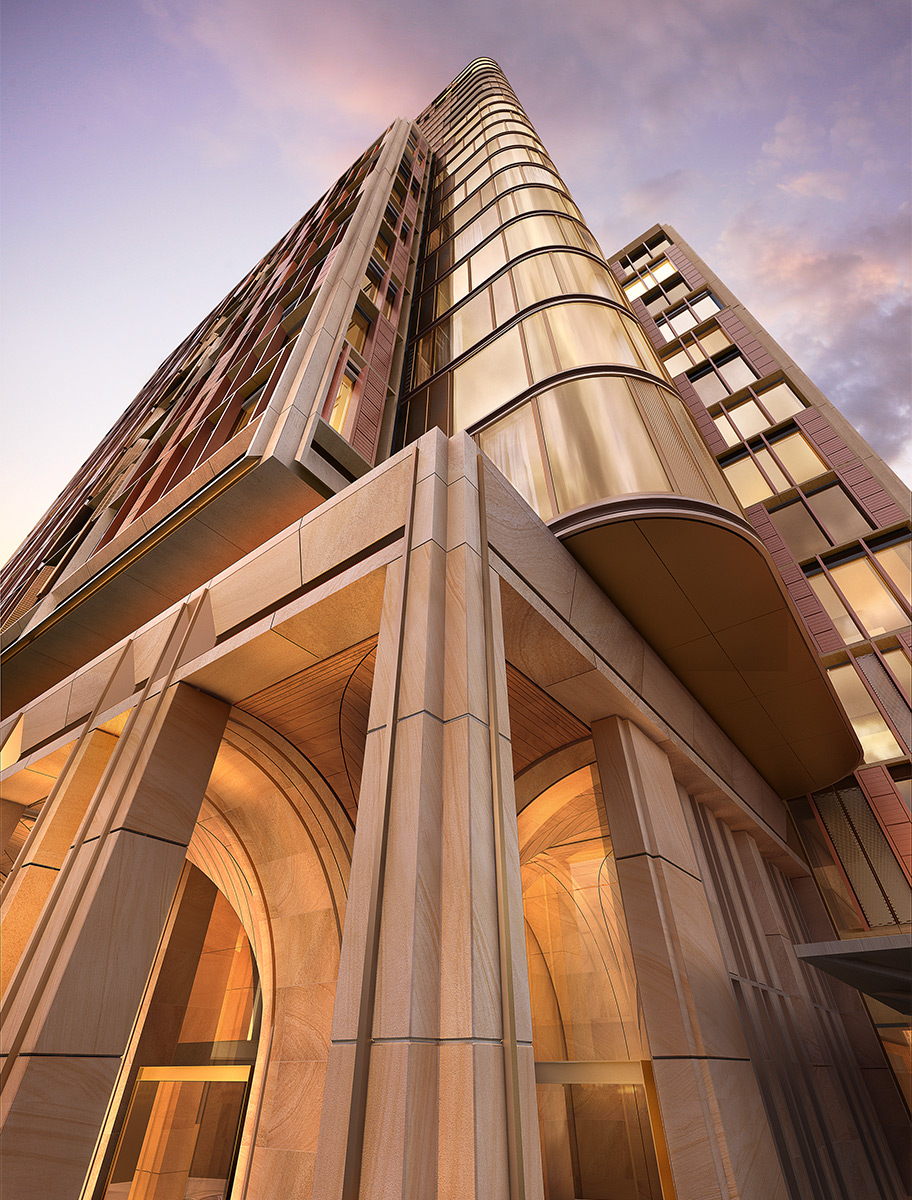
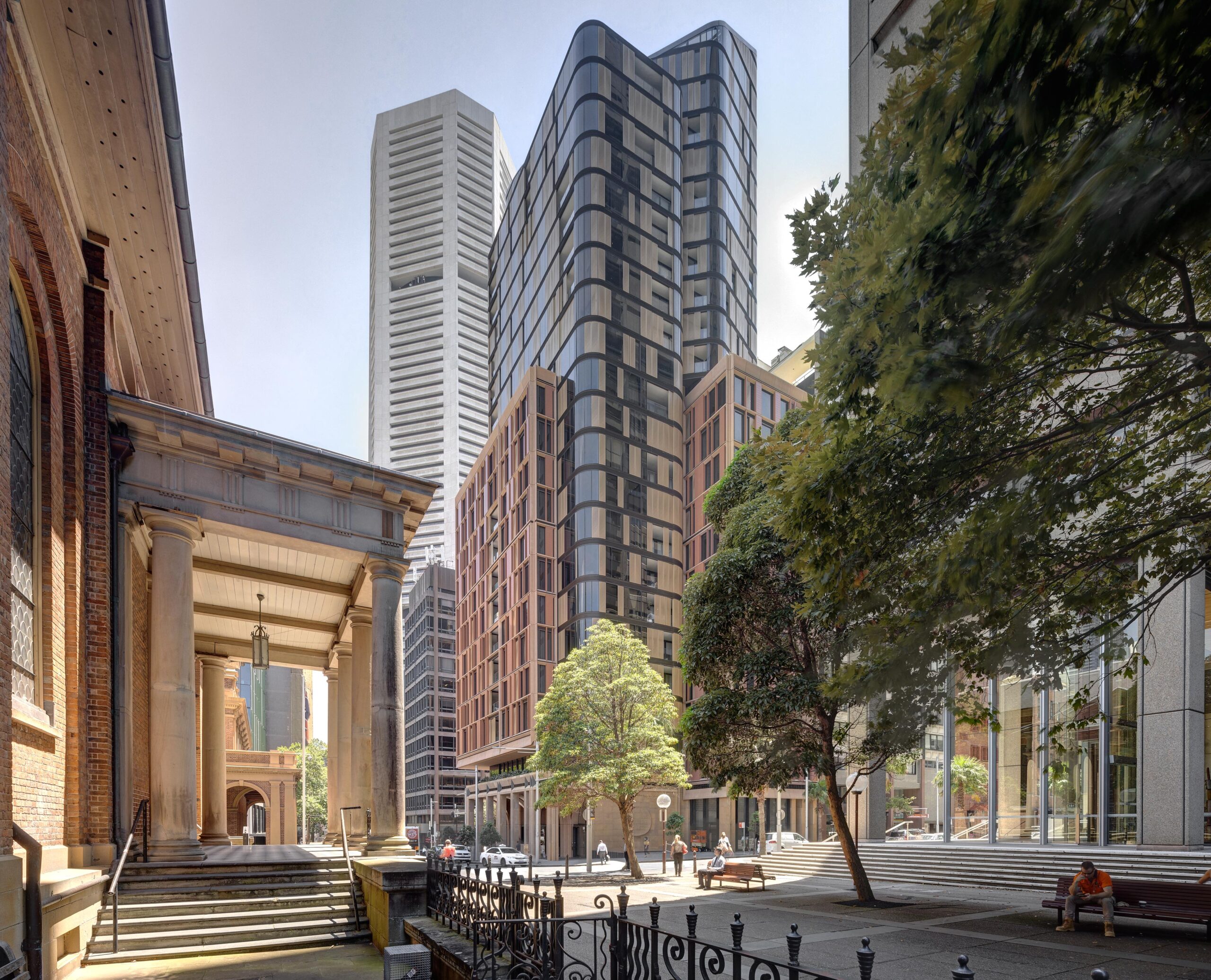
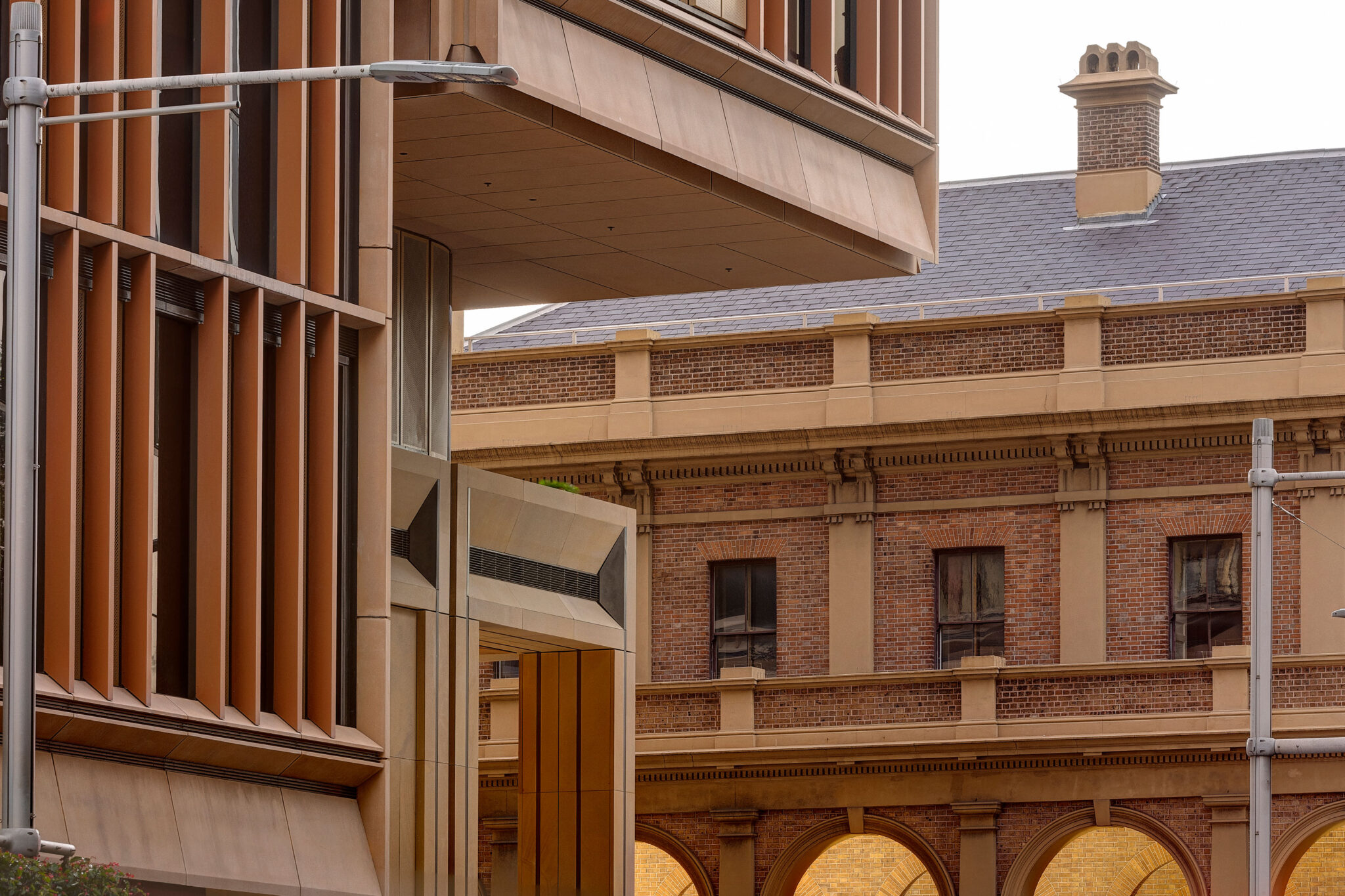
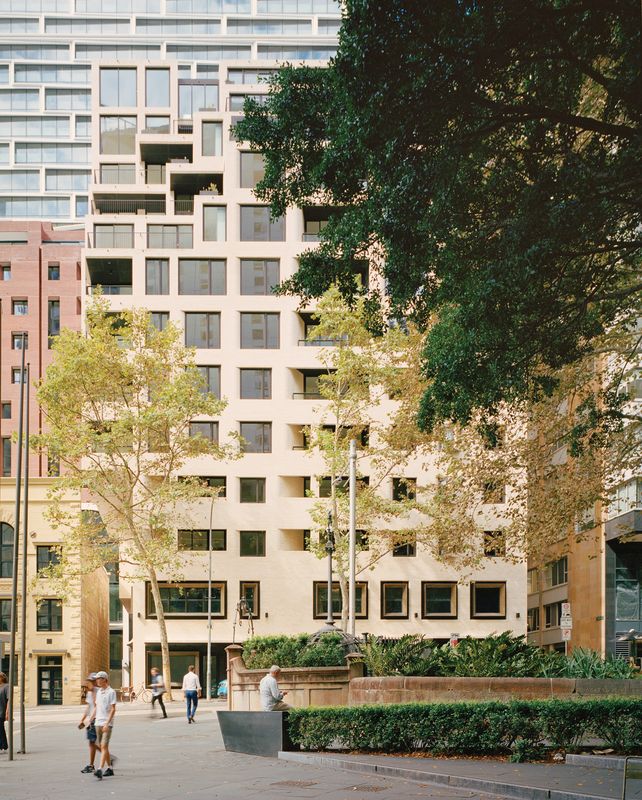
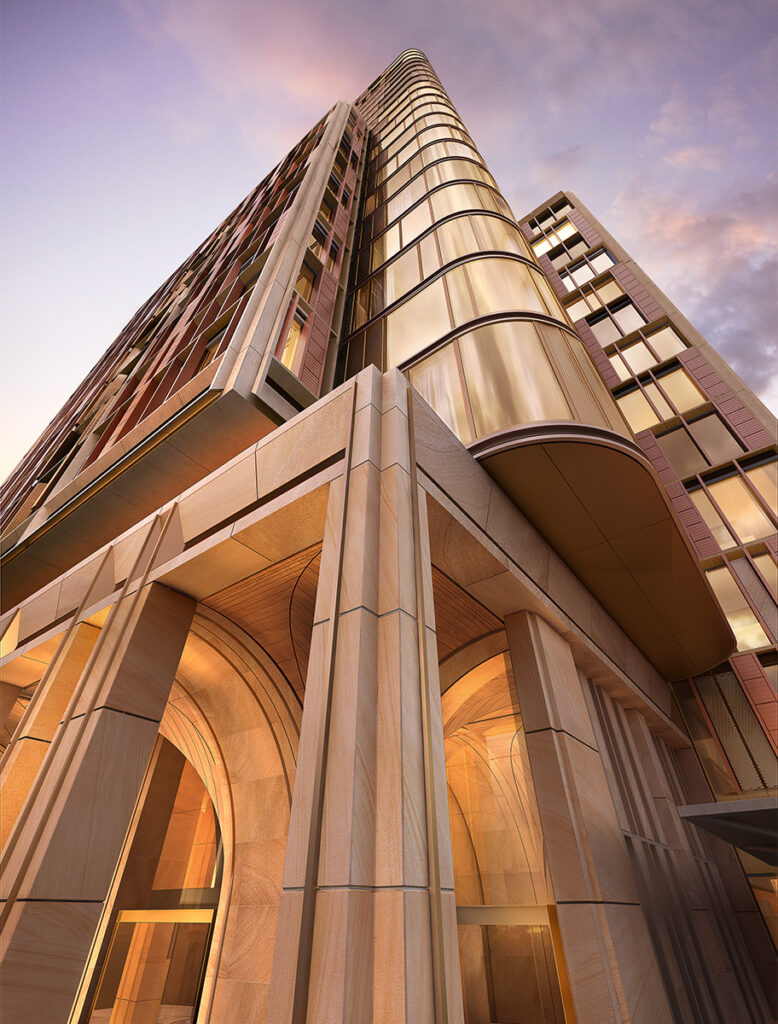
King & Phillip Residences is a 27-storey, 105-apartment premium residential tower in Sydney’s historic legal precinct. Its design draws on classical geometry, sandstone colonnades and heritage proportions, referencing adjacent Supreme Court and St James Church while employing contemporary materials and solar-optimised massing to enhance amenity and views to Hyde Park.
The building’s elegant bronze-toned façade and public-facing loggia create a refined urban presence that bridges colonial context and modern city living, with efficient planning and high-quality finishes throughout.
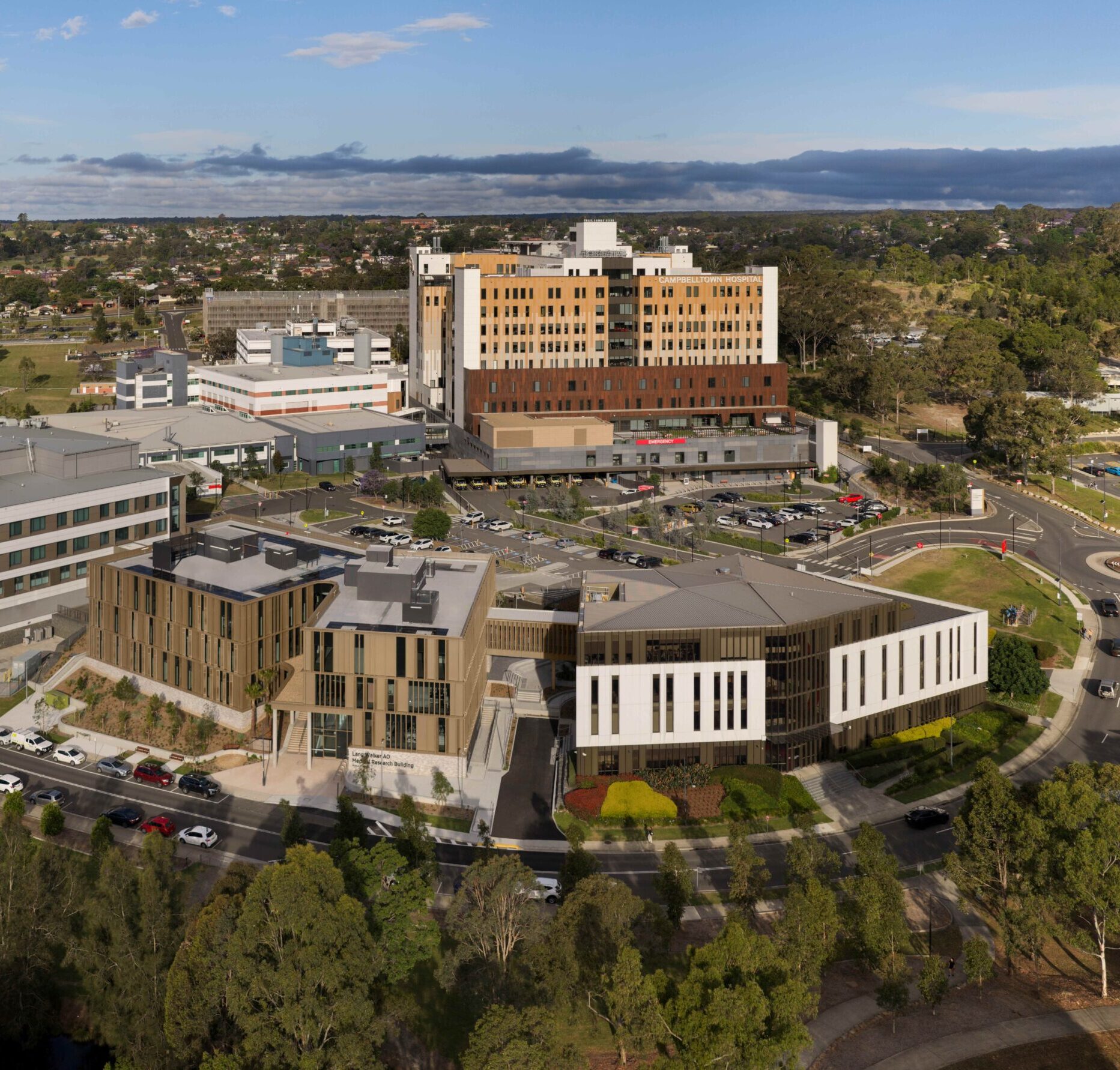
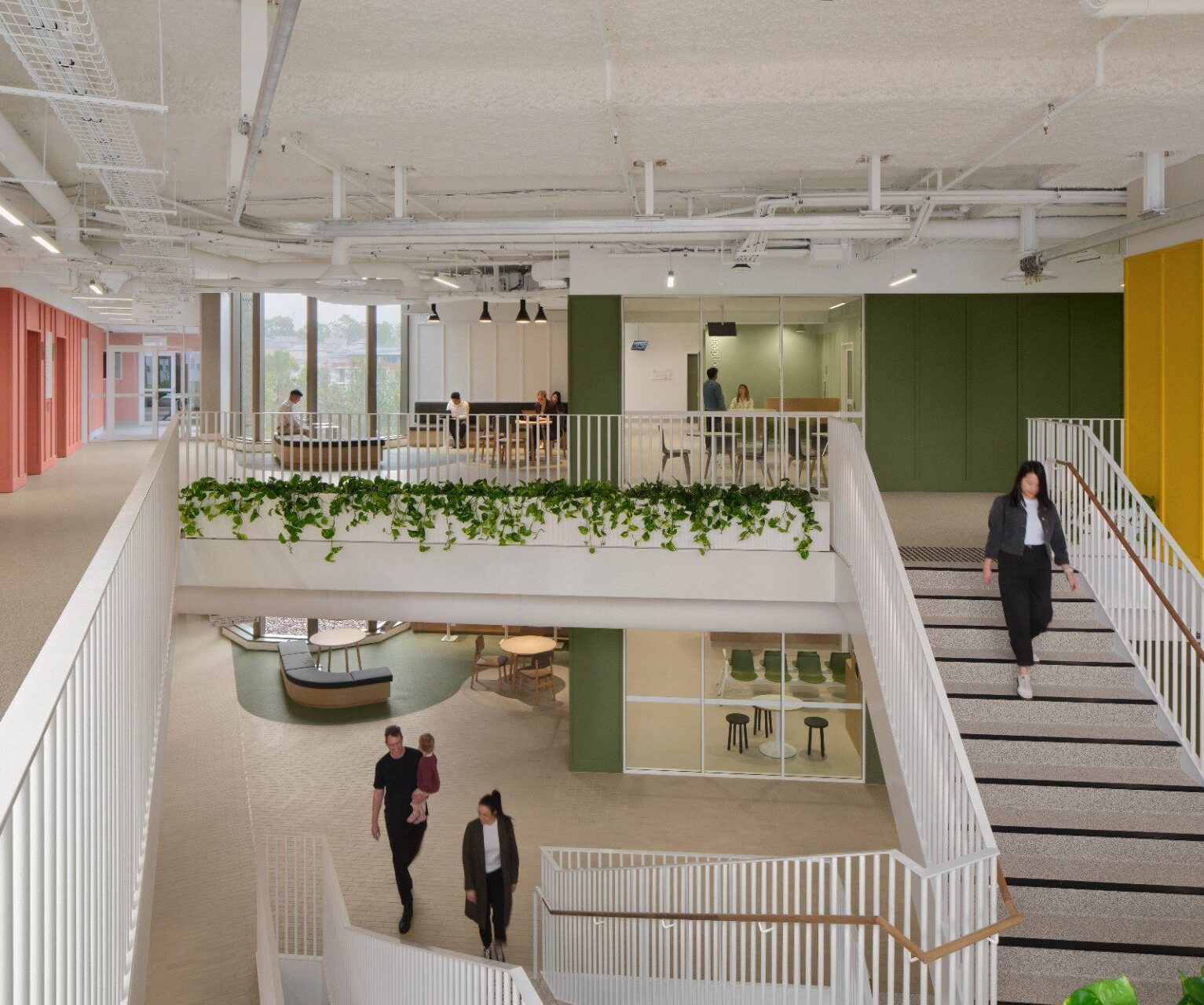
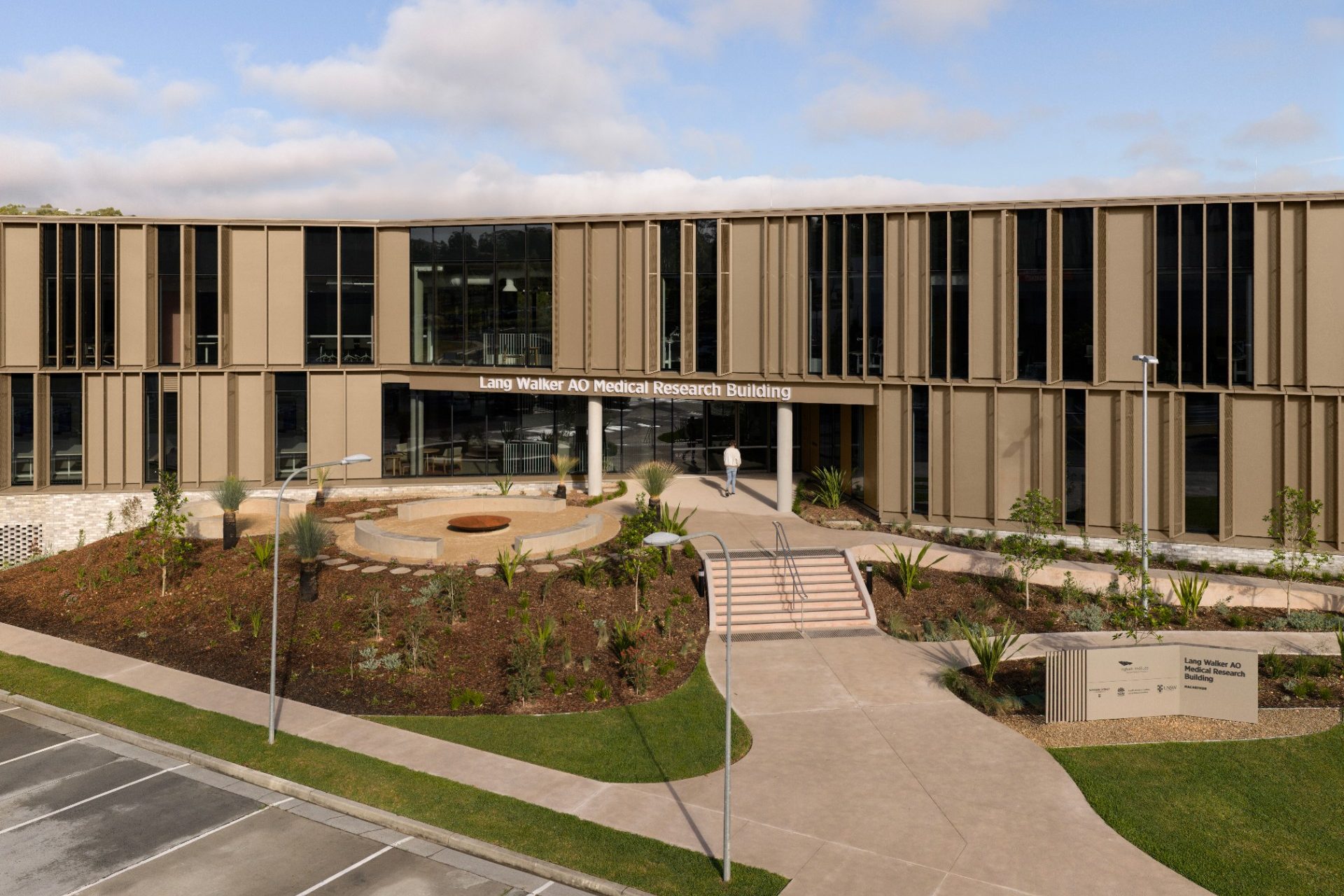
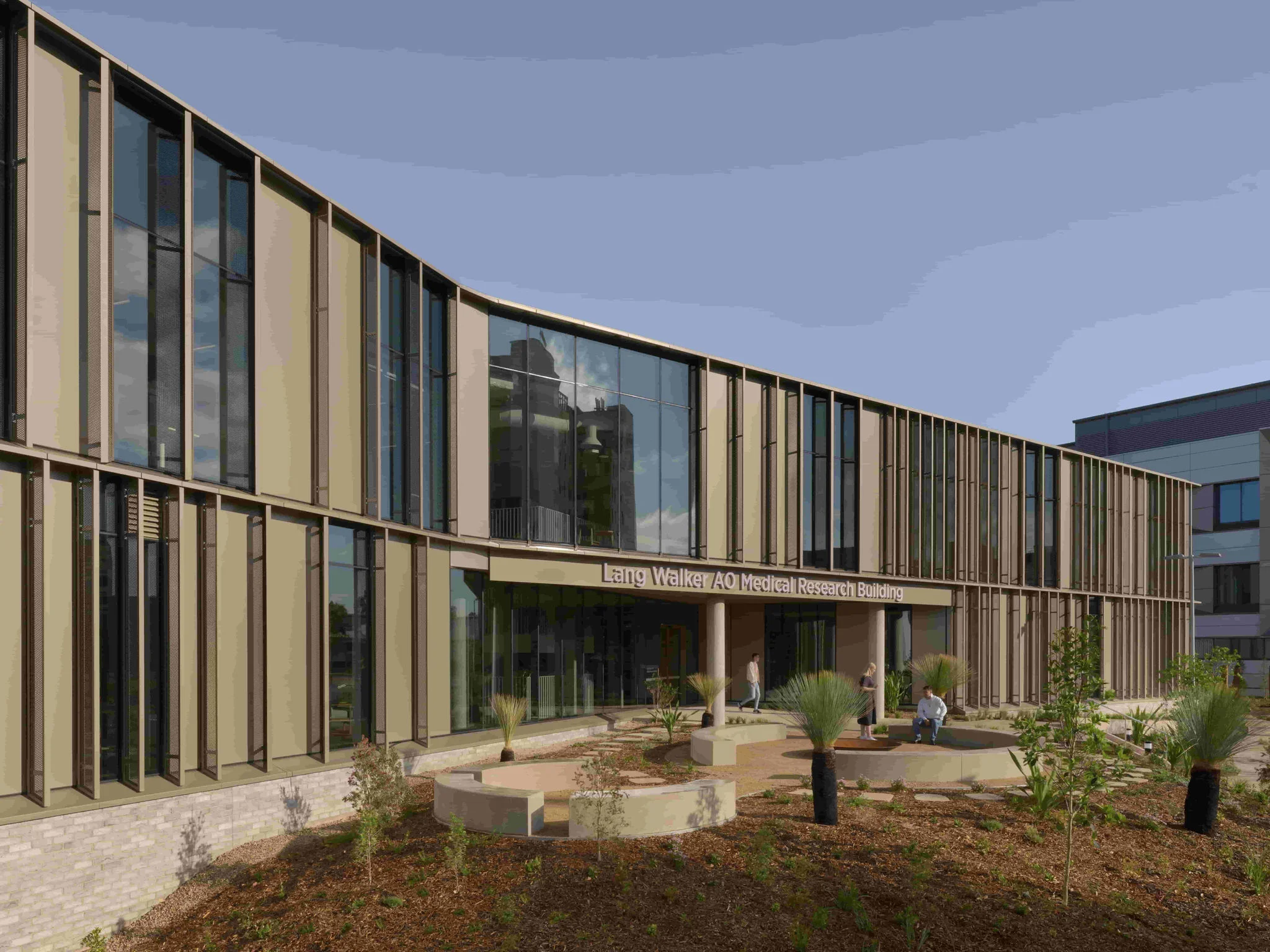
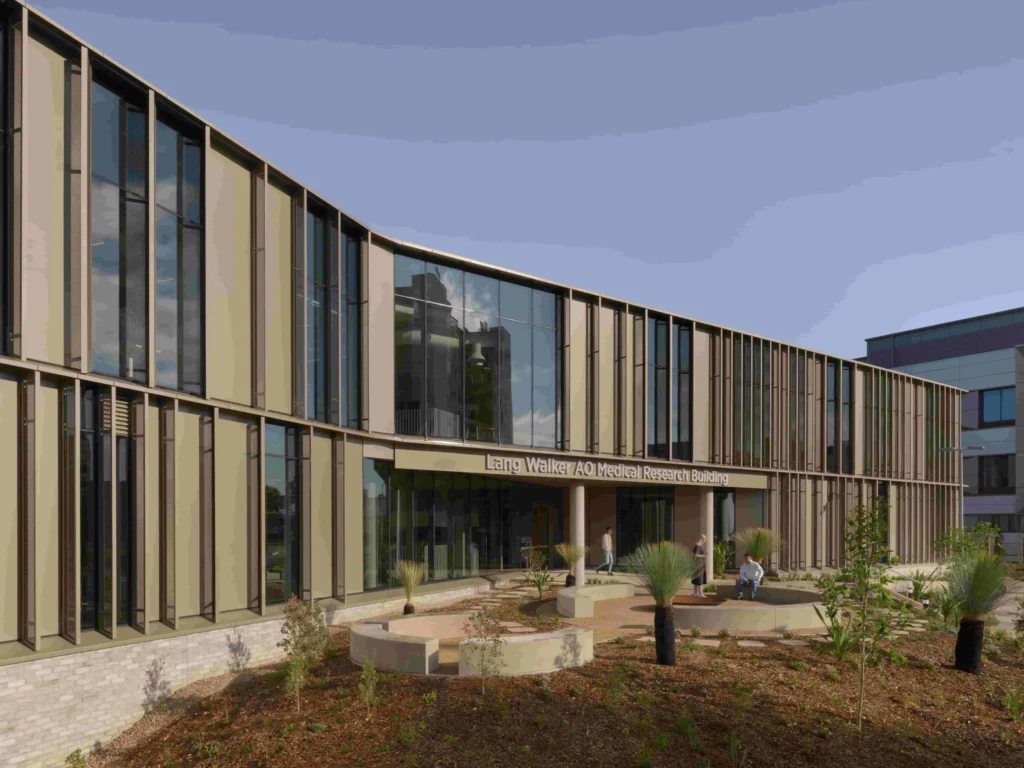
The Lang Walker AO Macarthur Medical Research Building is a landmark $55 million facility under construction within the Campbelltown Hospital Precinct in south-western Sydney.
Group DLA provided Crown Certification, BCA consulting and Disabled Access consulting on the project on this five-storey, 5,000 m² building for critical health challenges including mental health, diabetes, Indigenous health, paediatrics, and addiction medicine uses.
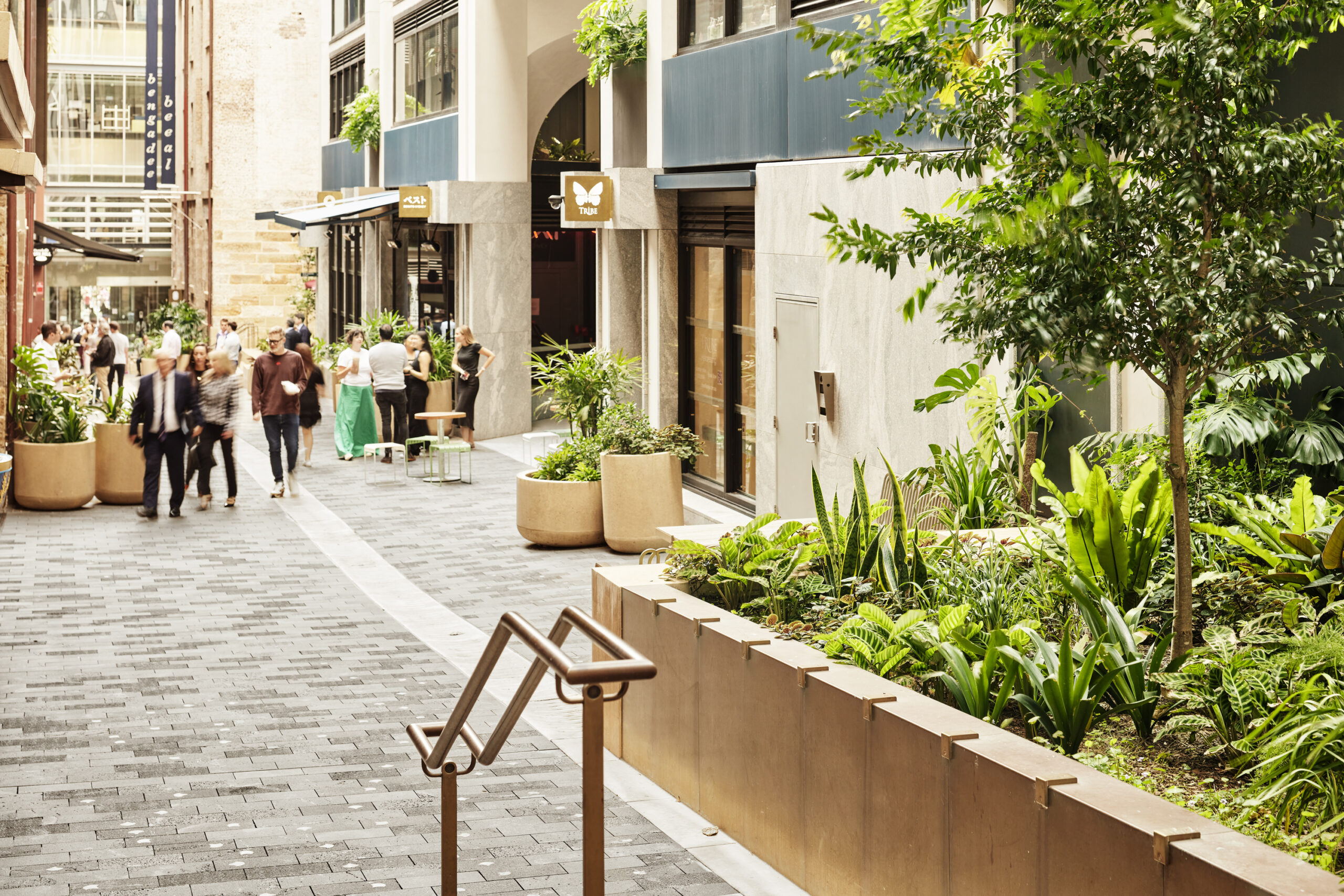
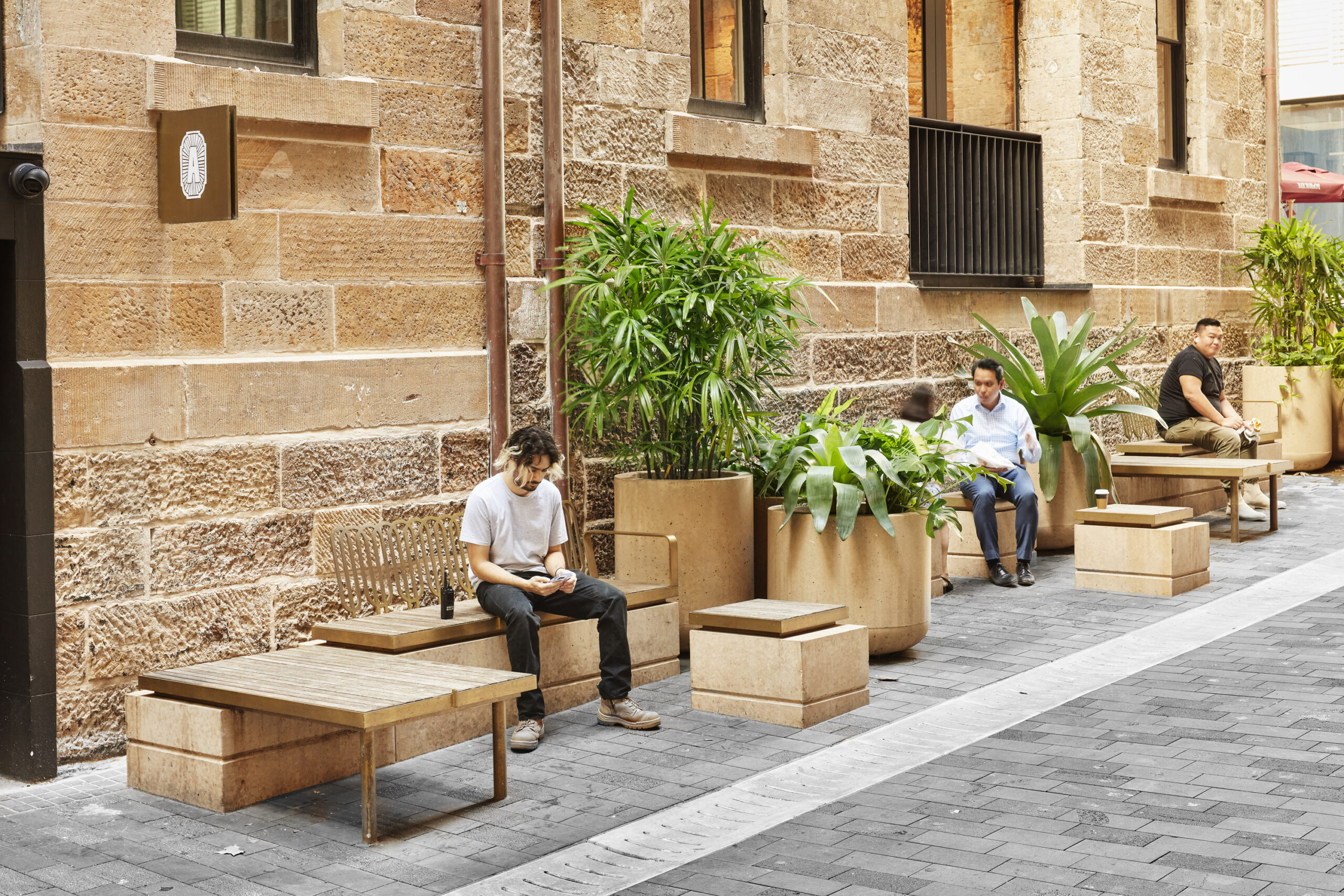
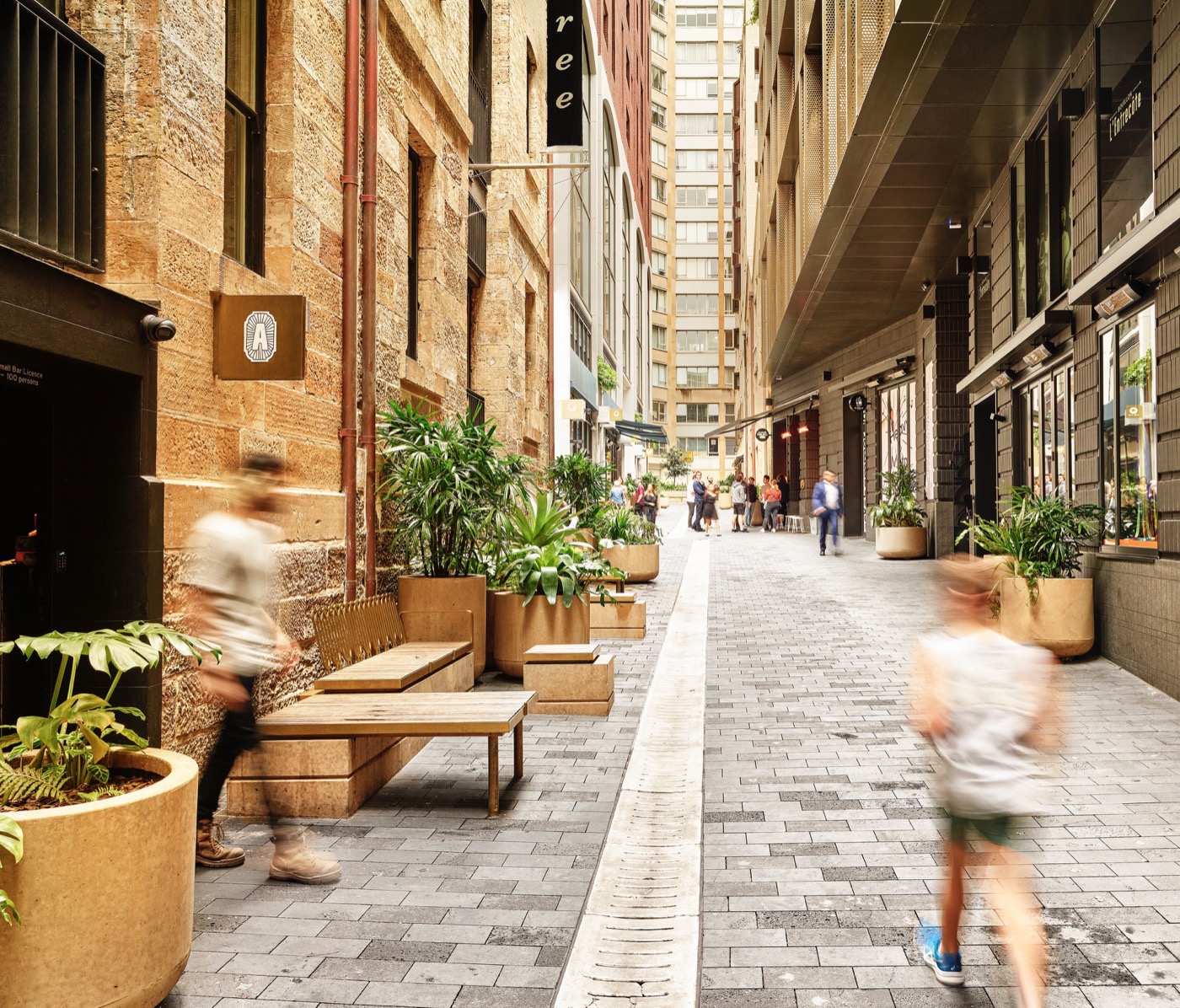
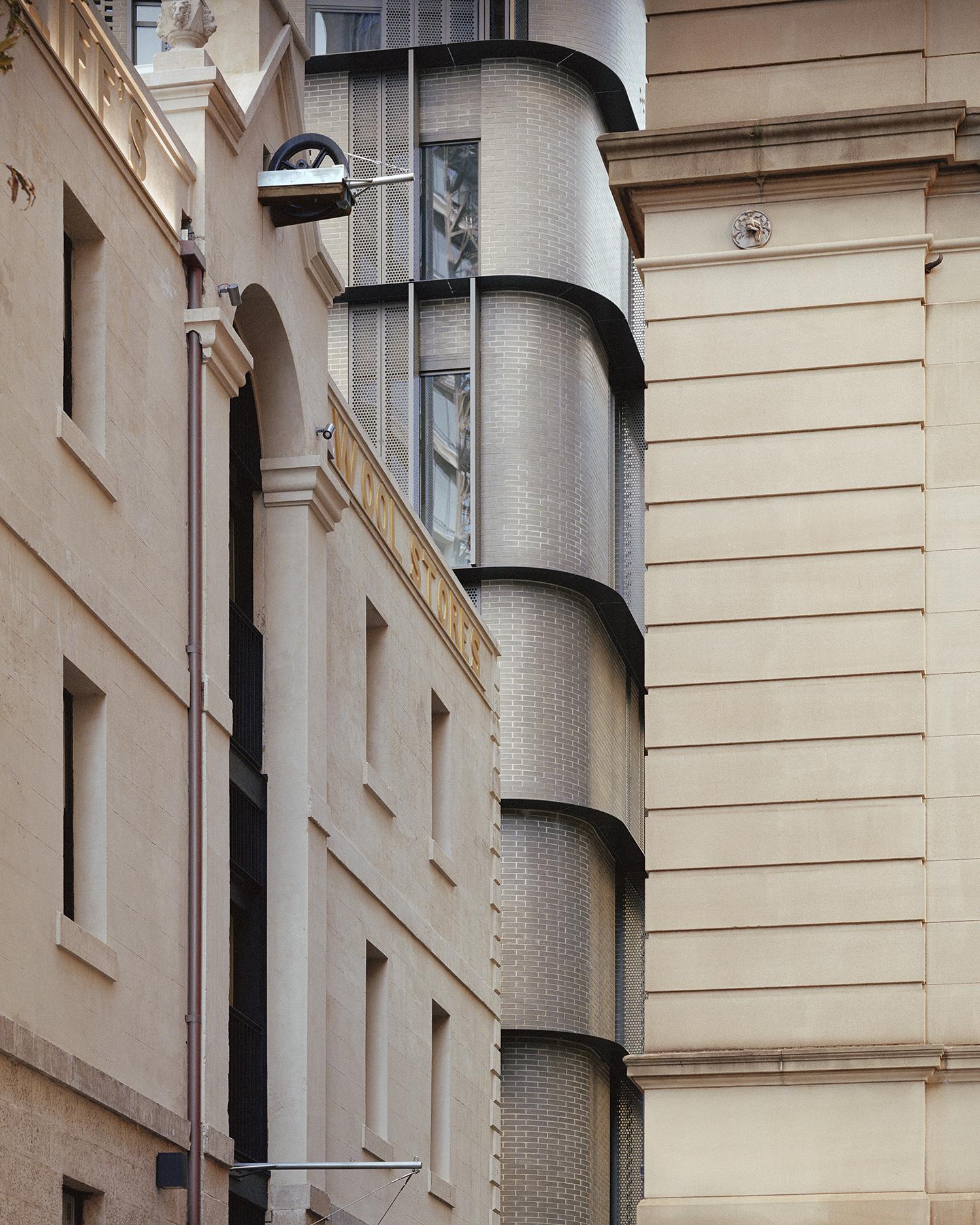
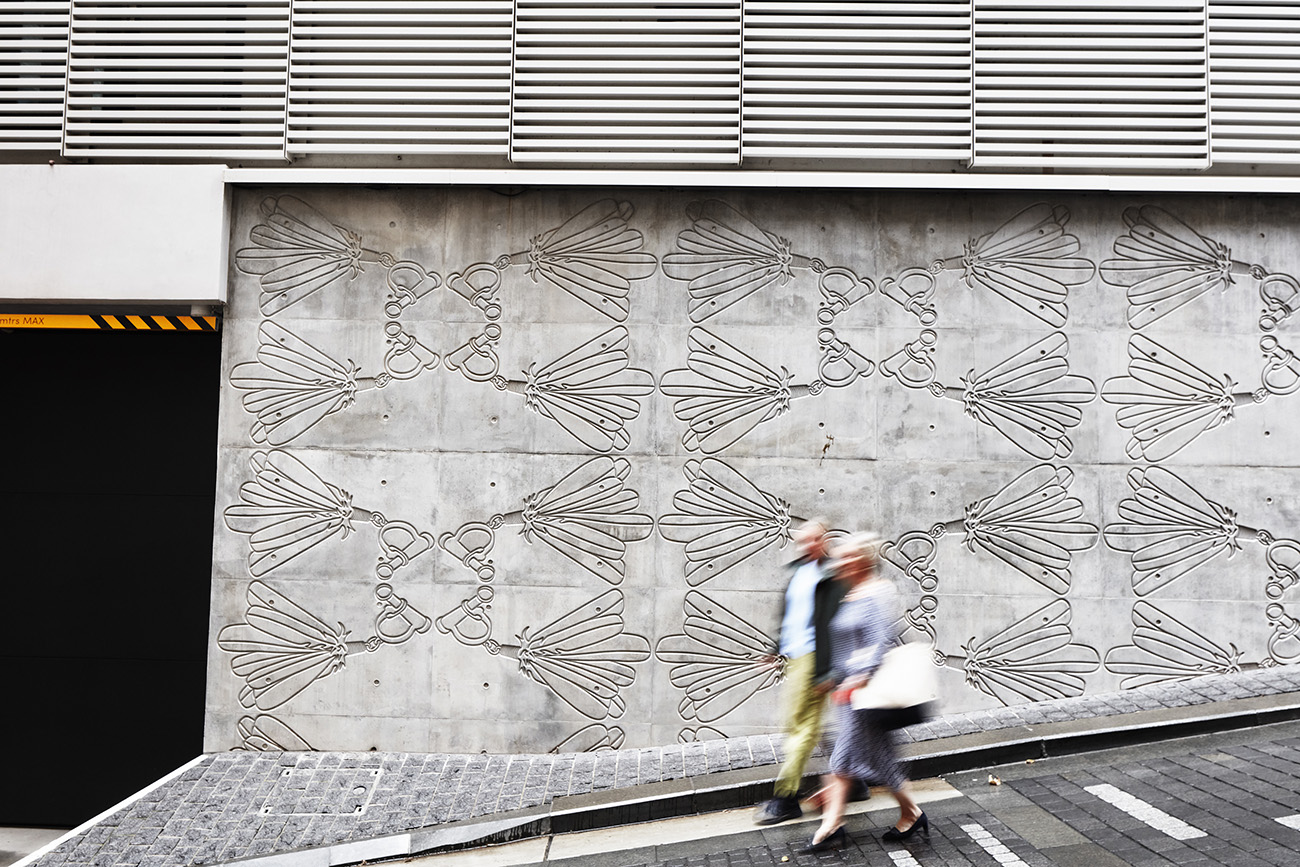
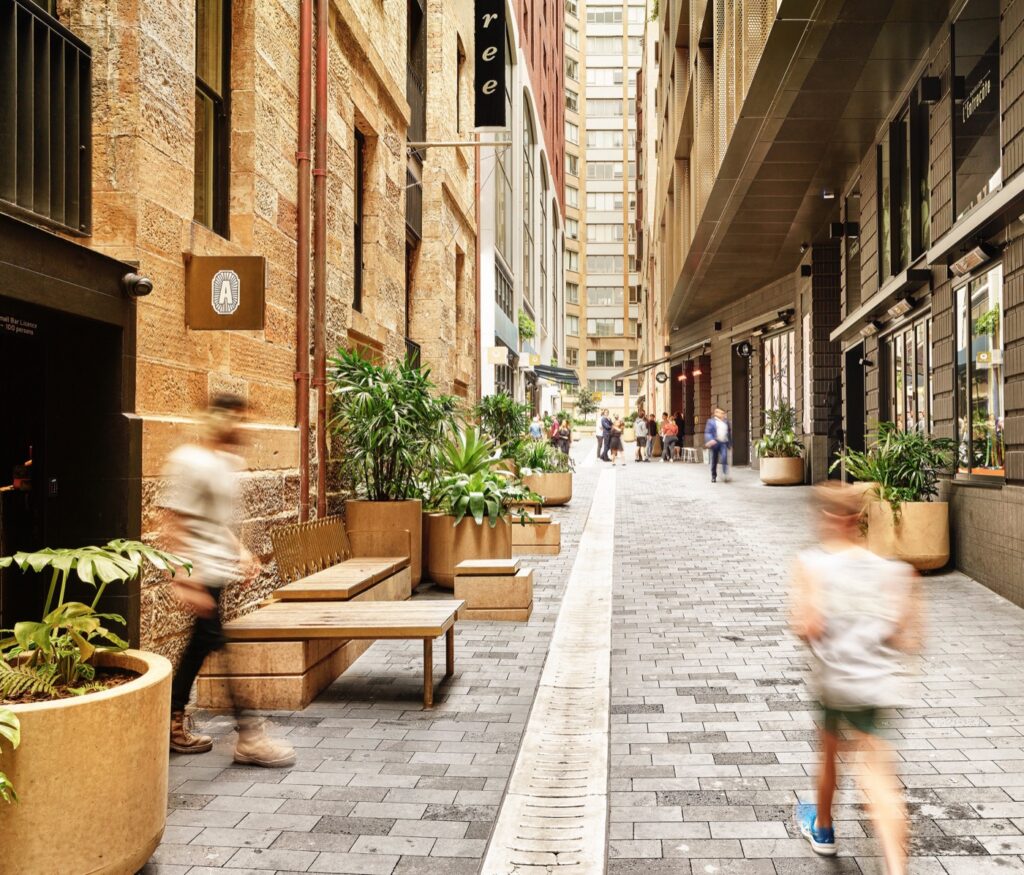
Loftus Lane is a bold reinvention of a forgotten service lane into a vibrant, fine-grain urban precinct within Quay Quarter Sydney, featuring boutique residential buildings, heritage restorations, retail frontages and sculpted public realm.
The end result delivered 106 high-end apartments, retail frontage, and refurbished icons like Hinchcliff House, all built over a multi-stage program, with strong public domain activation and laneway connection as defining features.
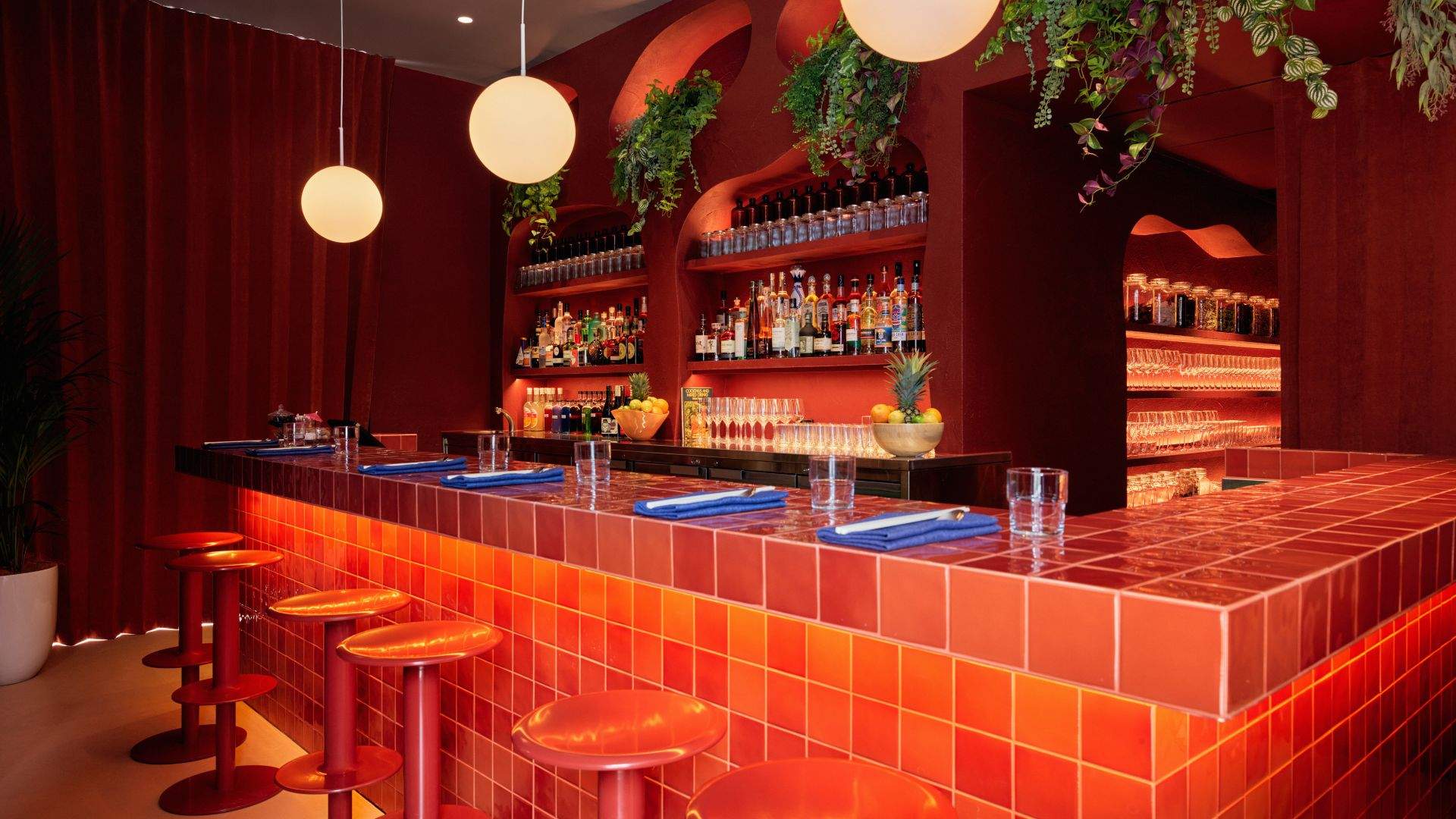
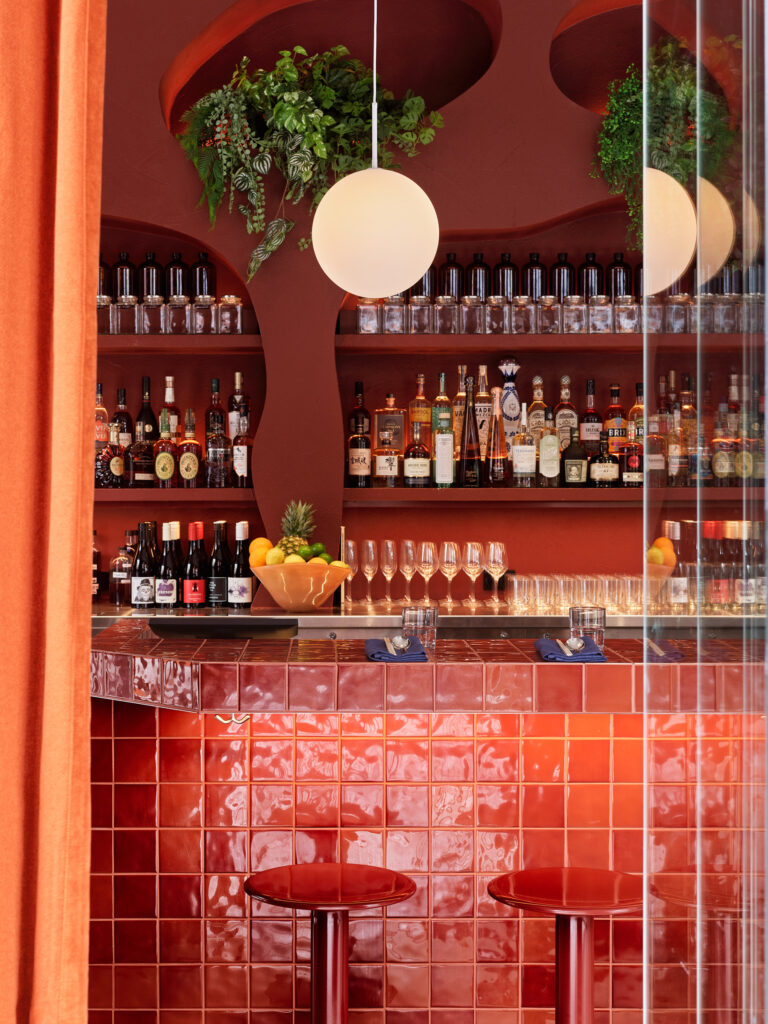
Located in the refreshed Wunderlich Lane precinct on the border of Redfern and Surry Hills, Island Radio re‑imagines a heritage‑listed former bank building into a vibrant Southeast Asian “noodle bar + eating house” where design and construction fuse into theatre.
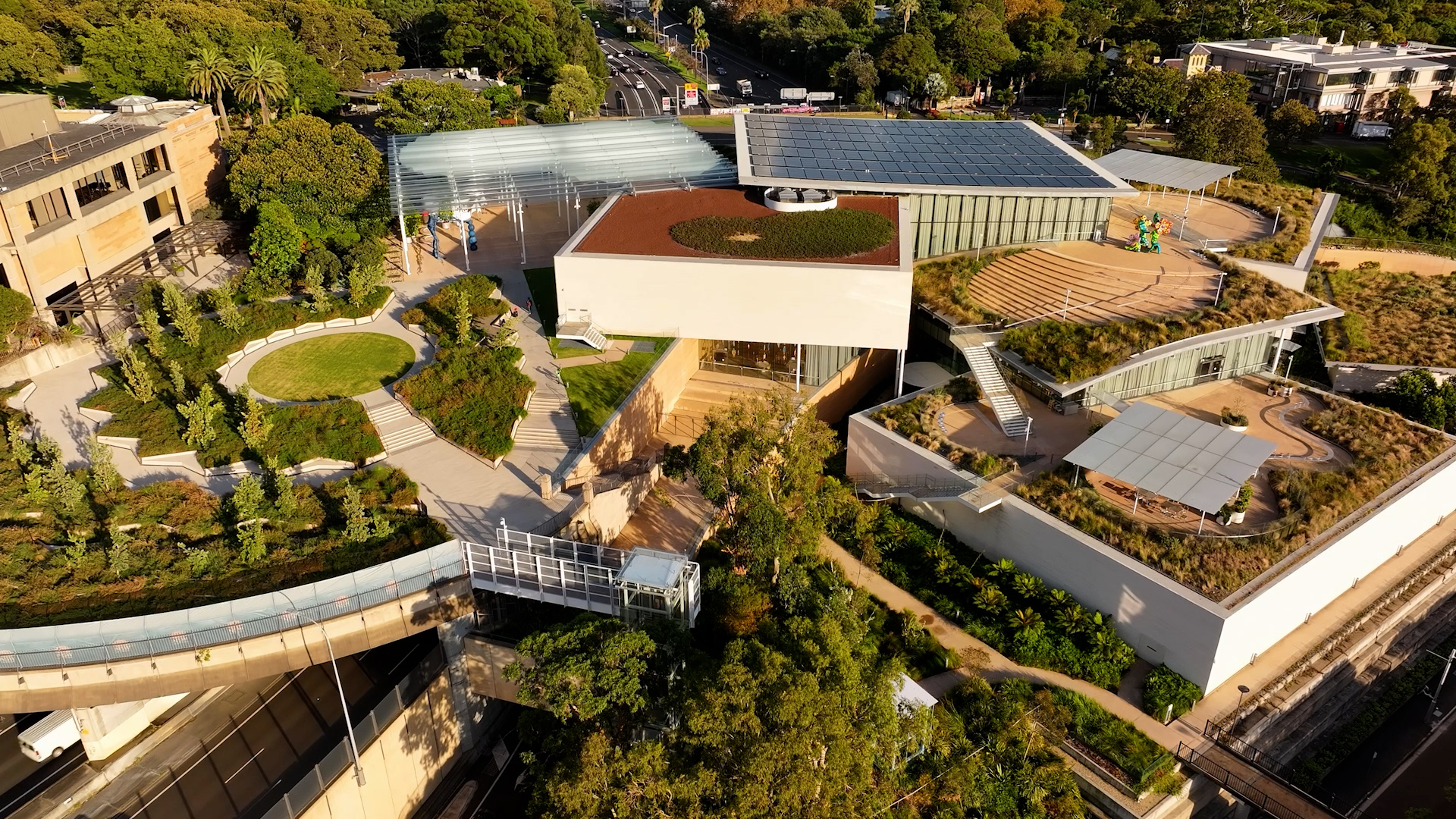
The architecture and interior, play on the concept of “tropical futurism”, vivid colour, layered textures, terracotta, cork and recycled materials wrap around original pressed‑metal ceilings, exposed rafters and the old bank vault door, giving the space a bold, playful character.
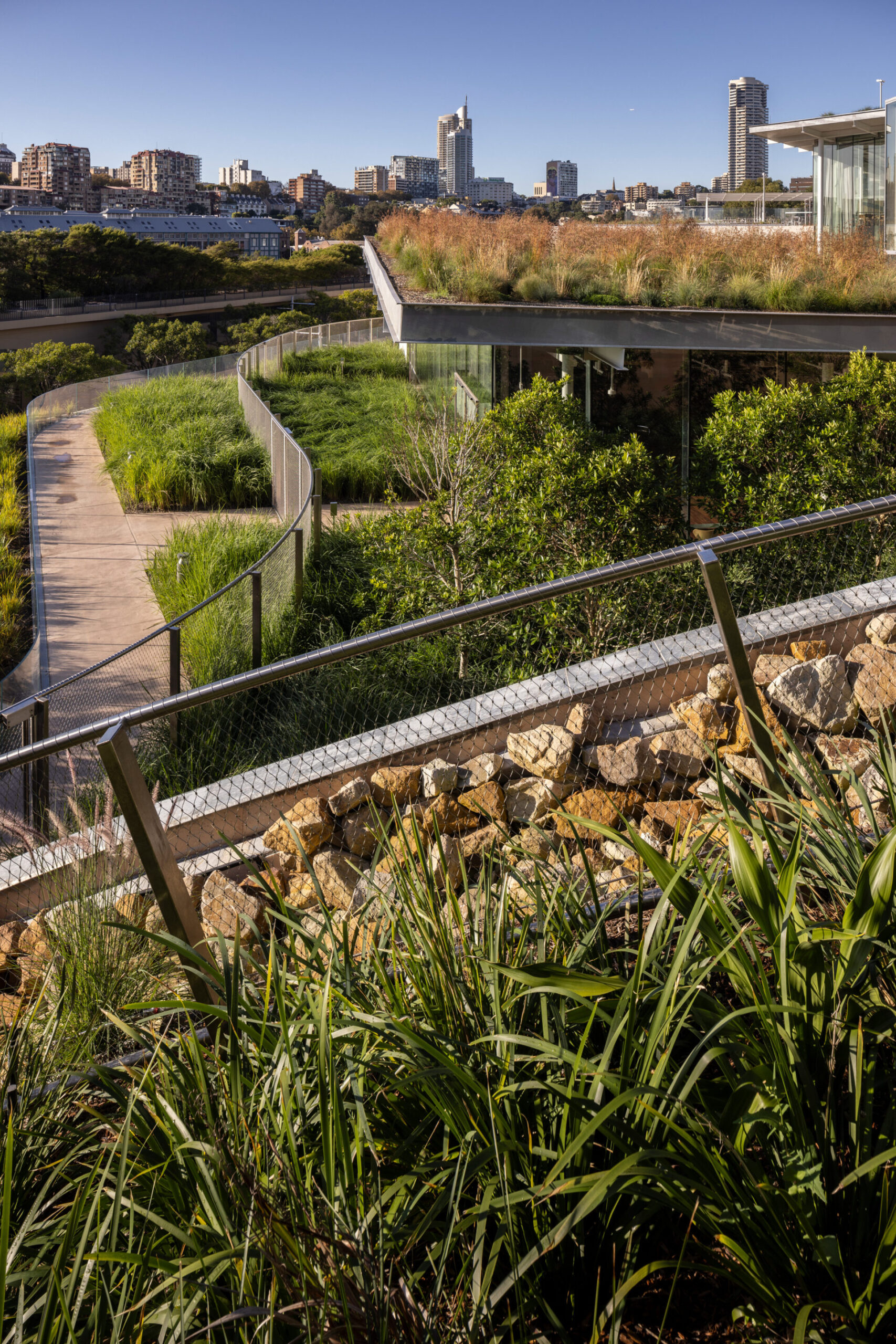
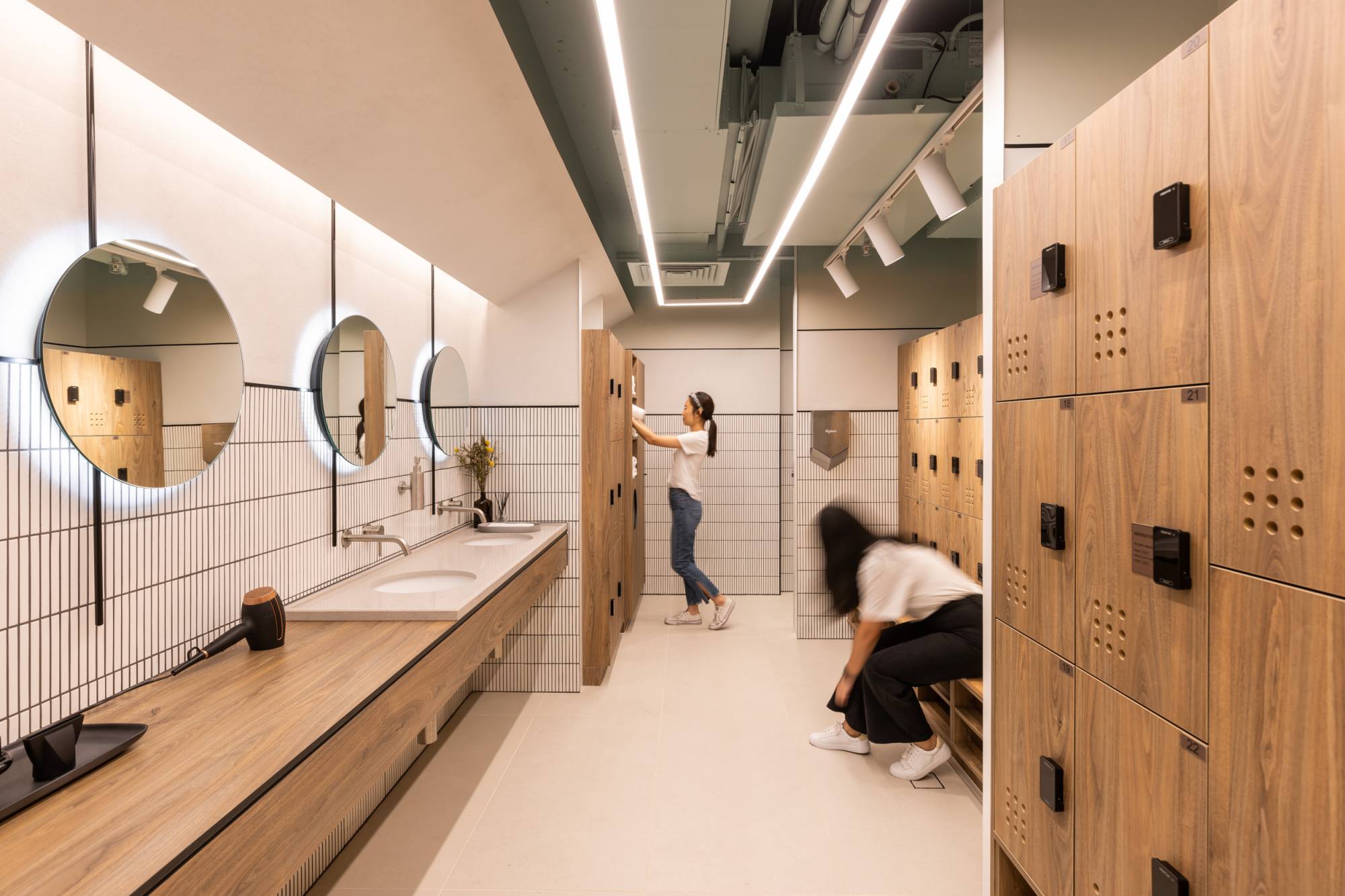
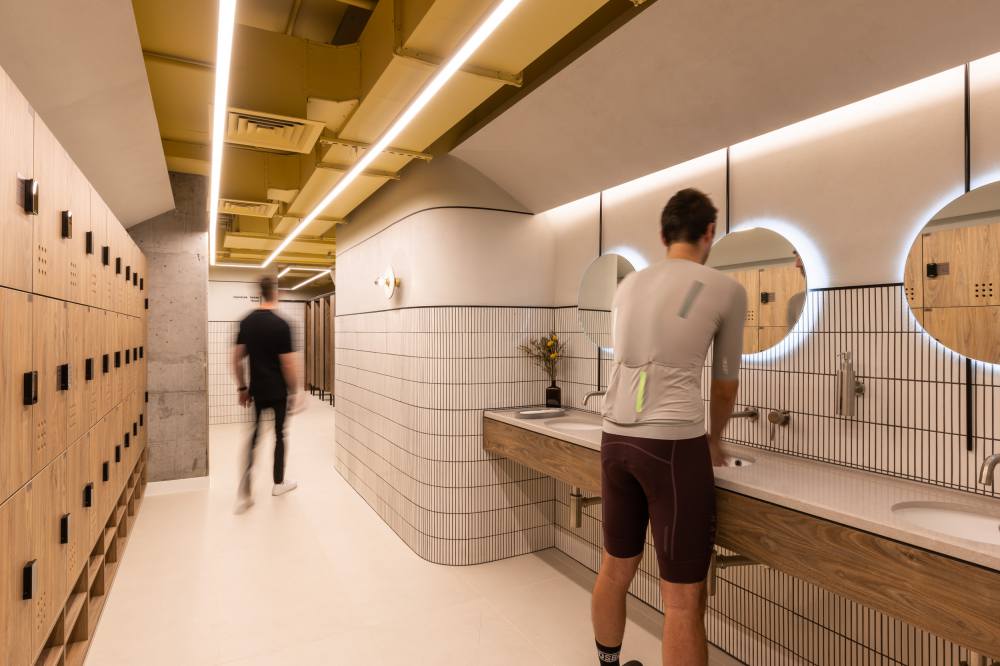
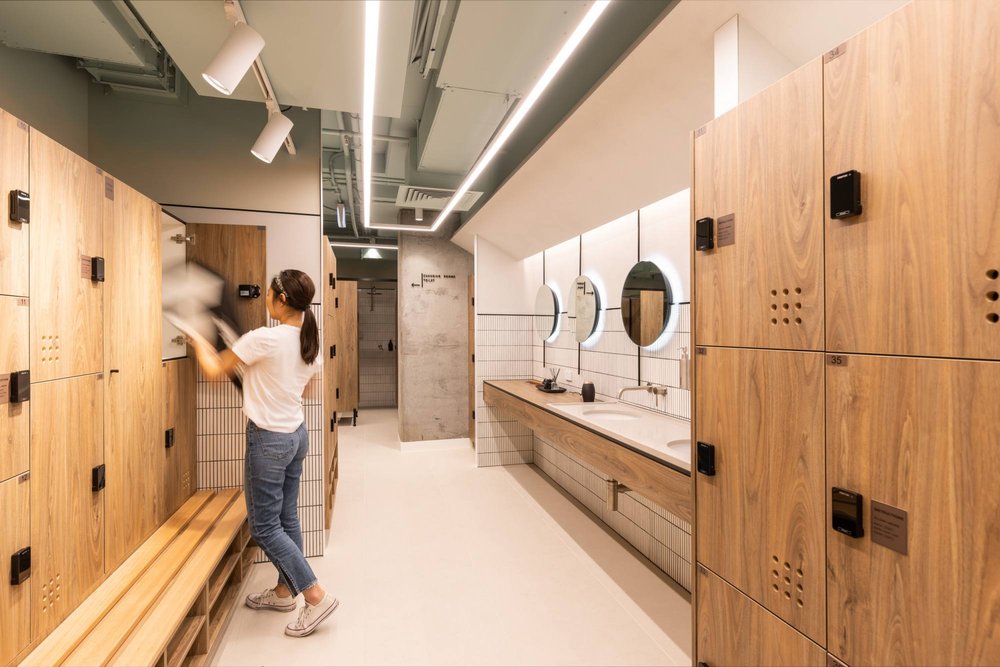
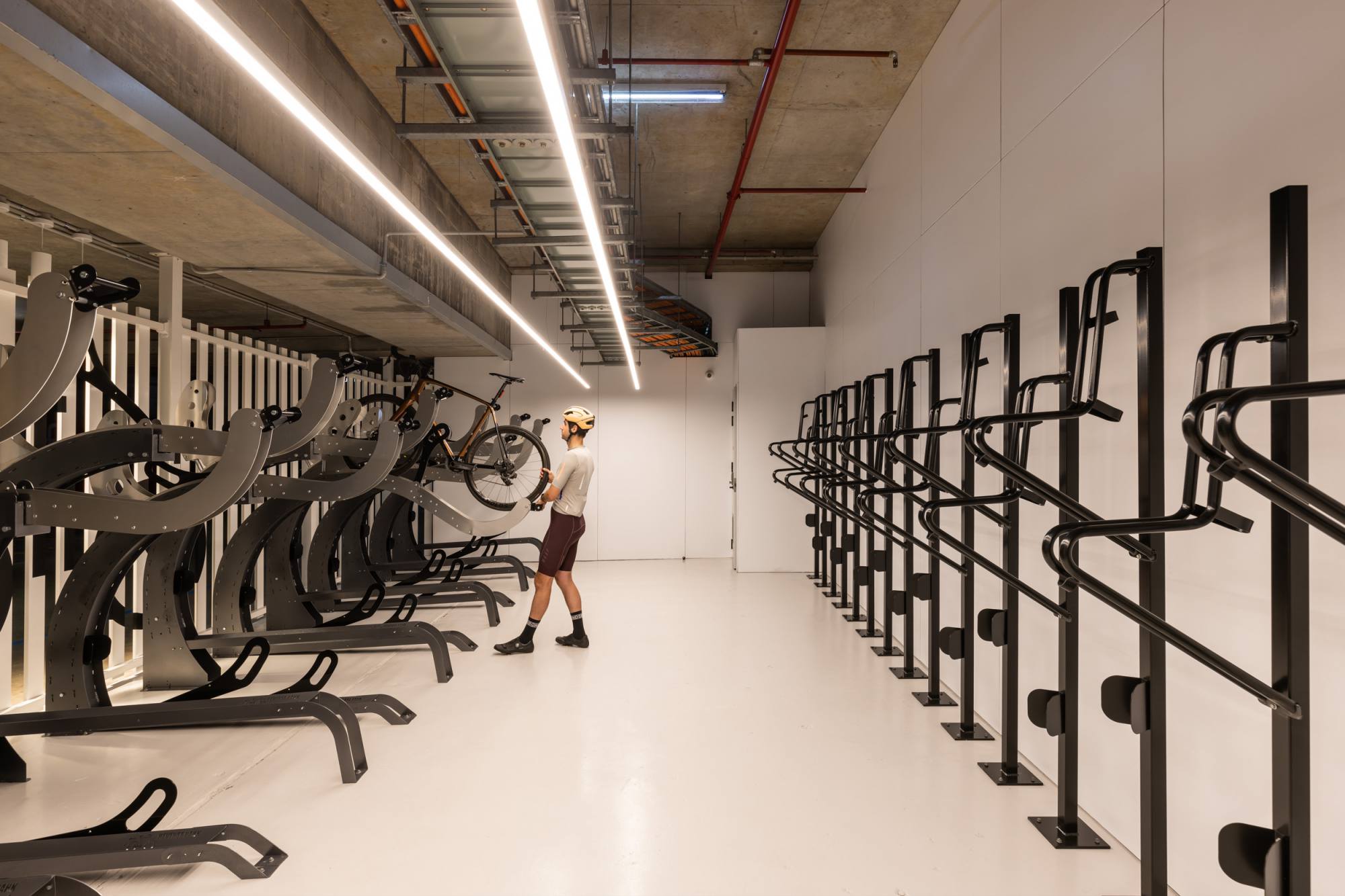
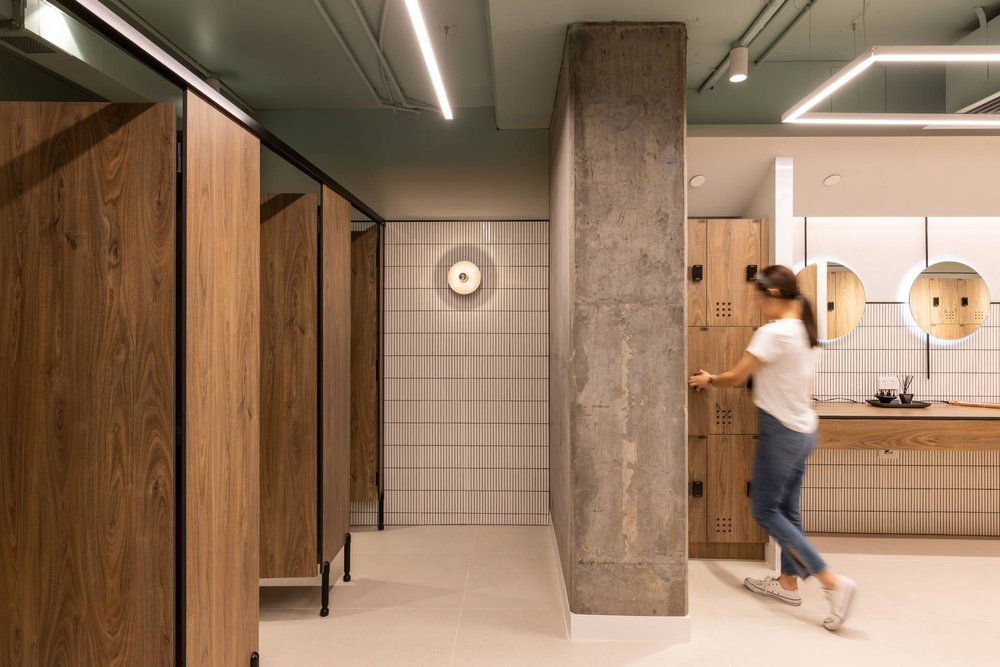
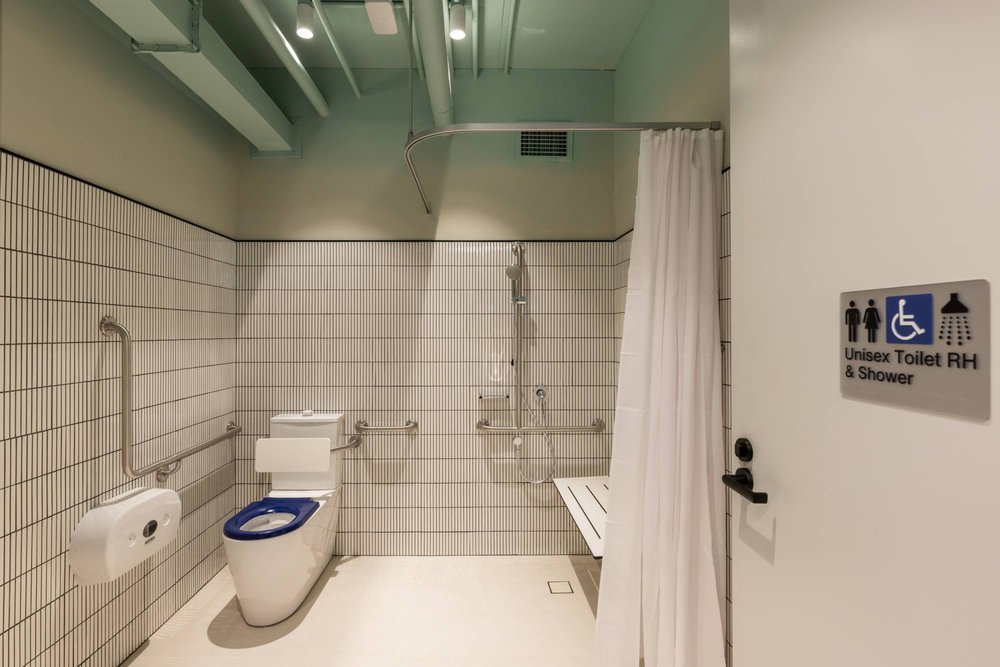
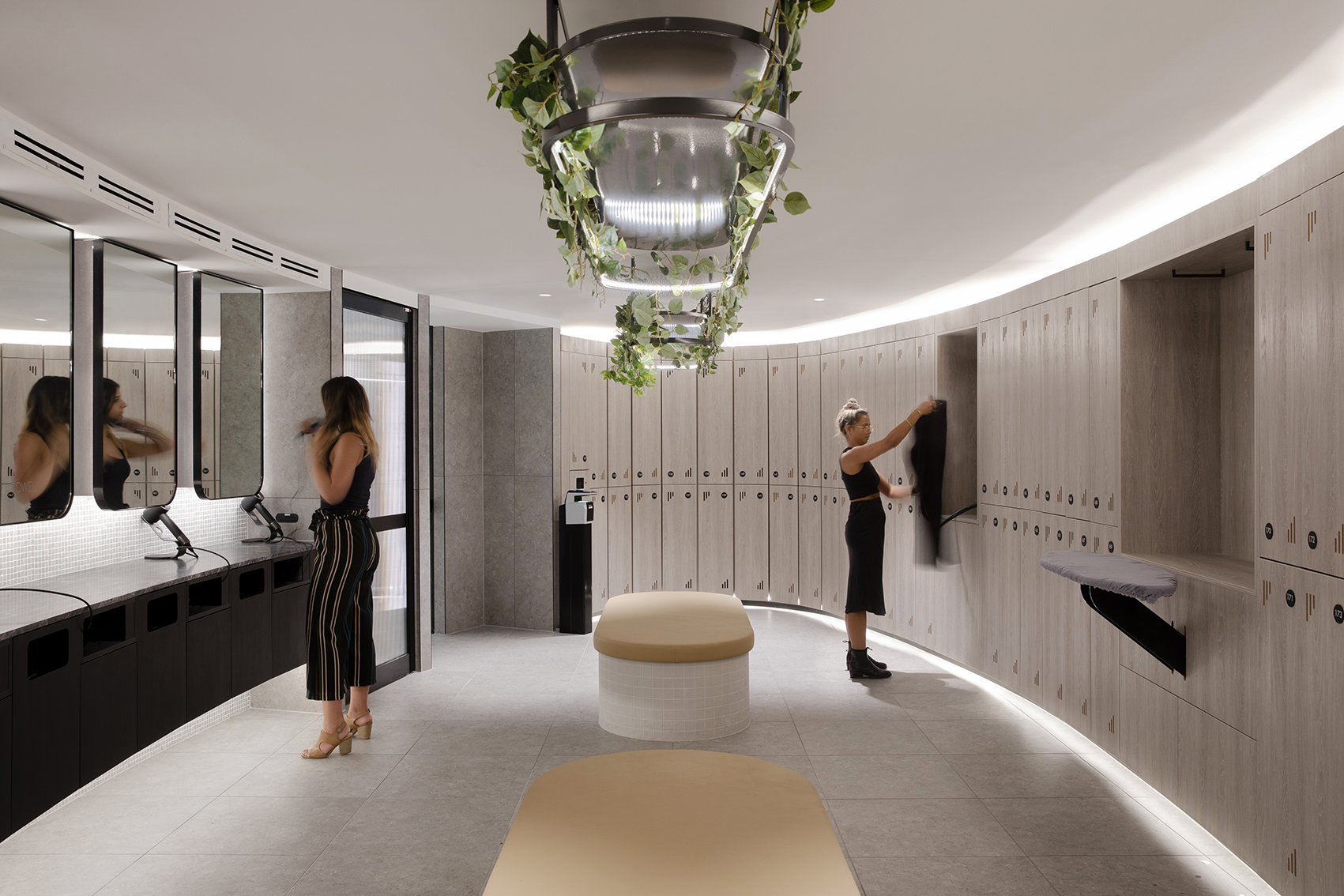
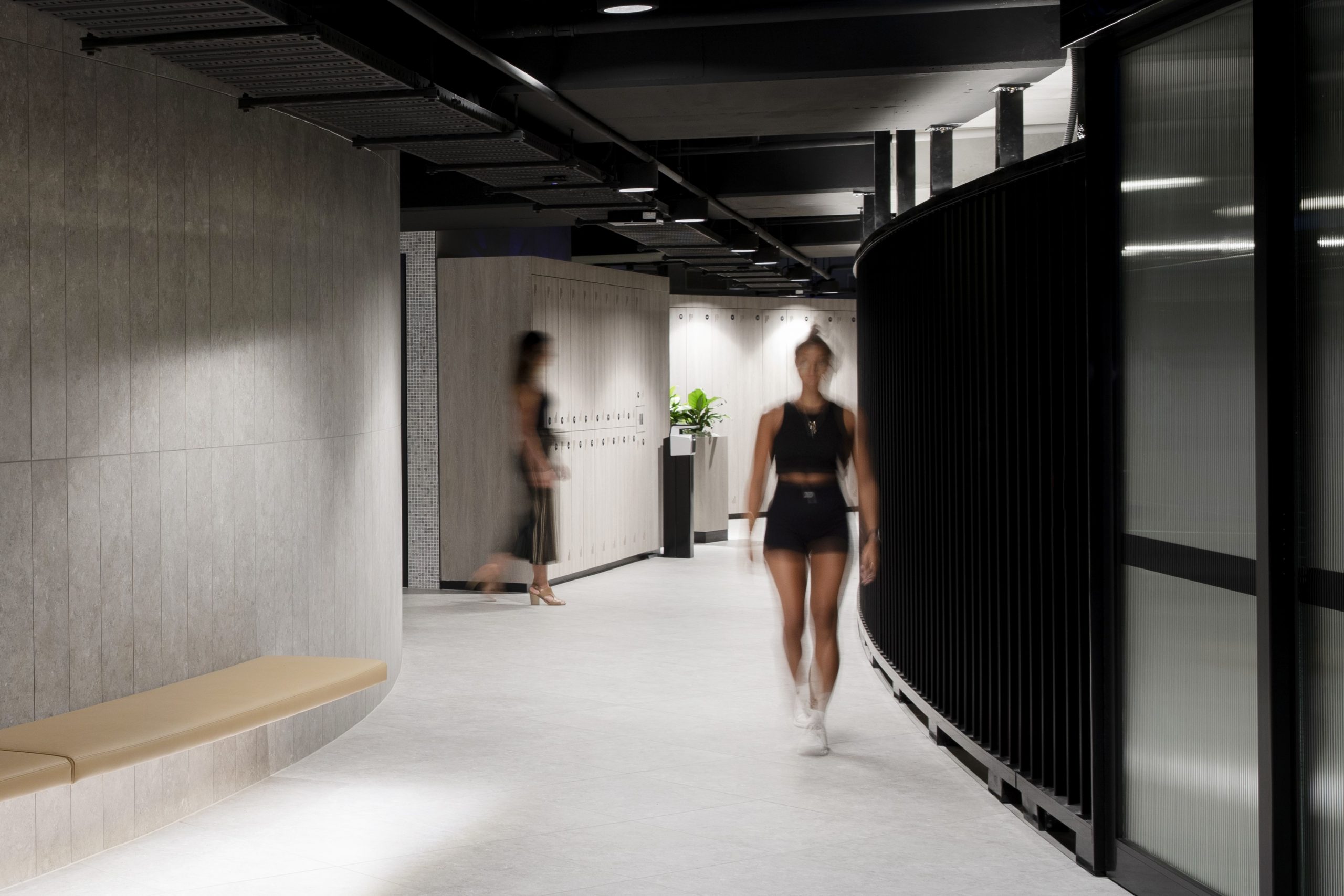
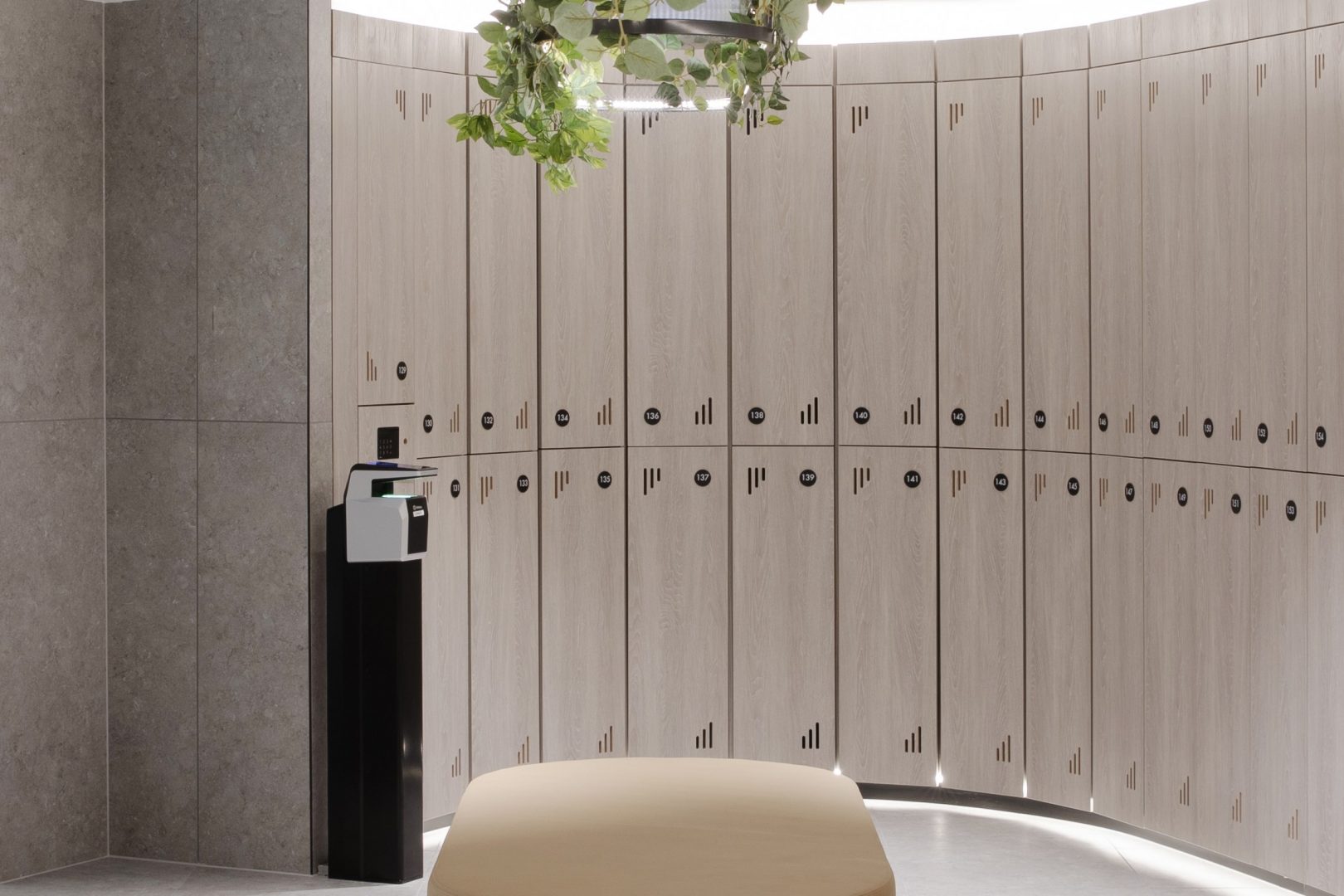
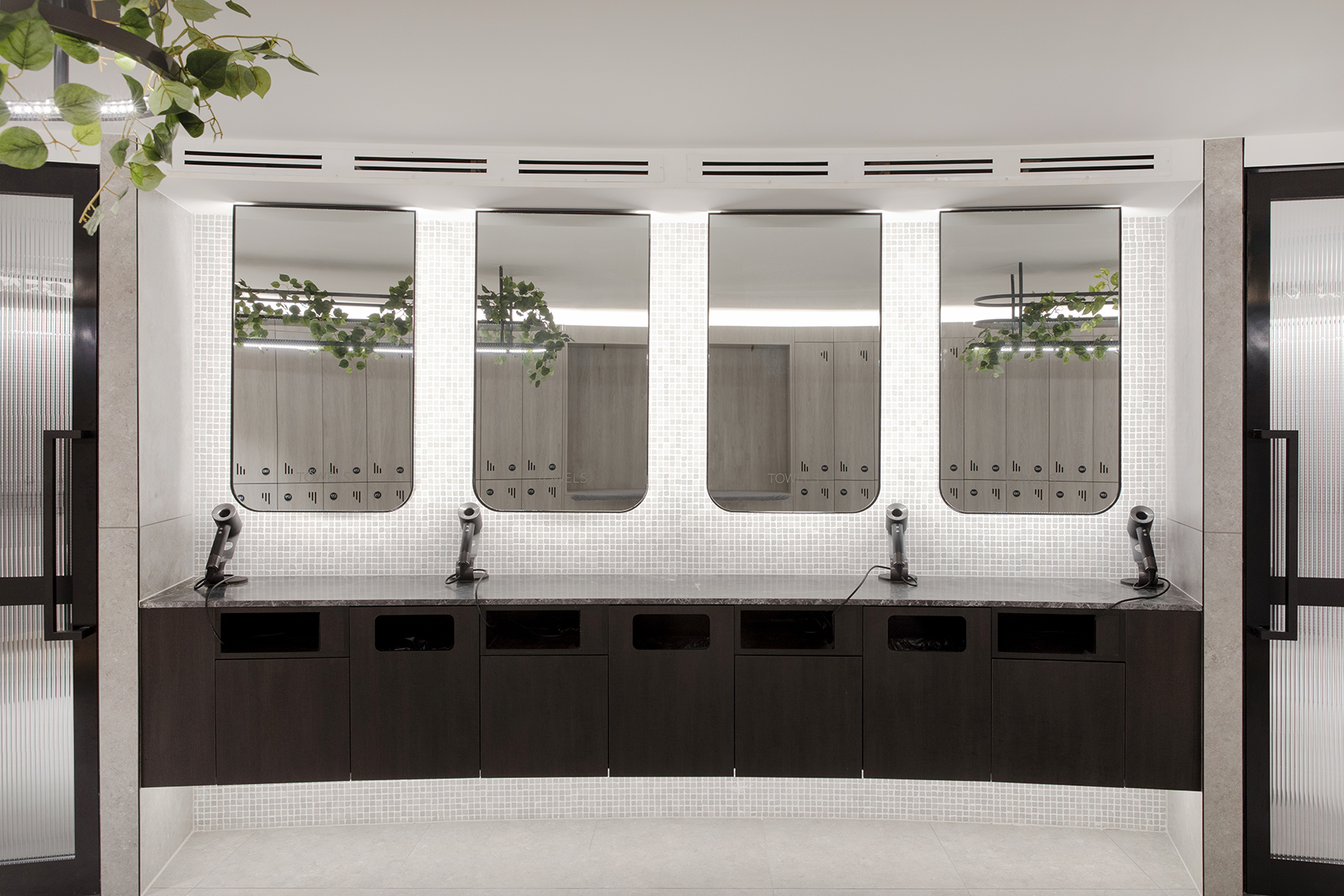
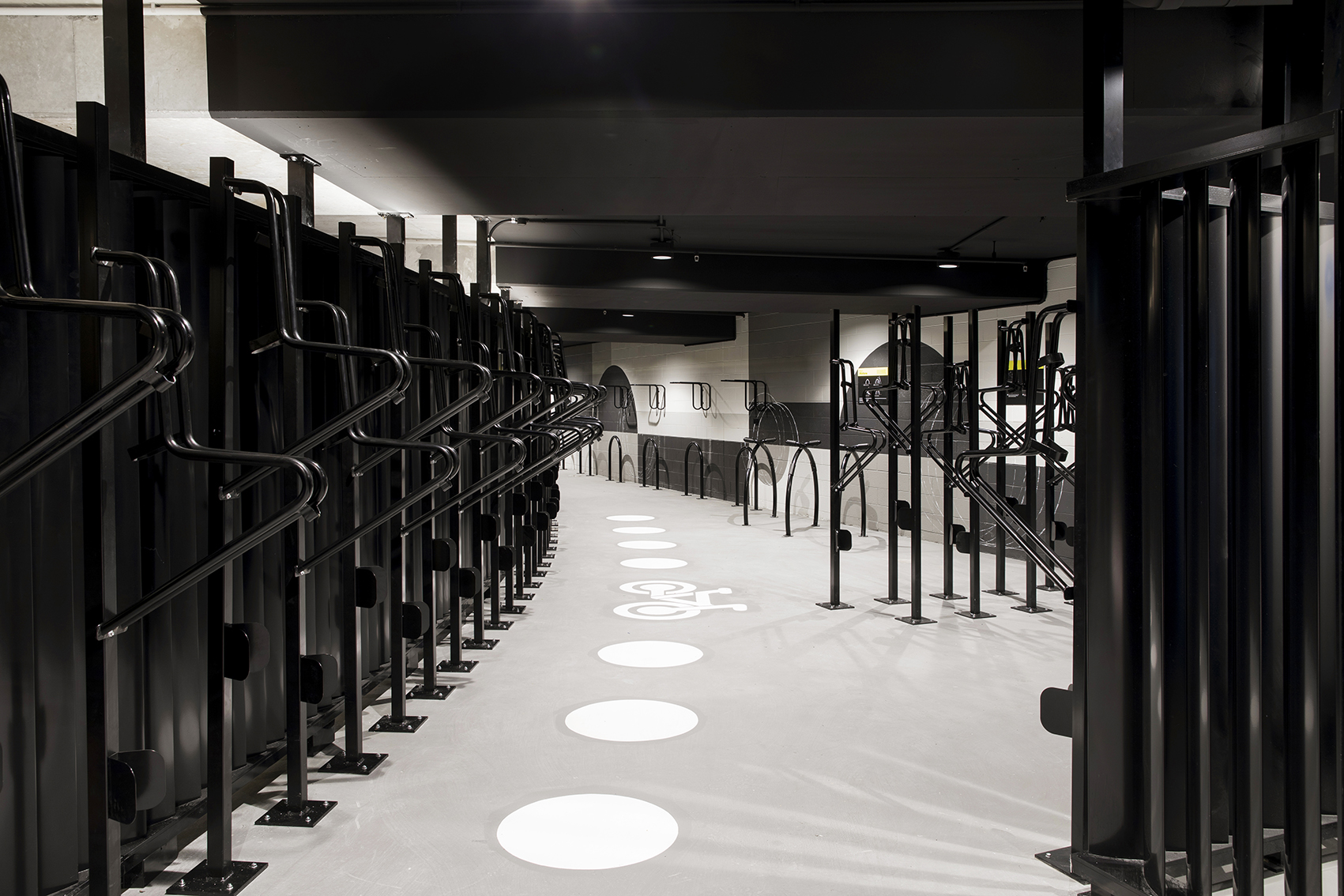
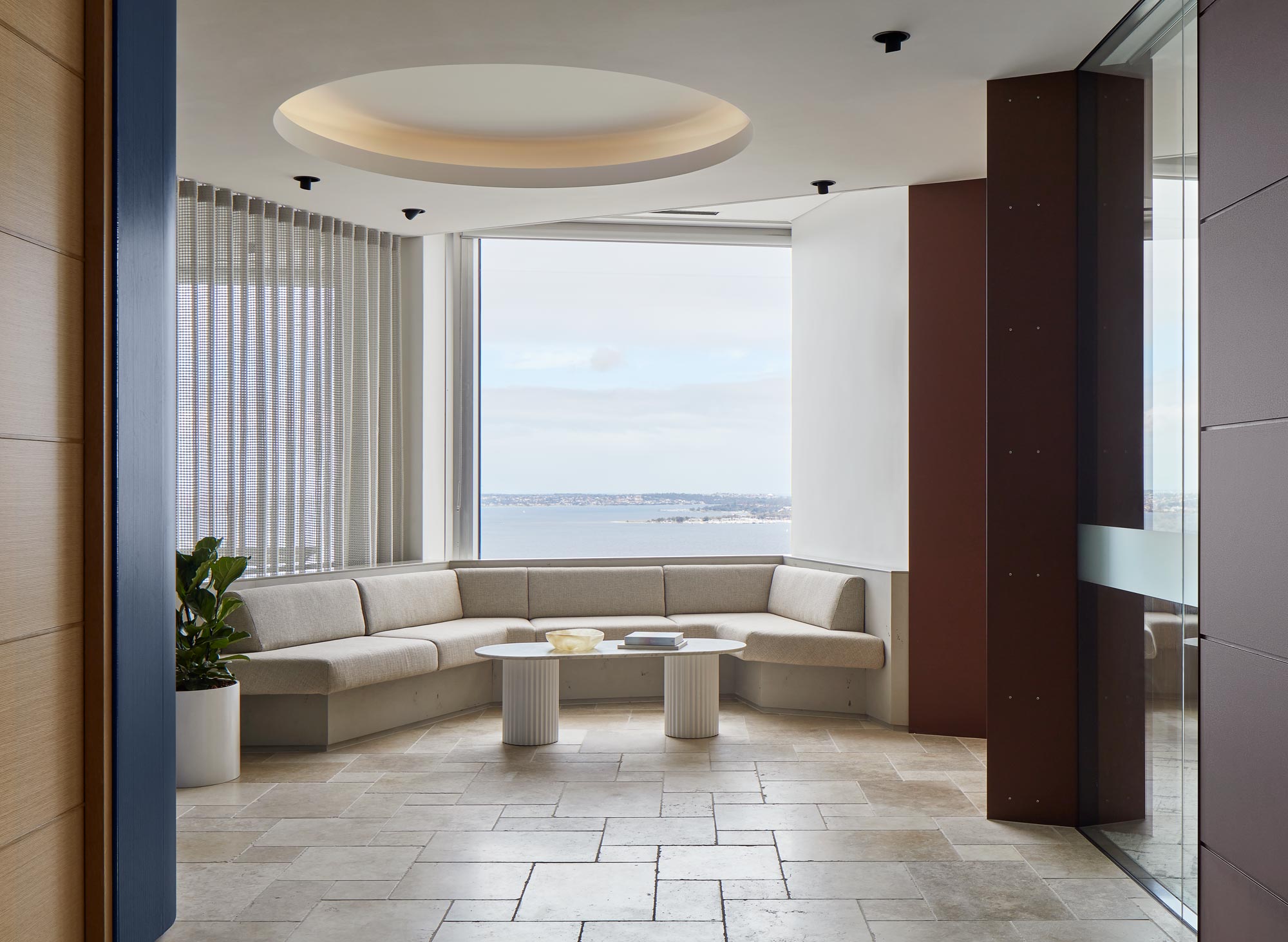
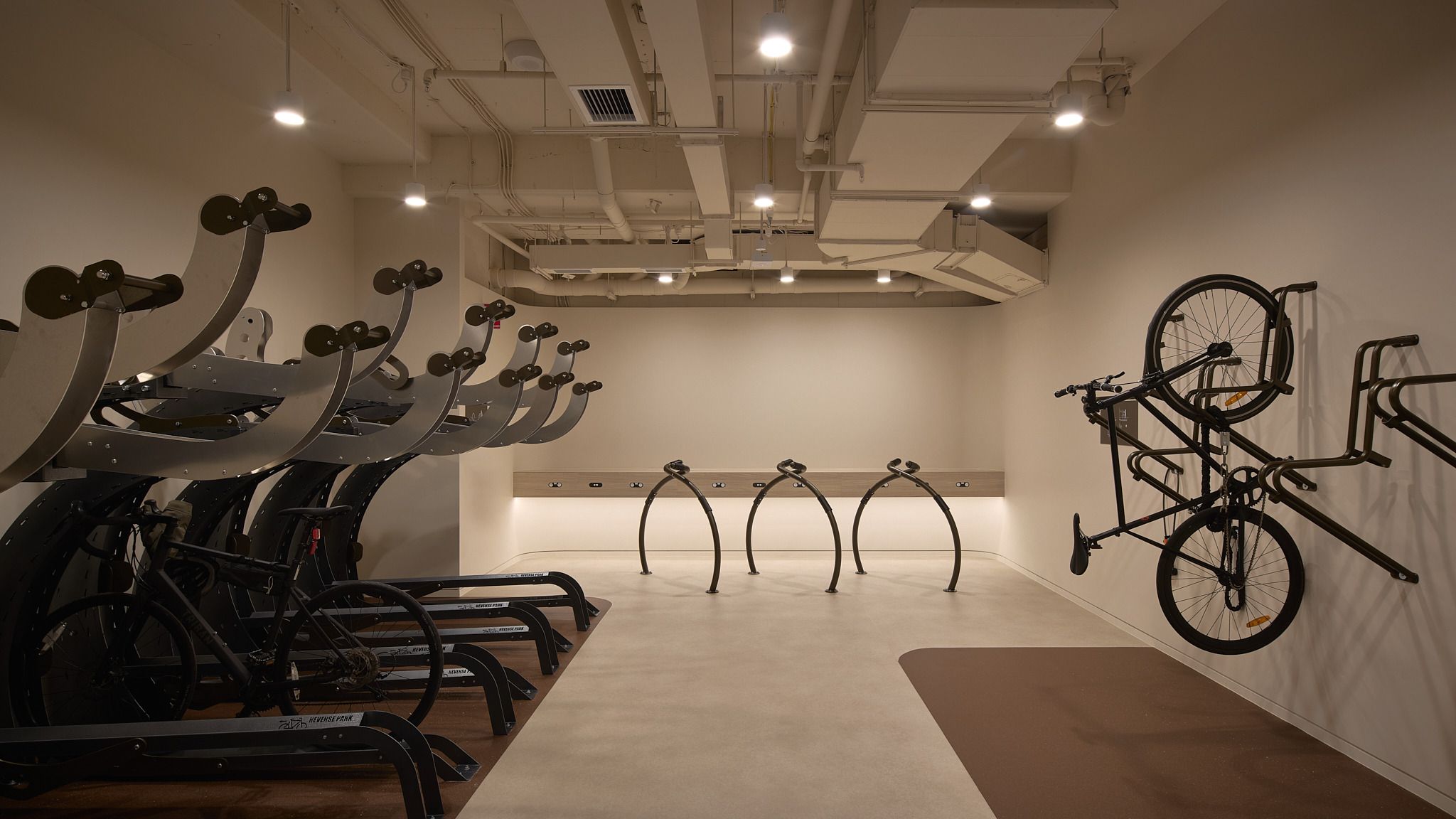
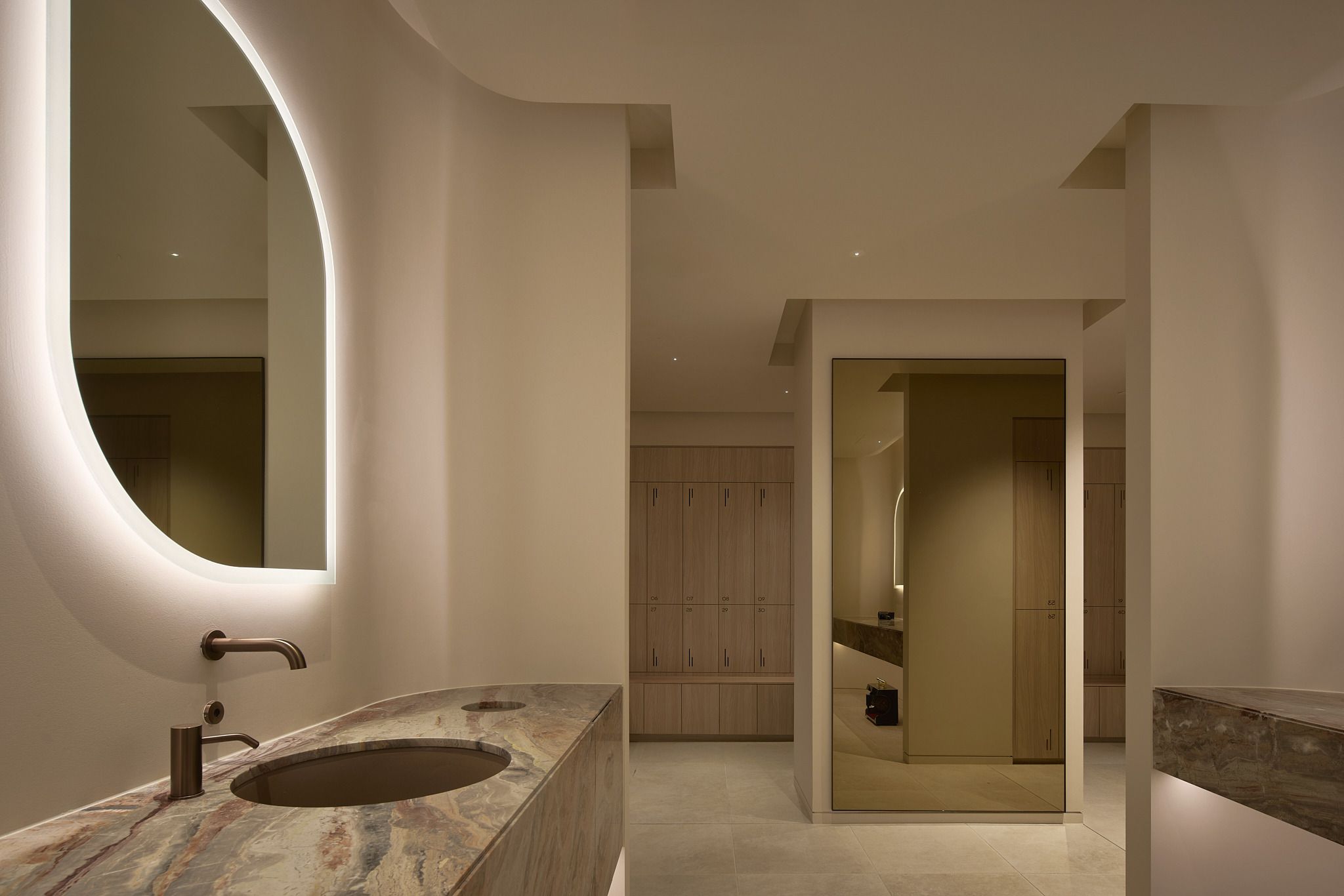
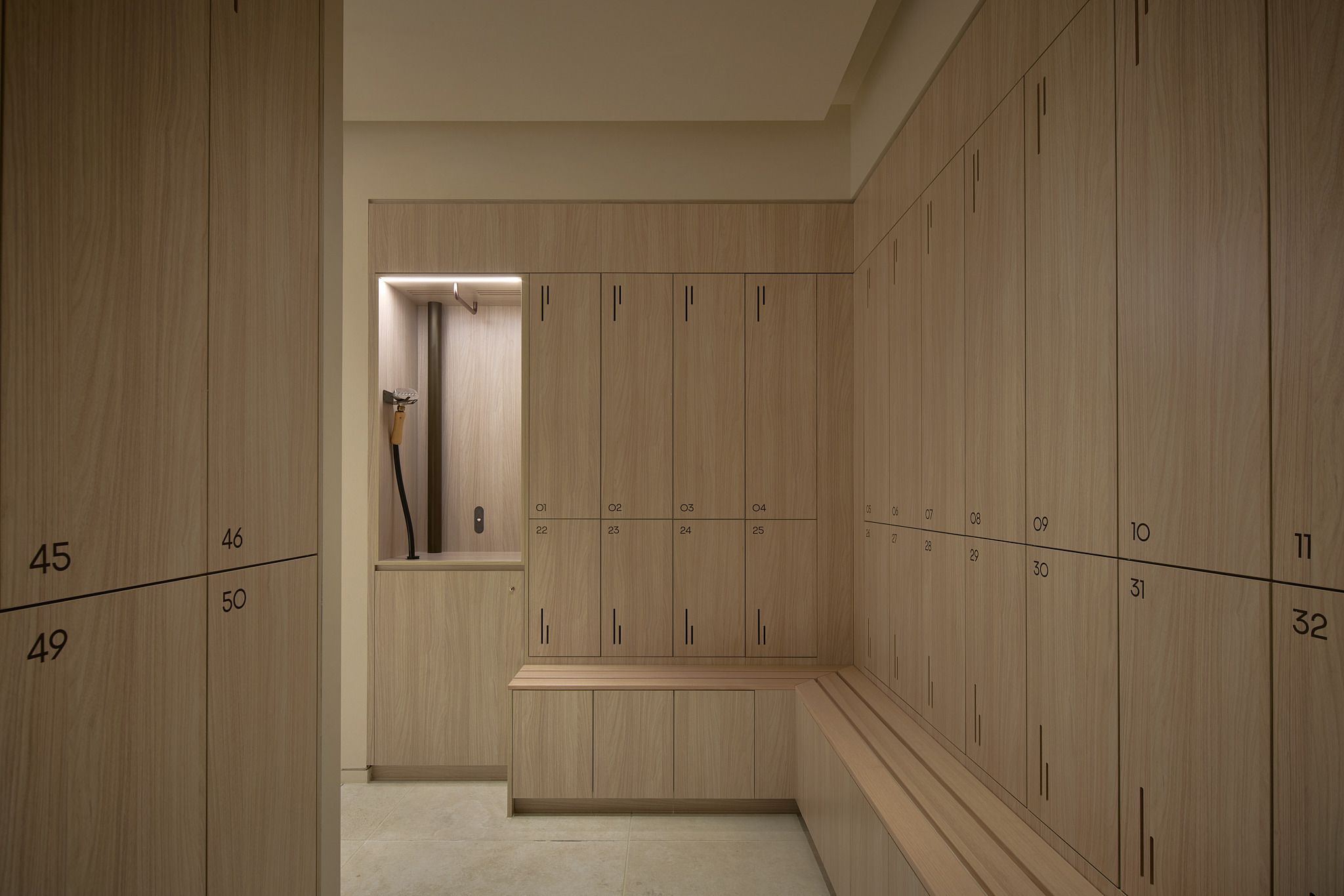
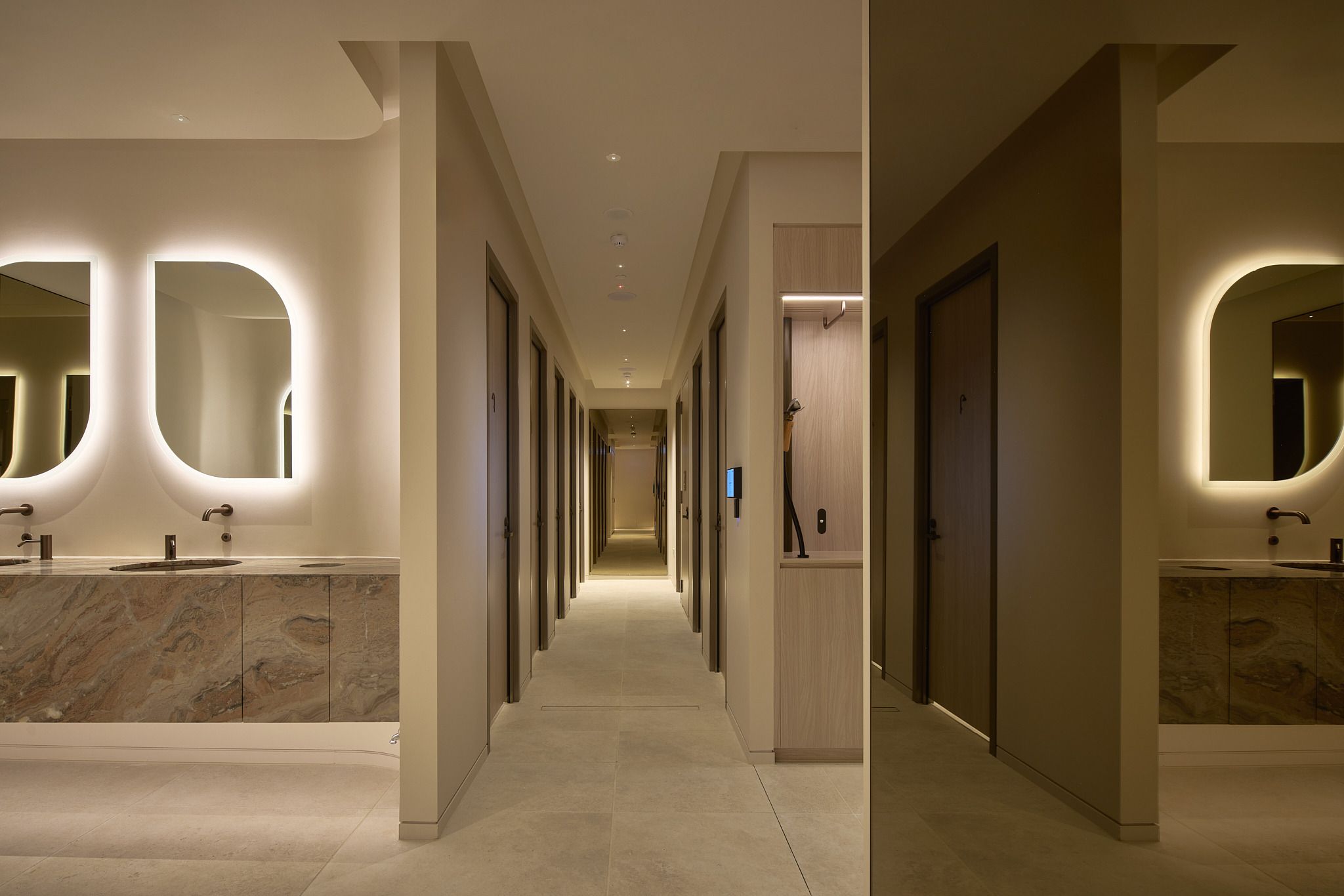
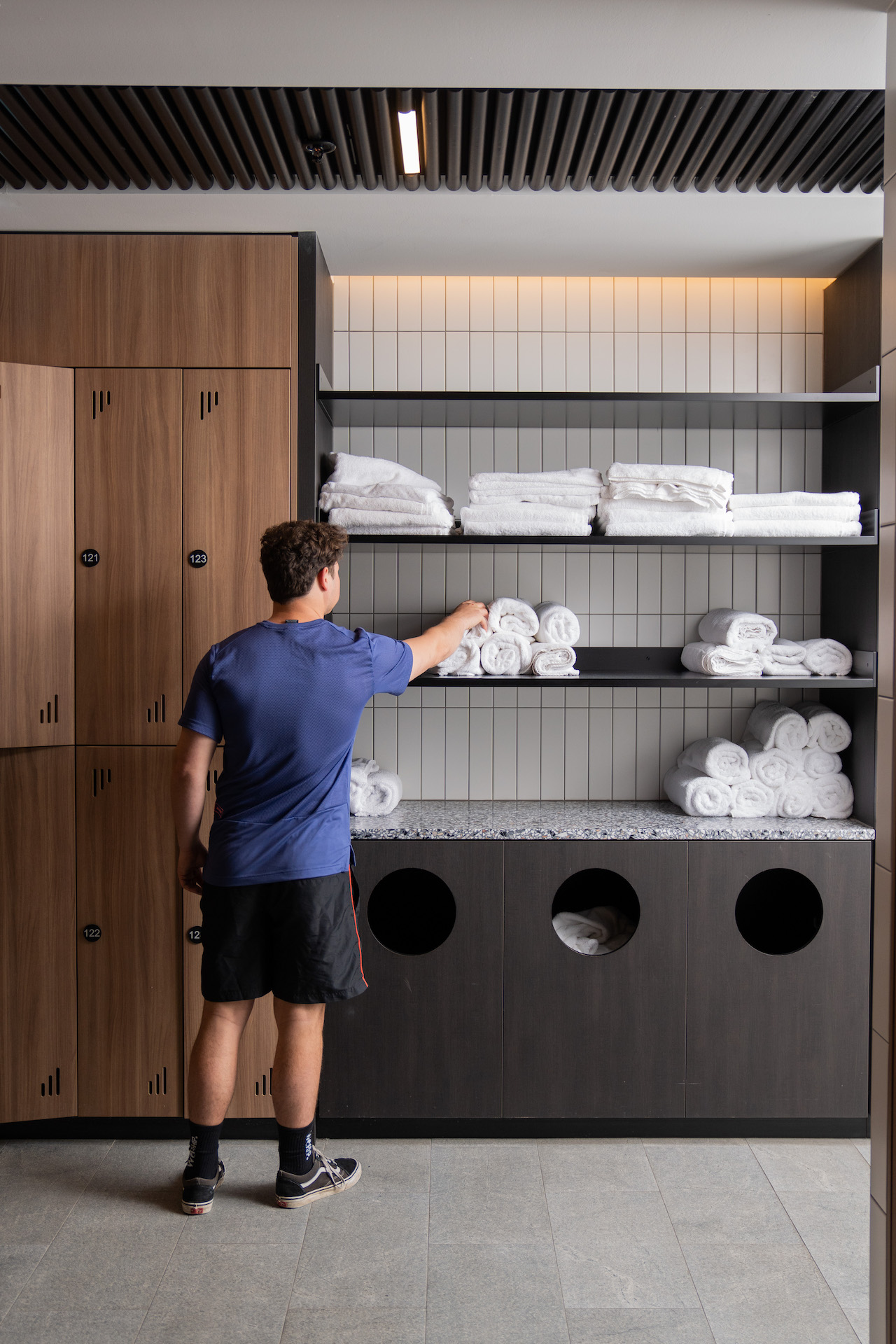
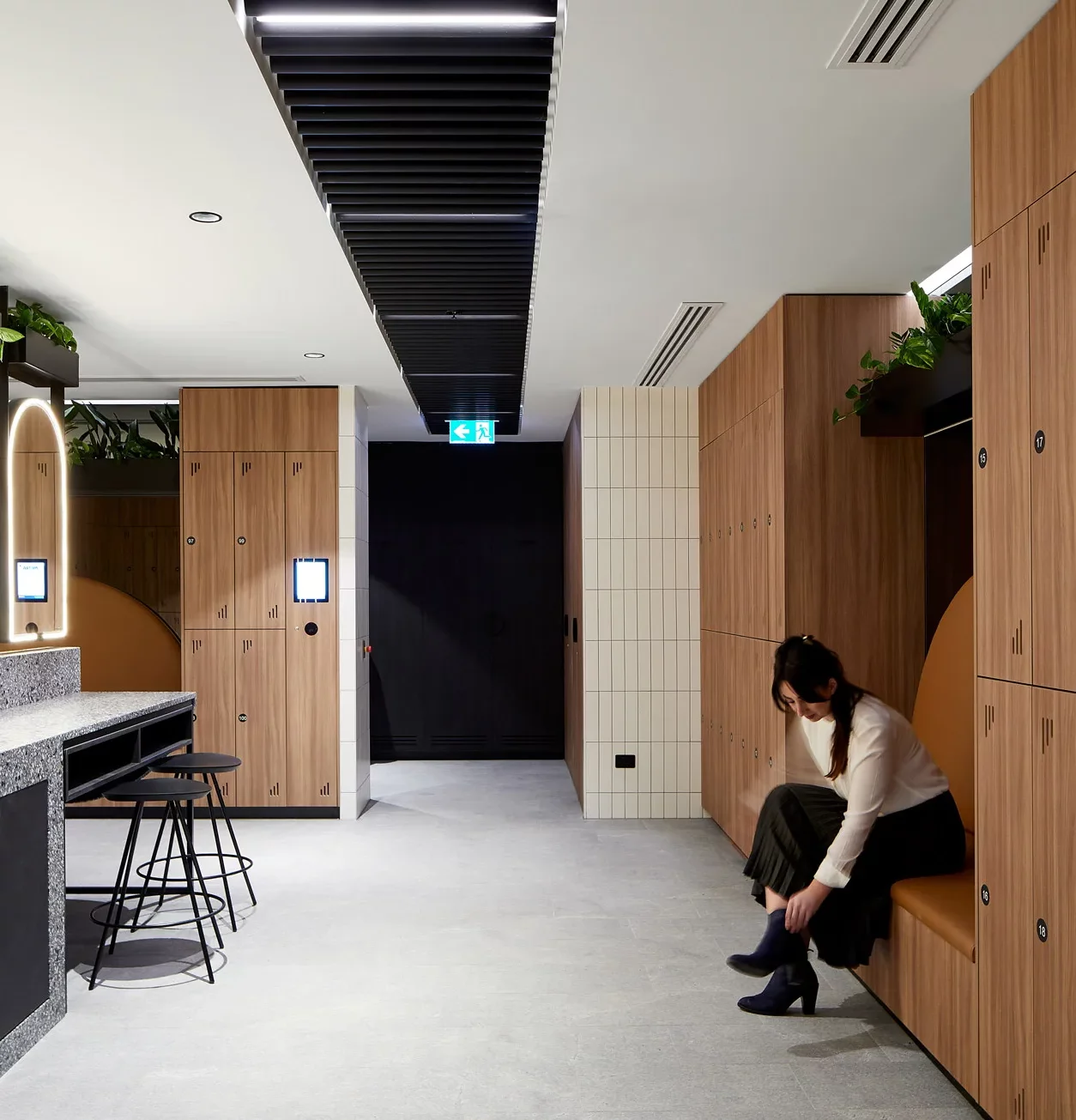
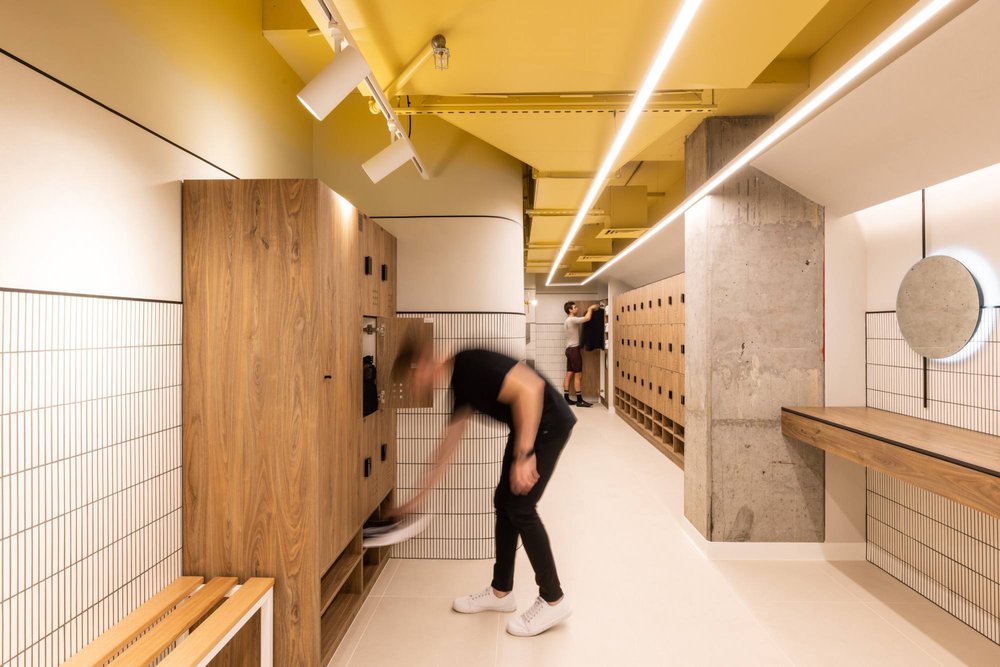
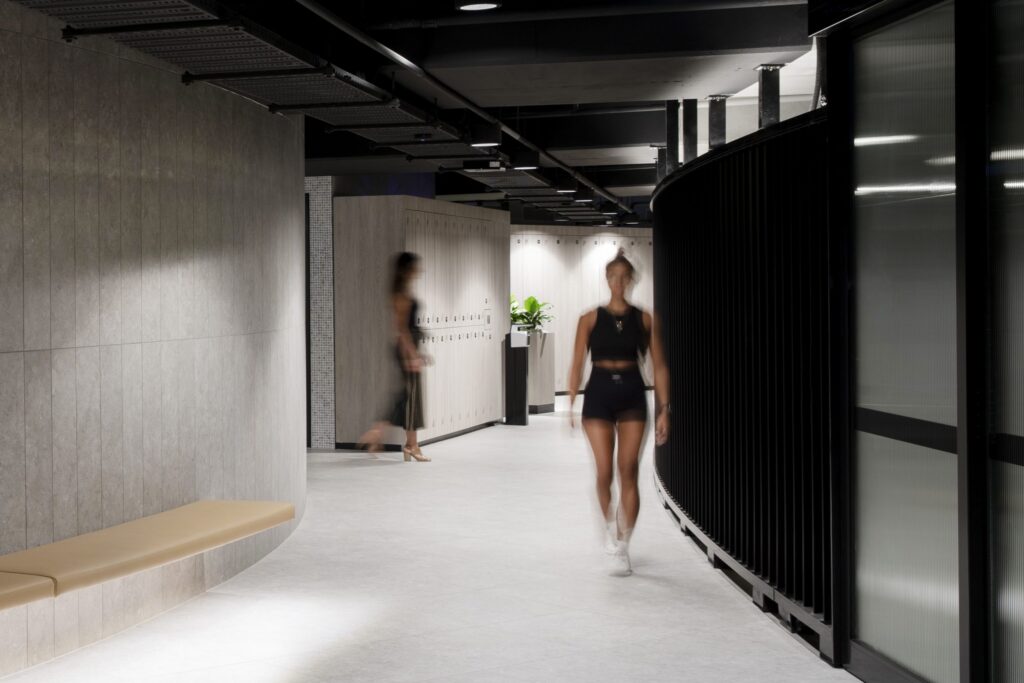
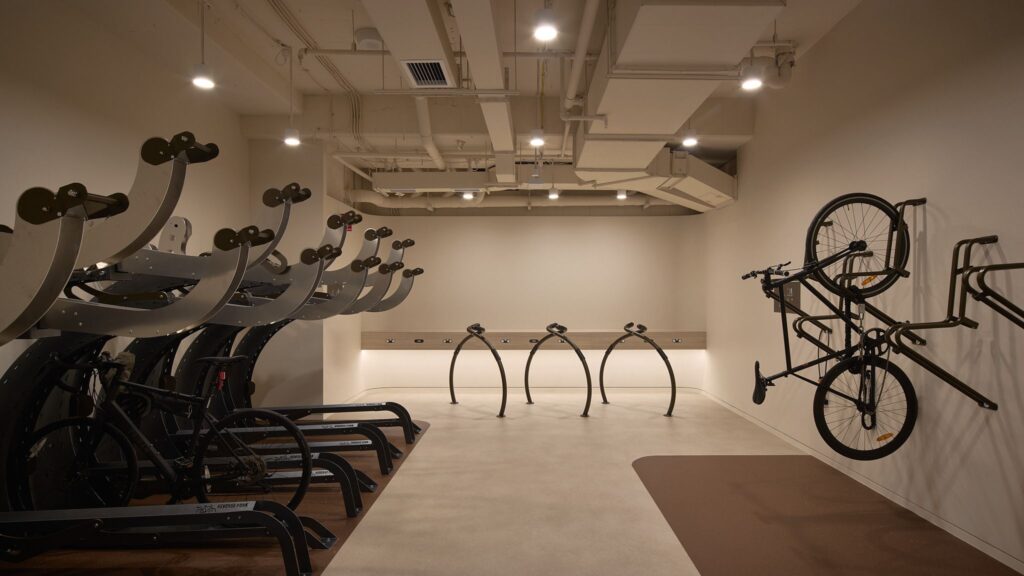
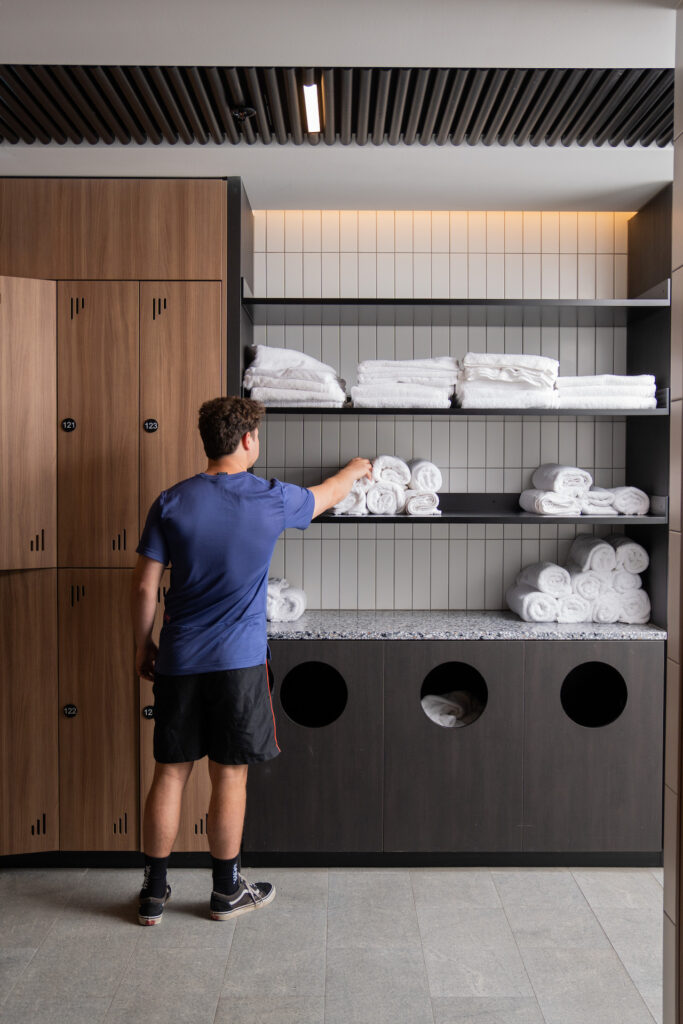
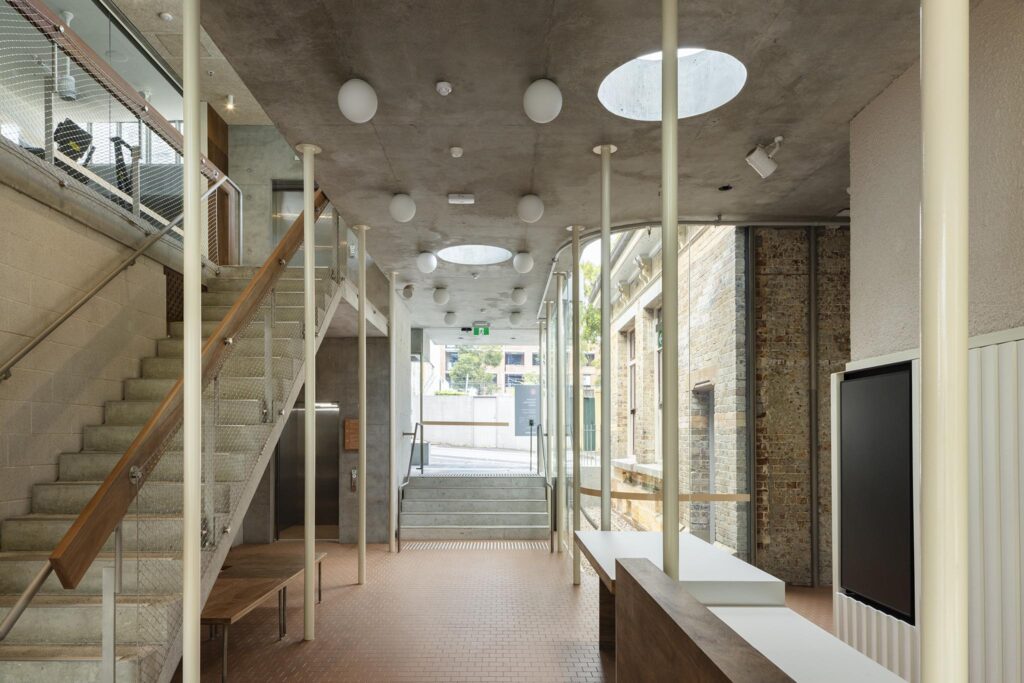
This project exemplifies a fusion of luxury including 15 showers, 231 lockers, 70 bicycle racks, styling stations and a drying room. The addition of the Oasis Studio, a wellness space offering yoga, Pilates, meditation, touchless palm-scan locker access, and sustainability initiatives, further elevates the tenant experience.
This refurbishment not only enhances tenant wellbeing but also reinforces this iconic buildings status as a benchmark in sustainable and user-centric commercial architecture.
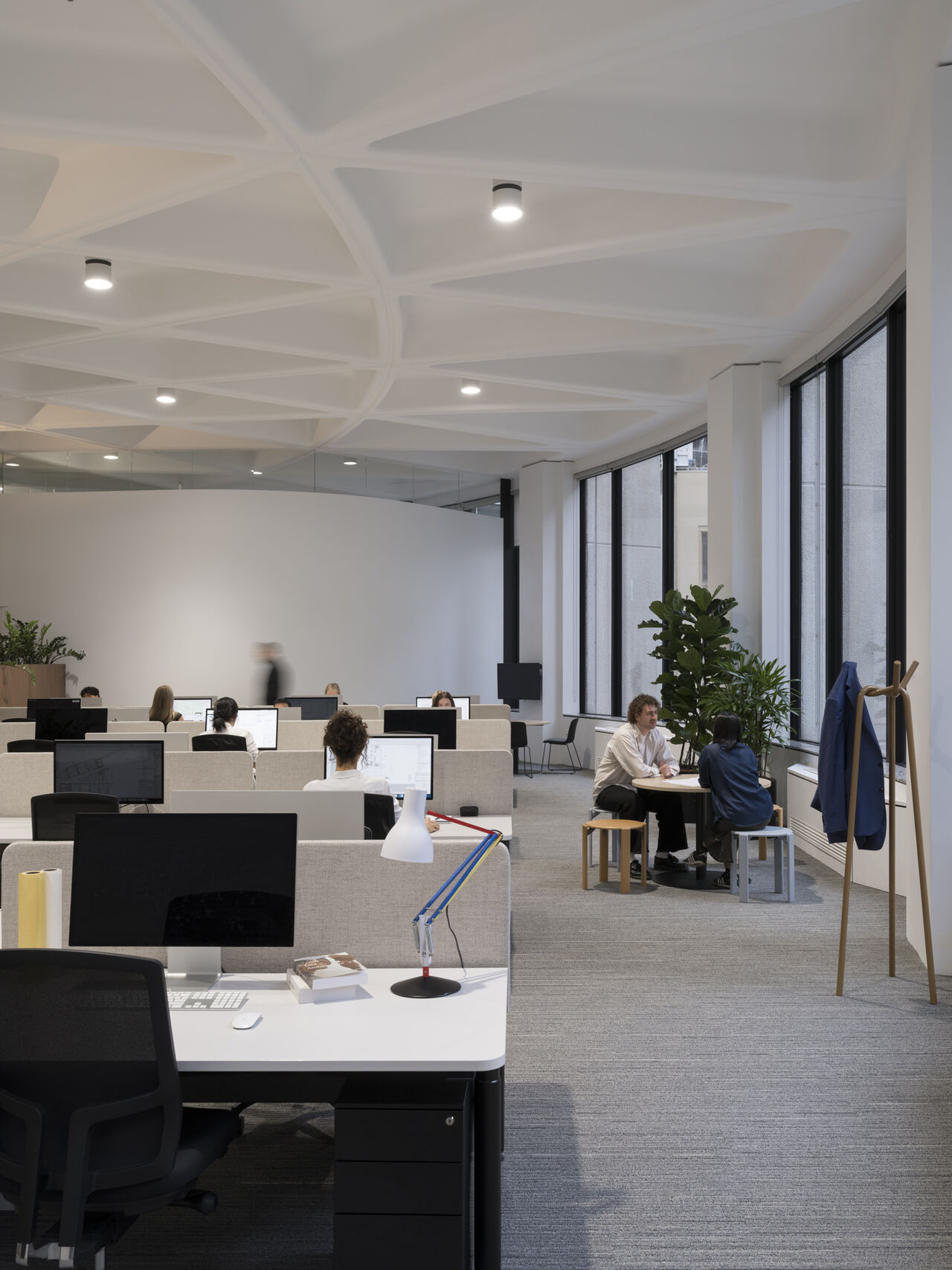
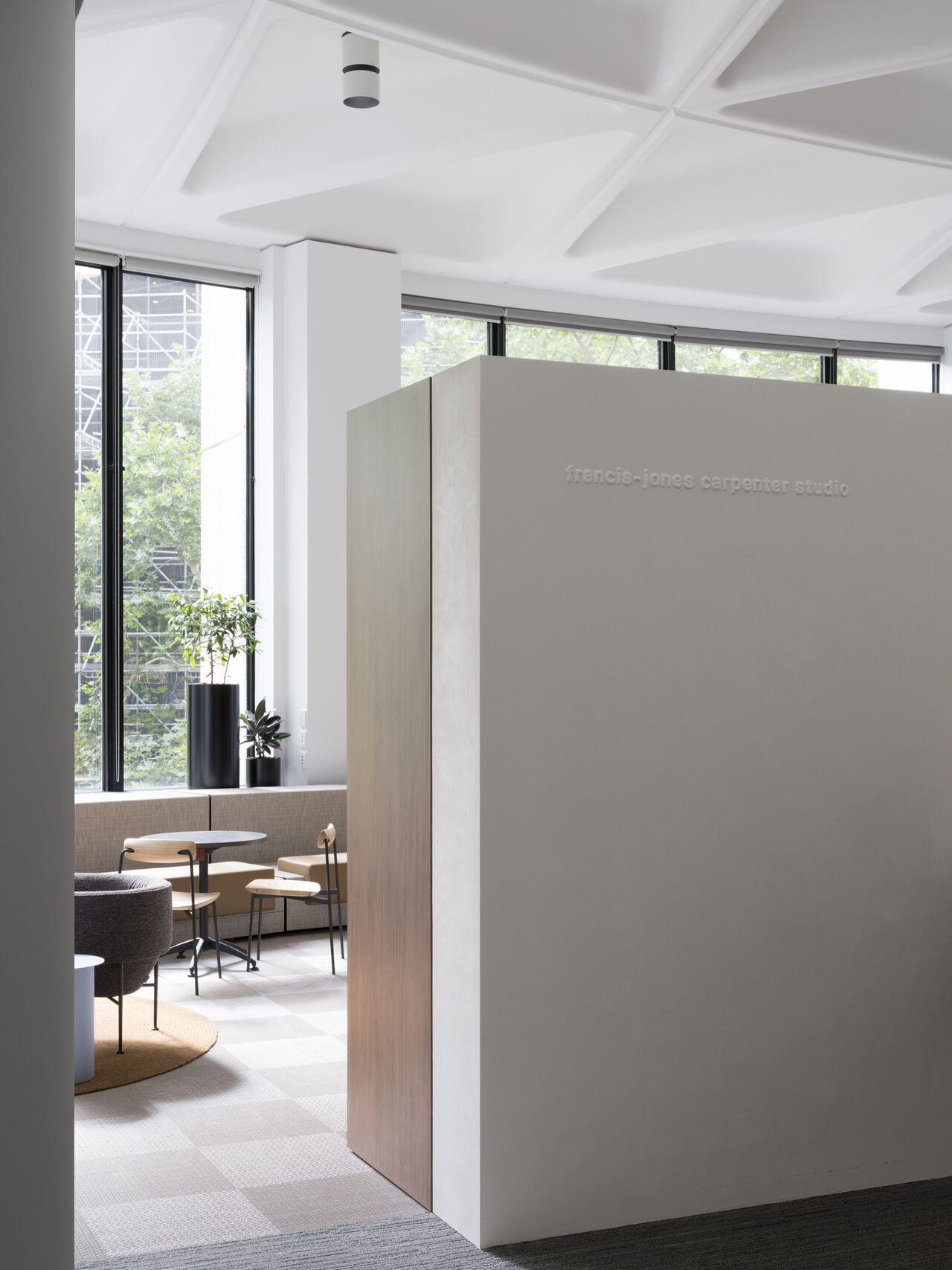
FJC’s new workplace at Australia Square transforms a heritage tower floorplate into a high-performance, flexible environment. The fitout navigates complex base-building constraints, tight structural grids, and live-building conditions. The result is a contemporary, collaborative workspace that balances functionality, acoustic performance, and spatial clarity within a highly constrained footprint.
This premium multi-level CBD workplace fitout combined high-performance trading environments with a strong focus on collaboration, wellbeing and employee experience.
The project featured sophisticated technology integration, resilient services infrastructure, interconnecting stairs, flexible meeting and breakout spaces, wellness amenities and extensive biophilic design elements.
Group DLA were engaged as Principal Certifier and DDA Access Consultant through the Pre DA Stages of this project.
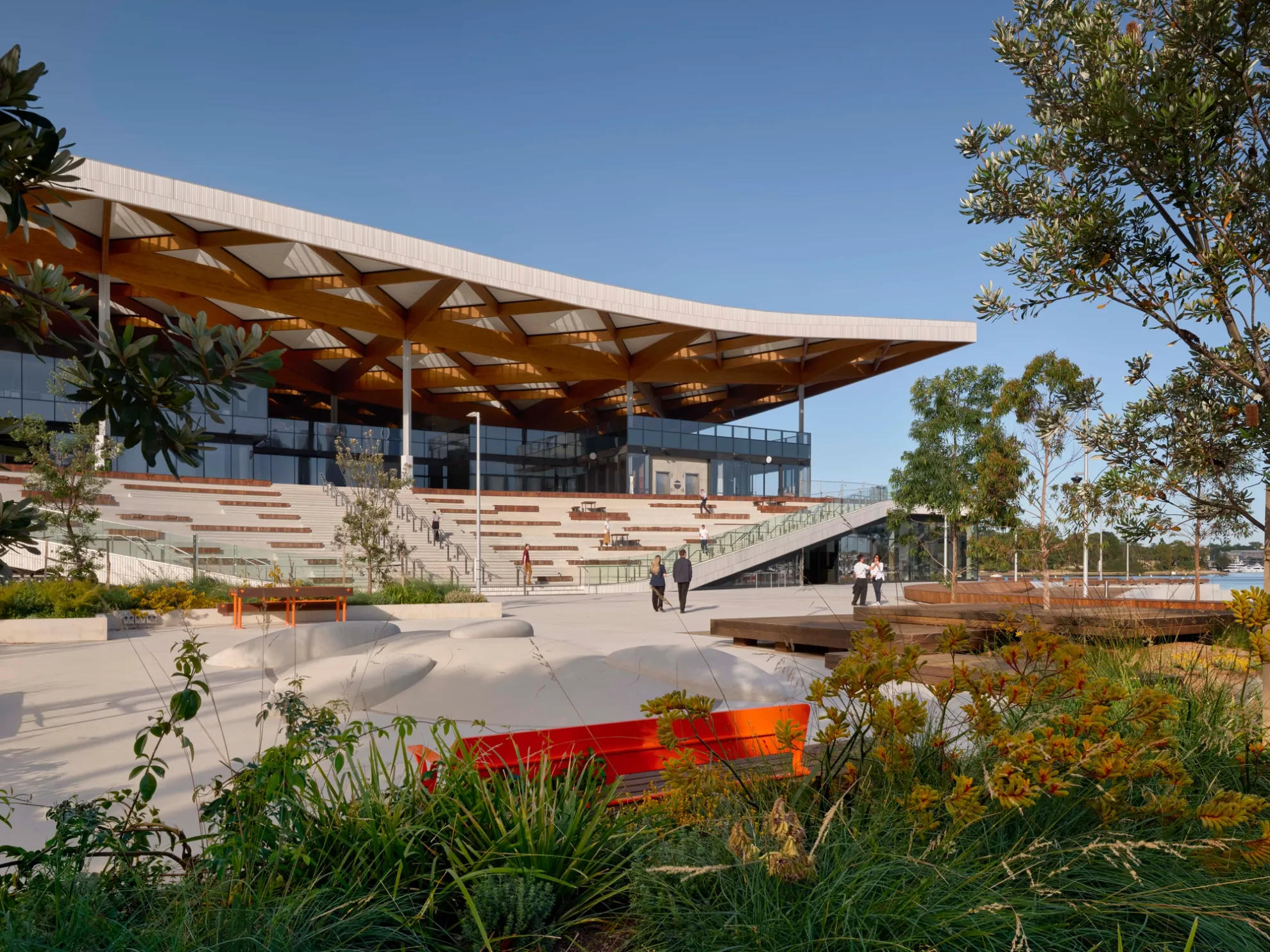
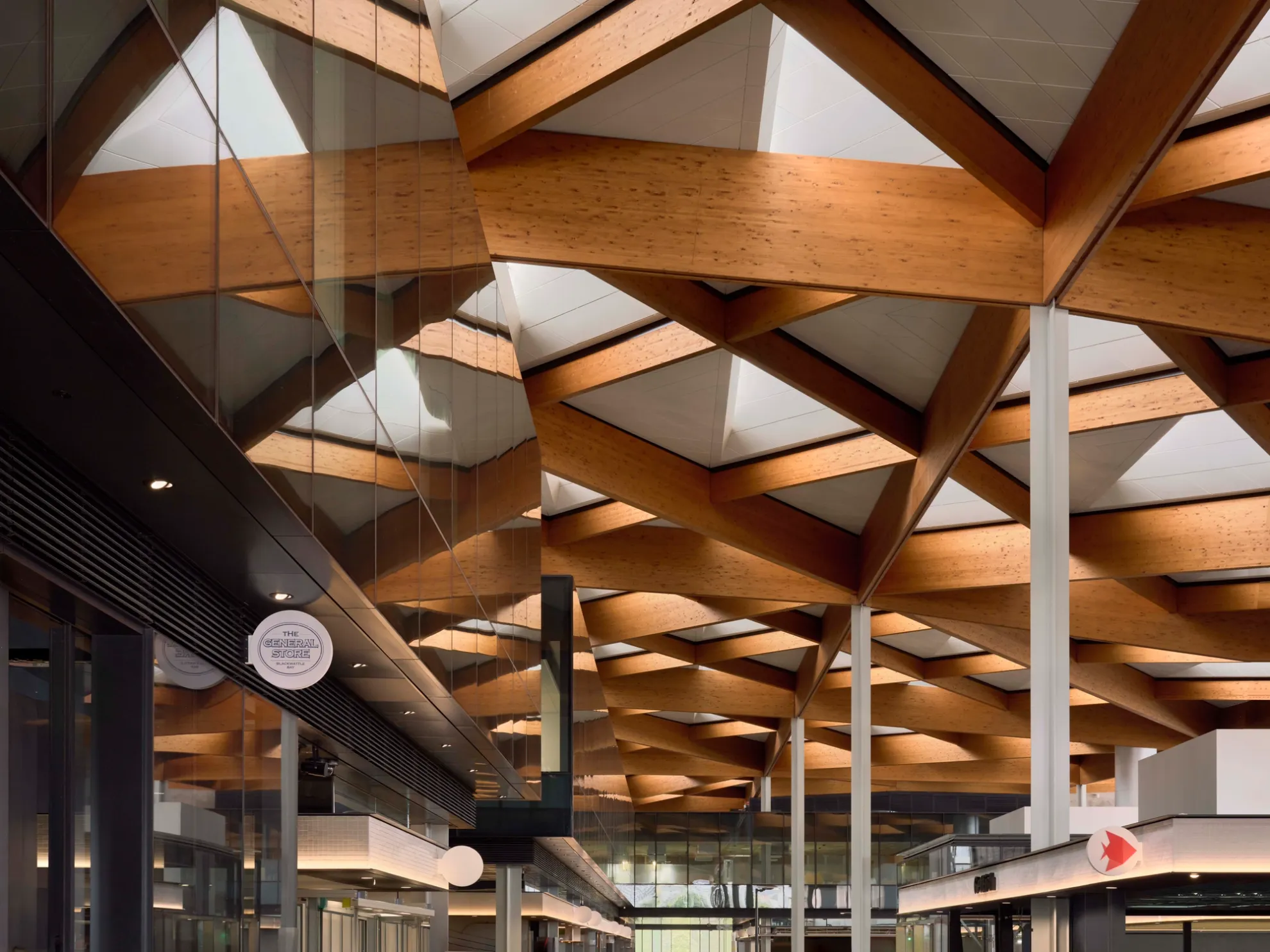
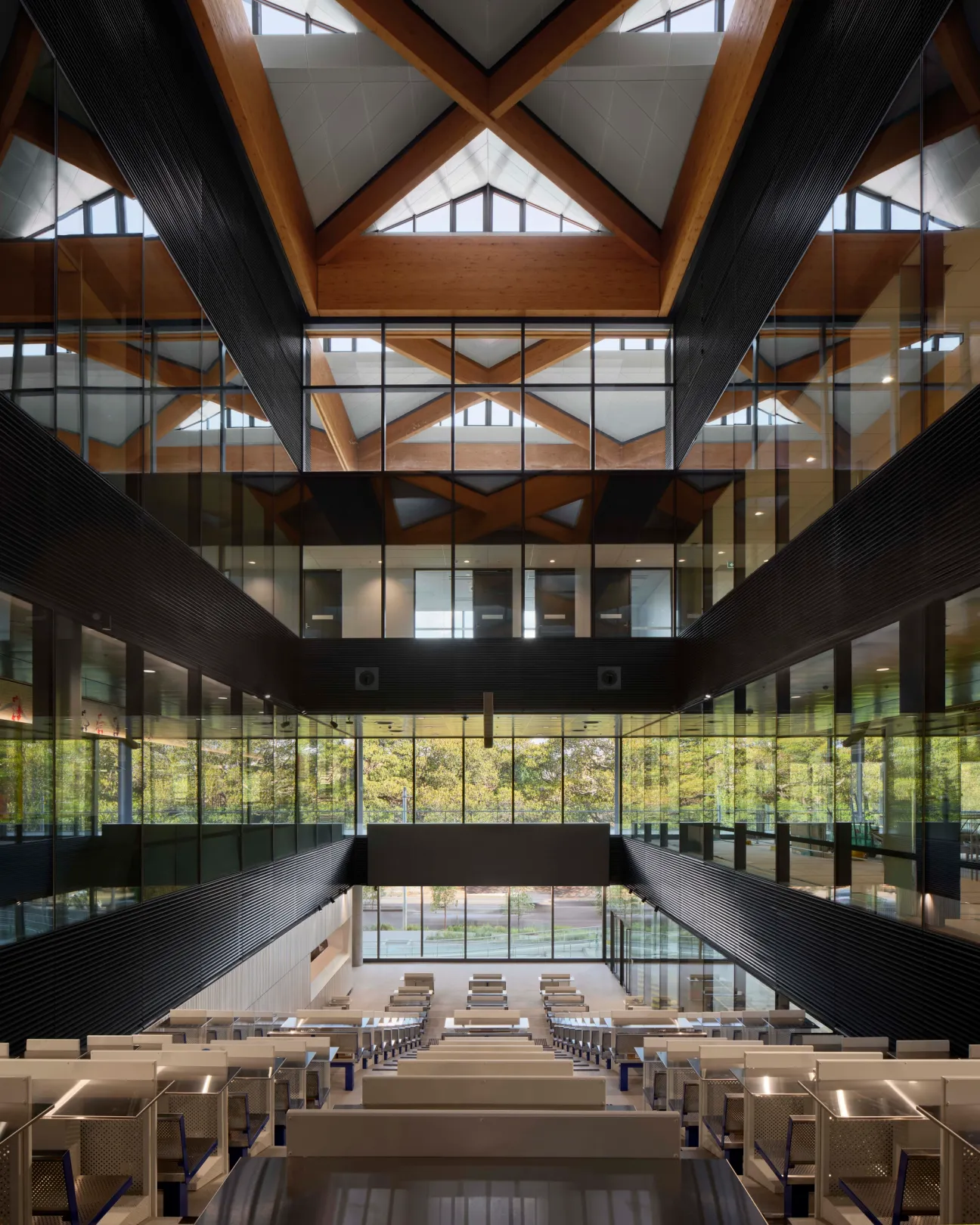
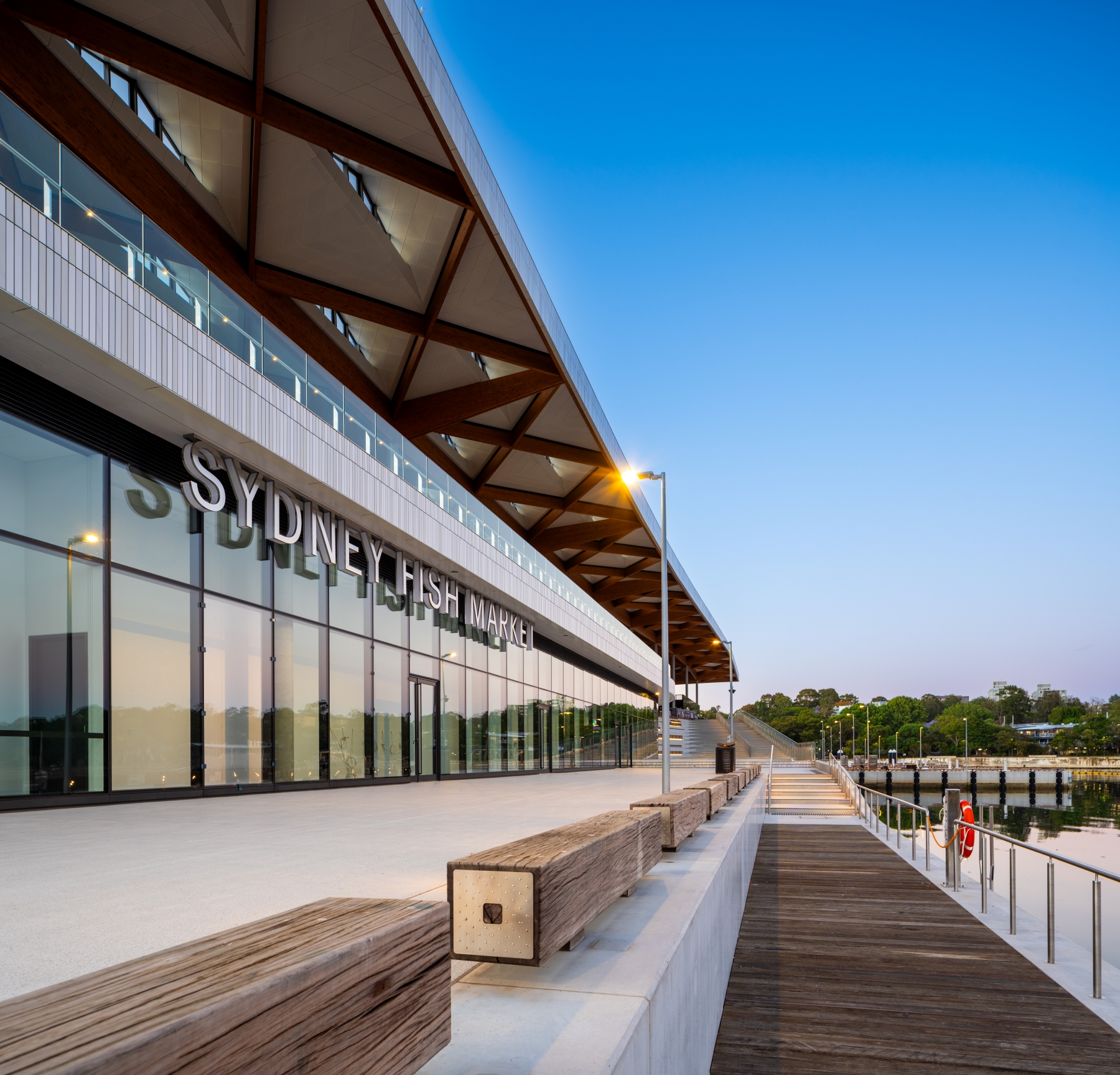
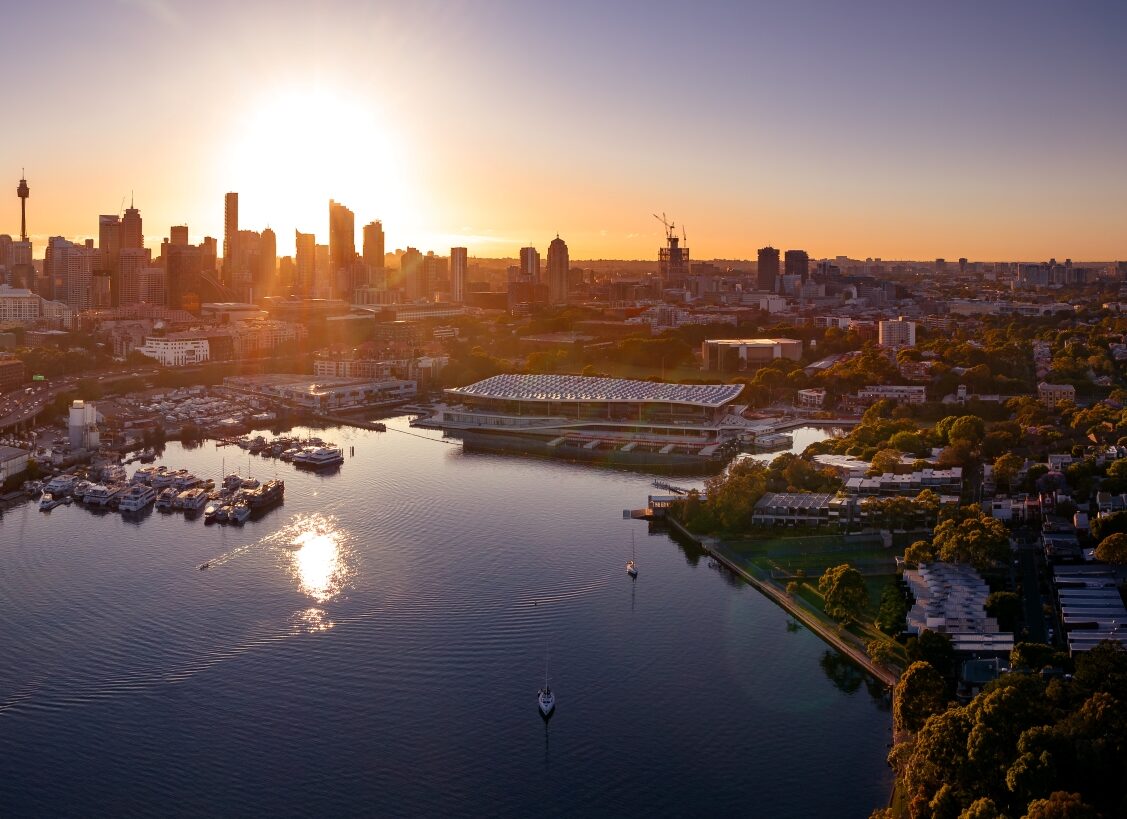
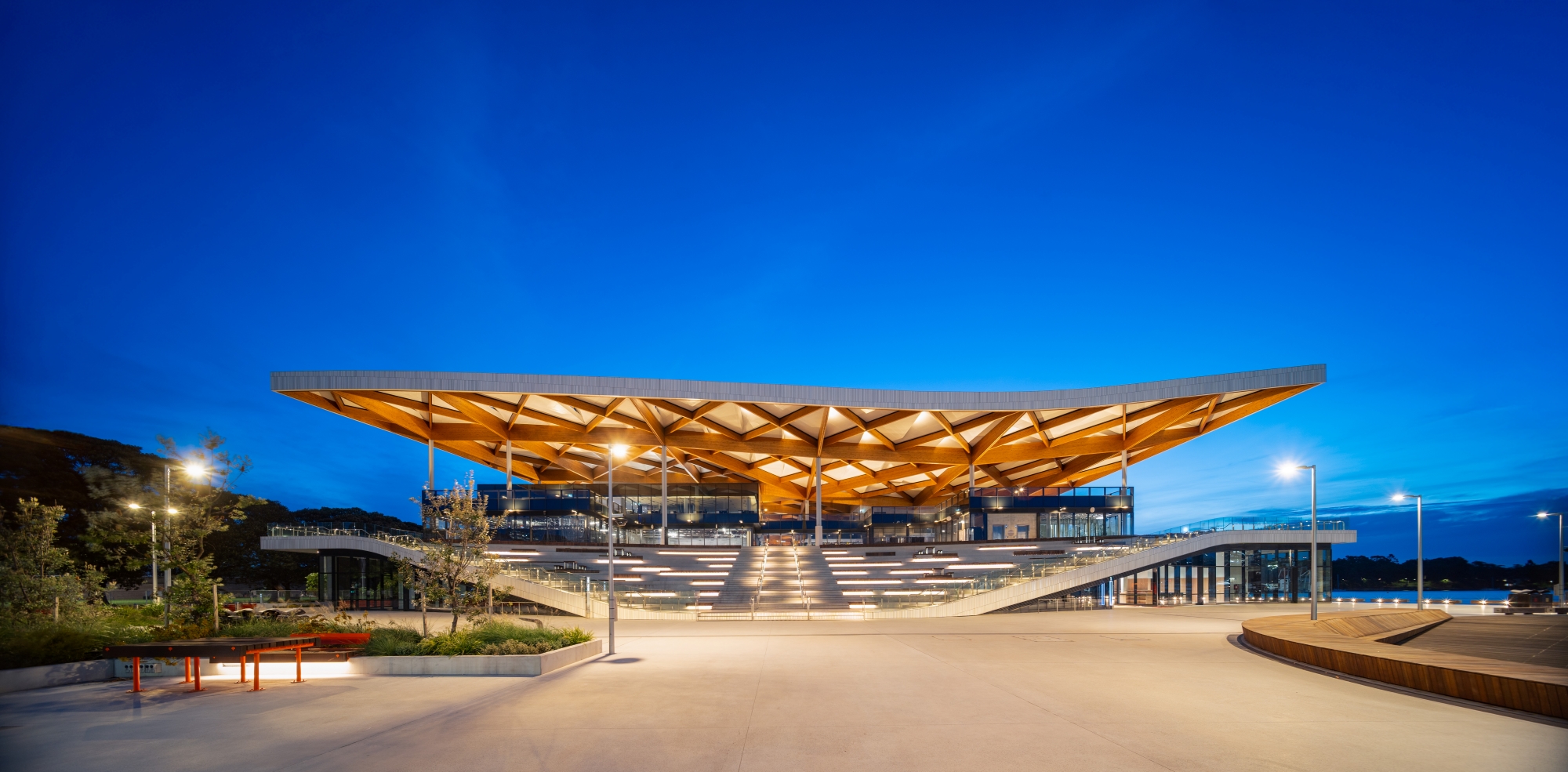
An iconic timber-and-glass landmark that delivers a four-storey market hall, 6,000+ m² of public space, promenades and a future ferry wharf. The showstopper is the 200 m floating timber canopy formed by 594 glulam beams and 400 roof cassettes, designed to breathe naturally, harvest rainwater and generate onsite power via integrated PVs.
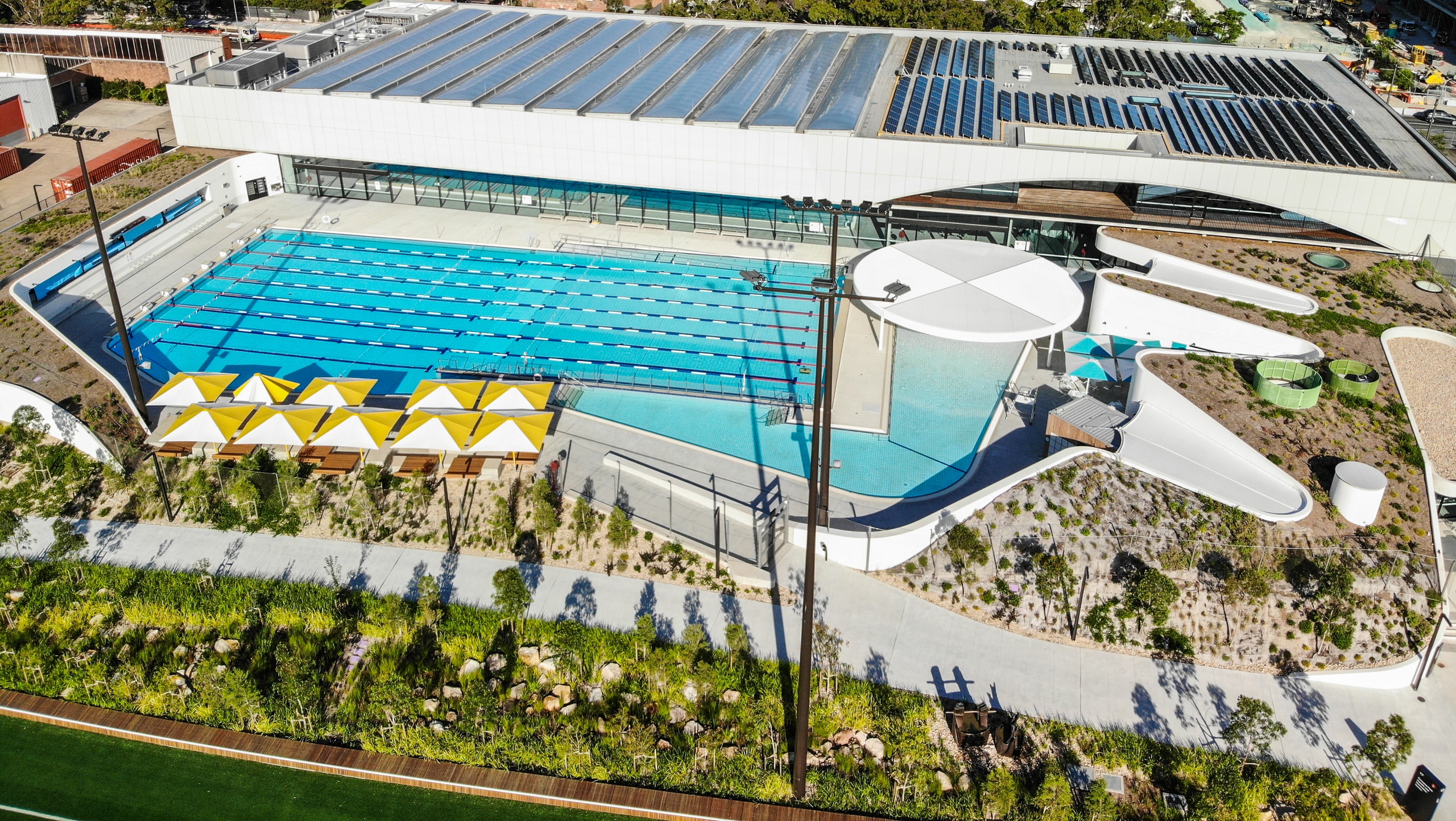
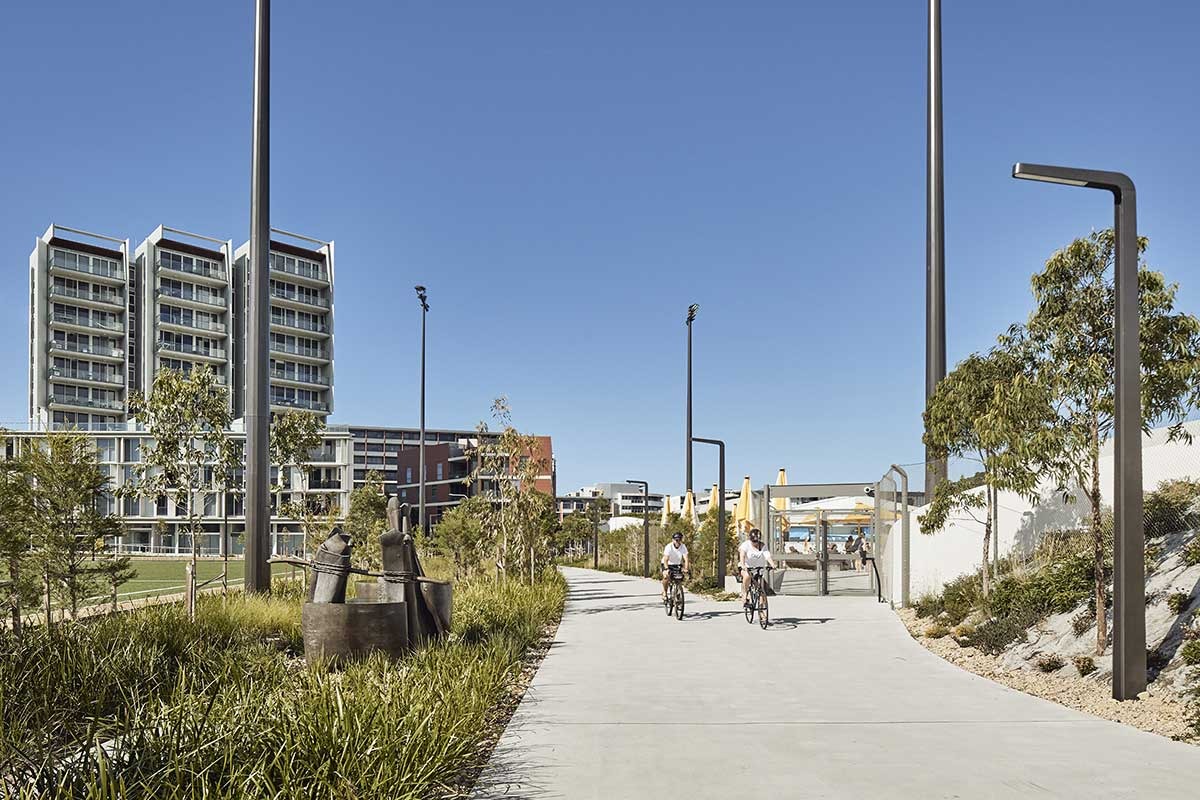
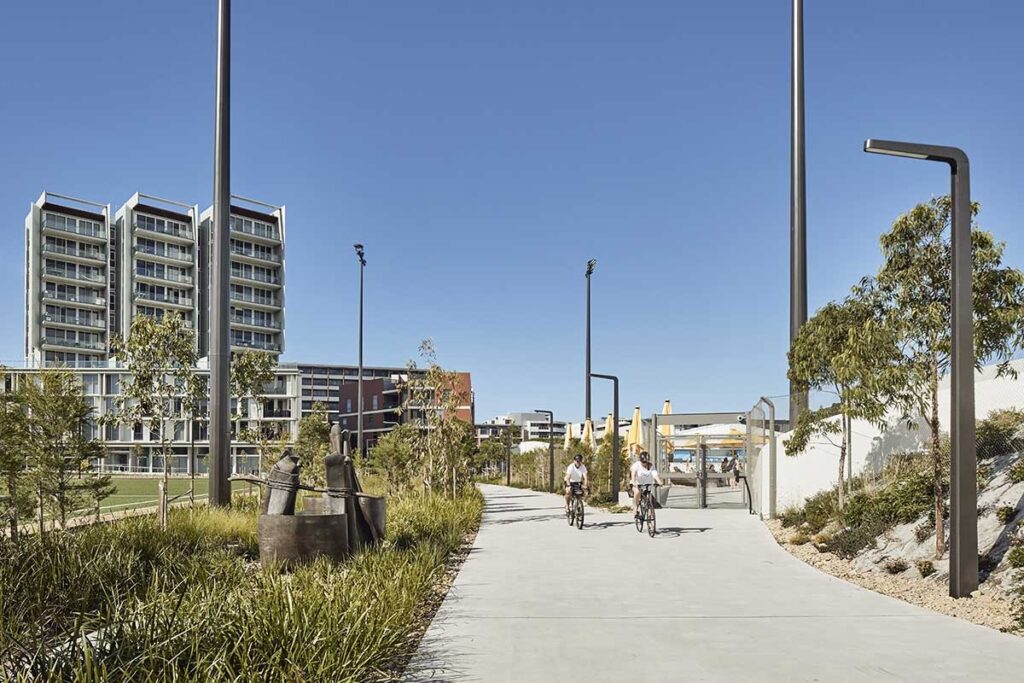
Stage 2 will complete the award-winning Green Square recreation precinct with approximately 6,300–8,700 m² of new parkland and public amenities integrated with the existing aquatic centre and synthetic sports field. The project introduces a skate plaza, children’s playground, natural lawn areas, amenities building with change rooms, shaded gathering spaces and landscaped parklands supporting active recreation and community events.
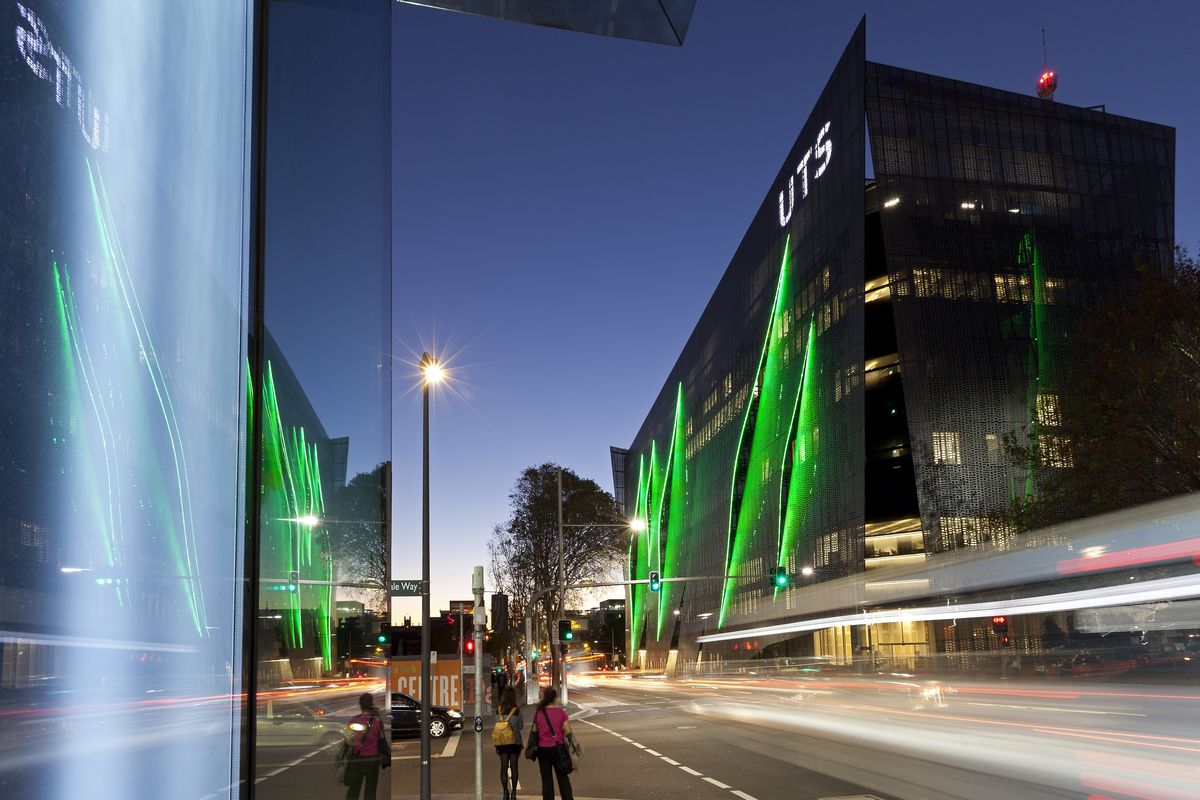
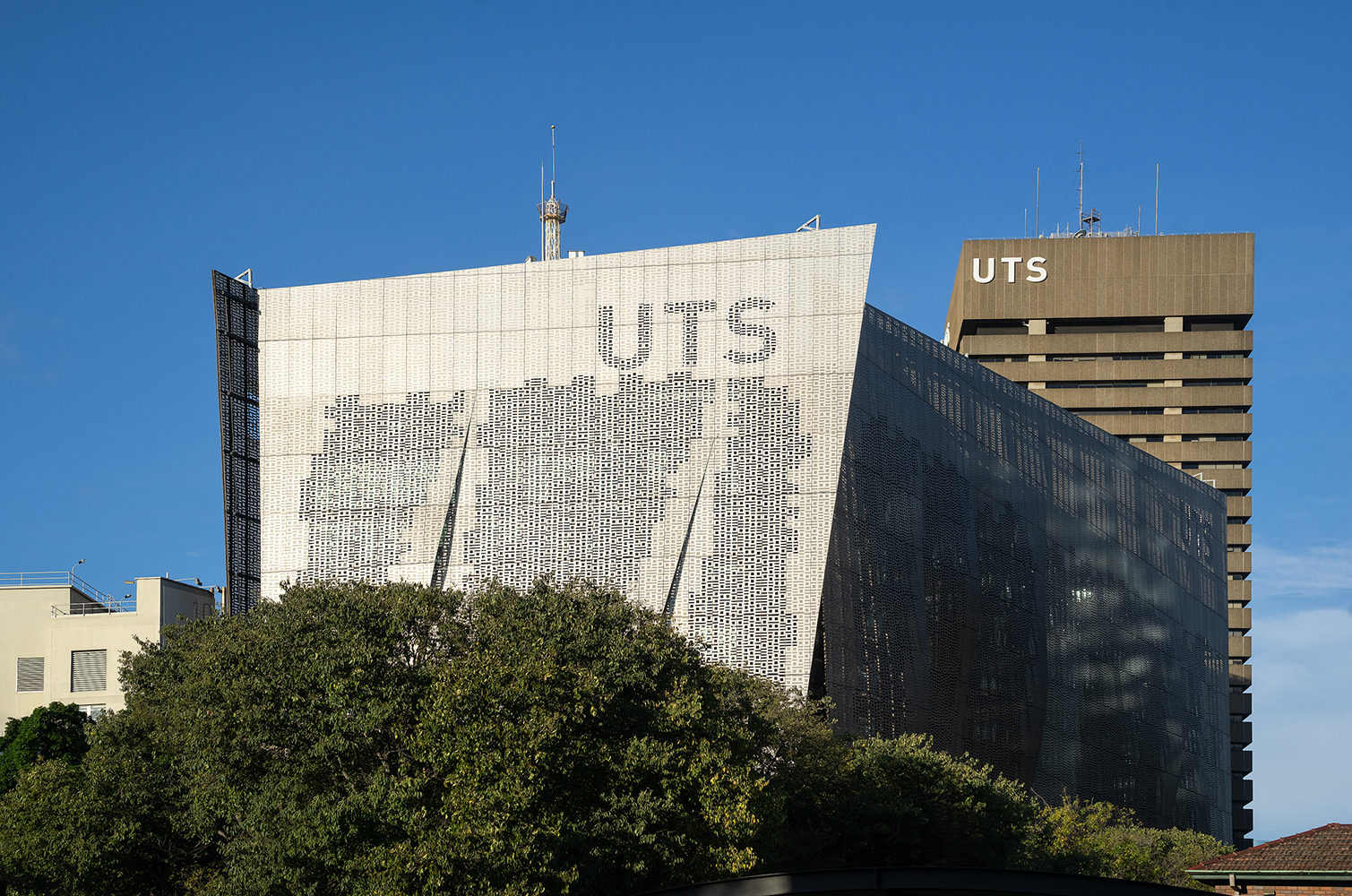
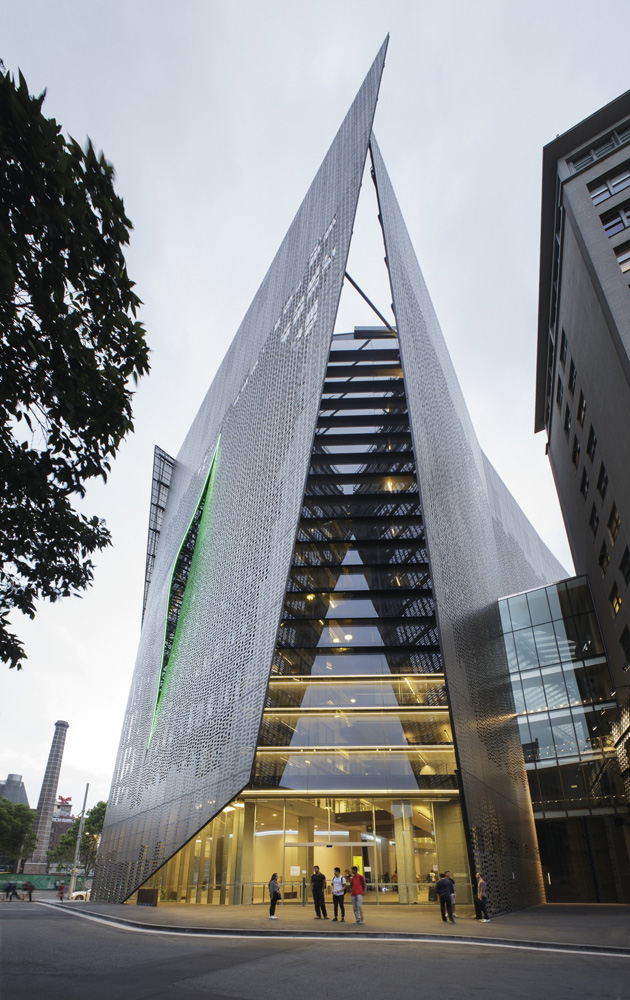
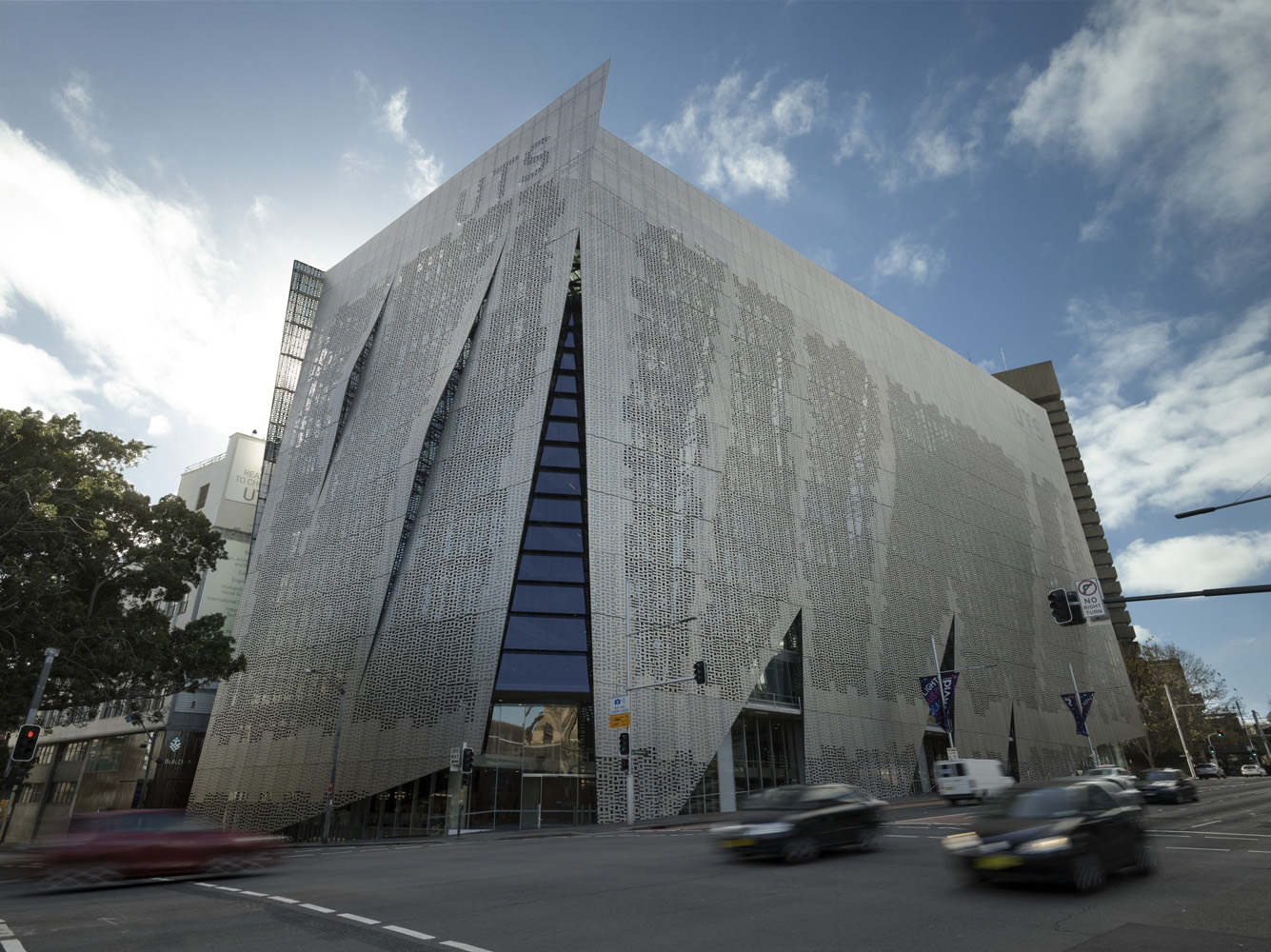
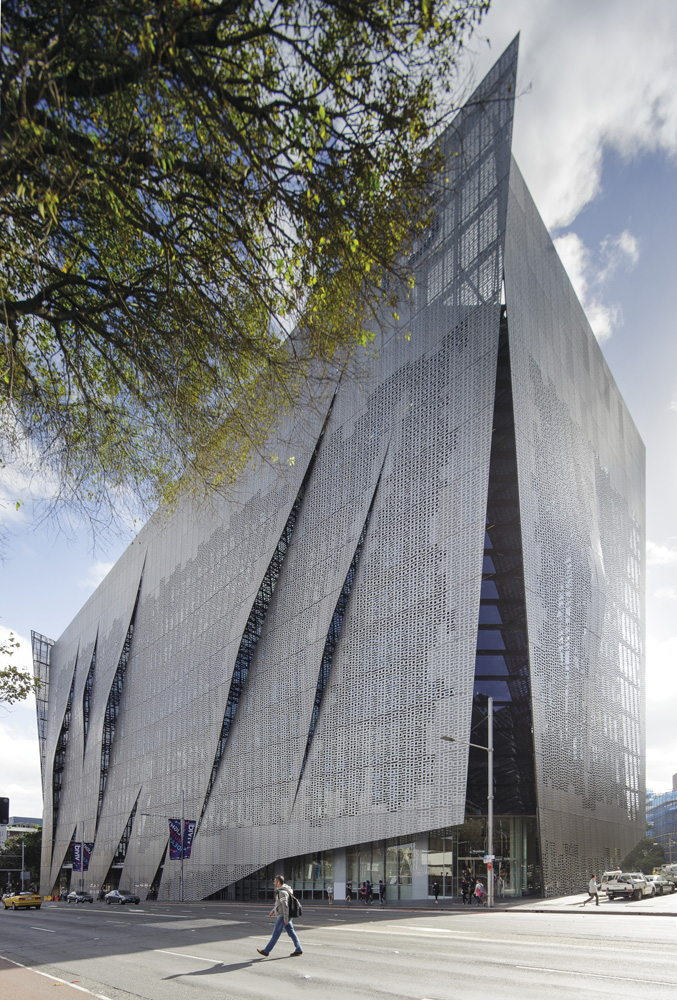
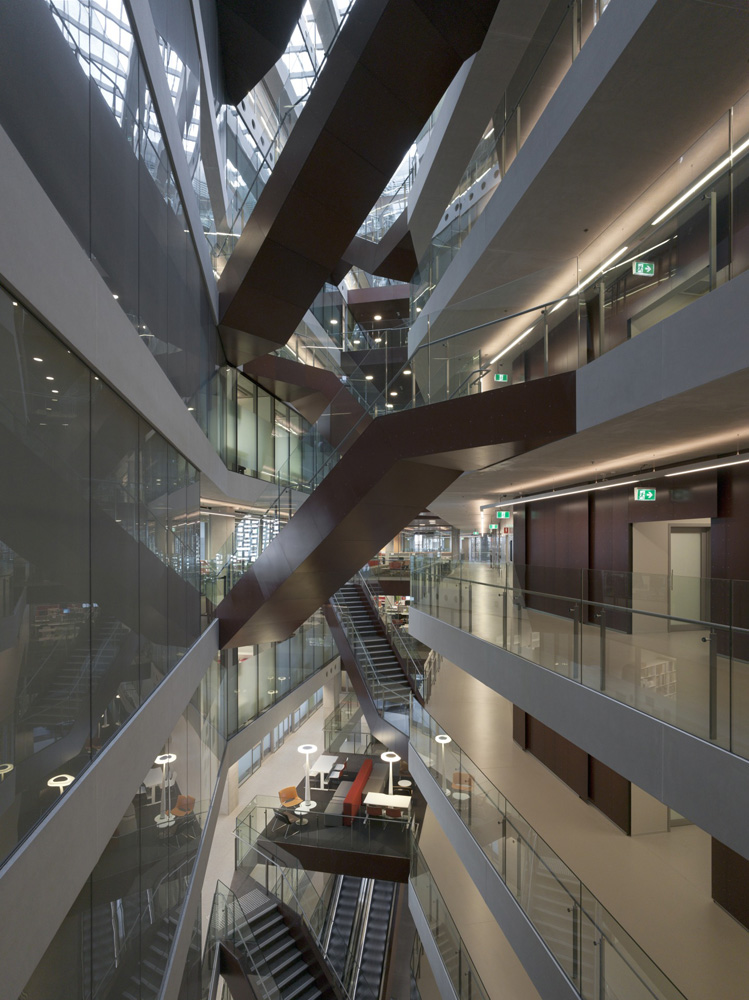
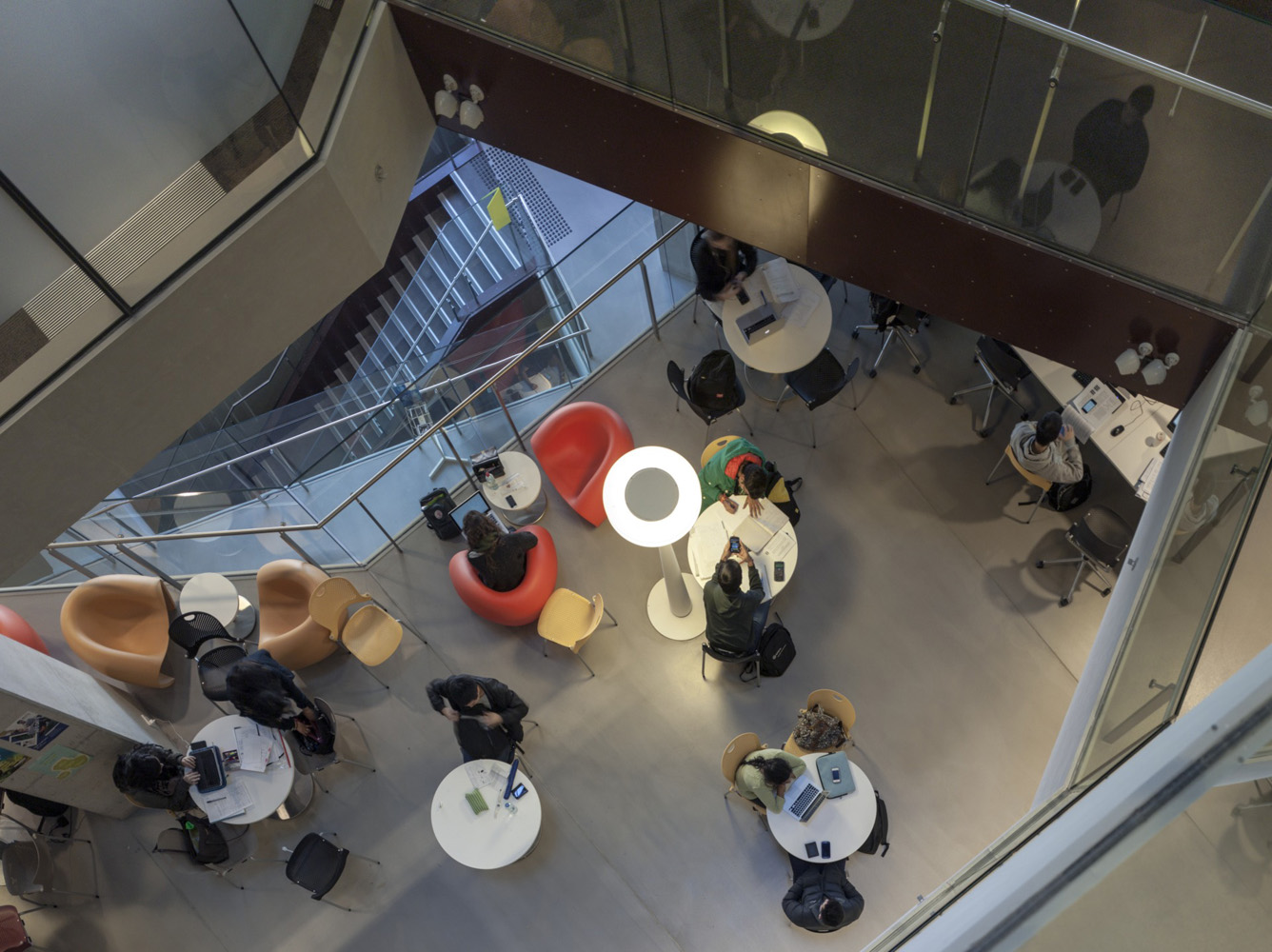
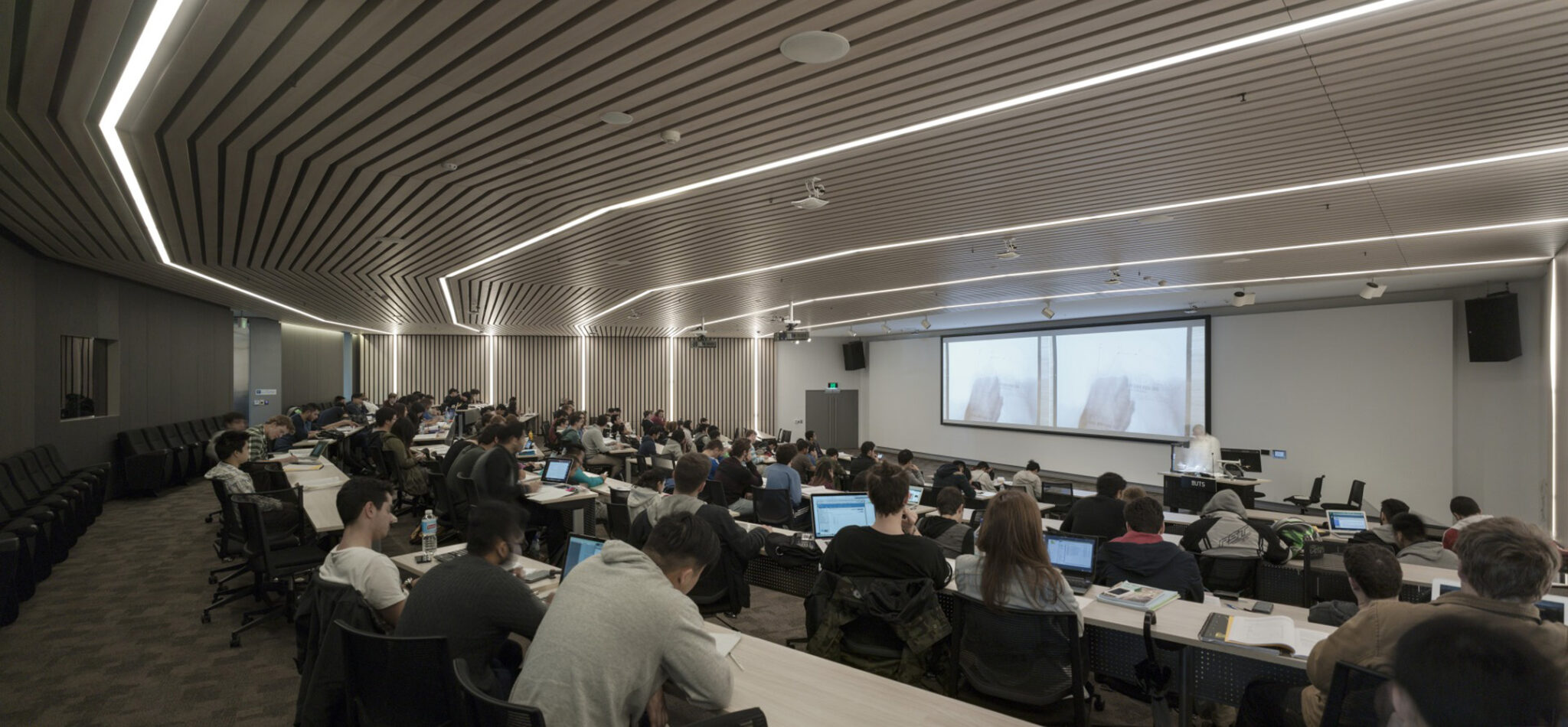
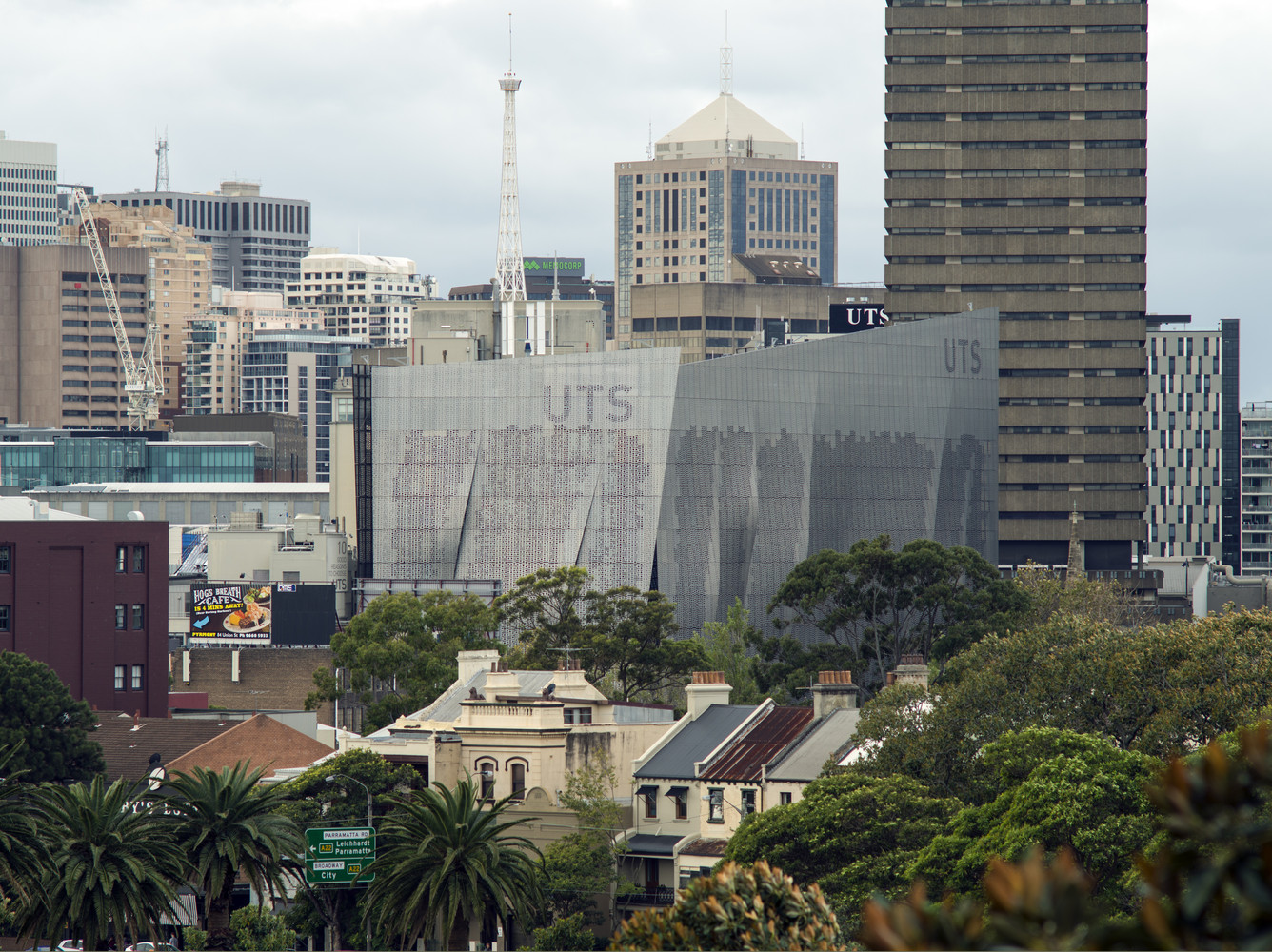
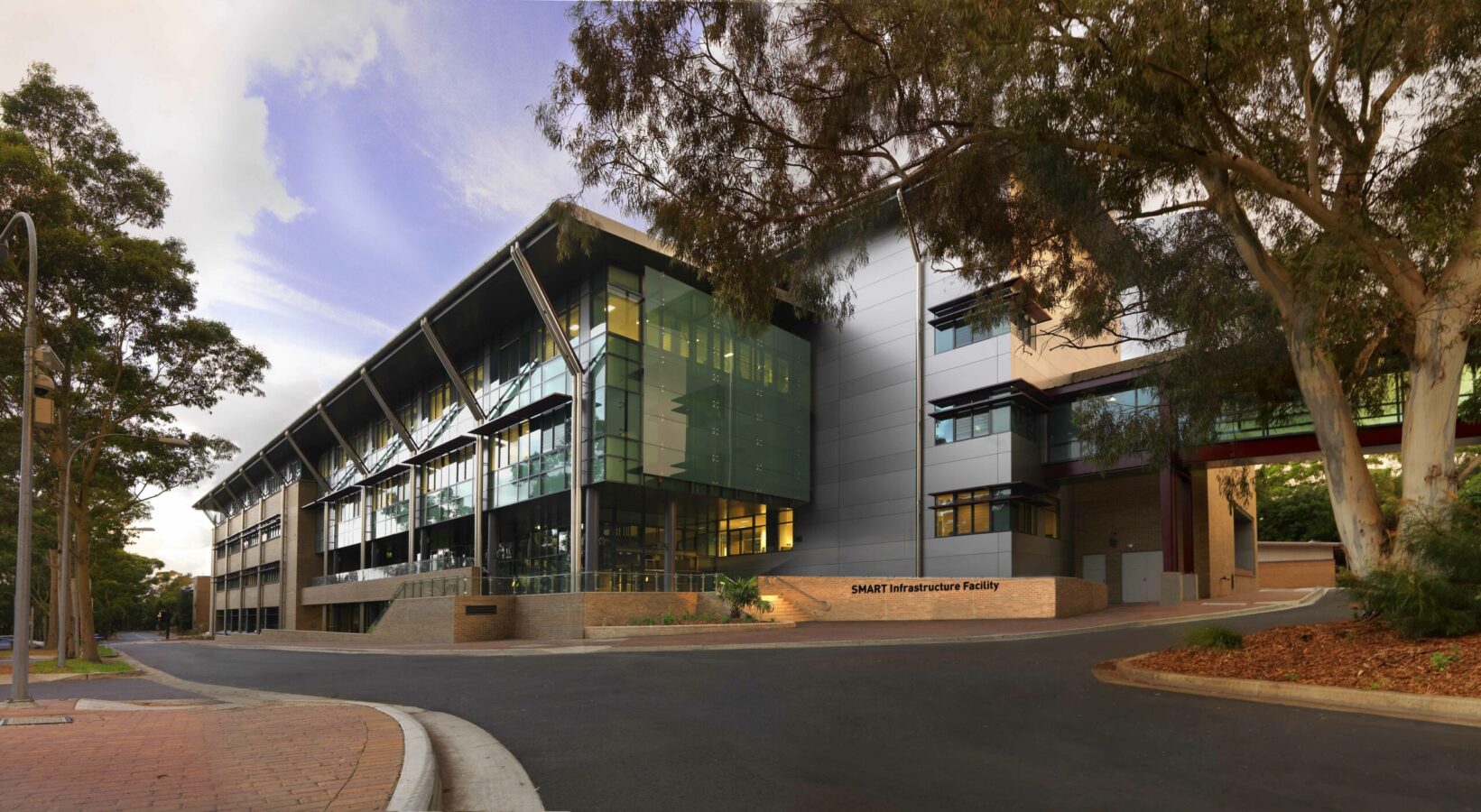
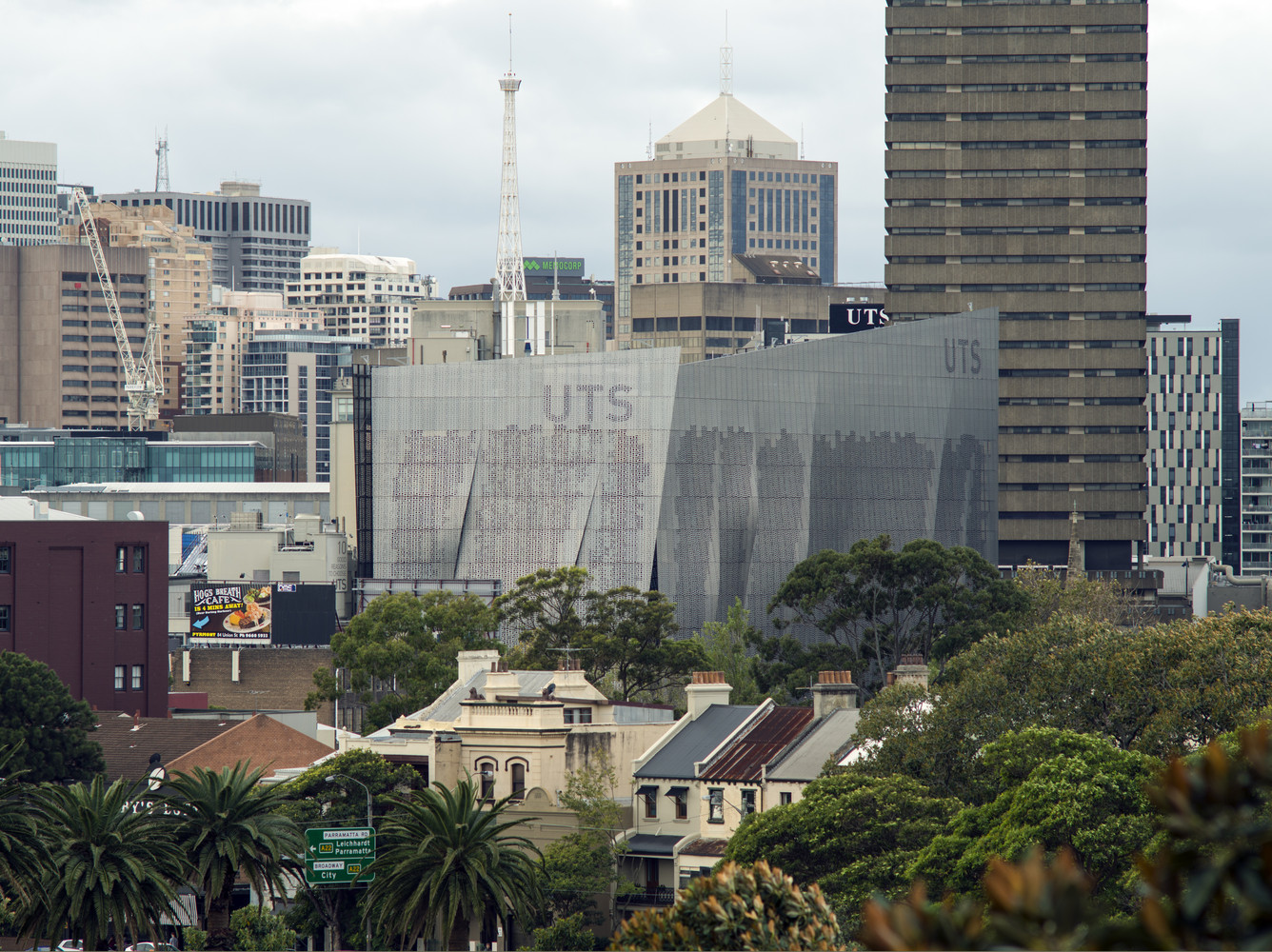
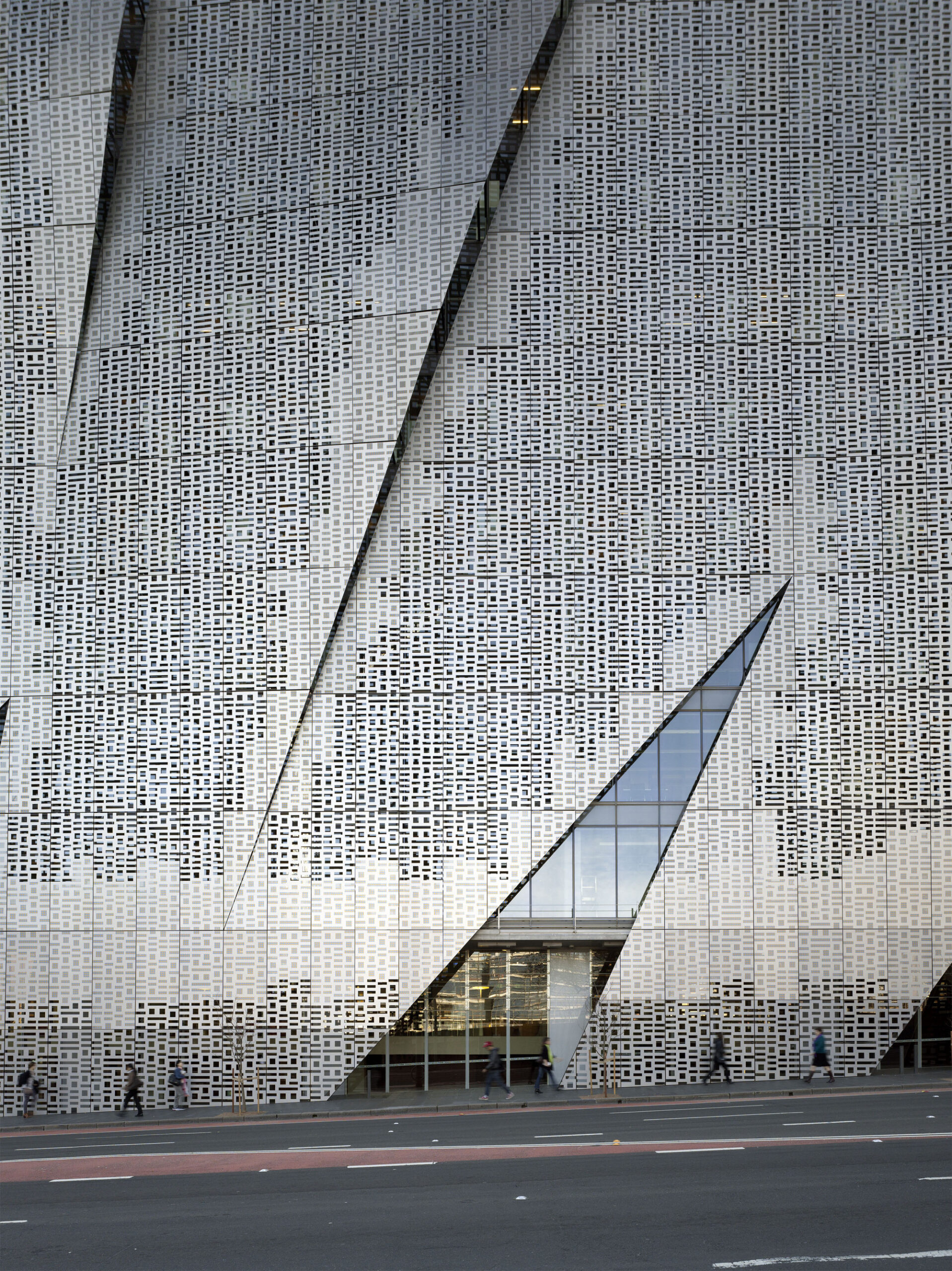
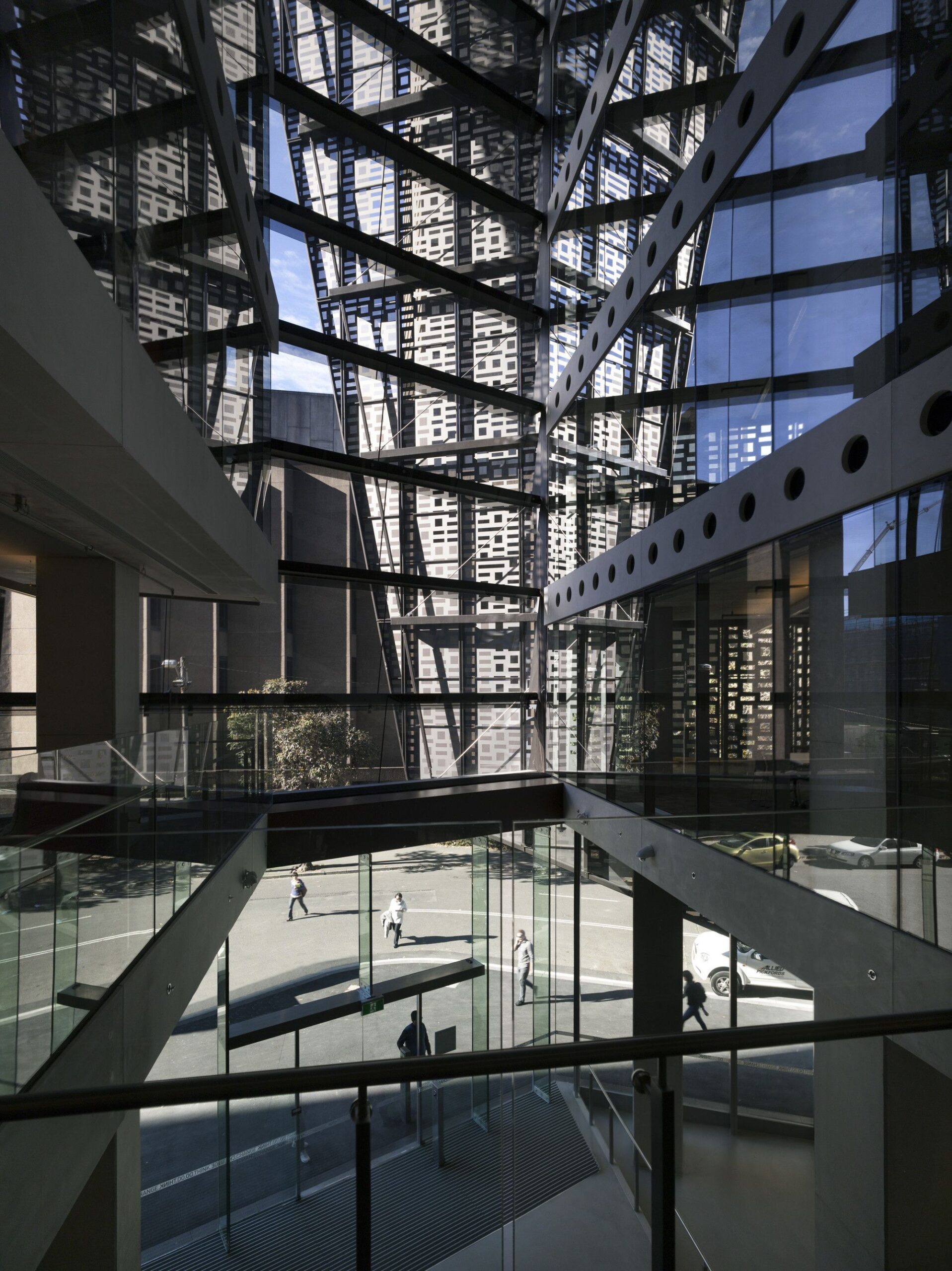
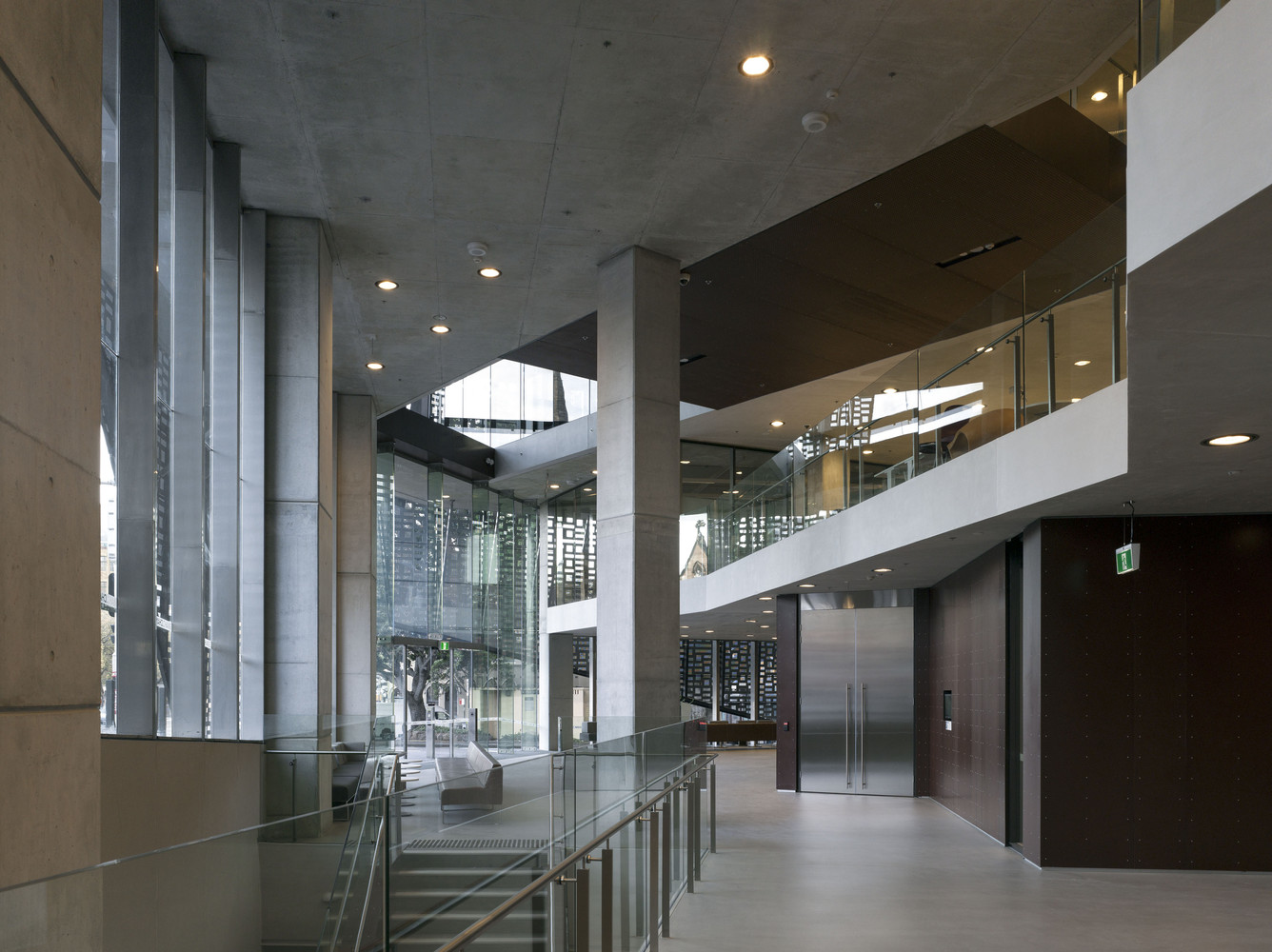
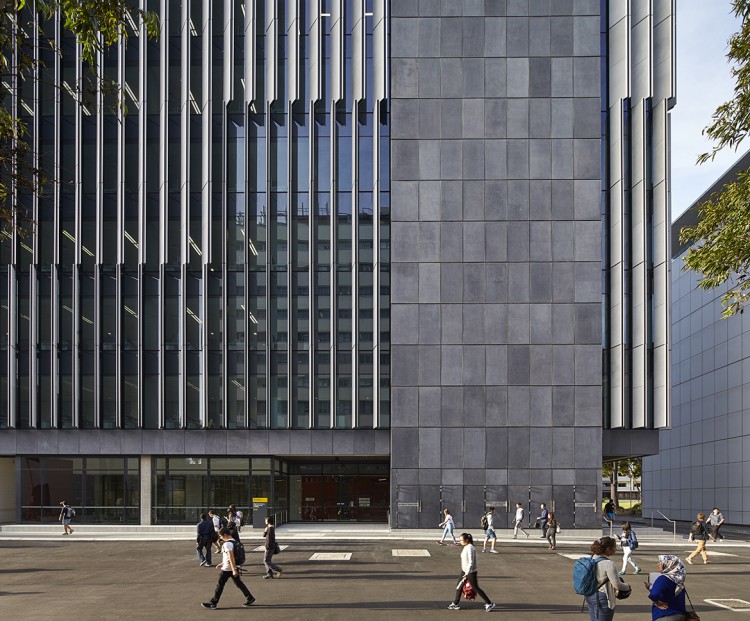
A $188 million sixteen level education building to accommodate 500 staff and 4,300 students. The facility, purpose built to house a large the Faculty of Engineering and Technology, compromises predominantly offices, computer laboratories, lecture theatres, meeting rooms and basement car parking.
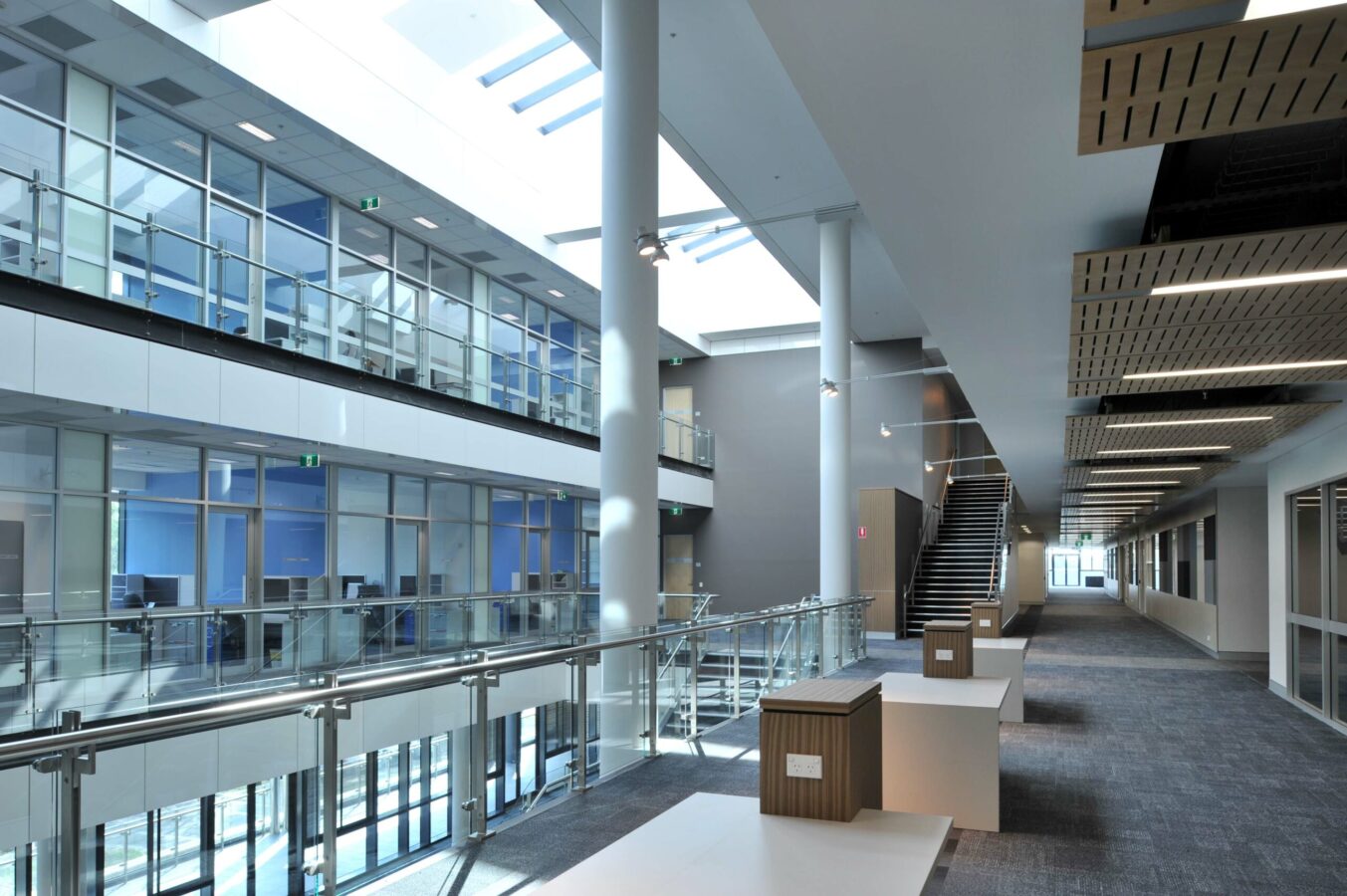
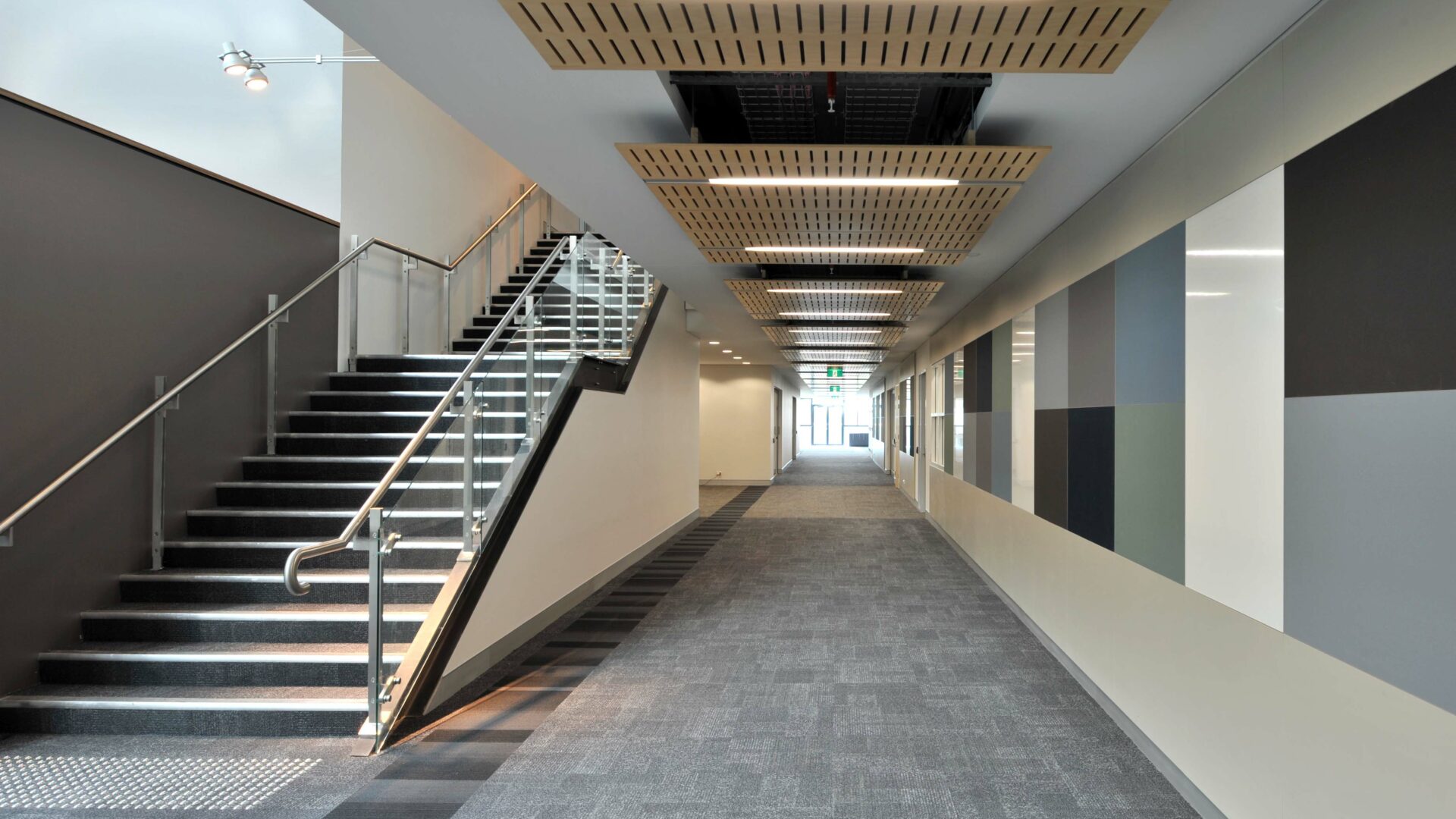
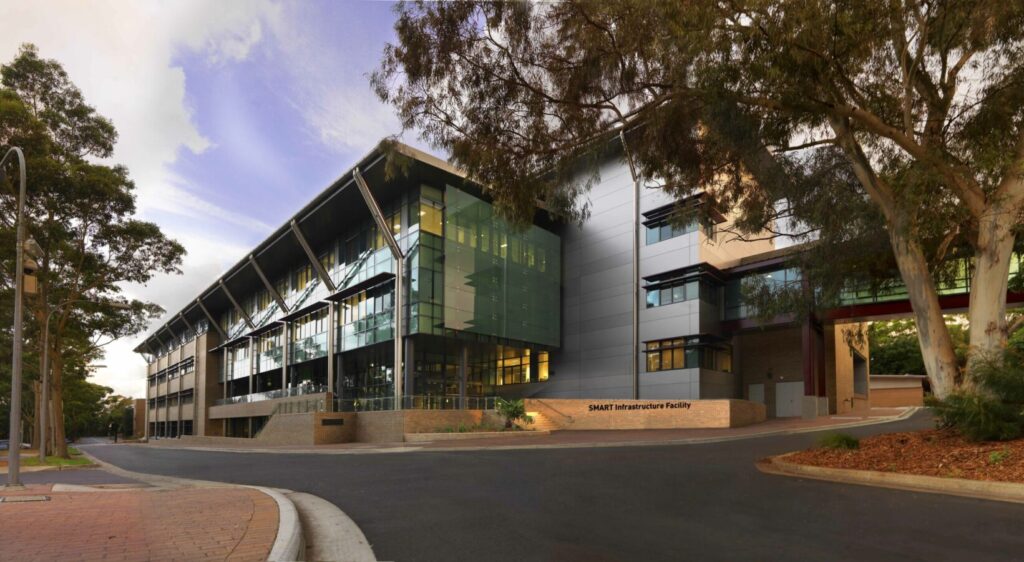
The SMART Infrastructure Facility is one of the largest infrastructure research facilities in the world at the time. Consisting of 30 specialist research and education laboratories, the building enables focus on a wide range of infrastructure services such as electricity, energy, water, gas, transport, rail and road. In addition, the facility also includes several seminar and small conference facilities for use by industry, government and visiting scholars.
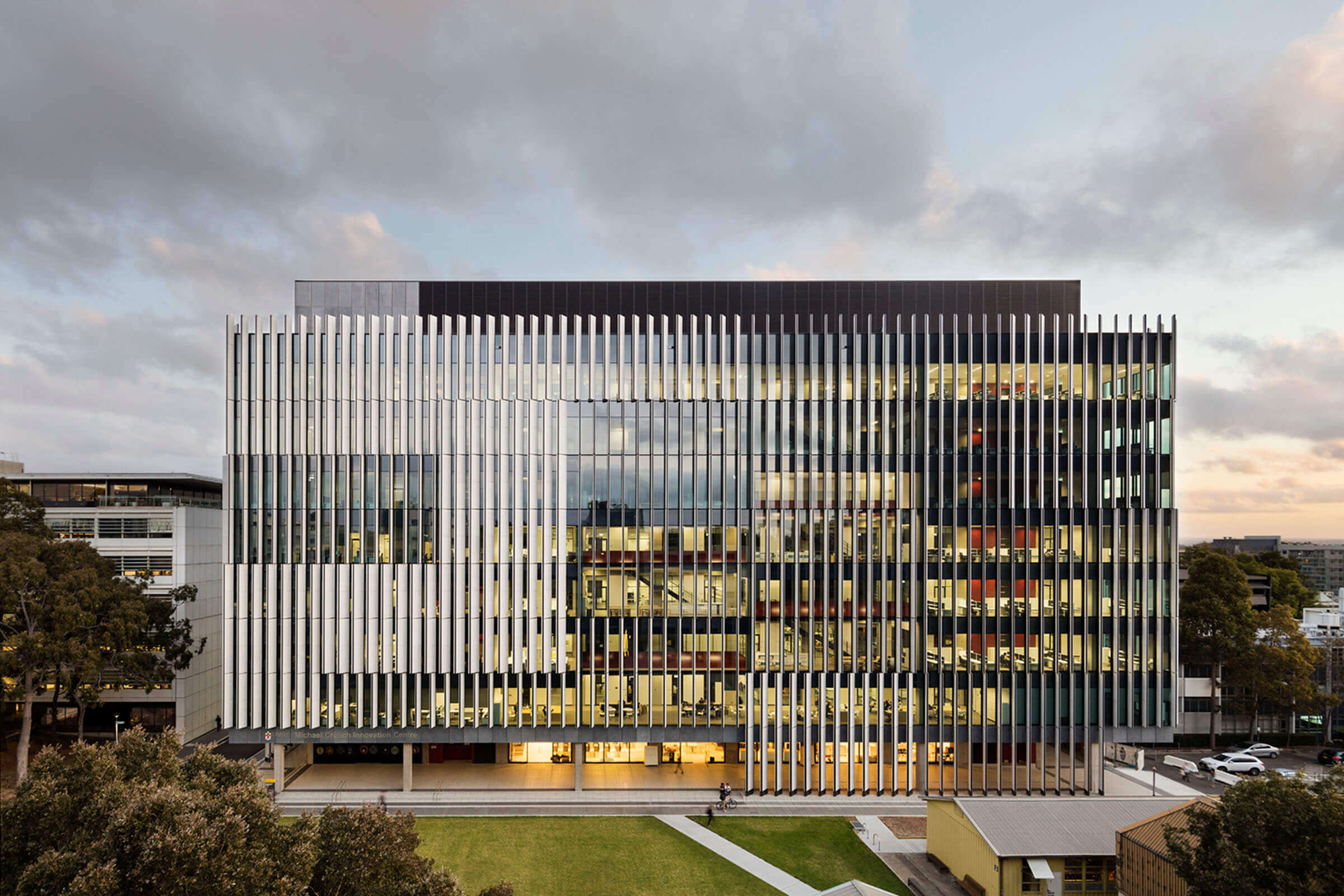
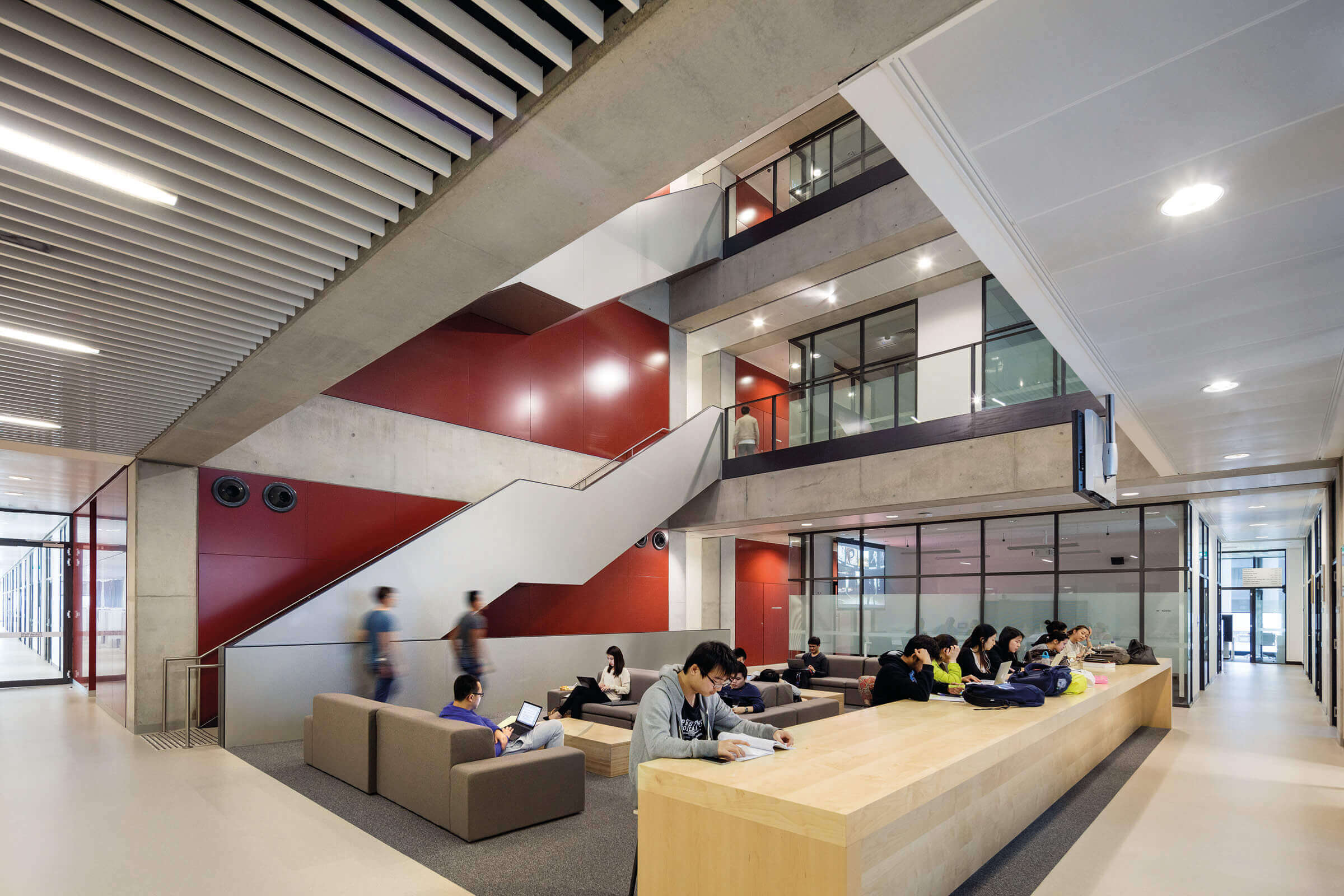
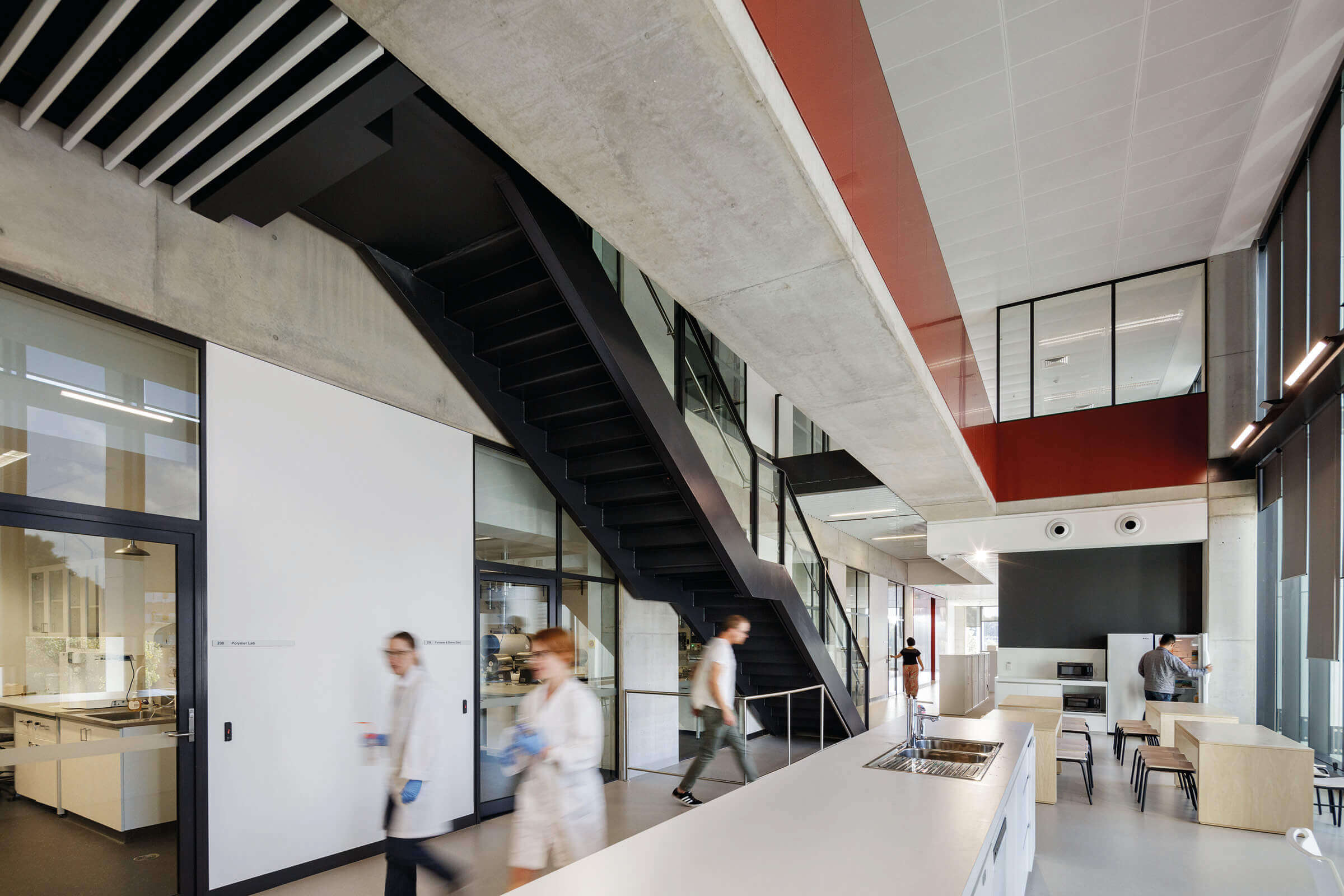
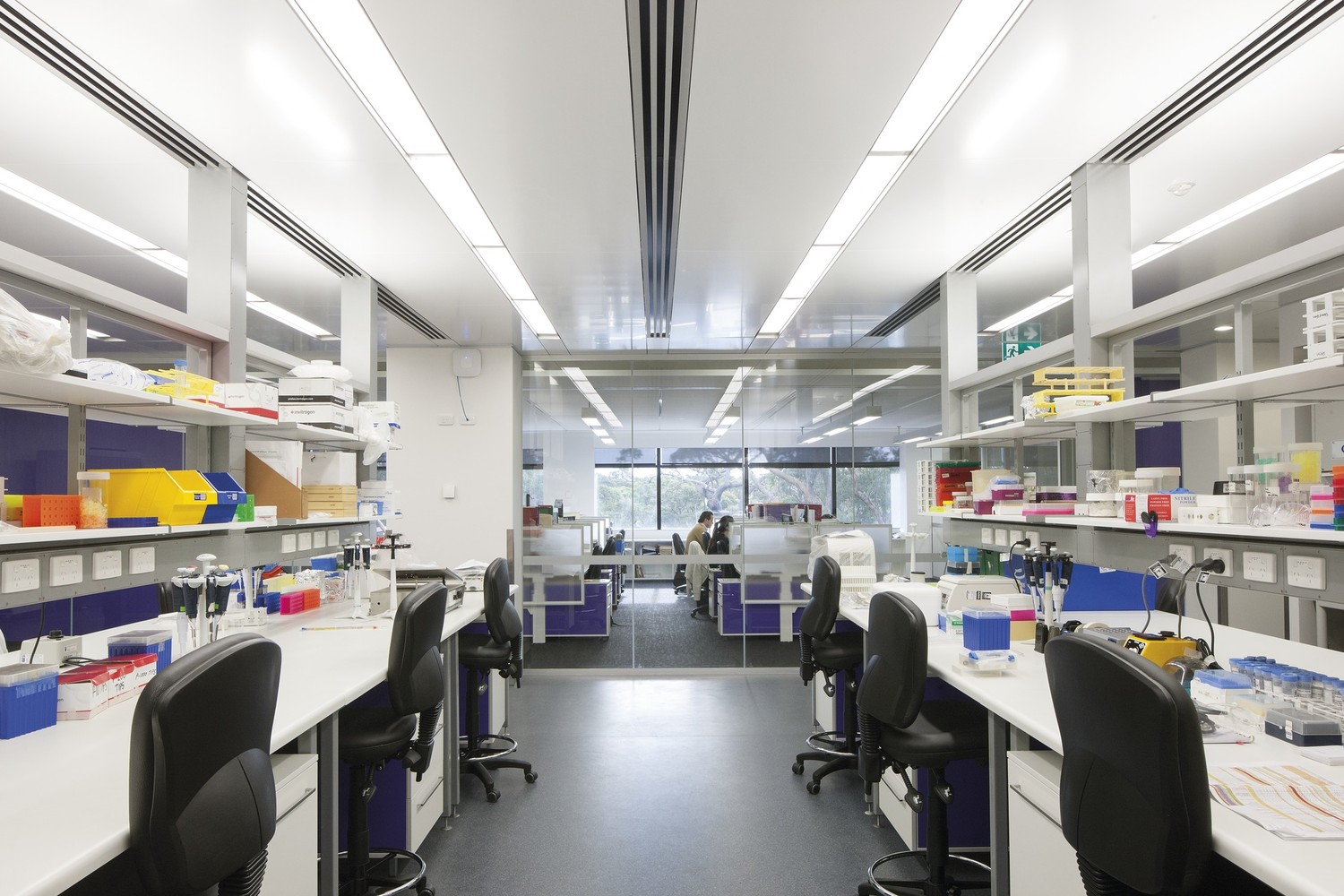
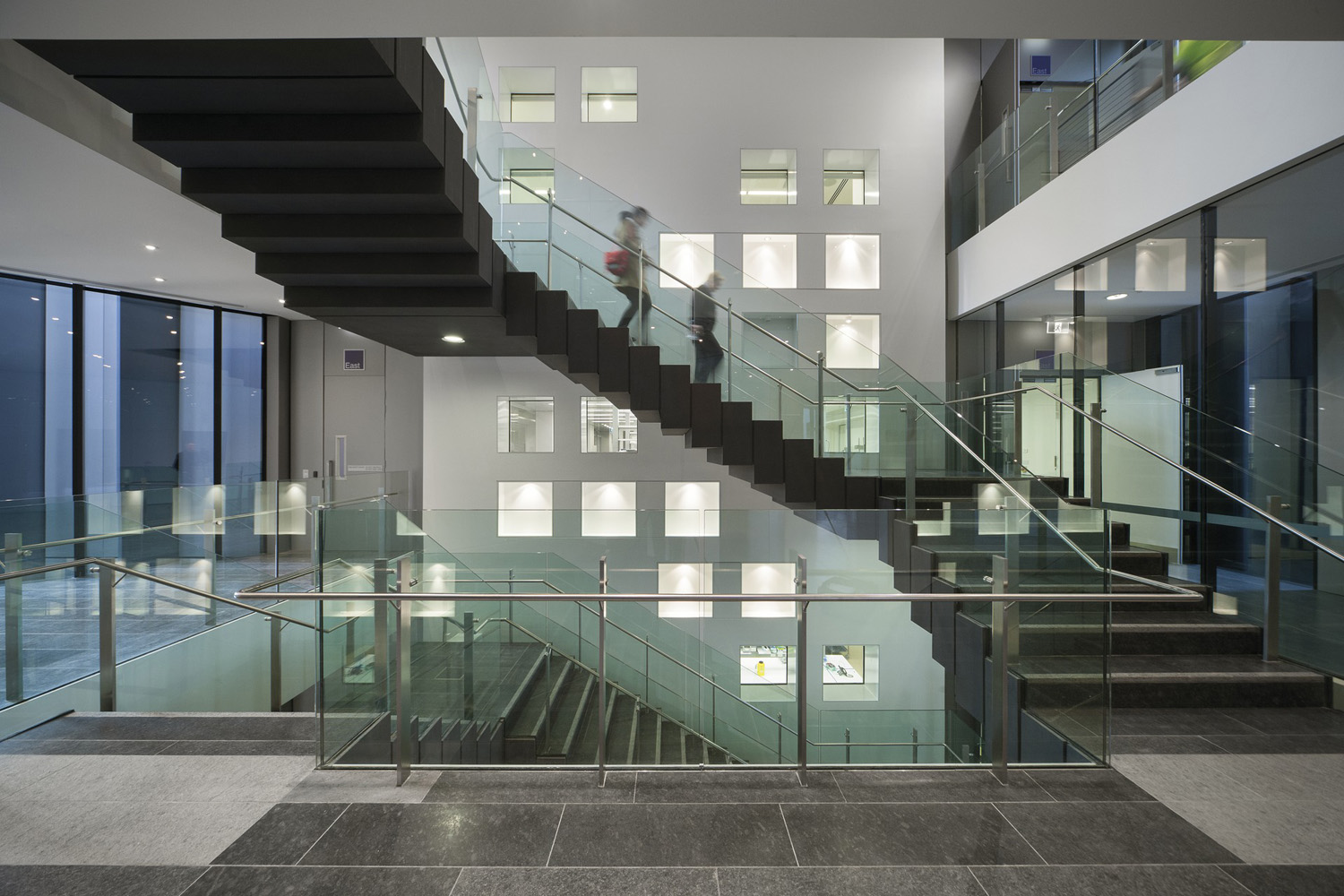
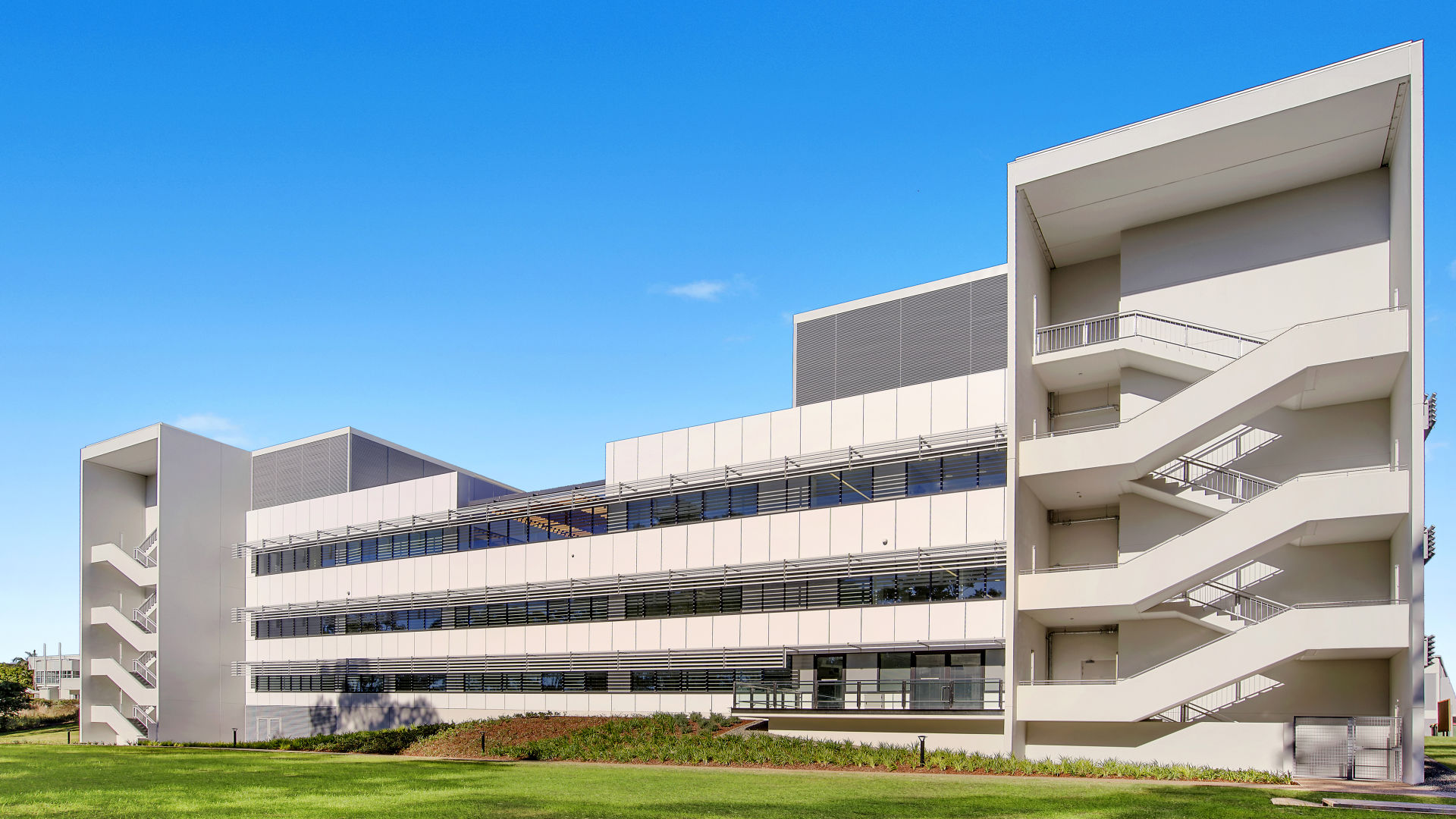
Construction of a $145 million research facility located within the UNSW Sydney Kensington Campus. The development comprises nine stories and includes approximately 20,000 square meters of laboratories, learning spaces, research areas, offices, and workshop display space. World class laboratory spaces form the heart of the facility and are transparent, to reveal the work of the scientists inside.
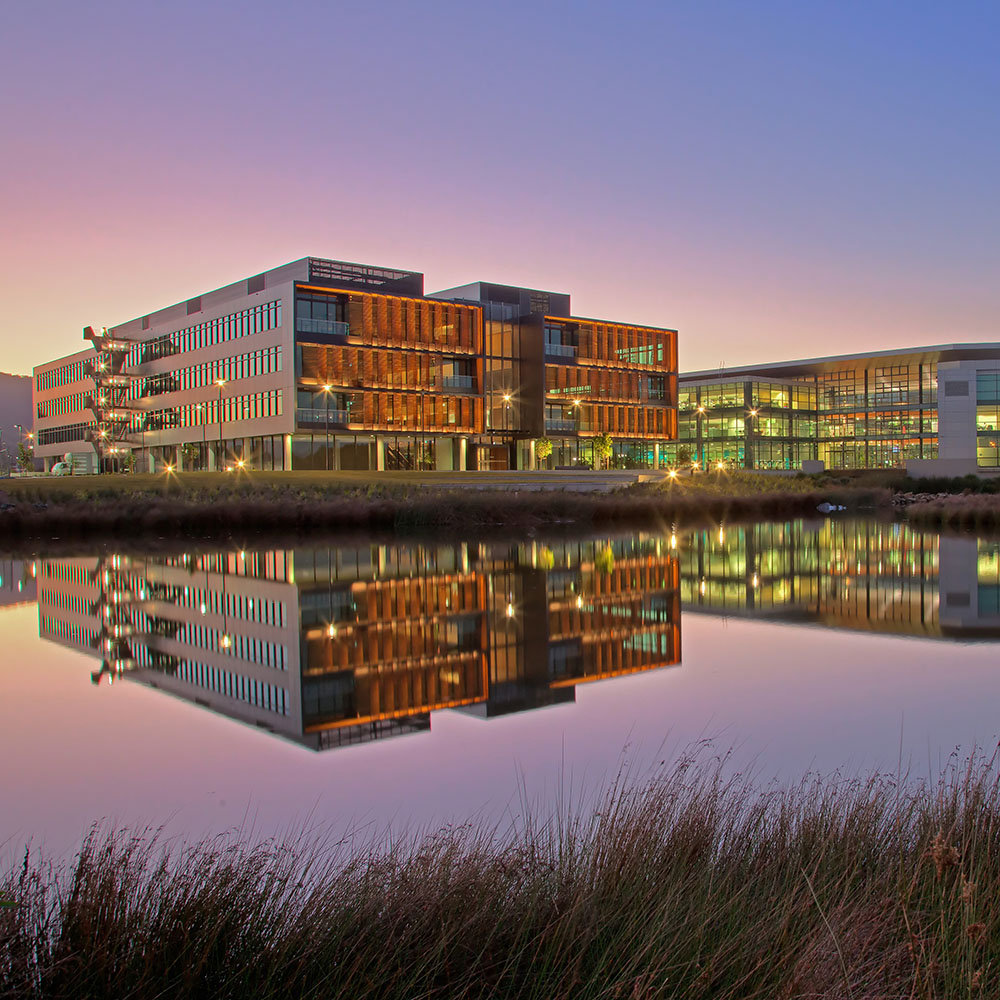
The Milthorpe Public School upgrade delivers a contemporary learning environment within a regional setting, balancing new facilities with the character of an existing campus. The design resolves complex site conditions, heritage considerations, and integration of modern services while enhancing flexibility and student amenity. Construction required careful staging within an operational school, alongside coordination of logistics in a regional location.
The Ryde Secondary College New Learning Hub Stage delivers a contemporary, flexible education facility within a constrained, active campus. The design resolves complex site interfaces, vertical circulation, and integration with existing buildings while supporting evolving teaching models. Construction required careful staging, tight logistics, and stringent safety controls to maintain school operations.
The Birrong Girls High School refurbishment revitalises an ageing campus, delivering upgraded learning environments within a fully operational school. The design tackles complex integration of new services, accessibility improvements, and flexible teaching spaces within existing structures. Construction required precise staging, strict safety management, and coordination across occupied areas to minimise disruption.
The Birrong Boys High School refurbishment upgrades a legacy campus to support contemporary learning within a live educational environment. The design addresses ageing infrastructure, accessibility, and spatial inefficiencies, integrating new services and flexible teaching areas within existing structures. Construction demanded careful staging, strict safety protocols, and coordination across occupied zones to minimise disruption.
The refurbishment of Our Lady Queen of Peace Primary School at Greystanes revitalises existing facilities while maintaining full school operations. The design works within tight spatial and structural constraints, upgrading learning environments, services, and accessibility without compromising the campus fabric. Construction required meticulous staging, safety management, and integration with ageing infrastructure, alongside coordination of new finishes and building systems. The result is a refreshed, functional learning environment that supports contemporary education while extending the life and performance of the existing school.
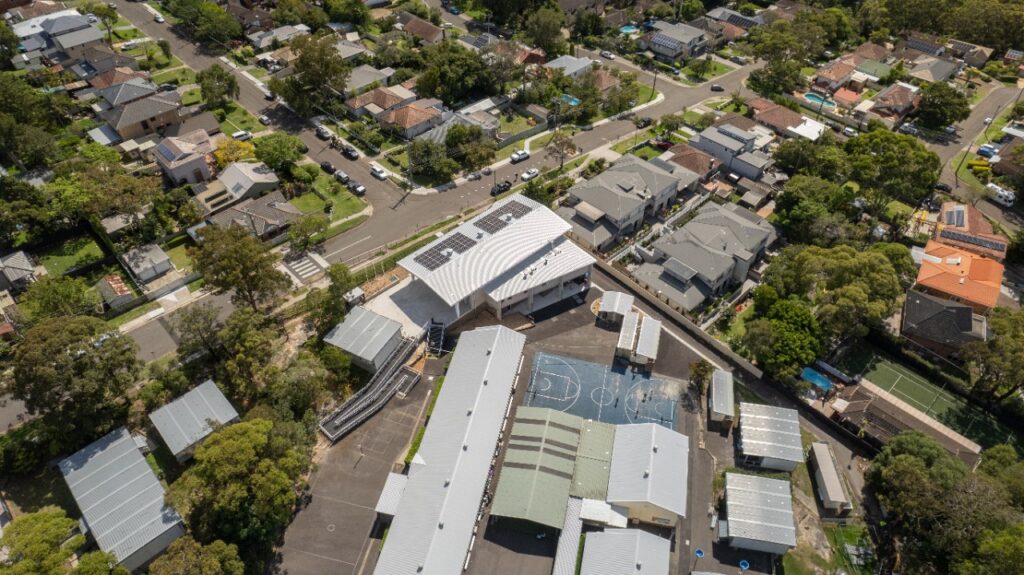
Jannali East Public School delivers a contemporary learning environment within a tight suburban campus, balancing new facilities with existing operations. The design resolves complex staging, safe student movement, and integration with ageing infrastructure, while maximising daylight, ventilation, and flexible teaching spaces. Construction required careful sequencing in a live school setting, with strict safety controls and minimal disruption. Durable materials and efficient planning support long-term use, creating a cohesive, future-focused campus that enhances both learning outcomes and community connection.
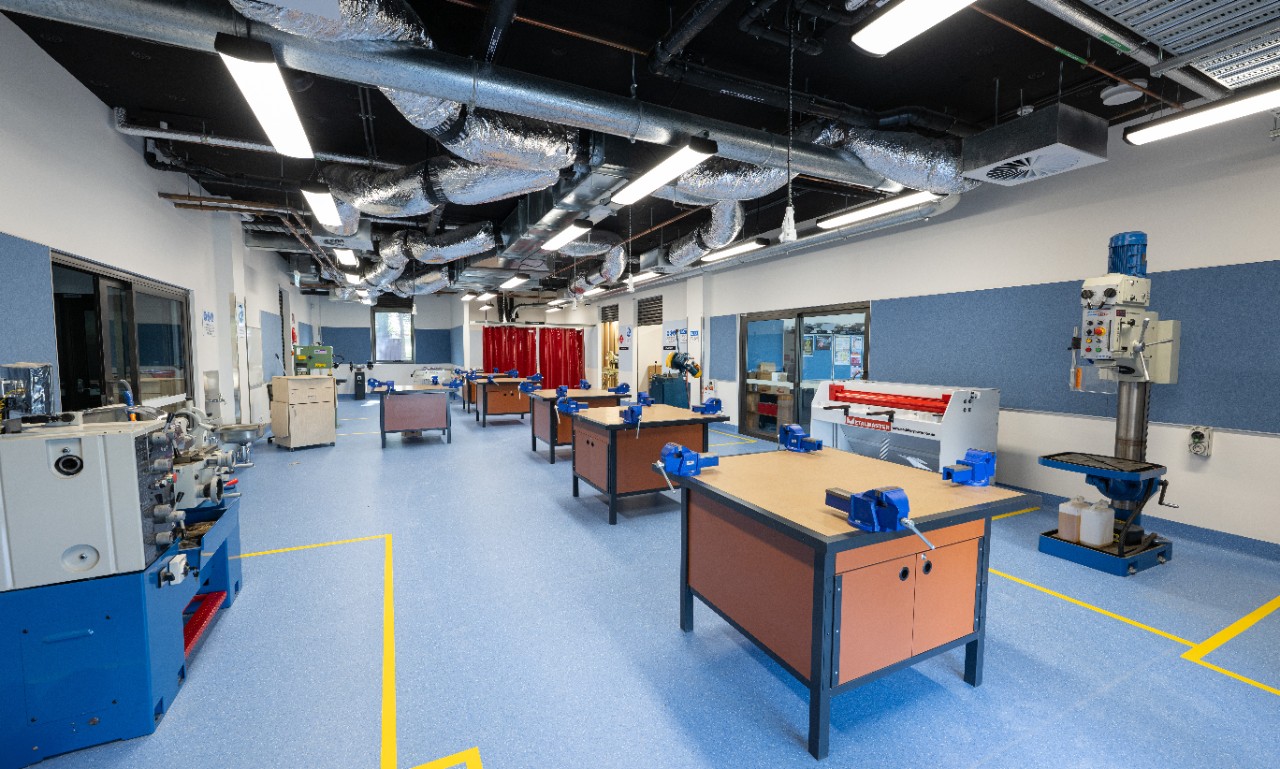
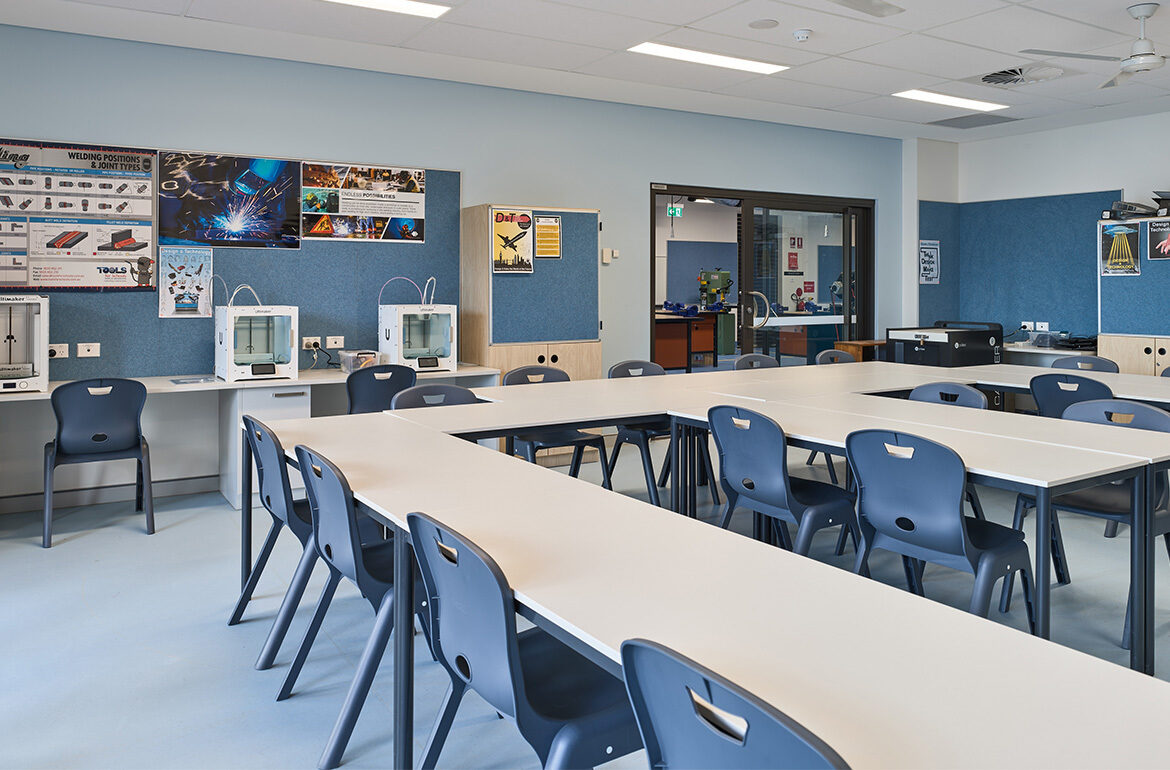
A new four storey multi-use building including 254 seat tiered lecture theatre, four applied science workshops, six science laboratories, one computer laboratory, six art studios, new school canteen with undercover seating, roof terrace and underground car parking for 83 cars.
The design incorporated several innovative features including a light filled and active central circulation space which extends the school’s primary pedestrian spine, from which the facilities of the centre are accessed.
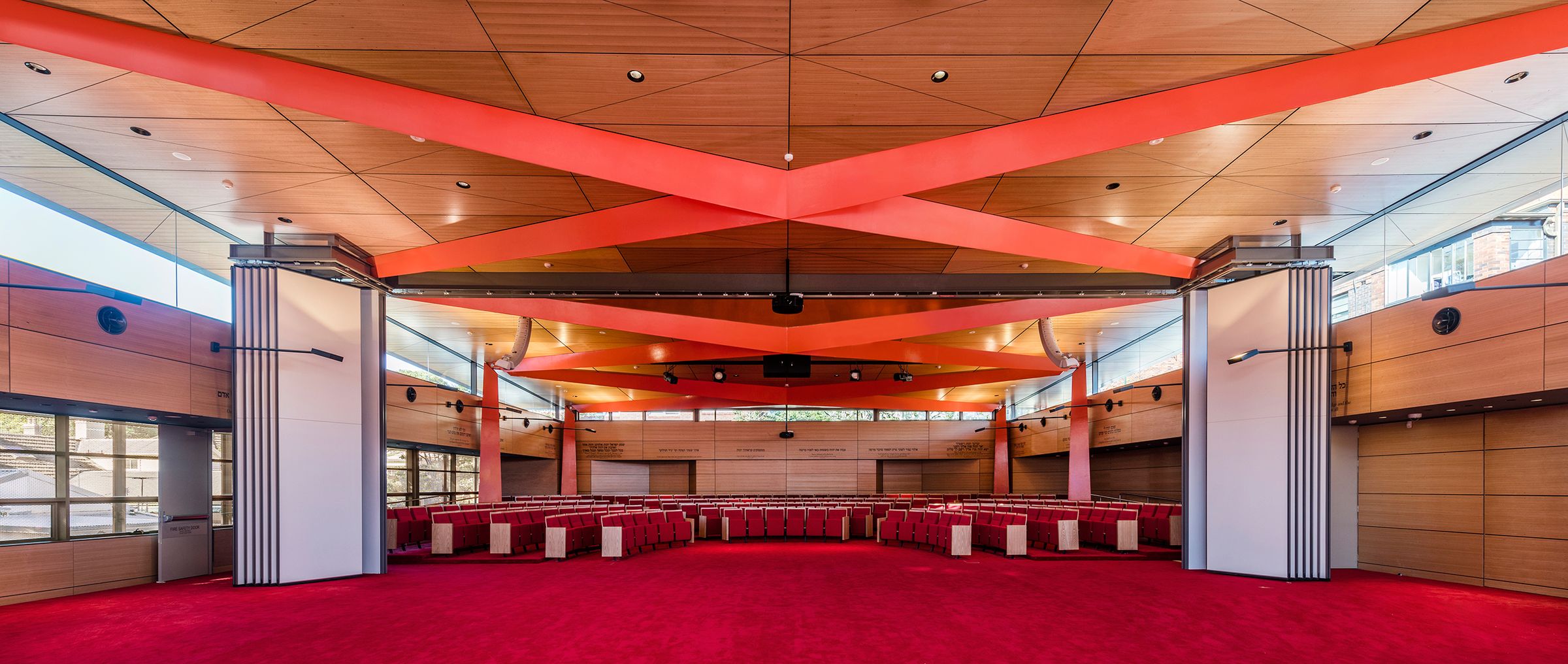
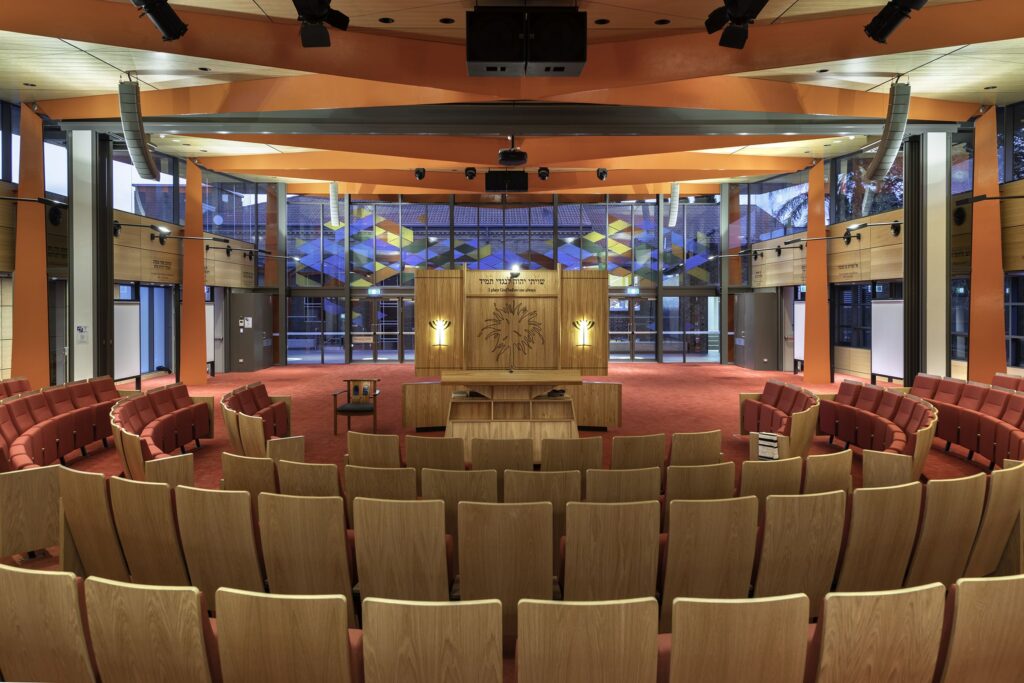
This project involved the improvements and extension of a heritage-listed Synagogue in the inner Sydney suburb of Woollahra.
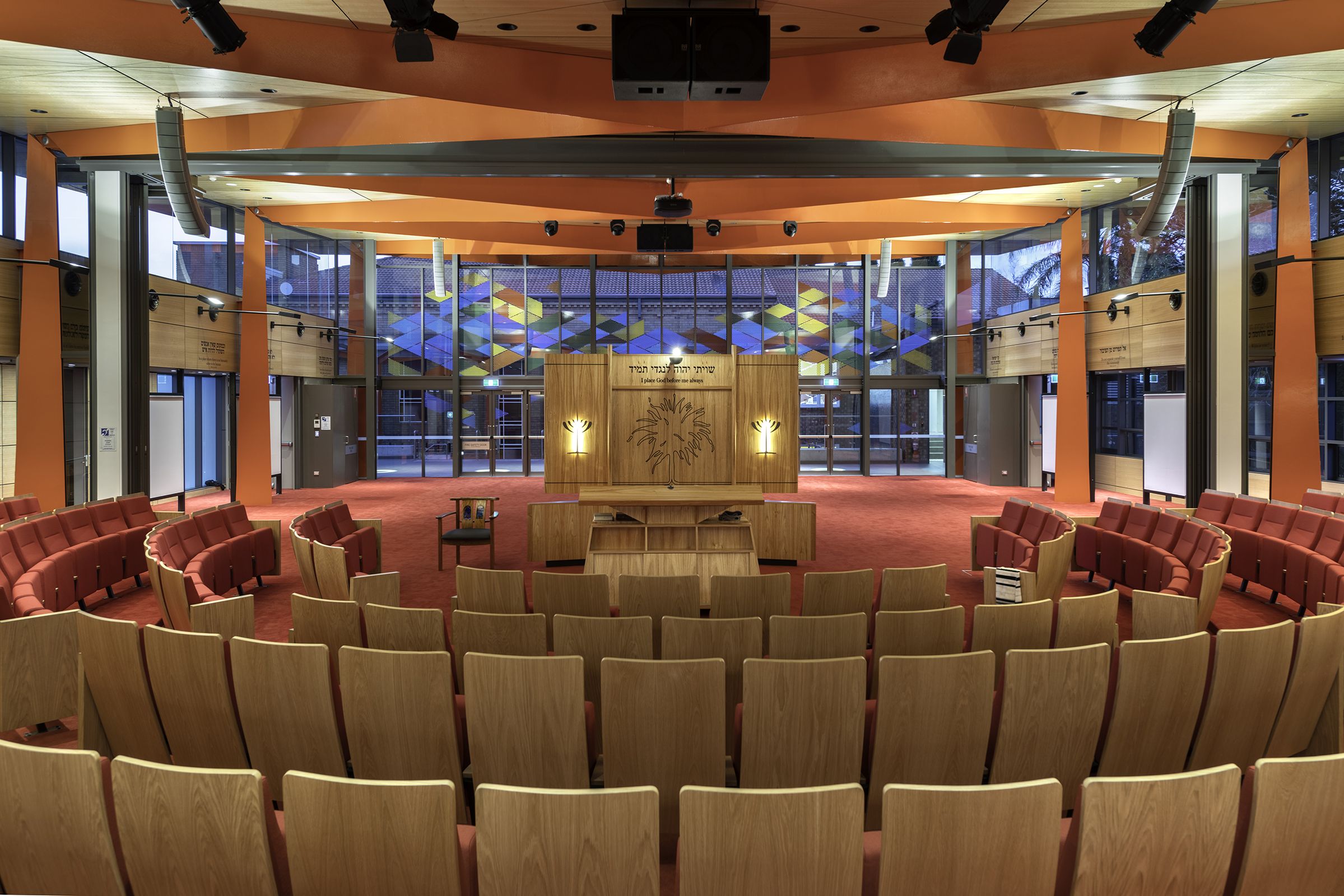
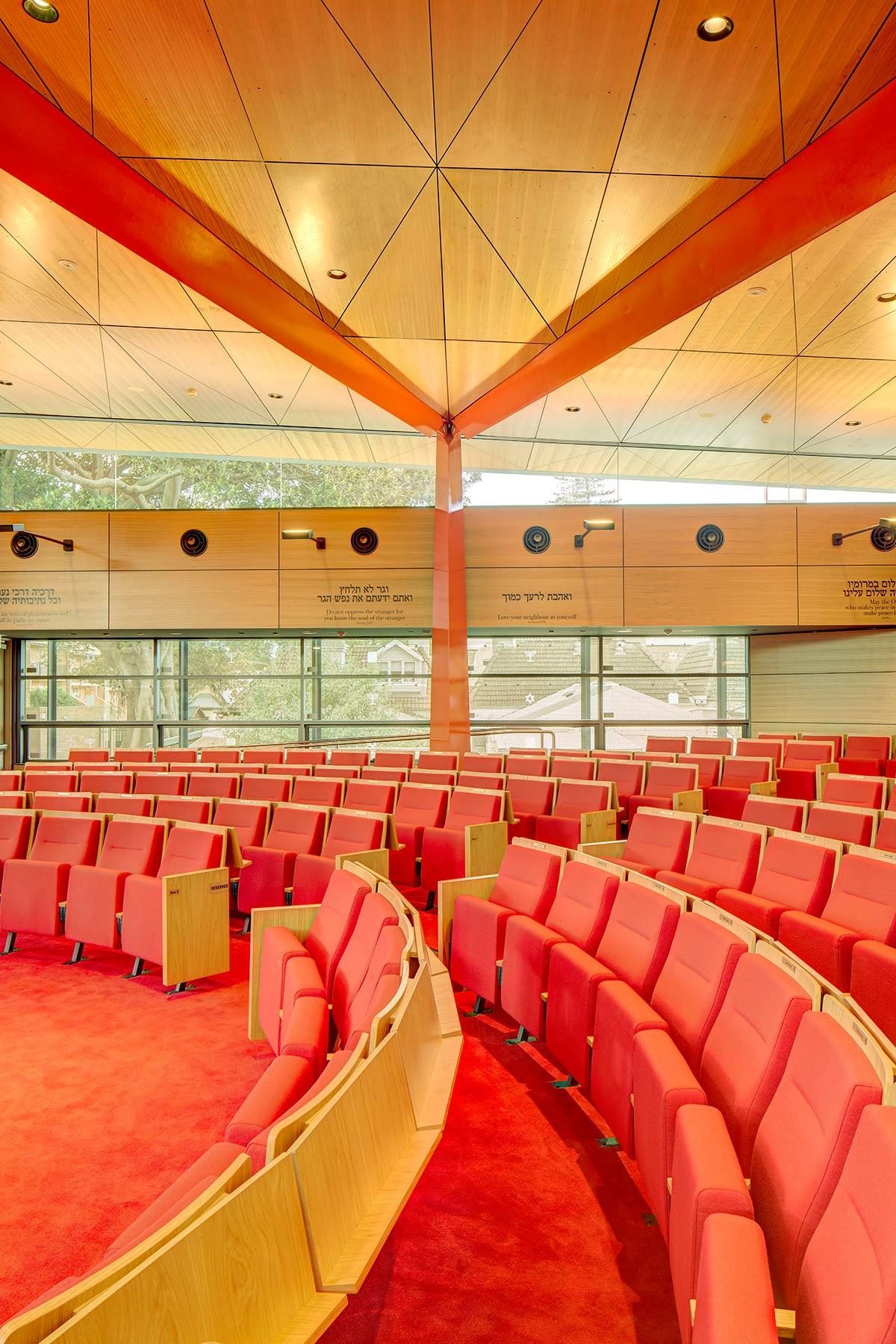
Built in the southern wing of the existing campus, the new two-storey concrete and steel-framed structure comprises a preschool on the ground floor, with a 700-person synagogue facility above.
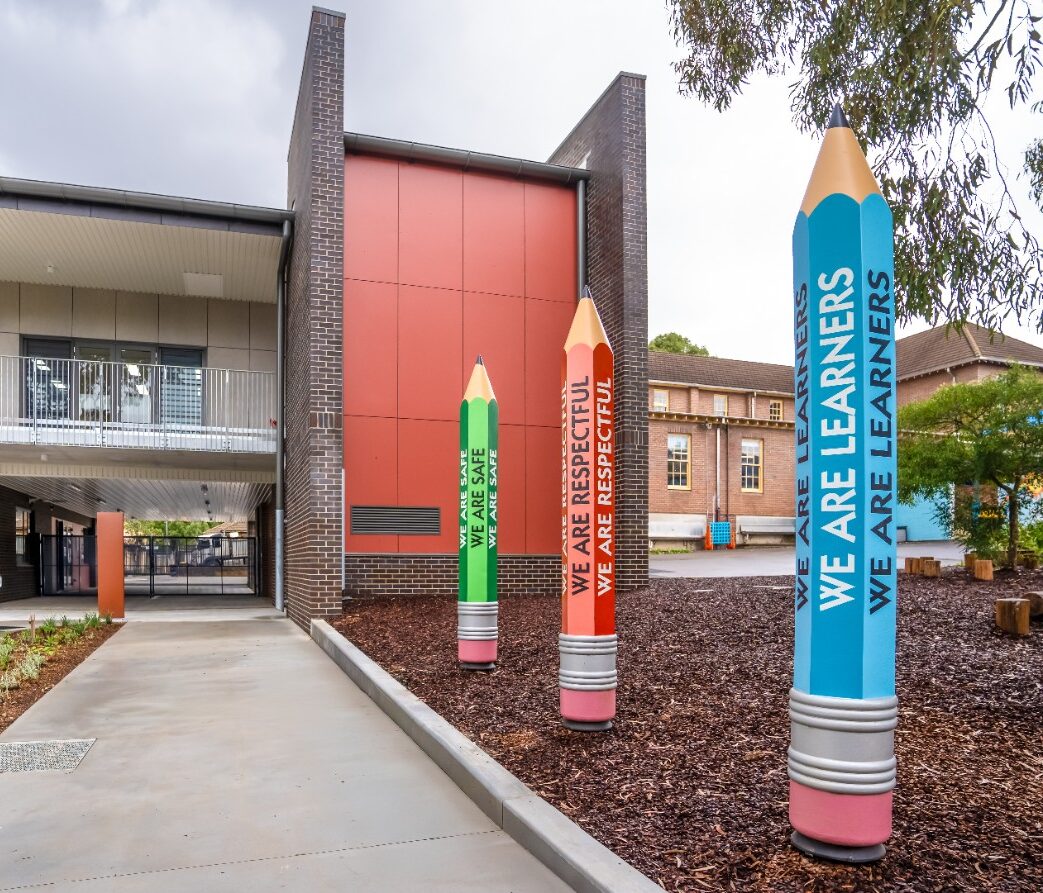
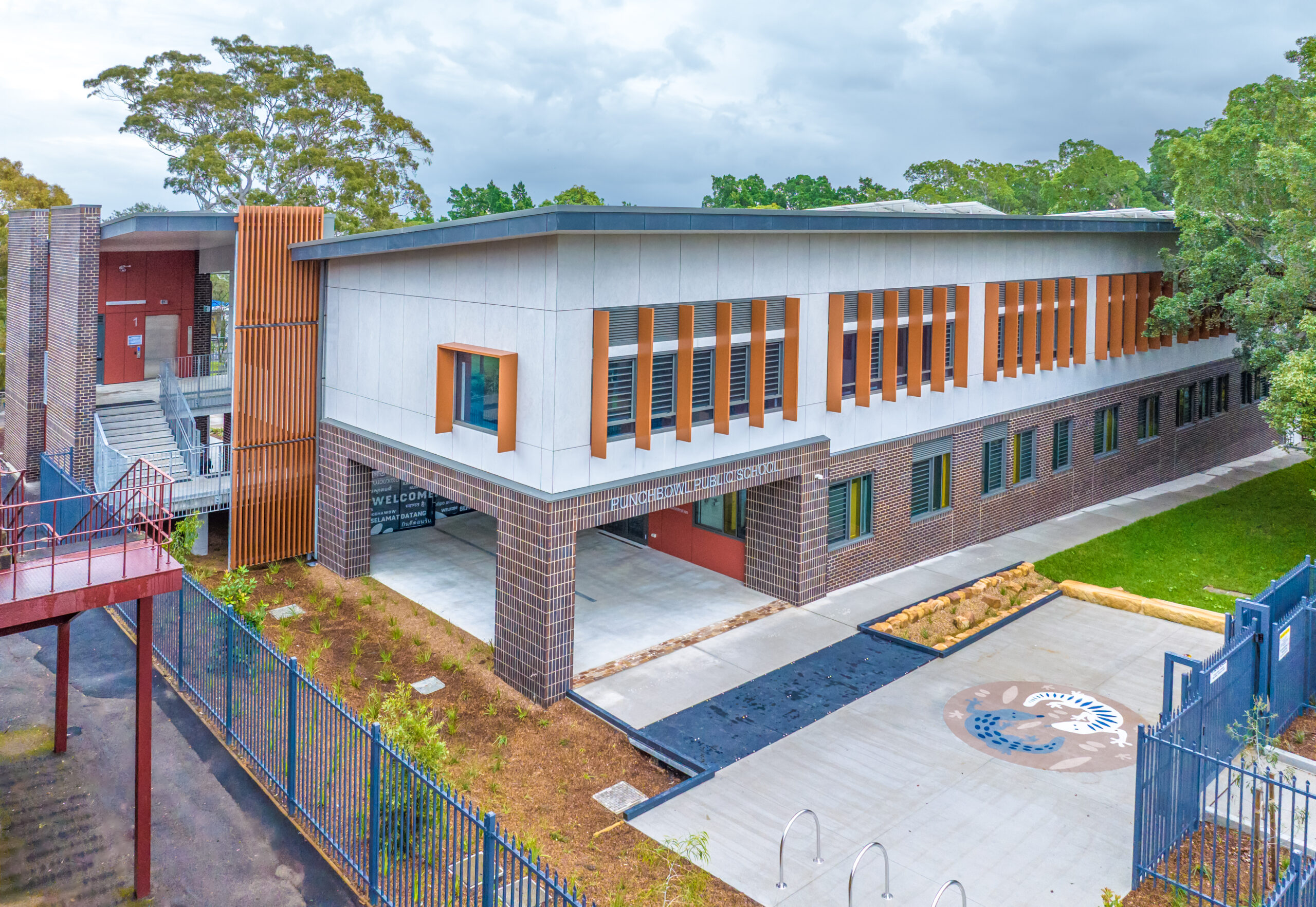
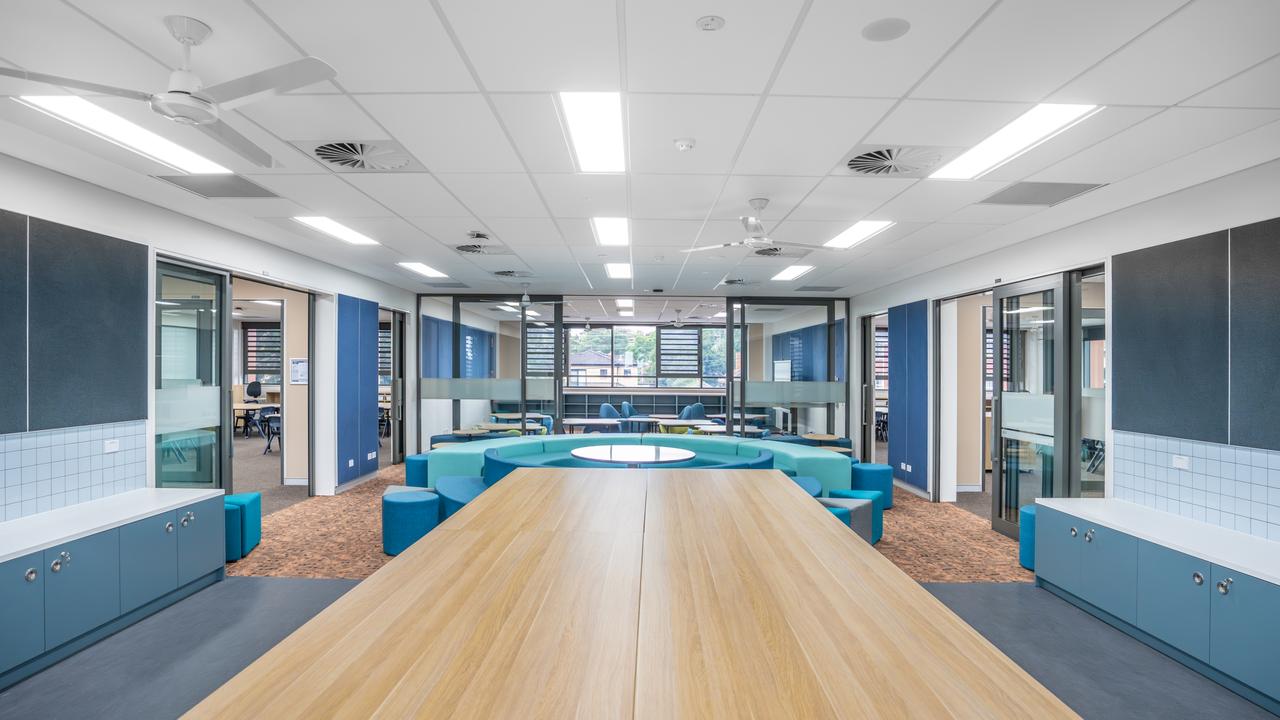
The project involved construction of a new two-storey building featuring 10 permanent classrooms, a secure entrance on Rossmore Avenue with separate public and student administration areas, and the relocation of the Support Unit to the existing administration building. Additionally, early intervention spaces were refurbished to meet contemporary educational standards.
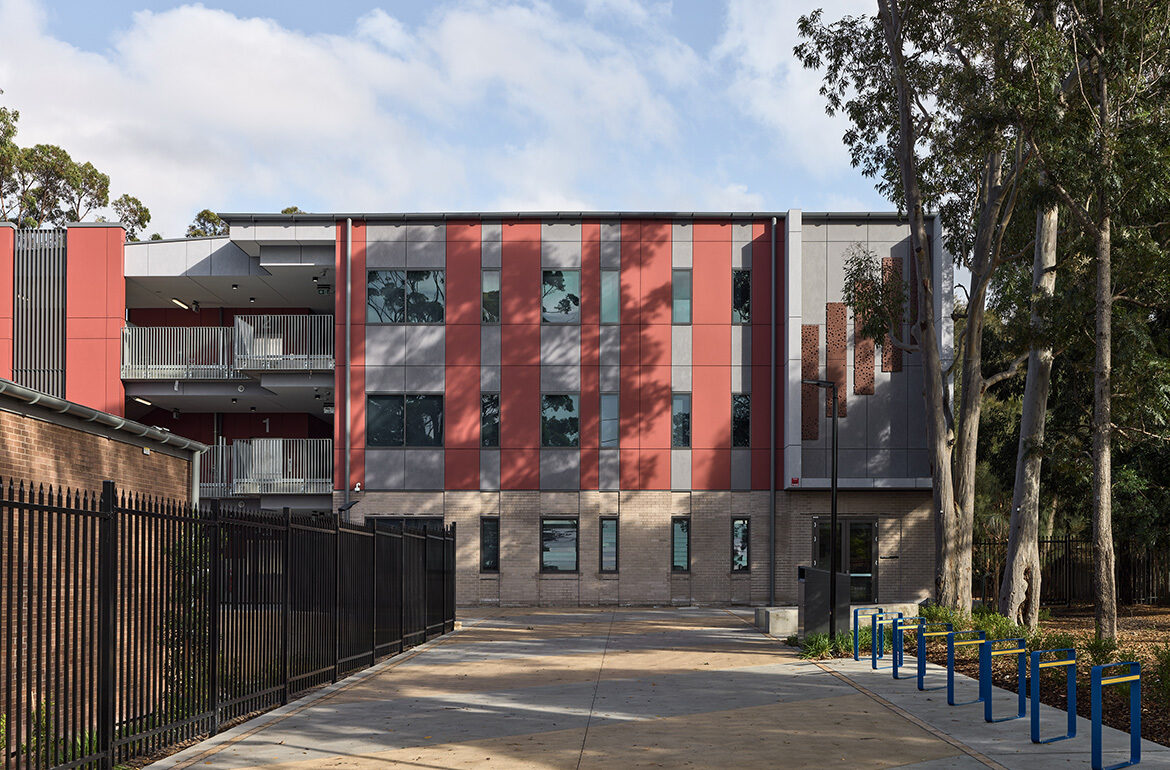
The upgrade involves replacing outdated demountable classrooms with a new three-storey building featuring 24 modern classrooms, staff facilities, and student amenities.
The design thoughtfully integrates with the existing campus, preserving heritage elements and enhancing outdoor learning spaces.
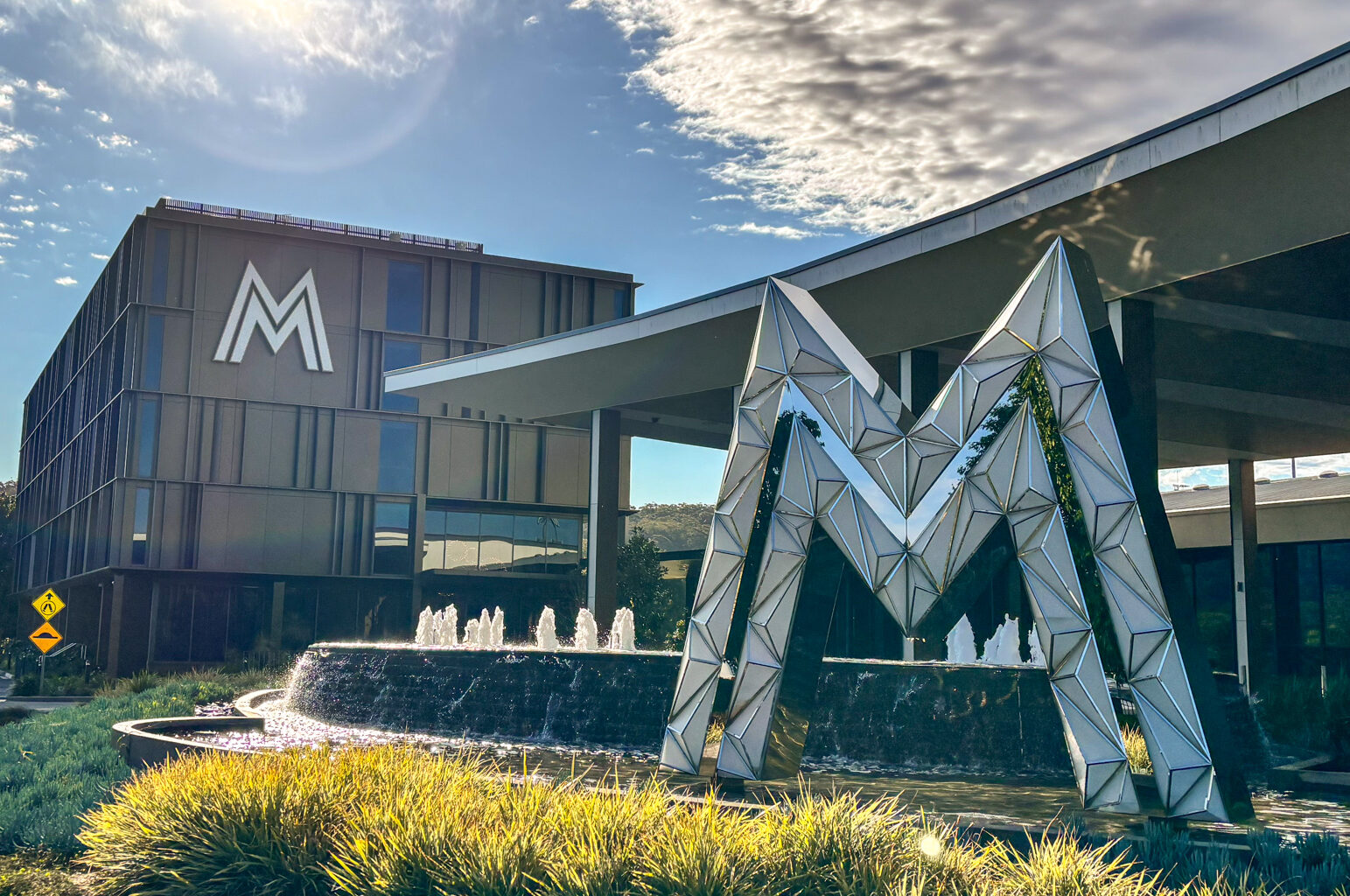
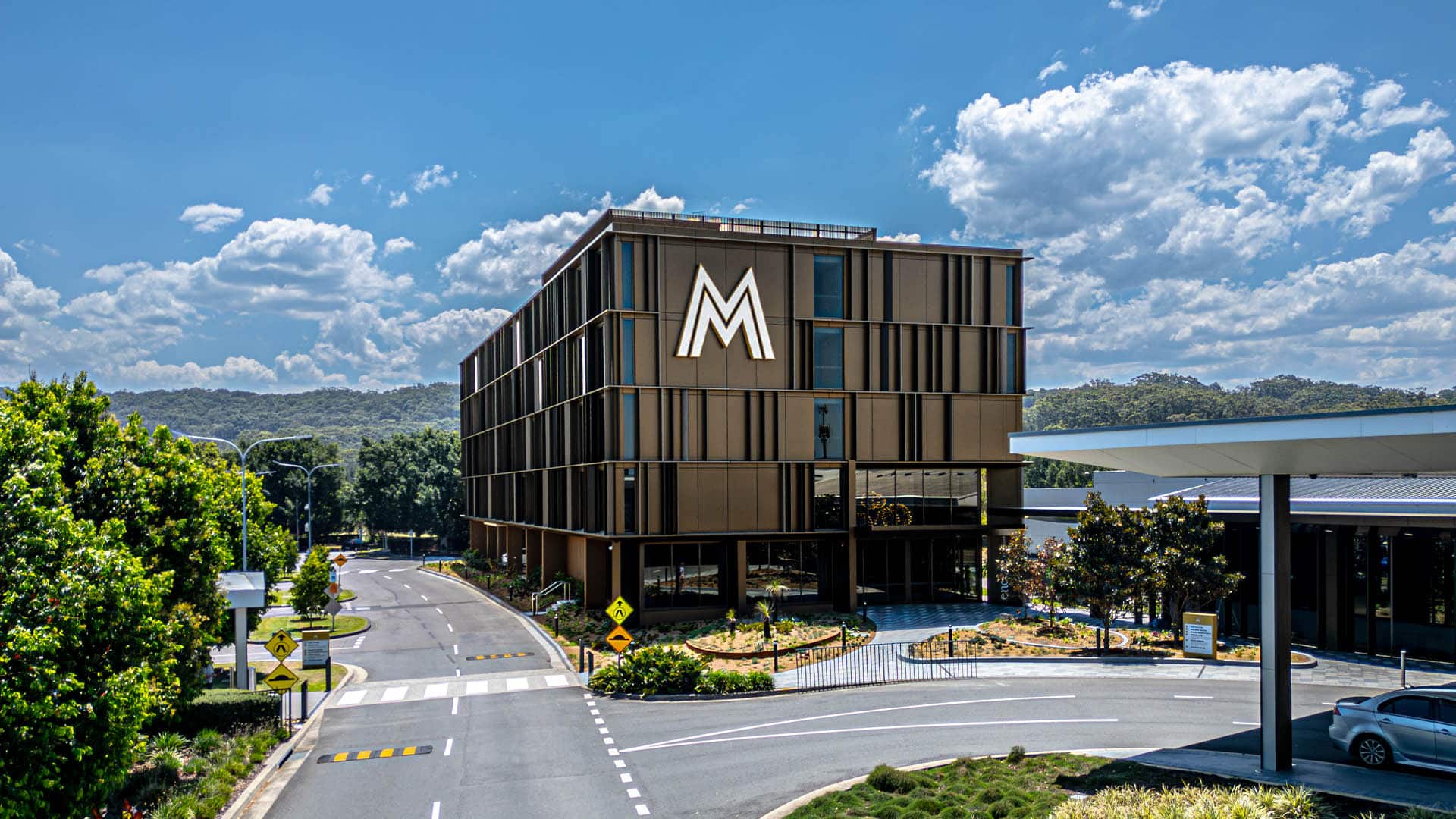
The Encore by Mingara Hotel is the bold realisation of a 30-year vision to transform the Mingara Recreation Club into a fully integrated lifestyle destination.
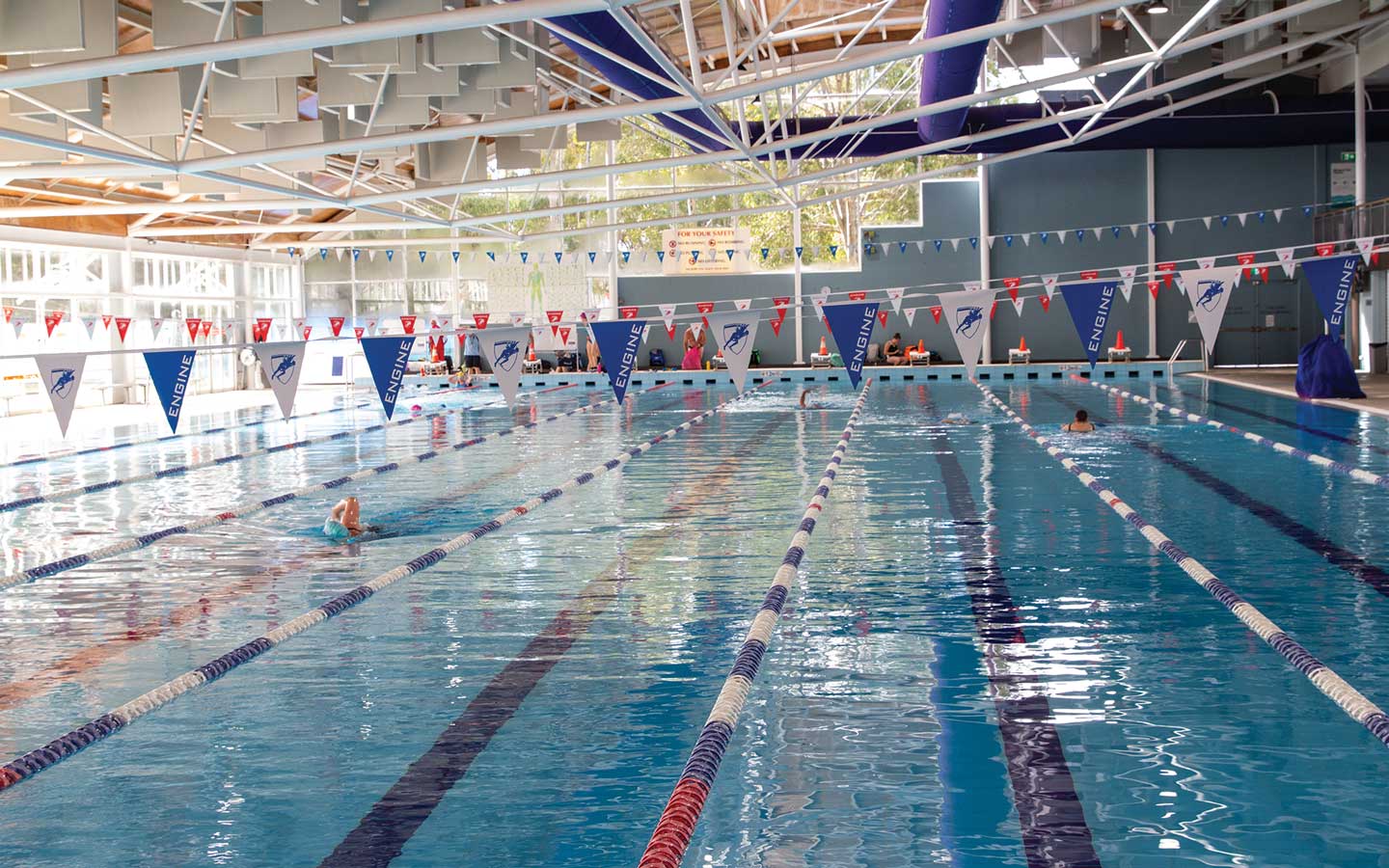
This $24 million, 86-room boutique hotel also now includes include Lawn Bowls, Tennis Courts, Gym and Aquatic Centre facilities.
This project revitalises part of the much-loved cultural venue while preserving its intimate character. Working within a constrained, heritage-rich structure, the project resolves complex staging, acoustics, and back-of-house functionality without compromising performance continuity. Construction required careful sequencing in a live environment, integrating new services, accessibility, and technical systems into an ageing fabric.
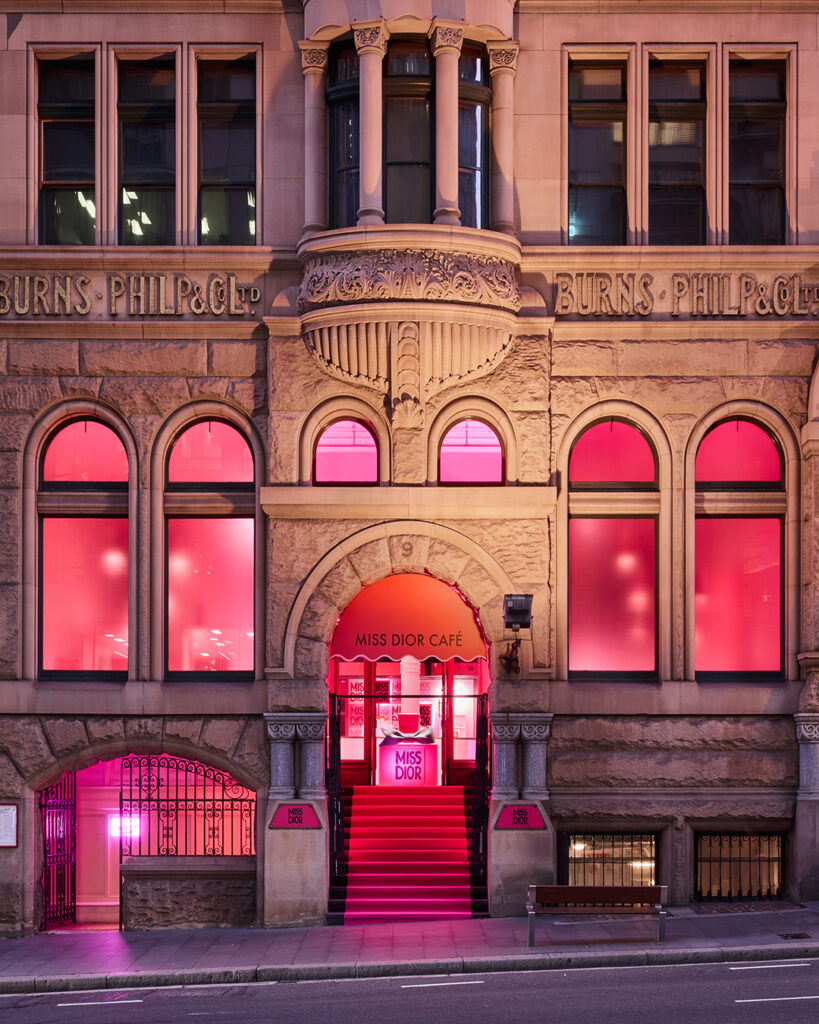
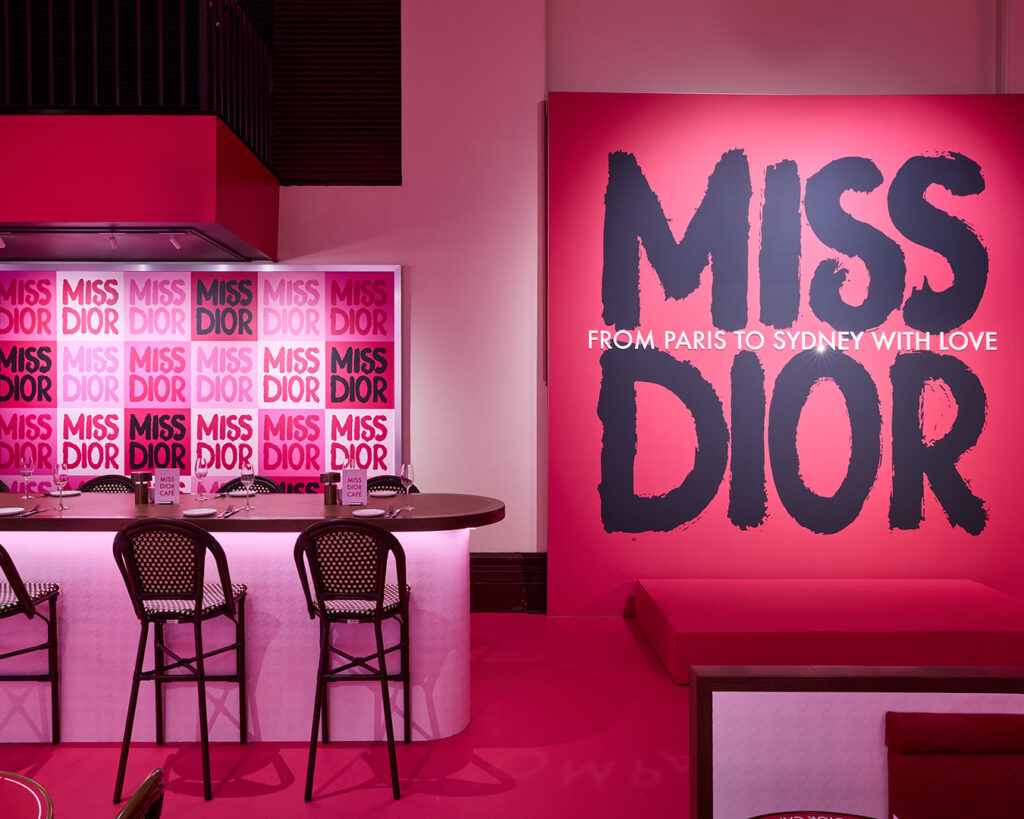
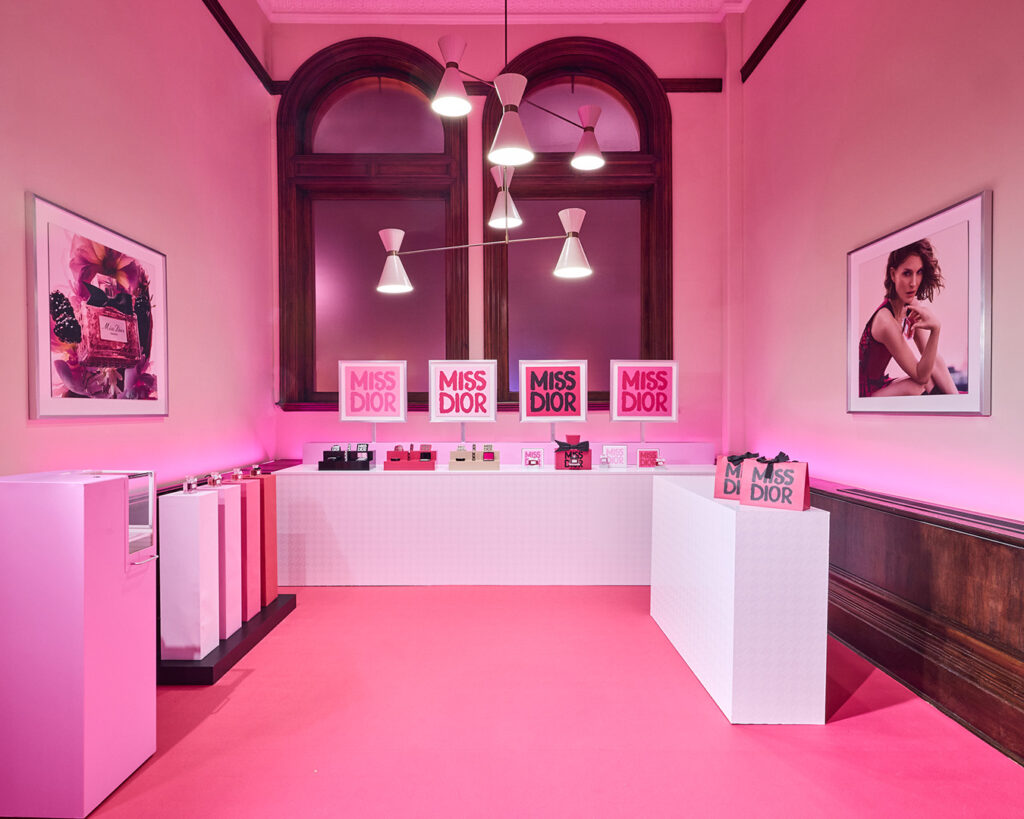
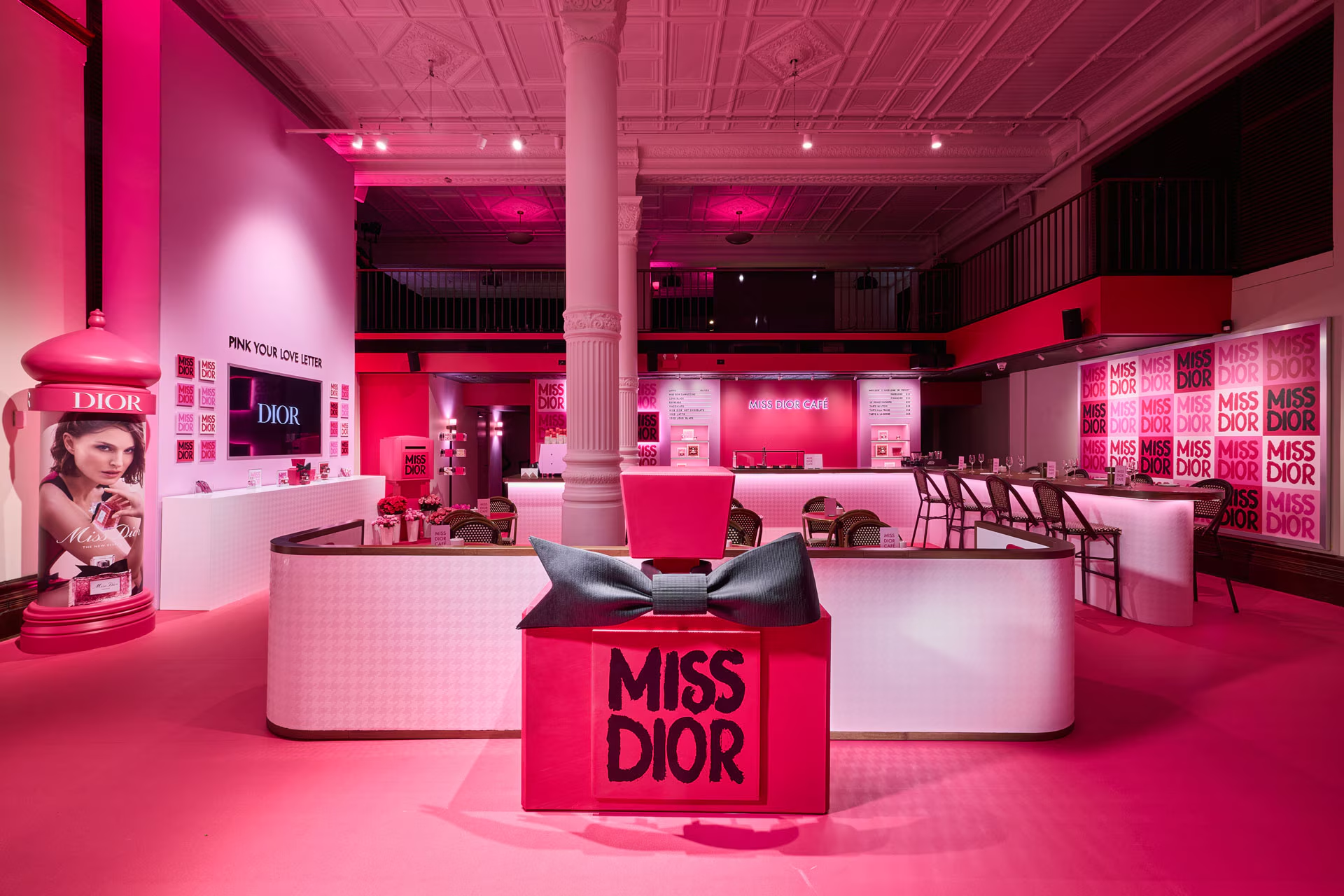
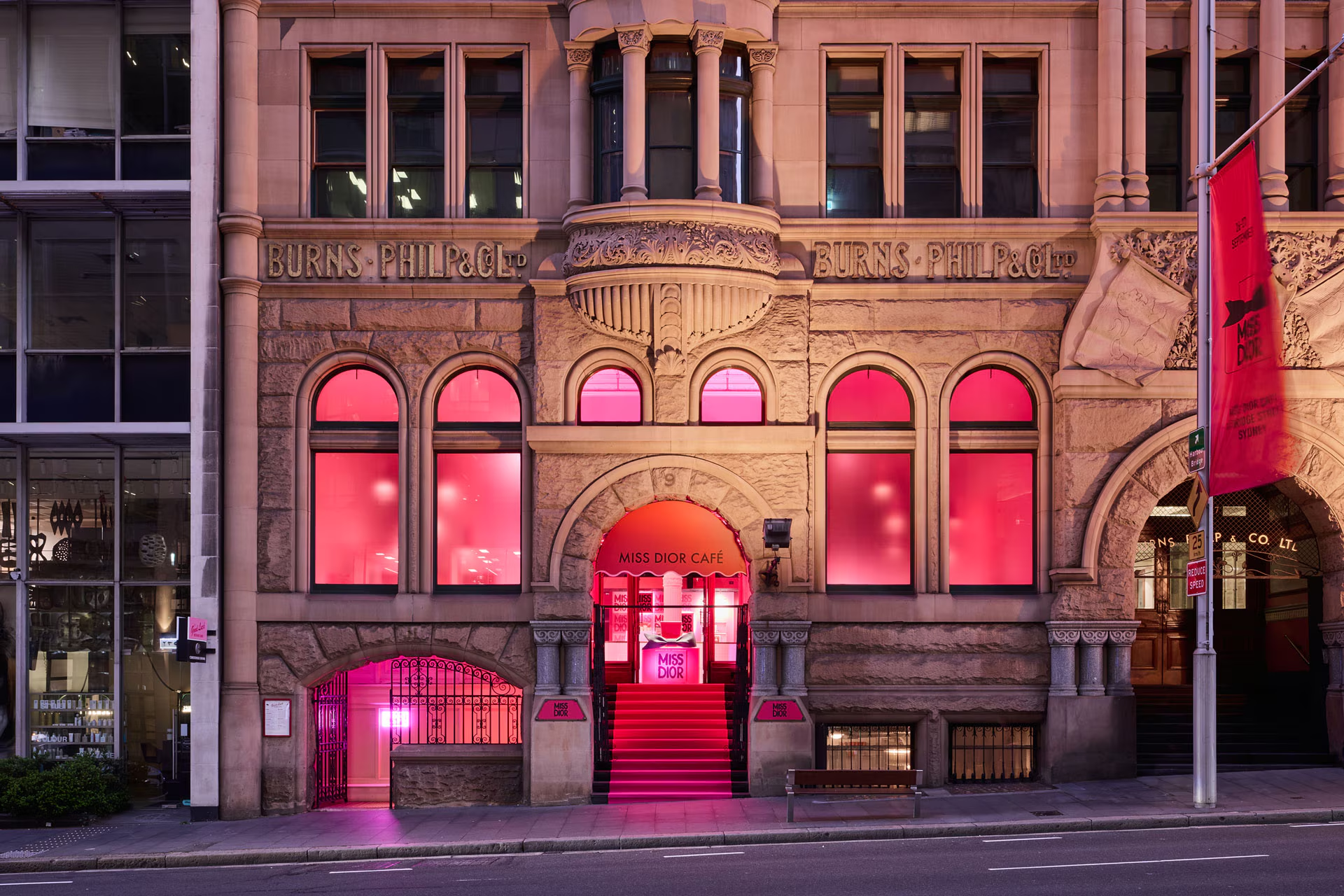
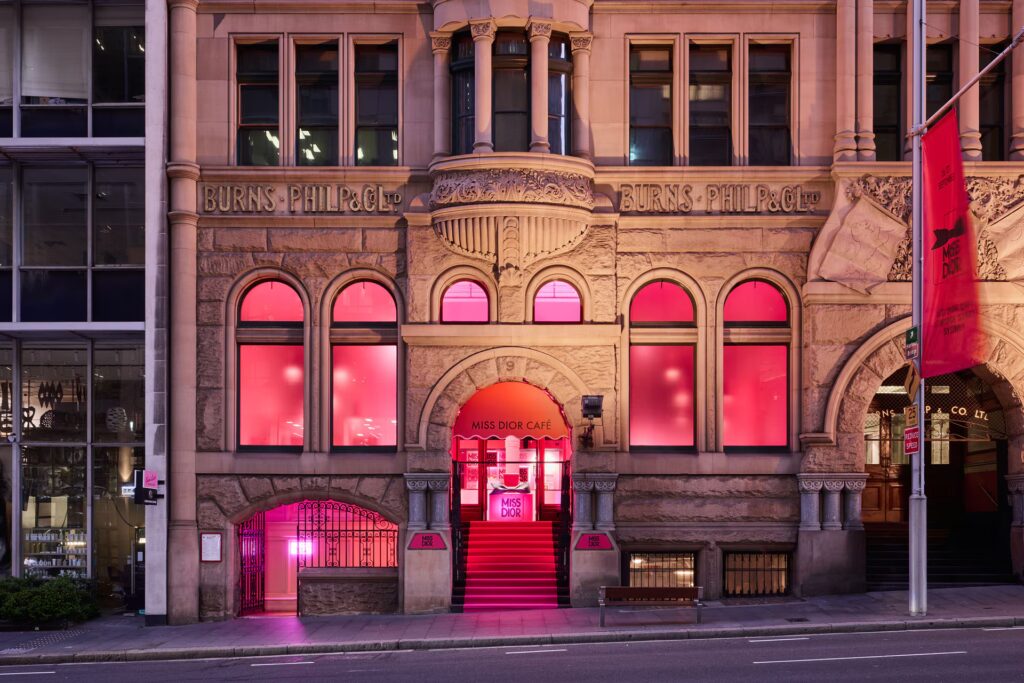
The Dior pop-up on Bridge Street delivers a highly crafted, temporary retail environment embedded within a tight urban streetscape. The installation balanced brand expression with rapid deployment, navigating complex logistics, limited access, and stringent compliance requirements.
Precision fabrication, modular construction, and seamless finishes were critical to achieving a premium outcome within an accelerated programme. Careful coordination of structure, lighting, and services ensures both visual impact and operational performance, resulting in an elegant, immersive space that elevates the public realm while meeting the demands of a short-term activation.
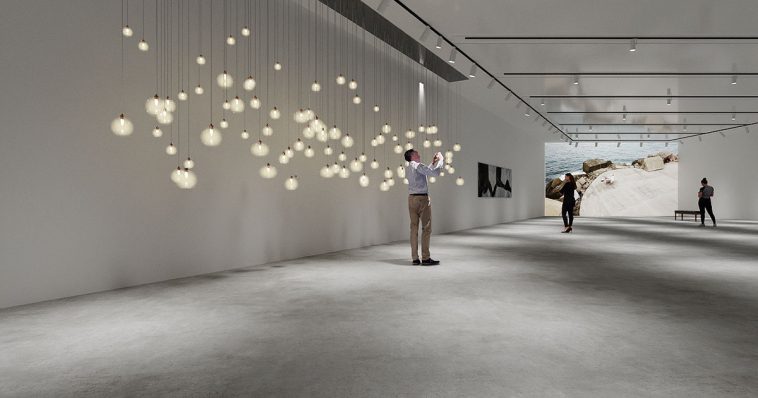
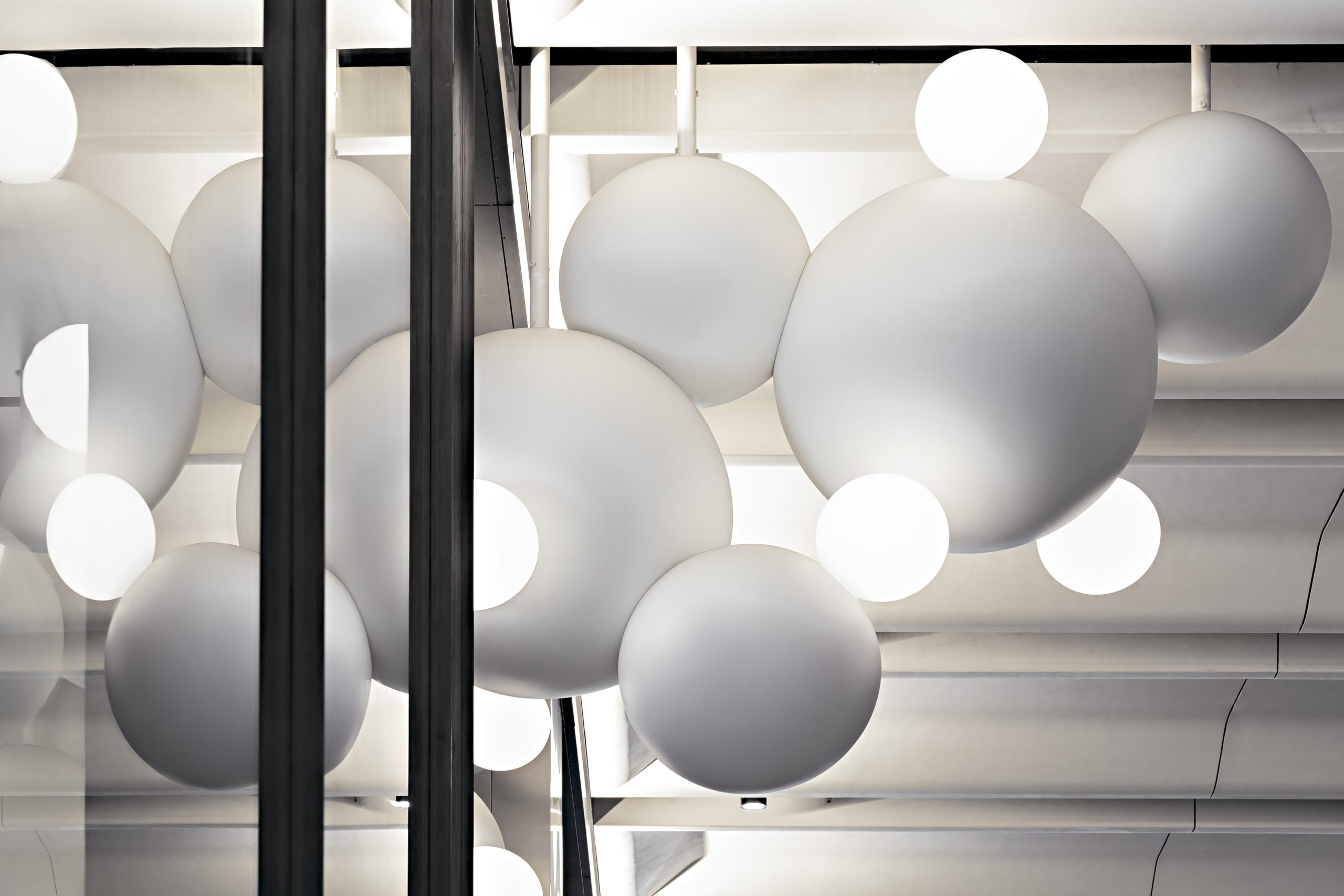
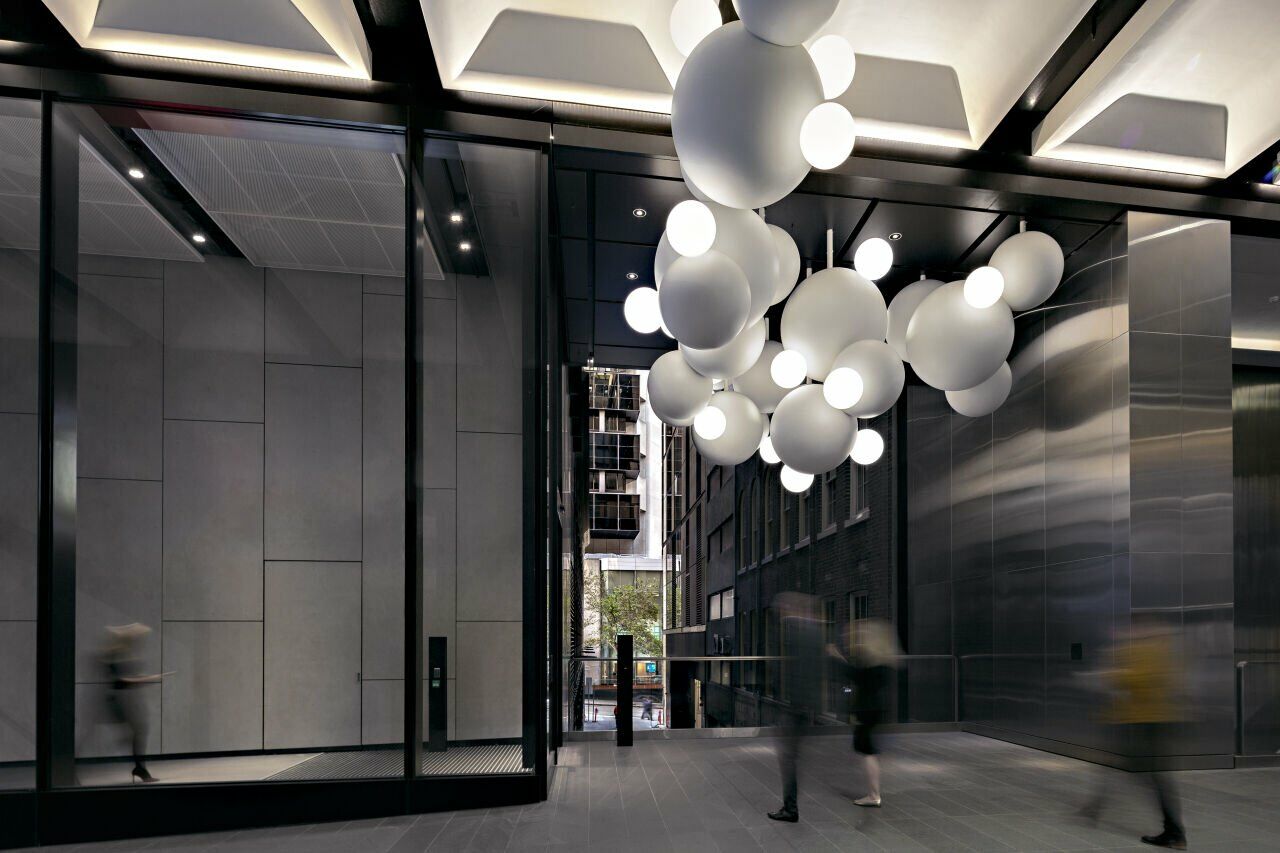
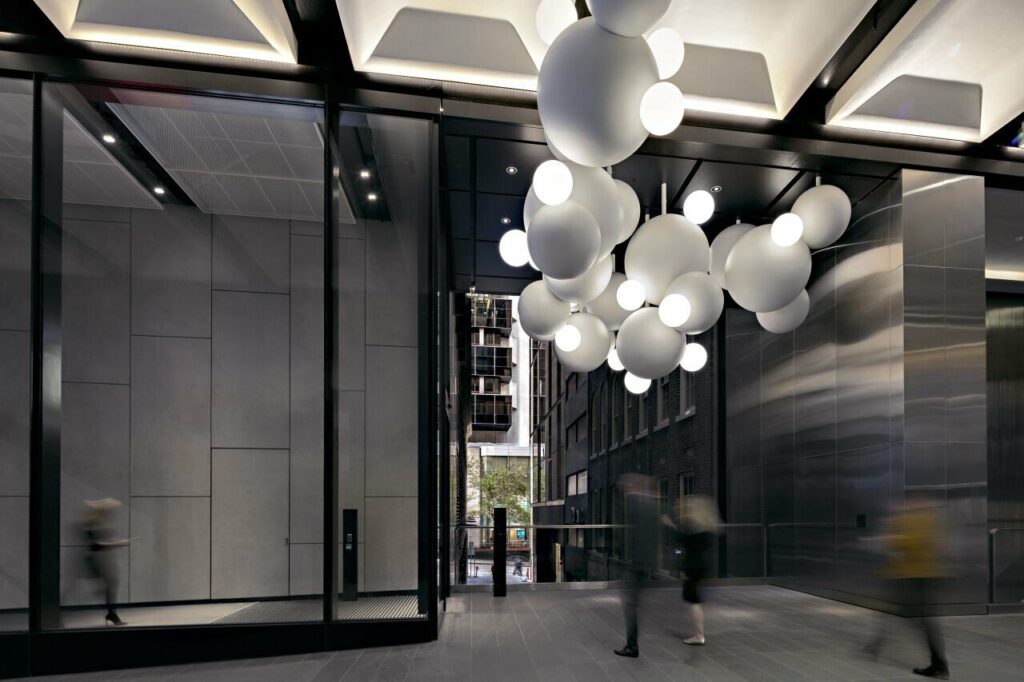
Magnetism transforms the public realm with a suspended cloud of illuminated balloons, demanding precision engineering within a live commercial environment. The installation navigates complex rigging constraints, heritage sensitivities, and continuous public access, requiring meticulous coordination and off-site fabrication. Structural load management, fire compliance, and lighting integration were carefully resolved to achieve a seemingly weightless form. The result is an immersive, ethereal experience that blurs art and architecture while showcasing technical ingenuity in a highly constrained setting.
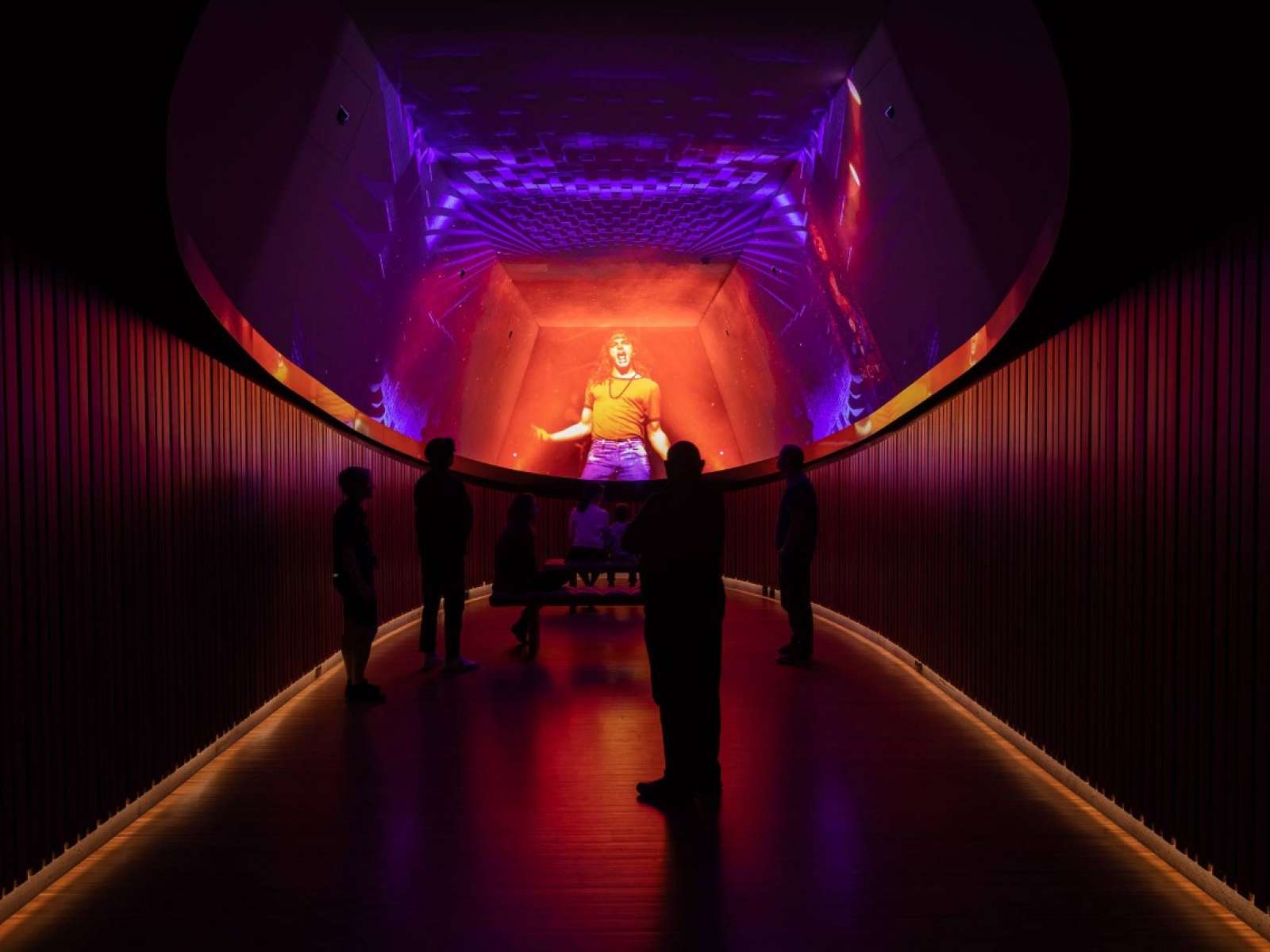
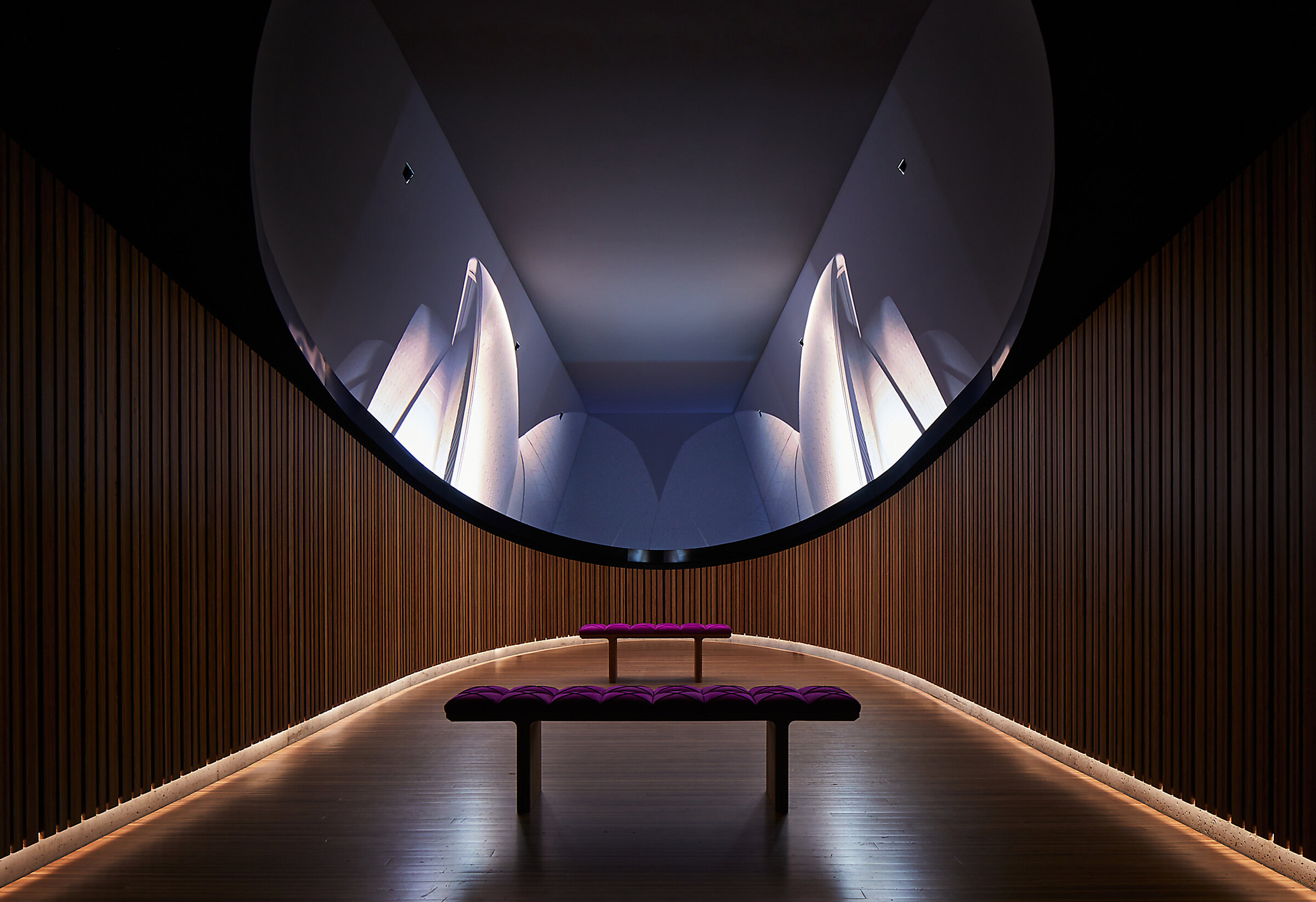
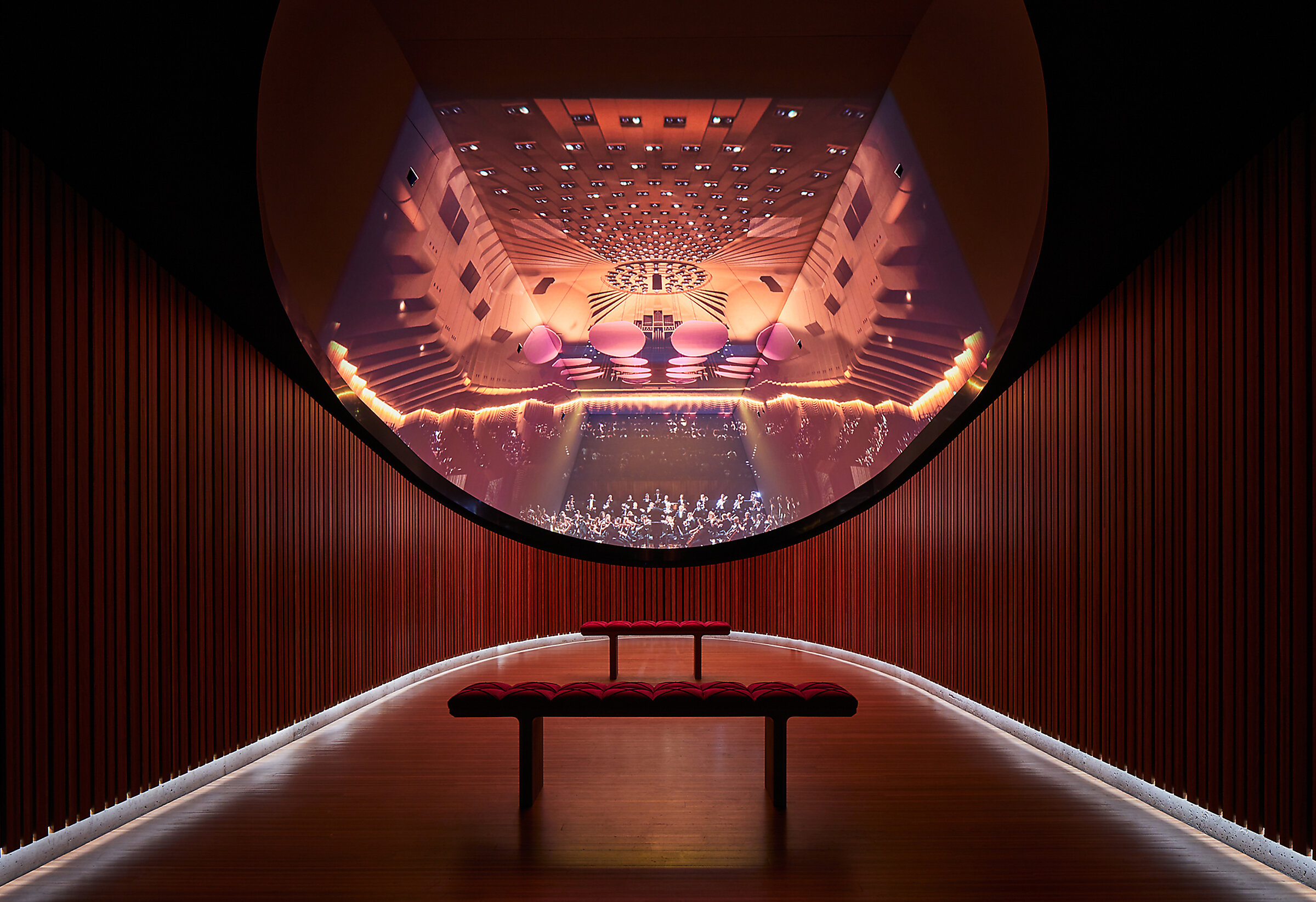
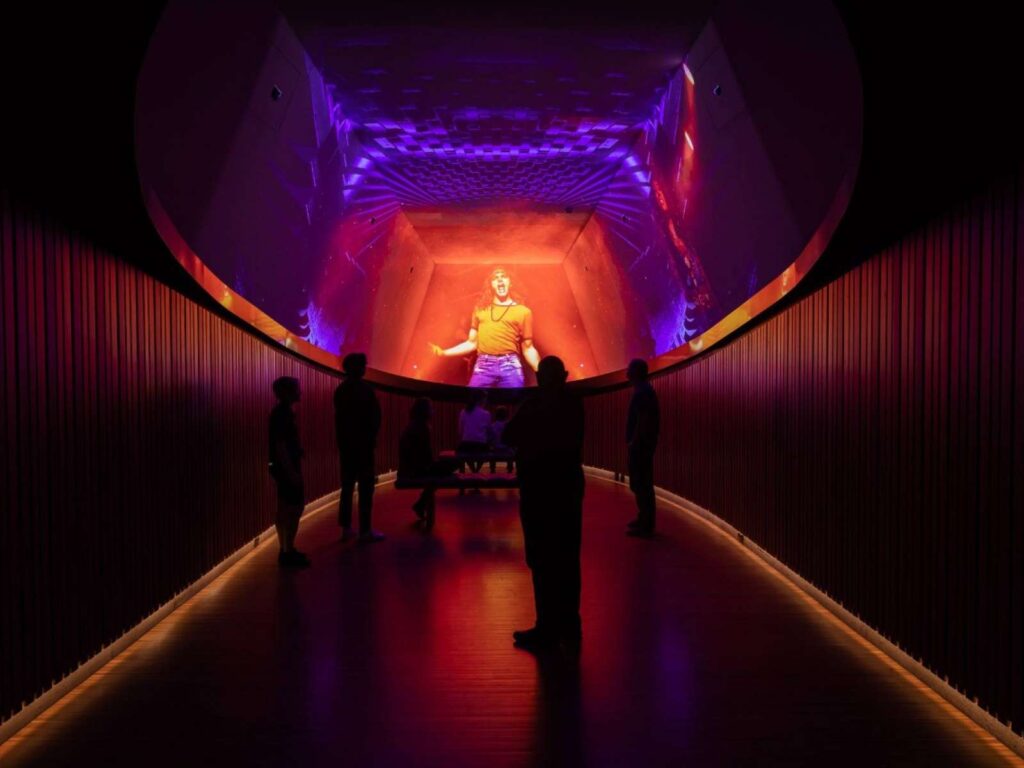
The Tours Immersive Digital Experience (TIDE) is a cutting-edge installation within the Sydney Opera House, designed to offer visitors a captivating journey through the venue's rich performance history.
Developed by Scott Carver in collaboration with Artists in Motion, TIDE transforms a previously underutilized back-of-house area into an immersive space featuring 270-degree digital projections and surround sound, showcasing iconic moments from past performances. Group DLA continue to provide AFSS services for this iconic project.
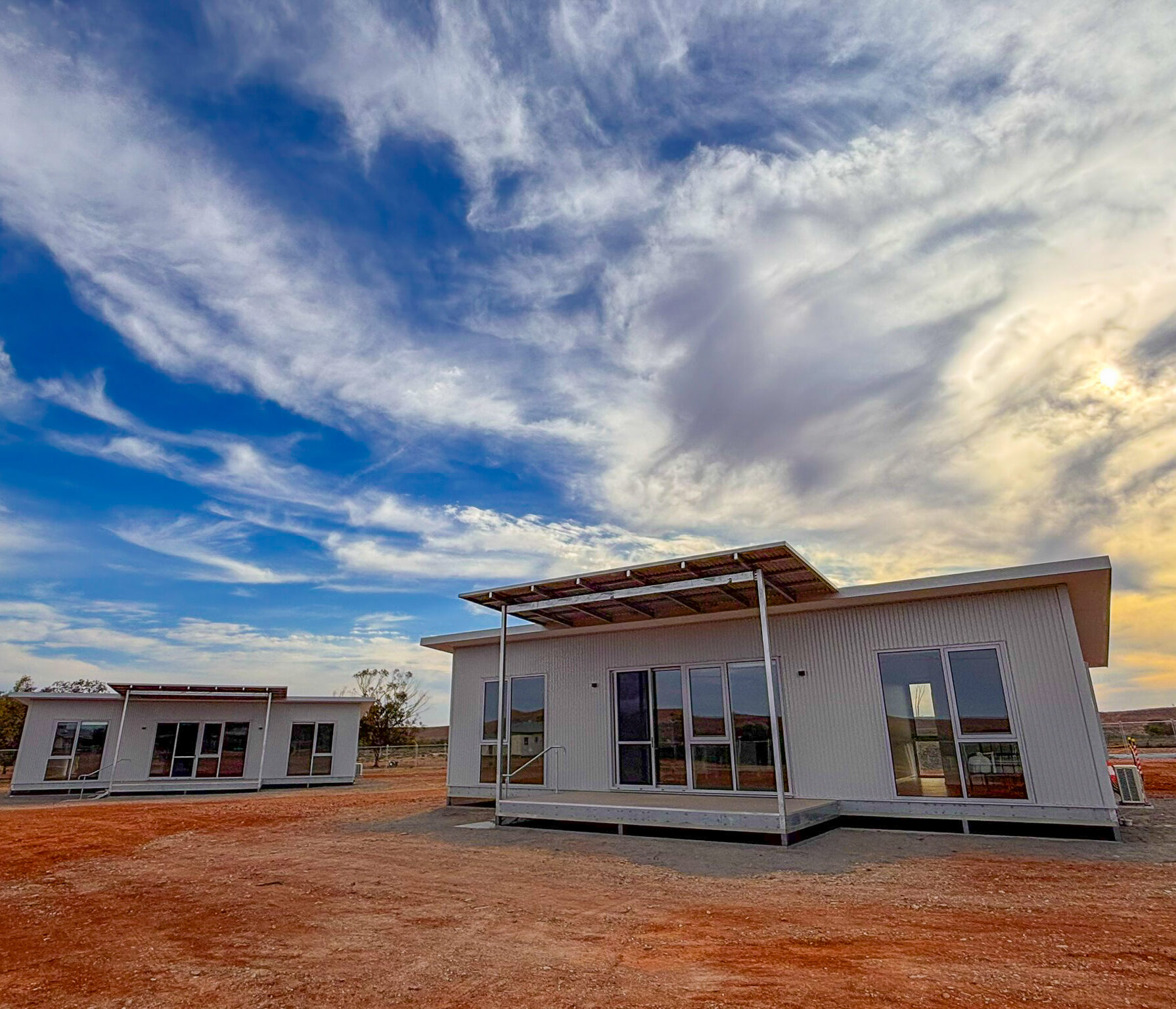
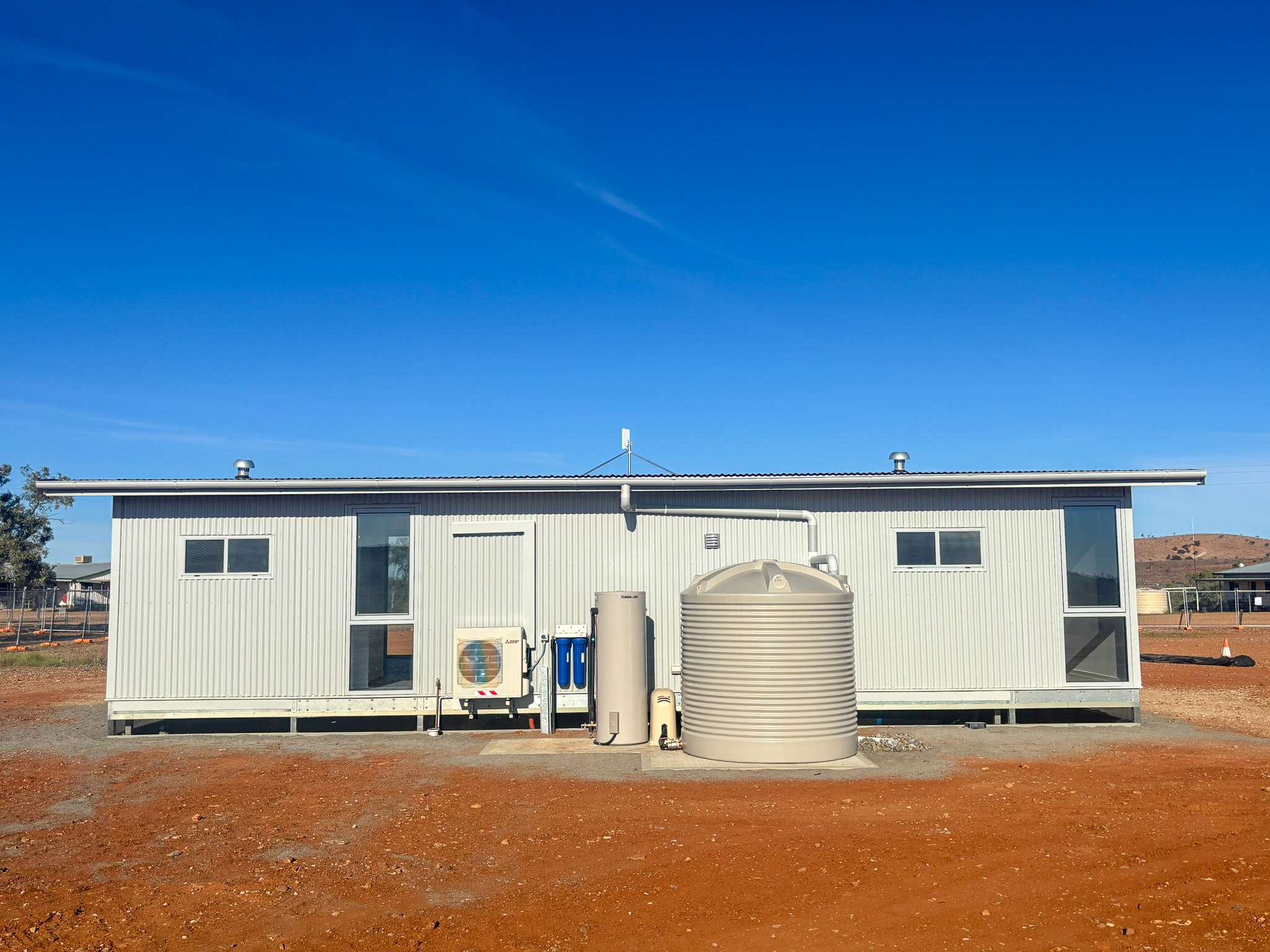
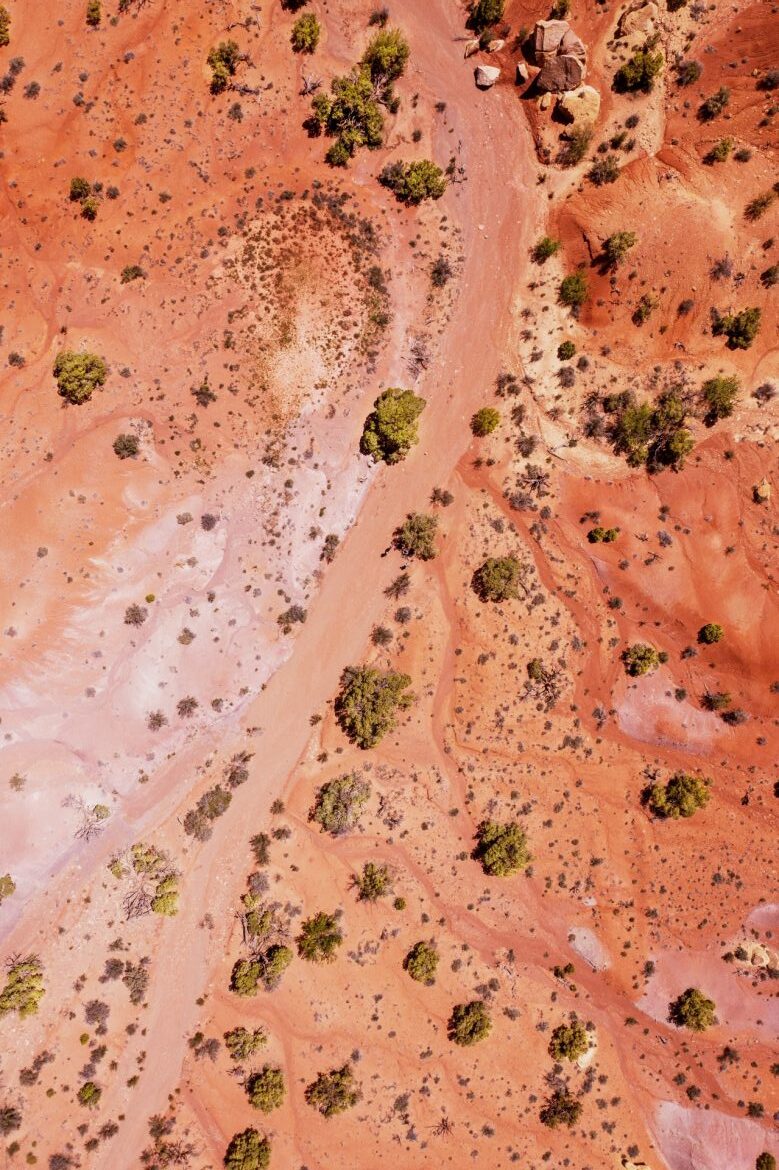
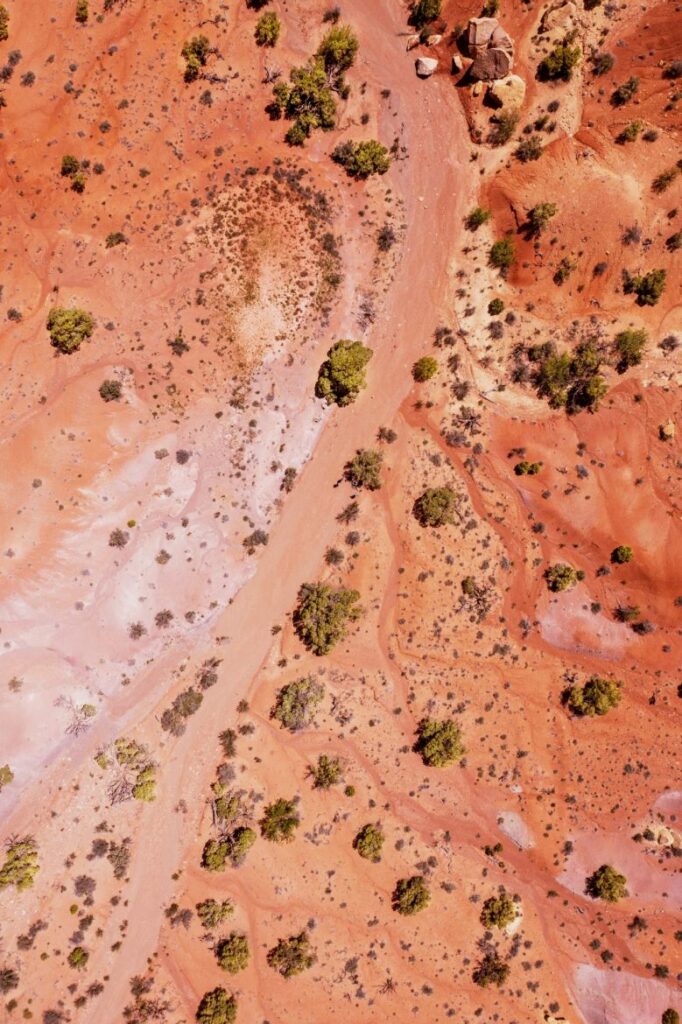
The Fowlers Gap Research Centre delivers a resilient, remote-field facility tailored to extreme outback conditions. The project tackles logistical complexity, limited site access, and harsh climate through robust construction and prefabricated elements.
The design integrates accommodation, laboratories, and communal spaces with passive environmental strategies to manage heat, water, and energy use. Careful coordination ensured durability, ease of maintenance, and minimal environmental impact, resulting in a highly functional research hub supporting long-term scientific study in a challenging landscape.
1888 Darling Harbour lobby and hotel fit-out transform a heritage woolstore into a vibrant 90-room boutique lifestyle hotel celebrating industrial character with modern, playful design. Exposed brick, original timber beams and curated artworks set the scene in the lobby, while contemporary finishes and art-driven interiors enhance guest experience. Unlike typical hotel fit-outs, the project blends heritage preservation with quirky, social spaces and offers complimentary access to local sports facilities including nearby gyms and aquatic centres. Its industrial-chic atmosphere and immersive brand identity make it a standout destination in Pyrmont’s Darling Harbour precinct.
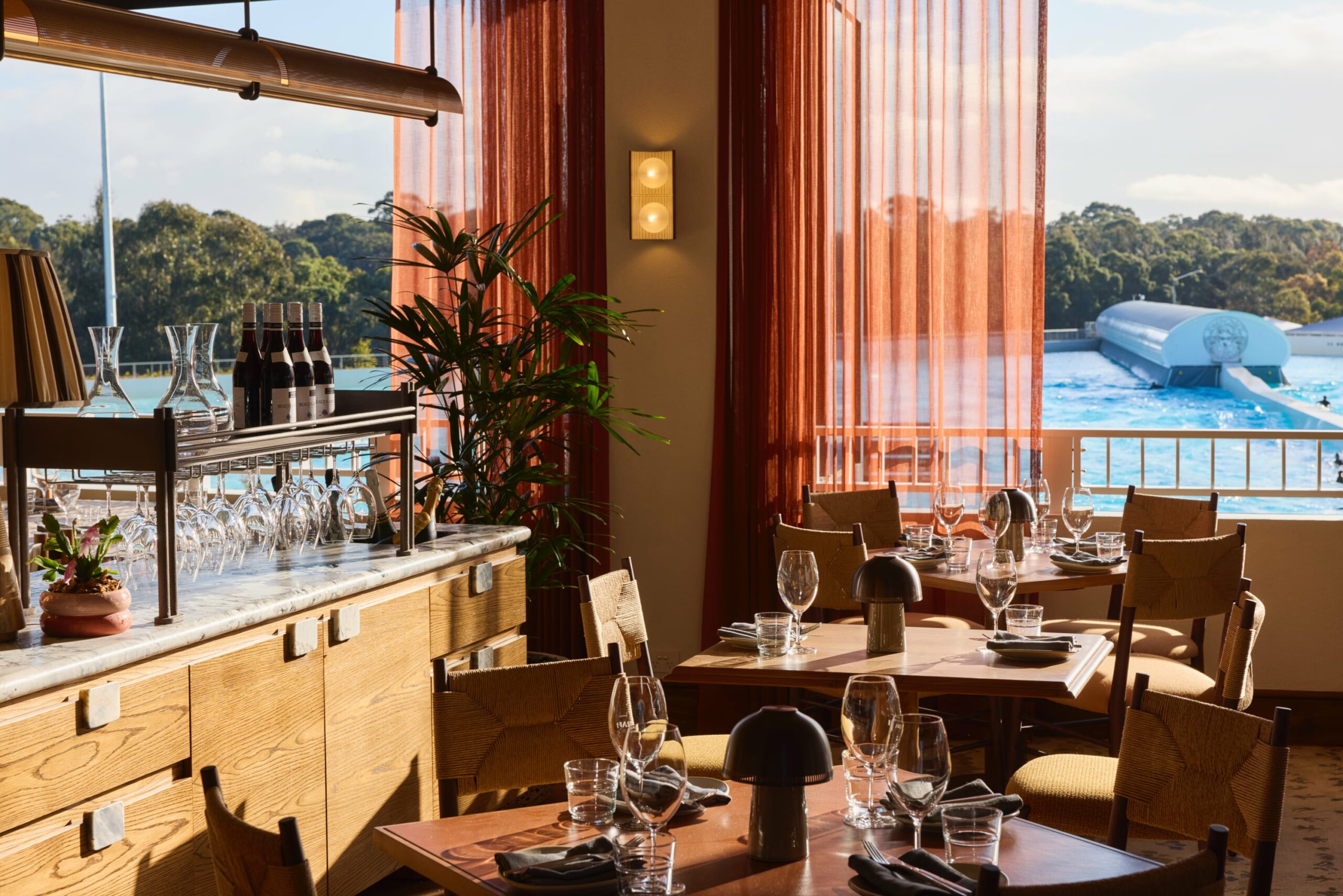
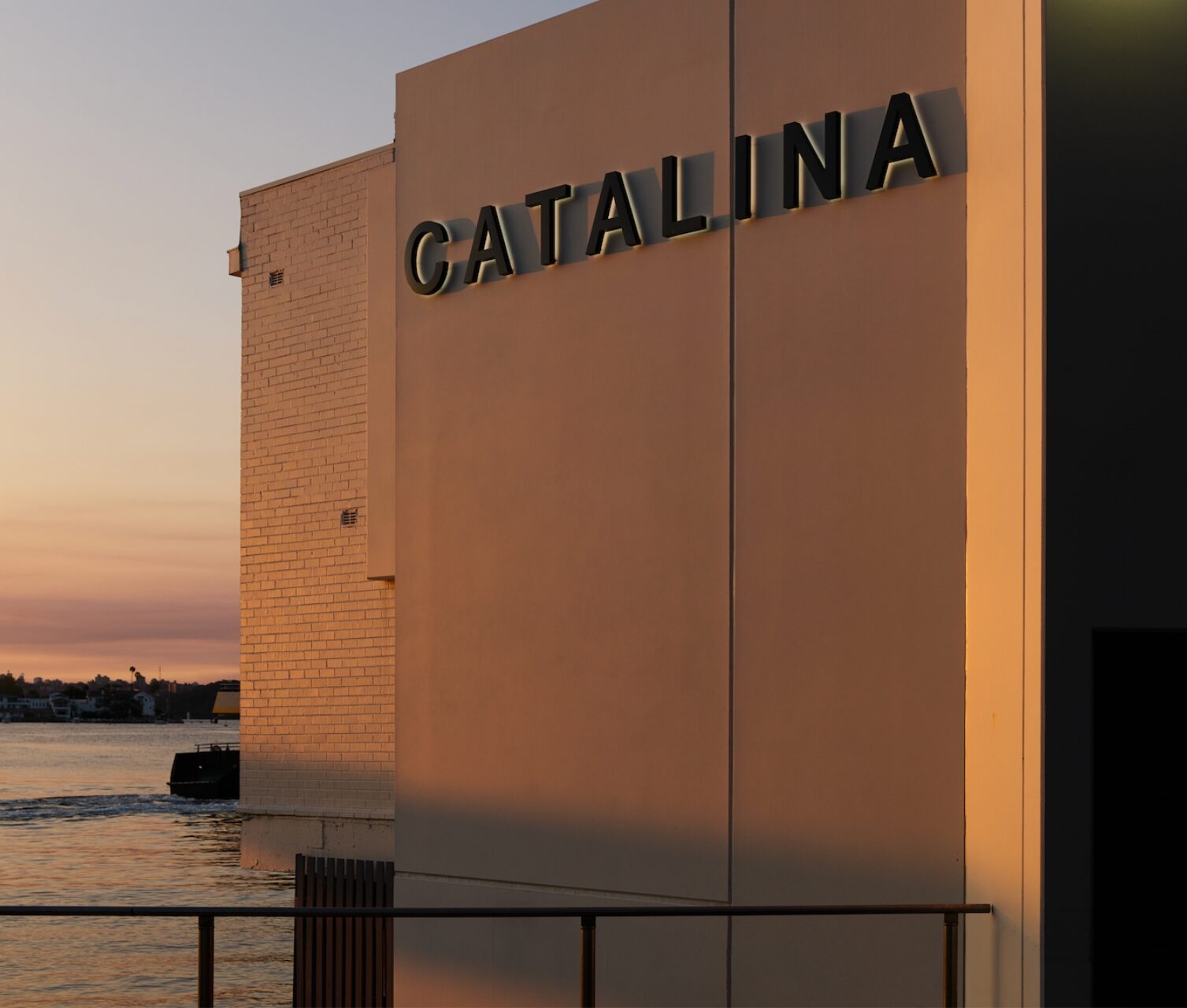
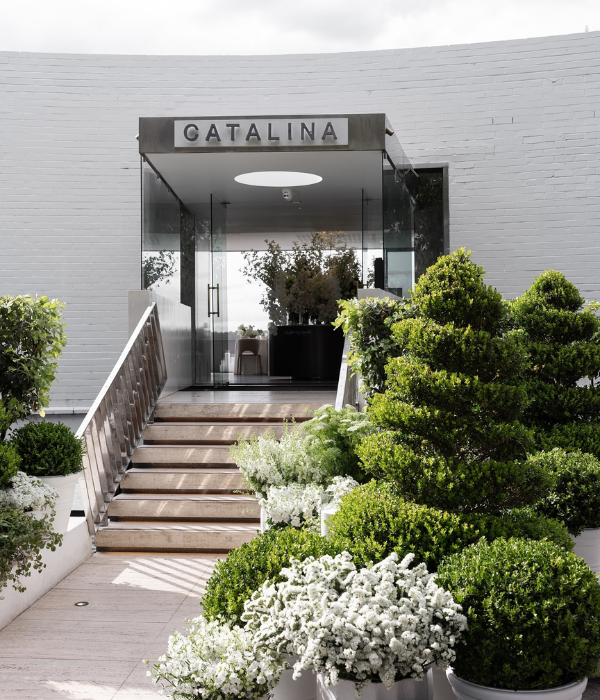
The Catalina Restaurant upgrades delivered a strategic waterfront renovation to this iconic harbourside dining destination in Rose Bay, Sydney.
Works included demolition and replacement of the existing structure’s footings with new concrete piles and precast elements into the seabed, installation of a new side entrance and grease arrestor to enhance environmental performance, and a refreshed interior that honours the coastal context with contemporary finishes and improved accessibility.
The new Zurich headquarters at 118 Mount Street, North Sydney delivers 20,600 m² of premium A-Grade workspace in a 29-storey flagship tower tailored for Zurich Financial Services Australia.
The open-plan interiors, abundant natural light and central tenancy stairs foster collaboration for 1,500 team members while sky terraces, café spaces and end-of-trip facilities enhance workplace amenity.
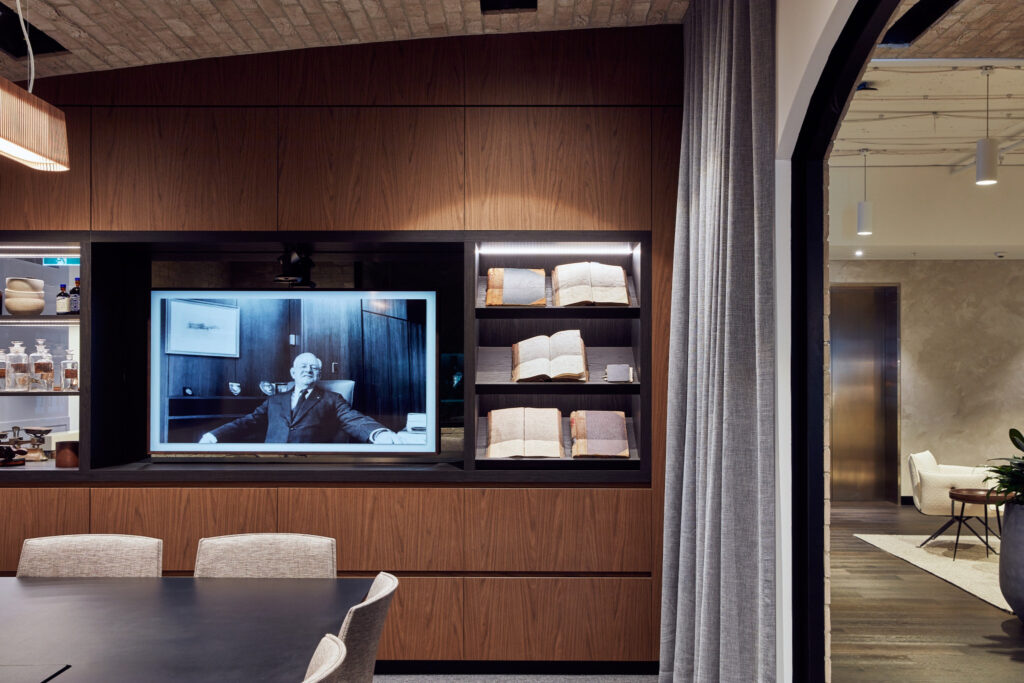
The new McGrathNicol headquarters fit-out in Sydney transforms 2,300 m² over four floors at 44 Martin Place into a flexible, collaborative workplace that celebrates heritage character and contemporary work culture.
The design retains original 1930s detailing timber panelling, mouldings and memorial features while introducing open workspaces, boardrooms, wellness zones, curved partitions and rich leather upholstery that balance warmth and professionalism.
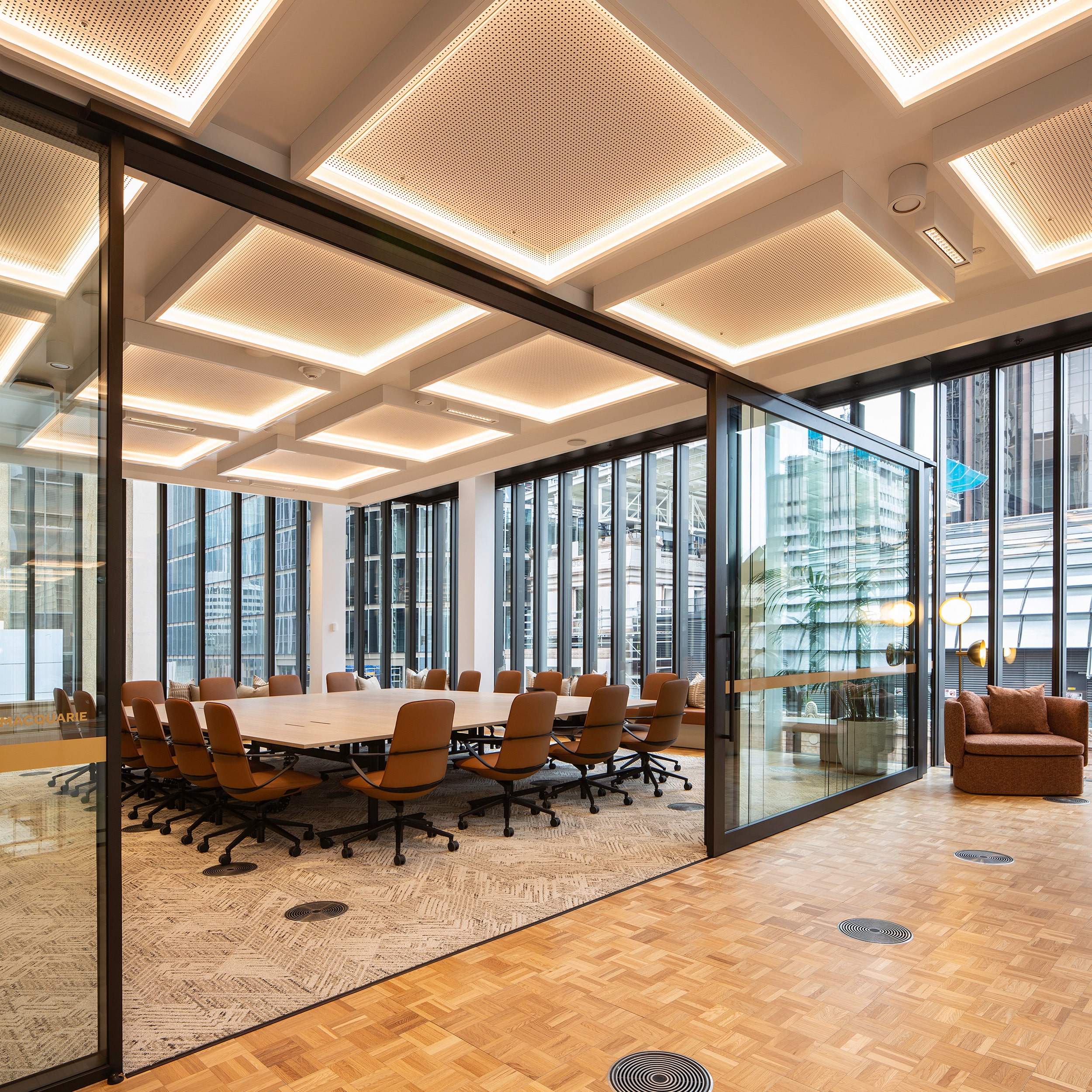
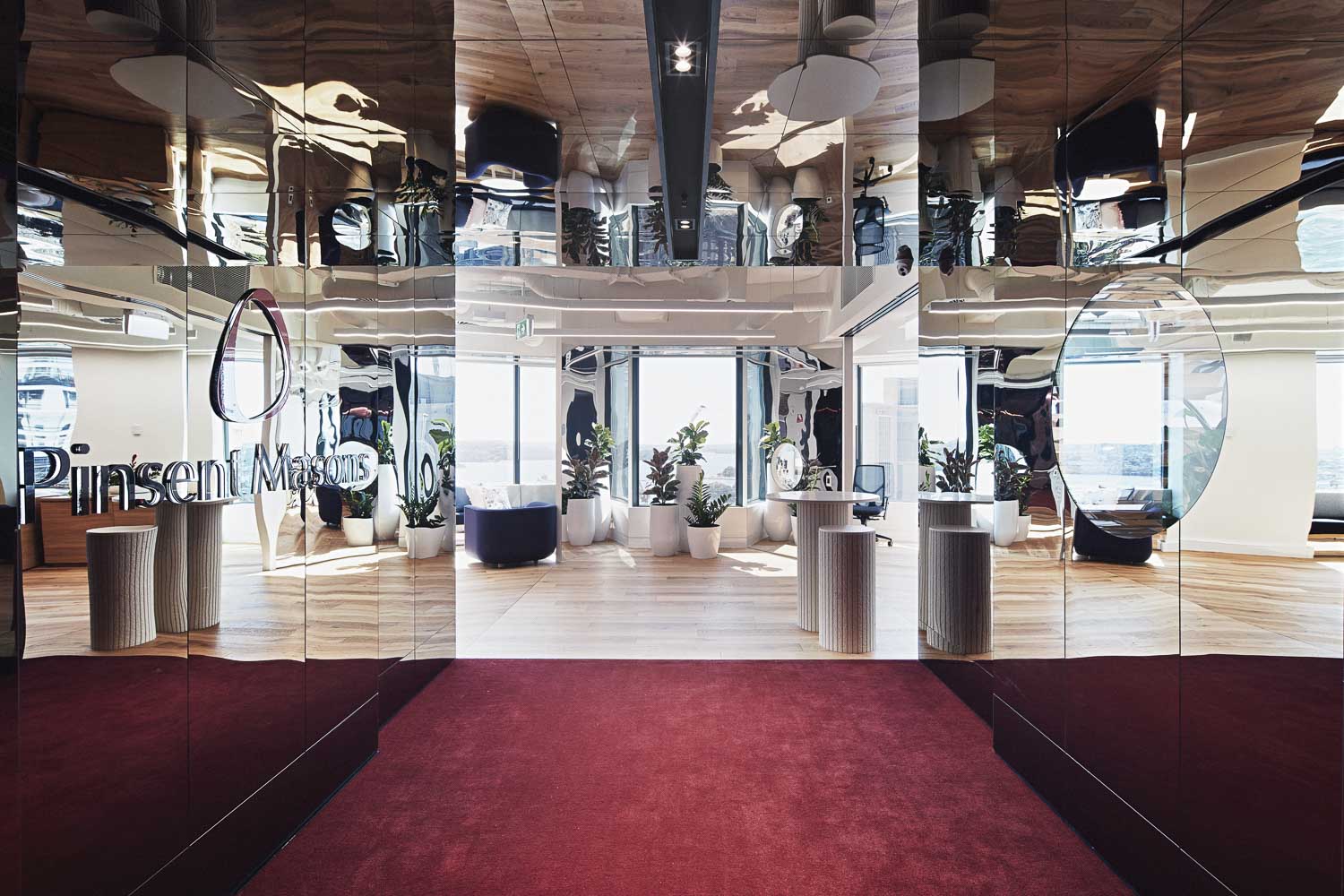
The new Pinsent Masons Headquarters at 33 Alfred Street, Sydney is a high-end 2,600 m² fit-out occupying two levels in the city’s heritage-listed ‘first skyscraper’, combining character with contemporary workplace design.
Tailored for collaboration, flexibility and wellbeing, the space supports modern legal practice with tech-ready meeting hubs, breakout zones, flexible desks and sustainability-aligned finishes. The project sits within a wider refurbishment targeting 5.5-Star NABERS Energy and 6-Star Green Star ratings.
The End of Trip upgrade at 275 Kent Street Sydney delivers premium wellbeing facilities, including 12 bike spaces, 36 showers, lockers, hair-care and amenity zones within Mirvac’s 6-Star Green Star premium office asset, supporting sustainable urban commuting and healthy workplaces.
Installed as part of a multi-stage retail, lobby and base-building transformation, tight staging in a live environment and integration with broader lobby and bike-network infrastructure sets this fit-out apart in the Sydney CBD.
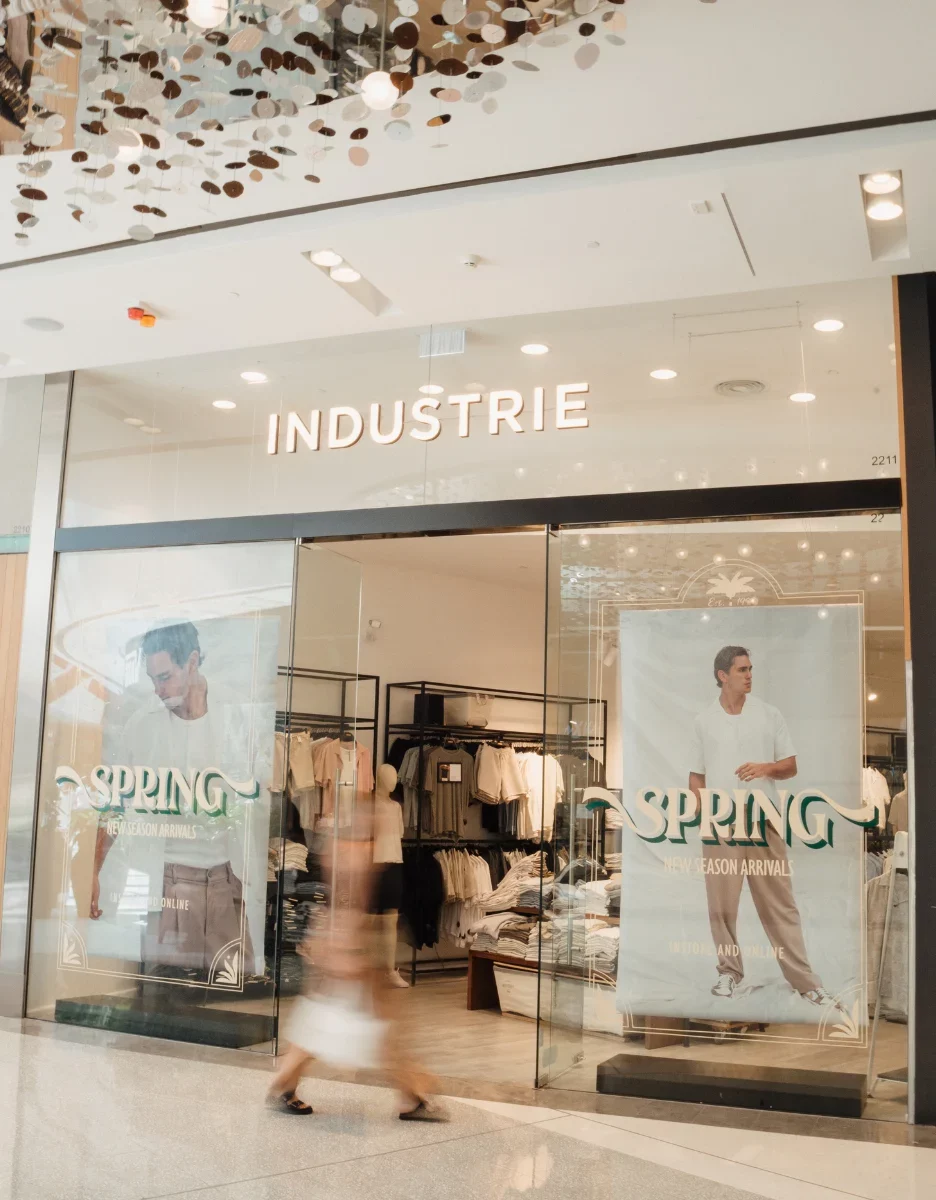
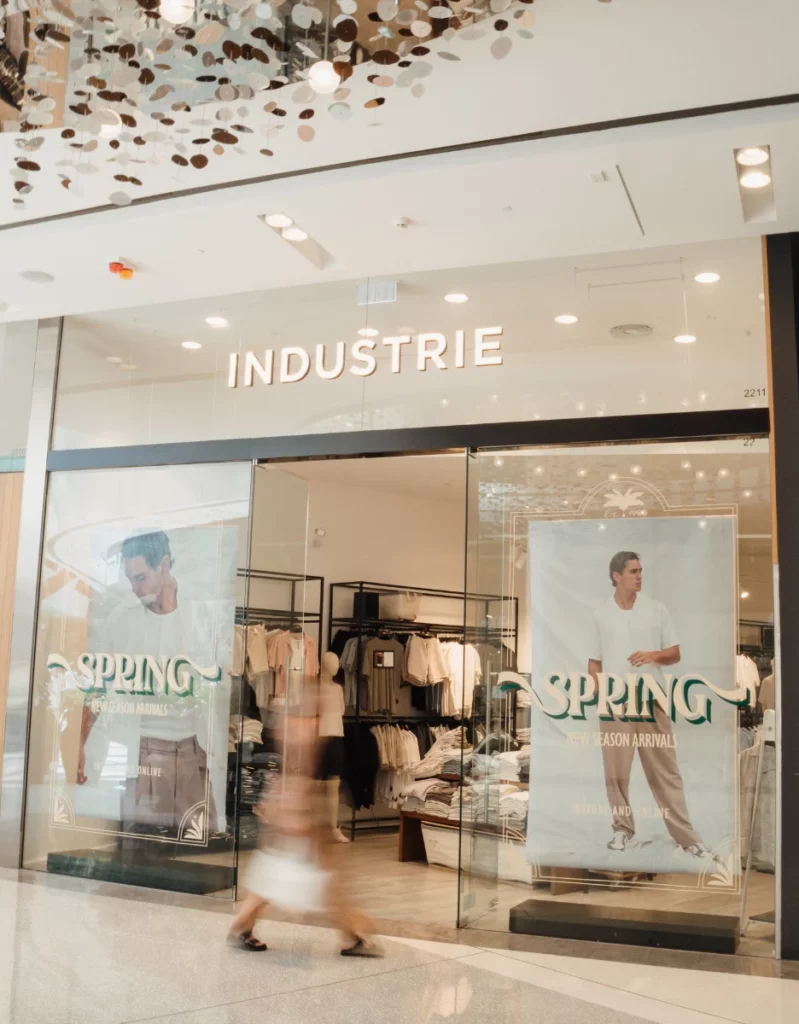
Ongoing PCA for Industrie Clothing retail stores including Parramatta, Burwood, Hurstville & Kotara.
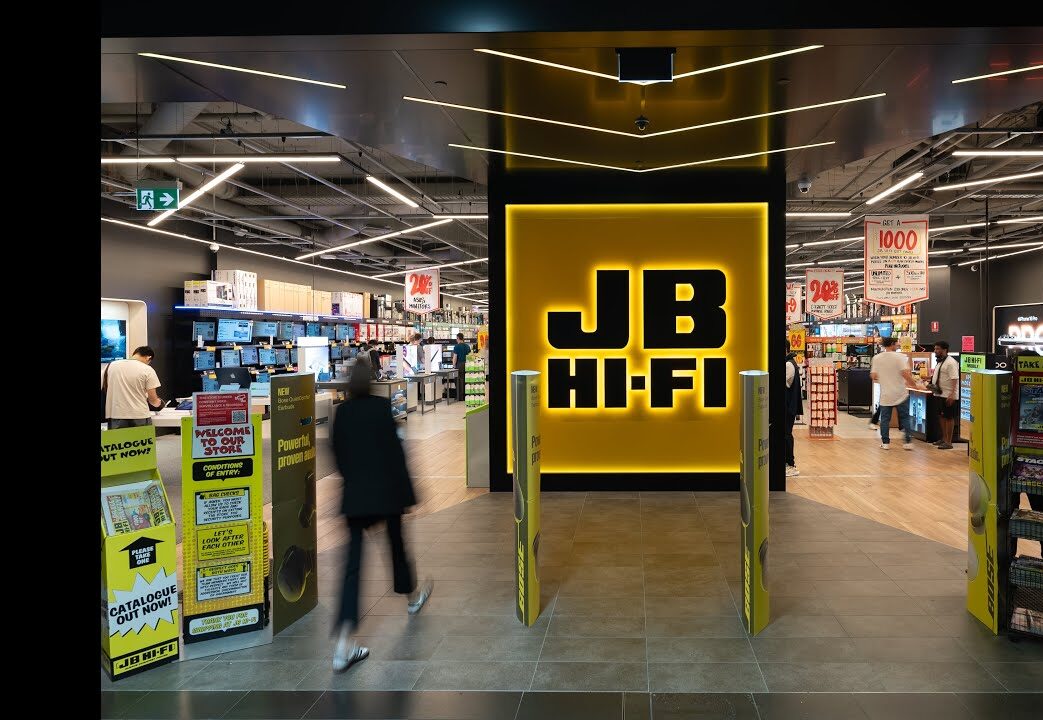
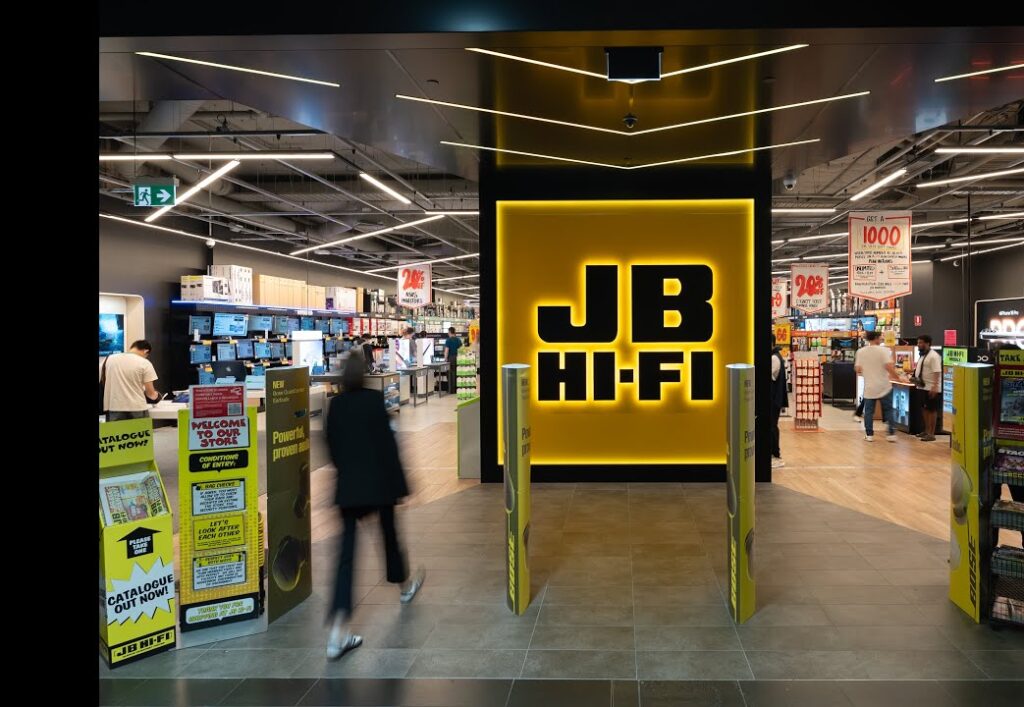
Principal Certifier Services for JB Hi Fi retail statewide rollout including Sydney CBD, East Maitland, Castle Hill, Macquarie Park, Bankstown, Burwood, Mount Druitt, Jamisontown, Parramatta, Wagga Wagga, Eastgardens, Hornsby, Roselands, Rouse Hill, Ryde, Prariewood, Leichhardt, Wetherill Park, Caringbah, Kotara, Nowra, South Nowra, Narellan, Glendale, North Sydney, Liverpool, Brookvale, Darlinghurst, Albury, Tuggerah, Tweed Heads, Glebe, Blacktown + Chatswood.
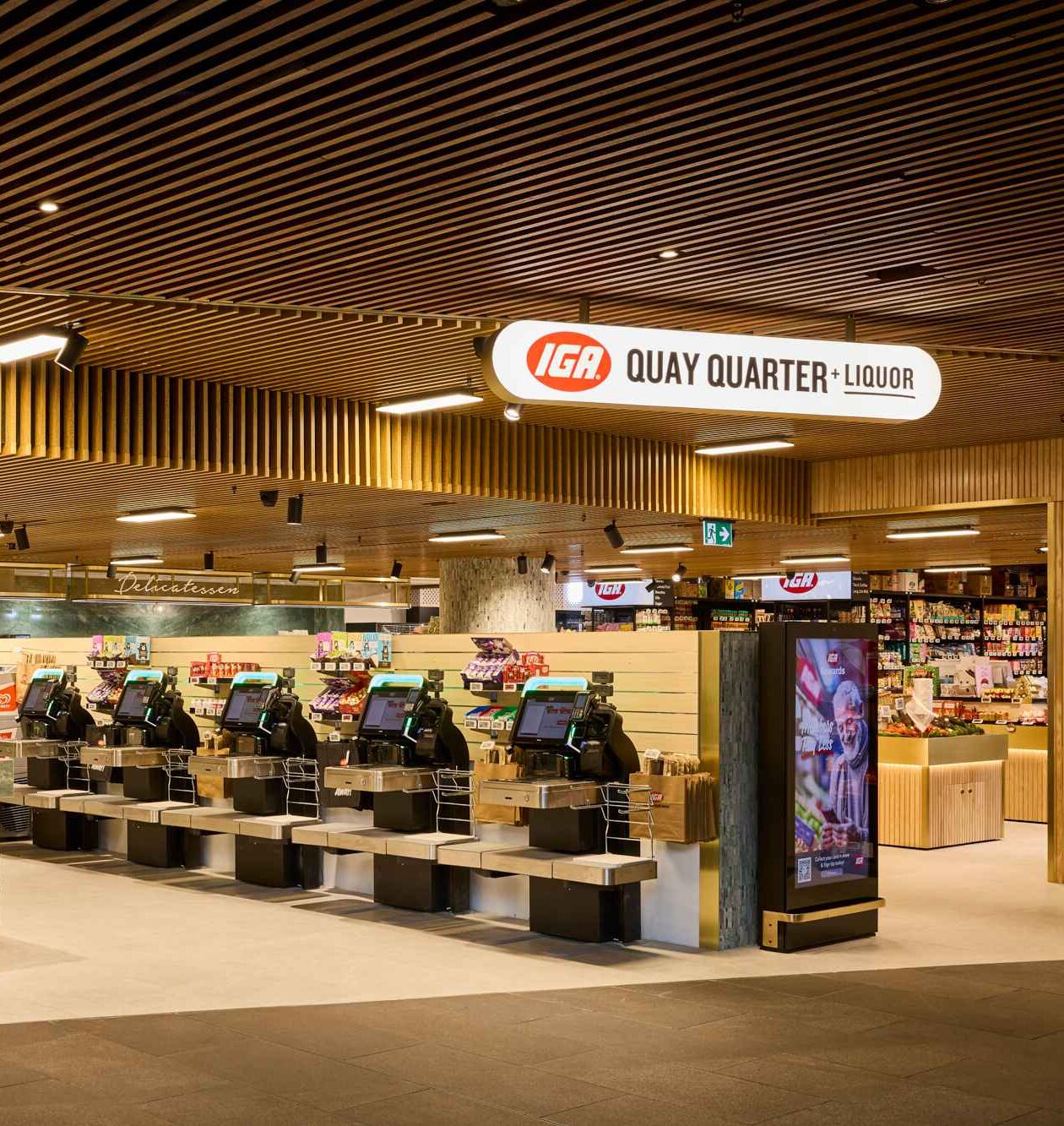
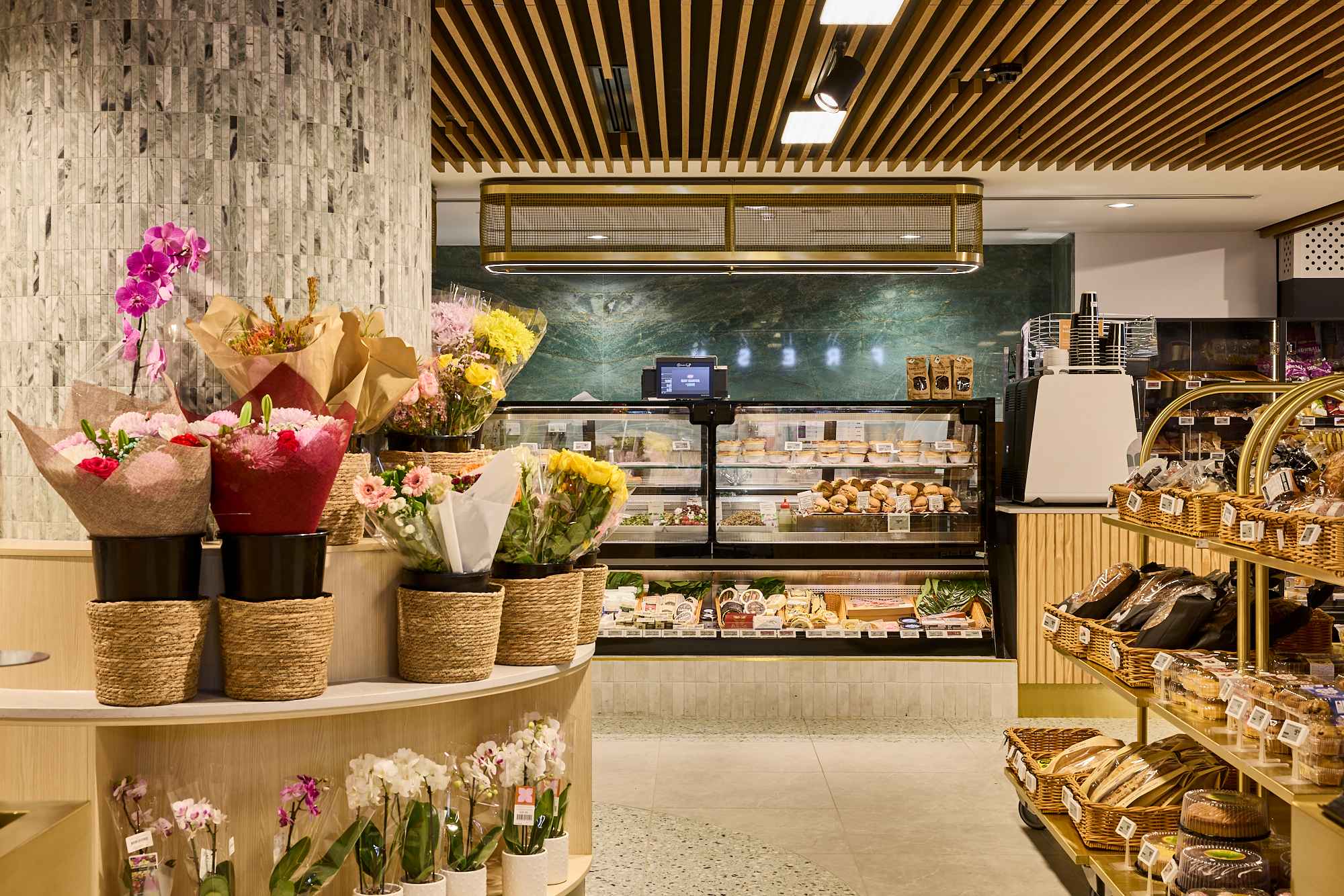
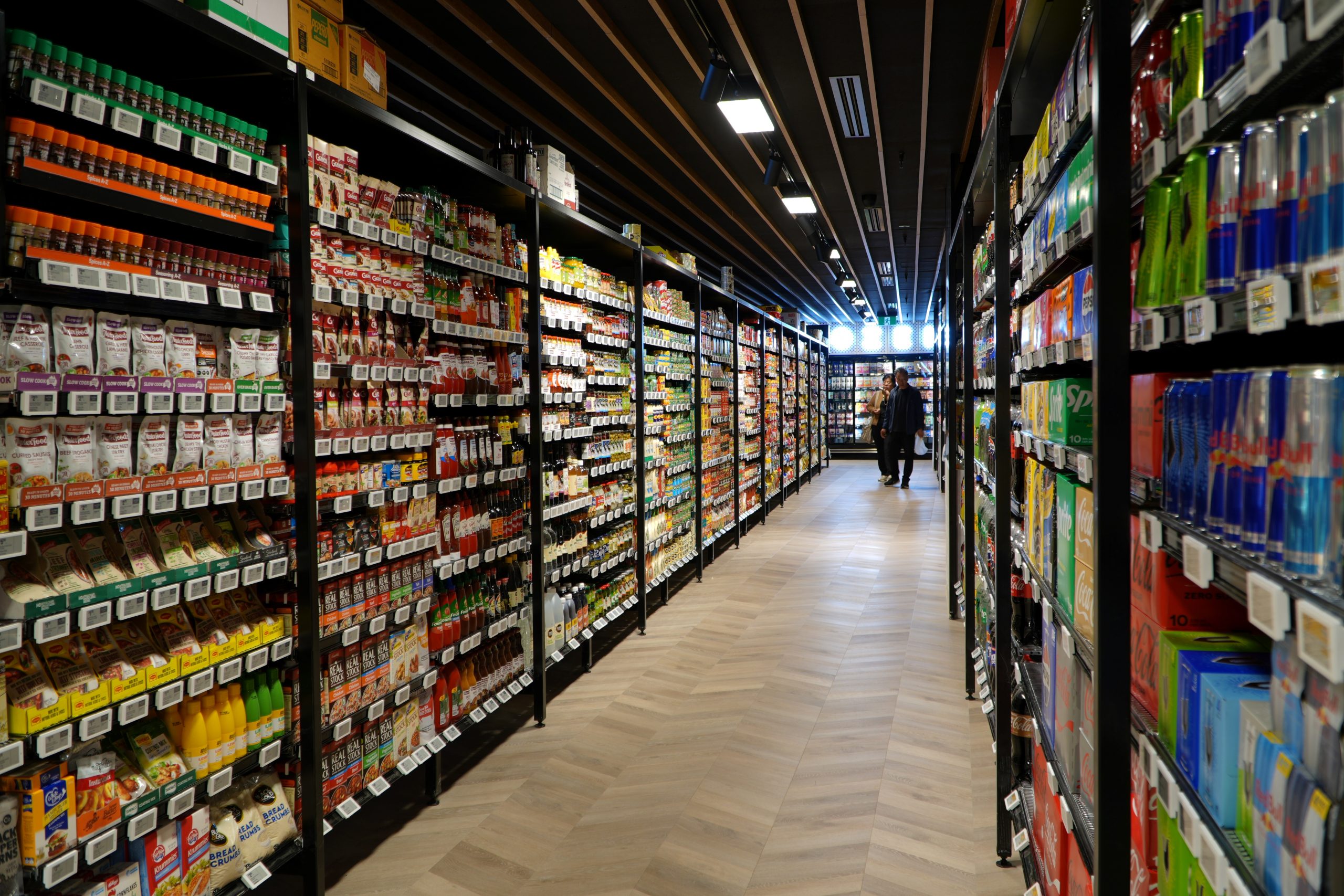
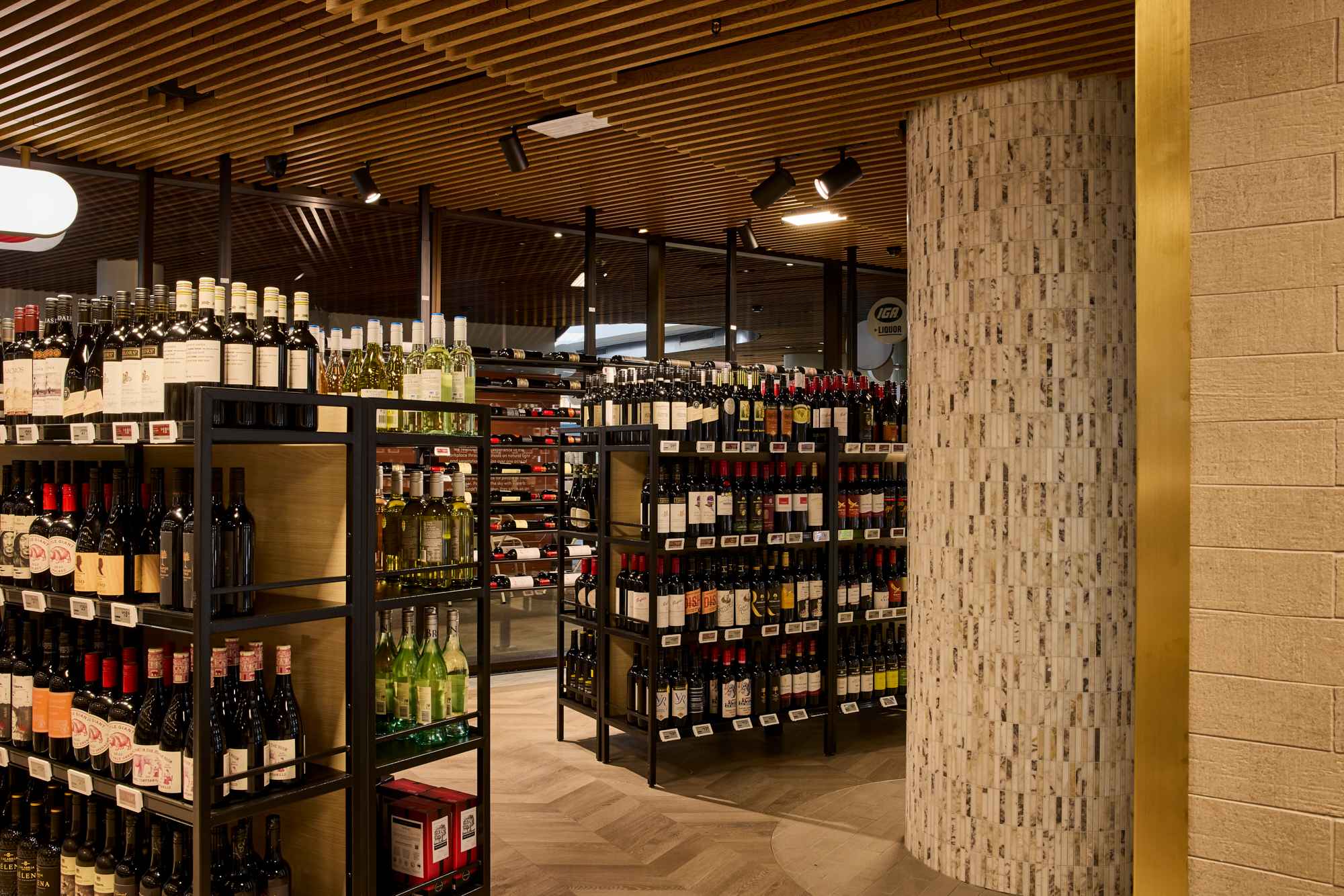
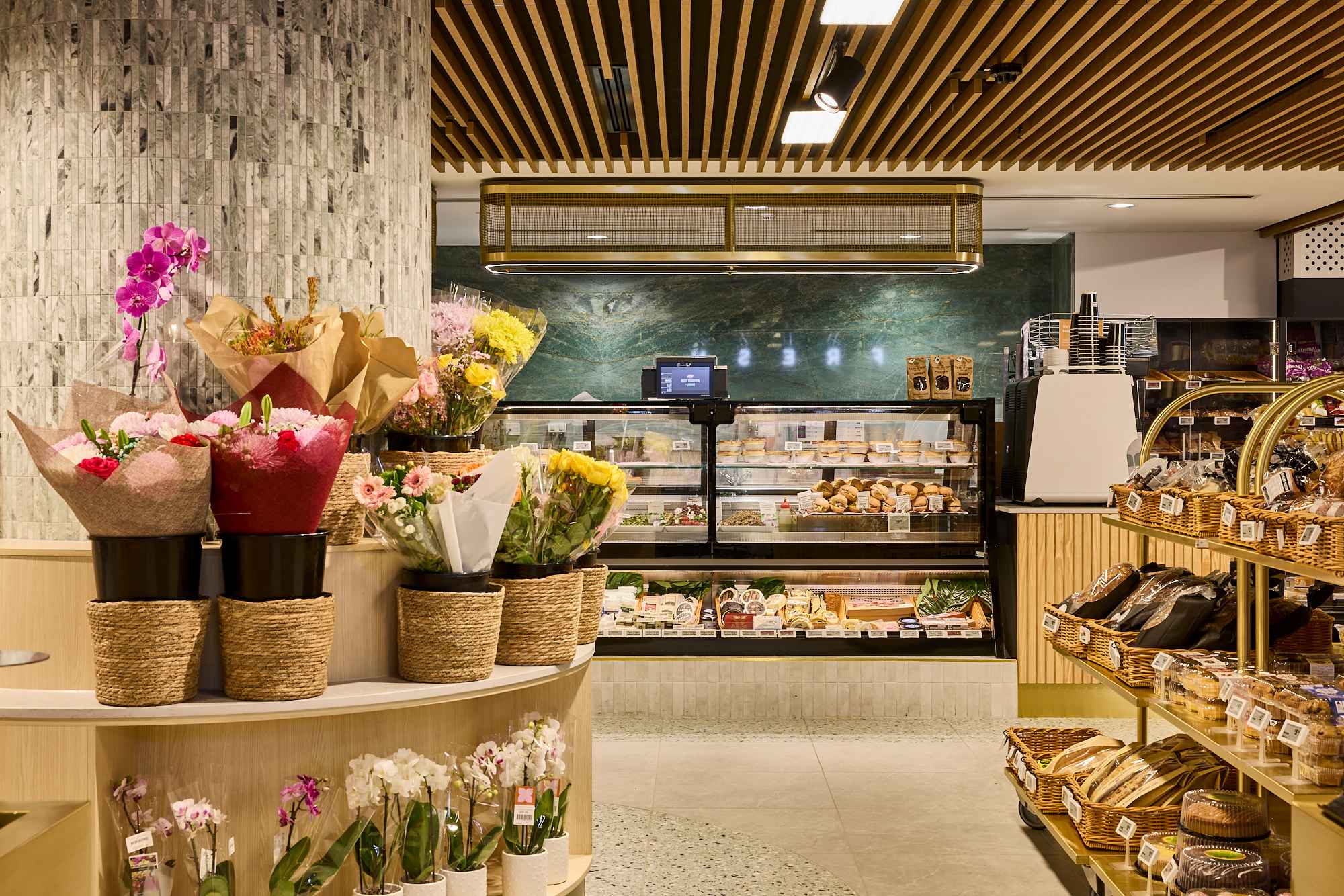
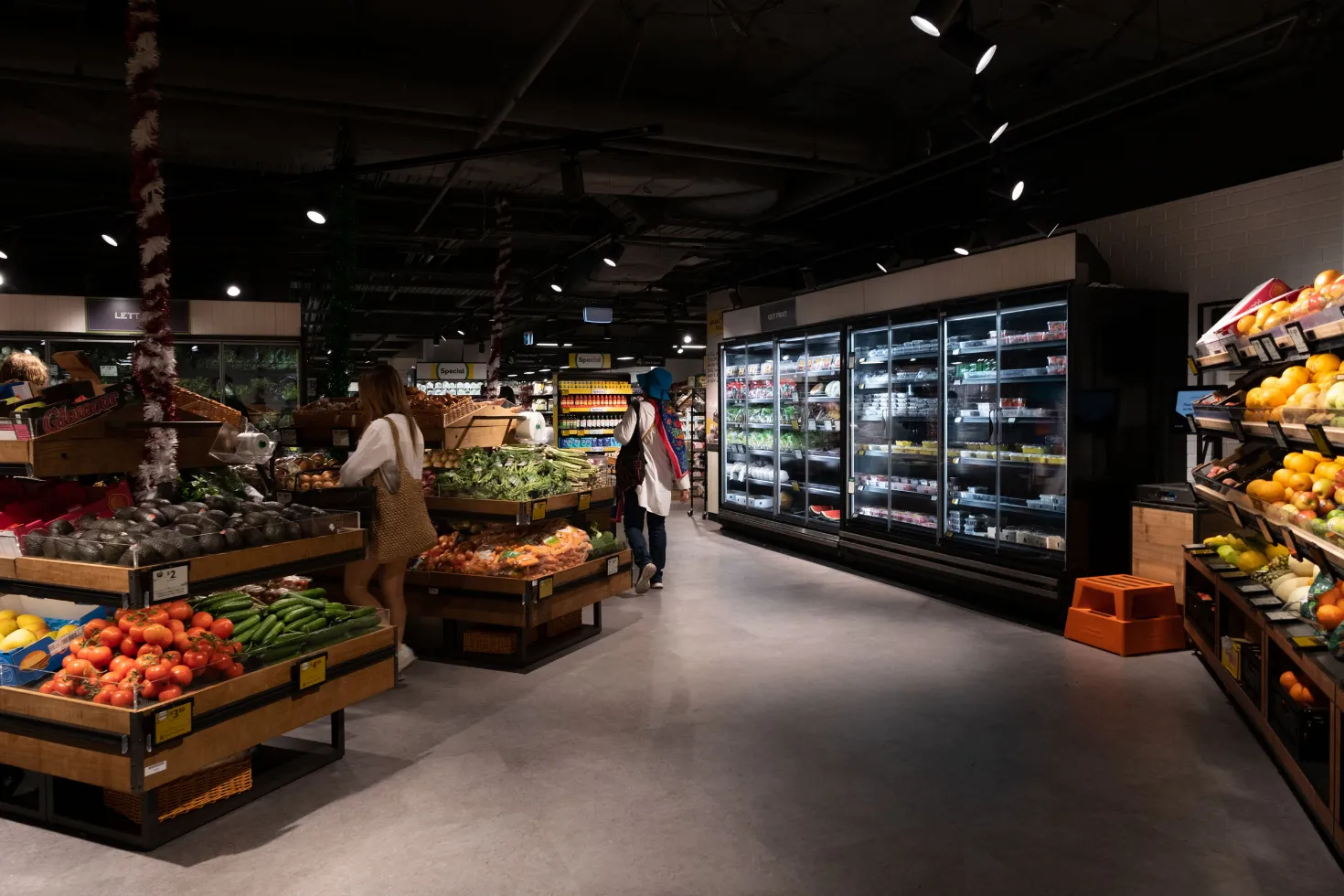
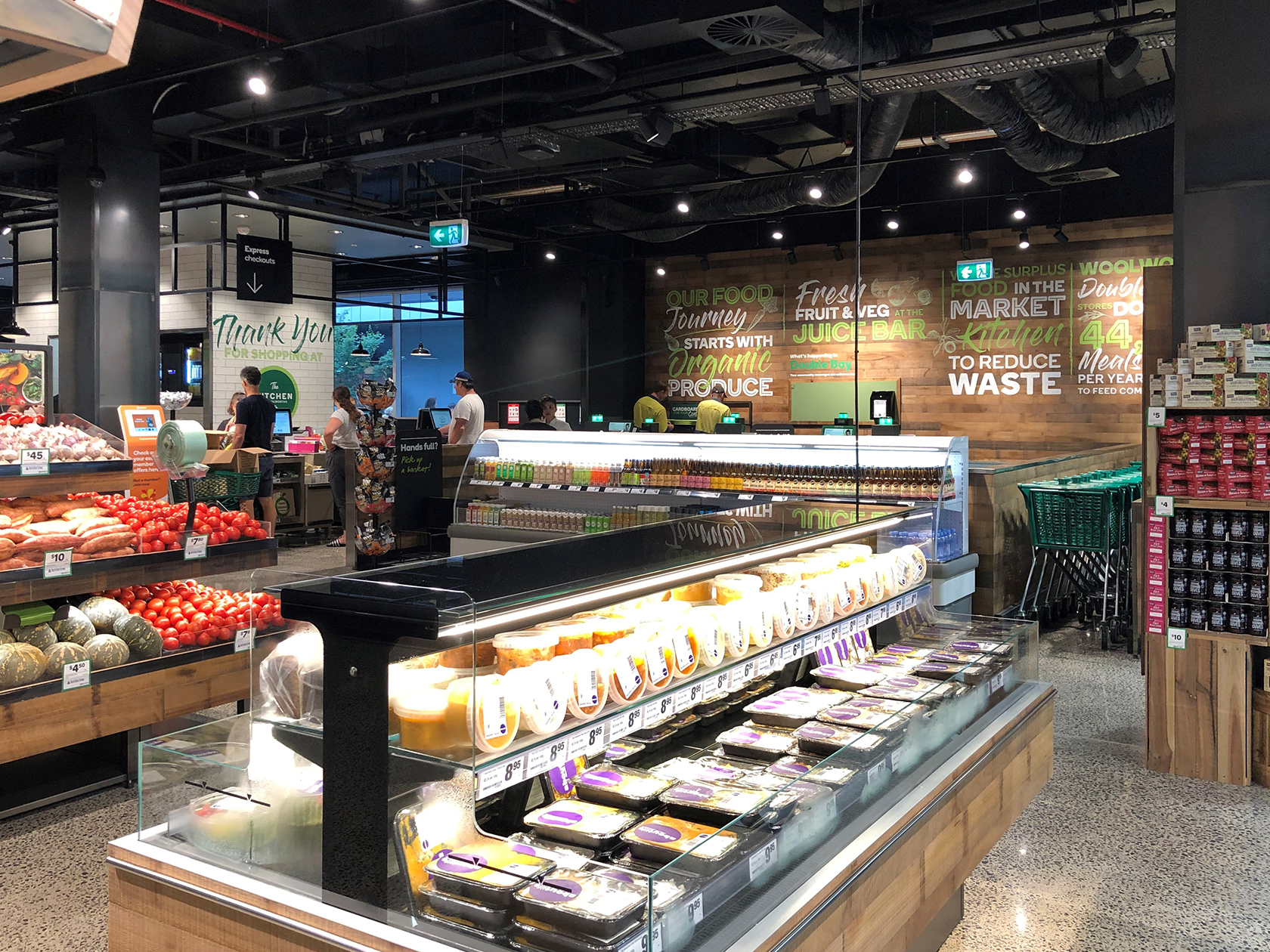
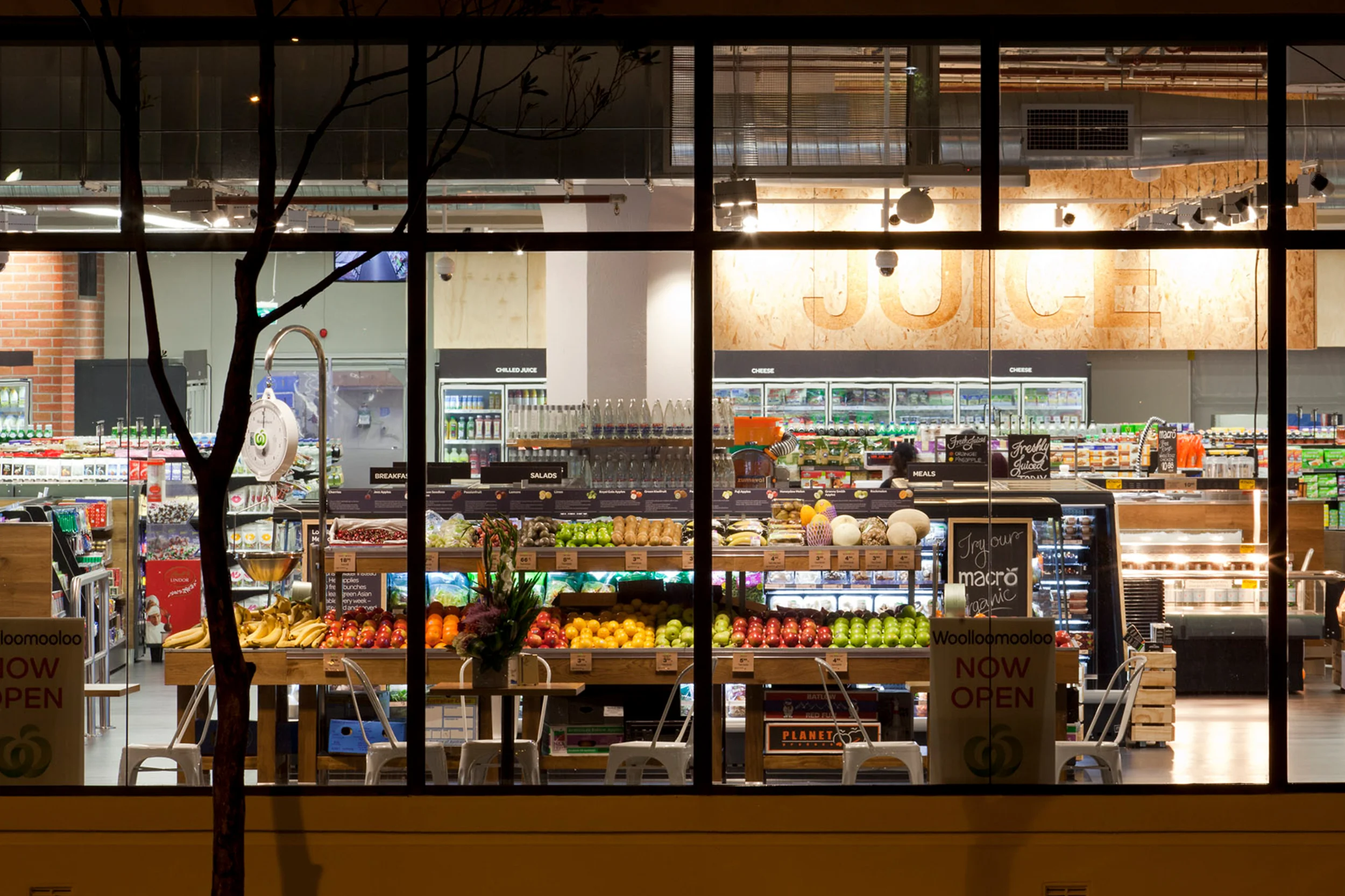
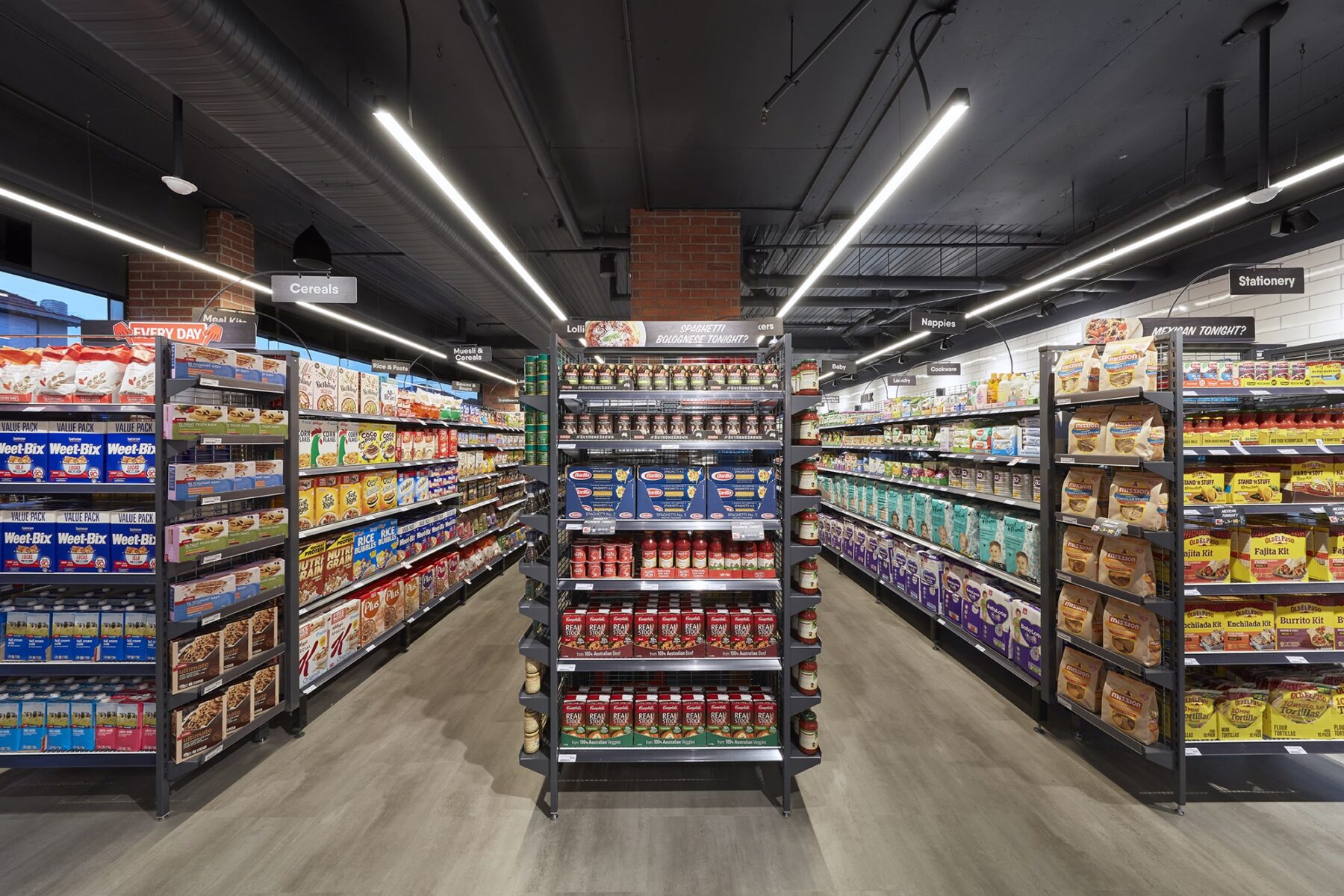
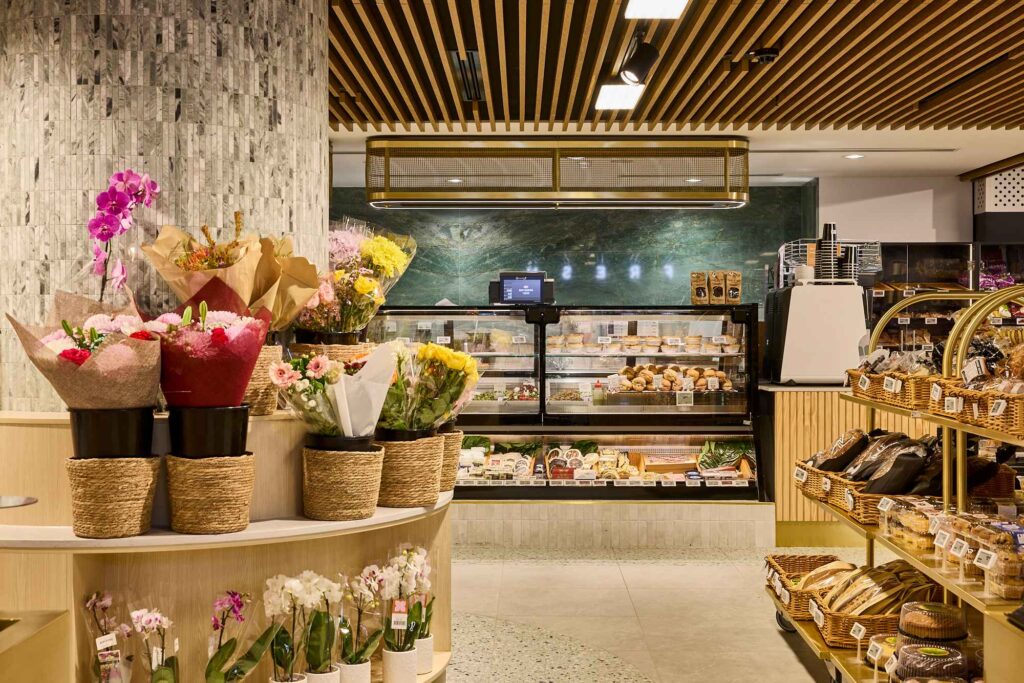
The new IGA supermarket in Quay Quarter Tower is a
state-of-the-art urban grocery within Sydney’s premier mixed-use precinct, located in the Market Hall on Quay Quarter Tower.
Designed to serve CBD workers, residents and visitors, the store blends efficient retail planning with high-quality fresh produce, specialty Asian products, liquor and convenience meals, enhancing the precinct’s vibrant retail offer. Its fit-out integrates tailored merchandising, striking display features and modern systems to complement the sophisticated adaptive reuse and public-facing podium.
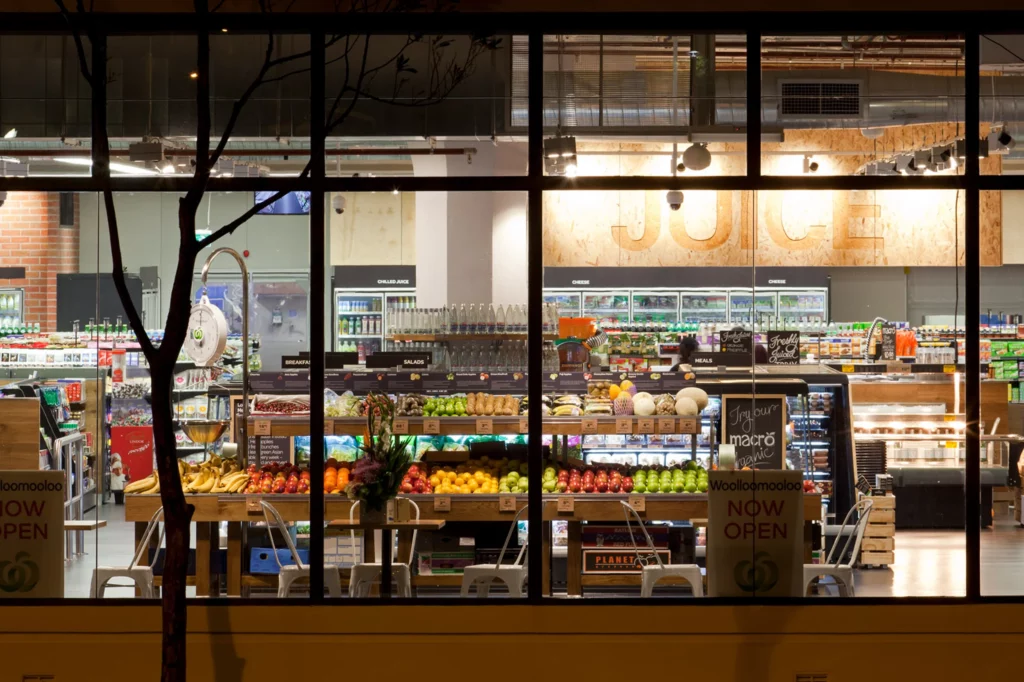
Ongoing Principal Certification Services for the Woolworths Supermarkets Portfolio including Top Ryde, Glen Innes, Tahmoor, Newcastle West, Plumpton, Bondi Beach, Surry Hills, Macarthur Square (Campbelltown), Rosemeadow, Carnes Hill Marketplace, Erina Fair, East Maitland and Crows Nest.
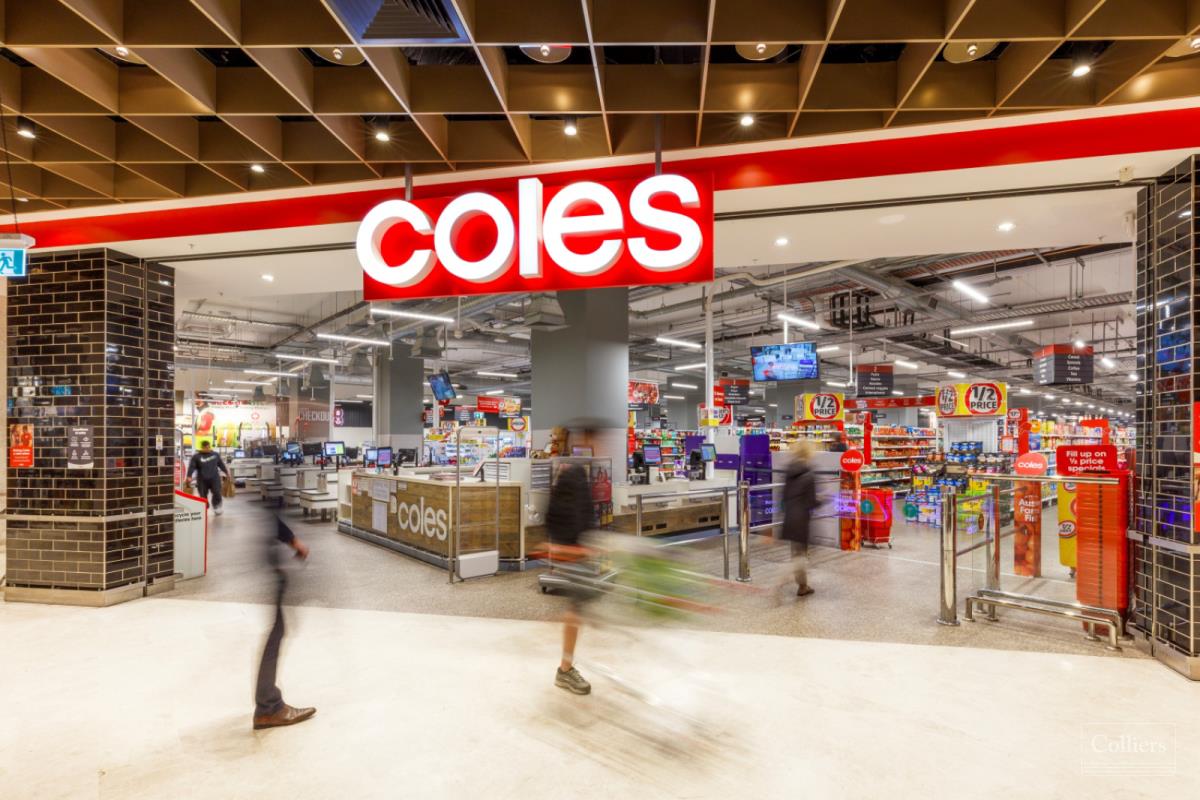
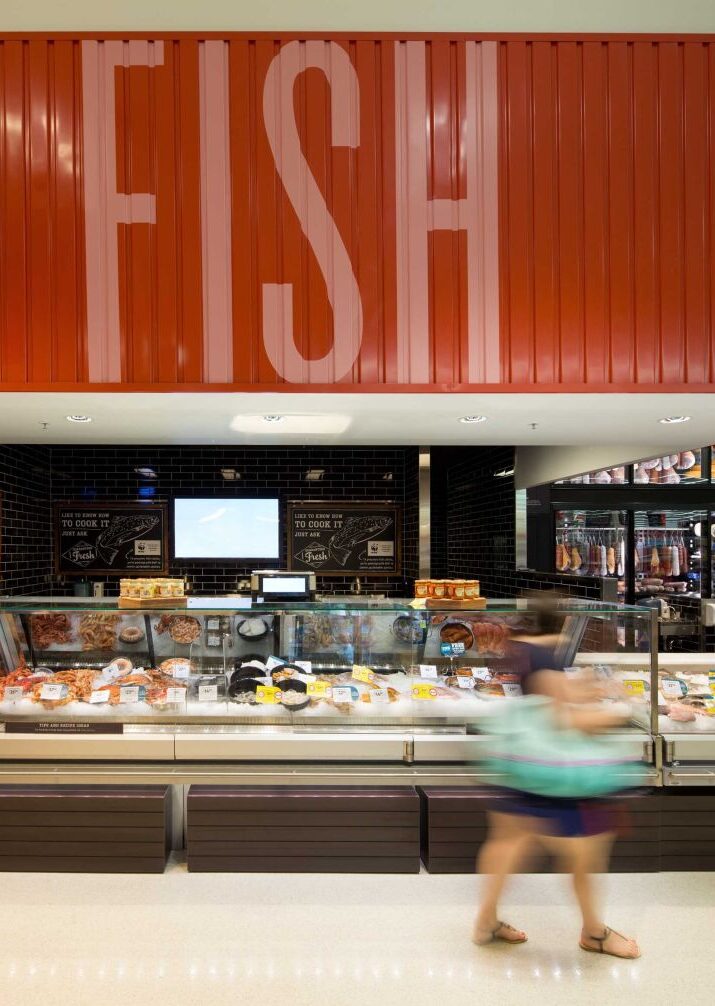
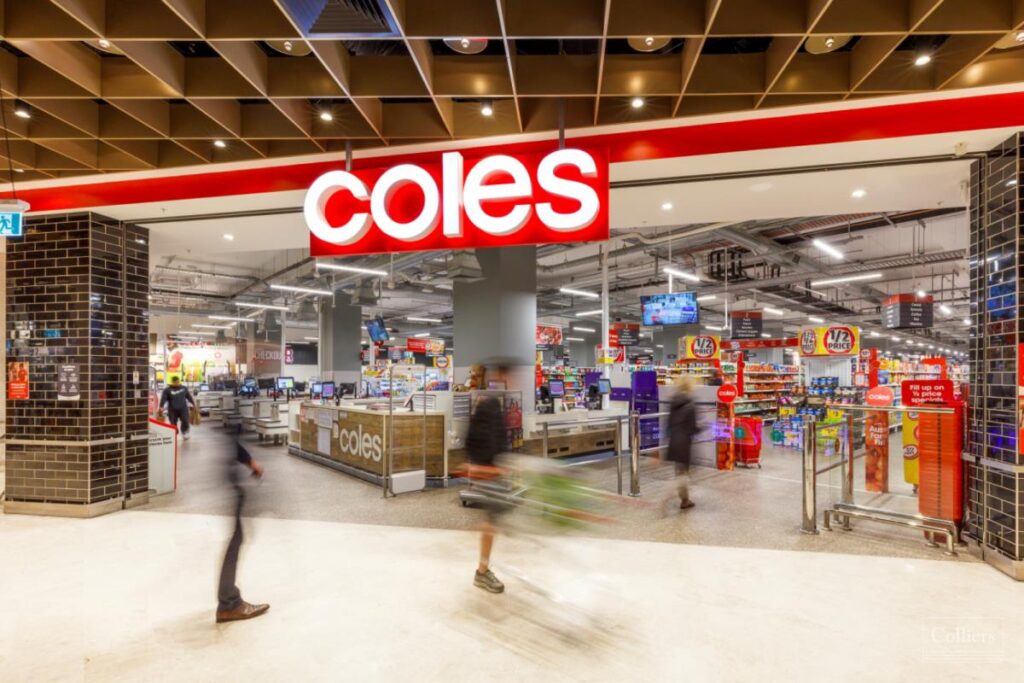
Ongoing Principal Certifier Services for Coles Supermarkets including Sydney CBD, Castle Towers Shopping Centre, Broadway Shopping Centre, Crows Nest, West Ryde, Penrith, Macquarie Park, St Ives, East Maitland, Burwood, Warriewood, Warrawong, Waterloo, Mona Vale, Carlingford, Kotara and Hurstville.
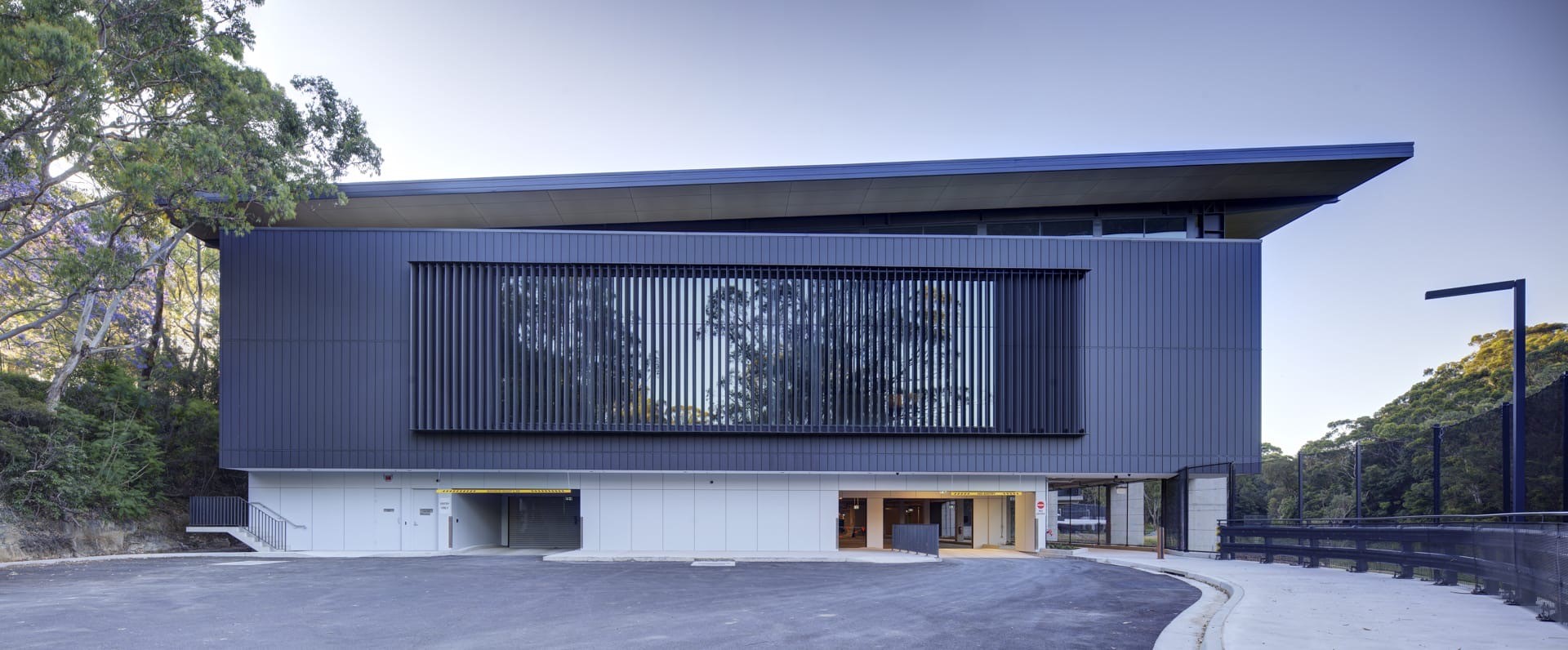
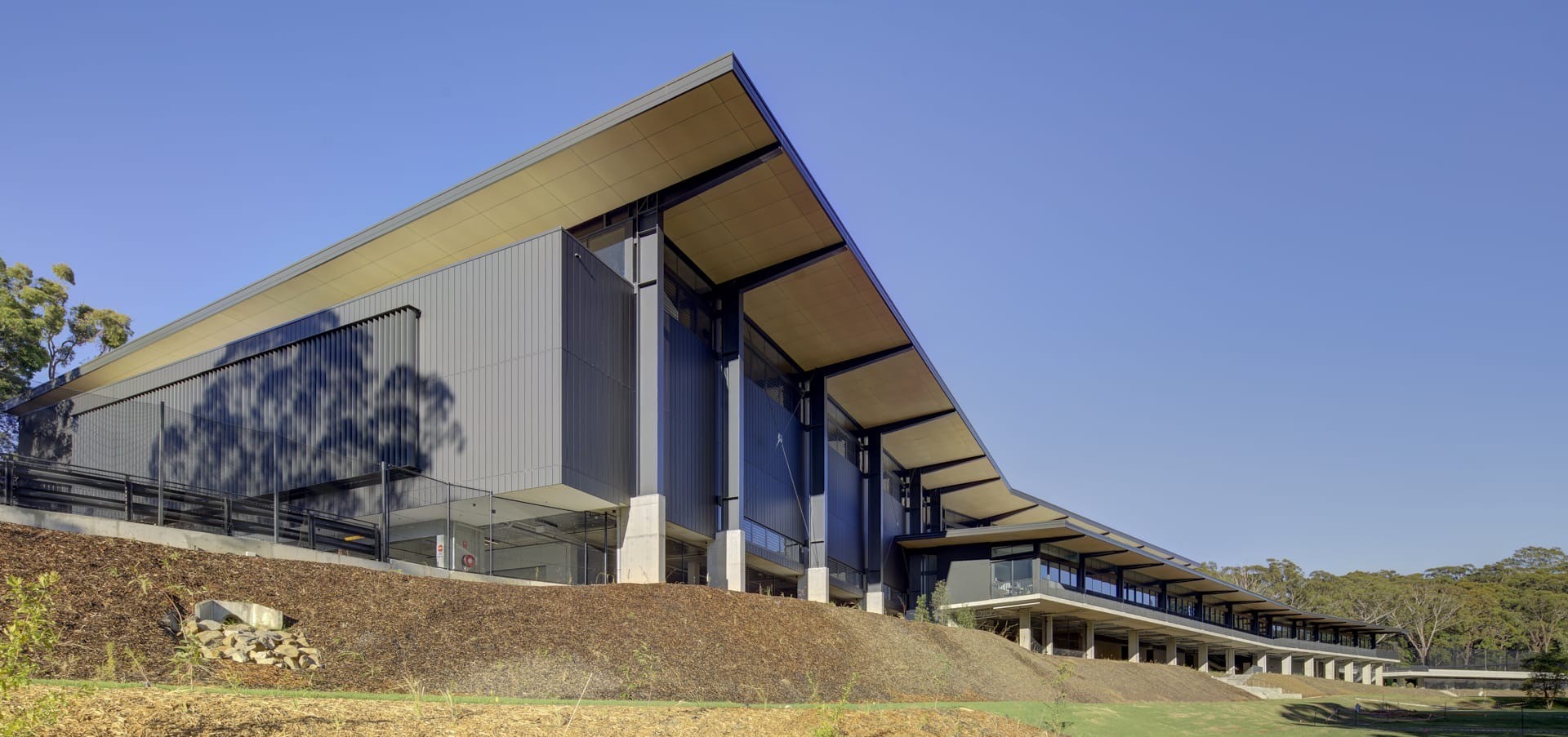
Galuwa Recreation Centre (Lane Cove Sports + Recreation Centre) is a landmark 6,235 m² indoor and 3,665 m² outdoor multi-sport and community hub on Sydney’s Lower North Shore, delivering eight courts, flexible activity rooms, future bistro and golf pro shop within a three-level facility that celebrates bushland views and connection to country.
Nestled into the golf-course site, the design prioritised northern light, natural cross-ventilation and accessibility. Sustainability measures include solar power, rainwater harvesting, LED lighting, operable louvres and reduced embodied carbon through material selection, fostering wellness, versatility and environmental performance in a facility built for community health, sport and social life.
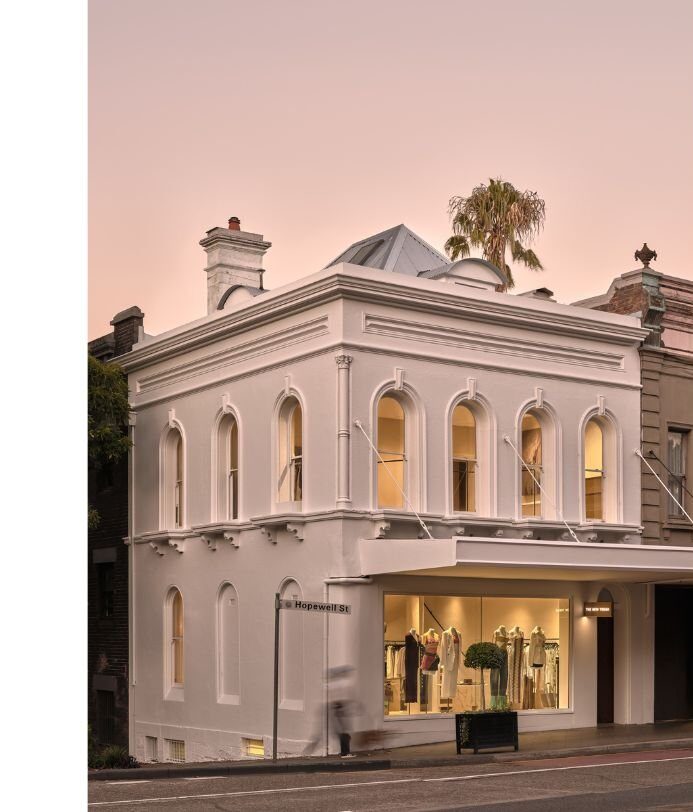
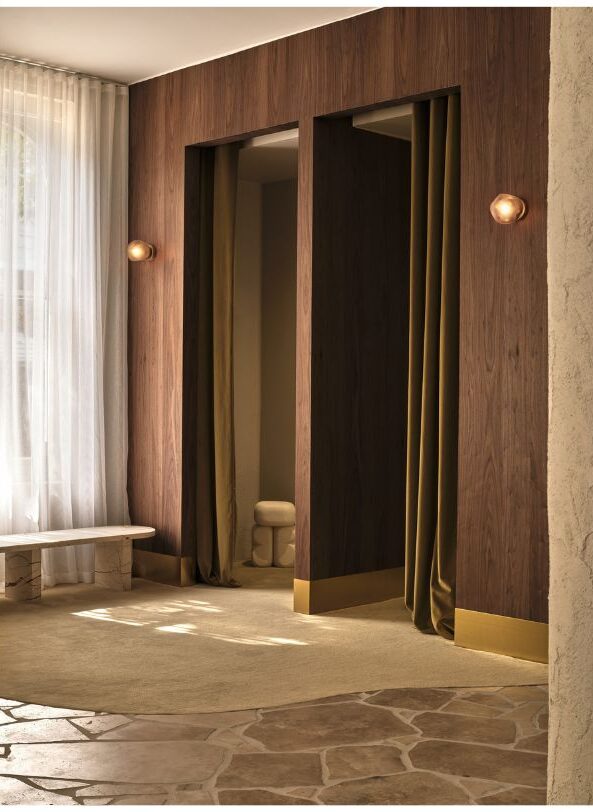
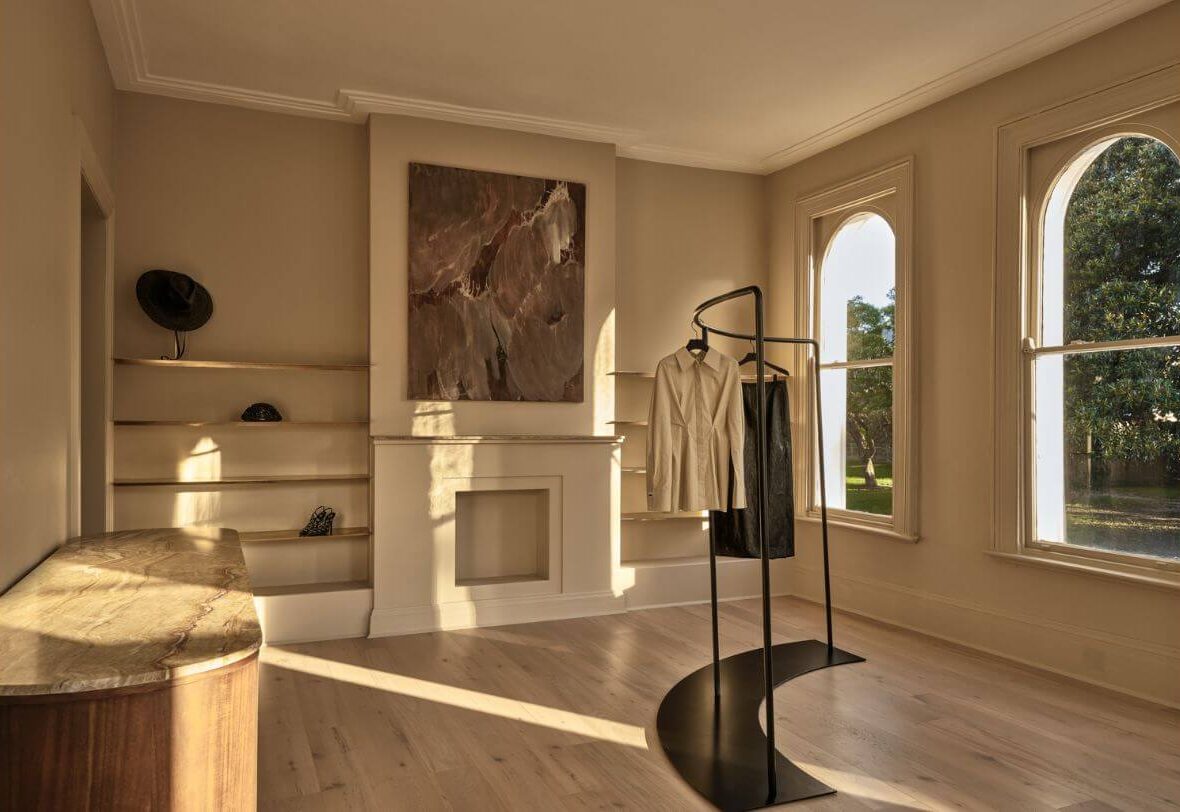
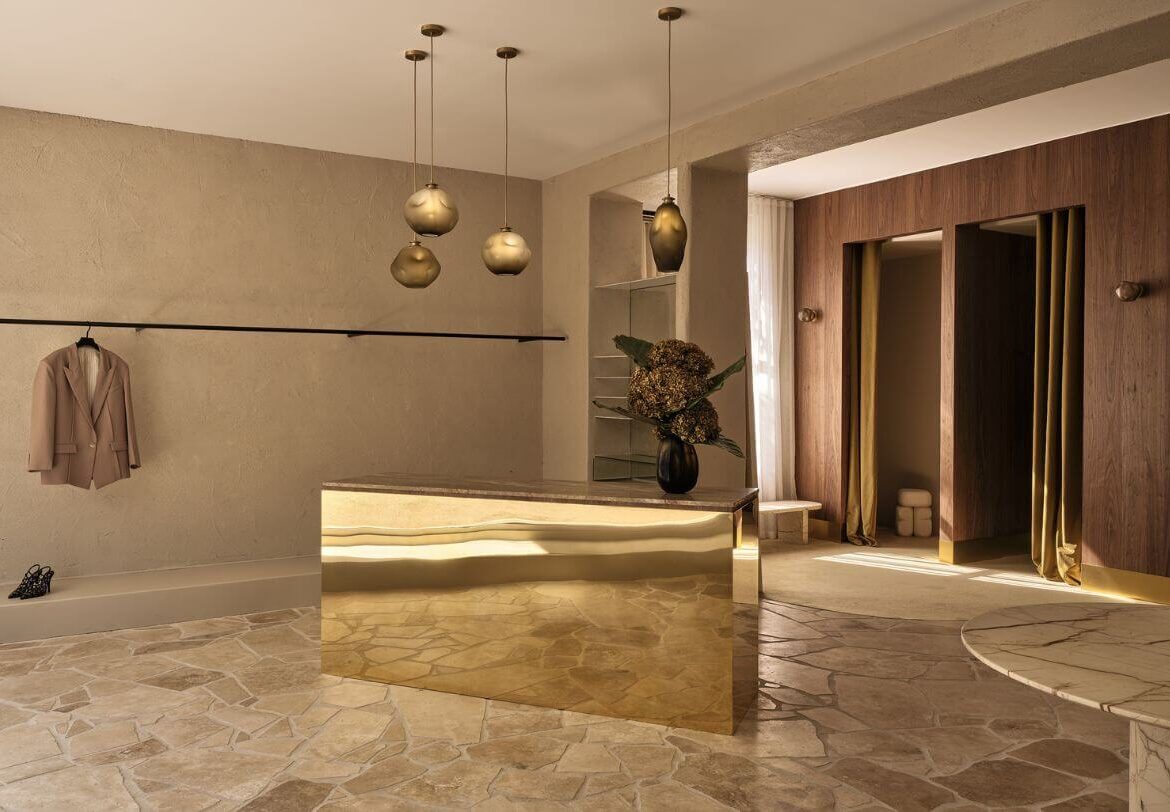
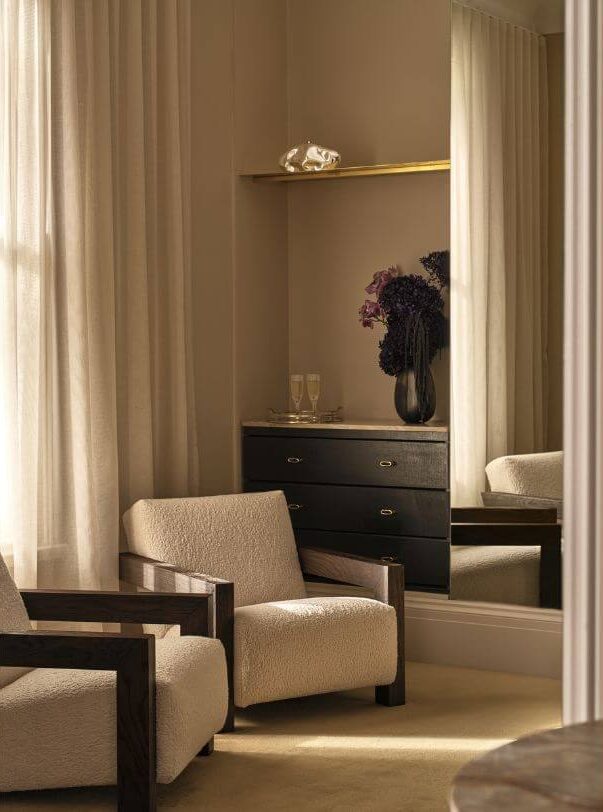
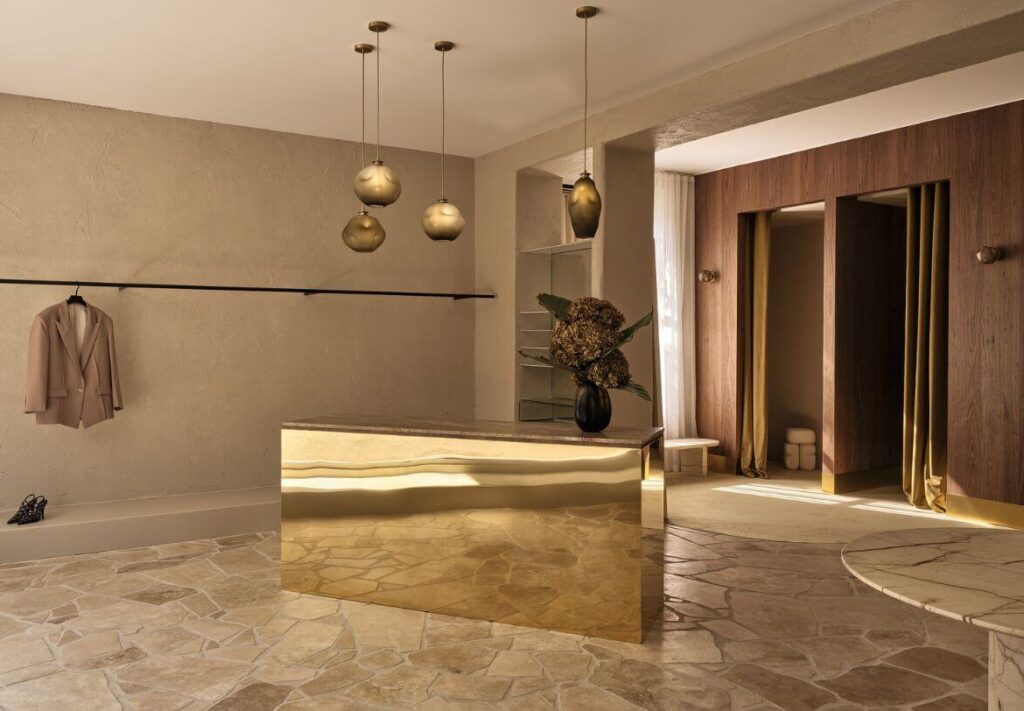
The New Trend Paddington boutique at 108 Oxford Street transforms luxury retail with a warm, residential-inspired interior that celebrates both contemporary design and the heritage fabric of Paddington. Rich material, marble, timber, plush carpet, rendered walls, and refined black-and-gold detailing, create an elevated yet welcoming shopping environment.
Custom lighting and layered textures accentuate curated fashion collections and a personalised styling suite, differentiating the space with a home-like feel that aligns closely with The New Trend’s brand DNA while respecting the character of its historic setting.
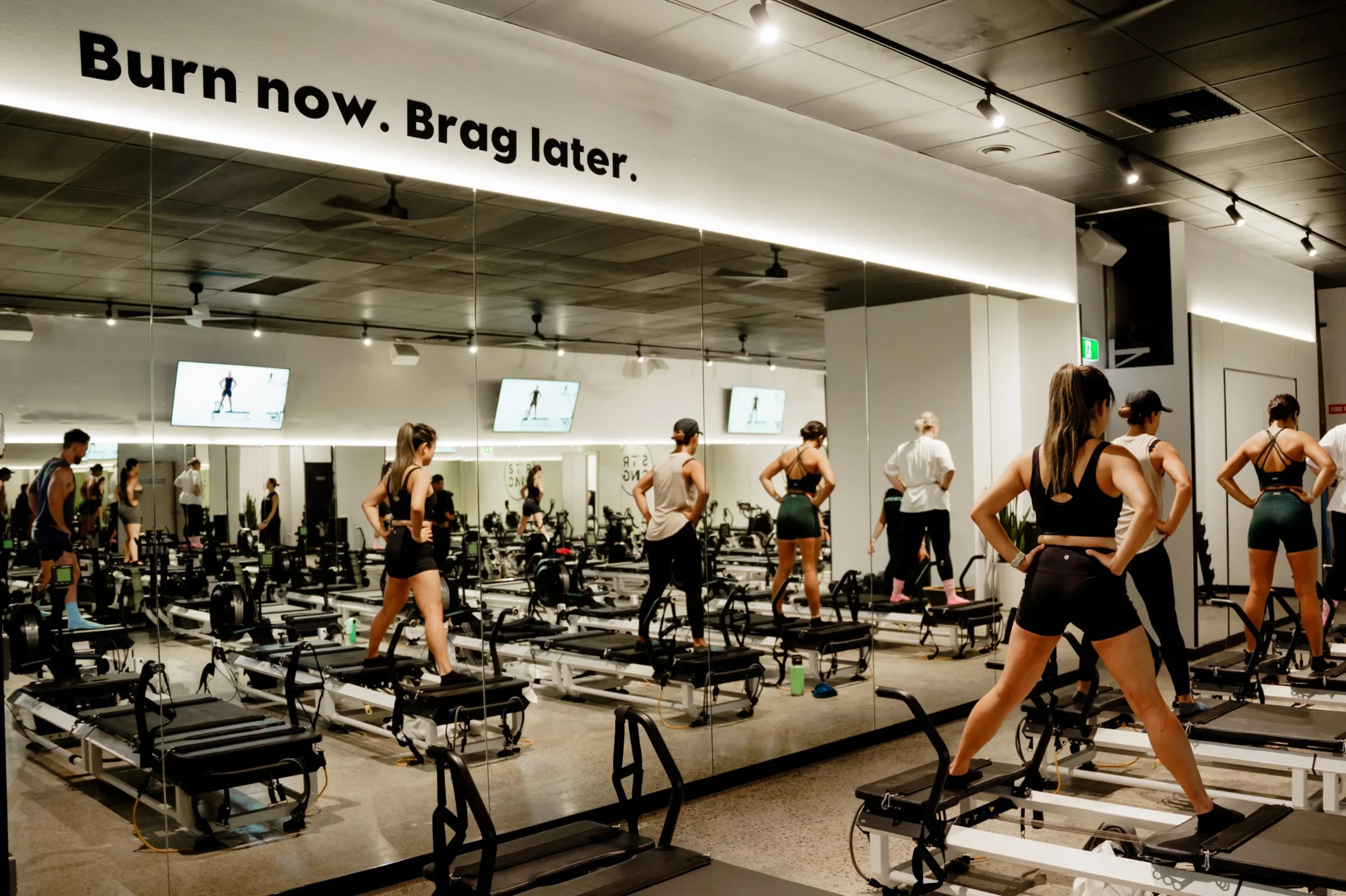
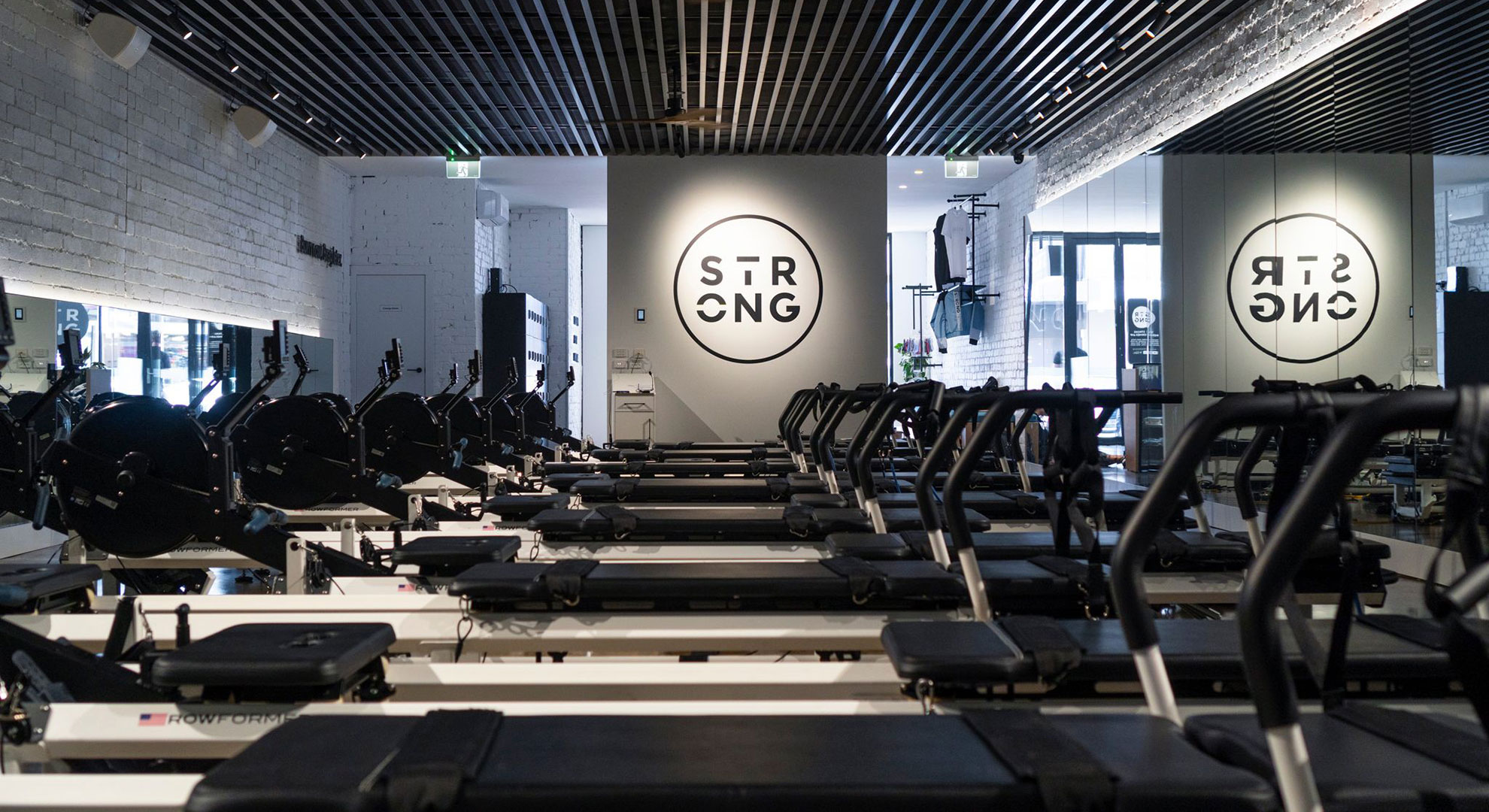
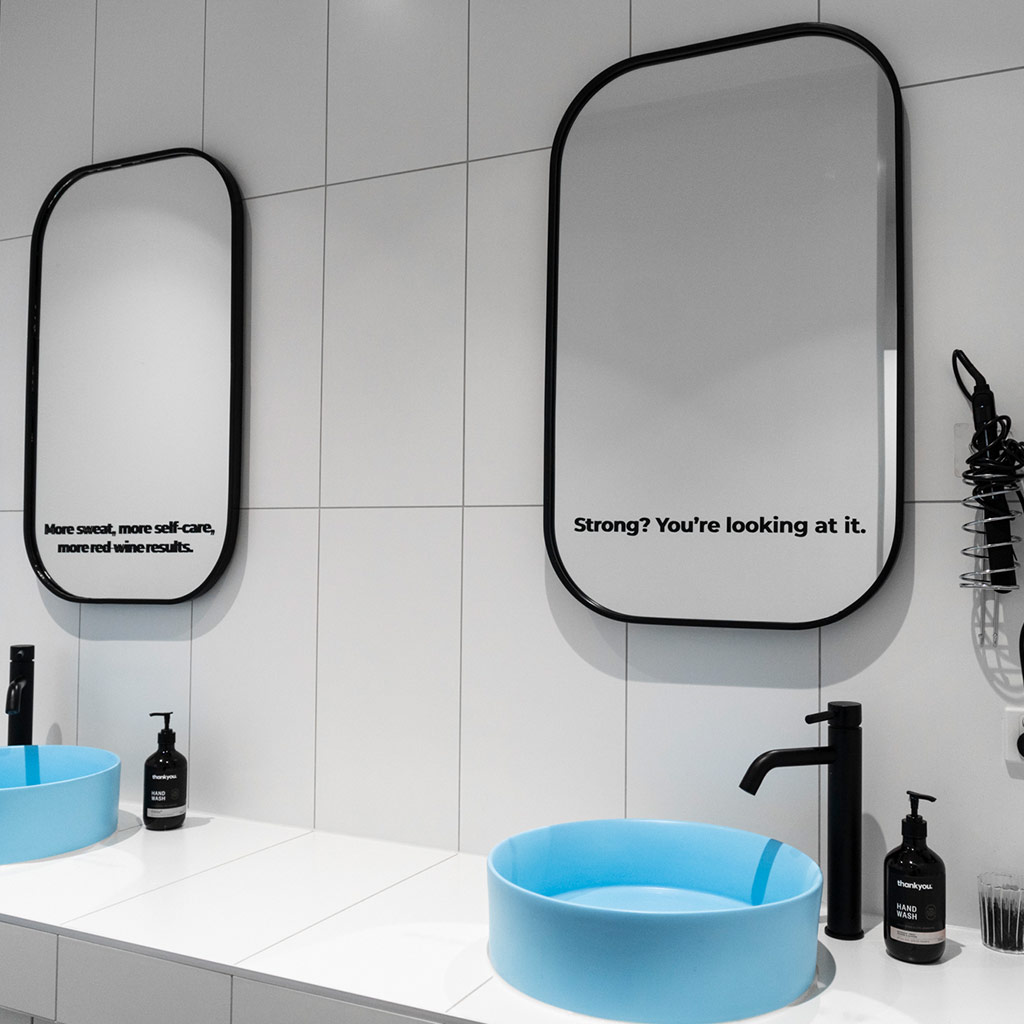
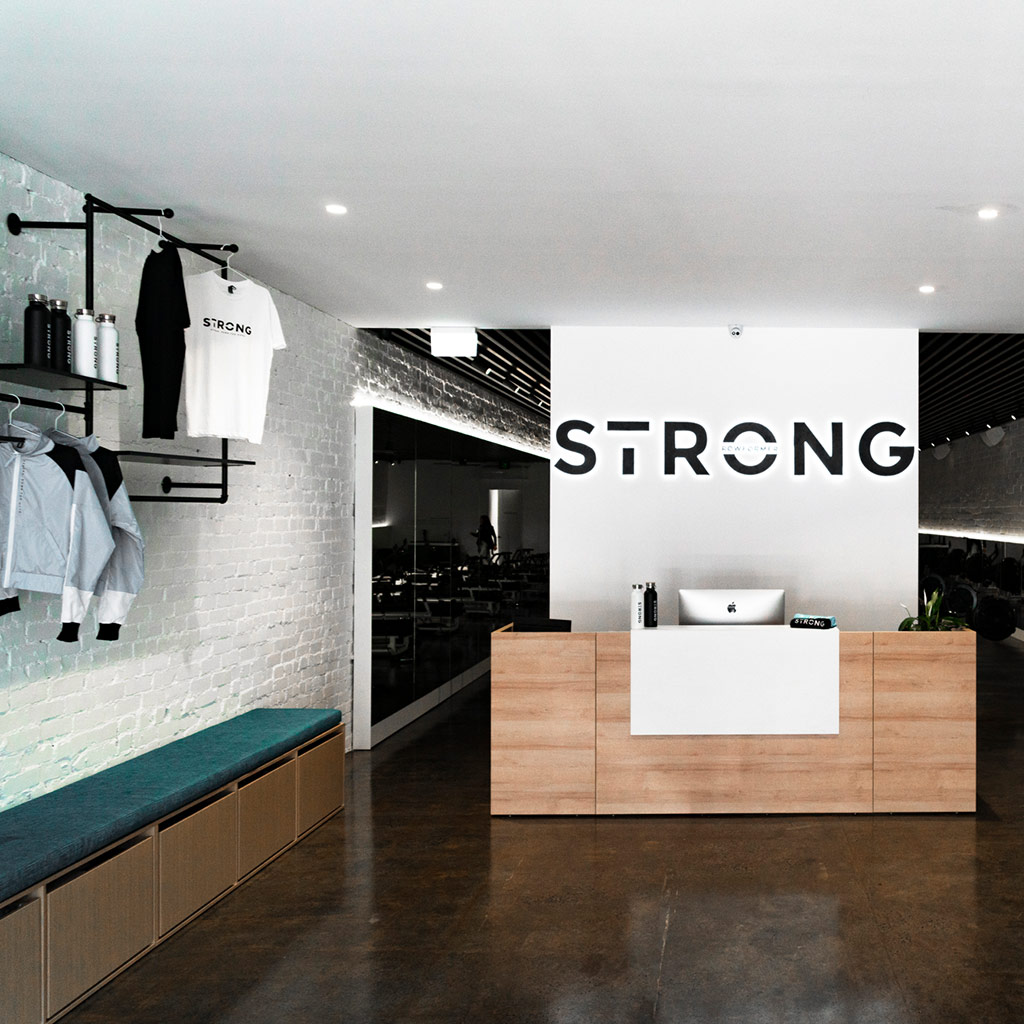
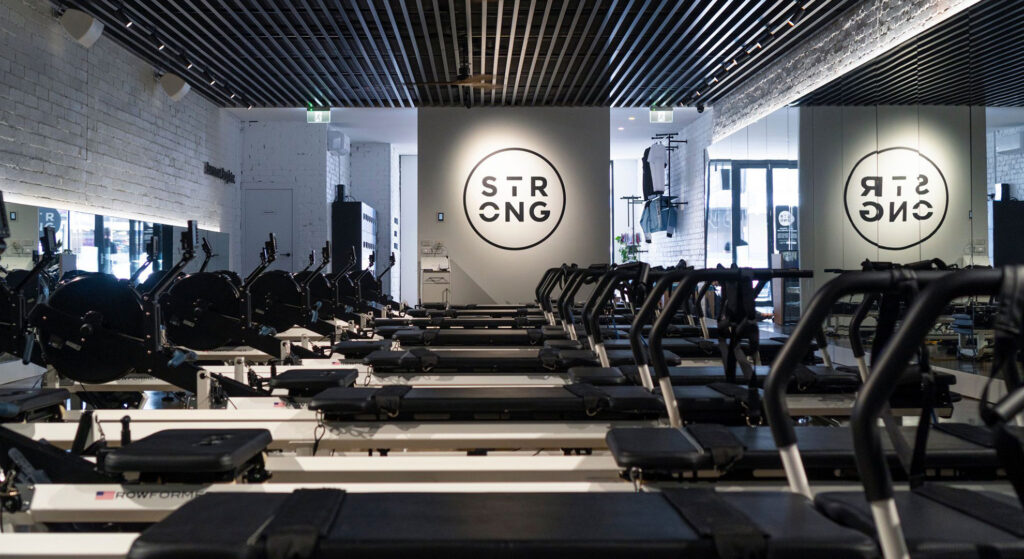
Strong Pilates Studios in Bankstown and Leppington are high-energy, open-plan fitness interiors tailored for low-impact, high-intensity Pilates-inspired training using exclusive Rowformer and Bikeformer machines. Both studios were curated to enhance immersive workout experiences with strategic lighting, durable flooring and efficient layouts that accommodate up to 18 clients per session, while supporting ancillary spaces like showers and lockers.
Their design differentiates itself by prioritising flexible circulation, clear sightlines to equipment, robust acoustics and branded finishes that reflect the STRONG identity across Sydney’s south-west and south-west fringe.
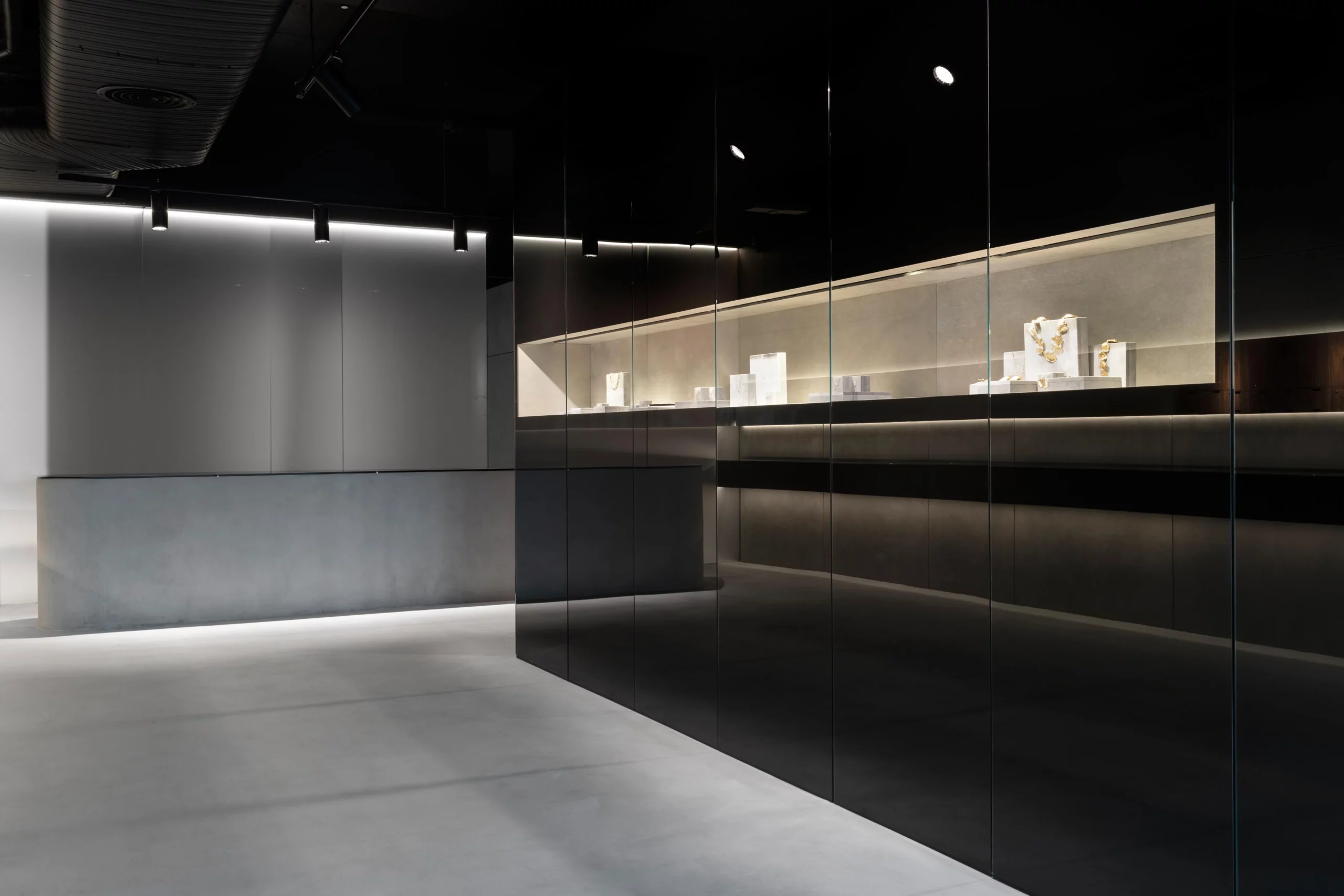
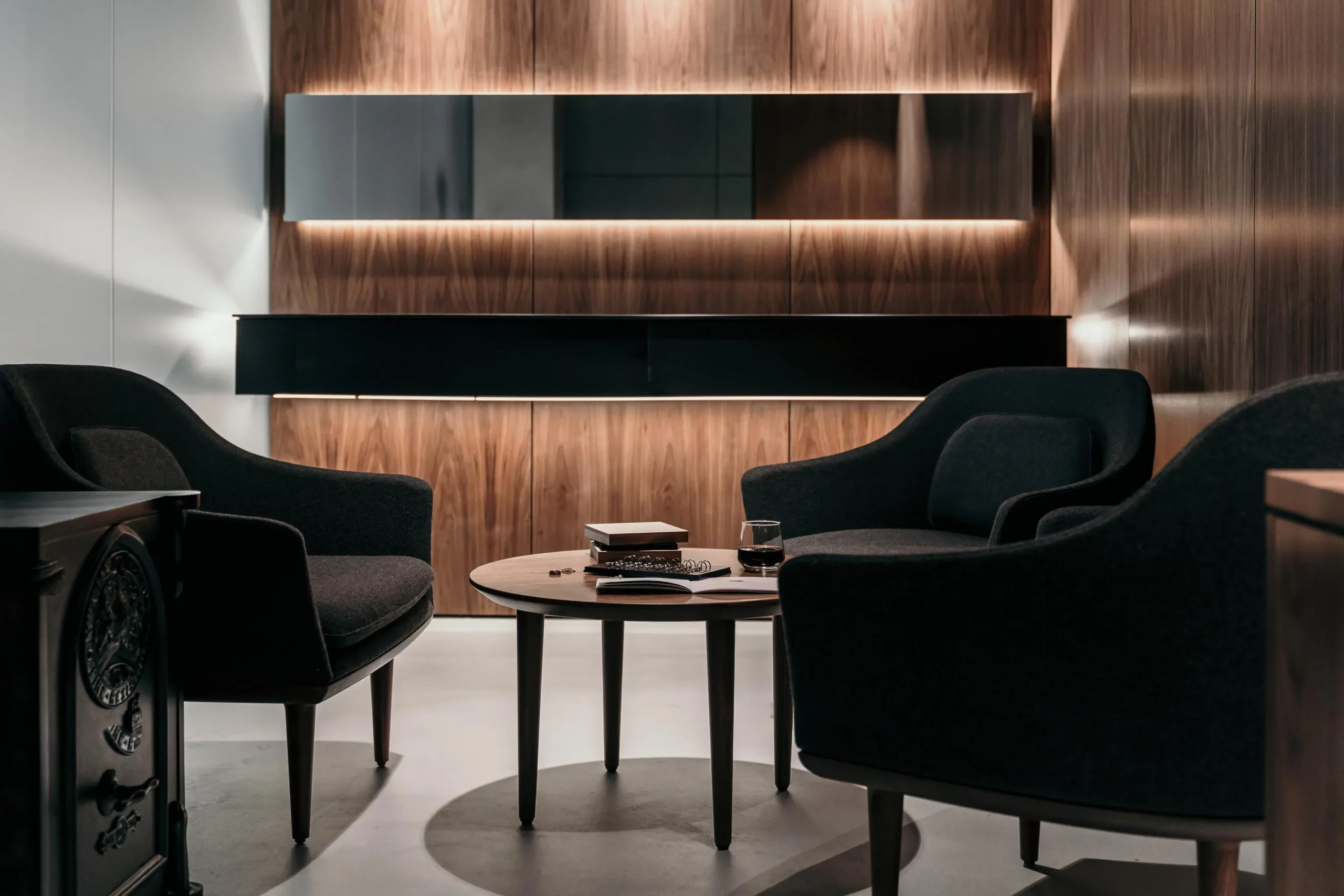
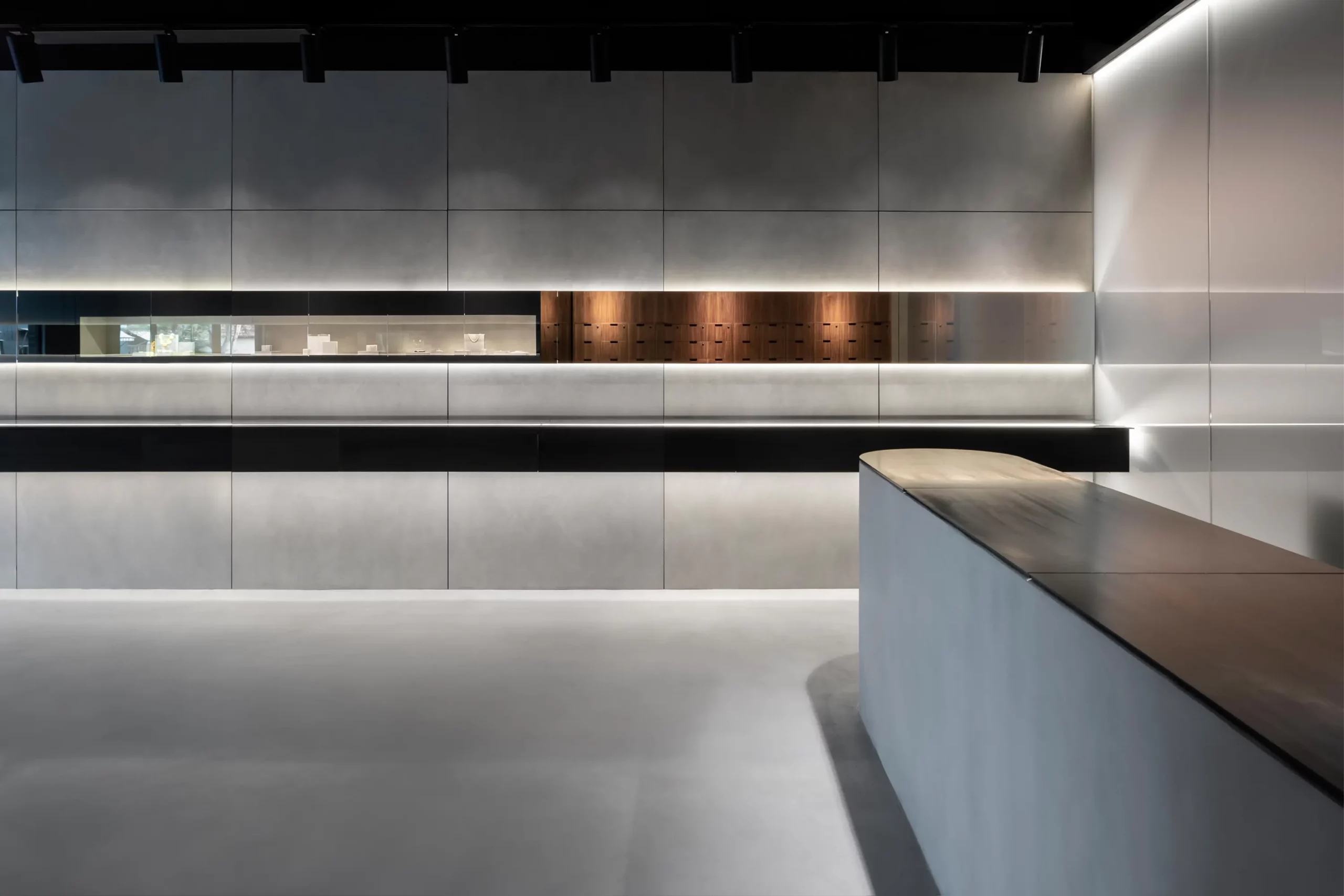
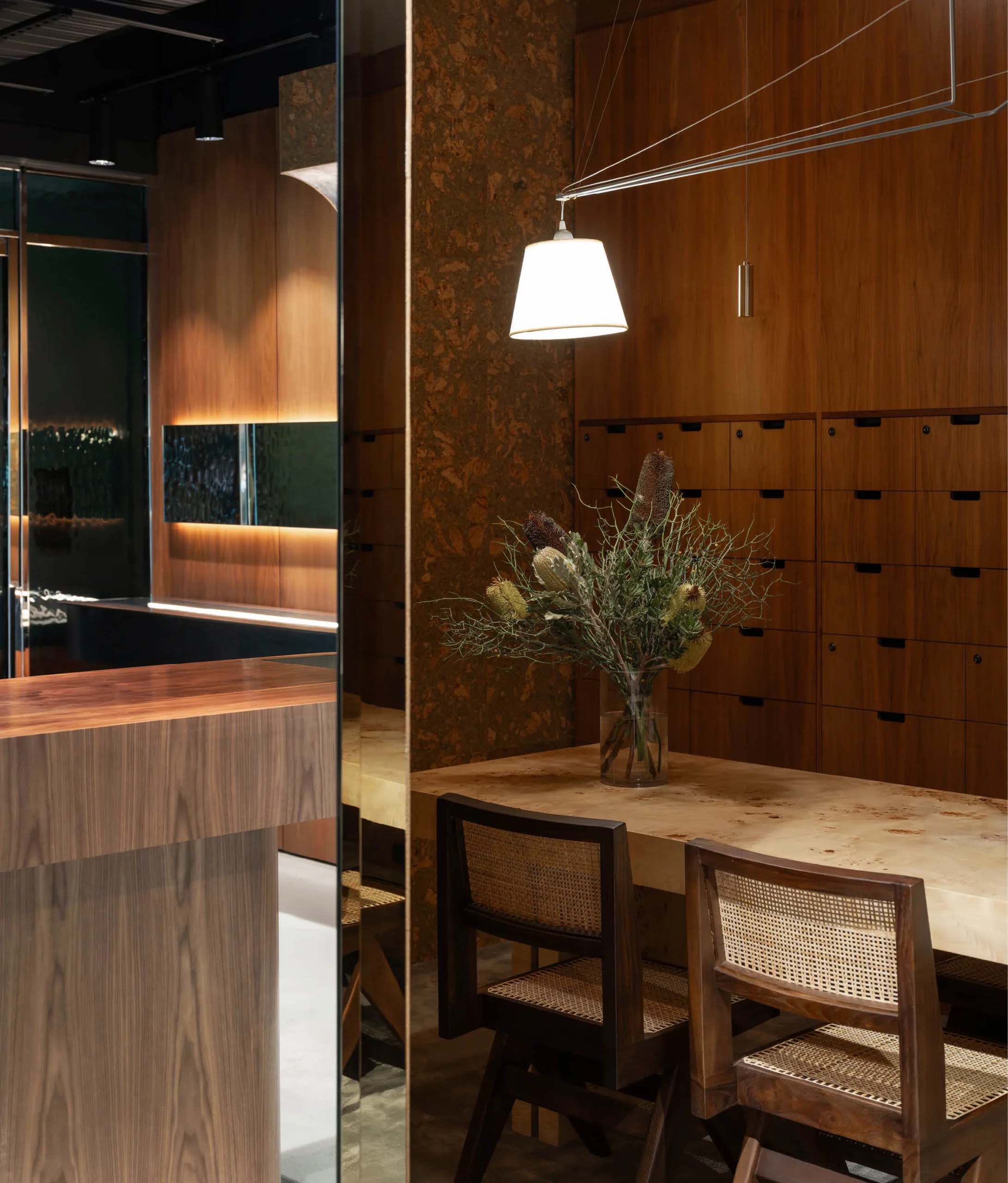
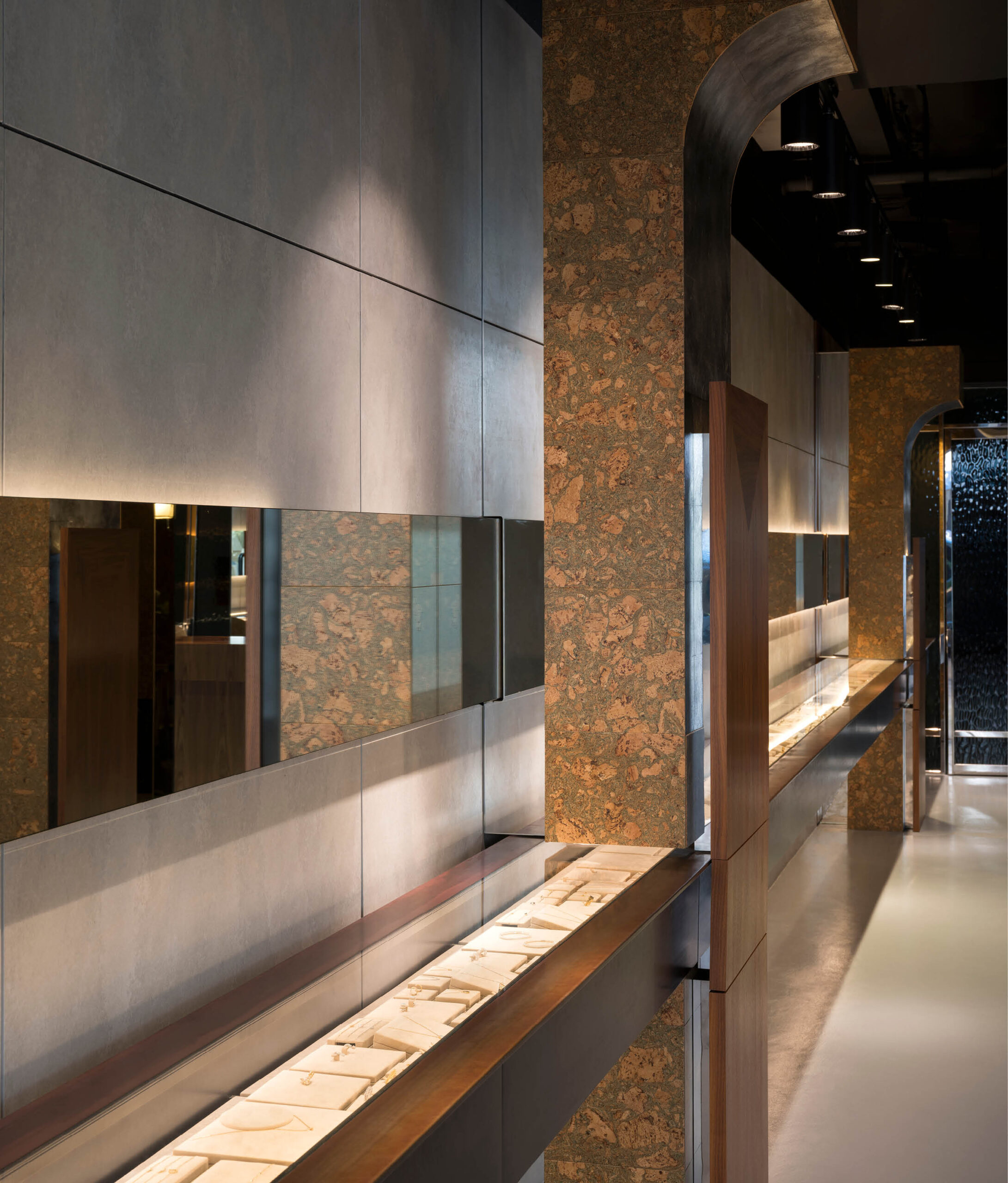
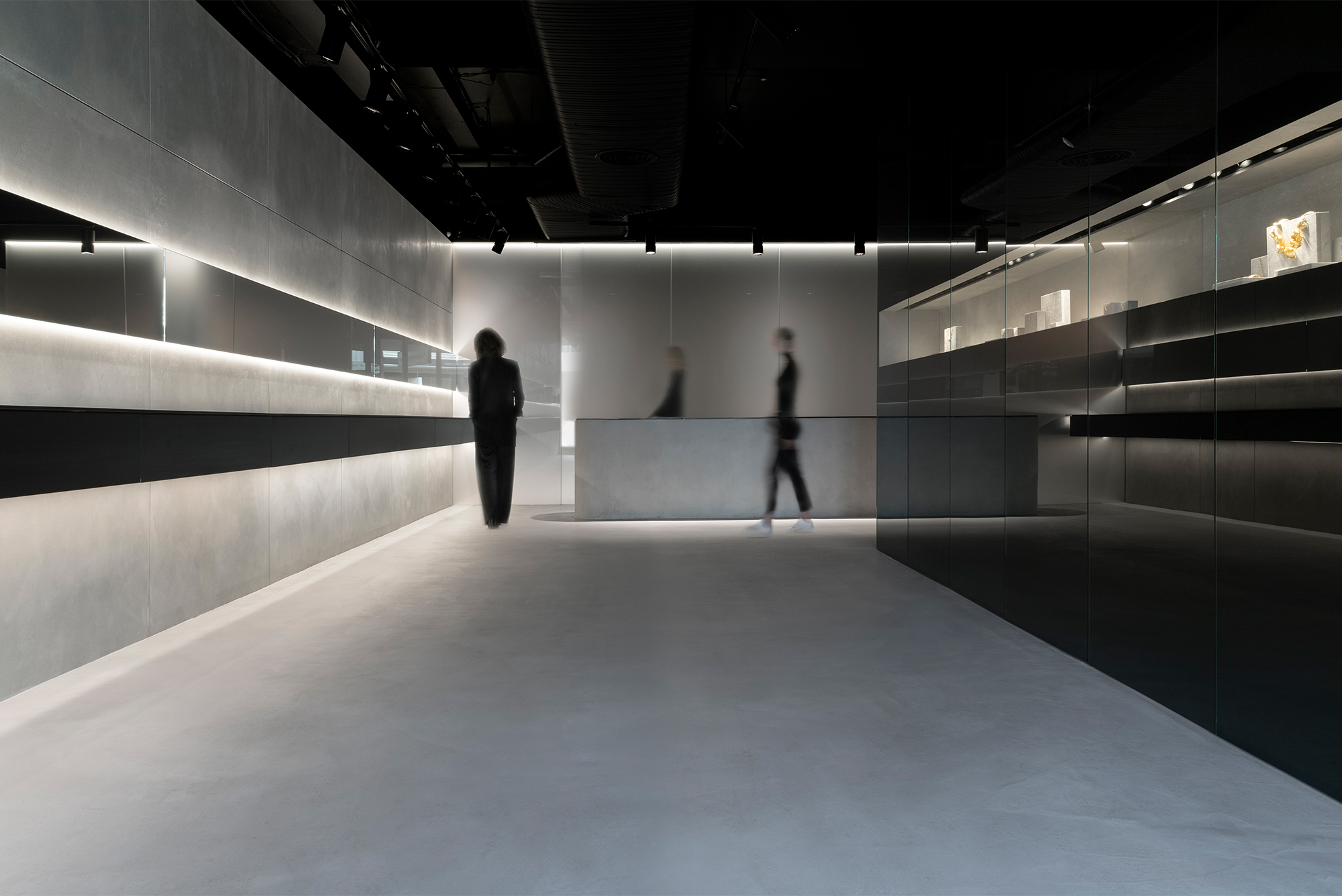
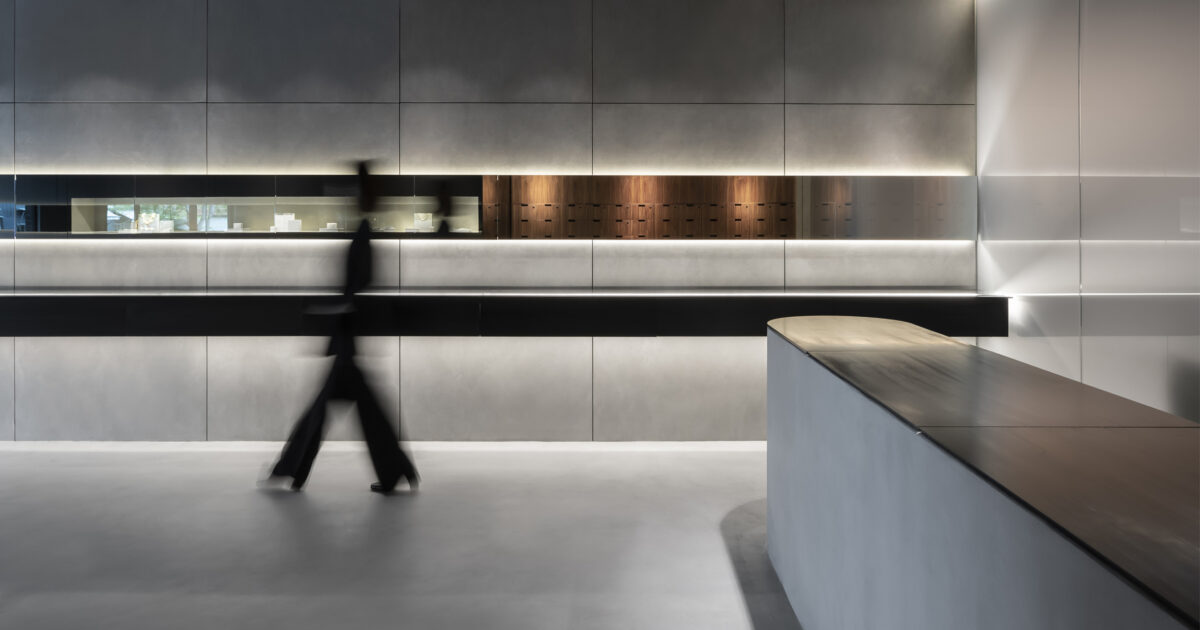
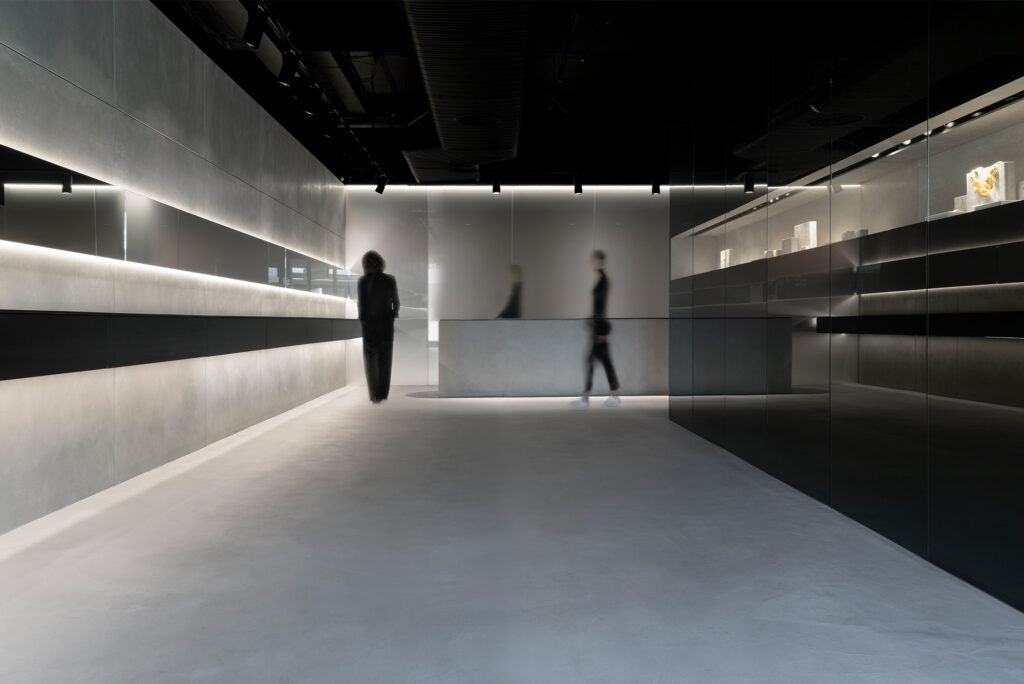
Sarah & Sebastian’s Mosman boutique is an 80 sqm refined retail interior that reimagines jewellery shopping as an intimate, museum-like experience. Designed to be intriguing yet welcoming, the space uses minimal materials, concrete, walnut, blackened steel, mirrors and glass, layered with strategic lighting to highlight handcrafted pieces and guide discovery.
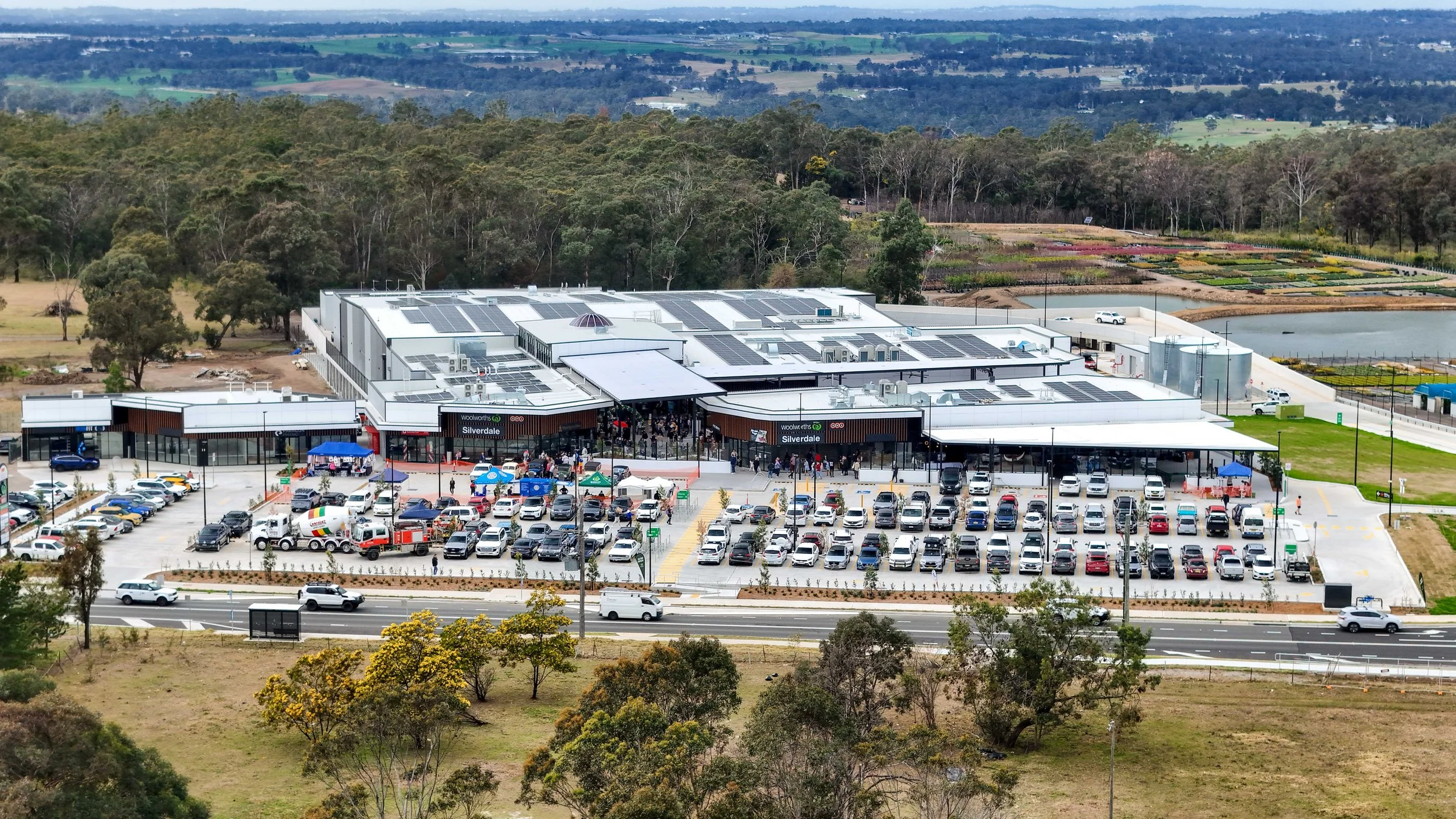
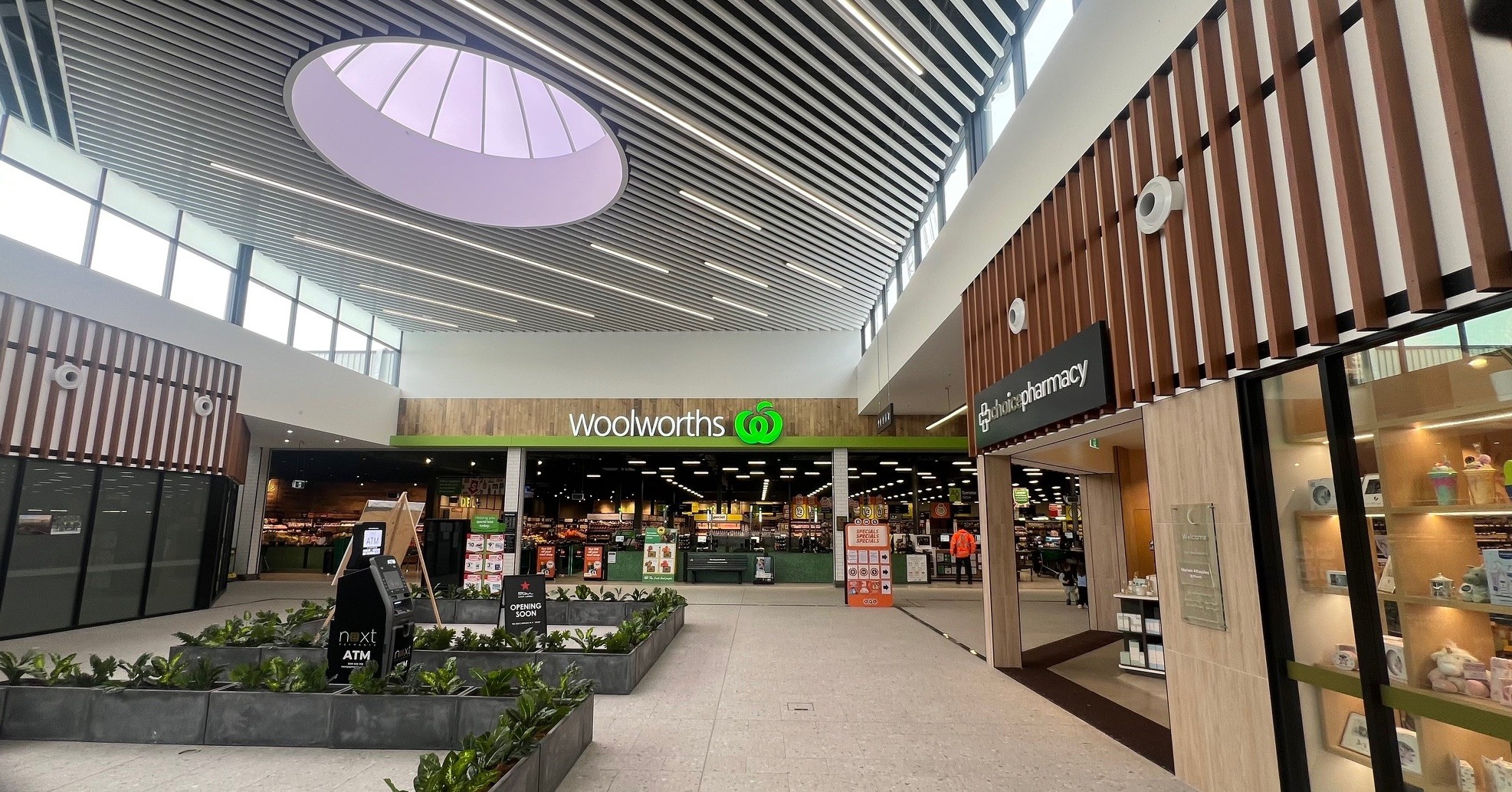
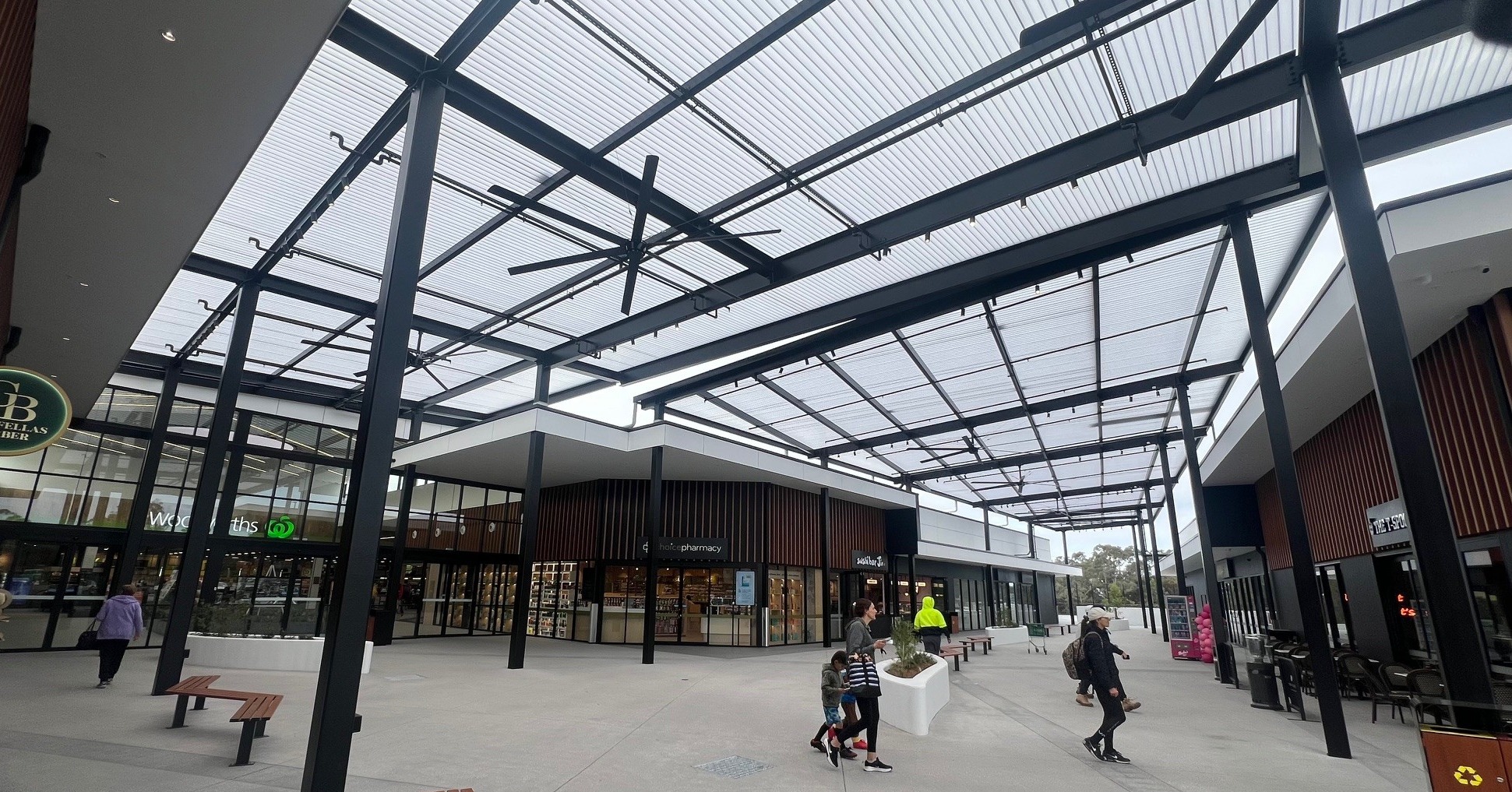
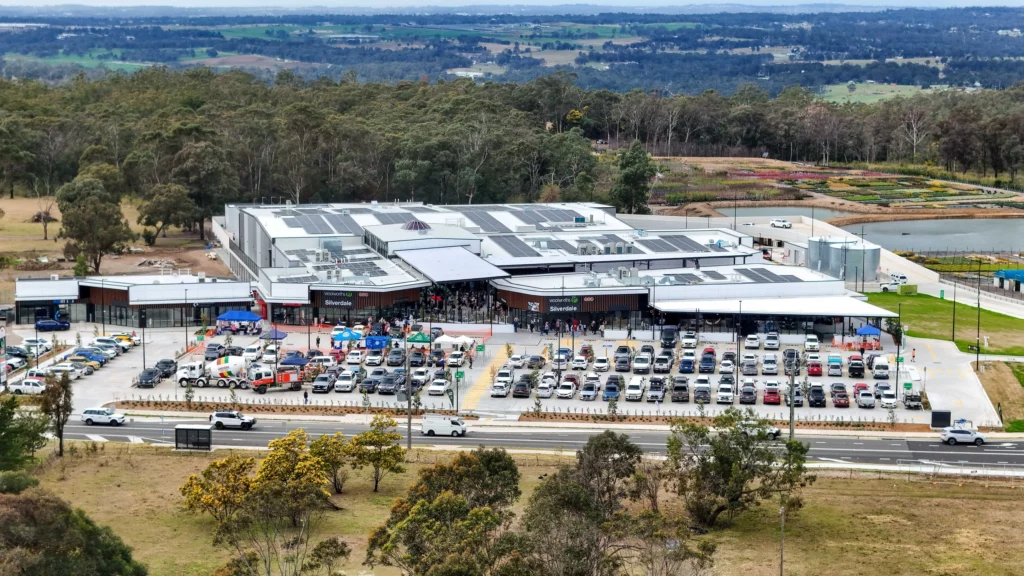
Silverdale Shopping Centre in Sydney’s outer west is an 8,500 sqm community retail hub redefining local convenience with a full-line Woolworths, 27 specialty stores, extensive high-roof basement parking and end-of-trip facilities.
The project replaced an older precinct to create a vibrant gathering place that supports jobs and services for residents, with design focus on functional retail streetscapes, accessible parking and modern amenity rather than traditional enclosed mall typologies. Its delivery overcame long-term planning challenges and reflects strong community investment and place-making ambitions.
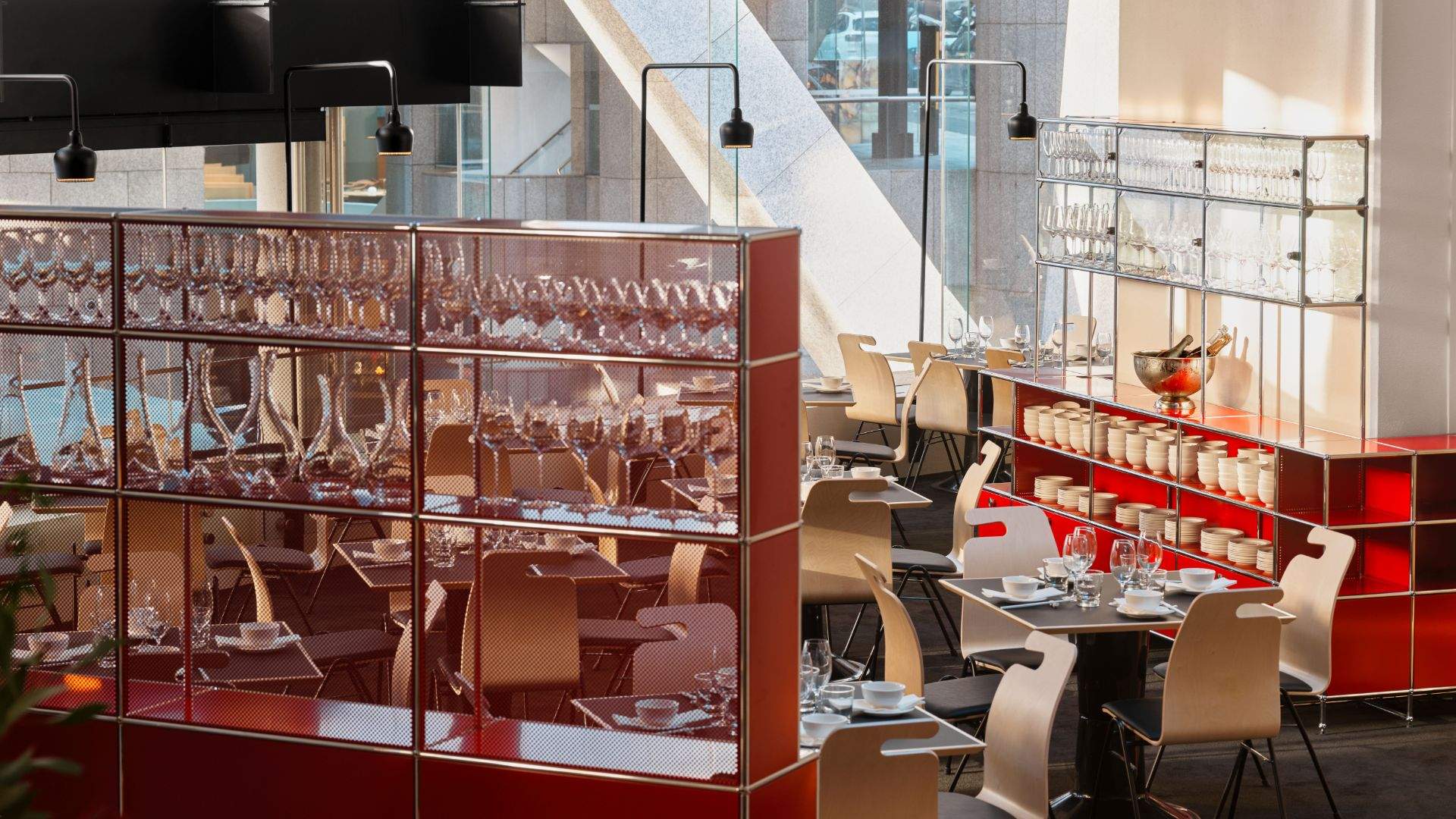
The Malaya Restaurant in Sydney is a refined reinterpretation of an iconic dining institution, balancing heritage with contemporary design. The project involved the careful design, delivery, and construction of a warm, layered interior that reflects Southeast Asian influences through materiality, texture, and lighting rather than overt theming.
Key design differences include a more intimate spatial layout, custom joinery, and improved acoustics, creating a quieter, more immersive dining experience while maintaining the restaurant’s long-standing identity and cultural significance.
A highly complex project in a live, high-traffic environment, from car parks and loading docks to lift lobbies, completing major demolition and construction without disrupting tenants.
The delivery team brought the design vision to life with state-of-the-art green HVAC technology, a structural steel skeleton supporting a trafficable void for service access, and fully programmable lighting and AV. The upgrade also introduced remotely controlled secure lockers, 17 showers, premium grooming and hydration amenities, plus two secure bicycle zones for storage and servicing.
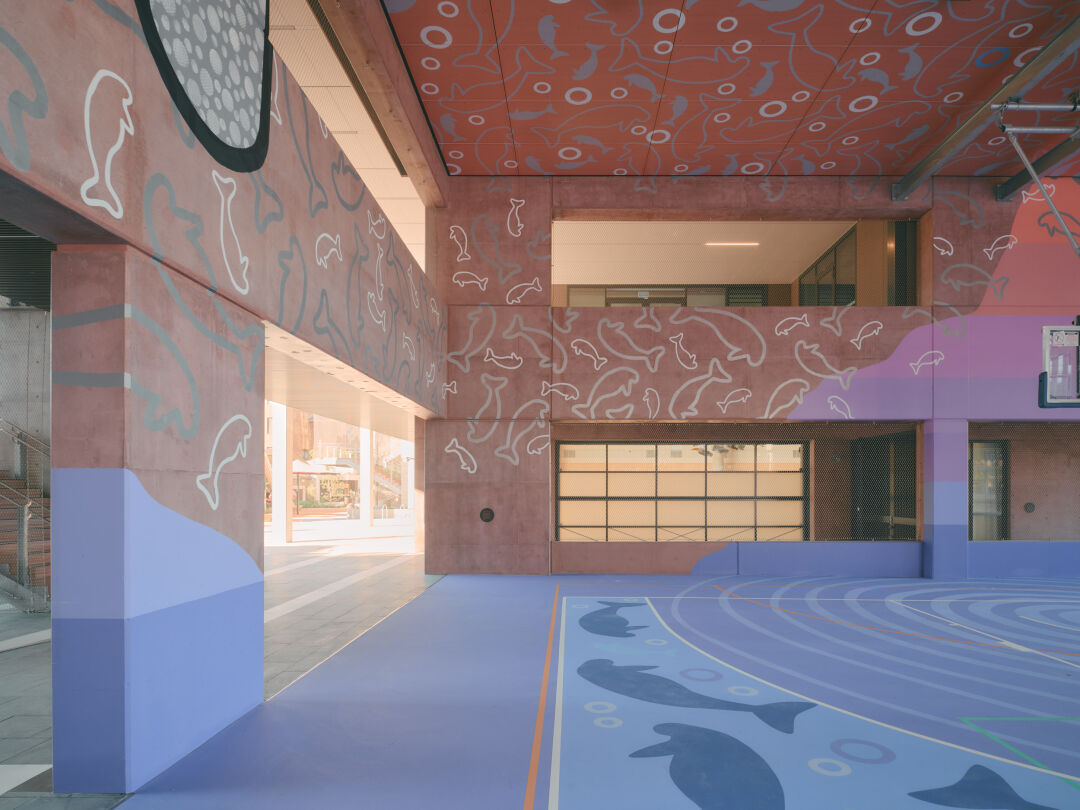
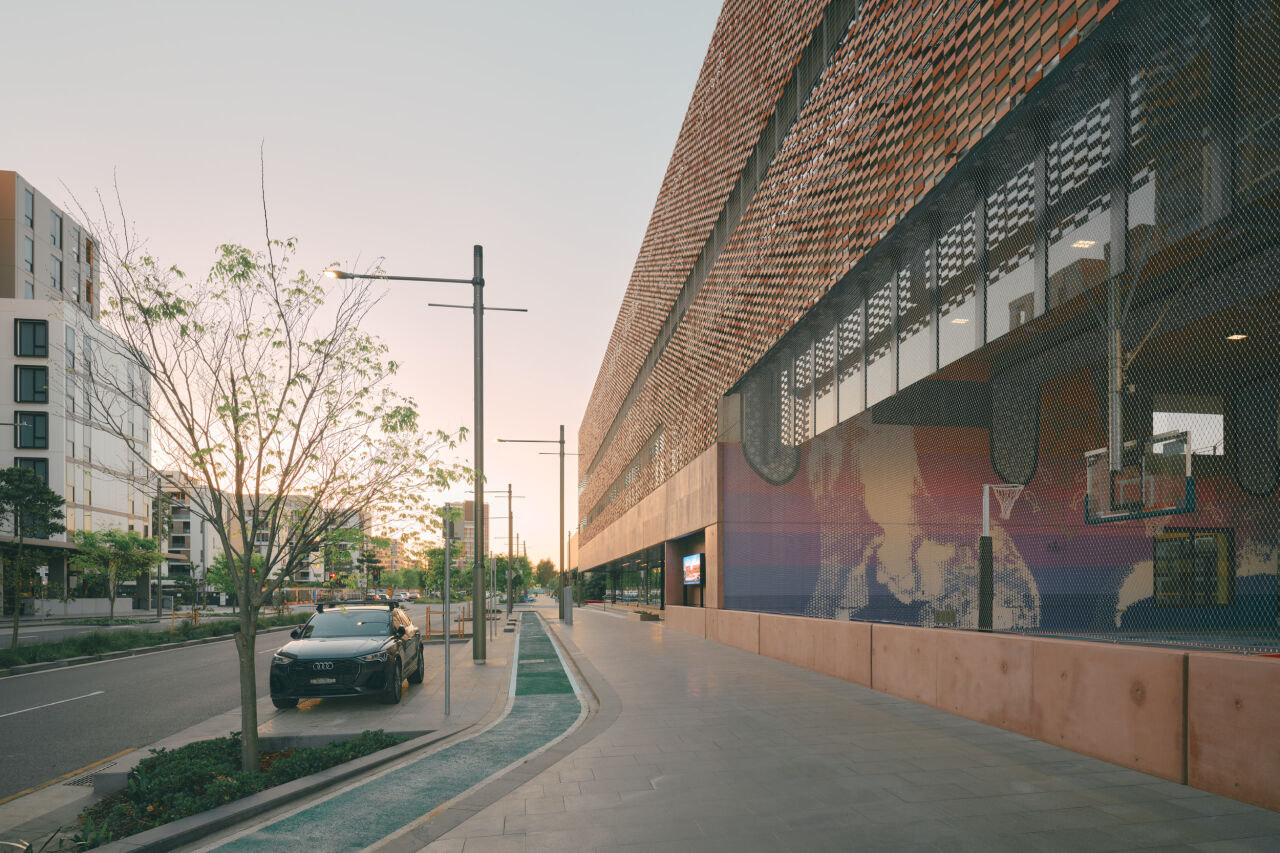
The Green Square Community Space is a visionary four-storey, 5,000 m² education and civic hub in Sydney’s fastest-growing precinct.
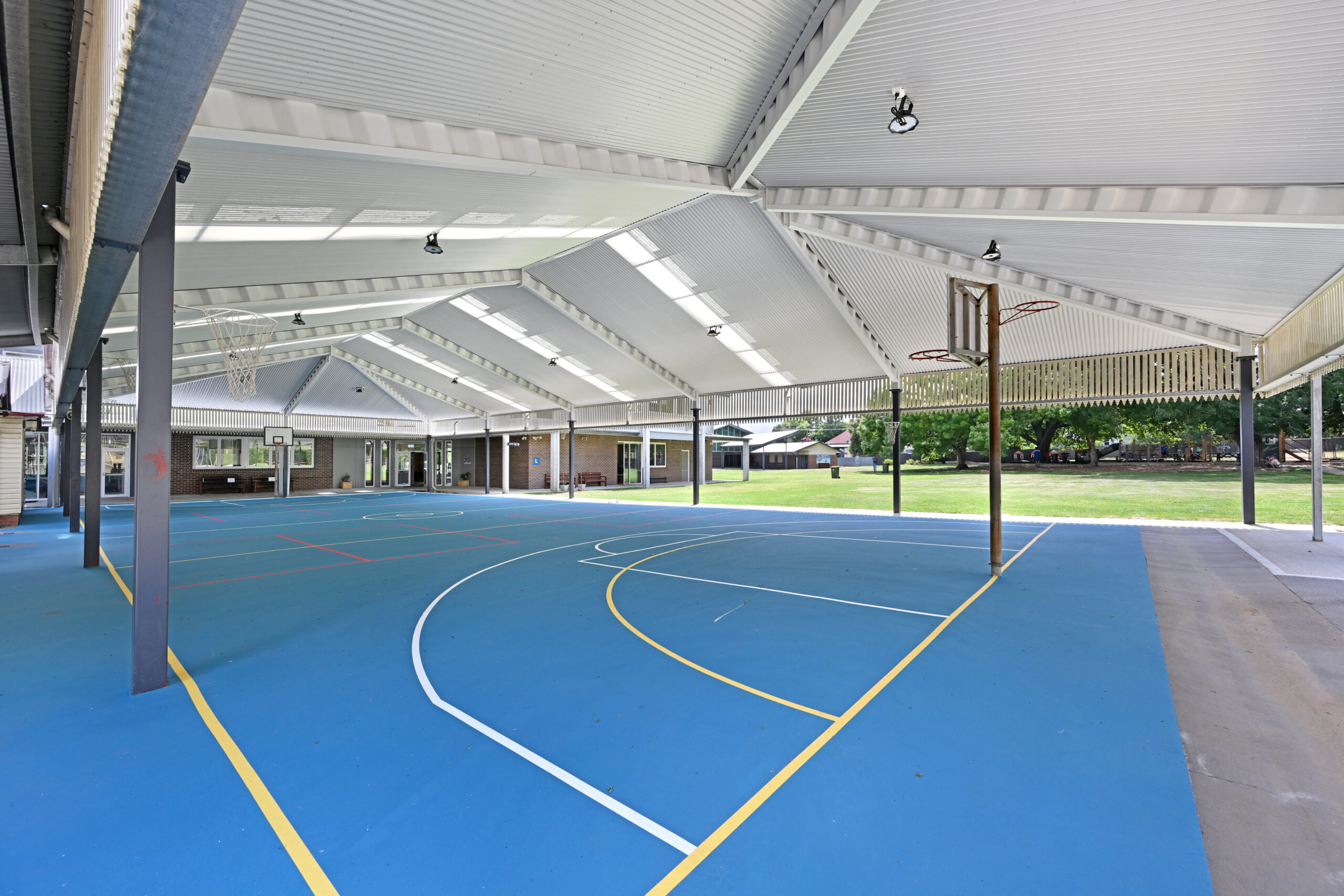
Ground-level multipurpose halls and a covered outdoor games court support basketball, netball, volleyball and community events, while shared halls and hireable spaces foster connection day and night. The design integrates flexible learning spaces with public-facing amenities and striking Indigenous art The Belly of the Feast, activating the street edge and redefining how schools engage and serve an urban community.
Newtown’s 1,100 m² gym offers a local fitness haven with an emphasis on flexibility and community. The interior balances industrial finishes with warm, inviting textures, while carefully zoned studios support group classes, personal training, and recovery.
The design maximizes natural light and circulation in a compact footprint, creating a sense of spaciousness despite the urban site. Custom joinery and clever storage solutions enhance functionality. Every element reflects One Playground’s commitment to creating engaging, sustainable, and visually striking spaces that inspire members and elevate the boutique fitness experience.
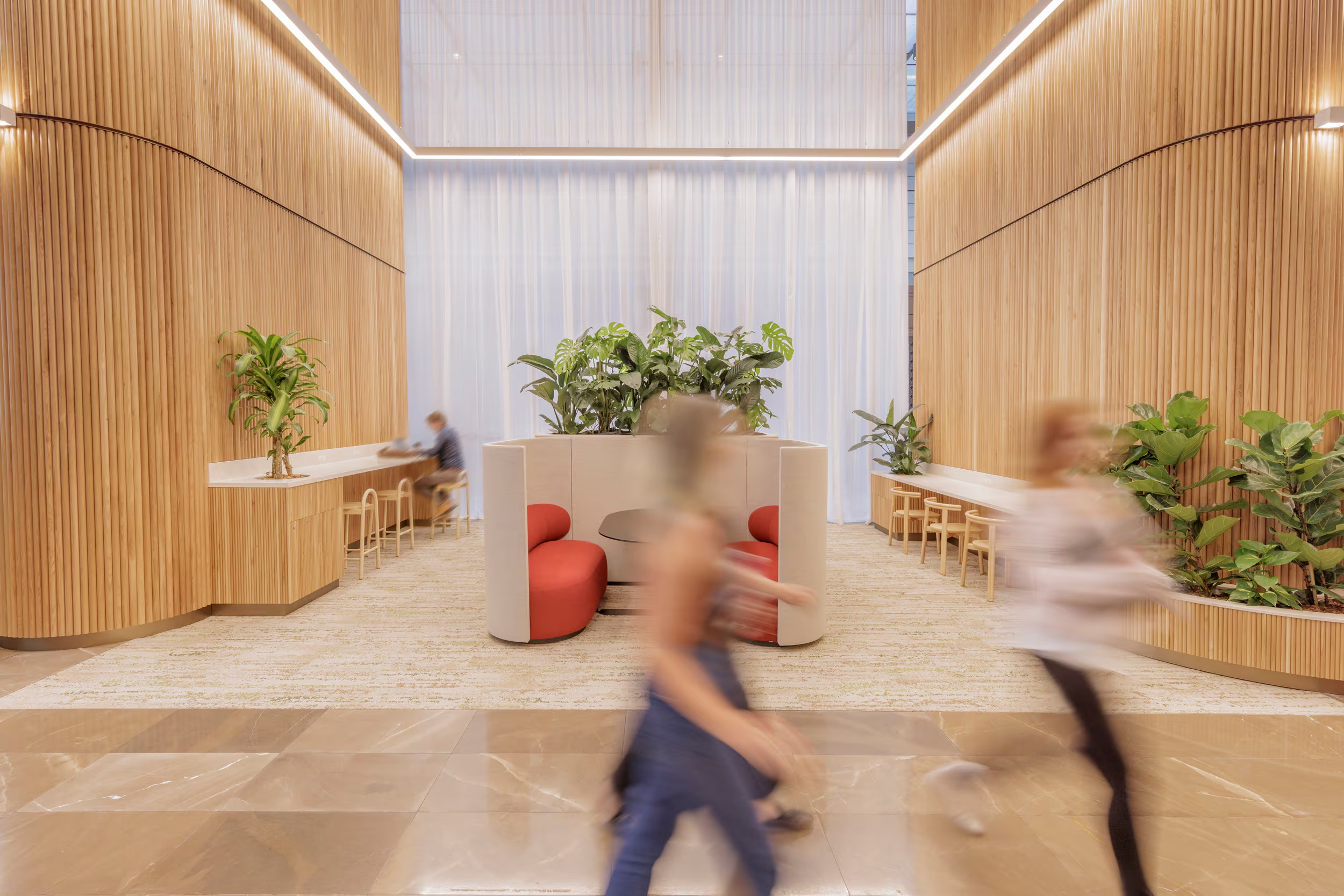
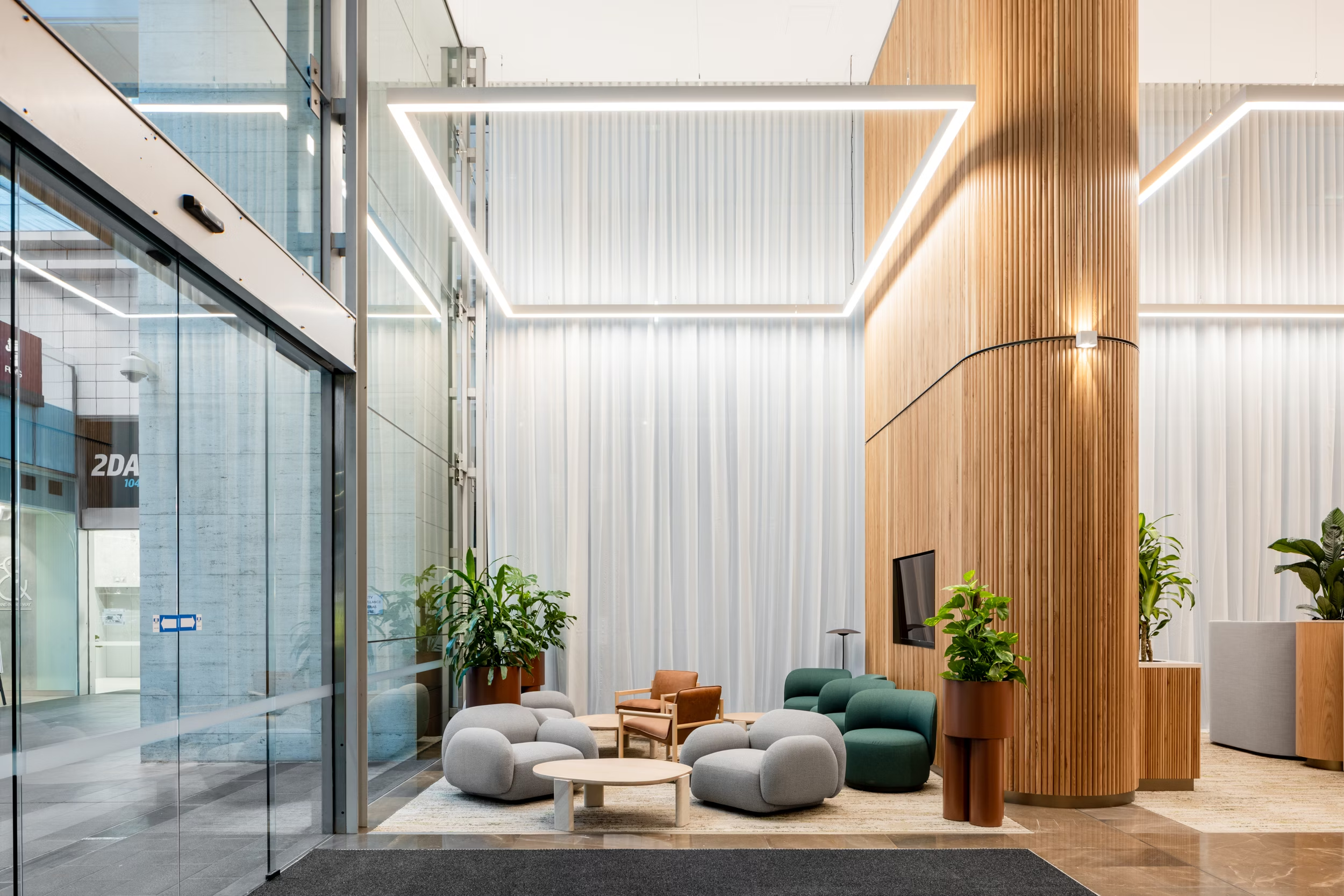
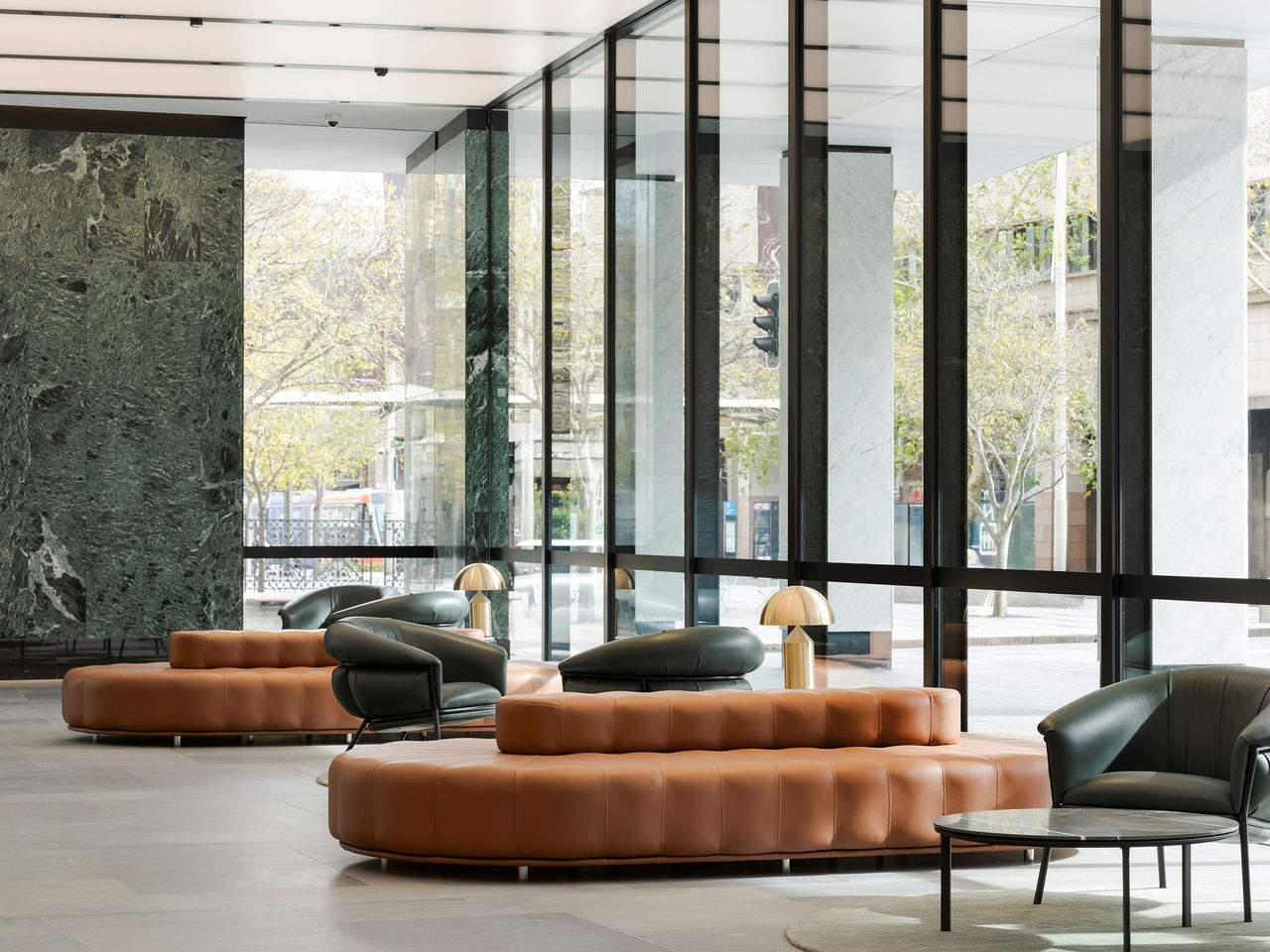
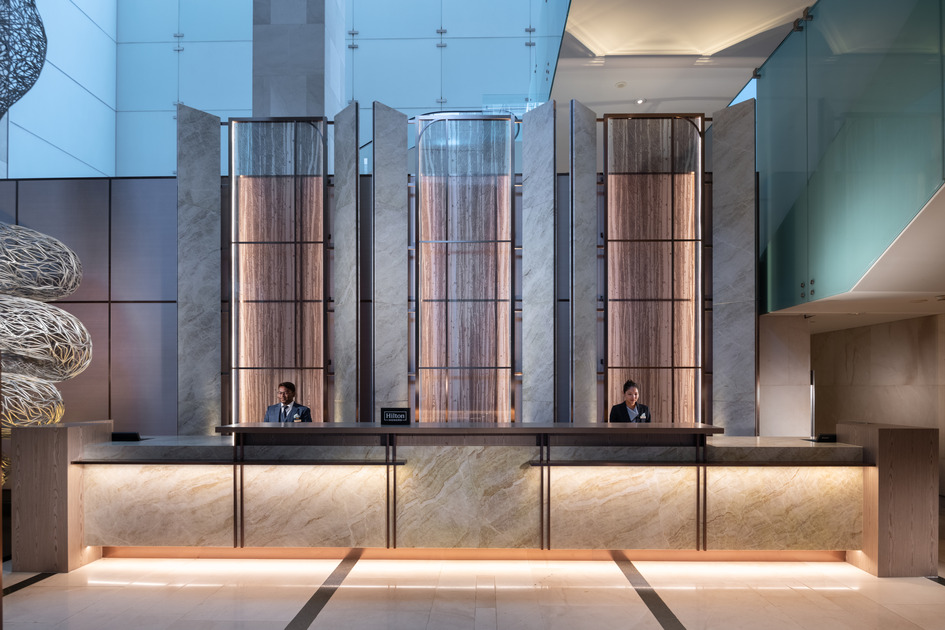
This project transformed the existing entry experience into a contemporary, premium-grade arrival space aligned with the building’s repositioning strategy.
The project required careful staging and construction management within a live commercial environment to minimise disruption to tenants and public access. Coordination between architectural, structural, services and façade interfaces was critical to achieving the design intent.
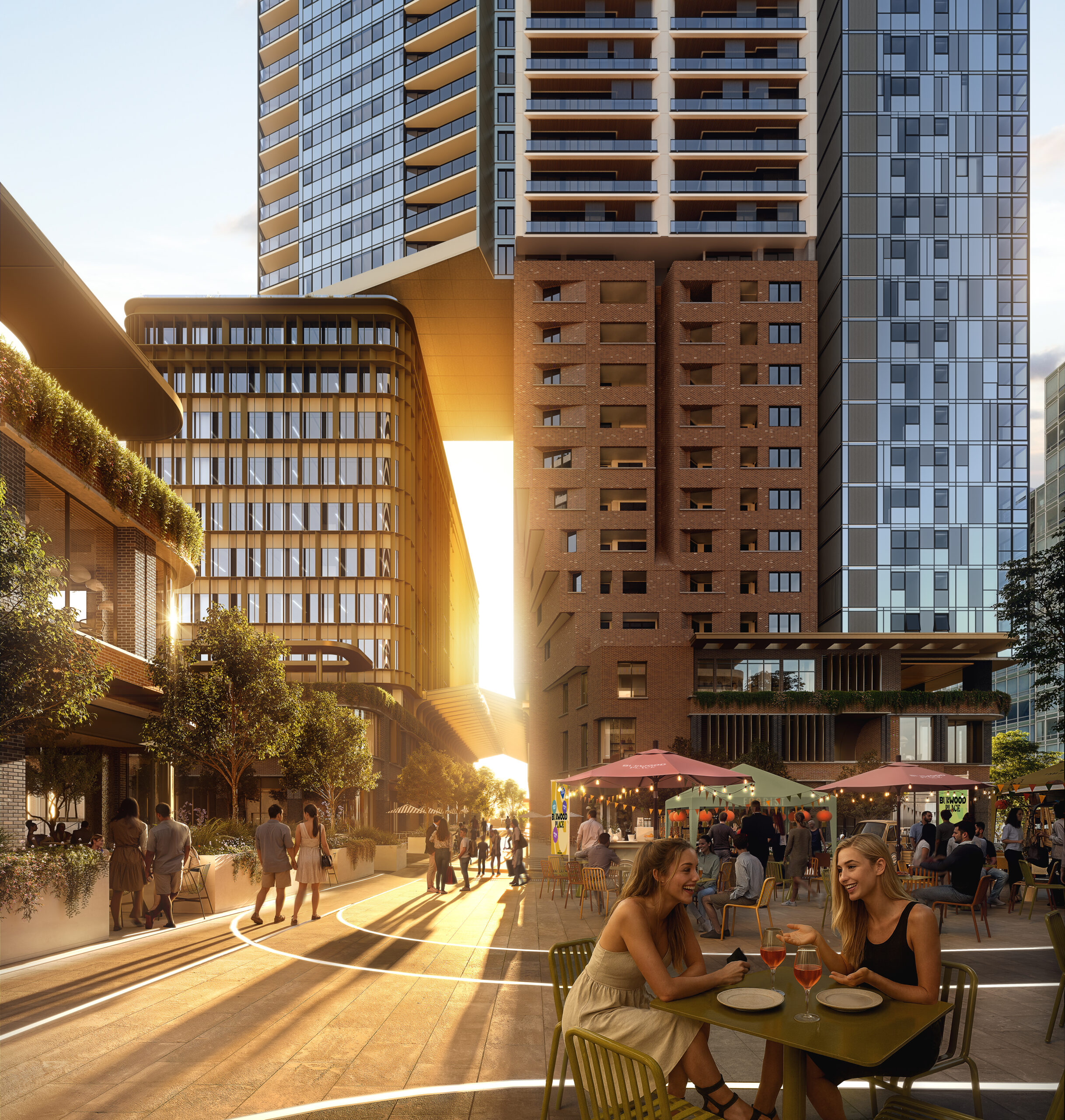
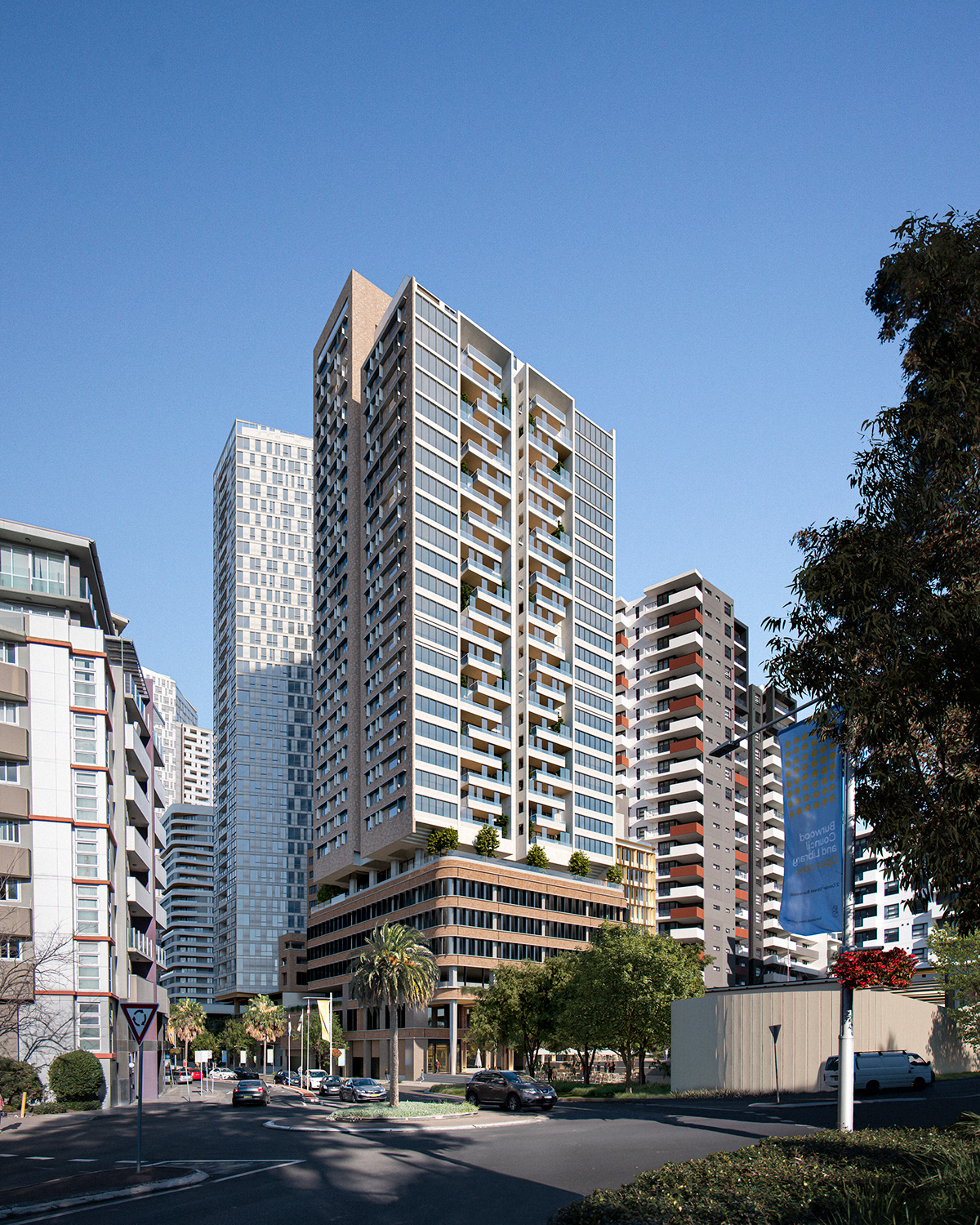
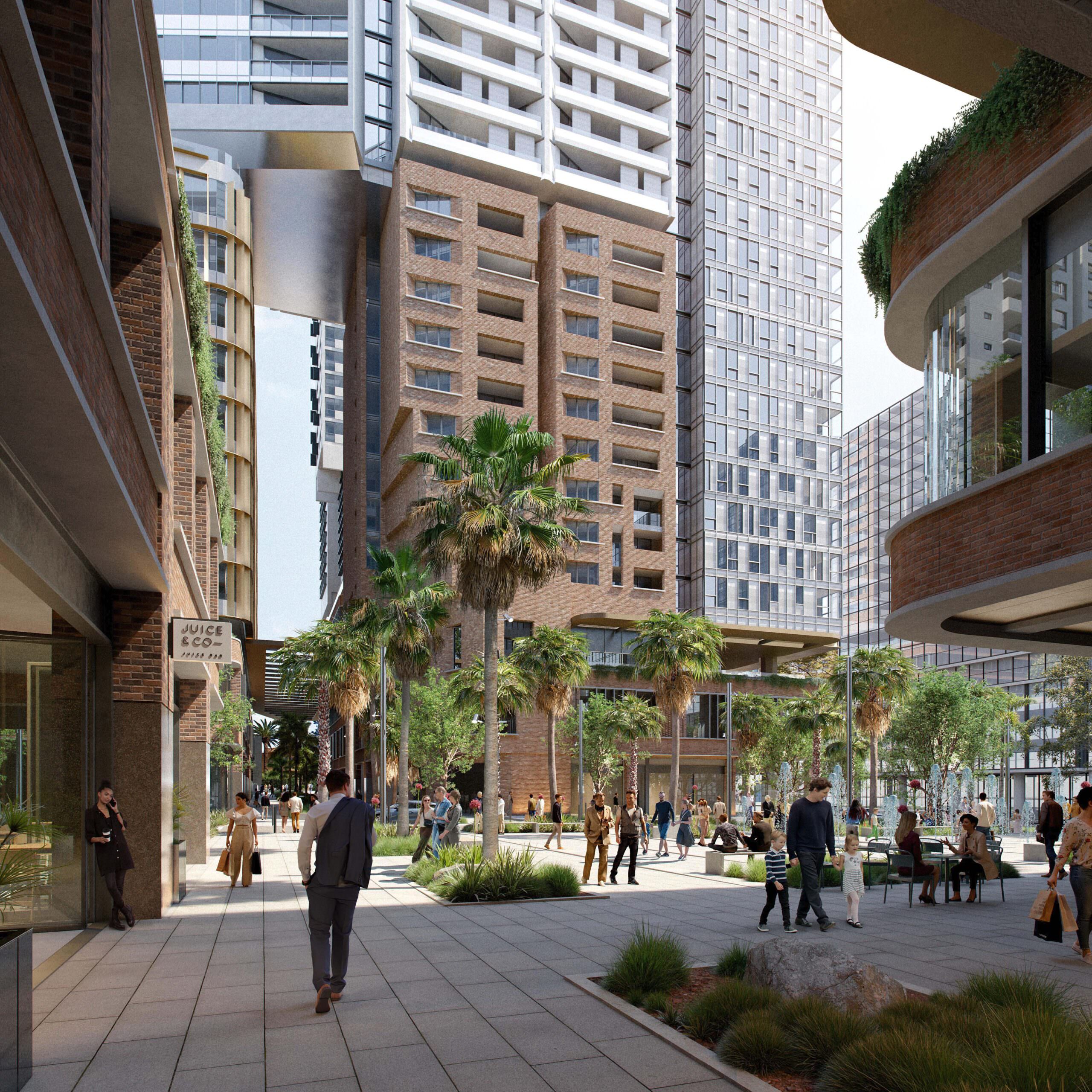
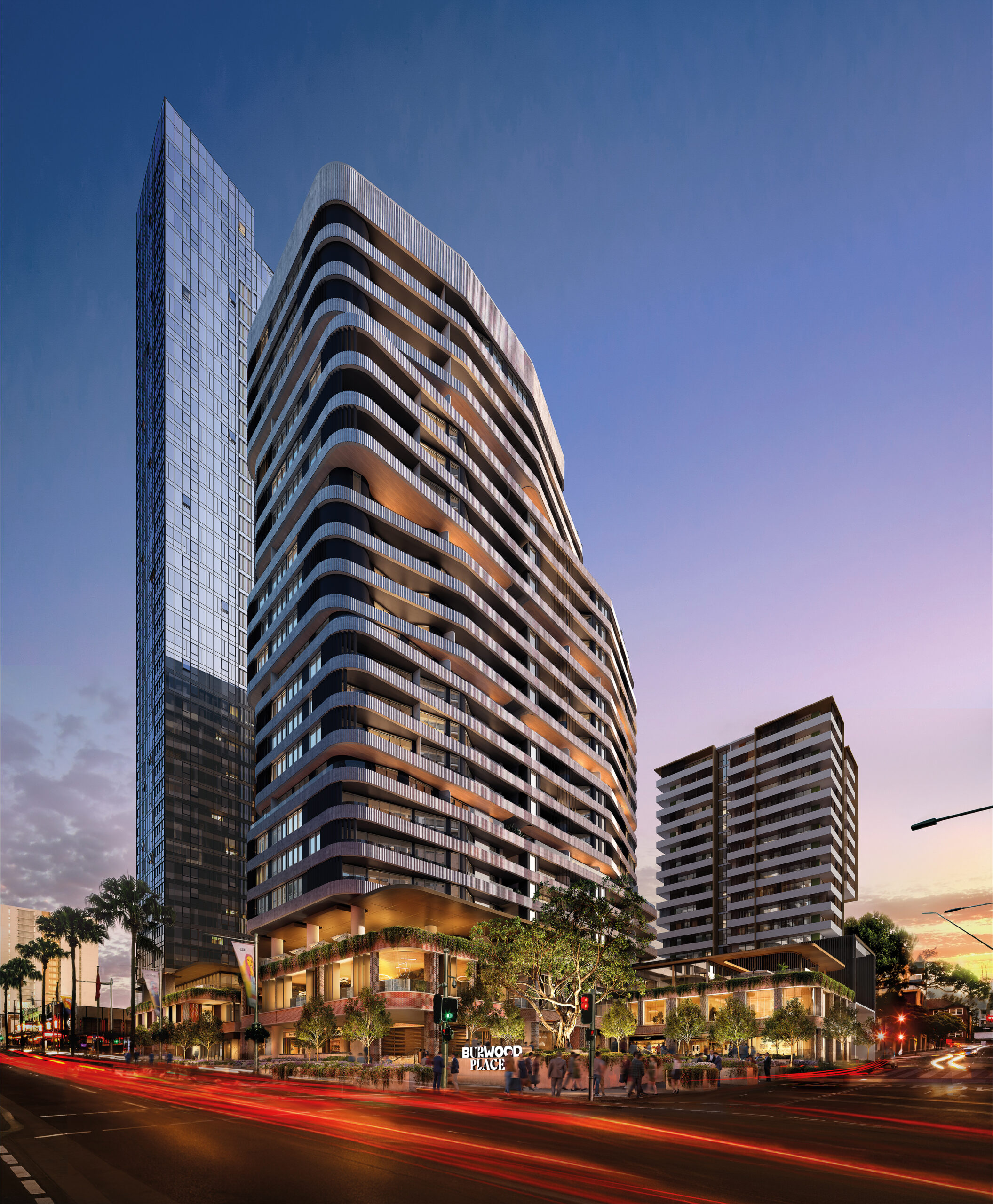
Burwood Place, the redevelopment of Burwood Plaza, is a $2.5 billion mixed-use precinct underway in Sydney’s Inner West, designed as a transit-oriented “5-minute neighbourhood” integrating 27,000 m² of retail, 14,000m² of commercial, over 1,000 new homes, public park and civic spaces close to Burwood Station.
Its construction prioritises urban connectivity, placemaking and diverse uses, transforming two CBD blocks into a dynamic community with a new library, town square and cultural hub.
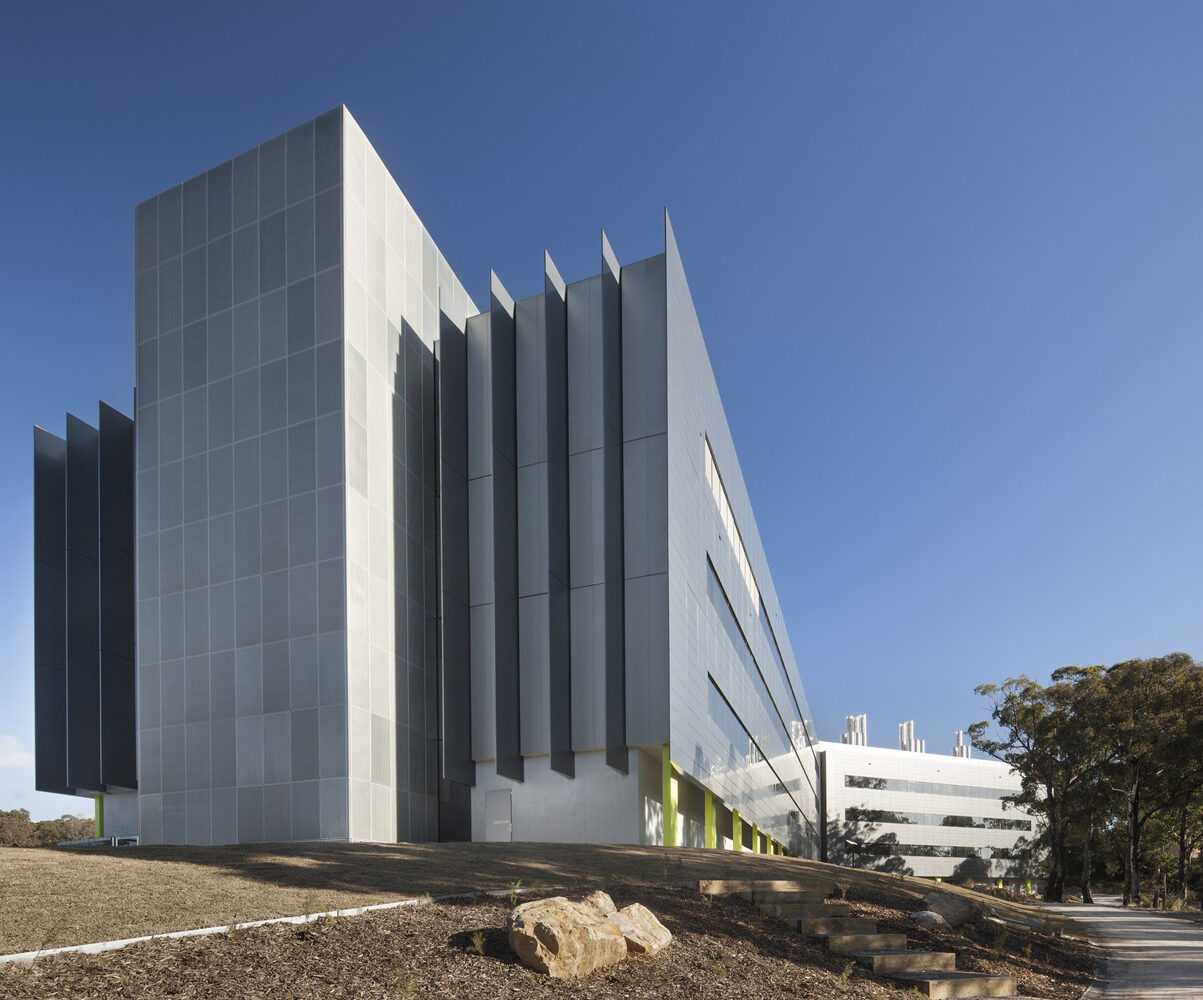
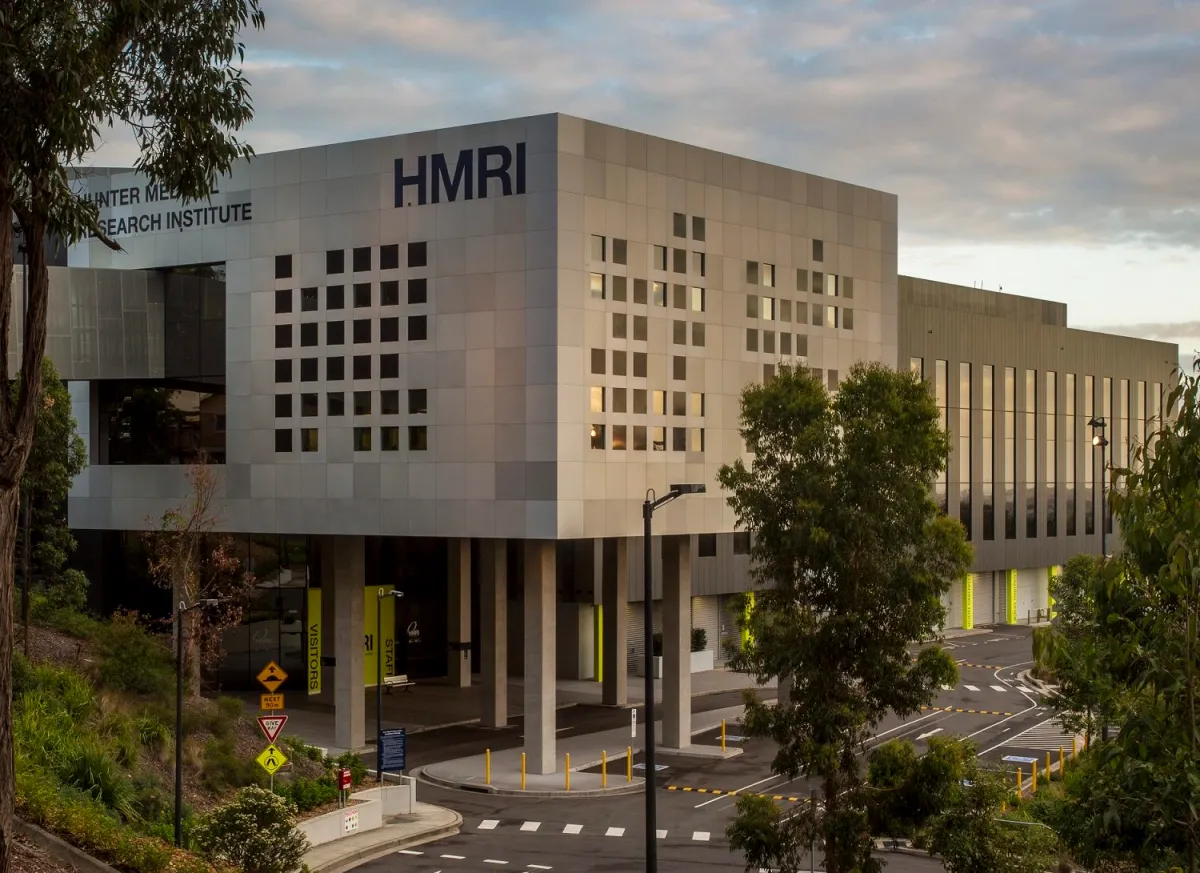
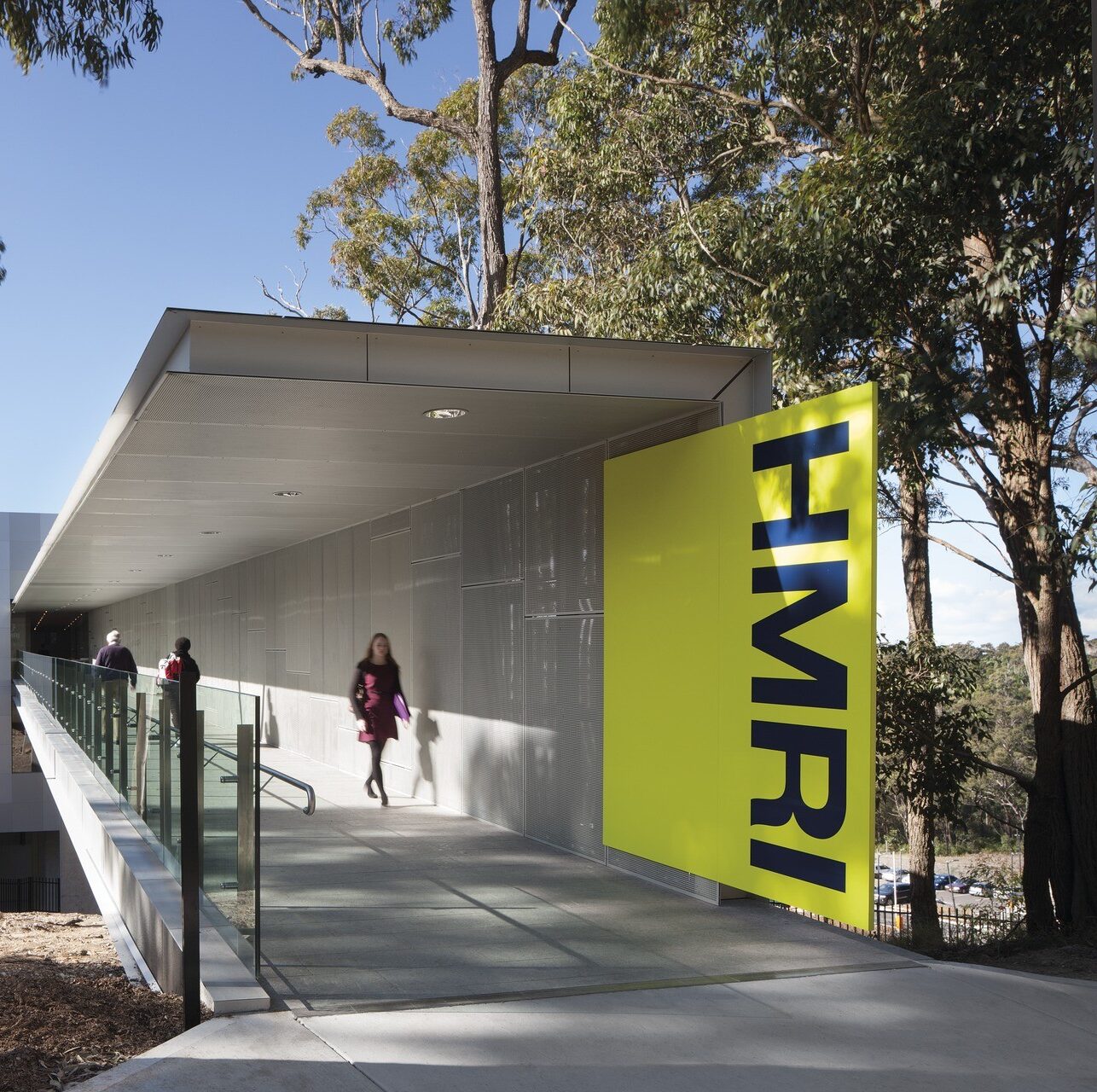
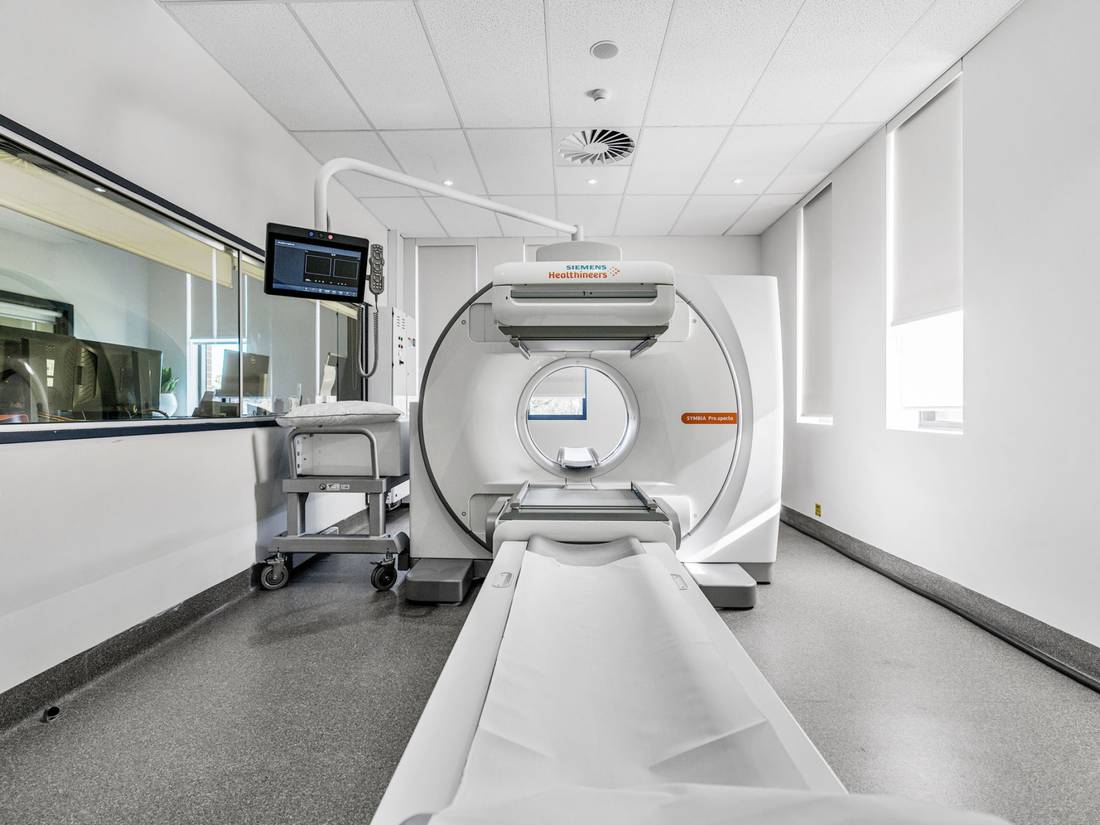
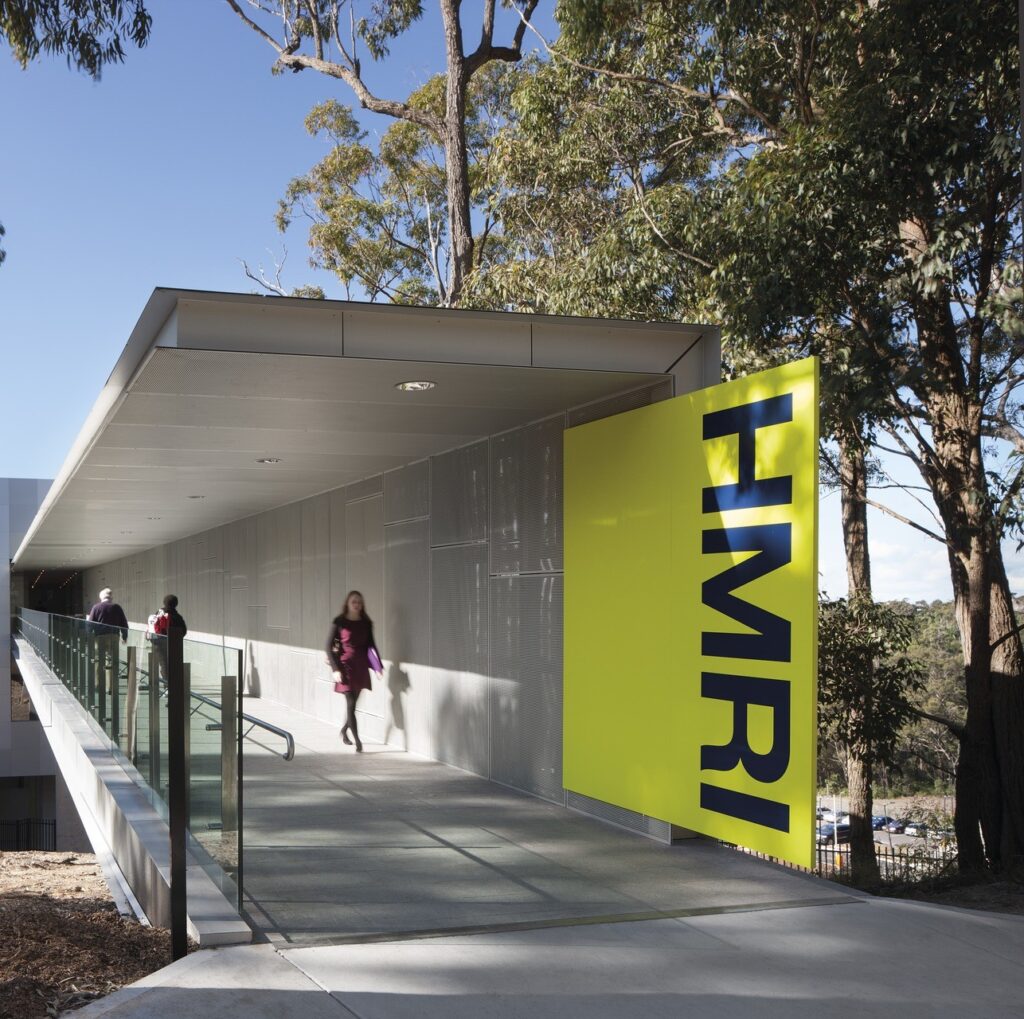
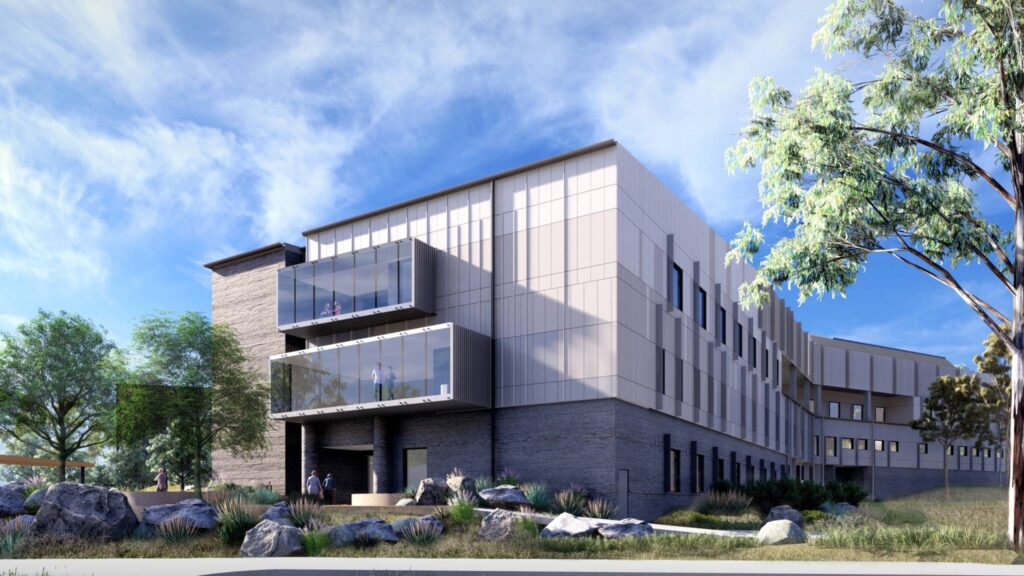
The Hunter Medical Research Institute (HMRI), is a four-storey clinical building of approximately 12,000 m², boosting regional healthcare capacity with an enlarged emergency department, additional medical and surgical inpatient beds, expanded operating theatres, a Critical Care Unit and a cardiac catheterisation lab.
Designed to interface with existing hospital operations, construction minimised disruption while enhancing clinical flexibility, innovative structural and services planning improved vibration control and future adaptability.
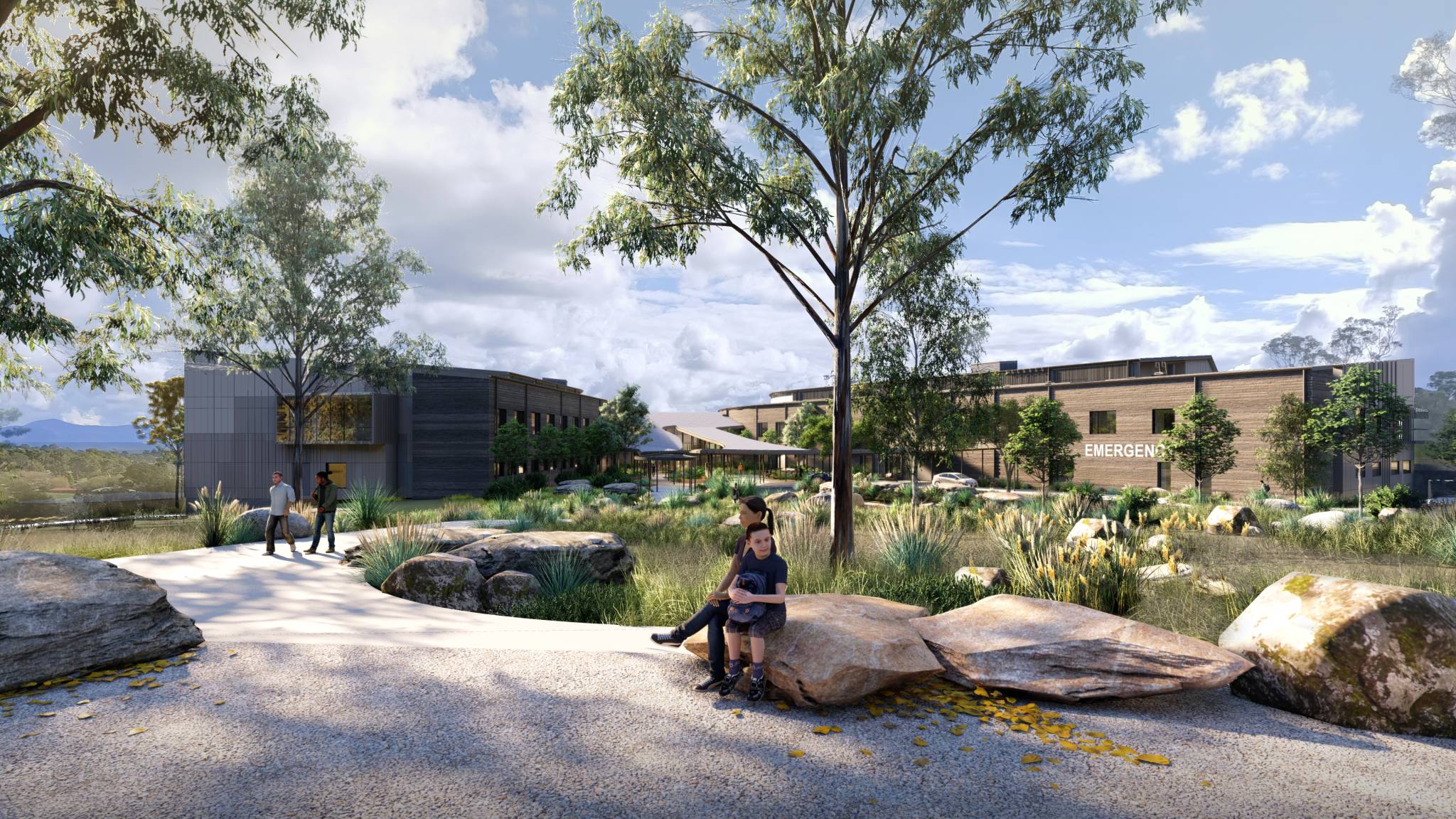
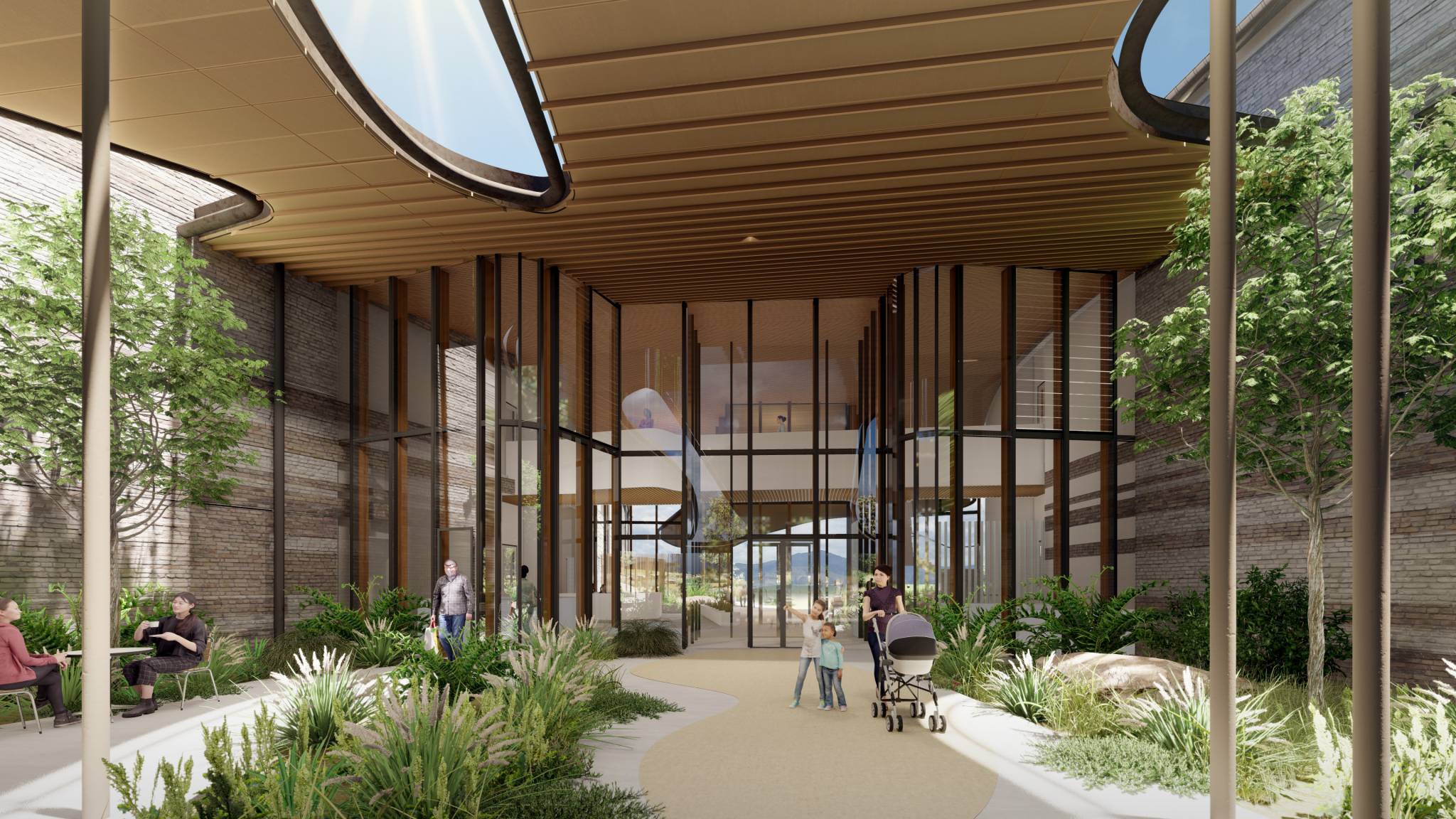
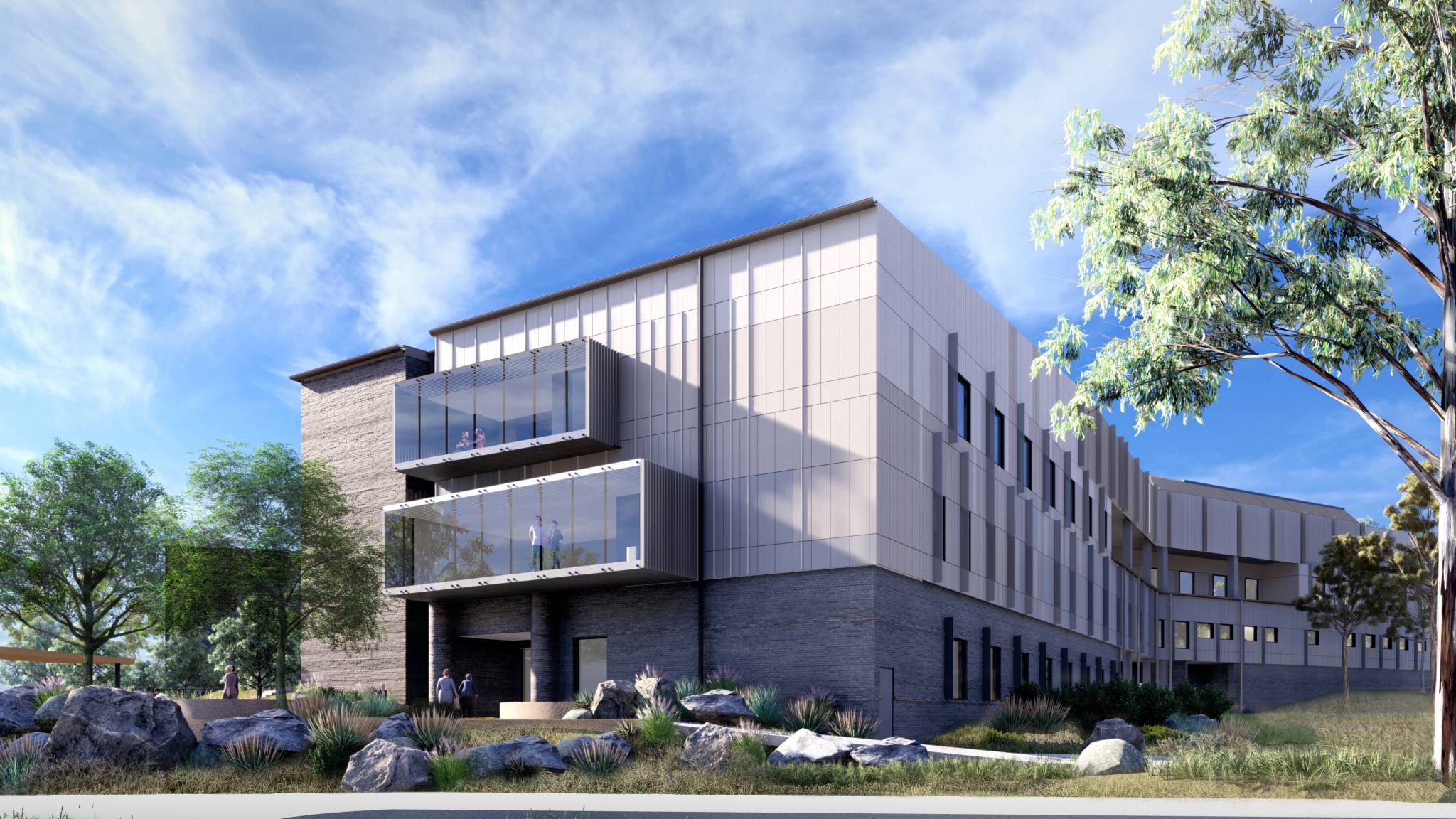
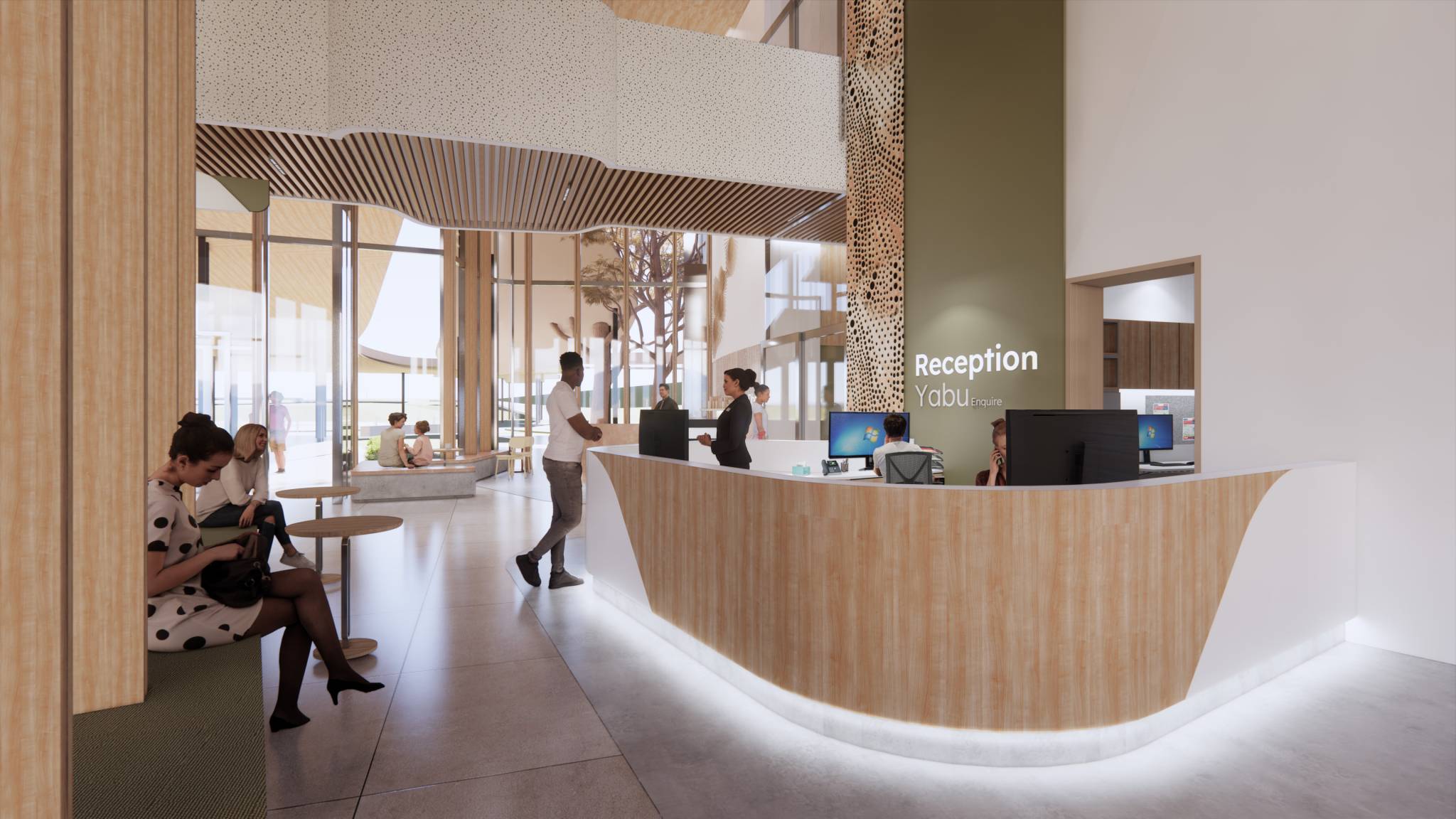
The new Eurobodalla Regional Hospital in Moruya, NSW is a four-storey, $330 million purpose-built Level 4 health facility designed to centralise and expand care for the Eurobodalla Shire, replacing smaller local hospitals.
Its design integrates community input and cultural engagement with local Aboriginal knowledge to create welcoming spaces and wayfinding, while offering expanded services including emergency, ICU, maternity, paediatrics, imaging and surgical theatres. Construction has topped out and internal fit-outs are underway, with completion targeted for 2027. The project reflects modern, flexible healthcare design tuned to regional needs.
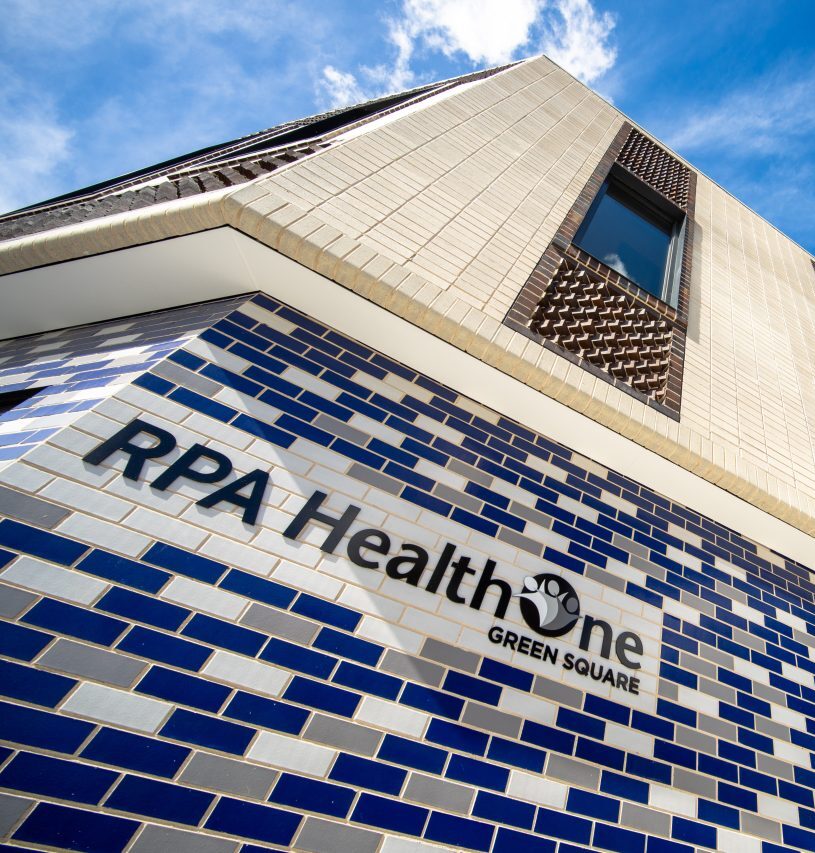
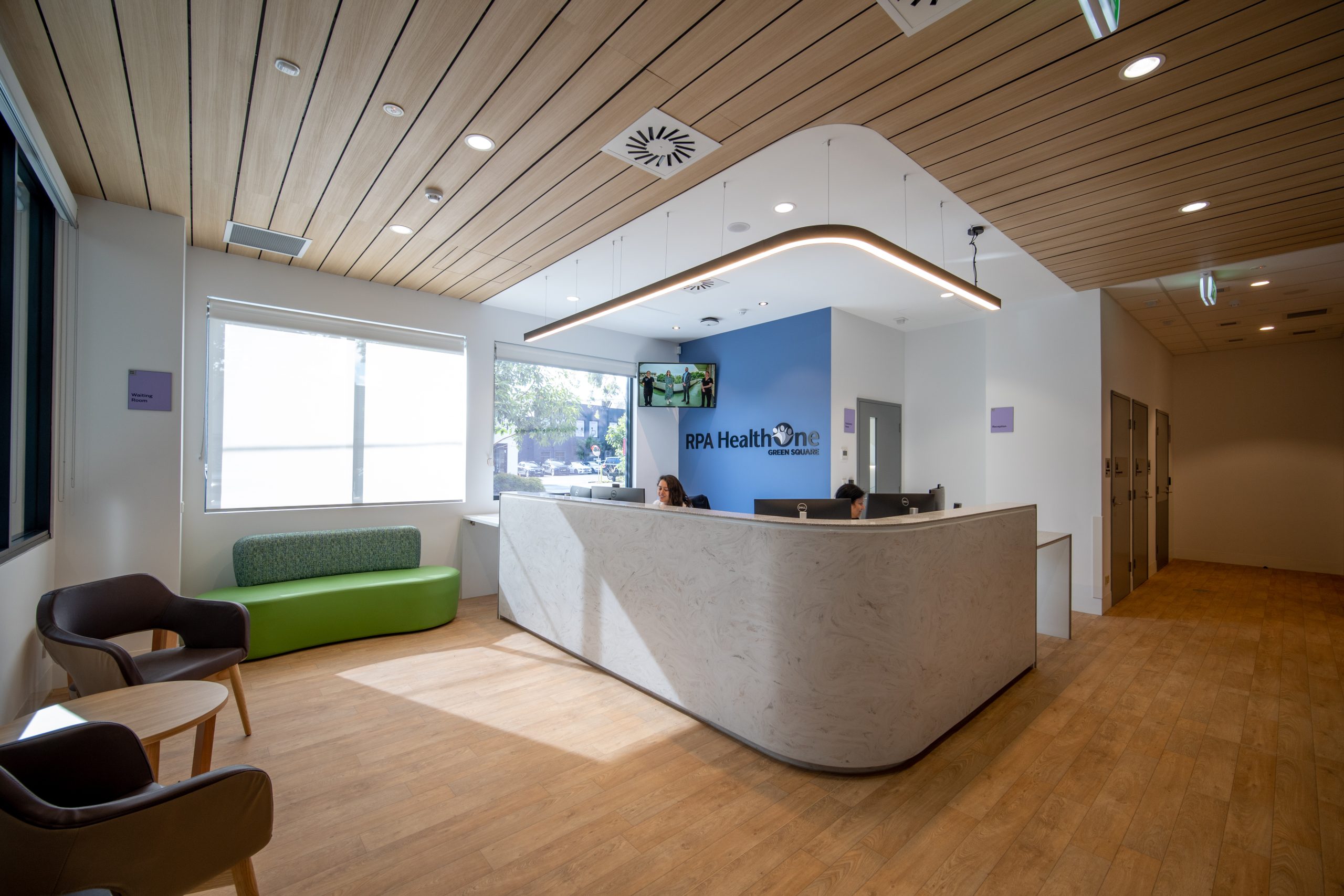
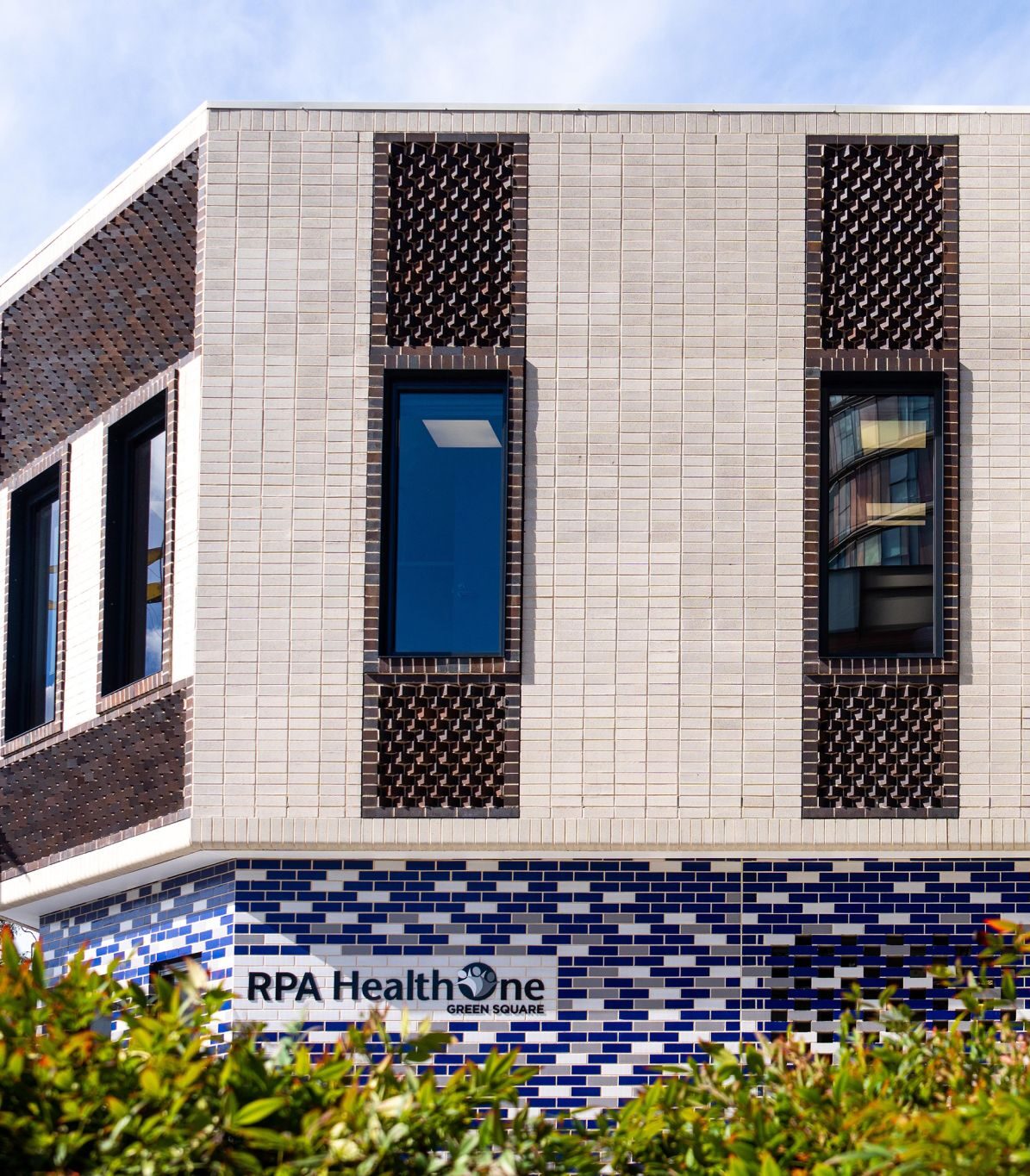
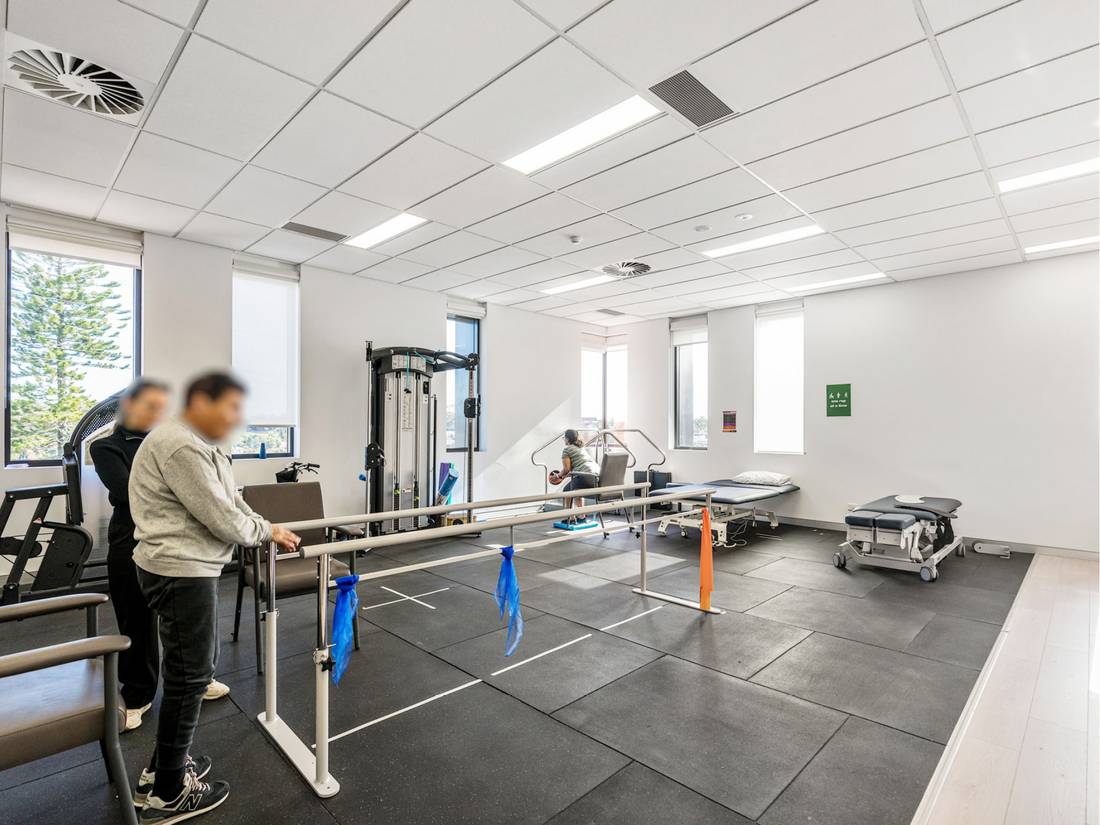
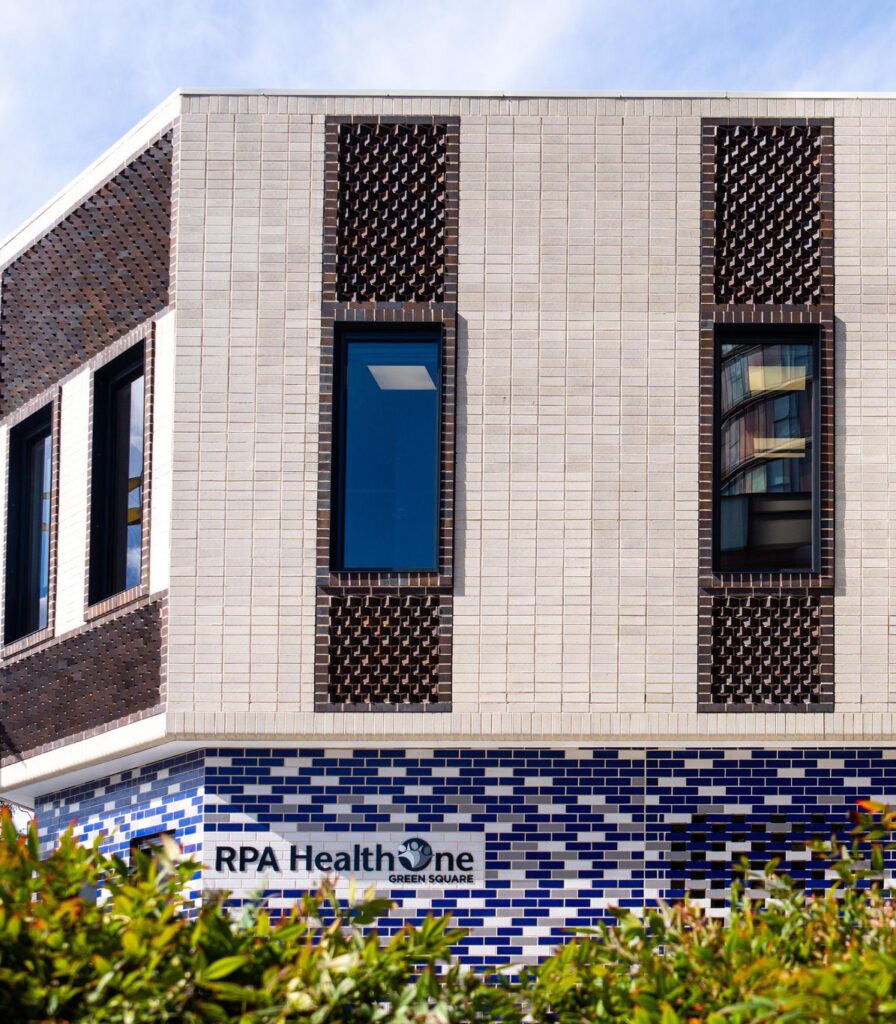
The RPA HealthOne Green Square is a two-storey 950 m² community health facility in Zetland that brings integrated primary and specialist care closer to one of Sydney’s fastest-growing precincts. Its design balances a visually impactful street presence with a welcoming, human-scaled interior of consultation, treatment, meeting spaces and a therapy gym.
Built on a constrained urban site, it supports early intervention, chronic care and allied health services outside hospital settings, helping ease pressure on emergency departments while fostering stronger links with local GPs and education partners.
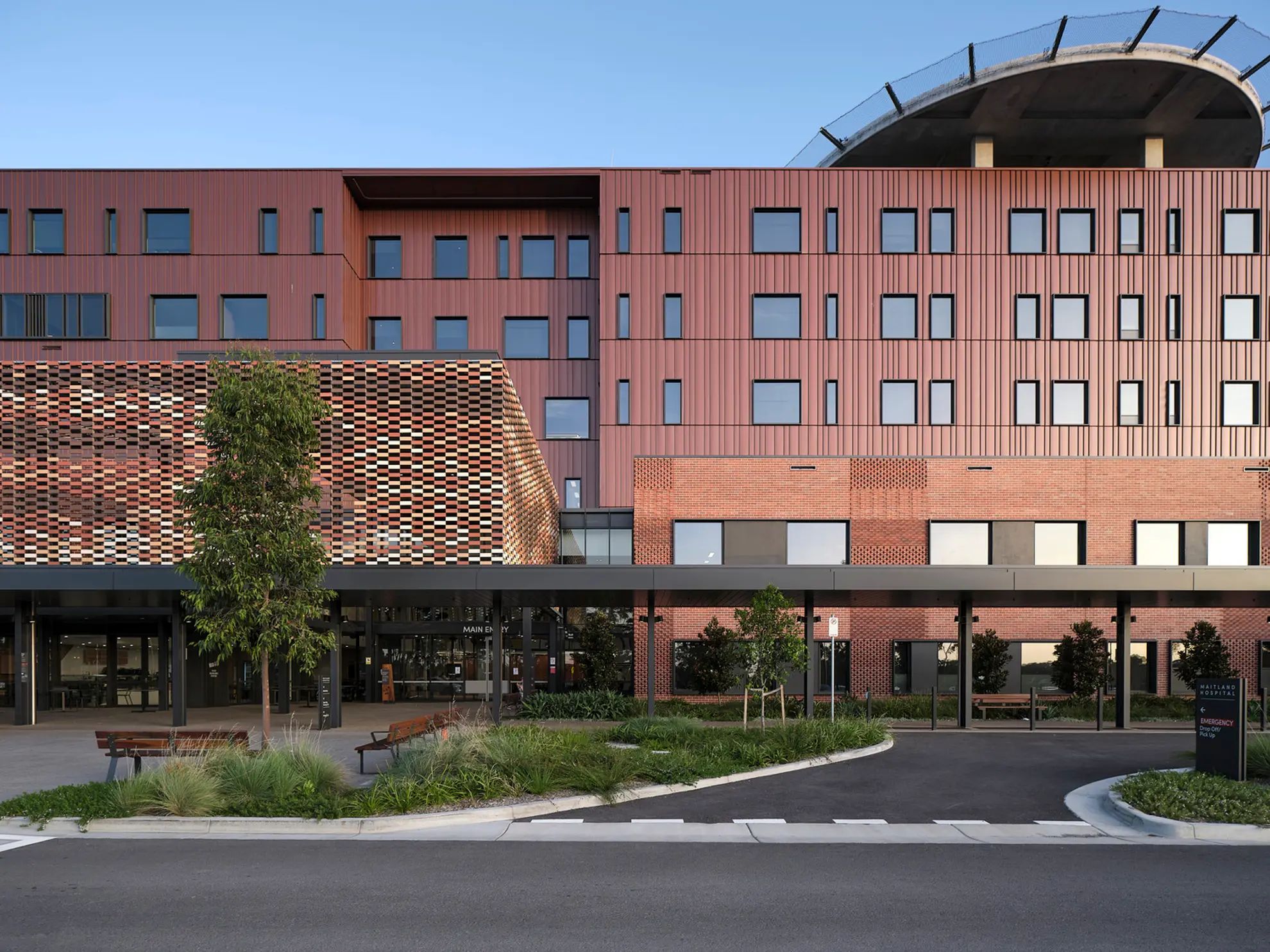
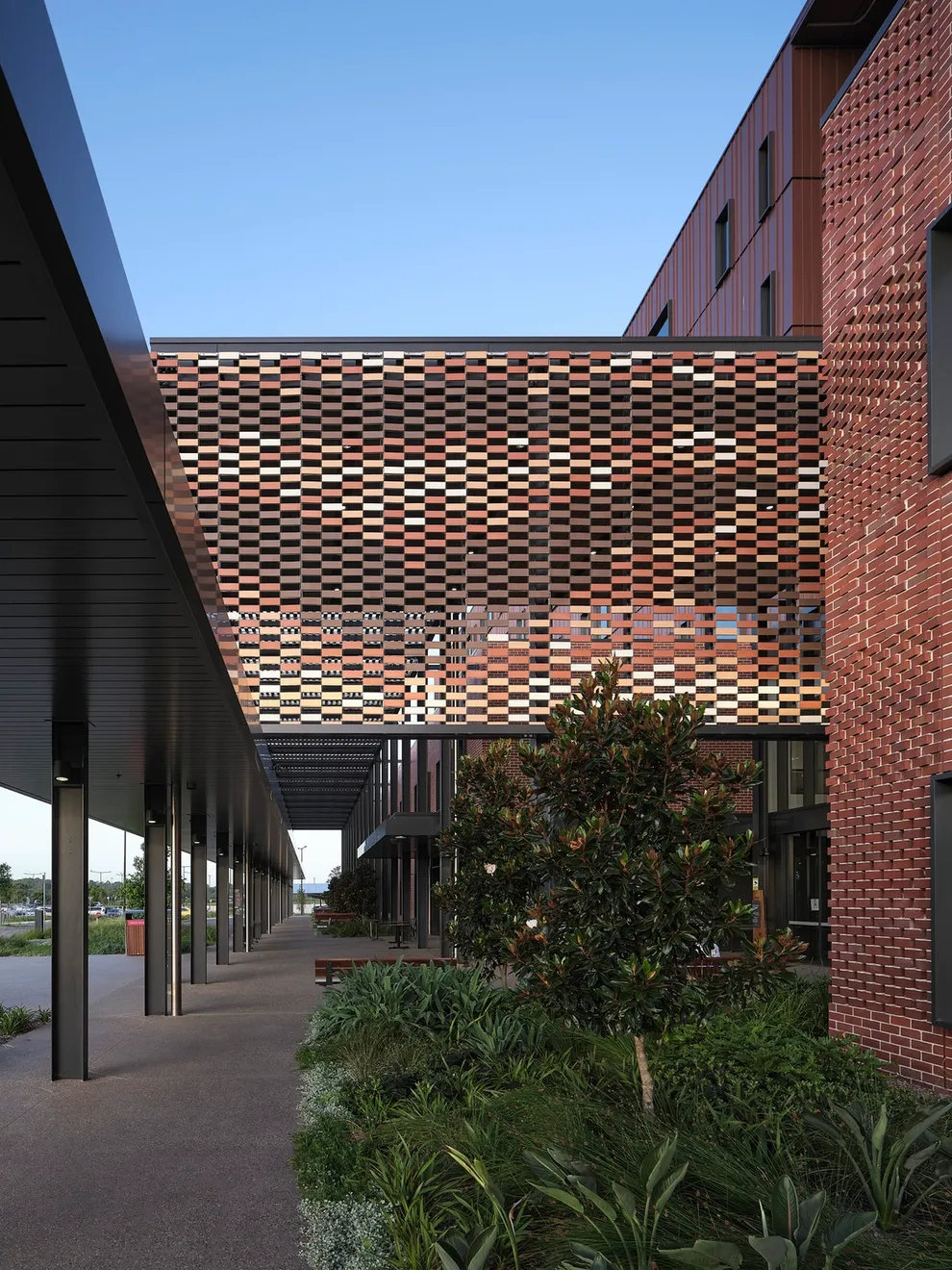
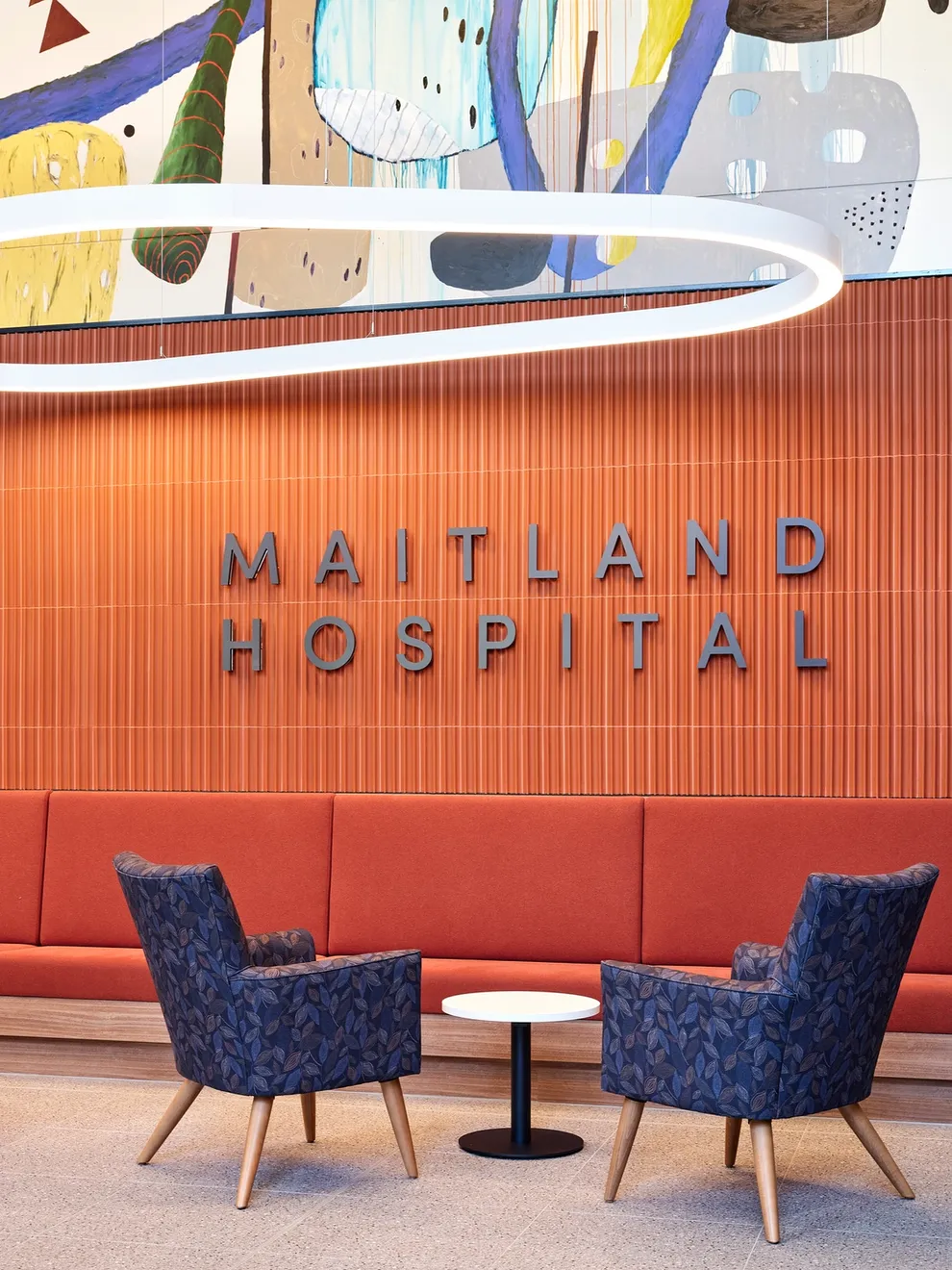
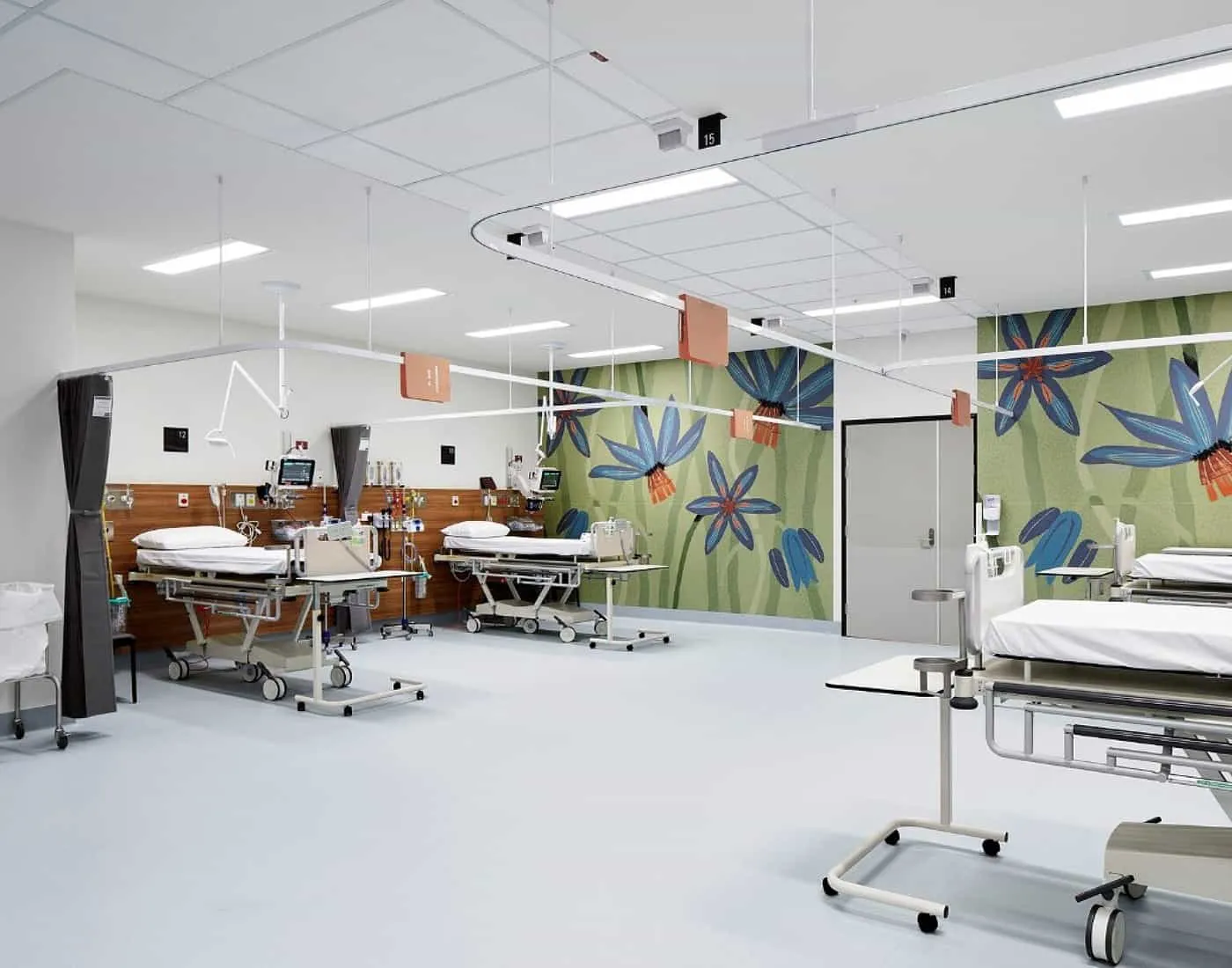
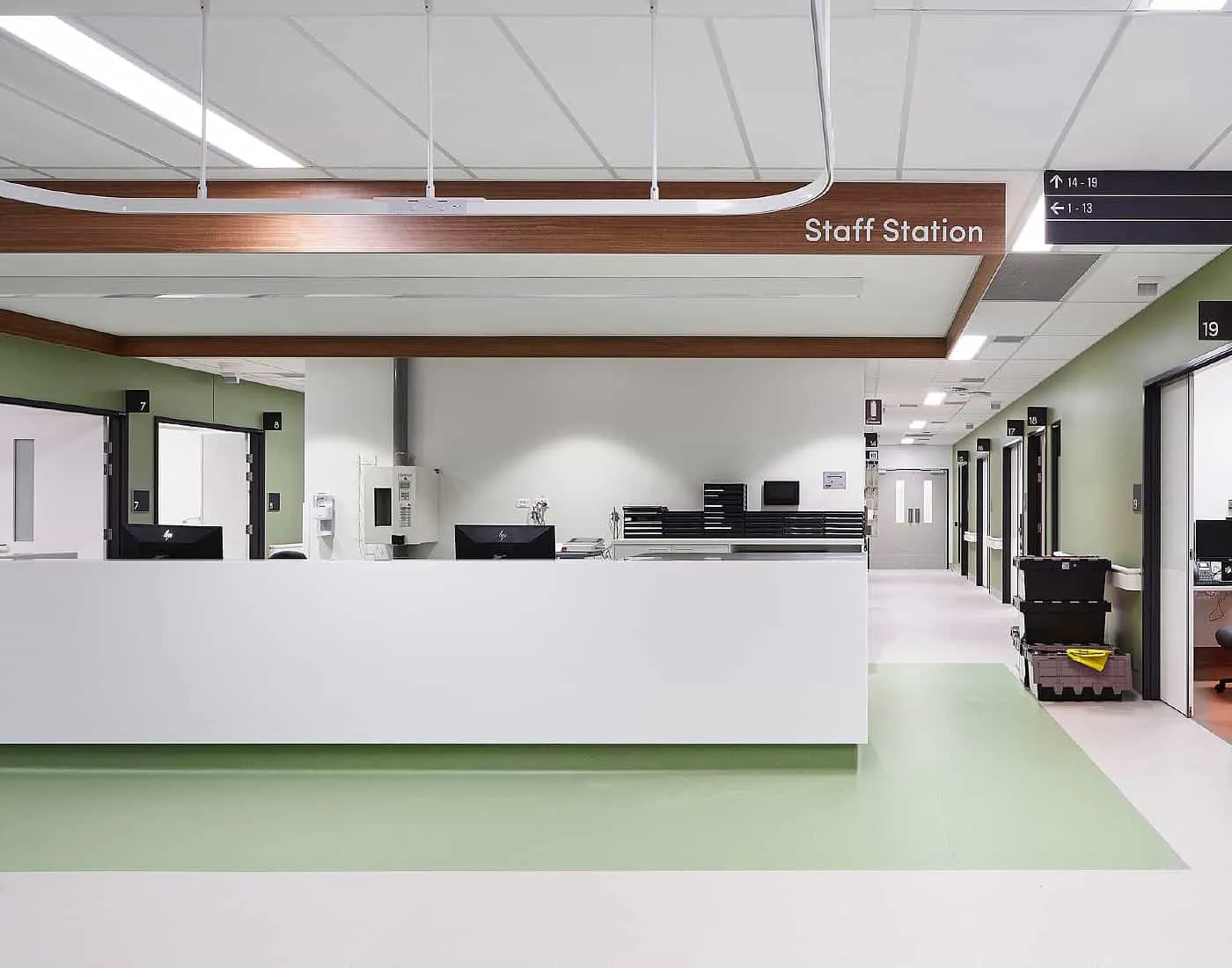
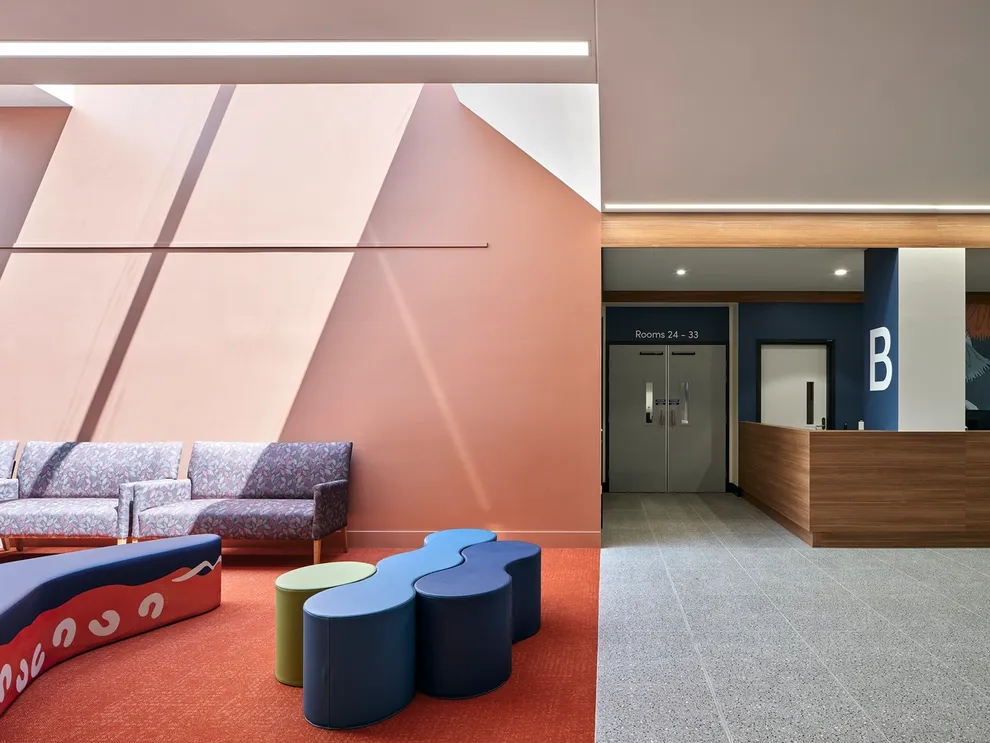
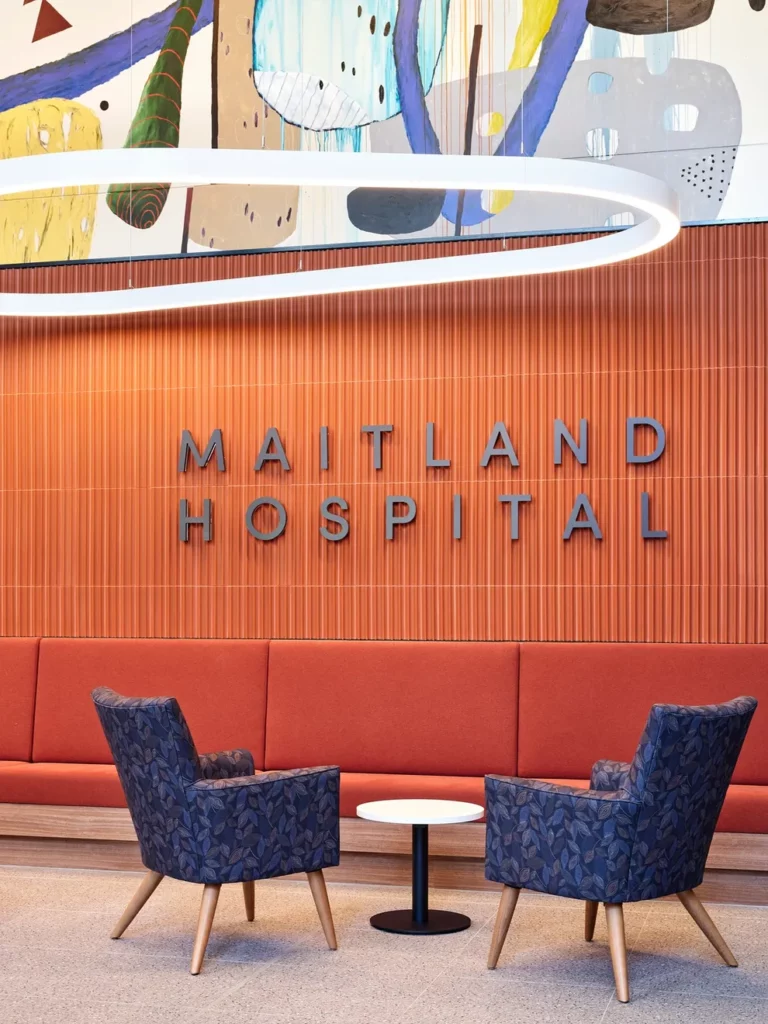
The New Maitland Hospital in Metford, NSW, is a 50,000 m², seven-storey regional health facility delivering 339 beds and advanced services including emergency, maternity, paediatric, mental health and surgical care. Its distinctive terracotta-toned façade and arbour entrance reference the site’s brick-quarry history, creating a welcoming, community-connected environment.
Designed for flexibility, natural light and healing, the hospital incorporates sustainable features and modern infrastructure to support evolving healthcare models and patient wellbeing.
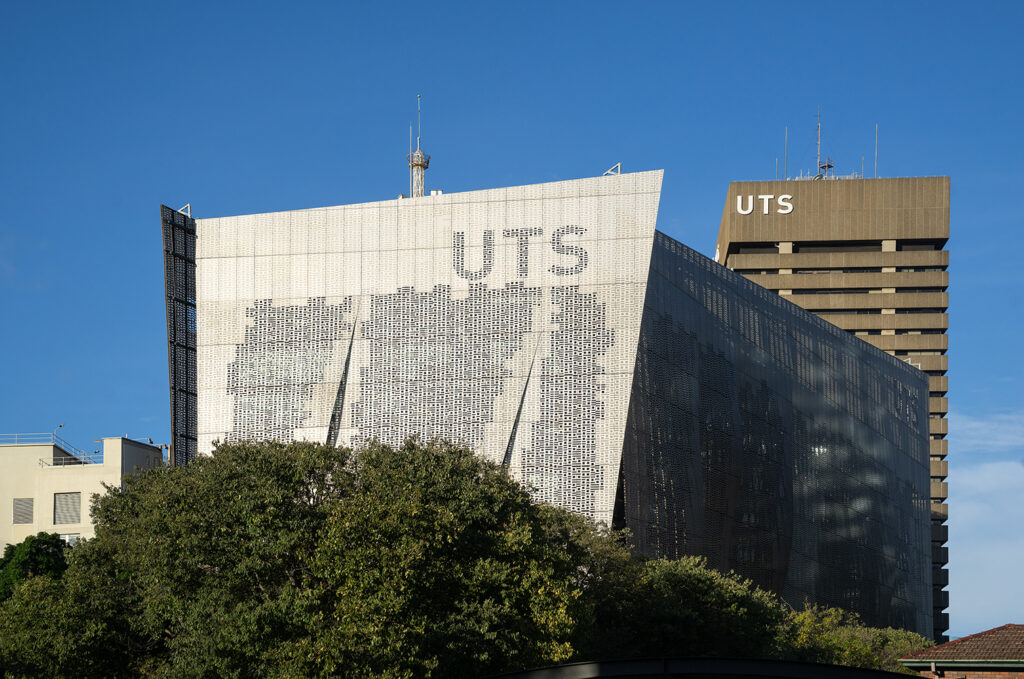
Selected through an international design competition, the building rises to around 15 levels and roughly 42,000 m², accommodating approximately 4,300 students and 500 staff with state-of-the-art lecture theatres, research and teaching labs, seminar rooms, offices, social spaces and basement parking, all arranged around an atrium that fosters collaboration and connects to the surrounding precinct.
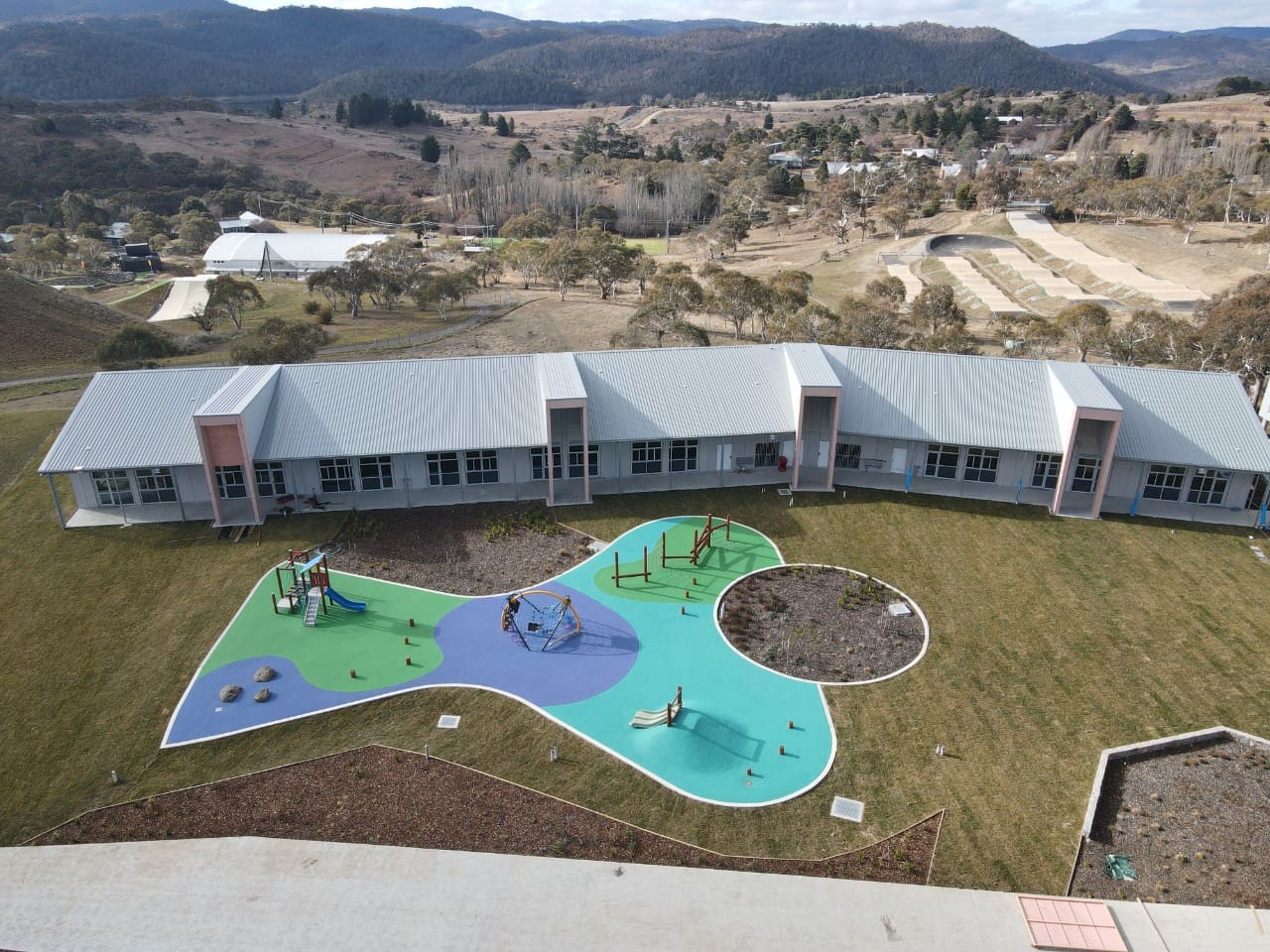
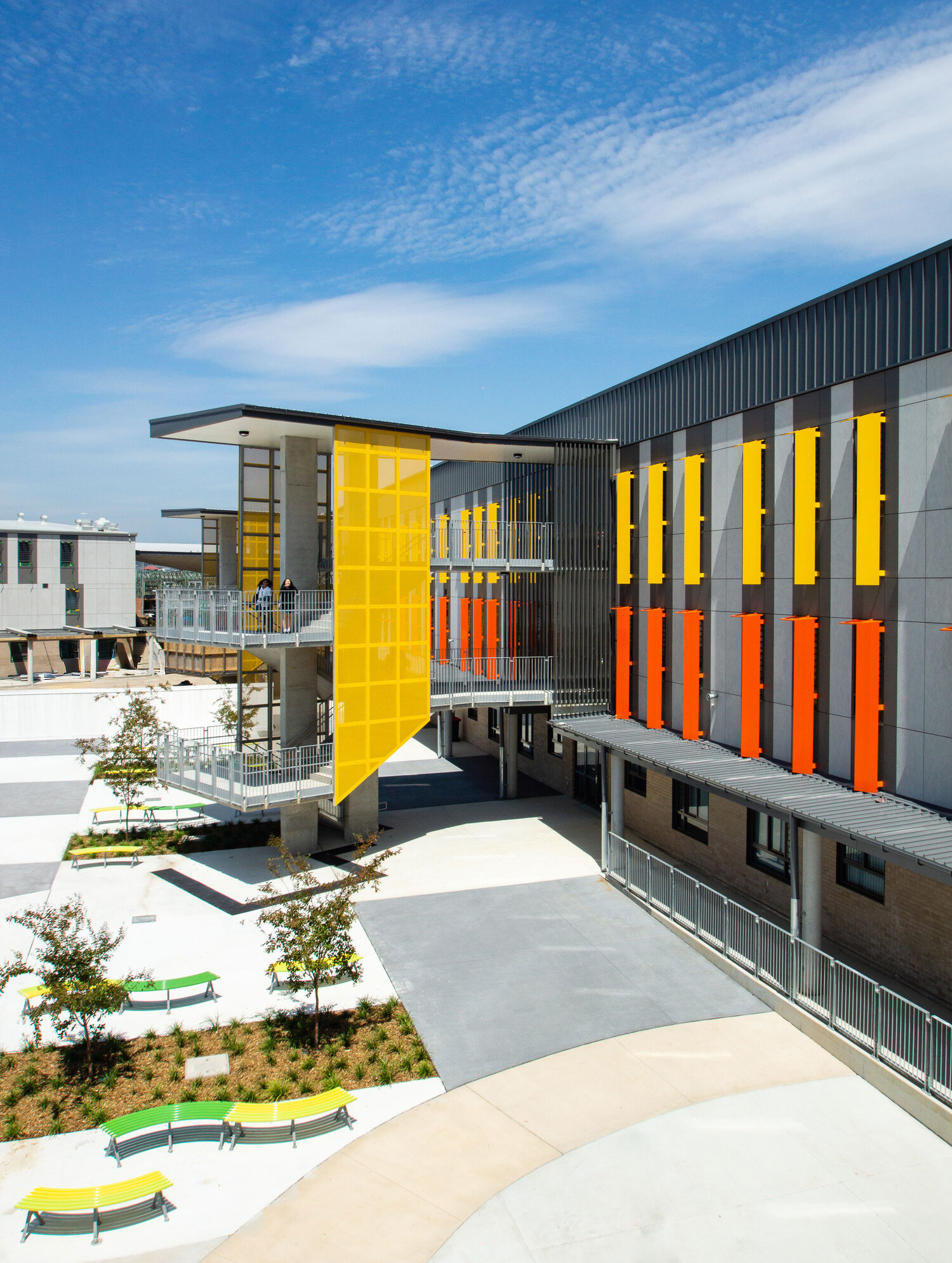
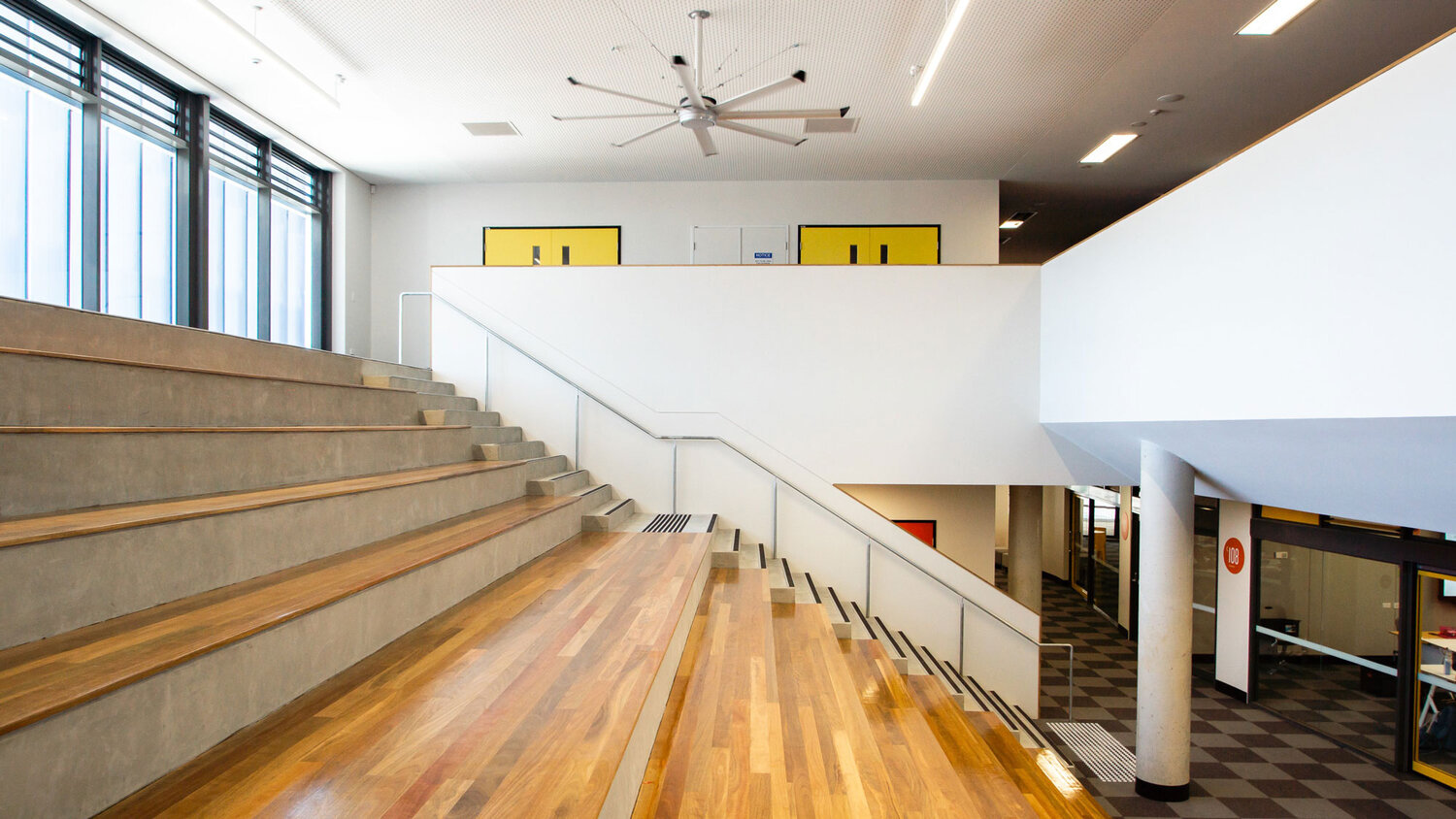
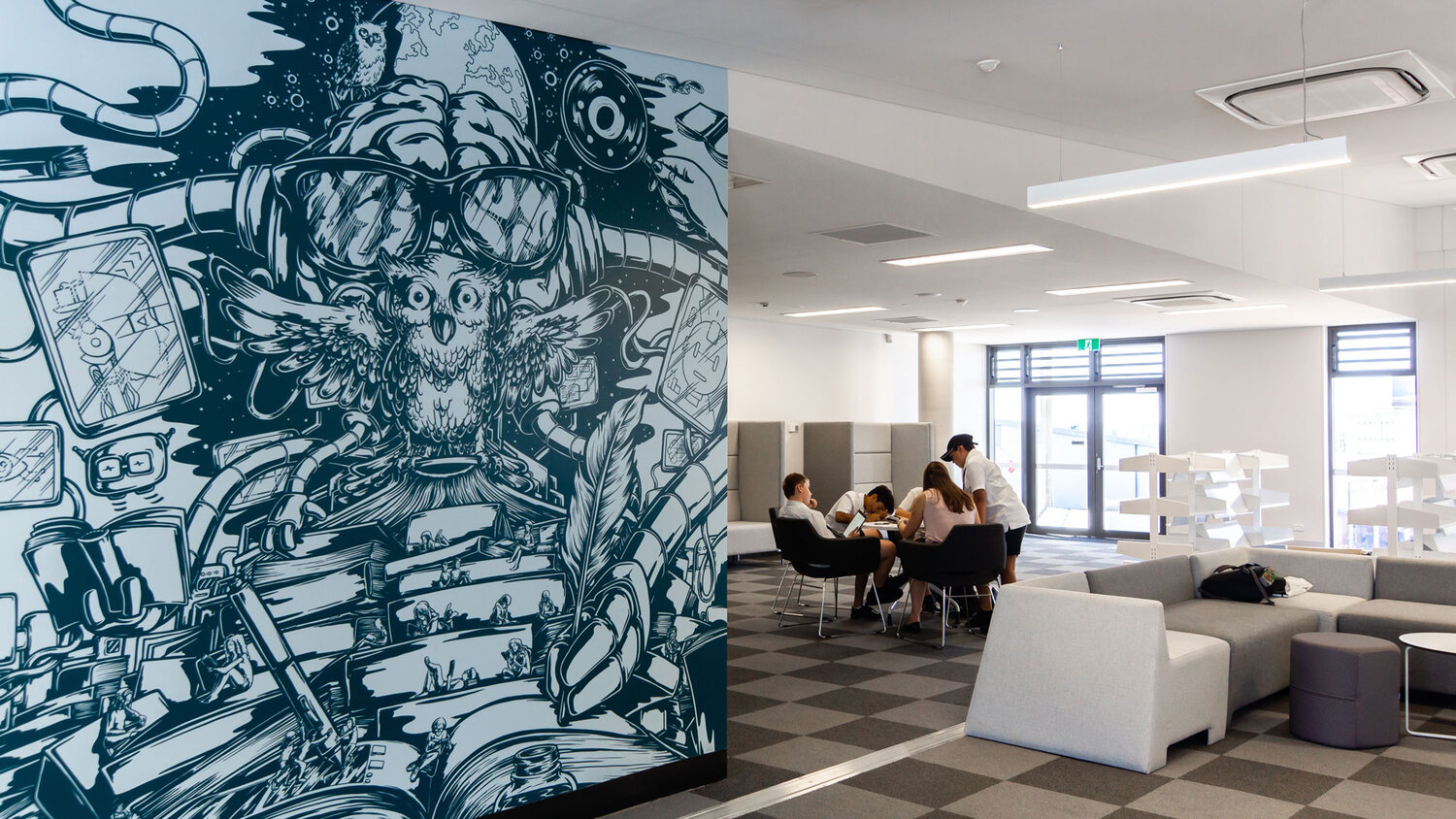
The Jindabyne Education Precinct in the Snowy Mountains is a landmark, purpose-built regional campus that unites Jindabyne Public School, Jindabyne High School and a future public preschool into a cohesive learning environment tailored to community growth and alpine conditions.
Driving a historic investment in regional education, the precinct delivers modern primary and secondary facilities, including new classrooms, specialised learning spaces, libraries, multi-purpose halls, extensive outdoor play and sports fields, and vocational education and training areas, with the primary school accommodating over 400 students and the high school designed for around 500 students, supporting vibrant, place-based learning.
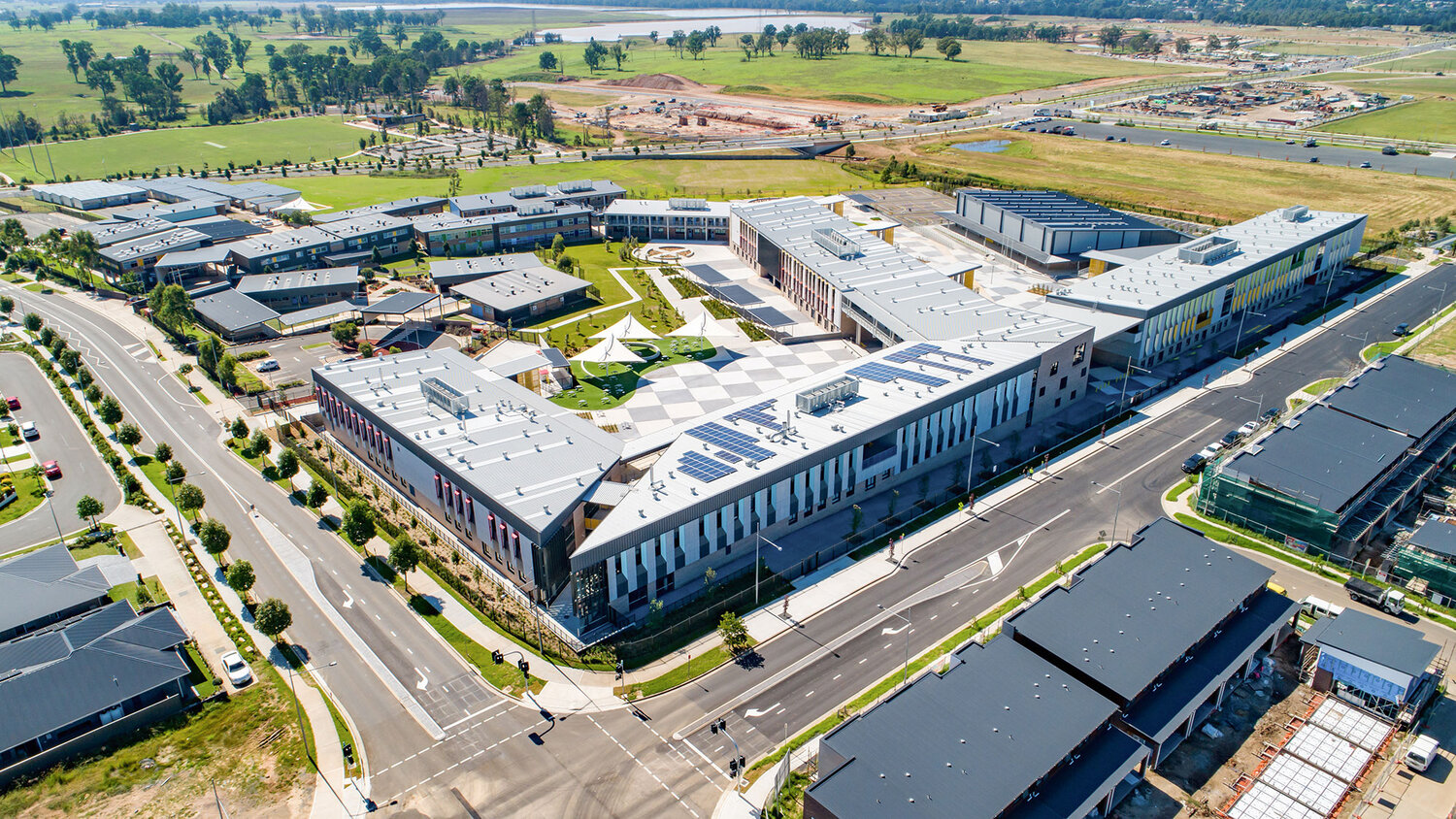
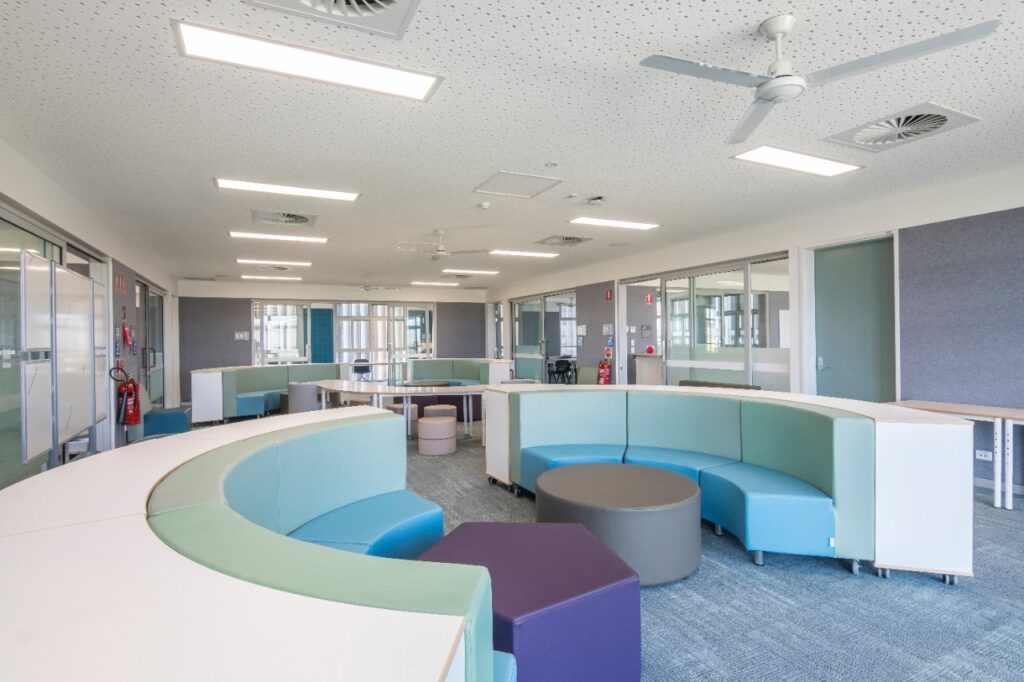
This is a large-scale, future-focused secondary campus, purpose-built to support rapid growth of the Oran Park precinct and accommodate up to 2,000 students in Year 7–12 as part of an integrated K–12 educational environment.
The campus includes 90 flexible learning spaces, specialist facilities such as maker spaces, performance and fitness studios, a senior learning centre, hospitality café and a multi-purpose hall sized for two full basketball courts, reinforcing its role as both a school and community hub.
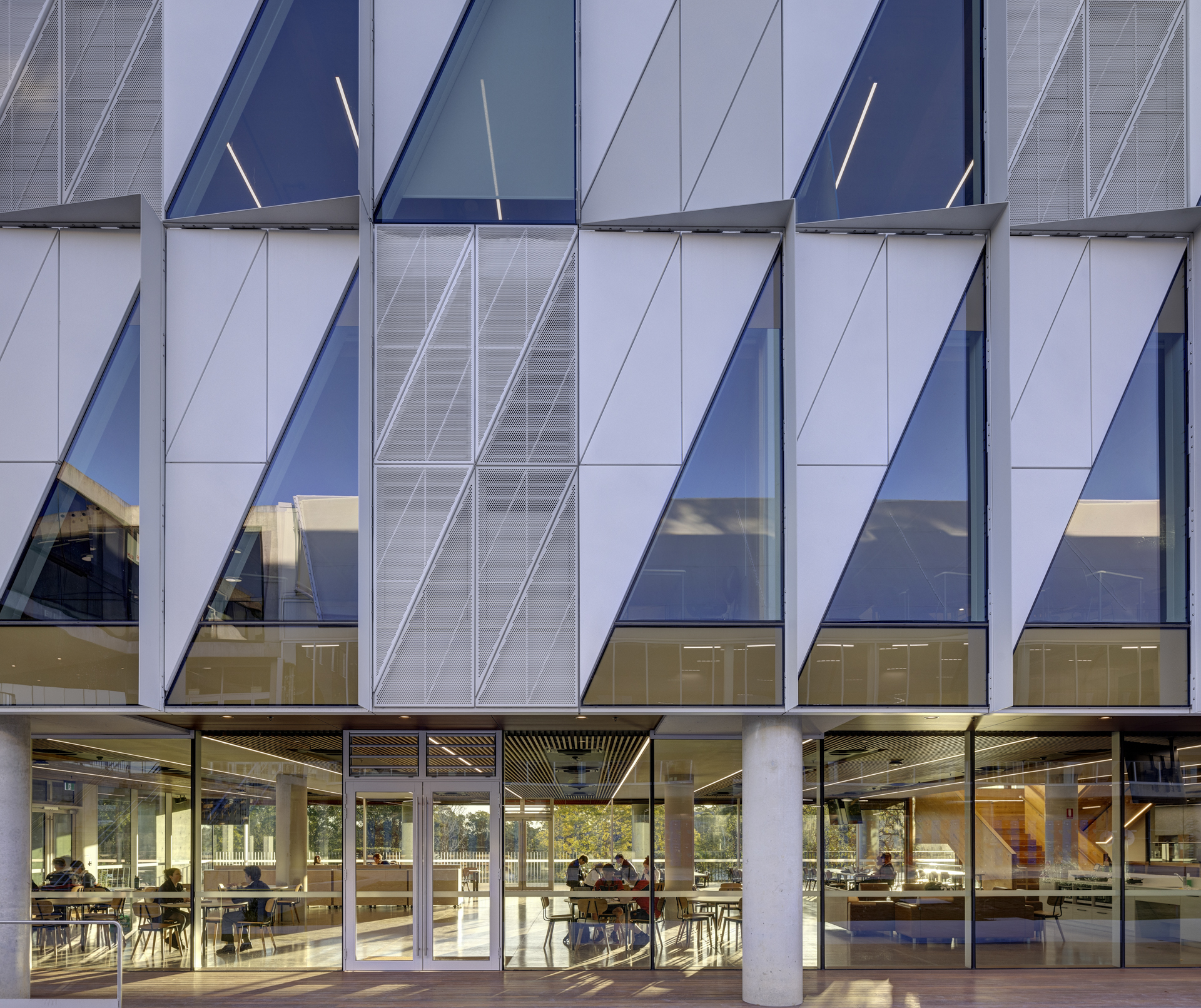
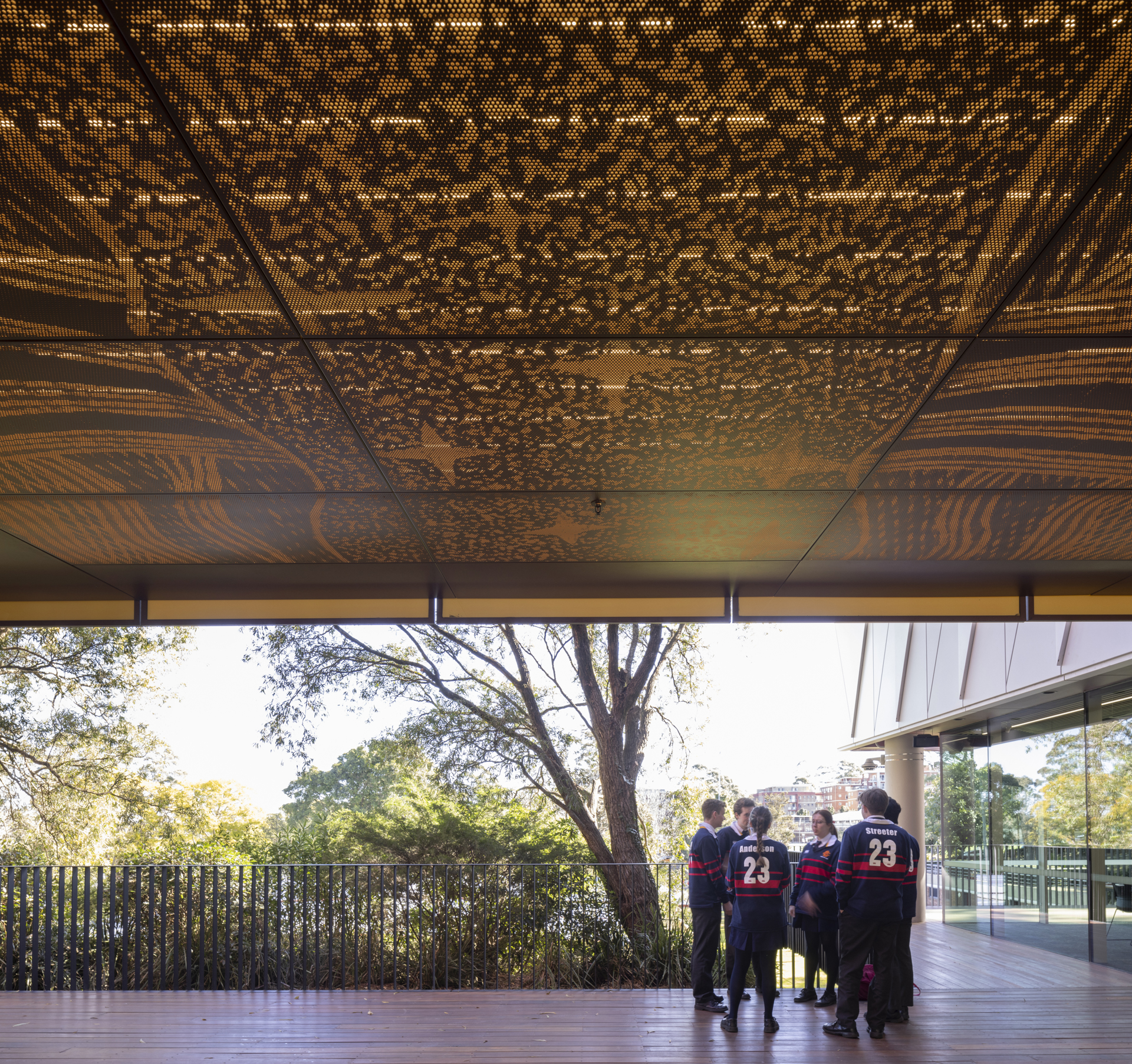
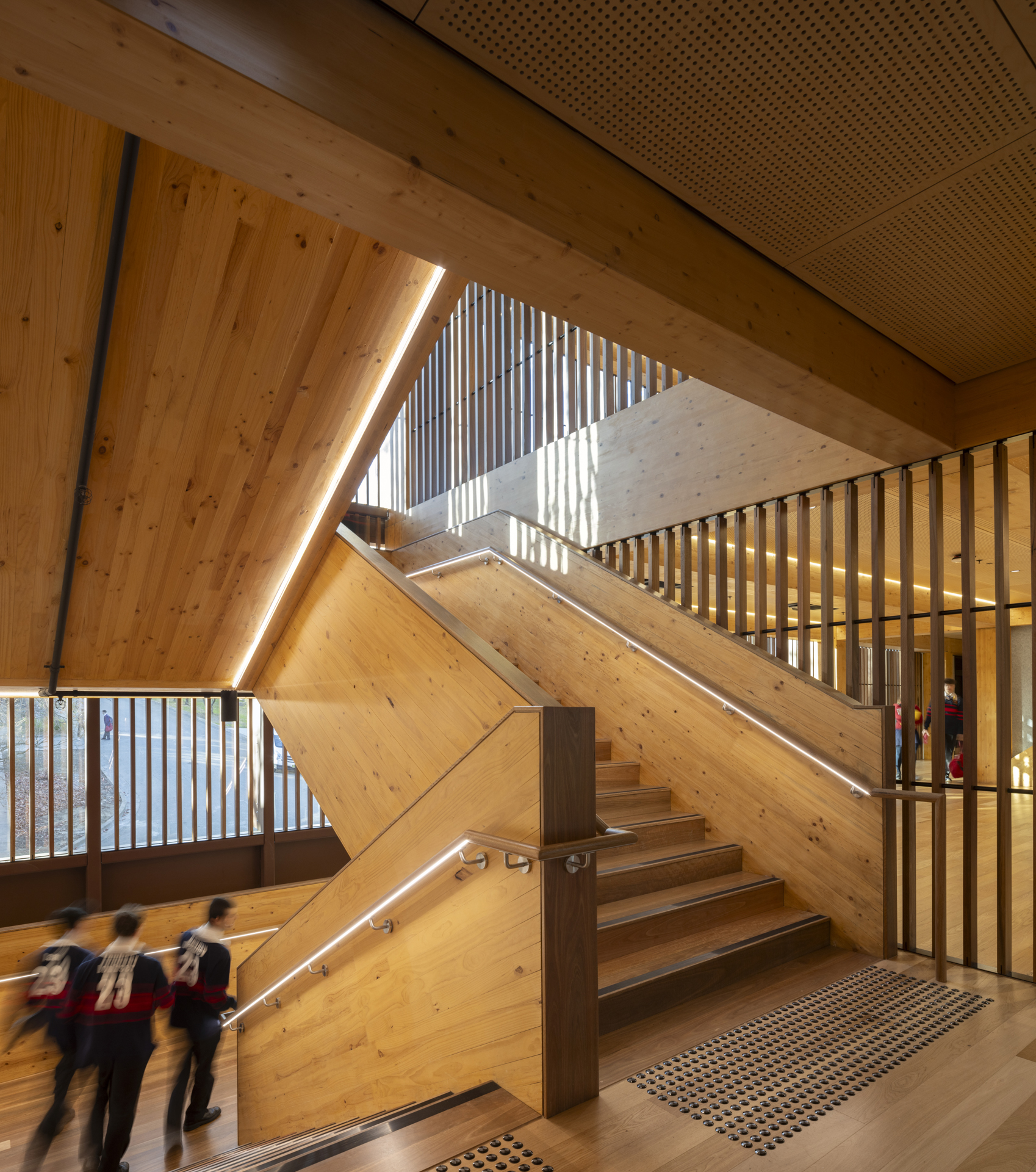
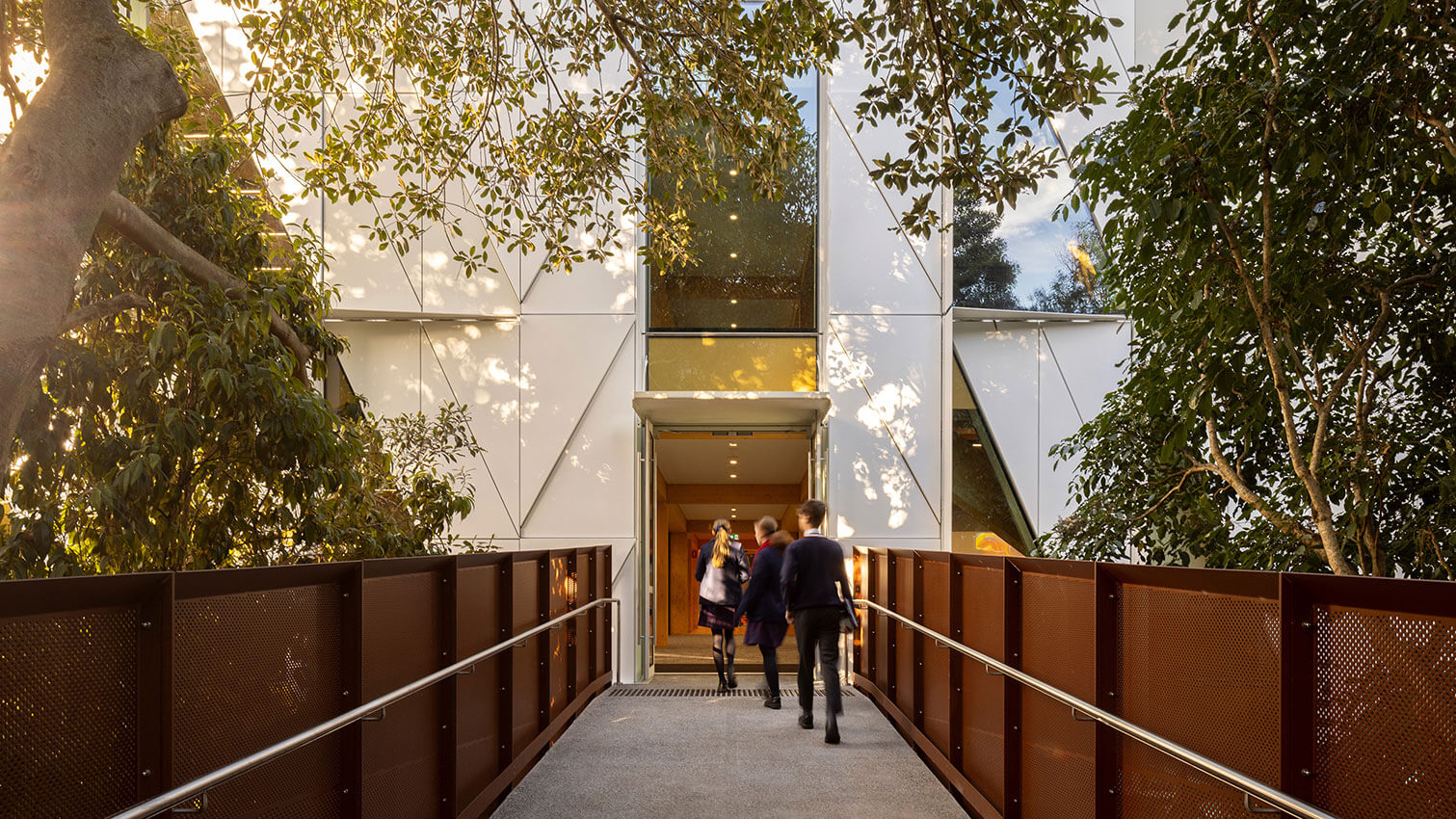
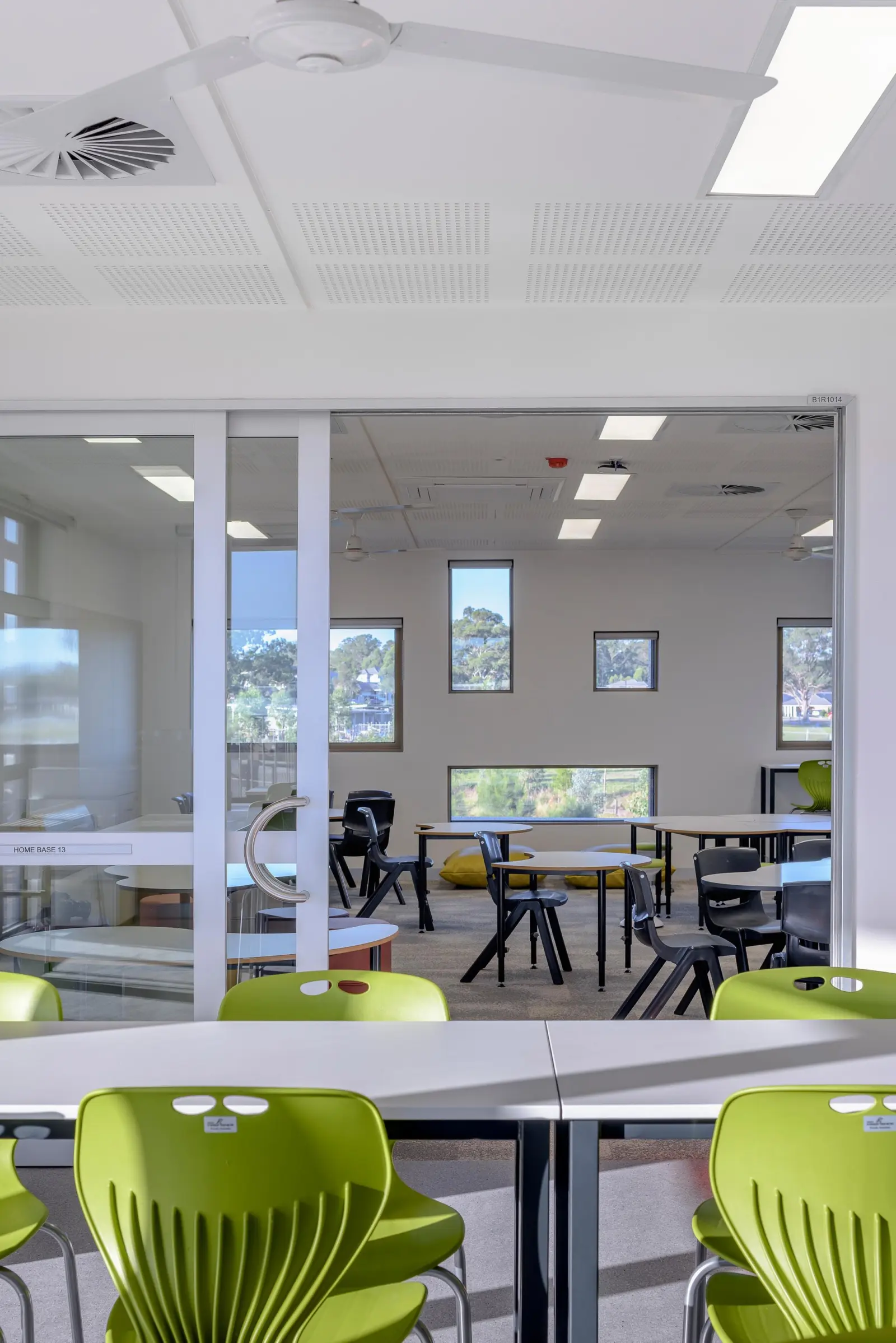
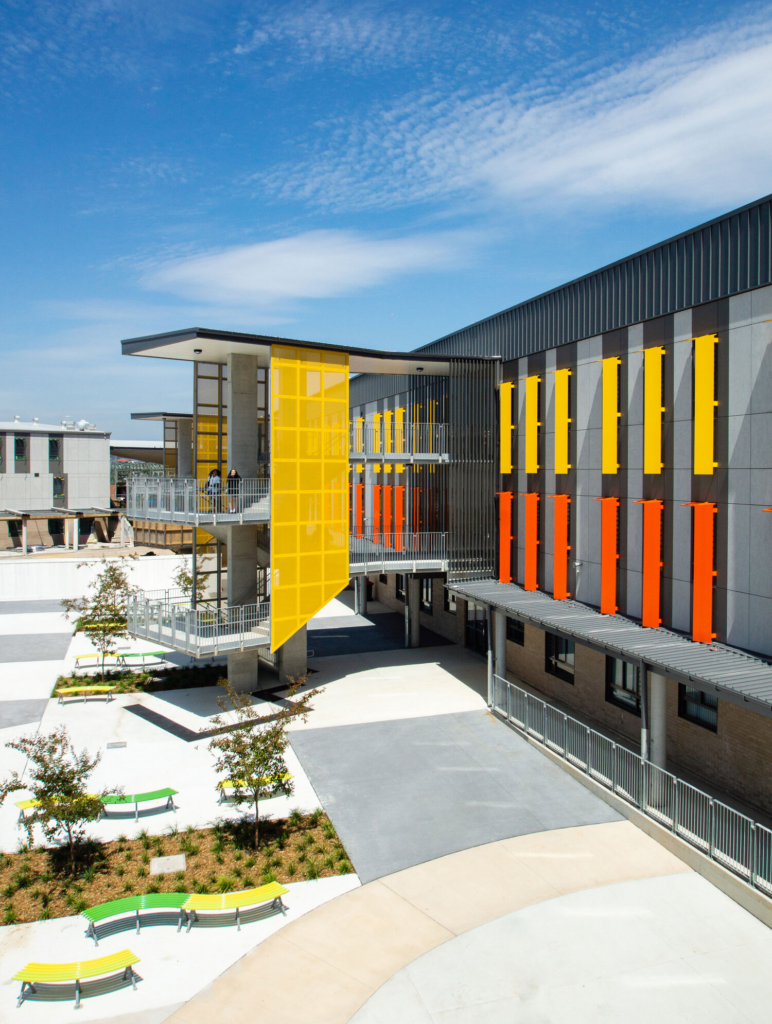
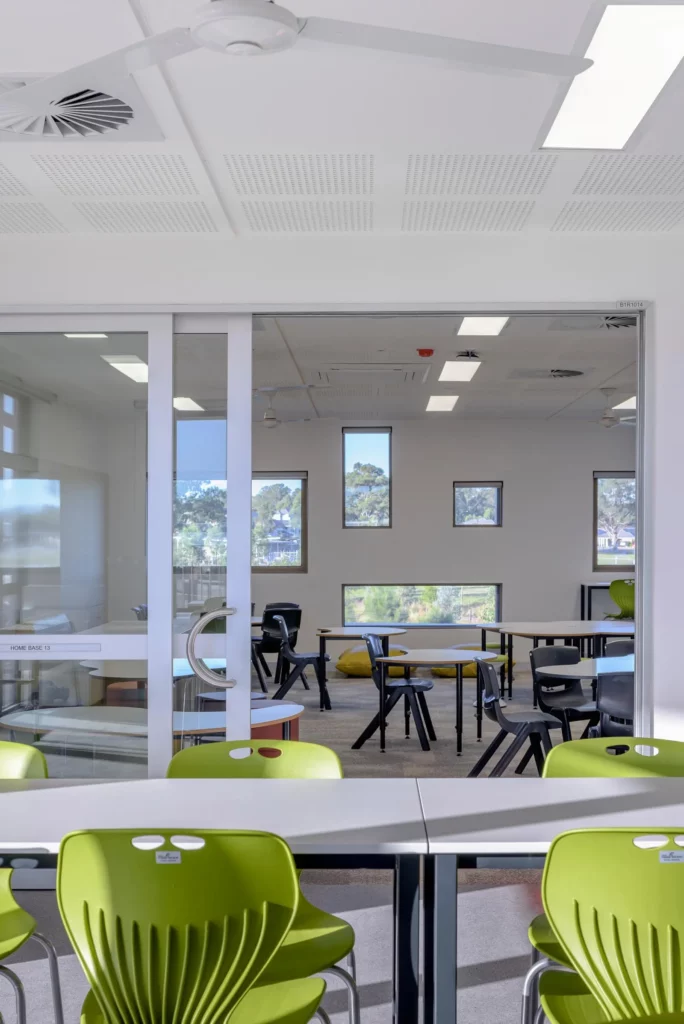
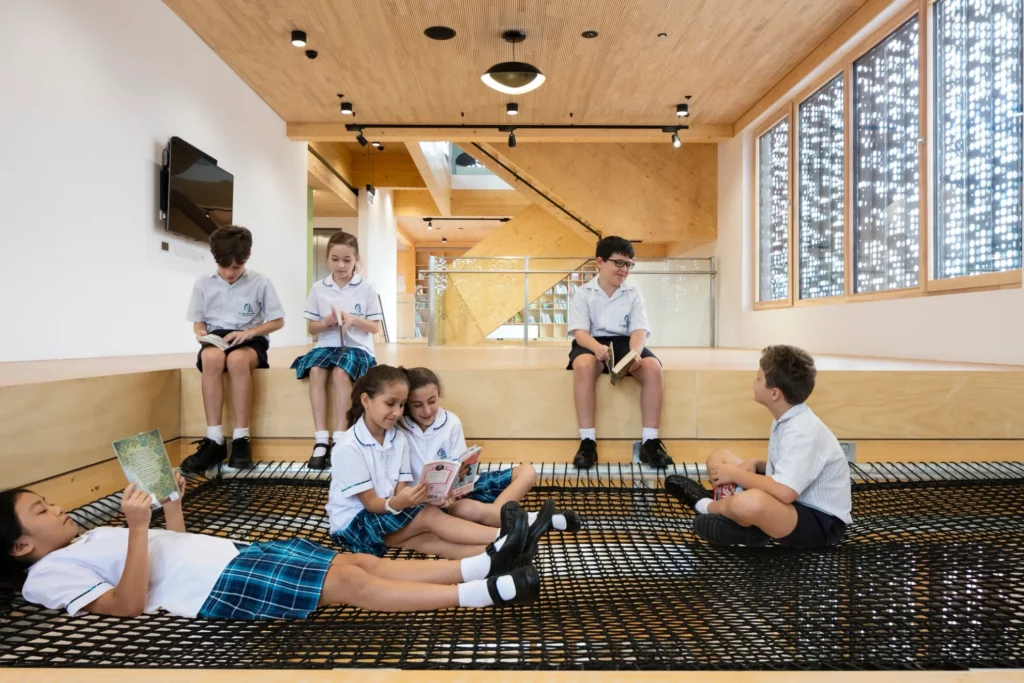
The scheme delivered 41 home bases across about 6,197 m² internal to support up to 600 students under the School Infrastructure NSW pilot program. This modern construction methodology, leveraging DfMA modular assembly, completed the design-and-build in just over 12 months.
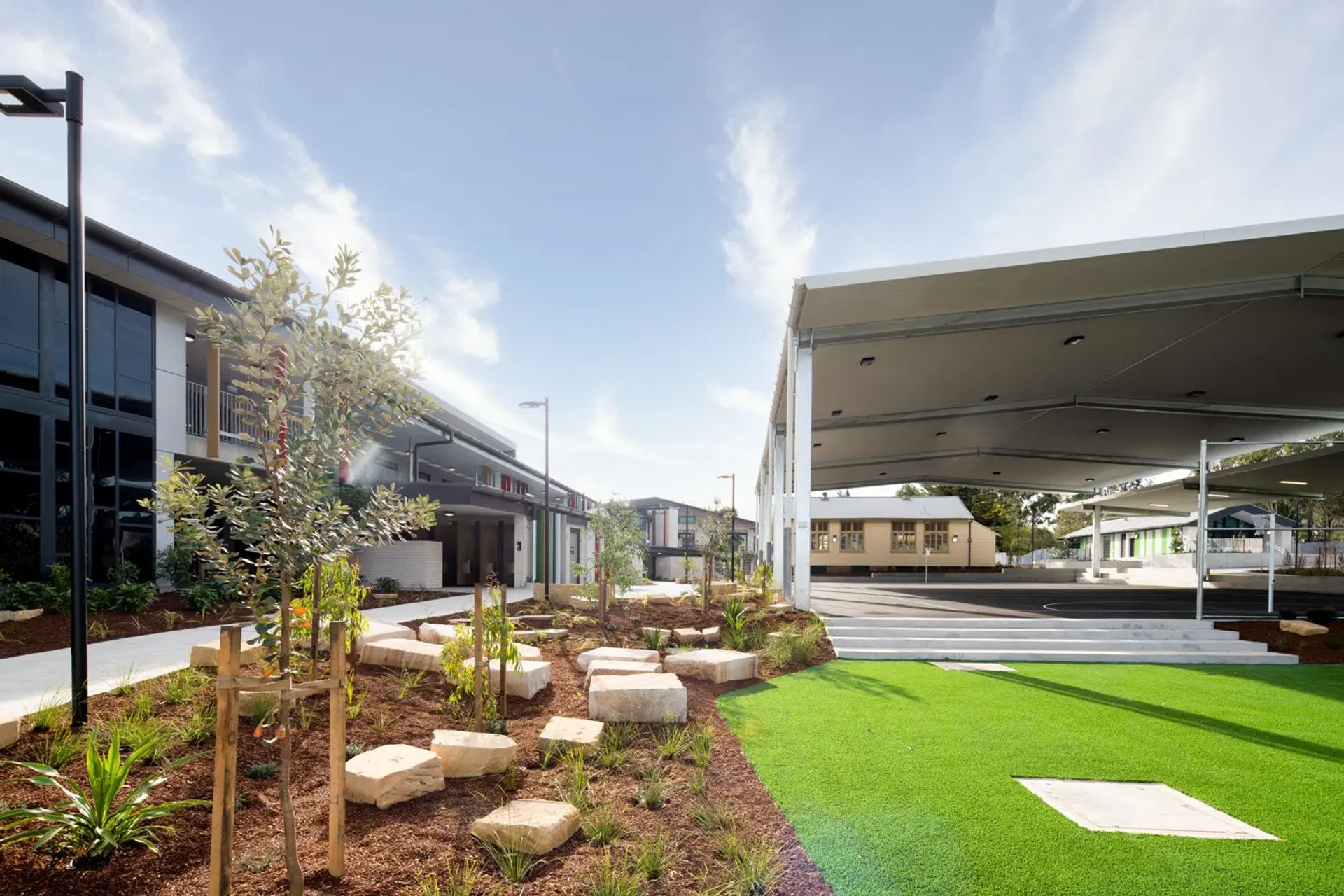
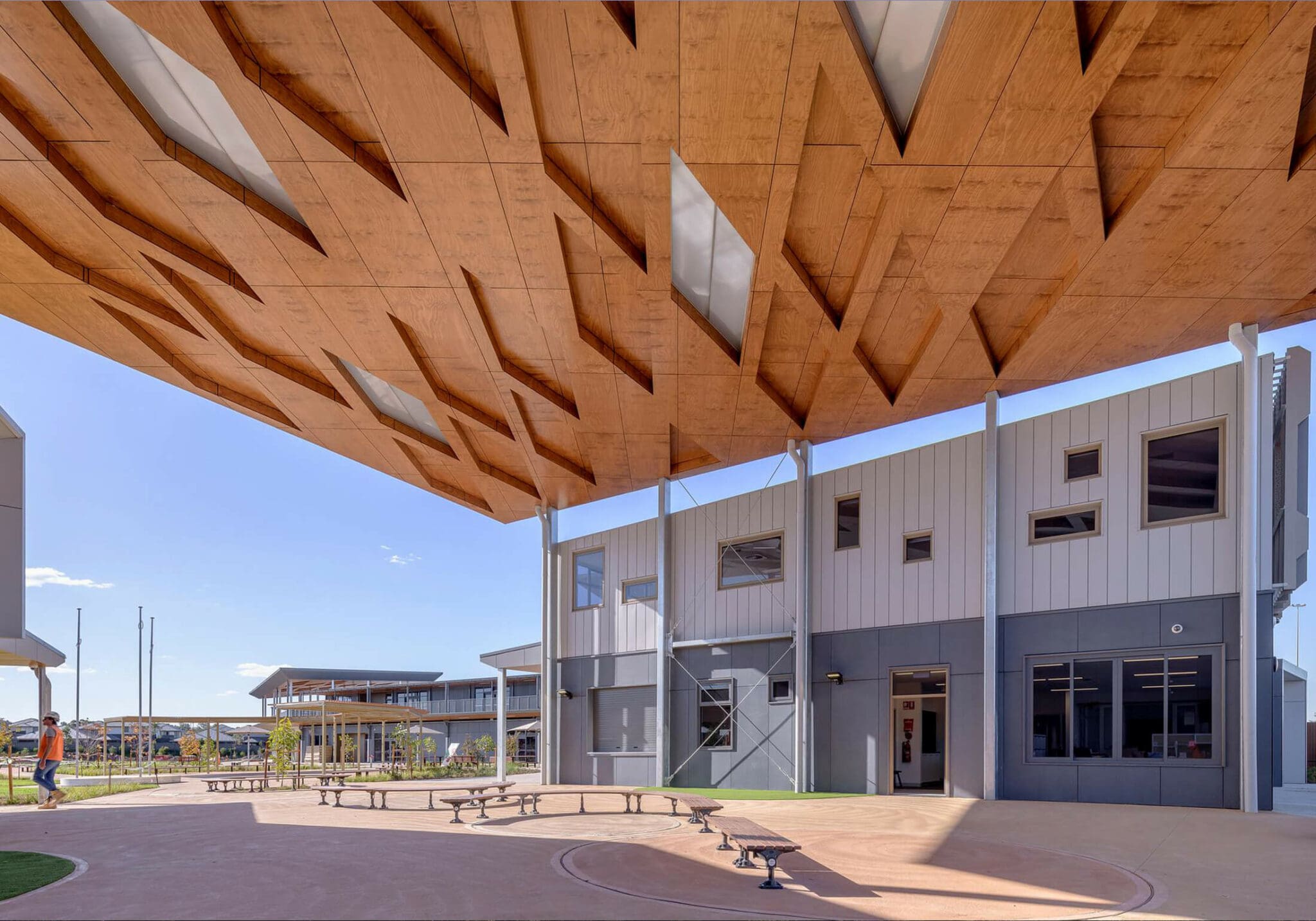
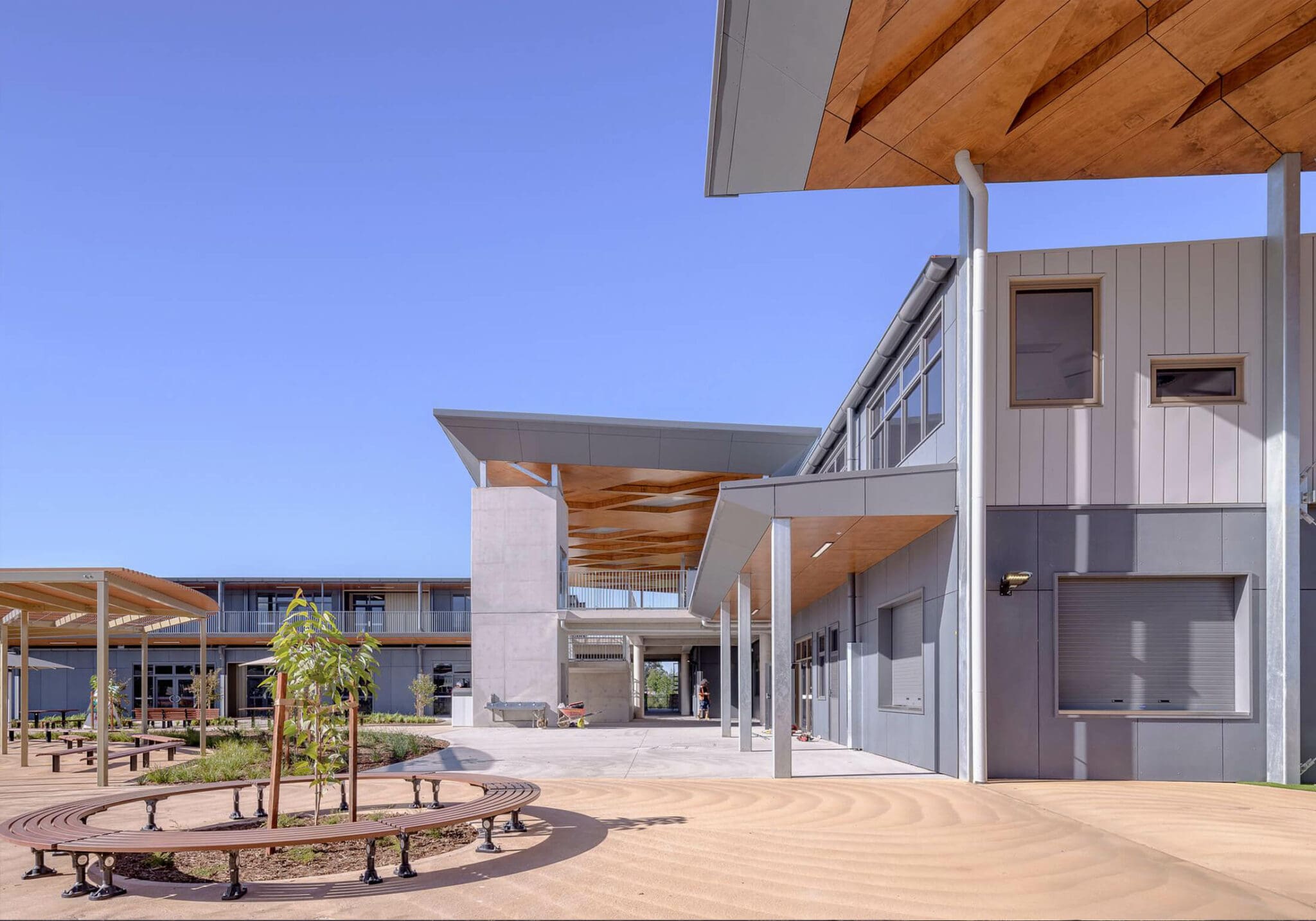
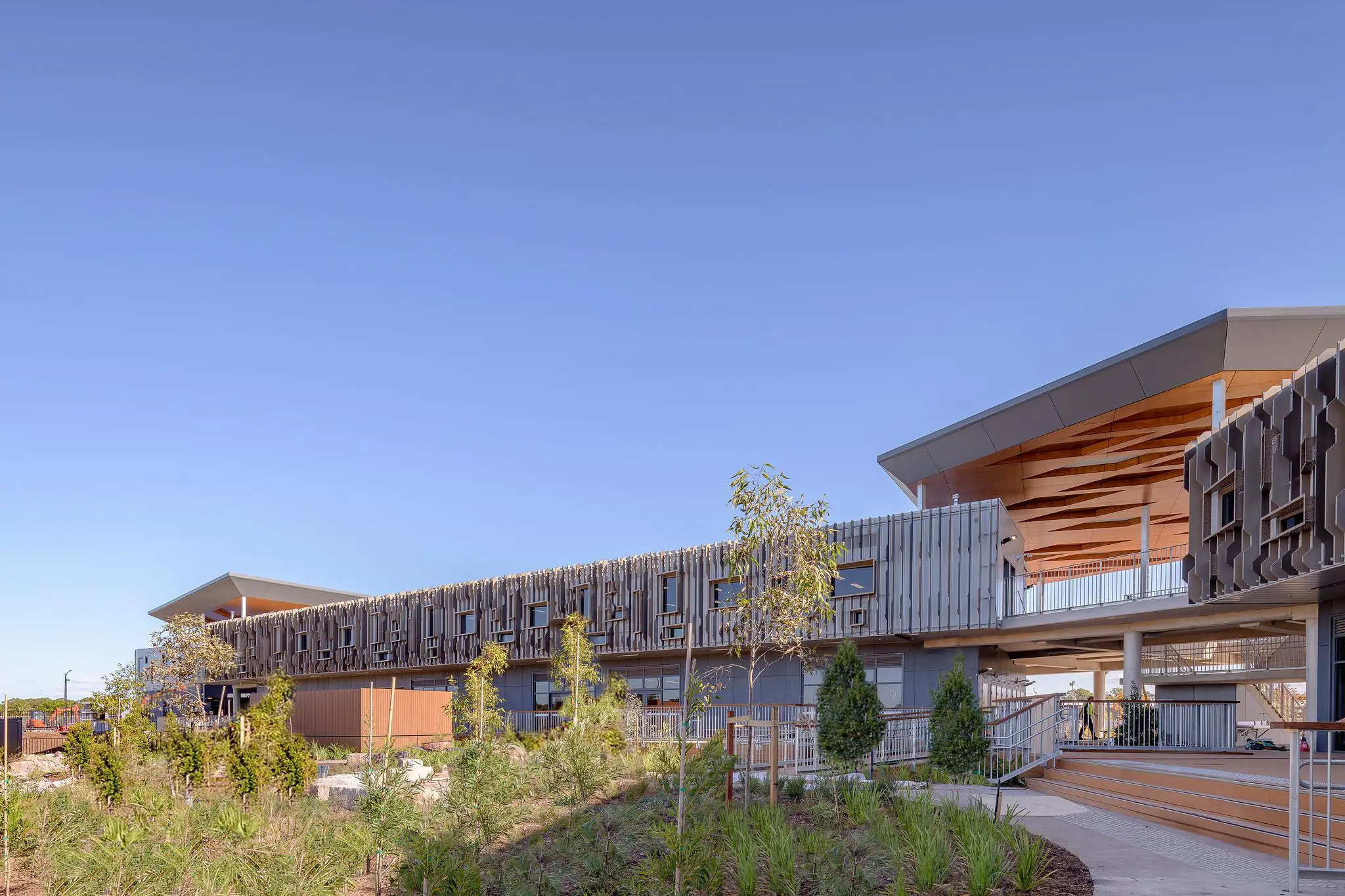
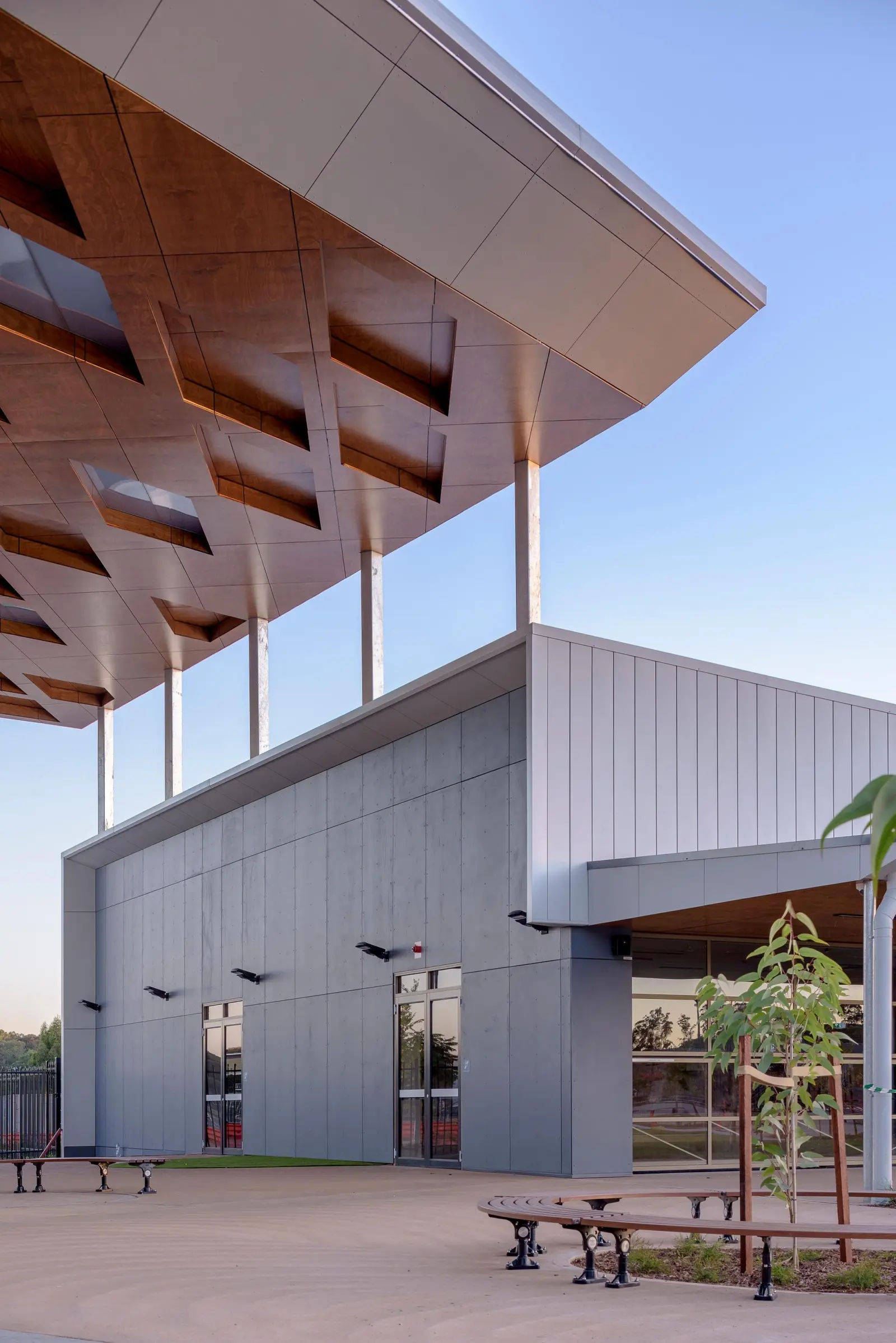
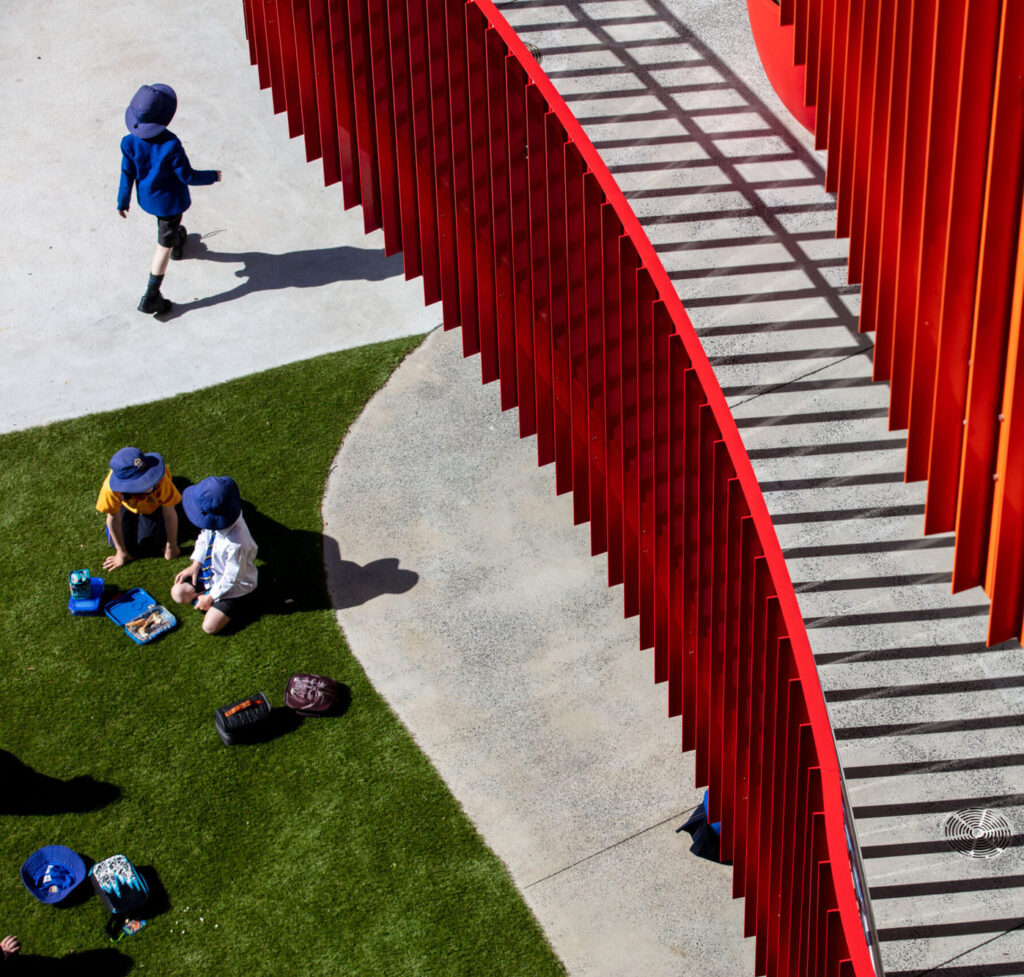
A tall roof with generous overhangs marks the community entry, while leaf-like solar shading on street elevations and locally informed palettes, developed with community input give the school a distinctive identity that’s both place-responsive and future-focused.
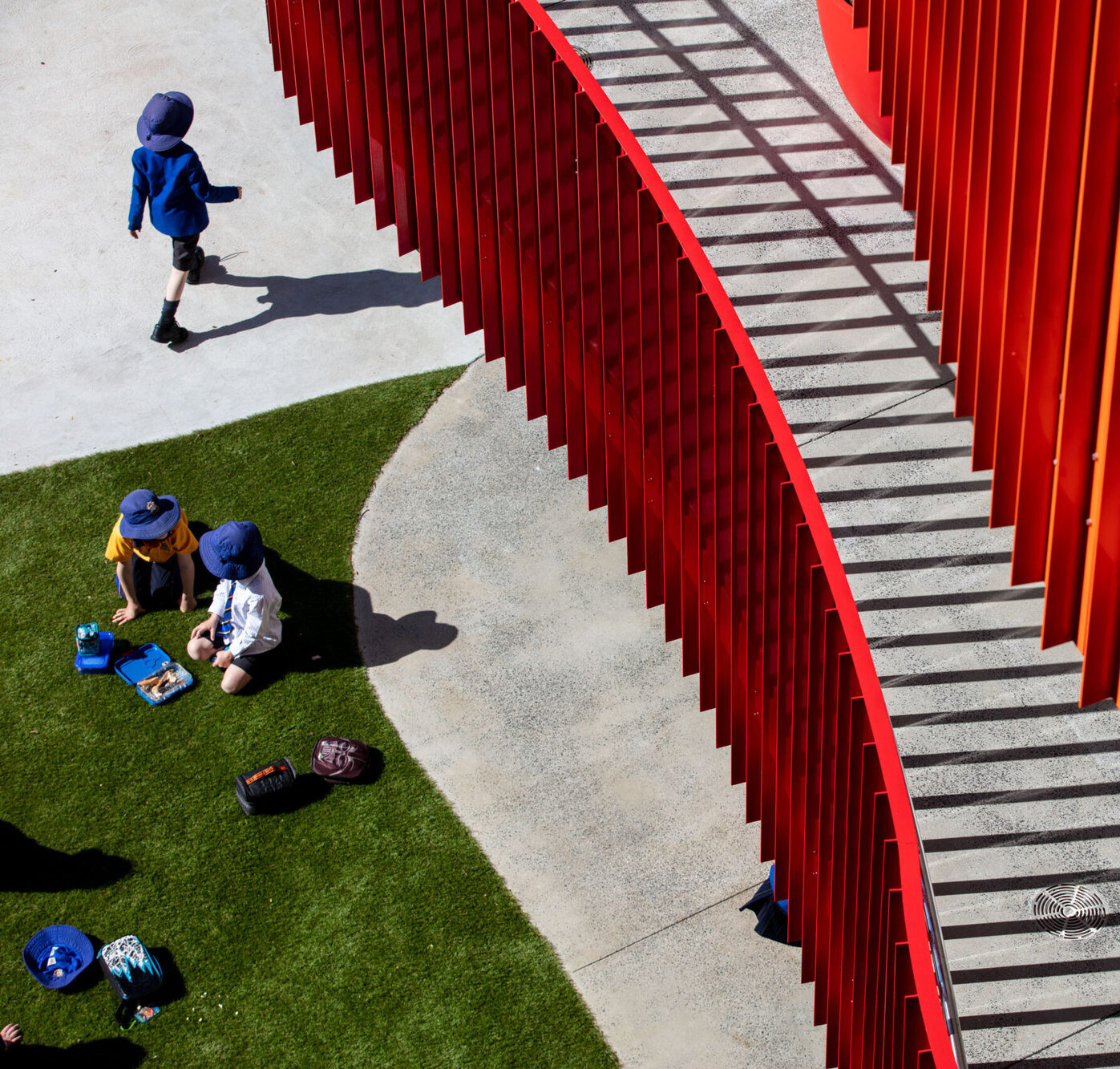
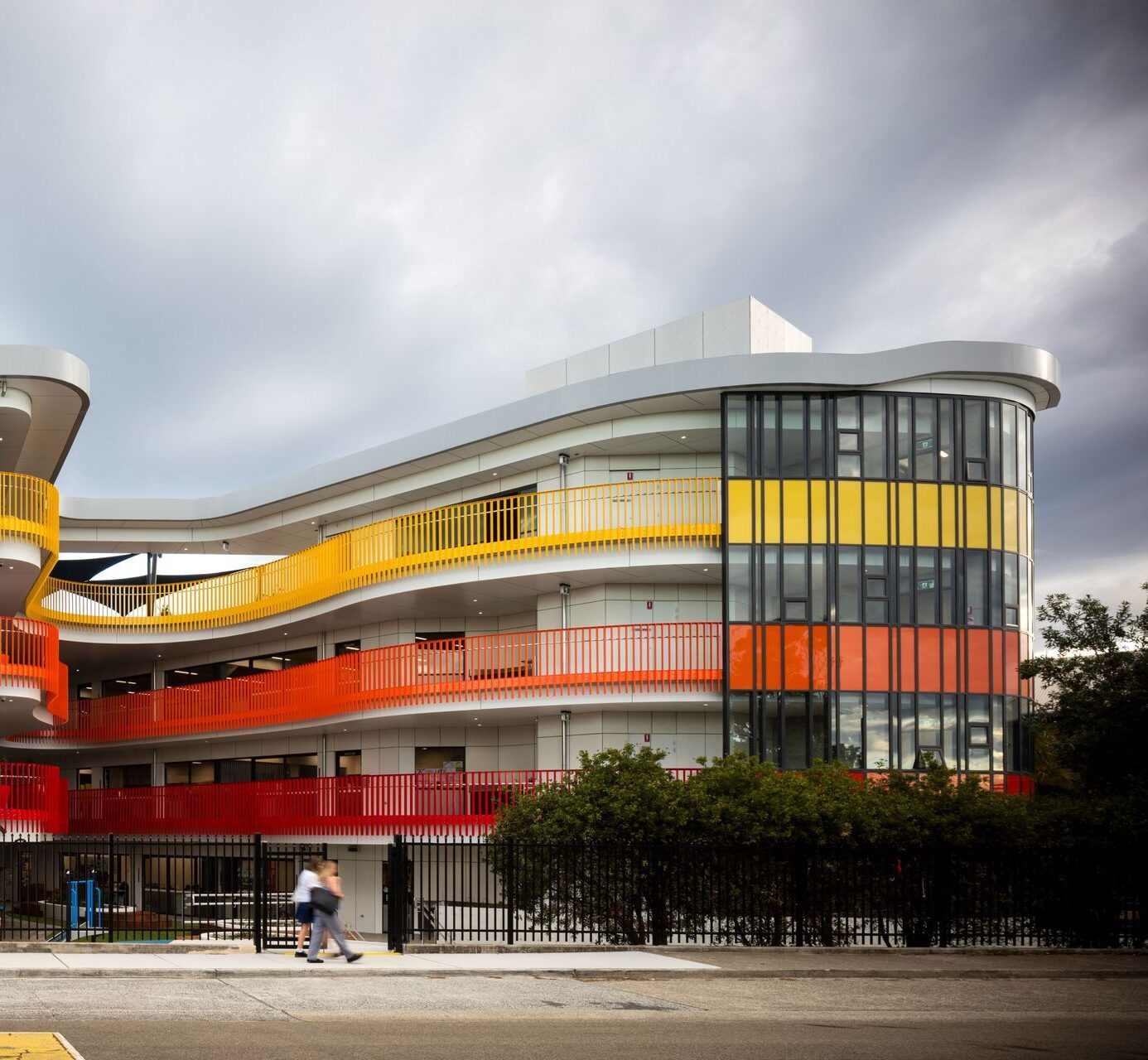
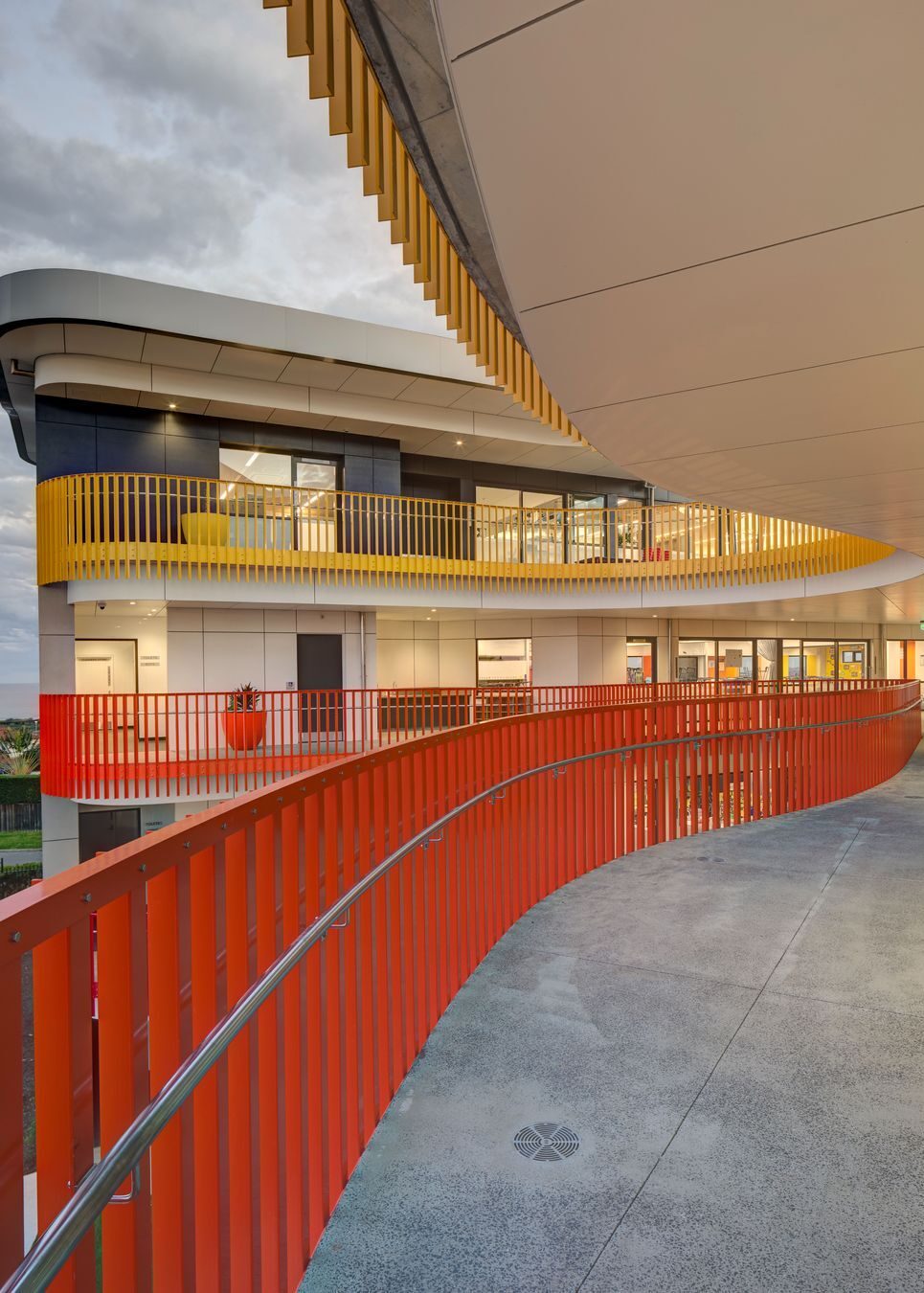
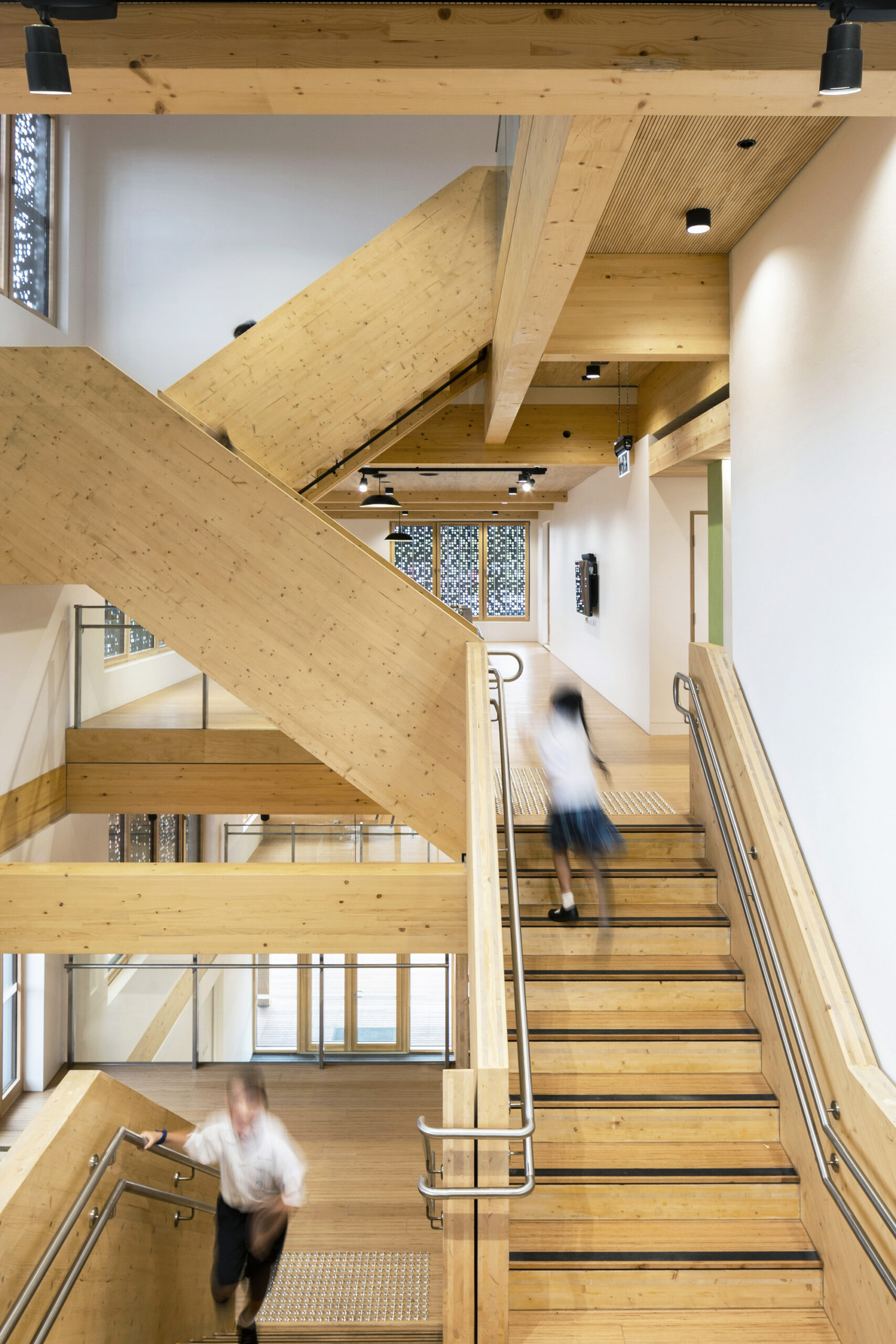
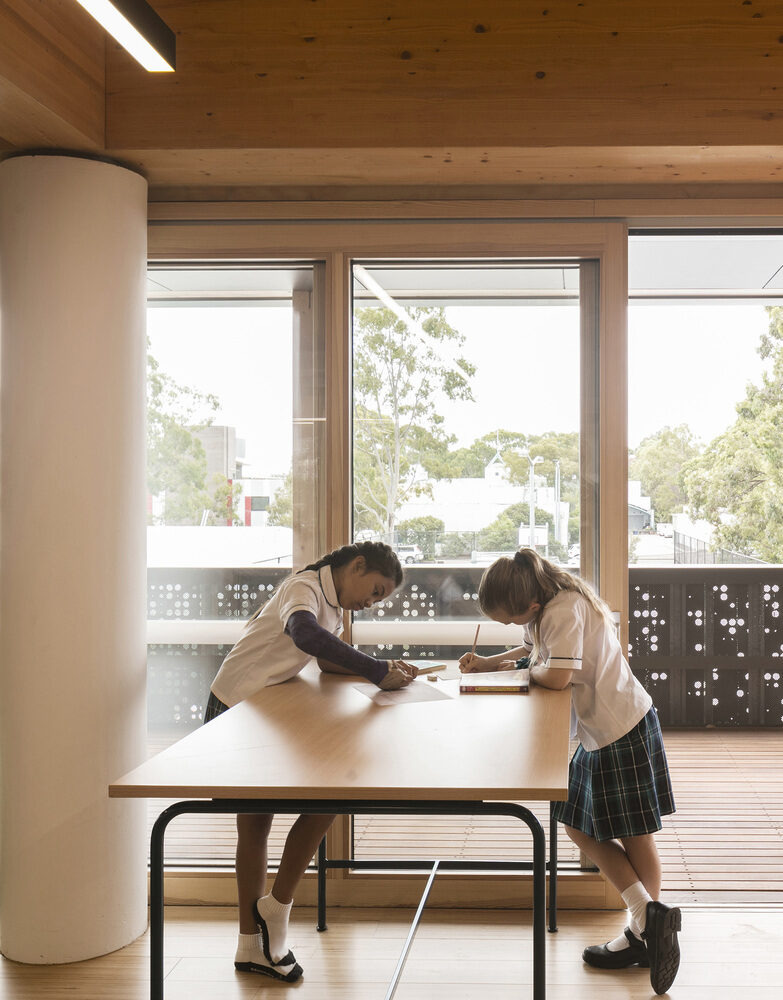
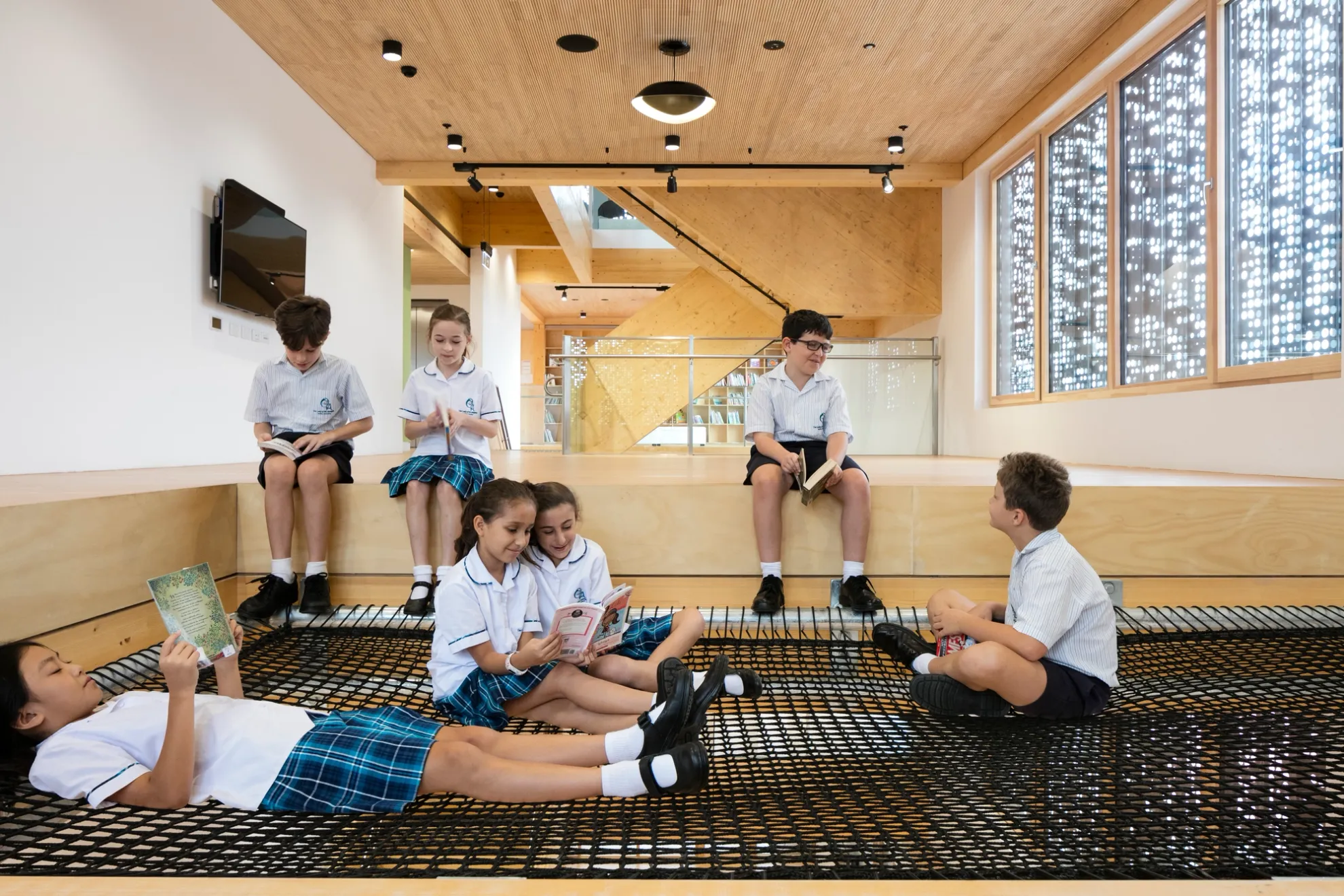
St Luke’s Grammar’s Northern Beaches Junior Campus is a fast-tracked, four-level learning building created for 360 pupils. The architecture amplifies its seaside context through rooftop garden outlooks and “snapshot” beach views from lower levels, while sinuous balcony lines echo the nearby shoreline and use bold colour to clearly define entries and teaching zones.
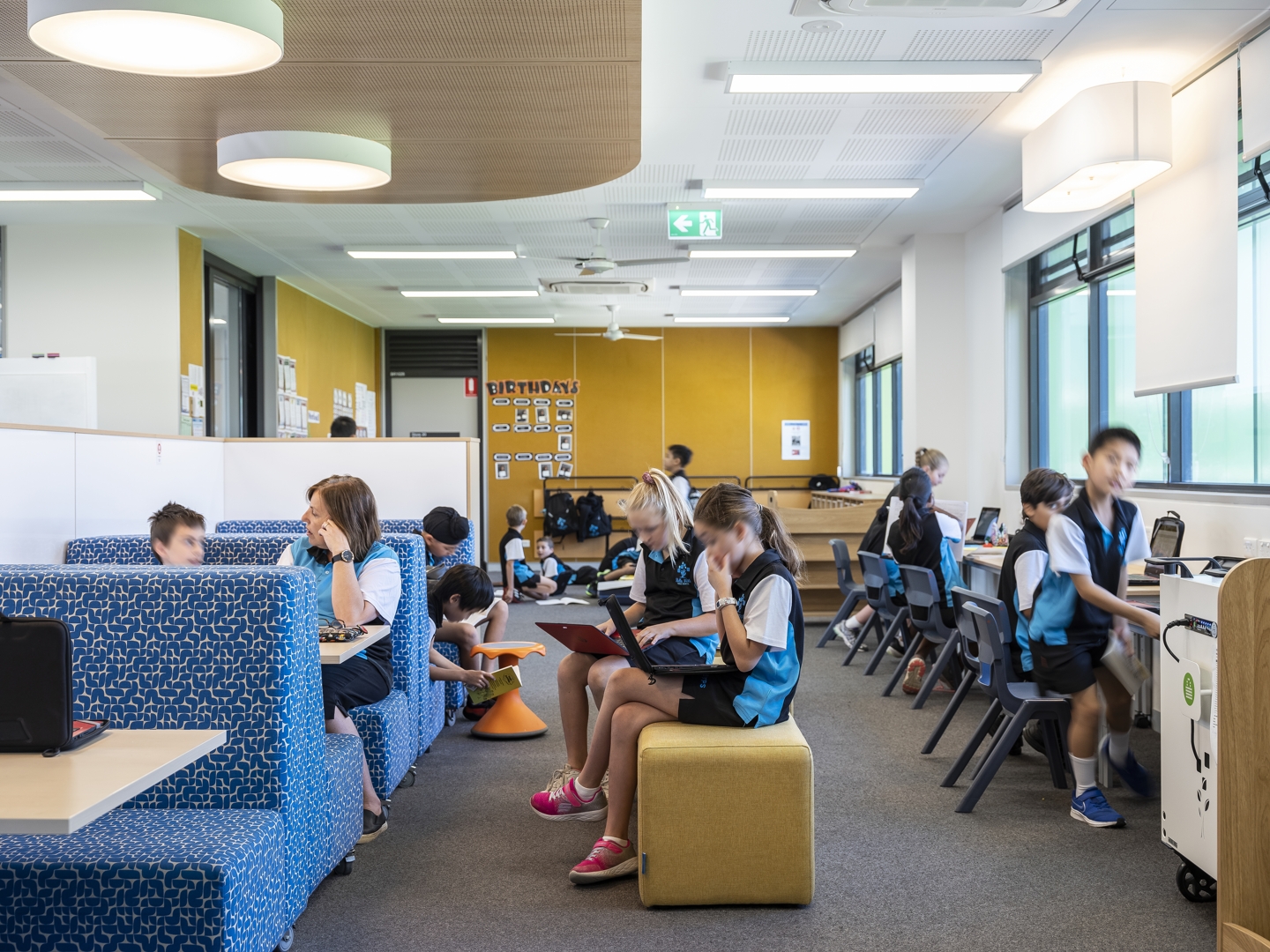
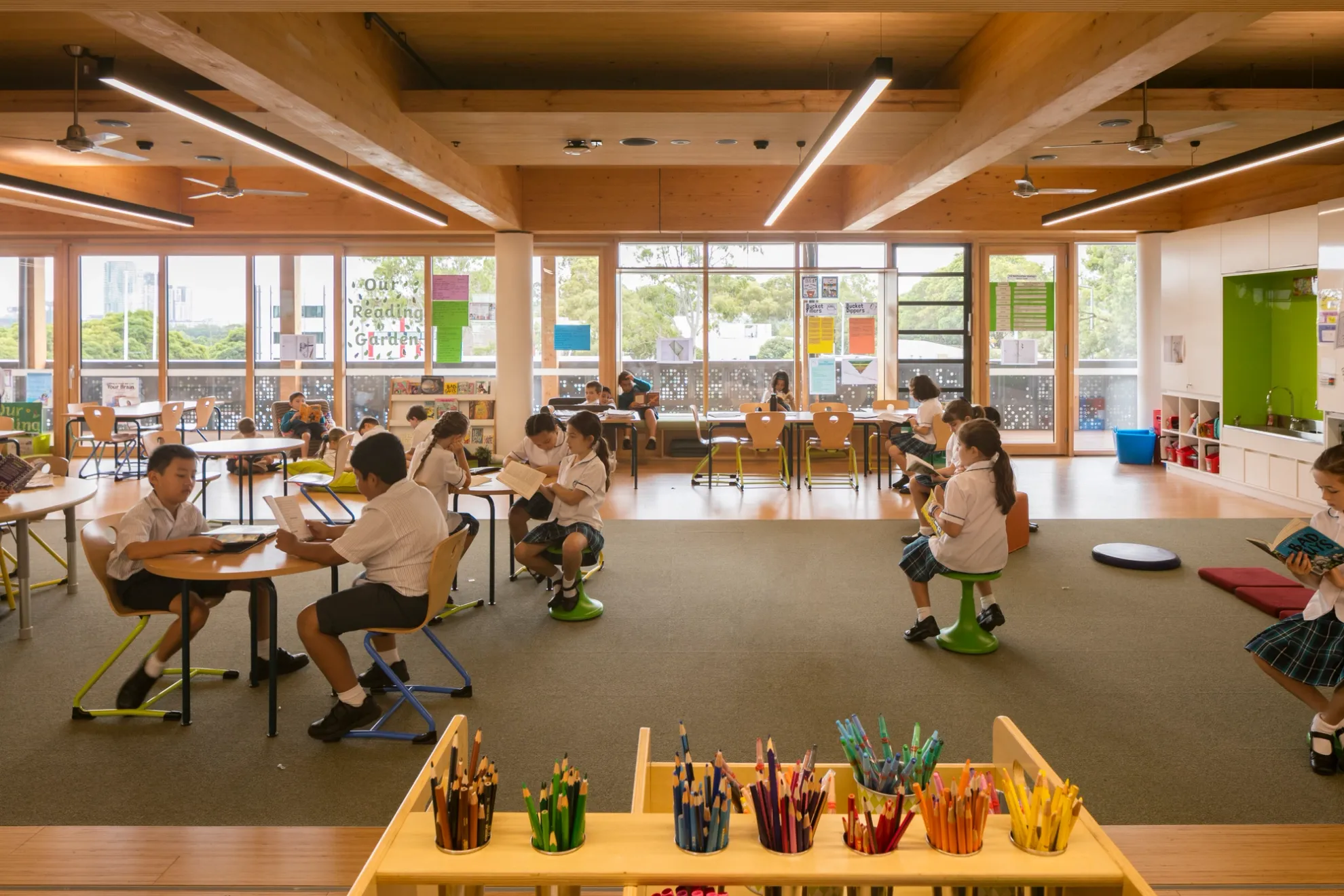
The school provides a suite of flexible classrooms, collaborative learning areas and covered outdoor spaces, supporting hundreds of students across multiple year levels while allowing teaching spaces to adapt to evolving pedagogies.
The project demonstrates how thoughtful design and construction can elevate everyday learning spaces, delivering a future-focused school that supports curiosity, inclusion and community for generations to come and is recognized as the first multi-storey school in Australia to use cross-laminated timber (CLT) for its structure.
Purpose-built to support interdisciplinary learning, the precinct brings together advanced STEM, creative and entrepreneurial spaces within a highly flexible learning environment, encouraging collaboration, experimentation and real-world problem solving.
A defining feature of the project is its strong emphasis on transparency and connection, with open, light-filled spaces, visual links between learning zones, and seamless integration with the surrounding campus landscape.
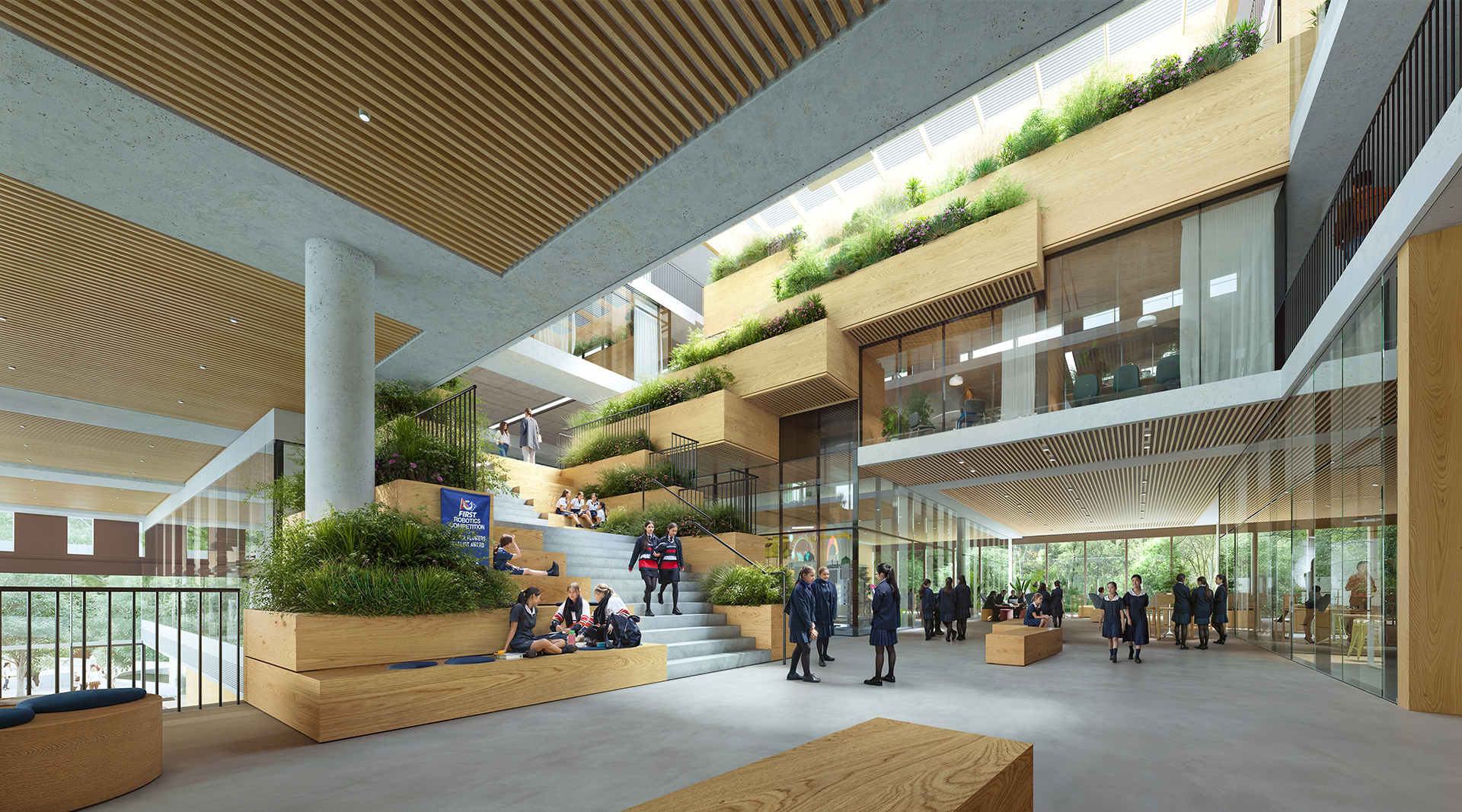
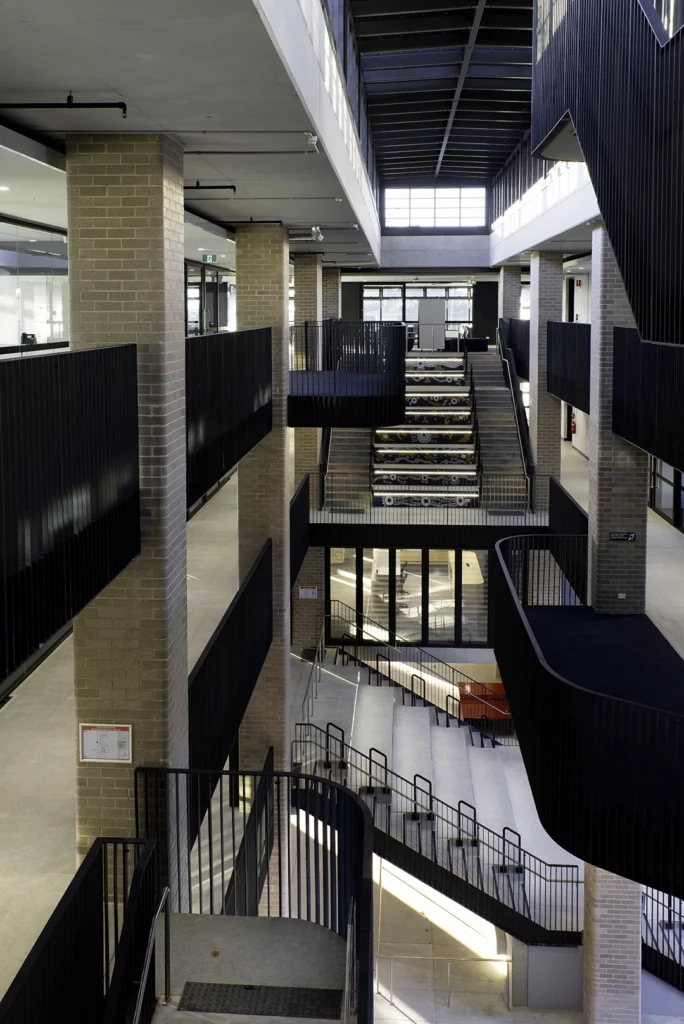
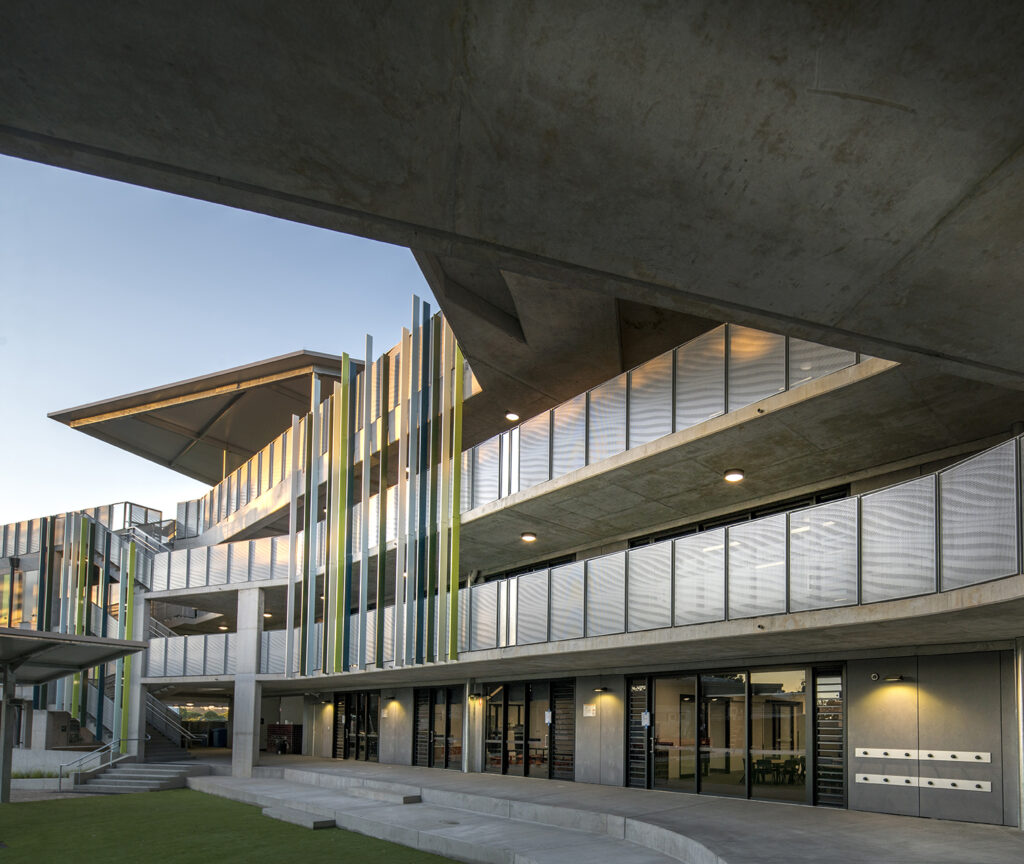
Purpose-designed to support a future-focused learning model, the campus features highly flexible teaching spaces, specialist learning areas and breakout zones. This vertical campus model maximises a constrained site while maintaining strong connectivity between learning, social and recreational spaces. The building demonstrates how design and construction excellence can deliver a premium educational environment that responds intelligently to city living and the evolving needs of students and educators.
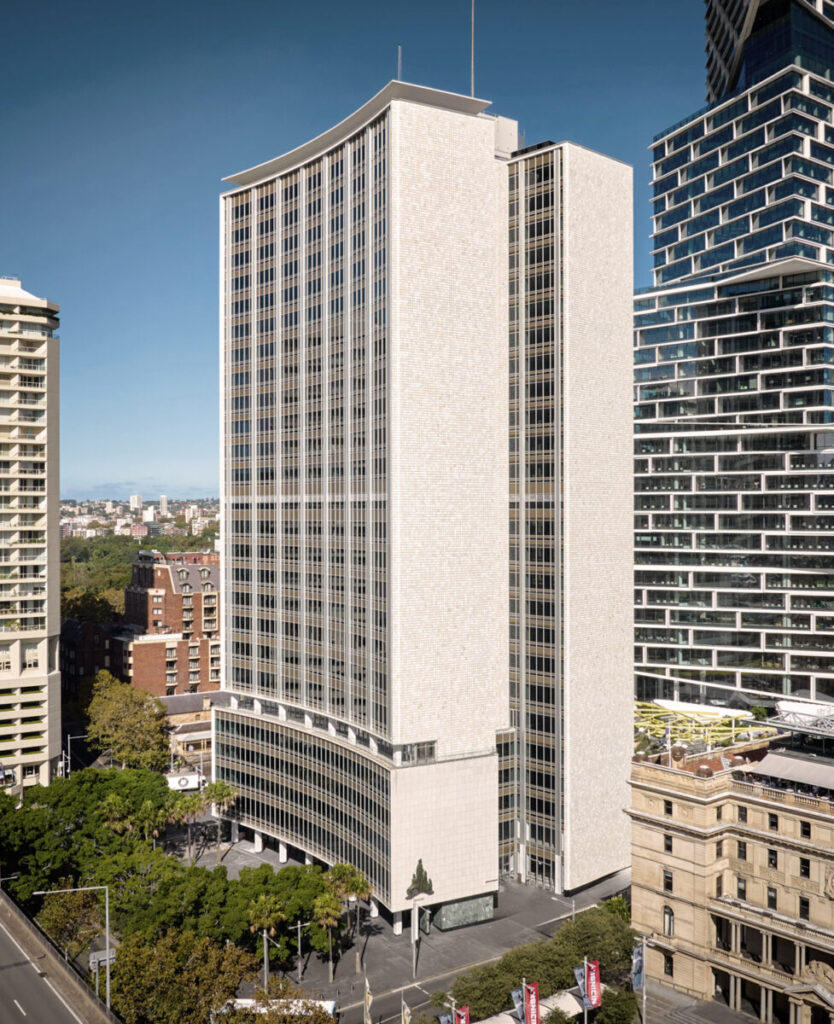
Iconic 44‑storey office tower underwent a strategic refurbishment to modernises its core facilities and tenant environments while honouring its landmark modernist legacy. A rolling, staged refurbishment of multiple office floors and associated lift lobbies and amenities delivered in a live, fully occupied building to minimise disruption. Stripping back tenancy floors to base‑build finishes, premium upgrades to lift lobbies, amenities and core services, and extensive mechanical, HVAC, fire‑services and base‑building enhancements to reposition the tower’s workplace experience for modern occupiers.
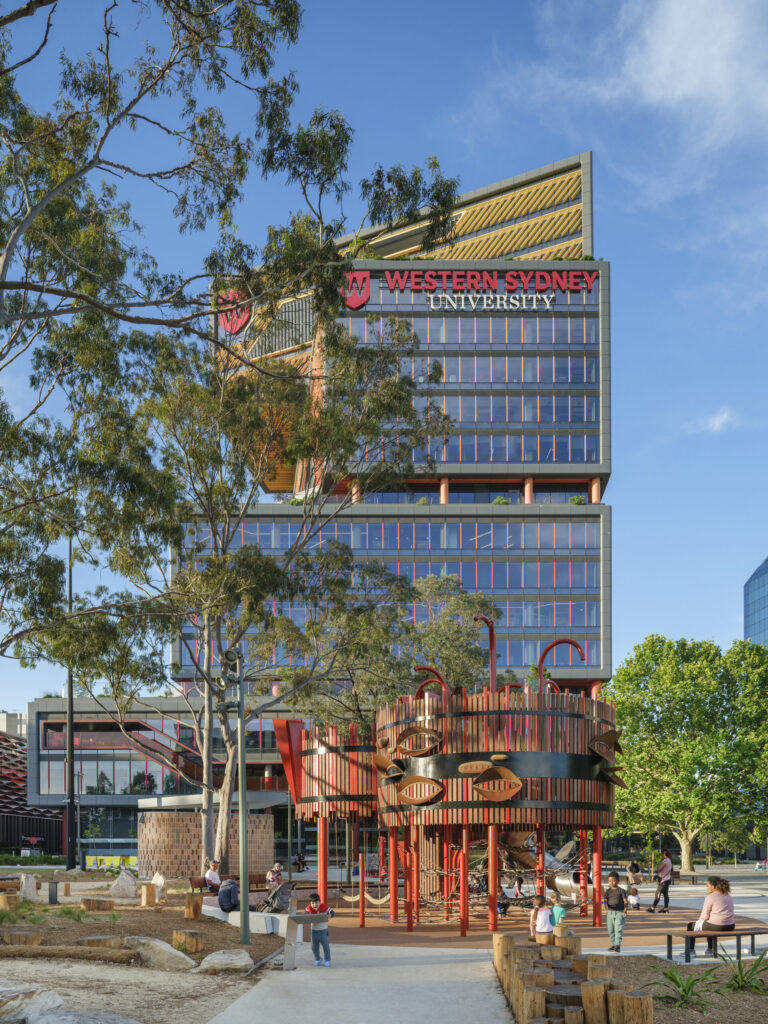
A sleek, three-storey, 5,500 m² office hub delivered for Western Sydney University and partners in a fast-tracked 15-month program at a cost of about A$35 million.
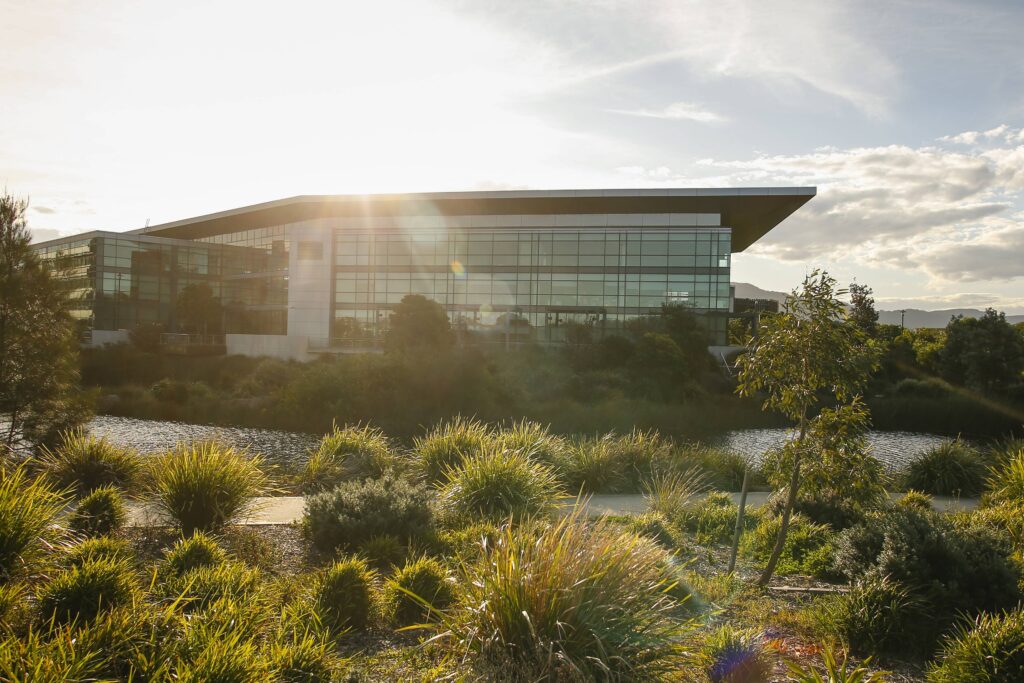
Anchored by a dramatic central daylight atrium flanked by glass-walled tenancies, the design exploits its leafy campus setting with terraces, gardens and a café, while securing a 5-Star Green Star Office rating and reinforcing its role as a new knowledge-economy destination in Greater Western Sydney.
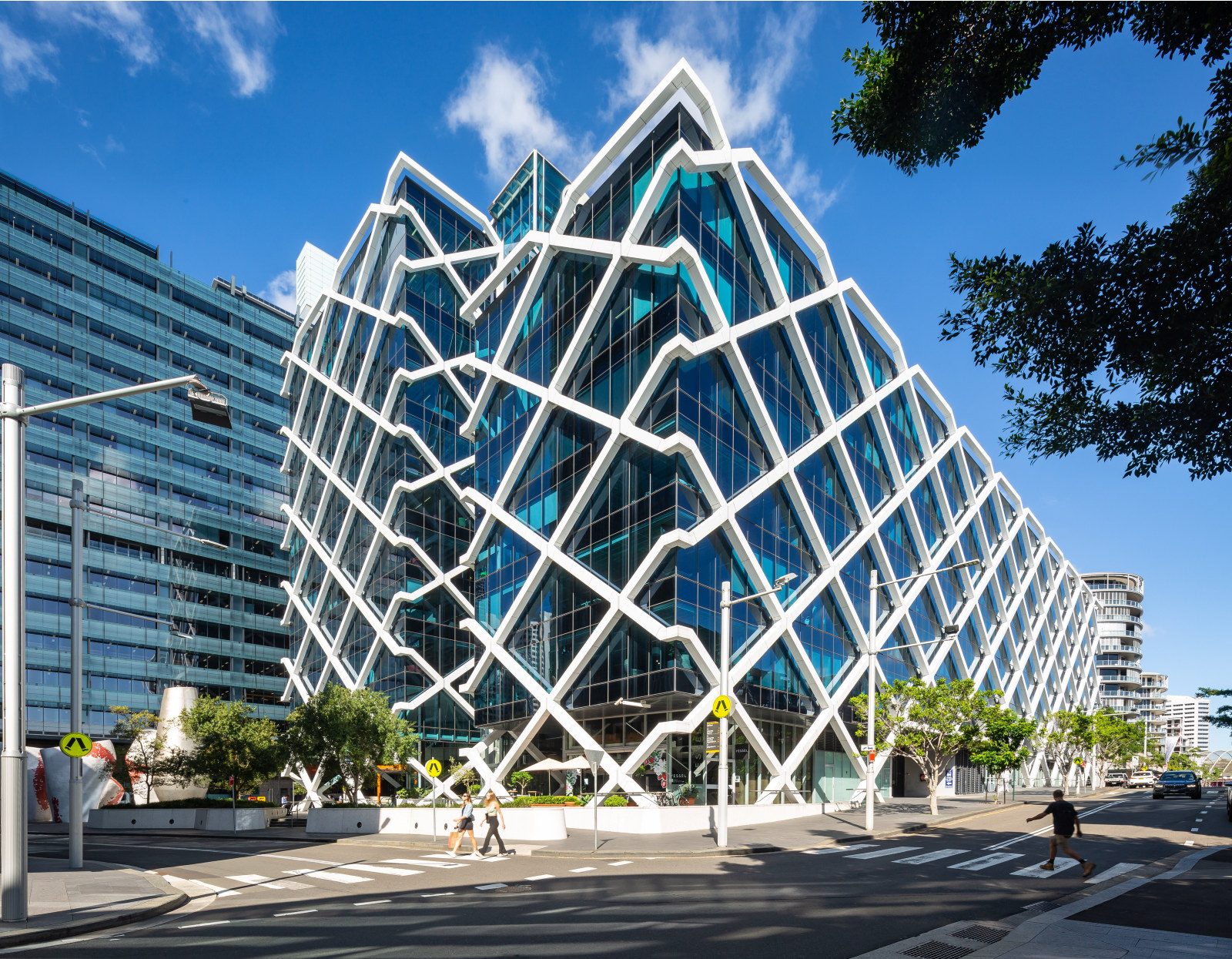
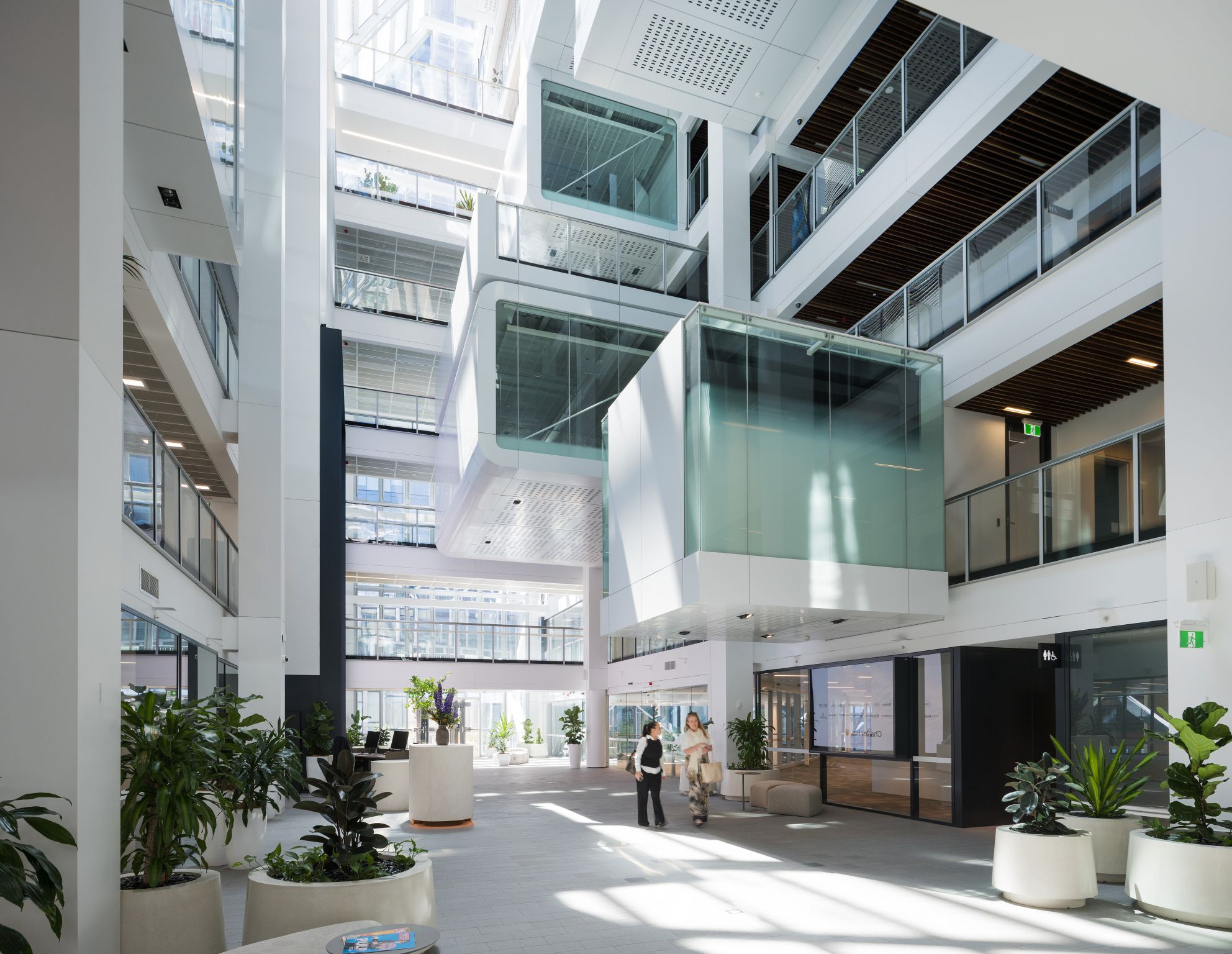
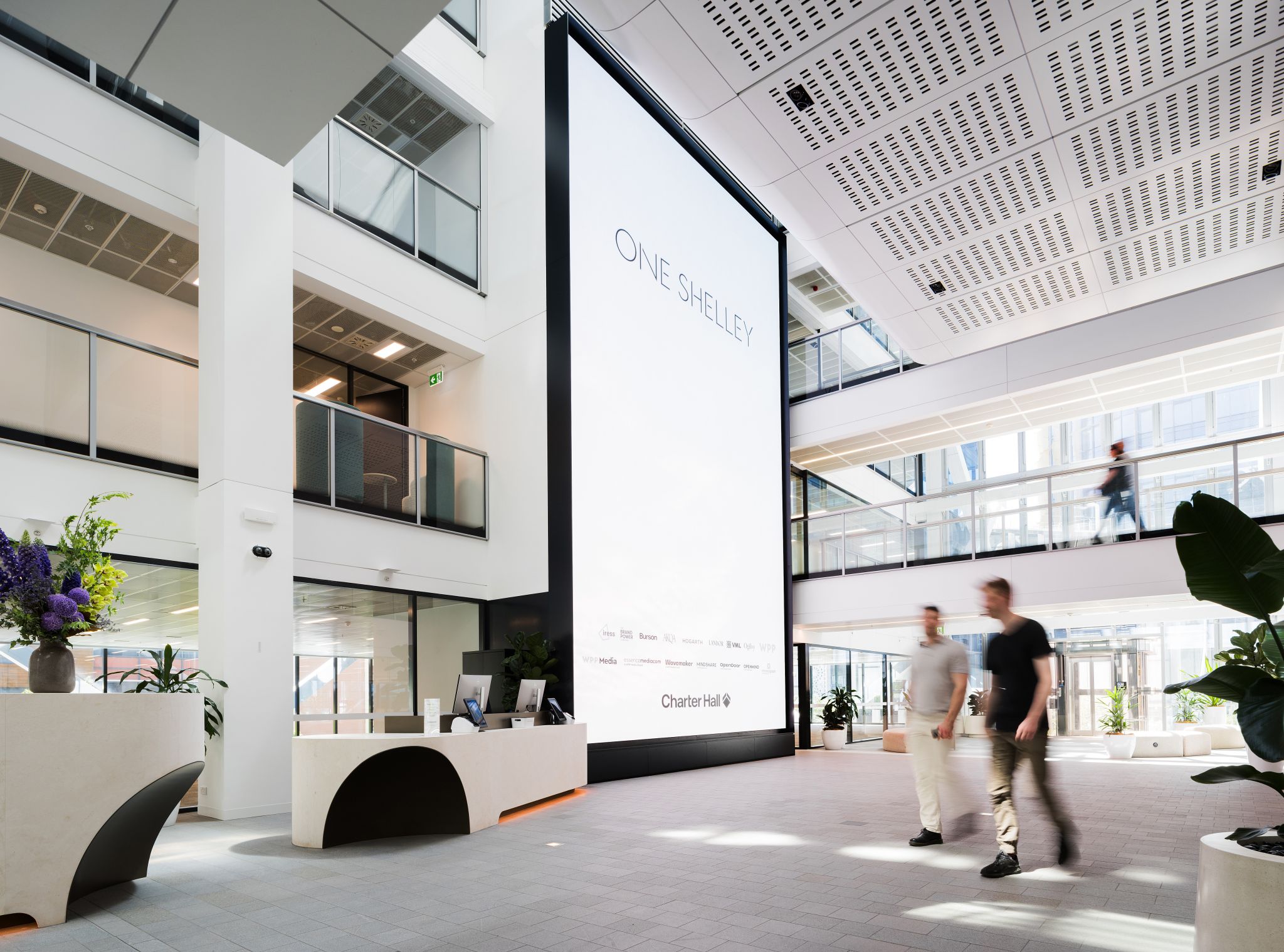
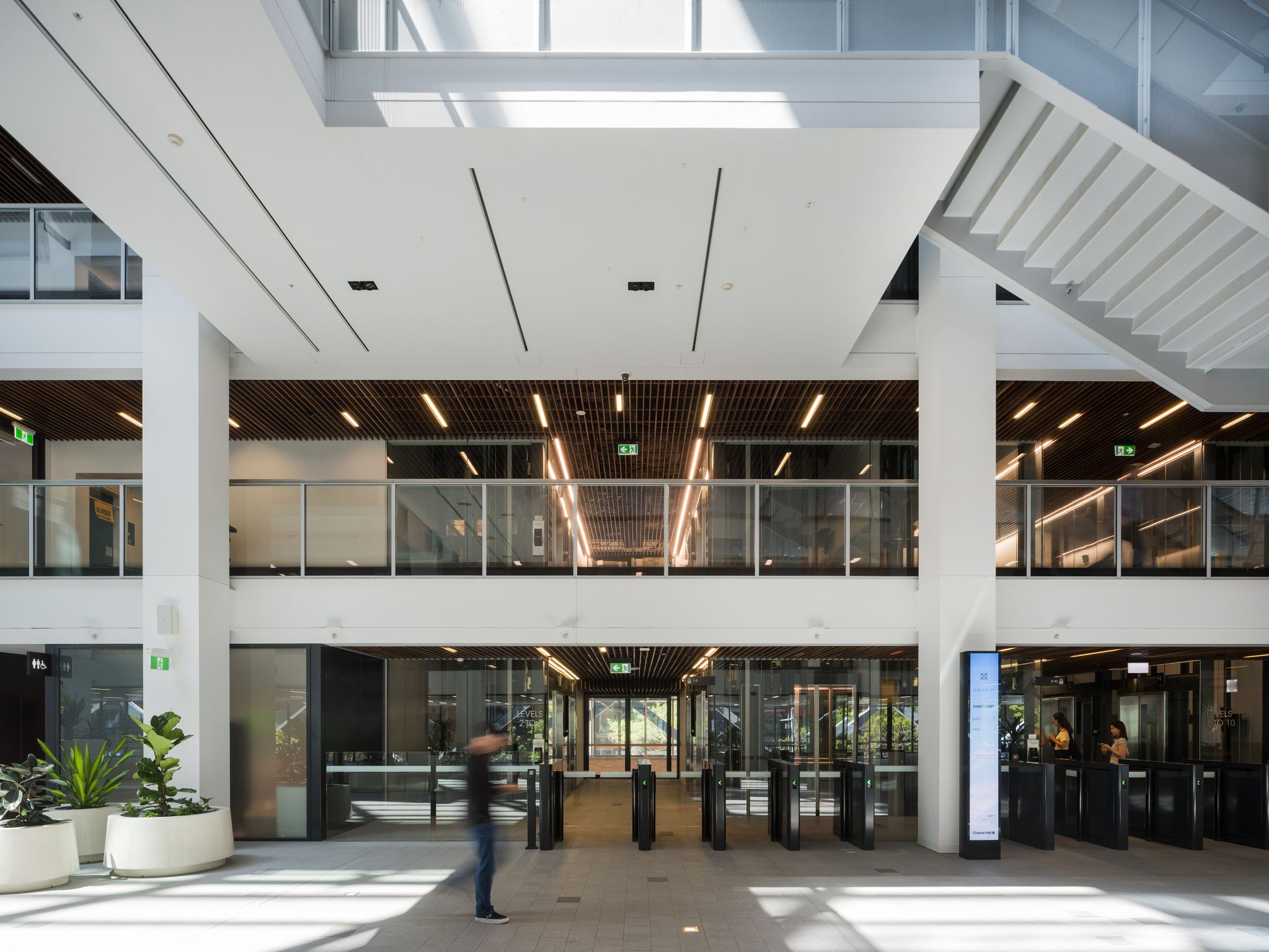
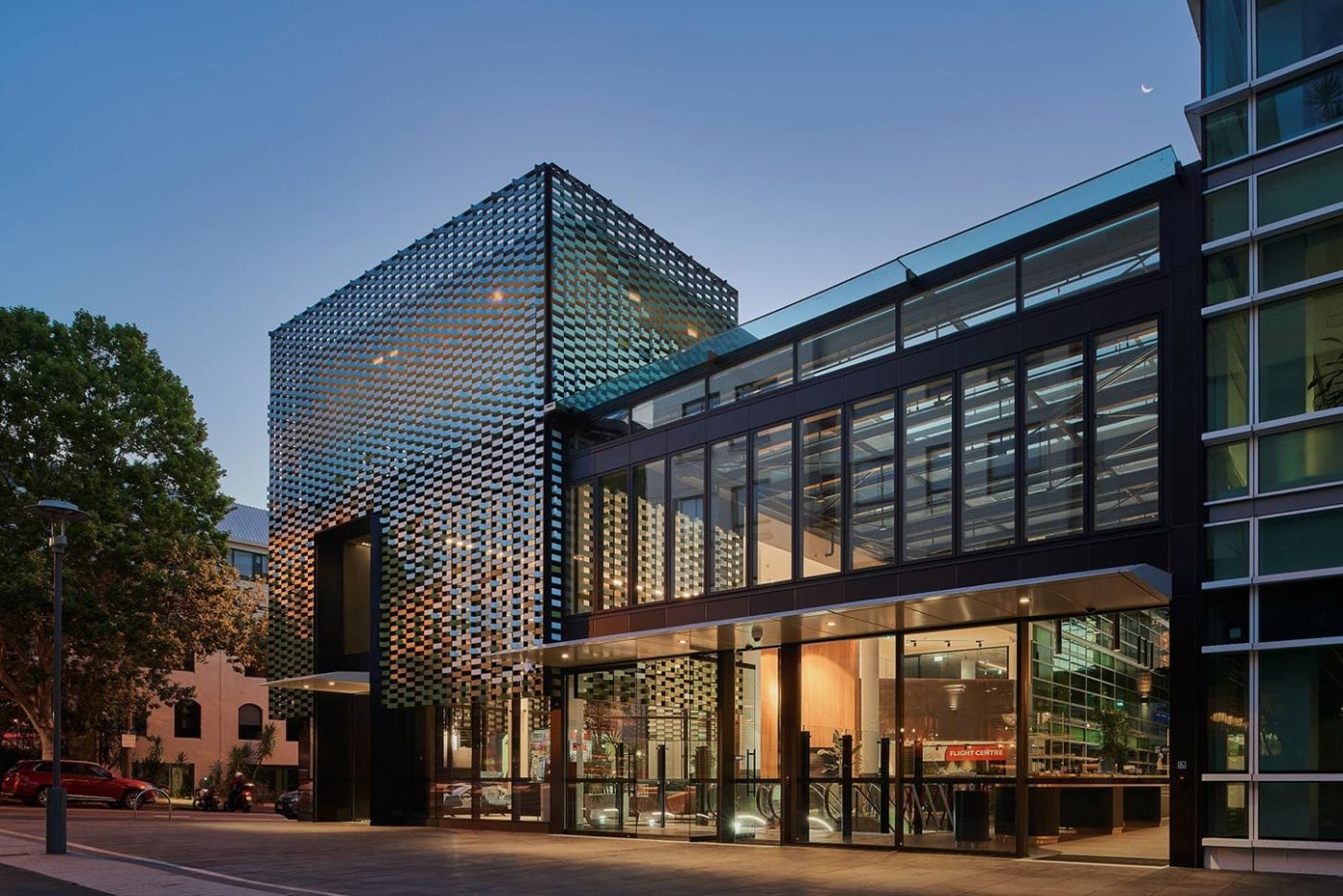
The One Shelley refurbishment transforms a prime Barangaroo office icon into a contemporary, sustainable workplace and urban gateway.
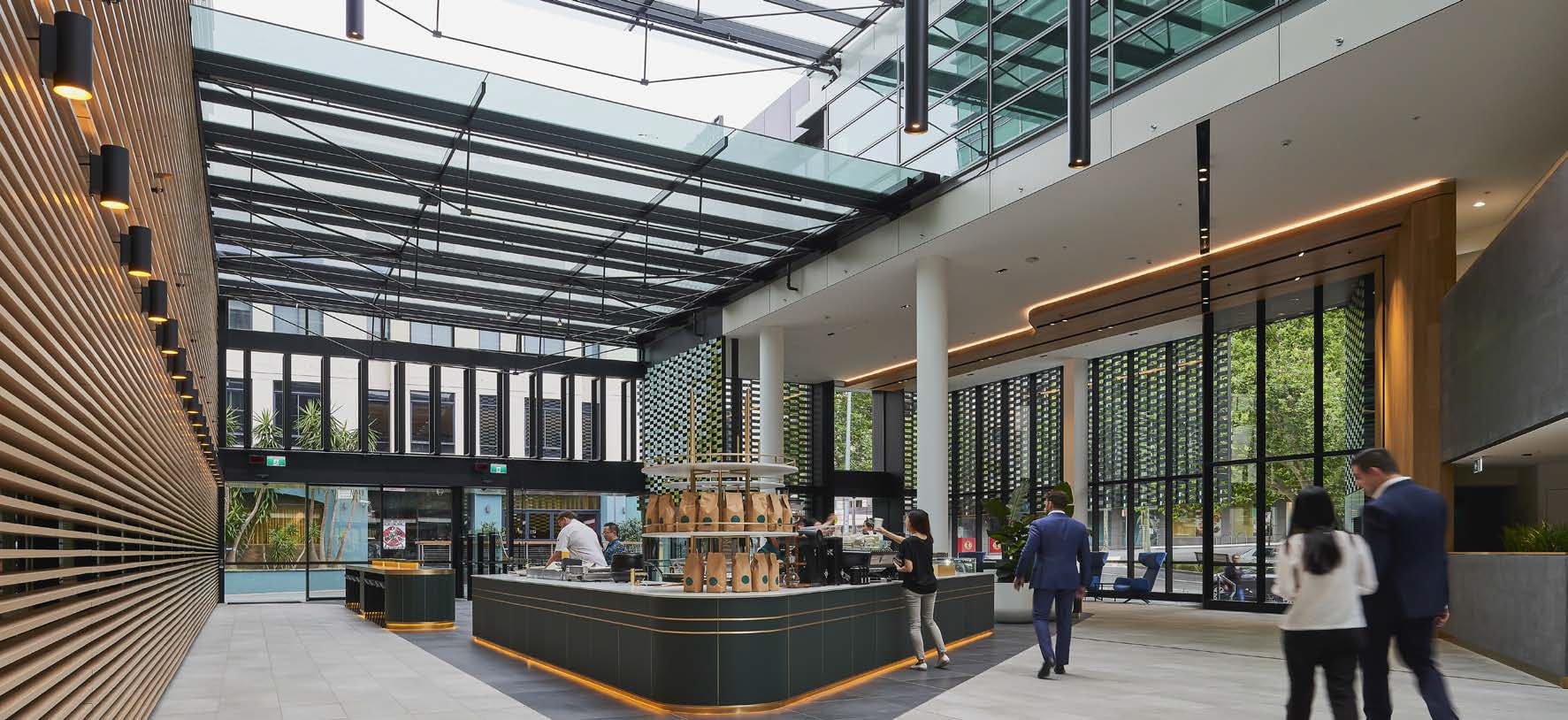
Major base‑building upgrades deliver a reimagined arrival experience with a dynamic new entrance, enhanced retail and communal “third‑space” zones, vibrant café and dining amenity, upgraded end‑of‑trip facilities, and a lobby that activates the public realm with transparent façades, quality finishes and landscaping that extends the Barangaroo street character inside.
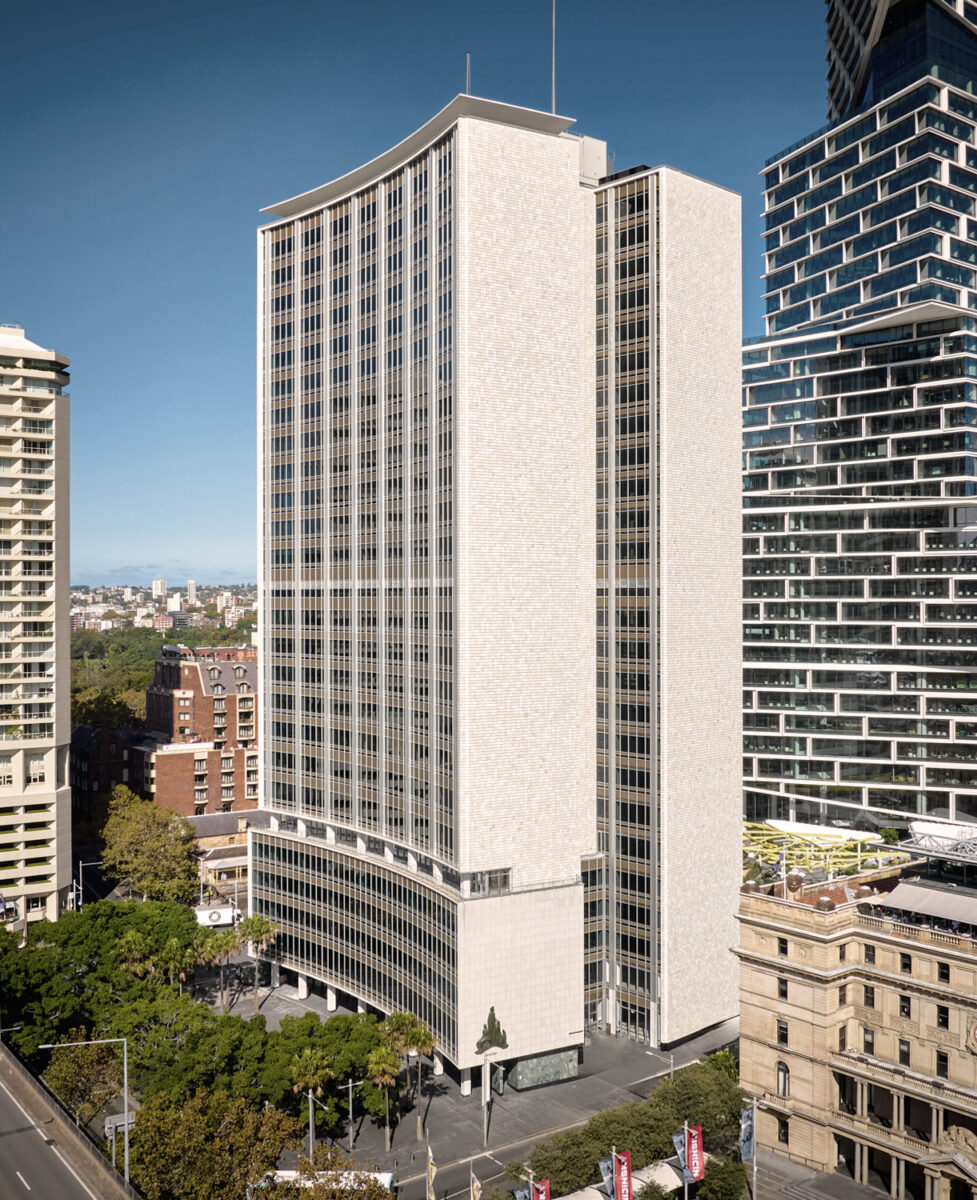
The comprehensive upgrade to high-performance full-height glass and glazed ceramic façade preserves its golden “tartan” character while dramatically boosting daylight, thermal performance, and harbour views.
Retaining the original structure to minimise waste, the transformation has repositioned the building as premium-grade 32,000m² office space, targeting 5.5-star NABERS and 6-Star Green Star ratings.
The $200 million project reimagined a 1976-era tower into a premium-grade office and retail destination by retaining the original 28-storey structure while delivering a striking new faceted glass façade, an expansive double-height lobby, and flexible floorplates designed for workplace agility.
With a 5 Star Green Star rating and 5.5 Star NABERS Energy rating, the building champions environmental performance during a complex live-site redevelopment, showcasing excellence in design collaboration.
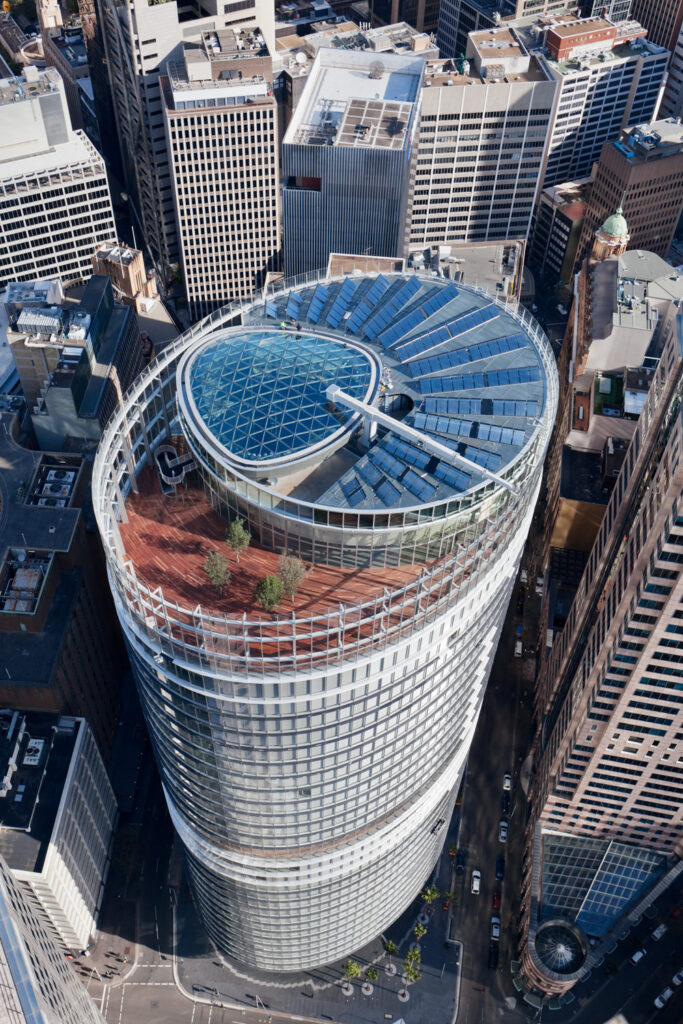
Innovative and multi award winning design captures several key features, including a double skinned glazed facade, full height naturally ventilated glazed central atrium and column free floor plates, twenty-seven storey premium grade office tower, including rooftop garden, childcare centre, retail cafes and ancillary basement car parking. It incorporates several sustainable strategies, a basement sewage plant recycling 90% of the building wastewater, solar panels and chilled beams throughout achieving a 6 Star Green Star Certified Rating and 5 Star NABERS Energy Rating.
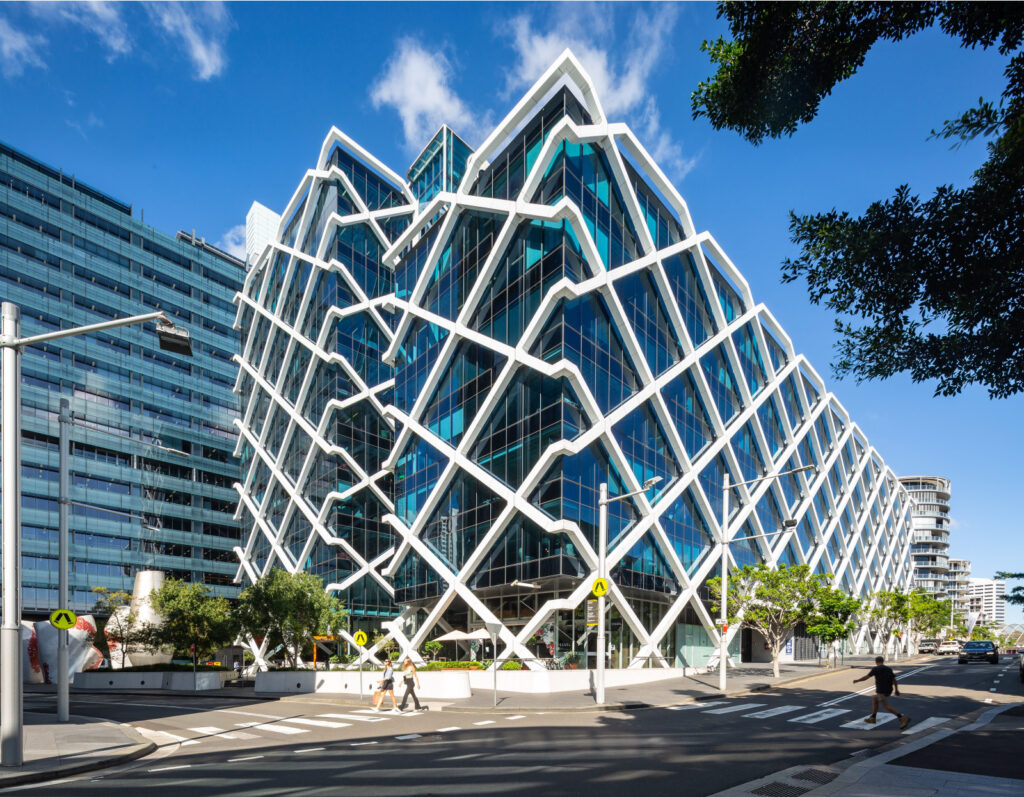
The project involved the repositioning of an existing mixed-use retail and commercial property, to an A-Grade asset via refurbishment of the façade, office lobby, retail zone and occupant facilities including a new end of trip.
The development consisting of an 8-level tower with a podium connecting the tower to a 3-storey terrace building, also contained an atrium which underwent major alterations and upgrade.
M Park features a premium seven-storey commercial tower with four basement levels and integrated road access linking Buildings A, C, and D.
At its heart is “The Park,” a 2,760m² landscaped precinct designed as a central hub for connection, wellness, and activity. It encourages social interaction among tenants and the broader Macquarie Park community, seamlessly extending the workplace beyond the buildings.
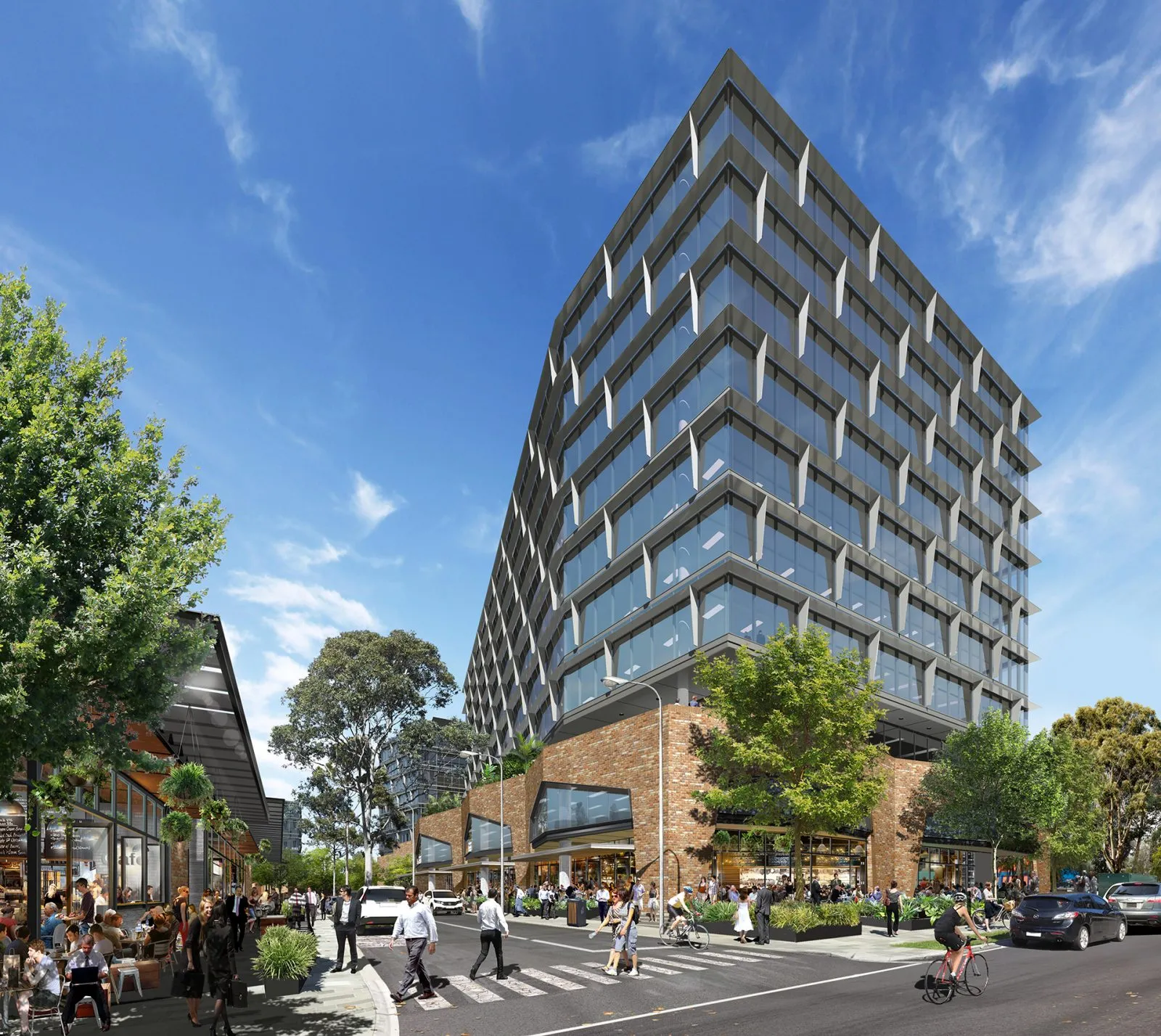
This bold transformation will introduce a 37-storey premium-grade tower, adding over 50,000 m² of cutting-edge office space to the iconic Chifley precinct. The development includes a reimagined podium, activated retail frontage, a new double-height arcade connecting Hunter and Bent Streets, wellness and end-of-trip facilities, and lush public realm upgrades - all designed to elevate the precinct’s status as a world-class business hub.
The project is targeting a 6-Star Green Star Buildings v1 rating and Climate Active Carbon Neutral certification, aligning with the City of Sydney’s Net Zero ambitions.
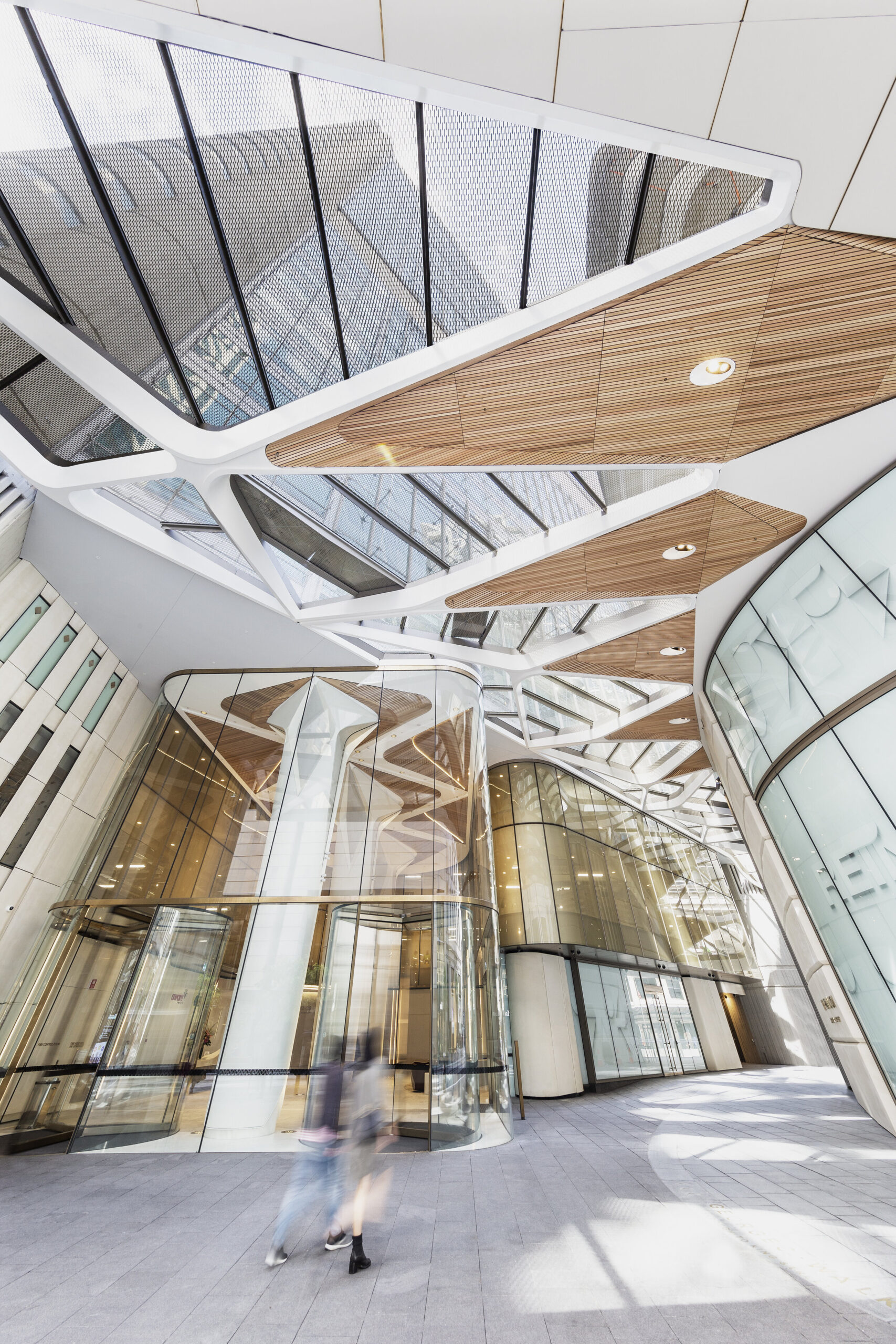
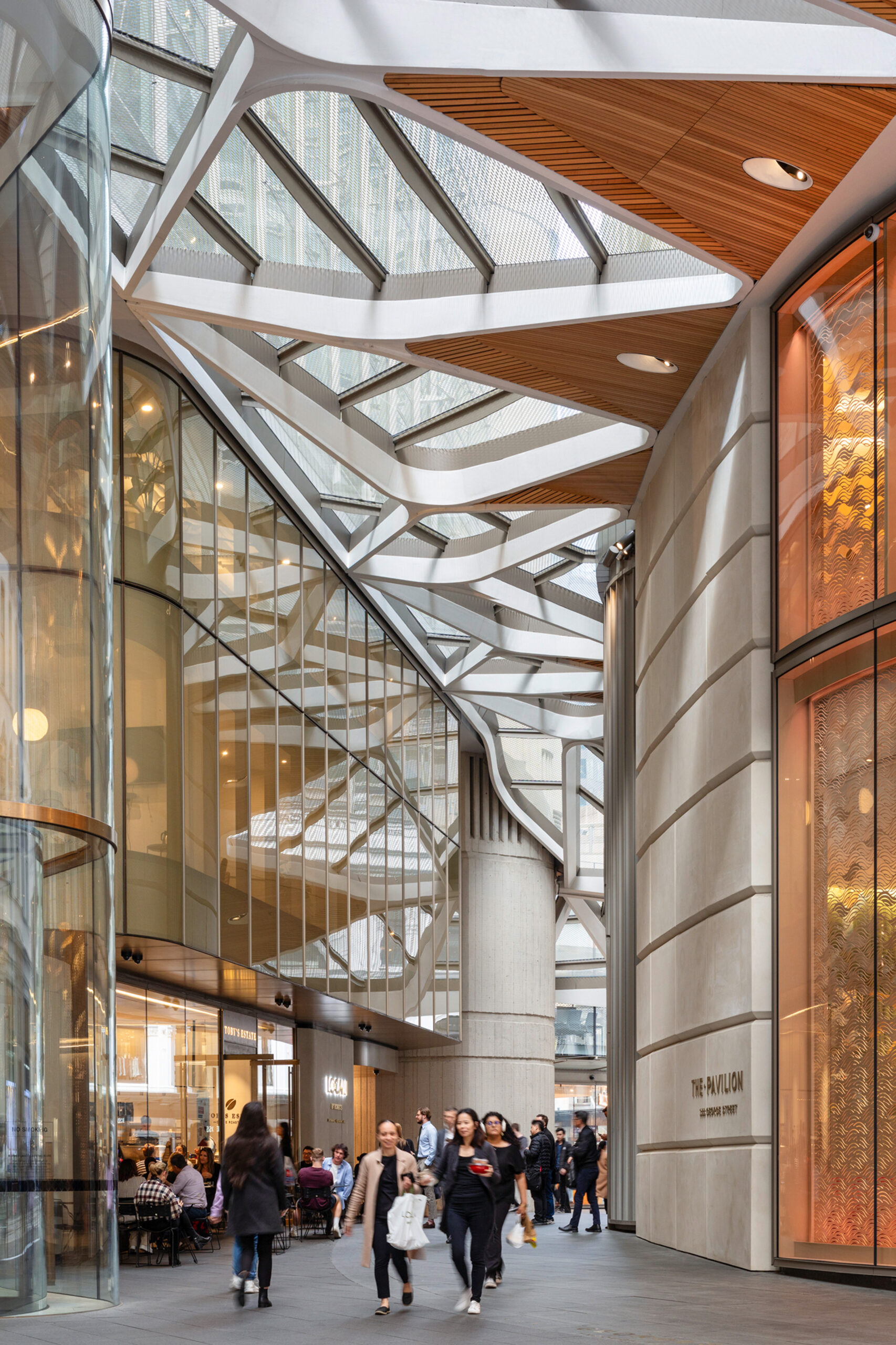
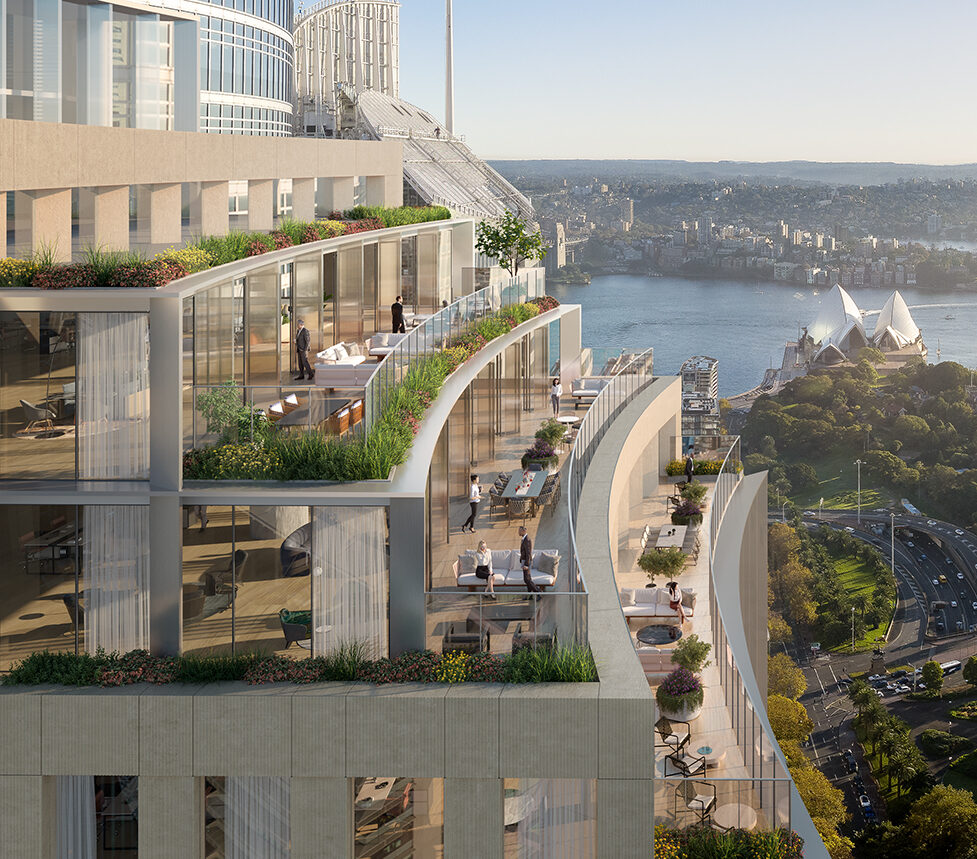
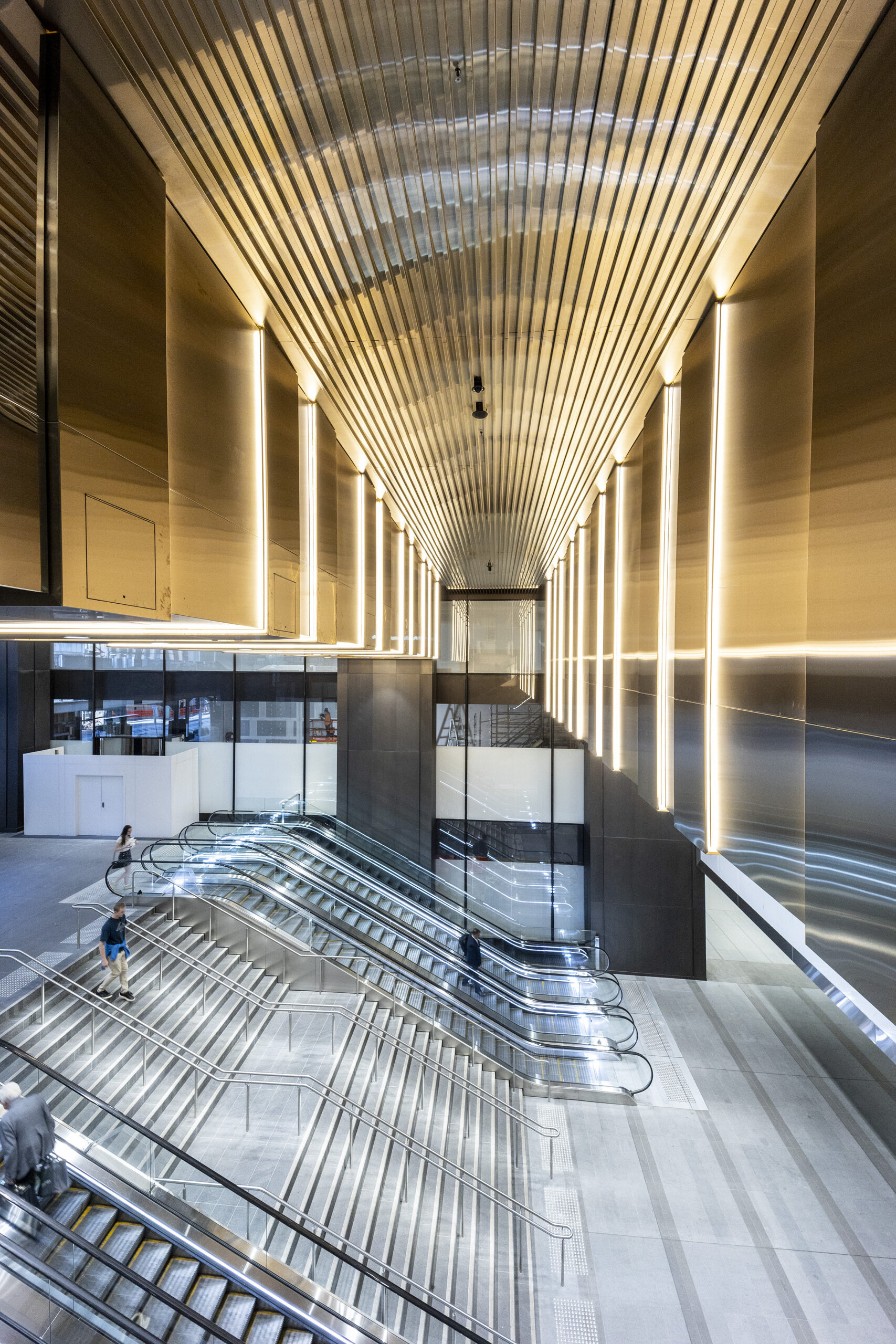
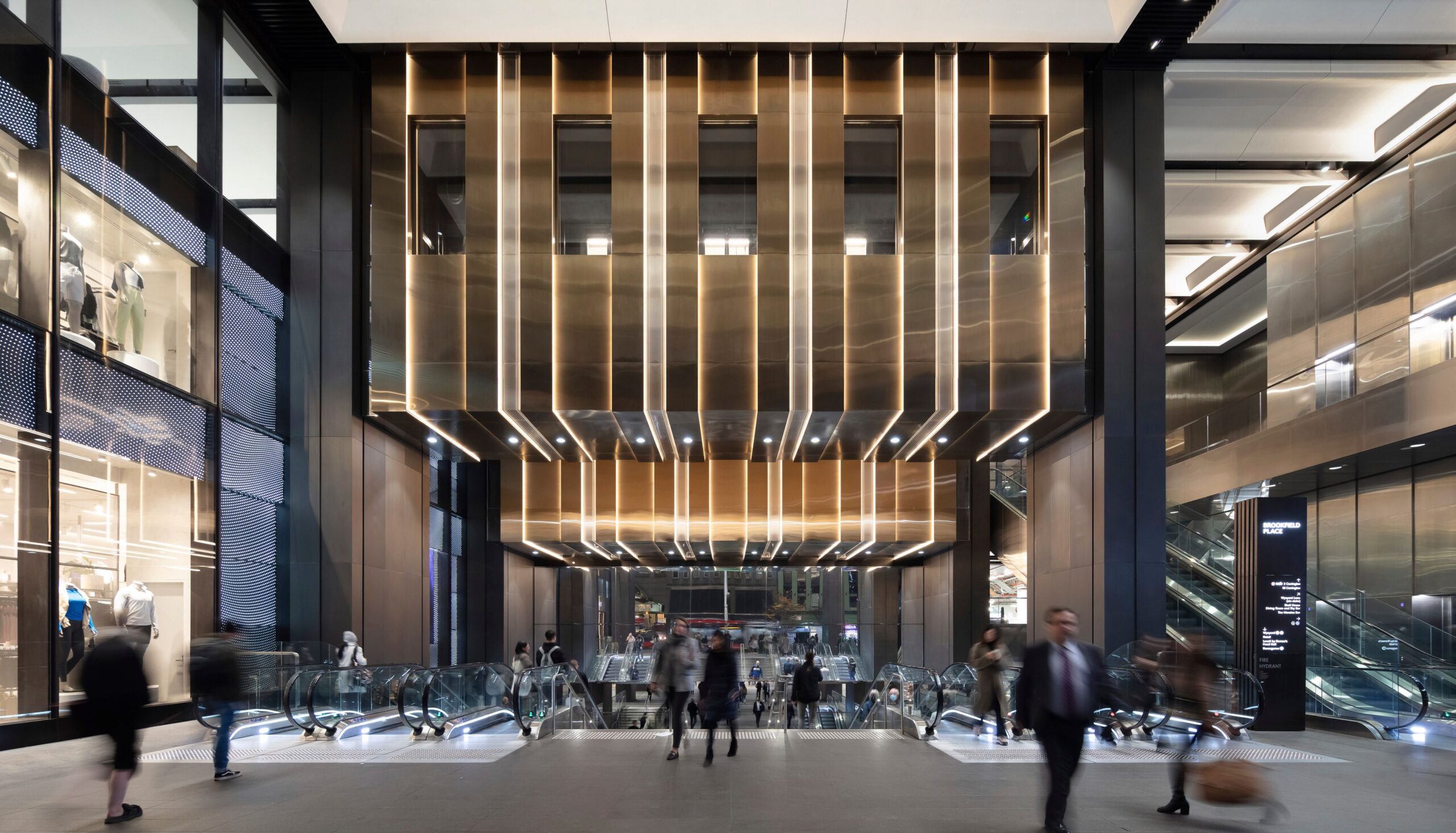
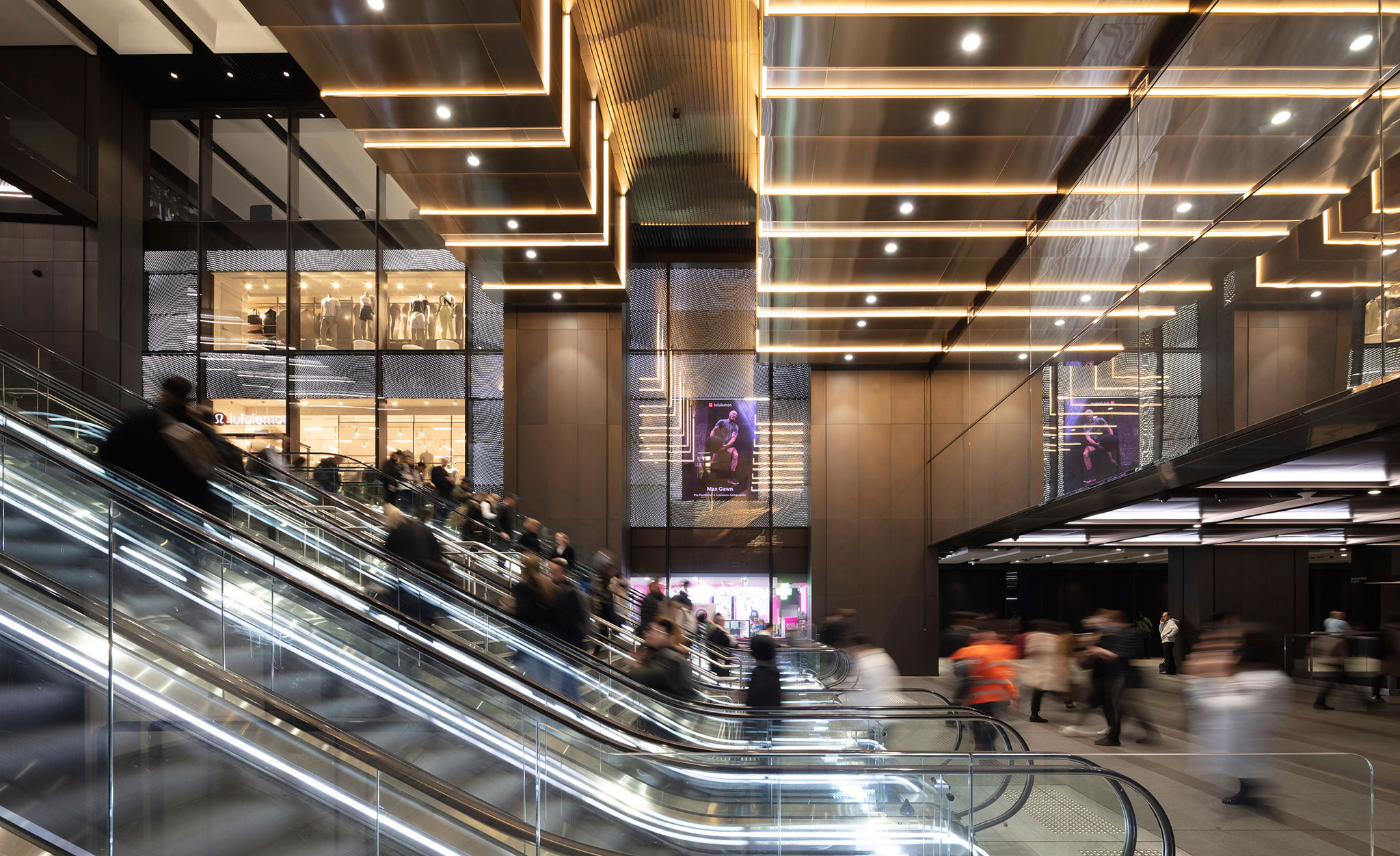
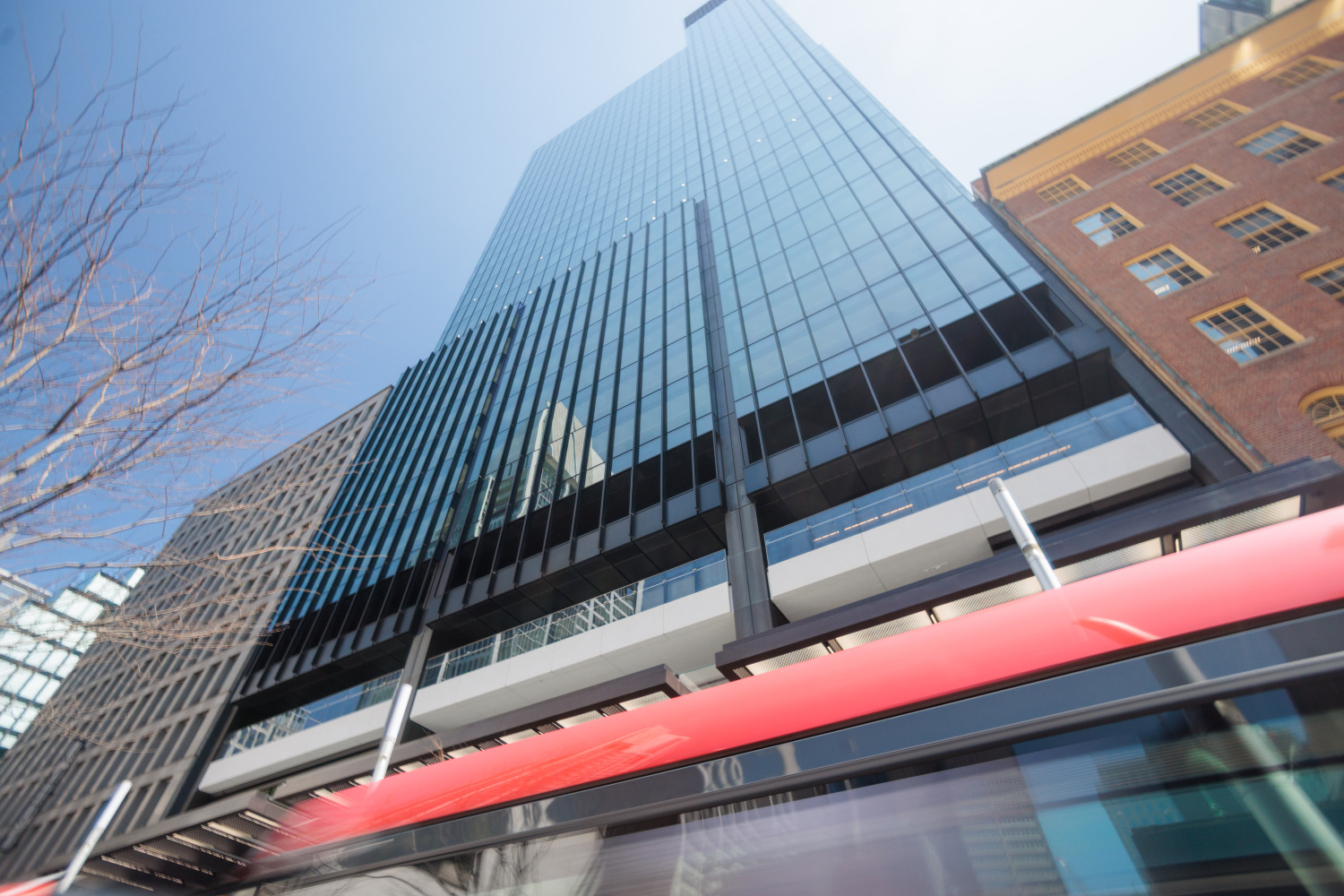
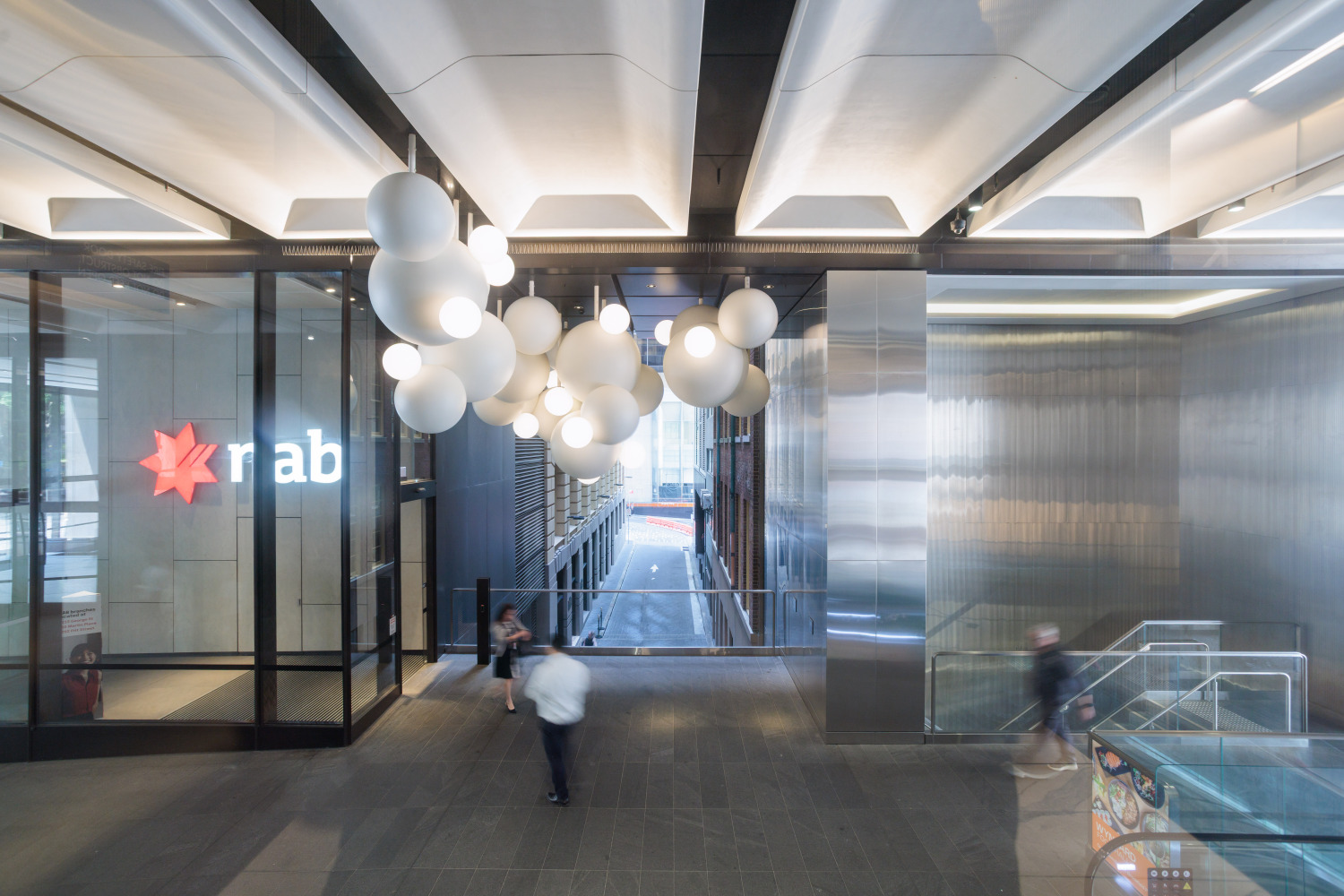
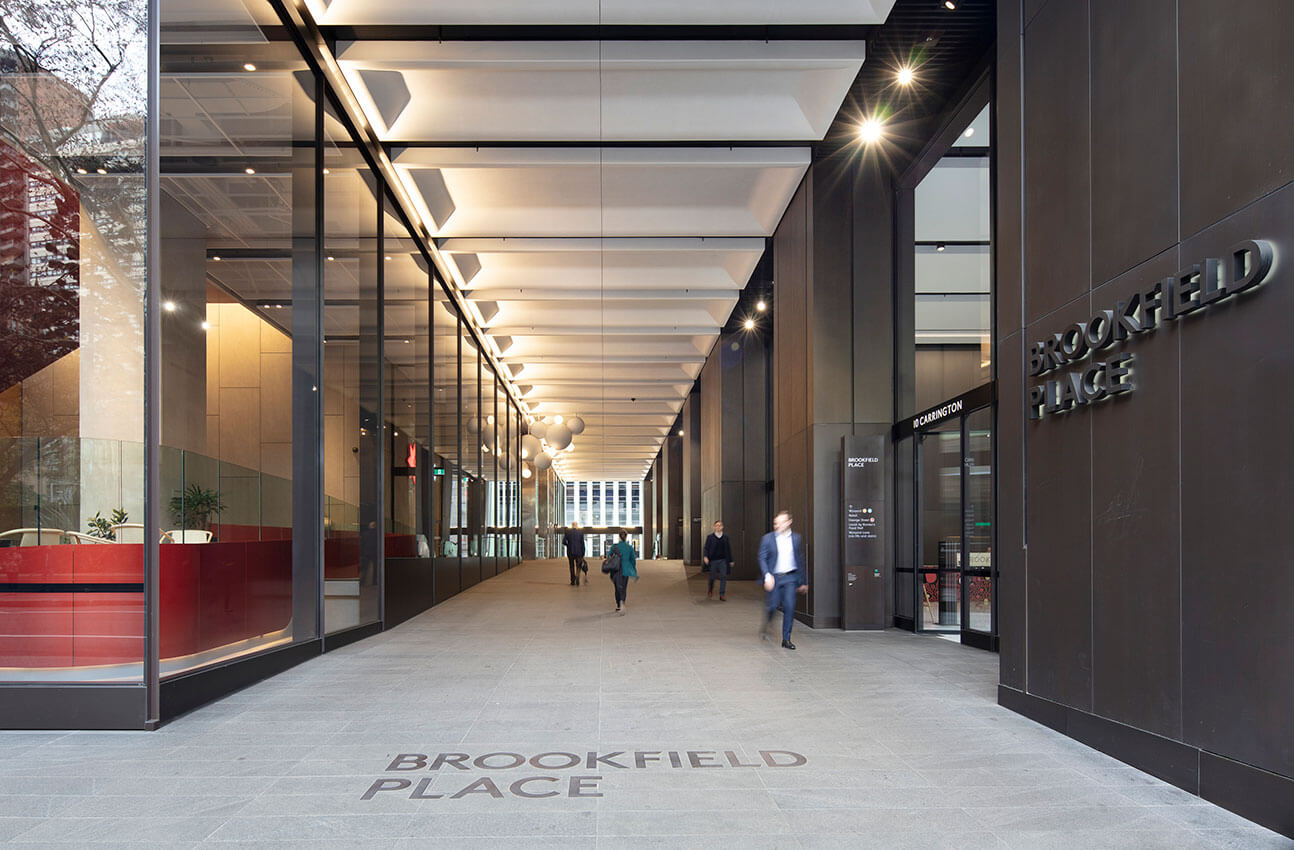
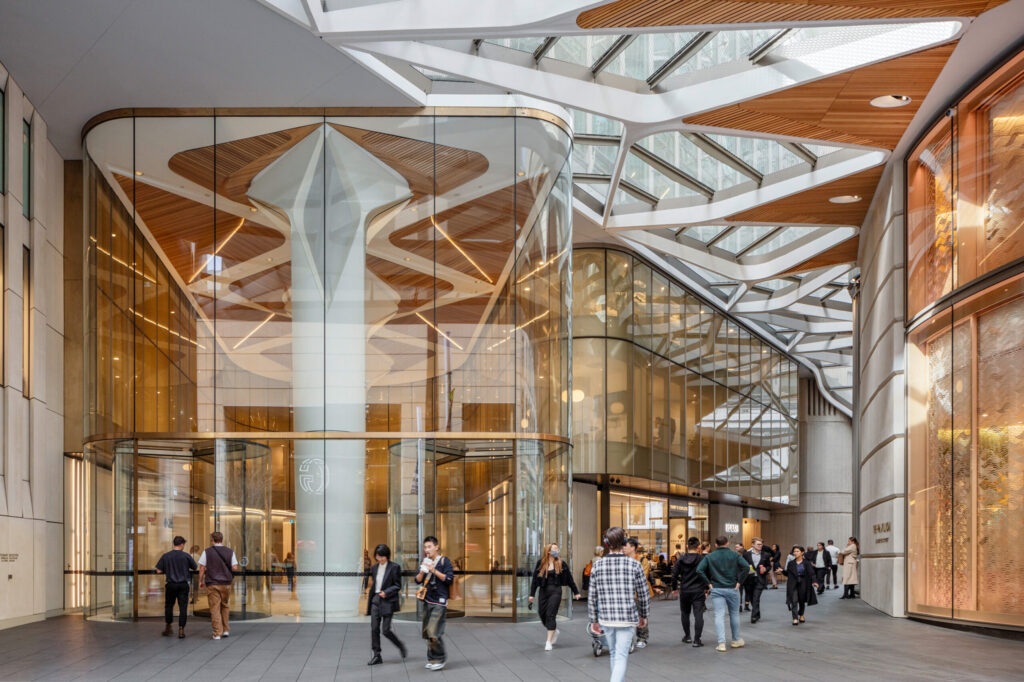
Brookfield Place Sydney is a top-tier mixed-use precinct centred on a 27-level, 59,000 m², PCA Premium-Grade office tower, flanked by the heritage restorations of Shell House and 285 George Street, all stitched together with a striking new transit hall above Wynyard Station.
The $2 billion project merges rigorous structural innovation with exceptional sustainability, achieving 6 Star Green Star and 5.5 Star NABERS ratings while reactivating retail, public space, and station integration.
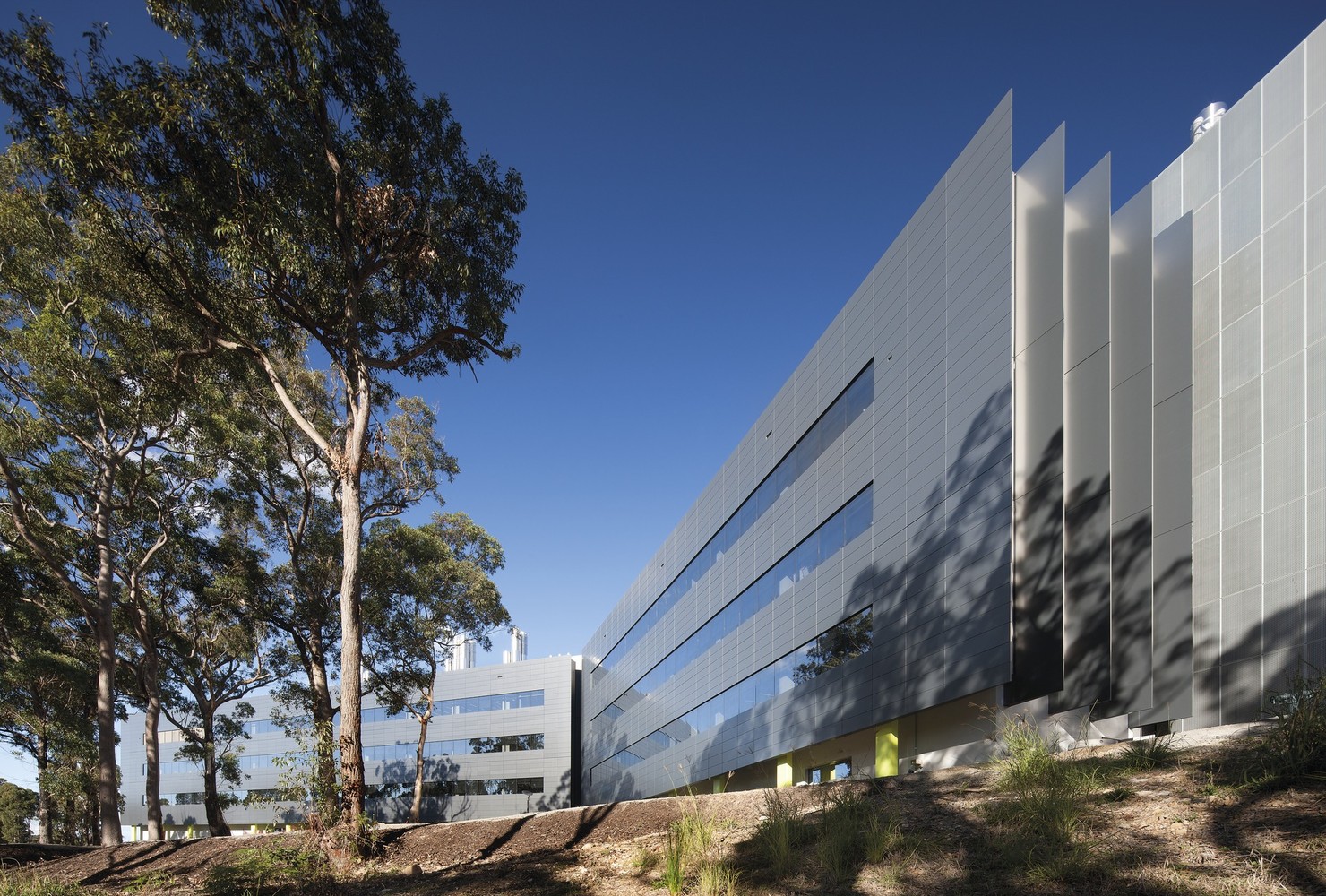
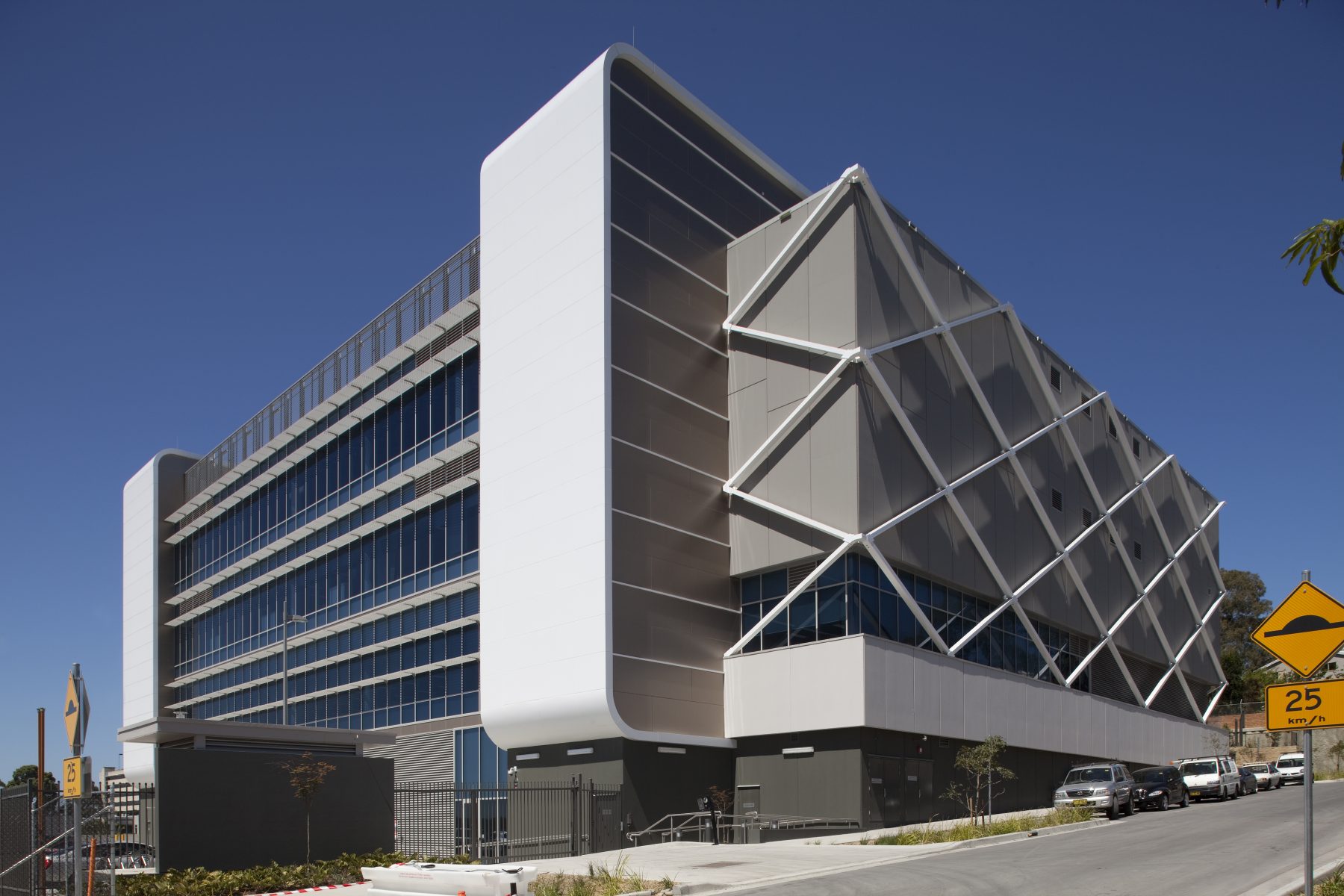
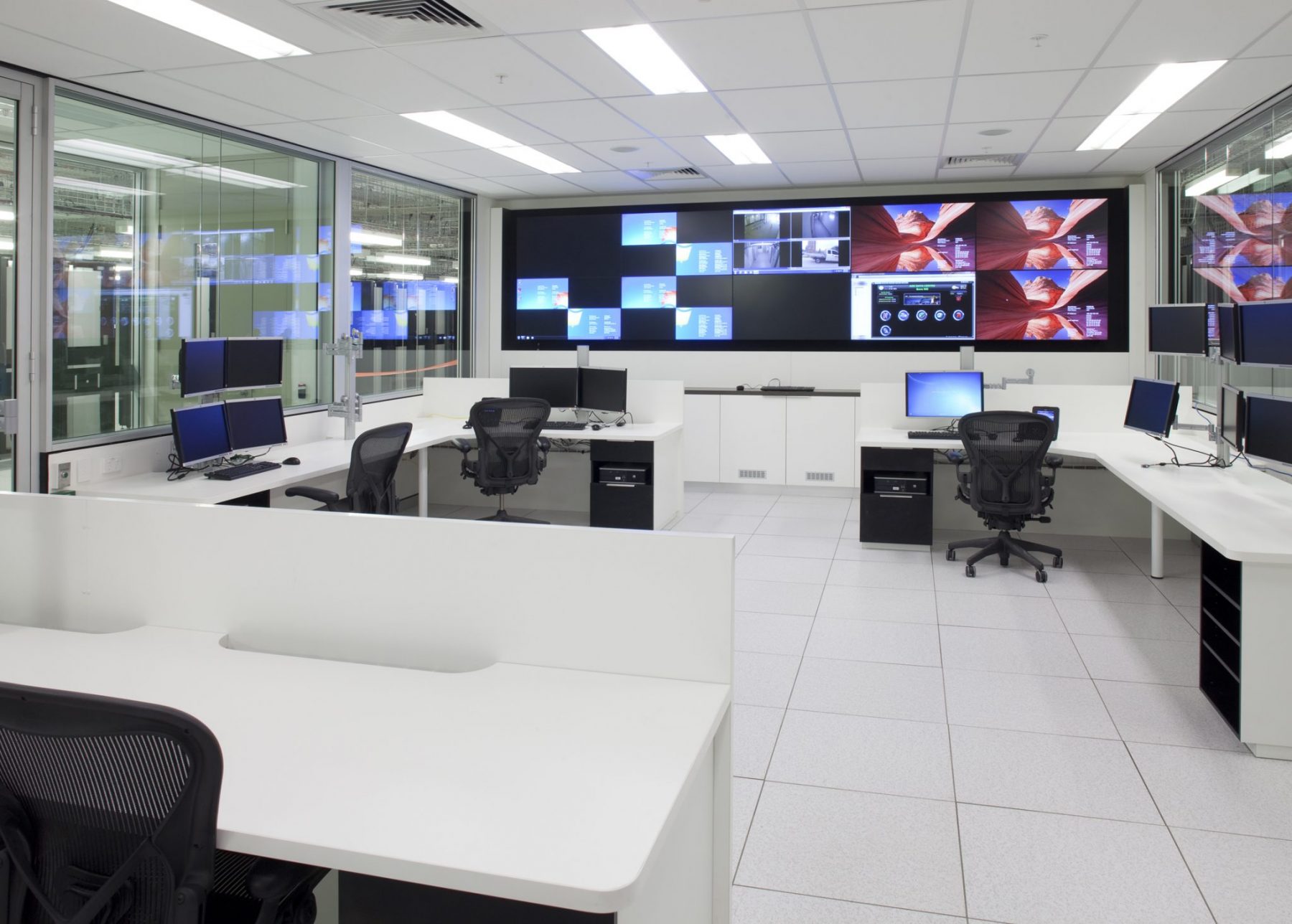
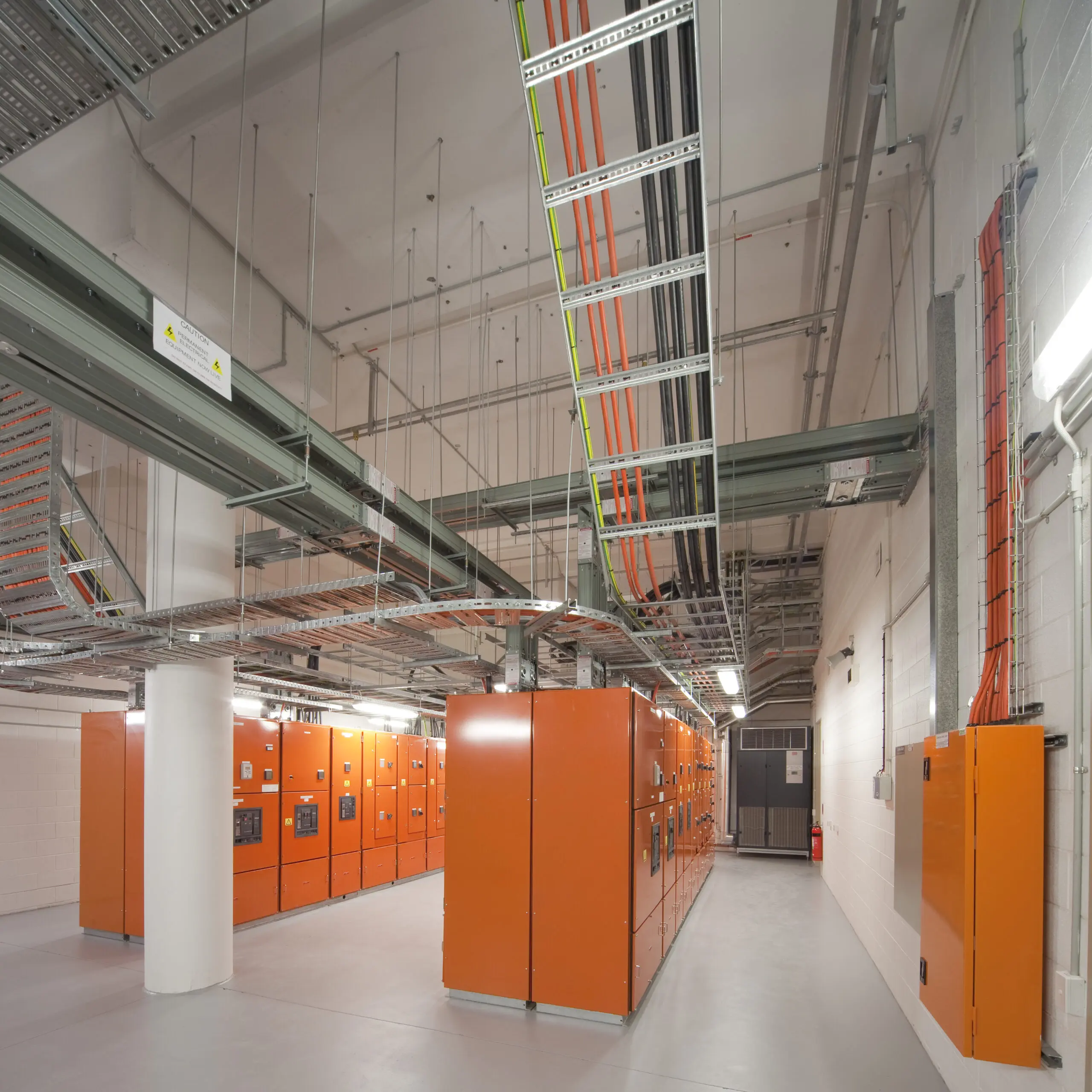
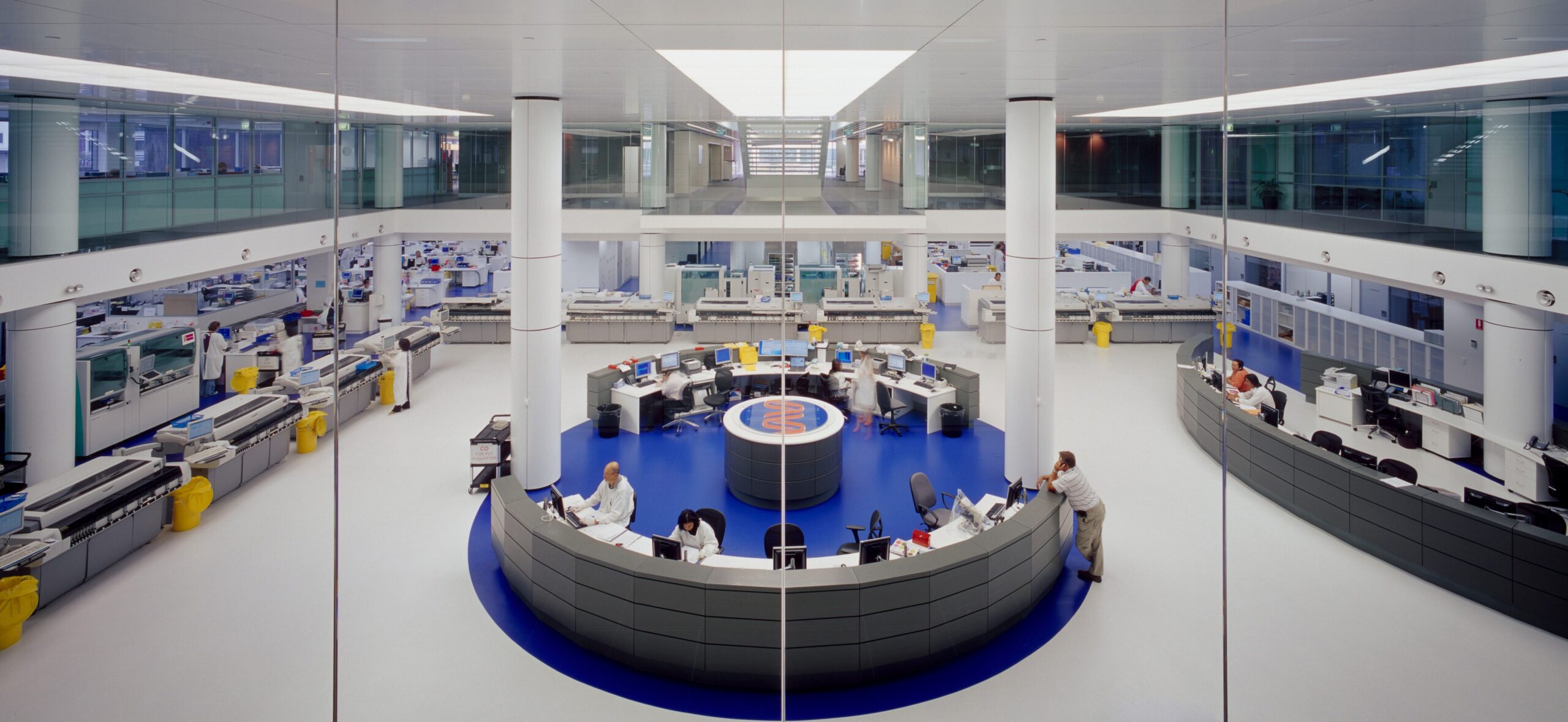
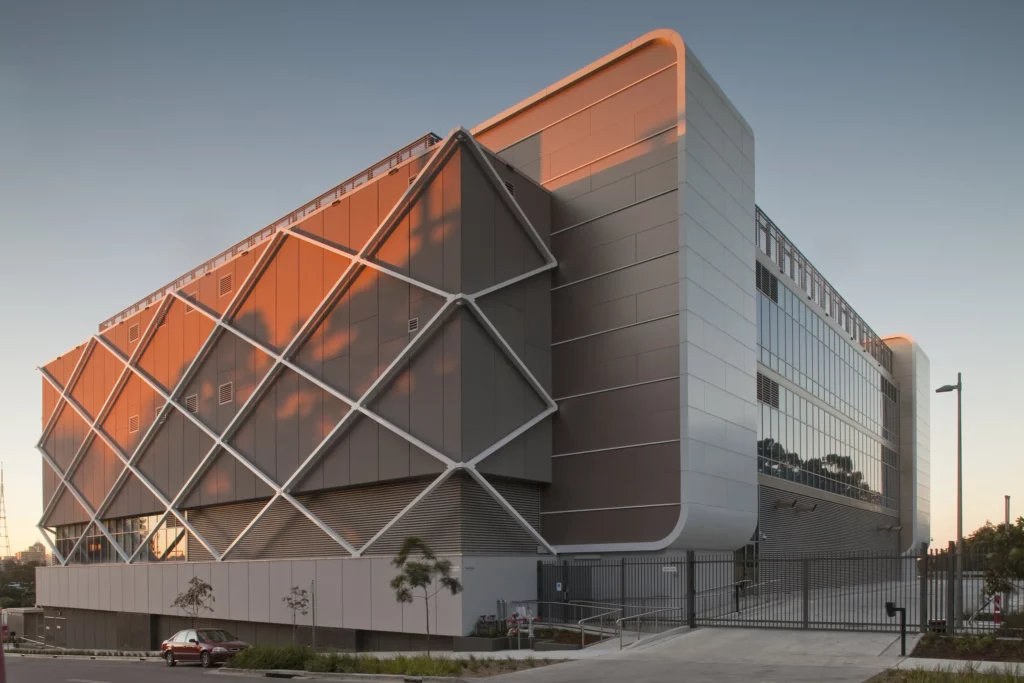
Construction of a purpose-built, state of the art Data Centre facility located within the business precinct of the Gore Hill Technology Park.
The building has a gross floor area of approximately 14,000sqm with 3,200sqm of dedicated data hall space; 1,600sqm of disaster recovery office space and 3,000sqm of related plant and equipment space and also incorporates provision for a further 3,200sqm of data hall space and 3,000sqm of plant space in addition to the above.
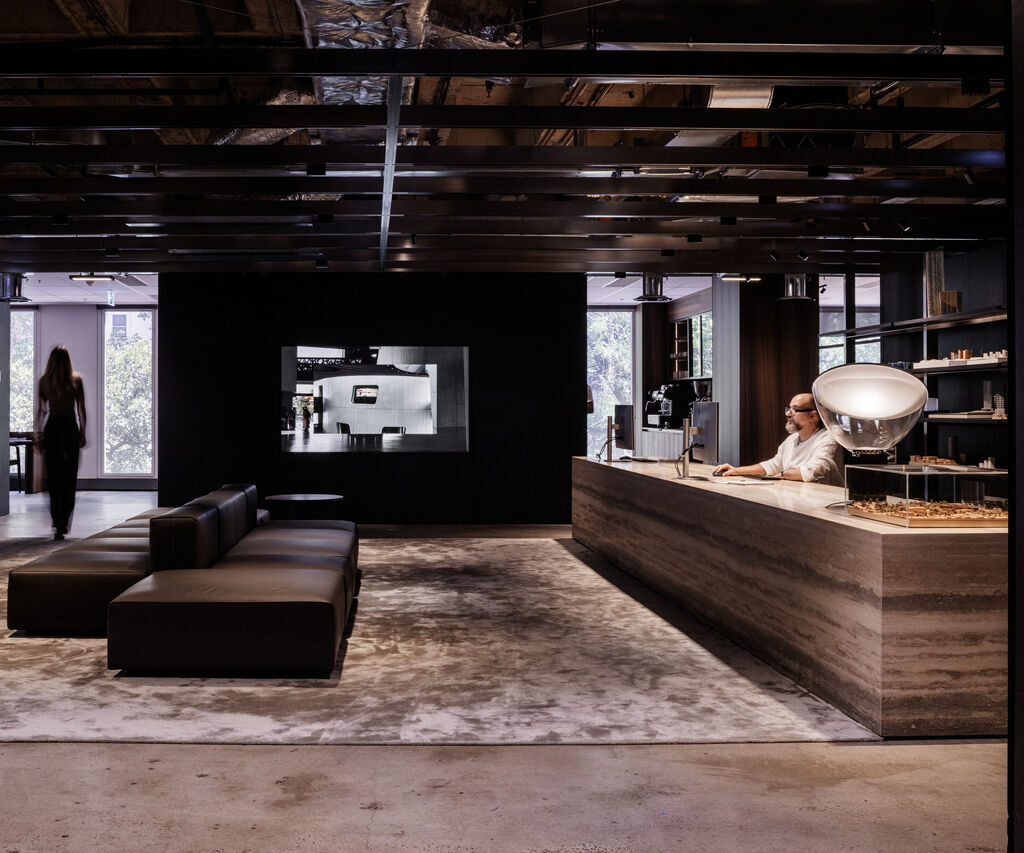
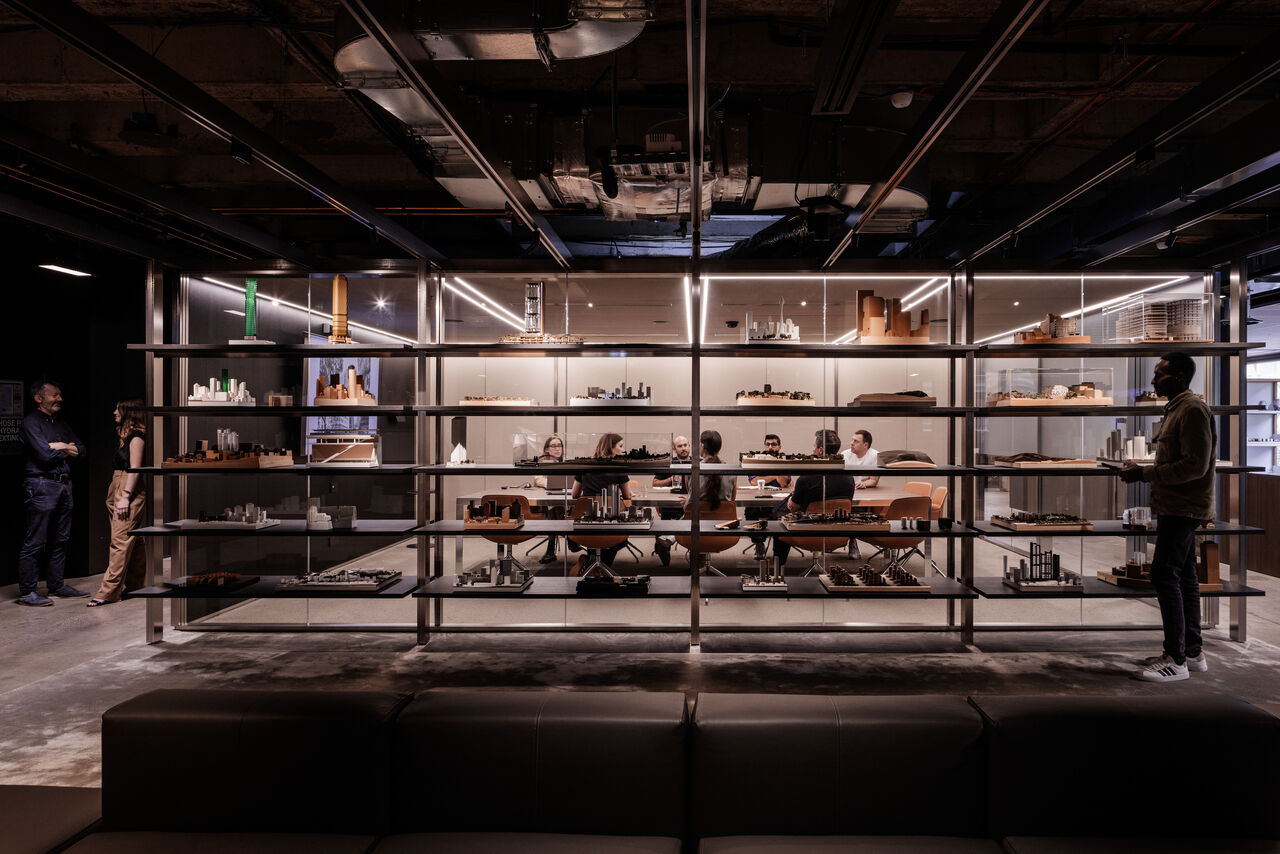
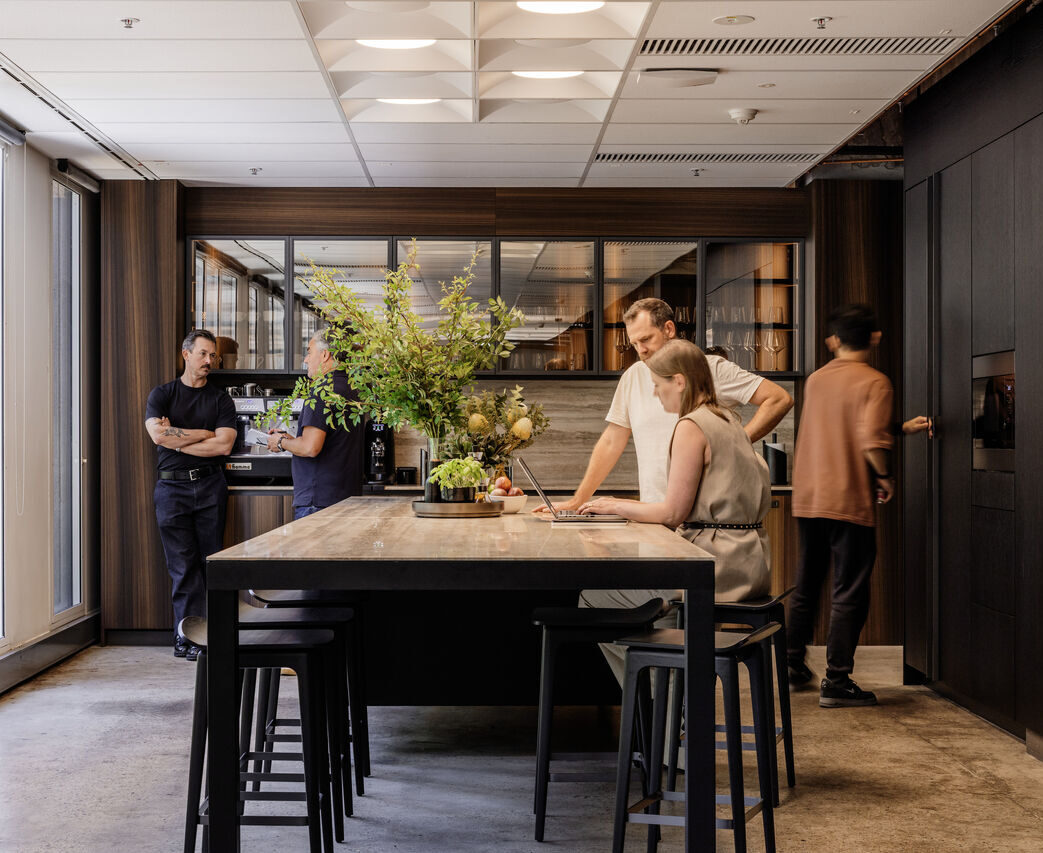
The new workplace, part of the Barrack Place development is a 1,200 sqm fit-out, completed in approximately 12 weeks, blends heritage-inspired materials, such as clay brick finishes, wood, brass, glass, and custom joinery, with contemporary workspace planning.
Design cues evoke WHSP’s long history, while the layout emphasises flexibility, collaboration, and a “residential-inspired” mix of work, social, and quiet zones.
The 32 Carrington Street Speculative Suite is a standout heritage-meets-modern transformation in Sydney’s Wynyard precinct.
This 265 m² extension and fit-out project commenced in mid‑2024 and included demolition of existing balcony structures, extension of the floor plate, and the addition of a boardroom, private offices, 12 workstation zones, bespoke joinery, and kitchenette.
The new 3,700sqm Sydney office at Grosvenor Place embodies their culture of collaboration, innovation, and inclusivity.
Open work areas, focused work zones, and collaborative spaces support both teamwork and individual productivity, while natural materials, greenery, and ergonomic features enhance employee well-being. Brand storytelling is woven throughout the fit out. Equipped with high-tech meeting and presentation spaces, the workplace blends aesthetics, functionality, and culture.
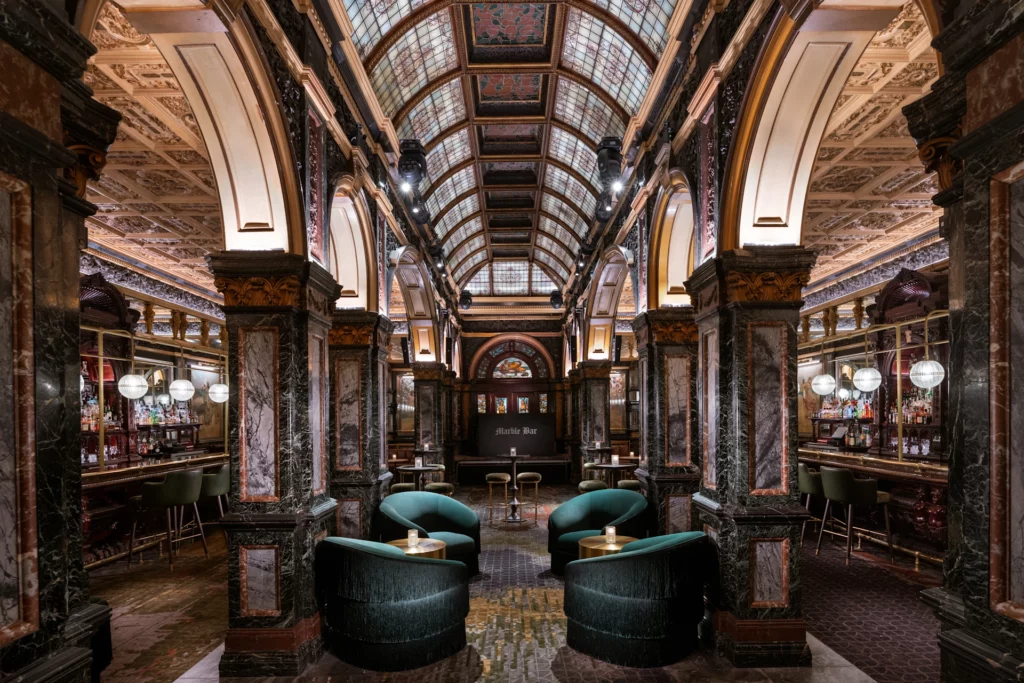
A landmark refurbishment transforming 24 floors with upgrades to 528 guest rooms, 106 bathrooms, and 11 new executive suites, along with extensive works to the Marble Bar, executive lounge, meeting rooms, and ground-floor public areas.
A redesigned lobby with a new reception, lounge, and café, refreshed heritage bar spaces, and expanded amenities. Guestroom floors were completed concurrently, featuring new corridors, services, bathrooms, and bespoke joinery, while the former executive lounge was converted into premium suites.
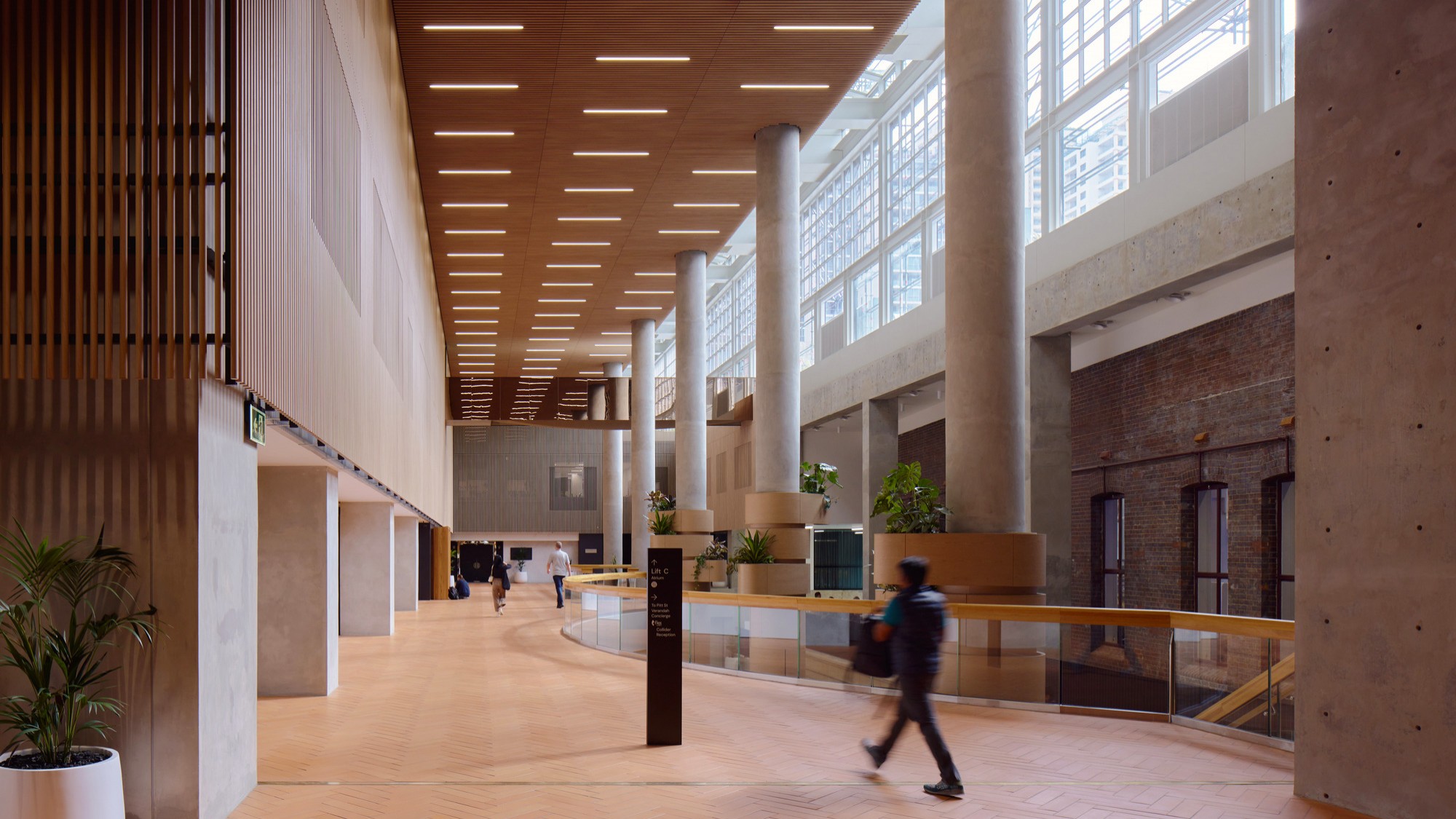
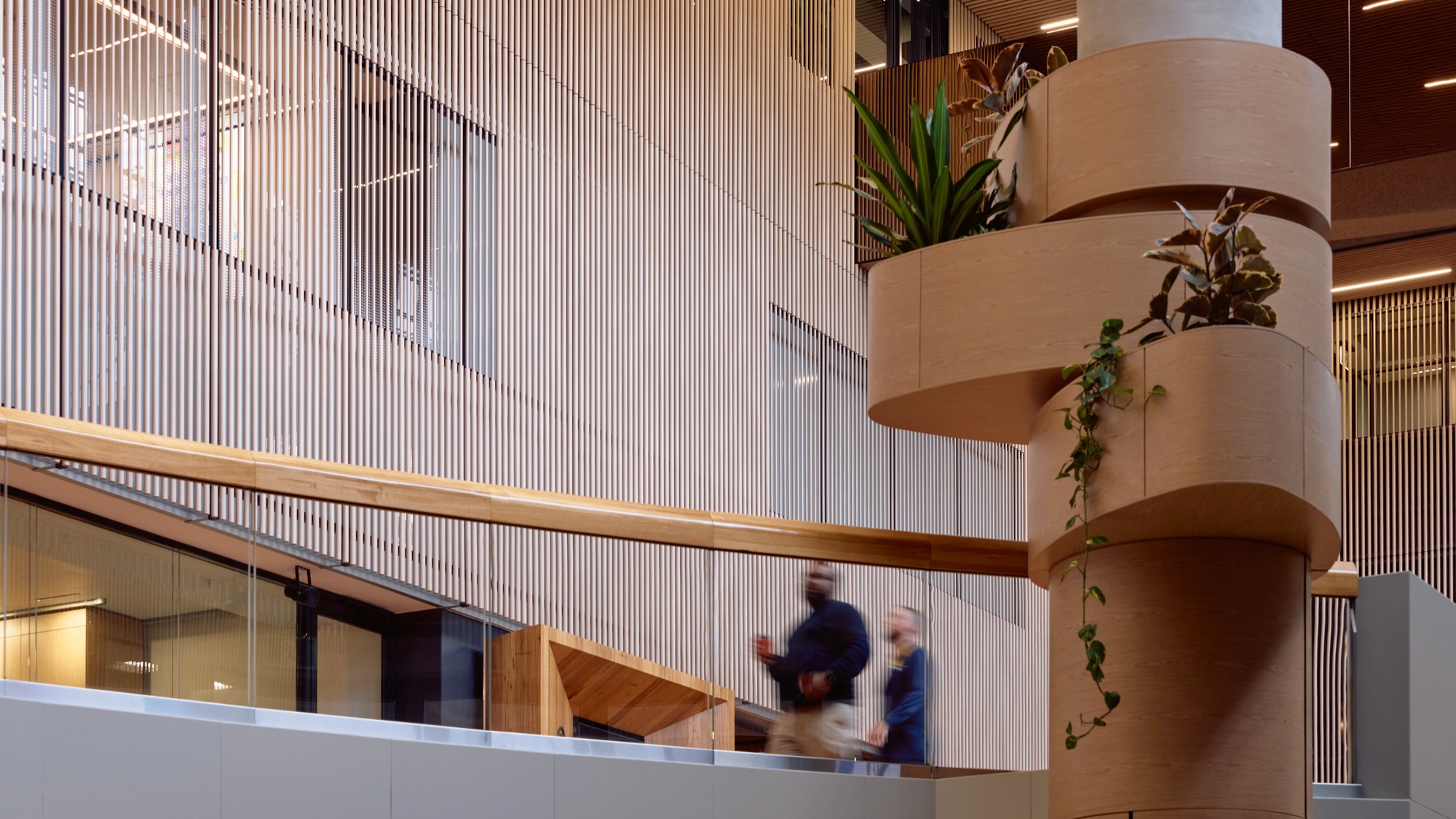
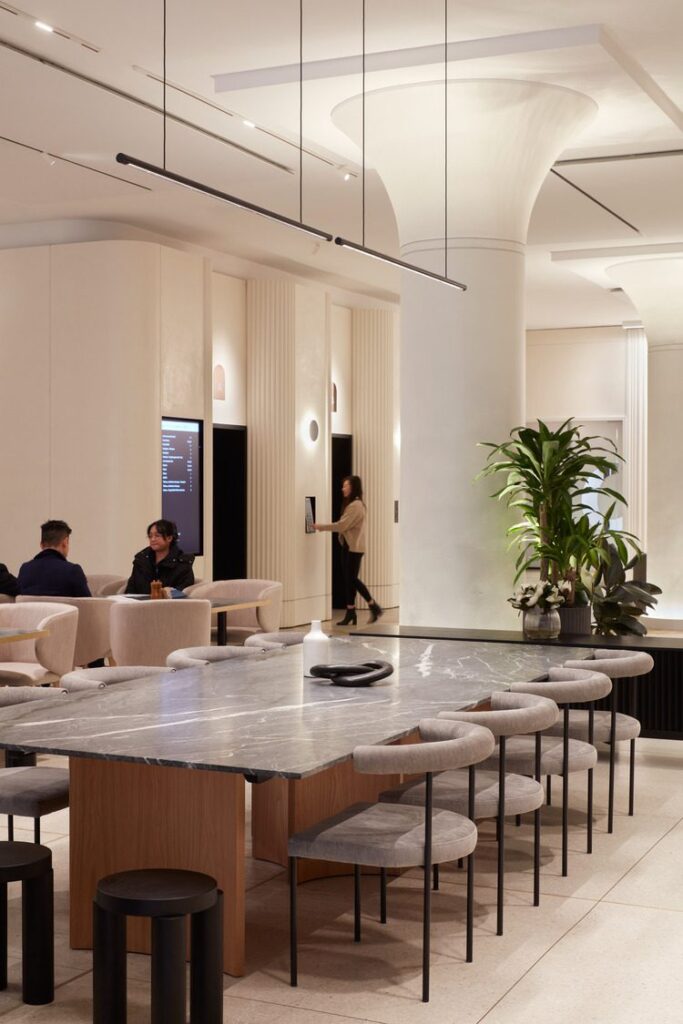
The 477 Pitt Street redevelopment delivers a bold statement of reinvention, with a dramatically refreshed lobby featuring a double-height void, a bespoke 19-metre collaborative timber table, adjacent floor-to-ceiling digital LED art, and reworked heritage entries weaving in the restored 1922 Australian Gaslight building and neighbouring heritage structures.
As part of a $135 million repositioning, this transformation combines tech-enabled workplace design, sustainability performance and a community-first arrival experience.
Delivered across two floors weaving generous natural light, refined material finishes and thoughtful amenities, from sleek business lounges and café‑style breakout zones to ergonomic private suites, meeting rooms and wellness facilities, all tailored to a modern, hybrid workforce.
Fire‑safety and compliance challenges were met with clever solutions to reconcile original building infrastructure with contemporary standards, delivering a fully compliant, safe and flexible workplace that speaks to the future of office design in Sydney’s CBD.
The project involved a 4,200sqm premium grade office fit out in the heart of Sydney, spread over four consecutive floors to accommodate 450 staff.
The project was completed within a 12-week program, and included general office areas, collaboration spaces, meeting rooms, informal breakout and tea points with installation of new ceilings and associated services throughout.
The 35,000sqm project involved a comprehensive fit out over 19 including complete strip out of existing fit out and services, an inter-connecting stairs, open plan agile working spaces, meeting rooms, kitchen, collaborative spaces, client floors, commercial kitchen, main comms room and on floor comms rooms.
The project included a dedicated ground floor lobby upgrade and two new building sky signs. New services were installed throughout including base build plant upgrades. New amenities were provided on all levels.
The NSW Registry of Births, Deaths + Marriages relocated to Wharf 10 - Pyrmont, in a striking adaptive-reuse was constructed in a live, waterfront environment.
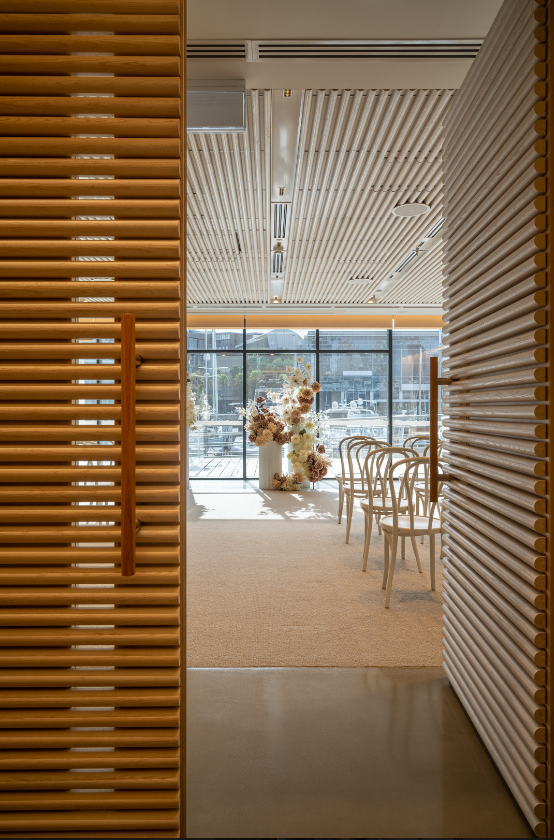
Group DLA provided BCA, Access and Crown Certification for the project that included a ground-floor celebrant / wedding venue with reception suites and a north wing of offices, plus upgraded lobby, new end-of-trip, bike storage, and curved timber ceilings evoking water movement. This move marked the registry’s first relocation in nearly two decades, crafting a dual-purpose civic space that blends public ceremony with administrative function.
The adaptive‑reuse fit‑out over 2,500 m² over three floors reinterprets classic offices into a warm, residential‑inspired workplace.
The challenge of retrofitting modern services into a heritage structure, including air‑conditioning, AV, and mechanical systems, was met with careful coordination to preserve heritage fabric while delivering a technically sophisticated workplace environment.
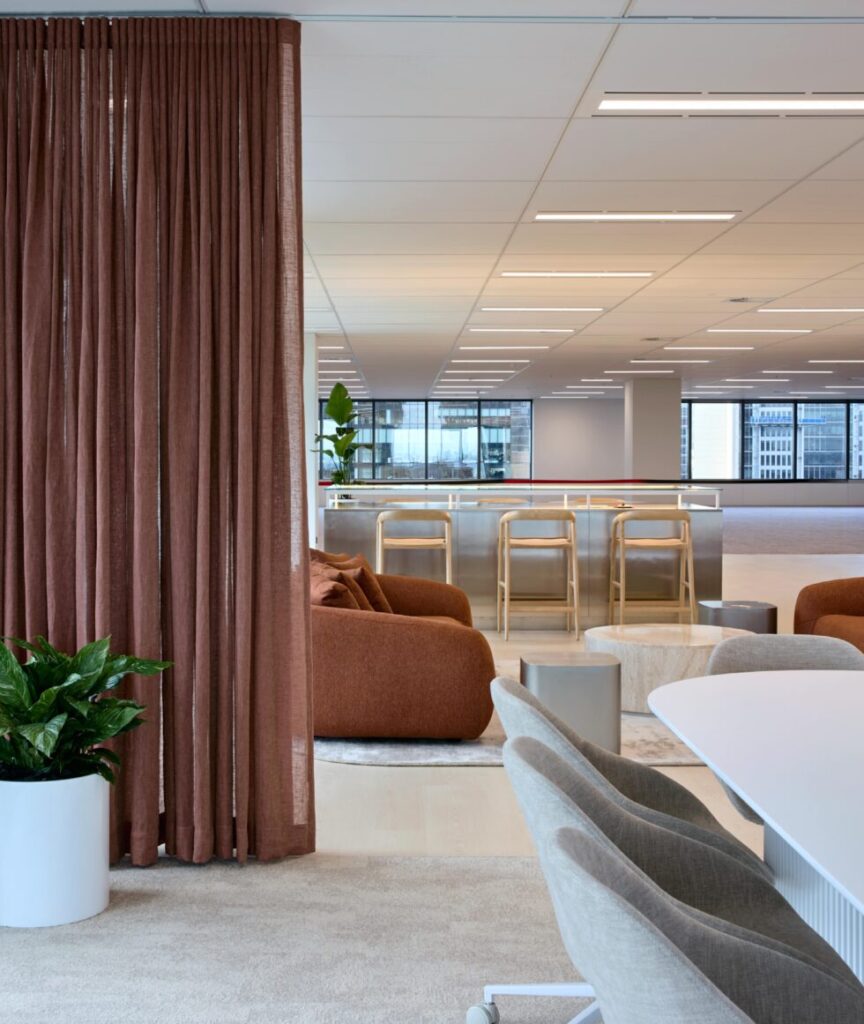
This flagship workspace redefines what a premium office environment can be. The fit‑outs fuse hotel‑style arrival and hospitality‑branded workspace with the rigorous demands of contemporary corporate use, delivering private executive suites, flexible coworking lounges, high‑spec meeting rooms, and curated breakout zones.
The centre stands out for blending refined aesthetic, functional design and technical precision and smart floor‑layout planning that optimises net lettable area across its 2,200 m² footprint.
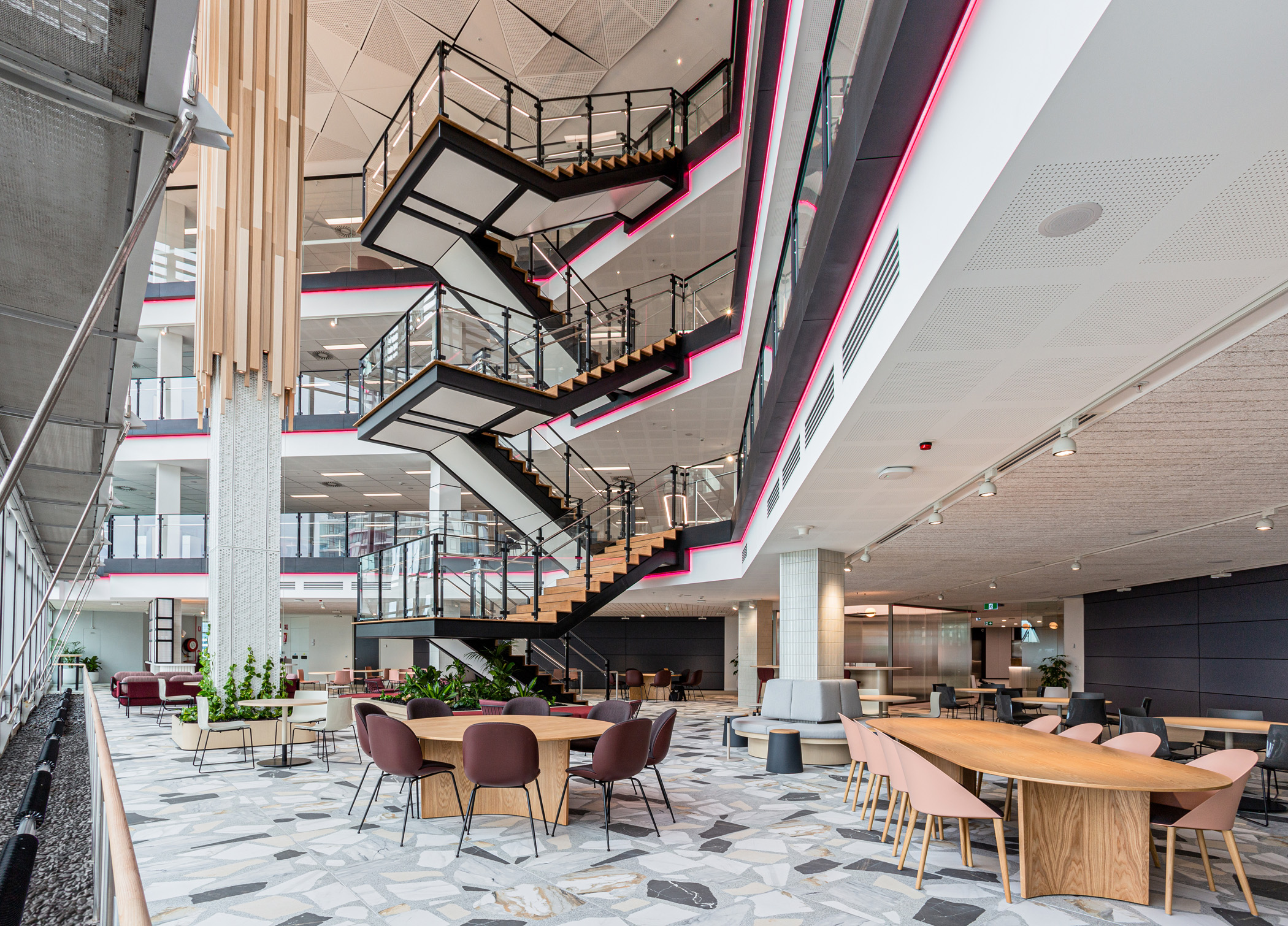
This three-level, 400-desk, 6,000 m² workplace was conceived as a seamless blend of workspace, hospitality, and wellbeing. The build integrated lush biophilic design, highlighted by an aperitivo bar, end-of-trip facilities, relaxation rooms, a Peloton studio, and concierge services, alongside premium meeting suites, café, and lounge spaces.
Sustainability was central, achieving a 5‑Star NABERS Base Building Energy rating and a 4‑Star Green Star Design & As Built certification.
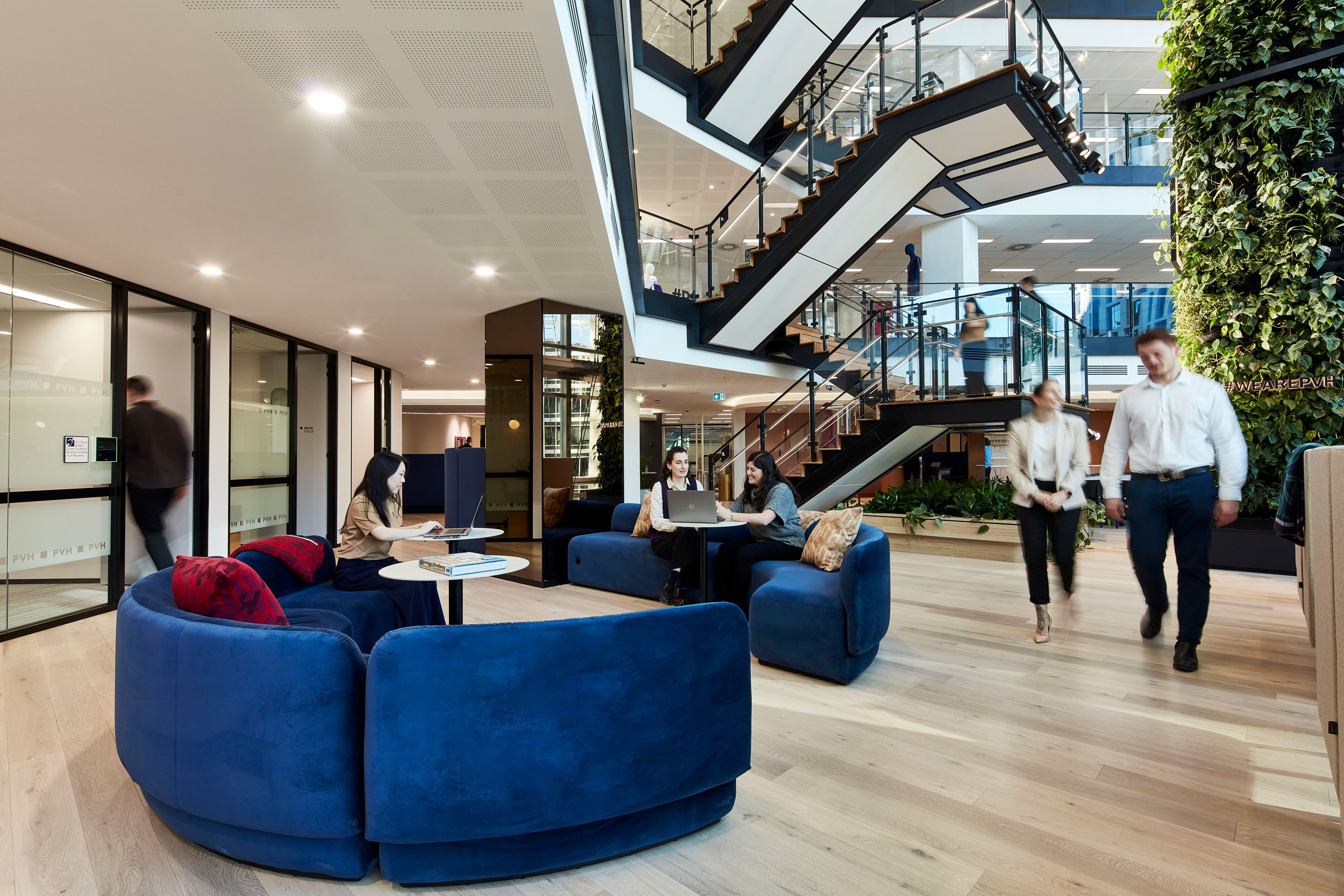
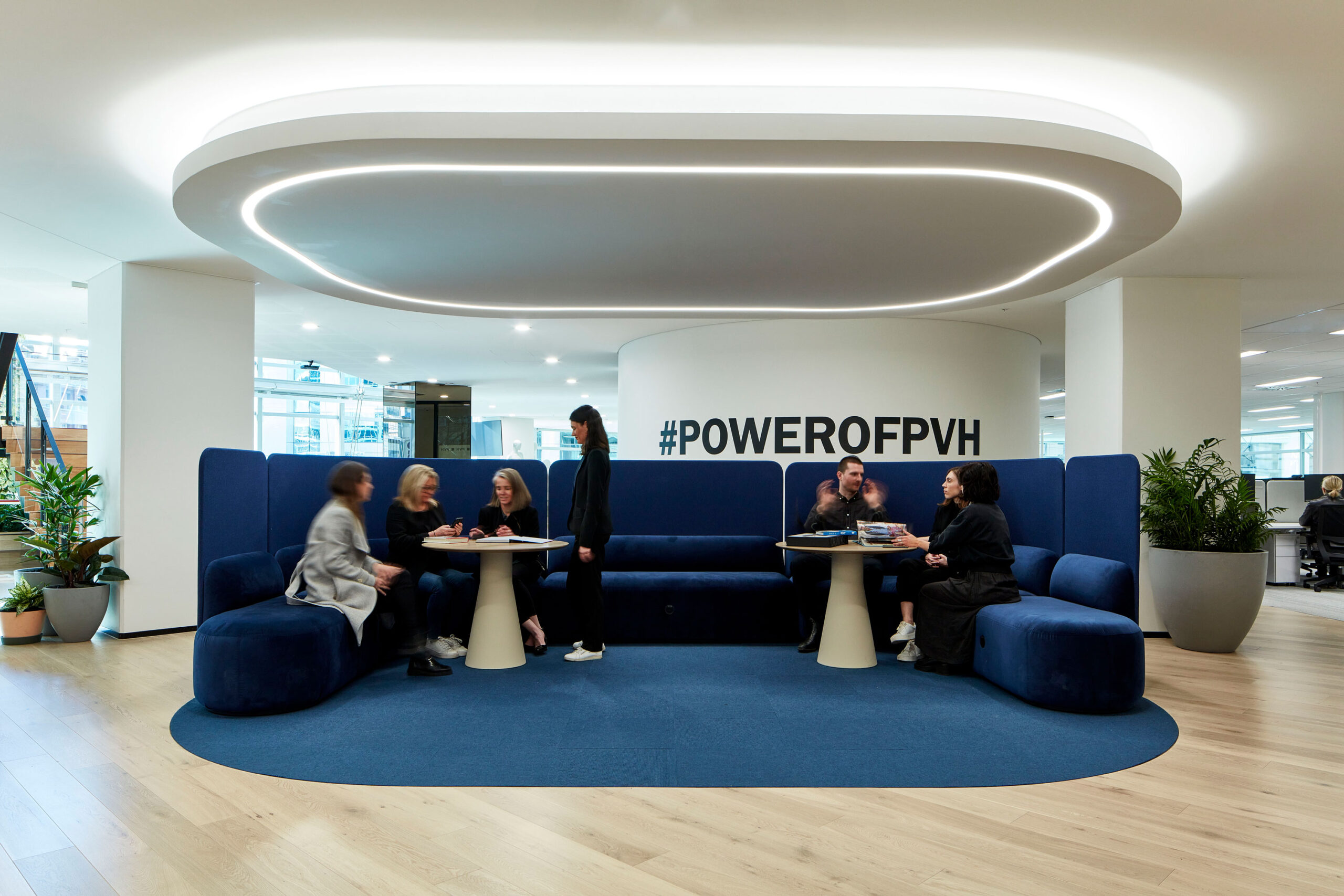
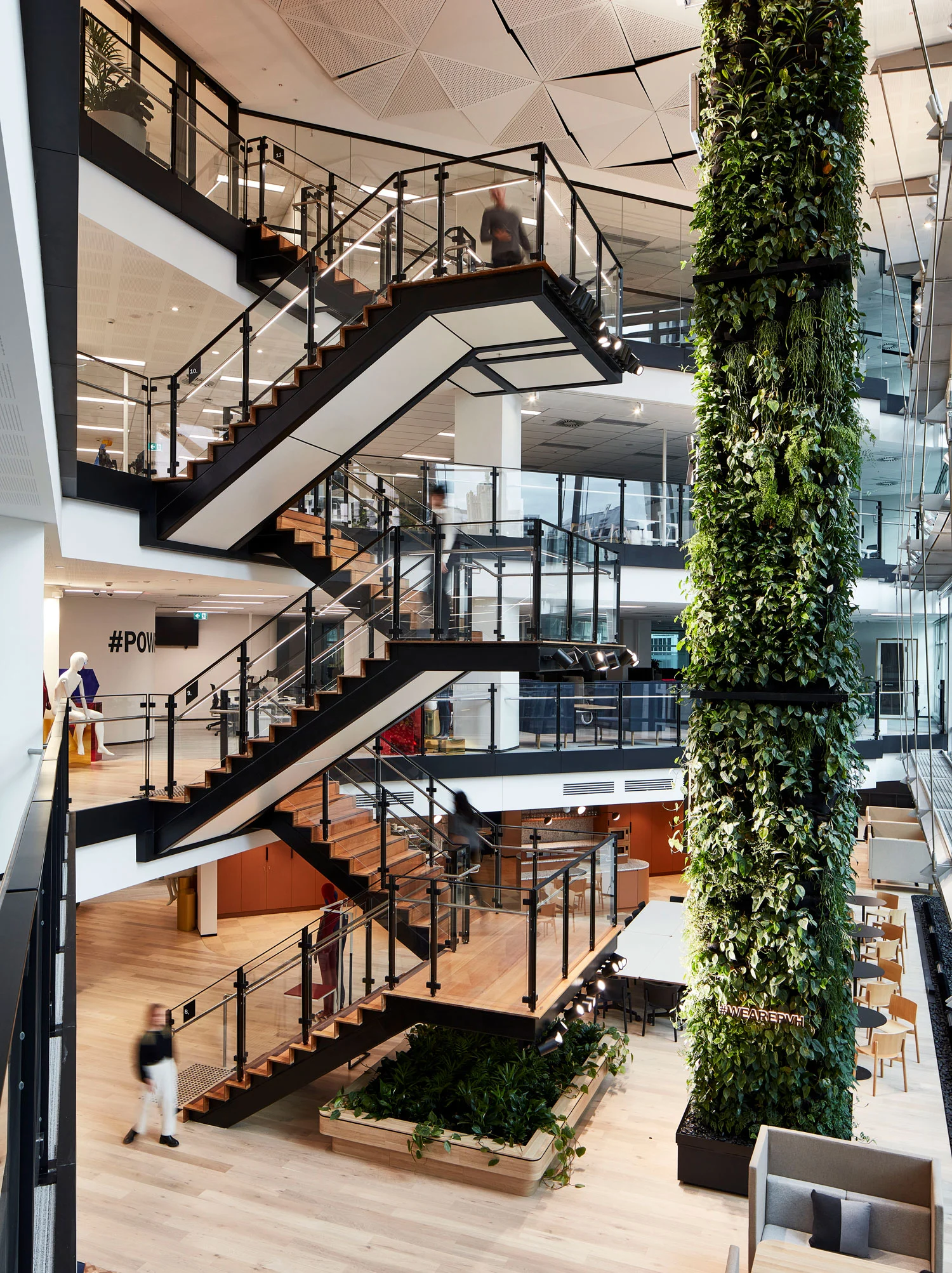
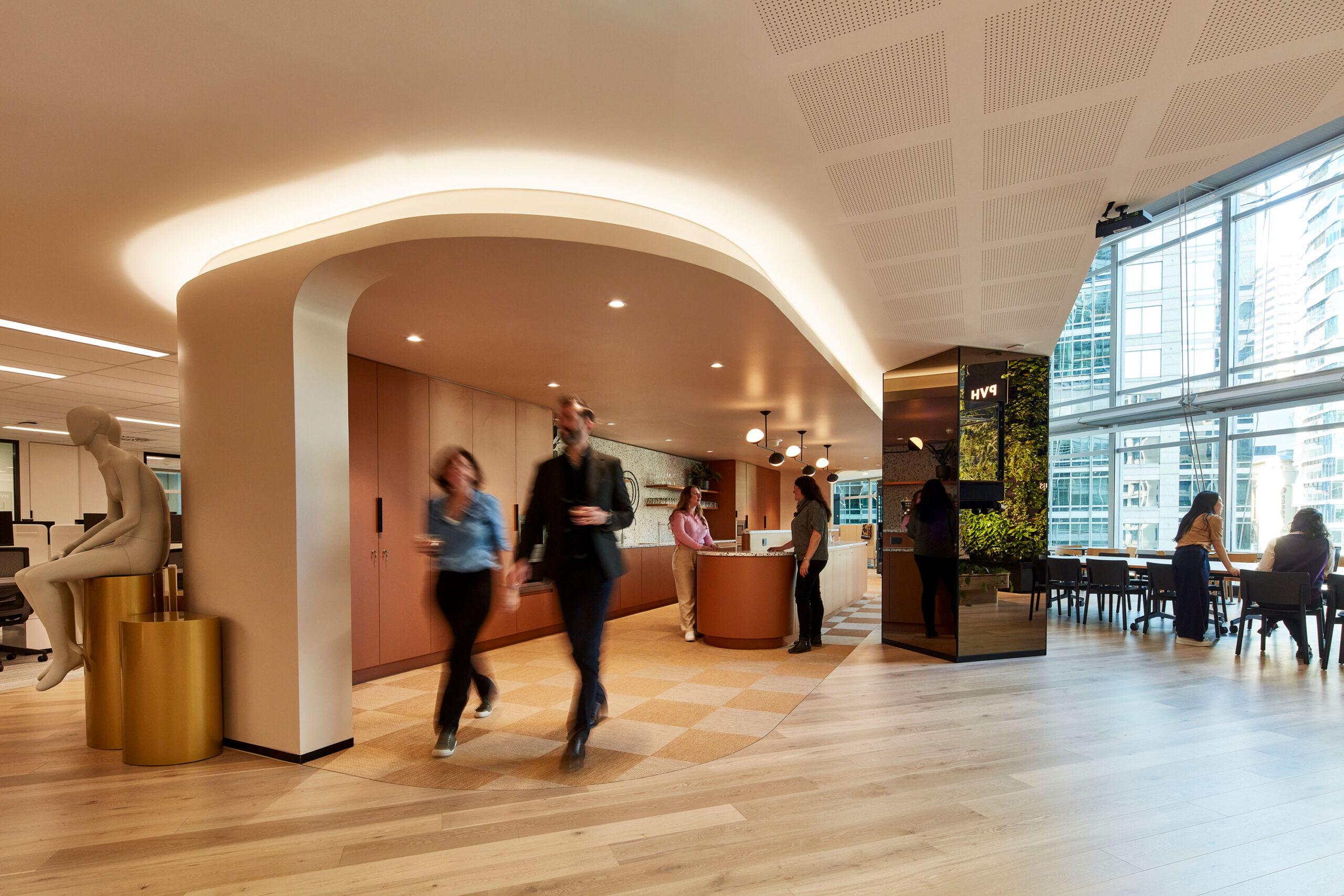
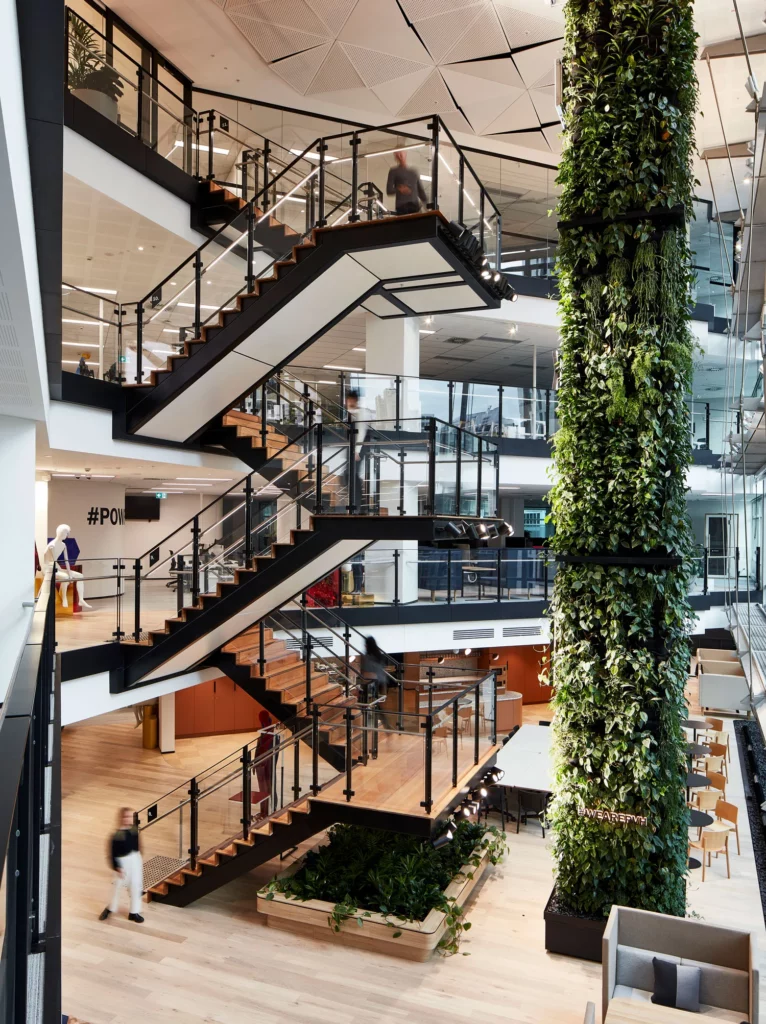
The PVH Brands Workplace & Showrooms is a stunning four‑level, 6,800 m² hybrid workspace and retail showcase for Calvin Klein and Tommy Hilfiger.
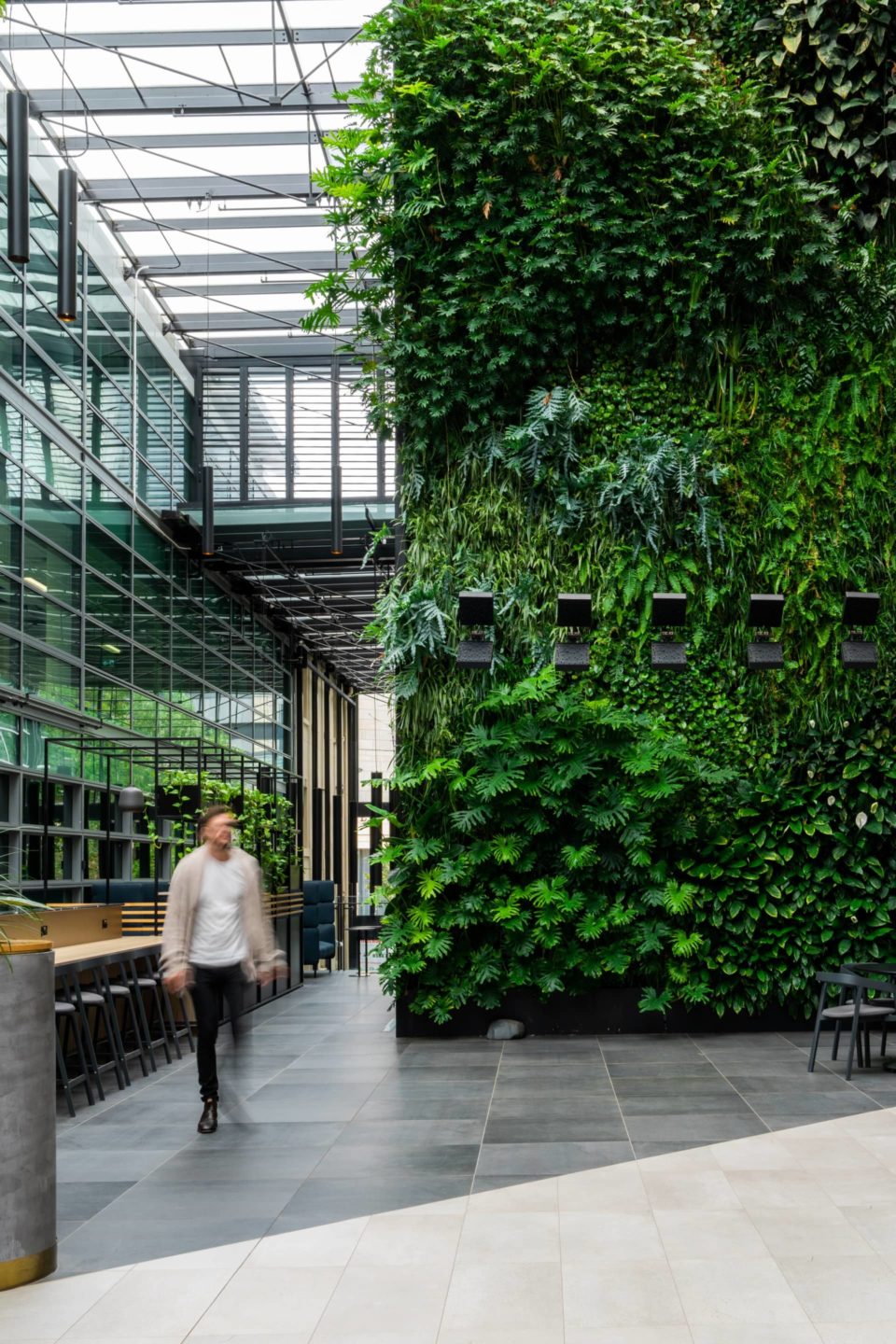
Highlights include a striking 14 m living “green column” spanning four levels with over 1,200 plants, immersive brand-specific showrooms, and a central “People’s Place” social hub . This workplace sets a new benchmark in experiential, sustainable and brand-led corporate design.
As the inaugural tenant in the A-grade tower, this office integrates sustainable design, blending environmental, technological, and cultural considerations.
The project included refurbishing six floors and creating a new front-of-house area on Level 22 with reception, meeting rooms, a client lounge, and short-term workspaces. The workplace spans multiple floors, offering flexible workspaces, a staff café, wellness facilities, training rooms, and boardrooms.
The Moelis office features a double-height boardroom with panoramic CBD views, an ethereal colour palette, and bespoke timber details, all bathed in natural light.
A 500m² undercover terrace offers an entertainment space for staff and visitors, with a bar, BBQ, and various seating areas. Additional amenities include a commercial kitchen with chef and barista, staff kitchenettes, meeting and quiet rooms, open-plan workspaces, a gym, and a podcast studio.
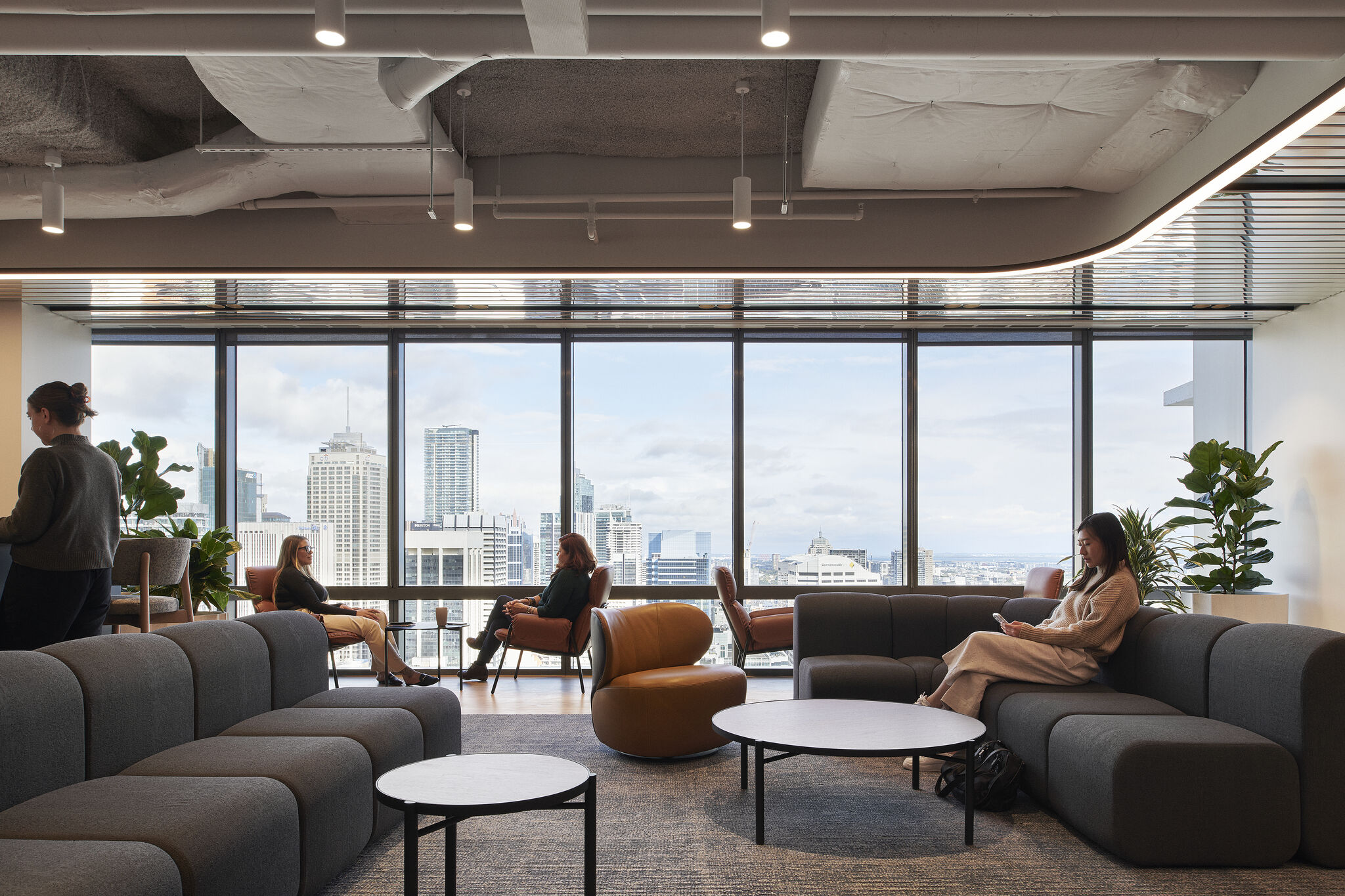
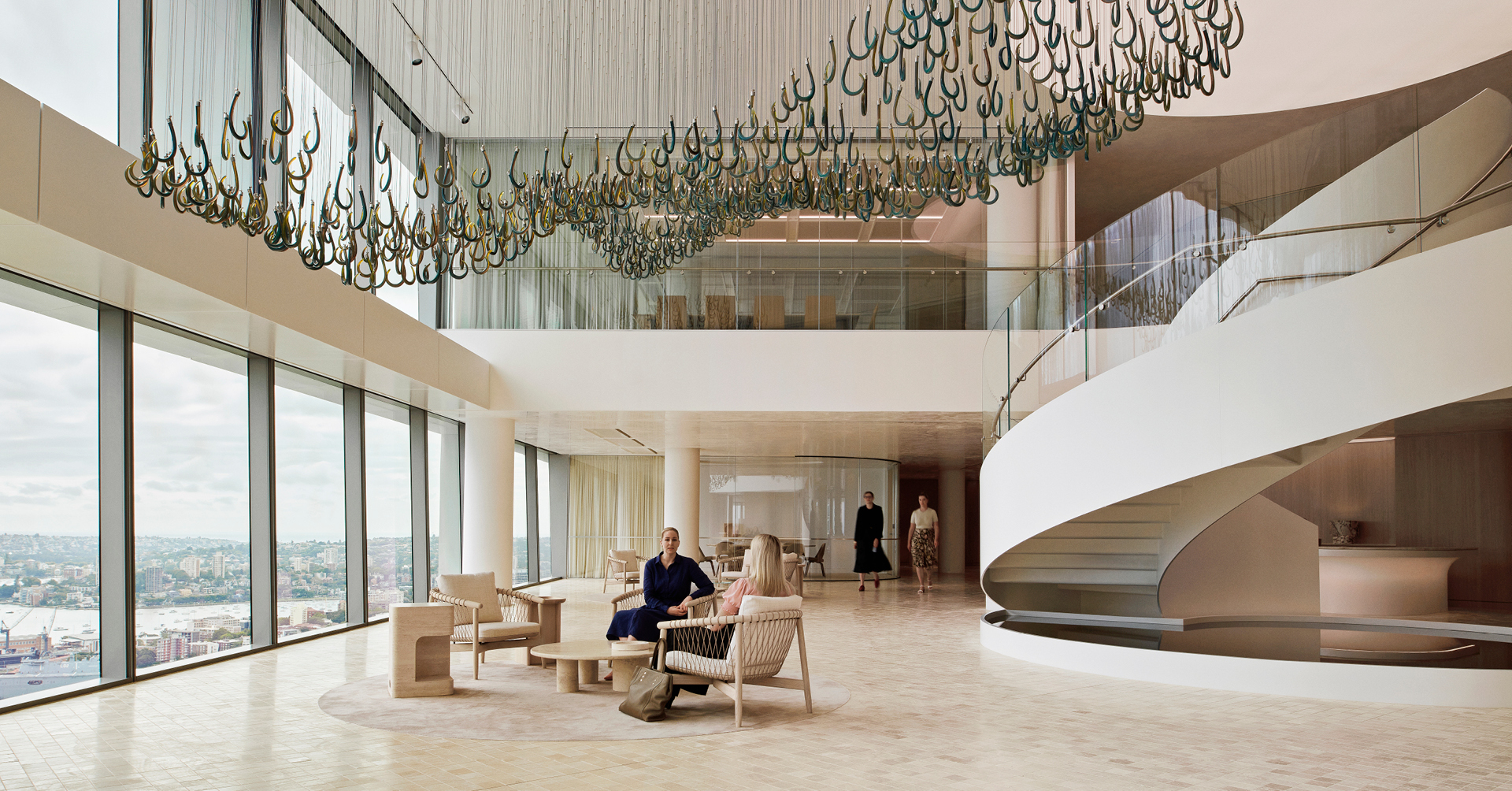
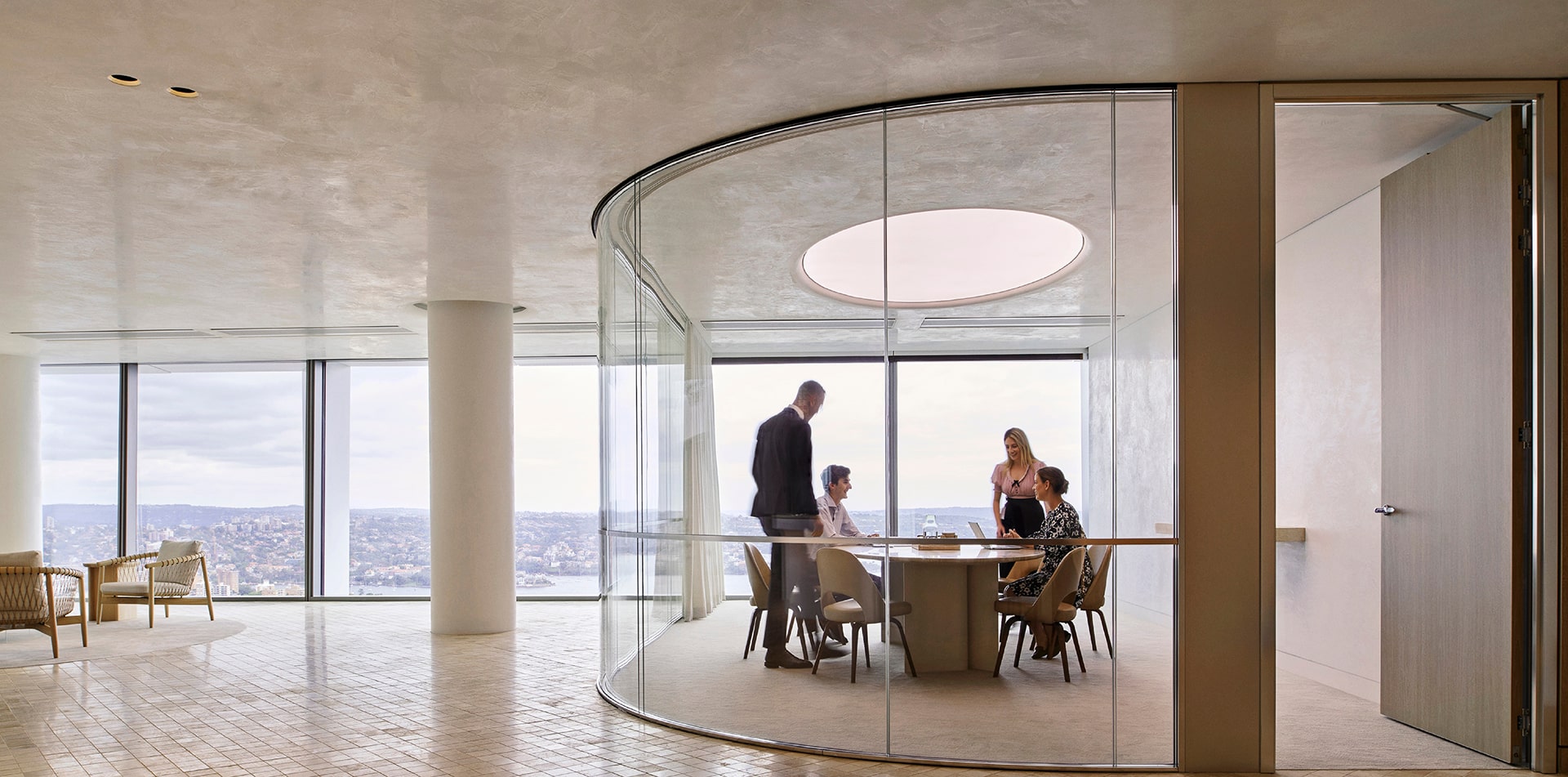
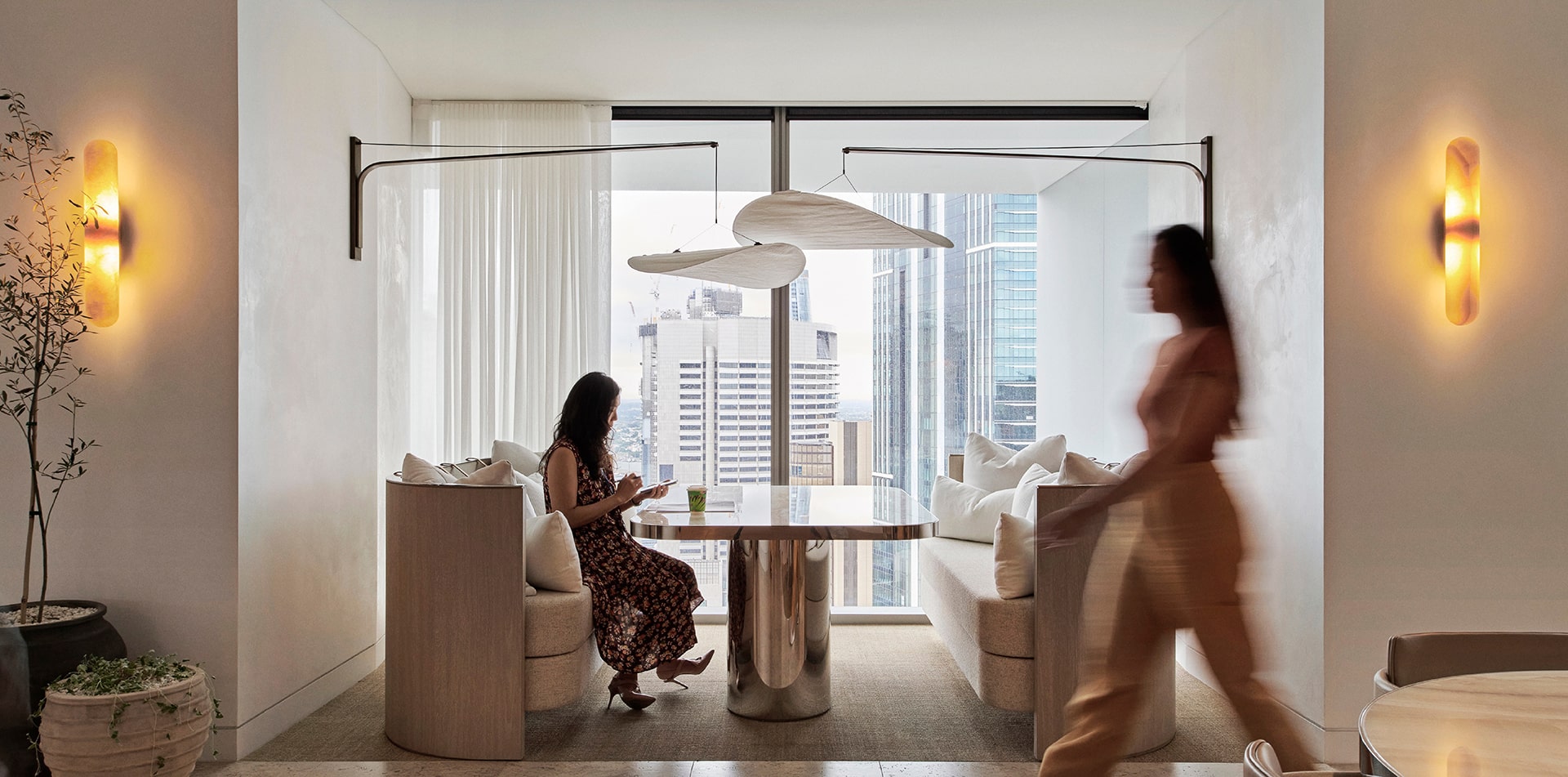
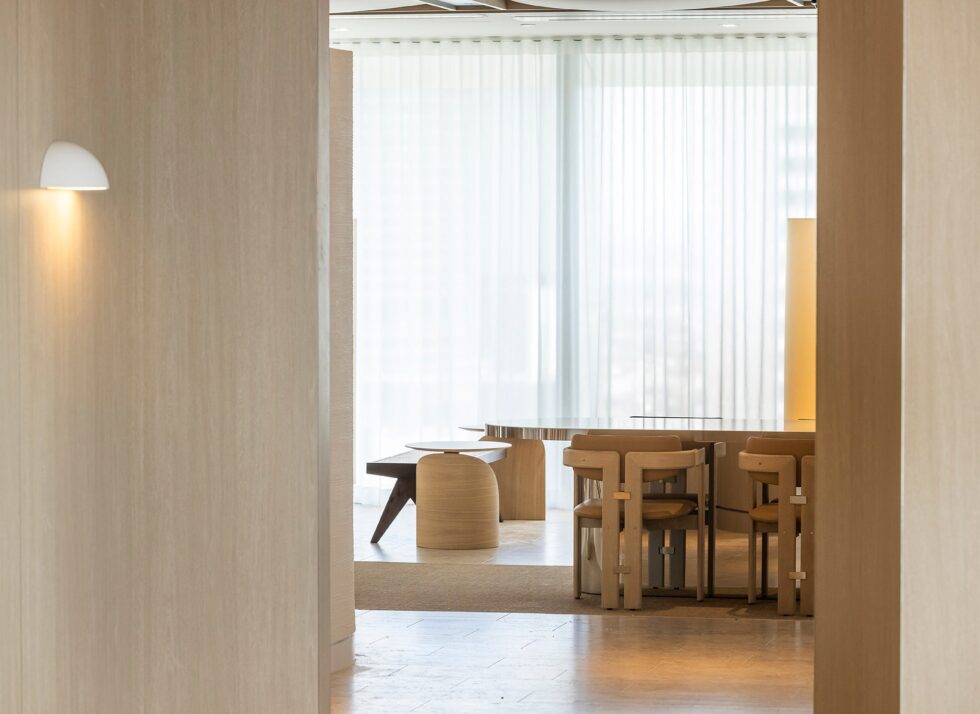
Sprawling across two premium levels at Quay Quarter Tower, the light-filled, professional workspace spans approximately 3,530 m² and features a standout front-of-house reception and semi-commercial café-style hub engineered for collaboration, alongside seminar rooms with fold-open functionality, flooded by Sydney Harbour views.
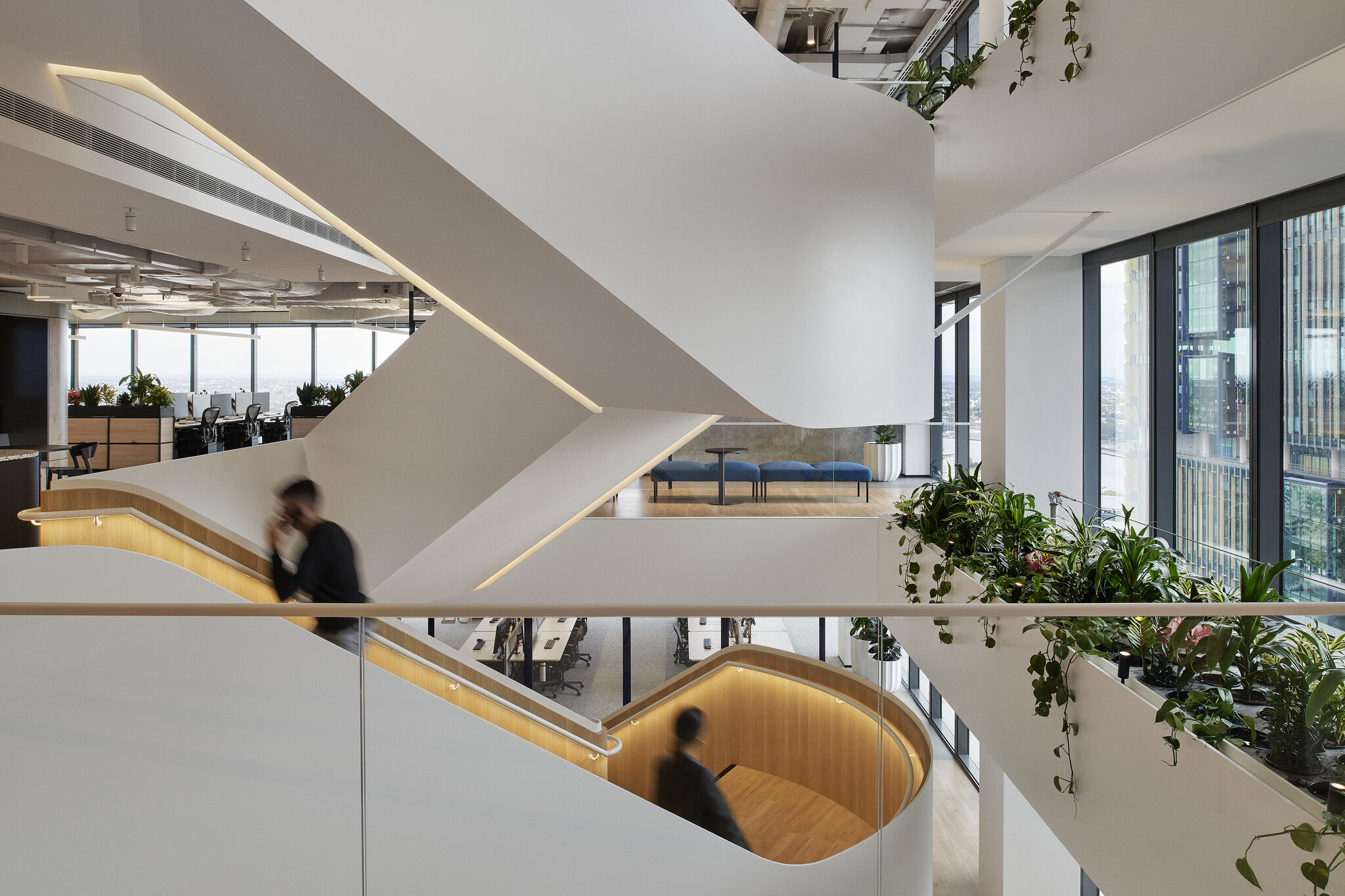
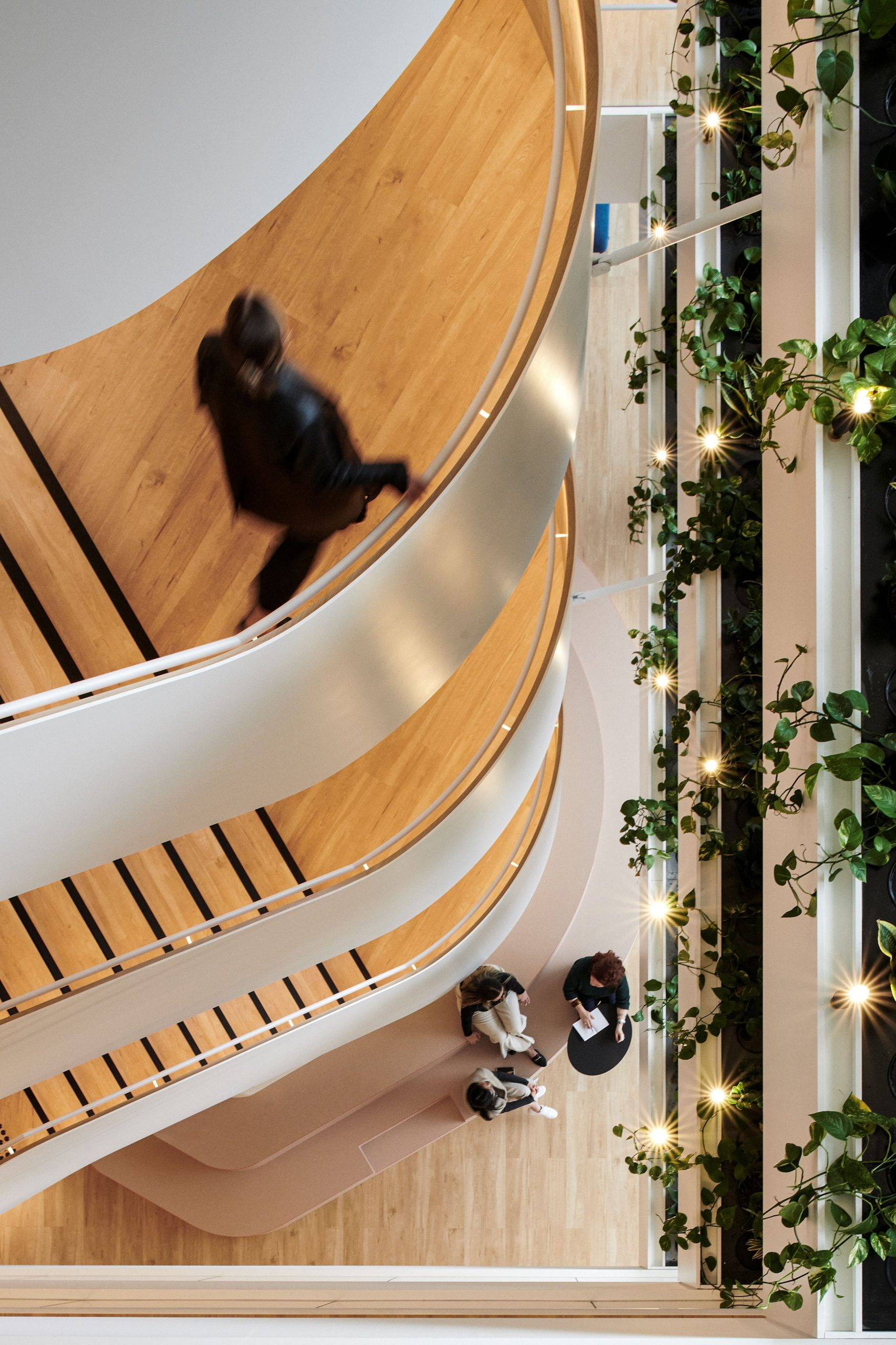
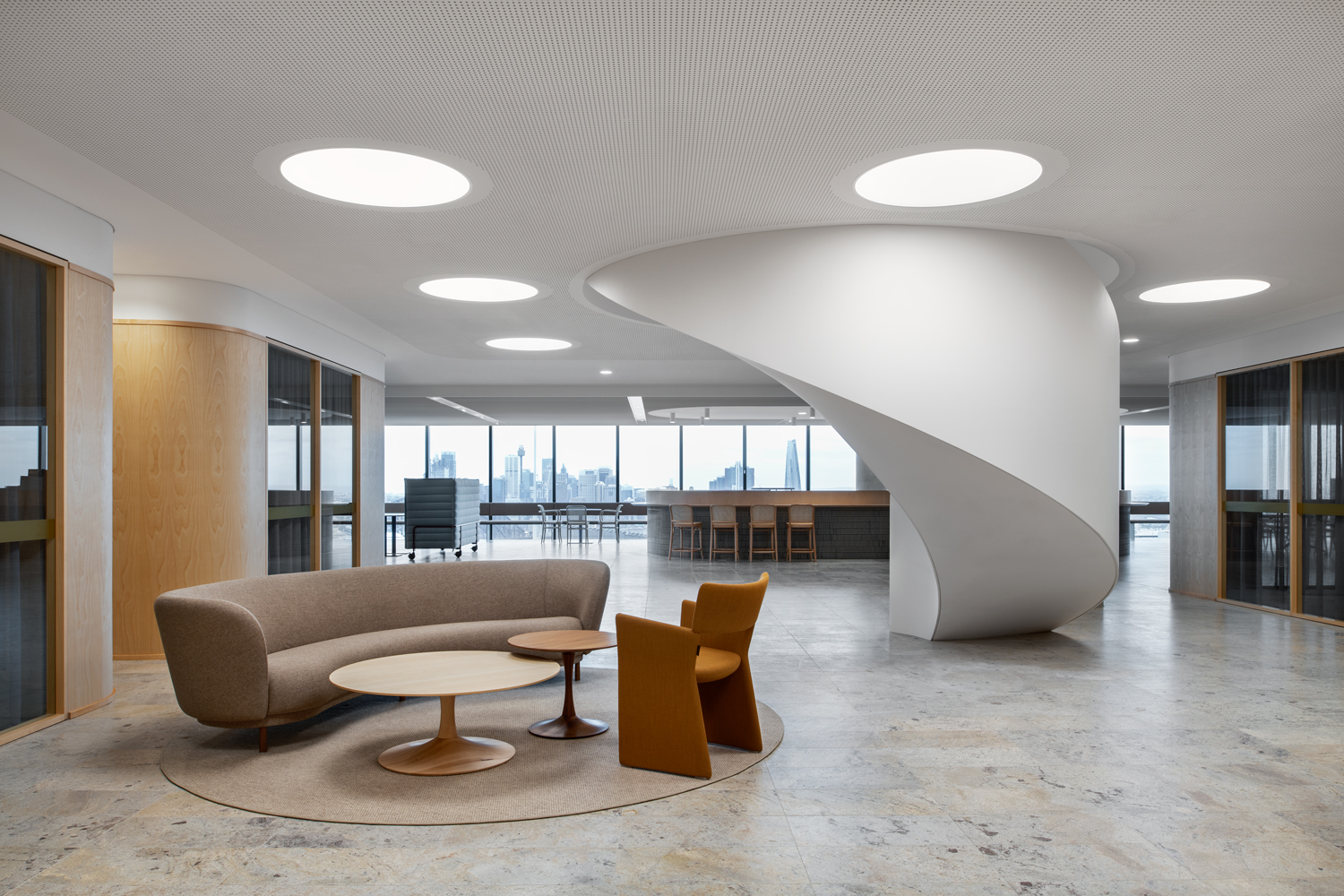
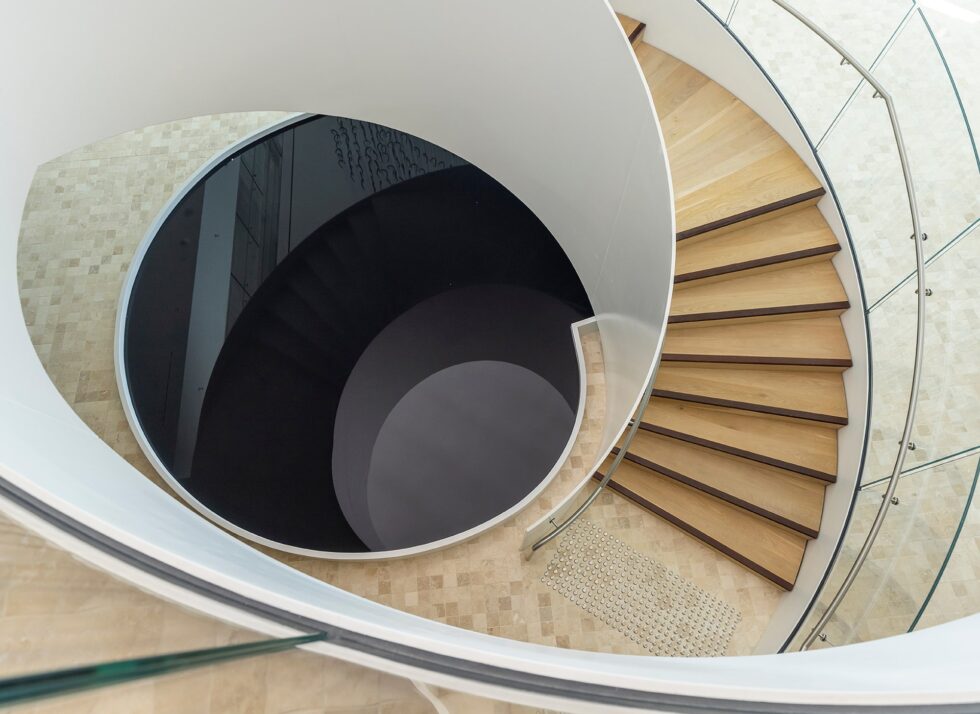
A sculptural circular stair brings natural light deep into private offices, meeting zones, and acoustically tuned workstations, all executed amid a live building environment without disruption to tenants. This project showcases sustainability and design excellence through high-end joinery, flexible layouts, and seamless integration.
Brookfield’s own Sydney office occupies a 6,000 m², three-level workplace within Brookfield Place, Wynyard. The fit out connects the three floors via an internal feature stair and combines large open-plan work areas with quiet focus zones, formal client spaces, generous staff dining areas and extensive back-of-house support.
Set within the 27-level, 6 Star Green Star office tower, the tenancy benefits from a landmark building that has redefined the Wynyard precinct with world-class amenities and direct integration to a major transport hub.
The Level 4 fit out is a dynamic 870 m² transformation embodies a “Refraction” concept, featuring fluid curves that capture shifting daylight and merge modern functionality with the building’s Art Deco charm.
This 13‑week project was completed in 2025, adding flexible spec suites, combining private offices, collaborative zones, workstations, and break-outs, to the live workplace environment without disruption to neighbouring tenants.
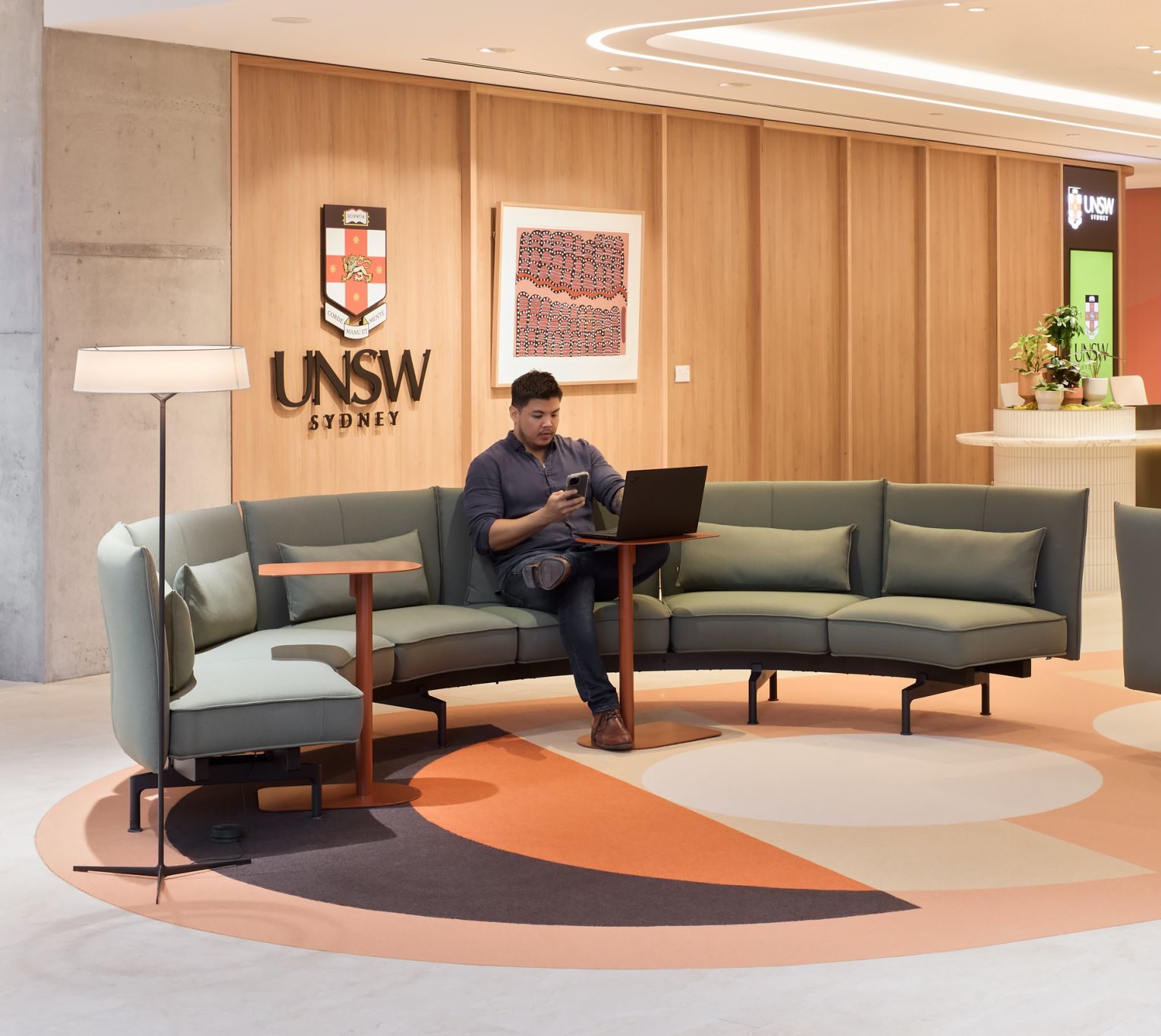
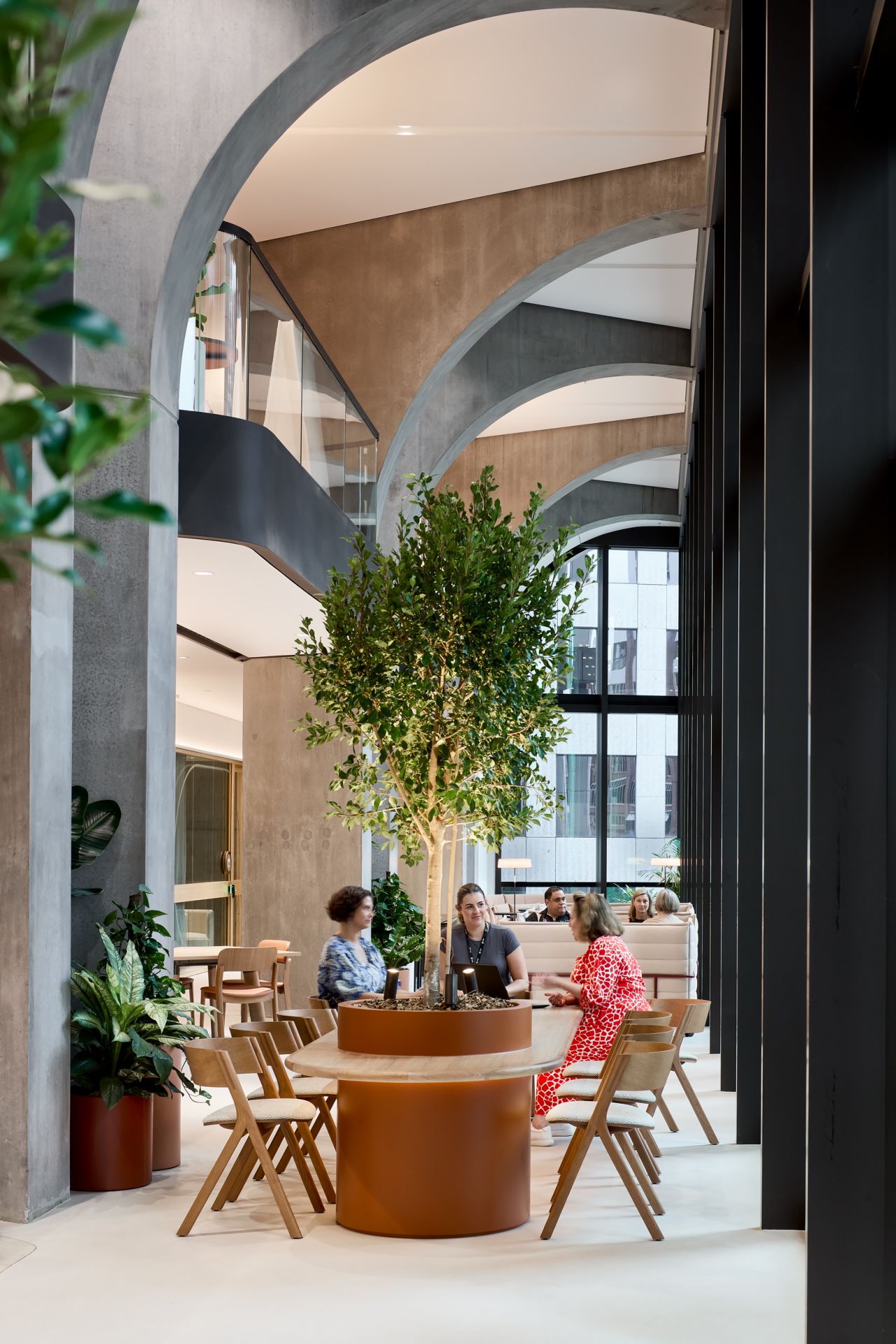
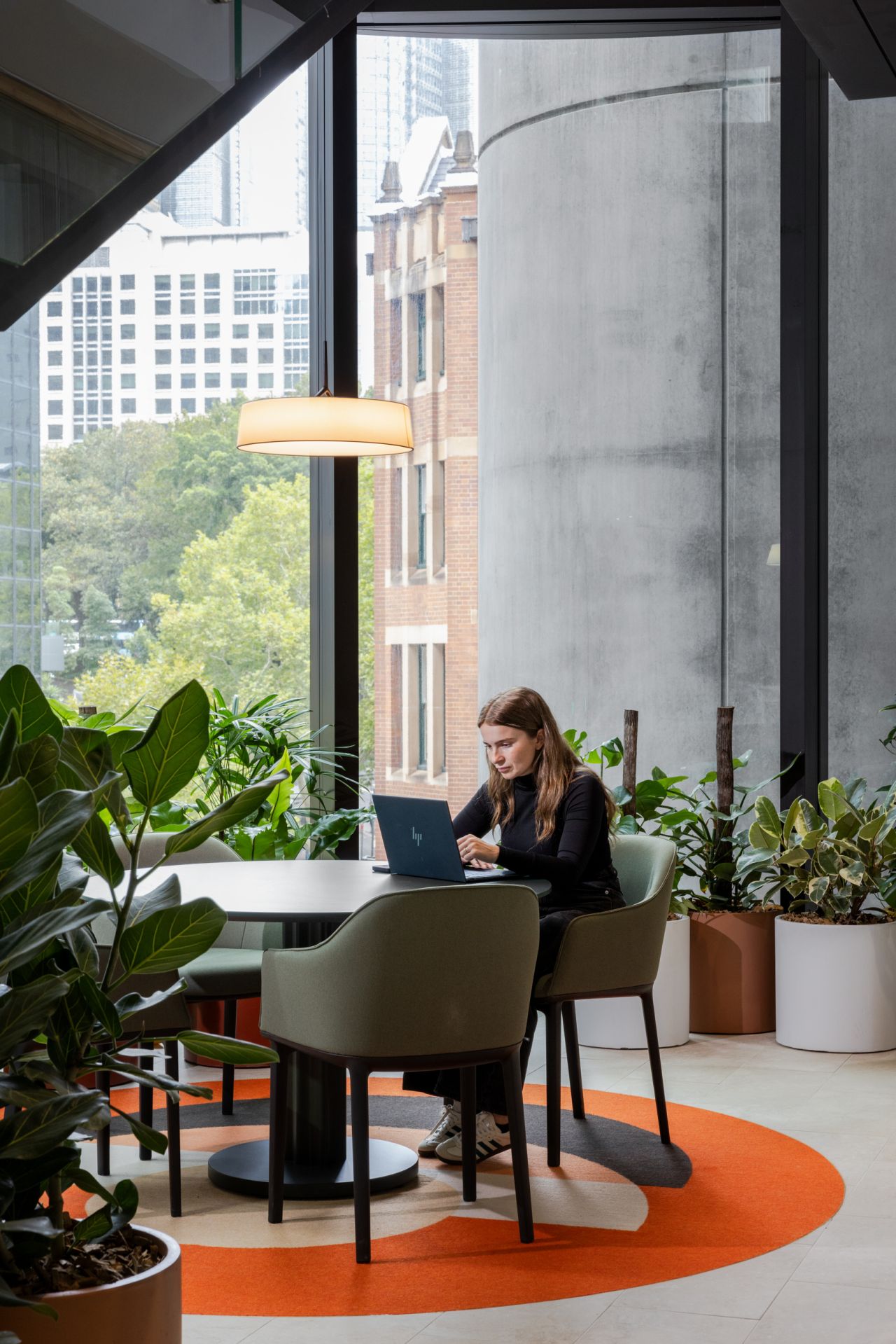
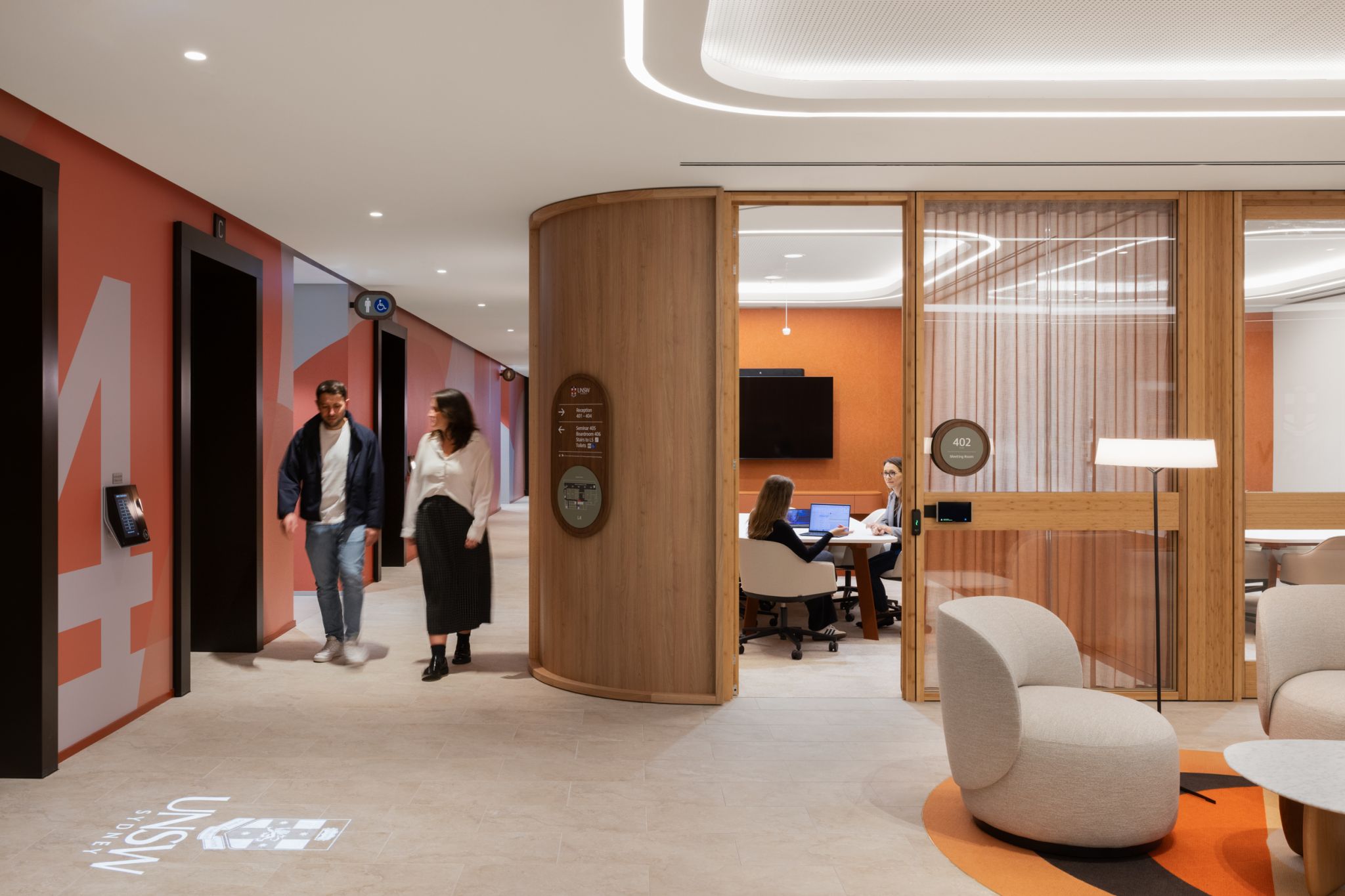
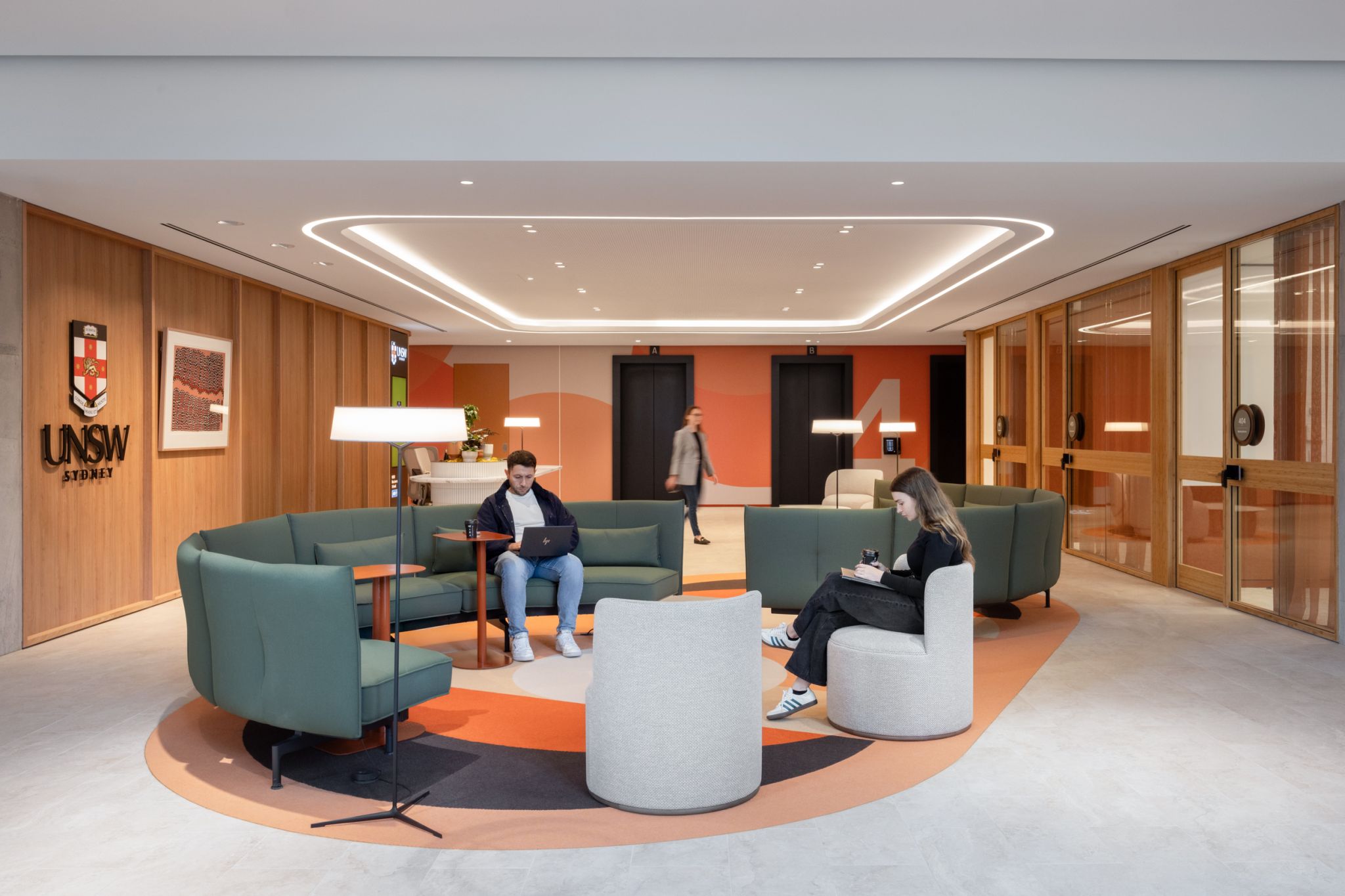
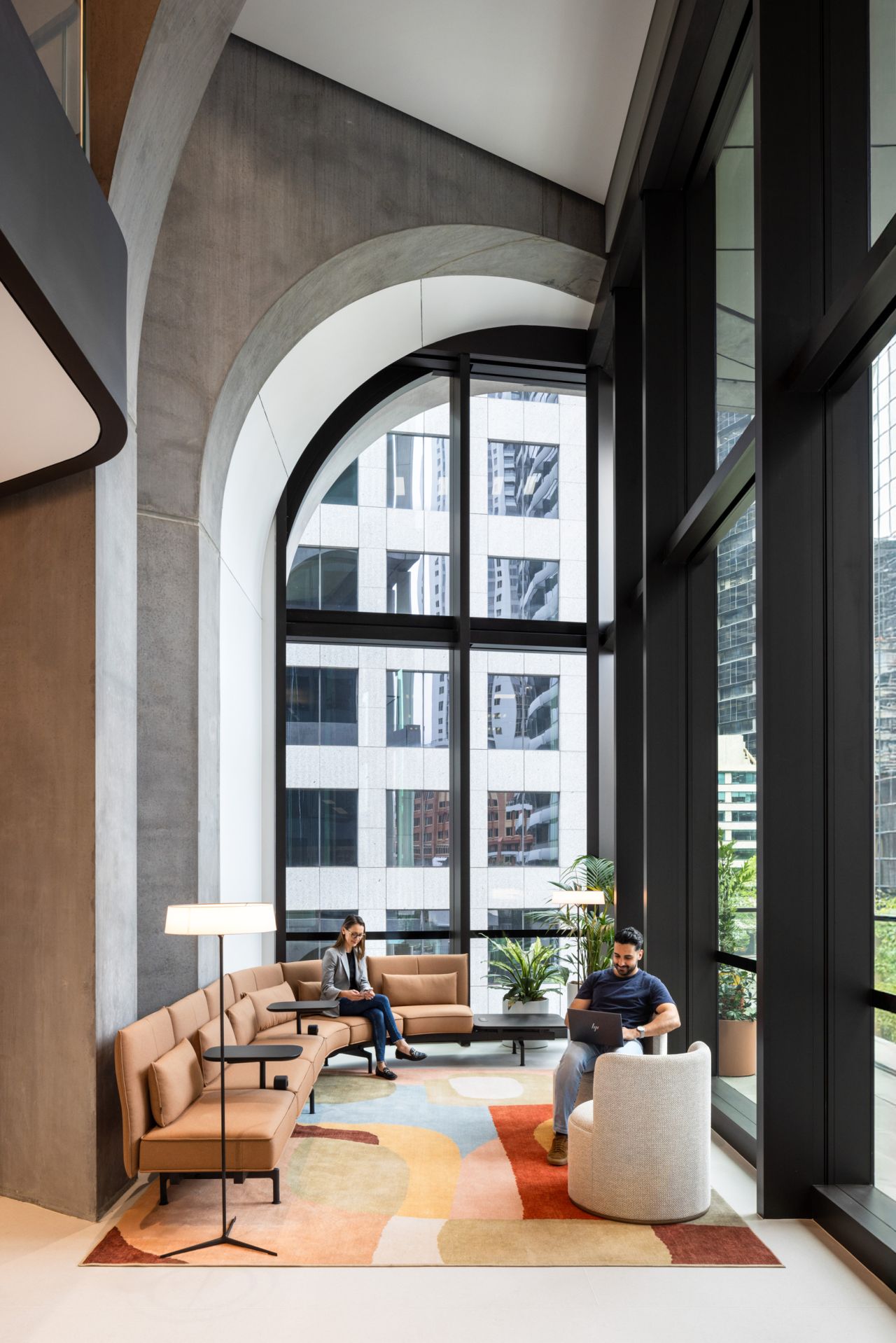
The Future Campus development program weaves new teaching and research precincts, sustainable retrofits, activated public spaces, and smart infrastructure, all designed to reinforce UNSW as a globally competitive, urban university.
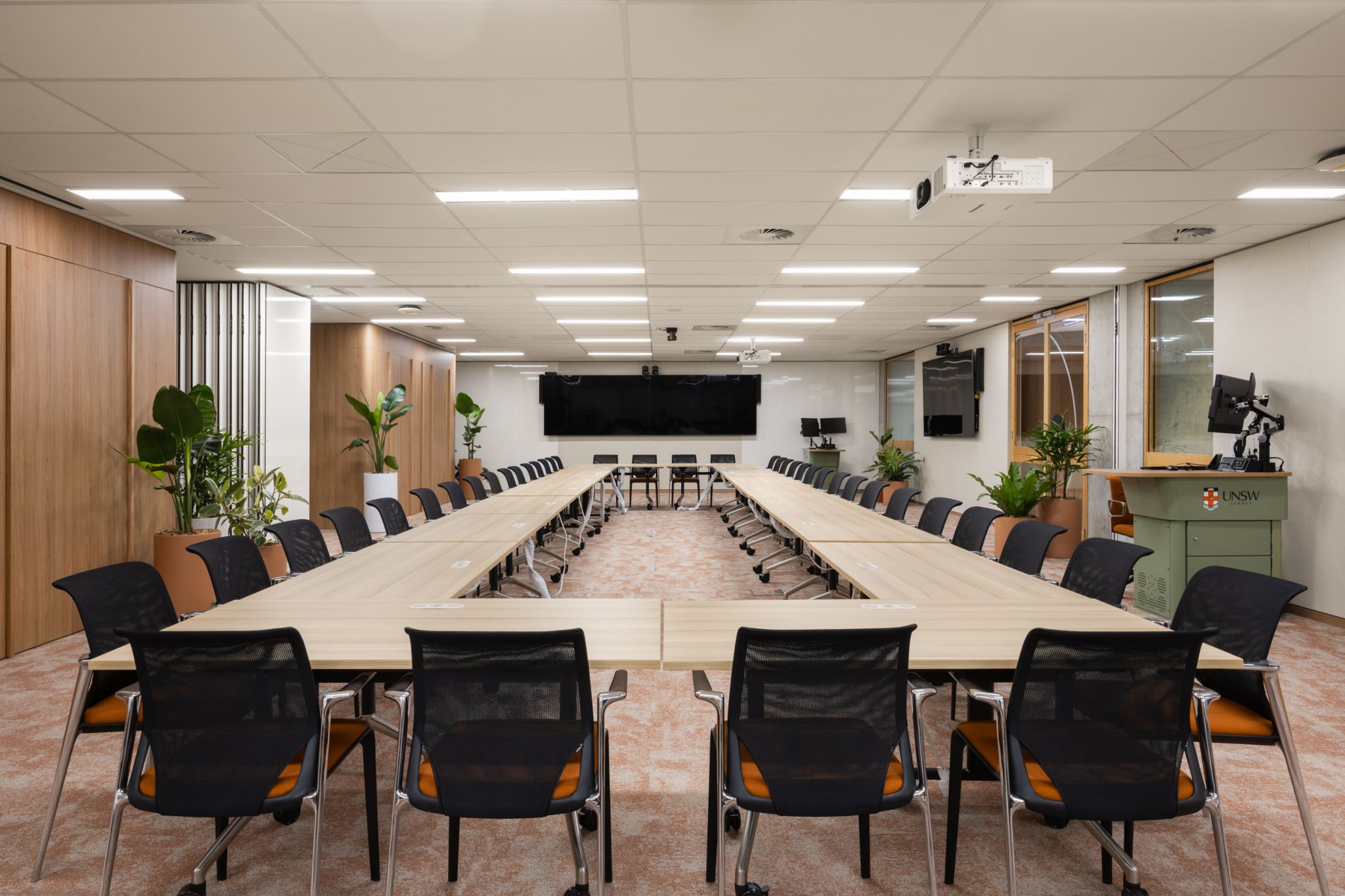
The interiors transform two levels of a commercial base building into flexible learning and event spaces with modular classrooms, a double-height atrium, and sustainable material choices.
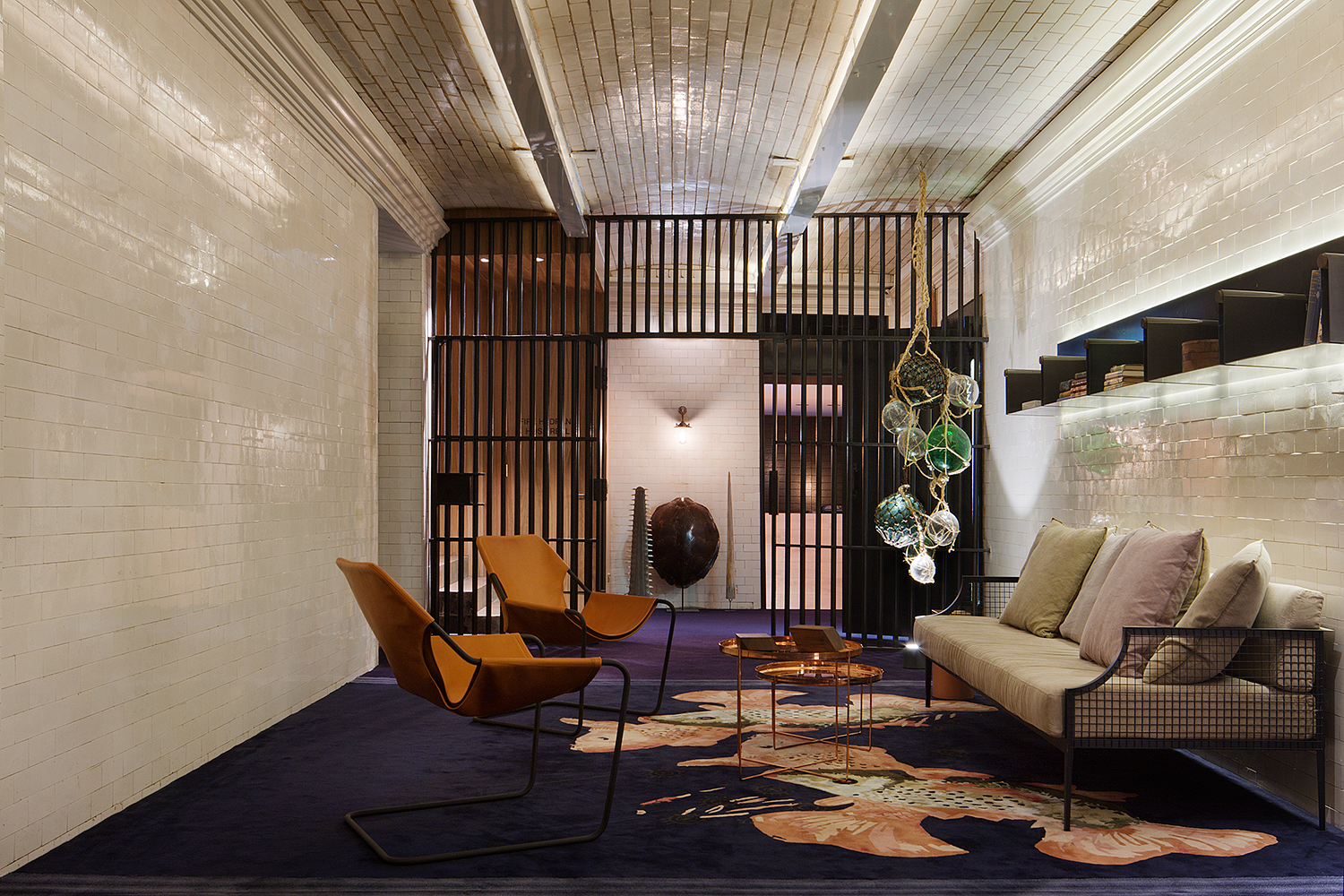
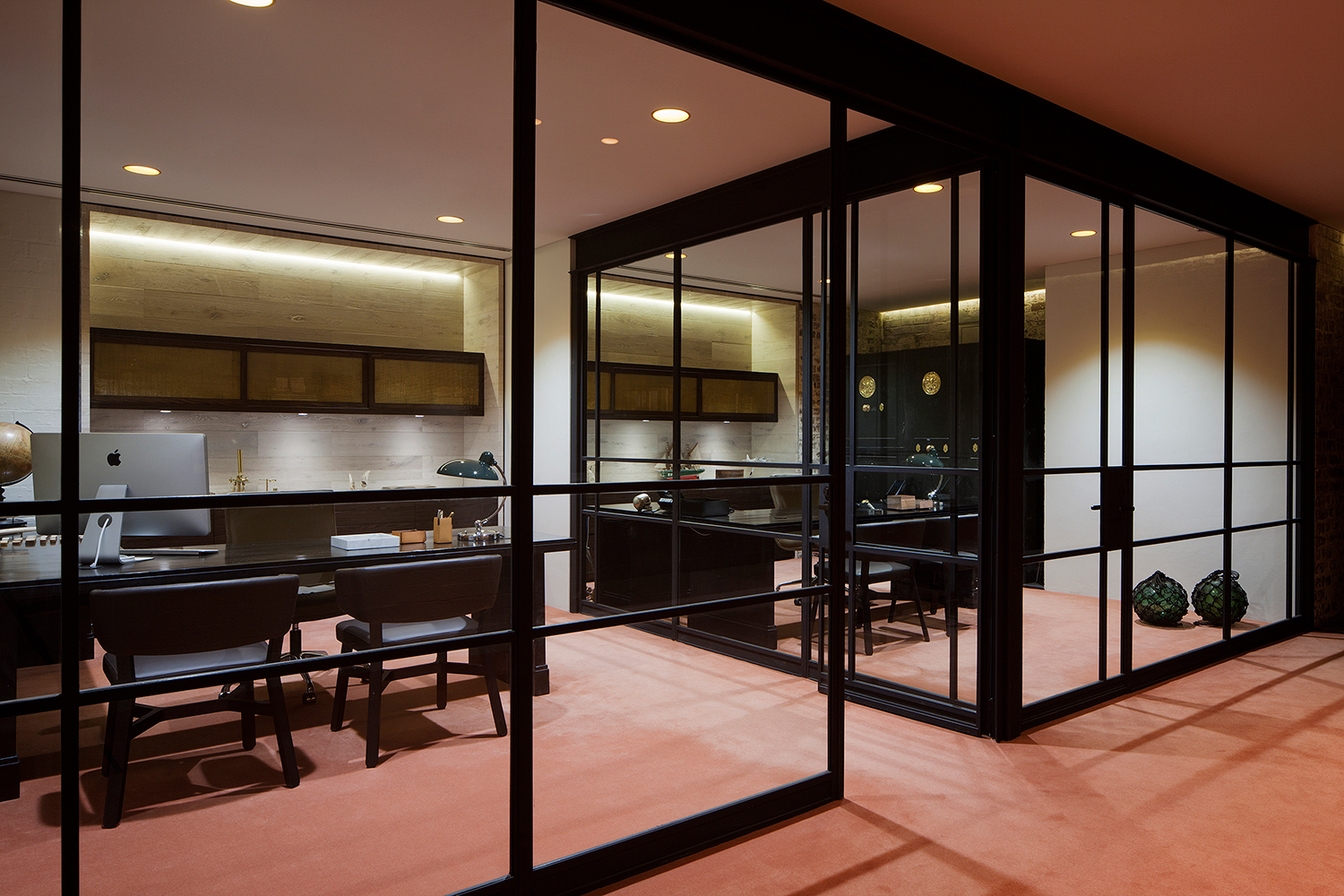
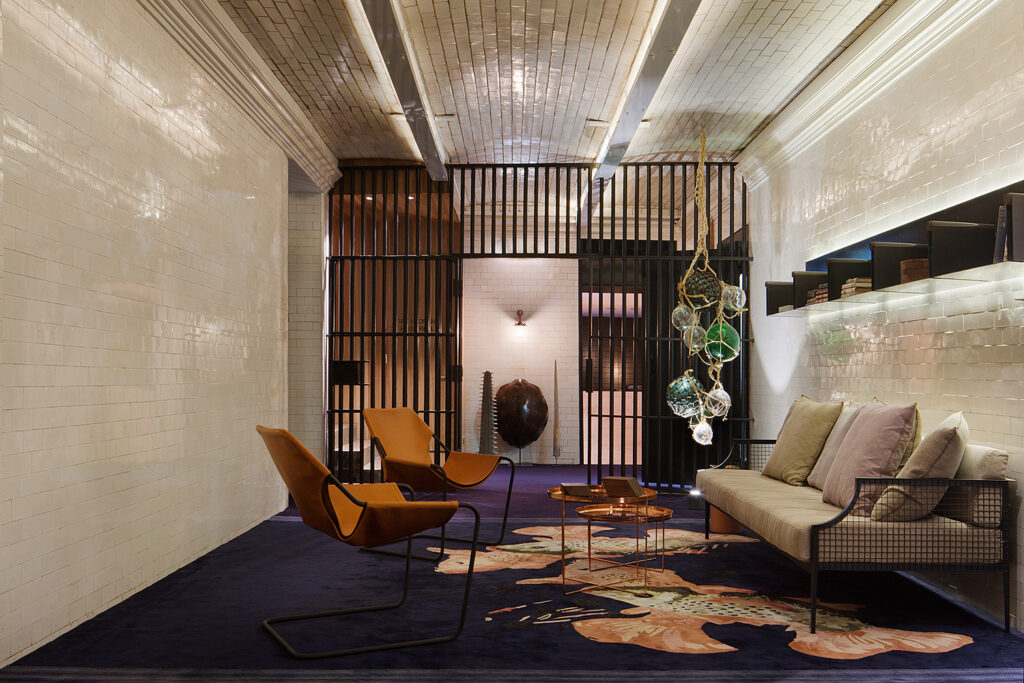
This project involved transforming 110-year-old heritage bank vaults submerged beneath the heart of the Sydney CBD, left to decay as barely used storage space, into theatrical, luxurious, comfortable and functional contemporary offices.
The project began already riddled with functional and practical site difficulties, so the process involved rigorous coordination with all parties involved. The result is a space that celebrates the rarely seen bones of an historic and unique bank vault construction, whilst simultaneously reflecting the luxury pearling company’s brand and the intricacies involved with their craft.
The Third Space coworking hub is an innovative workplace concept developed by Mirvac. The concept provided open-plan workspaces, focused work pods, casual meeting areas, and traditional office services, all within a 100 m² area. Amenities included bookable meeting rooms with TVs, free parking, and concierge services to assist with tasks like coordinating dry-cleaning or grocery pickups.
This pilot ran for three months, providing all services free of charge, and was part of Mirvac's broader strategy to explore flexible working solutions within its property portfolio.
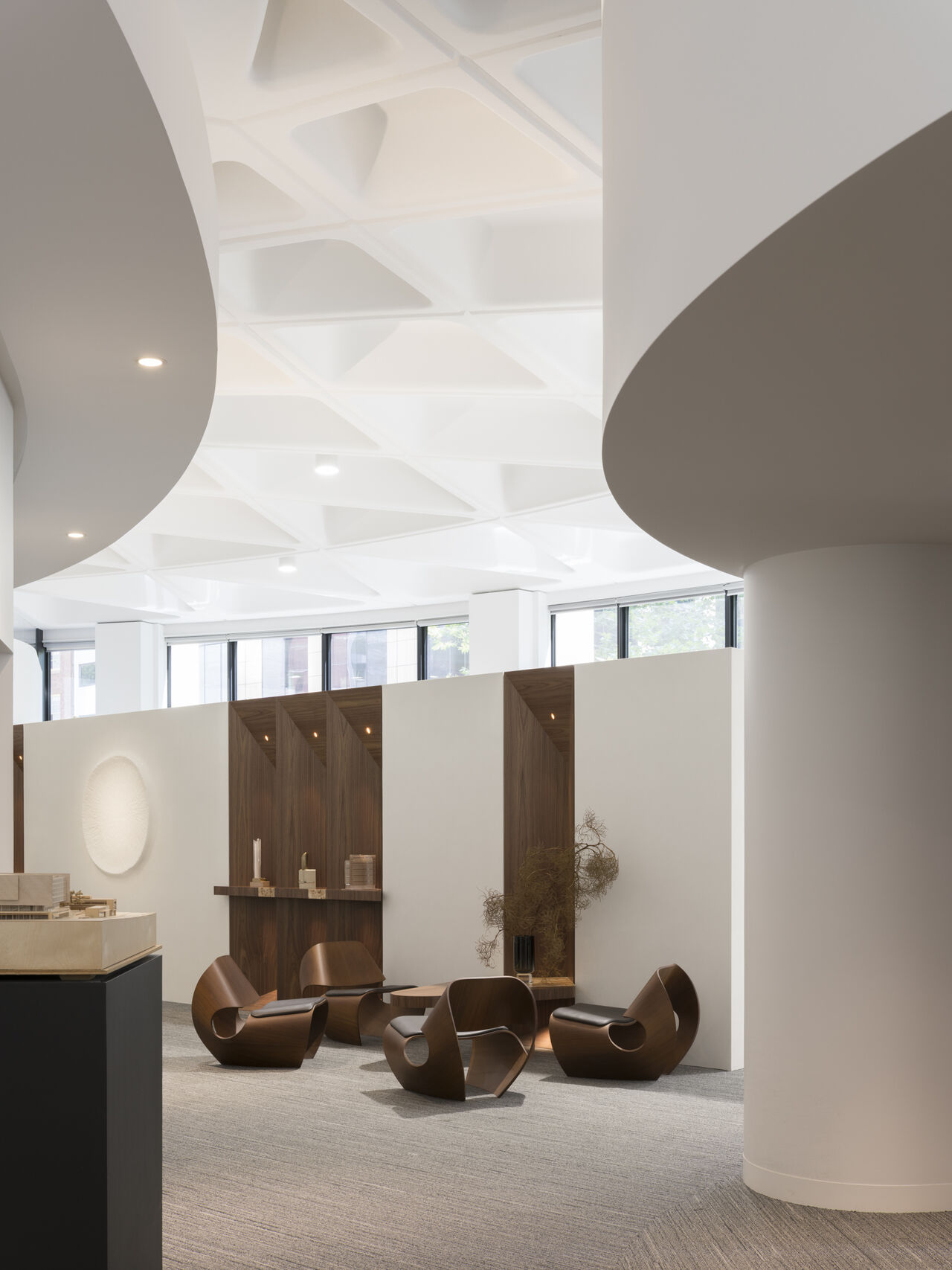
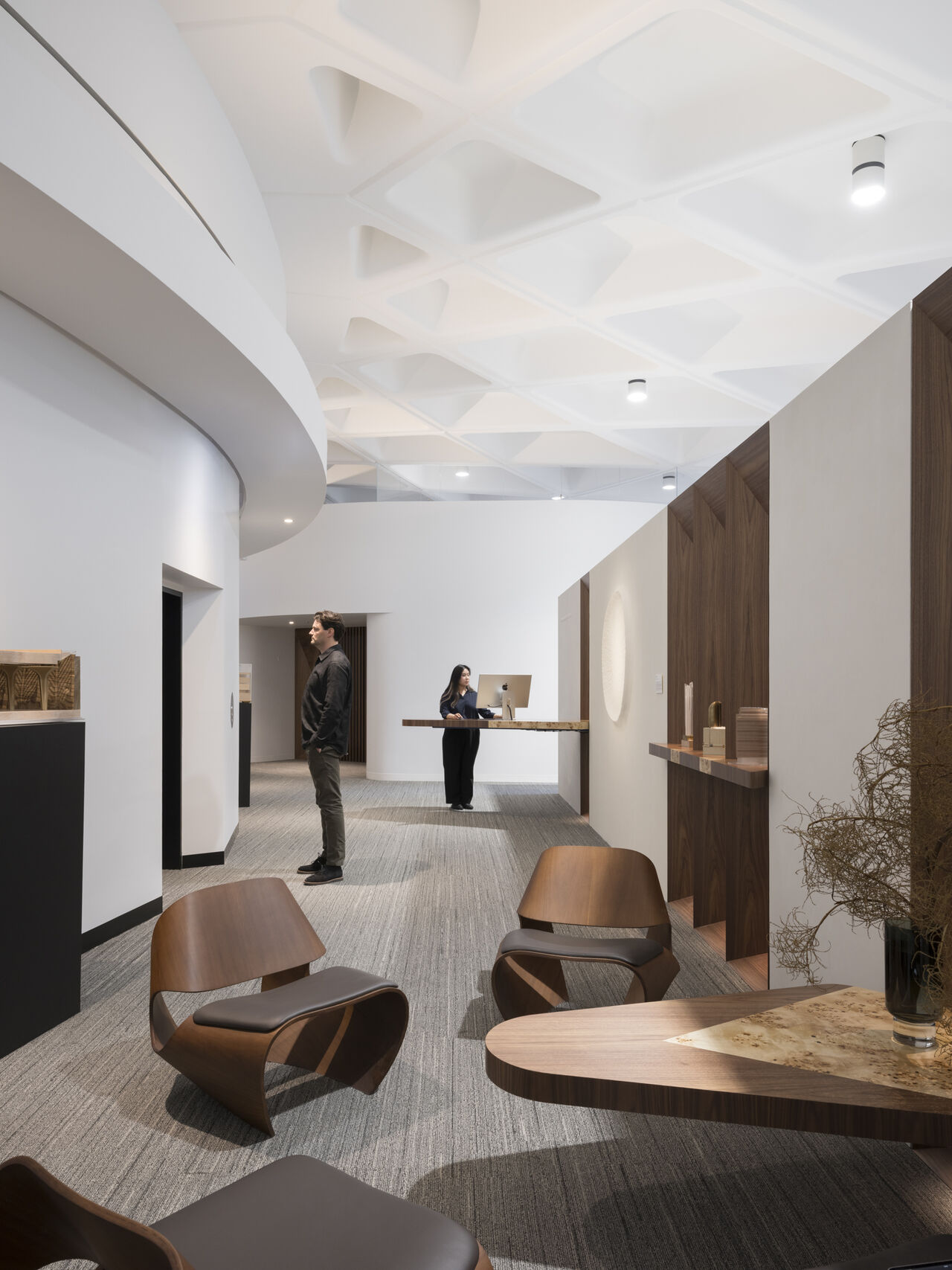
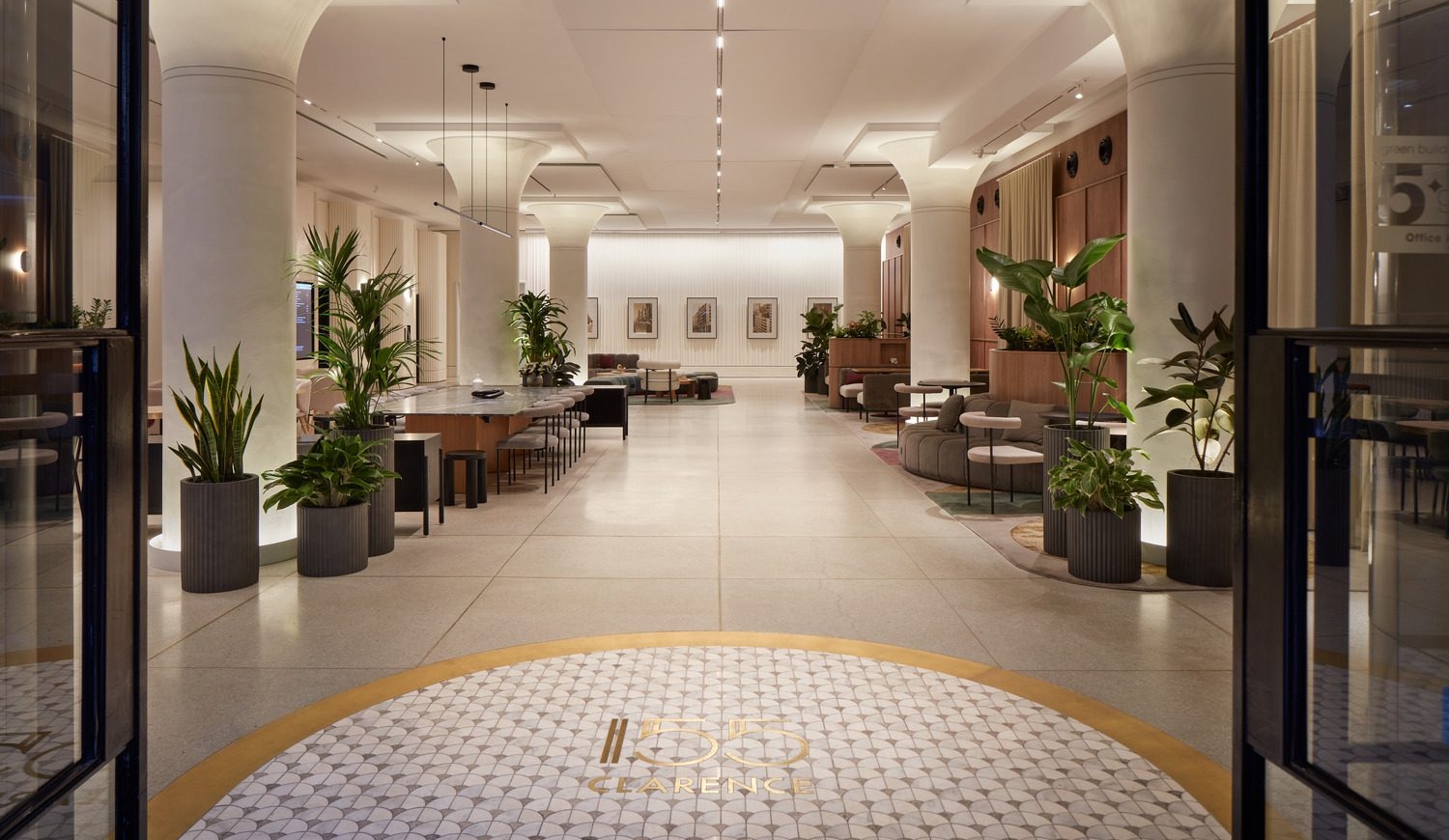
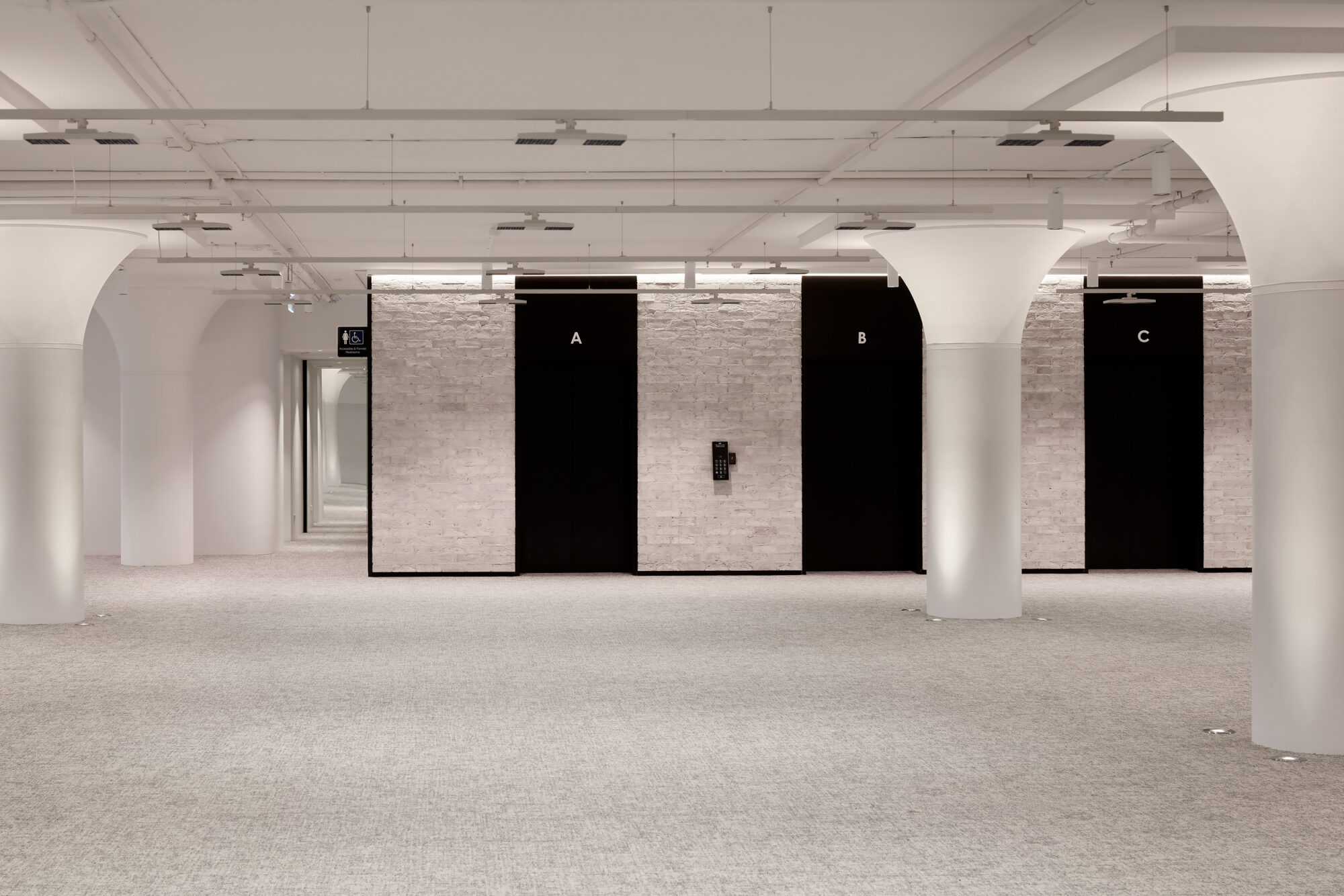
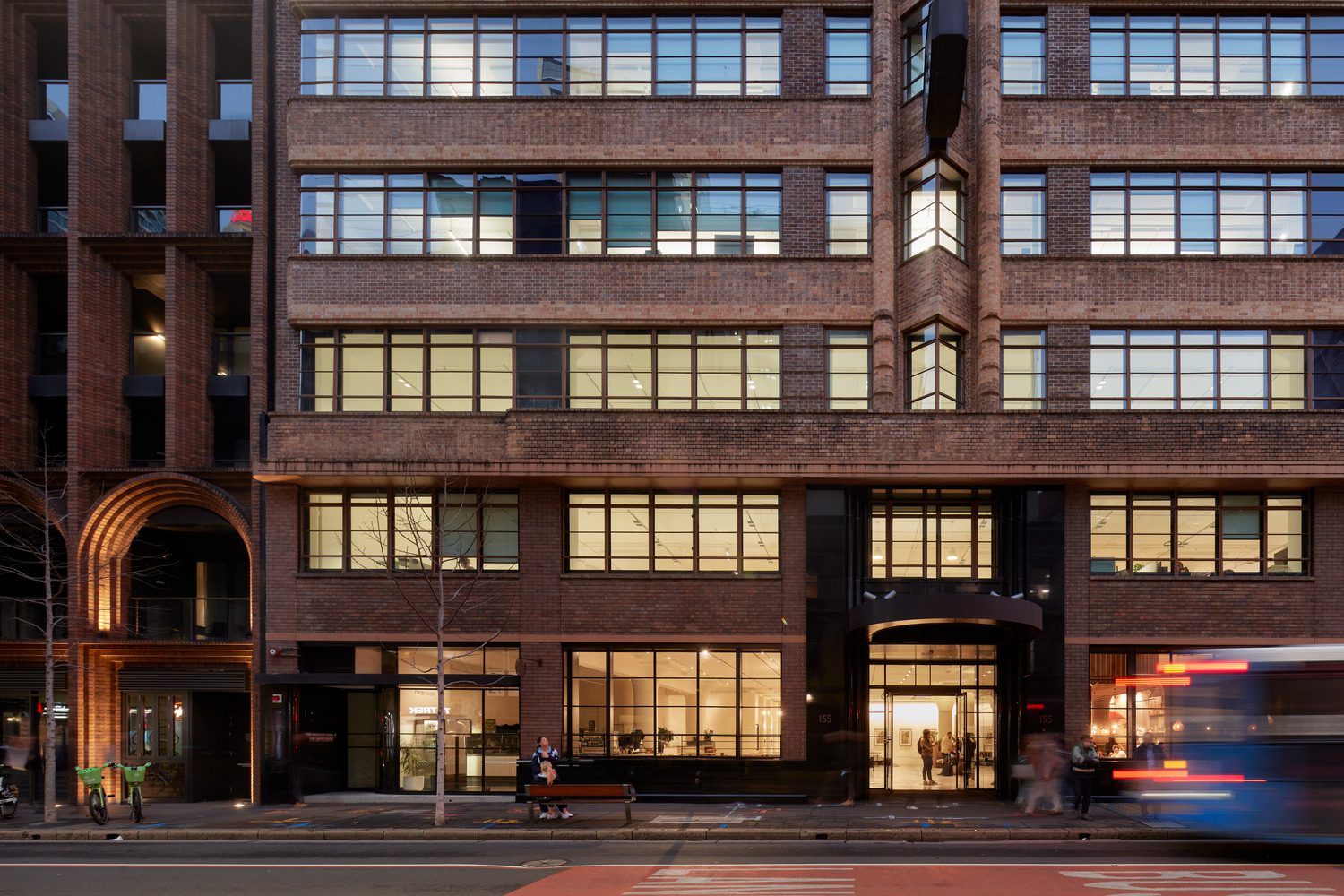
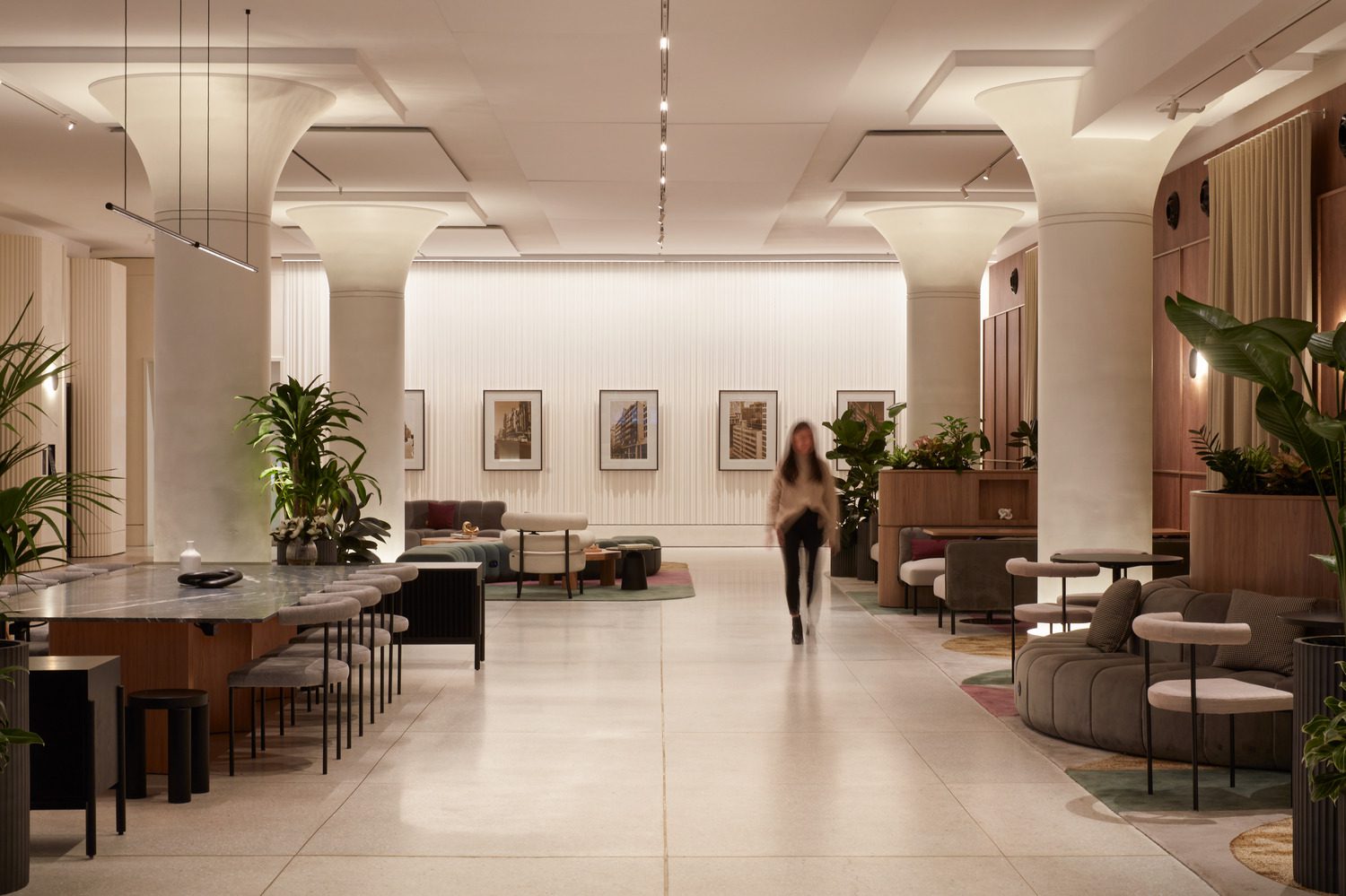
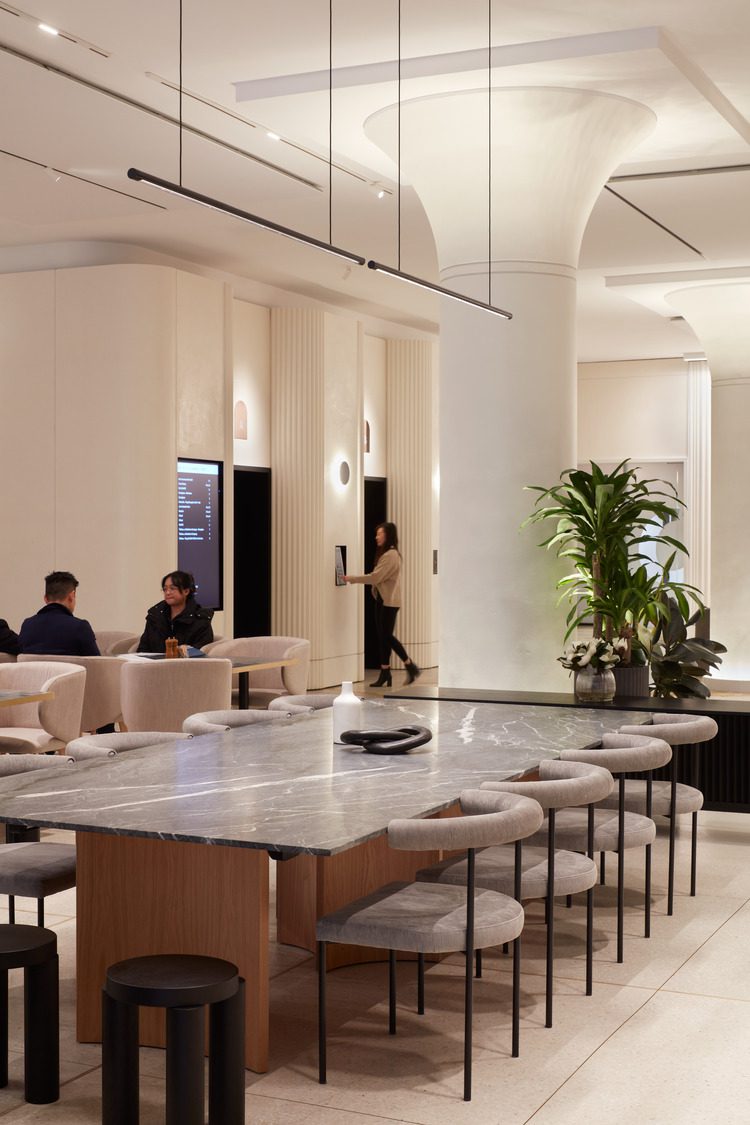
The 155 Clarence Street Lobby Upgrade reinvents the ground floor space of this 1939 Art Deco–heritage building into a vibrant “third place” that blends hotel-style amenities with workplace functionality. The renovation introduces dynamic zones while celebrating heritage features like the original Art Deco columns, brickwork, and mushroom capitals through sculptural lighting and integrated furniture lines.
This intelligent adaptation of underused space not only boosts daily occupancy to full capacity but also redefines what a lobby can be: not just a waiting area, but a destination that fosters community, productivity, and well‑being.
Delivered part of an 8,000 m², 24-week hotel-wide refurbishment, the project refreshed Marble Bar’s furniture, floor finishes and feature lighting in a live trading environment, reusing the original fabric and existing cabling wherever possible.
Working within strict heritage controls that prohibit fixing into original walls and ceilings, the team re-planned seating, introduced modular pieces, and upgraded the bar and entry sequence to suit the hotel’s new narrative.
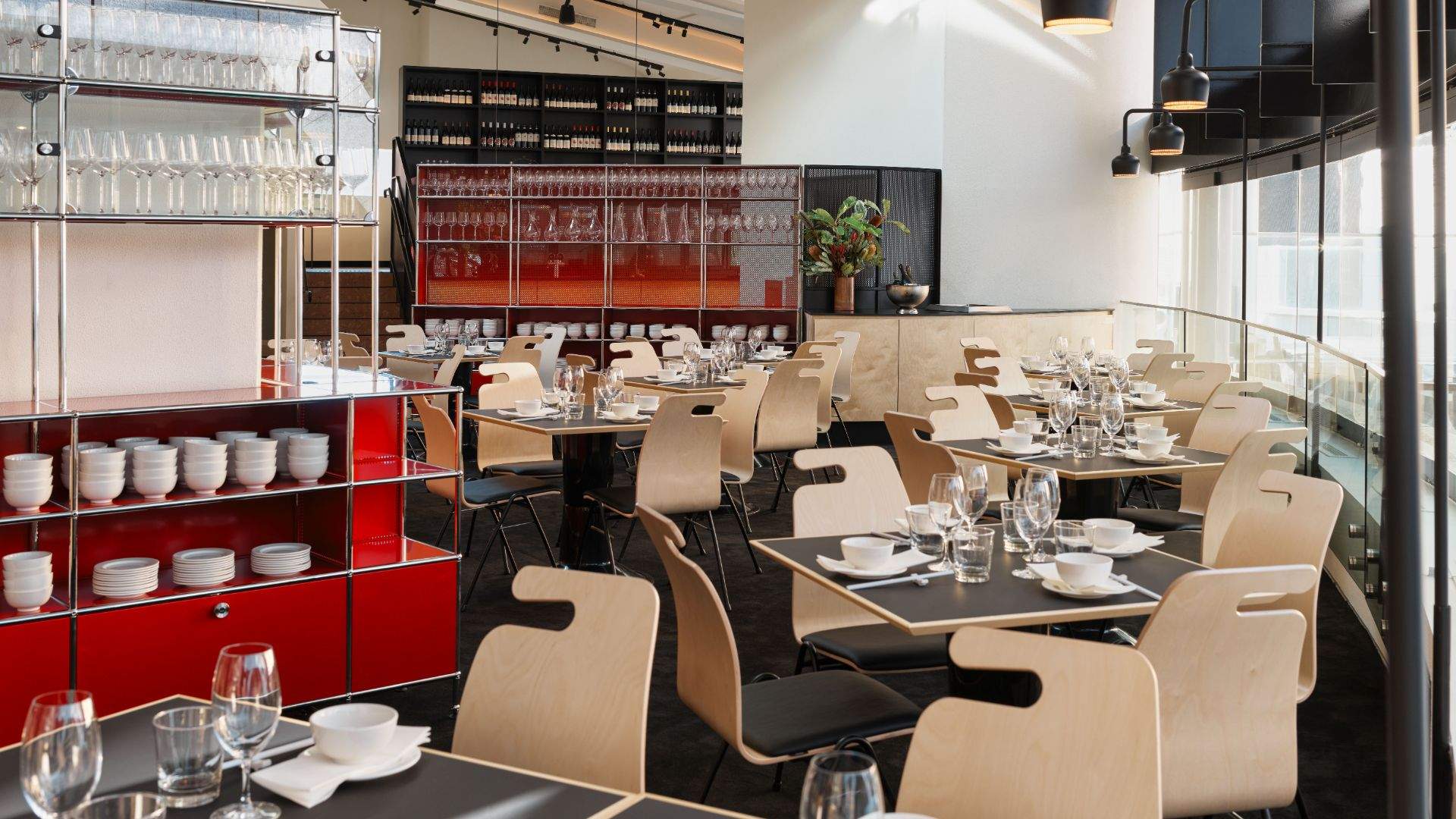
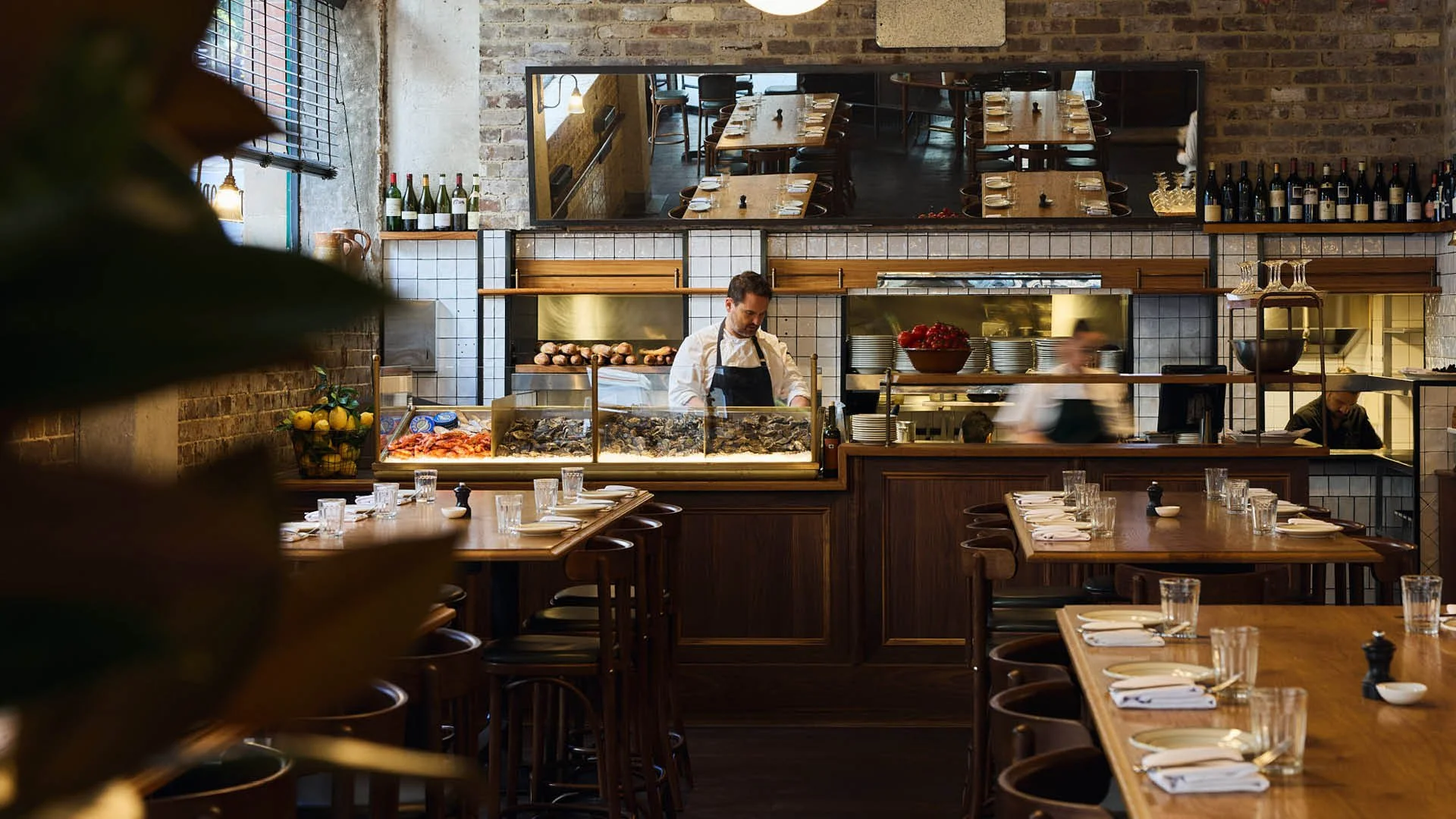
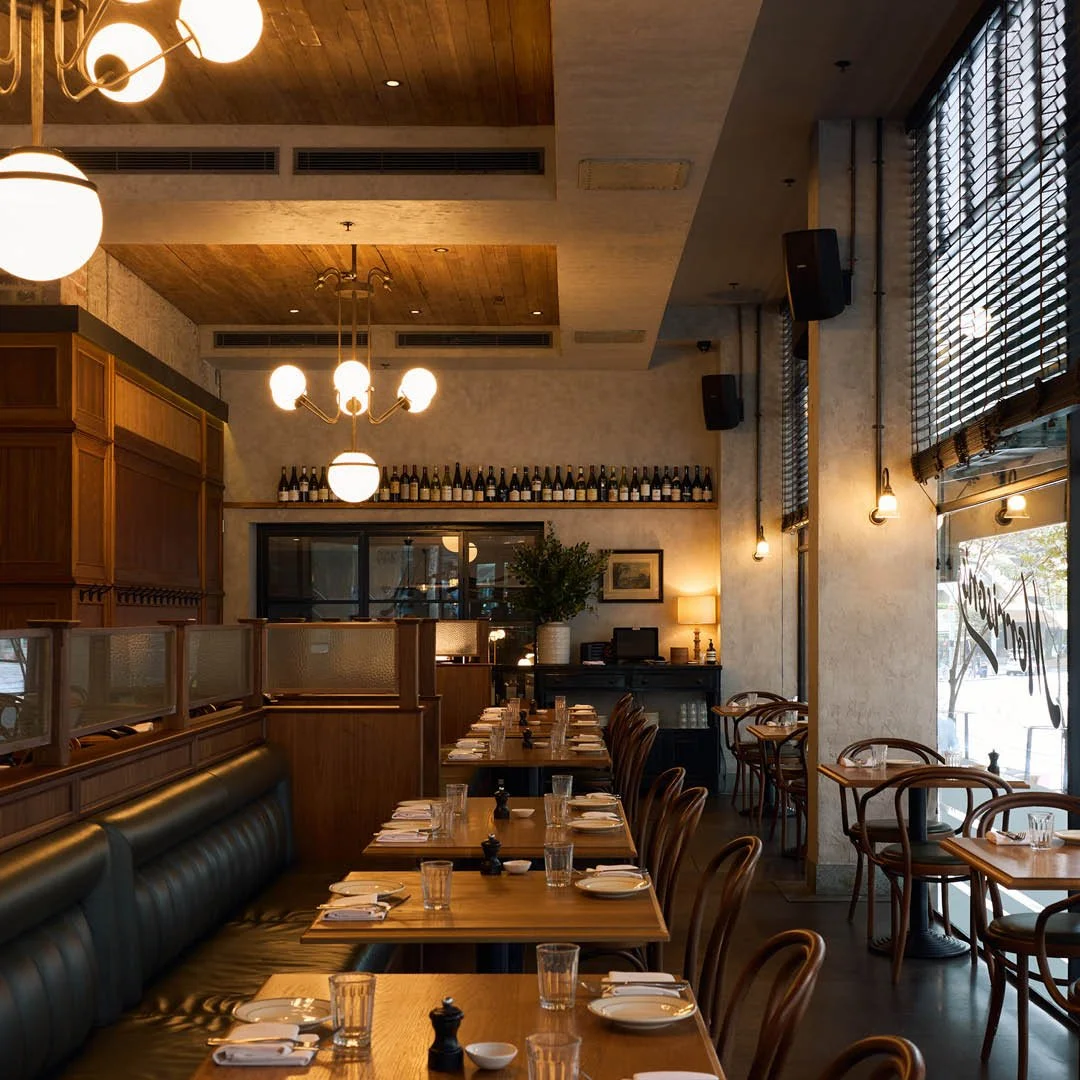
The space draws deeply on its New‑York‑style oyster‑bar roots and industrial bones, layering exposed brick and concrete with rich green leather banquettes, hand‑cut tiles, brass detailing, and a light‑filled conservatory extension.
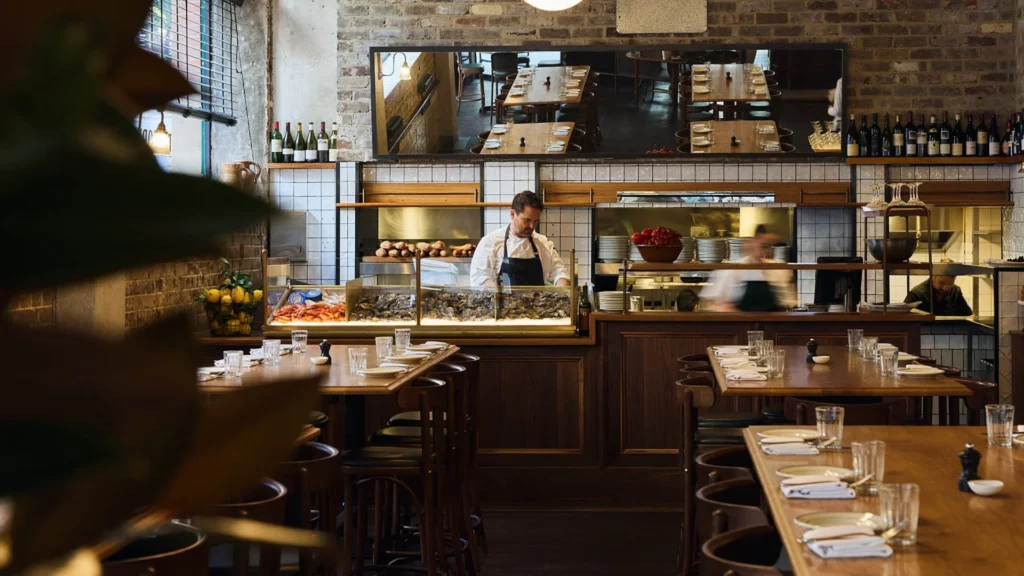
The design team delivered a space that honours tradition while elevating comfort and craft, marrying premium aged beef, live shuck oysters and a signature happy‑hour scene with an interior that feels both timeless and distinctly modern.
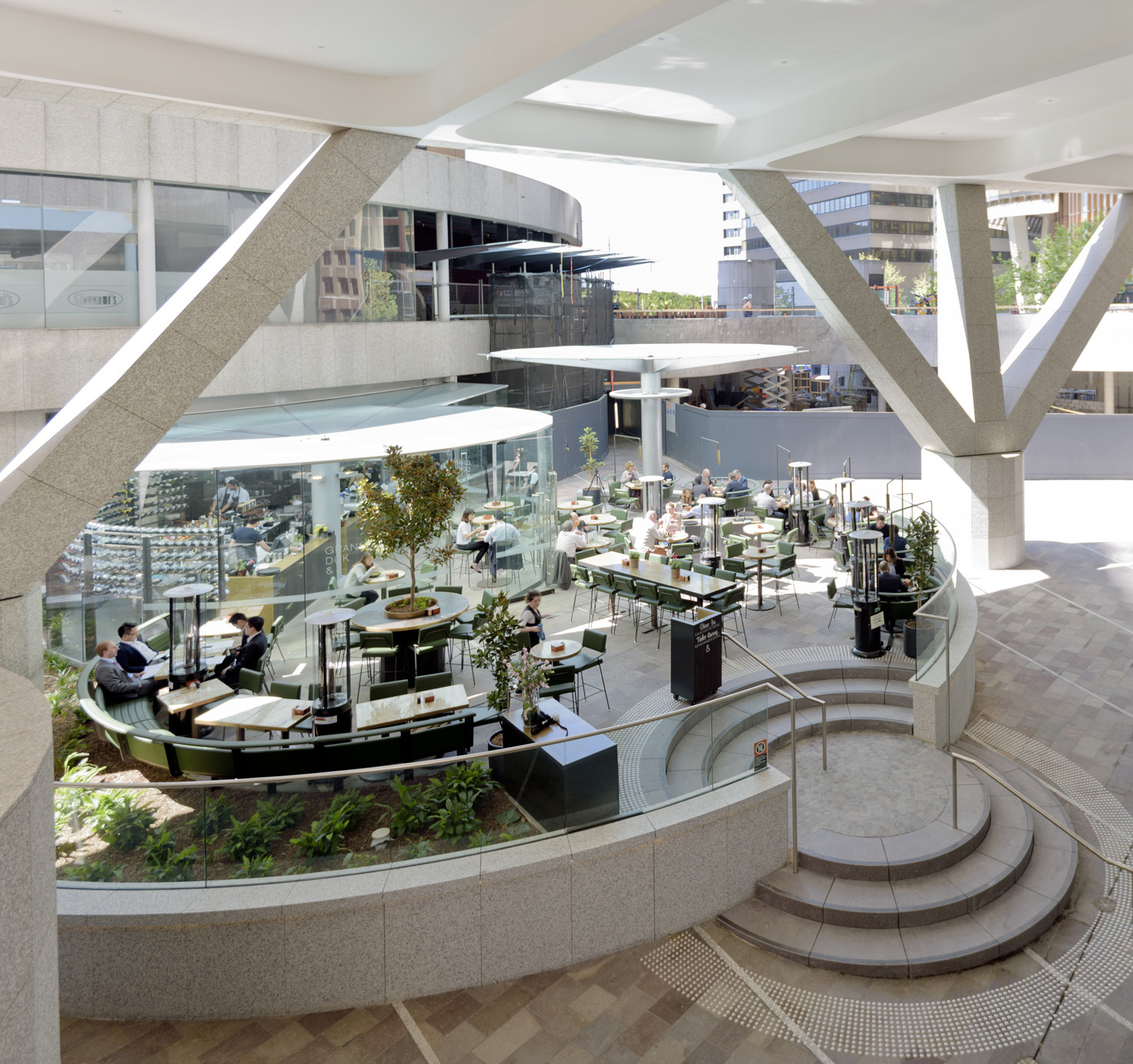
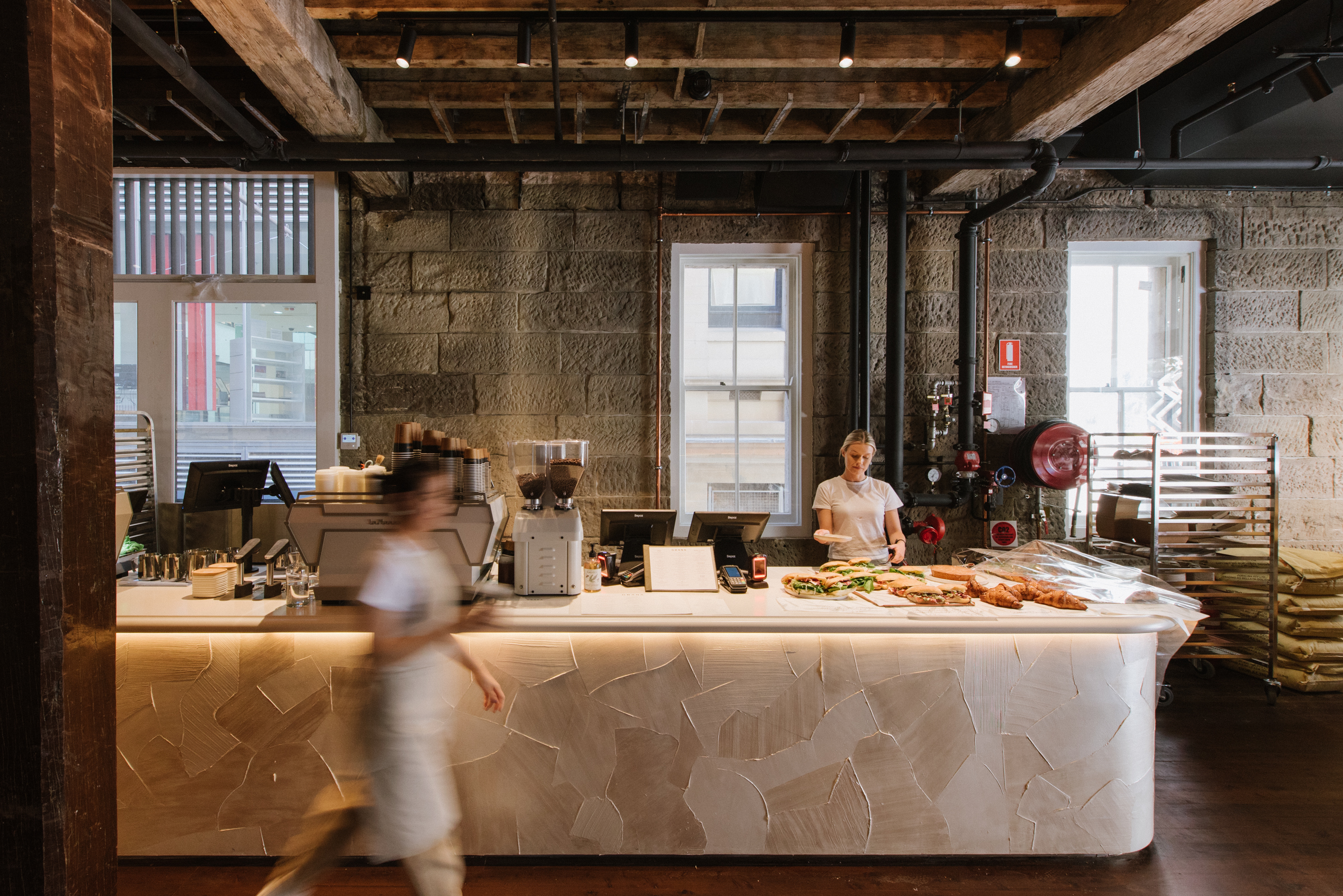
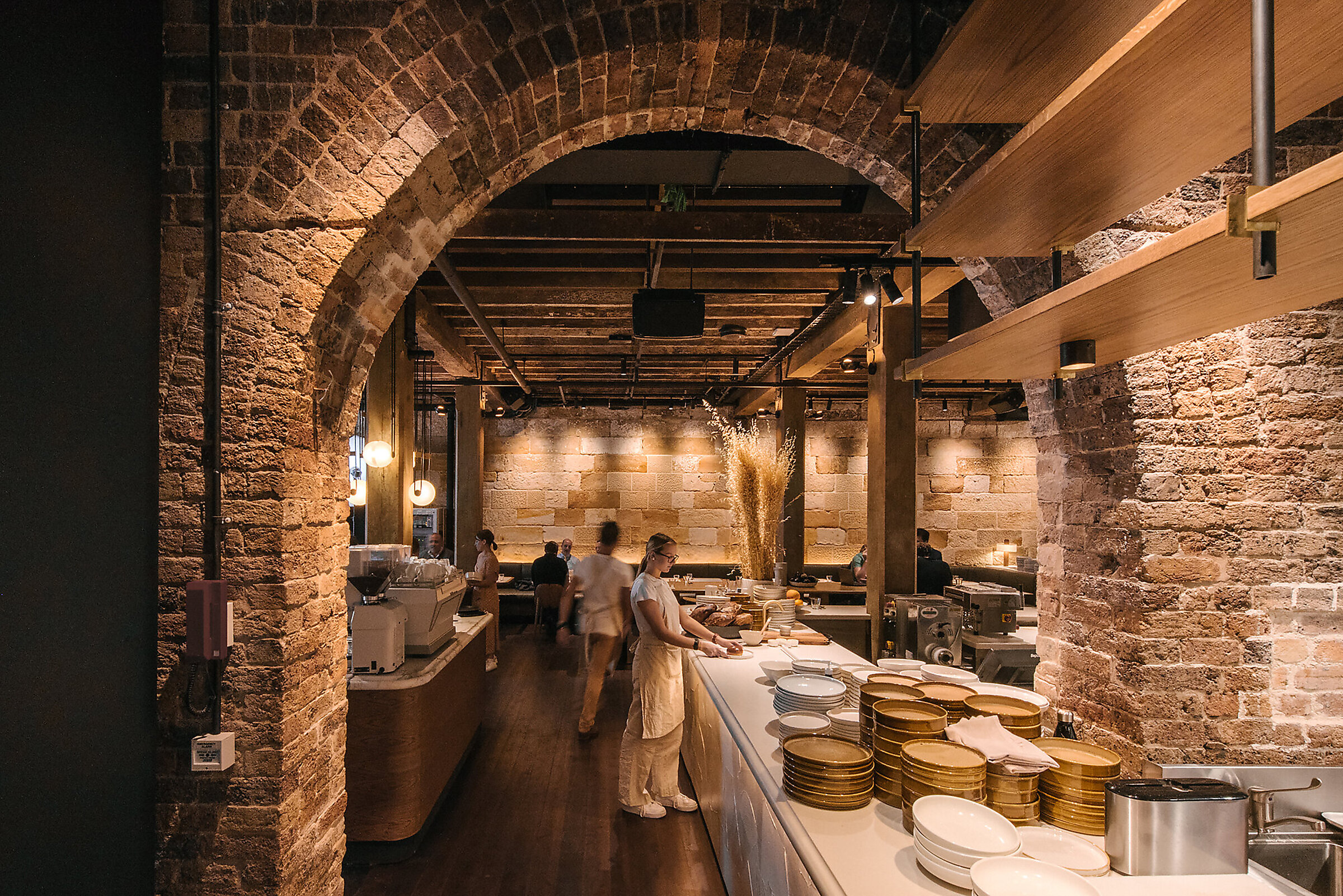
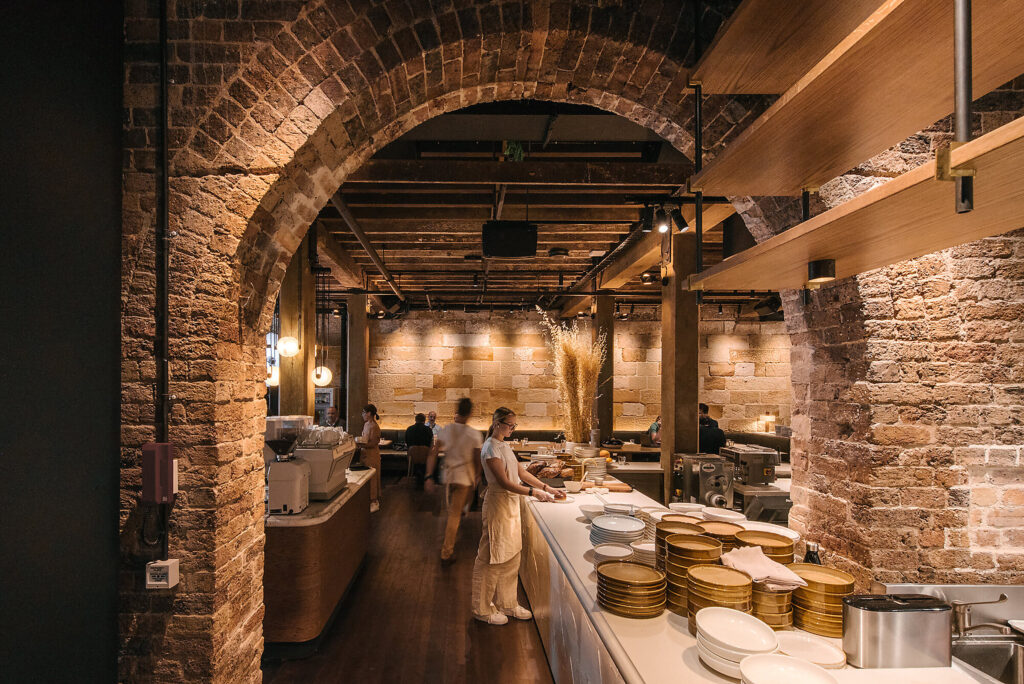
Nestled on the ground floor of the heritage‑listed Hinchcliff House wool store in Sydney’s Circular Quay, Grana is a stunning all‑day dining venue that transforms raw industrial character into refined hospitality.
The design overlays the site’s original sandstone walls, heavy timber beams and loft‑style structure with warm wood, soft lighting, and a sculptural serpentine bar that winds 18 metres through the space, crafted in seamless Corian to link dining room and open kitchen.
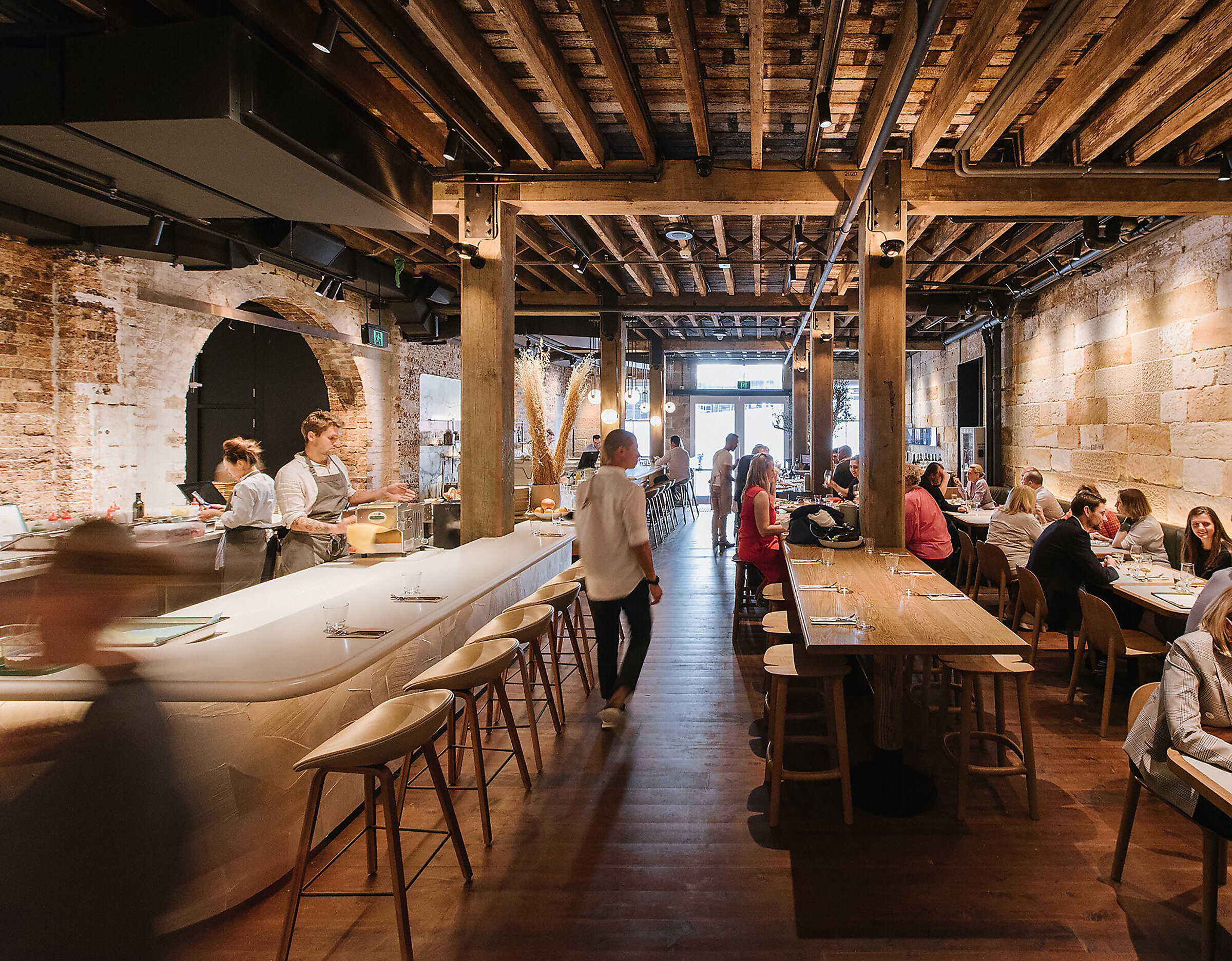
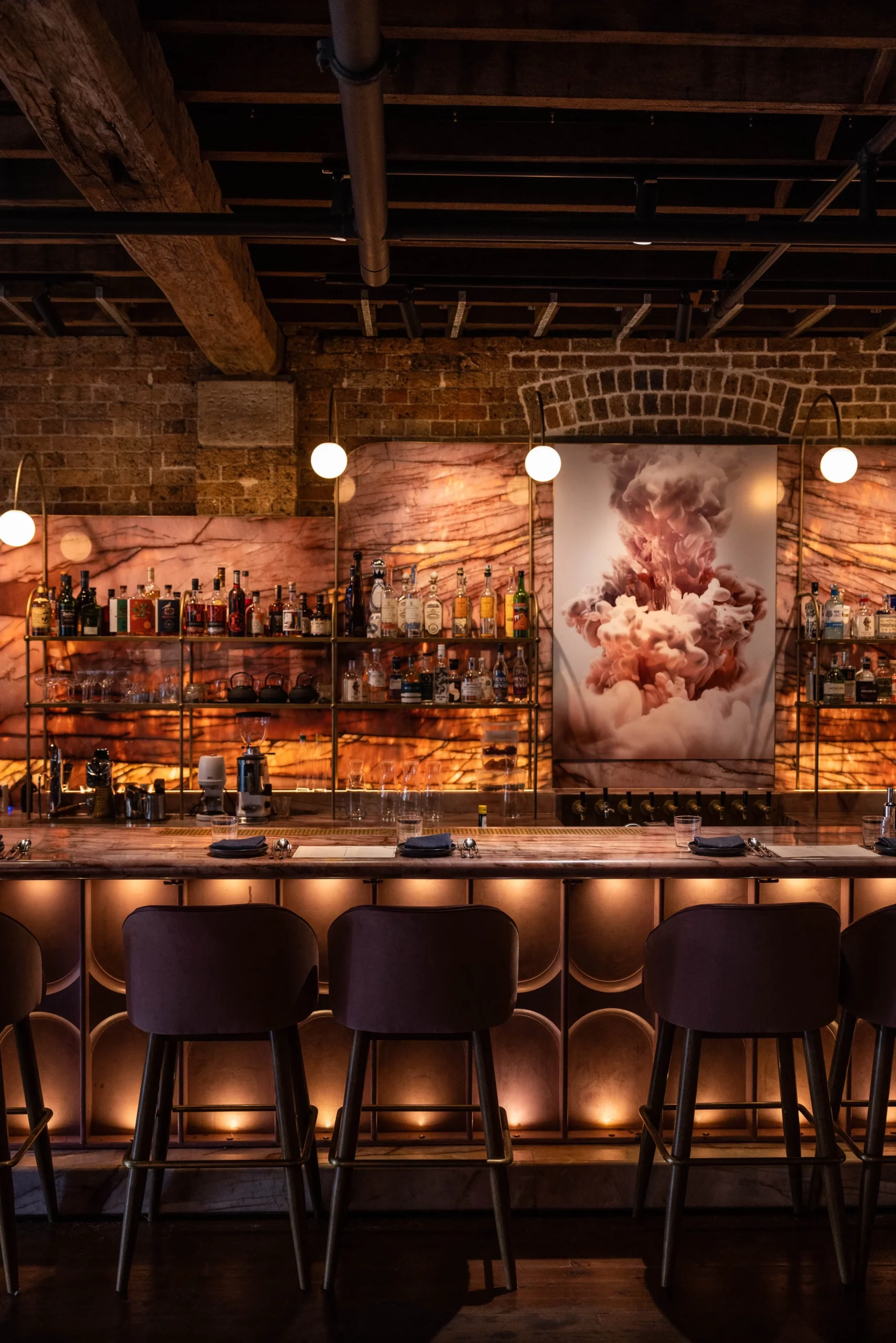
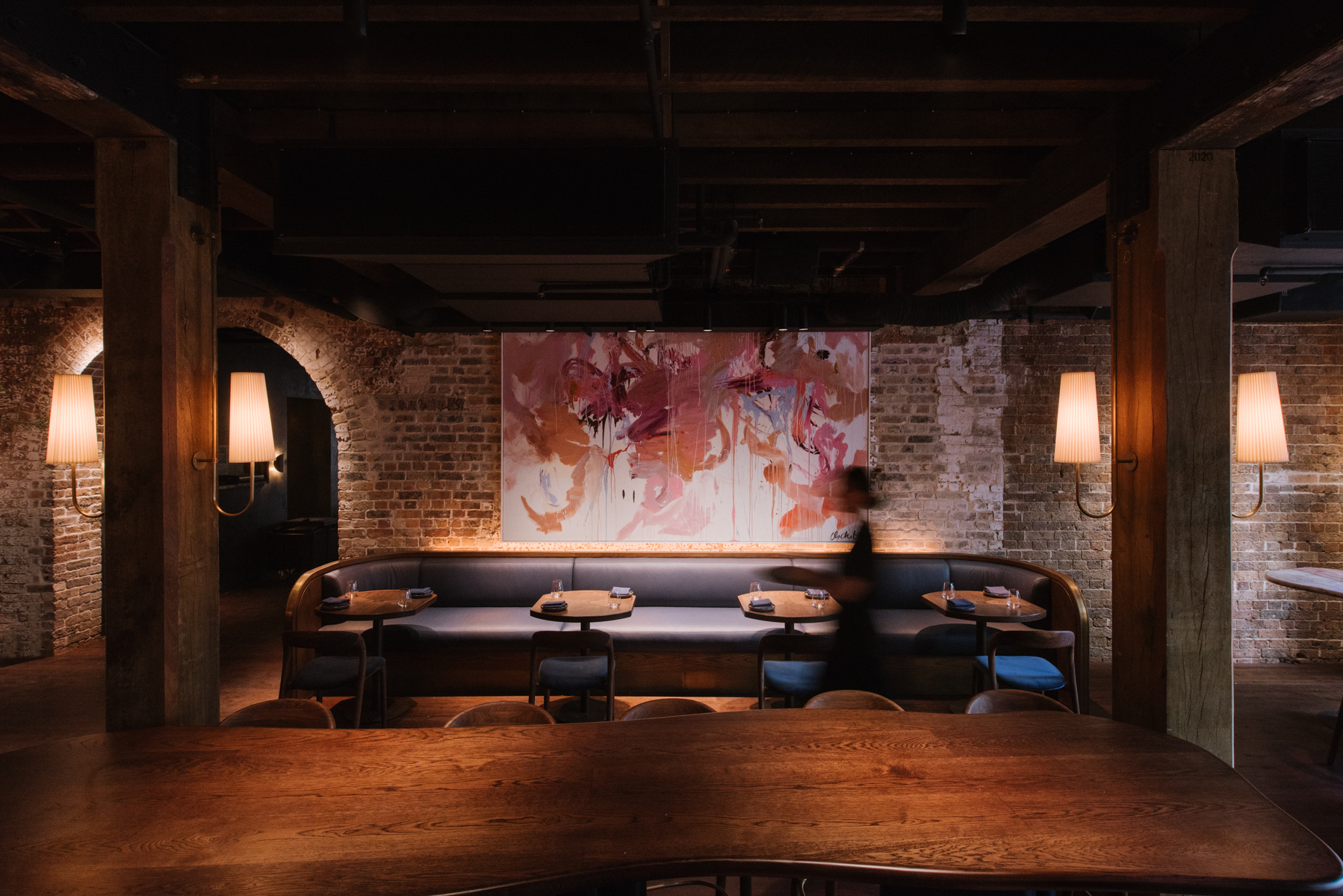
Set within the heritage‑listed 1870s wool‑store at Circular Quay, Lana transforms Level 1 of Hinchcliff House into a bold, modern Italian dining destination.
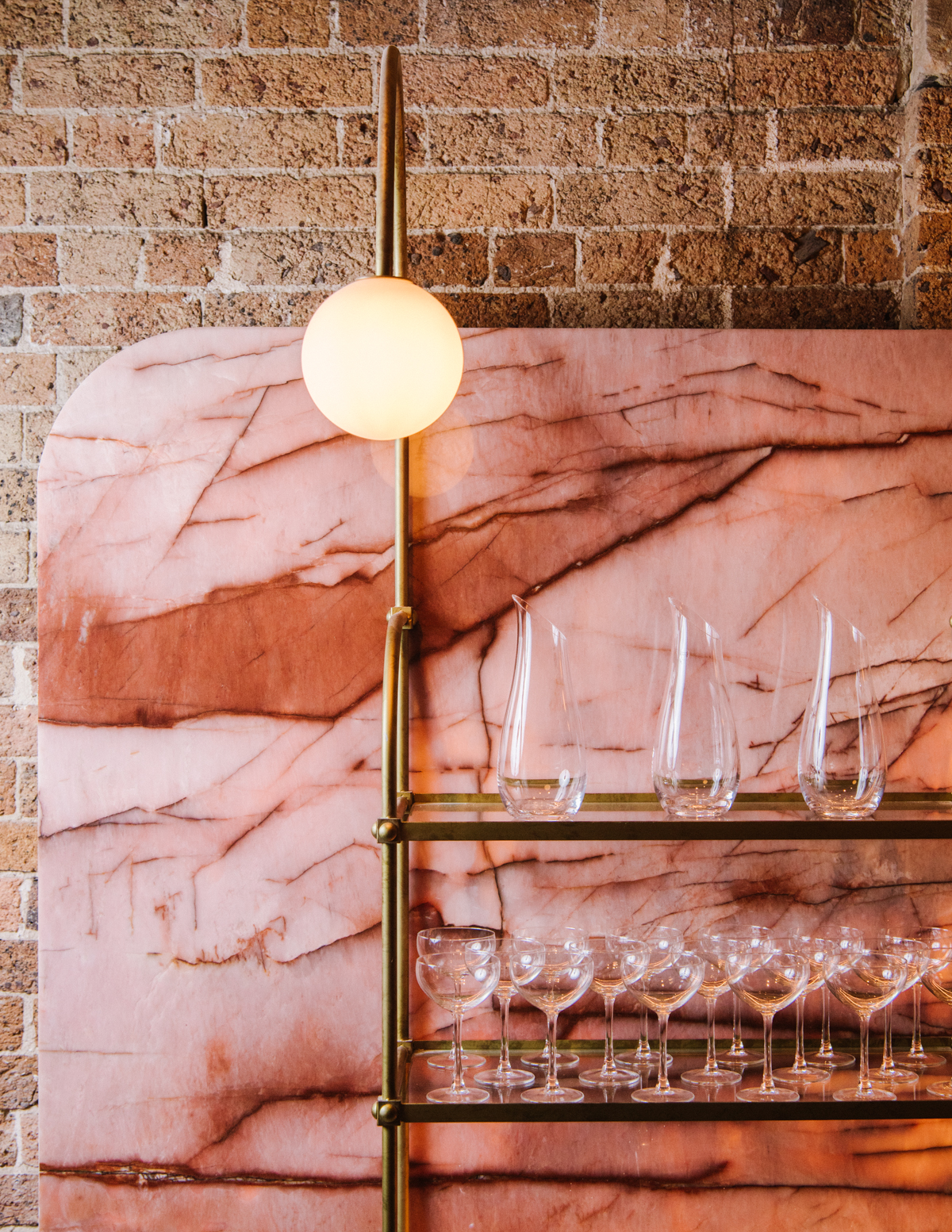
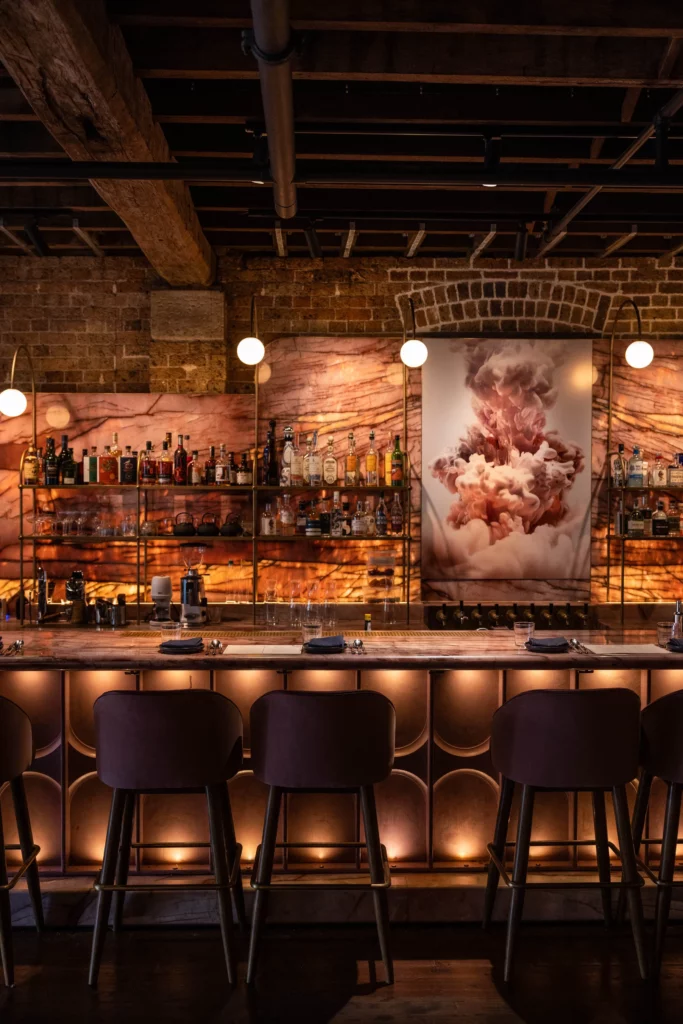
The design foregrounds the building’s raw sandstone and timber heritage structure, layered with distinctive touches such as a long rose‑pink marble bar, flirty low banquettes in nude‑pinks, deep navy accents, and brass detailing, creating a seductive yet inclusive ambiance. Launched in 2021, the project signals a partnership between heritage regeneration and hospitality design, delivering both visual drama and refined social space in Sydney’s evolving dining precinct.
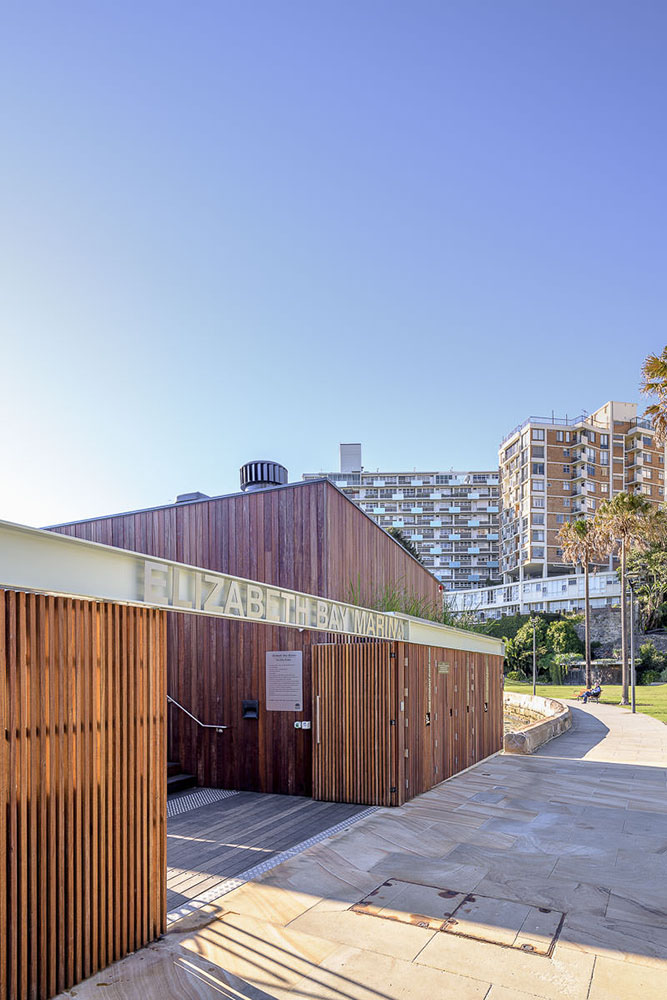
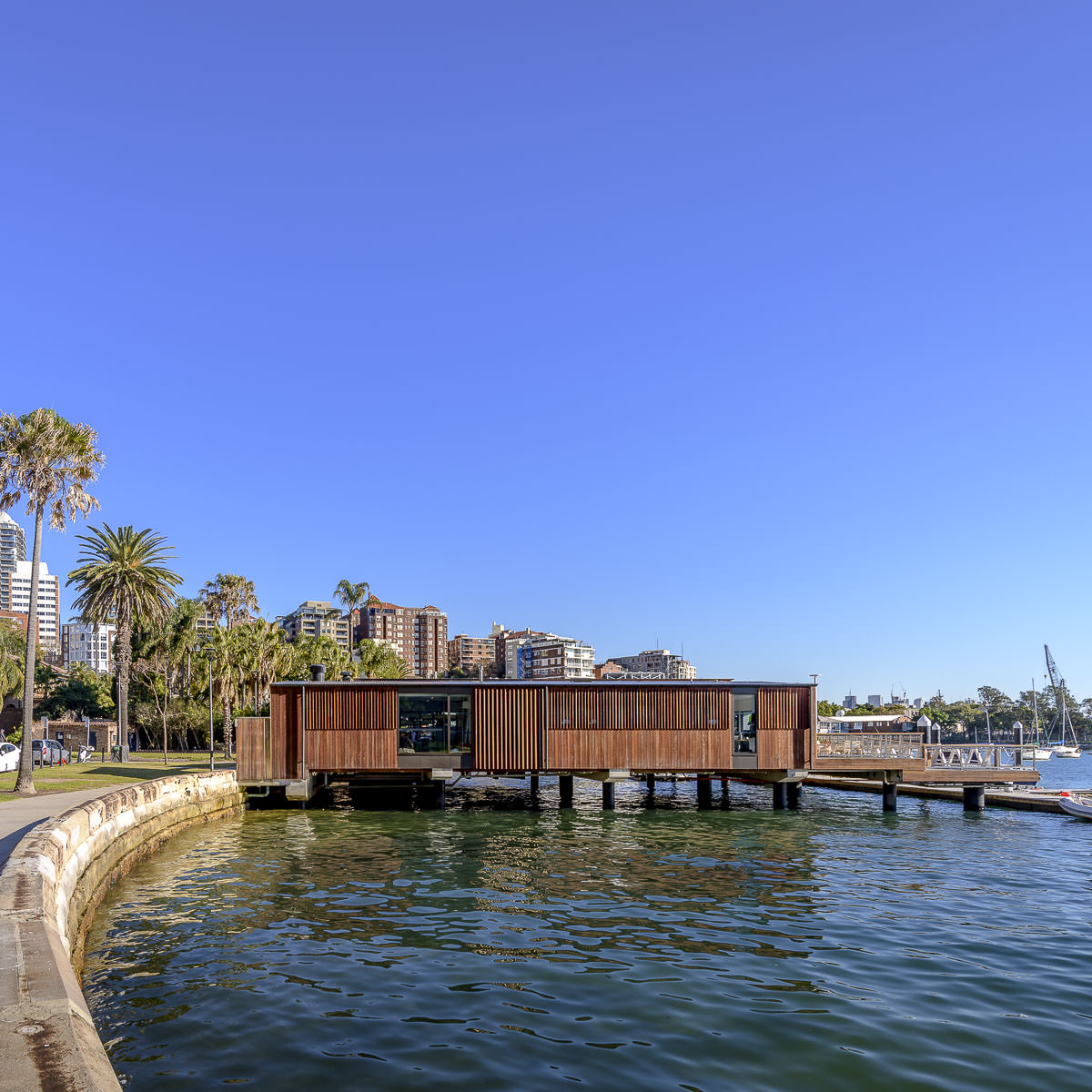
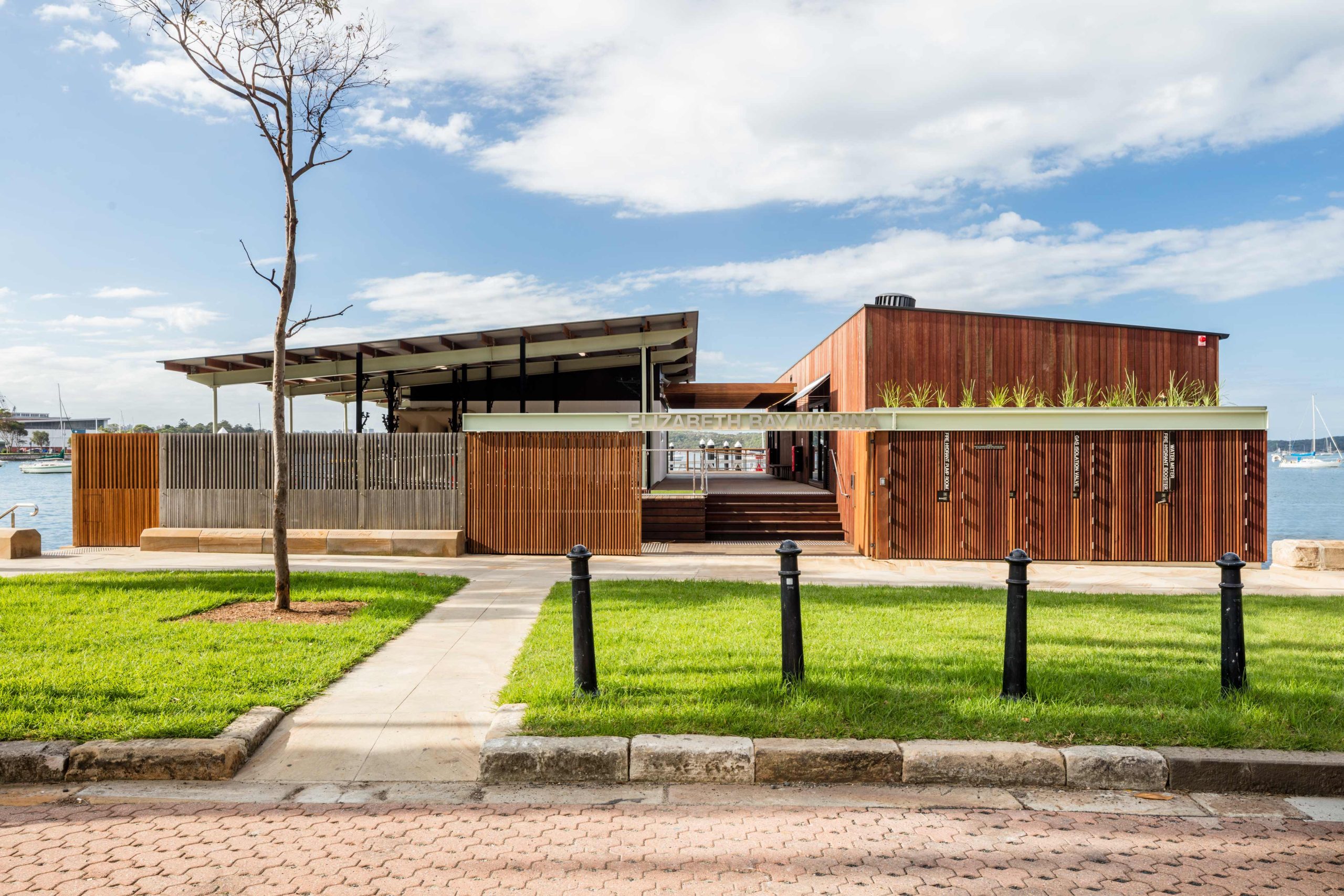
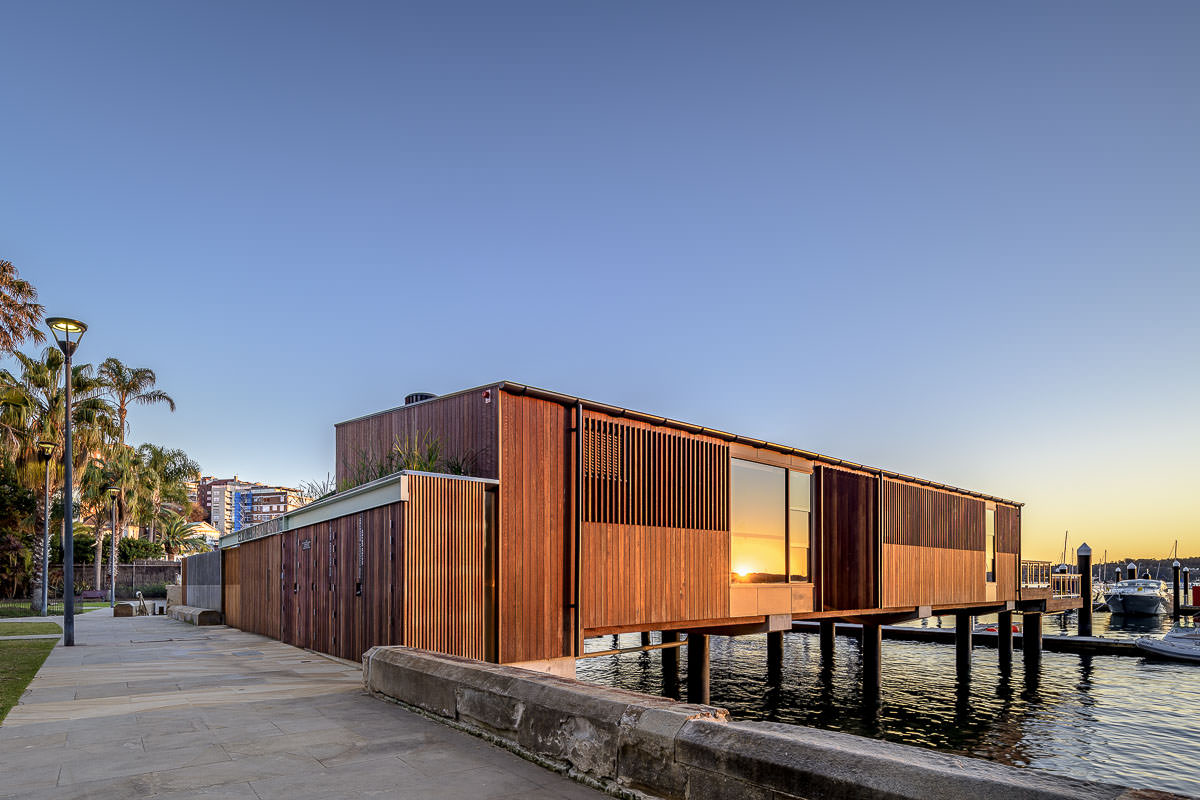
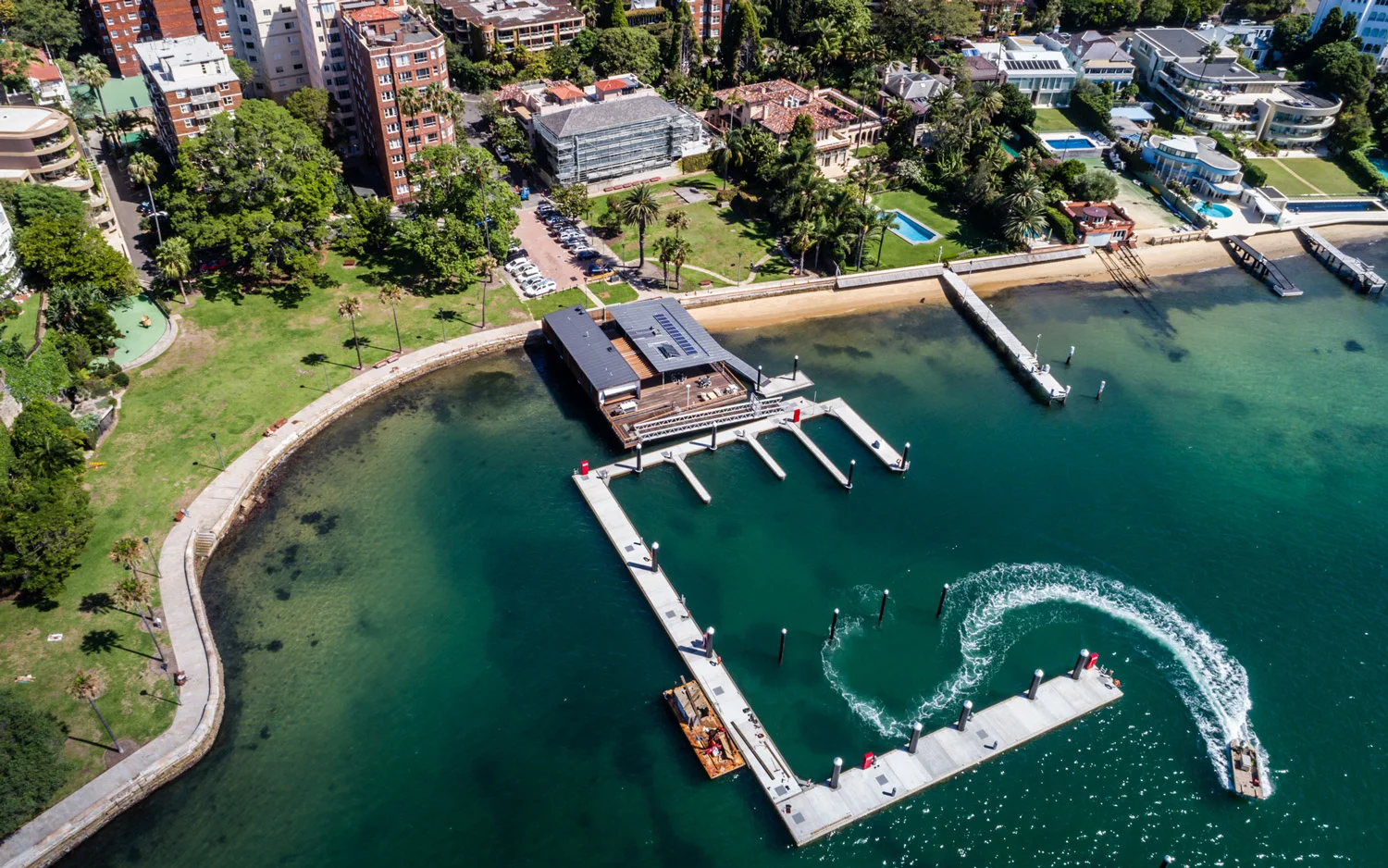
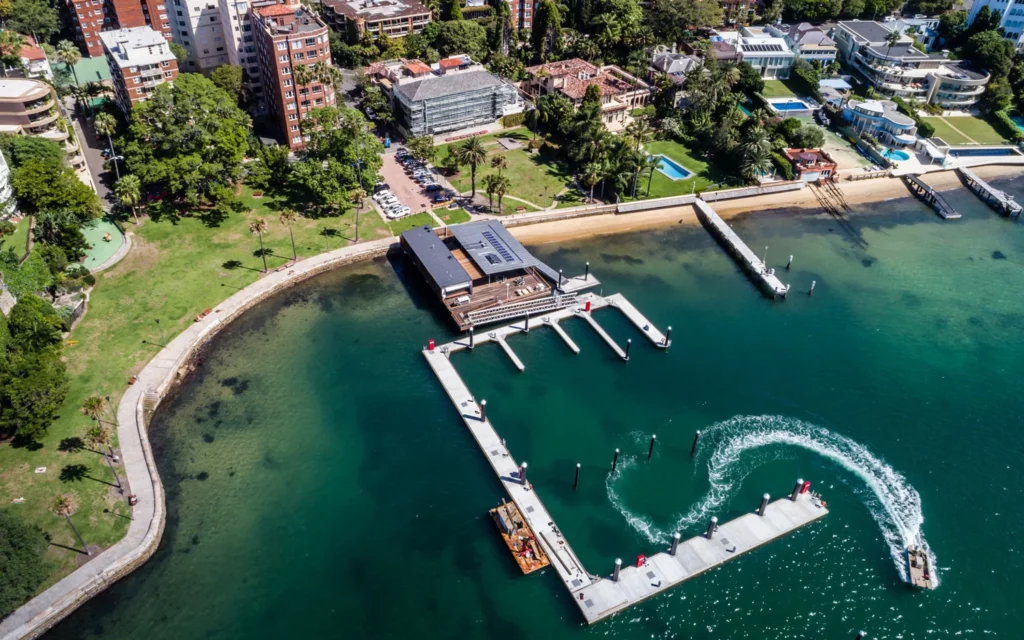
The Elizabeth Bay Marina redevelopment replaced a failing timber wharf with a calm, low-slung waterside pavilion and floating berths at the edge of Beare Park.
The over water scheme keeps the footprint lean while upgrading public amenity with a café, kayak storage / launch, marina office and accessible paths, earning a 2019 NSW AIA Urban Design Commendation.
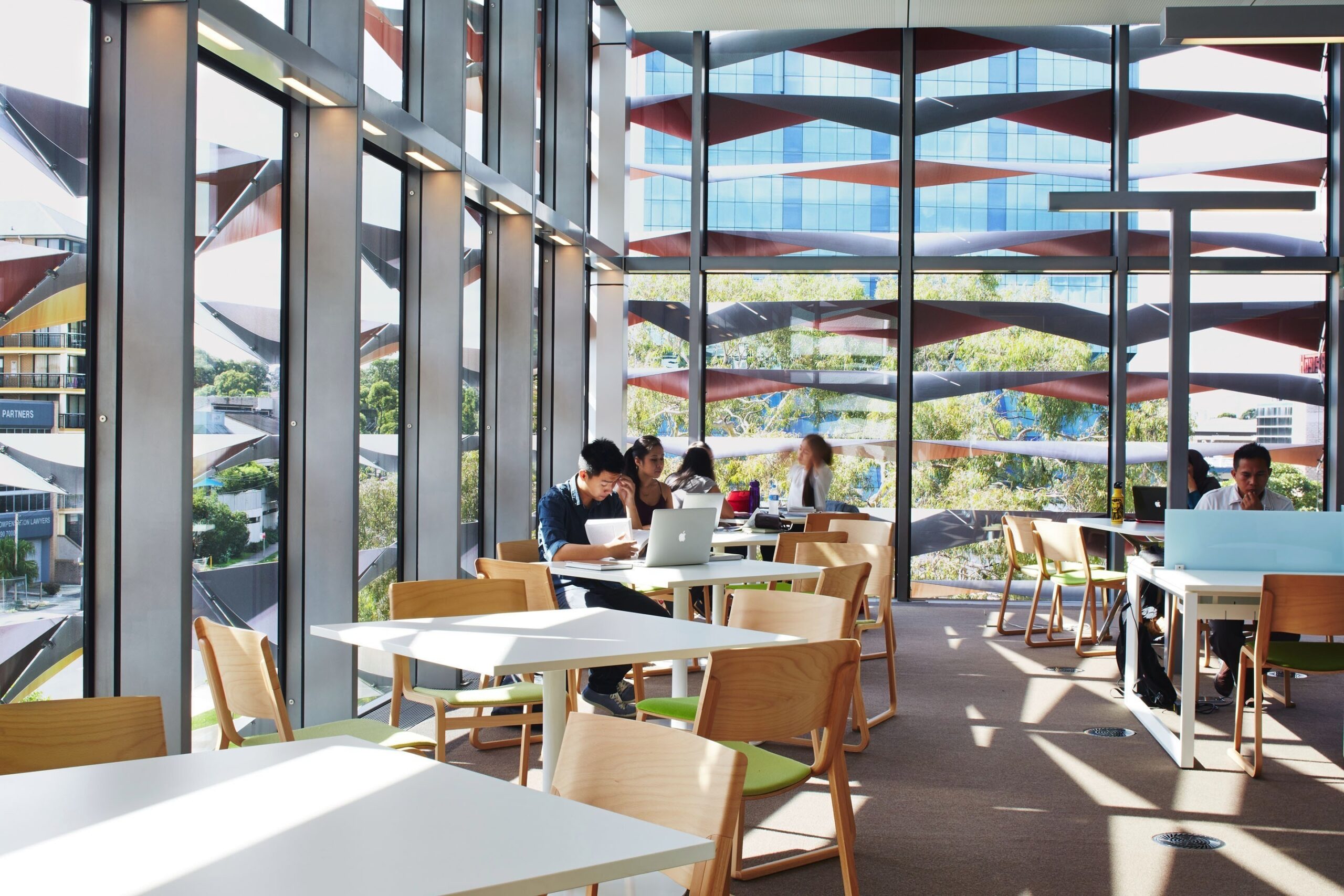
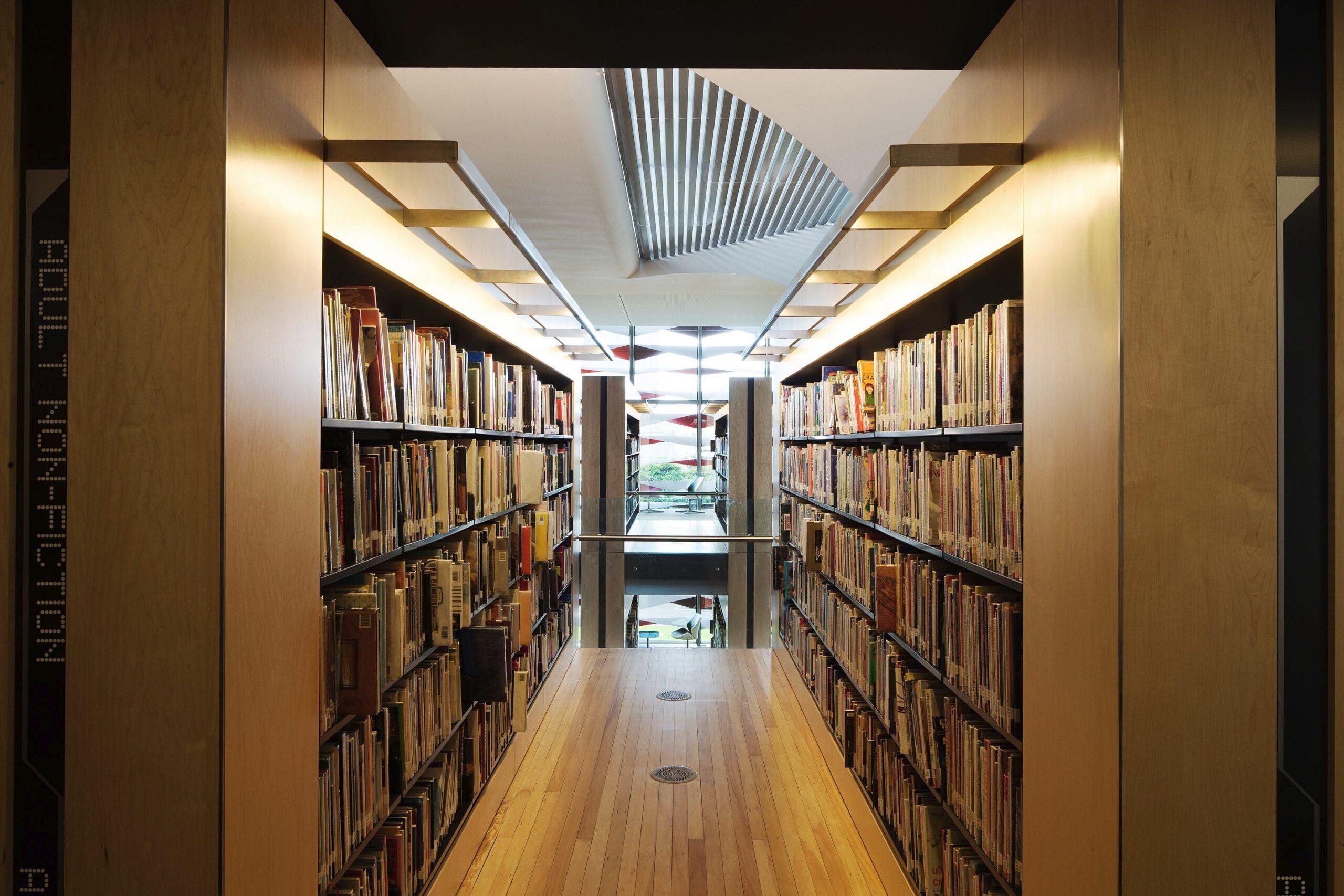
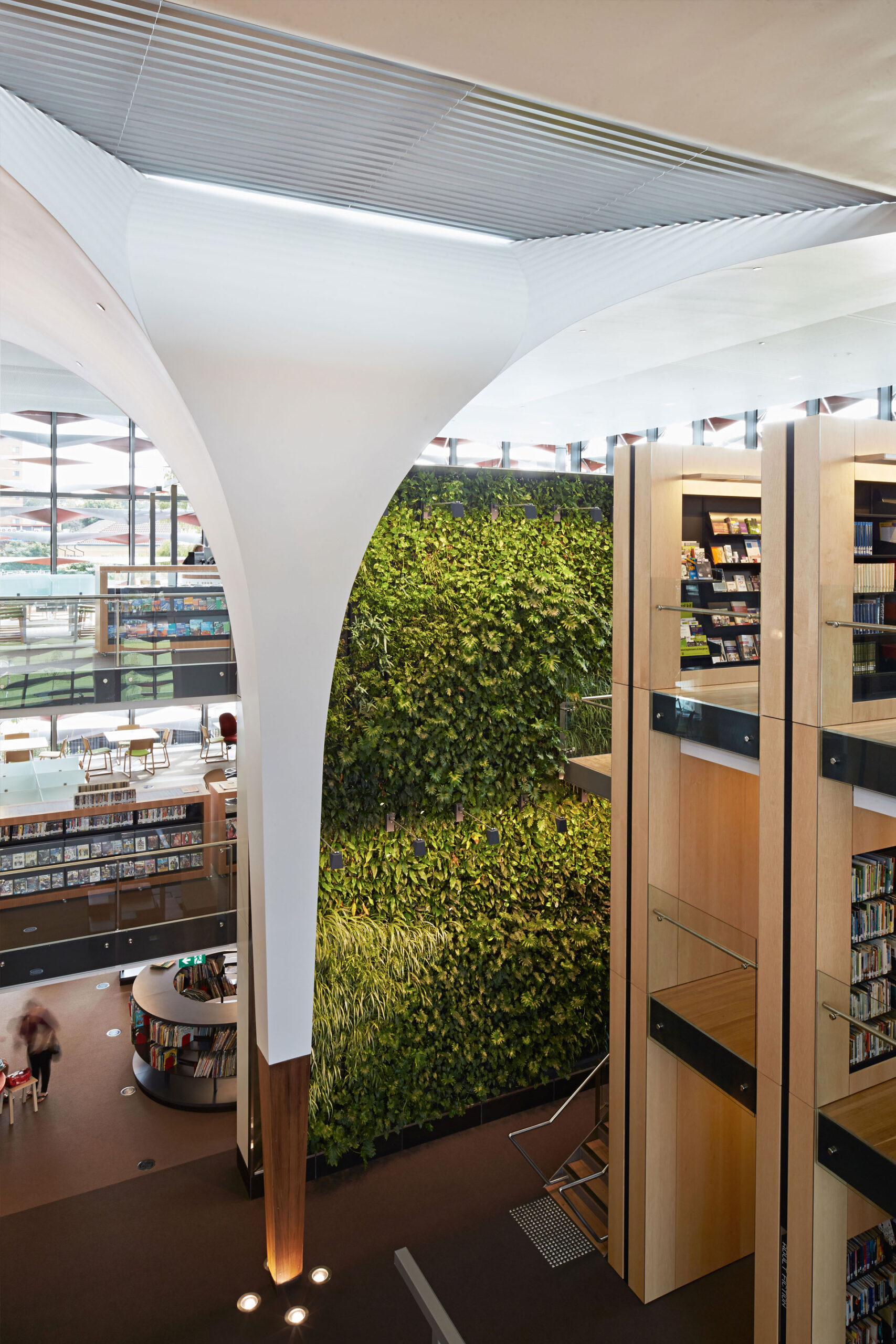
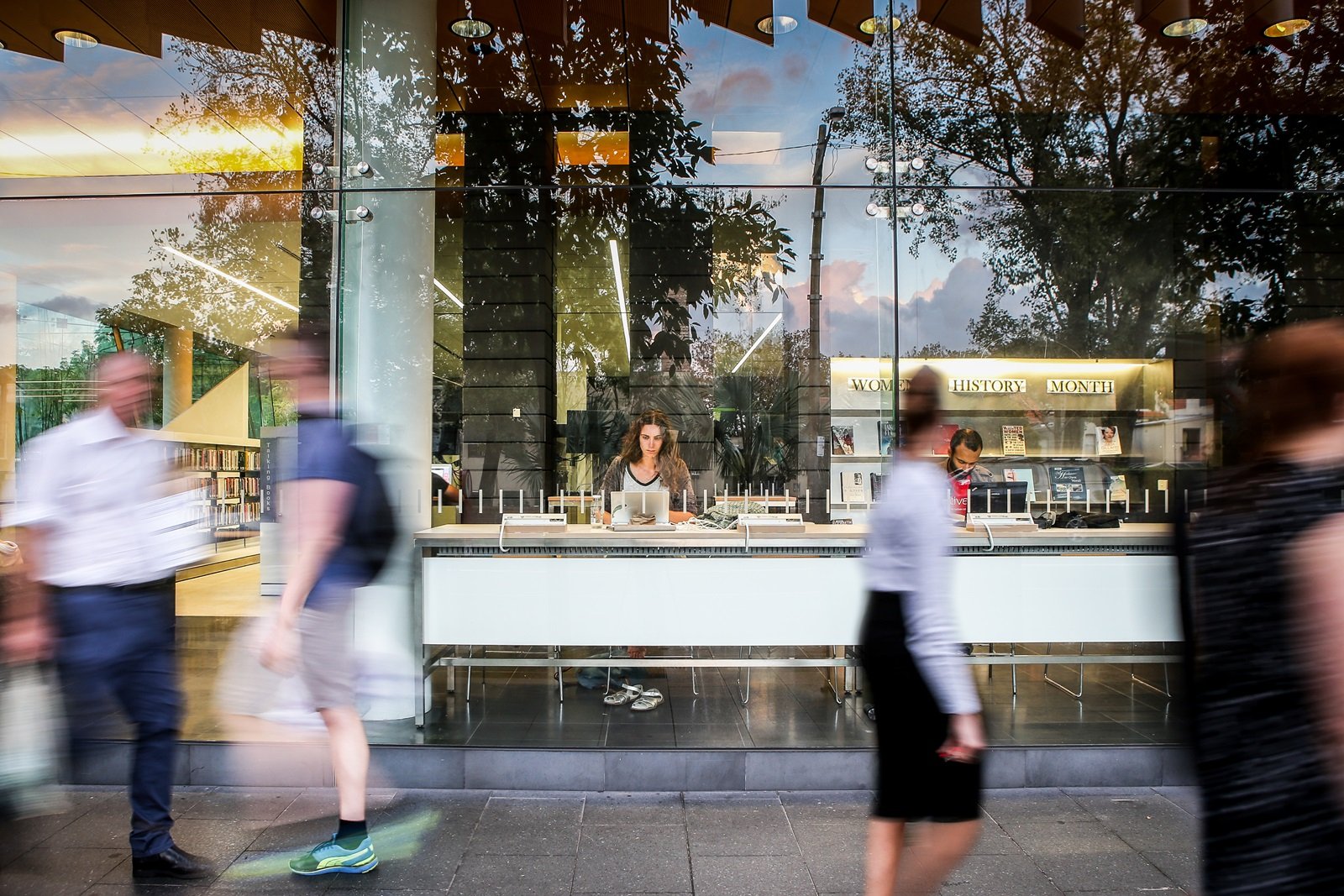
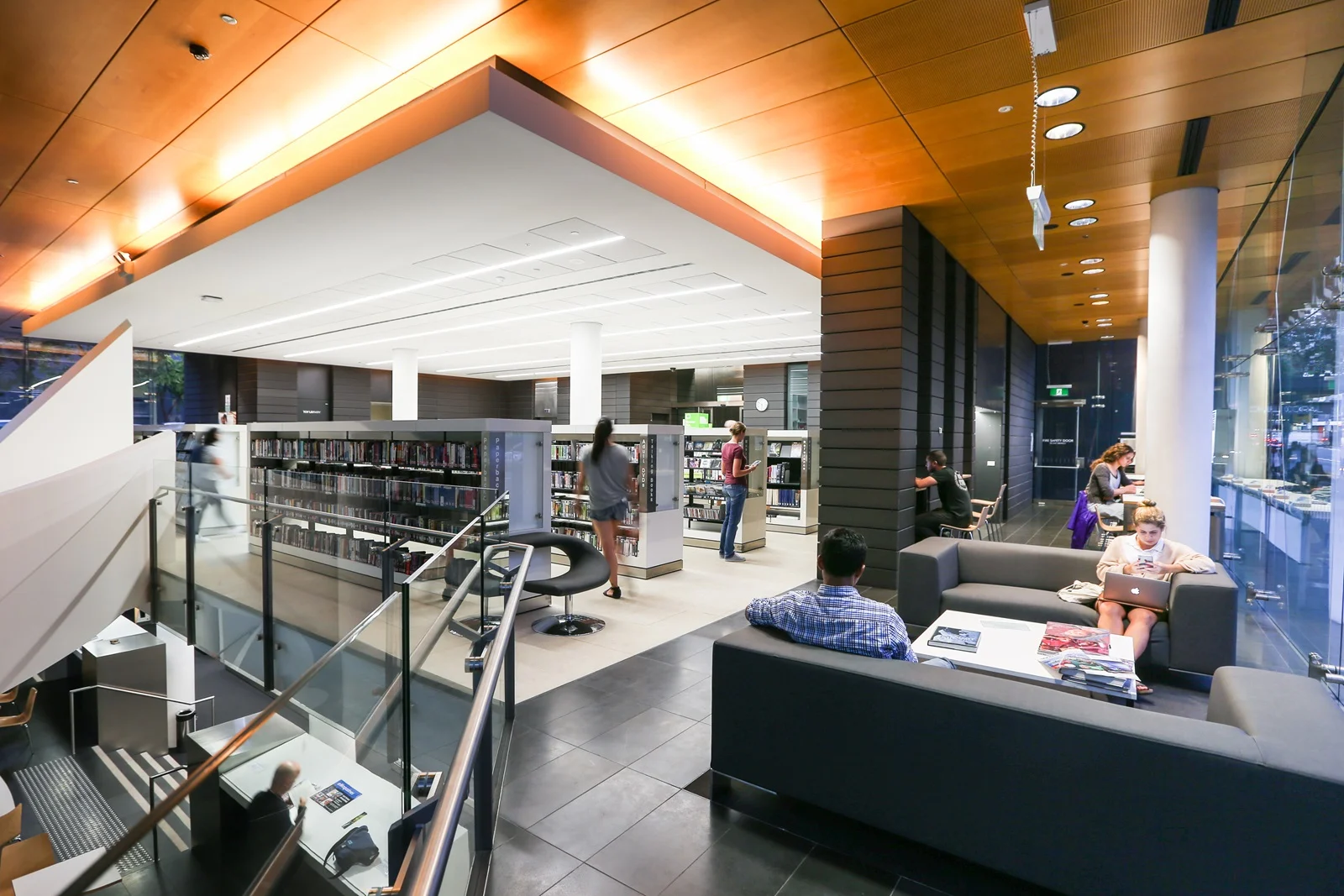
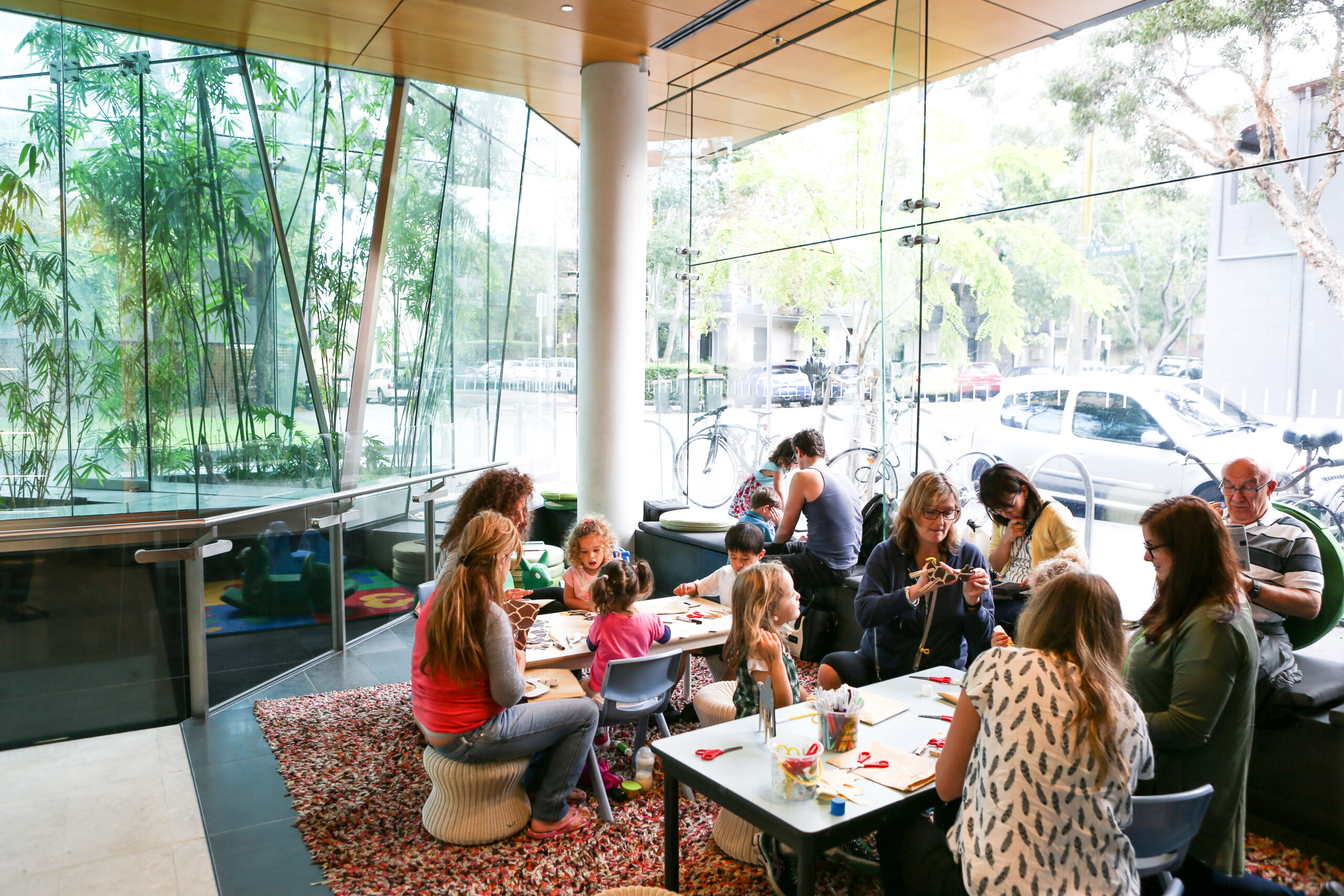
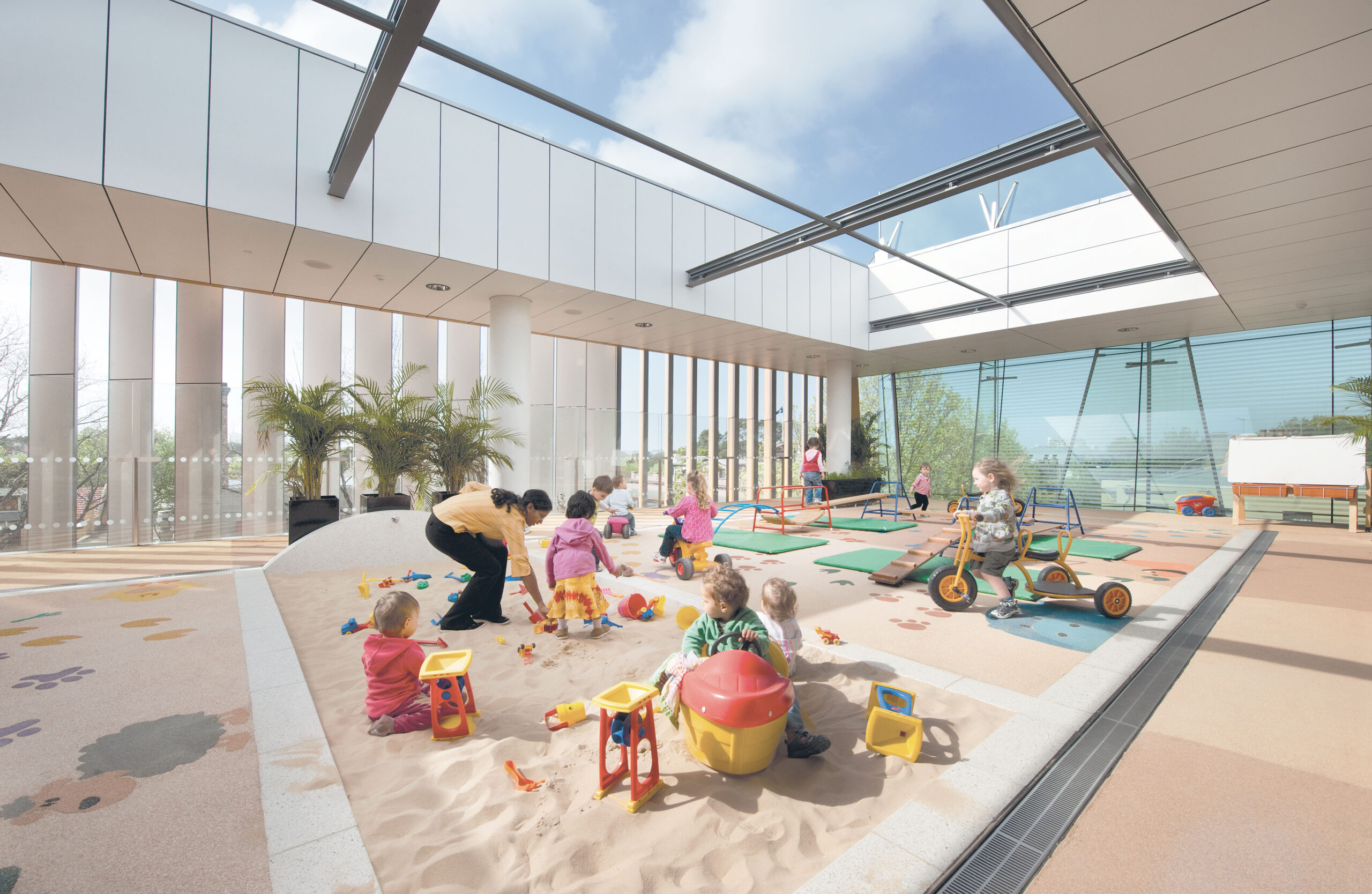
The $210 million proposal involved the adaptive re-use of Bankstown Town Hall consisting of a theatre, exhibition spaces, café and ancillary uses. The project also included partial demolition of the existing structure and construction of a new three level public library, landscaping works and improved access provisions.
The scope of the project considered public amenity beyond the library building itself. Improvements to public spaces include a public park, an aquatic sculpture garden, new street trees, off-street parking, and pedestrian links to an all-weather bus stop. This connected approach has improved the overall value of the project to the community and extended its positive impact on the local area.
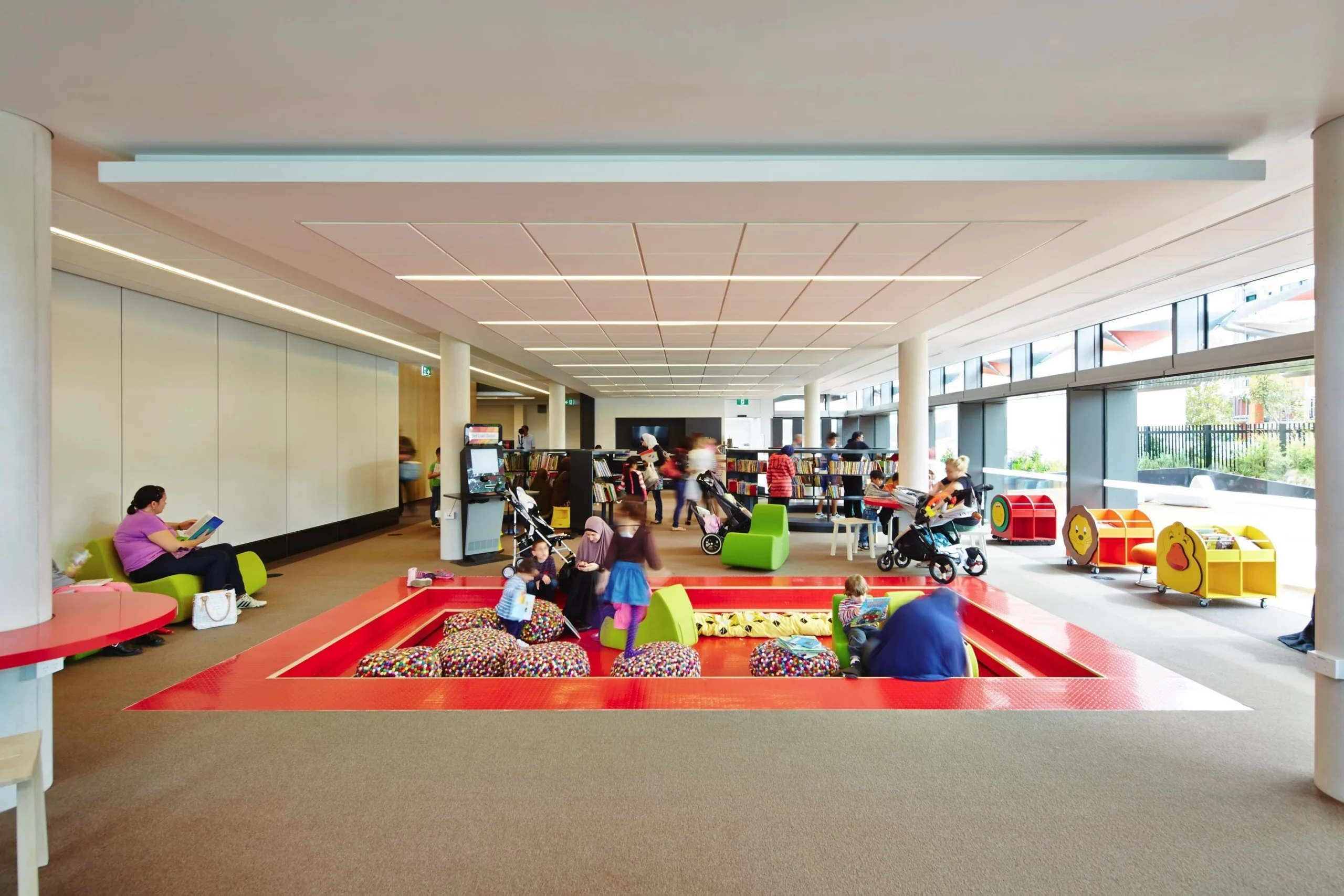
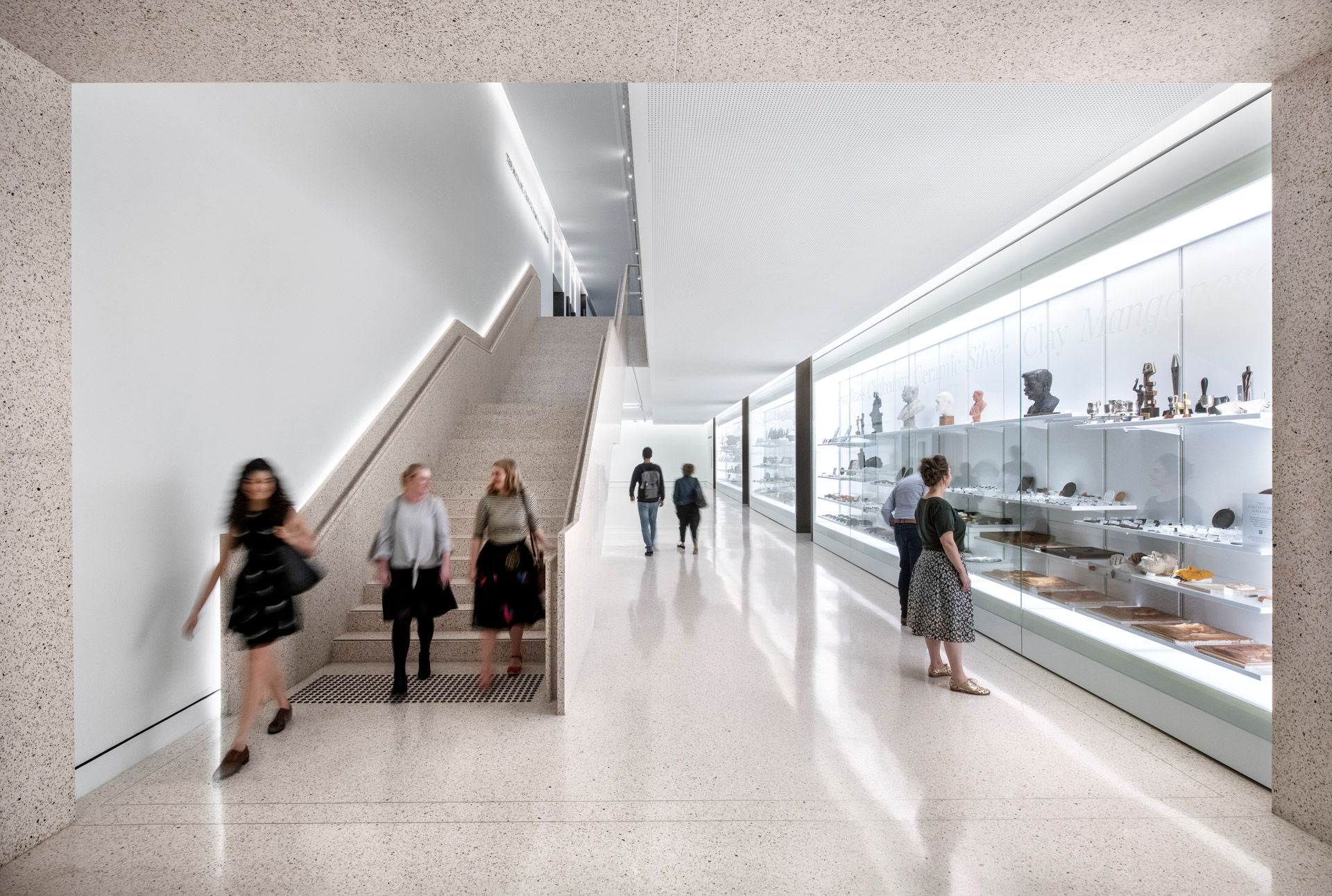
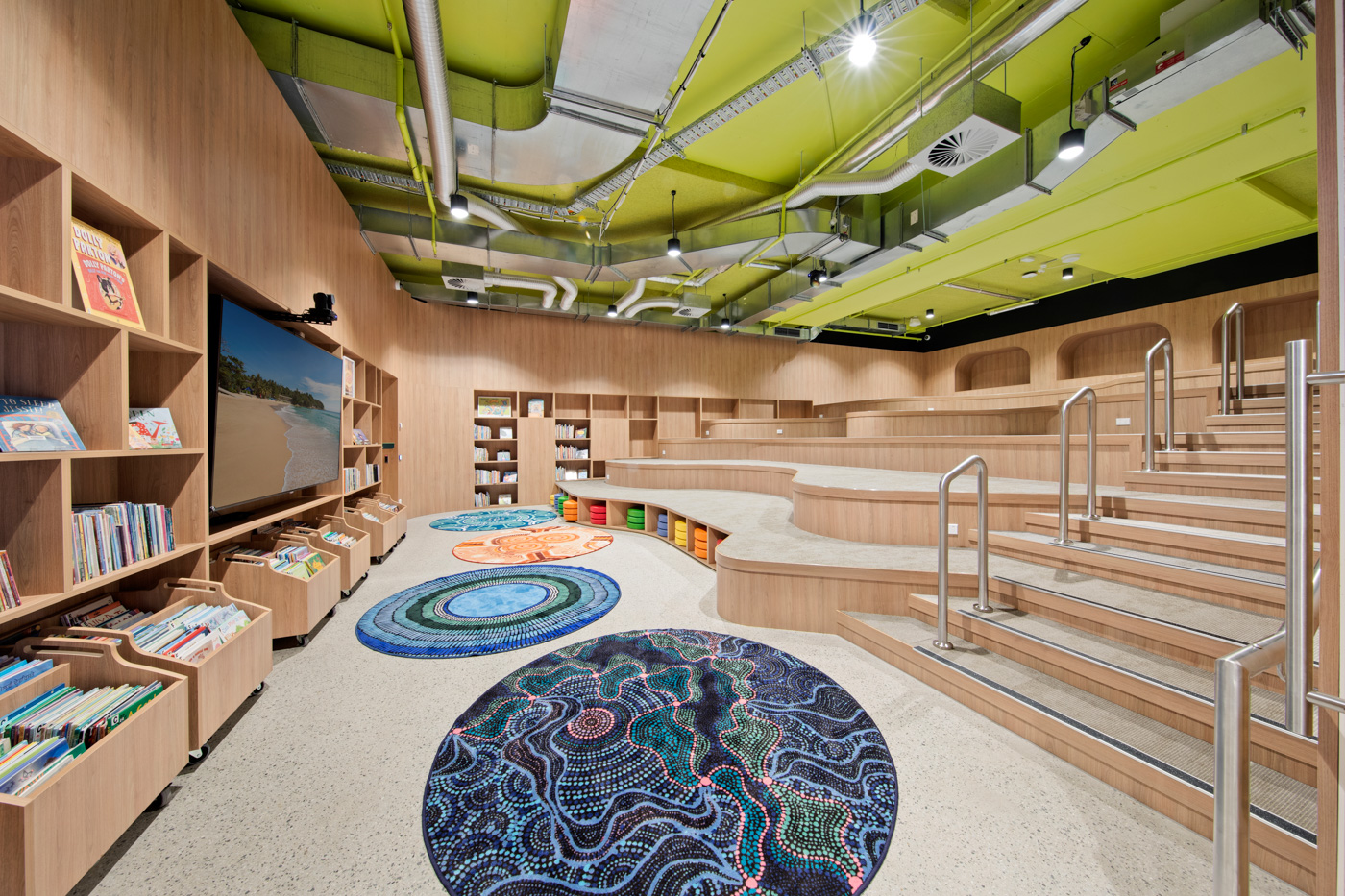
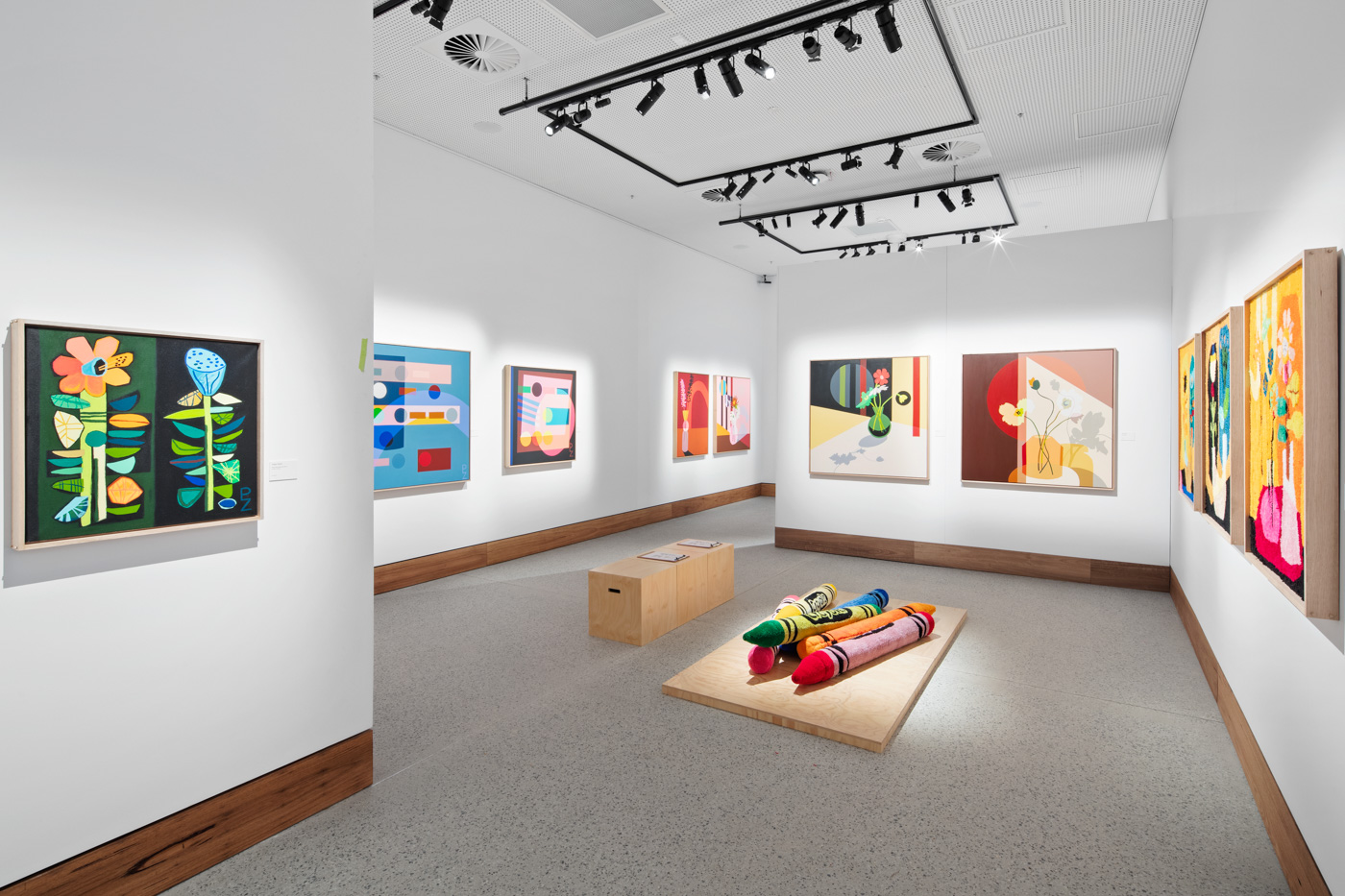
The redevelopment included a series of new gallery spaces within the heritage listed building including re-purposed areas that were previously used for storage, offices and temporary displays and also included a new children’s learning centre on the ground floor of the Mitchell building, which includes informal family spaces.
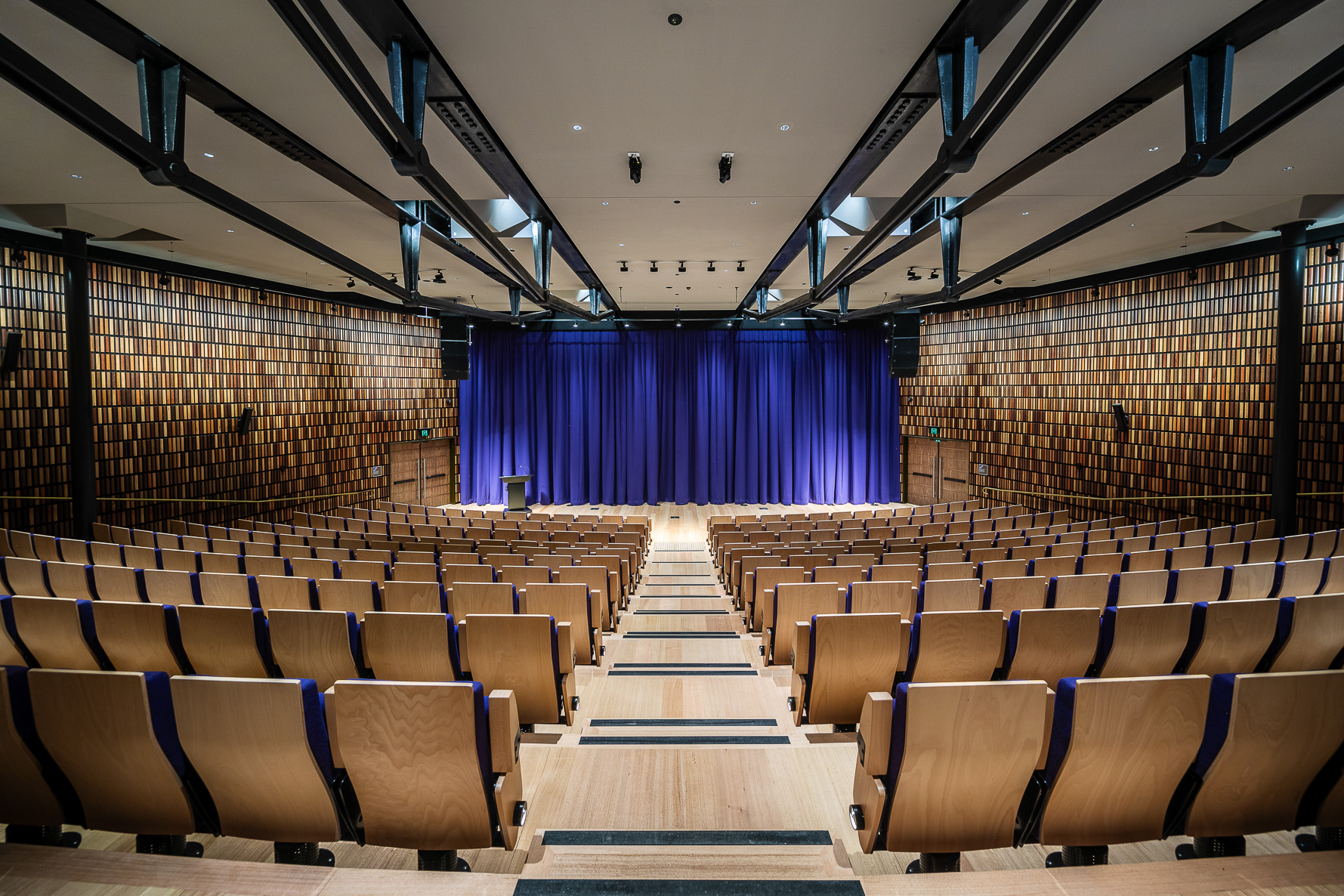
The Library Auditorium is equipped to host high-end productions and performances and vastly expands the diversity of events offered by the State Library. The venue includes high-tech audio-visual system and greenrooms and adjoining catering area, known as ‘the Glasshouse’.
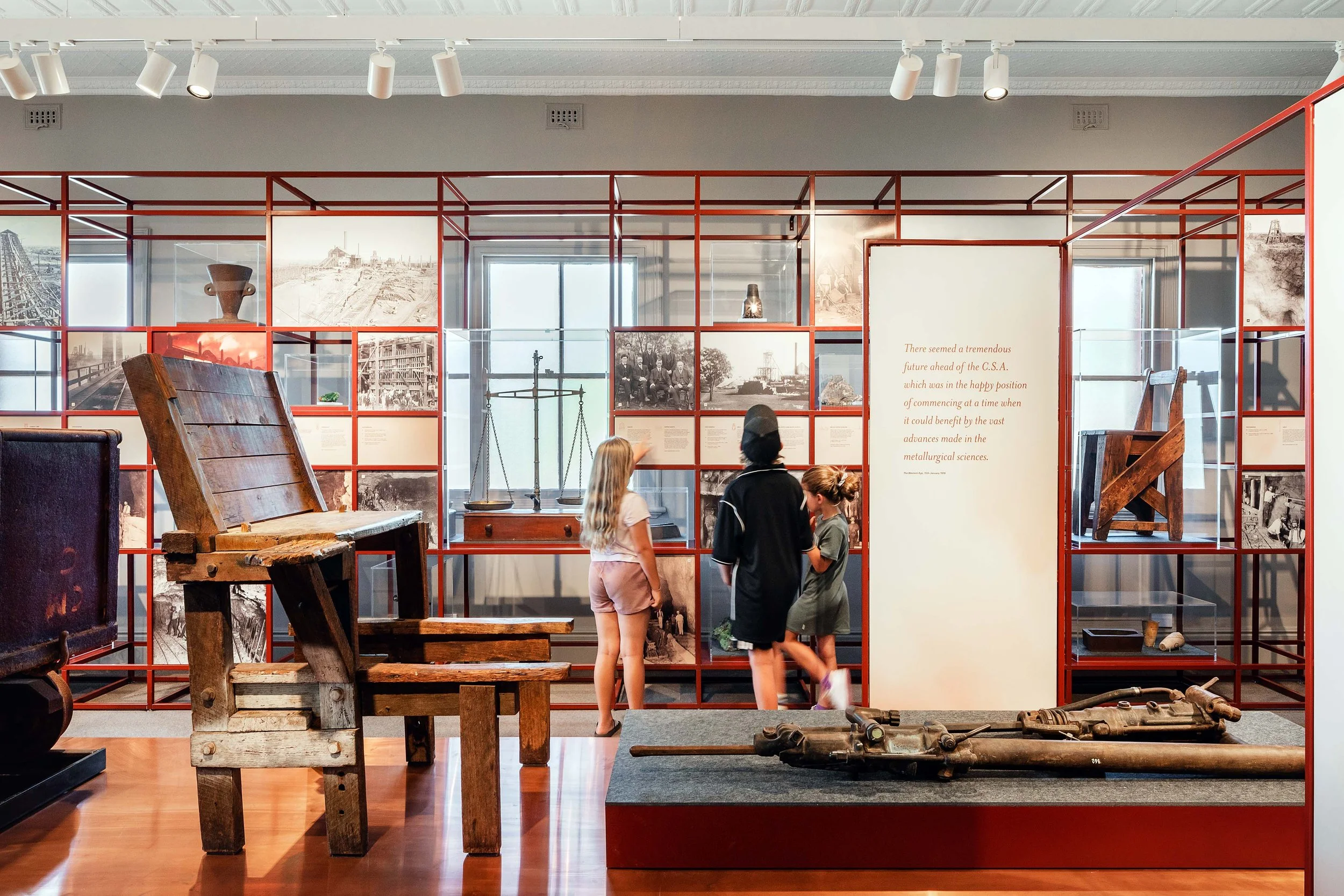
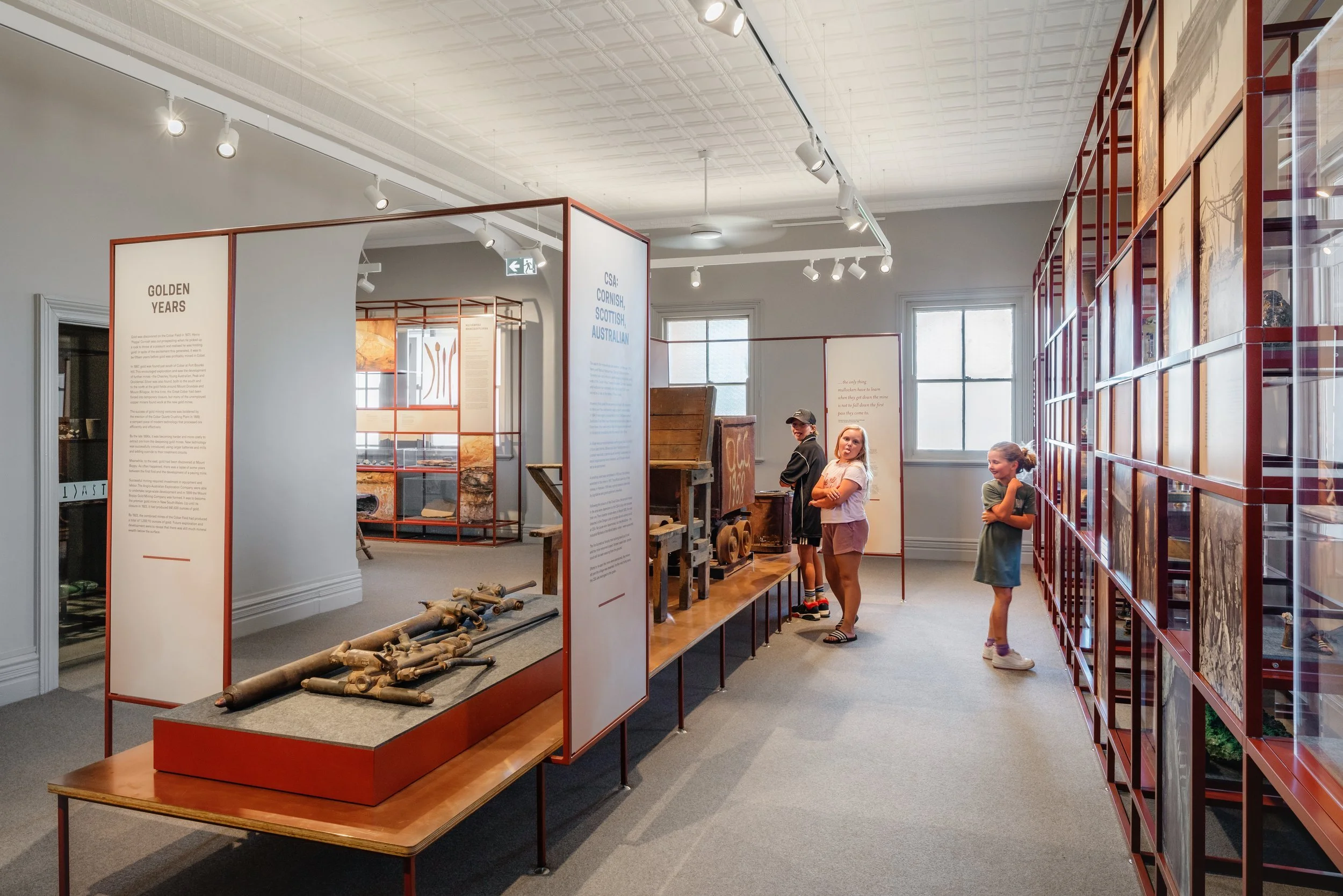
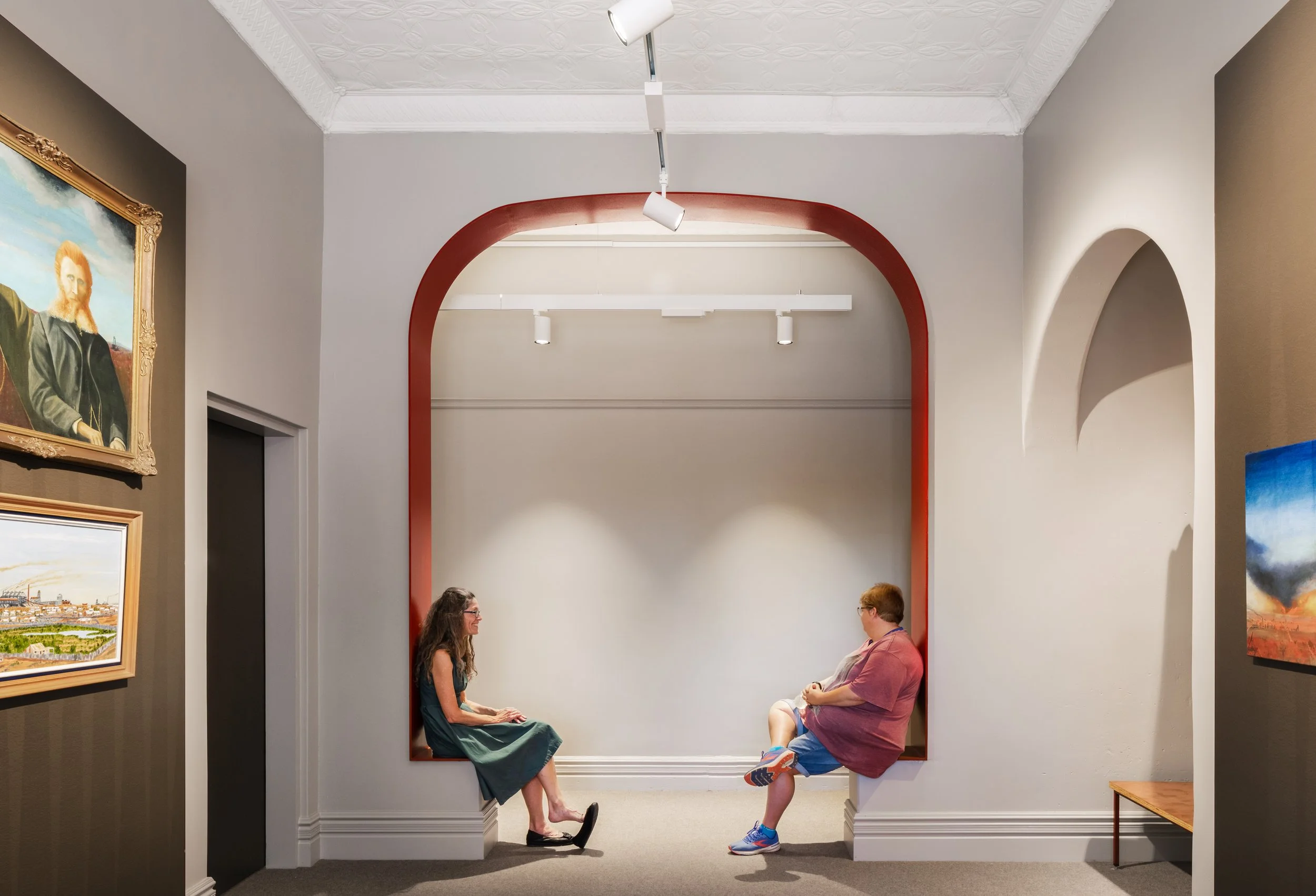
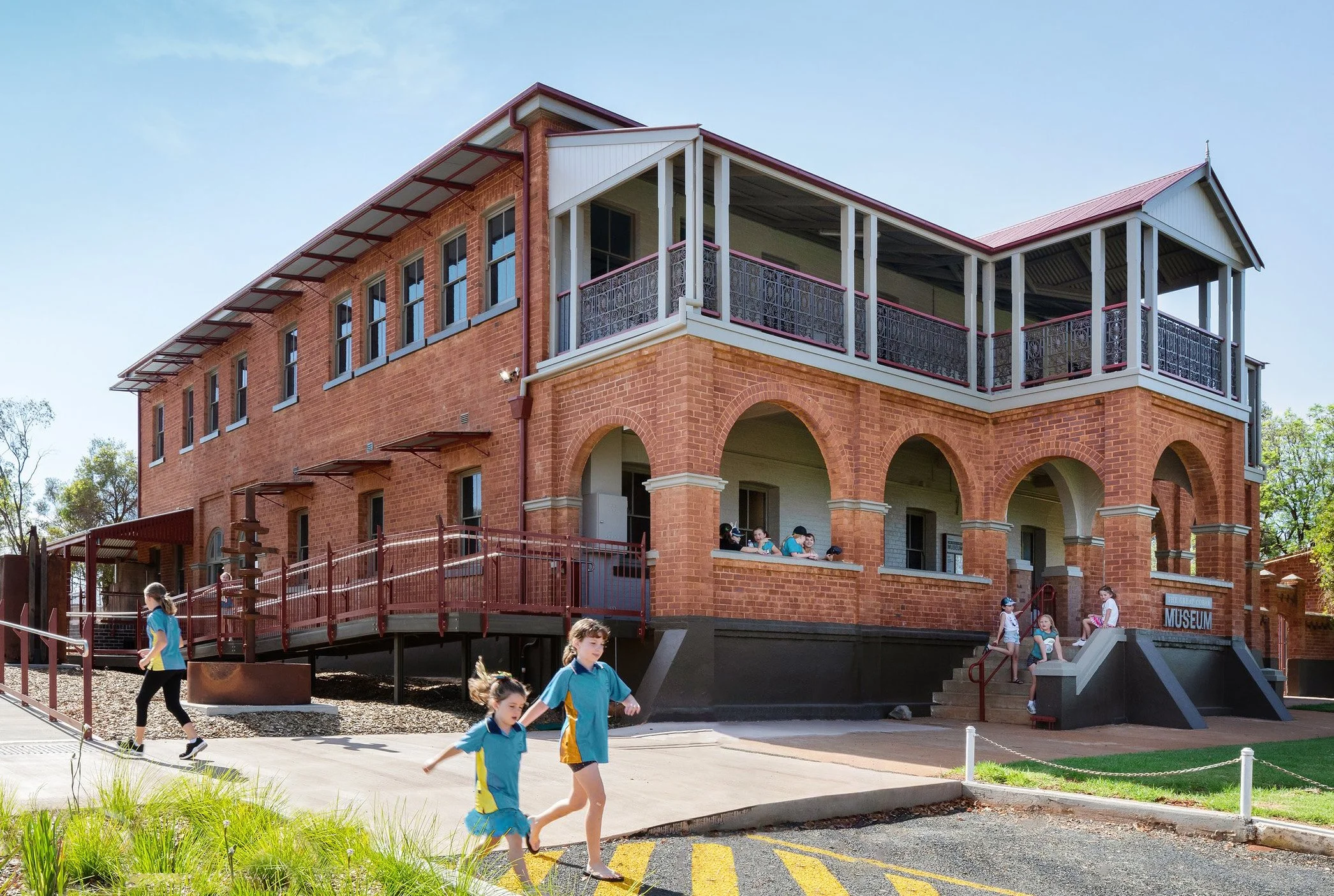
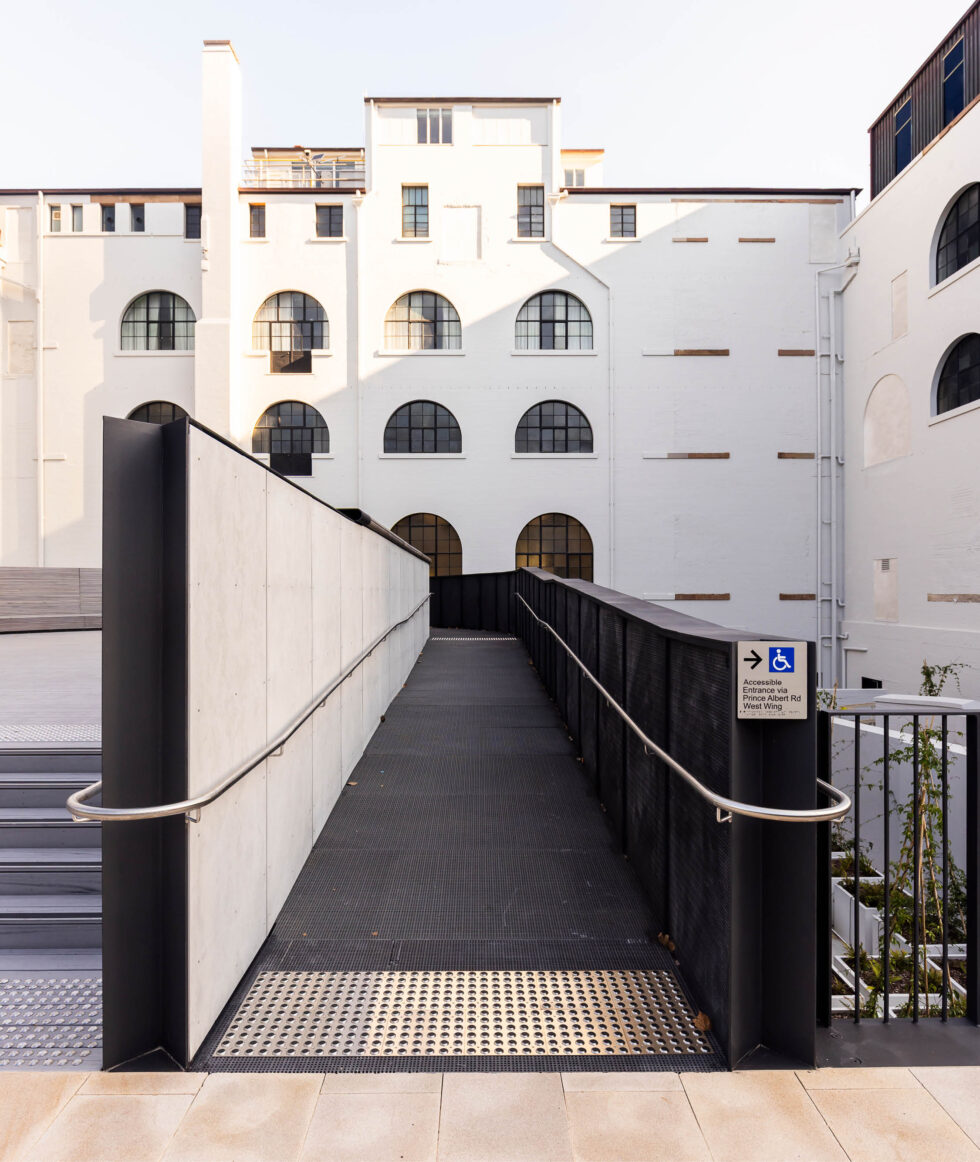
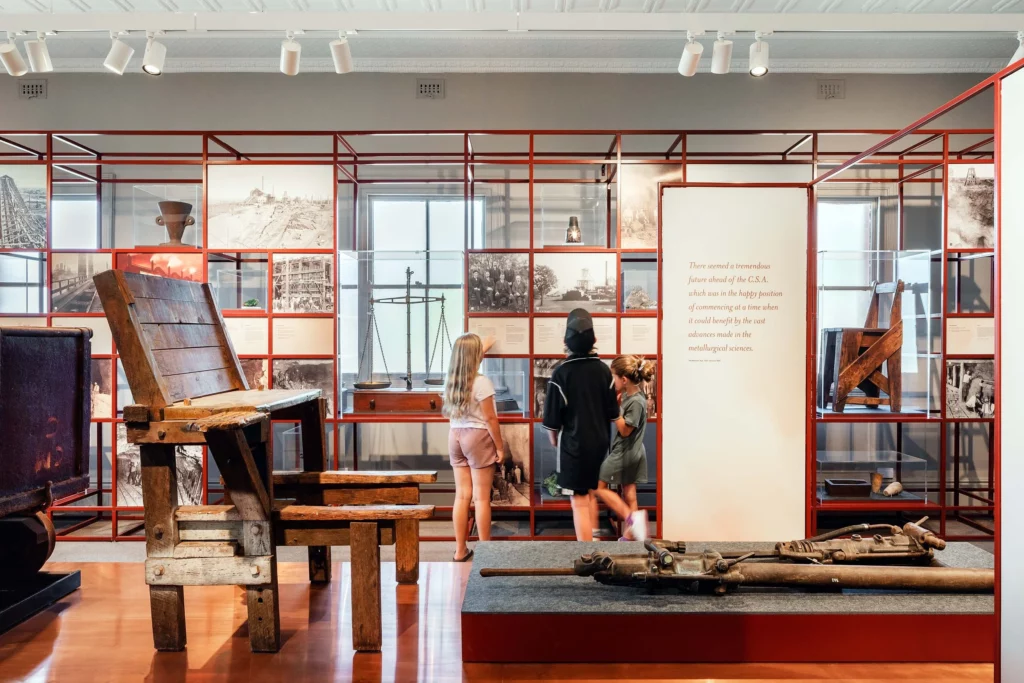
Set in the former administration building of the Great Cobar Copper Mine, the Great Cobar Museum was reborn. The design treats the building itself as an exhibit: a new accessible ramp leads into nine ground-floor rooms where lightweight red-steel display frames sit back from the restored fabric, with the exhibition journey spilling out onto reinstated verandas and into a landscape of large mining objects.
The result turns a much-loved but decaying landmark into a flexible, energy-conscious regional museum and visitor hub.
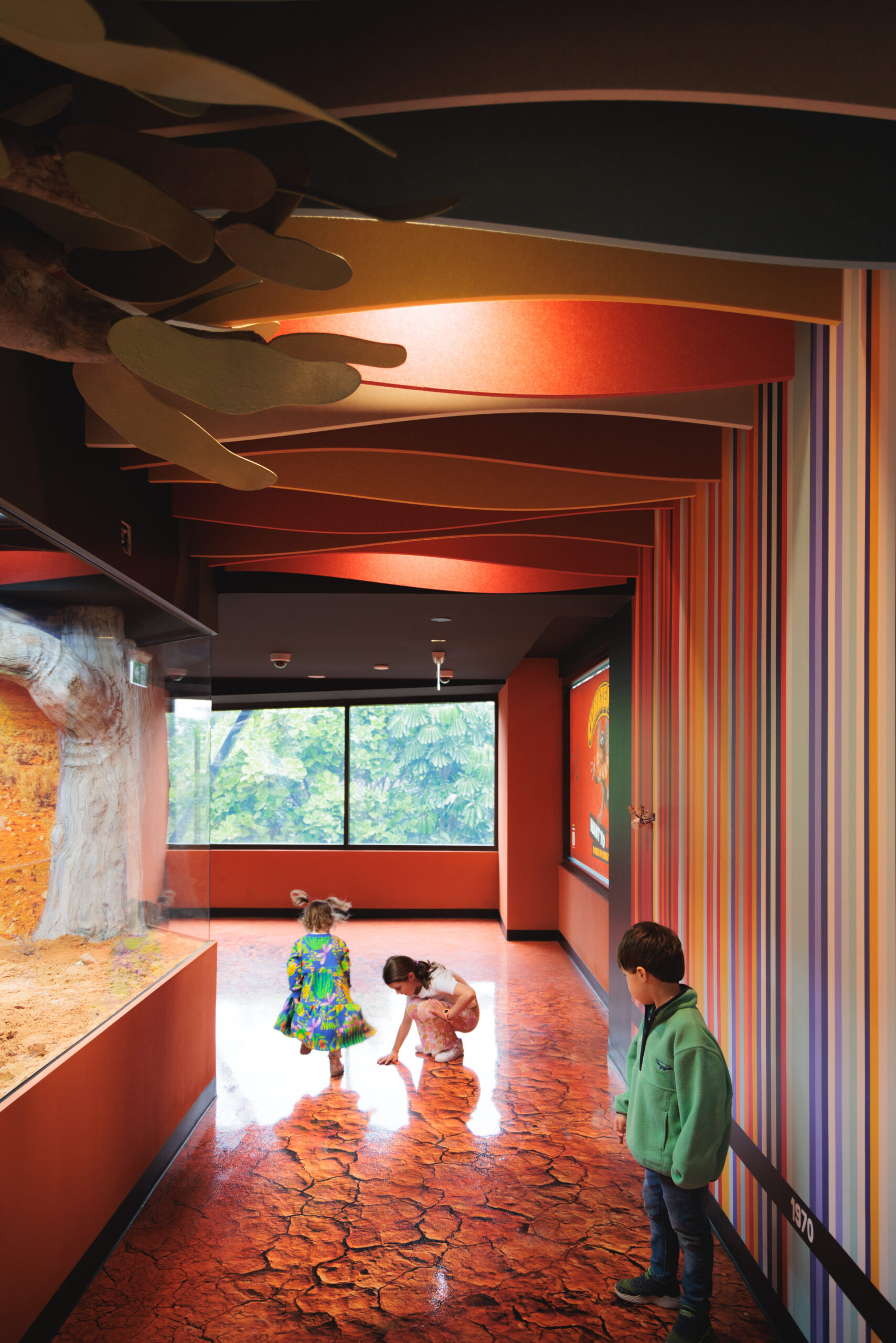
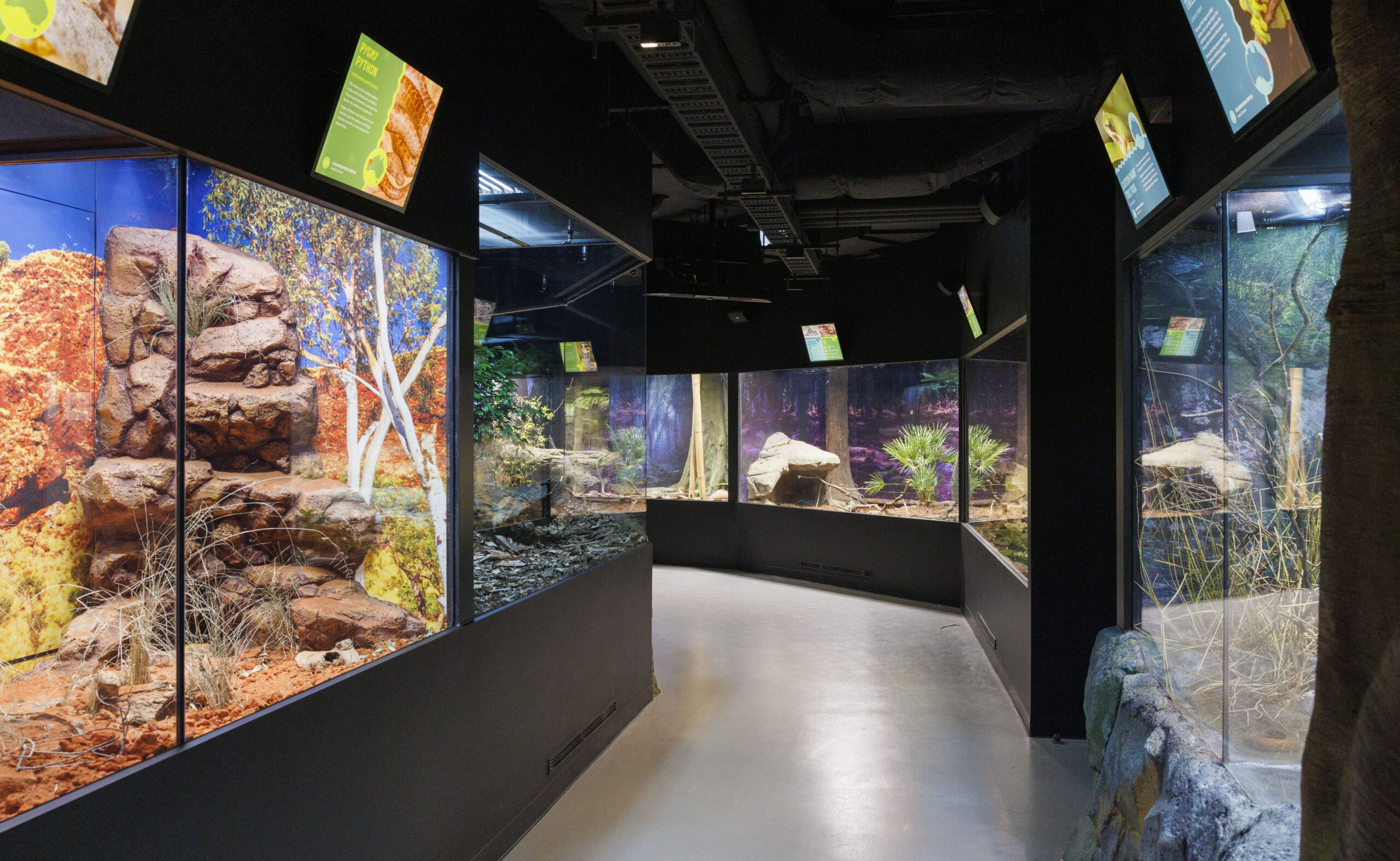
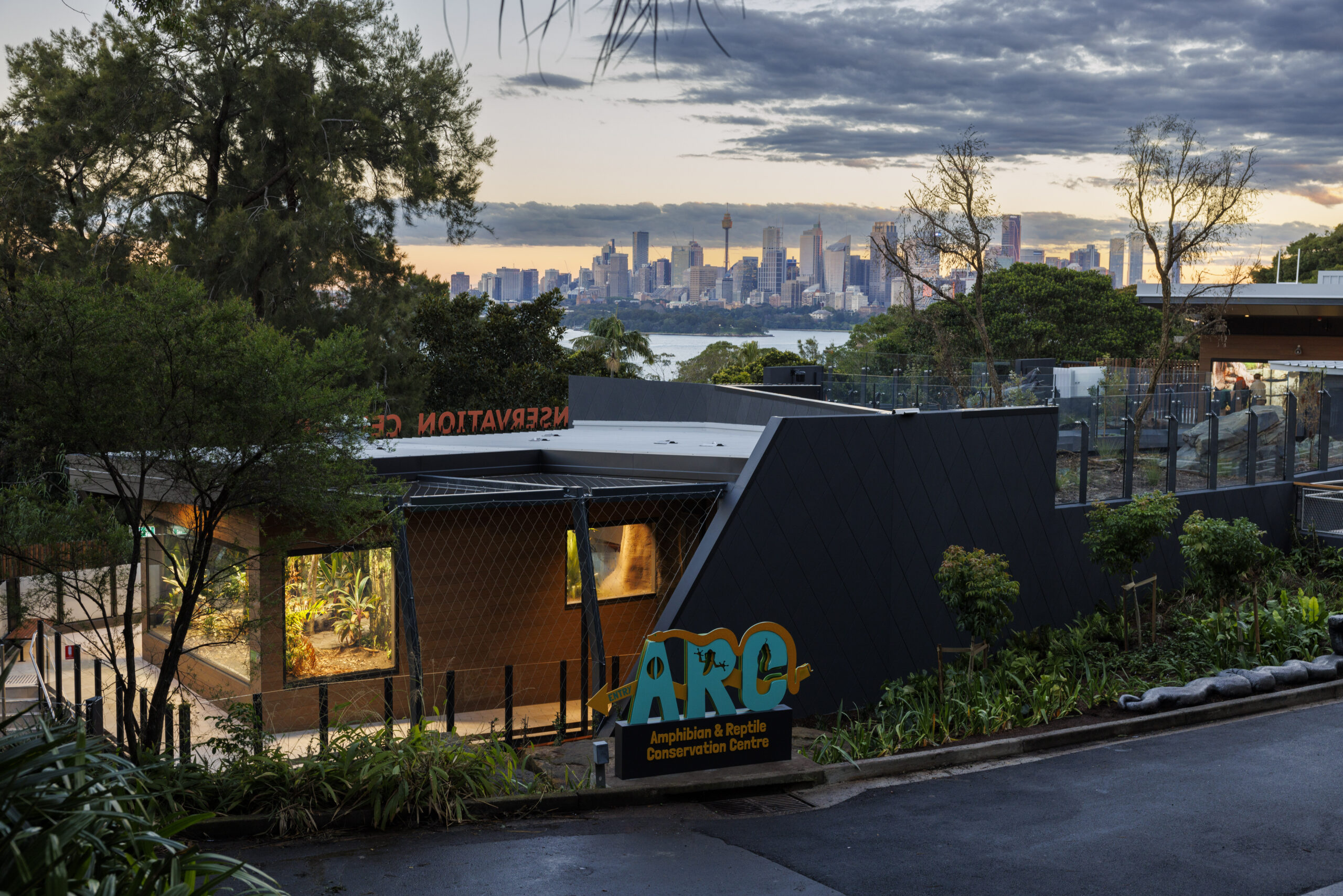
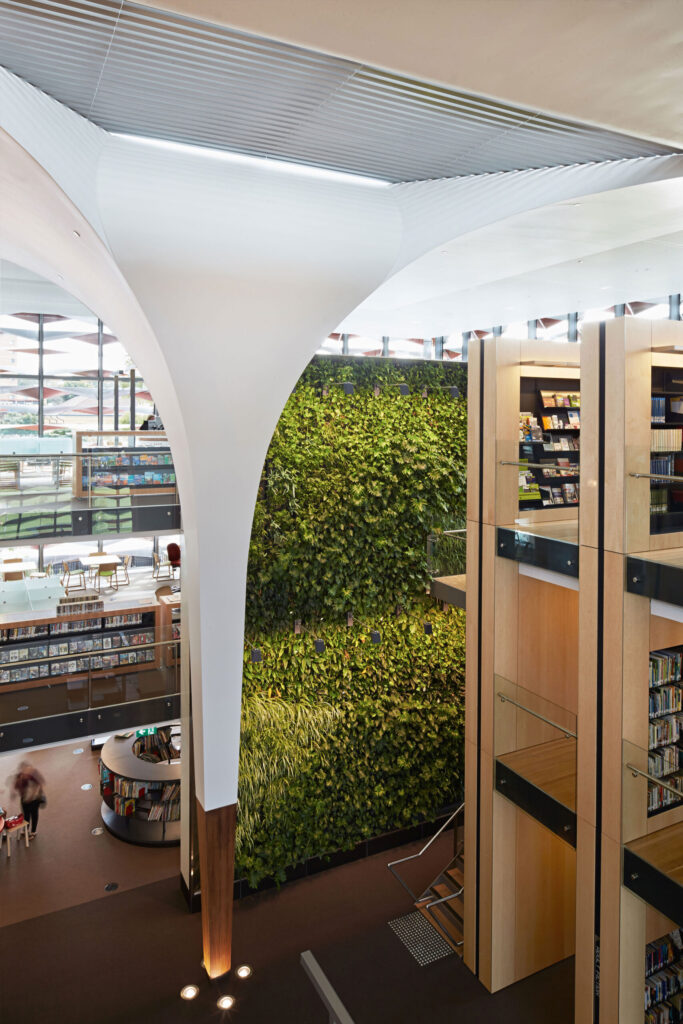
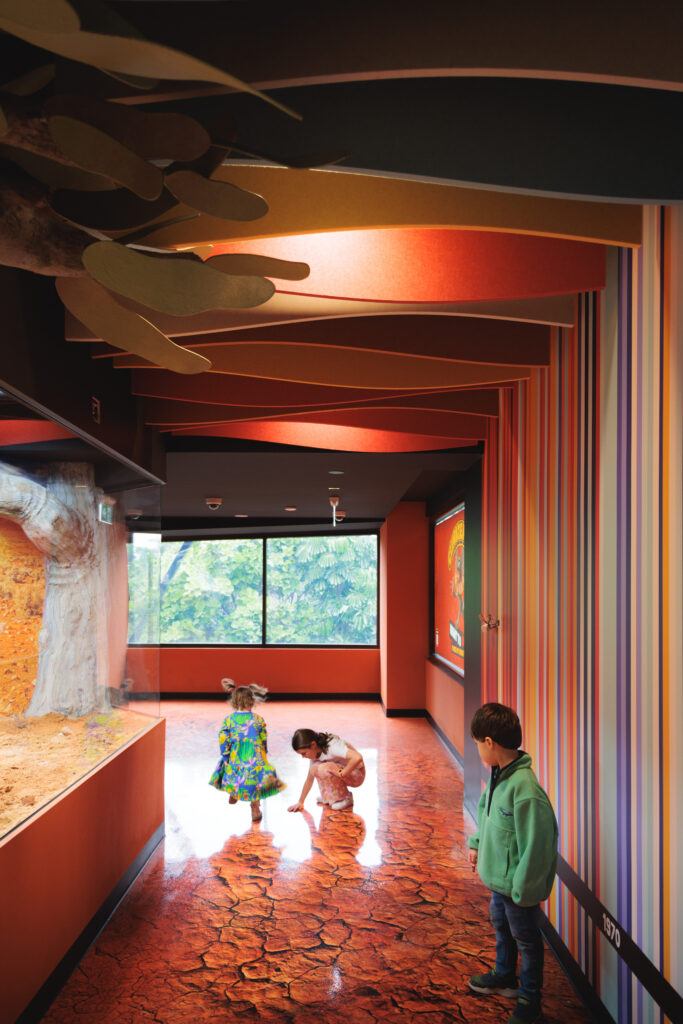
ARC is built into the natural slope of the site and features a cascading three‑storey design, green‑wall landscaping, humidity and temperature controlled climate zones, and immersive habitat-themed exhibits, making it a standout example of conservation‑led architecture that blends seamlessly into its harbour‑side setting while offering a visceral, educational experience of biodiversity and ecological storytelling.
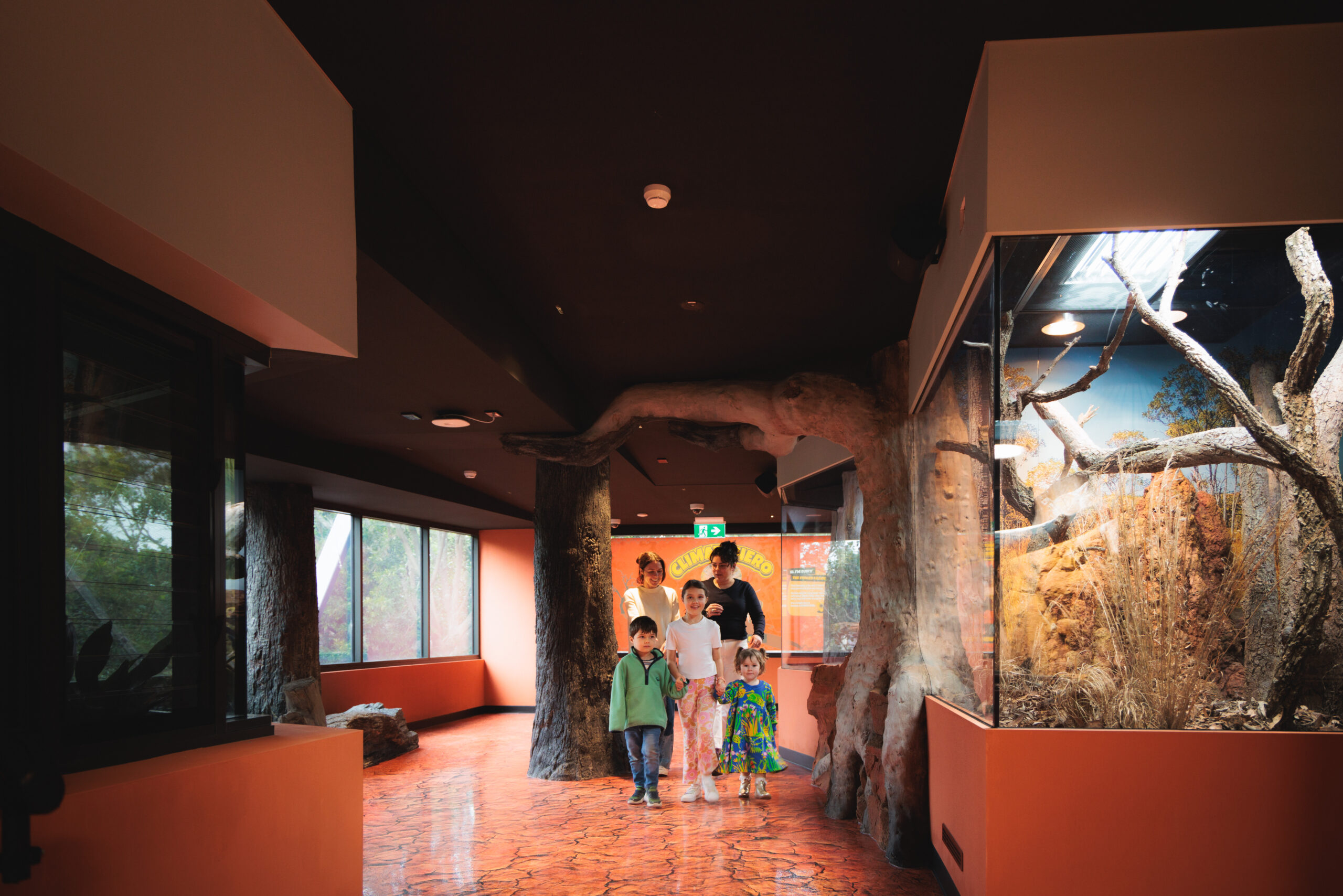
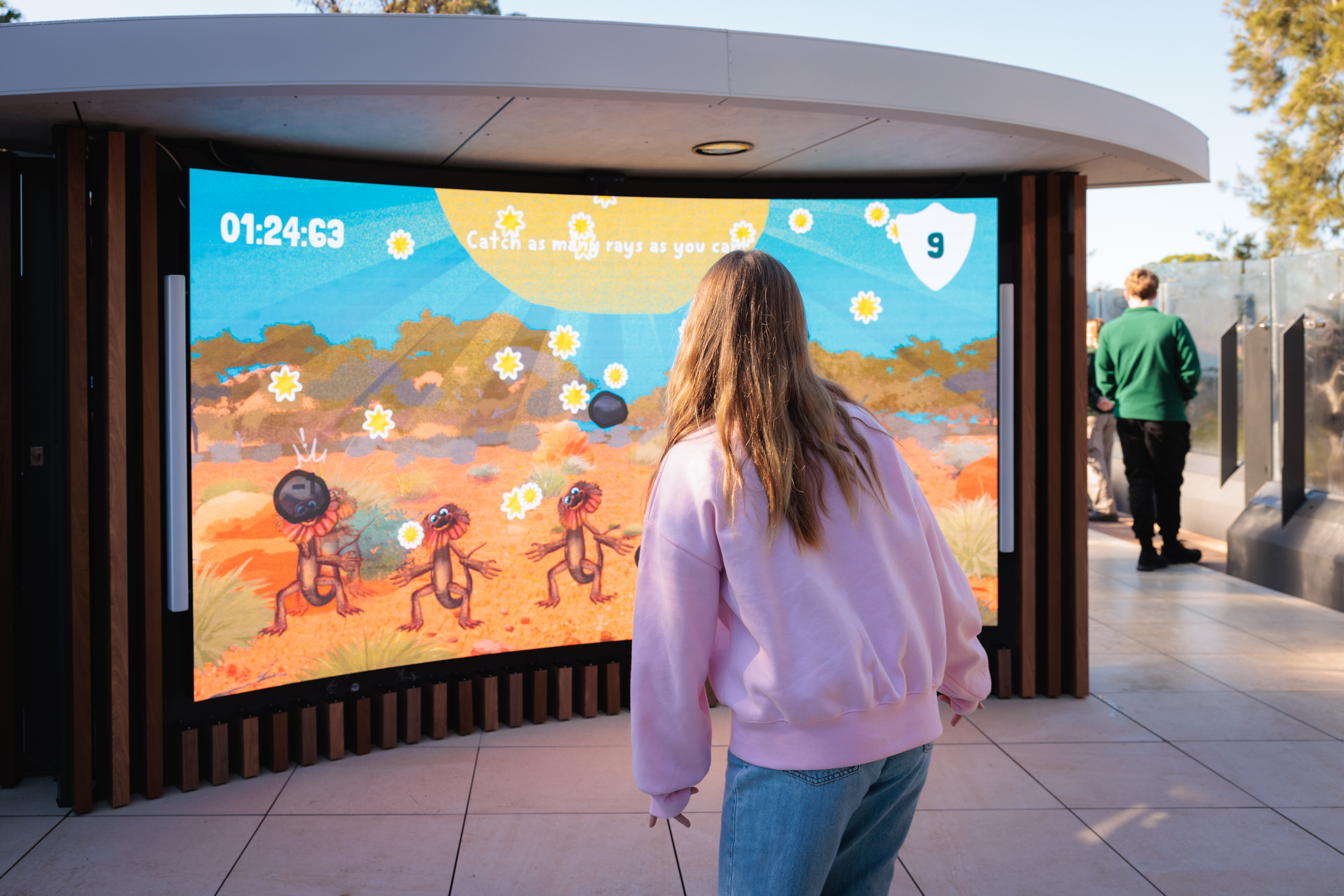
The centre rewrites what a zoo exhibit can be, a sculpted, multi‑level rainforest‑meets-desert tropical habitat gallery that immerses visitors in the world of reptiles and amphibians, from venomous taipans to rare Corroboree frogs, all housed in museum‑grade enclosures that prioritise animal welfare, education and conservation.
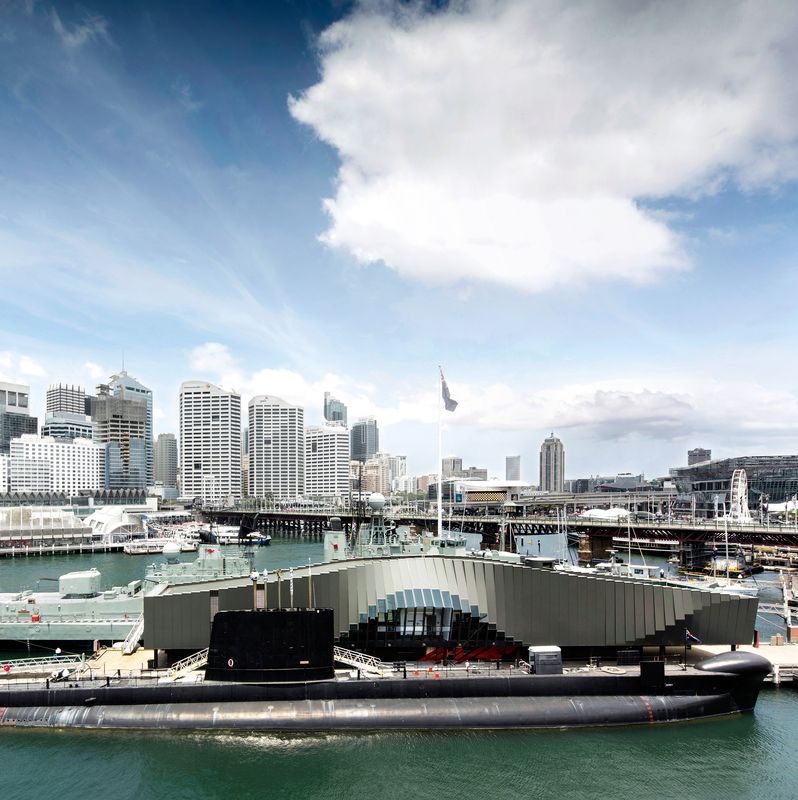
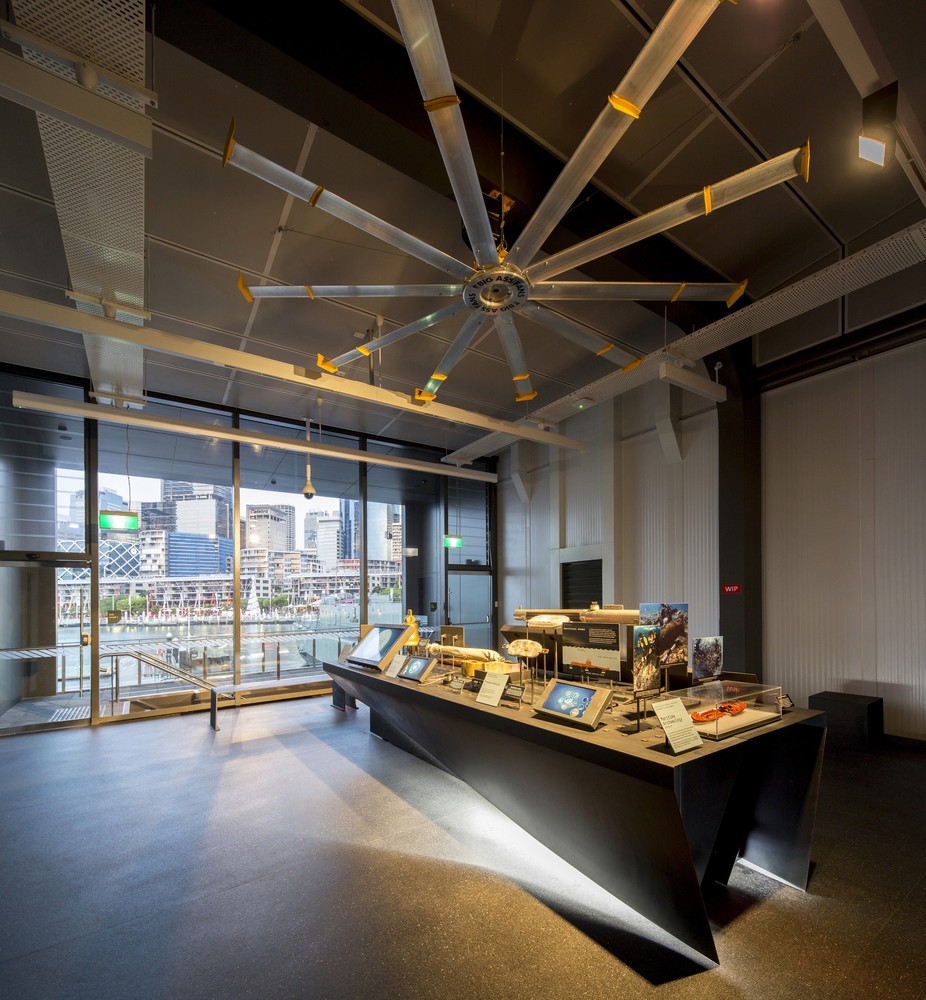
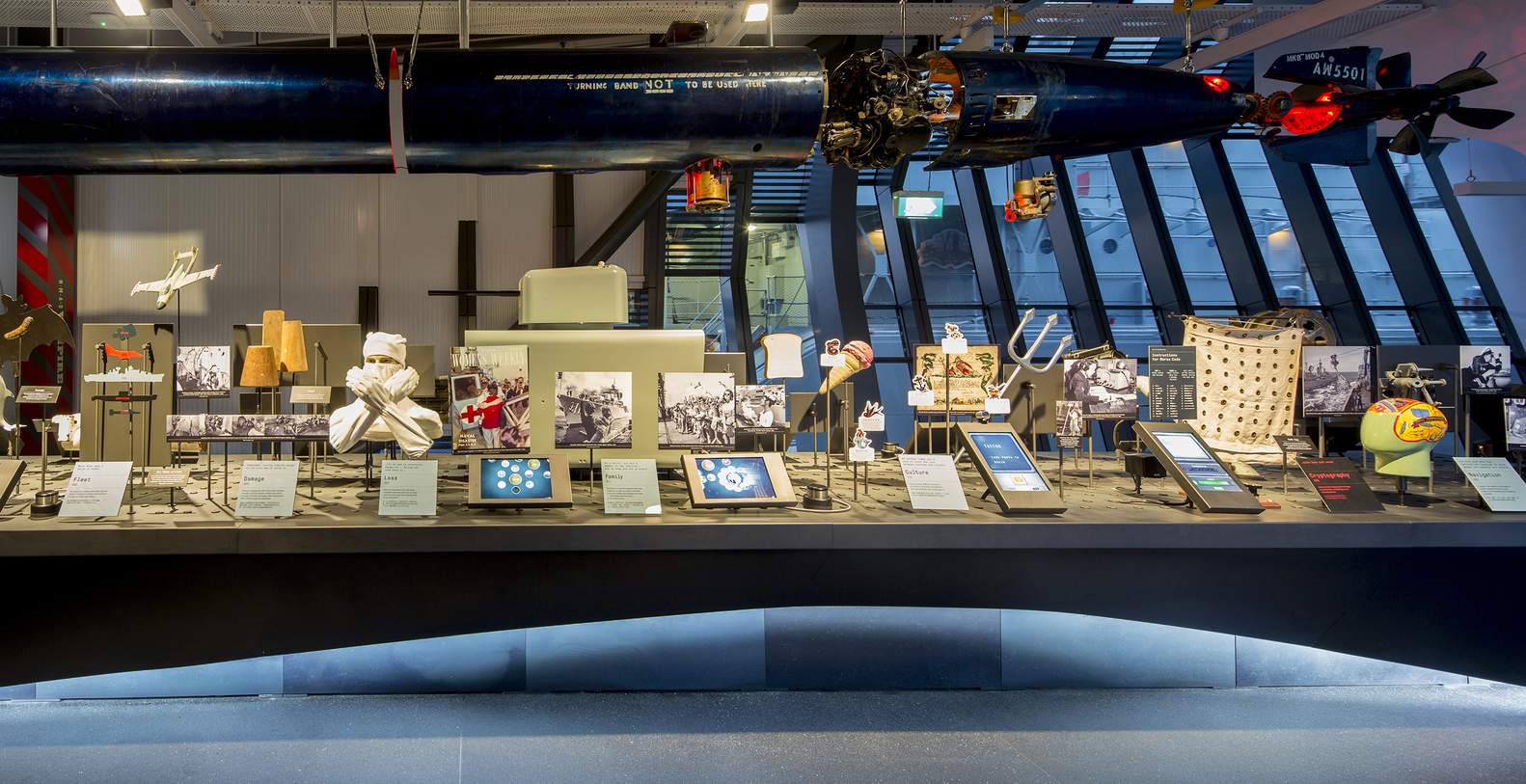
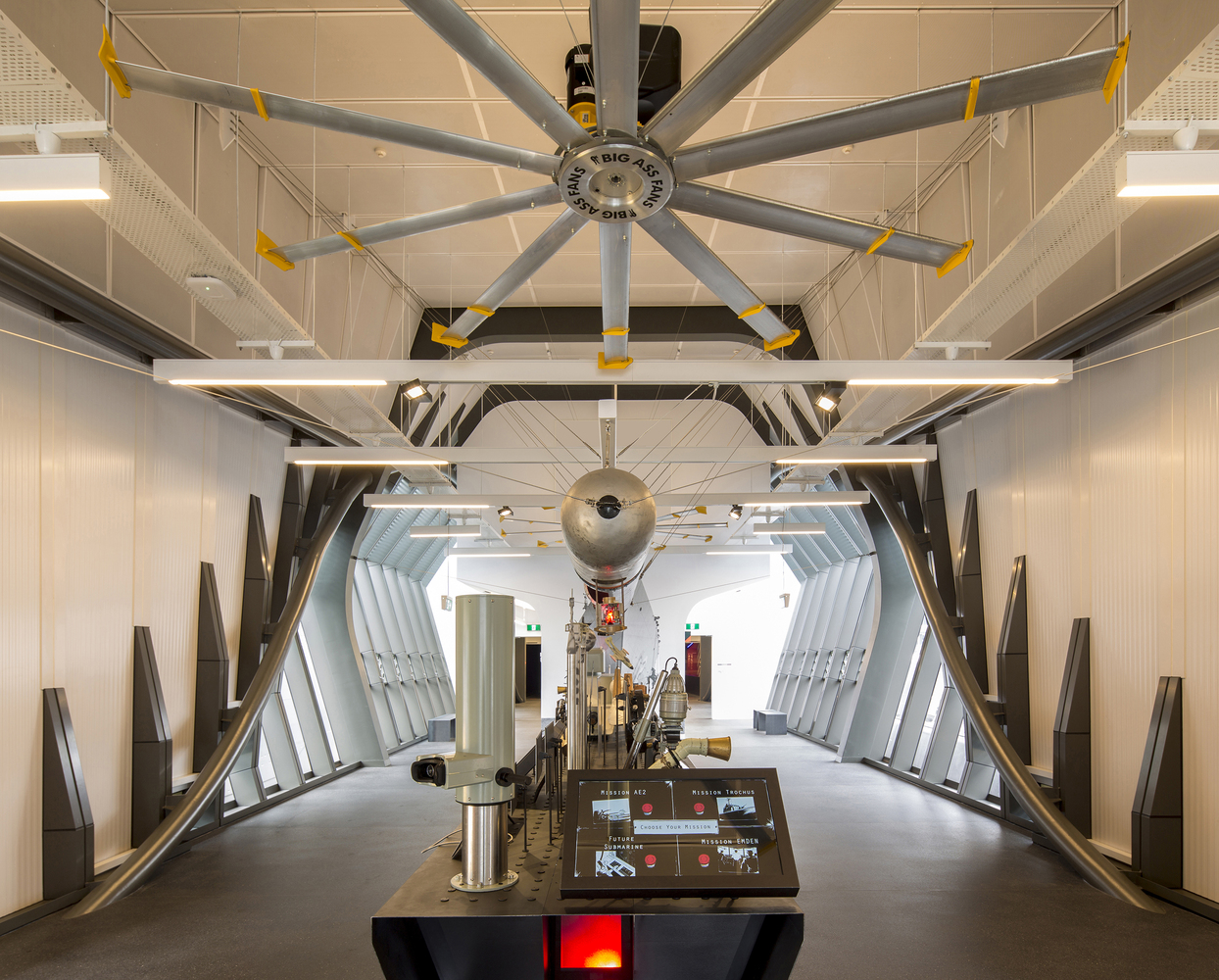
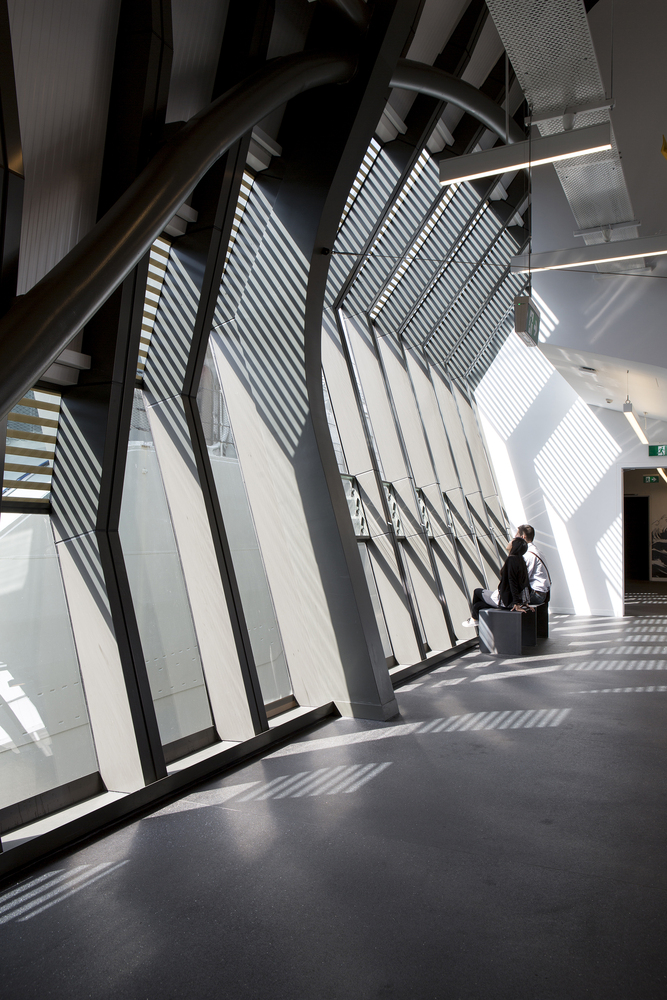
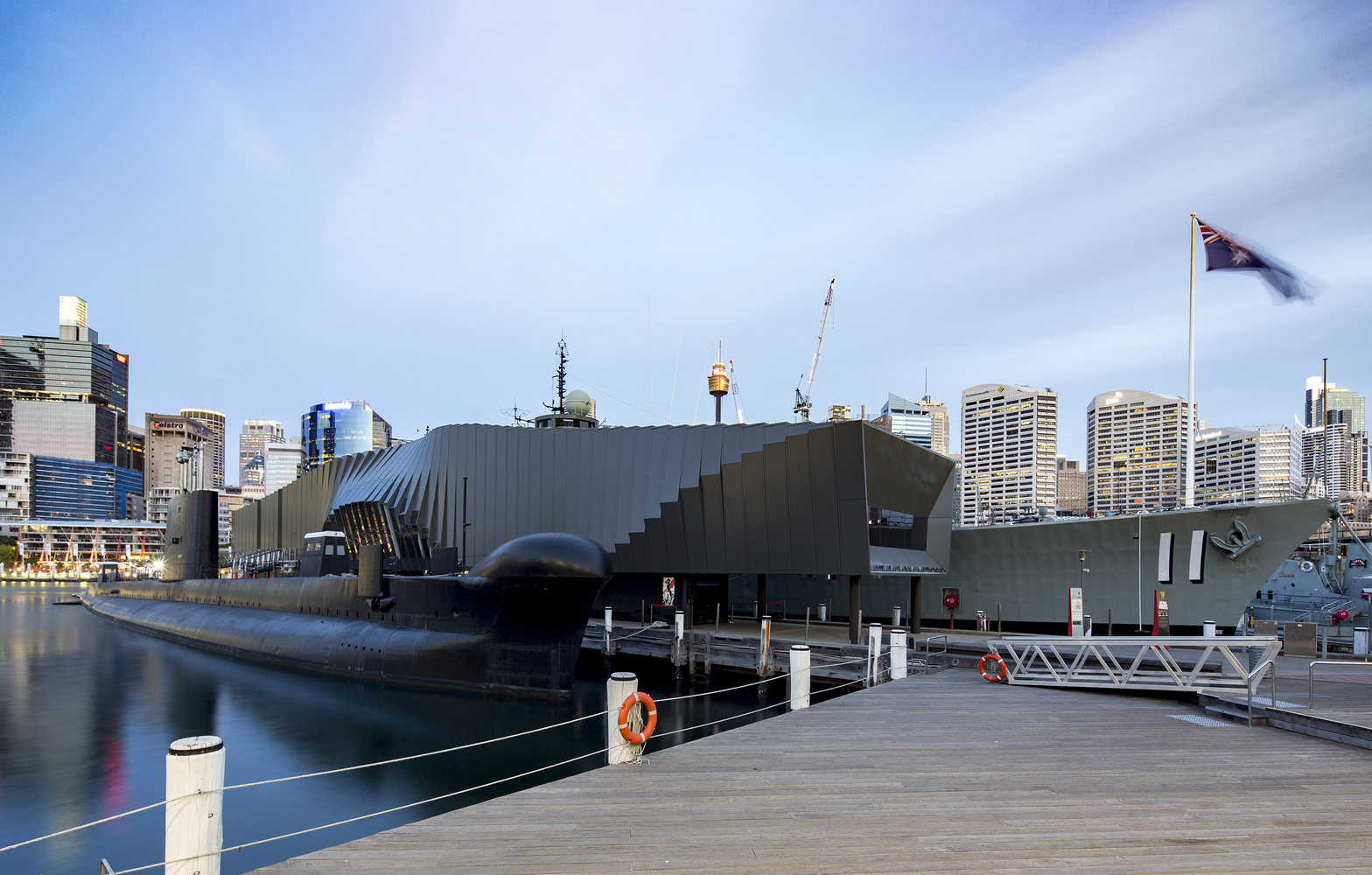
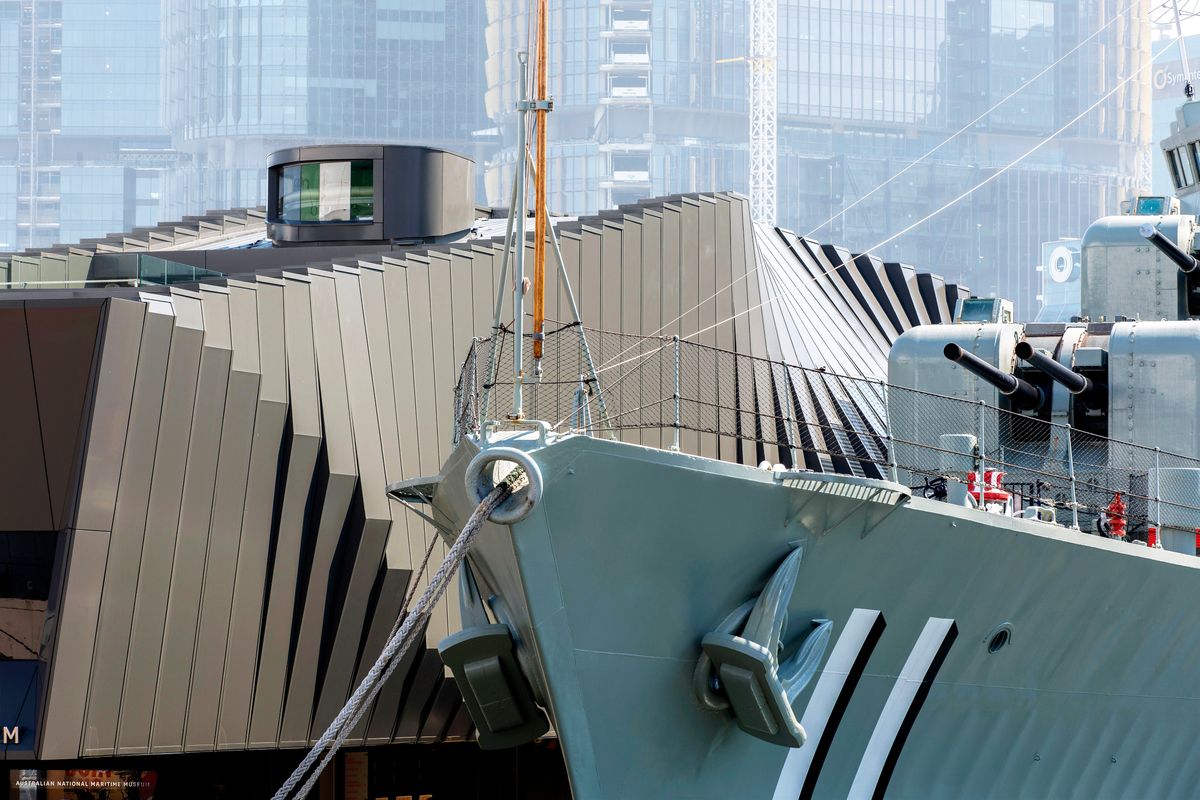
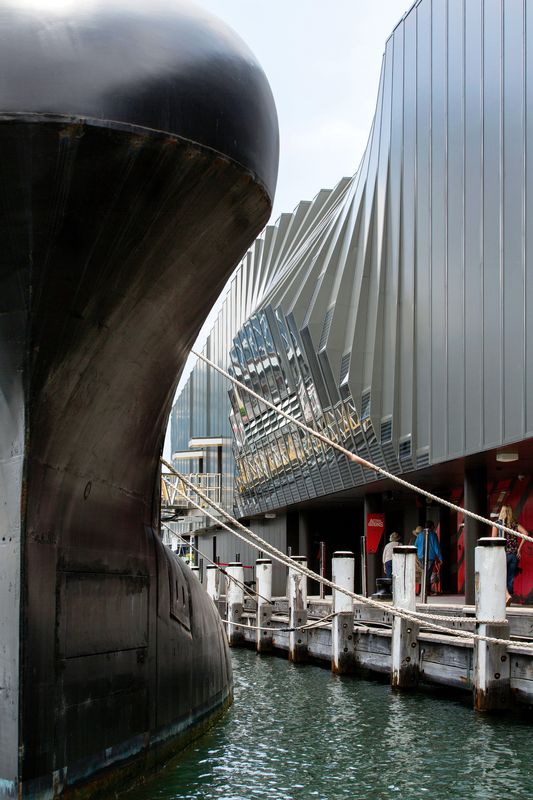
Designed as a “floating gallery,” the pavilion fuses exhibition, architecture and maritime history, marrying natural ventilation, rugged marine‑rated materials and immersive interpretive spaces to deliver a visceral, atmospheric entry to Australia’s naval past.
The structure defines what a museum pavilion can be: a lightweight, steel‑framed volume built on a pre‑existing wharf, engineered to accommodate shifting tidal loads, wind and the live weight of moored ships, all while maintaining elegance and environmental resilience.
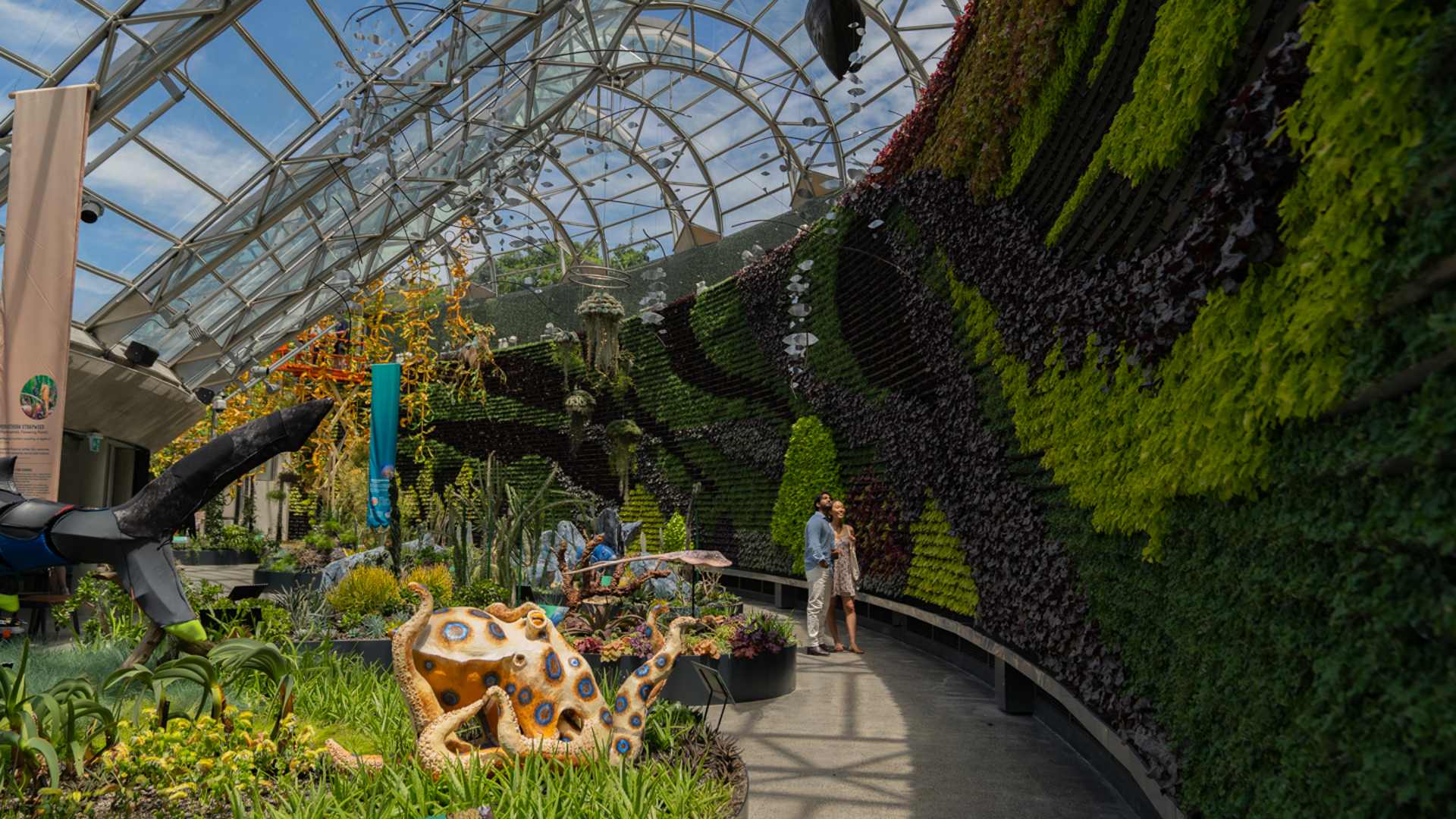
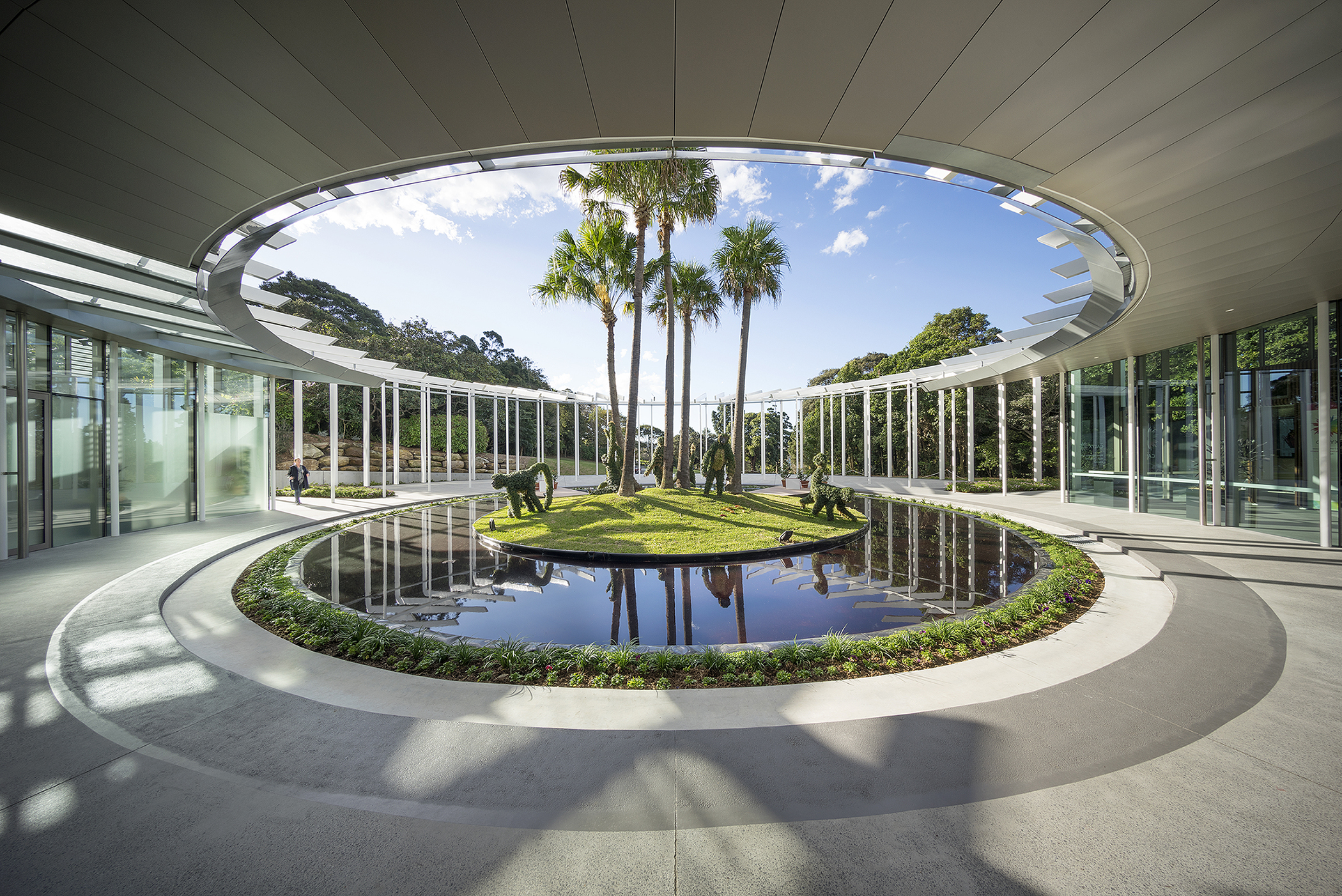
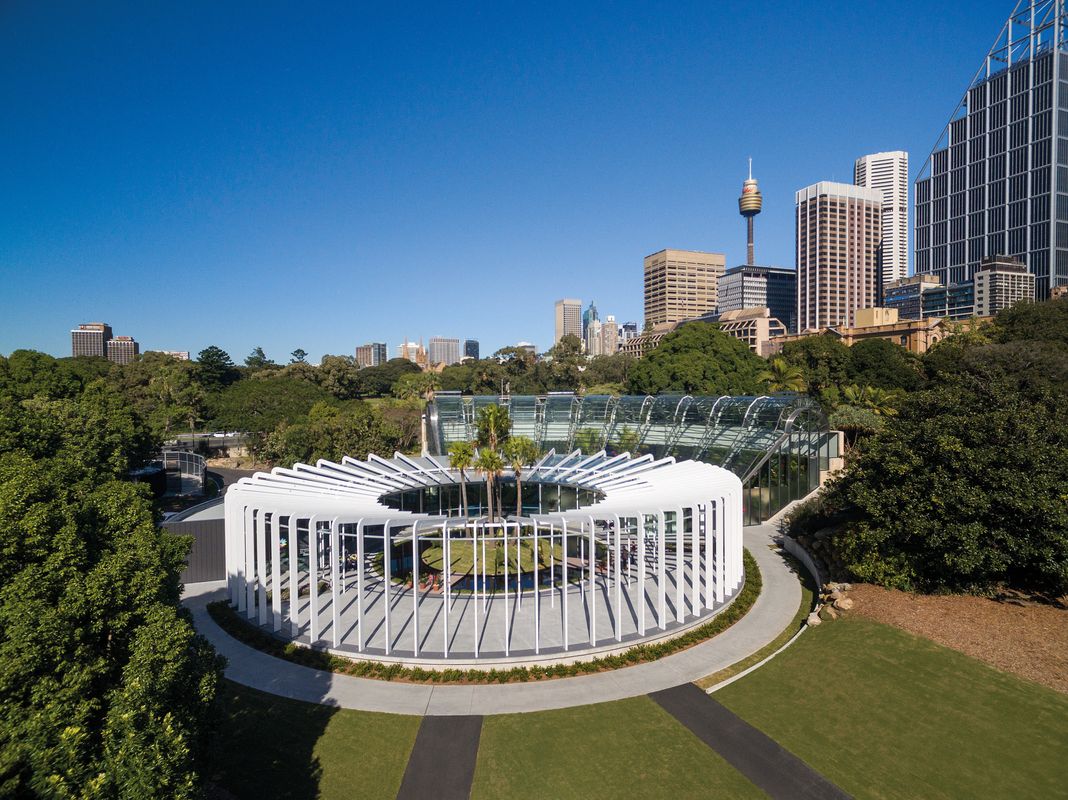
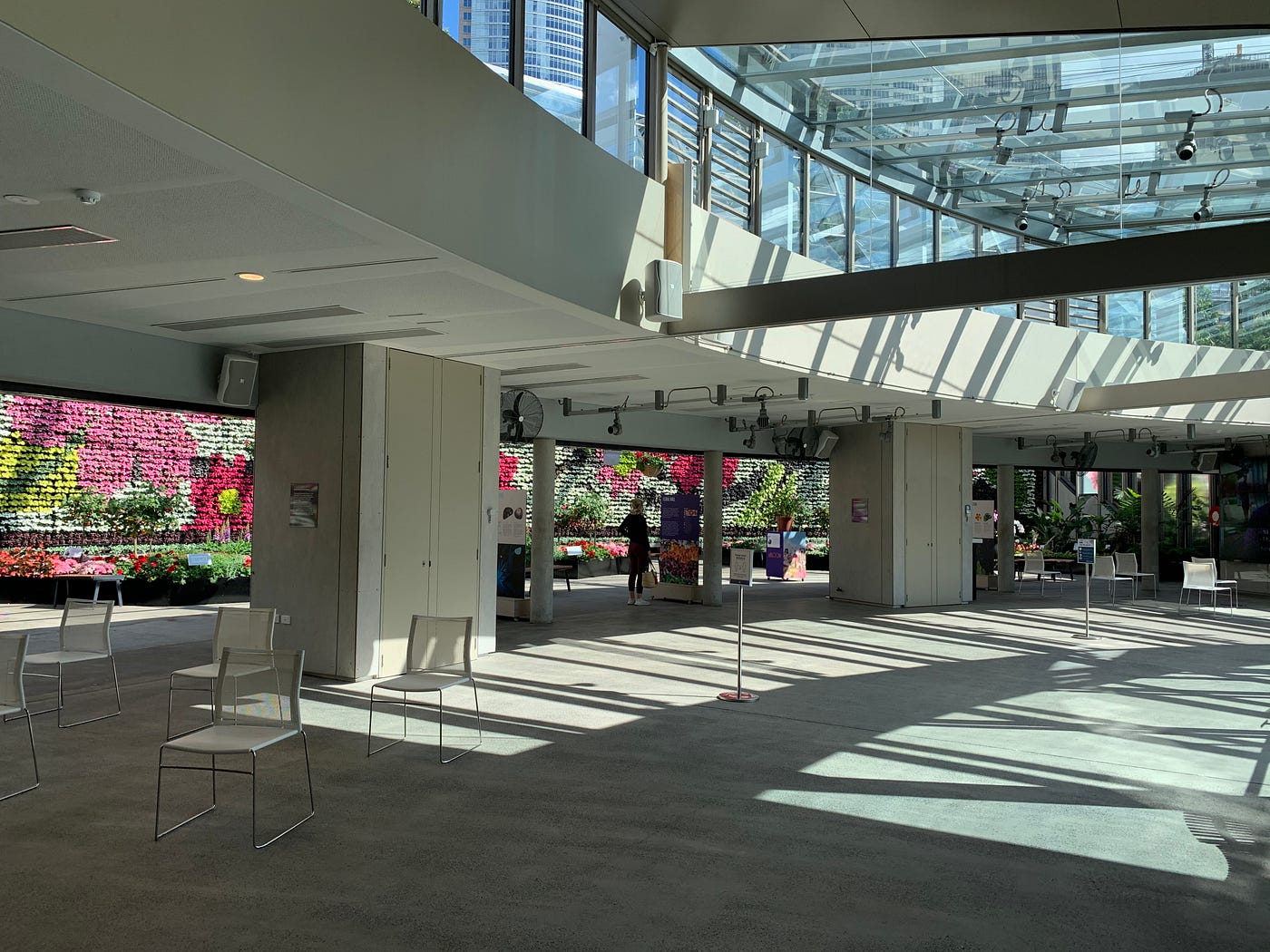
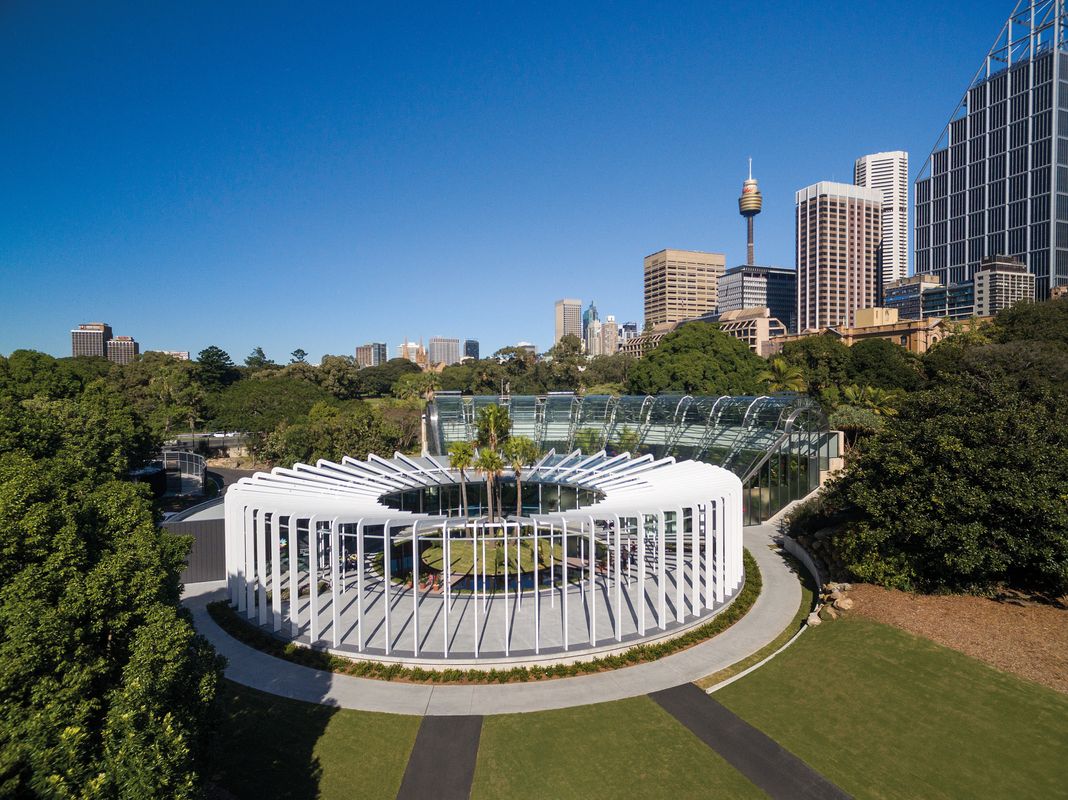
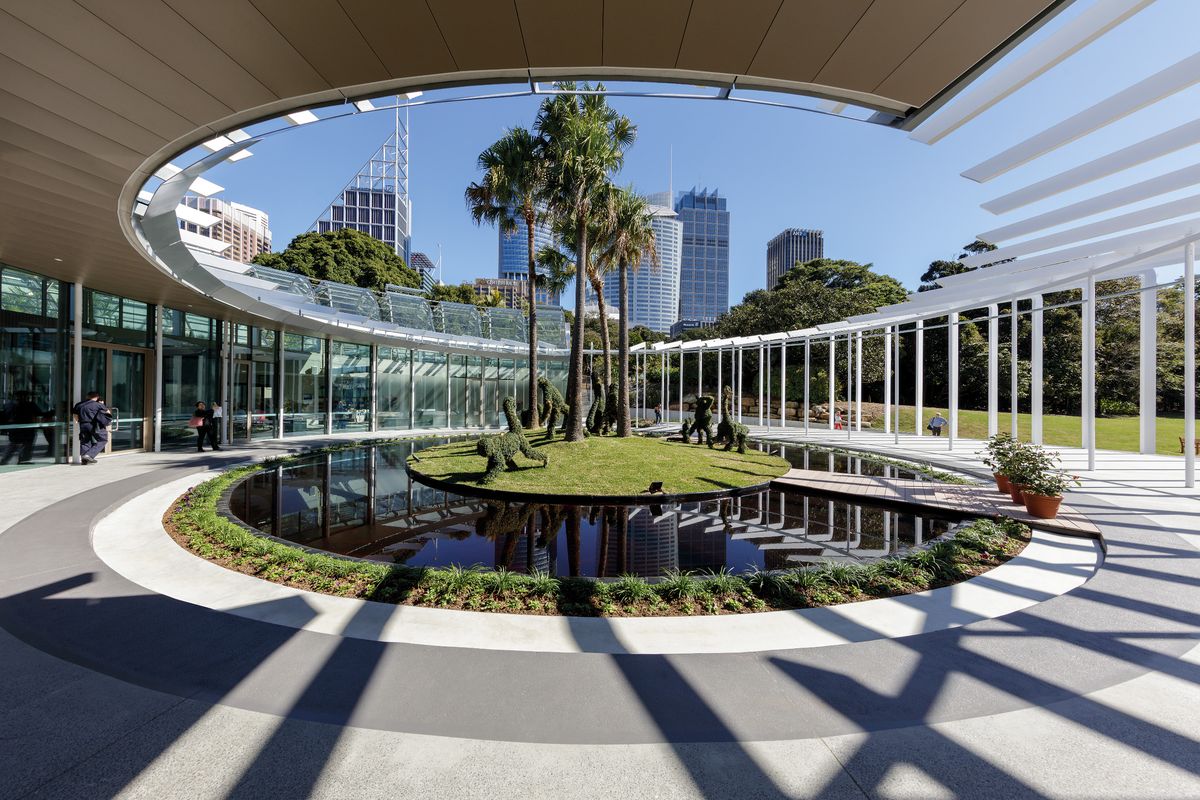
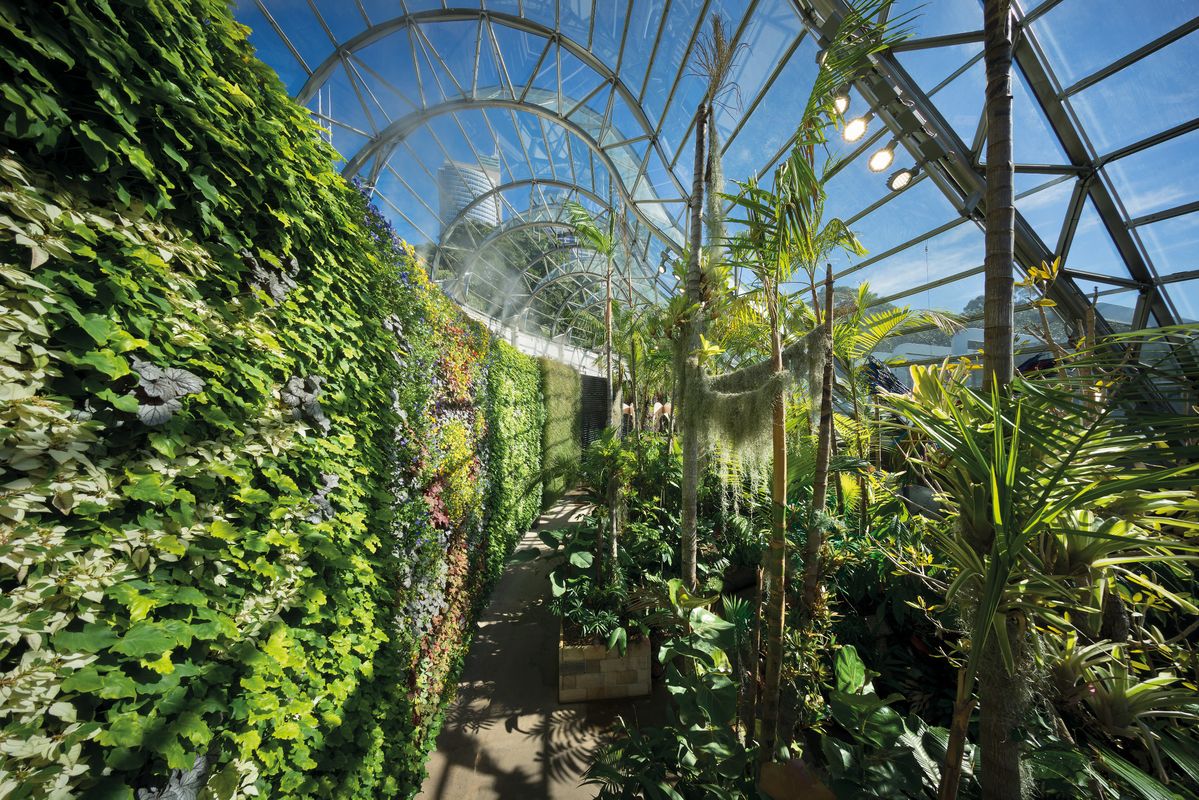
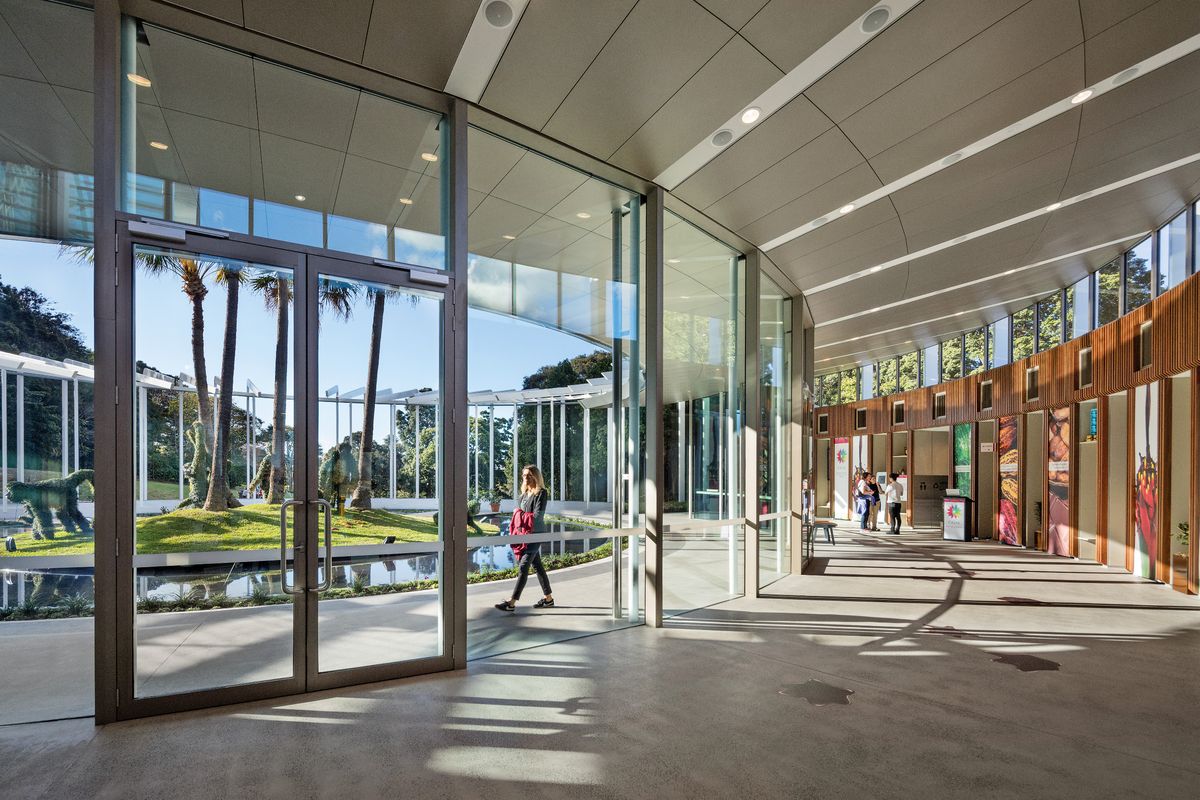
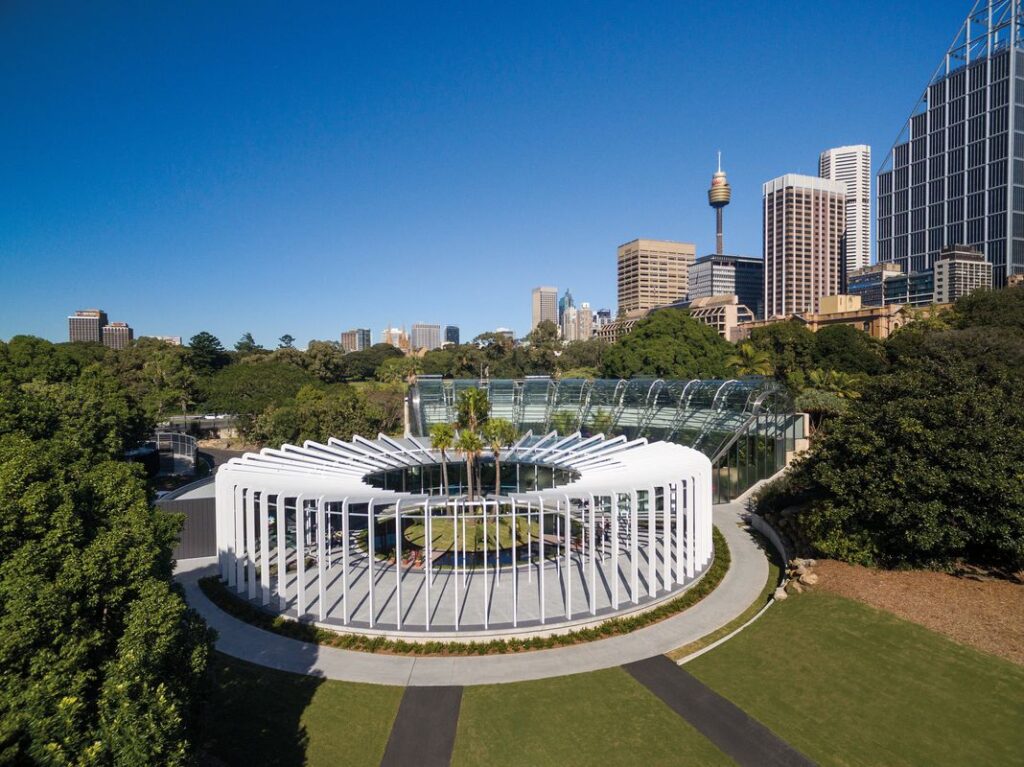
The Calyx at the Royal Botanic Garden Sydney, is a world-class horticultural display and event venue that represents a striking fusion of architecture, botany, and public space.
Group DLA provided BCA and Crown Certification for the project from concept through to completion of the approximately 1,500 square metres site and is a landmark feature within the iconic Royal Botanic Garden. Notably, it houses the largest vertical floral display in the Southern Hemisphere, setting it apart from other garden-based structures globally.
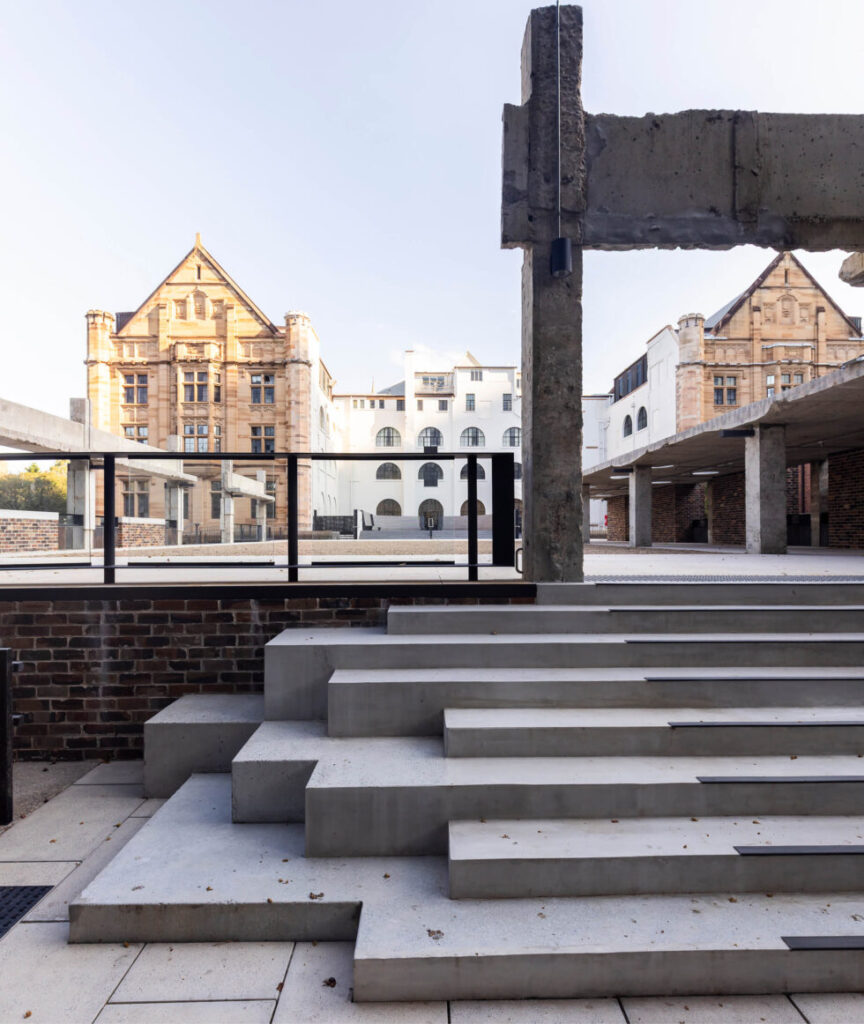
Originally completed in 1913 and designed by Government Architect Walter Liberty Vernon, this Federation Gothic-style landmark is being revitalized as part of the Macquarie Street East Precinct renewal, key works include the demolition of non-heritage additions, restoration of the original sandstone façade, and creation of new public spaces, all while preserving the building's historical integrity.
Notably, the project has achieved a 99.44% material recycling rate from over 8,500 tonnes of waste, exemplifying a strong commitment to sustainability.
Liverpool Civic Place is a transformative $600 million development that integrates civic, cultural, and commercial spaces including new council offices, chambers, a childcare facility, and the Yellamundie Library, all designed to serve the rapidly growing and diverse community of Western Sydney.
The project presented unique challenges and opportunities. The integration of sustainable design elements, such as aiming for a 5 Star Green Star rating and incorporating green roofs and solar panels, required meticulous planning and execution to meet compliance standards.
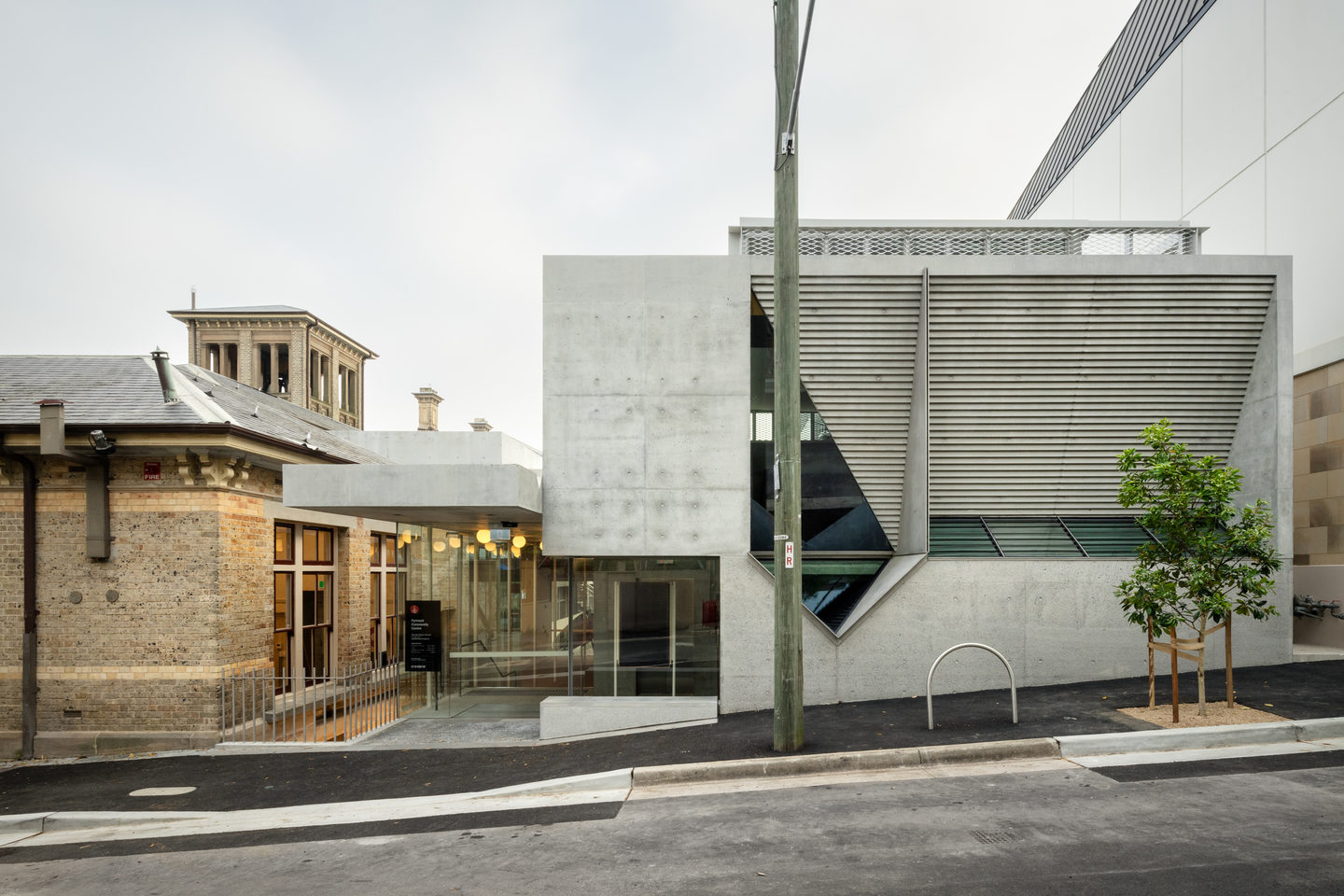
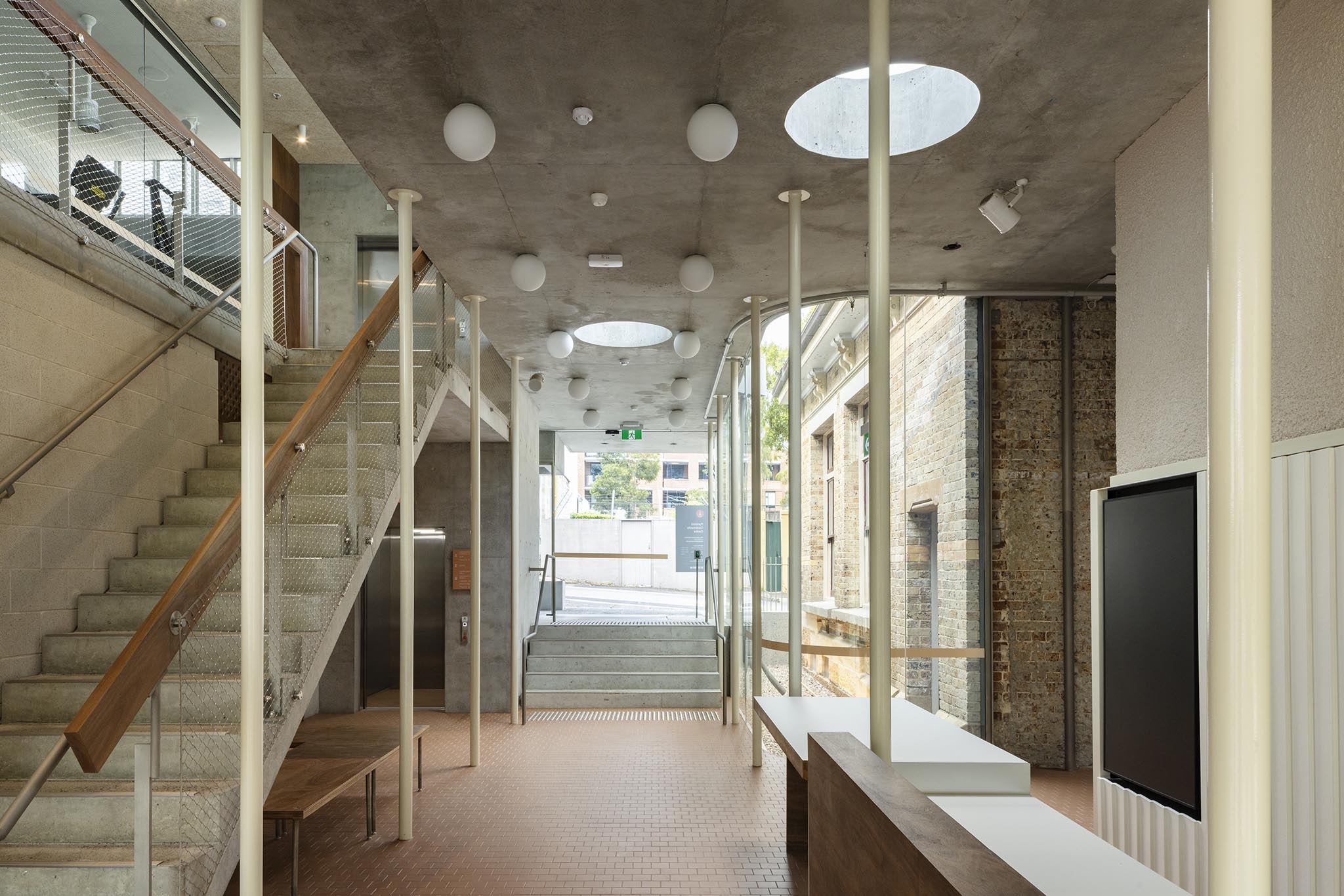
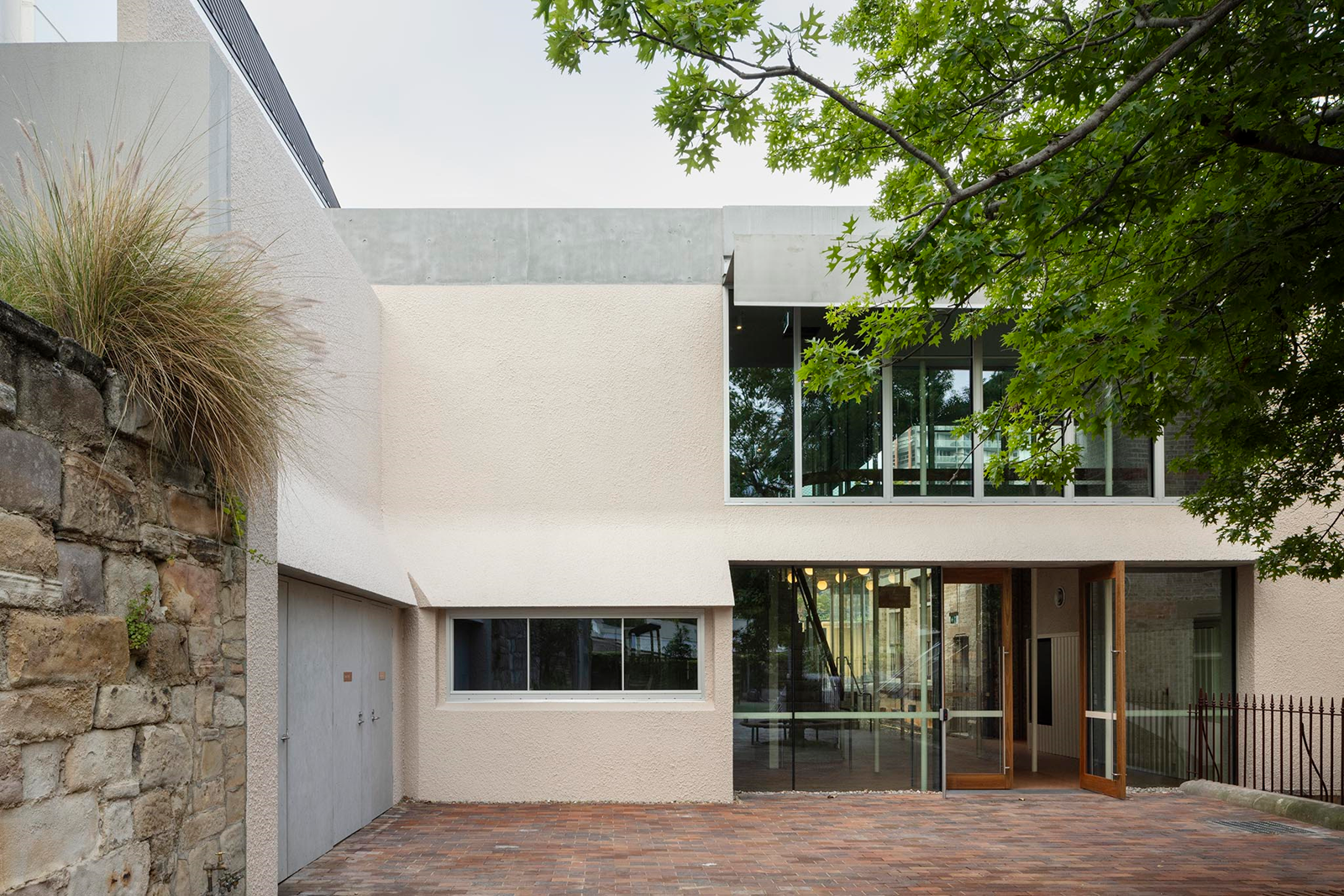
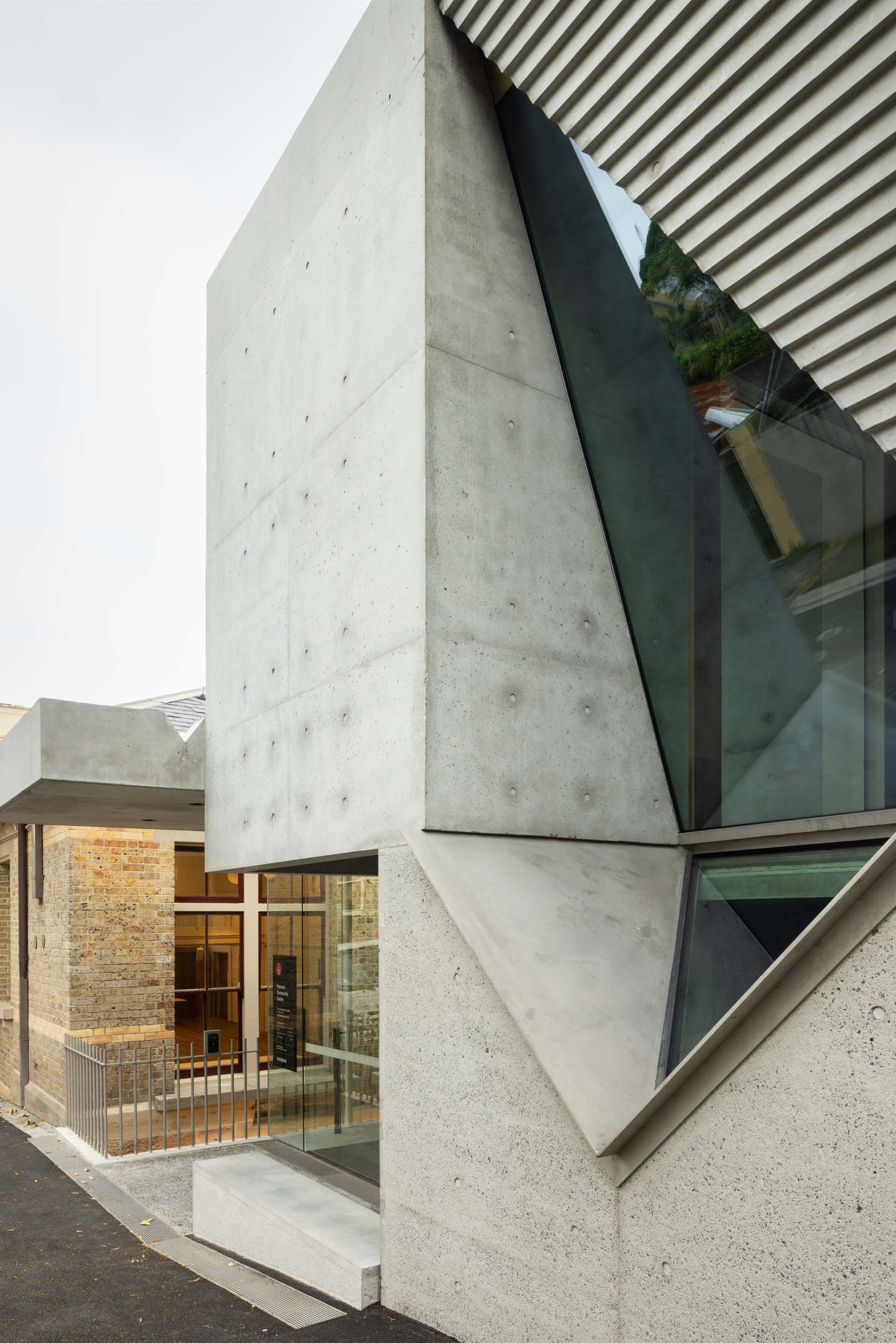
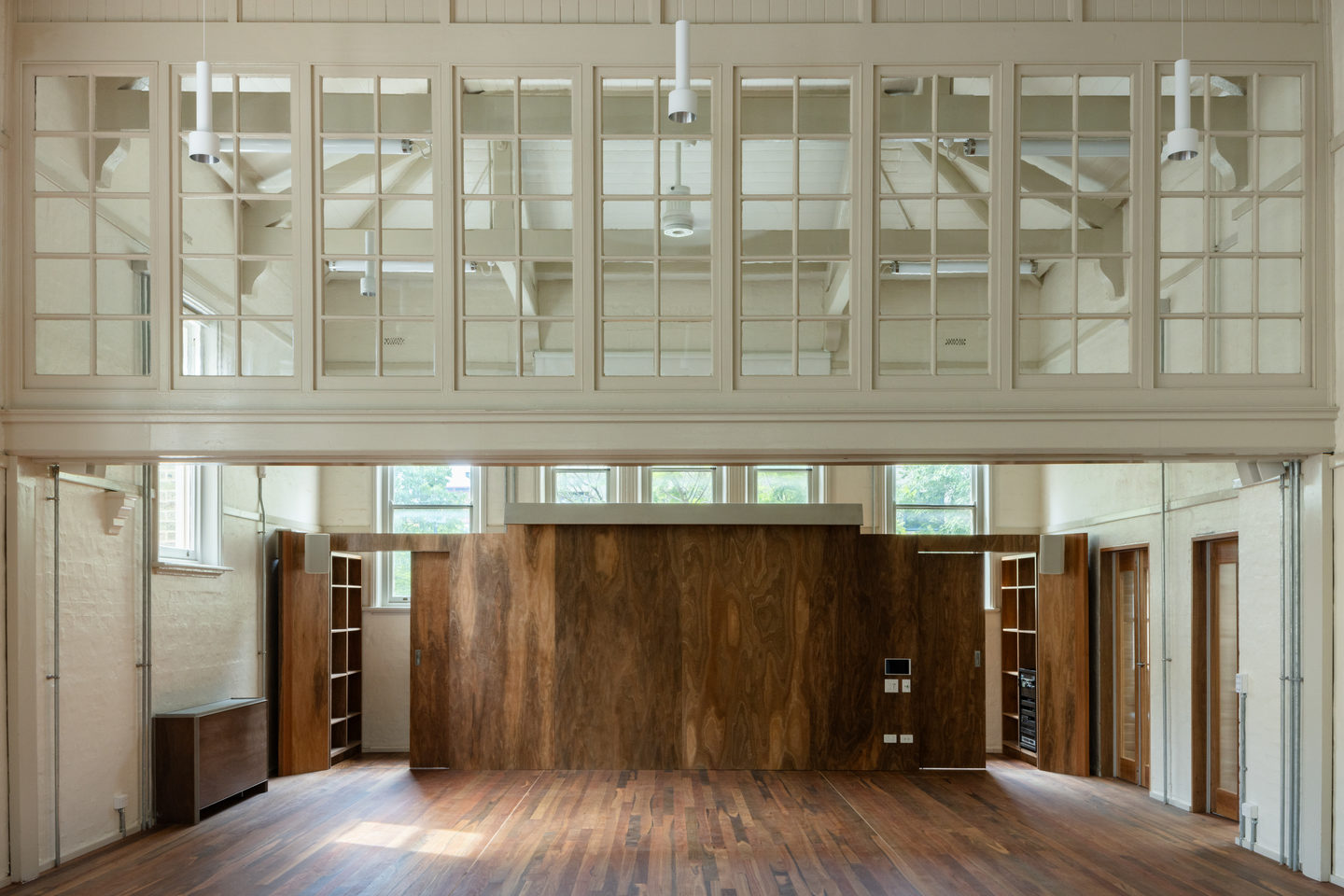
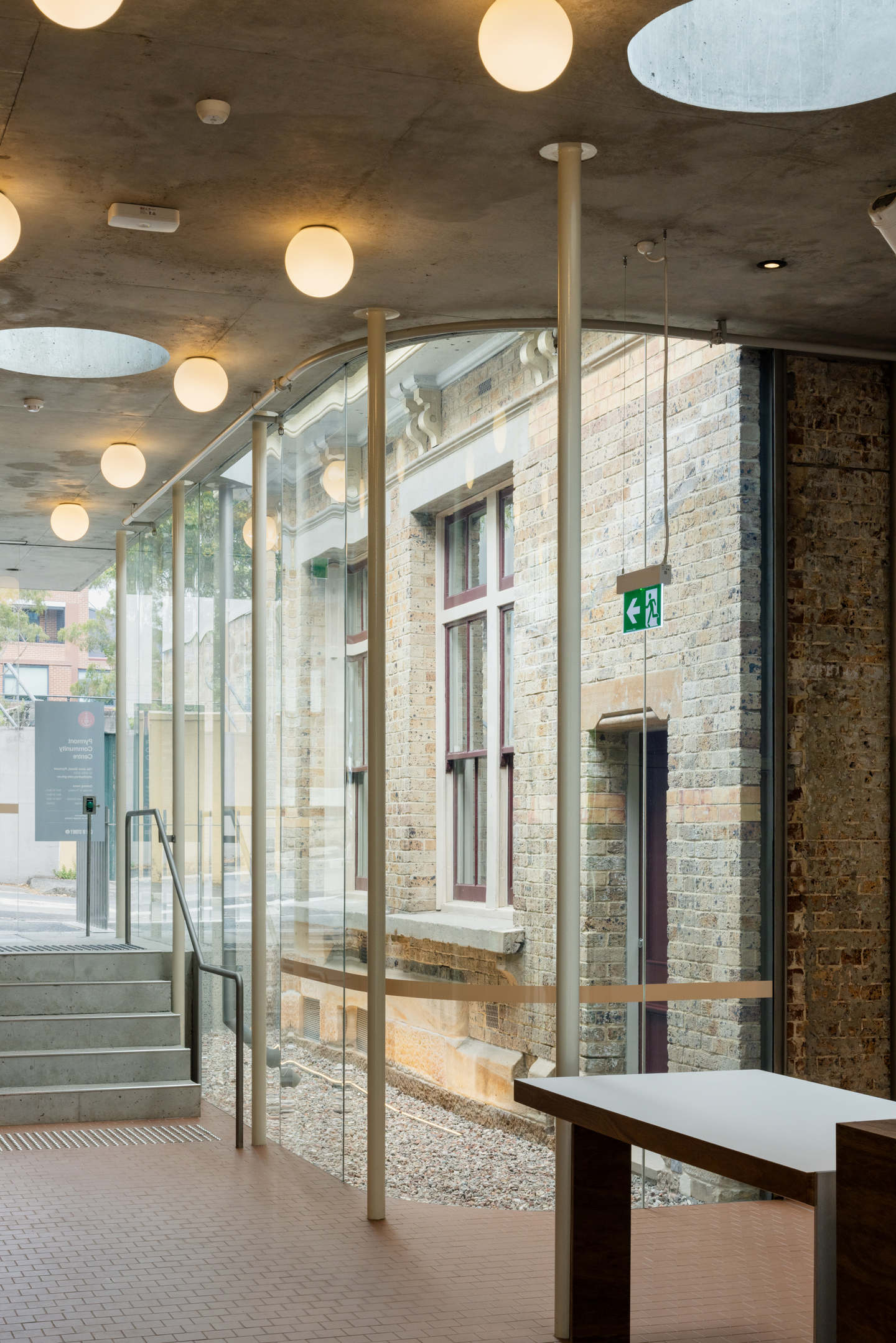
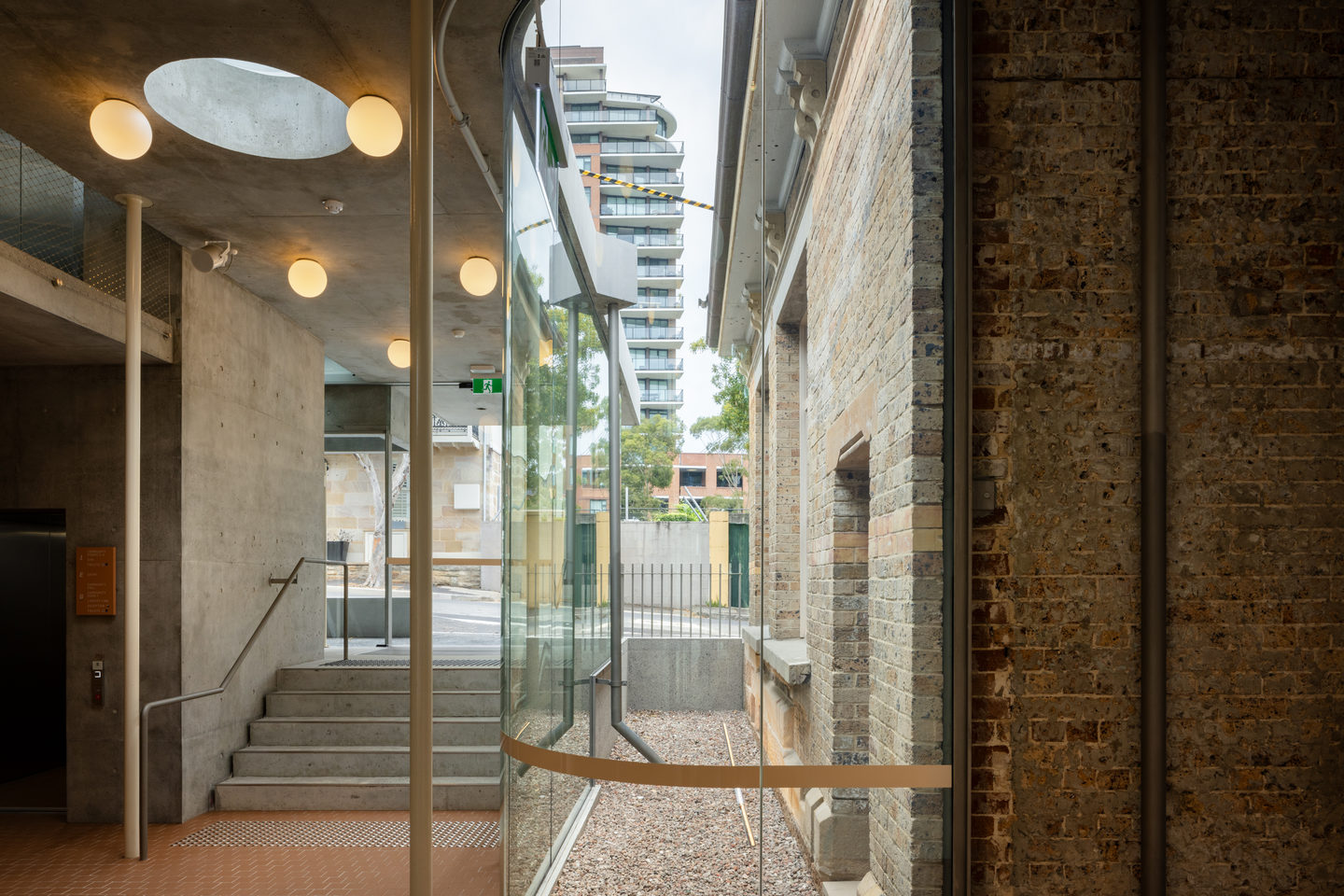
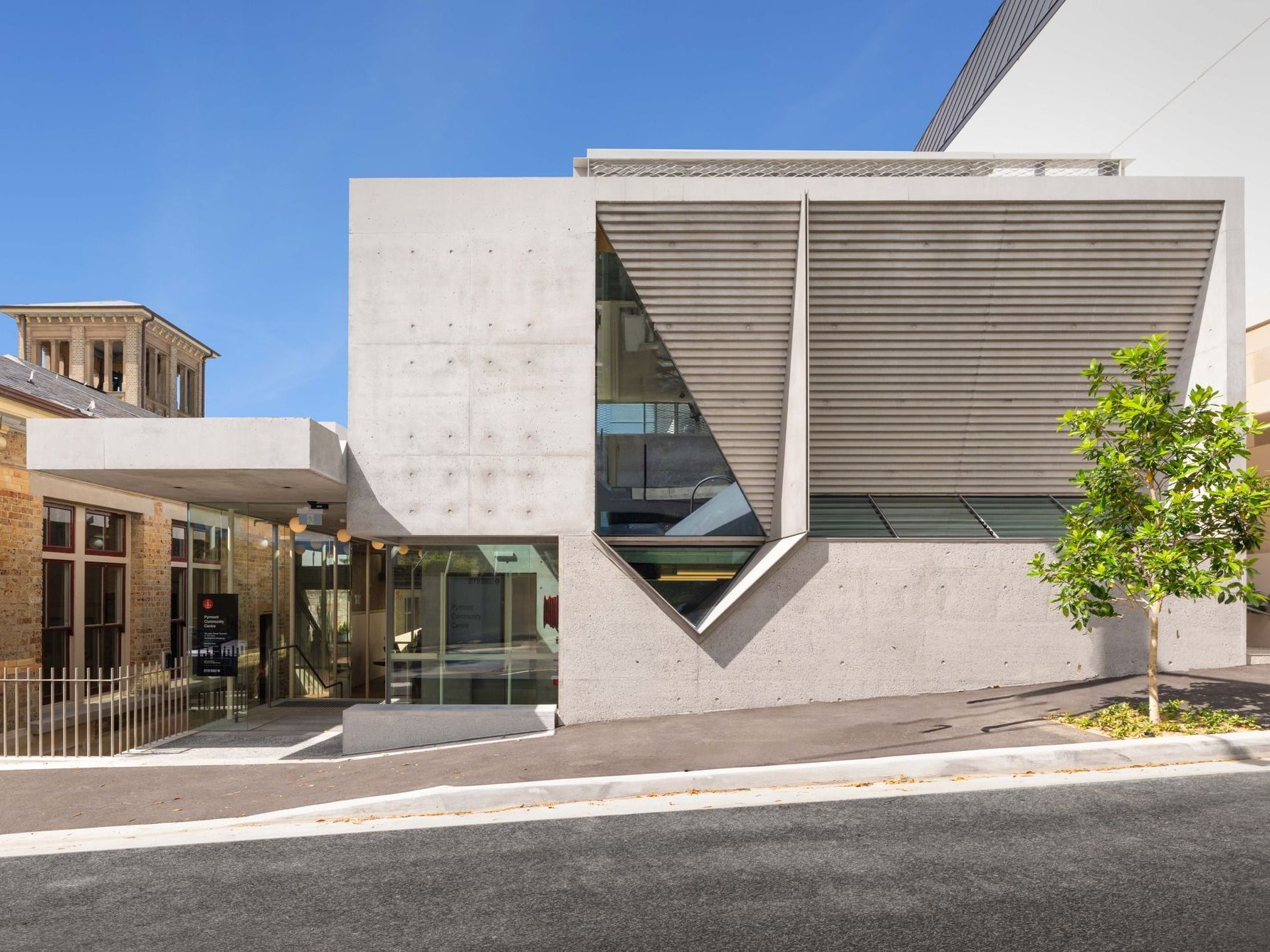
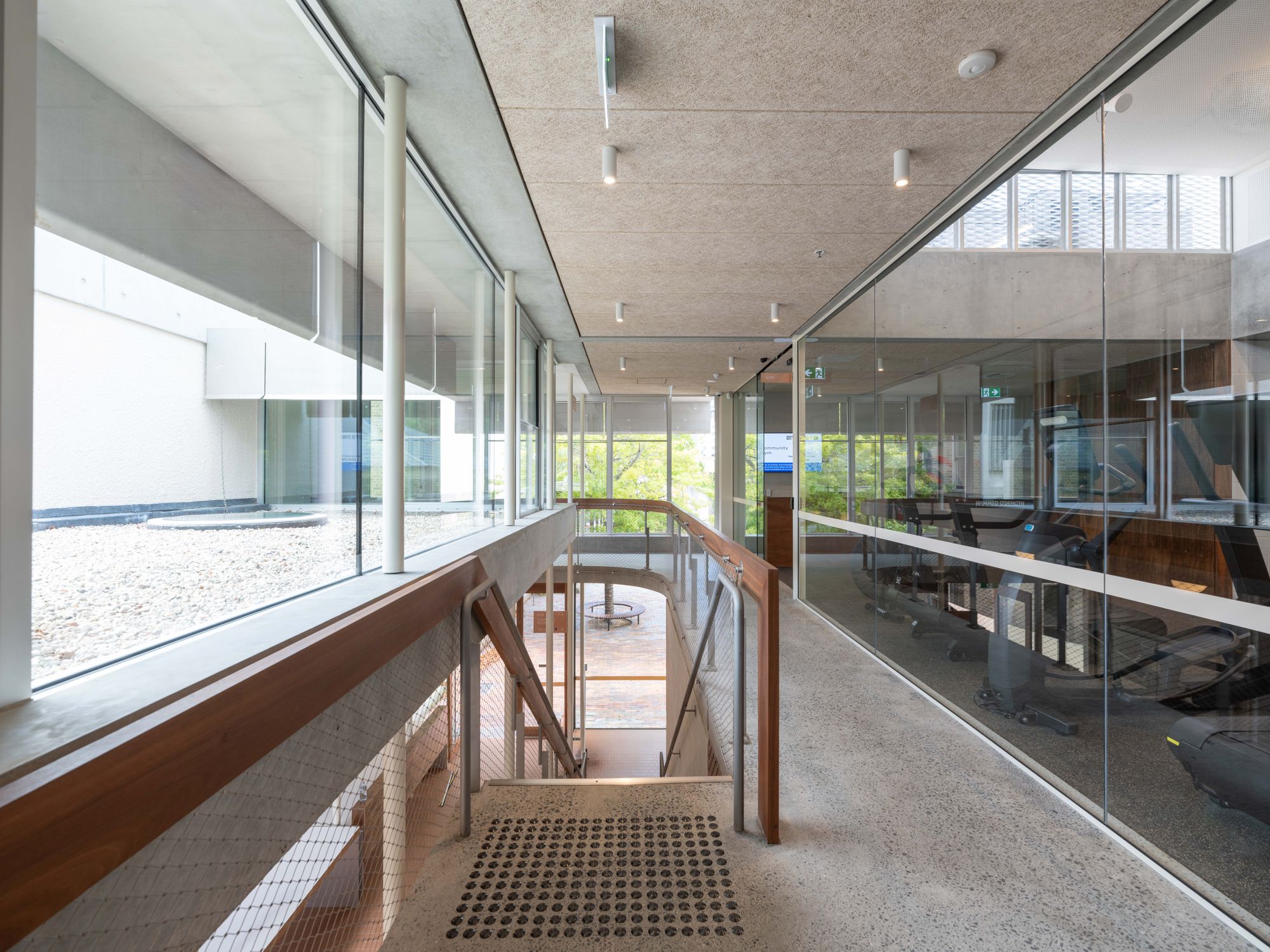
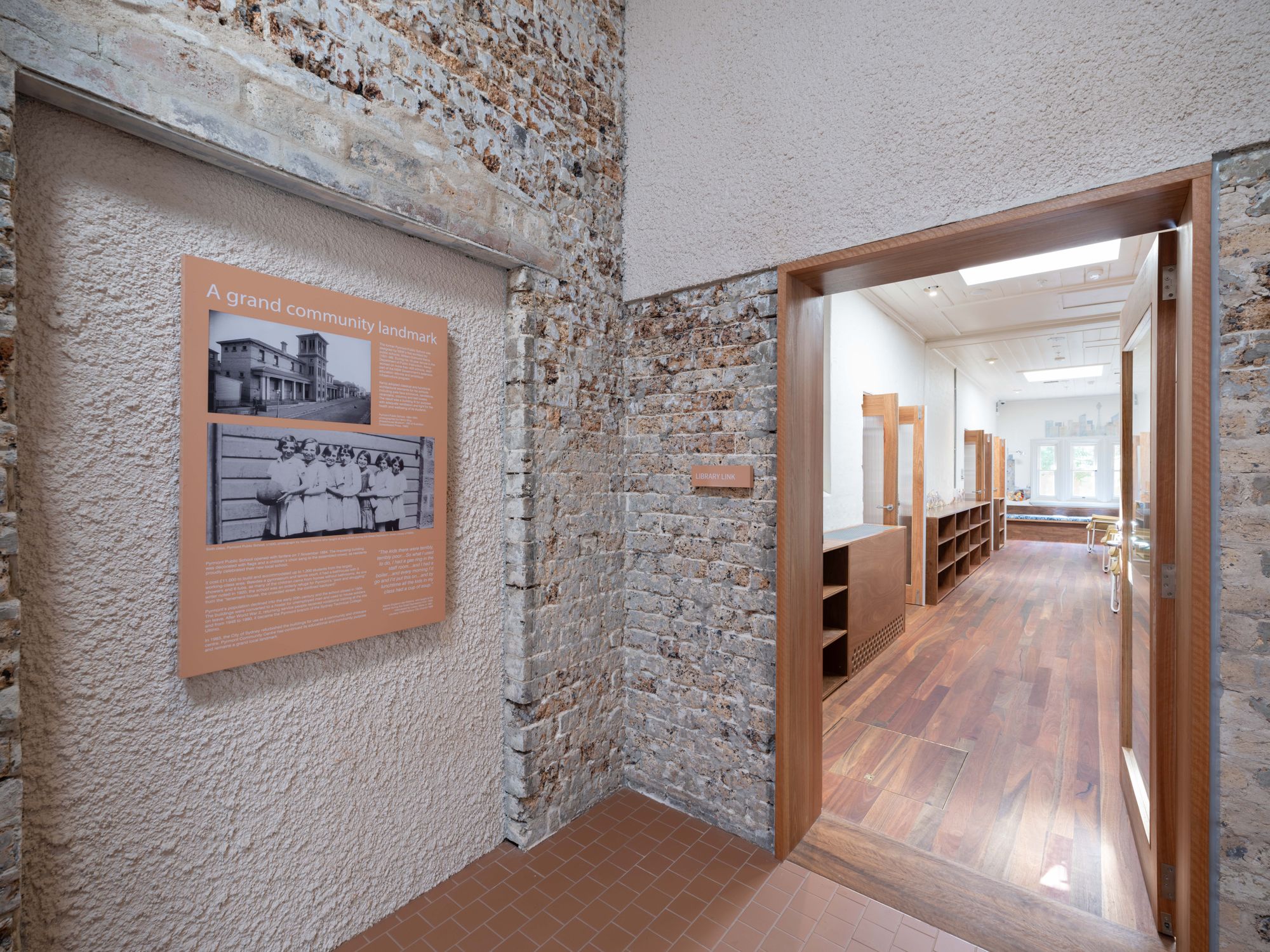
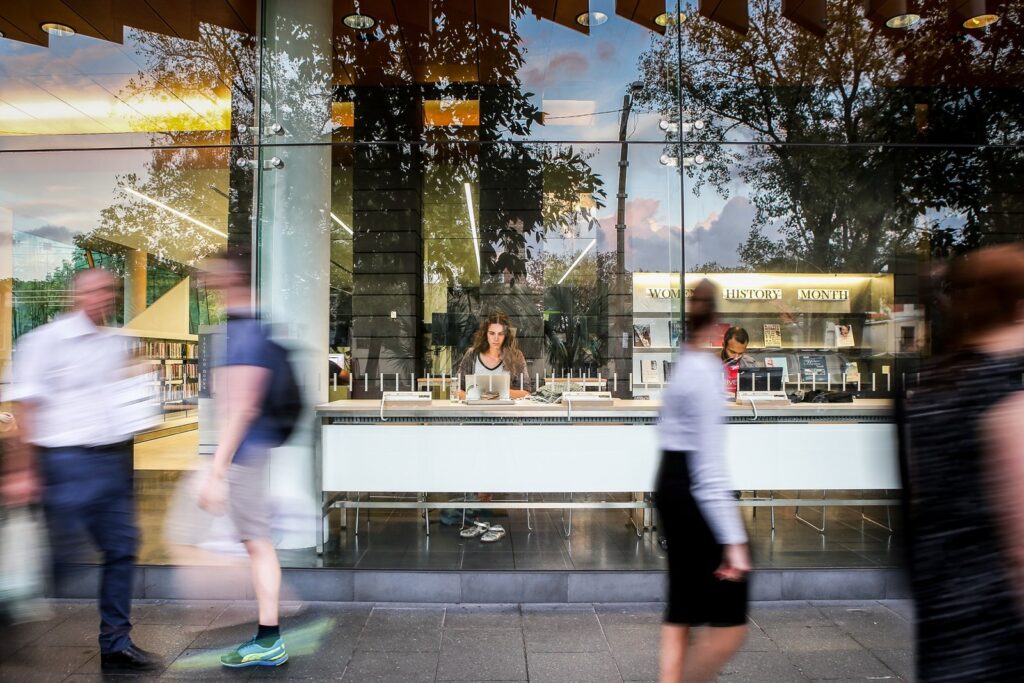
Pyrmont Community Centre brings modern, accessible spaces to the heart of the inner west community. Designed for connection, recreation, and growth, this revitalised hub is now open for locals to enjoy.
Group DLA provided Certification services on the project to the existing Pyrmont Community Centre including a reconfigured accessible foyer and entry, expansion of the existing gym facility, new community rooms and upgraded existing amenities to enhancing the buildings current use.
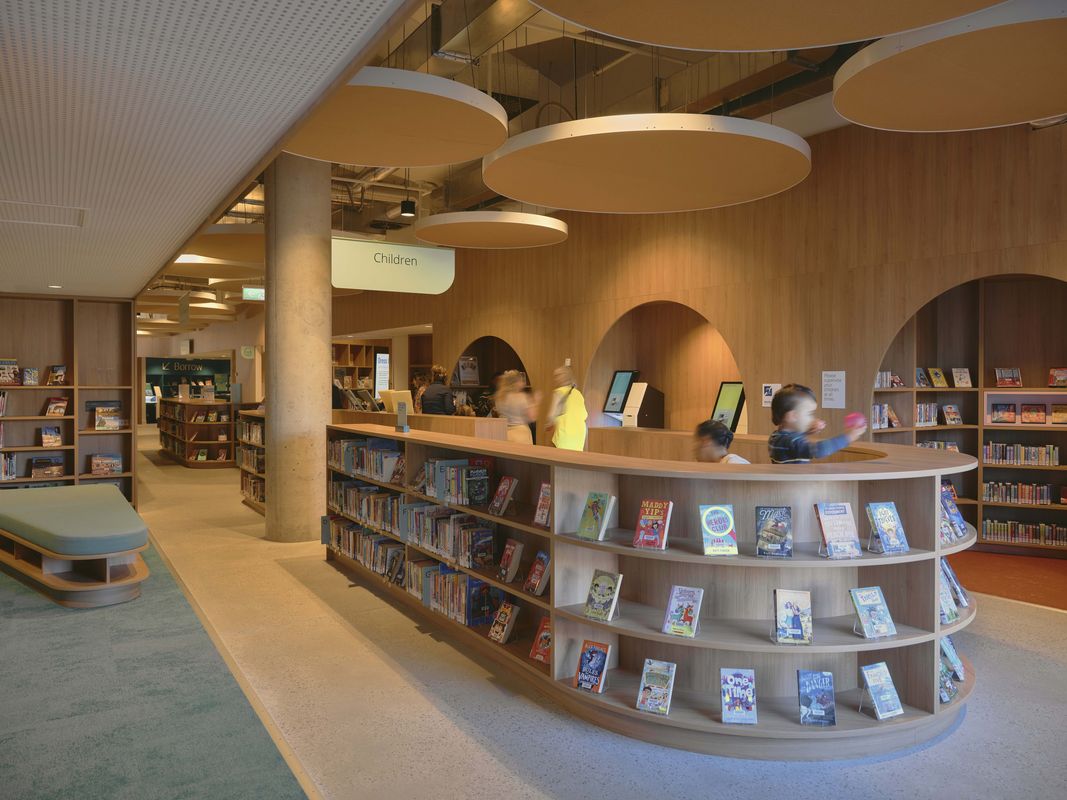
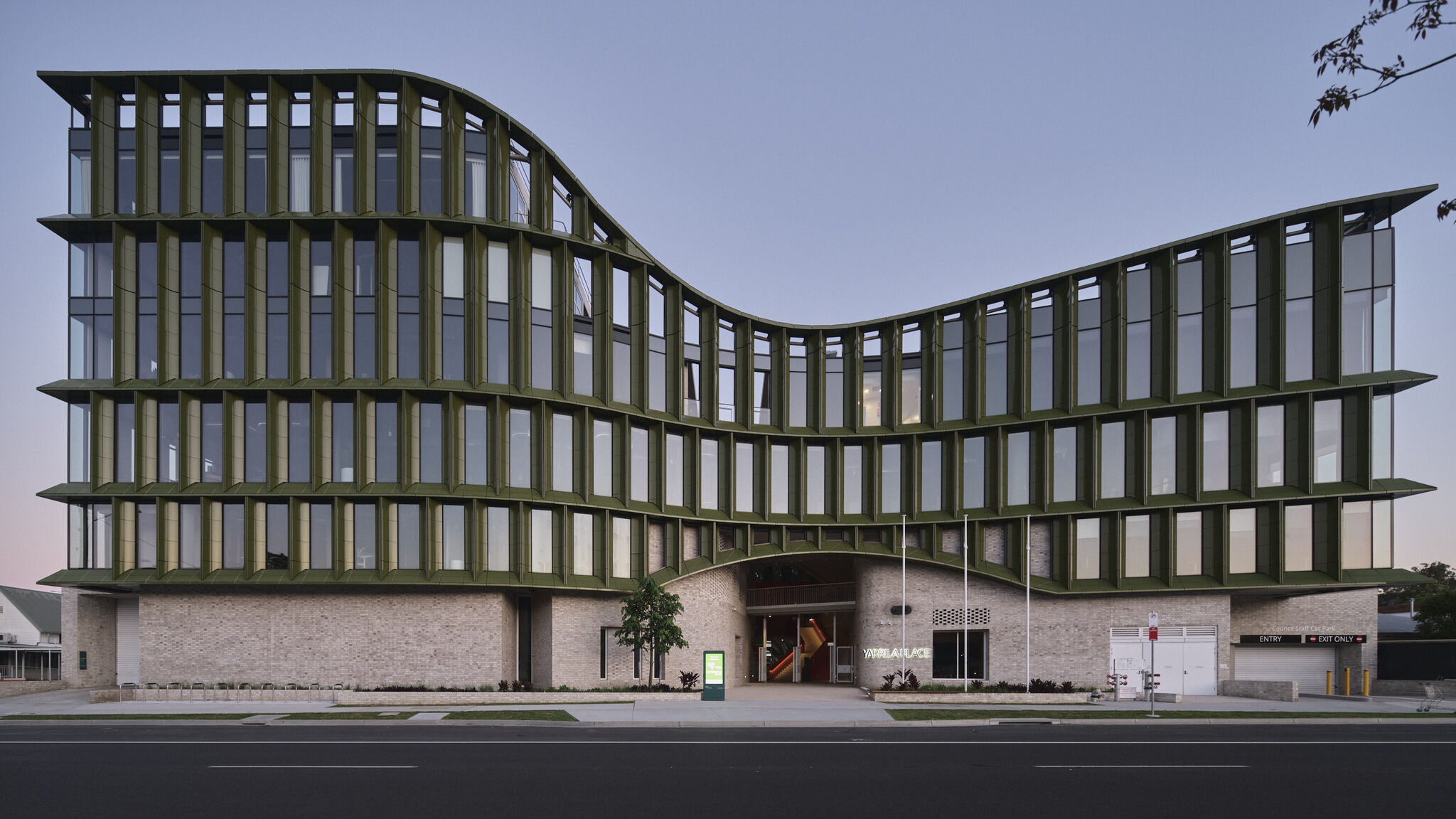
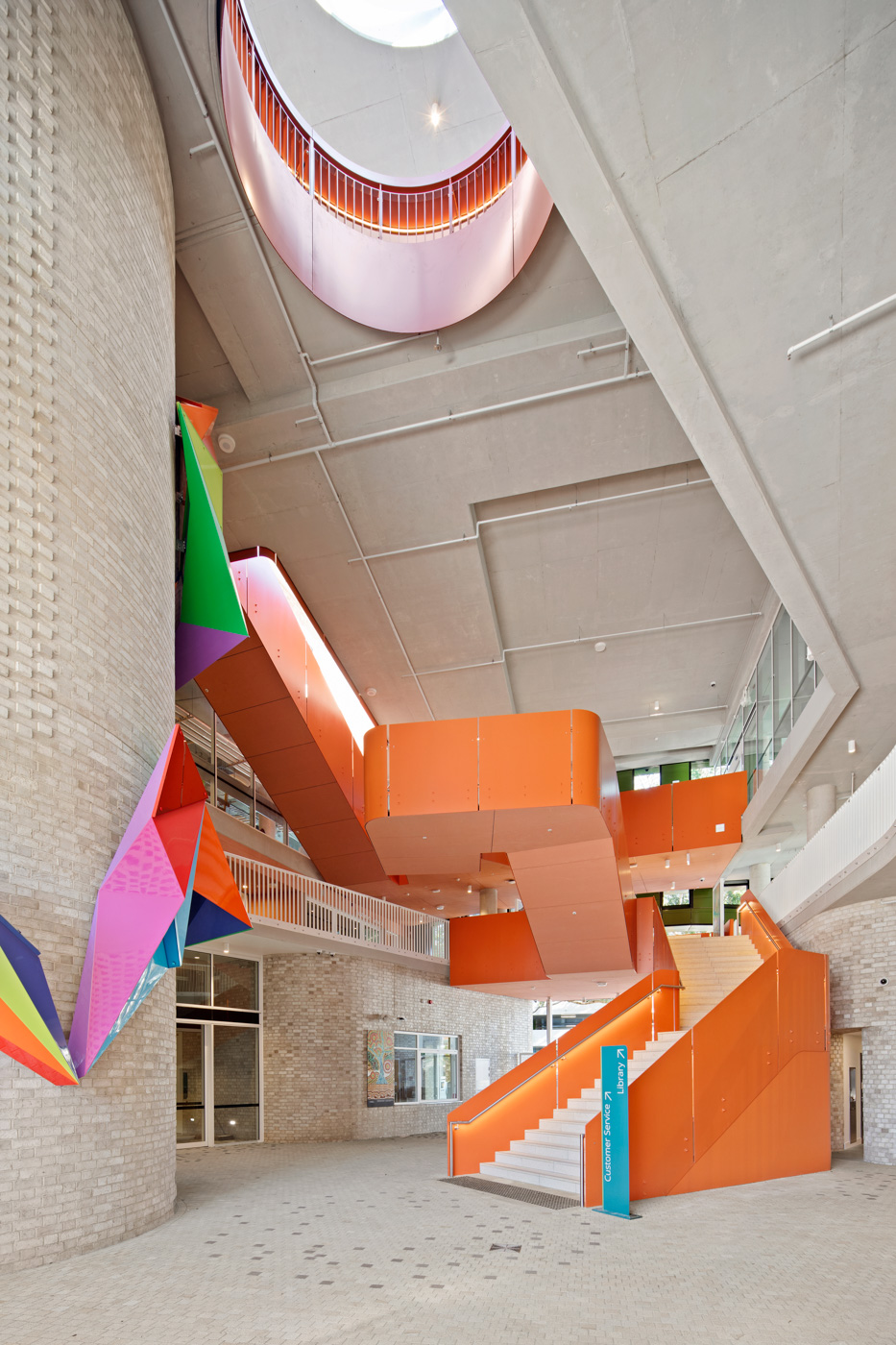
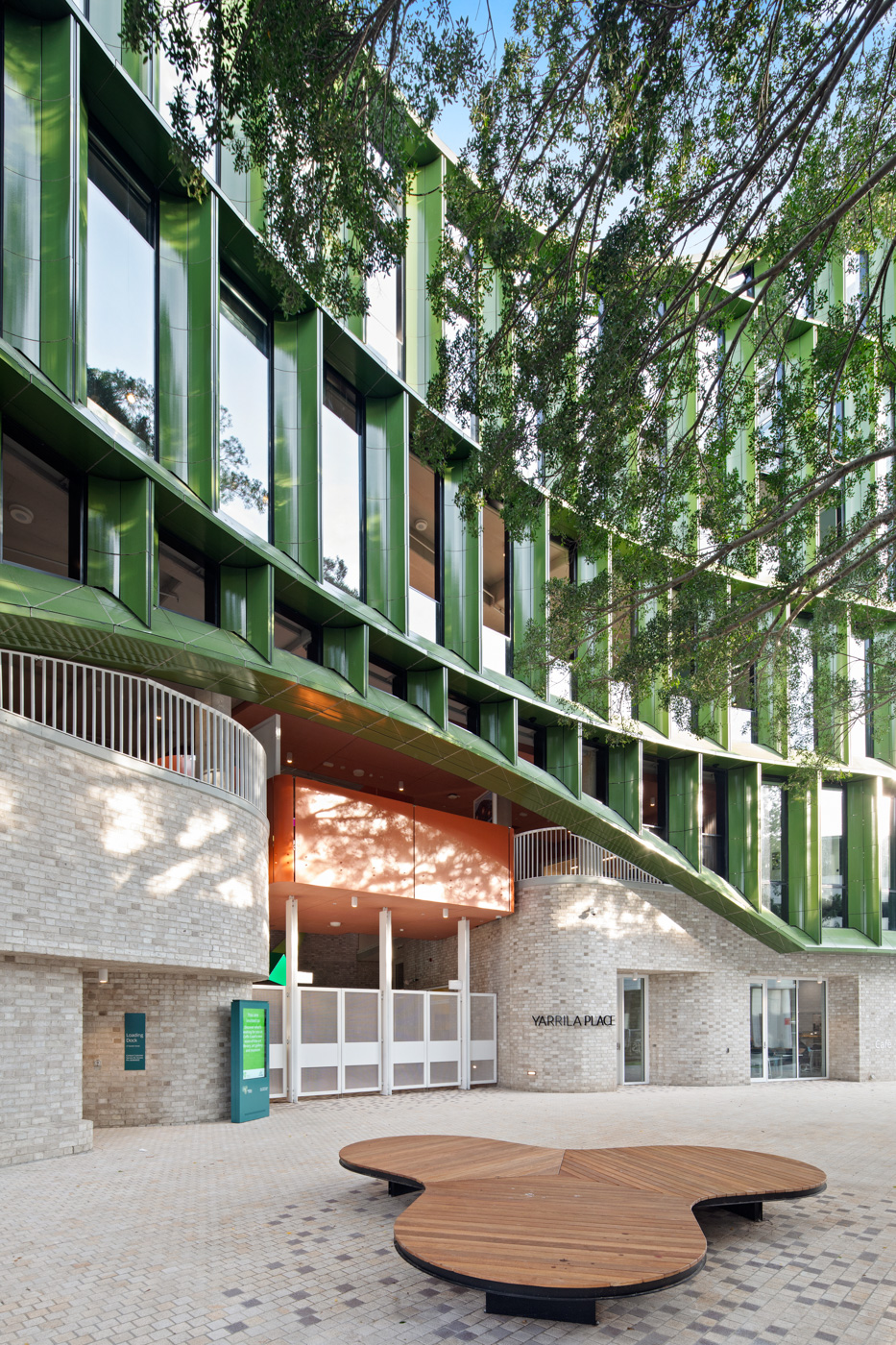
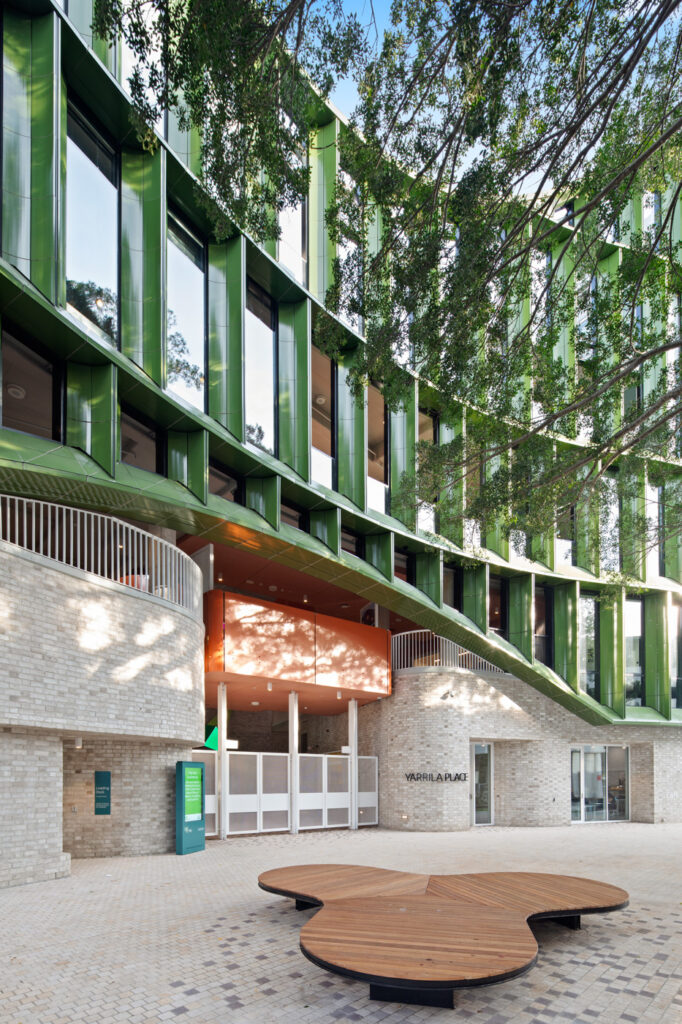
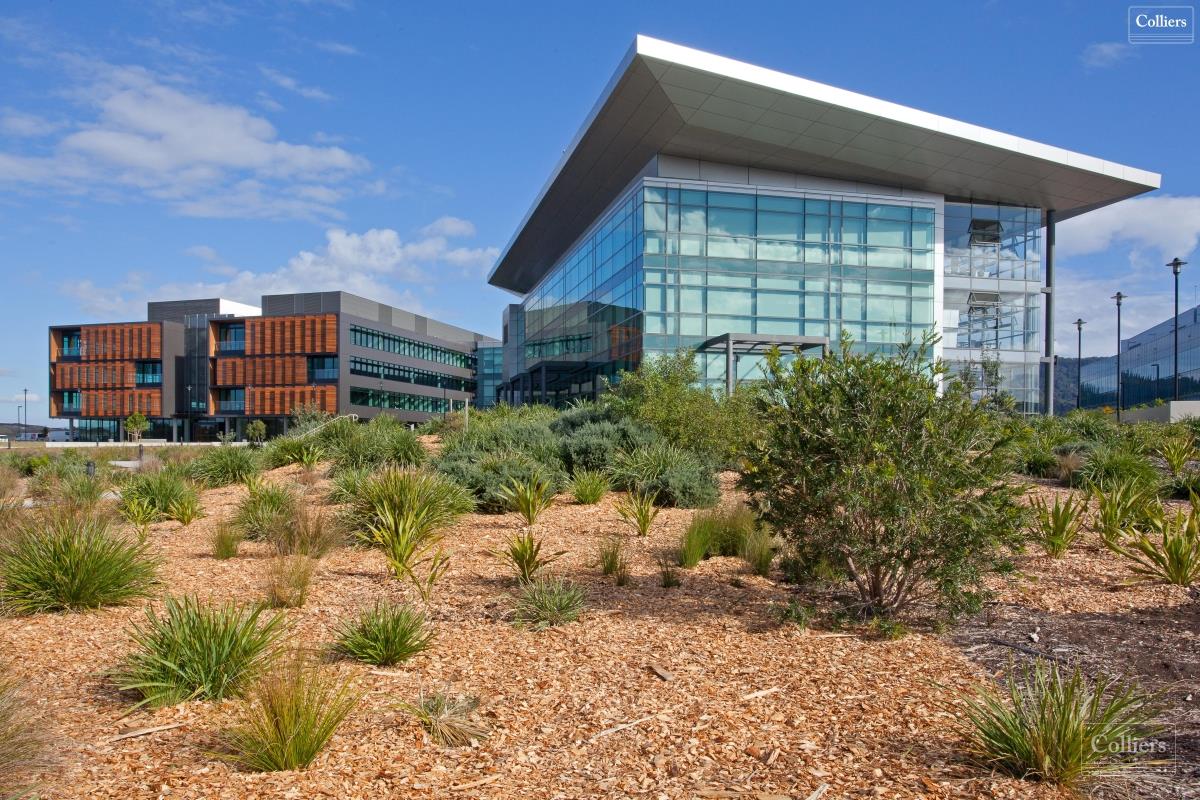
Yarilla Place is a bold new civic landmark that reshapes the heart of Coffs Harbour. With its sculptural parametric timber roof inspired by the coastal landscape, this building pushes the boundaries of engineering and craftsmanship while seamlessly integrating council chambers, a library, event spaces, and a vibrant public plaza.
What makes this project truly stand out is its targeted 6 Star Green Star rating, placing sustainability, resilience, and community wellbeing at its core.
The building houses a two-level library, a community centre with function spaces and meeting rooms, and a childcare facility for 26 children, promoting community engagement and accessibility. Features include a thermal labyrinth for passive air conditioning, solar-tracking timber louvres, photovoltaic panels, rainwater harvesting systems, and a green roof, collectively reducing energy consumption and enhancing indoor environmental quality.
This project exemplifies how thoughtful design can create a vibrant, sustainable, and inclusive public space that serves diverse community needs while setting new benchmarks in environmentally responsible architecture.
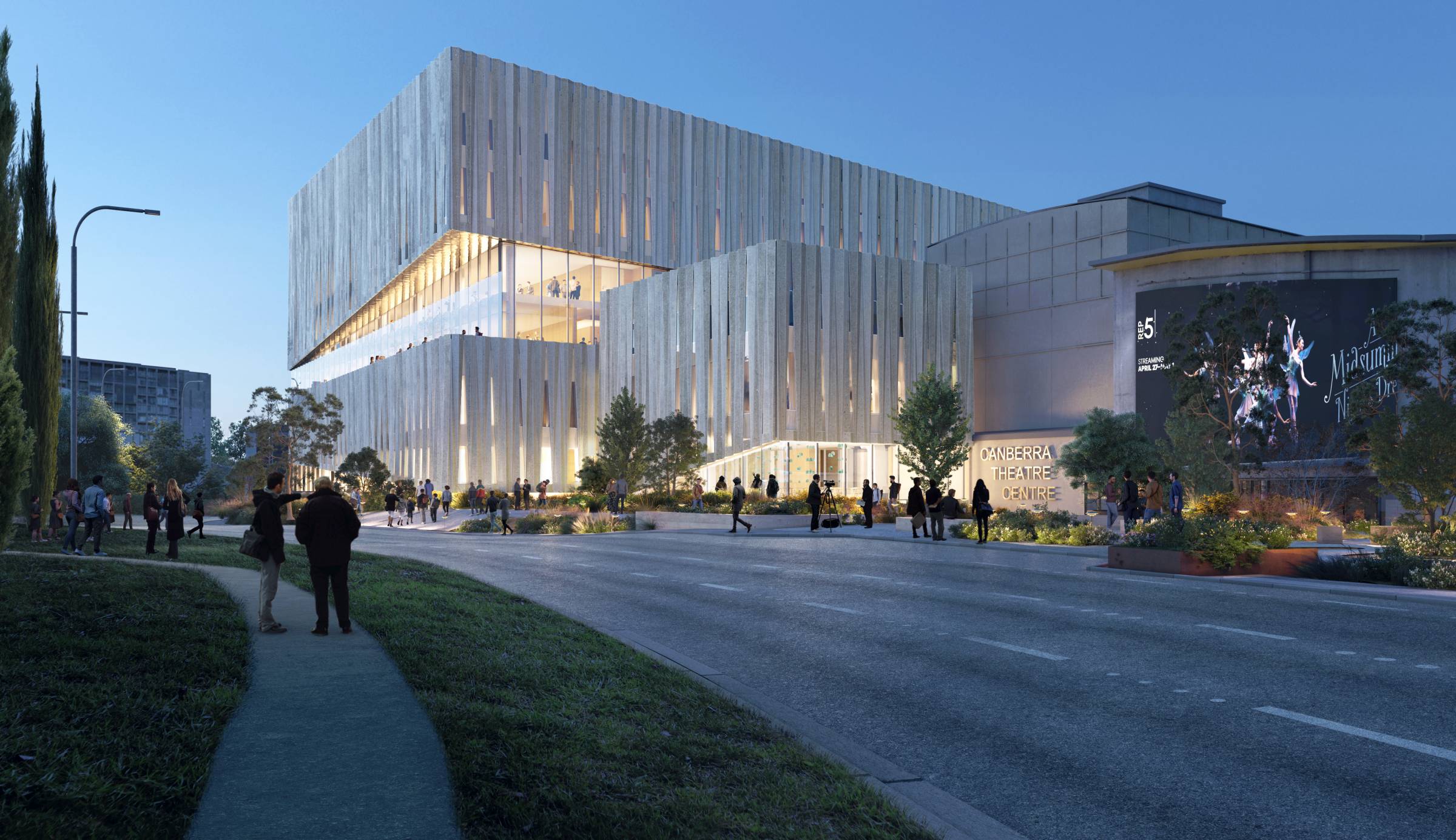
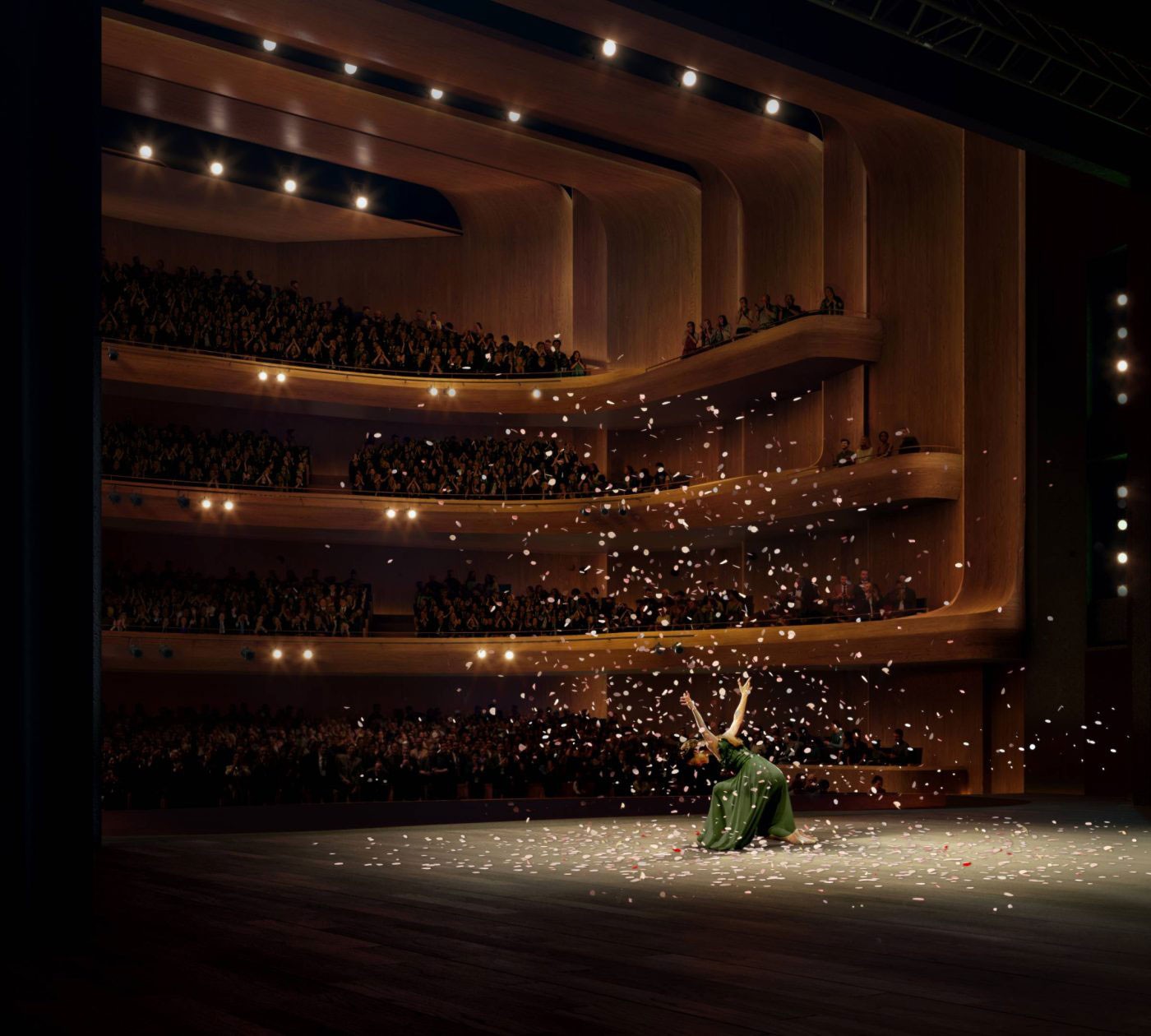
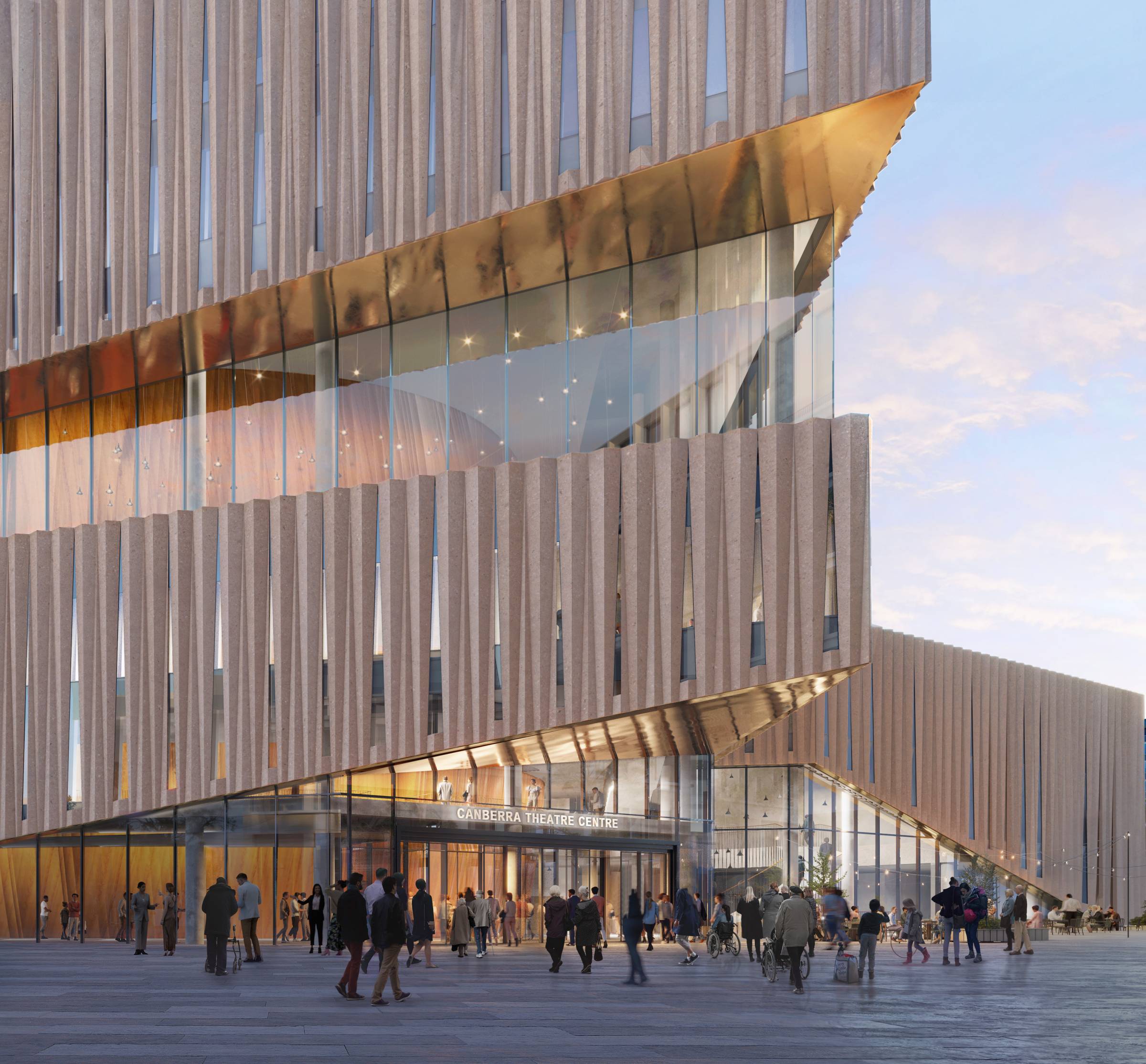
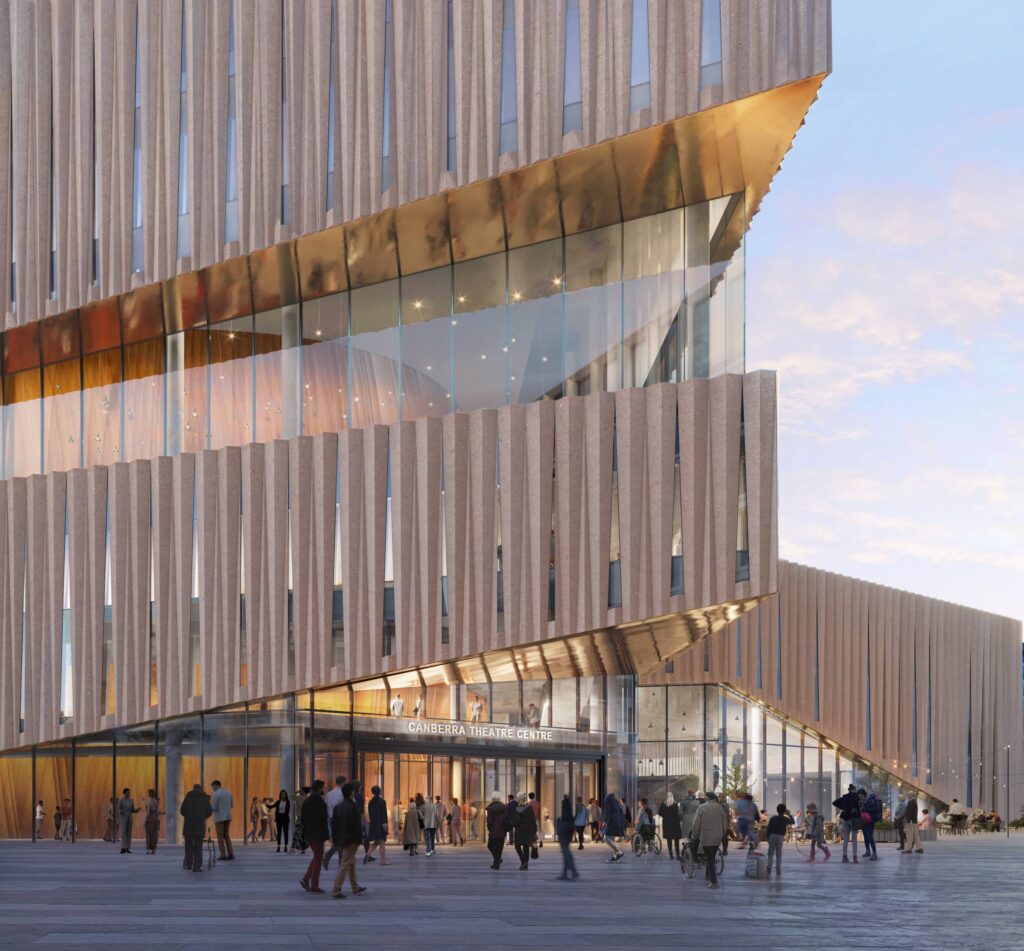
The Canberra Theatre Centre is undergoing a transformative redevelopment to establish a world-class performing arts hub in the heart of Australia's capital that aims to deliver a new 2,000-seat lyric theatre, refurbish existing venues like The Playhouse and Canberra Theatre, and expand the Courtyard Studio.
This initiative is central to the ACT Government's vision of revitalizing the Civic and Cultural District, enhancing Canberra's cultural landscape. This redevelopment marks a significant step towards positioning Canberra as a premier destination for performing arts, offering state-of-the-art facilities that reflect both cultural heritage and contemporary design.
Located in the Quay Quarter Tower, the project occupies four levels with a design focused on luxury featuring stunning harbour views, high-performance acoustic double glazing, and an innovative, sustainable design.
Due to limited access during the ECI phase caused by COVID-19, collaborative engagement among the consultant and client teams was crucial to the project’s success.
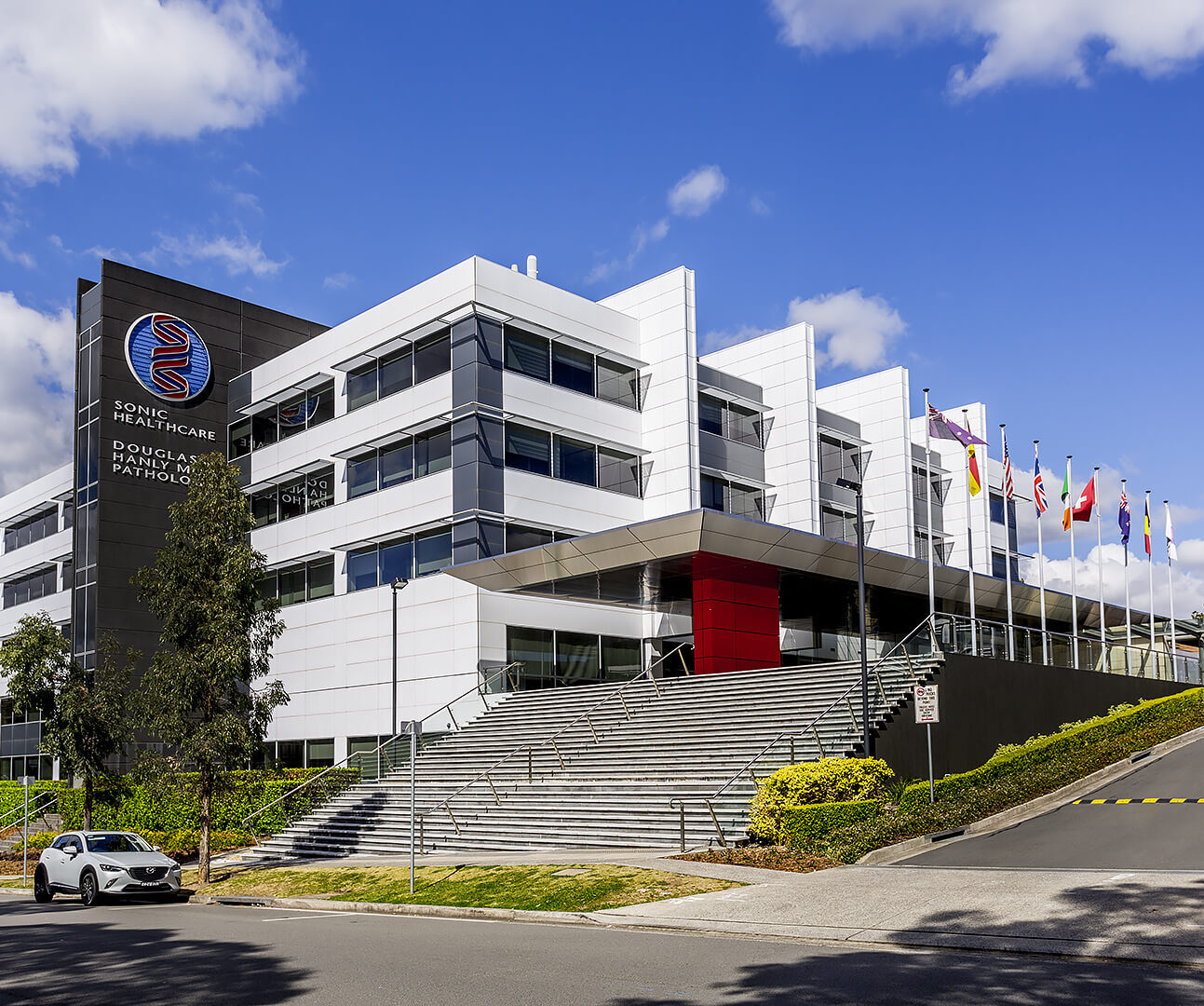
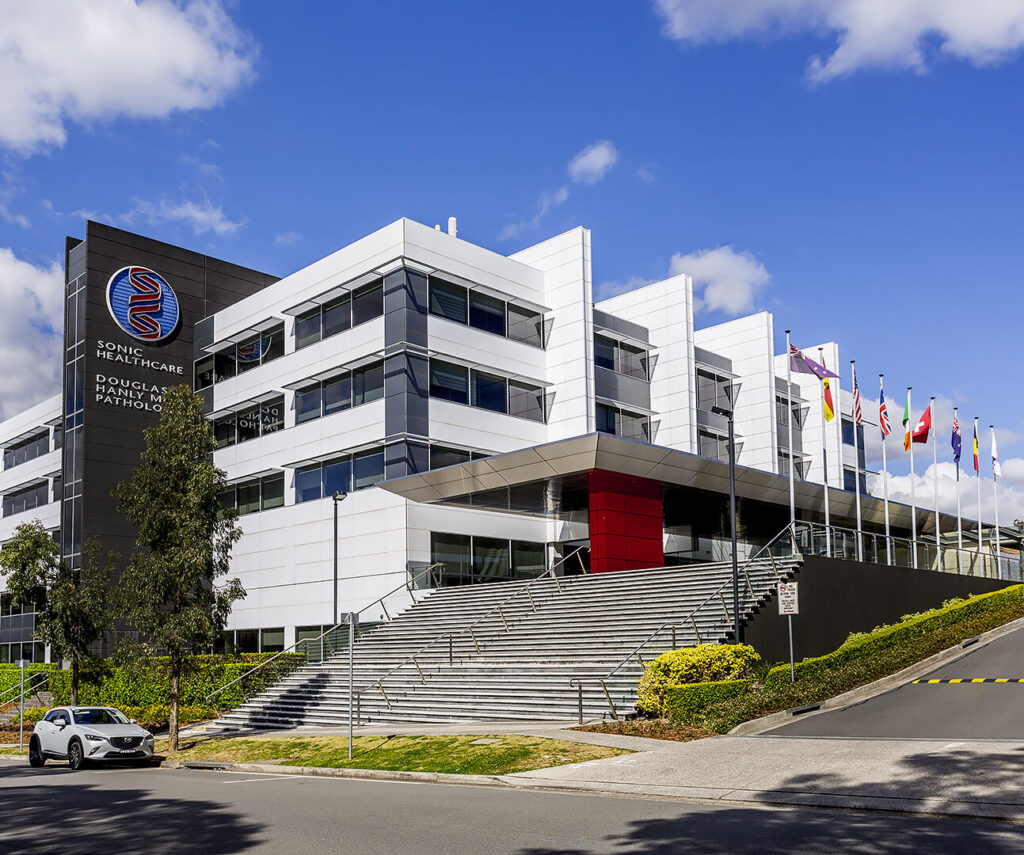
A contemporary commercial and clinical facility designed to accommodate pathology and corporate functions. The project features a modern interior fit out emphasising high-quality finishes. The design prioritises efficiency, staff amenity and a professional clinical environment.
Construction of a new four storey clinical facility at the northern end of the existing hospital facility. The new clinical building provides for an expanded emergency department, additional medical and surgical inpatient beds, reconfigured and expanded operating theatres, new Critical Care Unit and a cardiac catheterisation laboratory.
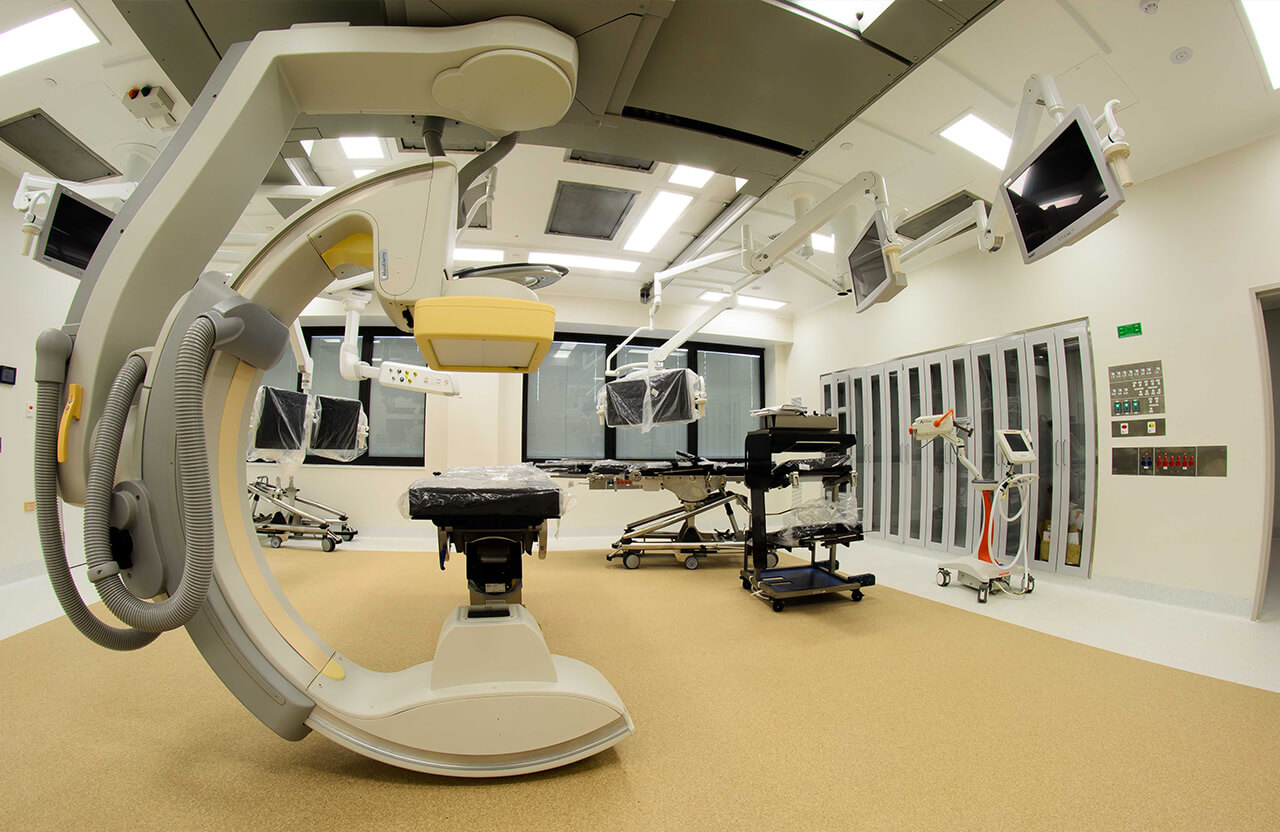
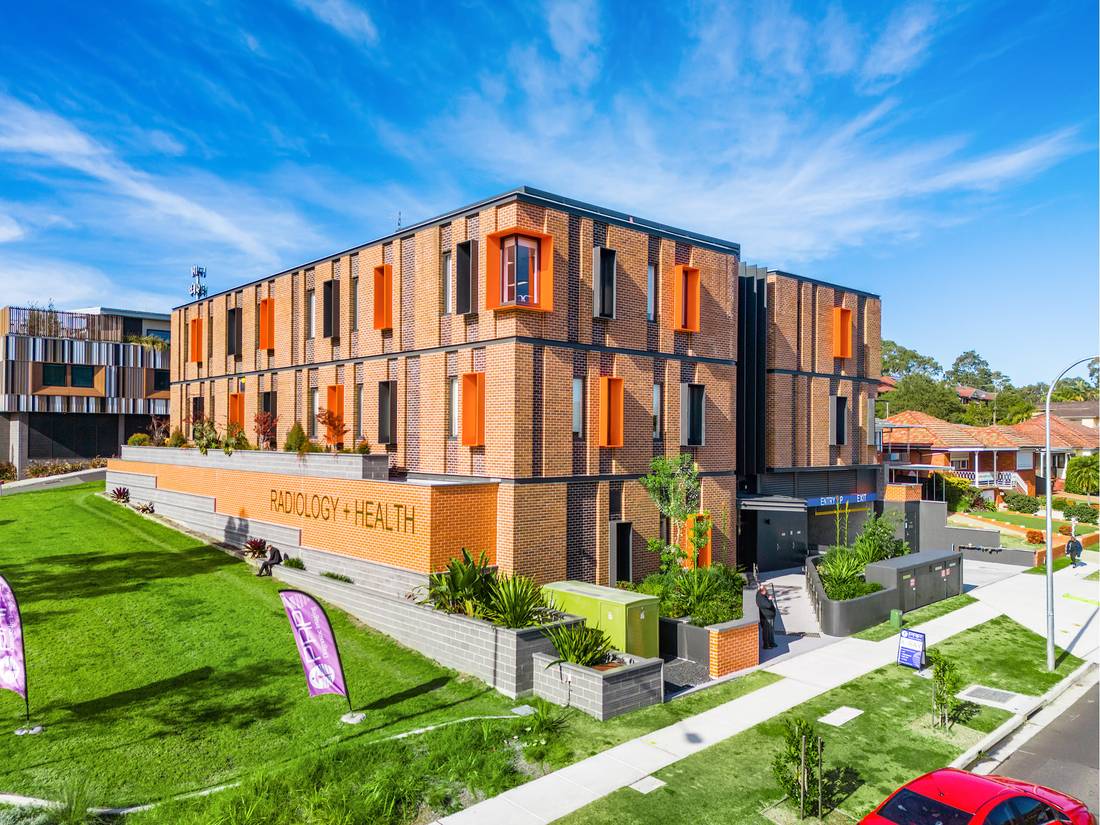
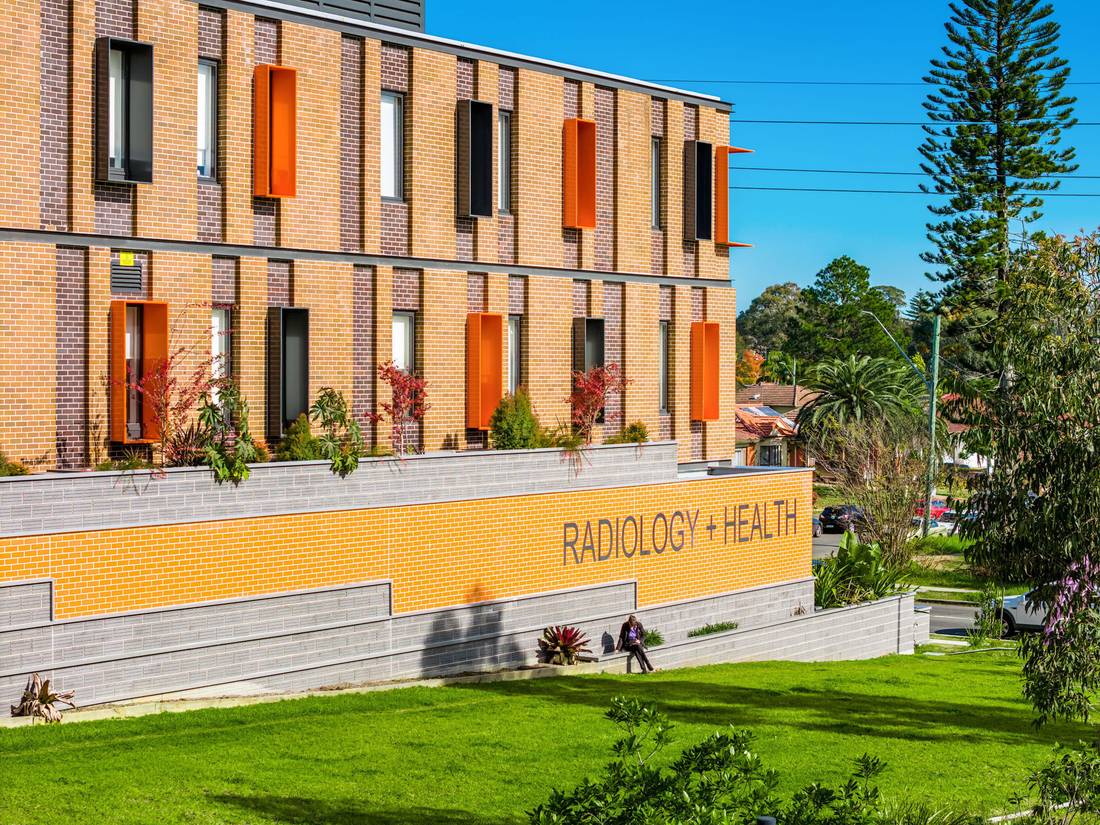
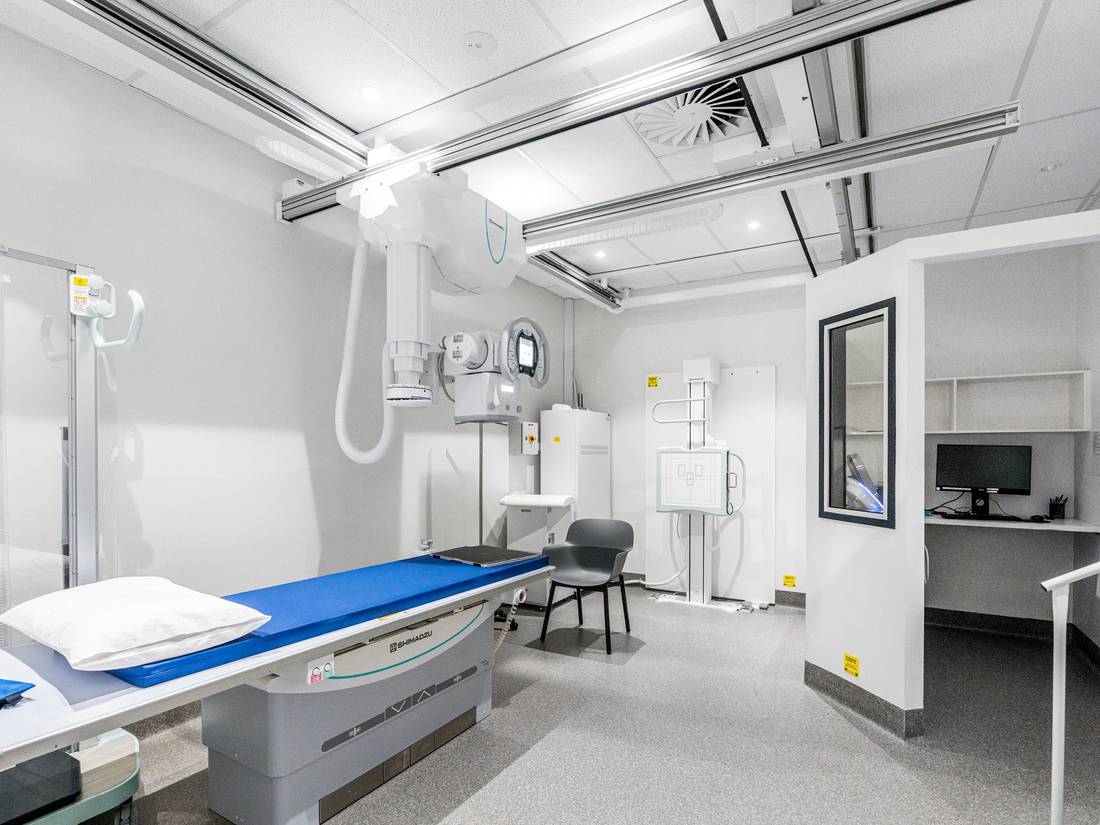
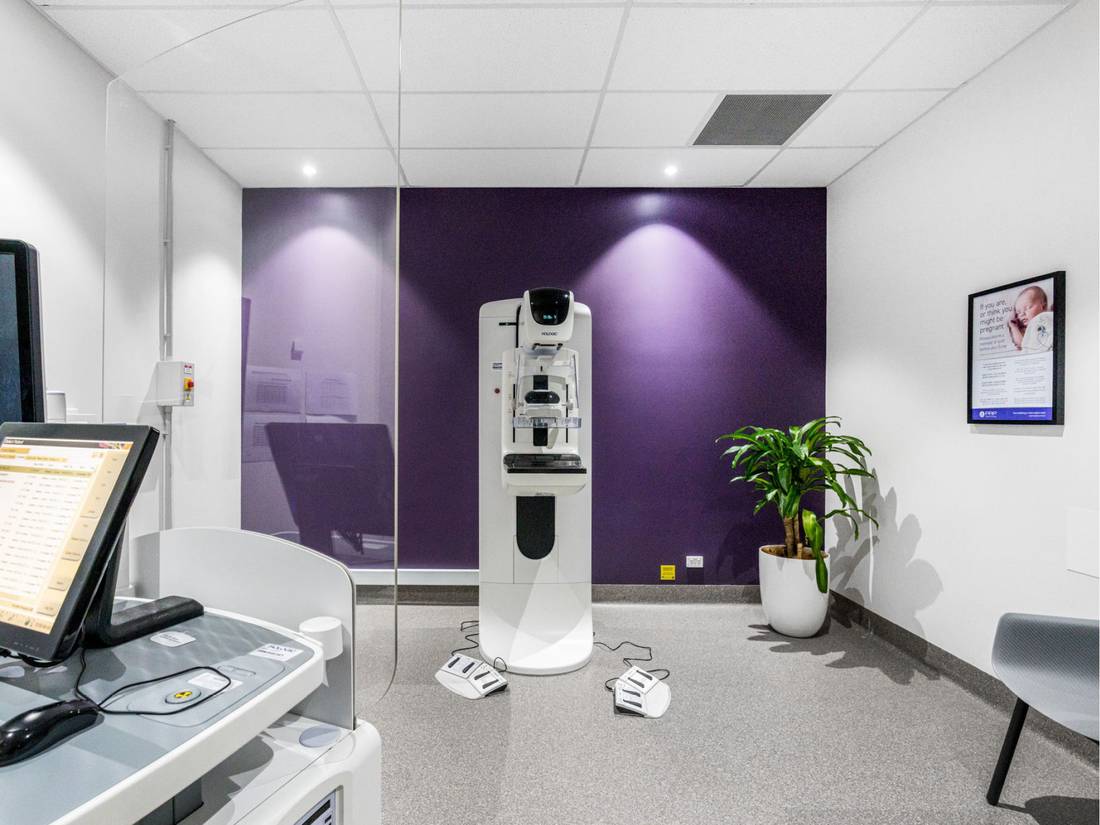
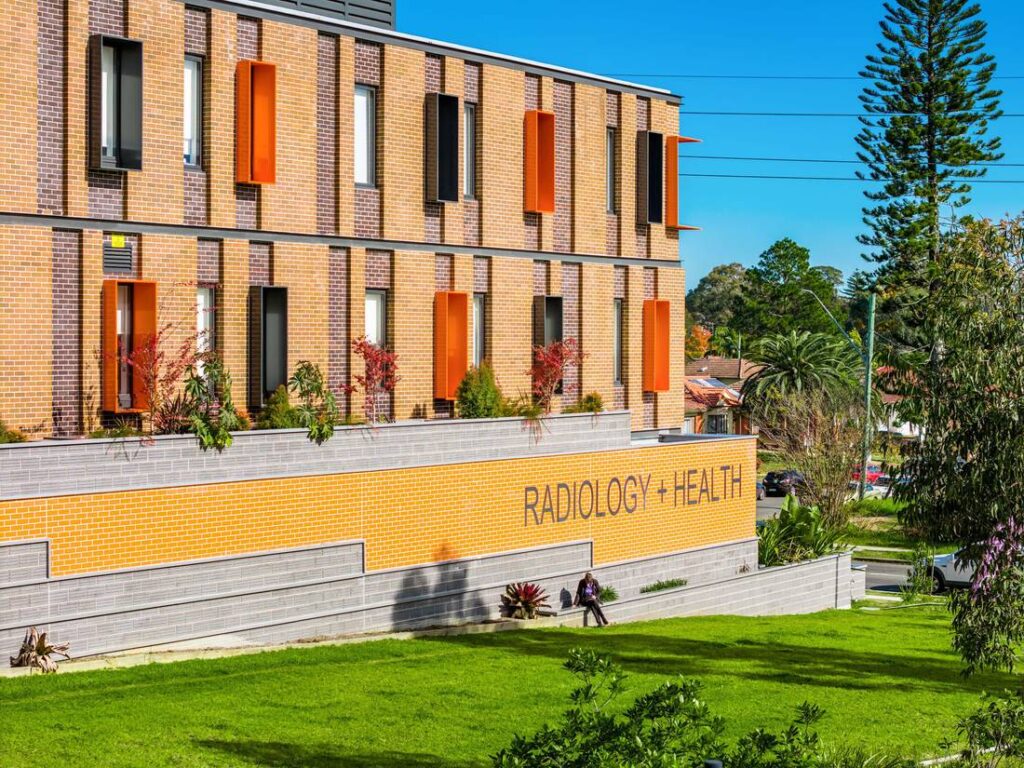
A purpose-built, three-storey healthcare facility completed in 2024 within the Blacktown Hospital precinct. Designed as a contemporary medical hub, it integrates radiology, specialist suites and GP services, supported by a multi-level basement car park. Construction involved significant excavation for basement levels and development on a constrained corner site, resulting in a 1,700+ m² state-of-the-art facility.
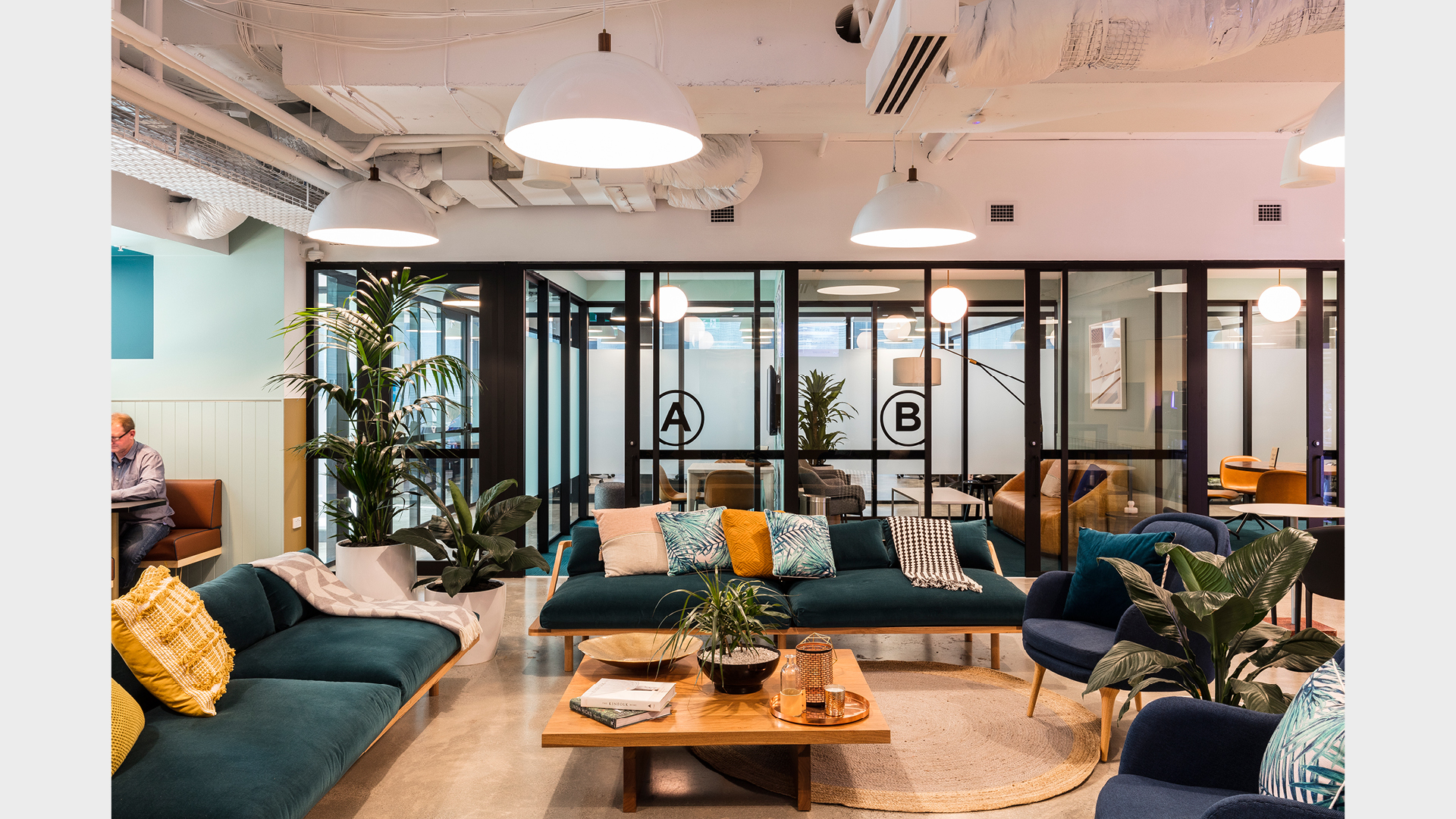
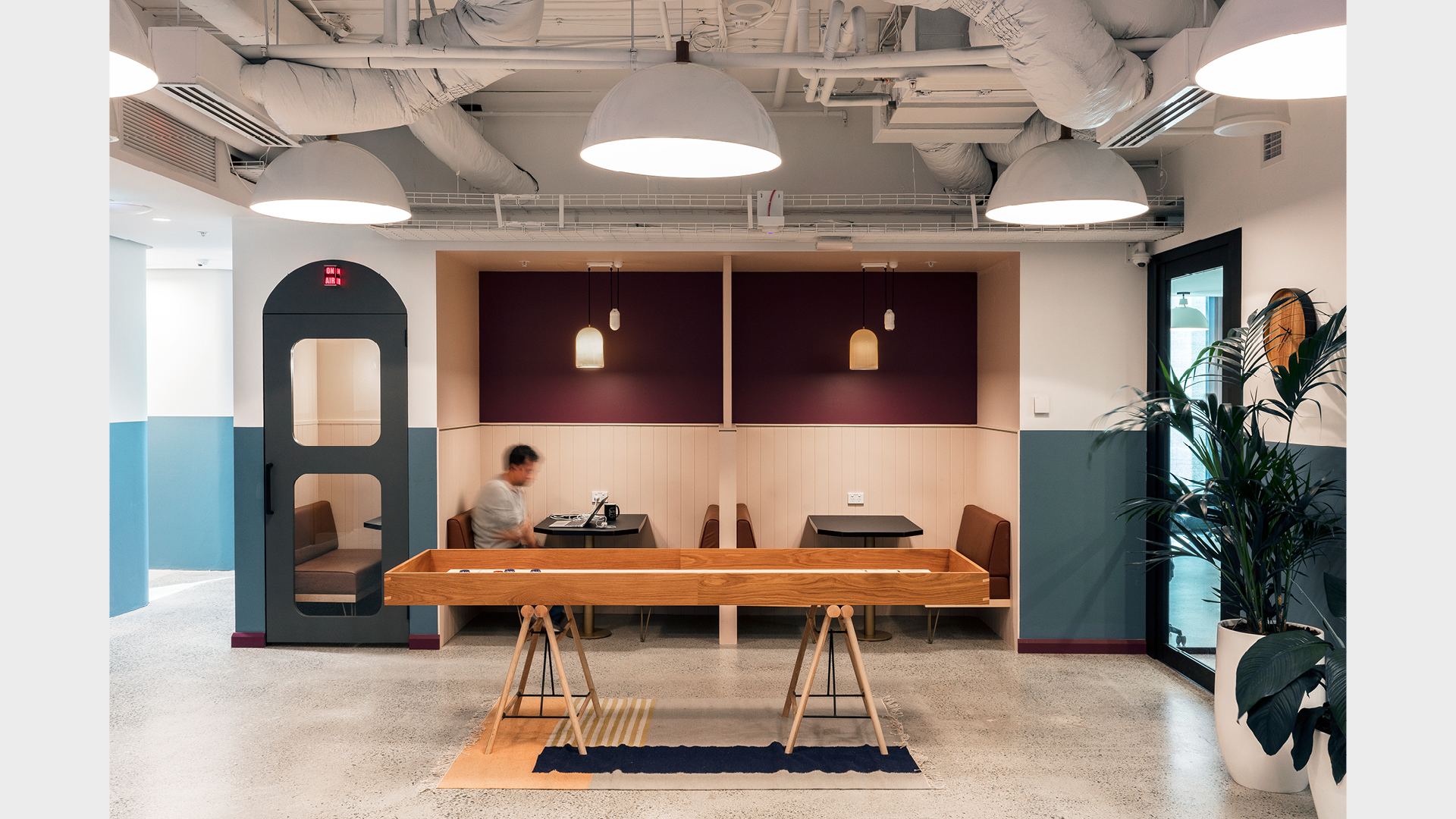
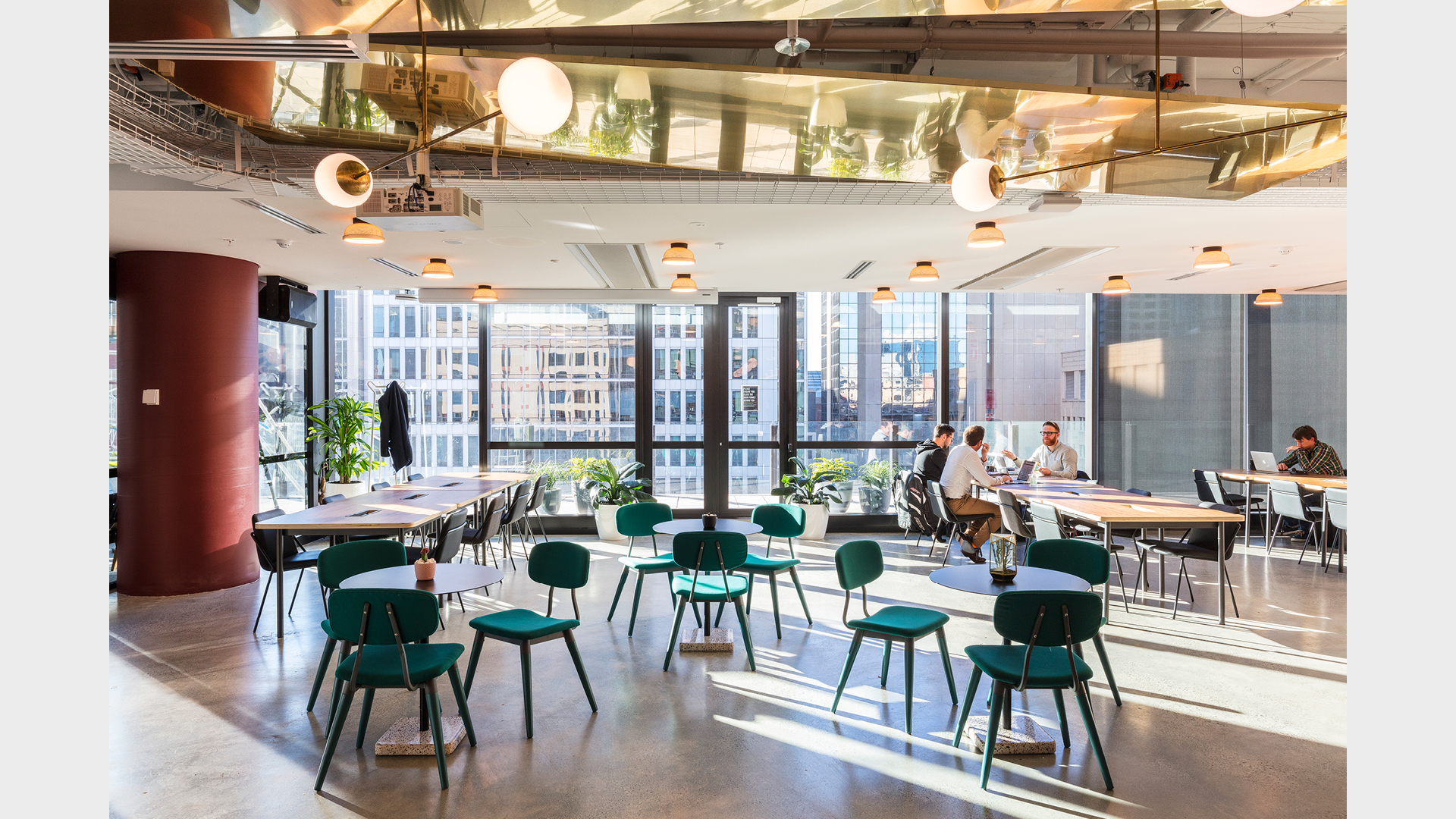
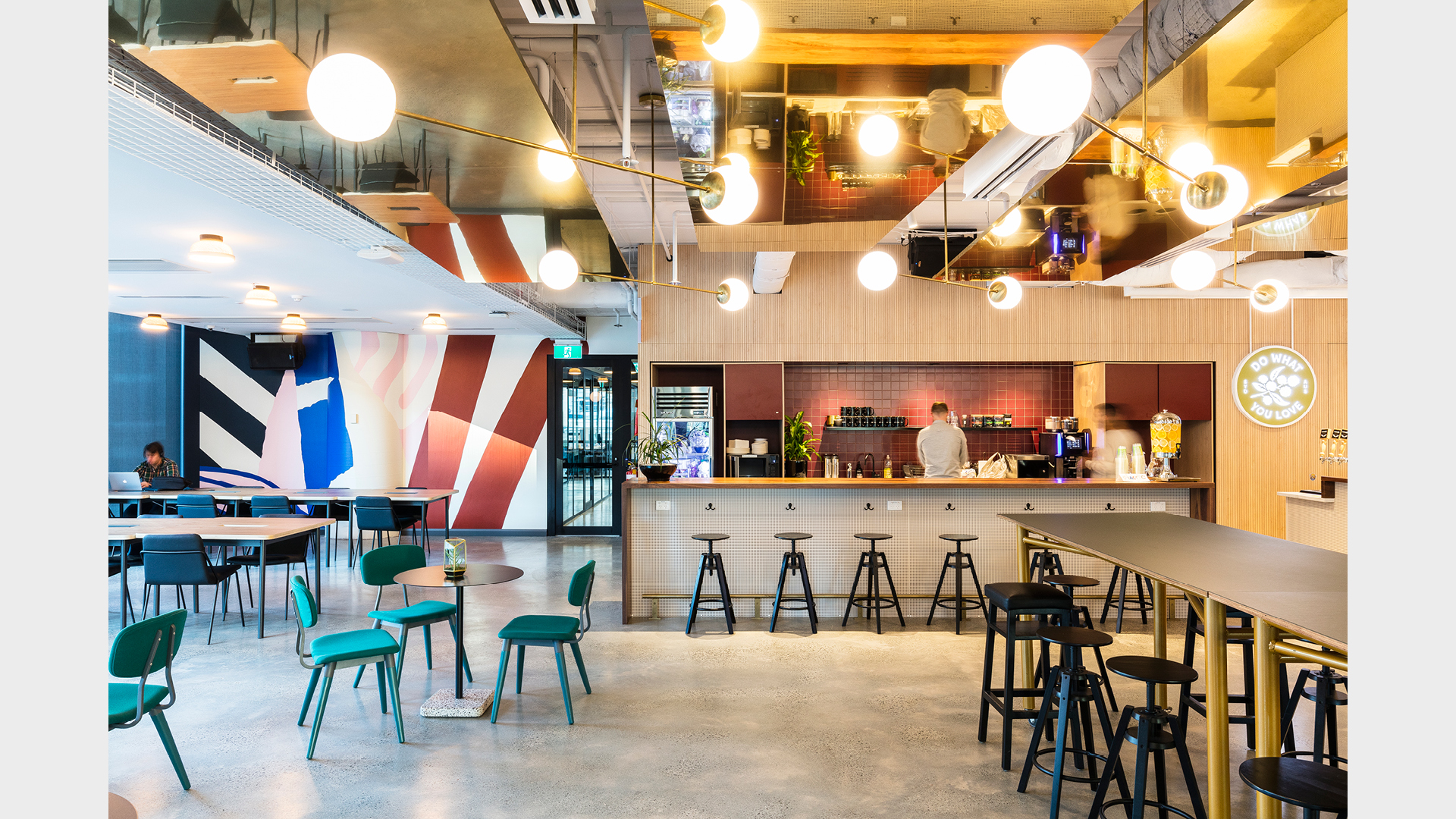
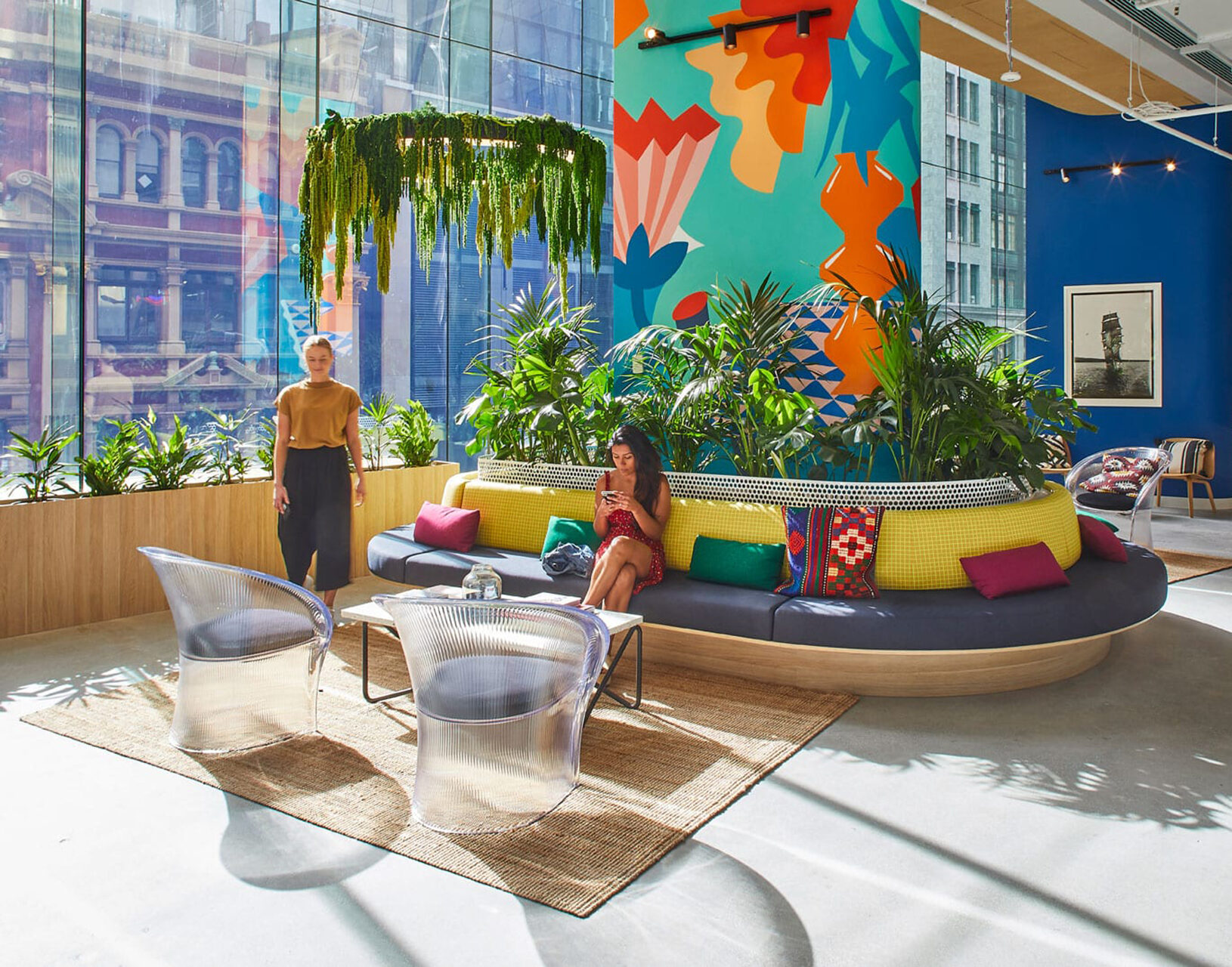
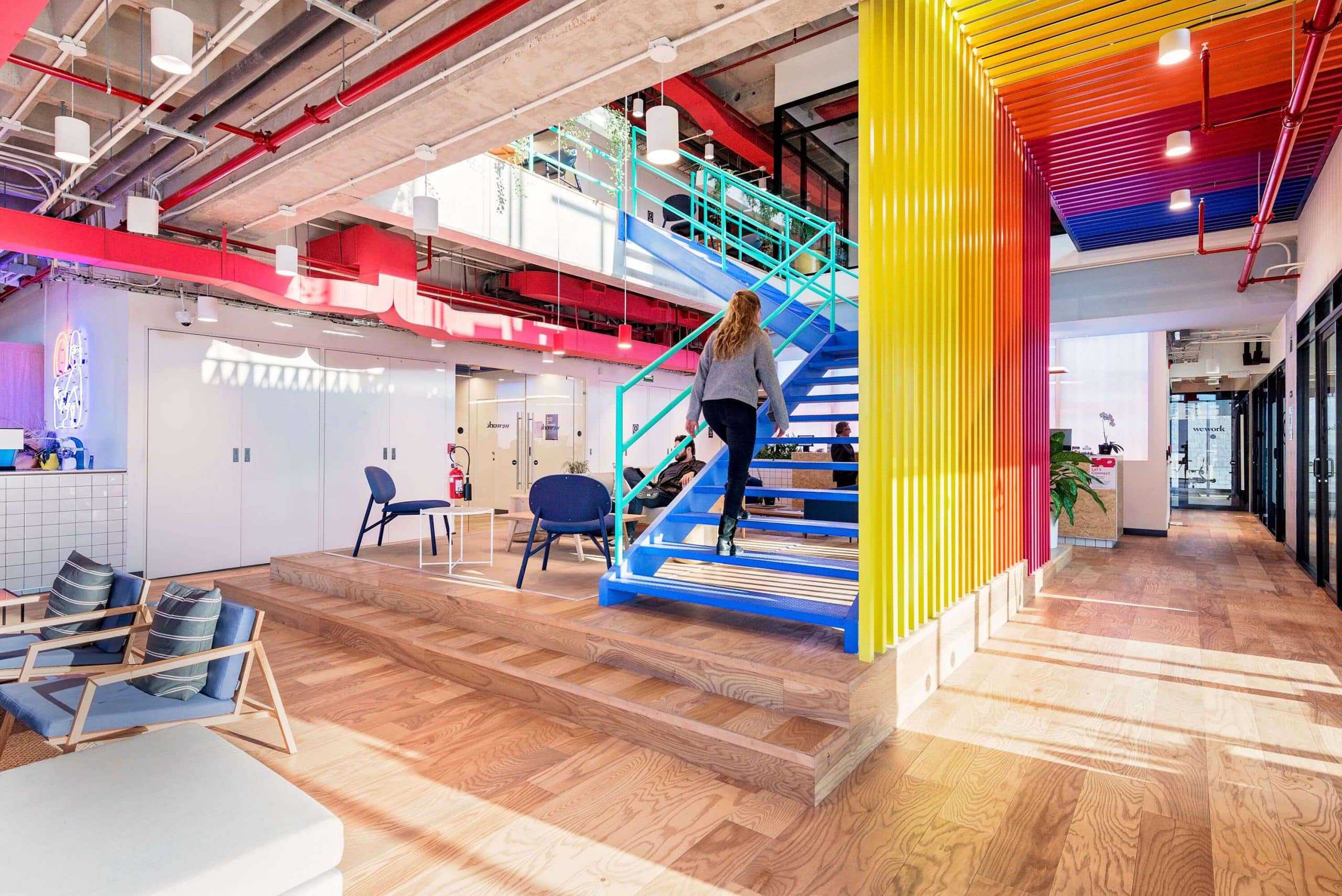
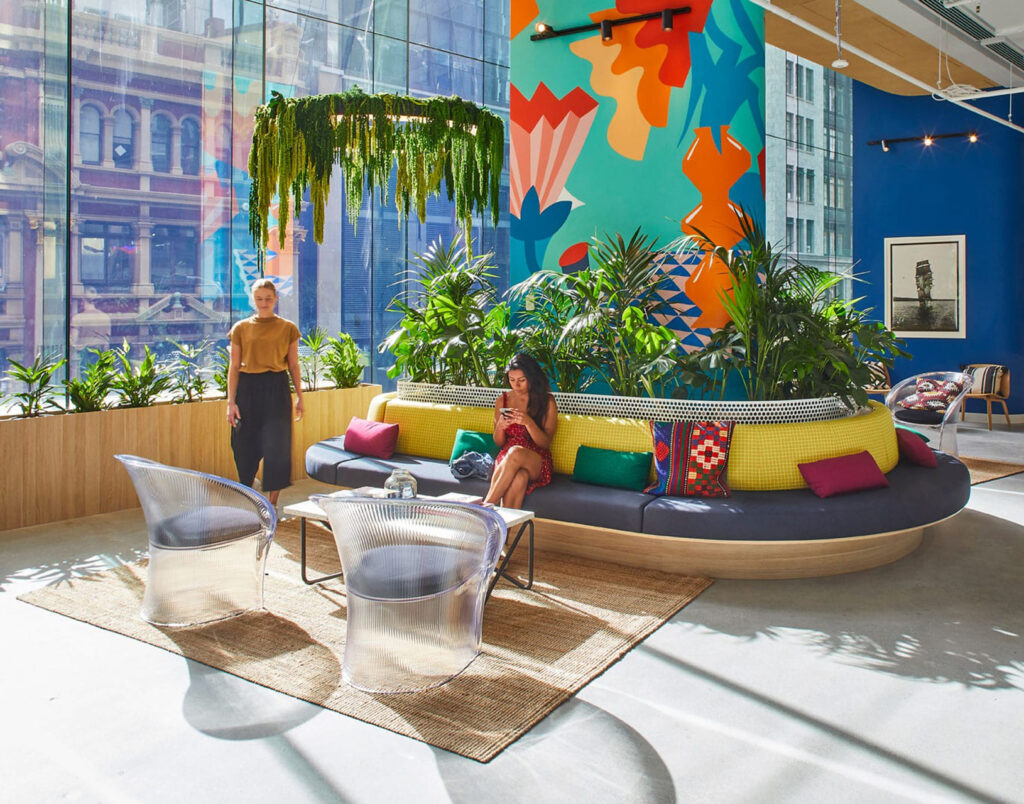
The WeWork Concept fit-out and workspace design redefines flexible office environments with expansive, modular layouts that blend open plan desks, private offices, lounges, phone booths and meeting rooms tailored to diverse working styles. Typical spaces range from small offices to large multi-floor sites of 1,000-15,000 m²+, prioritising natural light, branded finishes and intentional collision zones that spark collaboration and creativity. Distinctive amenities include wellness rooms, bike storage, showers, gyms, outdoor terraces, cafes and even games areas, supporting productivity and wellbeing beyond the desk.
The Day In Day Out installation at 1 Bligh Street reimagines the lobby as a dynamic, experiential space within a premium commercial tower. The project navigates tight spatial constraints, continuous public access, and strict base-building interfaces, requiring precise coordination of structure, lighting, and services. Fabrication and installation demanded fine tolerances to achieve a seamless, kinetic outcome without disrupting daily operations.